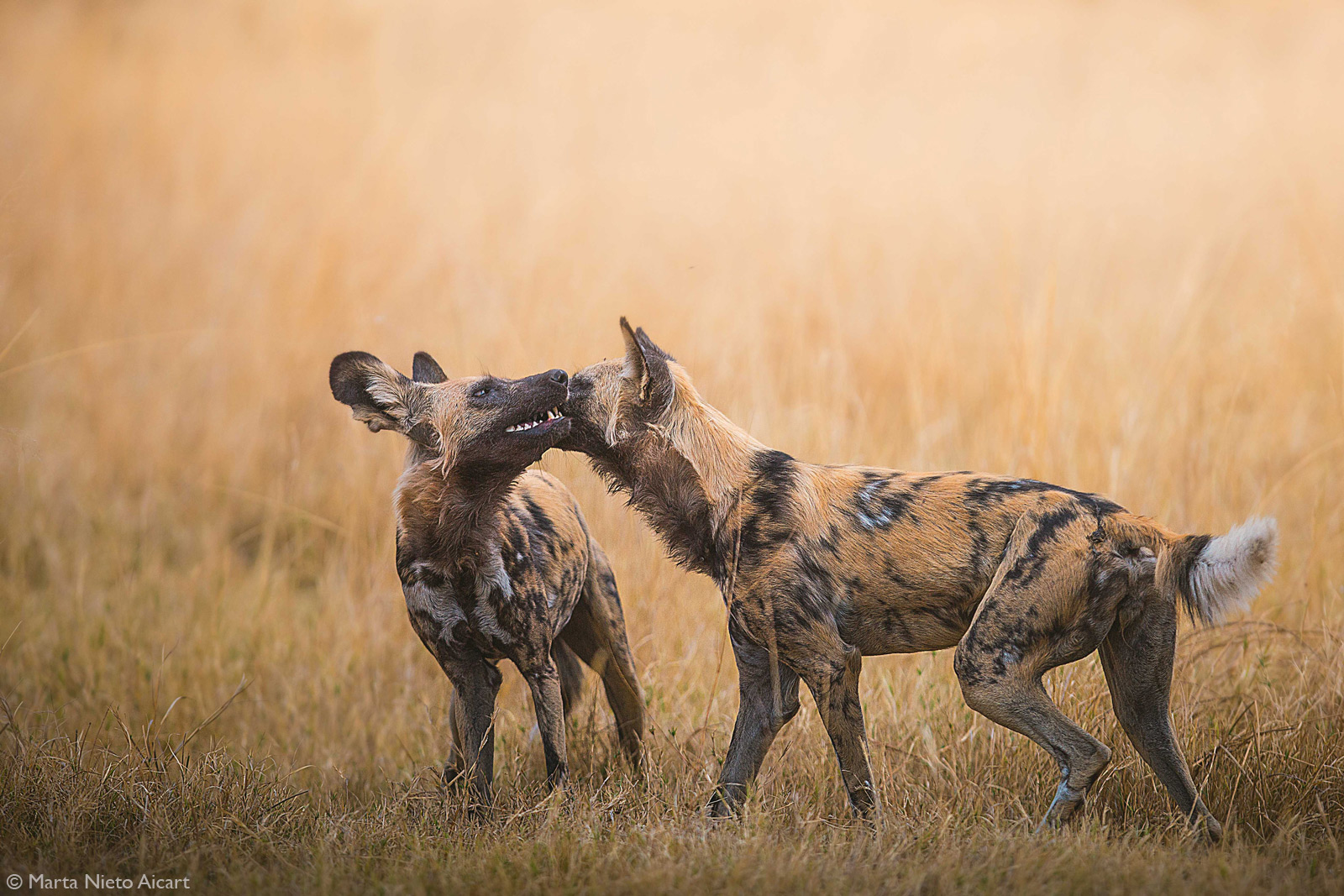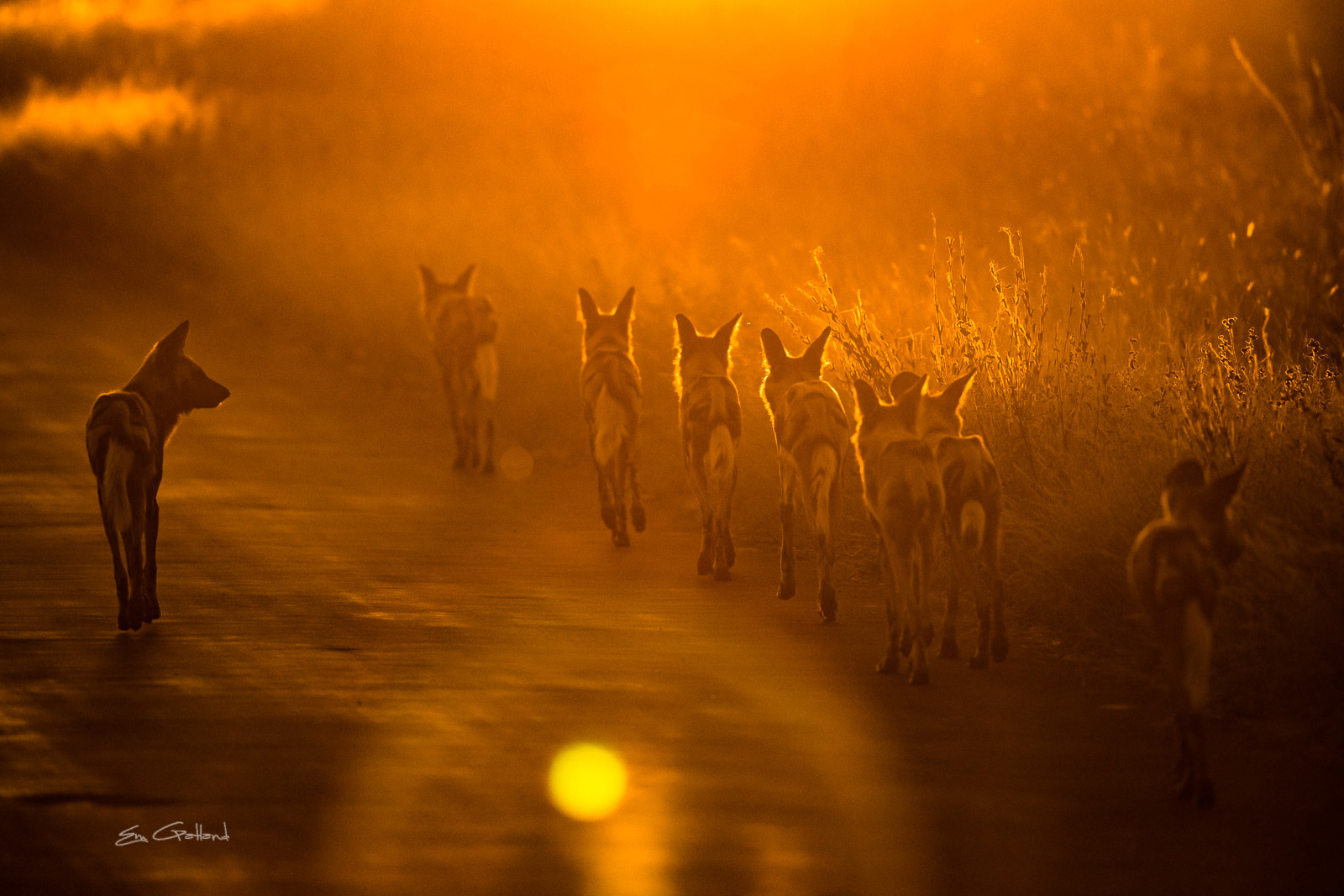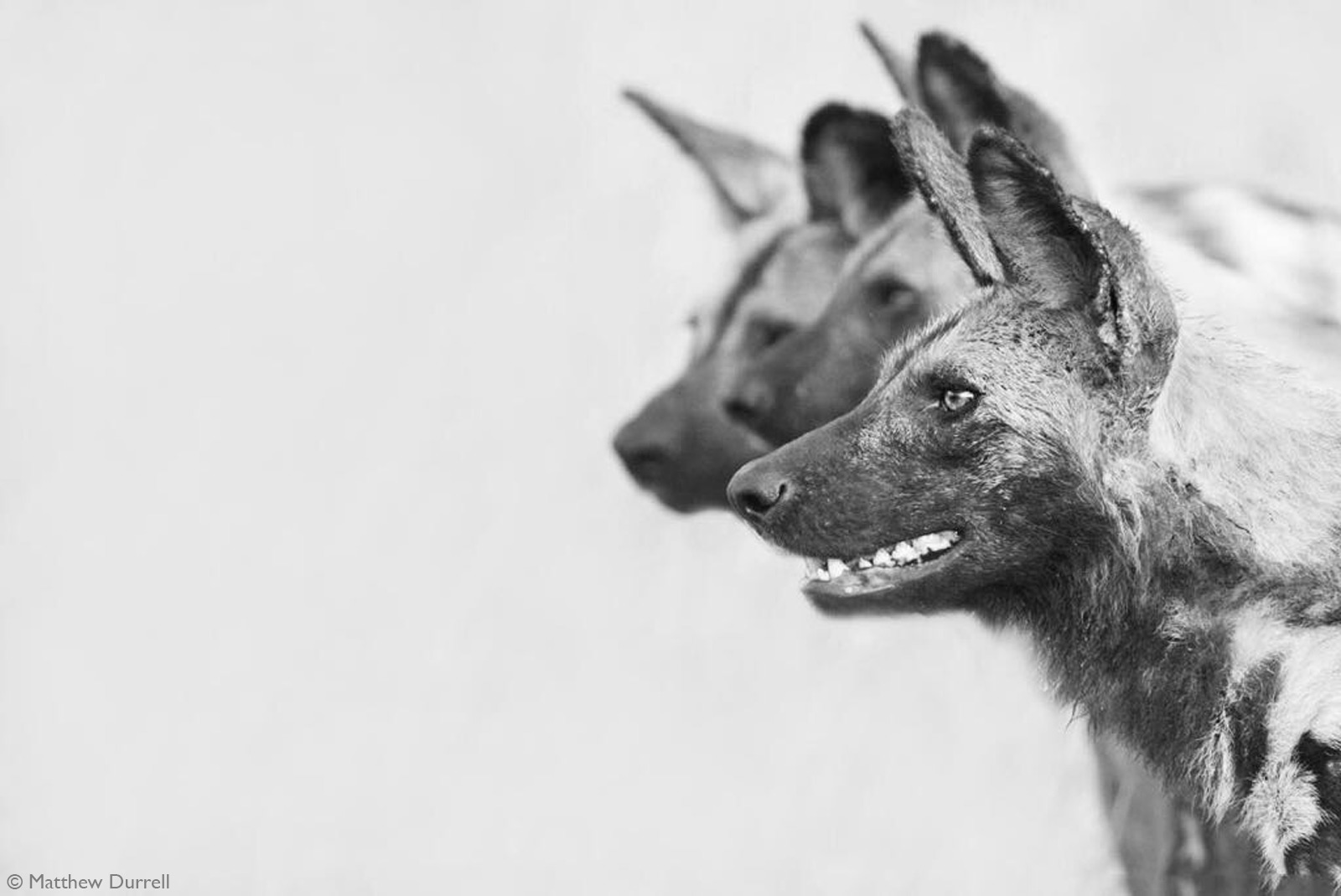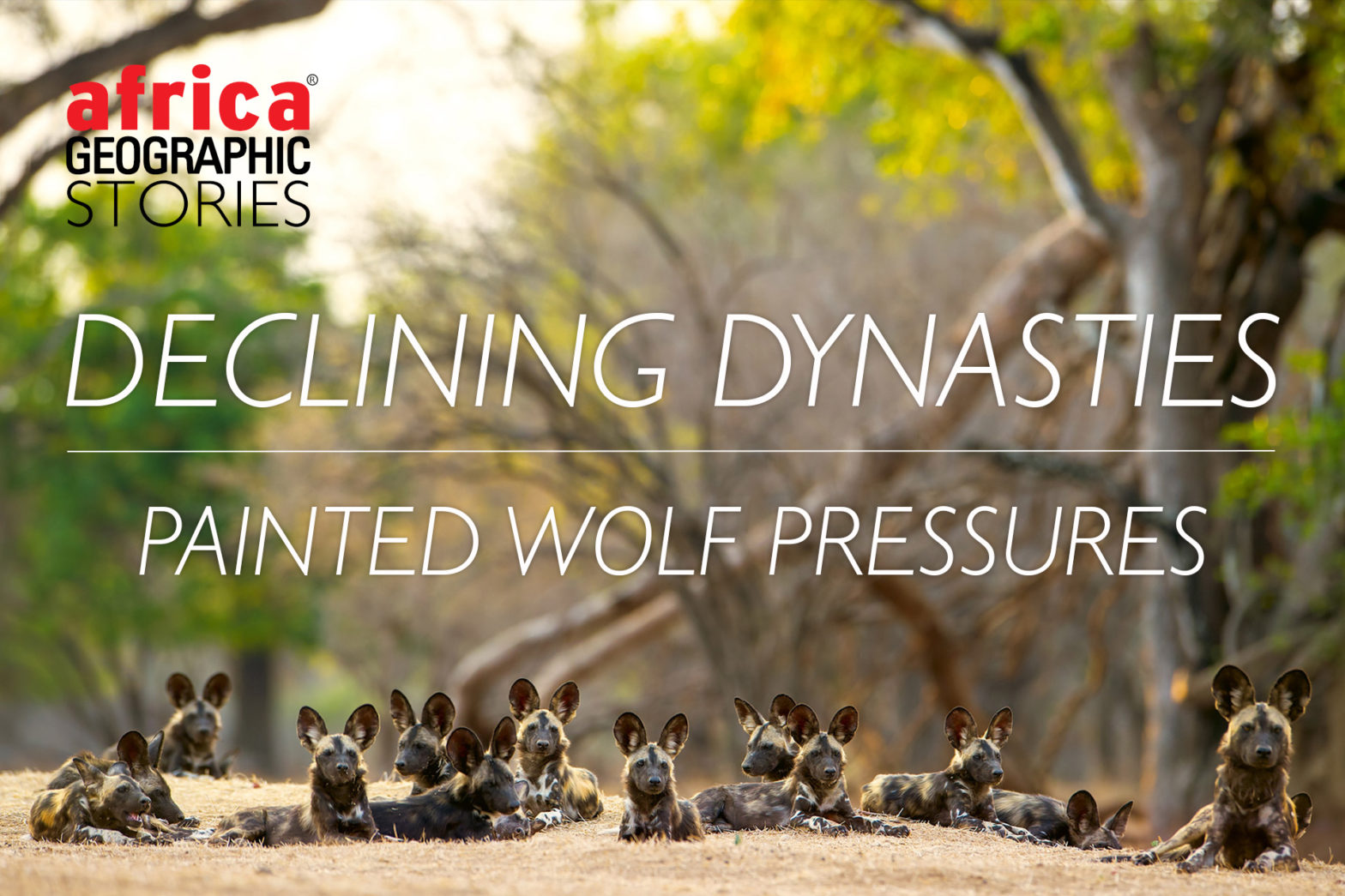
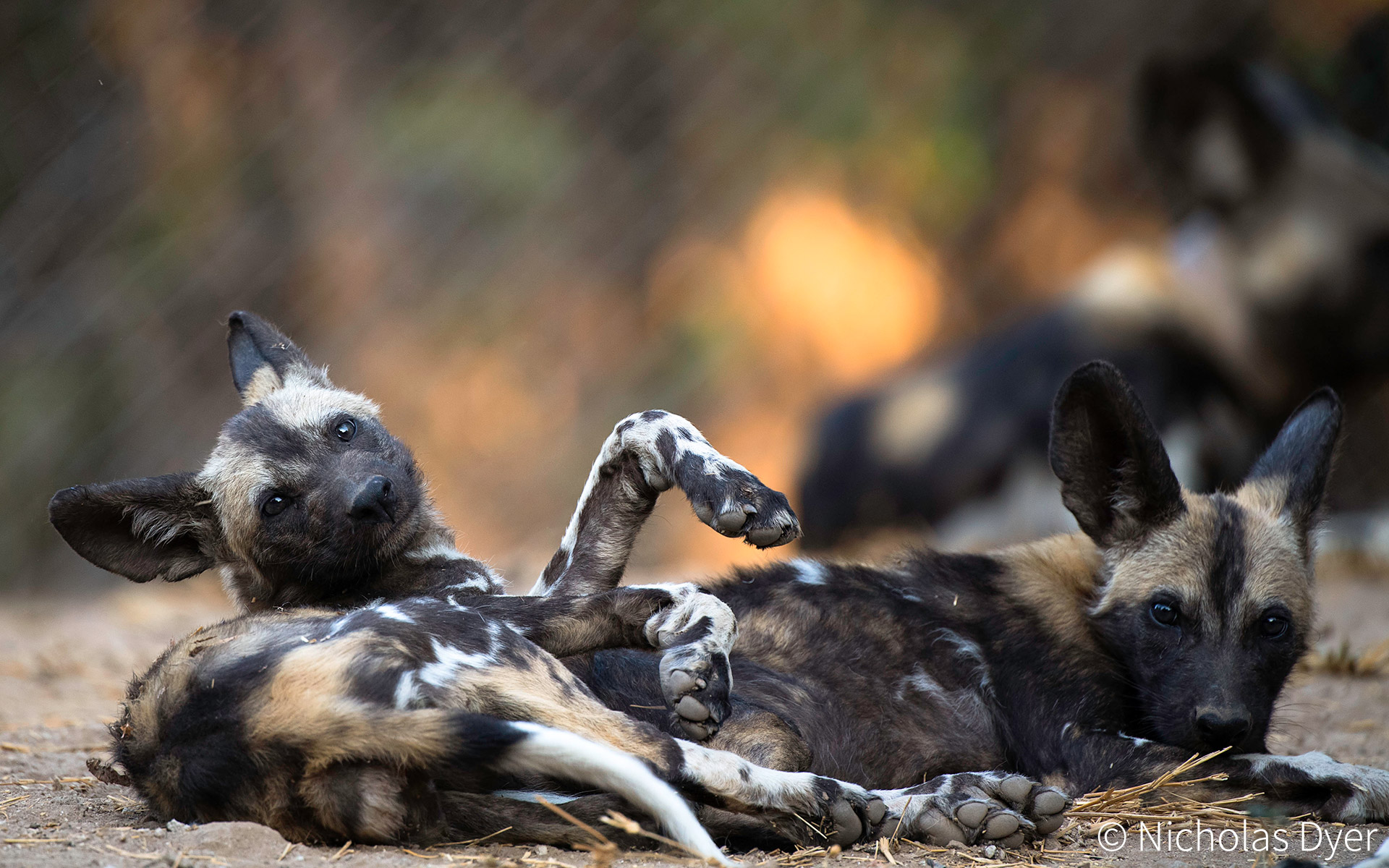
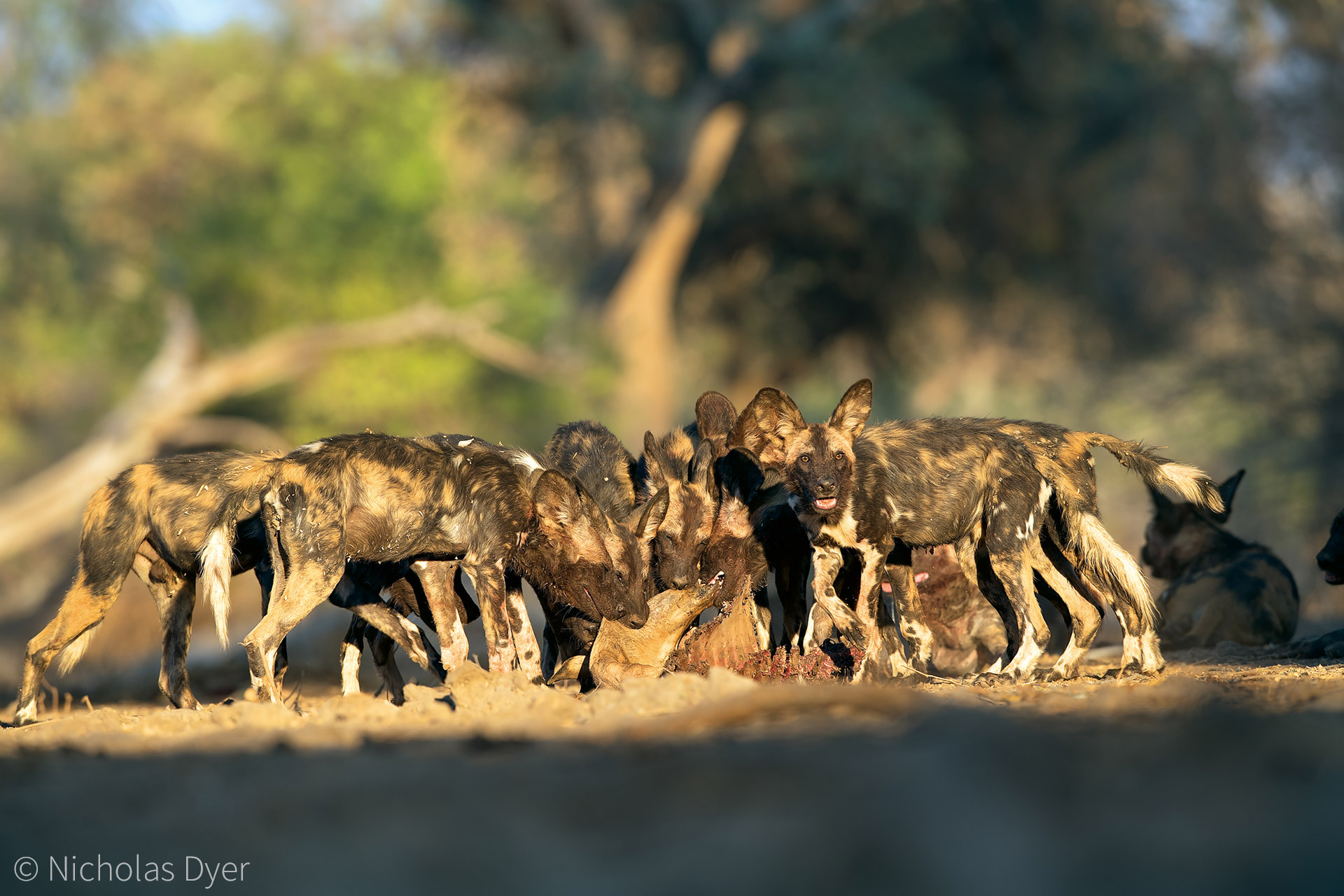
When I first started photographing the painted wolves (African wild dogs) in Mana Pools back in 2013, there were two dominant packs on the floodplain: the Vundu and the Nyakasanga. At their peak, in 2014 the Vundu pack was 24-strong including five pups, while the Nyakasanga pack numbered 30 with 15 pups.
They were each led by two formidable alpha females, Tait and her daughter Blacktip, made famous by the BBC’s Dynasty series and my book Painted Wolves: A Wild Dog’s Life, which I wrote with Peter Blinston. After Tait died in 2015, her daughter, Tammy, formed the Nyamatusi Pack, and we all hoped that this powerful floodplain dynasty would continue.
However, more recently, these two packs of painted wolves have been struggling, as first reported in my two “Declining Dynasties” articles in Africa Geographic and recently highlighted by Painted Dog Conservation (PDC) in the media.
While journalistic sensationalist headlines suggest that the Mana Pools painted wolves are in crisis, the Park (and the wider Zambezi Valley) remains a significant stronghold for this magnificent creature and is home to multiple painted wolf packs. However, due to the notoriety of the two packs that live on the floodplain, their struggles would inevitably attract attention.
Many reasons have been linked to this decline, and this article provides a background, explains the extent, and explores possible causes and solutions from the perspective of having followed them closely for the last eight years.
Seeds of destruction
First, what has happened to these packs?
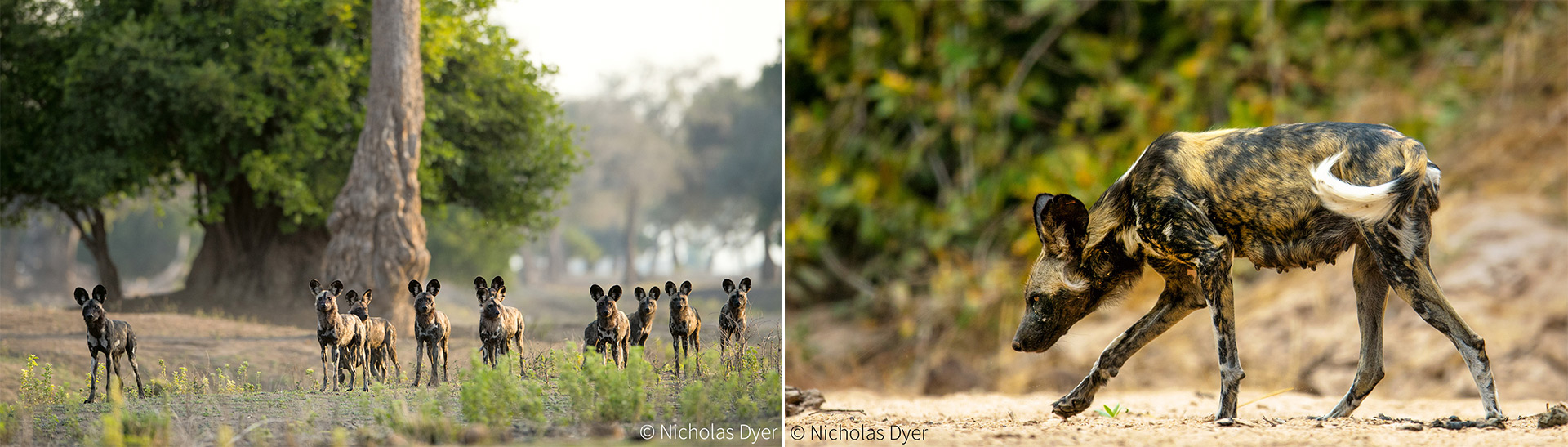
In 2015, when Tait’s seven surviving females arrived on the floodplain, they met up with seven of Blacktip’s males to form the Nyamatusi Pack. It was a bit like “Seven Brides for Seven Brothers”, but they were so closely related, and in reality, it was “Seven Aunties for Seven Nephews”. The inbreeding had begun.
Sadly, unlike her sister and mother, Tammy was not a successful alpha female. Of her four litters between 2016 and 2019, only one pup survived a rainy season. In that time the pack shrank from 14 to just Tammy and three males. They lived mainly deep in the Nyamatusi Wilderness, where the large lion population had taken its toll and, last year, one killed Tammy. Not one of her pups survived her. (Read Tammy’s Tragic Story)
Meanwhile, Blacktip continued to be an incredibly successful alpha and produced litters of at least nine pups in 2016, 2017 and 2018. She died at the age of 10 in early 2019. It was her time and not unexpected. What was exceptional about her was that the survival rate of her pups was well above the average. In fact, most went on to become yearlings and later disperse.
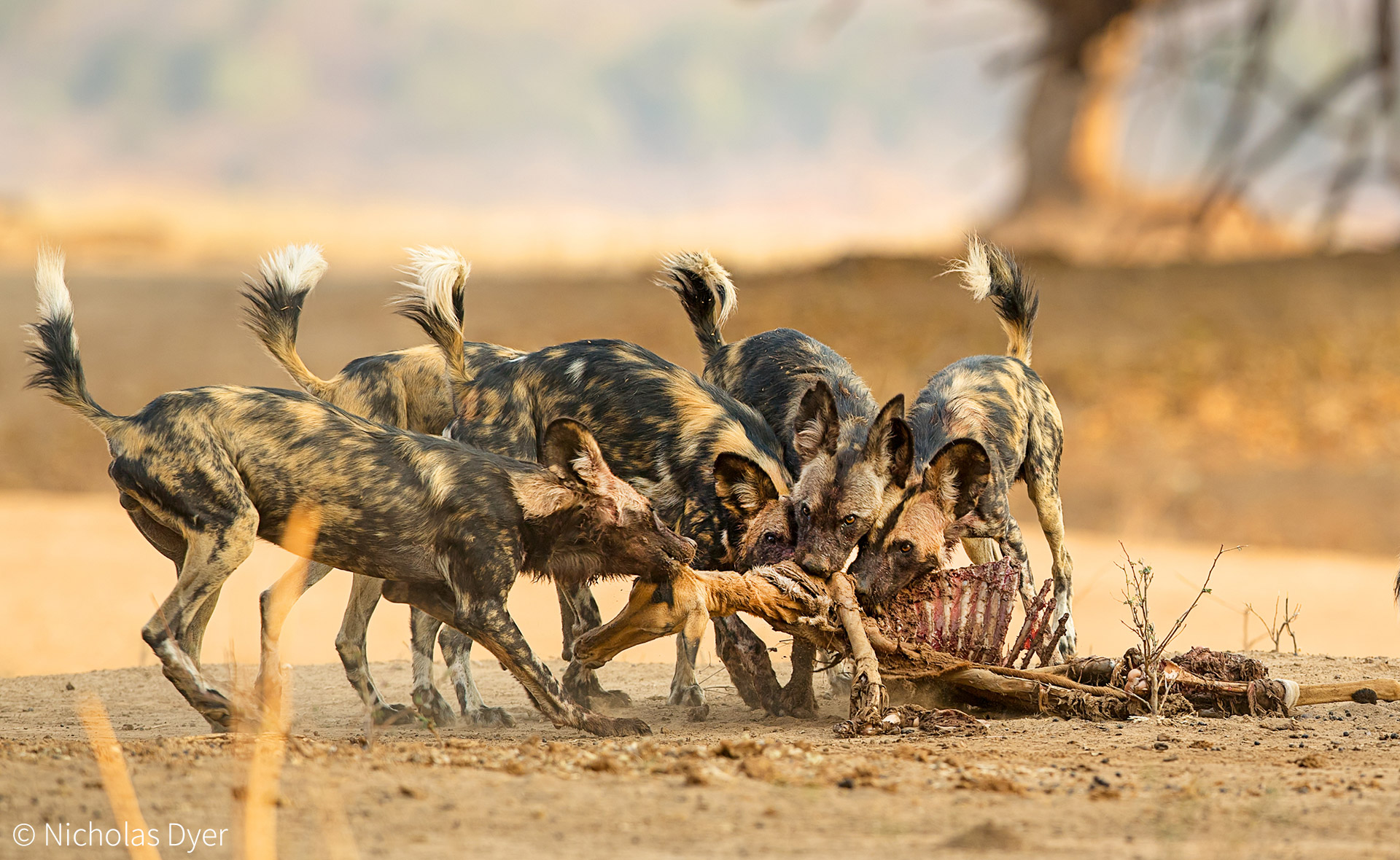
She left behind her aged alpha male Jiani to lead a handful of adults and nine pups. Unusually, after her death, the males and females did not go their separate ways to form new packs as would be expected. Instead, Jiani mated with Whisky, his two-year-old daughter, producing five inbred pups, only one of which survives to this day. (Read Blacktip’s incredible story)
Jiani died last year and this year Whisky mated with her brother Gamma. She is currently denning, unusually in the same den where she was born. She starts her reign as alpha female of the Nyamepi Pack with seven adults, one inbred yearling and seven inbred pups.
Weakened pups?
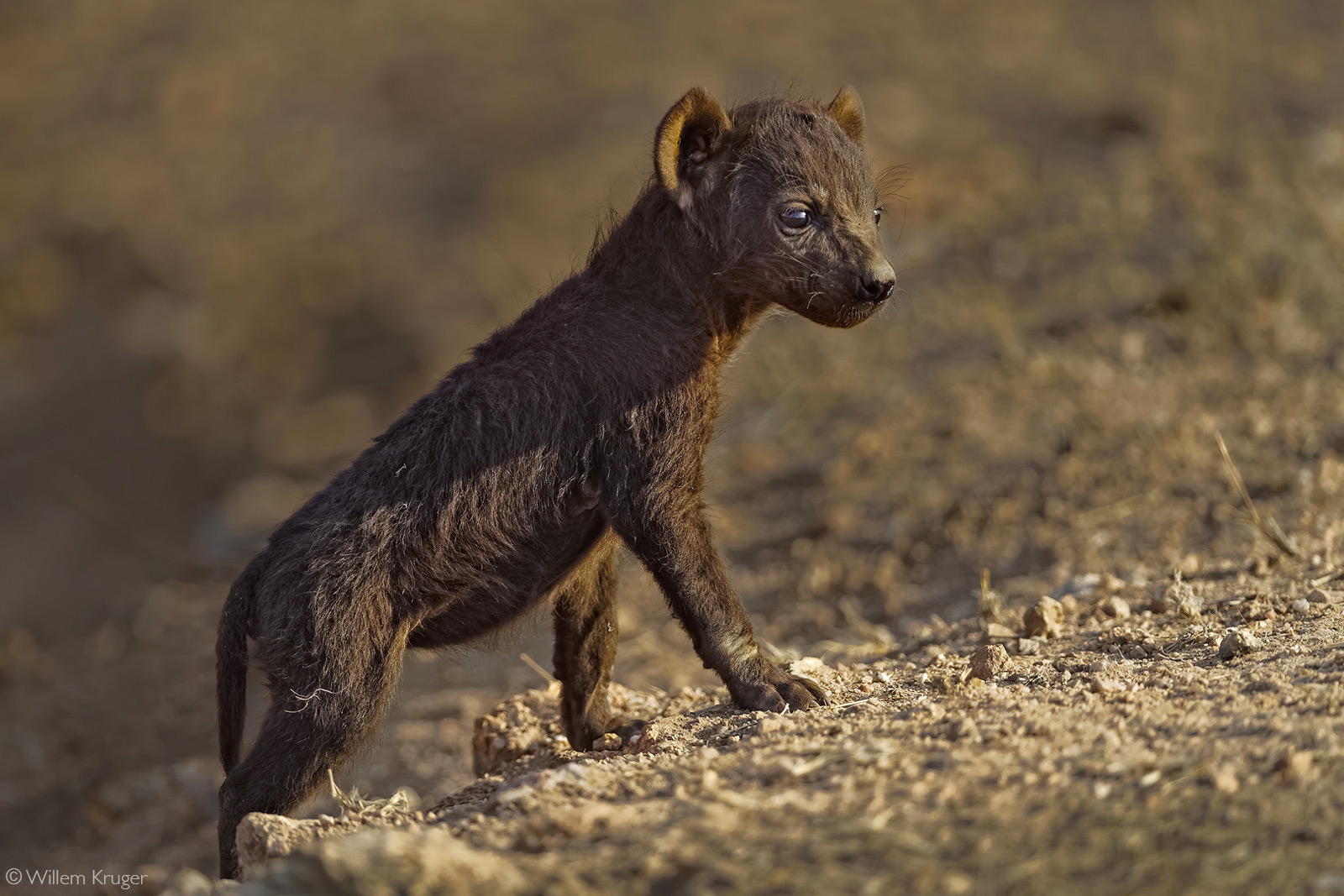
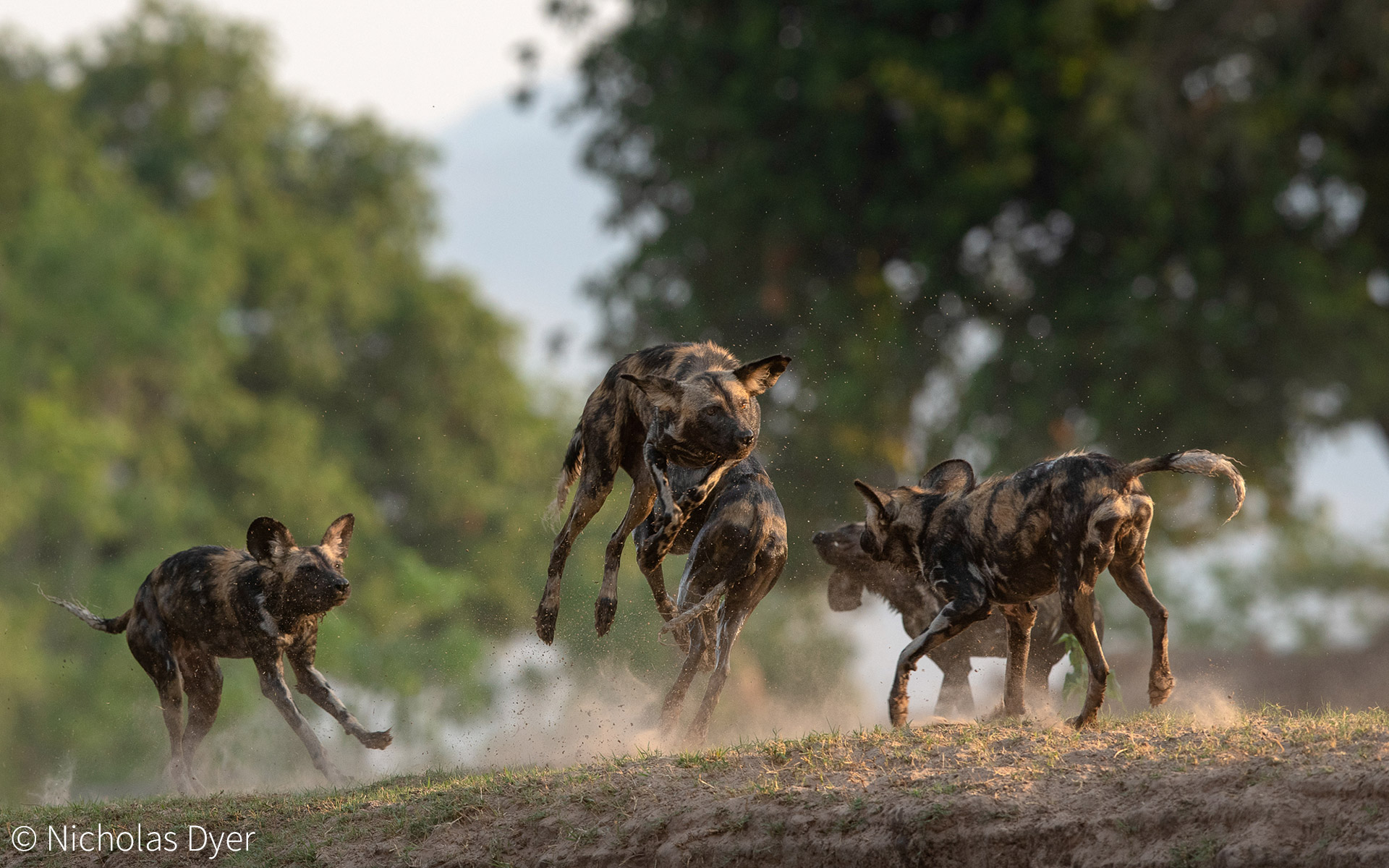
There is an obvious distinction between these four packs. Tait and Blacktip’s packs had a very high survival rate; while of the 36 pups born and successfully denned between Tammy and Whisky, only two survived a year. The other glaring difference is that Tammy’s and Whisky’s pups are inbred. While Tammy’s and Whisky’s offspring appeared on the face of it to be like any gorgeous painted wolf puppies, could they have been weakened by the inbreeding and has their higher attrition rate been nature’s way of keeping the gene pool diluted, even at the expense of a larger population?
This cannot be proven one way or the other, and further, where we know the cause of death, lion and hyena have been the culprit and not some genetic disease. But then maybe they were too mentally impaired to instinctively run faster? This is just random postulating, which leads us down an endless road of dubitable hypotheses that goes nowhere.
However, what is safe to say is that no one will argue that this level of inbreeding in the surviving ‘Dynasties’ packs is good for the broader painted wolf population in the wider Zambezi Valley – let alone for themselves. A study conducted by Stanford University, in partnership with PDC, already shows an “incredibly low genetic diversity” and this excludes samples from any of the latest inbred pups.
Speculating further
Peter Blinston, head of PDC, states, “Right now the population is really fragile, and we don’t understand why.” He offers several possibilities, and subsequent social media reaction has added many more. It’s worth examining some of the main ones in more detail.
Disease and snaring
Disease and snaring are the scourge of the modern-day painted wolves across most of Africa, with whole packs being regularly wiped out. Fortunately, Mana Pools is a ZimParks success story, and poaching is pretty much under control. In 2015, the old Chitake Pack were all found dead from suspected cyanide poisoning, but it seems likely that they were the unintended victim of elephant poaching. Snares are thankfully not a problem on the floodplain as communities live far away.
Disease such as rabies and distemper are also absent, unlike in Hwange where recent cases of the former have been identified by PDC, devastating the packs concerned.
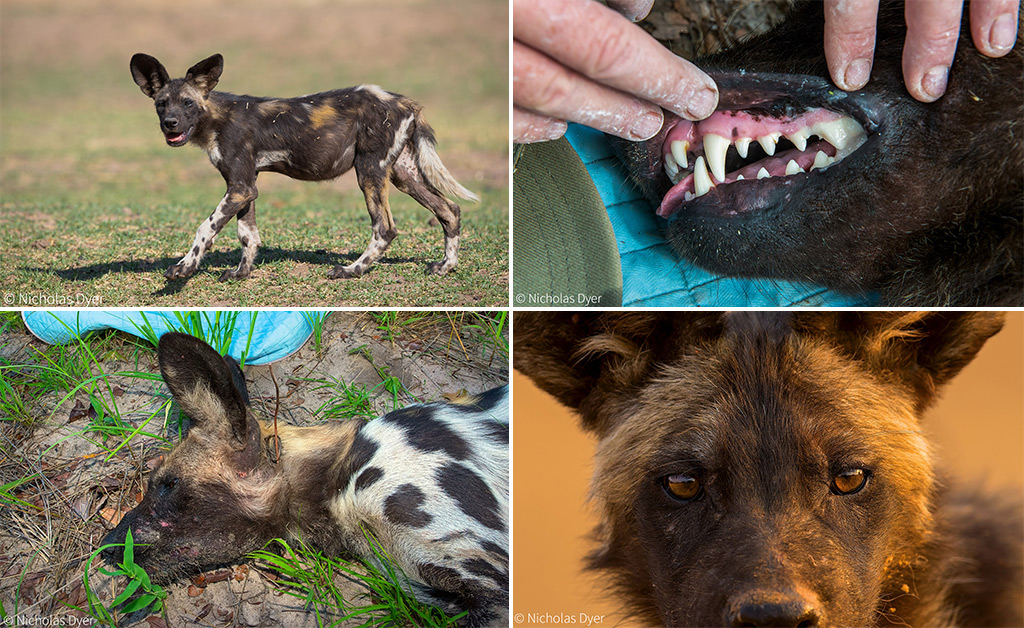
Within Mana, PDCs partner, Stanford University have detected some parasites and bacterial infections in some individuals. Still, it is not clear whether this is unique to Mana Pools or whether they have any detrimental effect. Certainly, no animals have been found dead from an unexplained disease.
Tourism pressure
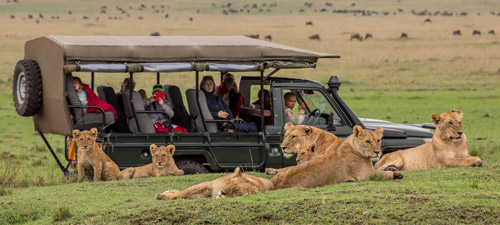
Mana Pools is unique in Africa in that guests are allowed to walk in the park with the wildlife. But no one who has been to Mana in September or October is impressed by the number of people that are sometimes found sitting around the painted wolves in the afternoon heat. It can have a “lions of the Mara” feel to it, and many complain, but at the same time are reluctant to give up their seat to watch the greeting ceremony.
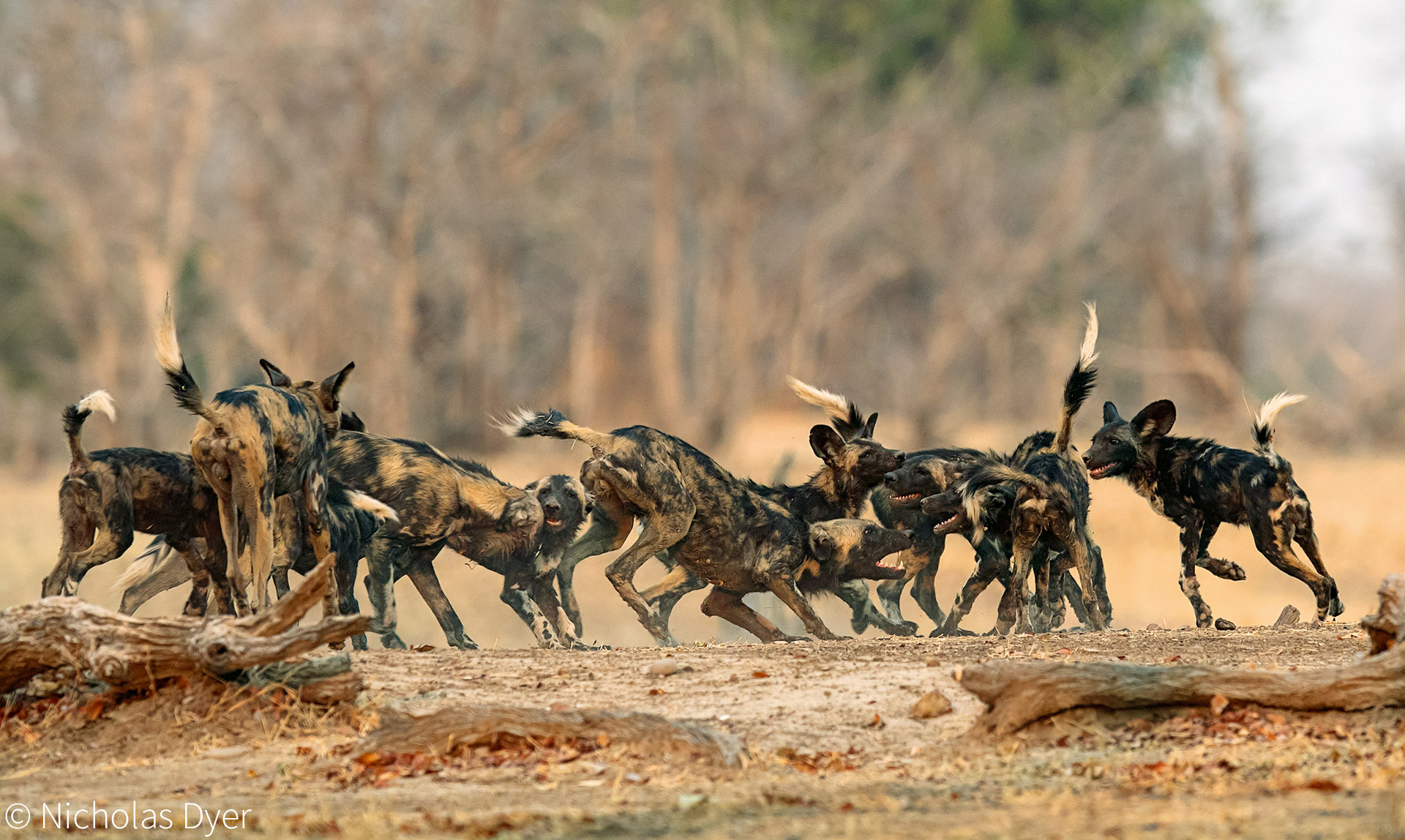
Often, I will turn away when I am by myself and come across such a crowd. But when I am with my guests, who have crossed continents to see the famous painted wolves of Mana Pools, this is much harder to do.
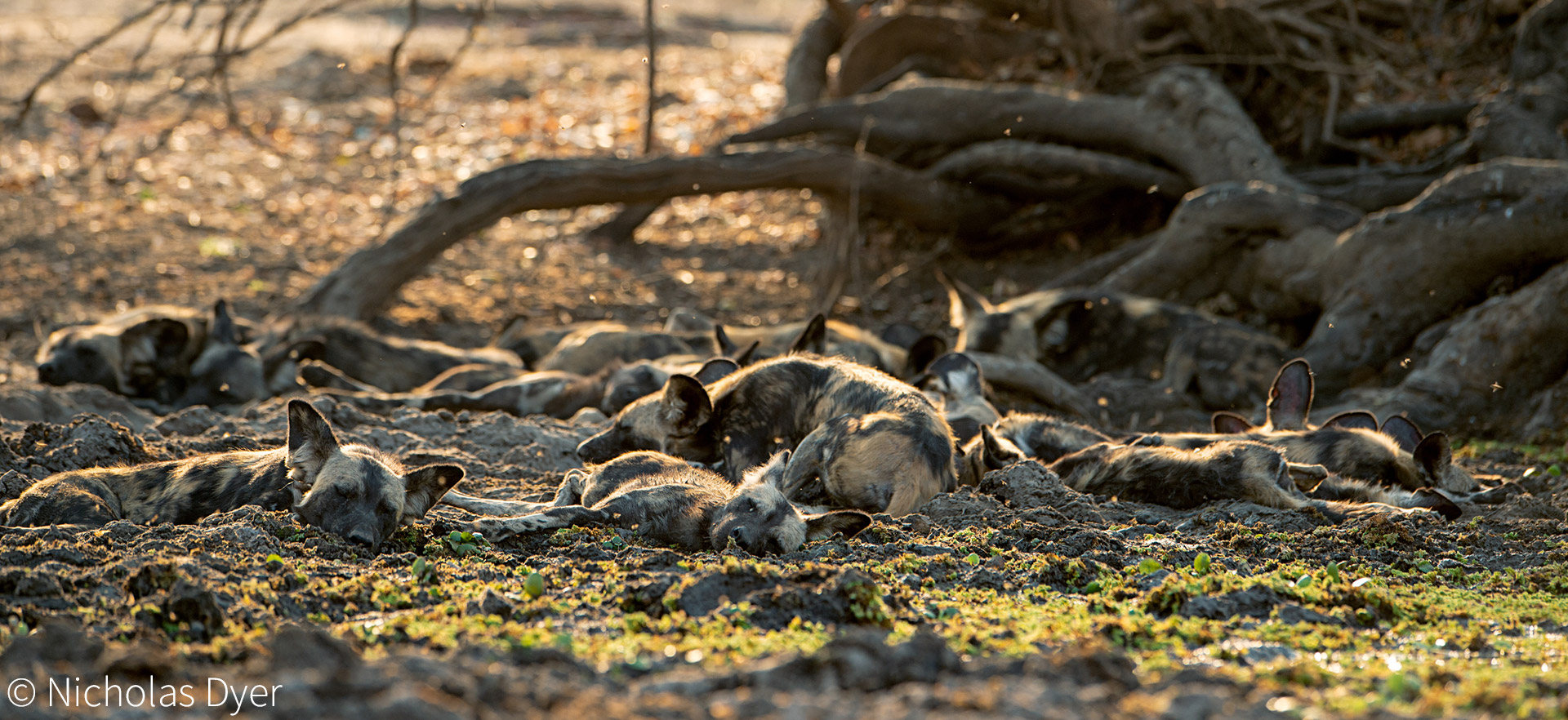
Is our behaviour having a detrimental impact on the dogs? It is impossible to say. They seem very relaxed with us, but maybe our presence is denying them a deeper, more relaxed sleep they desire or need; weakening them for when they need the energy to fight a hyena or lion. Who knows for sure? This is more speculation but a possibility we should be sensitive to.
While guides and guests are generally respectful, what is undeniable is that too many people misbehave when they are with the packs on foot, and disturb them. They get too close, surround the pack, cut off their pups from the pack or bump them from resting place to resting place in a desire to ‘get one more shot’, even when it is clear that they are agitated. I’ve seen some groups boisterously drink cans of beer in front of them. Surely this beautiful and endangered creature deserves more respect than this?
Den visits
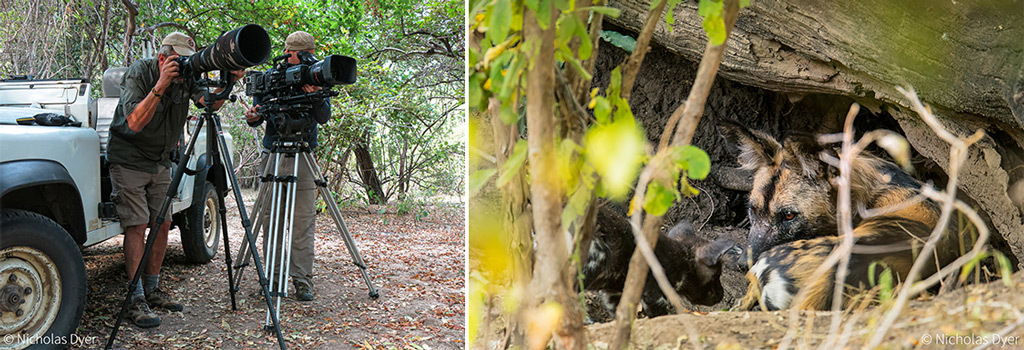
A lot of criticism has been levelled at tourists and operators visiting the dens. I spent a significant amount of time at Blacktip’s and Tammy’s dens in 2016 when photographing for Painted Wolves: A Wild Dogs Life under the continuous guidance of ZimParks and PDC.
Often, I was with the BBC. Both of us had powerful lenses with a reach of over 1250mm, which meant we did not need to go anywhere near the den itself. In my book, I describe the extraordinary measures I went to, to avoid any disturbance. The BBC crew were also highly professional, and our whole ethos was to stay quiet, do our jobs and leave when we had got what we needed or on any signal from the wolves that they were not comfortable with us being there.
Dens are incredibly sensitive places and require the utmost respect and a good knowledge of how to behave. Occasionally, guides bring their guests to the den. Most are professional and respectful, but I have witnessed horrific behaviour, including a guide who took eight guests right up to the hole and peered in. He never saw me as I was buried in a bush some way away, screaming inside.
My concern is twofold. First, how do you police bad behaviour and second, if every operator took their guests to the den, would it not have a catastrophic effect on the dogs? I can only police myself, and as such I will never take my guests to a den in Mana (see my policy) and nowadays only rarely visit them with PDC to secure unobtrusive photographs for their research.
Having said all this, in the last eight years, I have only heard of one pup dying at a den, or when moving from den-to-den and that was one of Blacktip’s – taken by a leopard. The record of all the Mana Pools packs in raising their pups to become nomadic is almost 100%.
Hyena and Lion
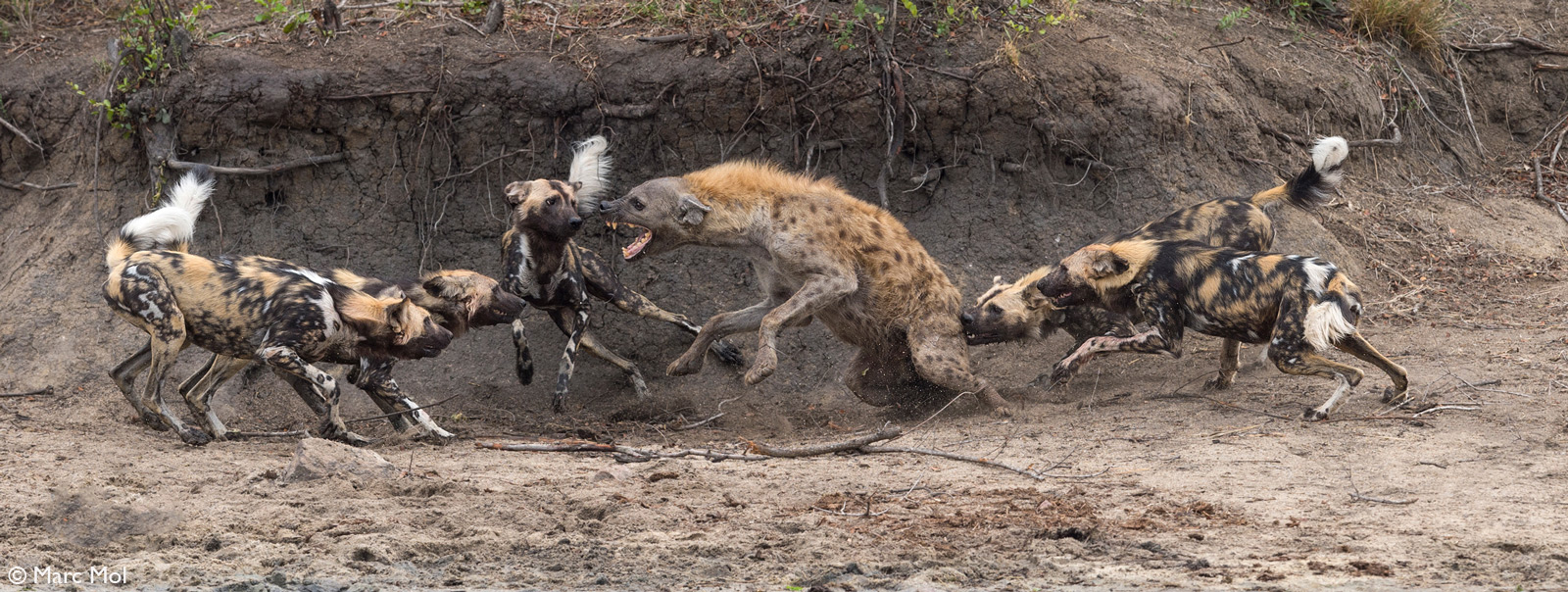
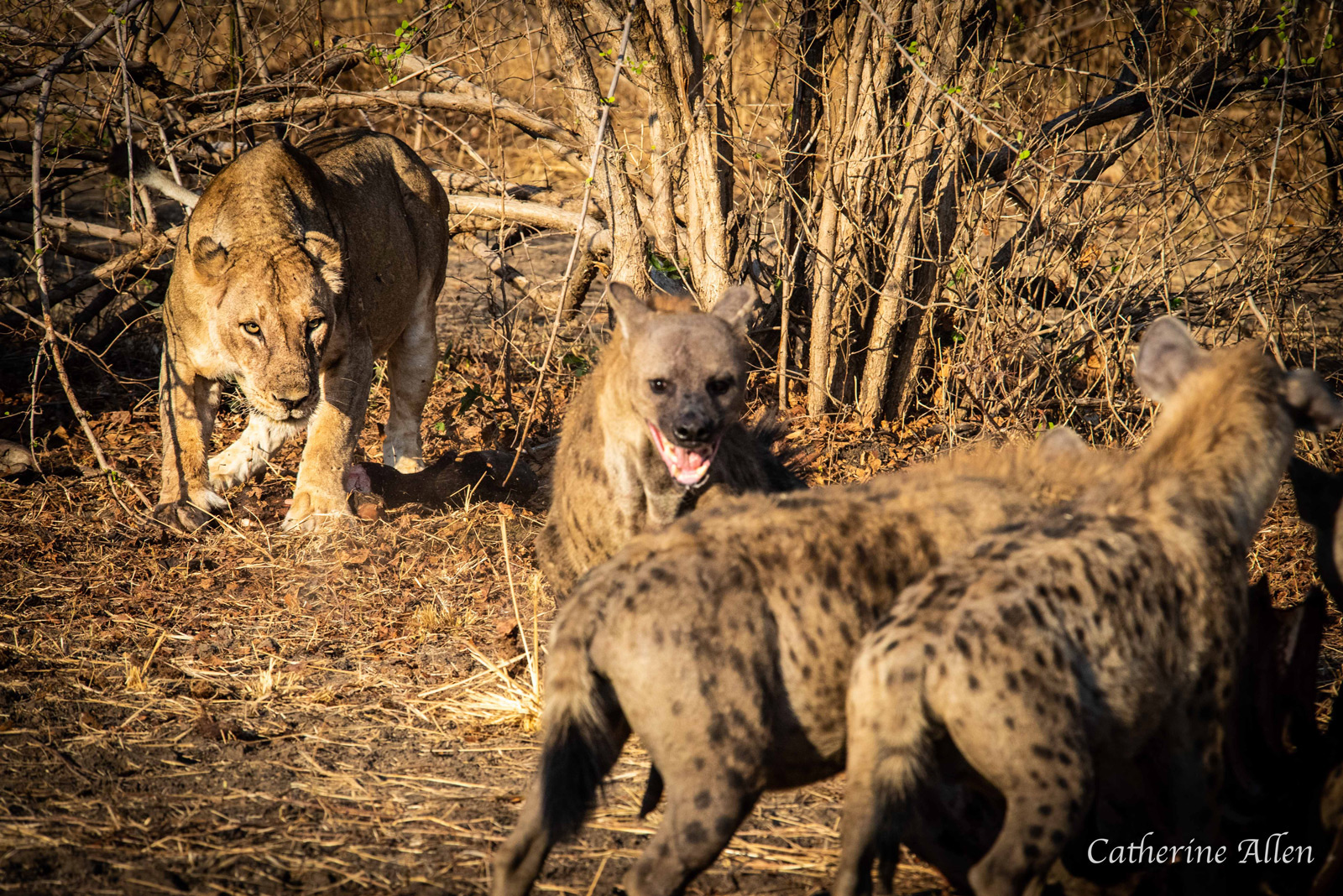
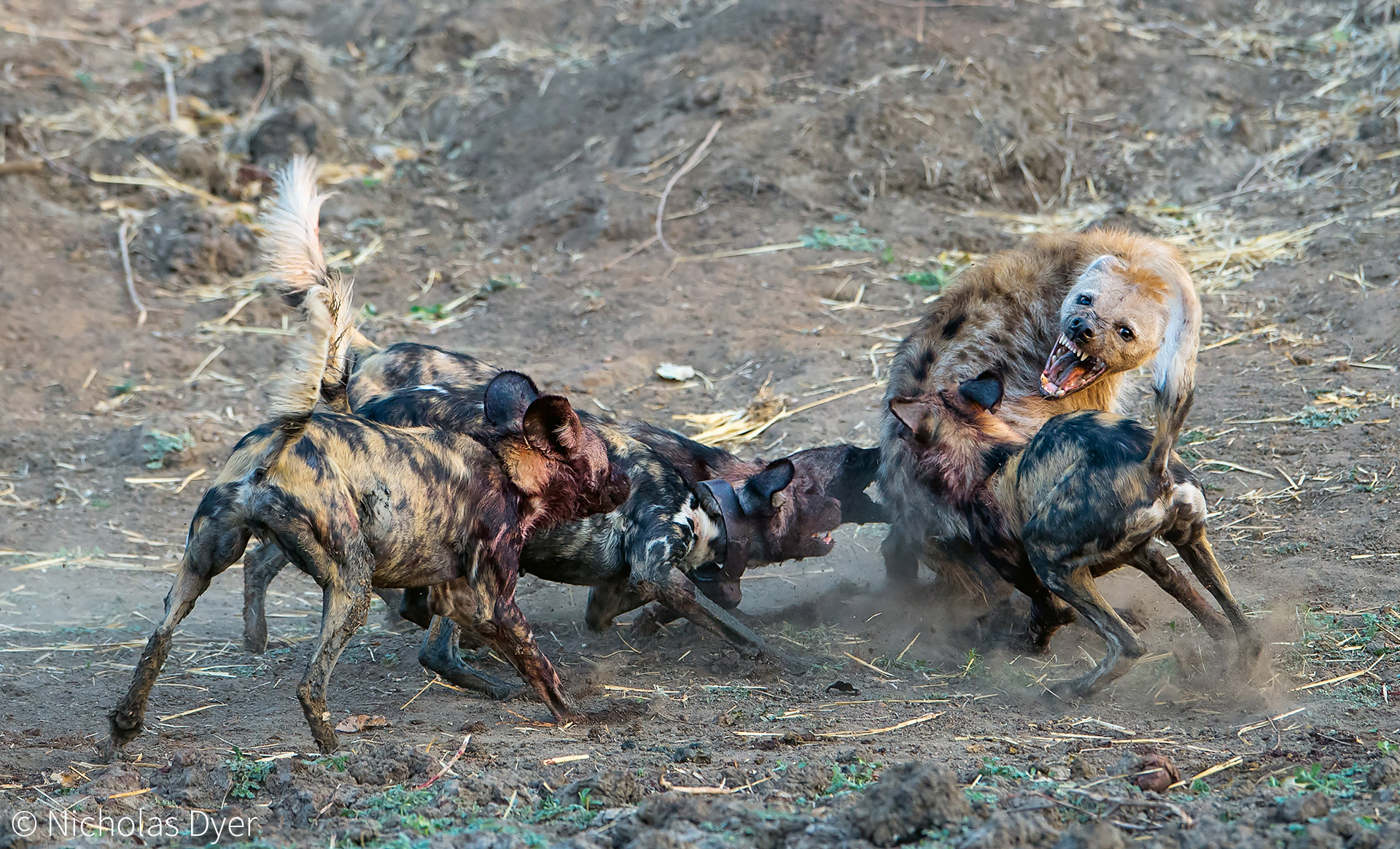
Whenever there is a confirmed kill of a painted wolf in Mana Pools, lion and hyena are usually the culprits. Leopard and crocodile have had a marginal impact, baboons were occasional suspects, and elephants just like to make a lot of noise chasing them.
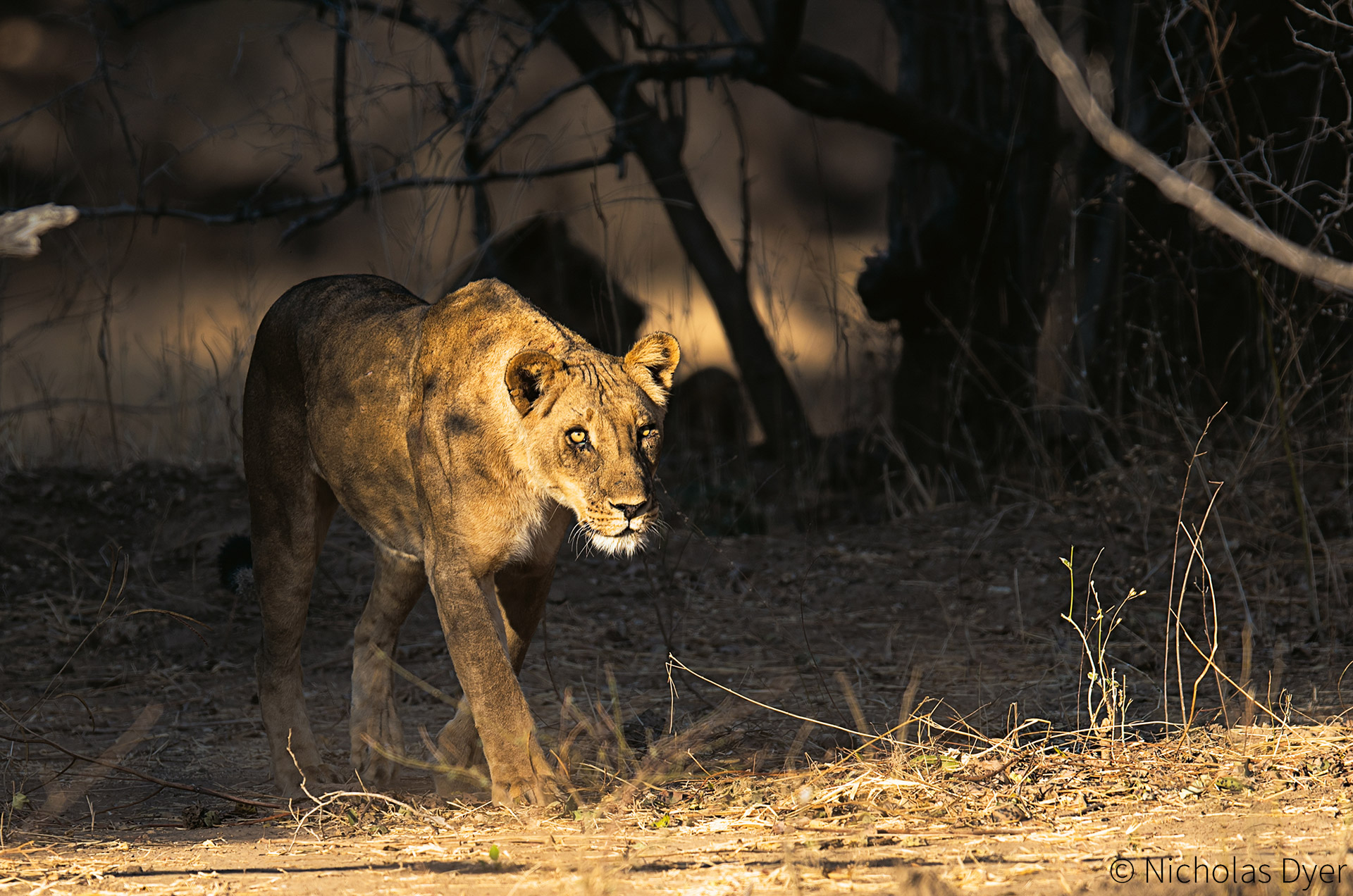
The large lion pride in the Nyamatusi are particularly aggressive towards the wolves and have accounted for the significant number of casualties in both Tammy’s and Tait’s packs.
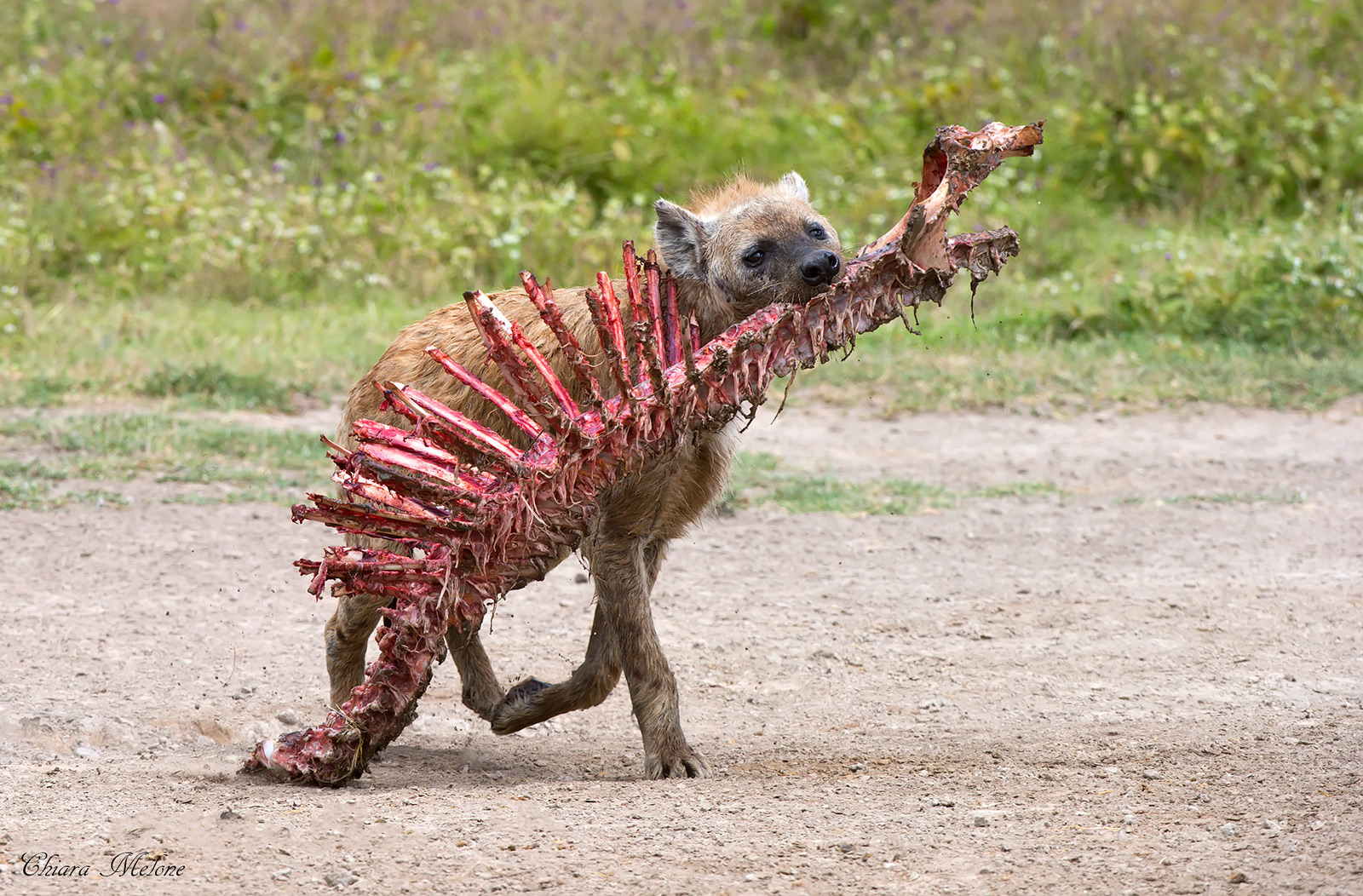
Meanwhile, it is a feeling among many guides and rangers that there has been a marked increase in the hyena population on the floodplain over the last three years. This is anecdotal, but perhaps ZimParks new predator research programme, aided by Bushlife Conservancy, will be able to corroborate this in time.
The Drought
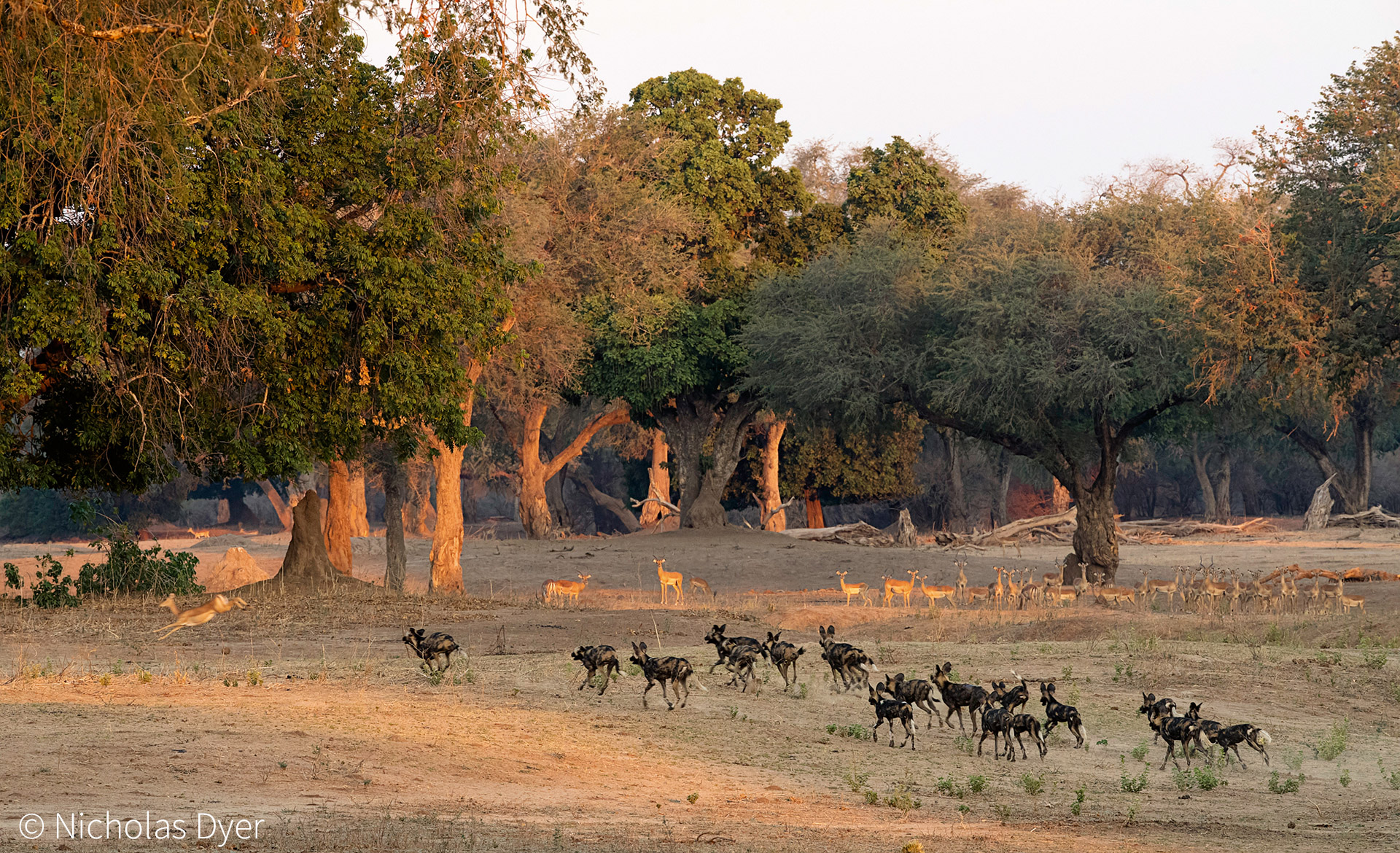
Some have suggested that the drought may have lessened their prey base, but this seems unlikely. The floodplain provides an abundance and, if anything, the weakened impala made things easier.
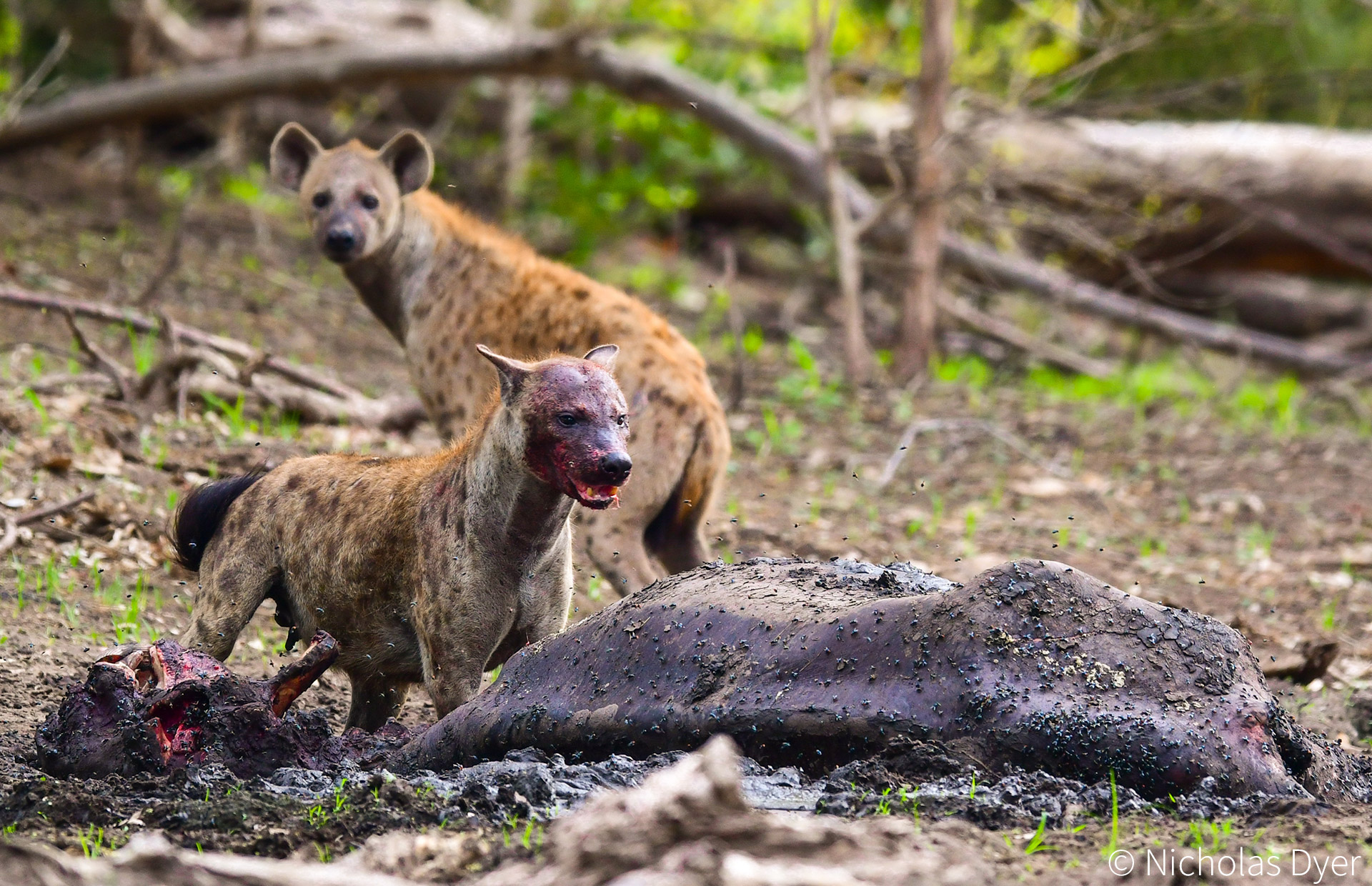
What is of more concern is that the high number of starved animal carcasses last year could deliver a further proliferation of hyena this year – because of the copious scavenging opportunities during the drought.
Is there a solution?
All the above have been put forward as factors to demonstrates the possible reasons for the declining painted wolf population on the floodplain. While it is blatantly evident that lions and hyena are their chief nemesis, it is not to say that the other factors, either singularly or in unison, are not exacerbating the problem.
While there is not much that can be done about their natural antagonists, there are things that are being done and could be done further, to improve the prospects and welfare of the Mana Pools packs on the floodplain.
Gene Genie
One clear issue is genetics and what seems necessary is new blood on the floodplain. In an innovative collaboration between, ZimParks, conservation, tourism and communities, a new pack has been brought into Mana Pools from Hwange National Park.
The Mpindo Pack were denning in the middle of Mpindo Village and causing significant damage to local livestock. The community contacted PDC to remove the pack. The pack was successfully translocated to the centre of Hwange National Park, but they soon returned.
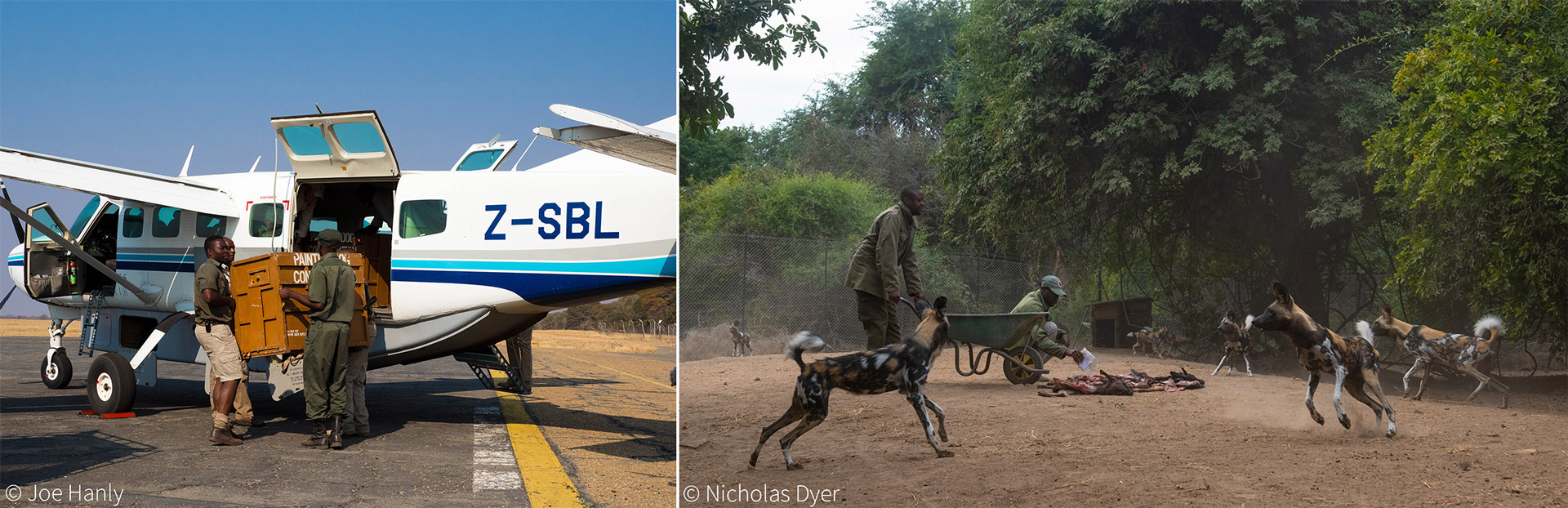
This time the community could not sustain further damage, and the painted wolves’ existence was in peril. But still, the community contacted PDC and, with the support of ZimParks and Wilderness Safaris, the pack was captured again and translocated by air to Mana Pools. There are now 19 painted wolves with new genes in a boma in Chikwenya waiting to be released to add to the resident population.
Their impact, when released, is uncertain and will be keenly studied by PDC and ZimParks. It is hoped that this otherwise doomed pack will contribute to the genetic diversity of the local population, adding to its strength. Whether they move up to claim the floodplain will be interesting to observe.
Better behaviour
Further interventions to rebalance the ecosystem in favour of painted wolves are problematic and contentious. Still, there are things that we, as tourists, photographers, guides, and operators can do to reduce the pressures on the painted wolves.
This relies on greater education, a strengthened code of conduct concerning our behaviour around the packs when on foot, and perhaps a means to enforce it.
I will put my hand up and say that when I first came to Mana, I made ignorant mistakes. I got too close, scared their prey when they were on the hunt and failed to recognise, in my eagerness to ‘get that shot’, signs that they really did not want me around. Mea culpa!
But, through gentle and more robust encouragement from brilliant Zimbabwean guides, guidance from PDC and my own research and personal development, I soon learnt to treat them with far more respect.
These packs mean the world to me, and now that I see them in a fragile state, it is even more important to recognise that what was seen as acceptable even just a few years ago is not today. I have further moderated my behaviour; giving them more space, limiting my time with them and ensuring that getting a great photograph is well down my list of priorities when they are in front of me. There may be more; I certainly see no reason to visit their dens during this period of fragility.
I suspect that most of the guides and operators would agree to a more robust code of conduct. It would be great if interested parties could get together to develop this collaboratively, not just for the welfare of the wolves but also for a better experience for their guests.
The Bigger Broader Brighter Picture
The headlines suggest that the painted wolves of Mana Pools are much diminished. From the two-pack, fifty-plus population of 2014, it is only the in-bred Nyamepi that are left laying claim to the floodplain today.
However, Mana Pools is not just the floodplain. A far greater expanse lies beyond the Mopani line, south to the escarpment, and stretches east and west along the mid-Zambezi valley.
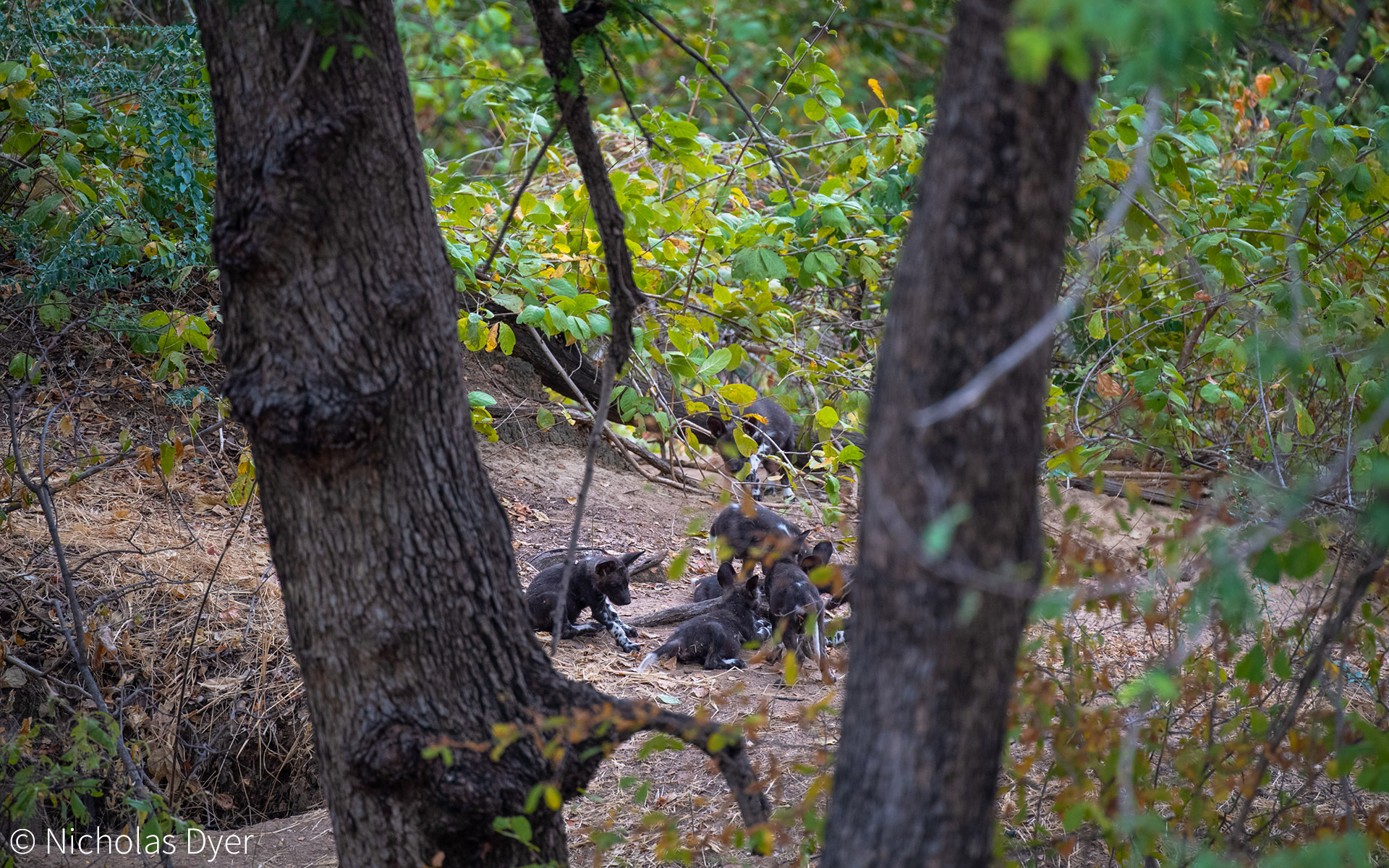
Three of Blacktips daughters dispersed and met up with one unrelated male called Tim and are now denning on the eastern extremes of the Park. They have formed the Ilala Pack and have at least seven new pups.
In Ruckomechi, Taku, another of Blacktip’s daughters, is running a small but successful pack and I found two of Blacktip’s sons, Talon and Bear, in a new pack called the Dandawa, up by Kanga in October last year. Seven others have since joined this pack – and that was before denning.
Behind the floodplain, there is the rarely seen Cheruwi Pack found around the Nyakasikana area, and the Chitake and Kavinga packs against the escarpment.
Heading west are regular sightings of painted wolves in the Sapi, and in the Chewore there are confirmed sightings of a thirty-plus-strong pack seen last year with a very large litter. Further upstream a pack is regularly seen around Mongwe and another beyond the escarpment around Marongora.
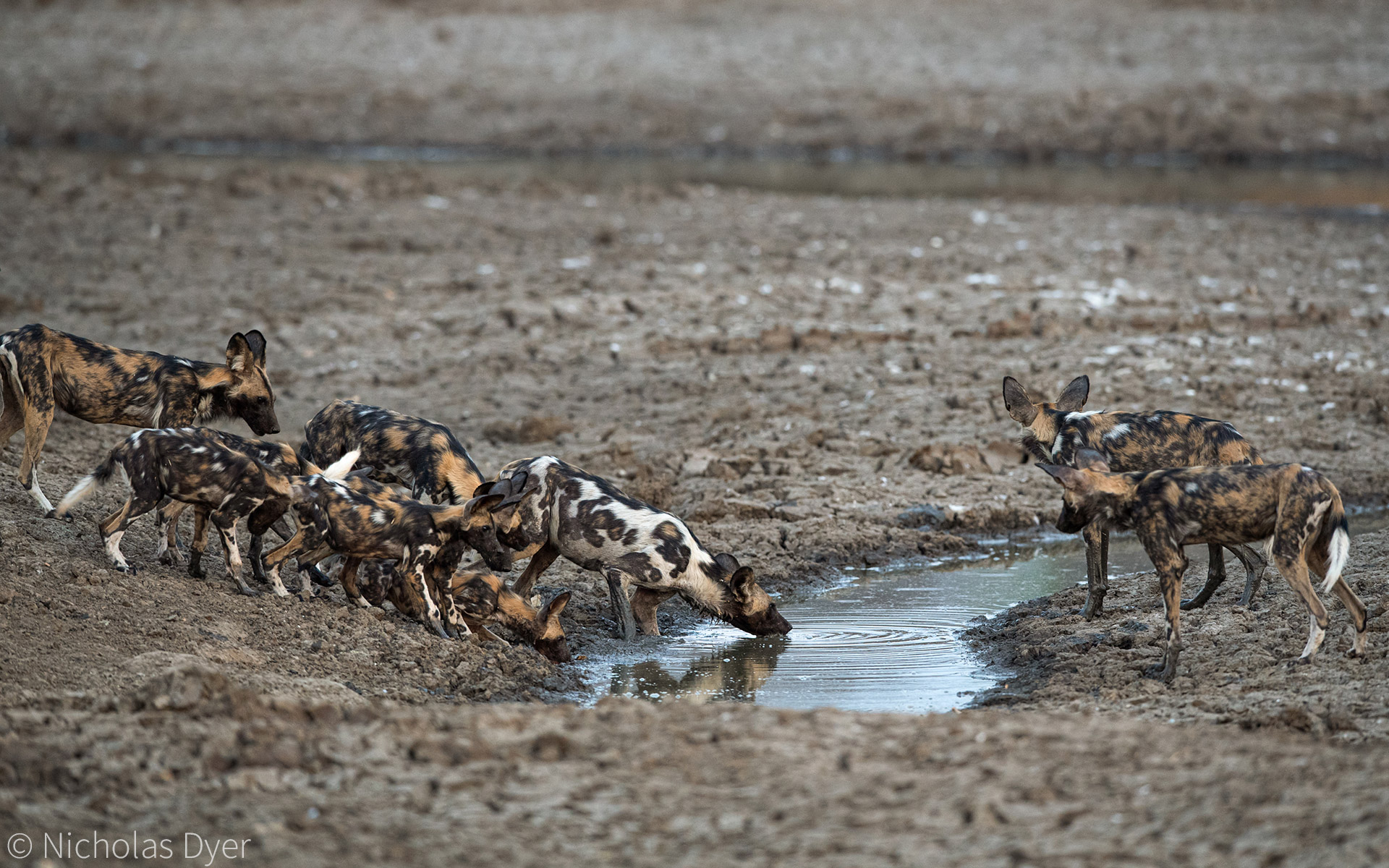
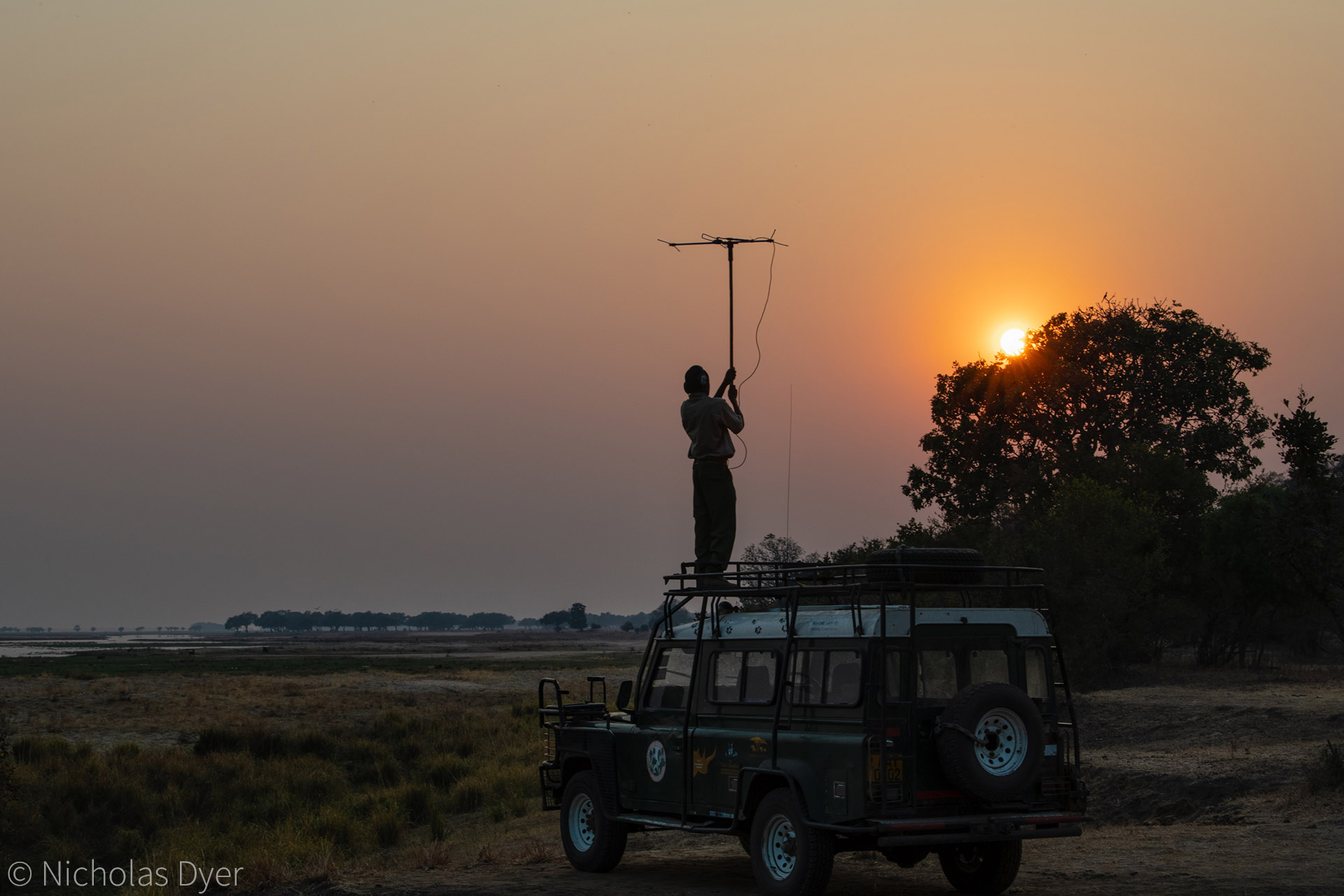
PDC is expanding its resources in the mid-Zambezi Valley and is now able to significantly increase their research and monitoring from their new permanent base at Nyamepi.
A Temporary Hiatus?
It is hard to explain why the males and females of the Nyakasanga Pack did not disperse separately after Blacktip’s death to meet some of the other dispersals in Mana. This is not behaviour that I have ever seen reported anywhere in Africa.
While we can speculate, no answer can be made with any accuracy, but I rather romantically like to think that Blacktip was such a dominant alpha, and the cohesion of the pack so strong, that no one wanted to leave. It was certainly the feeling you got when you were with them.
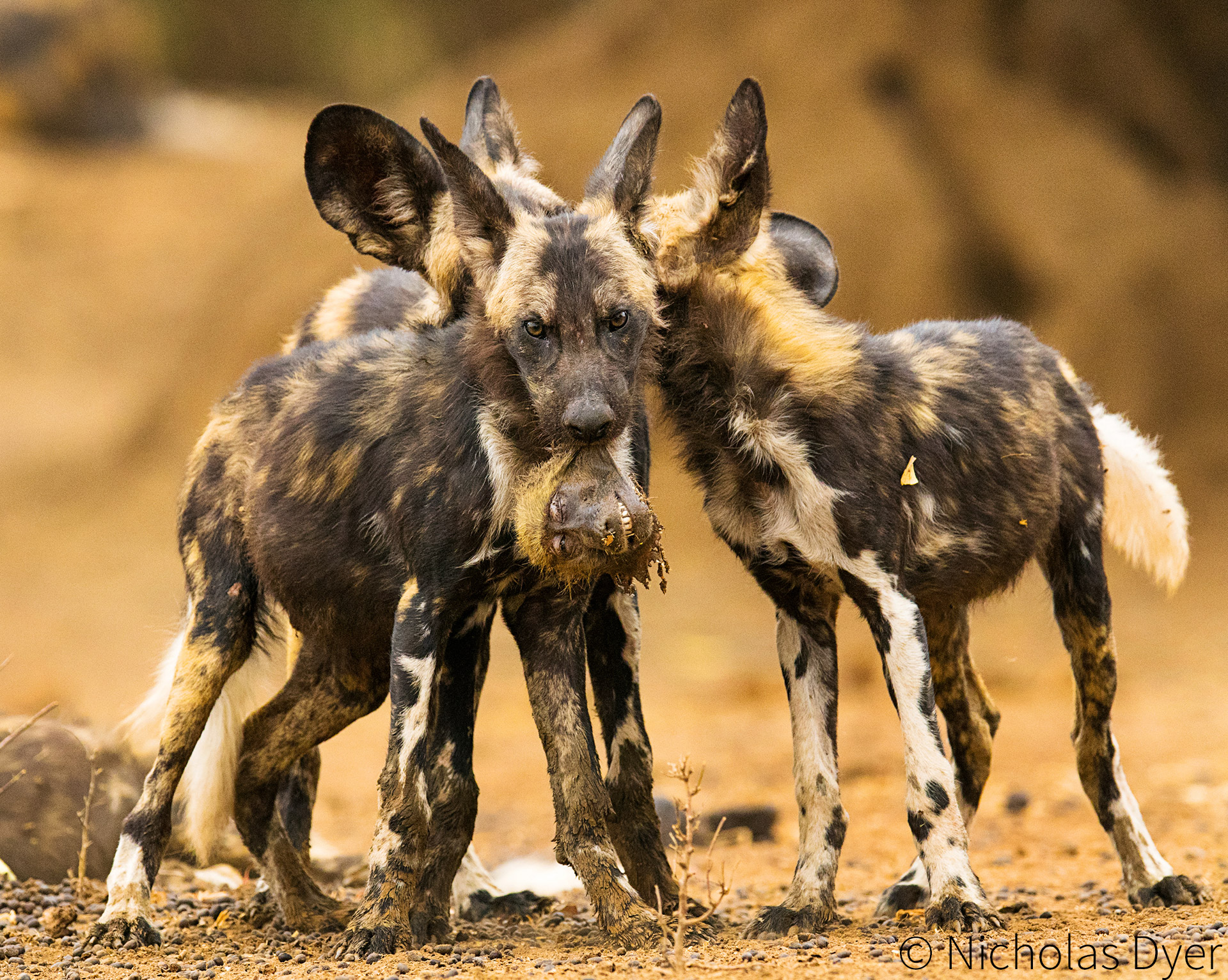
But, as I have mentioned, this occurrence is very rare indeed, and it is fascinating to be able to witness a pack that seems to break all the rules. Remember that these were the guys that first started predating on baboons – again something never seen before.
It will be interesting to continue to monitor the inbred pups’ survival rates, the success of dispersals and how the new blood of the Mpindo will invigorate the concentrated gene pool. This pack is likely to dominate the headlines for some time and remain a fascination to visitors when the COVID crisis permits.
It’s still a paradise.
With the significant painted wolf populations in the hinterland, I have little doubt that the abundant floodplains of Mana Pools will remain a fantastic home for painted wolves, with the capacity to carry two large packs from the Sapi to the Ruckomechi Rivers. The question will be whether the Nyamepi Pack will be strong enough to hold onto this prime piece of painted wolf real estate.
The strong partnership between Zimparks and PDC has become a powerful ally for the painted wolves. Everyone who visits Mana should feel part of that partnership to ensure that this remains the best place to see painted wolves in the wild.
With new genes and better, more respectful behaviour, we can ensure that we are doing our best for a species that is already under significant pressure and does not need any more.
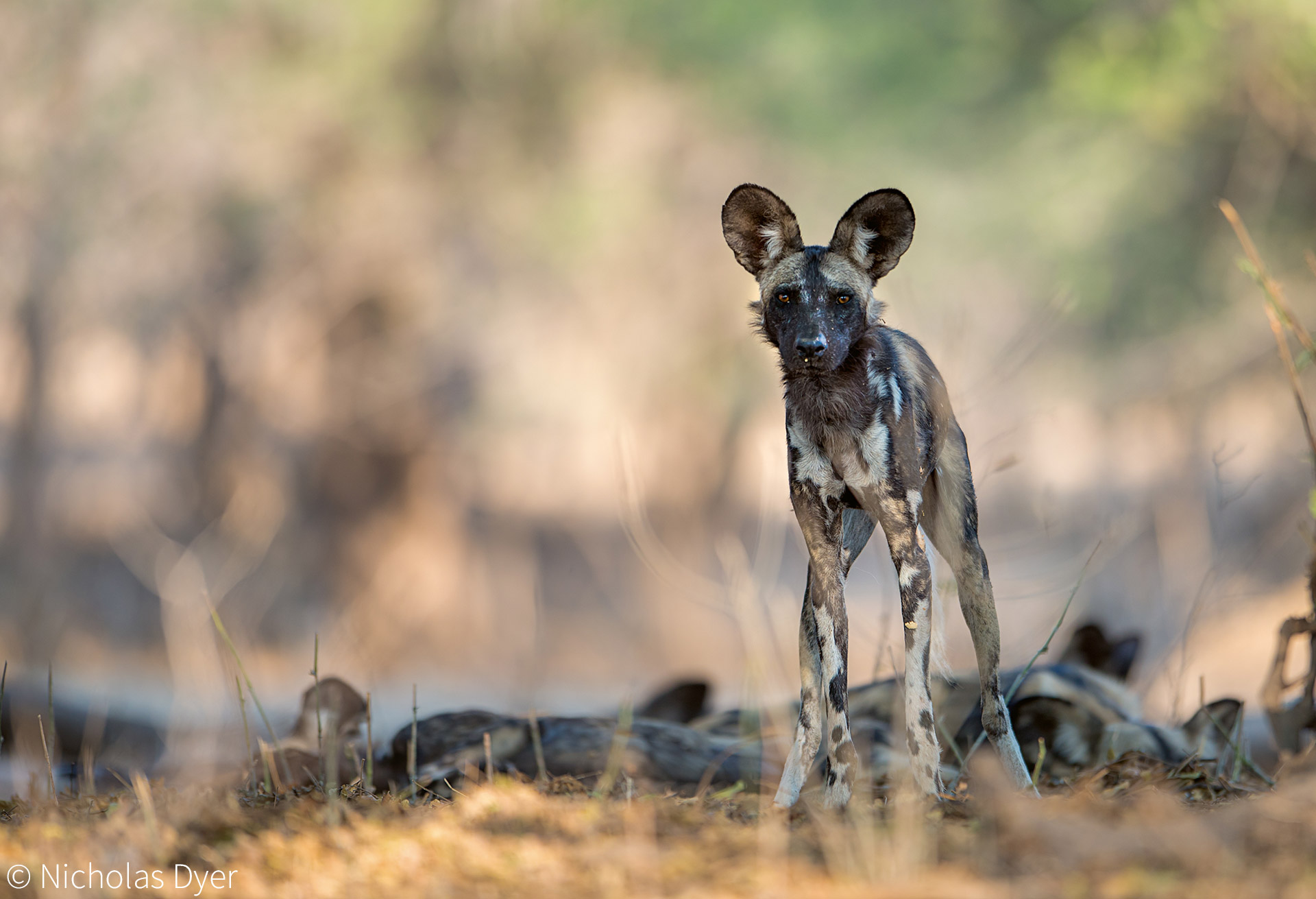
Some say ban tourists, but that would be a disaster. For the painted wolves to survive, they need people to come and enjoy and celebrate their magic. Unlike for much of their recent history, when we treated them as vermin, they are now better off with us than without us, and for that, we should be proud.
Further, seeing the park empty and the devastation that COVID has caused, reminds us all how much we rely on tourism to support wildlife, communities, and the incredible parks and rangers that keep these animals safe. Filmmakers and photographers spread the magic of the park beyond immediate visitors to those that are yet to come.
All must be welcomed, but we must remain mindful that we are in their home and we have a duty to respect that. If we do all this, then there is no reason why the painted wolves of Mana Pools cannot continue their legendary status and remain a mecca for visitors from around the world.
Nicholas Dyer
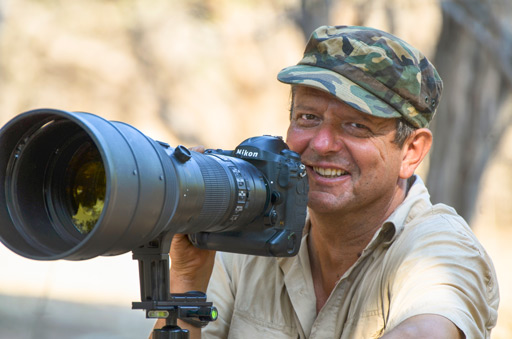 Nick is an award-winning wildlife photographer, author, photographic guide and conservationist.
Raised in Kenya, he spent much of his life working in the City of London as a fund manager before running his own investment marketing business. In 2011 he returned to Africa to focus on photography and conservation.
Nick has an enormous passion for painted wolves spending the last eight years following three packs on foot in Mana Pools, studying, photographing and documenting their lives with deep intimacy, giving talks and lectures on them around the world.
He is the co-author of the highly acclaimed coffee table book, Painted Wolves: A Wild Dog’s Life, which he wrote with Peter Blinston and is Chairman of the Painted Wolf Foundation which he set up to help raise awareness of this highly endangered creature and support their conservation in the field.
Nick leads specialist safaris across Africa to see and photograph these incredible creatures, offering his guests a unique insight and experience while contributing to their conservation.

 DID YOU KNOW that African Parks offers safari camps (lodges and campsites) where 100% of tourism revenue goes to conservation and local communities?

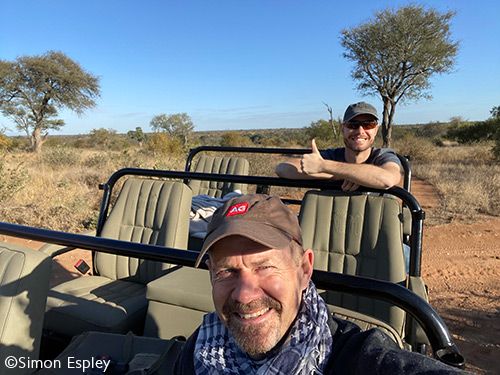 Simon Espley is an African of the digital tribe, a chartered accountant and CEO of Africa Geographic. His travels in Africa are in search of wilderness, real people with interesting stories and elusive birds. He lives in Hoedspruit with his wife Lizz and two Jack Russells, and when not travelling or working, he will be on his mountain bike somewhere out there. His motto is ‘Live for now, have fun, be good, tread lightly and respect others. And embrace change.’ Picture: Simon Espley (front) and Villiers Steyn (back) on assignment in Timbavati


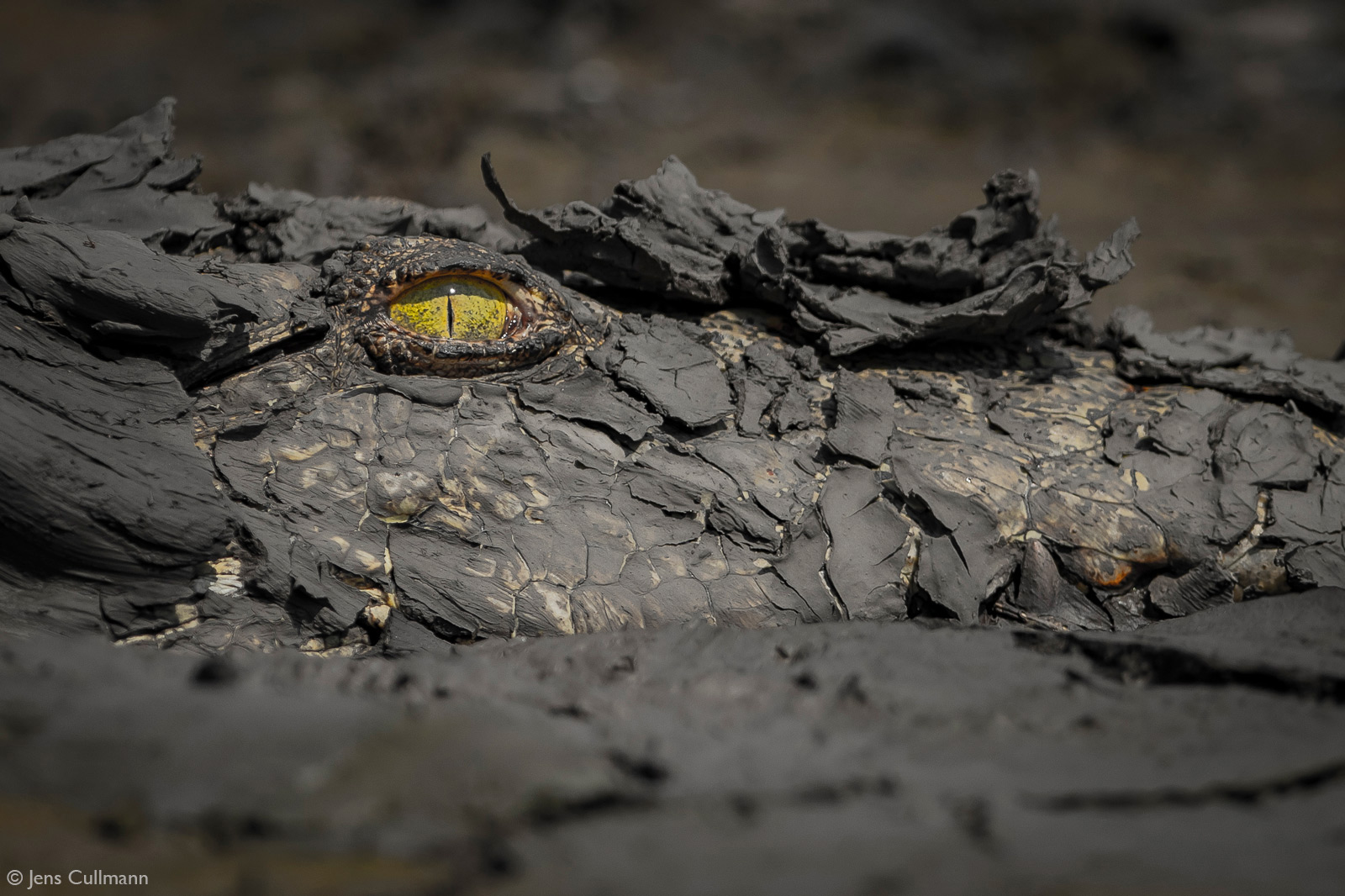
 Jens Cullmann was born in Nuremberg, Germany, in 1969. His introduction to photography was at age 13 when he got his first camera. As a teenager, he worked with black & white film and image developing until he was able to acquire more sophisticated equipment. ‘There is a very physical aspect to my work because you need a lot of discipline and endurance to deal with some of the tough environments that come with wildlife photography.’ It was during a trip to Namibia and Botswana in 2003 that Jens’ passion for wildlife photography really ignited and he has grown in stature since then. He has won several prestigious international awards such as the 2017 Botswana Wildlife Photographer of the Year, 2018 International Photographer of the Year and most recently, he was the winner of the 2020 GDT Nature Photography of the Year 2020 (German Society for Nature Photography). Jens was a runner-up in the 2019 Africa Geographic Photographer of the Year.
 Marcus Westberg is an award-winning Swedish photographer and writer who focuses primarily on solution-oriented coverage of conservation topics in sub-Saharan Africa. He is a photographer for African Parks, and his work is frequently found in publications such as the New York Times, bioGraphic, Vagabond, Wanderlust and Africa Geographic. Visit his
 Julien Regamey’s interest and passion for the natural world began at a young age when he commenced his studies at Vivarium de Lausanne, Switzerland, under renowned herpetologist Jean Garzoni. After three years Julien went on to complete his education at Kinyonga Reptile Centre in the town of Hoedspruit near the Kruger National Park, South Africa. He then trained at the nearby Siyafunda Wildlife and Conservation, which equipped him with the skills to identify local fauna and flora, track wildlife and gain essential bush survival skills.
 Andy Howe is a UK-based wildlife photographer who specialises in capturing the personality and character of his subjects, with a particular focus on owls and birds of prey. Andy leads small groups of photographers to India, Rwanda and Kenya. His images have been published in such publications and competitions as Bird Guides, Bird Photographer of the Year, Nature Photographer of the Year, Africa Geographic and Natures Best Awards. More recently he was appointed as a Fellow of the Society of International Nature and Wildlife Photographers and an Associate of the Royal Photographic Society.
 Charl Stols was born and raised in South Africa, where he was fortunate to visit several national parks. He began his journey in photography in 2003 while working on a cruise vessel as a resident photographer in 2003. During that time, he also met his wife, Sabine, who shares his passion for photography.
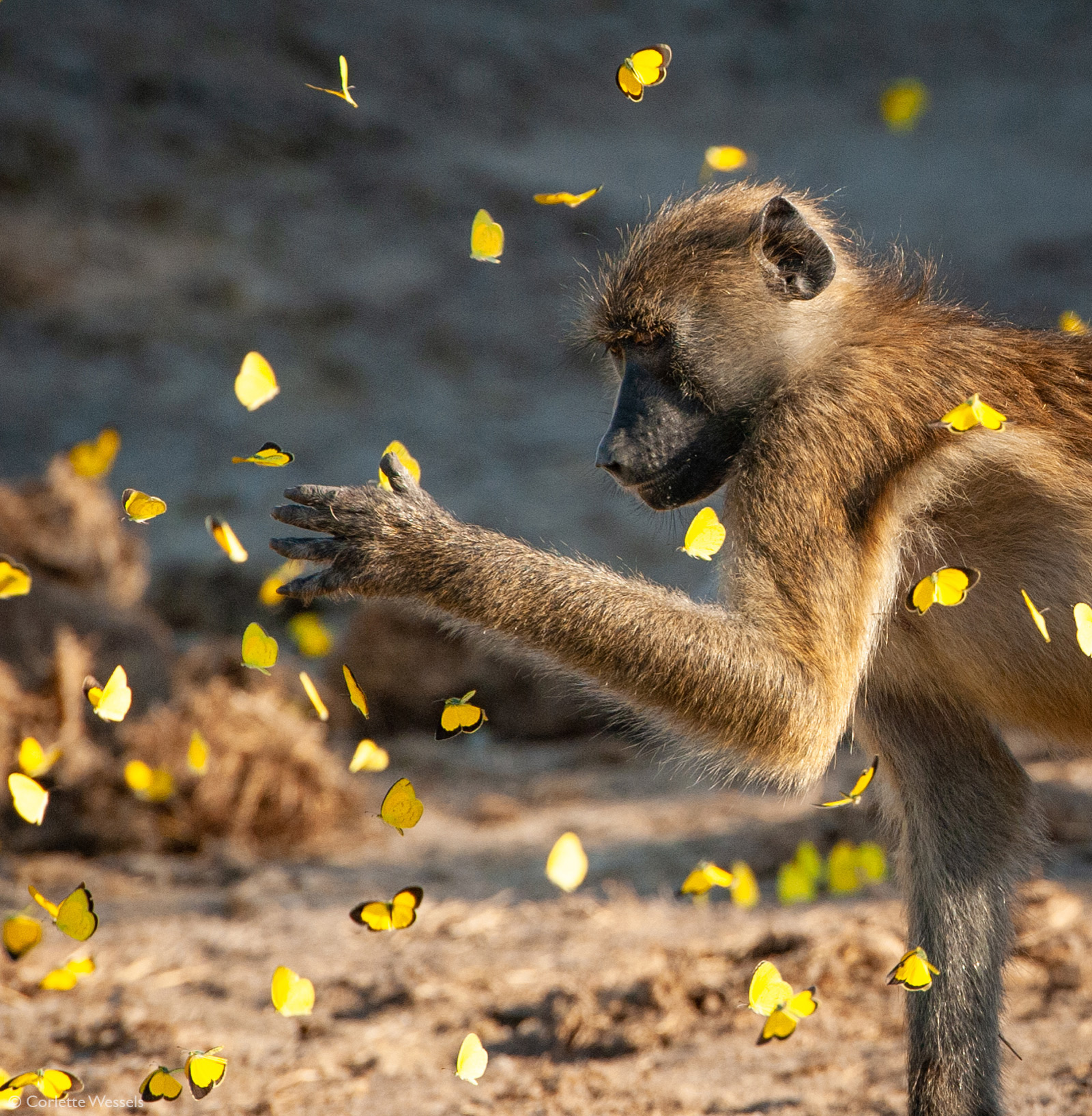
 For Corlette Wessels photography is not merely a hobby; it’s her passion! Her father was an avid photographer and, as a child, she would always admire him behind his lens. Her love for photography grew as she got older, and she started with film and later turned to digital. By starting with film, she learned a great deal about photography, and of course learned her lessons the hard, expensive way. As her passion grew, she invested in better gear and several dedicated photographic trips with professional photographers. It was on those trips that she learned the most, from hands-on training.
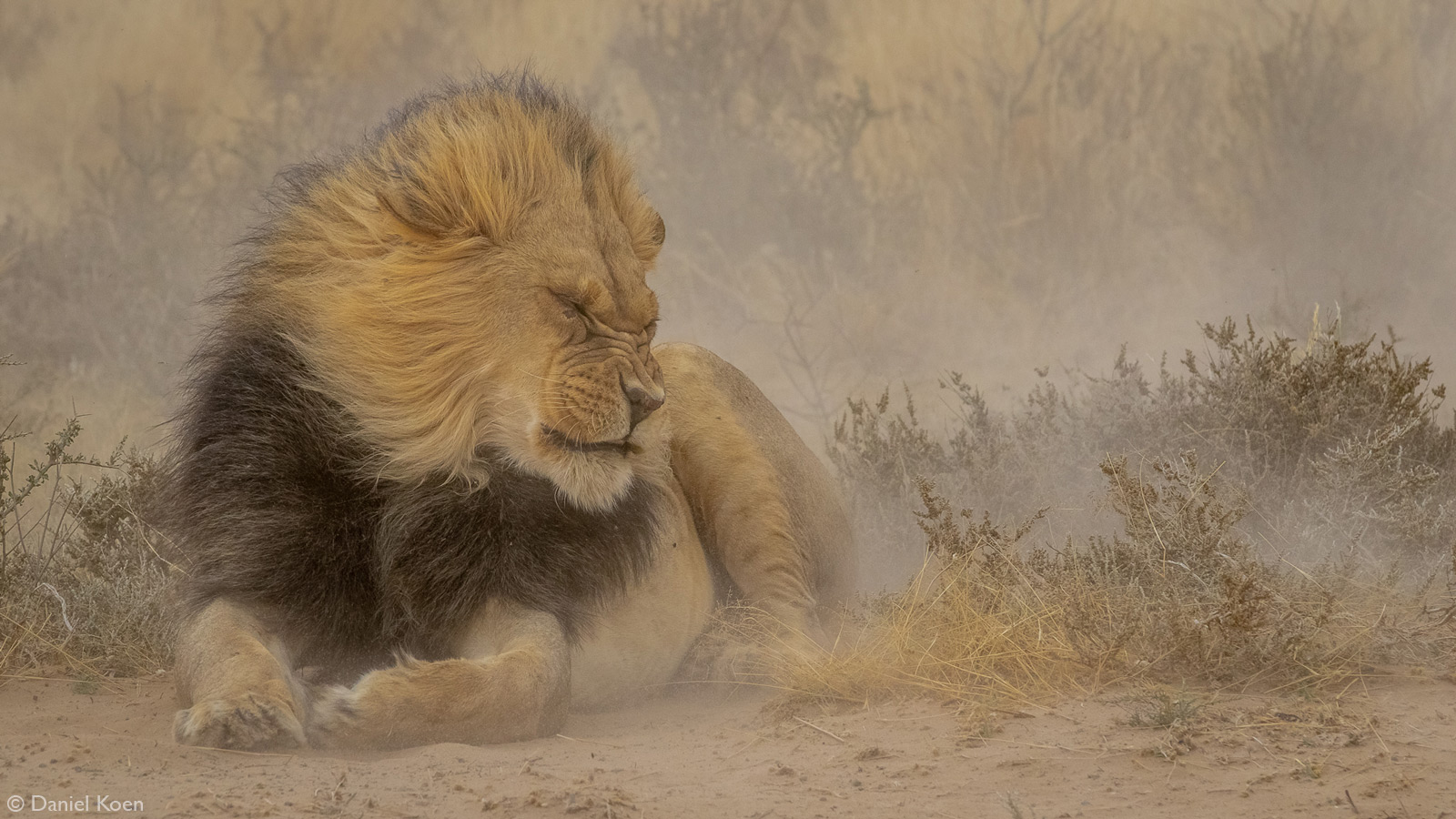
 Daniel Koen was born in Durban, KwaZulu Natal, South Africa after which he moved to Alberton where he spent most of his life. His interest in nature and wildlife photography started at an early age during family trips to the Kruger National Park. He went on to study Nature Conservation at the then Pretoria Technikon and obtained a National Diploma in Nature Conservation. He currently works as a nature conservator in Gauteng. He has a deep love for the bush and dedicates as much time as possible to being in nature and honing his photographic skills. Visit his
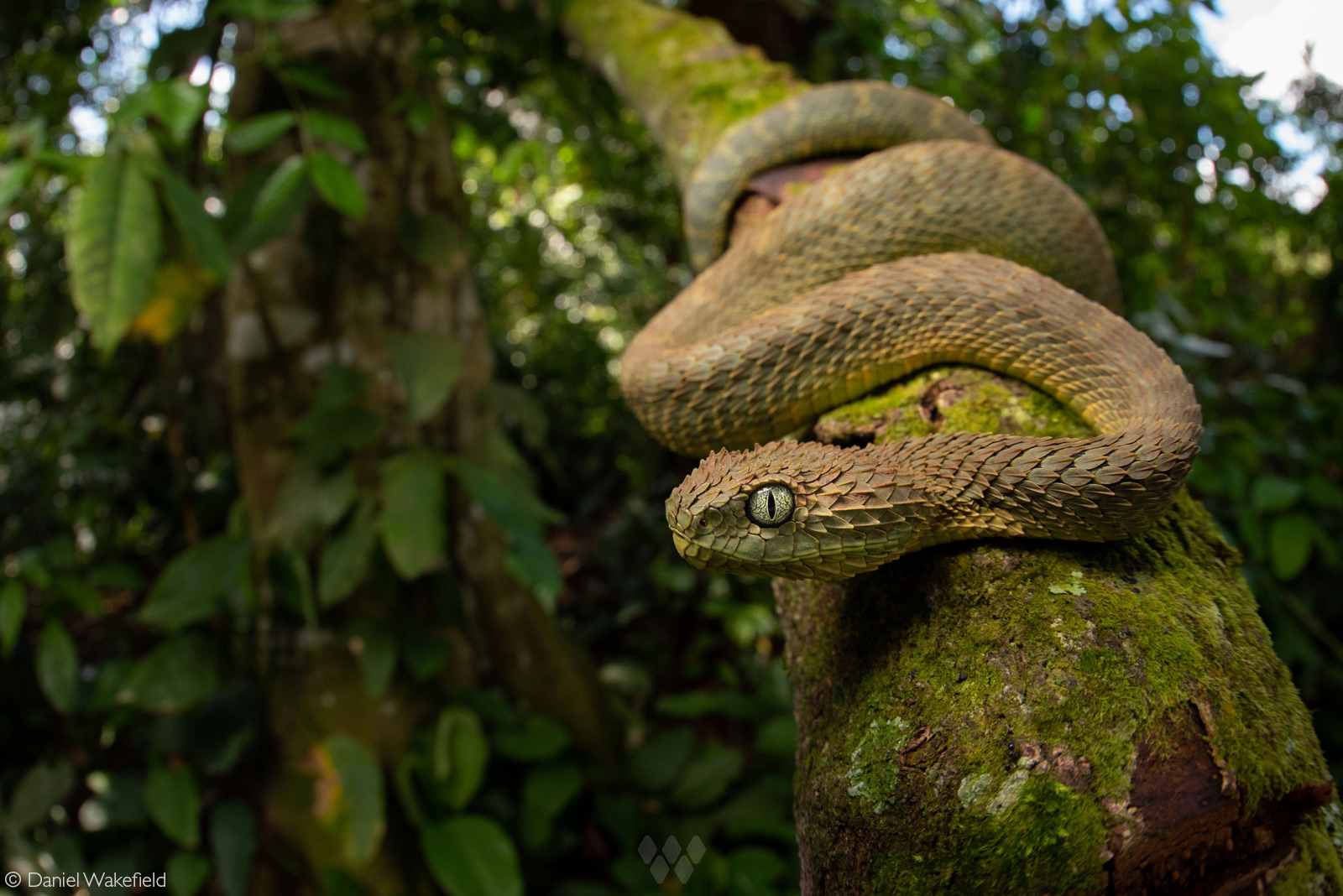
 Daniel Wakefield is a husband, father, pastor, and amateur wildlife photographer. He became interested in wildlife, especially reptiles, at a young age. When my family and I moved to Florida five years ago, I started to explore the world of photography to help me capture and share my love of these scaly creatures. One of my goals with photography is to help people see the beauty of these often maligned and misunderstood creatures, to promote their conservation. Visit his
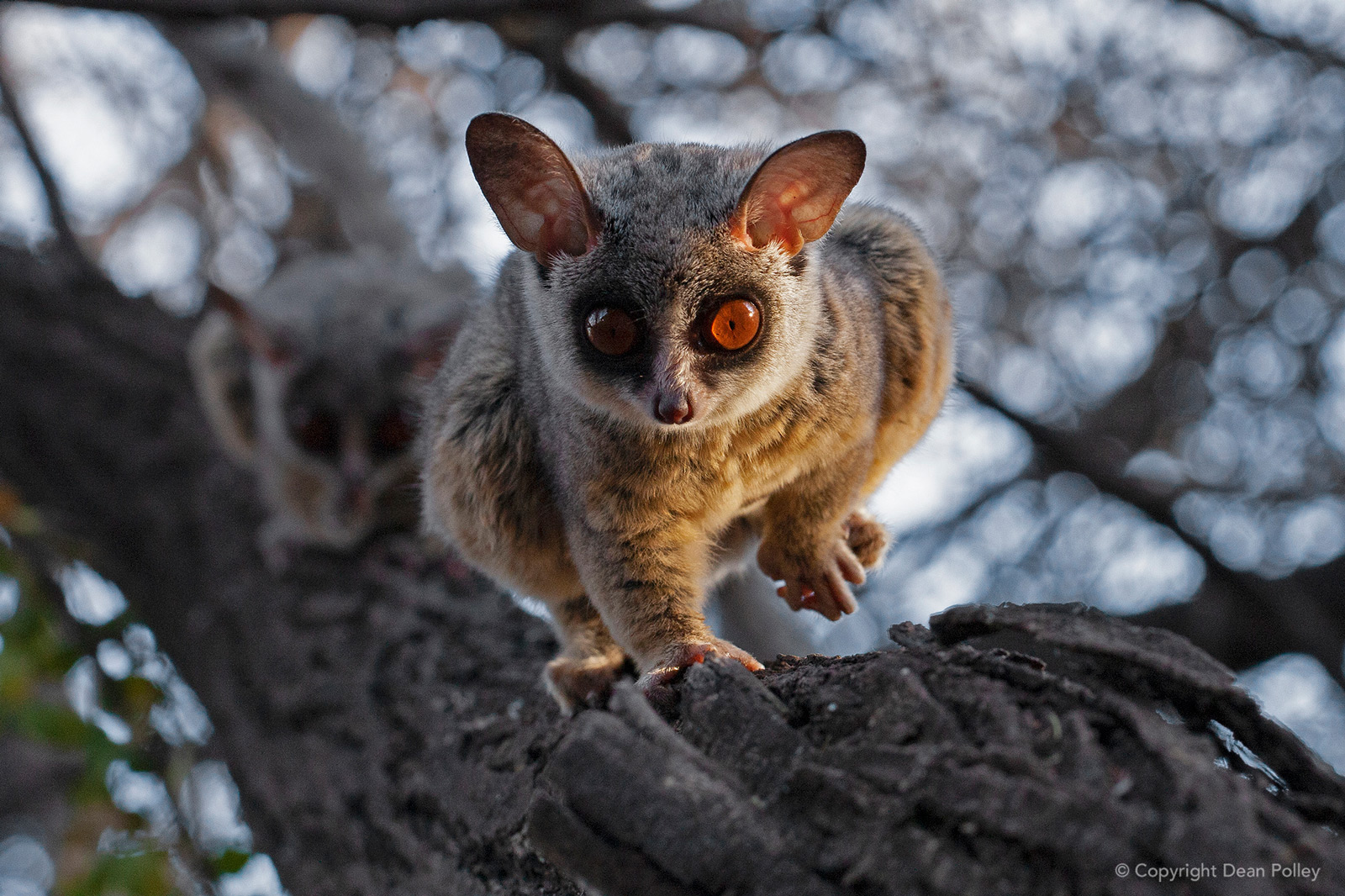
 My passion for birding was the catalyst that prompted me into wildlife photography. For the past 24 years, I have pursued this passion with a specific focus on capturing images of wildlife in their natural environments. My travels have taken me to some of the most extraordinary places that Africa has to offer. Amongst my most memorable trips are trekking with mountain gorillas in the Virunga mountains of Rwanda; trekking with wild chimpanzees in the Mahale Mountains of Tanzania, camping on the shores of Lake Tanganyika, exploring the waterways of the Okavango Delta in Botswana, the vast Busanga Plains of Kafue in Zambia and Mana Pools in Zimbabwe. It would be difficult to choose a specific favourite, but the most profound experience was sitting amongst wild mountain gorillas in the Virungas.
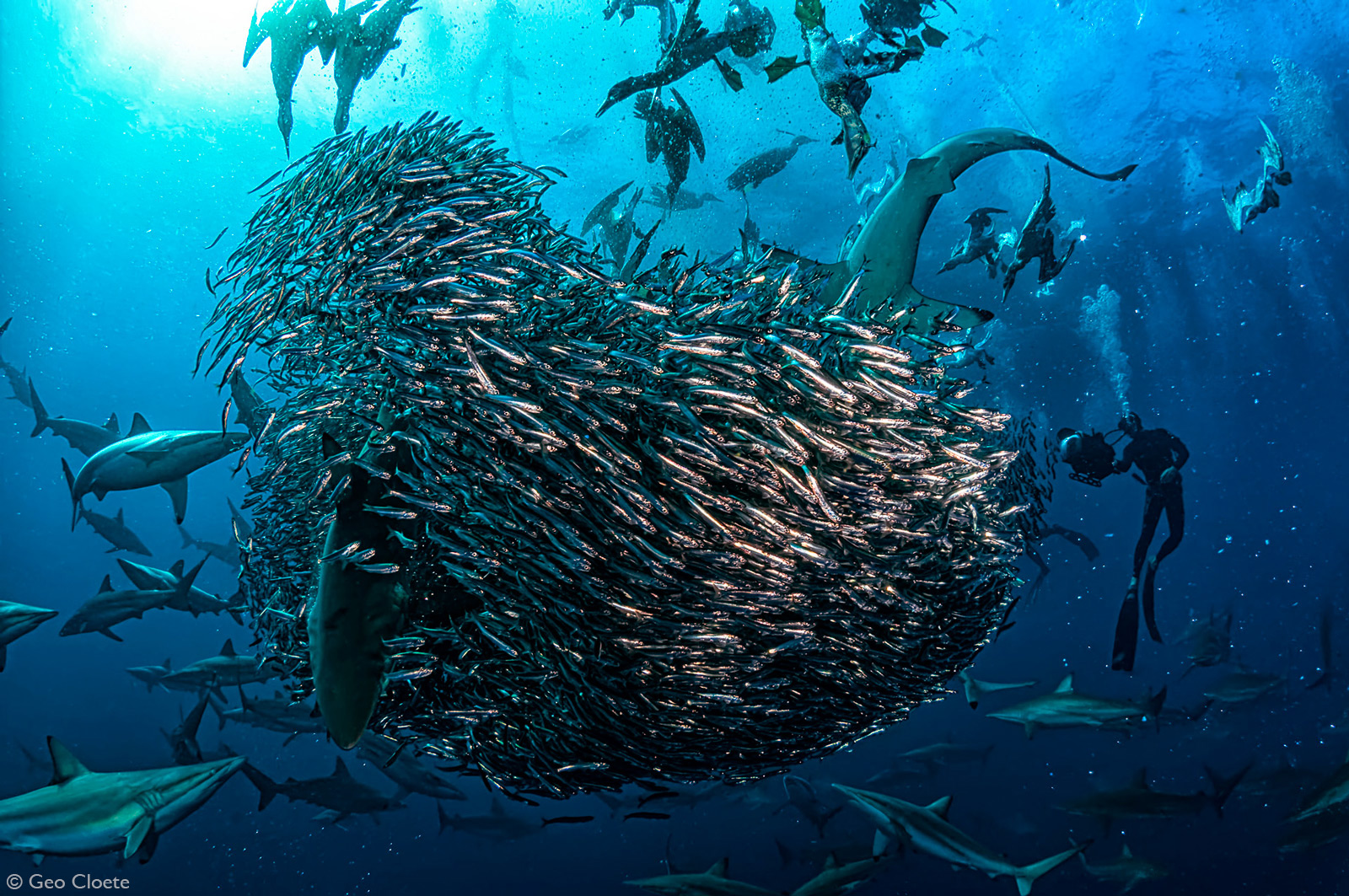
 Geo Cloete is a multi-talented artist with an architectural degree from Nelson Mandela Bay University (South Africa) in 1999. The fruits of his labour have seen him complete award-winning works in architecture, jewellery, sculpture and photography.
 Kevin Dooley was born in a small mountain town in the USA where photography has been his chosen profession for almost 40 years. His passion for wildlife photography and wild places has led to many adventures, especially in Africa. He thrives on sharing Africa with others – teaching them about wildlife, trees and the history of wild Africa. Stories of adventures shared around a campfire with other travellers and photographers hold a special place in his heart. Visit his
 Rian van Schalkwyk is a medical doctor who lives in Windhoek, Namibia. He has a passion for nature and wildlife photography and tries to get into the bushveld at every available opportunity. He recently returned from a 9-month life-changing safari with his daughter – visiting 27 African national parks and reserves. Visit his
 Based in the Greater Kruger of South Africa and working as photography manager for African Impact, Sam looks to introduce and showcase to other like-minded photographers the beauty that had him fall in love with Africa over twenty years ago. With this comes the added responsibility of instilling a thoughtful, ethical and conservation-based approach to how we work with the natural world. Sam’s aim is to teach photographers the importance and impact via education their work can have on the conservation of our natural biosphere. Visit his