Written by Cathryn Gill, conservation educator and crew member JWP01 May 2019, with Blue Sky Society Trust
“I’m searching for the spirit of the great heart to stand and keep me by, I’m searching for the spirit of the great heart under African skies”. Johnny Clegg’s emotive anthem belts out from my Spotify playlist as I’m packing for an expedition. To say I was excited to be heading back to Africa after five years would be an understatement.
In 2016 I’d read about the Elephant Ignite Expedition, the first of Carla Geyser’s epic African journeys – an all female crew travelling 10,000 km through 10 African countries raising money for conservation NGOs, raising awareness for the plight of African wildlife and raising the profile of women working with wildlife. At the time I wrote in the margin of my journal “blue sky society trust”. Then life happened. Fast forward to November 2018 and Carla opens applications for Journeys with Purpose (JWP01) May 2019 – fundraising for Elephants Alive and the expedition being to collar elephants in Gilé National Reserve, Mozambique. Without hesitation I applied.
On 15 March 2019 Cyclone Idai hit the Mozambique coast making landfall at Beira and causing devastation up and the down the coast as well as inland. JWP01 going ahead in May seemed doomed. But Carla got straight onto Plan B and JWP01 South eventuated.
Day 1 of the expedition is a bright, clear May day in Johannesburg, but not as crisp as I had expected for this time of the year. I make my way to Midrand to meet Carla and Bella at the vehicle hire place where we are picking up our second vehicle for our small crew of five. Poor Eddie my taxi driver is trying his best to get me where I need to be but the navigation app is having us going round in circles.
We eventually find it and the next thing I am hugging Carla and Bella like we have known each other forever.
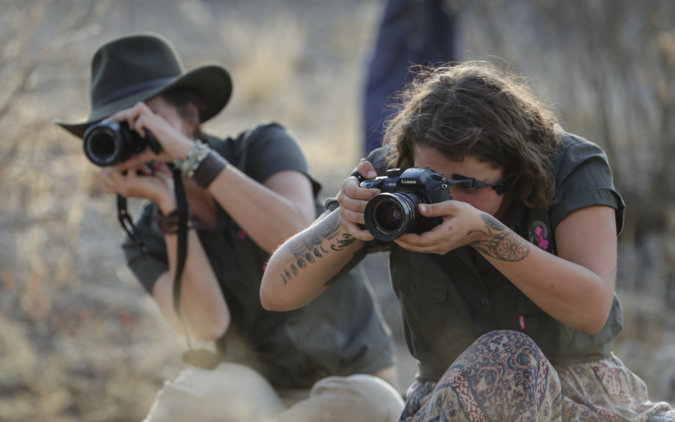
The amazing Cat arrives as well, toting intriguing bags of camera equipment and a sunny smile. We are on the road to OR Tambo to collect our last crew member and I am already thinking this is too good to be true – these beautiful souls I am instantly drawn to I get to take the road less travelled with?! My growing suspicion I have found my tribe is confirmed when we meet Remke, this willowy blonde in the arrivals hall. More hugs exchanged and its time to get out of the city.
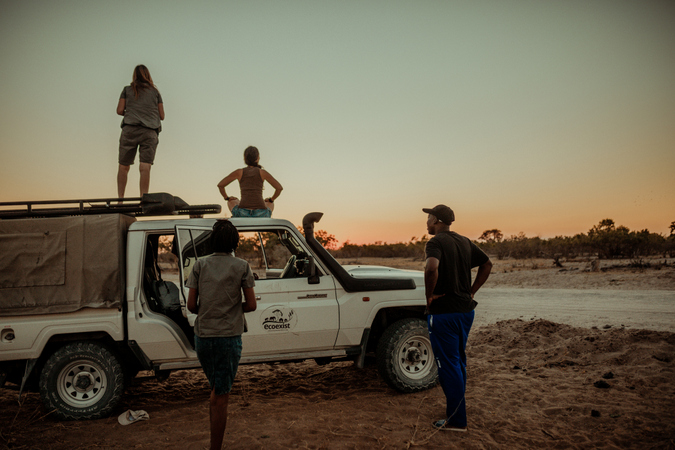
Our convoy is made up of ‘Dora’, the 22-year-old TDi Defender short wheelbase landy, well kitted out and beautifully branded with her pink accessories. She has oodles of character just like proud ‘mom’, Carla. Bella quickly dubs our hire vehicle ‘Charles’ and we are good to go.
That drive from Johannesburg to Hoedspruit via Dullstroom, the Abel Erasmus Pass and through the JG Strydom tunnel was a special wander down memory lane for me. That moment when you shoot through the tunnel and the whole Lowveld stretches before you – magical.
We were now in African bush proper. There is so much life everywhere – even hurtling along those main tarred roads you catch a glimpse of a giraffe or a troop of vervet monkey playing in the trees on the verge.
And then when the driving stops and you step out into this incredible energy its like being plugged into a fast charge source after being on very low battery. But it is not a frenetic energy, it is a quiet, calm reconnection with life.
The next 13 days held so many delightful wildlife moments and new landscapes to explore.
The mixed bushwillow plains around the Hoedspruit area with its stunning escarpment backdrop providing dramatic vistas at every turn. The autumn colours of the mopane bush around the Letaba area in Kruger National Park. The top of the world rocky outcrops of the Lebombo Mountains in Eswatini.
The coastal plains, undulating grassy dunes and tangled forest of the Maputo Special Reserve in Mozambique. The clear, blue waters of Maputo Bay edged in mangroves. We saw so many species – insects, reptiles, birds, and of course all the iconic mammals.
Special moments with elephant, rhino, buffalo, lion and leopard, spotted hyena, giraffe, zebra, impala, nyala, kudu, hippo, a pod of endangered humpback dolphins and so much more.
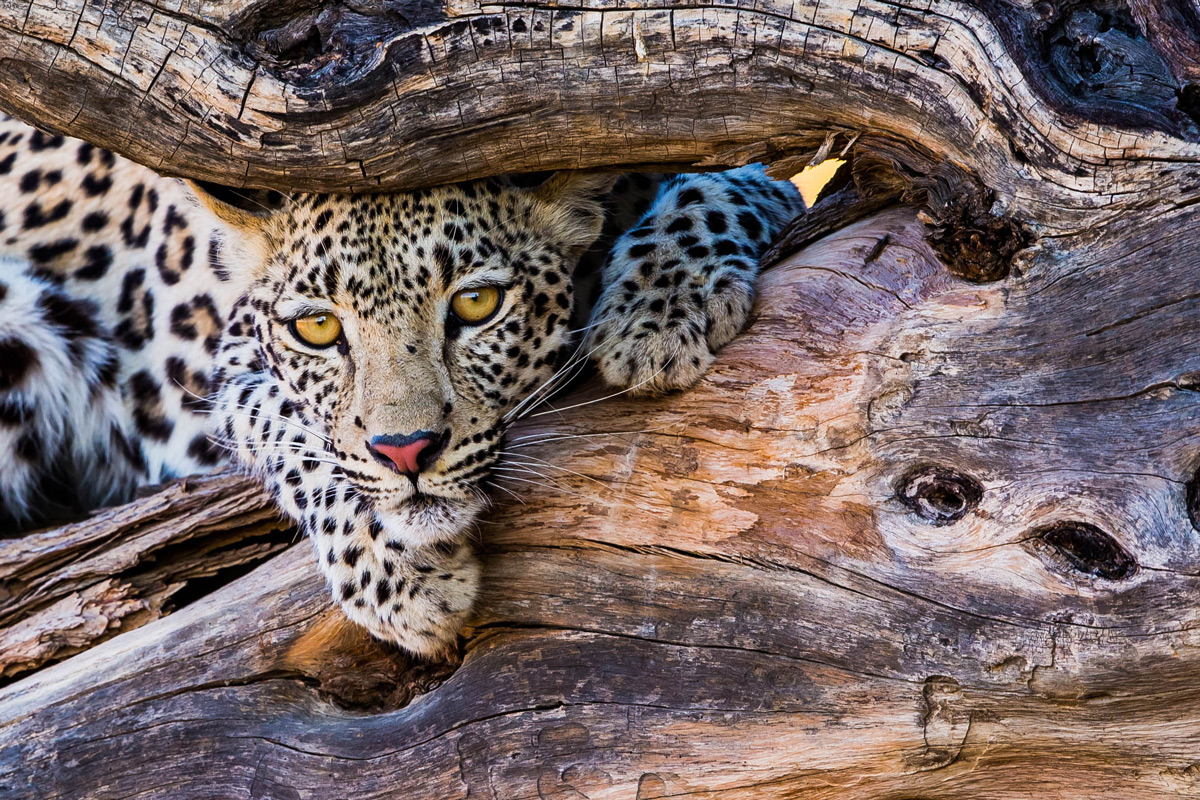
I think our leopard count was five! The one lion sighting was of a lioness up a tree!
For me the rhino sightings were extra special as they are my spirit animal. I think Cat was okay with our cat count as they are her favourites. Remke loved the ellies and the monkeys. And I think Carla and Bella got a kick out everything wild we saw.
All of us aware of the privilege to encounter this wildlife at all.
But the highlight of it all was spending time with all these people from various conservation organisations. Hearing their stories and sometimes joining them in aspects of their work.
A huge thank you to Dr Michelle Henley, founder of Elephants Alive for her time. Also, for access to her charming team who were so welcoming and informative in sharing with us the incredibly valuable work they are doing. I have learned so much more about elephants than I ever knew before.
It was also so inspiring to see the absolute dedication of everyone at Elephants Alive as they focus on creative solutions to tackle human-elephant conflict.
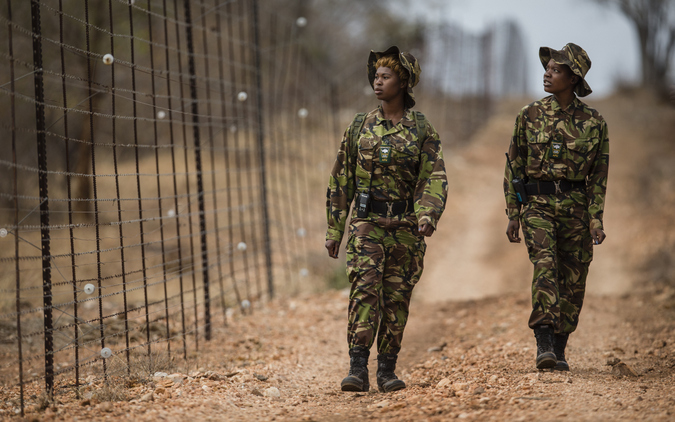
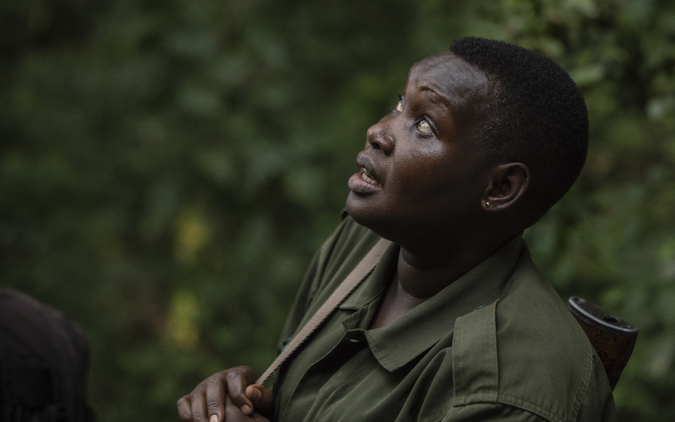
Meeting Craig Spencer and some of the Black Mambas was a privilege. The Black Mambas are a mostly female anti-poaching unit set up by Craig. This is not just about reducing poaching but a focus on community upliftment.
We also spent a stunning morning at a local primary school with Lewyn of the Bush Babies Environmental Education programme connected with the Black Mambas.
This is such an inspiring model of empowering communities to take ownership of conservation issues in their own backyard as well as role modelling for the next generation to ensure long-term effectiveness.
We also got to spend time at the Southern African Wildlife College with the astute, eloquent Sboniso Phakathi who gave us a thought-provoking presentation of the programmes there. Meeting Precious and the dogs at the K9 unit was such a highlight.
In Eswatini we met with Mr Maduze Dlamini and Nomsa Mabila of the Lubombo Transfrontier Conservation Area. We experienced wonderful hospitality from them and the staff at the community camps we visited – Shewula Mountain Camp and Mhlumeni Rest Camp.
Thea Litschka, the famous snake lady of Snakes of Eswatini, gave us a fascinating insight into snake handling and what is happening with managing snake bites in rural areas.
In Mozambique, we had time and conversation with Miguel Gonçalves, the warden of Maputo Elephant Reserve, and Alessandro Fusari, the head of Wildlife, Conservation and Tourism at Gilé National Reserve. Their indomitable spirit and passion for conserving the natural heritage of Southern Africa is absolutely awe-inspiring.
On our last night in Maputo, Trang Nguyen joined us for dinner. What a dynamo! Everyone needs to check out her TED talk.
What an absolute honour to have spent time in the company of these beautiful humans and to have them share their stories with us. I am so grateful to have had this experience. Thank you so much Carla, Bella, Remmie and Cat for being the best crew ever to share the road with. My cup runneth over.
So what now? My purpose is to champion these stories in my corner of the world. To lean into the hope that this conservation collective can keep the darkness of the worst-case scenarios at bay.
Africa could increase tourism earnings from protected areas by between four and 11 times in the coming decade. This is according to a working paper published this week by Space for Giants and Conservation Capital.
According to the working paper, bringing private sector capital to under-funded protected areas will allow these areas to capitalise on the surging interest in nature-based non-consumptive tourism. The resultant increase in revenue and driving of sustainable local and national development would occur without draining state finances.
The working paper goes on to explain that 80% of tourists to sub-Saharan Africa visit to view wildlife, and the number of those visitors is set to double to 134 million by 2030, generating $260 billion. Tourism already drives 8.5% of Africa’s GDP and provides 24 million jobs. Also:
• Africa’s 8,400 protected areas annually earn $48 billion from 69 million visits
• Every $1 spent by a nature-based tourist in Africa is worth $1.79 to local economies
• Tourism generates 40% more jobs than the same investment in agriculture
And yet these unique natural assets that give Africa its global competitive advantage are under acute threat and urgently need to prove their economic as well as ecological value. Some protected areas receive only 10% of what they need for survival, as governments allocate more resources to competing priorities such as health, education, and infrastructure development.
The working paper details several country case studies of tourism success stories, and describes seven simple steps for protected area authorities to attract this new international investment.
Dr Lauren Evans, Space for Giants’ Director of Conservation Science, said: “Africa’s unique diversity of wildlife and habitat has the potential to transform the continent’s economy radically. At present, few State Protected Areas are meeting their potential as engines for growth. This presents a major opportunity for governments. Cared for and sustainably developed, these are national assets that can provide significant financial and social returns now and long into the future.”
I wanted to find out for myself. The debate has been heated since the Botswana government decided to resume trophy hunting and other elephant control measures. Competing vested interest groups all claim the moral and factual high ground, and the elephants have become political collateral in the process. I found myself confused, frustrated and conflicted by the dominance of binary ideologies in these debates. During this trip to Botswana, I wanted to go beyond the angry rhetoric, and focus exclusively on the most important humans in this ongoing drama – those that live amongst elephants.
My travels saw me based in two communities suffering under significant ongoing human-elephant conflict – one being the eastern Panhandle area immediately north of the Okavango Delta, and the other being on the banks of the Boteti River, bordering Makgadikgadi Pans National Park. I chose not to visit that other area of major human-elephant conflict, Chobe’s Kasane area, because of the focus of mainstream media on that area, and my perception that the area is highly politicised.
First though, here are five critical pointers that came through clearly from the approximately 40 people that I spoke with during this mission. This was not a scientific survey, and I emphasise the local and anecdotal nature of my encounters. My hosts arranged some of the discussions, and others occurred during ad-hoc encounters. My approach to each discussion was to prompt a debate about elephants and listen.
1. None of the citizens I spoke to appeared to harbour hatred or resentment towards elephants – although there was an underlying sense of frustration and in some a fear of elephants. This does not imply that there is no anger out there, but it does provide an alternative lens to some of the talking heads unearthed by news media and vested interest groups;
2. All of the citizens I spoke to felt that there are currently too many elephants in their community and surrounds. None wanted elephants to be obliterated, but most wanted elephants reduced in number;
3. Without exception, citizens that I spoke to recall that elephants were rarely, if ever, encountered in their neighbourhood in the comparatively recent past, and that there were few human/elephant conflict issues back then. Elephant numbers started increasing in the mid-1990s in the Panhandle area, and after 2010 in the Boteti River area – keep reading to find out why. They stressed that they are learning how to live with these new arrivals to their neighbourhoods;
4. Trophy hunting was not viewed by those that I spoke to as a solution for their elephant-related problems. Many had no recollection of ever having benefited in any way from historical trophy hunting operations, but some expressed hope that the reintroduction of trophy hunting would provide some benefit to them in the future;
5. Attacks by elephants on people happen regularly, and below I will tell you about my meeting with a survivor of one such attack. There have been numerous recent reported incidents of rural Batswana being killed by elephants, and shortly before my visit to the Panhandle area, a 4-year-old boy from a village called Beetsha was killed by an elephant while out with his father, who was herding his livestock. I cannot even imagine the anguish his family must feel, and the resultant emotional scarring for the entire community. The boy’s name was Kefeletswe Barelelwang.
It was my first evening in the Eastern Panhandle area, and Graham McCulloch from The Ecoexist Project and I were staking out an elephant corridor on the well-used dirt road between Seronga and several small villages towards the east. Before long, a breeding herd of about 200 elephants scurried across the road in the dying light – a tightly-bunched herd of all ages moving fast in the dust cloud, with curled tails and rolling eyes. “Imagine being caught in that frightening avalanche” I muttered, as the elephants eventually disappeared into the treeline south of us. “Indeed,” agreed Graham, “and this is the norm for the many people that use this road to get to school, the shops, or work. Elephants are continuously moving across this road from March to when the rains arrive in October or November, between the dry deciduous woodlands to the north and the Okavango Delta to the south. As they follow timeworn migratory routes, they have to negotiate paths between fields and settlements, and cross this busy road”.
Along the way, these elephants snack on crops, with devastating consequences for these subsistence farmers with no other means of earning a living. Data from Ecoexist director Anna Songhurst’s PhD research reveals that ploughing fields less than 1km from an elephant pathway are twice as likely to be raided by elephants. This and other data extracted from 40 collared elephants are used to develop strategies to minimise elephant-human conflict, and new farming techniques are taught, to help farmers increase their yields.
Graham continues: “The incidents of elephant conflict with humans in these areas are high, and they are scared, nervous and sometimes irritable when they pass through – these are ‘fear zones’ for elephants. But, unlike the situation in poaching and trophy hunting fear zones which elephants stay away from, here they keep on crop-raiding – possibly because the risk-return equation is comparatively lower, but also because of the need to access critical resources. Elephants can be legally killed if caught in the act of crop-raiding, and of course, if they attack humans. Currently, about 20 elephants per annum are killed in this area, as problem animals.”
Just minutes before the herd scurried across the road, we had given a lift at this specific location to two young girls that were walking to school after a weekend at home. What if they were there when the elephants crossed, I wondered?
Makhata’ Max’ Baitseng, a senior team member of Ecoexist, later explained that this block of about 8,500 km2 in northern Botswana is ideal elephant habitat, in that it includes nutritious woodland to the north of the road and water, fruits and grass to the south. Elephants are not alone here though, humans also inhabit this land, and the humans are concentrated in a narrow band of villages to the south of the block – bordering the watery Okavango Delta. The estimated 16,000 human inhabitants share this space with an estimated 18,000 elephants (the estimated elephant population in 2008 was 8,905). To provide context to this density of elephants, the 20,000 km2 Kruger National Park is home to about 21,000 elephants, and there are no indigenous communities in the park.
This influx of elephants after the mid-1990s is likely due to poaching pressure in Angola, Namibia and Zambia, although Graham surmises that the elephants are also breeding well here, thanks to favourable conditions. He mentioned that the upward elephant population curve would probably flatten out when the current drought sets in, with young elephants dying first. This is a natural process that must be allowed to occur in a healthy population such as this. But, he cautioned that incidents of human/elephant conflict would surely increase even further as competition for water and food intensifies during the drought.
Graham also explained that elephant carrying capacity in a shared landscape is all about social AND ecosystem thresholds. He continued: “We all need to recalibrate our perspectives and understand that these people are successfully living with elephants, which compete with them for water, food and space, but that this existence is a hard one. We need to develop ways to keep people and elephants safe, mitigate incidents when they do happen, and provide an incentive for people to continue tolerating the threat to lives and livelihoods and to benefit in some way from the presence of elephants. If we do not do these things, then these areas will go the way that much of the ‘developed’ world has gone – where animals perceived by people as being dangerous are extirpated and where ecosystems are tamed and utilised for farming and recreation.”
Meet subsistence farmer Kunyima Ramosimane, who has been farming since 1988. Her tshimo (ploughing field) is 6 km from her hometown of Gunotsoga, and she walks between the two – along a path that leads through mopane woodland with elephant tracks everywhere. Every year in about November (when the rains start) she plants her crop – including millet, sorghum, beans, groundnuts and watermelons. Before the influx of elephants in the mid-1990s, she used to visit and tend the crop every week or so, but these days she has to sleep at the field throughout January till the harvest in April and May, to try to keep the elephants away. When the elephants arrive, often at night, she shouts and bangs a pot to try to scare them away. She is now scared of elephants because they often react aggressively when she tries to scare them away from her fields, and when she encounters them while walking in the area to forage for wood and bush fruit. This year the elephants arrived early (possibly due to the drought) and ate her entire annual crop. In a good year, she harvests enough food for her family and sells any surplus to buy clothes and pay for school fees for her son Steven. This year, she does not know how she will get by until the next harvest. She has applied to the government for compensation but has received nothing for the past three years. I was subsequently advised that government coffers have run dry, due to the escalation of compensation claims. As if life was not tough enough, Mma Kunyima’s chickens are dying from an unknown ailment.
Subsistence farmer John Mbango also lost his entire crop this year – to the drought. This long-time Gunotsoga resident told me that trophy hunting in this area was stopped in 2008 (the country-wide suspension was imposed in 2014), due to repeated bad behaviour by the professional hunters that operated the concession. He said that the tourism lodges now operating in those community areas bordering the Okavango Delta provide more permanent jobs compared to the seasonal hunting jobs, but that as a farmer he does not benefit directly from tourism. He also did not receive any direct benefits from trophy hunting at the time – pointing out that the carcasses were left far away, in remote areas, and so the meat was not accessible to people from the village. When I asked him how trophy hunting could help him and other local farmers, he said that the money needs to be enough, and go directly towards securing all ploughing fields in the area against elephants, using solar-powered electric fences.
I also met with a group of subsistence farmers in the area, and their message was similar to others – the elephants are the new arrivals, and they wanted there to be fewer of them. They had all lost their crops this year – to a blend of drought and elephants. When asked about whether elephants are damaging large trees in the area, they confirmed that elephants were now targeting previously untouched neighbourhood trees like jackalberries and baobabs. They mentioned that elephants kill cattle once or twice a year when they compete for water and when the cattle sleep at night under camelthorn trees which elephants target for the nutritious pods. There seemed to be no grasp amongst this group of how trophy hunting could help them, or why it was seen as a solution for their problems with elephants. One wizened gentleman said that there is no system in place for trophy hunting benefits to flow down to them.
Later that day, Graham and I were staking out an area of ploughing fields often visited by elephants. In the dying light, he explained that Ecoexist has been assisting the government to reduce conflict by consolidating ploughing fields together, called ‘cluster fields’, and taking advantage of economies of scale to erect solar-powered electric fencing and boreholes. He explained how the corridors are critical in forming part of a holistic, landscape approach that includes space to allow elephants to move through field areas and these ‘cluster fences’ that more effectively protect field areas. The method has been working so far, but this route will require significant funding and management, and changing of generations of traditional farming practices to more sustainable ones. During this time of twilight contemplation, my mind drifted to the efforts by lodges bordering Hwange National Park, which face similar issues, and who embrace the challenges via conservation safaris.
During my last morning in the Panhandle area, I attended a wonderful community-run village tour called “Life With Elephants”, facilitated by Ecoexist director Amanda Stronza, which focuses on educating tourists about living with elephants. A few lodges already send clients for this valuable exposure to real village life, including an ultra-luxury lodge whose guests arrive by helicopter! Guests get to visit a ploughing field, the local iron monger and operate the manual village water pump which was installed to reduce the need to compete with elephants at the river. They also pass by a large fallen baobab tree around which the ancestors gather at night to discuss village matters in whispered conversations. The baobab fell in 2000 (without any assistance from elephants) and still lives.
My favourite part of the tour was story-telling and music in the shade of an enormous rosewood (false mopane) tree. Born in Eretsha in 1942, Daniel Senwametsi tells how he regularly used to walk to Namibia in bare feet and how he used to wear animal skins until a stint of working in the South African mines meant he could afford to buy clothes for himself and his family. He remembers seeing very few elephants before 1996, after which poaching in Angola saw them fleeing to the safety of his neighbourhood. He also worked at a luxury lodge for many years before becoming a subsistence farmer in 2004. Daniel gave a demonstration of how to behave when attacked by an elephant, a replay of when he was attacked while walking to his fields. His enthusiastic and animated demo had us all in stitches :-). This finale of a wonderful tour takes place on the shore of what would normally at this time of year be a floodwater plain, but this year it is bone-dry because of low rains in the Angolan highlands headwaters. Daniel told me that this is the first year in his entire life of no floodwater at this time of year. The ‘Life with Elephants’ tour is an example of the kinds of elephant-related enterprises that Ecoexist is facilitating that need to be promoted more to provide support and benefits to people who live with elephants.
During my stay in the Panhandle area, I spent my sleeping hours at a rustic community-owned guesthouse called Sausage Tree Lodge (no known website or Facebook page) in the village of Eretsha, with meals at the nearby Ecoexist base camp.
So, what’s it like to be attacked by 5-6 tons of fury, an animal capable of pushing over huge trees and casually flipping cars?
One sobering meeting for me was with a subsistence farmer who is convalescing after recently being attacked by a bull elephant. She was collecting firewood near her home town of Khumaga (Xhumaga) on the bank of the Boteti River, bordering Makgadikgadi Pans National Park. The attack was unprovoked, and the furious elephant only relented after its inert victim was covered in dust and obscured by a bush. I spent time with this dignified lady and her husband in their neat home in Khumaga, and heard her story firsthand. Her broken leg was still in plaster, and she was in obvious discomfort and pain. She did not want to be photographed or named. She is now terrified of elephants and does not see how humans and elephants can co-exist. My lasting memory of her is her brave smile and apparent determination to move on from what must surely have been a terrifying ordeal.
I spent time in this particular elephant conflict zone with community outreach officer Walona Sehularo and research assistant Thatayaone Motsentwa (TT) of Elephants for Africa, and was based at their research camp on community land on the banks of the Boteti River.
Walona explained that the problem-causing elephants in this area are usually bulls, which comprise 98% of their research sightings. Again, based on current memory, elephants only arrived in the village area comparatively recently – after 2010 when the Boteti River flowed again after a 20-year hiatus of no floodwater from Angola. Before then, male elephants were seen in the national park, but seldom in the neighbourhood community land. Again, local people now have to learn how to live with elephants. Walona went on to explain that many local people tend to view wild animals as belonging to the government and that they expect the government to control them, as farmers have to control their livestock.
This region has its own unique dynamic. Because of the regular human/elephant conflict, the government undertook to erect a new fence between the national park and the community. The fence would cut the community off from the water of the Boteti River, except for access via small pedestrian gates, and so the plan was to provide piped water. Community members with farming plots on the river bank have been advised that they will have to move their subsistence farming operations into the sandy hinterland. River plots are highly sought-after because they offer two plantings per annum – one before the rainy season of November to March and the other before the annual floodwaters from the Angolan highlands arrive from June to August. These government plans have stalled for a few years, and the locals are restless. There is in fact already a double fence line that crisscrosses the river – one being the veterinary fence that separates cattle from wildlife to abide by European beef export rules.
But both fences are mostly broken or partially removed by the authorities, with wildlife and livestock passing freely between the national park and community land. I sat at the research camp and watched livestock come and go from the national park, and elephants cross in the twilight hours to forage on community land. During one extended drive into the national park, I saw many goats and cattle a few kilometres inside the park.
Walona and I managed to secure a meeting with the chief of Khumaga, Kgosi Keeditse Orapeleng during a kgotla (village meeting). This respected gentleman explained via Walona as an interpreter that he and his people feel a strong connection with elephants. But, he added, life with elephants is tough, now that there are so many of them. He recalls that before the elephants arrived, life was better, and he hoped that the new fence would solve the problems caused by elephants. He also mentioned that lions also used to be a problem historically when they came from the national park to kill livestock until trophy hunters exterminated them many years ago.
Meet Clifford Tekanyetso – the son of Gakeitseope, a former tourism lodge guide and now farmer, who is being helped with elephant issues by Elephants for Africa. He and his father live in Khumaga, but sleep in a tiny hut on the family field whenever there are crops to look after and protect. Clifford proudly showed me his family field, which is secured by a solar-powered electric fence – a local success story. Clifford explained that they do not lose crops to elephants anymore, although vigilance is still required – just last week Clifford had to chase away an elephant that broke through the fence. In addition to an annual crop of beans, watermelons, maize, millet and sorghum, they grow a summer legume known as ‘lablab’ that is dried for supplementary livestock fodder during the dry winter months.
One meeting that left a strong impression on me was with 60-year-old farmer Gofentsemang Johane, who has two ploughing fields – one in the dry sandy woodland and one on the bank of the Boteti River (she will lose this field in terms of the new fence plan). This determined lady has seen many growing seasons and faced many challenges in addition to the recent increase in elephant presence, and her stoic approach impressed me. She also collaborates with Elephants for Africa and has a solar-powered electrified fence that keeps her crops safe from elephants. She burns ‘chilli bricks’ to keep elephants away. Chilli is mixed into balls with dry elephant dung, which smoulders when heated coals are placed on top – elephants do not like the pungent smoke.
Despite these measures, Gofentsemang is too afraid to sleep at her fields because of the elephants that come at night. At one stage during our chat, she fixed me with a quizzical eye and asked: “So, how will your story benefit me? Maybe it will change people’s perceptions, but here and now I really need a water pump, to increase my production from one to two harvests per year. That will make a real difference for my family and me. Will your story help me?”
That, dear readers, is up to you. How you react to my personal experiences with these real people depends on your ability to see the wood for the trees.
This is a story of hope, of people who are sharing their home with elephants and other wildlife.
How does this perspective differ from your home context? Do your children face life-threatening animals on the way to school, or could wild animals eat your entire annual food supply in one raid? Perhaps those threats to lives and livelihoods were removed from your society long before your time, and you cannot recalibrate your perspectives to appreciate the reality for these people in Botswana. Whatever your situation, these rural villagers ARE living with elephants to the best of their ability, and for that, they deserve our respect. They certainly need our willingness to try to understand their daily struggles, and to change the debate from acrimonious finger-pointing and threats of tourism boycotts, to finding real solutions for real problems. So that they can continue living with the largest concentrations of elephants in the world.
Ecoexist operates in the Eastern Panhandle area of northern Botswana to reduce conflict and foster coexistence between elephants and people. The team finds and facilitates solutions that work for both species, by combining science with practice. Its mission is to support the lives and livelihoods of people who share space with elephants while considering the needs of elephants and their habitats. Ecoexist works in close partnership with the Botswana Governments’ Department of Wildlife and National Parks and Department of Crop Production, as well as the communities of the Eastern Panhandle. Its supporters include The Howard G. Buffett Foundation, The GoodPlanet Foundation, USAID/WWF Namibia, USAID SAREP, and The Amarula Trust.
Elephants for Africa works towards human-wildlife coexistence in community land bordering the Makgadikgadi Pans National Park of Botswana. They take a holistic approach to human-elephant competition by understanding the social and ecological requirements of both humans and male elephants. Partnering with the communities bordering the Makgadikgadi Pans National Park and working closely with the Botswana government’s Department of Wildlife and National Parks to ensure their work addresses the needs and concerns of local and national stakeholders. Their education programs focus on developing the conservation leaders of the future and empowering local communities. Its funders include GoodPlanet Foundation, the International Elephant Foundation, The Columbus Zoo Fund for Conservation, The Memphis Zoo and Jacksonville Zoo.
Simon Espley is an African of the digital tribe, a chartered accountant and CEO of Africa Geographic. His travels in Africa are in search of wilderness, real people with interesting stories and elusive birds. He lives in South Africa with his wife Lizz and two Jack Russells, and when not travelling or working, he will be on his mountain bike somewhere out there. His motto is ‘Live for now, have fun, be good, tread lightly and respect others. And embrace change.’
Botswana’s Department of Wildlife and National Parks (DWNP) has announced today that they have recently identified a poisoning site with 537 dead vultures (comprising five species) and two tawny eagles.
The site of the mass poisoning was identified as Wildlife Management Area CT 1 in the Central District. This former trophy hunting area is close to the Botswana and Zimbabwe border, near Zimbabwe’s Hwange National Park. Three poached elephant carcasses were laced with poison, which led to the vulture deaths.
The 537 dead vultures comprised 468 white-backed vultures, 28 hooded vultures, 17 white-headed vultures, 14 lappet-faced vultures and 10 Cape vultures. The DWNP law enforcement team attending the scene is working around the clock to decontaminate the area, and sampling of carcasses and the environment was done for further laboratory analysis. Members of the public in the vicinity of CT1 have been requested to report any further wildlife mortalities in their area, and to report any suspicious activities which may suggest environmental poisoning to the nearest wildlife office or the police.
Populations of white-backed, white-headed and hooded vultures are ‘Critically Endangered’ according to the IUCN Red List, which means that they have an extremely high risk of extinction in the wild. Lappet-faced and Cape vultures are classified as ‘Endangered’, which means that they are in danger of extinction through all or a significant portion of their ranges. Vultures face many threats to their ongoing survival, including mass poisoning incidents such as this, habitat and nesting site loss, collisions with power lines and pylons and poaching for the traditional medicine trade.
Compounding the loss to already threatened vulture populations is that this is the breeding season, and so many of the adult victims in this mass poisoning incident would have eggs or chicks, which will in all likelihood die.
Vultures provide an invaluable ‘clean-up’ service to the ecosystem, due to their unique digestive ability, and without them, the spread of disease from rotting carcasses would be rife.
The site of this mass vulture poisoning was at CT1, seen in the centre of this map.
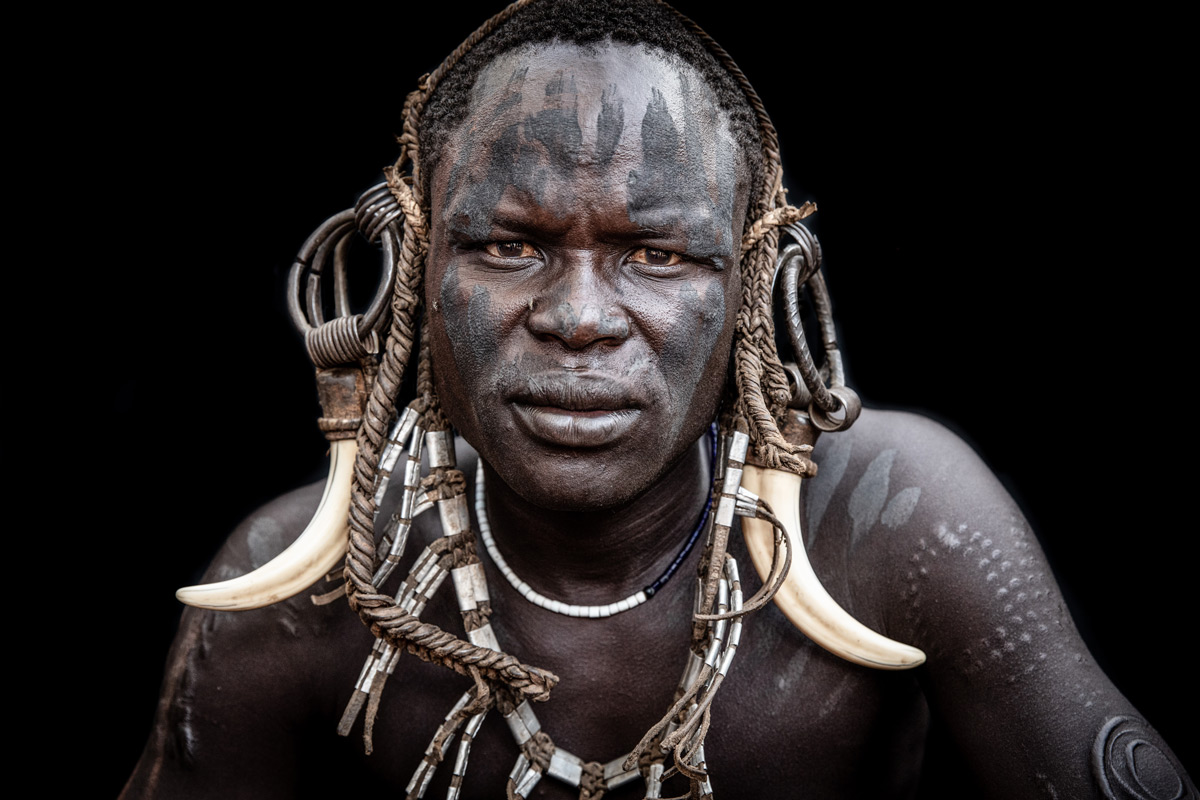
South Sudan is one of the newest and lesser-known countries in the world, where ancient cultural rituals collide with preconceived traveller expectations. I embarked on a tour of the country that took me just as far off the beaten track as possible, visiting tribal groups that haven’t changed their lifestyles very much in centuries.
Travelling this far feels rather like getting to the end of the Earth. Although virtually devoid of traditional ‘sights’, the country’s highlights are its myriad peoples, from the Mundari, who are one of the most prominent cattle-herding tribes, and the Boya in their picturesque villages, to the Toposa, one of the most traditional ethnic groups in all of Africa, most of whom rarely have encountered outsiders before.
THE MUNDARI
The Mundari, also referred to as Mandari, are a small ethnic group and one of the Nilotic peoples, living north of the capital of Juba. Like other Nilotic tribes, they are very cattle-oriented and treasure their cattle more than anything else and are said to sleep close to their most prized cow. Their cattle serve as food, a form of currency and a mark of status. I found living with the tribe for three days an exceptional experience.
The cattle are treated like members of the family and are well looked after. Ash from burnt cow dung is applied not only to the Mundari themselves but also on their cattle as it acts as a natural antiseptic, mosquito repellent and provides protection for the skin from the scorching sun.
The Mundari farm a breed of domestic cattle called Ankole-Watusi, which is characterised by enormous, curved horns, and is also known as “the cattle of kings”. These cows grow up to eight feet tall and are worth as much as $500 each.
Further east live the Toposa and Boya tribes, near Kapoeta. I travelled there on rough and less-travelled roads. Once there, I found lovely villages and charming people.
The Toposa have traditionally lived by herding cattle, sheep and goats and in the past were involved in the ivory trade. They have a tradition of constant low-level warfare with their neighbours, characterised by cattle raids, unless temporary peace agreements are in place – as is currently the case between the Toposa and the Turkana.
The Boya, (also spelt Buya; called Larim and Langorim by the Didinga people), are Nilotic people living in the rugged, hilly terrain of Boya Hills in South Sudan. They number 20,000 to 25,000 and are agro-pastoralists, cultivating sorghum, maize and beans, but mainly involved in livestock herding, hunting game and fishing. Cattle are their most important possessions and play a significant part in their social and cultural life. Cattle are bred for their meat, hide, blood, milk, and used as dowry to pay for a bride.
The Boya practice Africa Traditional Religion with some Catholic influence, are highly aware of spiritual forces and believe in a supreme being who controls all of life, including the health of their cattle. To them, the spirits of their ancestors roam the earth, and they can communicate with the spirits through prayers and offerings which they perform collectively in designated ritual sites.
Joe Buergi is an amateur travel and music/concert photographer based in Berne, Switzerland. During the festival season, he captures many music festivals in Switzerland.
He has travelled to a number of locations on photographic expeditions – including Ethiopia, South Sudan, Kenya, Namibia, India, Vietnam, Morocco and many more places all around the world.
He has a degree in engineering and works as an e-channel manager for the second-largest transportation company in Switzerland.
His photography can be found at the following sites:
• Joe Buergi Photography
Screengrab from the video below, of Jessica Nabongo being shown a picture of what her partner is eating.
The video and information were supplied to Africa Geographic by an anonymous contributor, who expressed concern that famous Instagram personalities are glamorising eating pangolin – the world’s most trafficked animal.
Instagram influencers with a combined 238,000 followers videoed themselves eating pangolin meat in a restaurant in Gabon and promoting the experience to their followers. The video is no longer available on Instagram, but our contributor sent us a copy of the video – see below.
Jessica Nabongo is on a mission thecatchmeifyoucan to “be 1st black woman to travel to all countries” – despite that accolade having already been achieved, by Woni Spotts. Her website lists numerous sponsors and requests donations to fund her lifestyle.
Sal Lavallo claims to have visited every country in the world.
Our contributor contacted Ms Nabongo on Instagram and questioned her eating protected wildlife and making it ‘cool or mainstream’ for her followers, but Ms Nabongo did not respond. Our contributor then sent the same query to Mr Lavallo, who responded that they thought they were eating anteater and did not know about the plight of pangolins.
During the video, Ms Nabongo says “People have told me that Gabon has some of the best bush meat, this we believe … is an armadillo.” At this point, Ms Nagongo pans across to someone at the lunch table showing pictures of various species of pangolin on their mobile phone. Towards the end of the video, in response to being asked by Ms Nabongo if it tastes like chicken, Mr Lavallo comments on how thick the skin of the pangolin is, and Ms Nabongo retorts: “You’re basically eating a dinosaur”, at which point she and Mr Lavallo laugh.
All requests made to Ms Nabongo by Africa Geographic CEO Simon Espley to provide an explanation for her behaviour were ignored. She did though exclaim on Instagram how ‘unfair’ everyone was for criticising her for eating pangolin when she did not at the time know about the plight of pangolins or that the bushmeat industry is a major cause of wildlife extirpation across Africa.
Editorial comment: Four days after this post went live, and after a deluge of criticism from many concerned individuals and conservation organisation, Ms Nabongo did apologise for her actions in an Instagram post and on her website. Unfortunately, her apology was clouded by her denial that the species she and Mr Lavallo dined on is in danger (to quote her: “The Giant Pangolin is not endangered, but rather vulnerable,”). In fact, the giant ground pangolin is classified as ‘Endangered” by IUCN. Her apology was dominated by her apparent confusion about the volume and tone of criticism aimed at her (to quote her: “online attacks that I found baffling” and “appalled to read so many abusive messages“).
Pangolins are the world’s most trafficked animal, and face enormous pressure from poaching to supply the bushmeat industry and insatiable demand for their scales from Far East countries, especially China, where the scales are used for their supposed medicinal properties. Read more about Africa’s pangolins, including the four species, here: Fascinating Pangolin Facts.
Written by Mr Robin Cook (Elephants Alive’s Big Trees Project Manager) and Dr Michelle Henley (Elephants Alive Director, Co-founder and Principal Researcher)
There is a worrying trend of declining white-backed vulture (Gypis africanus) numbers in Africa, with the significant factors being poisonings (Ogada et al. 2016), poaching (McKean et al. 2013), electrocutions (Van Rooyen 2000) and habitat loss (Bamford et al. 2009). These factors primarily influence adult vultures, thereby having confounding consequences on the vulture populations.
A secondary factor under investigation is a potential shortage of nesting sites. White-backed vultures nest in tall trees in Africa’s savannas, building large nests towards the top of these trees. Concerns have been raised over how African elephants’ (Loxodonta africana) impact may affect white-backed vulture nesting success, and hence, vulture populations (Rushworth et al. 2018).
Elephant impact on large tree species is a widely researched and complex topic, as elephant impact differs between elephant sexes (Greyling 2004) and across tree species (Shannon et al. 2008). However, long-term research needs to be carried out on elephants and vultures to understand whether elephants are indeed affecting vulture nesting success.
In the Associated Private Nature Reserves (APNR) of the Greater Kruger National Park, vulture surveys have been carried out by Elephants Alive since 2008. These surveys focus on the survival of vulture nests versus the survival of the trees in which they are nesting. The surveyed reserves included the Klaserie, Timbavati and Umbabat Private Nature Reserves. The first four years of surveys were published by Vogel et al. (2014), with results indicating that vulture nest survival rates decreased far quicker in comparison to the trees in which they nested.
Of all the surveyed trees, 20% had died over the four years, in comparison to 80% of the active nests. Furthermore, it was hypothesised that insect borer activity, in combination with elephant impact, was leading to the slow decline of nesting trees within the APNR.
Elephant impact, i.e. bark-striping, increases the likelihood of borers colonising a tree, which may eventually cause the tree to be hollowed out. This leads to dieback of branches within the top canopy of the tree, which may result in eventual vulture nest collapse (M. Henley personal communication).
Elephants Alive’s vulture surveys have continued in the APNR on an annual basis, and as of 2018, Balule Private Nature Reserve was added to the surveyed reserves. This allowed us the opportunity to include trees with vulture nests along the Olifants River.
Our 2018 surveys have recorded a minimum of 156 active white-backed vulture nests within the APNR, as well as 42 intact but inactive nests. The majority of nests were recorded in knobthorn (Senegalia nigrescens) and jackalberry (Diospyros mespiliformis) trees, usually in the tallest individuals of these species. However, a total of 12 different tree species contain vulture nests within the APNR.
Elephant impact levels also differ amongst the tree species containing vulture nests. This highlights that the tree species may influence the likelihood of a tree with a vulture nest receiving elephant impact. Both knobthorn and marula (Sclerocarya birrea subsp. caffra) trees had the highest levels of elephant impact, while significantly lower impact levels were recorded on the riverine-based jackalberry and apple leaf (Philenoptera violacea) trees.
However, our results still indicate that there is no clear relationship between the number of dilapidated nests and dead trees. Between 2014 and 2018, 50 trees containing vulture nests have subsequently died, in comparison to 110 dilapidated vulture nests.
What is of importance to the future prospects of vulture nesting success is the availability of suitable trees for nesting success. In Kenya’s Masai Mara National Reserve, Kendall et al. (2018) showed that tree availability exceeded the nesting needs for vultures. Our current research will explore this in further depth within the APNR. Furthermore, tree recruitment rate and the survival rate of seedlings is a key factor in the availability of nesting sites in future (Helm et al. 2011).
While our results are indicating that there is no direct relationship between elephant impact and vulture nest survival, we still need to explore how the combination of both elephant impact and borer activity lead to the dieback of upper canopy branches and potential nest collapse. This can only be determined through long term studies such as these in the APNR.
What is encouraging for us is that within the reserves where we have over a decade’s worth of data on trees containing vulture nests, the number of recorded active vulture nests within the APNR has increased over the years. Between 2014 and 2018, Klaserie’s active vulture nests have increased from 63 to 85, while the Timbavati has witnessed an increase from 34 to 47 active nests. With the addition of Balule Private Nature Reserve, we will also be able to understand the relationship between vultures and elephants at a grander scale to aid management in understanding how elephant may impact vultures, and the potential management told which can be put in place for protecting these trees (Derham et al. 2016; Cook et al. 2018).
• Bamford, A. J., Monadjem, A., Diekmann, M., & Hardy, I. C. (2009). Development of non-explosive-based methods for mass capture of vultures. South African Journal of Wildlife Research-24- month delayed open access, 39(2), 202-208.
• Cook, R. M., Parrini, F., King, L. E., Witkowski, E. T. F., & Henley, M. D. (2018). African honeybees as a mitigation method for elephant impact on trees. Biological Conservation, 217, 329-336.
• Derham, K., Henley, M. D., & Schulte, B. A. (2016). Wire netting reduces African elephant (Loxodonta africana) impact to selected trees in South Africa. Koedoe, 58(1), 1-7.
• Greyling, M. D. (2010). Sex and age-related distinctions in the feeding ecology of the African elephant, PhD thesis, University of the Witwatersrand, Johannesburg.
• Helm, C. V., Scott, S. L., & Witkowski, E. T. F. (2011). Reproductive potential and seed fate of Sclerocarya birrea subsp. caffra (marula) in the low altitude savannas of South Africa. South African Journal of Botany, 77(3), 650-664.
• Kendall, C. J., Rubenstein, D. I., Slater, P. L., & Monadjem, A. (2018). An assessment of tree availability as a possible cause of population declines in scavenging raptors. Journal of Avian Biology, 49(1), jav-01497.
• McKean, S., Mander, M., Diederichs, N., Ntuli, L., Mavundla, K., Williams, V., & Wakelin, J. (2013). The impact of traditional use on vultures in South Africa. Vulture News, 65(1), 15-36.
• Ogada, D., Shaw, P., Beyers, R.L., Buij, R., Murn, C., Thiollay, J.M., Beale, C.M., Holdo, R.M., Pomeroy, D., Baker, N. and Krüger, S.C., 2016. Another continental vulture crisis: Africa’s vultures collapsing toward extinction. Conservation Letters, 9(2), 89-97.
• Rushworth, I. A., Druce, D., Craigie, J., & Coverdale, B. (2018). Vulnerability of vulture populations to elephant impacts in KwaZulu-Natal. Bothalia-African Biodiversity & Conservation, 48(2), 1-10.
• Shannon, G., Druce, D. J., Page, B. R., Eckhardt, H. C., Grant, R., & Slotow, R. (2008). The utilization of large savanna trees by elephant in southern Kruger National Park. Journal of Tropical Ecology, 24(3), 281-289.
• Van Rooyen C.S. 2000. An overview of vulture electrocutions in South Africa. Vulture News 43, 5-22.
• Vogel, S. M., Henley, M. D., Rode, S. C., van de Vyver, D., Meares, K. F., Simmons, G., & de Boer, W. F. (2014). Elephant (Loxodonta africana) impact on trees used by nesting vultures and raptors in South Africa. African Journal of Ecology, 52(4), 458-465.
The Endangered Wildlife Trust’s Drylands Conservation Programme was thrilled to confirm the presence of a population of riverine rabbits on the western side of the Baviaanskloof in late May 2019. This population represents a completely new distribution of the species not anticipated by any previous population modelling. According to Bonnie Schumann, EWT Nama Karoo Coordinator, this is a historic find with the closest confirmed sightings of the southern population having been more than 250 km to the west.
The discovery comes after ornithologist and well-known conservation scientist, Alan Lee from Blue Hills Escape Farm in the Western Cape, discovered a dead riverine rabbit on a gravel road in December 2018. Fortunately, he realised that the animal in front of him was not a hare or a rock rabbit but the Critically Endangered riverine rabbit.
EWT team members visited the area and set out 38 camera traps with the aim of capturing live images to confirm the presence of another population. Camera traps are placed in clusters and in such a manner that individuals are not likely to be observed twice by more than one cluster. After 50 days in the field, the cameras were collected by the team and processed.
According to Cobus Theron, EWT Drylands Conservation Programme Manager, “while we expected one or two clusters to capture images, we were astounded that eight of our 12 clusters had confirmed images of riverine rabbits on them!” This again demonstrates that this species is the true hide-and-seek champion of the Karoo.
“This find is unexpected and redefines our understanding of the distribution of the species. It demonstrates that their elusiveness is part of their survival strategy,” continues Cobus.
CapeNature Executive Director: Biodiversity Capabilities, Coral Birss, added, “CapeNature is delighted about the recent discovery of riverine rabbits in the Baviaanskloof area in the southern Cape. The species, which previously managed to go virtually undetected, has proven to effectively solidify its presence, supported by research on genetic connectivity and distribution in the last decade. This latest discovery is remarkable and bodes well for the future survival of this Critically Endangered species, particularly for its protection within the landscapes of the Western Cape surrounding our nature reserves. CapeNature commends the great work and research being done and facilitated by the Endangered Wildlife Trust and looks forward to further collaboration and tracking the progress of this interesting species.”
The EWT has also obtained a genetic sample from the dead rabbit found by Alan Lee. This will be analysed to provide insights into the relationship between the Baviaanskloof riverine rabbits and riverine rabbits from the northern and southern populations.
The find shows the importance of sightings by members of the public and the value of social media in connecting people.
The EWT, along with CapeNature, will now incorporate the findings into their conservation strategy and engage landowners in the Baviaanskloof to ensure that the riverine rabbit receives the attention it deserves.
ABOUT THE ENDANGERED WILDLIFE TRUST
The Endangered Wildlife Trust (EWT) has worked tirelessly for over 45 years to save wildlife and habitats, with our vision being a world in which both humans and wildlife prosper in harmony with nature. From the smallest frog to the majestic rhino; from sweeping grasslands to arid drylands; from our shorelines to winding rivers: the EWT is working with you, to protect our world.
The EWT’s team of field-based specialists is spread across southern and East Africa, where committed conservation action is needed the most. Working with our partners, including businesses and governments, the EWT is at the forefront of conducting applied research, supporting community conservation and livelihoods, training and building capacity, addressing human-wildlife conflict, monitoring threatened species and establishing safe spaces for wildlife range expansion.
A beacon of hope for Africa’s wildlife, landscapes and communities, the EWT is protecting forever, together.
In yet another about-turn since the Zambian government announced plans to cull 2,000 hippos in Luangwa Valley, the proposed cull has been cancelled.
According to an announcement by Umlilo Safaris on the trophy hunting website Africahunting.com, the cull was cancelled due to “a well-orchestrated hate campaign against us”. Umlilo Safaris is a South African hunting outfitter that was contracted to source clients for these hippo hunts. Umlilo Safaris went on to say “We have already notified all the clients that have booked these hunts of the situation. Luckily this number is low.”
The planned cull, termed a ‘hippo management hunt’ was cancelled in 2016, then re-instated in 2018, before now being cancelled again.
Wild hippo numbers across Africa are under increasing pressure with a maximum estimate of just 115,000 to 130,000 animals. They are listed as ‘Vulnerable’ by IUCN. As efforts increase to end the trade in elephant ivory, hippos are being increasingly targeted for their ivory as a replacement. According to Born Free, the latest data confirms that in the decade to 2016, more than 6,000 hippo teeth, 2,048 hippo tusks and a further 1,183 hippo ‘trophies’ were exported to EU Member States alongside thousands of other ‘parts and products’.
MESSAGE FROM OUR CEO:
For six months of every year this achingly beautiful display of Africa’s splendours dominates our lives, and my team and I bask in the glow and challenge of selecting each week’s best images to share with you. Until finally, in May, we select the ultimate winners. What a process!
This year we again broke all preceding records, with a never-before-seen 29,887 entries. The annual increase in popularity of Photographer of the Year is humbling, and a source of great pride for us.
Our approach to what makes a good photograph is largely based on whether that photograph evokes an emotion, tells a story and reflects the true diversity and amazingness of Africa. Of course, there are technical issues to consider, and these are important. But most important for us is that the photograph breaks through the clutter of everyday life and makes you FEEL Africa’s pulse.
We are not prescriptive about post-production tinkering, so long as the image faithfully represents the real-life situation. Photography is a blend of so many elements – including experience and patience, technique, equipment, art, timing and knowledge of the subject. There is no exact formula, no iron-clad route to perfection and each image presented below reflects this diversity of inputs.
Lastly, my team and I thank everybody who submitted their photographs for consideration. Without your impressions of life in the far-flung corners of this great continent, we would all be the poorer. Please do so again in 2020.
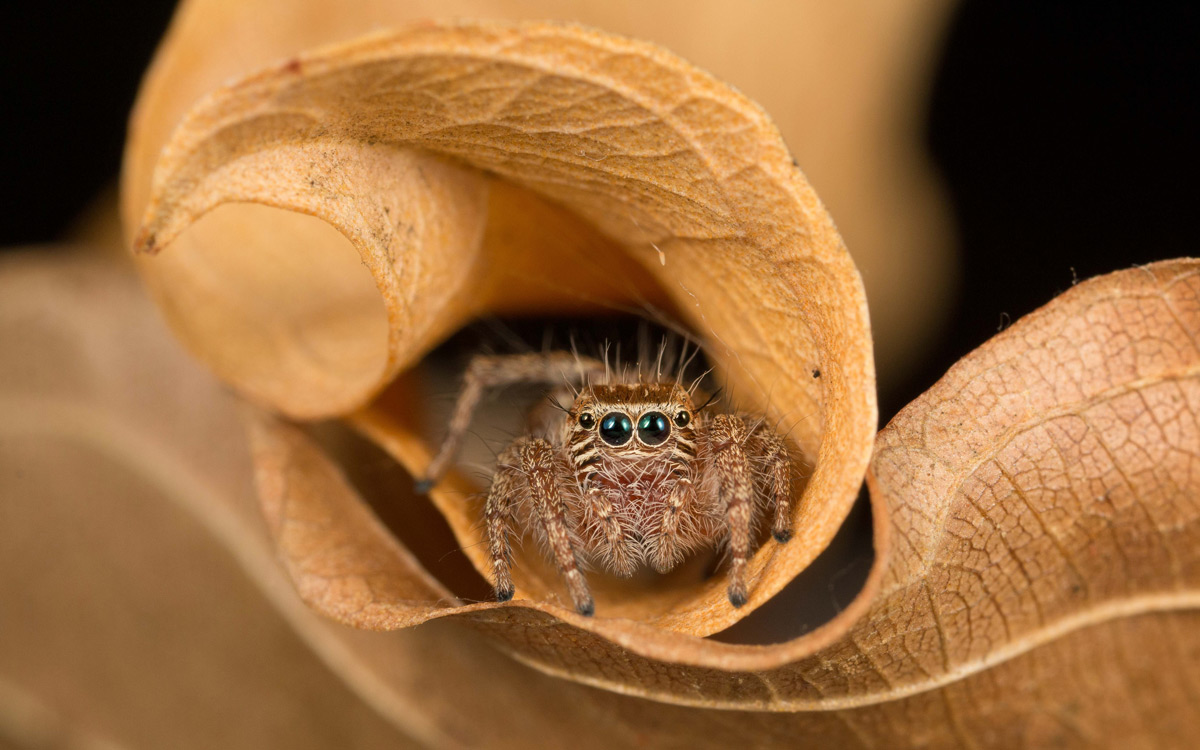
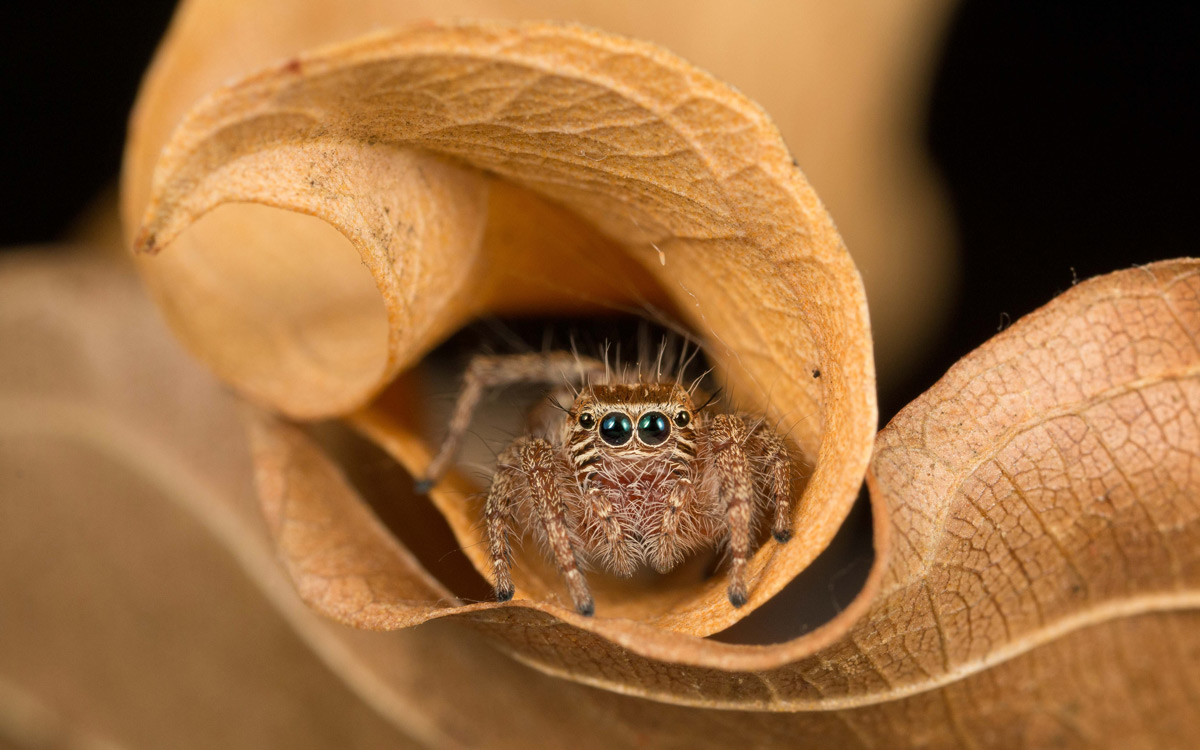
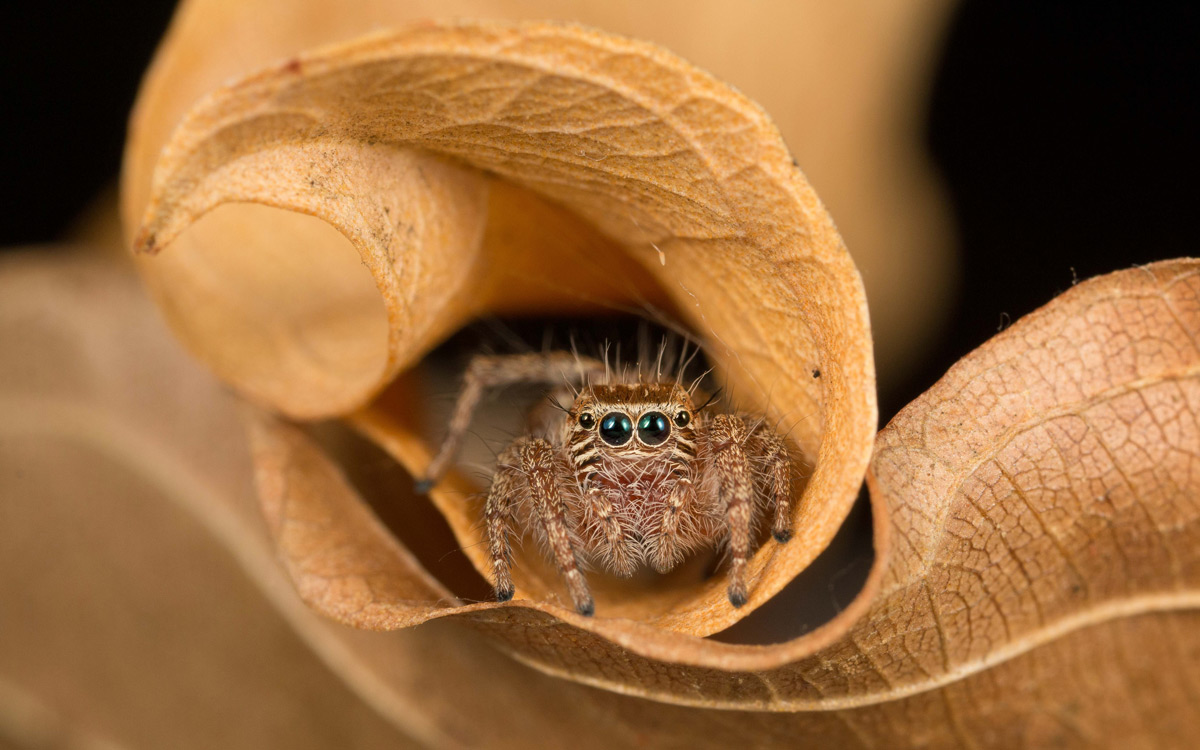
Eraine van Schalkwyk – “This friendly, 1cm in length, jumping spider (Hyllus sp.) was found wandering in leaf litter in the Greater Kruger National Park in South Africa. Jumping spiders are very curious creatures, and often intrigued by the camera flash. They are harmless to humans.” Judges’ comments
Eraine’s image is pure macro-magic! What made this image of hers stand out head-and-shoulders above the other macro entrants was that she managed to include so much of the habitat in her capture. So often macro photography involves tight focus and shallow depth of field, where only the subject is clear. This tiny predator appears to be surfing in a tube wave, as it gazes straight at the camera. This added sense of place makes this a wonderful image. ABOUT ERAINE VAN SCHALKWYK Eraine has a great appreciation for all organisms and is an amateur photographer specialising in spiders and other invertebrates and would like to bring awareness of spiders and their worth in our world.
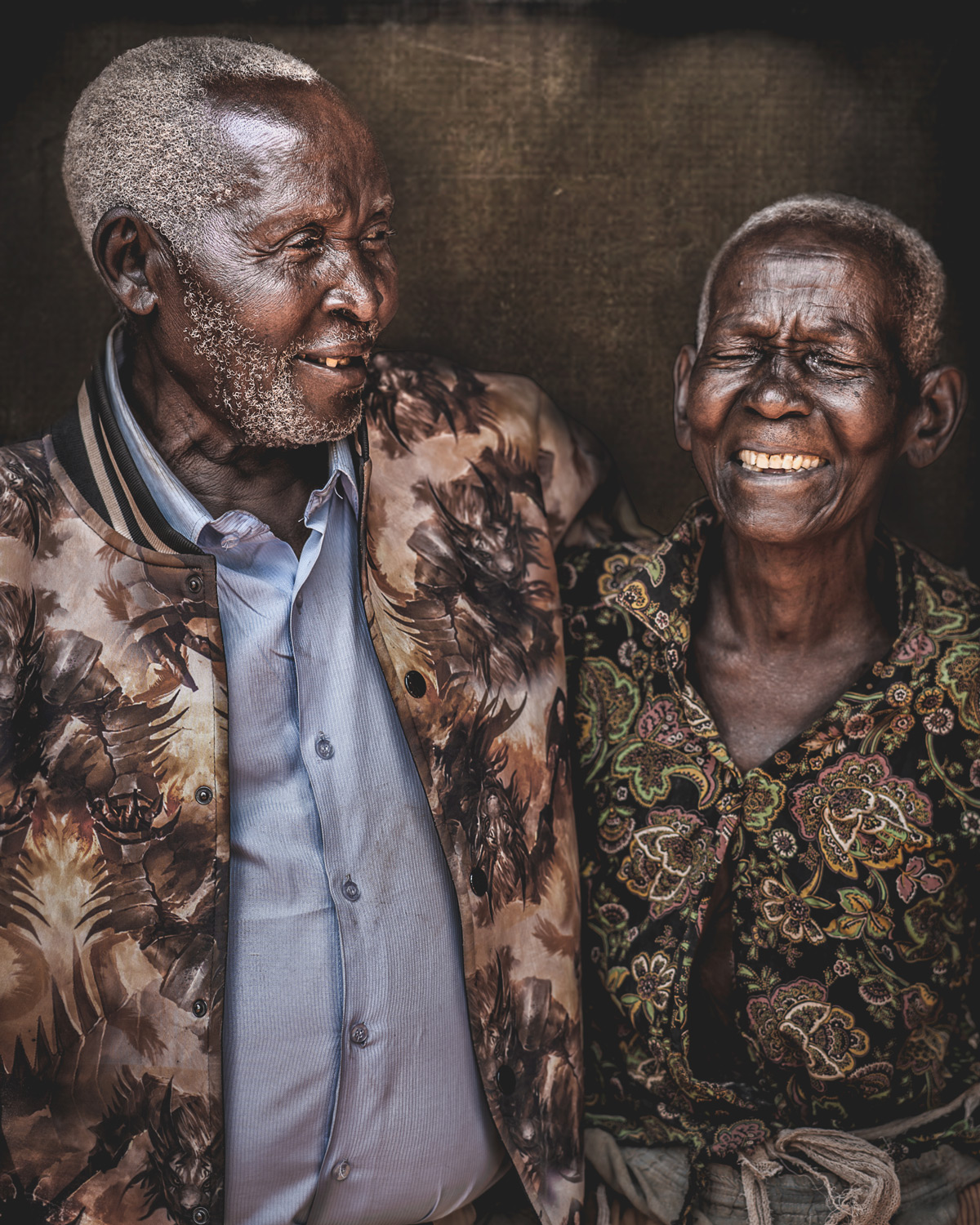
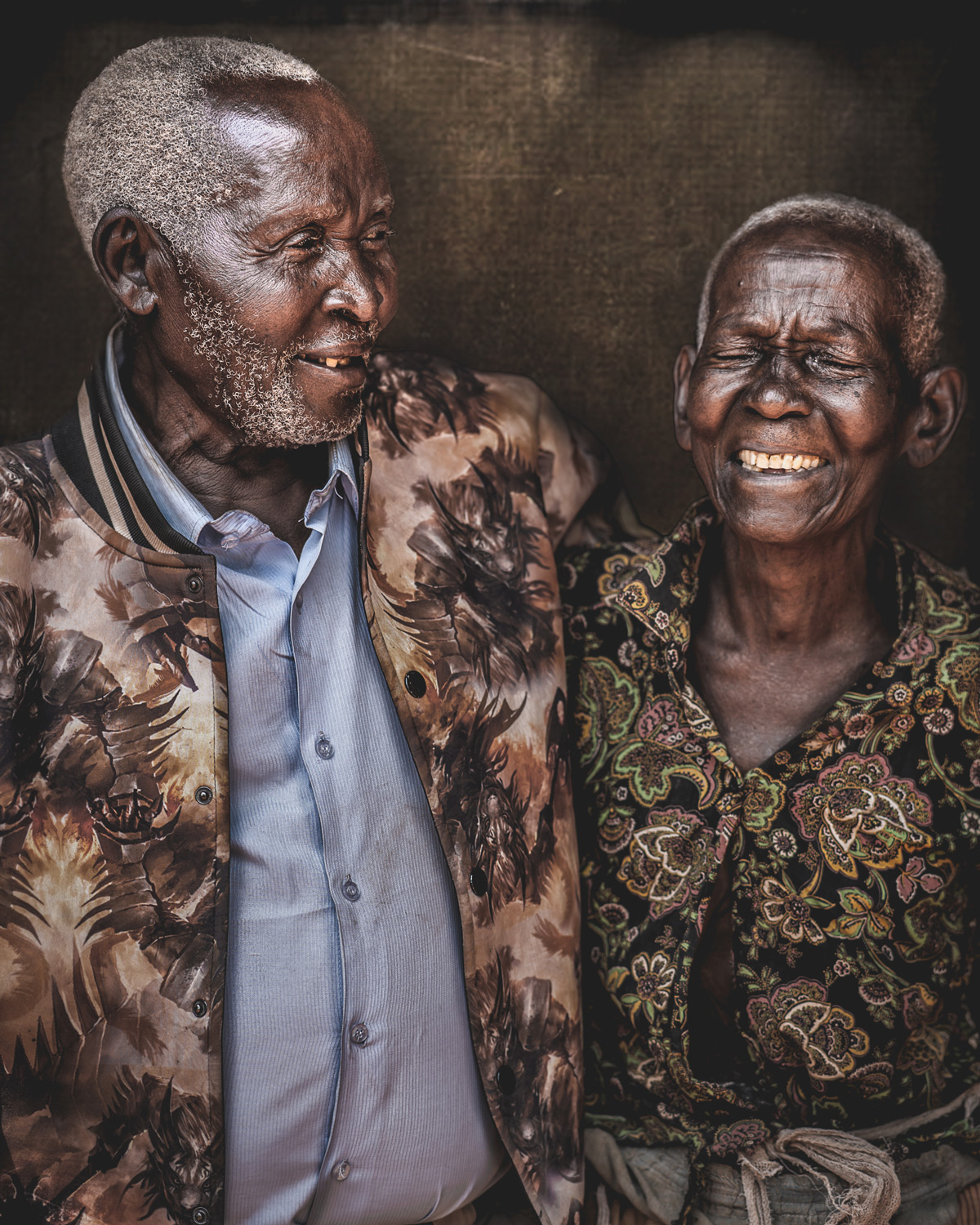
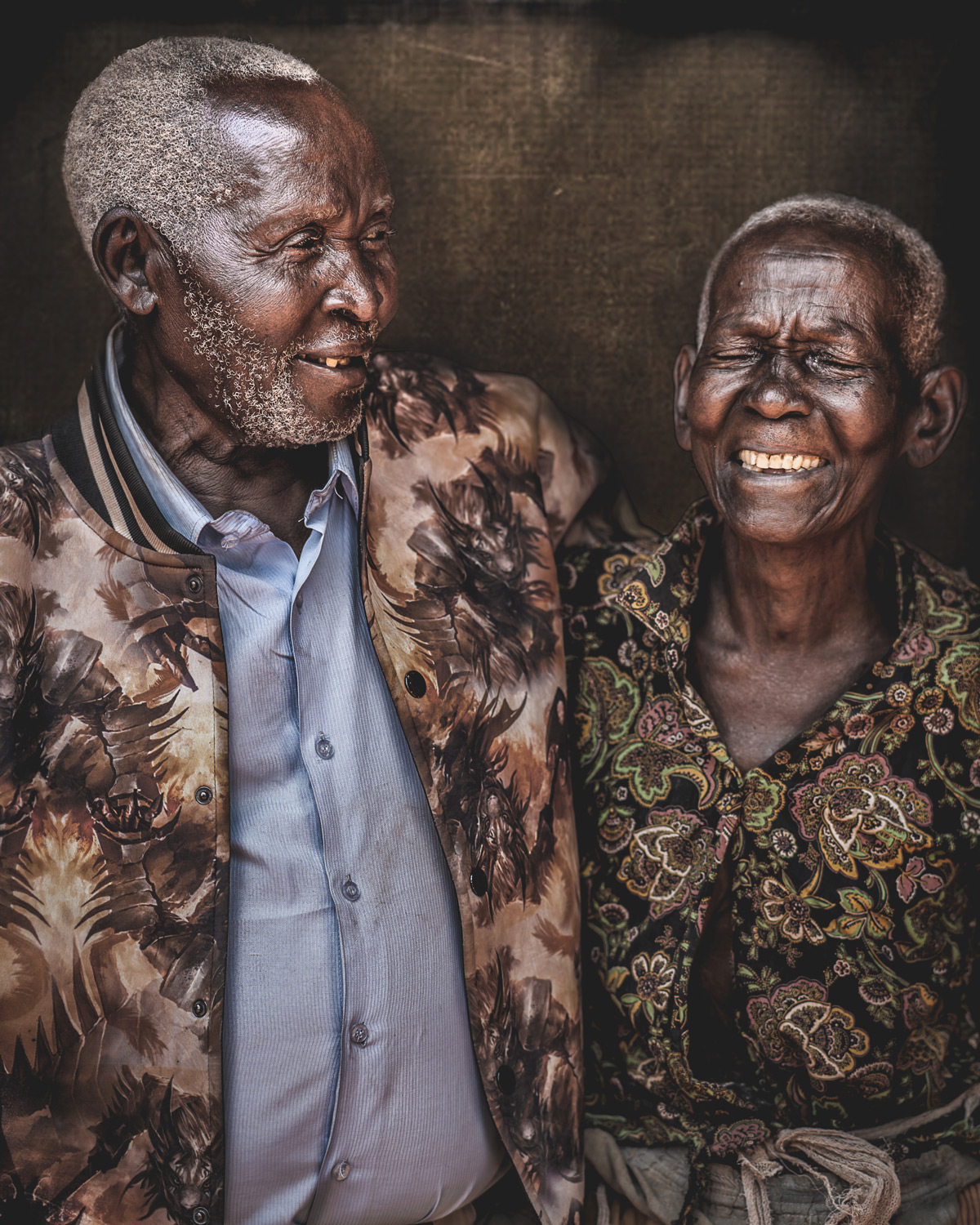
Bob Ditty – “This photo of Mzee (Luganda for ‘Old Man’) goes along with a series of photos showcasing the elderly in Uganda. Uganda is one of the youngest populations in the world so the fact that he turned 100 is no small feat here. It was wonderful celebrating with him, bringing him cake and soda. He was so touched as he never had a birthday cake until now – his 100th birthday! He is an Ugandan World War II vet who fought alongside the British, serving in Burma. He has so many stories to share. He is so in love with his wife that when I asked to take a photo of him, he insisted that she was included as well.” Judges’ comments
Bob’s sensitive portrait of this dignified couple is just so classy it seems to soften the air around it. Over the past few years we have seen a growing emphasis on portable photographic studio portraiture, where backdrops are erected in situ, props added and subtle lighting provided to create a uniquely dramatic take on the photography of Africa’s remote and unique peoples. What made us enjoy this particular rendition of the genre was the sense of dignity and respect and the obvious love between these two beautiful humans. Subtle earthy tones add to the overall impact of making this image easy on the eye, and are a change from the often colourful and sometimes shouty style of others. ABOUT BOB DITTY My name is Bob Ditty and I’m a humanitarian photographer and filmmaker. I grew up in Ohio, USA and lived there most of my life. In 2014, I moved to Uganda and now currently follow my passion for photography and filmmaking. I work full time for an NGO called Healing Faith Uganda as their photographer/filmmaker as well as a freelance photographer/filmmaker in my spare time. I feel now that my calling in life is to get the story of East Africa to the world. It’s something I’m passionate about and love doing! I’m grateful that we live in a time where media can be shared very quickly and easily. With my photography, I strive not just to tell a story but to “feel” the story. I know that may sound strange to many but it’s truly how I approach my craft. I strive to wring perfection out of every photo that I take and edit. I know that’s not possible but it’s worth the effort to me.
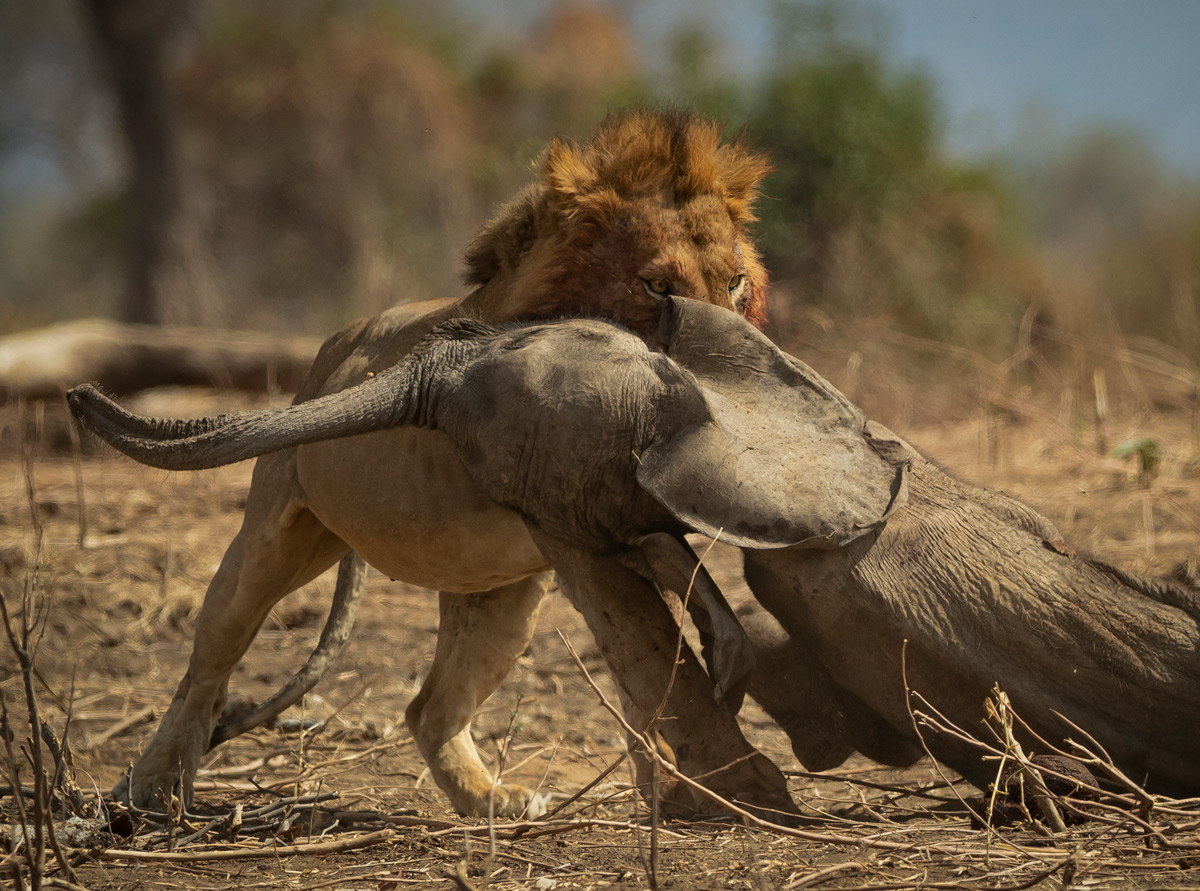
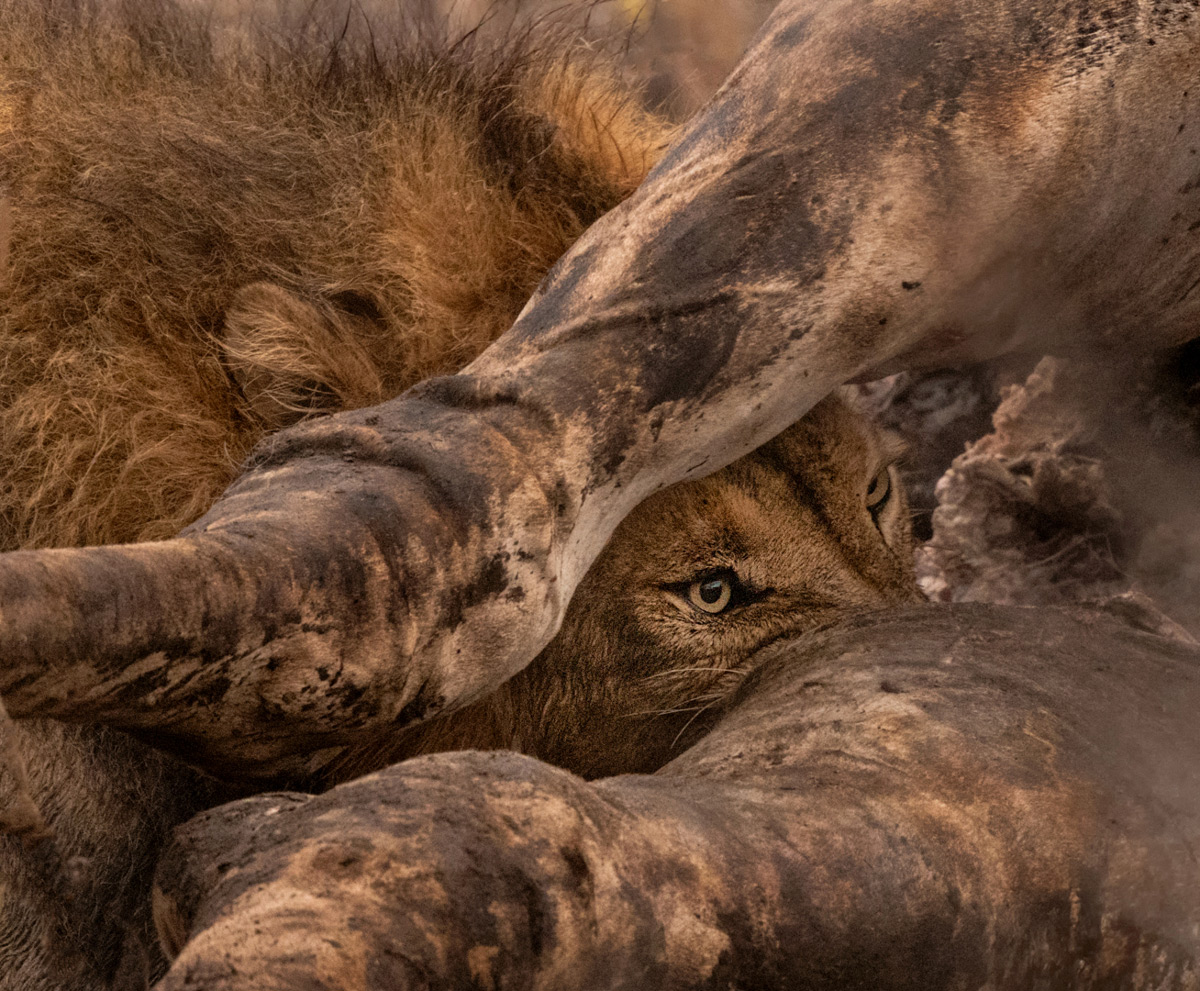
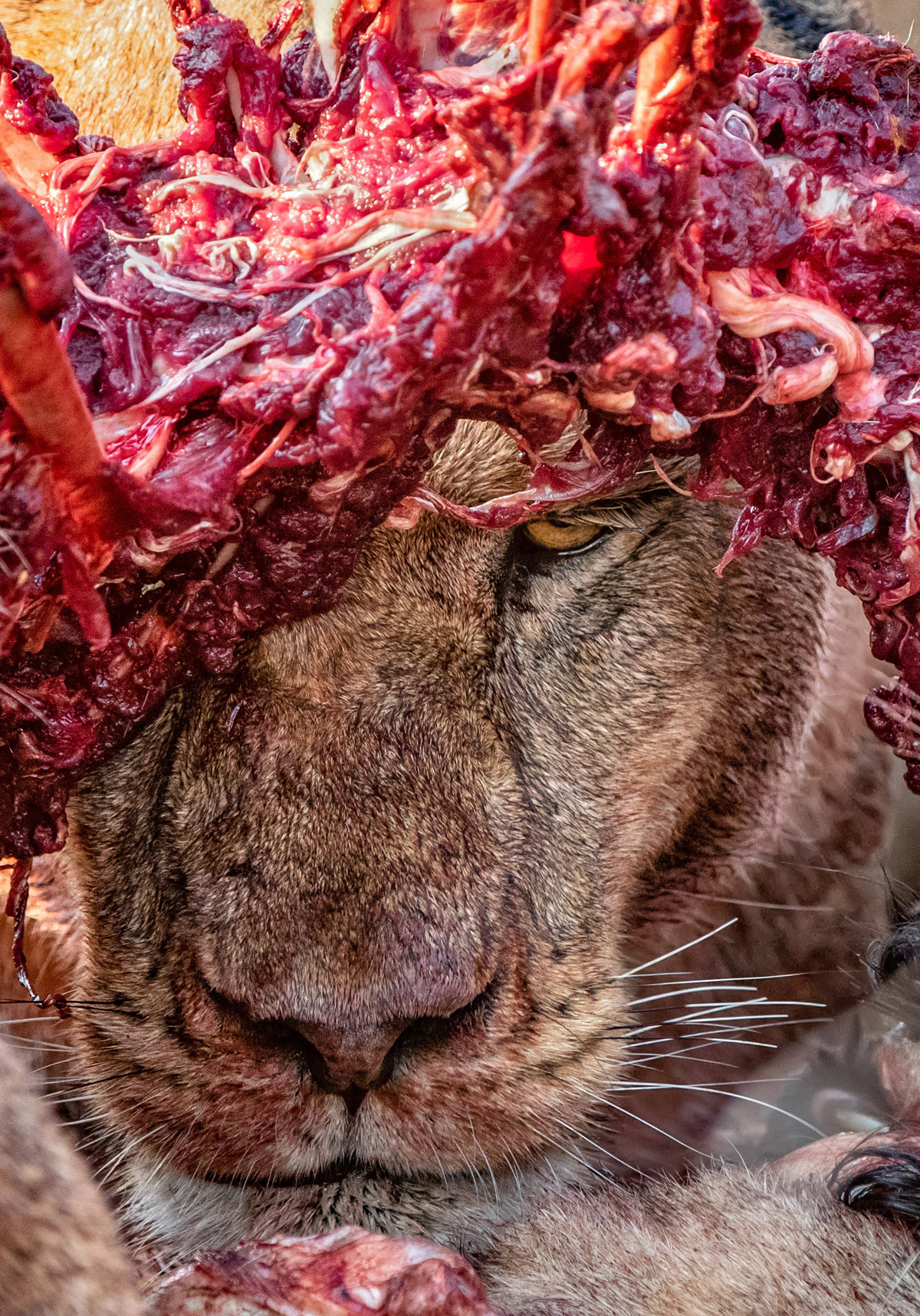
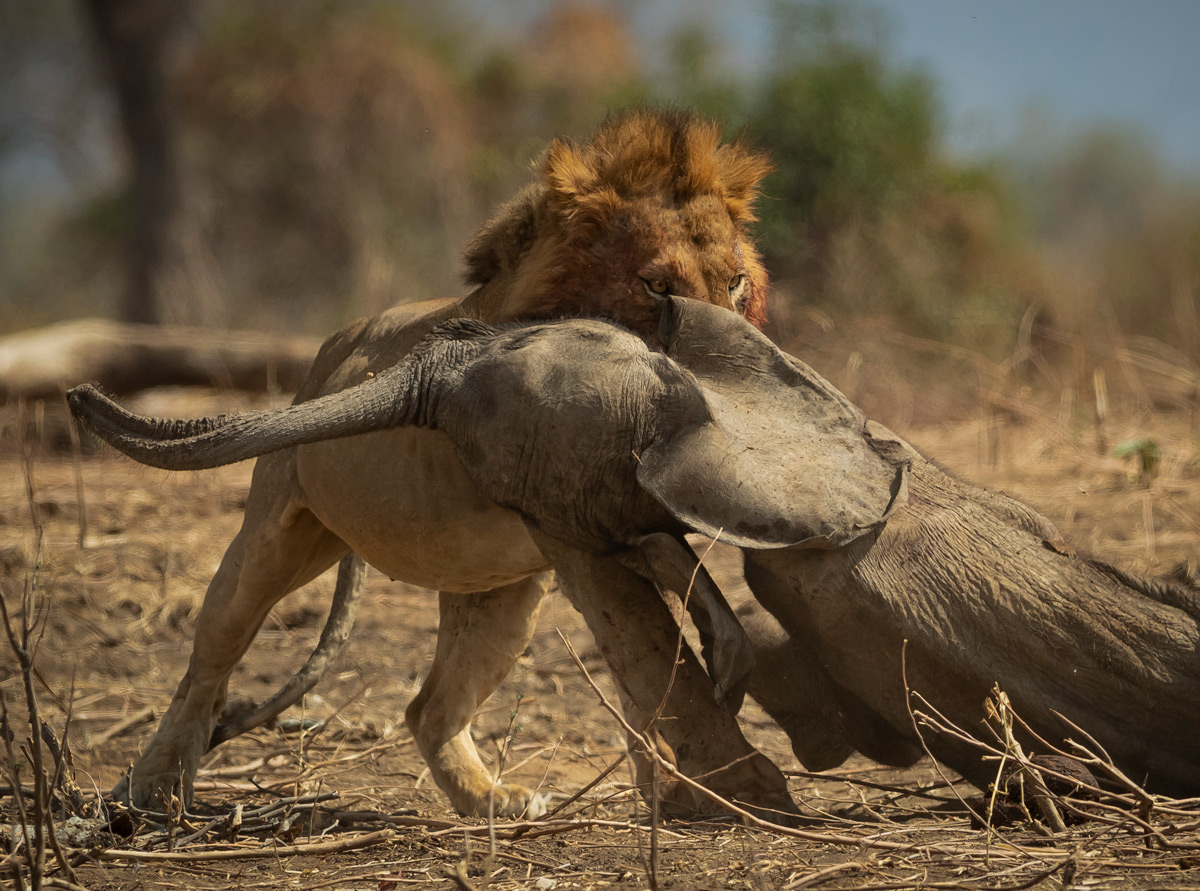
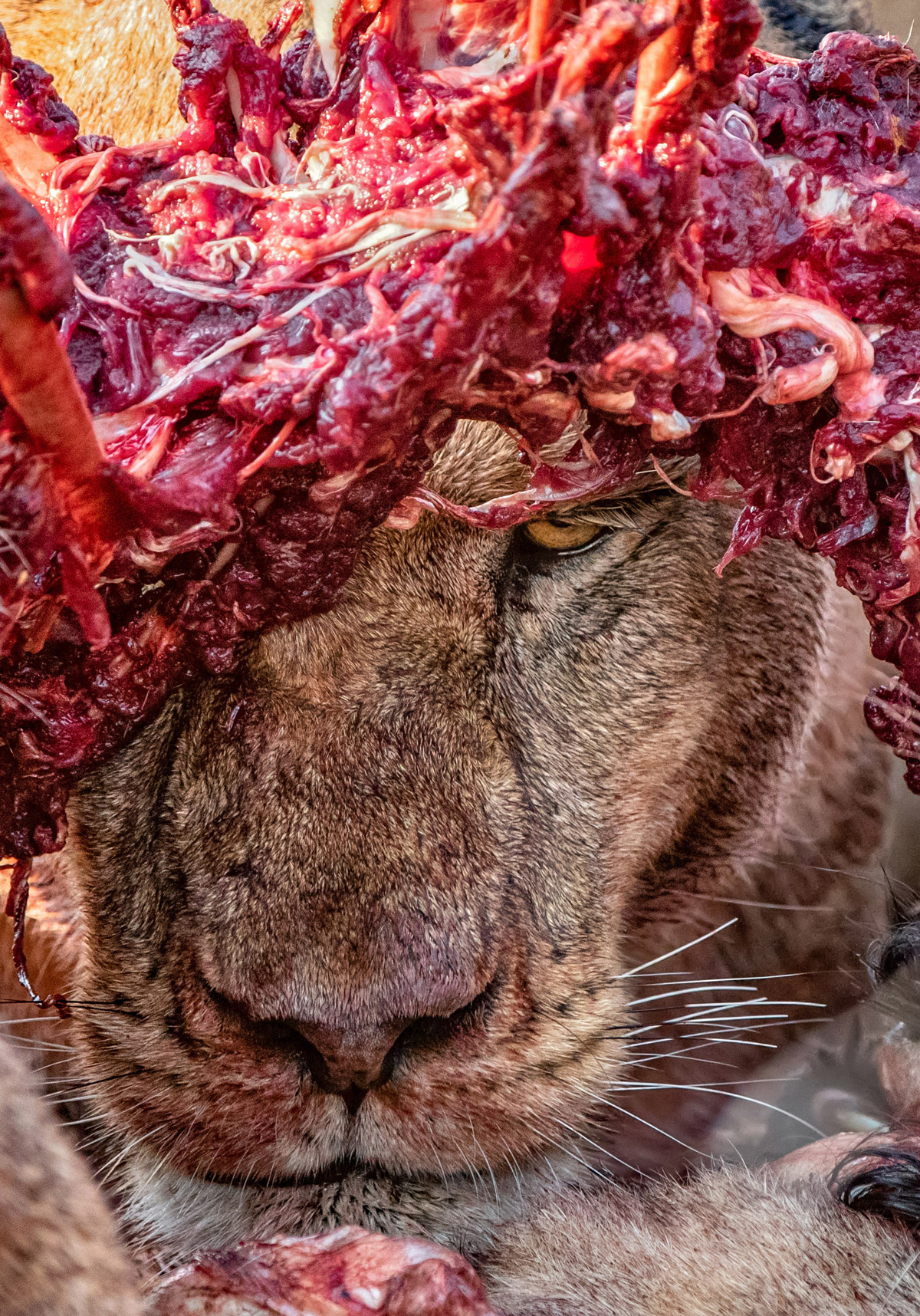
Jens Cullmann – “A lion drags an elephant calf under a tree to feed after it was killed by two lions the previous night, Mana Pools National Park, Zimbabwe.” Judges’ comments
Jens’ dramatic image reminds us of how ruthlessly efficient nature is when left to its own devices. We received many images of predators and prey, of blood and guts – all of which also portray raw Africa. Some of those images were technically superior to Jens’ image, but what made Jens’ image stand out is that this lion was feasting on an elephant, and a baby one at that! Judging by the many comments on our various online platforms over the years, we seem okay with predators taking out warthogs, impala and even buffalo, but many of us are uncomfortable when elephants and primates are the targets. Jens’ image reminds us to move away from the cartoon characters we were told about as kids, and the Disneyfication of African wildlife that has many people not understanding or accepting what really goes down in the remaining wild regions of Africa. ABOUT JENS CULLMANN In 2008 Jens Cullmann discovered his passion for wildlife photography on a roadtrip from Germany all the way down to Africa. It became a lifestyle. The passion never left nor did he. Animals in action are his trademark and no one has more patience (as long as it’s animals) to get that one shot.
HIGHLY COMMENDABLE FINALISTS
THE FOLLOWING EIGHT HIGHLY COMMENDABLE FINALISTS ARE IN NO PARTICULAR ORDER
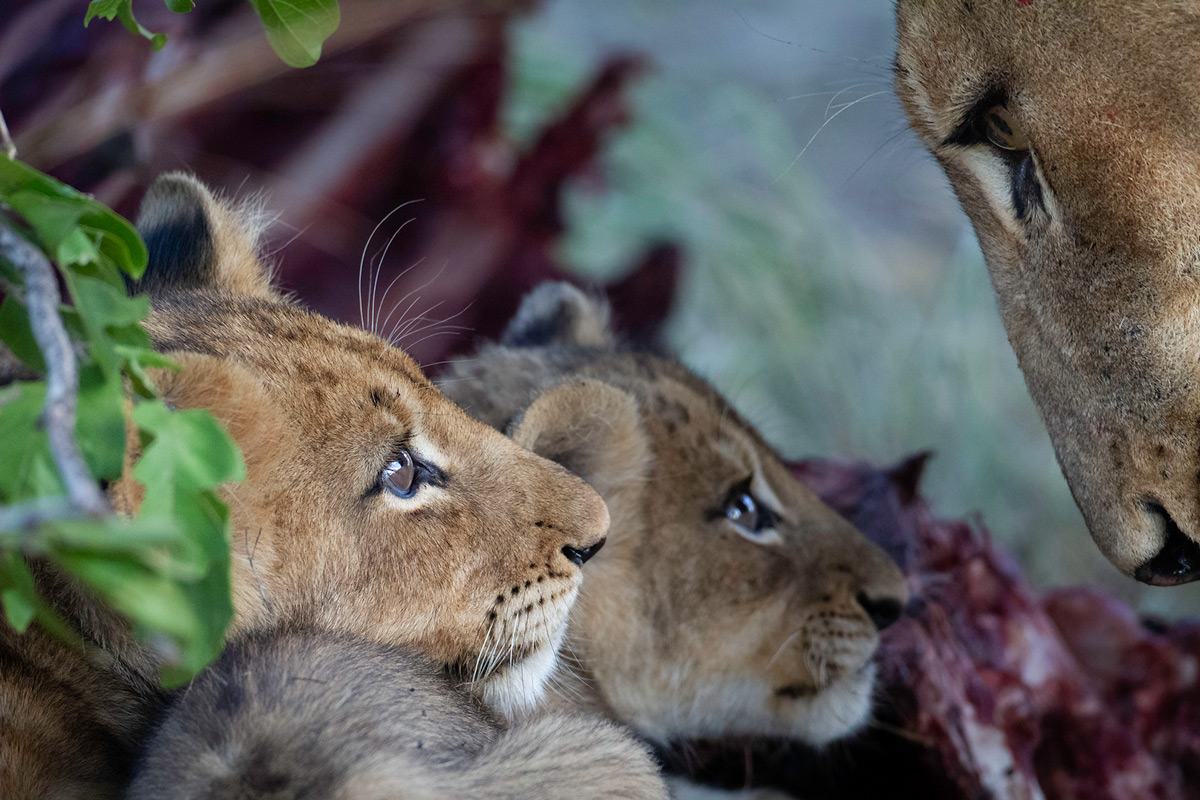
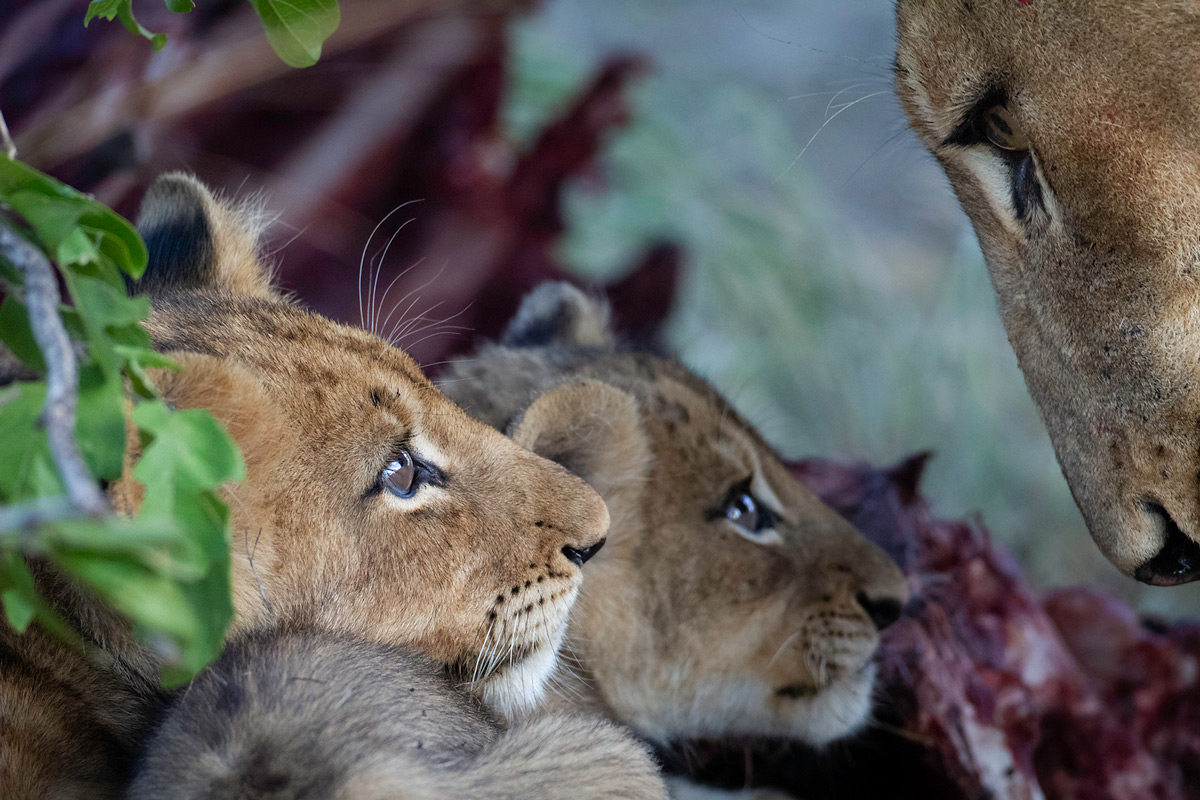
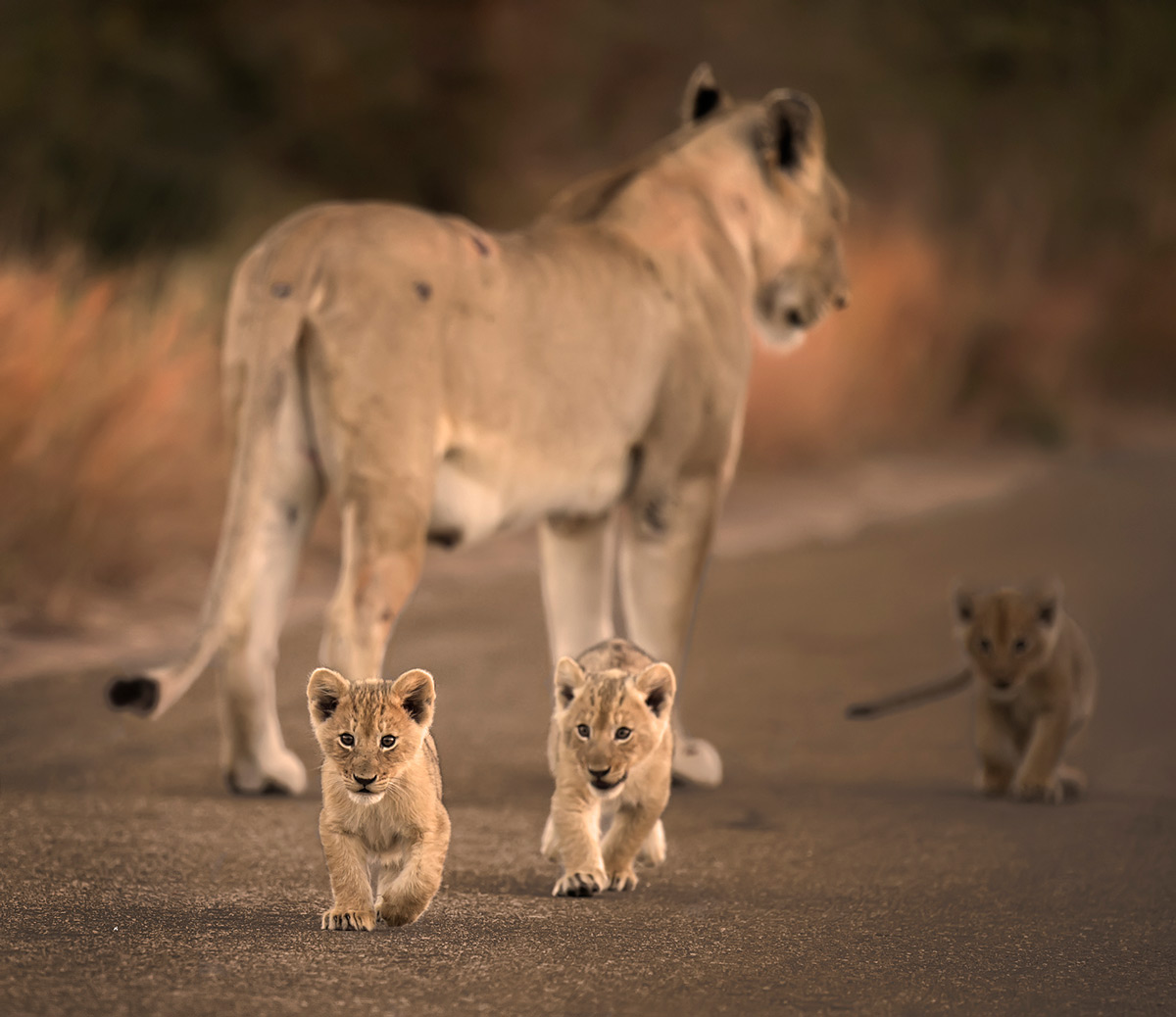
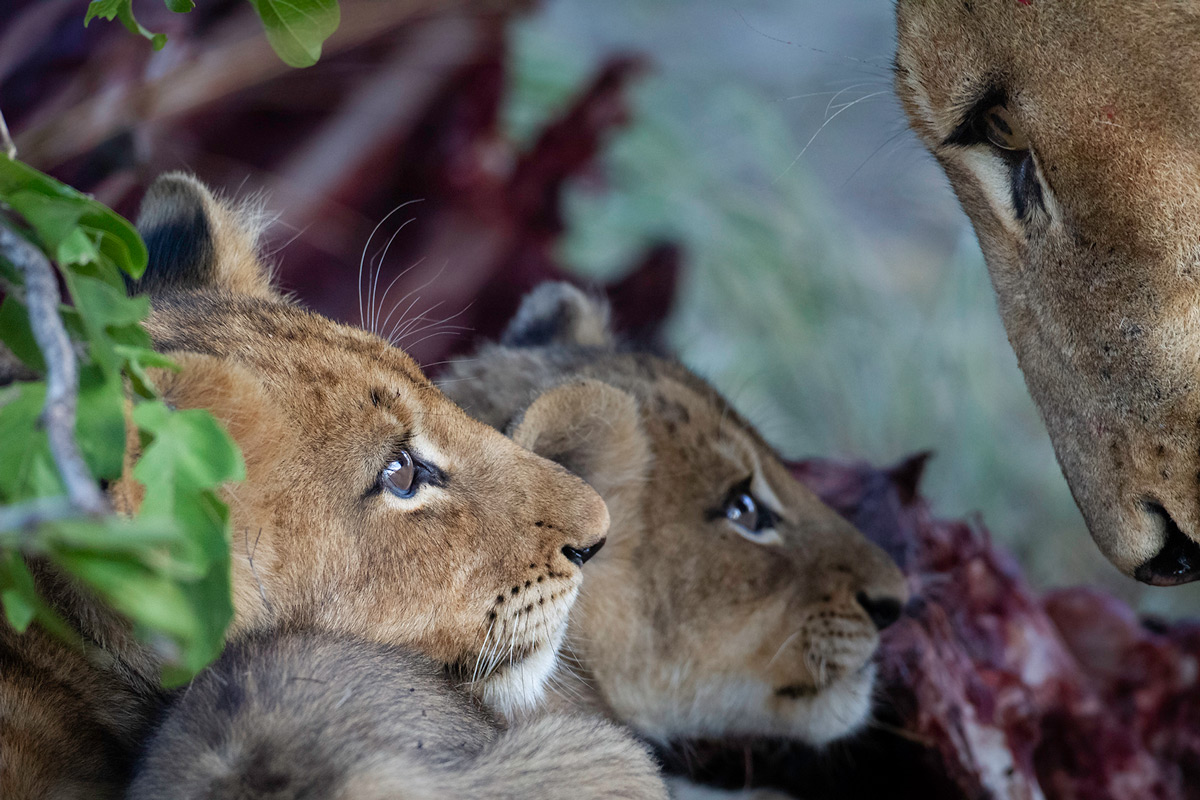
Daniel Koen – “Lion cubs look up at their mother while at a wildebeest kill in Sabi Sands Private Game Reserve, South Africa.” Judges’ comments
Daniel’s touching image of motherly love is unusual for an image of this nature, in that we are not the focus of a chocolate box dewy-eyed gaze. Instead we are mere observers to this moment of deep connection between mother and cubs. The bloody carcass in the background makes a fitting backdrop to this tender moment. ABOUT DANIEL KOEN I was born in Natal, Durban after which we moved to Alberton where I spent most of my life. I went on to study Nature Conservation at the then Technikon Pretoria and obtained a National Diploma in Nature Conservation. I currently work as a Nature Conservator in Gauteng. My interest in wildlife photography started at an early age during family trips to the Kruger National Park. I hope to dedicate more time in the future to honing my photography skills.
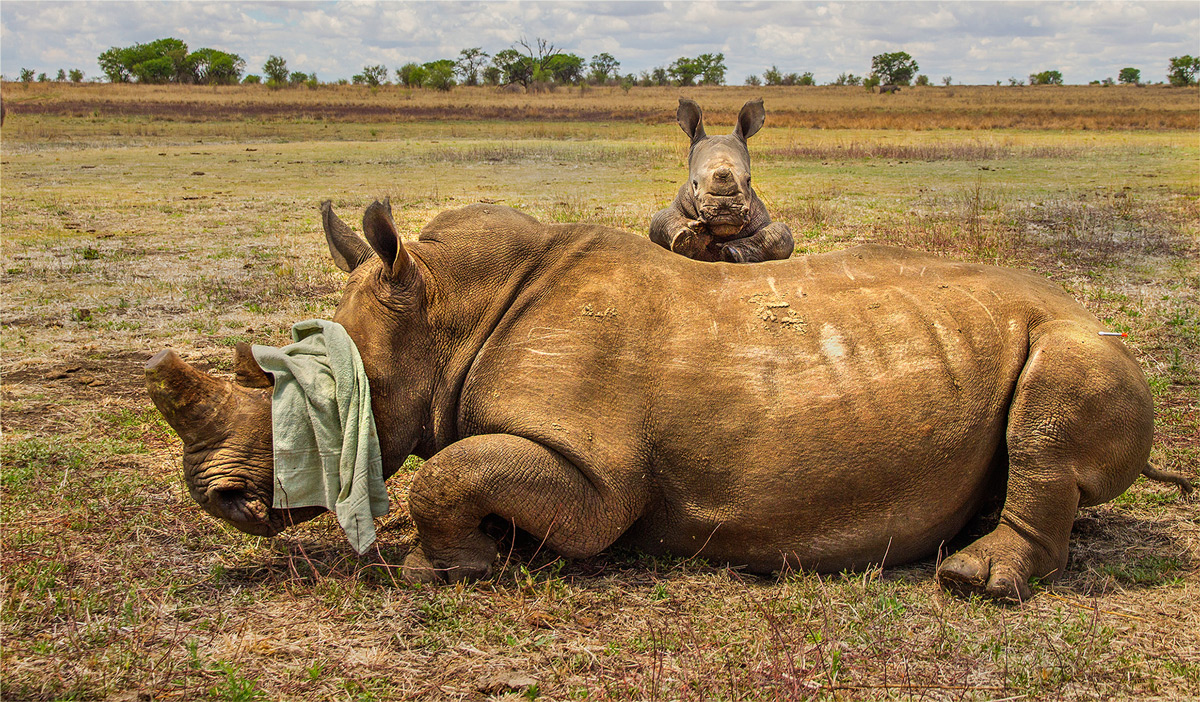
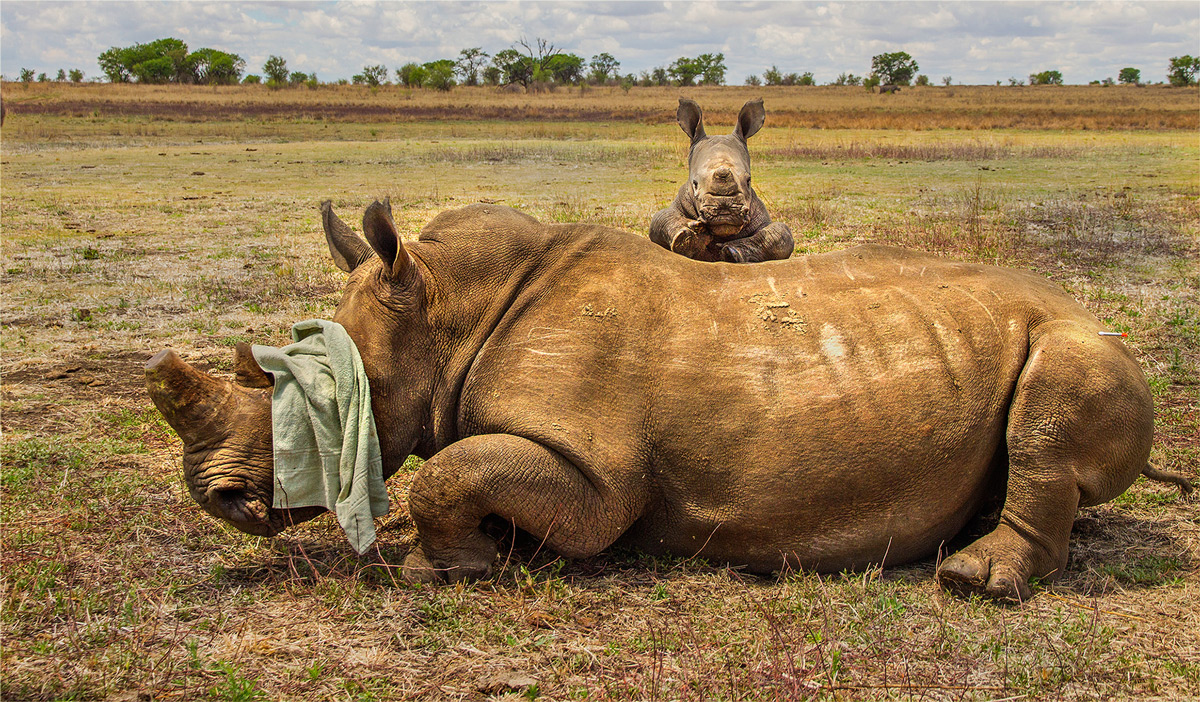
Hesté de Beer – “A white rhino calf refuses to leave its mother after she was darted for a dehorning, South Africa.” Judges’ comments
Hesté’s image really speaks to us on many levels and tugs on our emotions. Our newsfeed screens are so full of bloodied poached rhino carcasses and traumatised orphans, that this bitter-sweet moment confuses us all. The dehorning of rhinos (whether as a farming or anti-poaching exercise) is a controversial topic that toys with our sense of right and wrong, and the additional matter of a stressed-out baby adopting a ‘cute’ pose adds to the emotional roller-coaster impact of this image. ABOUT HESTÉ DE BEER I grew up in Mtunzini, a small town in northern KwaZulu-Natal, South Africa. My father, mother and sister are skilled photographers, but it was not until about nine years ago that I became interested and asked my father to introduce me to the secret world of photography. He is still my mentor and strictest critic! I am lucky to have the opportunity to travel with my partner to distant locations over the world, trying to locate some of the most endangered species of the animal kingdom. That is where I started to realise that the ever-growing human population, modern technology and media destroy nature and that so many wonderful creatures, ancient tribes and cultures are extinct or highly endangered. I want the world to see what I see through my lens. I want to make people aware of what is happening to our world and I want to immortalise the images of creatures that our children and their children might not be privileged enough to see. I want everybody to know that their passion, skill or talent can make a difference in this world. It is all worthwhile.
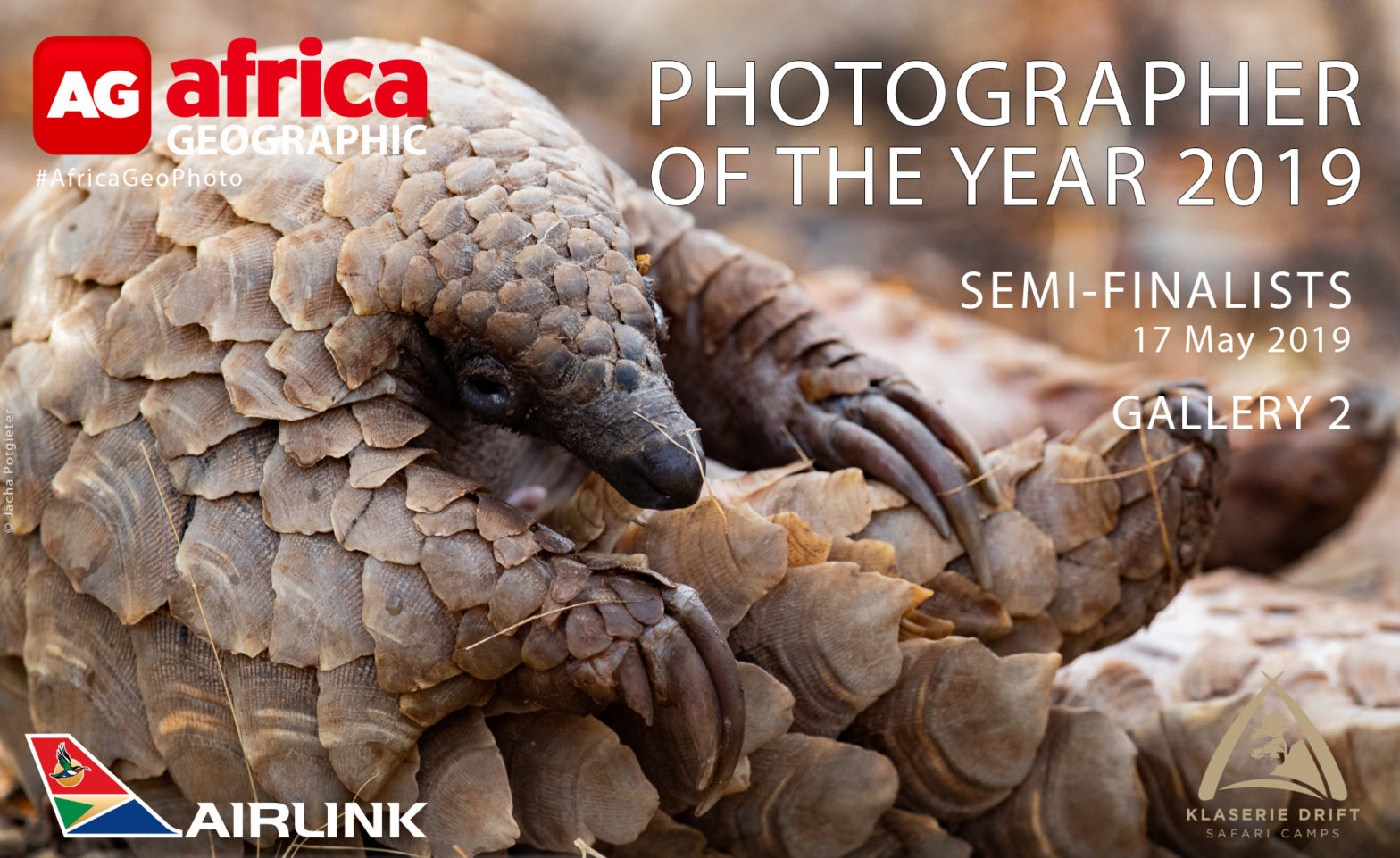
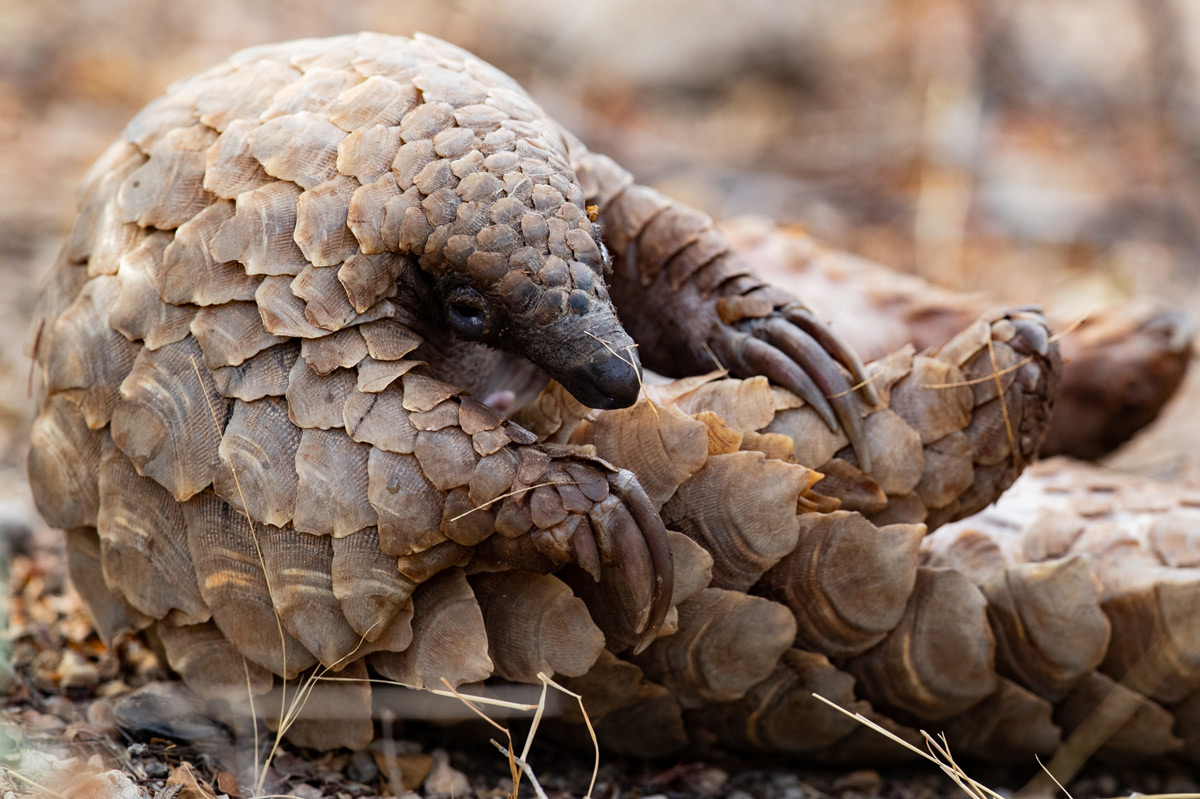
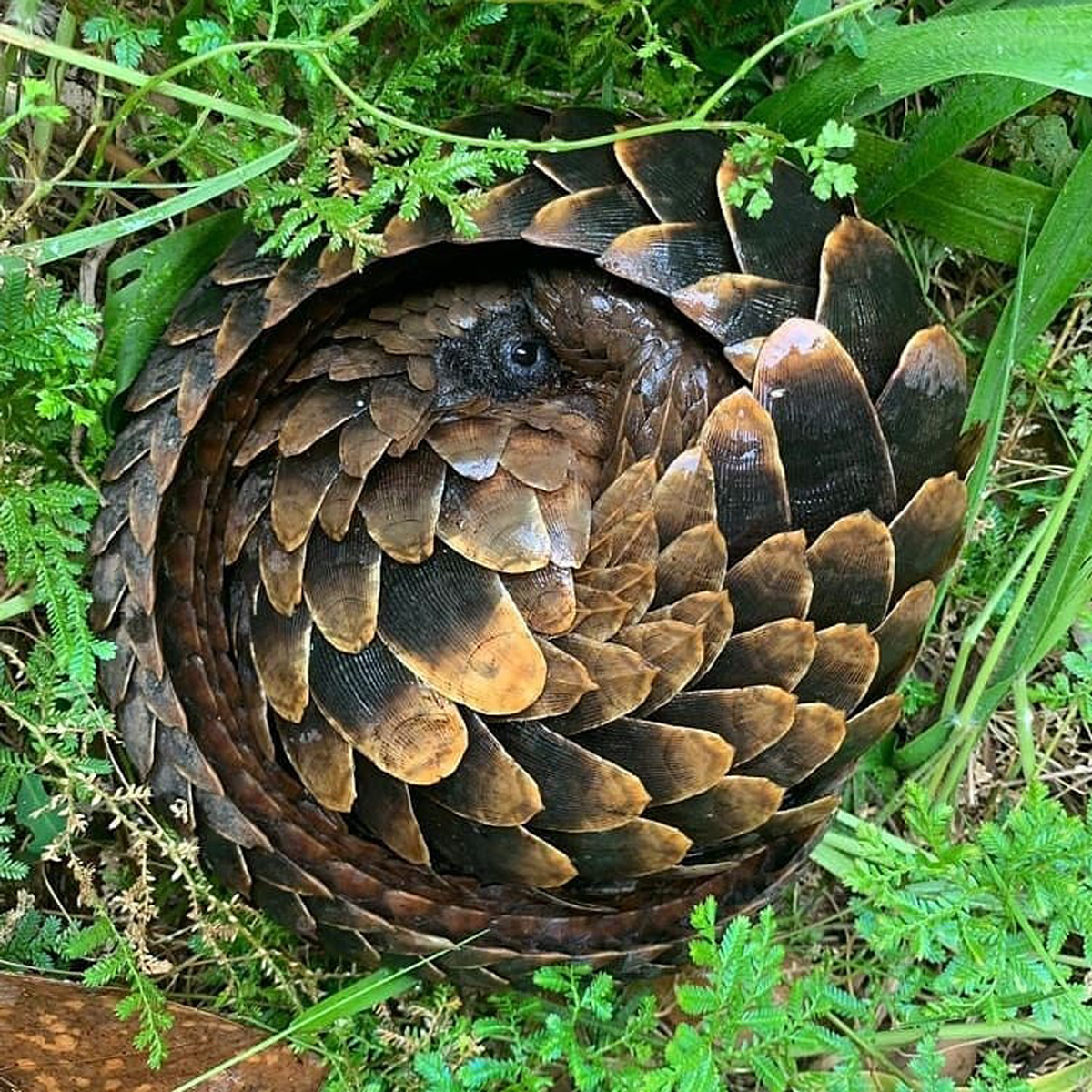
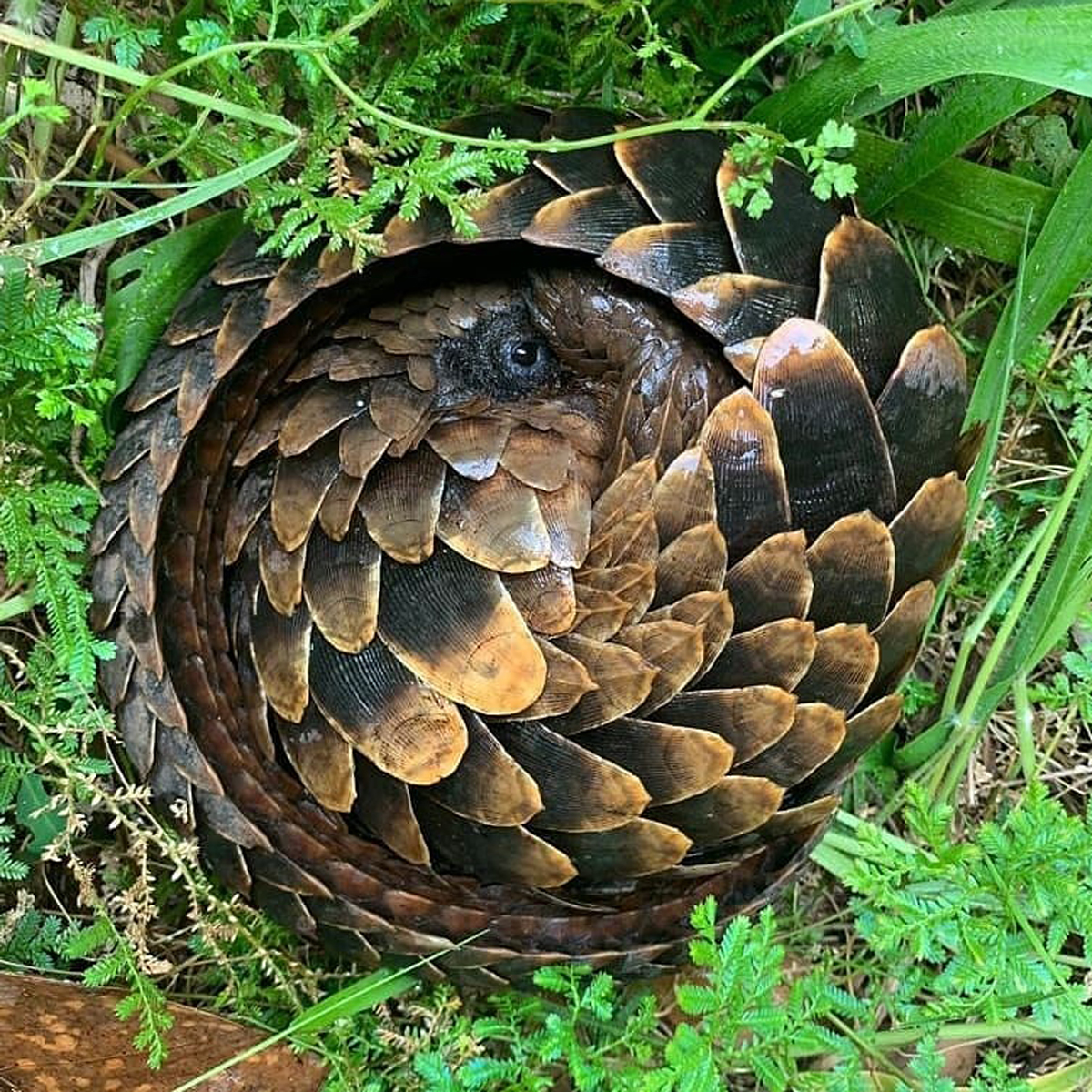
Angelia Young – “A black-bellied pangolin rescued from the bush meat market in Yaounde, Cameroon. This photo was taken when she was released. No filters or tweaks needed when you photograph pangolins because their magic just shines through!” Judges’ comments
Angelia’s image emphasises the vulnerability of all pangolin species, as this black-bellied pangolin curls up to defend itself. Pangolins are the most trafficked wild animal species on the planet, and the insatiable demand from the Far East for pangolin scales, combined with a thriving local bushmeat industry, is driving these helpless creatures towards extinction. ABOUT ANGELIA YOUNG I am a 35-year-old South African living in Cameroon. I have been living in Cameroon for the last eight years. I am a keen conservationist by heart, deeply caring about all species of wildlife and the environment. The black-bellied pangolin photograph is one of the hundreds that we have rescued and released. I am grateful for the chance to share my photograph and in my opinion I already feel like I’ve won if I managed to reach just a few people, to bring awareness to an animal that is little known but terribly persecuted through poaching for their scales to Asian markets. I am proud to be part of the Tikki Hywood Foundation who are leading in coordinating the efforts in many regions of Africa to save these magical animals from extinction.
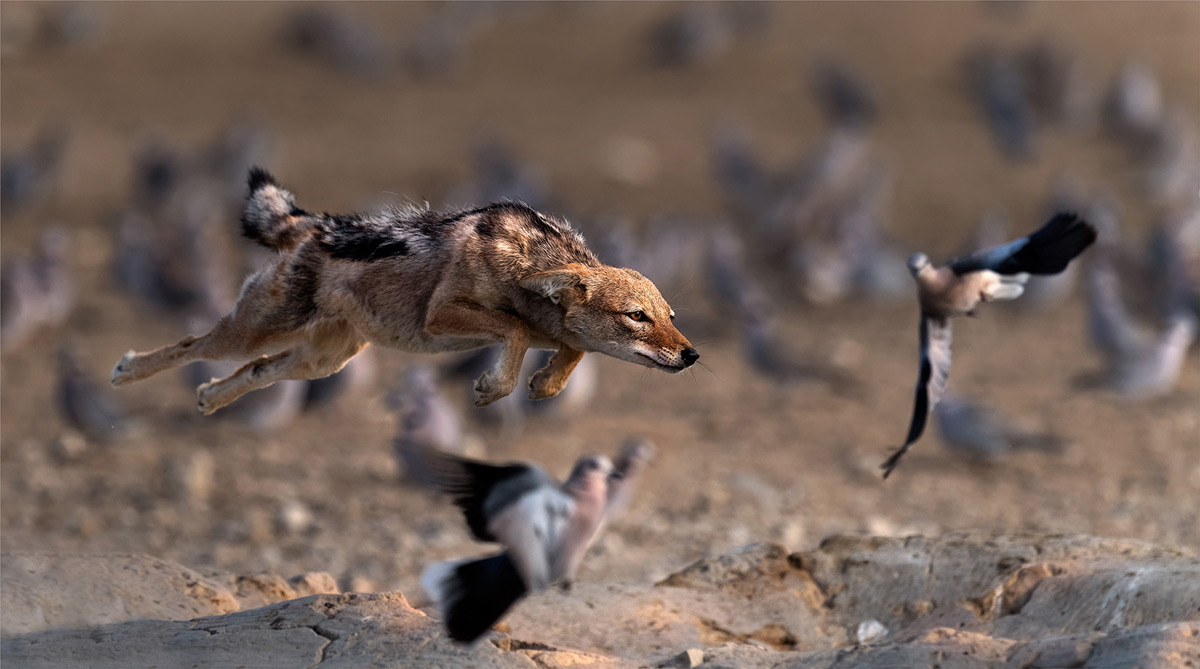
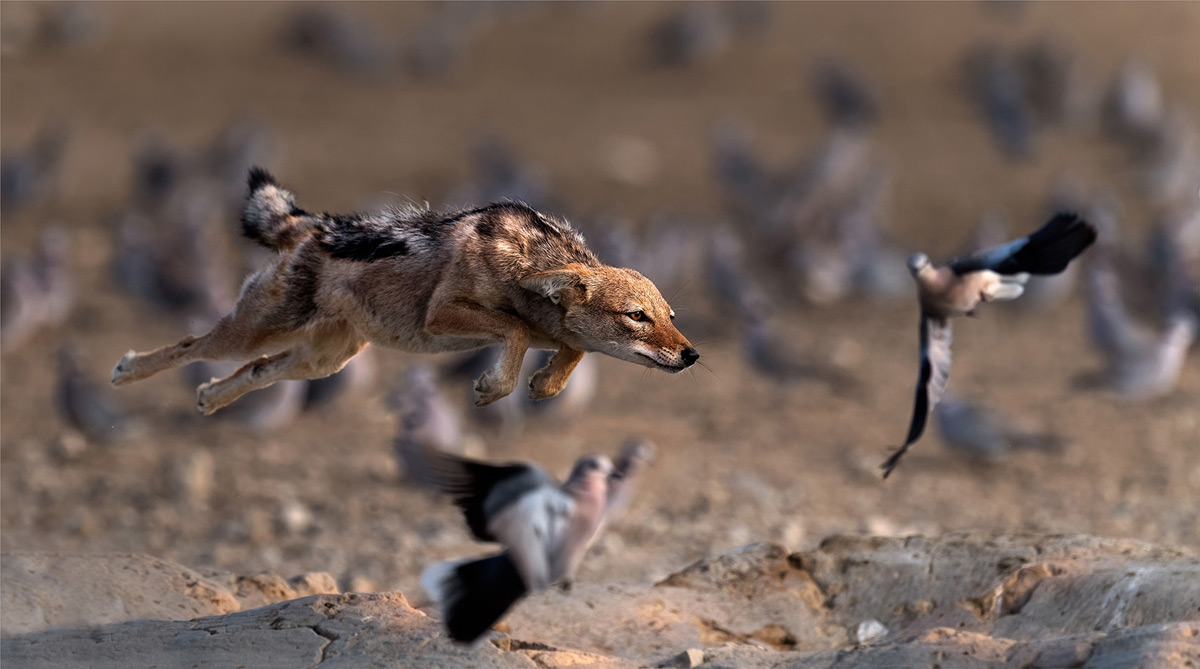
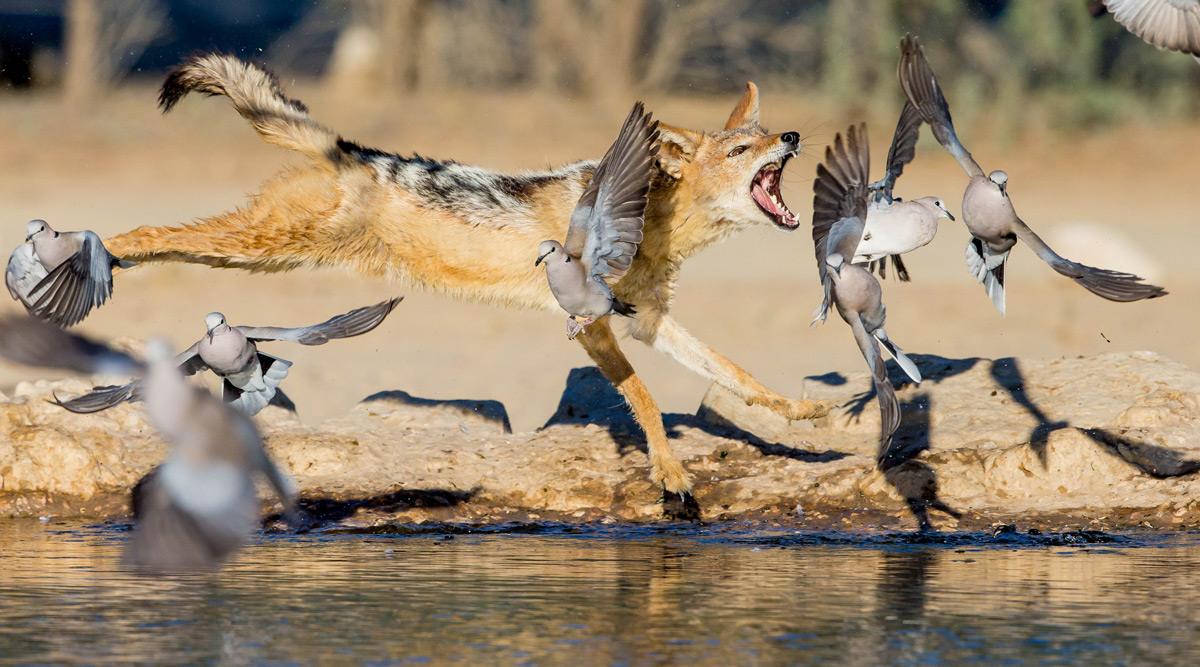
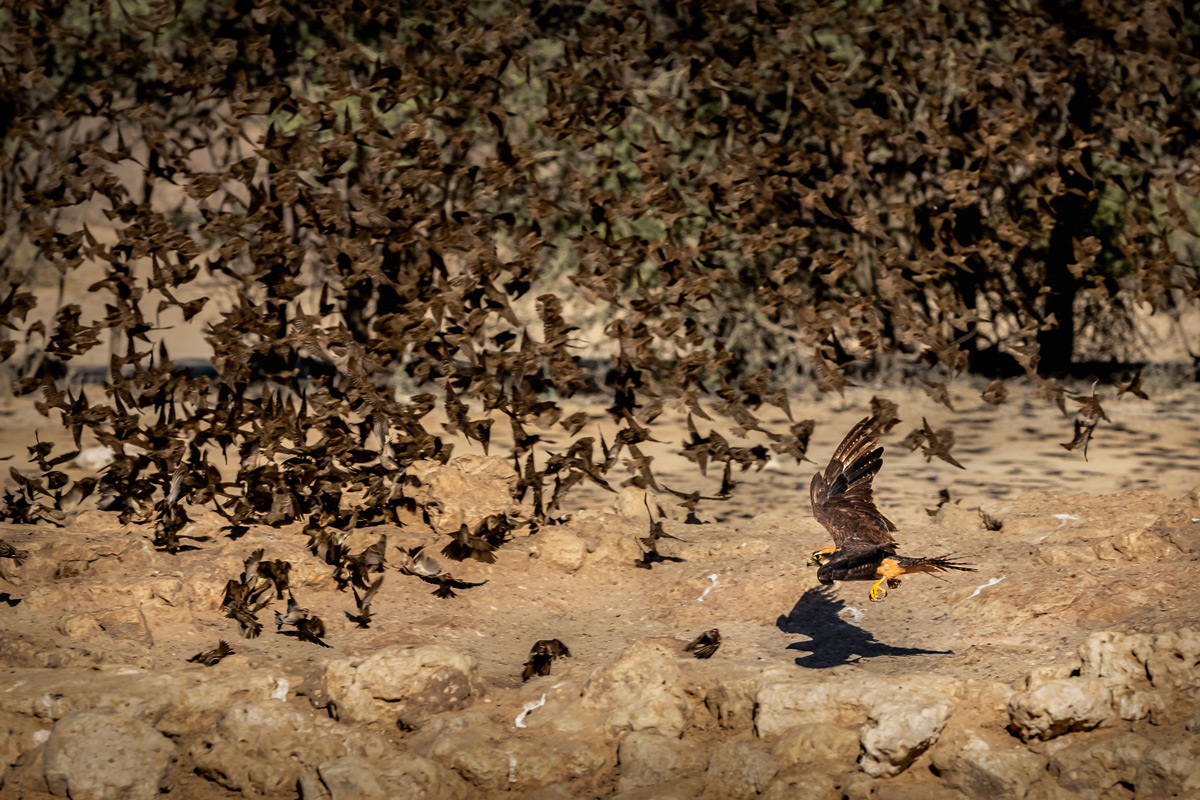
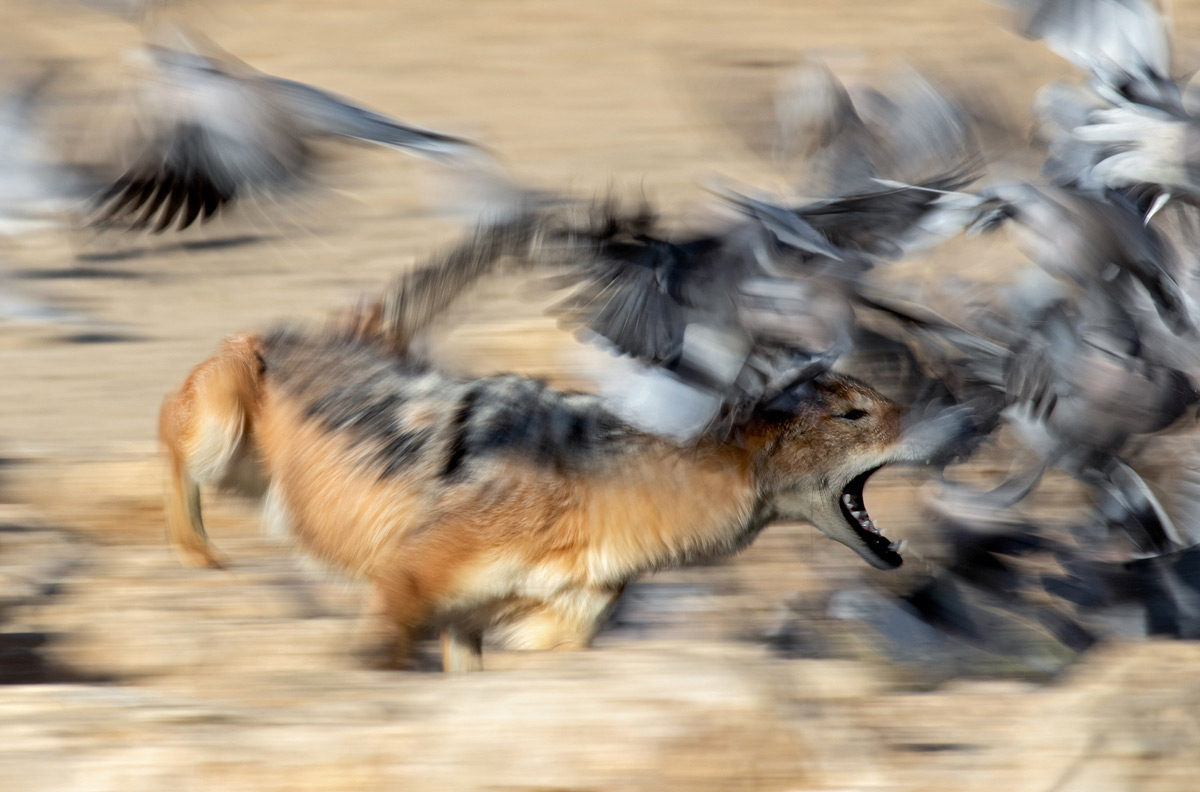
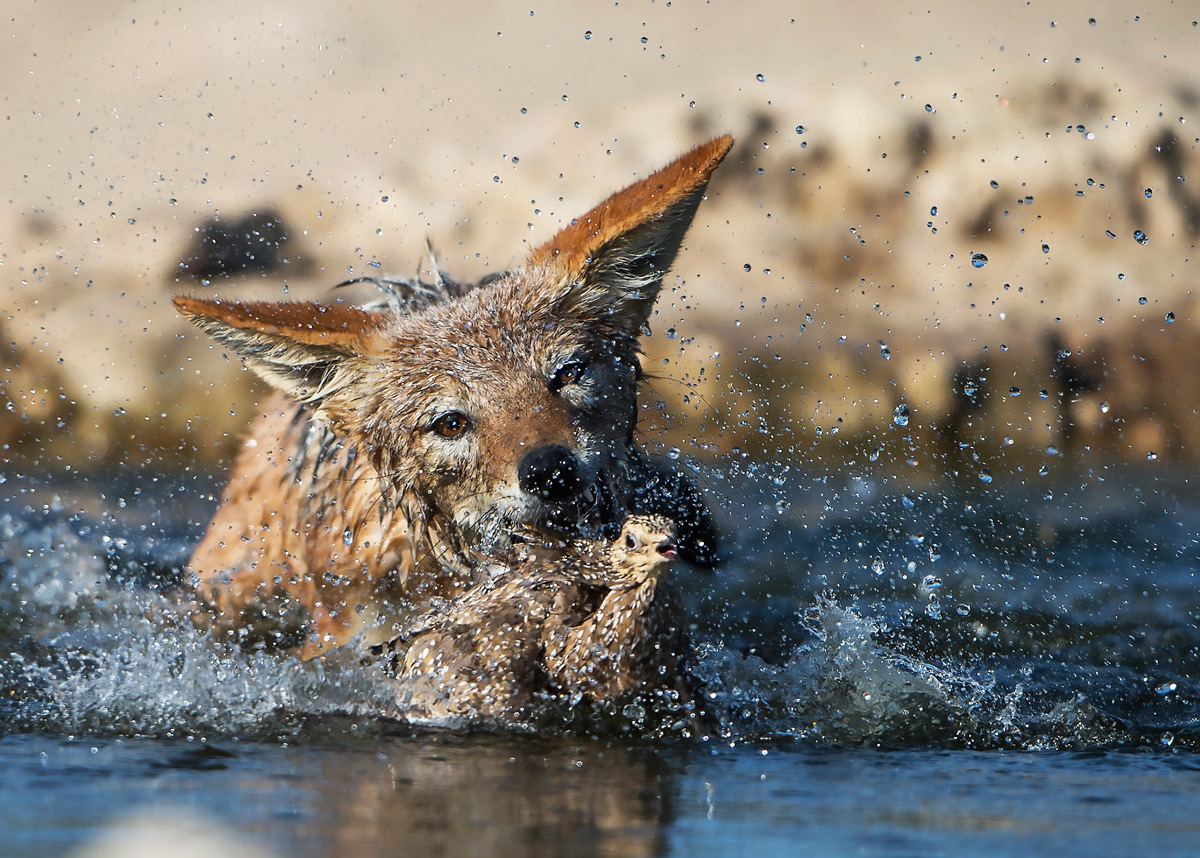
Michiel Duvenhage – “We were camping at Polentswa in the Kgalagadi Transfrontier Park. The waterhole is known for its thousands of doves drinking at the overflow. The previous day was overcast and the solar pump was not pumping enough water for the waterhole to overflow. All the doves had to drink from the waterhole itself. It is a deep waterhole so the doves were sitting inside and this provided a unique opportunity for the black-backed jackal. He was able to sneak up behind the hole, almost to the edge, without the doves spotting him. He would then wind up like a spring and then literally fly over the hole, catching any doves flying up. He was very successful and caught four doves that morning.” Judges’ comments
Michiel’s snapshot of a flying jackal takes the cake from a number of submissions this year with a similar theme. The jackals that ambush doves and sandgrouse coming in to drink at various dry-country waterholes are lightning-fast, and Michiel’s use of a shallow depth of field to capture the airborne jackal’s total focus on the quarry is spectacular. ABOUT MICHIEL DUVENHAGE I was born in Kimberley in the Northern Cape, and currently I am the grounds manager at St Michael’s School for Girls in Bloemfontein. Ever since I was young I was always close to nature, and loved spending time camping with my wife and our trusted 4×4 camper – especially in the Kalahari. When I got married 10 years ago my wife and I started doing photography and I fell in love with it. Now I am only working to fund our next photo trip to try and capture those beautiful golden moments in the Kalahari. For the past five years I have been an active member of the Bloemfontein Camera Club. I have a passion for bird photography (or apparently anything that is flying), backlight photography and capturing the action.
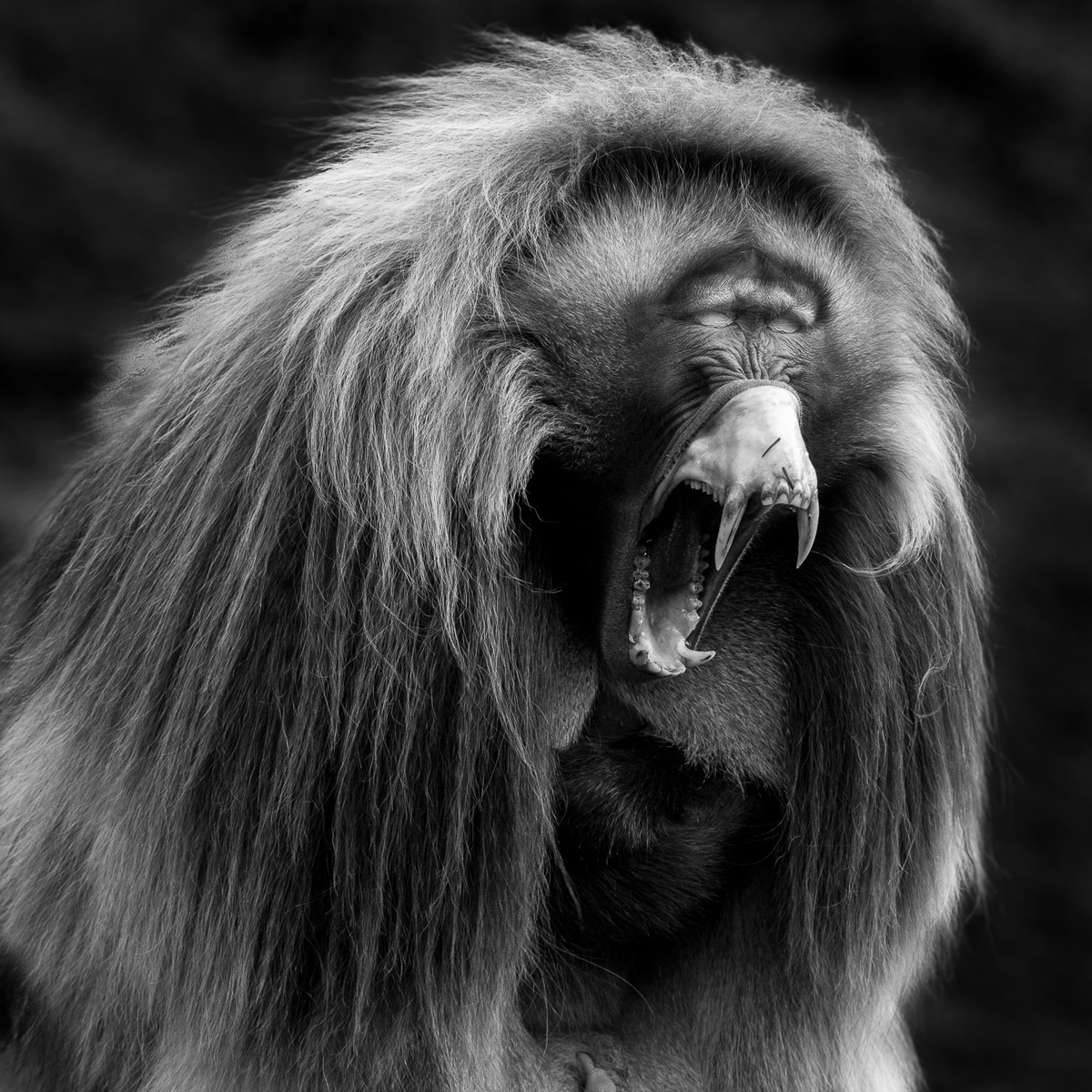
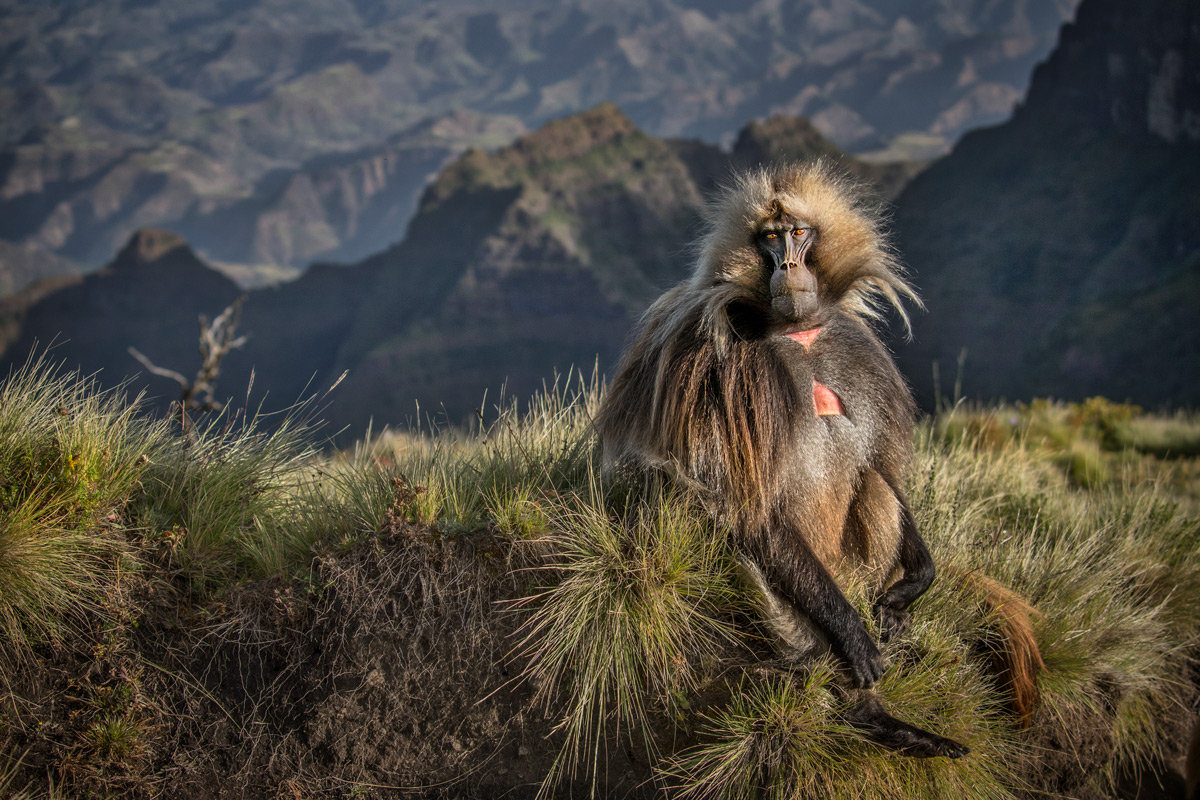
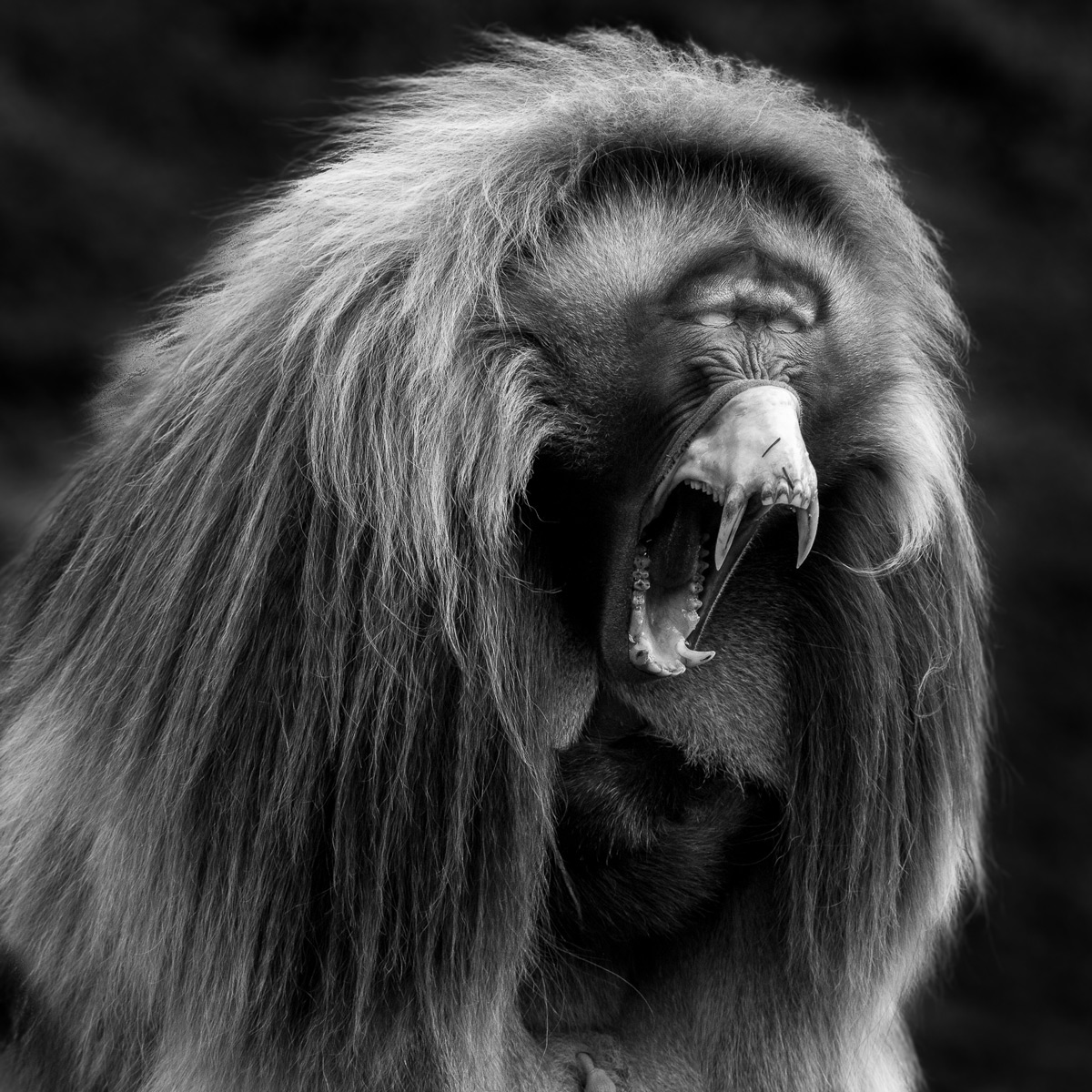
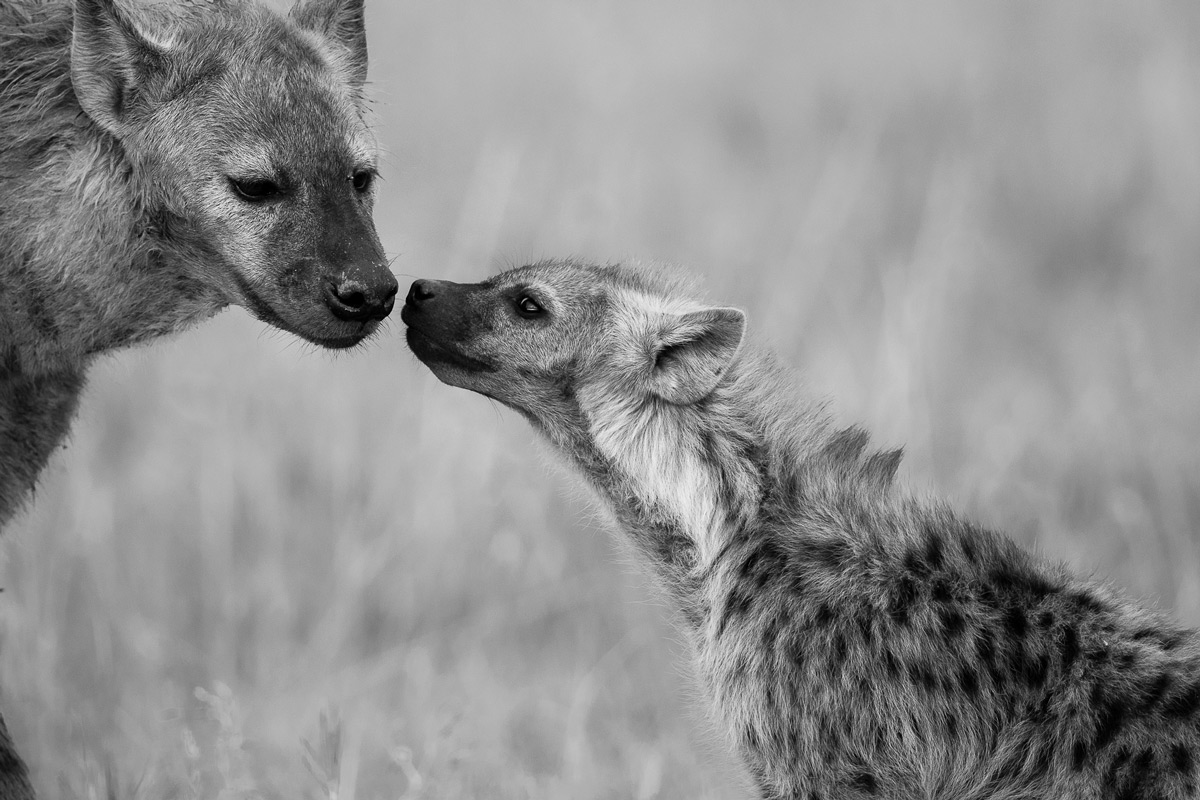
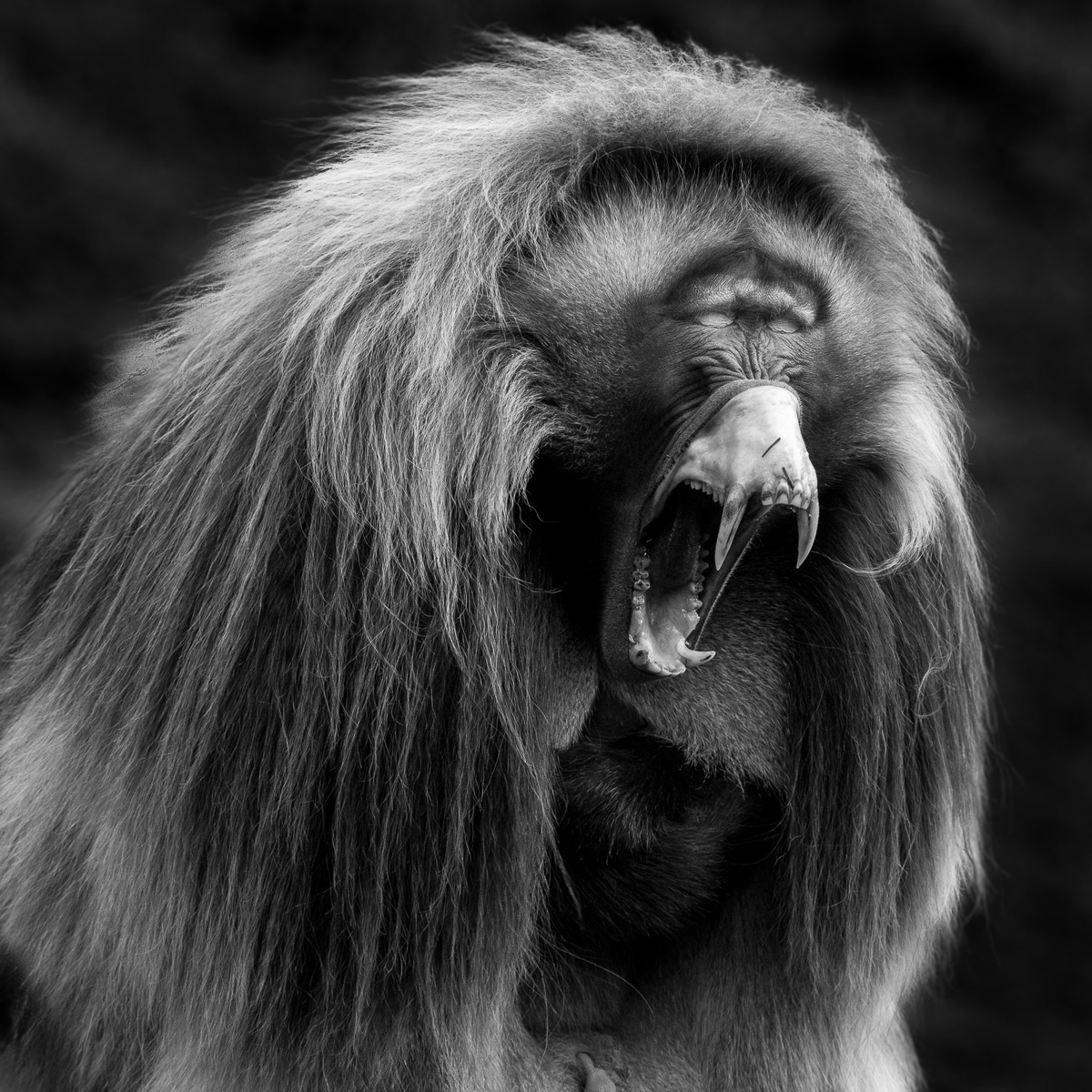
Patrice Quillard – “Geladas are found in the Ethiopian Highlands, especially in the Simien Mountains National Park. Nowadays their territory is increasingly threatened by human pressure (repercussion of agricultural expansion and as a result of pastoralism development on grasslands traditionally inhabited by monkeys). These primates have developed a complex and fascinating social system, communicating with each other using body language, facial expressions and also a wide range of grunts and whispers. I wanted to work on photographic portraits to highlight their interactions, their meaningful glances and the richness of their exchanges. After a slow and discreet approach to a group of about 30 primates, I sat down and slowly set up my camera on the tripod. The group quickly tolerated me and then ignored me completely. A magnificent male with a long, thick cape of hair proved to be the dominant of the group. He was protective with females and kept potential rivals at bay as well as young males. It was exciting to observe his leadership. I captured this image as he began to yawn, revealing his impressive set of teeth.” Judges’ comments
Patrice’s unusual and somewhat demonic capture of this already rather eccentric-looking monkey shoved aside other entries of the same species. The gelada is an unusual primate, what with it being the only grass-grazing monkey, that bright red chest patch and outlandish wig-like pelt. We know that geladas can clown it up, but this performance takes the cake! ABOUT PATRICE QUILLARD I have always been in love with Africa! As soon as my work allows it, I leave to find her, with the greatest happiness. The contact with nature and wild animals has taken an essential place in my life. In my images, I like to capture the looks, emotions and beauty of all these wonderful wild animals. I often prefer B&W, which allows me to express the character traits, the majesty of the postures, the intensity of the looks and the personality of the animal, as in the case of the human portrait, by reducing the border between humanity and animality. I exhibit my images in various photo festivals in Europe to raise public awareness of the fragility of ecosystems and the serious threats of extinction of many African species.
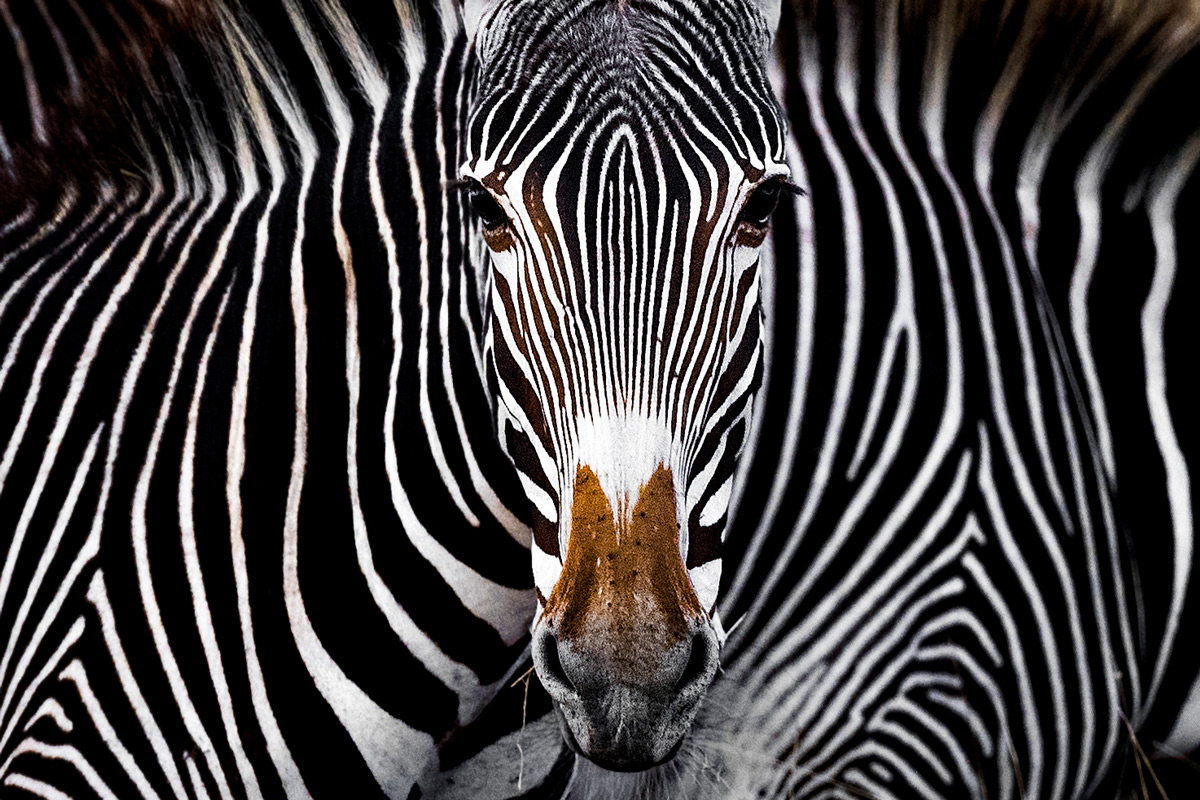
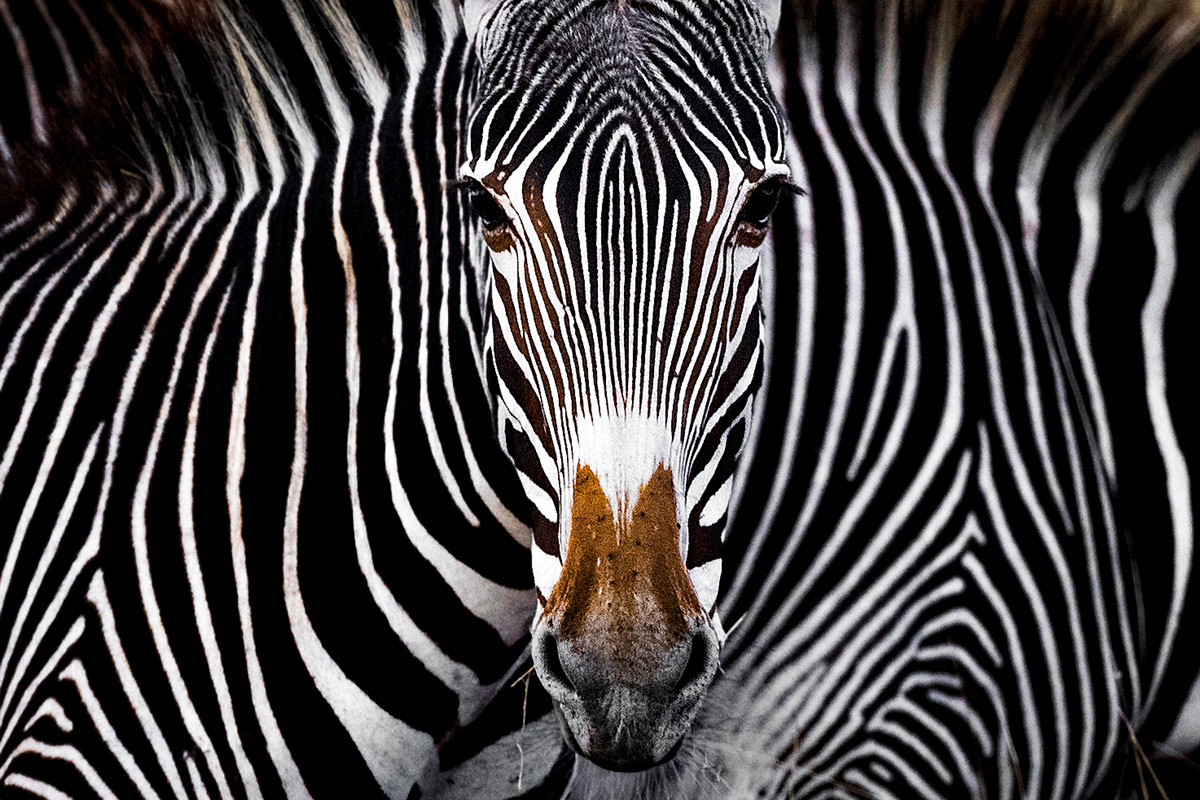
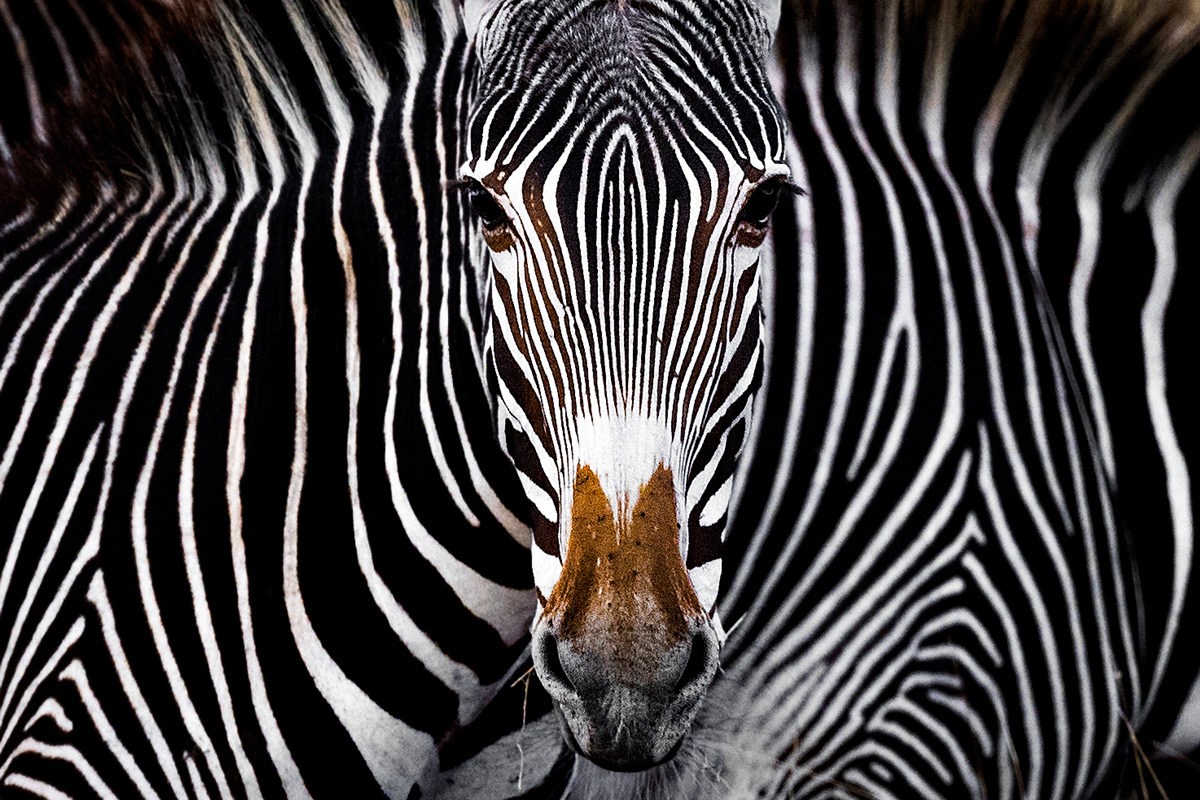
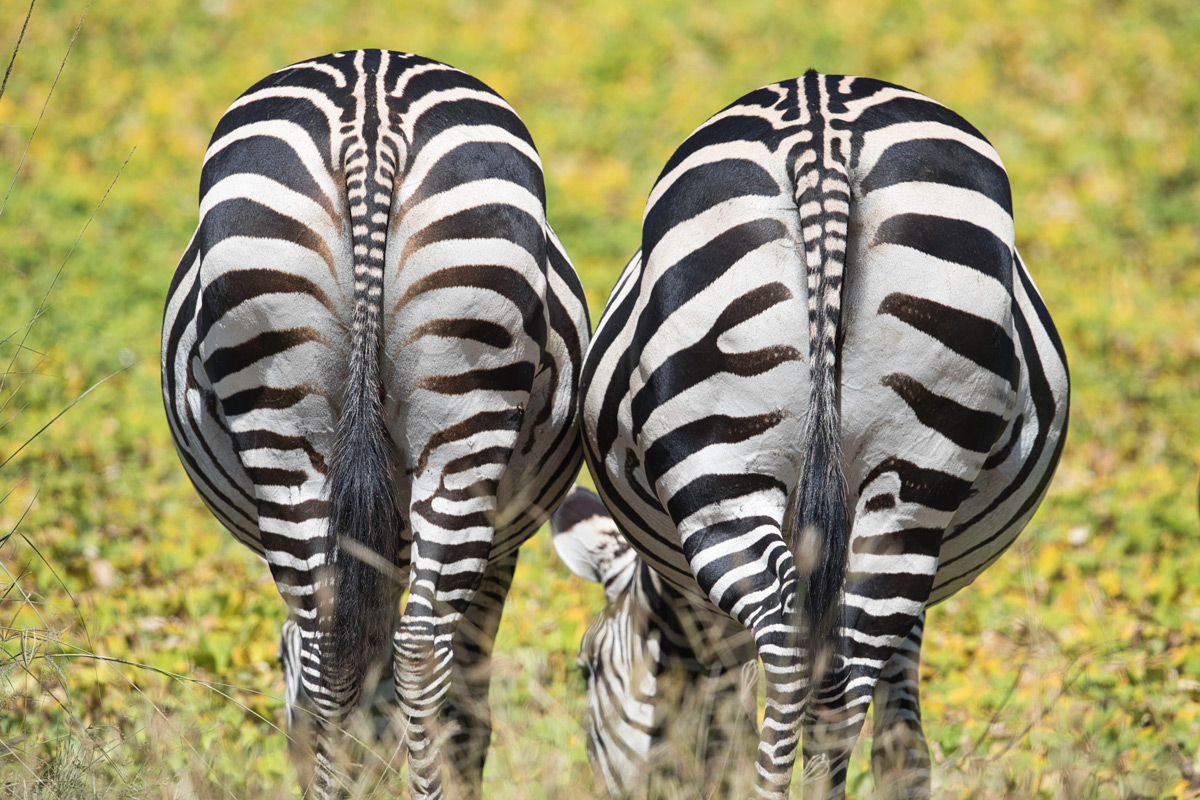
Yaron Schmid – “Most of the time, if you drive by a herd of zebras they will move aside but will keep doing what they’re doing. The second you stop, they will turn their butts towards you and walk away. In Lewa Conservancy in Kenya you can find the beautiful and endangered Grevy’s zebras – the zebras are a bit more cooperative and a bit less skittish compared to other parks. I was hoping for a shot like this for a long time, and during my last visit to Lewa I was lucky that the zebra looked at me just as another walked behind it, making an almost symmetric background around its head, and the illusion that this head has two bodies.” Judges’ comments
Yaron’s hypnotic image of a frequently-covered theme is so symmetrical, so visually confusing, that we had to include it amongst the highly commended entrants. The fact that this is an endangered Grevy’s zebra helped, as did that (naturally) brown nose that looks like it was dipped in coffee granules. ABOUT YARON SCHMID Veterinarian, conservationist, animal lover, award winner, wildlife photographer and safari leader. Born and raised in Israel. Living and working in New York City.
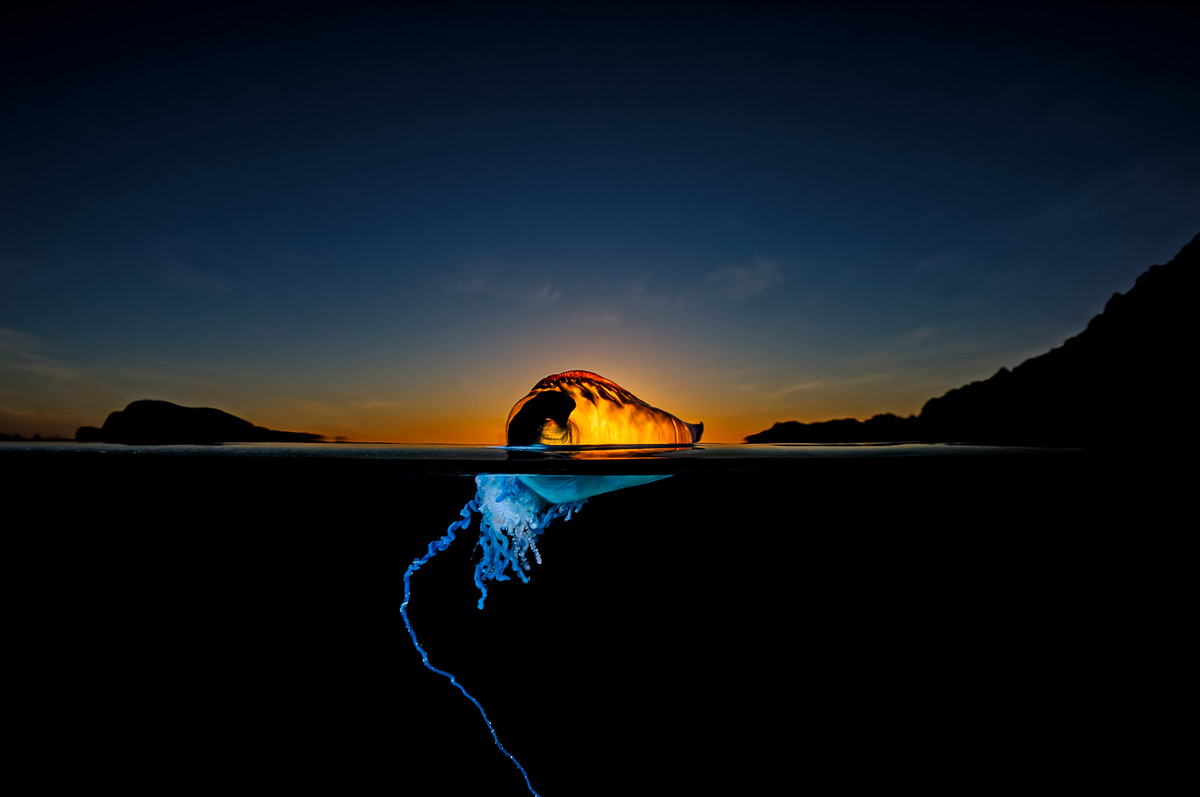
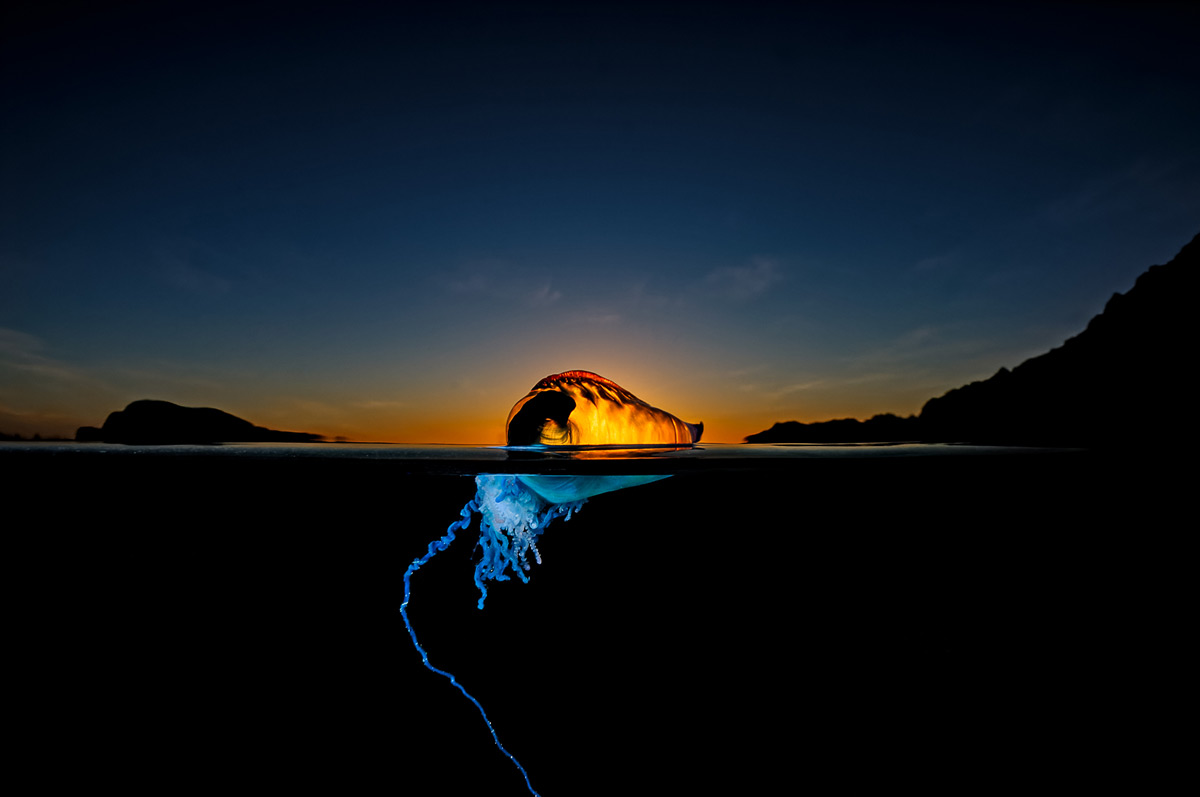
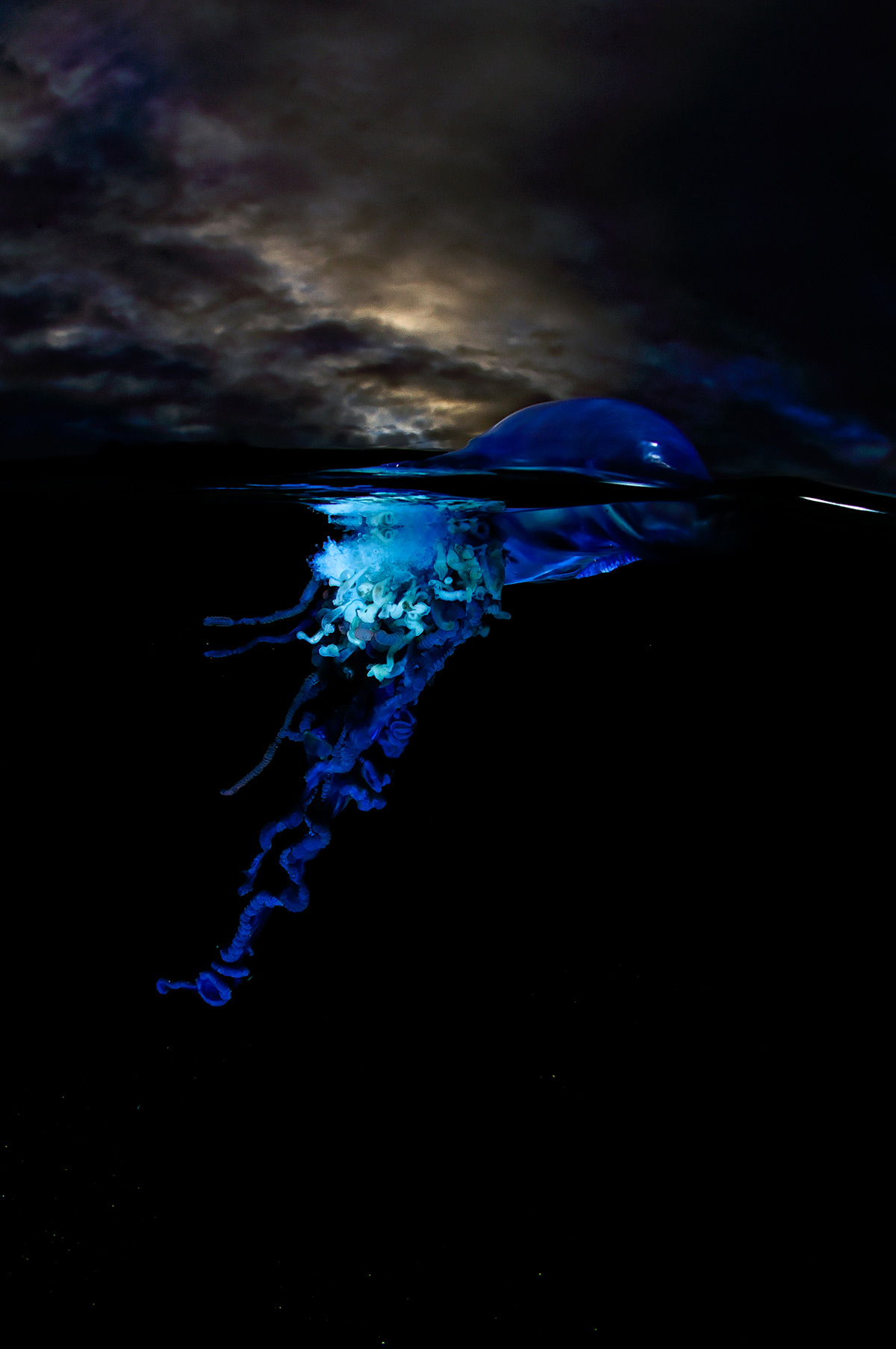
Geo Cloete – “This photo tells the story of an expert sailor. These Portuguese man-o’-war (Physalia utriculus) call the deep pelagic waters their home and, are perfectly adapted to survive the harsh conditions. The Portuguese man-o’-war is in fact a colony of tiny specialised animals called polyps, which are all connected to each other and function like the organs and tissues of single multicellular organisms like fish and humans – to the extent that the polyps lack the ability to survive by themselves. Similar to a well-functioning sailboat, where each crew member has a specific duty, so each polyp has a function towards ensuring the survival of the colony.” Judges’ comments
Geo’s combination of natural and flash light absolutely blew us away. He submitted a number of stunning underwater images this year, and a few others were technically as good as this one, but our judges decided that this transition of an ‘ordinary’ subject into magic was simply exceptional. ABOUT GEO CLOETE The manner in which artists worked across multi-disciplines during the Renaissance period has been a main motivational factor in the career of the multi-talented Geo Cloete. It was whilst studying architecture at the Nelson Mandela Bay University, that he got to learn this guiding principle. Since successfully completing his studies, Geo has been pursuing his dream. As a lifelong waterman and ocean lover, sharing the awe and beauty of the underwater world is a primary focus of his photographic projects. Geo strongly believes in the notion that we only love that which we know and that we only protect that which we love. It is therefore of cardinal importance to him to share the majestic beauty of the ocean, not only with fellow ocean-lovers but with humans from all walks of life. The ocean plays a pivotal role in the survival of this planet and therefore the wellbeing of it and its creatures directly impacts all of our lives.
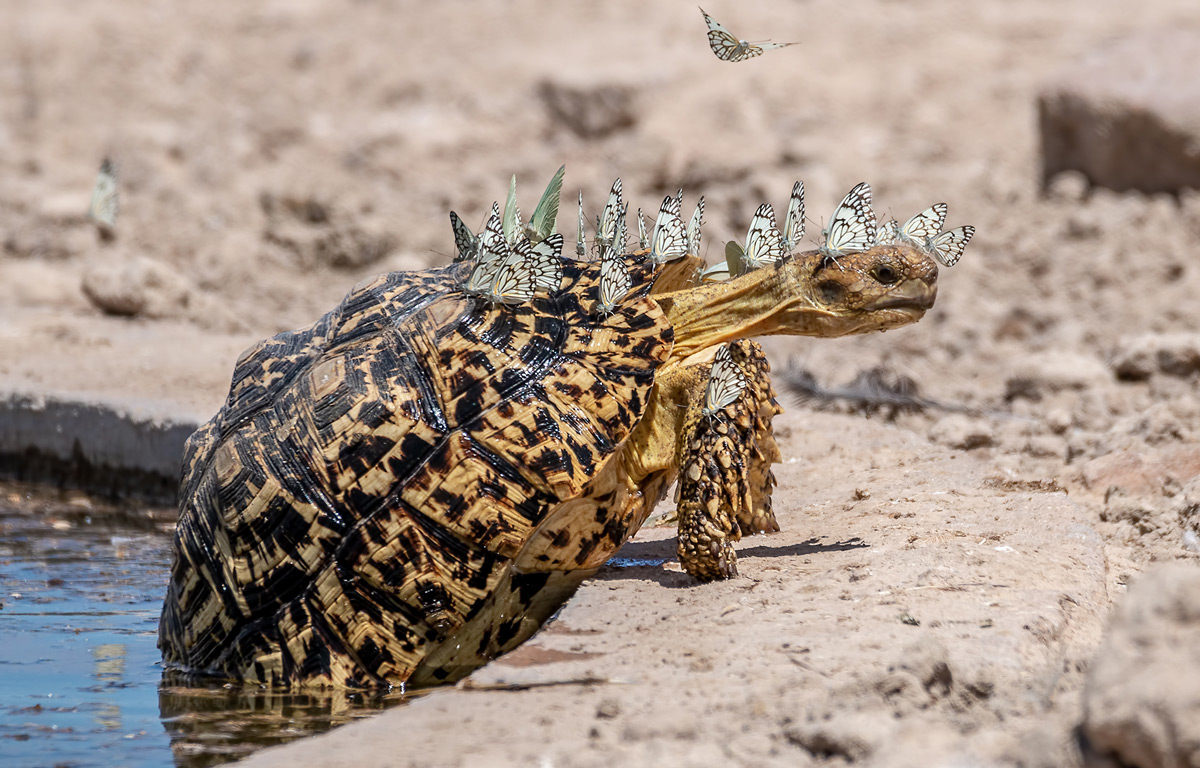
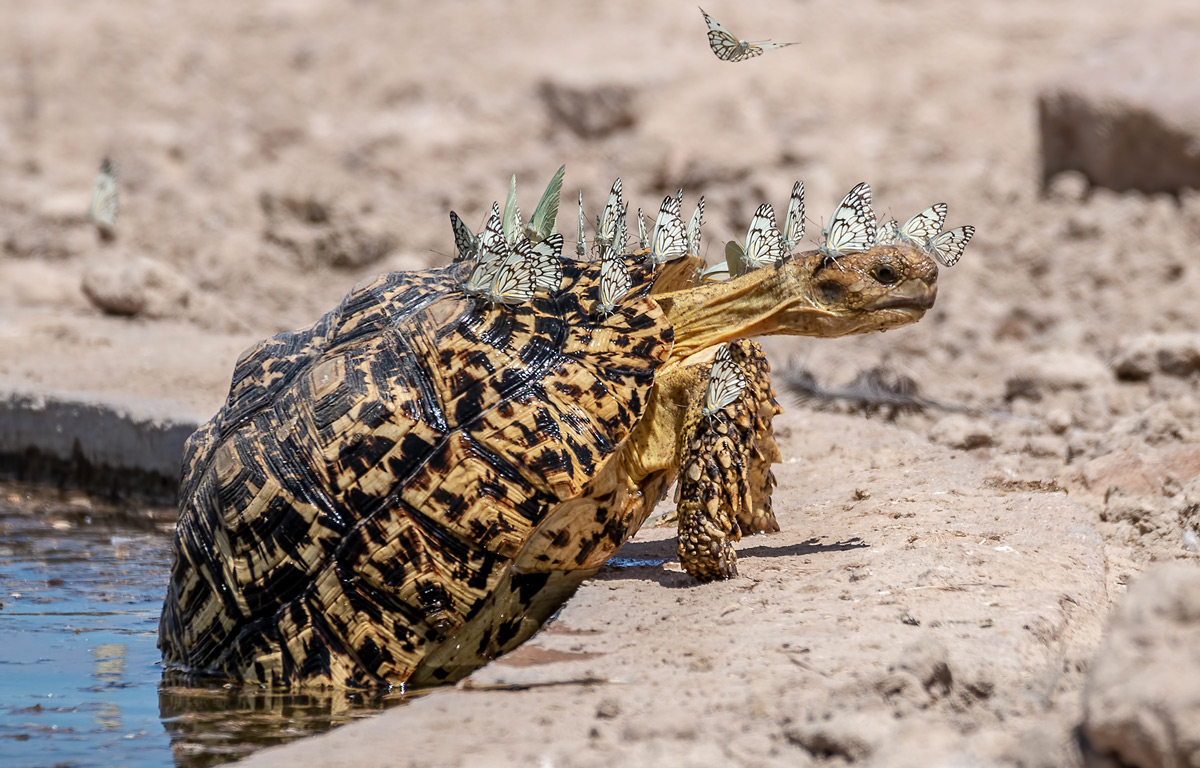
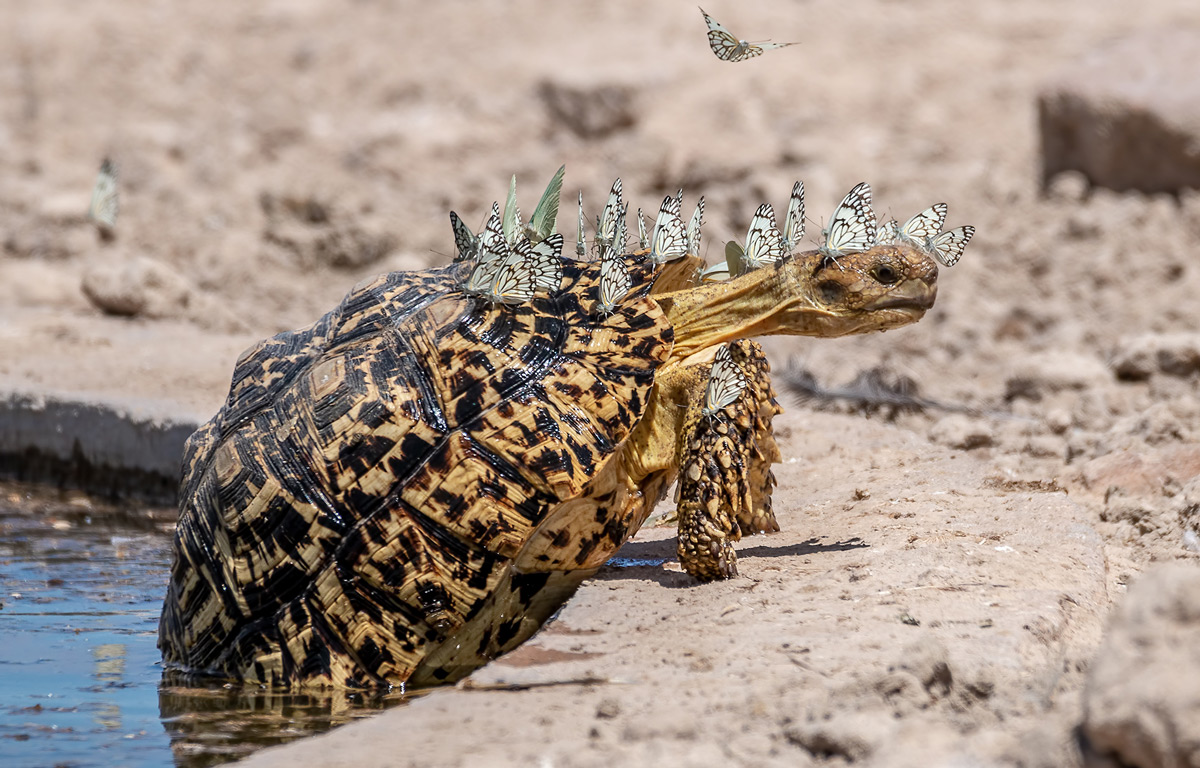
Hubert Janiszewski – “I experienced this sighting together with my wife while we were self-driving in Mabuasehube, Botswana earlier this year. When I saw this scene through the viewfinder of my camera I instantly knew that this is an unusual sighting. The leopard tortoise was clumsily trying to get out of the waterhole, while swarms of brown-veined butterflies were fiercely swirling around and sitting all over him to suck moisture from his shell. It was a beautiful and extraordinary sight, but it looked quite funny too, because the poor guy’s face seemed really annoyed by those obsessive intruders. But after a few minutes we realised the gravity of the situation as despite numerous attempts, the tortoise could not get out of the waterhole. We were watching his struggles for quite some time, and finally after 45 minutes I decided to help (otherwise he could possibly not make it out of the waterhole alive). When I was sure there are no other animals around I quickly got out of the car and gave him a helping hand. He was a bit frightened at first moment, but when he realised that he was free he quickly went on his own way. When on safari, it’s not only the big game that matters. Pay attention to small things and you may be rewarded with great unexpected sightings, like this one.” Judges’ comments
Hubert’s image captures so much of why life in the African bushveld is NEVER boring. These opportunistic butterflies are taking advantage of the tortoise’s slow exit from the water to grab their share of moisture. This exceptional capture makes us laugh at first, then wonder, then realise how much life is going on all around us, unnoticed while we rush between meetings and social events. ABOUT HUBERT JANISZEWSKI I live in Warsaw, Poland, working as an analyst, spending most of my time in the office, but I’m also a keen nature enthusiast and wildlife photographer, so I always try to spend my free time as far from the big city as possible. Six years ago I visited southern Africa for the first time, and quickly fell in love in this part of the world. Africa became my passion – I enjoy self-driving, camping and being in the African wilderness as much as I enjoy photography. I have already travelled South Africa, Namibia, Botswana, Zimbabwe, Zambia, Madagascar and can’t wait to come back for more.
AUDIENCE FAVOURITE WINNERS
THE FOLLOWING ARE THE WINNERS OF OUR ‘AUDIENCE FAVOURITE’, AS VOTED FOR BY THE PUBLIC
WEBSITE FAVOURITE
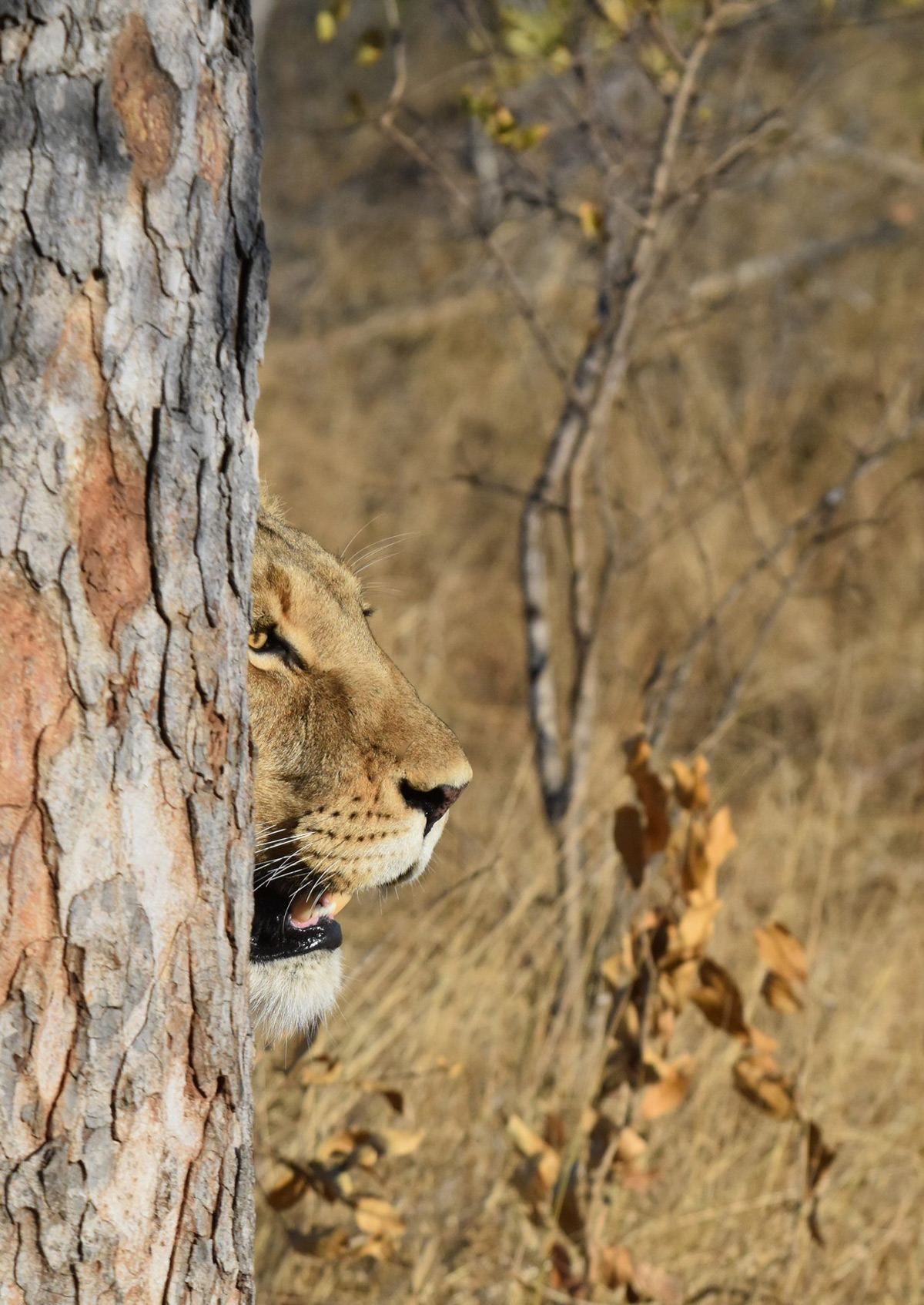
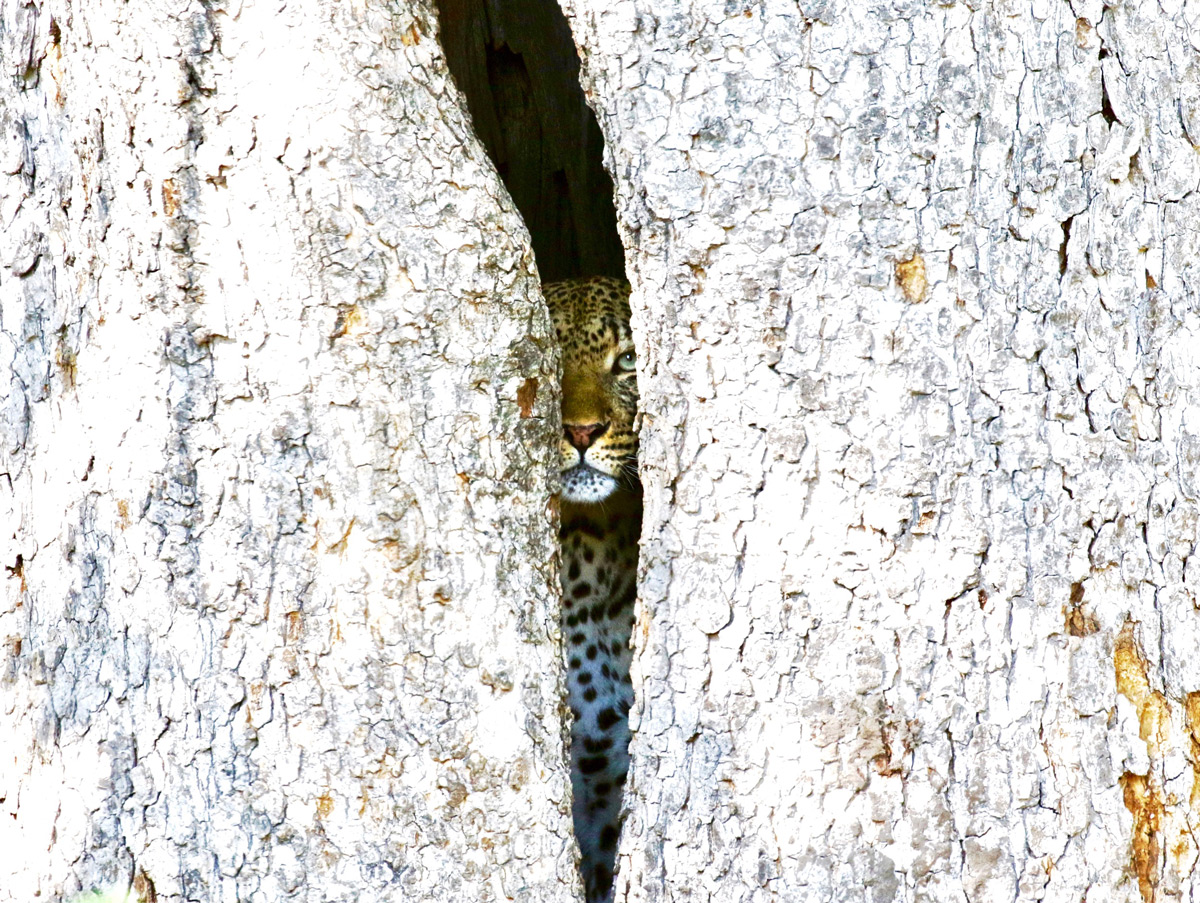
Steve Pressman – “A lioness peers out from behind a tree in MalaMala Game Reserve, South Africa.” VOTES: 5,577
As chosen by our Facebook community through voting on our Facebook page.
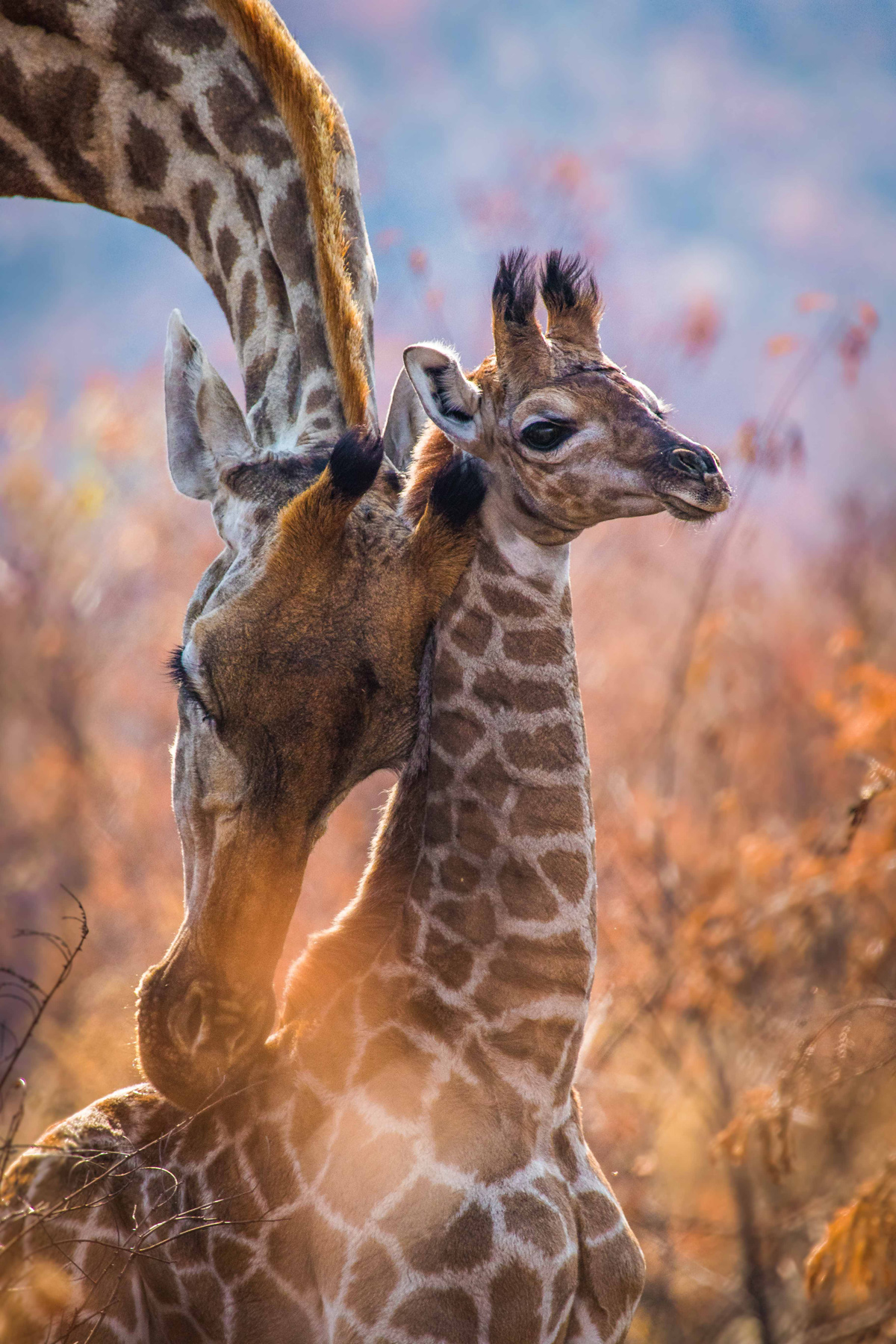
Rodney Nombekana – “A giraffe mother with her calf in Pilanesberg National Park, South Africa.” VOTES: 629
INSTA FAVOURITE
As chosen by our Instagram community through voting on our Instagram page.
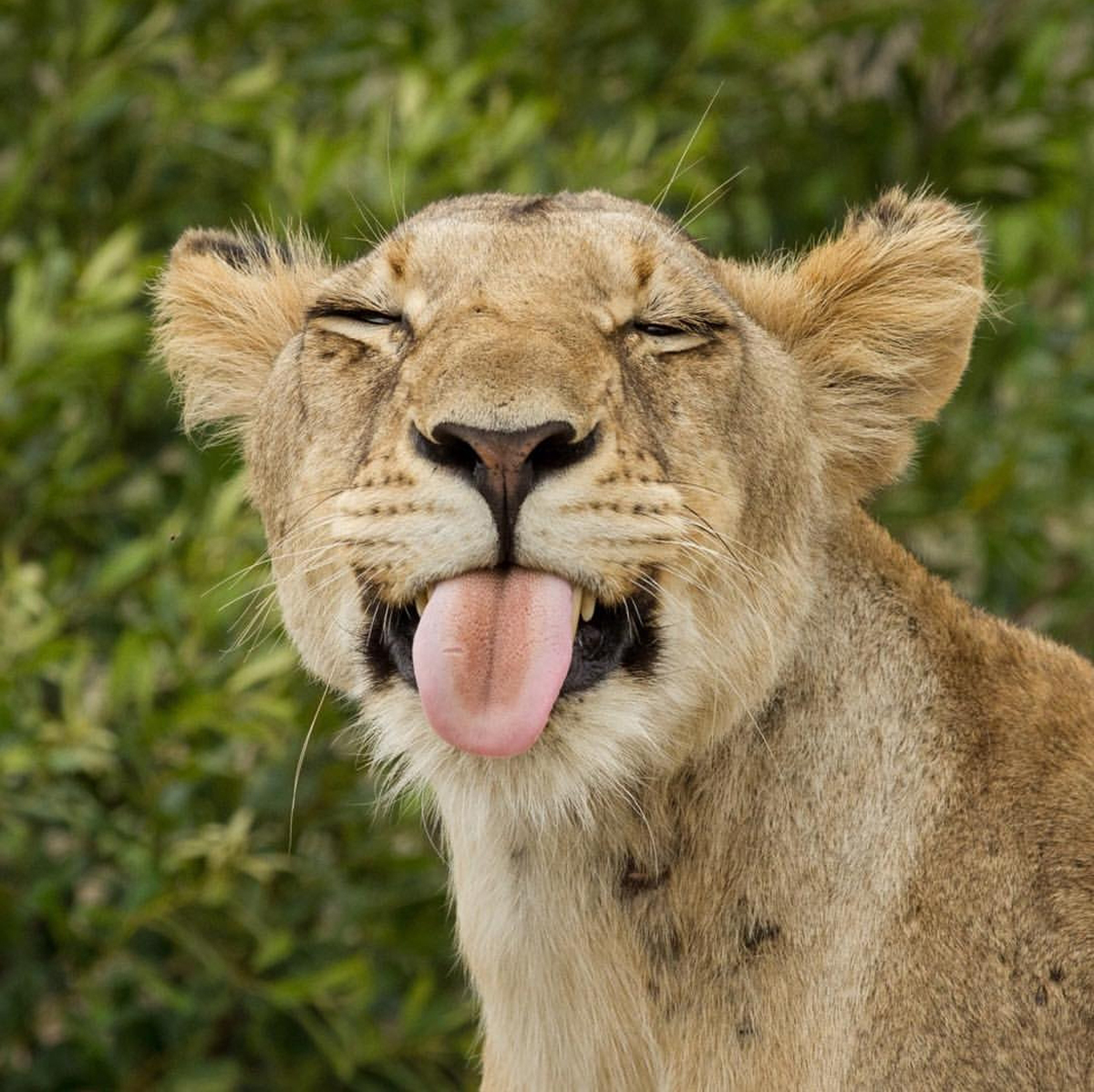
Nick du Plessis (@nick_dup) – “A lioness with her tongue sticking out in Singita, Sabi Sands Private Game Reserve, South Africa.” VOTES: 6,500
Elephant poaching rates in Africa have started to decline after reaching a peak in 2011, an international team of scientists has concluded. However, the team stresses that the population remains threatened without continuing action to tackle poverty, reduce corruption, and decrease the demand for ivory.
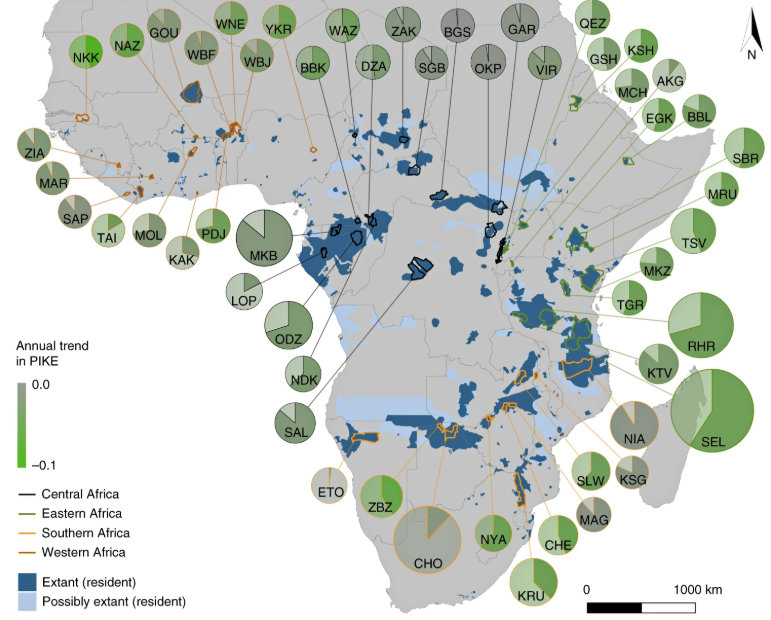
The research, which included scientists from the universities of Freiburg, York, and the Convention for the International Trade in Endangered Species (CITES), revealed a decline in the annual poaching mortality rate from an estimated peak of over 10% in 2011 to less than 4% in 2017.
It is estimated there are around 350,000 elephants left in Africa, but approximately 10-15,000 are killed each year by poachers.
“This is a positive trend, but we should not see this as an end to the poaching crisis,” cautions Severin Hauenstein, from the University of Freiburg. “After some changes in the political environment, the total number of illegally killed elephants in Africa seems to be falling, but to assess possible protection measures, we need to understand the local and global processes driving illegal elephant hunting.”
For the study, which was published in the current issue of the journal Nature Communications, the researchers analysed annual elephant carcass-encounter data from 53 MIKE (Monitoring the Illegal Killing of Elephants) sites across 29 countries in sub-Saharan Africa between 2002 and 2017. They compared this to local and global socio-economic factors (including ivory price) to identify processes associated with poaching rates.
Their results indicate that on an international scale, the reduced demand for ivory in the main Chinese markets was associated with the decline in the poaching rates. While in a regional comparison between the different study sites, corruption, and poverty among the local population are the main factors that drive poaching rates.
Dr Colin Beale, from the University of York’s Department of Biology, said: “We are seeing a downturn in poaching, which is obviously positive news, but it is still above what we think is sustainable, so the elephant populations are declining.”
“The poaching rates seem to respond primarily to ivory prices in southeast Asia, and we can’t hope to succeed without tackling demand in that region.”
The team say it is impossible to say if the ivory trade ban introduced in China 2017 is having an impact on the figures as ivory prices started to fall before the ban and may reflect a wider downturn in the Chinese economy.
African elephant poaching increased during the early 2000s, with populations both inside and outside protected areas falling by 30% in seven years. Many scientists suspected the rise was due to growing demand for ivory in China, where carved ivory has long been treasured. Despite international intervention to curb the trade in ivory, the effectiveness of these policies has remained unclear.
Based on their findings, the researchers show that efforts to curb the demand for ivory in Asian markets and reduce local corruption and poverty could be more successful in the fight against poaching than solely focusing on law enforcement.
“We need to reduce demand in Asia and improve the livelihoods of people who are living with elephants in Africa; these are the two biggest targets to ensure the long-term survival of elephants,” said Dr Beale. “While we can’t forget about anti-poaching and law enforcement, improving this alone will not solve the poaching problem.”
Full report: Hauenstein, S., Kshatriya, M., Blanc, J., Dormann, C. F., Beale, C. M. (2019). African elephant poaching rates correlate with local poverty, national corruption and global ivory price. Nature Communications. DOI: https://doi.org/10.1038/s41467-019-09993-2
Following the decision to lift the hunting ban, the Botswana government has stated that fewer than 400 elephant hunting licenses will be granted annually and that “hunting will be allowed on a small, strictly controlled basis”.
In an emailed statement released on Wednesday, the Ministry of Environment, Natural Resources Conservation and Tourism said that the country would ensure that the “reinstatement of hunting is done in an orderly and ethical manner”.
Botswana currently boasts the largest African elephant population with what is believed to be more than 130,000 individuals roaming freely in its unfenced parks and wide-open spaces. According to the government, the growing conflict between humans and elephants, and the negative impact of the hunting suspension on people’s livelihoods, contributed towards the decision to reinstate hunting.
Besides hunting, one of the recommendations brought forward by the sub-committee to resolve the human-elephant conflict was to practice the regular culling of elephants and establish elephant meat canning for the production of pet food and other products. This recommendation was rejected as “culling is not considered acceptable given the overall continental status of elephants. Rather, a more sustainable method such as selective cropping should be employed,”said Onkokame Kitso Mokaila, the Minister of Environment, Natural Resources Conservation and Tourism.
Further details regarding the reinstatement of hunting and its implementation were shared by Mokaila in a news conference held yesterday, as well as in a subsequent press release.
Some of the key points regarding the reinstatement of hunting include the following:
• Hunting will be strictly controlled and that allocations will be based on quotas, with priority given to community based organisations and trusts in the allocation of hunting quotas.
• Local hunters will be required to obtain licences and hunting will be allowed only within certain ranges.
• An effective hunting quota allocation system shall be developed based on science.
• The hunting quota includes all wildlife currently reflected in Schedule 7 of the Wildlife and National Parks Act of 1992. This includes not only elephants, but also lions, leopards, spotted hyenas, buffaloes, as well as a number of other species.
• An effective community outreach programme within areas where human-elephant conflict are present will be established.
• Human-wildlife conflict fences will be constructed in key hotspot areas.
• Game ranches will be created to act as buffer zones between humans and the wildlife.
In addition, all migratory routes for animals that are not considered beneficial to Botswana’s conservation efforts will be closed, including an antelope migratory route into South Africa.
LIFTING OF THE HUNTING SUSPENSION AND CREATION OF A CITIZEN EMPOWERMENT MODEL FOR TOURISM IN BOTSWANA
1. In June 2018, a Presidential Sub-Committee of Cabinet was tasked to initiate a social dialogue aimed at reviewing the ban on hunting. The process entailed a nationwide process including holding Kgotla meetings, consultation with Local Authorities as well as other stakeholders.
2. The fundamental issue that emerged was the appreciation by citizens that they were being consulted. This was seen as necessary for building on the national principles of: Democracy, Development, Self-reliance, Unity and Botho.
3. Some of the findings of the Cabinet Sub Committee on Hunting Ban and Social Dialogue were as follows:
i) The number and high levels of human-elephant conflict and the consequent impact on livelihoods was increasing;
ii) Predators appear to have increased and were causing a lot of damage as they kill livestock in large numbers;
iii) There is a negative impact of the hunting suspension on livelihoods, particularly for community based organisations that were previously benefiting from consumptive utilisation;
iv) The lack of capacity within the Department of Wildlife and National Parks leads to long response time to problem animal control reports; and
v) The general consensus from those consulted was that the hunting ban should be lifted.
4. On the basis of these issues, The Government has assessed all these recommendations and has accepted all but one recommendation which makes reference to regular culling of elephants and establishing an elephant meat canning including production of pet food. This was rejected because culling is not considered acceptable given the overall continental status of elephants. Rather, a more sustainable method such as selective cropping should be employed.
5. Therefore the principal recommendation that has been adopted is the one which proposes the re-instatement of hunting.
(i) Essentially:
• Hunting will be allowed on a small, strictly controlled basis, with fewer than 400 elephant licenses to be granted annually, as has been approved by CITES.
• Priority will be given to Community Based Organizations (CBOs) and Trusts in allocation of hunting quotas (over 50% of quota to be given to CBOs and Trusts).
• Hunting will be re-instated only in designated Concession Hunting Areas (CHAs.)
• There will be equitable distribution of citizen hunting quota.
• Citizen hunting license shall not be transferable.
• An effective hunting quota allocation system shall be developed based on science;
• Animals to be included in the hunting quota shall be those currently reflected in Schedule 7 of the Wildlife and National Parks Act of 1992.
• Special game license will not be re-instated due to existence of other government social safety nets to cover for such
(ii) A legal framework that will create an enabling environment for growth of safari hunting industry will be developed;
(iii) The Botswana elephant population will be managed within its historic range;
(iv) An effective community outreach programme within the elephant range for Human Elephant Conflict mitigation will be undertaken;
(v) Strategically placed human wildlife conflict fences will be constructed in key hotspots areas;
(vi) Game Ranches will be demarcated to serve as buffers between communal and wildlife areas;
(vii) Compensation for damage caused by wildlife, ex gratia amounts and the list of species that attract compensation be reviewed; and other models that alleviate compensation burden on government be considered;
(viii) All wildlife migratory routes that are not beneficial to the Country’s conservation efforts will be closed;
(ix) The Kgalagadi south westerly antelope migratory route into South Africa will be closed by demarcating game ranches between the communal areas and Kgalagadi Wildlife Management Areas (WMAs).
6. In all the actions taken, whether for or against any recommendations, the guiding principles were: the need to conserve our natural resources, the need to facilitate human wildlife co-existence; and scientific management of our elephants and other wildlife species.
7. All the above notwithstanding, Government shall continue to monitor the situation and may cause for periodic review of the recommendation approved. In doing so, Government shall endeavour to consult the affected communities, community leadership, non-Governmental Organisations, etc.
8. Botswana Government is convinced that tourism can be fully exploited sustainably to benefit the economy.
Sustainable tourism calls for the development of tourism policies that assure the safeguarding of social, cultural and natural resources and guarantee that these assets can meet the needs of present and future populations and tourists.
It is for this reason that Government has also approved strategies for facilitating citizen participation in the tourism sector. The strategy has several models which advocate for, among others:
i) The allocation of existing vacant concessions and identified sites solely to citizen companies, joint ventures, community trusts and community of citizen consortia;
ii) Where existing concession operators issue more than 25% of shareholding to citizen companies, consortia, joint ventures or community trusts, a fixed period lease of 30 years be issued under the new leaseholding;
iii) Land allocated to citizens through tourism citizen economic empowerment model be used as collateral by allottees to secure shareholding and or partnerships.
Our Photographer of the Year 2019 competition is now closed for entries and we are excited to announce the Finalists! Only one week to go before we announce our winners!
THE FOLLOWING GALLERY OF FINALISTS IS IN NO PARTICULAR ORDER
Written by Dr Michelle Henley – Elephants Alive Director, Co-founder and Principal Researcher
Elephants are often valued by the size of their tusks, either for direct consumptive use (poaching and trophy hunting) or non-consumptive use (photographic tourism). They also have enormous non-use values which include their role as vital ecosystem engineers and their cultural or spiritual significance to people other than merely their existence value. It is, though, the emphasis on tusk size that is the focus of this report, and there is a concern that large-tusked elephants are unsustainably removed through consumptive use.
Tusk size is sexually dimorphic, with the tusks of bulls increasing on average, at 11 cm per year while female tusks increase at 8.5 cm per year (Spinage 1994). Large tusks are associated with older bulls, not only because elephant’s tusks grow throughout their lives (Pilgram & Western 1986) but also because their tusks grow faster towards the latter half of a bull’s life (Laws 1966, Spinage 1994). Younger elephant bulls’ tusks increase in weight at 2g per day, i.e. 730g per year. In older bulls, as the tusk pulp cavity fills, the increase in weight accelerates towards the end of the bull’s life (Spinage 1994).
Overall, sexual selection has perpetuated indiscriminate growth, delayed competitive breeding and contributed to selection for longevity in elephant bulls (Rasmussen et al. 2008), all factors that are coupled with a propensity for large tusks.
Poaching and trophy hunting of elephants is often biased towards the largest, oldest bulls within a population, making these individuals scarce in most populations (Marais et al. 2006, Douglas-Hamilton 1997, Spinage 1994, Selier 2014). The illegal killing of elephants has become unsustainable since 2010, peaking in 2011, with an estimated annual off-take of 8% (Wittemyer et al. 2014).
These mortality rates exceed the maximum annual reproductive rate of 7%, and with the continuation of these trends we are experiencing a continental decline in elephant numbers of approximately 3% (Calef 1988, Said et al. 1995, Wasser et al. 2008; Wasser et al. 2009, Wittemyer et al. 2014). The average tusk size has progressively decreased over the past three decades (Millner-Gullard & Beddington 1993).
In 1979, one tonne of ivory represented approximately 54 dead elephants (bulls with an average tusk weight of 9.3 kg each side). By 1987 the average tusk weight was 4.7 kg with one tonne of ivory representing 113 dead elephants (including cows with a consequential 55 calves that would be orphaned and die). Thus in the space of eight years more than double the number of elephants needed to be killed to deliver the same amount of ivory (Spinage 1994).
More than ten years down the line, similar trends are being reported with initial upsurges in poaching incidents indicating a biased towards males because of their larger tusk size. Over time, ivory seizure records indicate an increase in the number of female matriarchs poached as bulls with larger tusks become scarce (Mondol et al. 2014). Likewise, trophy hunting is highly selective of animals of specific age and sex groups with outstanding physical features (Joubert 1996). Genetically, there is concern that long-term selective off takes of larger tusked bulls will ultimately depress the quality of trophies (Stalmans et al. 2003), erode fine-scaled genetic structure (Archie et al. 2008) and lead to increased reproductive skew, which may increase the rate at which genetic diversity is lost from natural elephant populations (Archie et al. 2012).
There is some evidence of trends towards smaller tusks in southern Africa due to trophy hunting with concern for a temporal shift in heritable traits such as tusk size (Nuzzo & Traill 2014). Overexploitation of older bulls may also socially disrupt elephant populations. Older bulls are preferred as mates by females, are known to have higher paternity success, suppress musth in younger bulls, promote group cohesion and function as ‘mentors’ within bachelor groups (Poole 1997; Hollister-Smith 2005, Rasmussen 2005; Slotow et al. 2001; Evans & Harris 2008, Chiyo et al. 2011, Archie & Chiyo 2012).
With escalating reports on the illegal trade in ivory and more pressure to increase the limits on trophy sizes due to their monetary value, we need to safeguard large-tusked and potentially large-tusked individuals in populations where they still occur.
Unlike many reserves in Africa, the Kruger National Park (KNP) in South Africa is vulnerable to illegal killings but as yet has not been subjected to heavy poaching of elephants for ivory. Several large tusked bulls are still found within the well-protected borders of the KNP (SANParks 2014) and other reserves such as Tembe National Park. Although hunting is not allowed within any of the National Parks administered by South African National Parks (SANParks), controlled hunting is permitted on land sharing unfenced boundaries with national parks and outside of these protected areas based on the premise that the population is large enough to allow the removal of a limited number without altering or affecting the population size and structure (age and sex ratios, or social structures).
The Greater Mapungubwe Transfrontier Conservation Area (GMTFCA), and The Greater Limpopo Transfrontier Park Conservation Area (GLTPCA) with the latter including the Kruger National Park (KNP) and the adjoining Private Reserves to the west of the KNP, represent Transfrontier Parks where cross border movements of elephants can take place (Henley 2012, Cook 2014, Selier et al. 2014), and where trophy hunting does occur in places.
As trophy hunting is permitted in most regions adjoining National Parks such as the KNP and as few of these conservation areas have implemented strict protocols on upper tusks weight limits, as in the Associated Private Nature Reserves, the remaining large tusked bulls could be subjected to over-exploitation and a consequential lowering of the photo-tourism value of these areas. Hence the need to protect large-tusked and potentially large-tusked individuals from poaching and excessive selective hunting pressure.
A potentially-large tusked elephant can be defined as any elephant younger than 35 years of age, where at least one tusk weighs 60 lbs (~27 kg) and consequently the elephant’s tusk/tusks have the potential, given normal wear and tear, to weigh a minimum of 80-100 lbs when 50-60 years old. These calculations are based on a conservative estimate of a 2g weight increase in tusks per day (~730g per year) without incorporating the exponential increase in tusk weight as the tusk pulp cavity fills with age (Spinage 1994).
A large-tusked elephant can be defined as an elephant which has at least one tusk which weighs a minimum of 100 lbs (45 kg) and can be more than 1.5m in length.
Table 1: Calculations to demonstrate the progression of a potentially-large tusked bull into a large-tusked bull with age.
References
• Archie, E. A., & P. I. Chiyo. 2012. Elephant behaviour and conservation: social relationships, the effects of poaching, and genetic tools for management. Molecular Ecology 21:765–778.
• Archie, E. A., J. E. Maldonado, J. A. Hollister-Smith, J. H. Poole, C. J. Moss, R. C. Fleischer, & S. C. Alberts. 2008. Fine-scale population genetic structure in a fission-fusion society. Molecular Ecology 17:2666–2679.
• Blignaut, J., M. De Wit and J. Barnes. 2008. The economic value of elephants. in: R. J. Scholes and K. G. Mennell, editors. Elephant management. A scientific assessment for South Africa. Wits University Press, Johannesburg
• Calef, G.W., 1988. Maximum rate of increase in the African elephant. African Journal of Ecology 26: 323-327.
• Chiyo, P.I., Archie, E.A., Hollister-Smith, J., Lee, P.C., Poole, J.H., Moss, C.J. & Alberts, S.C. 2011. Association patterns of African elephants in all-male groups: the role of age and genetic relatedness. Animal Behaviour 81: 1093-1099,
• Cook, R.M., 2014. Changes in African elephant (Loxodonta africana) movement patterns at various distances from villages. BSc (Hons) thesis, University of the Witwatersrand, Johannesburg.
• Douglas-Hamilton, I. 1997. Proposal for “green hunting” of elephants as an alternative to lethal sport hunting. Pachyderm 24: 30-32.
• Evans, K. E. & Harris, S., 2008. Adolescence in male African elephants, Loxodonta africana, and the importance of sociality. Animal Behaviour 76: 779-787.
• Henley, M.D., 2012. US Fish and Wildlife Services Assistance Award – Final Performance Report. Unpublished report to the US Fish and Wildlife Services. 42pp.
• Hollister-Smith, J.A., 2005. Reproductive behaviour in male African elephants (Loxodonta africana) and the role of musth: a genetic and experimental analysis. PhD thesis, Duke University.
• Joubert. 1996. Master plan for the Management of the Associated Private Nature Reserves. 206pp.
• Laws, R.M. 1966. Age criteria for the African elephant, Loxodonta africana. East African Wildlife Journal 4: 1-37.
• Marais J & Hadaway S. 2006. Editors. Great Tuskers of Africa. Johannesburg, South Africa: Penguin Books.
• Milner-Gulland, E.J., Beddington, J.R., 1993. The exploitation of elephants for the ivory trade: an historical perspective. Proceedings of the Royal Society of London B 252:29–37.
• Mondol, S., Mailand, C.R. & Wasser, S.K., 2014. Male biased sex ratio of poached elephants is negatively related to poaching intensity over time. Conservation Genetics 15: 1259-1263.
• Nuzzo, M.C. & Traill, L.W., 2014. What 50 years of trophy records illustrate for hunted African elephant and bovid populations. Notes and Records. African Journal of Ecology 52: 250-253.
• Pilgram, T. & Western, D., 1986. Managing African elephants for ivory production through ivory trade regulations. The Journal of Applied Ecology 23: 515-529.
• Poole, J. H., 1997. Elephants. Voyageur Press, USA.
• Rasmussen, H.B., 2005. Reproductive tactics of male African savannah elephants (Loxodonta africana). PhD thesis, University of Oxford, Oxford.
• Rasmussen, H.B., Okello, J.B.A., Wittemyer, G., Siegismund, H.R., Arctander, P., Vollrath, F. & Douglas-Hamilton, I. 2008. Age- and tactic-related paternity success in male African elephants. Behavioural Ecology 19: 9-15.
• Said, M. Y., Chunge, R. N., Craig, G. C., Thouless, C. R., Barnes, R. F. W. & Dublin, H. T. 1995. African Elephant Database, 1995. Occasional Paper of the IUCN Species Survival Commission. IUCN, Gland, Switzerland and Cambridge, UK.
• Selier, S.A.J., Page, B.R., Vanak, A.T. & Slotow, R. 2014. Sustainability of elephant hunting across International borders in Southern Africa: A case study of the Greater Mapungubwe Transfrontier Conservation Area. Journal of Wildlife Management 78(1), 122-132.
• Slotow, R., Balfour, D & Howison, O. 2001. Killing of black and white rhinoceros by African elephant in Hluhluwe-Umfolozi Park, South Africa. Pachyderm 31:14-20.
• South African National Parks’ Honorary Rangers. 2014. Kruger Legends Great Tuskers of the Kruger National Park, SANParks, Letaba Elephant Hall, South Africa.
• Spinage, C.A., 1994. Elephants. T & A D Poyser, London.
• Stalmans, M, Attwell, B & Estes, L. 2003. Hunting in the Associated Private Nature Reserves. Environmental Impact Assessment Process. Final Scoping Report to the Department of Finance and Economic Development (Limpopo Provincial Government). 100 pp.
• Wasser, S.K., Clark, B. & C. Laurie. 2009. The ivory trail. Scientific American 301: 68-76.
• Wasser, S.K., Clark, W.J., Drori, O., Kisamo, E.S., Mailand, C., Mutayoba, B., & Stephens, M., 2008. Combating the Illegal Trade in African Elephant Ivory with DNA Forensics. Conservation Biology 22, 1065-1071.
• Wittemyer G, Northrup JM, Blanc J, Douglas-Hamilton I, Omondi P & Burnham K.P. 2014. Illegal killing of ivory drives global decline in African elephants. PNAS 11 (36): 13117-13121.
The Botswana government has made the decision to lift its ban on hunting. In an emailed statement released on Wednesday, the Ministry of Environment, Natural Resources Conservation and Tourism said that the country would ensure that the “reinstatement of hunting is done in an orderly and ethical manner”.
According to the government, the growing conflict between humans and wildlife (notably human-elephant conflict) and the negative impact of the hunting suspension on people’s livelihoods is one of the findings that led to the decision.
Read this eight-post series of announcements and viewpoints leading to this decision.
The Ministry of Environment, Natural Resources Conservation and Tourism wishes to inform the public that following extensive consultations with all stakeholders, the Government of Botswana has taken a decision to lift the hunting suspension.
Since its imposition, the hunting suspension has become a topical subject in the country. There developed two schools of thought with some of the view that if hunting was re-instated, communities would support conservation as they realise the potential value and associated income to be derived from wildlife resources and related activities; and as a result, the annual population would increase. On the other hand, some people were of the view that the suspension would lead to animal population increases; it would promote conservation especially for the species that experienced reduction.
It was against this background that in June 2018, a Cabinet Sub Committee on Hunting Ban Social Dialogue was established to kick start a social dialogue aimed at reviewing the suspension on hunting. The process involved a nationwide process including holding Kgotla meetings and consulting with Local Authorities, affected communities, NGOs, tourism businesses, conservationists, researchers and other stakeholders.
The fundamental issue that emerged was the appreciation by citizens that they were being consulted. This was seen as necessary for building on the national principles of: Democracy, Development, Self-reliance, Unity and Botho.
Some of the findings of the Cabinet Sub Committee on Hunting Ban and Social Dialogue were as follows:
i) The number and high levels of human-elephant conflict and the consequent impact on livelihoods was increasing;
iv) Predators appear to have increased and were causing a lot of damage as they kill livestock in large numbers;
v) There is a negative impact of the hunting suspension on livelihoods, particularly for community based organisations that were previously benefiting from consumptive utilisation;
vi) The lack of capacity within the Department of Wildlife and National Parks leads to long response time to problem animal control reports; and
vii) The general consensus from those consulted was that the hunting ban should be lifted.
On the basis of these issues, the Government has reflected and assessed the recommendations, and lifted the suspension.
You are therefore invited to a press conference that will be held by the Minister of Environment, Natural Resources Conservation and Tourism, Honourable Onkokame Kitso Mokaila which will focus on the lifting of the hunting suspension, details of its implementation and decisions made regarding other recommendations from the Cabinet Sub Committee on Hunting Ban and Social Dialogue. The press conference will be tomorrow afternoon, 23rd May from 1400hrs at the Ministry Conference Room.
The Ministry would like to reiterate that it will work with all stakeholders to ensure that re-instatement of hunting is done in an orderly and ethical manner, and in accordance with the Wildlife Conservation and National Parks Act and the Wildlife Conservation and National Parks (Hunting and Licensing) Regulations.
How adult penguins fish and the body condition of their chicks are directly linked to local fish abundance, and could potentially inform fishery management, a new study has found.
The researchers studied an endangered African penguin colony during a rare three-year closure of commercial fisheries around Robben Island, South Africa, and their findings are published today in the Journal of Applied Ecology.
Fishing is often considered to be one of the biggest drivers of biodiversity loss in the ocean. It is so widespread that we lack an understanding of the ‘natural’ relationships between marine predators and their prey, and thus the extent to which predators are disrupted by competition from fisheries.
This is a critical knowledge gap since many marine predators such as penguins are considered indicator species: a species whose success indicates the condition of their habitat.
Dr Kate Campbell, who led the research at the University of Cape Town as part of her PhD project, said: “Understanding how African penguins forage to feed their chicks in their variable marine environment can help us identify conservation measures for these endangered populations.”
“A three-year commercial fisheries closure around Robben Island, South Africa created a unique opportunity to study how African penguins directly respond to natural changes in local abundance of their prey – anchovies and sardines,” she added.
The researchers estimated fluctuations in prey fish populations over three years within the fisheries closure zone (20 km radius around Robben Island) using 12 hydro-acoustic surveys, which detect the presence of anchovies and sardines by bouncing sound waves off their swim bladders (gas-filled organs).
Over the same time period, researchers used GPS-temperature-depth loggers to monitor adult penguins’ fishing behaviours for one trip to sea per breeding season. At the Robben Island colony, researchers also measured the diet of breeding adults and the body condition of chicks.
They found that local abundance of anchovy and sardine was directly linked to African penguin foraging behaviour and chick offspring condition; a common assumption about predator-prey relationships which has rarely been tested in the absence of fishing.
When fish abundance was lower, adults increased foraging effort: foraging for longer, swimming further and diving more often. This likely explains why chick body condition also declined, as finding fish became more challenging for breeding adults and required more energy.
Dr Richard Sherley of the University of Exeter said: “Interestingly, the variation in foraging behaviour between individuals also increased when prey fish were scarcer.”
“While some ‘superstar’ penguins find food easily, others are less successful. Once food gets harder to find, more individuals will start to struggle and work harder, but they will do so at different rates, increasing the variation we see in foraging effort,” he added.
These results indicate that penguin foraging behaviour and chick condition could be key indicators for local fish abundance, making a case for their inclusion in the monitoring of local ecosystem health.
“Since these short-term changes will likely have knock-on effects for chick survival and penguin population size, they could be used as powerful early warning signs to inform fisheries’ policies and marine conservation efforts,” said Campbell.
“Technological advances also means there’s exciting potential to better understand how these endangered penguins behave when prey resources are scarce,” she added.
“Hopefully, In the future, we could aim to effectively balance fishery management with penguins’ needs, to reduce the impact on local economies whilst maximising the benefits to our oceans,” Sherley concluded.
Full report: Kate J. Campbell, Antje Steinfurth, Les G. Underhill, Janet C. Coetzee, Bruce M. Dyer, Katrin Ludynia, Azwianewi B. Makhado, Dagmar Merkle, Johan Rademan, Leshia Upfold, Richard B. Sherley (2019). Local forage fish abundance influences foraging effort and offspring condition in an endangered marine predator. Journal of Applied Ecology.https://doi.org/10.1111/1365-2664.13409
I’m more than 2,000 metres high – barefoot – toes searching for a grip on the cliff face. A harness around my waist and the advice of our guides are the only things preventing me from injury. Our goal, I know, will be worth it. At the top of this towering rock is Abuna Yemata Guh, a sacred rock-hewn church boasting stunning views of Ethiopia’s Tigray region. It is a back-breaking climb to get there, not everyone can do it, but the view alone is worth the effort, while inside holds centuries-old wonders.
Our adventure began in Aksum, the former capital of the Aksumite Empire now a tourist town of around 70,000 people. Here, my partner Martin and I met our tour operator who took us on a nearly four-hour drive to the foot of the rock on which Abuna Yemata sits.
Abuna Yemata is just one of Ethiopia’s many beautiful churches carved from rock. The most famous are the 11 medieval monolithic cave churches found in Lalibela, a mountainous area around 650 km from the capital Addis Ababa. Typically, and unlike Abuna Yemata, they are dug into the earth, so the roofs sit at ground level.
However, quite apart from being constructed on a 2,500-metre-high spire, we found Abuna Yemata unique among the other Ethiopian churches. To begin with, the views it offers over Gheralta Mountain are jaw-dropping, while the panoramic vistas over the plains below are life-affirming. Its remote location and hazardous access (they call it the least accessible place of worship on Earth) ensure there are very few tourists. It’s also fascinating to note that the church is still used by locals – mothers clamber up the rock face with babies strapped to their backs to pray.
Our climb started with a relatively simple 30 minute hike up a steep incline. When we hit the middle section, however, our guides took us to one side, strapped us into harnesses, and attached safety ropes. After removing our shoes out of respect for the holy land we were about to reach, we started our ascent. It was difficult, often scary, work. We scrambled for secure stones and reached for the assistance of our local guides just to make it up.
On a side note, if you go to Abuna Yemata, take a local guide (not just your tour operator guide). Not only are they very knowledgeable and help you along the climb, but they are required by local law. You will be asked to tip well at the end of your climb, but it’s worth the extra cash.
After around one-and-a-half-hours of climbing, we dragged ourselves over the lip onto the top – tired, relieved, but delighted. Our reward was a 50cm ledge, barely enough to stand on, but boasting gorgeous views over the lands below. In awe, but aware of the long drop just inches from our toes, we pushed on to the church itself to discover the wonders inside.
Like many Ethiopian Orthodox churches, Abuna Yemata is divided into three chambers – a music room, a Holy Communion room, and a room that holds an Ark of the Covenant replica. The domed walls of the church were decorated with stunning frescoes depicting tales from the Bible. We stood in awe, taking in these near-perfect original artworks which have sat there for centuries, preserved by the environment’s lack of humidity.
As we explored in a blissful daze, we met the kindly priest who makes the same perilous climb every day to continue the work of the early Christians who created this 6th century church. The experience of meeting him and feeling the undoubted spirituality of the church is overwhelming. The climb is tough, sure, but ultimately a small price to pay to visit this unique monolithic beauty.
While our experience was a magical one, I do want to reiterate that some people simply won’t be able to do it. In particular, the last few meters are very difficult and require a great deal of physicality (and a fair bit of bravery too). Yes, you’ve got to make your way around the corner of that small ledge you see in this photo with a straight drop down right next to where you step.
We took our journey with a Spanish couple travelling with their parents. As we reached the last stretch, the parents felt the final push was too much of a risk for them.
We weren’t told at the beginning of the trip how difficult it was going to be nor was there any orientation.
I feel if they had been warned before they made the ascent, they might not have gone on it in the first place – Ethiopia’s tourism industry still has a way to go to meet the high standards found in other parts of the world.
However, if you think you can handle the physicality, then we definitely recommend you to make the journey to Abuna Yemata – so long as you’re not afraid of heights.
Our Photographer of the Year 2019 competition is ow closed for entries and we are excited to announce the Semi-finalists! Only two weeks to go before we announce our winners!
There are two galleries showcasing the Semi-finalists. To see the other gallery click here:Semi-finalists Gallery 1
The following gallery of Semi-finalists is in no particular order.
Our Photographer of the Year 2019 competition is ow closed for entries and we are excited to announce the Semi-finalists! Only two weeks to go before we announce our winners!
There are two galleries showcasing the Semi-finalists. To see the other gallery click here:Semi-finalists Gallery 2
The following gallery of Semi-finalists is in no particular order.
Recent research has revealed that lion populations in southern Africa show a significant loss of genetic diversity, and the negative trend has been traced to when European colonial settlers arrived in the area, and to the outbreak of rinderpest in the region.
This is a summary of the research document – please download the entire report for a greater understanding.
Most research focuses on reductions in population size and distributions, whereas the researchers believe that loss in genetic diversity is of utmost importance for the conservation of lions. Genetic diversity contributes to individual fitness, species evolutionary potential and ecosystem function and resilience.
Lions are an important flagship species that has undergone a significant population and range decline, with recent estimates of the lion population in Africa between 16,500 and 35,000 individuals. This represents an estimated decline of 42% over the past 21 years. Significant declines in lion and other wildlife populations have also been noted further back in time. As is the case for other species, the reduction in lion numbers has been driven primarily by human-wildlife conflict and habitat loss.
The research, conducted by Dures, Carbone, Loveridge, Maude, Midlane, Aschenborn and Gottelli, was based on comparing modern and historical lion populations from the KAZA region – Angola, Botswana, Namibia, Zambia and Zimbabwe. Historical DNA samples were extracted from museum specimens.
The resultant data demonstrates that, over the past century, the lion population of the Kavango–Zambezi region has lost genetic diversity, with current-day observed heterozygosity reduced by 12%–17% compared to historical populations, represented by a significantly more significant inbreeding coefficient. Although this decline is not as dramatic as that seen in some highly threatened or bottlenecked species such as Mauritius kestrel (Falco punctatus) at 57% or sea otters (Enhydra lutris) at 43%, it nevertheless represents a worrying reduction in diversity considering this population is one of only six lion strongholds remaining in Africa.
This decline in genetic diversity coincides with the arrival of the first western settlers in 1890 and the subsequent rise of the colonial presence in the region after the end of the Matabele Wars in 1897.
Modern firearms became more prevalent following European settlement and predators were often persecuted as vermin. Another contributing factor was likely the outbreak of the rinderpest virus during the late 1890s, which resulted in the death of vast populations of buffalo, giraffe and wildebeest, as well as domestic livestock. Such an epidemic is very likely to have also had a considerable impact on the predators of the region.
Rinderpest outbreak in 1896 in South Africa, which killed large numbers of cattle and cloven-hoofed wildlife
There is a risk of overestimating the potential for modern populations to resist the effects of the pressures that they face if genetic factors are not considered. Populations that may be regarded as stable by contemporary conservation managers may in fact show signs of genetic erosion, thus needing greater conservation attention.
The dramatic population decline of the African lion has made the protection of the remaining populations and the improvement of gene flow between populations of the utmost importance and has led to several transboundary conservation initiatives. Efforts must be made to conserve genetic diversity, without which a species resilience and ability to adapt to future unpredictable events become significantly compromised.
Full report: Simon G. Dures, Chris Carbone, Andrew J. Loveridge, Glyn Maude, Neil Midlane, Ortwin Aschenborn, Dada Gottelli (2019). A century of decline: Loss of genetic diversity in a southern African lion‐conservation stronghold. Diversity and Distributions.https://doi.org/10.1111/ddi.12905
A three-month-old baby elephant has been rescued after being found wandering on its own in the Maputo Special Reserve, Mozambique. The tiny baby has been stabilised and now awaits the necessary permits for transfer to a specialised care facility in South Africa, for eventual release back into the wild.
This amazing rescue story is thanks to the co-operation from a range of people and organisations listed at the end of this article, but the survival of the frail elephant is now in the hands of the authorities, who need to issue the necessary paperwork. Drs. Carlos Lopes Pereira (ANAC) and Michelle Henley (Elephants Alive) are in conversation with the Department of Environmental Affairs in South Africa to secure the import permits.
Image: Supplied
First to the scene were members of the Muvucuza Community in Maputo Special Reserve, who alerted rangers to the baby elephant that was wandering around alone. These community members need to be given special mention and thanks – because without this intervention the baby elephant would surely have perished.
A team quickly responded, led by Mozambique’s National Administration of Conservation Areas (ANAC), Saving the Survivors, Dyck Advisory Group and Peace Parks Foundation (PPF).
Image: Supplied
The calf was found to be extremely weak and hungry, and it is estimated that it had been alone for about three days. Veterinarian Dr João Almeida from Saving the Survivors said that the situation was touch-and-go for several hours. Specialised fresh milk had to be flown in from South Africa, although fluids were immediately administered intravenously.
The baby elephant has now slowly gained its strength and hopes for its survival are now high. The baby elephant is currently receiving plenty of fluids, and bottle feedings every two hours. She has started passing faeces and is sleeping regularly – these are all good signs.
Image: Supplied
A PPF technical advisor working in Maputo Special Reserve has advised that elephants seldom abandon their young, and speculated that the baby may have been sick for some time. He added that working together to protect the wildlife in this reserve is critical to conserving its biodiversity.
Maputo Special Reserve is fast-becoming one of Mozambique’s top tourist destinations, which will greatly improve livelihood opportunities for the local community.
Pangolins, the scaled, prehistoric-looking creatures native to Africa and Asia, are the most illegally trafficked mammal on the planet. Conservative estimates are that 10,000 of them are killed and exported every year. However, the likelihood is the figure is magnitudes higher than that. Over one million pangolins are thought to have been illegally poached between 2000 and 2013*. (*World Animal Protection)
It’s therefore increasingly rare to read a good news story about pangolins, let alone catch a glimpse of one of these unique animals in the wild. However, the Lilongwe Wildlife Trust (LWT), a leading conservation organisation in Malawi, have been able to provide both.
Earlier this week, the animal care team at LWT were alerted to the presence of three adult pangolins which were being held at a local police station after confiscation from an individual illegally in possession of them.
Pangolins are killed for their meat which is considered a delicacy and their scales which are used in folk remedies in places like China and Vietnam – and it’s unknown whether these three were destined for the same fate.
Given the time spent away from their natural habitat and the undoubted stress caused by being kept in human captivity, it was decided that the pangolins needed to be taken into the care of LWT who run the award-winning Lilongwe Wildlife Centre, a wild animal rescue and rehabilitation facility in Malawi’s capital.
The pangolins were handed over to LWT’s expert animal carers and taken straight to the centre where they were given a full veterinary check, as well as food and water, and were placed in an environment as closely matched to their natural one as possible.
Not every animal that arrives at the Lilongwe Wildlife Centre is lucky enough to be released back into their natural habitats. Some are too injured, too young, or too humanised to rejoin the wild, and remain under care at LWT’s sanctuary.
However, the ending for the pangolins was the happiest that could have been asked for.
After two days of recuperation, the animals were placed in crates and transported to a suitable location a few hours outside of Lilongwe to be finally freed.
Under a dramatic Africa sunset, the trio were removed from their crates, and after some initial hesitation, one by one uncurled their scales and shuffled off, in their own inimitable way, back into the wild of Malawi where they belong. Safe at last.
Earlier this week Elephants Alive discovered one of their collared elephant bulls seriously injured in Umbabat Private Nature Reserve (UPNR). Not knowing the cause of the injury, they immediately got in touch with the warden of the reserve, Bryan Havemann, who, after an assessment of the bull, secured a permit from Mpumalanga Tourism and Parks Agency (MTPA) for the team and vets to intervene.
The elephant in question is known as Matambu, a bull in his prime but with failing eyesight. He is considered to be placid in nature and quite docile, which made darting him on foot relatively stress-free and quick by a team that included Wildvets, Dr Joel Alves and Havemann.
“The reserve doesn’t normally intervene when injuries are as a result of natural causes,” said Havemann, “but in Mutambu’s case we couldn’t be sure what the cause of the injury was until the wounds were assessed”.
It was established during Matambu’s assessment that the injuries to his genital and rump area were most likely caused by the tusk of another elephant bull.
First collared in 2006 by Elephants Alive, Matambu has proved to be vital to their studies. He has partial sight in one eye (which has a cataract), and blind in the other. This was discovered in 2017 during a routine change of batteries in his collar when a veterinary ophthalmologist was called in to assess him. Neither eye is likely causing him any pain or distress, however, the cataract will likely cause complete blindness over time.
Once Elephants Alive discovered that Matambu was seriously injured, they felt it was important to intervene to treat him as he is an important study animal. Aside from this serious injury, he is in relatively good health.
After an hour of being tranquillised and successfully treated, Matambu woke up and slowly walked away to live another day. Elephants Alive and the reserve will continue to monitor his recovery.
Our Photographer of the Year 2019 competition is now closed for entries and this week we will look at the first of our finalists: The Top 101!
There are four galleries showcasing the Top 101. To see the other galleries for the Top 101 click here:Top 101 Gallery 1, Top 101 Gallery 3, and Top 101 Gallery 4.
Our Photographer of the Year 2019 competition is now closed for entries and this week we will look at the first of our finalists: The Top 101!
There are four galleries showcasing the Top 101. To see the other galleries for the Top 101 click here:Top 101 Gallery 1, Top 101 Gallery 2, and Top 101 Gallery 4.
Our Photographer of the Year 2019 competition is now closed for entries and this week we will look at the first of our finalists: The Top 101!
There are four galleries showcasing the Top 101. To see the other galleries for the Top 101 click here:Top 101 Gallery 2, Top 101 Gallery 3, and Top 101 Gallery 4.
Our Photographer of the Year 2019 competition is now closed for entries and this week we will look at the first of our finalists: The Top 101!
There are four galleries showcasing the Top 101. To see the other galleries for the Top 101 click here:Top 101 Gallery 1, Top 101 Gallery 2, and Top 101 Gallery 3.
Elephants in southern Africa have been the subject of much debate recently, particularly after Botswana announced that it was reviewing its elephant management strategies. The process of determining how best to manage elephants in southern Africa went one step further over the past weekend when the heads of state of the countries with the largest remaining elephant populations met in Kasane, Botswana to formulate a collaborative management strategy.
This a brief summary of the strategy adopted by Angola, Botswana, Namibia, Zambia and Zimbabwe, which jointly make up ‘The Kavango Zambezi Transfrontier Conservation Area (KAZA) – which is home to more than half of the remaining African savannah elephants. For a more detailed understanding of this strategy, please download the strategy document here.
Please note that this document does not directly address the issues currently creating tension, such as Botswana’s trophy hunting and culling discussions, or the reported attempts by KAZA countries and South Africa to convince CITES to permit trade in ivory. Rather, this document provides the umbrella strategy within which those matters will be researched and potentially implemented.
1. The wellbeing of these elephant populations hinges on maintaining their habitats and upon ensuring the movement of elephants from more densely-populated areas in Botswana, Zimbabwe and Namibia, to areas in Angola and Zambia – by securing wildlife migration movement corridors.
2. The latest elephant surveys indicate a population of at least 220,000 elephants across the five KAZA countries, with 85% concentrated in Botswana and Zimbabwe. Populations in southeast Angola and southwest Zambia have suffered major declines due to poaching. The area of Kavango and Zambezi (formerly Caprivi) in Namibia have suffered from increased poaching, although elephant populations are reportedly growing.
3. Growing elephant populations may pose a threat to diminishing riverine and woodland habitats, and the species dependent upon such habitat.
4. Increasing elephant populations in certain areas, combined with human population growth and settlement in existing wildlife dispersal areas is leading to increases in human-elephant conflict, resulting in increased illegal killings and the increased need for problem animal control.
5. The KAZA portions of Angola and Zambia have large tracts of suitable elephant habitat, but with smaller populations of elephants and other wildlife (and concomitant lower human densities), which should provide a “pull” effect from areas with higher elephant populations, via the wildlife migration corridors.
6. Wildlife migration corridors are under various stages of intactness and some face the threat of permanent closure due to encroaching human settlements, agriculture and infrastructure developments (roads, rail, riparian), livestock disease control measures (veterinary fences) and mining.
7. Long-term monitoring of the KAZA elephant population is required, as well as identification and mitigating of threats to elephant populations. One such threat is climate change, to which elephants are already vulnerable in areas of limited water supply. This dynamic exacerbates human-elephant conflict.
1. Facilitate integrated land use to ensure long-term ecosystem integrity and connectivity for KAZA’s elephant population. Short- and medium-term activities in this regard include ongoing and increased data collection and analysis, ensuring an adaptive management process, protection of Angolan water sources of the four major rivers flowing through KAZA, awareness-raising amongst various sectors that impact on elephants, providing formal legal recognition for wildlife migration corridors, and re-alignment or removal of existing veterinary fences.
2. Maintain and manage KAZA’s elephants as one contiguous population. Short- and medium-term activities in this regard include aerial surveys, analysis of elephant movement data, understand data on human distribution and land-use, better use of existing elephant poaching data (MIKE), and integrating elephant management strategies for each KAZA country into this strategic planning framework.
3. Promote the co-existence of humans and elephants for ecological, social and economic benefits. Short- and medium-term activities in this regard include supporting alternative livelihoods for local communities that help mitigate conflict, engaging with communities about conflict mitigation and building capacity for data collection, and to develop policies and practices to permit communities to sustainably manage, utilise and benefit from elephants and other wildlife.
4. Reduce the illegal killing of elephants and the illegal trade in elephant parts. Short- and medium-term activities in this regard include mobilising financial, human and material resources to combat the illegal killing and trade, coordination of transboundary ground-based patrols and air surveillance as well as cross-boundary pursuit of wildlife criminals, review existing legislation to permit extradition of wildlife criminals, engaging communities to help fight wildlife crime, better use of DNA analysis to better inform evidence-led prosecutions, and aligning of customs and immigration procedures with regard to the movement of illicit wildlife products and better training of personnel in this regard.
5. Establish a high-level decision-making process to achieve the above. Short- and medium-term activities in this regard include a 5-year review process, ensuring that KAZA partner countries allocate sufficient financial and other resources in these regards, and establishing reporting and feedback mechanisms.
Most people travelling to East Africa visit its vast savannas and bushland that abound with Africa´s famous megafauna. However, East Africa also harbours a wide variety of tropical forests, for example mangroves, coastal and cloud forests. The latter are, for example, found in the Taita Hills in southeast Kenya.
The Taita Hills reach an altitude of up to 2,200 metres above sea level and rise abruptly from the lowland Tsavo plains. With their rugged hilltops they collect the clouds that come in from the Indian Ocean leading to humid and wet conditions and the formation of cloud forests.
Fallen giants have torn gaps into the canopy cover. Their slow decay is promoted by a myriad of fungi and deadwood insects. The ground is covered by a dense layer of leaf litter. The air smells humid and earthy of life and decay.
As I am writing this, it is raining, as it has for almost every morning since my arrival. It is December, the short rainy season. It is grey, misty and windy. This is the season that most birds choose as the start of their breeding season. Females start looking for suitable nesting sites, lay and incubate their eggs, and together with their mates feed their nestlings and later fledglings until they can fend for themselves.
One of them is the placid greenbul (Phyllastrephus placidus). Placid greenbuls are understory insectivores. That means they prefer the forest level in-between the forest ground and the canopy for foraging insects and for breeding. Placid greenbul females built their nests in the understory vegetation – often climbers, dracaena, bushes and ferns – about 1 to 1.5m above the ground. Their nests look like fallen leave debris, but are in reality delicately built with cosy mosses as bedding.
After laying two light bluish eggs, females incubate them for about two weeks until two helpless, naked little greenbuls hatch. To feed and raise them, the whole family helps: the mother, father and the surviving young from the previous breeding season.
Placid greenbuls are so-called (facultative) cooperative breeders. Sometimes their flocks are also joined by unrelated greenbuls, but these usually don’t help to feed the ever-hungry nestlings.
However, it is not very likely that the eggs will ever hatch or that the nestlings will fledge as almost 70% of all nests are predated. Snakes, small mammals, blue monkeys, baboons and raptors are the main culprits.
If the predators are detected, the whole greenbul flock gathers and starts a real ruckus: they utter loud distress calls, flapping their wings vigorously. They might even start rolling on the ground – pretending to be injured. All to distract the attention of the predator away from the nest. Not always successful, however (as the video at the end of this article shows) where an African goshawk snatches away the nestlings leaving the parents distressed and confused.
The fertile soils of the Taita Hills have attracted human settlers for hundreds of years. Today, more than 90% of indigenous forest have been lost to agriculture and the remaining cloud forest is highly fragmented.
Besides habitat loss, conditions within the remaining fragments have changed.
For example, forest fragmentation affects predator communities and for species such as placid greenbuls this means that nest success may be even lower. Other factors, such as insect prey availability, microclimate, parasite communities and the frequency of human disturbances, have likely changed as well and probably make life for placid greenbuls more challenging.
The mist has cleared and the clouds have torn apart – time for another day in the forest to find out more about the challenges of greenbul life in a fragmented, disturbed landscape…
The video below was shot as part of my research on the effects of habitat degradation on parental behaviour in placid greenbuls. The two nestlings were first fed by the breeding male (identified by his colour rings), and then by the breeding female. The noise in the background when the goshawk appears are the parents who try to distract the goshawk from the nest.
References:
• Newmark, W. D. & Stanley, T. R. (2011). Habitat fragmentation reduces nest survival in an Afrotropical bird community in a biodiversity hotspot. Proceedings of the National Academy of Sciences of the United States of America.
• Spanhove, T., Lehouck, V. & Lens, L. (2009). Inverse edge effect on nest predation in a Kenyan forest fragment: an experimental case study. Bird Conservation International, 19(04):367.
• Van de Loock, D. (2018). Life-history strategies of a facultative cooperative breeder in a fragmented Afrotropical cloud forest. Ph.D. thesis, Ghent University & University of Antwerp, Belgium.
Rise of the Matriarch is at its core a community that celebrates and supports women on the frontline of conservation and human-empowerment doing incredible, often groundbreaking work.
There are so many remarkable women throughout Africa not only fighting to save our planet but empowering communities, creating change and inspiring the younger generation. Despite the incredible work these women are doing, their efforts are still so often overlooked, and they do not always receive the support they deserve.
Their stories are captivating, the work they are doing is important and benefits us all, and we feel that more people should know about these organisations and these women. We want share their stories through the Rise of the Matriarch community, and in doing so support them and allow them to expand upon the work they are doing.
The Rise of the Matriarch Vision Film, which you can watch on our YouTube channel, serves as a mood board, highlighting what this initiative is all about, and giving a glimpse into some of the amazing characters we will feature in both the long-format and short-format content.
Rise of the Matriarch is a community of women supporting women, and men supporting women – where we lift one another up, support and empower one another.
Rise of the Matriarch is two-fold, not only will we be creating a long-format broadcast series, we will also be sharing short-form digital content.
Our Rise of the Matriarch documentary series, which we are currently pitching to broadcasters, will focus on female heroes and the iconic species they are fighting to protect, working in challenging circumstances and in diverse and beautiful wilderness areas. Each episode will give viewers a real and raw look at the personal challenges these women are facing while working in fields where they are often exposed to unchallenged gender bias.
We will take viewers on a journey across Africa, delving below the surface, giving an intimate look at the lives of the incredible species these women are fighting to protect, the threats these animals are facing and the importance of protecting and conserving them.
We will explore complex issues in these episodes that these women are working to address such as rhino poaching, human-wildlife conflict, the illegal pet trade and other environmental and humanitarian issues.
In addition to this long-format series, we have an online community where we will regularly be sharing digital content in the form of short films and photography on YouTube – these will also be housed on our website, Instagram, and Facebook.
These short films and stories, like our “Meet Ruth” film below, will share the stories of beautiful, strong women as they pursue their passion for conservation or human-empowerment, leading the way and creating a path for the next generation.
These shorter films will feature women in junior and senior roles, women working both behind-the-scenes in conservation and on the frontline – and will keep the momentum going after the long-format series airs.
We will feature a call to action at the end of each long-format broadcast episode directing viewers to the online community and encouraging people to follow along as we share stories of women, and to get involved in various ways – to be part of creating change.
In the words of Maria Diekmann in our vision film, “If a woman finds an inner strength, then there’s nothing that can stop her”.
We love this passion and through our research we are discovering more and more women that against all odds, have persevered and are doing what they love and feel called to do – women who are making a real difference.
Through this community, we want to encourage the younger generation to find their inner strength and pursue their passion too. We are collaborating with organisations like African Leadership University who are currently running a programme awarding eight scholarships for their incredible MBA Programme to women – and you can be a part of this by nominating someone who you feel has potential and would be well suited to this.
ALU are growing a new generation of African leaders and we have loved collaborating with them on this and hope to work with them and other similarly minded organisations going forward.
Our Photographer of the Year 2019 competition is now closed for entries and this week we will look at the last remaining entries chosen for the Weekly Selection galleries.
There are four galleries showcasing this week’s Weekly Selection. To see the other galleries for this week’s selection click here:Weekly Selection Gallery 1, Weekly Selection Gallery 2, and Weekly Selection Gallery 4.
Our Photographer of the Year 2019 competition is now closed for entries and this week we will look at the last remaining entries chosen for the Weekly Selection galleries.
There are four galleries showcasing this week’s Weekly Selection. To see the other galleries for this week’s selection click here:Weekly Selection Gallery 1, Weekly Selection Gallery 2, and Weekly Selection Gallery 3.
Our Photographer of the Year 2019 competition is now closed for entries and this week we will look at the last remaining entries chosen for the Weekly Selection galleries.
There are four galleries showcasing this week’s Weekly Selection. To see the other galleries for this week’s selection click here:Weekly Selection Gallery 1, Weekly Selection Gallery 3, and Weekly Selection Gallery 4.
Our Photographer of the Year 2019 competition is now closed for entries and this week we will look at the last remaining entries chosen for the Weekly Selection galleries.
There are four galleries showcasing this week’s Weekly Selection. To see the other galleries for this week’s selection click here:Weekly Selection Gallery 2, Weekly Selection Gallery 3, and Weekly Selection Gallery 4.
Our Photographer of the Year 2019 competition is now in the last week for receiving entries and at midnight on April 30th (CAT time) the competition will close for submissions, after which our judges will spend the month of May considering every selected photo before announcing our winners!
There are four galleries showcasing this week’s Weekly Selection. To see the other galleries for this week’s selection click here:Weekly Selection Gallery 1, Weekly Selection Gallery 3, and Weekly Selection Gallery 4.
Our Photographer of the Year 2019 competition is now in the last week for receiving entries and at midnight on April 30th (CAT time) the competition will close for submissions, after which our judges will spend the month of May considering every selected photo before announcing our winners!
There are four galleries showcasing this week’s Weekly Selection. To see the other galleries for this week’s selection click here:Weekly Selection Gallery 1, Weekly Selection Gallery 2, and Weekly Selection Gallery 4.
Our Photographer of the Year 2019 competition is now in the last week for receiving entries and at midnight on April 30th (CAT time) the competition will close for submissions, after which our judges will spend the month of May considering every selected photo before announcing our winners!
There are four galleries showcasing this week’s Weekly Selection. To see the other galleries for this week’s selection click here:Weekly Selection Gallery 1, Weekly Selection Gallery 2, and Weekly Selection Gallery 3.
Our Photographer of the Year 2019 competition is now in the last week for receiving entries and at midnight on April 30th (CAT time) the competition will close for submissions, after which our judges will spend the month of May considering every selected photo before announcing our winners!
There are four galleries showcasing this week’s Weekly Selection. To see the other galleries for this week’s selection click here:Weekly Selection Gallery 2, Weekly Selection Gallery 3, and Weekly Selection Gallery 4.
Written by Dr Michelle Henley – Elephants Alive Director, Co-founder and Principal Researcher
We struggle as humans to understand our own actions. How can we begin to understand and provide possible interpretations for the actions of other species? Yet elephants have been acknowledged as ‘sentient’ beings in the National Norms and Standards for the Management of Elephants in South Africa according to which ‘…..interventions to manage an elephant should seek to minimise any resultant pain or trauma to the elephant’1.
‘Sentience’ refers to an ability to feel or be aware of feelings2. But how has science assisted us in arriving as such an abstract conclusion?
To name but a few of the latest findings: Not only are elephants capable of engaging in effective tool-use3, but they have also passed the mirror self-recognition test as have apes and dolphins4. Elephants’ brains have a relatively large hippocampus compared to primates, which may explain their long social and chemical memories5. Consequently, they can keep track spatially of where other individuals are relative to themselves6, and it has even been shown that elephants can classify subgroups of humans that pose different degrees of danger7.
Humans still represent the biggest threat to elephants and their stress hormone responses to particular human activities (hunting, immobilisation, translocation or tourism) have successfully been quantified8,9. Elephants are known to exhibit concern for deceased individuals or to offer assistance to conspecifics in distress10. Research has shown us that elephants show higher levels of interest in elephant skulls and ivory than in other natural objects11.
We now know that the oldest individuals in a group have enhanced social discrimination and consequently function as essential repositories of social knowledge12. Gradually it has become permissible to talk about elephant cognition13 or the empathy of elephants14, and with this in mind, we would like to introduce you to an elephant and her family, which typifies these traits which have recently been bestowed upon elephants.
We have known the Grass herd for several years and have always been struck by their level of habituation. All the individual females within this family unit have been given the genus names of Southern African grass species. Some individuals in the herd are more familiar to us than others.
Eragrostis (Love grass) was one such individual. She was an old cow who had stopped lactating and had the habit of bringing up the rear of the herd. With time we realised that Eragrostis was blind. Despite her handicap which slowed her down considerably, her daughter Themeda (Red grass) made sure that she was never far from her and usually only an audible rumble away.
The old great-grandmother of the herd seemed to have lost her fear of man. She habitually used the roads as walkways, presumably because they represented easier walking as opposed to stumbling through the bush. Consequently, she frequently encountered humans traversing the roads and must have gradually realised that they mean her no harm. As Eragrostis seemed particularly habituated, we had the privilege of watching and experiencing the level of patience with which her daughter would wait for her.
On wind-still days, Eragrostis would stand still and spread her ears slightly after emitting a contact rumble, which she knew that one of her closest of kin would answer. The appropriate response would help her move in the right direction. On more challenging days, Themeda made sure that she was never too far from her mother to prevent her from rushing back to her and offering her a comforting greeting or a gentle touch of the trunk, which was usually sufficient for Eragrostis to orientate herself again.
Sadly, we no longer see Eragrostis, and we presume that she has died. Given what research has revealed in terms of elephants’ consciousness and intelligence, we can well imagine that Themeda will remember where in the sea of bush, her mother’s bleaching bones are slowly decaying.
We have on occasion, seen the ghostly silence and seriousness that befalls an elephant when they find the bones of another although we have not known the degree of relatedness amongst them. If you were fortunate enough to witness the care with which Themeda used to assist her mother, you would also not find it hard to imagine how she would probably tenderly caress her mother’s bones when she came upon them. Is Themeda paying respect toward the social repository that her mother’s skull represents or is she merely remembering her?
We may never know, but as researchers strive to understand the consciousness of certain species experimentally, we may well one day look back with humility.
Suggested reading
• 1DEAT 2007. Draft National Norms and Standards for the management of elephants in South Africa. Department of Environment and Tourism. Government Gazette, 2 March 2007.
• 2Geddie, W., 1966. Chamber’s Twentieth Century Dictionary. W.R. Chambers, Ltd. London.
• 3Hart, B.L., Hart, L.A., McCoy, M., and Sarath, C.R. 2001. Cognitive behaviour in Asian elephants use and modification of branches for fly switching. Animal Behaviour 62: 839–847.
• 4Plotnik, J.M., de Waal, F.B.M. and Reiss, D. 2006. ‘Self-recognition in an Asian elephant’, Proceedings of the National Academy of Sciences103: 17053–7.
• 5Hakeem, A. Y., Hof, P. R., Sherwood, C. C., Switzer, R.C., Rasmussen, L. E. L. and Allman, J. A. 2005. Brain of the African elephant (Loxodonta africana): neuroanatomy from magnetic resonance images. The Anatomical Record287A: 1117–1127.
• 6Bates, L.A., Sayialel, K., Njiraini, N., Poole, J.H. Moss, C.J., and Byrne, R.W. 2007. Elephants have expectations about the locations of out of- sight family members. Biological Letters4: 34–36.
• 7Bates, L.A., Sayialel, K.N., Njiraini, N.W., Poole, J.H., Moss, C.J., and Byrne, R.W. 2007. Elephants classify human ethnic groups by odour and garment colour. Current Biology. 17: 1938–1942.
• 8Burke, T., 2005. The effect of human disturbance on elephant behaviour, movement dynamics and stress in a small reserve: Pilansberg National Park. MSc thesis, University of KwaZulu Natal, Durban.
• 9Viljoen, J.J., Ganswindt, A., du Toit, J.T. and Langbauer, W.R. 2008. Translocation stress and faecal glucocorticoid metabolite levels in free-ranging African savanna elephants. South African Journal of Wildlife Research38 (2): 146-152.
• 10Douglas-Hamilton, I., Bhalla, S., Wittemyer, G. and Vollrath, F. 2006. ‘Behavioural reactions of elephants towards a dying and deceased matriarch’, Applied Animal Behaviour Science, 100 (1–2): 87–102.
• 11McComb, K., Baker, L., and Moss, C. 2006. African elephants show high levels of interest in the skulls and ivory of their own species. Biological Letters2: 26–28.
• 12McComb, K., Moss, C., Durant, S.M., Baker, L., and Sayialel, S. 2001. Matriarchs as repositories of social knowledge in African elephants. Science292: 491–494.
• 13Bates, L.A., Poole, J.H., and Byrne, R.W. 2008. Elephant cognition. Current Biology 18: R544-R546.
• 14Bates, L.A., Lee, P.C., Njiraini, N., Poole, J.H., Sayialel, K., Sayialel, S., Moss C.J. and Byrne, R.W. 2008. Do elephants show empathy? Journal of Consciousness Studies, 15: 204–25.
The surgical removal of Africa’s remaining large-tusked elephants continues, with the announcement by trophy hunters JWK Safaris that a client of theirs has killed another giant elephant in an area bordering Gonarezhou National Park, Zimbabwe.
Subsequent notes from the editors:
We have subsequently inserted the words “in an area bordering” into the introduction paragraph above, to clarify that the elephant was hunted outside of the national park. This was a careless error, and we apologise without reservation. The main point of this news post is that another giant elephant has been taken by the trophy hunting industry, and this point remains;
JWK have removed their Facebook post referred to below, and so we include a screen copy of it at the end of this blog post).
Here are two photos of a trophy elephant bull that was hunted yesterday in the Gonarezhou Safari areas of Zimbabwe on a hunt guided by PH Nixon Dzingai.
Carl booked this hunt for PH Grant Taylor who is in photo with Nixon. These tusks have not been weighed yet.
This is an exceptional Gonarezhou trophy bull with long, thick and symmetrical tusks that are typical of the Gonarezhou and Kruger gene.
Hunters best wishes JWK Safaris — with Grant Taylor.”
The elephants targeted by JWK Safaris roam between national parks and the adjacent hunting areas, as evidenced by this statement on their website: “All of the Zimbabwean hunting concessions that JWK Safaris have on offer are open to the adjoined National Parks that serve as feeder Parks to the hunting areas.”
Copy of the original Facebook post by JWK Safaris:
Copy of the original Facebook post by JWK Safaris.
STROOP – Journey into the Rhino Horn War, has taken one of the world’s top wildlife prizes, ‘Best of Festival’, at the International Wildlife Film Festival in the United States
The groundbreaking South African film, STROOP – Journey into the Rhino Horn War, has taken one of the world’s top wildlife prizes, ‘Best of Festival’, at the International Wildlife Film Festival (IWFF) in the United States over the weekend. The local film was up against big budget films from the likes of National Geographic, the BBC, PBS and Netflix which usually dominate the natural history filmmaking landscape. So it was a surprise win for filmmakers Susan Scott and Bonné de Bod.
Says a delighted de Bod: “STROOP’s reception worldwide continues to amaze us! We had hoped the international community would take notice of our heartbreaking rhino issue in South Africa but they’ve reacted hugely to the film, and this is now our 17th win since the film’s release just a few months ago.”
Scott, director of the film, adds: “The IWFF is known for looking at all aspects of wildlife filmmaking and we actually thought STROOP might stand a chance to get selected last year. In fact we wanted to world premiere there and were aiming for it in our edit, but we just could not get STROOP finished in time. So it’s surreal for us that the film is being honoured this year by the prestigious festival for which we were just hoping to get selected. It’s an incredible achievement for the film and once again this puts our rhinos firmly in the international spotlight.”
STROOP – Journey into the Rhino Horn War tells the shocking and touching story of the ongoing poaching of rhino and the trade in its coveted horn
The theme at this year’s IWFF, held in Montana, was ‘adaptation’, with the focus set on humans and animals struggling to adapt to a changing climate, as well as filmmakers who spend years on a story and find new ways to reach audiences.
Said festival director, Carrie Richer: “The trend of embracing the responsibility of showing those kinds of stories is pretty real. It’s the longest standing wildlife film festival in the country and it celebrates wildlife, the environment and people’s relationship to wildlife through film.”
This year saw over 300 films submitted from all over the world, of which 70 films were selected from 36 countries with STROOP ultimately selected the ‘Best of Festival’. The film also won the ‘Best Independent or Feature Film’ category.
Judges from the IWFF stated after the double win: “Even if you think you already understand the rhino poaching crisis, STROOP must be seen. It is heartwarming and heartbreaking and the access is unprecedented. The filmmakers are endearing and courageous. It will stay with you long after you finish watching.”
The International Wildlife Film Festival is attended by over 12,000 people and involves top wildlife filmmakers, producers, scientists and conservation leaders. The week-long festival is a juried event that recognises scientific accuracy, artistic appeal and technical excellence of films submitted from around the world. Past IWFF ‘Best of Festival’ winner Chasing Coral, went on to be short listed for an Academy Award after its win in 2017.
STROOP was an independent undertaking by Scott and de Bod who self-funded and crowdfunded through the public and later received post-production grants to help them finish the film. Since its world premiere at the San Francisco Green Film Festival in September last year, the film has been officially selected for 25 film festivals and has been picked up by the London-based Journeyman Pictures for international distribution. These two latest accolades picked up at the IWFF mark the films’ sixteenth and seventeenth awards.
STROOP is now available to watch on iTunes, Amazon and Google Play. DVDs can be purchased via www.stroop-film.com. The filmmakers are in talks with local broadcasters and hope to have the film on South African television soon.
Electric game drive vehicles: Any game drive vehicle will do @ Electric Safari Vehicles
“Switch it on,” I suggest eagerly, as Steve concludes his intro and we are parked off in the shade of a large tree at Makanyi Lodge, Timbavati.
“It has been on since you arrived,” he returns, a smug grin barely suppressed.
Having driven a diesel Defender for much of my life (my Landy is 25 years young, and has trundled almost 300,000 kms – still going strong), and various Landcruisers, in remote and tough terrains across Africa, I expected the performance of an electric game drive vehicle to be, well, on the soft side. There I said it. Was I wrong!
Now I am no vehicle expert, but I do recognise an industry game-changer when it seduces me from the first second.
The same quintessential safari game drive experience. Just better @ Simon Espley
MY TURN AT THE WHEEL
During my time at the wheel, we descended into a sandy and rocky drainage line and bumbled to the end with barely a shudder. In my experience, Defenders take on these obstacles like a tractor – slowly and determinedly. And Landcruisers require careful control of the accelerator, to avoid wheel-spinning.
Both vehicles can handle this terrain, but in different ways, and experienced off-road drivers understand that. This beast had no such issues.
I chose a sandy and rocky riverbed to test the mettle of this beast @ Simon Espley
The deep sand was simply not noticed, and no skill was required beyond steering. And the rocks. Well, we simply climbed and descended them with barely a twitch of my right foot, or the use of the breaks.
And the acceleration on the open jeep tracks was breathtaking, truly – they will have to speed-govern this thing in game reserves.
A hint of the past, but the fuel tank is no longer there @ Simon Espley
NOISE
Let’s talk about noise. There was none. Aside from the sound of tyres rolling over gravel, and the odd creak from the chassis and suspension. It was quite eerie actually. A bit like cycling.
This meant that for a change I could actually hear and read the bush sounds during the drive – bird alarm calls, far-off leopards grunting, insects zitting. This alone is a significant improvement in the safari experience. And the wildlife we encountered during the drive (elephants, giraffes, impalas, warthogs and birds) seemed totally unfazed by our arrival, and more relaxed with us being there.
One elephant came up to us and browsed just behind the silently idling vehicle. When we moved off he did not flinch, as animals often do when you kickstart a fossil fuel engine.
Things look different under the hood @ Electric Safari Vehicles
EXPERT OPINION
Long-time friend, and deeply experienced safari camp logistics expert, Kevin Leo-Smith, did not hide his enthusiasm – which is unusual for this quiet individual. He understands more of the technical stuff than I do, and was obviously extremely impressed with the vehicle’s performance, mechanical setup and at how Steve replied to his many practical questions about the costs and logistics of running this vehicle.
In fact, Kevin was still raving about this vehicle on the brief drive back to his home town of Hoedspruit. Very unusual. If Kevin is happy with the technical stuff, so am I.
The vehicles look like any other game drive vehicle @ Simon Espley
COST AND CARBON FOOTPRINT SAVINGS
Many lodges will use solar to charge these vehicles, and the carbon footprint and cost benefits of the switch from fossil fuels to electric are obvious. In addition, Steve says that lodges need not buy new vehicles – they simply convert their old vehicles, and end with vehicles that are as good as new.
Makanyi Lodge proudly going electric @ Simon Espley
And so, the savings on environmental and financial costs compared to a new vehicle are significant. Ongoing repair and maintenance costs are also minimal, because of the removal of the hard-wearing parts of fossil-fuel vehicles.
This vehicle is a no-brainer decision, both economically and ecologically.
WHO IS STEVE?
Steve Blatherwick is the hard-working genius behind Electric Safari Vehicles, and his vehicles are now being sought after by safari lodge owners who want to make a difference, and save money.
He is a busy guy, understandably so. Get in line.
Steve Blatherwick with one of his conversions @ Electric Safari Vehicles
FINAL COMMENT
I cannot think of one advantage that fossil-fuel game drive vehicles have over this particular rendition of the electric game drive vehicle. This is surely the beginning of the end for fossil-fuel game drive vehicles…
I want one.
VIDEO: Watch a brief amateur video made by the writer:
Our Photographer of the Year 2019 competition is heading into the last week for receiving entries and at midnight on April 30th (CAT time) the competition will close for submissions.
There are two galleries showcasing this week’s Weekly Selection. To see the other gallery for this week’s selection click here:Weekly Selection Gallery 1
Our Photographer of the Year 2019 competition is heading into the last week for receiving entries and at midnight on April 30th (CAT time) the competition will close for submissions.
There are two galleries showcasing this week’s Weekly Selection. To see the other gallery for this week’s selection click here:Weekly Selection Gallery 2
The concerns expressed include the likely killing of elephants, warthogs, baboons, vervet monkeys, porcupines and various bird and other species that are attracted to the fruiting citrus trees, poaching security, extraction of excessive amounts of water from the Klaserie River, noise and chemical pollution, threat of herbicides to biodiversity, the aesthetic blight of homogeneous orchards and farm infrastructure in a wildlife and tourism area and the disruption of the necessary expansion of the Greater Kruger.
In her assessment of this Draft Impact Report, researcher Jessica Wilmot of Elephants Alive has scored the Report as ‘poor in analytical components’ and ‘unsatisfactory because of omissions or inadequacies’. She goes on to say that the Report does not identify: a) possible alternatives to the one proposed or b) adverse impacts of the proposal or specific measures to prevent or reduce those impacts.
Map showing location of the planned citrus farm on the Greater Kruger boundary, with proposed cultivation area in green. Click to enlarge.
Wilmot also questioned the objectivity of the compiler of the report, as a negative finding would cause them to lose favour with future developers.
She went on to say that developments where only one person will benefit financially should not be placed above the long term needs of the ecosystem and the region. Developments like this in wildlife areas tend to seed a long-term process of degradation and destruction, as other developments are likely to be approved once the first is in place.
Wilmot’s report, which will form part of the process going forward, goes into great detail, and exposes significant shortcomings in the Report. She asks important questions about phrases and claims in the Report, and we can only hope that the authorities exercise their duties and apply the necessary rigour to this process.
We are concerned that the above blog post has created an inaccurate impression of the state of the Selinda concession (NG16) when it was purchased from us by Dereck Joubert in 2005. We wish to place on record that our operating methods in Selinda during our 10-year tenure as concessionaires have been recognised as being some of the foremost by any safari operator in an era that saw many shifts in Botswana’s applauded conservation strategies.
We started the process of isolating trophy hunting away from prime wildlife areas, and of using detailed wildlife and habitat research and surveys to determine, and in many cases, reduced hunting quotas. Our role led to the area becoming known as a prime wildlife area – a reputation that continues to this day.
Despite our respect for Dereck and his safari successes, we feel it is important that we set the record straight with regard to his claims relating to our custodianship of Selinda Reserve prior to his involvement.
Selinda spillway game drive, during the time of the former owners of Selinda Reserve
The provisions of the lease we signed with the tribal owners of NG16 in 1994 stipulated that Selinda Reserve be used for both consumptive and non-consumptive tourism.As a photographic safari company,we understood that hunting and photographic safaris do not mix and consequently decided to zone the concession into three well-defined areas:
• A high-density wildlife zone (Zone A), where all photographic safaris were conducted (two safari camps, a support HQ and a walking safari trail). There was zero tolerance for hunting in this zone. This is the zone where Dereck currently operates his Selinda camps with great success, thanks in no small part to our efforts.
• A medium-density wildlife zone (Zone C) where a safari camp (some 70km distant) was established, to be run and managed by ourselves. Hunting outfitters would book this camp as ‘guests’ during the legislated hunting season. This control allowed us, as the concessionaires, to mediate any unethical hunting practices, and fulfilled the conditions of the lease. This zone bordered the community area of Godikwe and allowed the benefits of hunting to filter through directly to them. Even back then we understood and believed that involving local communities in direct benefits is vital for conservation success.
• A low-density wildlife zone (Zone B) to act as a buffer between the above two zones. Although hunts rarely occurred here, the environmental limitations of little to no water, poor browse/grazing, and a limited road network precluded or severely limited any hunting successes. This zone comprised the greatest land area of the concession and separated the two permanent water sources of the Linyanti/Kwando and Okavango.
Selinda Reserve Zones 1995 to 2005
Prior to our involvement in 1994, Zone A was indeed a major hunting area and there is no doubt that many nefarious and unethical hunting practices took place, both through citizen hunting and commercial trophy hunting. Indeed, this is what precipitated the government standpoint to redefine and re-allocate the enormous blocks of land that make up northern Botswana’s wilderness.
Therefore, Dereck’s claim that ‘all hunting was stopped when we took over’ is misleading. Yes, he did close down the limited hunting quota allocated to Zone C – and deserves credit for that. But in fact, we closed down ALL hunting in the prime wildlife area of Zone A 10 years prior to his purchase of the concession. The current placement of Dereck’s camps in Zone A of the Selinda Reserve enjoys the fruits of our decisions and management, as did our guests prior to our selling the company in 2005.
Principally we are not against ethical, well-managed trophy hunting whereby benefits are enjoyed by a wide sector of the community, particularly impoverished villages such as Godikwe. However, we did not wish to engage in hunting ourselves. Consequently, we sub-contracted the hunting quota of Zone C to professional outfitters under strict guidelines governing their operation on the concession. The payment we received for these contracts allowed us to run and manage a safari camp in Zone C that continued to operate outside the six-month hunting season. This year-round presence helped us keep poaching at bay, and employ people on a permanent basis
The financial benefit of this arrangement also provided us the budget to conduct tri-annual aerial surveys of Selinda Reserve. We were the only concessionaire in Botswana to maintain surveys throughout our tenure – which the current Selinda concession holders have sadly phased out and discontinued.
WILDLIFE RESEARCH AND SURVEYS
Example of historic biomass distribution on NG16. 1995-2004 under the previous owners; 2005-2008 under the current ownership. No significant changes are discernible.
Our company was the only safari operator to establish comprehensive, repeated and systematic wildlife surveys and monitoring in northern Botswana. Aerial surveys were conducted every spring, summer and autumn following one-minute latitudinal transects using four counters in a fixed-wing aircraft. The data was then analysed using the Norton-Griffiths method and compiled into a detailed annual report.
Furthermore, monthly ‘full moon ground counts’ were conducted using set road routes and data gathering sheets. These were then augmented with ‘supplementary counts’ specifically to monitor cryptic species, including small and large predators, including lions. Mortality records were also maintained of all observed predator/prey interactions, unknown causes and hunting offtake. As far as we are aware there is still no private concessionaire investing in and conducting wildlife monitoring with anything close to the intensity and thoroughness of our efforts – including the Selinda Reserve of today. It would be a challenge for any private concessionaire to proclaim any trends in wildlife numbers under their custodianship without quantifiable, historical public records to back it up.
Female Selinda leopard 2002
It is clear from our carefully maintained records that wildlife populations were flourishing during our time, subject of course to the usual ebbs and flows common to any large intact ecosystem that is subject to changes in season, rainfall, flood regimes and other natural events. Therefore, Dereck’s claims of ‘post hunting wildlife rebounds’ are also confusing and misleading.
If you prefer to believe an independent third party, then read this report on a third party website by a tourist of his visits to Selinda Reserve during our time there. He visited us many times over 10 years, and wrote this report in 2015, of his own volition. His report includes his personal accounts and many photos, which speak for themselves.
HUNTING QUOTAS
Our detailed survey records of wildlife population numbers, densities and distributions for most species within NG16 were provided annually to the Botswana Department of Wildlife & National Parks (DWNP). Every year, concession by concession, the DWNP would set the quotas for the hunting season ahead. We would peruse these quotas as they pertained to NG16 and request the department to reduce or remove quotas if we felt that certain species required additional protection. At no time did we ever request DWNP to increase a quota.
Selinda pride on an elephant carcass in 2002
PREDATORS, SPECIALLY LIONS
During our custodianship of NG16 the predator populations were healthy and well dispersed throughout the area. Male lion coalitions were stable and the two principal prides (Selinda and Spillway prides) were tremendously successful in raising cubs to independence. And we can back these claims up because we have the data.
Example of supplementary counts to monitor cryptic species such as lions
Through 1997 to 2003, various award-winning wildlife filmmakers and photographers chose Selinda as their base of operations because the predator population was so healthy – especially lions. The tourist’s report referred to above includes photos of many lions, shortly before Dereck took over Selinda Reserve in 2005.
Therefore, claims by Dereck that only two lionesses ‘survived the ravages of trophy hunters’ are also confusing and misleading.
Monitoring ID photos of resident male lion coalition at Selinda in 2004
CLAIMS ABOUT OUR STAFF
Claims that ‘the staff of the previous owners were 100% hunting staff’ are simply not accurate. With a staff complement that hovered around 60 individuals (not 12, as claimed) we ran our small camps and operations with 80% of the staff solely employed for photographic safaris. The safari camp in Zone C was utilised by trophy and photographic guests alike, at different times of the year, but the staff we employed ran the camp and were employed permanently and not involved in the hunting which, as already mentioned, was contracted out.
Therefore, claims by Dereck about our staff, their employment status and remuneration are also confusing and misleading.
Selinda camp, during the time of the former owners of Selinda Reserve
FINAL THOUGHTS
The ecotourism industry in Botswana is constantly evolving, and we are proud to have played a substantial part in the process that has brought Botswana to the top of the safari tourism heap in Africa – the benefits of which Dereck’s company now enjoys. We are also proud to have played a role in converting a previously heavily-hunted wilderness into the wonderful safari tourism beacon that Selinda Reserve is today. In that way, we see ourselves as having helped pioneer the journey back to intact wildlife populations and ecosystems. Dereck and his team have taken that baton over from us; earning our respect in the process and we wish them only good things for the future. But perhaps he, and they would be wise, and gracious, to recognise and applaud the efforts of those who have gone before them, rather than cast us as the villains.
Walking trail in Selinda during the time of the former owners of Selinda Reserve
South African National Parks (SANParks) and its conservation partners in the Greater Kruger region are in the process of implementing additional strategic and collaborative management interventions as part of an integrated rhino management approach. As part of several initiatives, some entities will embark on the strategic dehorning of rhinos in the Greater Kruger Protected Area landscape, and Balule Private Nature Reserve were able to execute dehorning during the last week.
In a seven day, highly specialised operation, the rhino population of Balule has been dehorned.
The operation was carried out with professional precision and in conjunction with our neighbouring reserve. It is believed to have been the largest single dehorning operation yet carried out in the Mpumalanga and Limpopo Lowveld focusing on free-ranging wild rhinos.
Source: Balule Nature Reserve
Balule is a Private Reserve, open to the Kruger National Park and its neighbours in the Association of Private Nature Reserves (APNR). It is privately funded and has been hit hard by illegal poaching in the past several years.
The relentless onslaught has reduced the rhino population within Balule by nearly 70% since 2012.
Family groups have been severely compromised and sex ratios skewed leading to a dire situation for the natural prosperity of our rhinos.
Source: Balule Nature Reserve
Accordingly, in order to stem the losses it was resolved to:
• Explore, and if possible implement, a dehorning strategy so as to reduce the attractiveness of the targets to poaching syndicates; and
• Implement additional security measures.
Following ten months of planning and extensive stakeholder consultations, which included South African National Parks specialists from the Kruger National Park, neighbouring reserves and provincial authorities, the appropriate permits authorising Balule to proceed with the operation were issued.
This multi-disciplined operation was carried out by a large specialised team comprising the Balule management team, four wildlife veterinarians, a fixed-wing spotter aeroplane and two helicopters. In addition, vehicle-based ground teams with air-to-ground communications, systematically moved through the reserve capturing and dehorning all rhinos that were located.
The entire operation was closely monitored by a LEDET official who was furthermore responsible for the collection of DNA samples from every rhino, which will be entered into the RHODIS system which is hosted at the University of Pretoria, Onderstepoort genetics laboratory.
Source: Balule Nature Reserve
Balule is host to a black rhino population which belongs to the Eastern Cape Parks and Tourism Agency. These rhinos were successfully released in Balule in 2011 as part of the WWF Black Rhino Expansion Program (BREP program).
ECPTA approved this security intervention and their officials were present during the dehorning of their black rhinos in Balule. Valuable data and genetic samples were collected during the dehorning immobilisation of the rhinos.
During the operation increased security measures were in place and a specialised third-party asset protection security organisation were present. All horns were removed from the reserve daily and placed into secure off-site storage facilities.
Source: Balule Nature Reserve
Balule approved this extensive operation, as it had become abundantly clear that with the current intensity of rhino poaching, the Balule rhino would become extinct within the next two to four years, unless more drastic measures were taken. This, in spite of the already substantial financial investments into security, both in terms of manpower and technology which has been spent over the past few years.
The dehorning project is not viewed as a standalone initiative, but will contribute towards the existing multi-faceted suite of security initiatives which already exist within the APNR and Balule. Furthermore, the Balule dehorning project is contributory towards the GLTFCA integrated rhino management program, which is underpinned by the cooperative agreement which exists between Balule, other Protected Areas open to the KNP and the KNP.
Given the pioneering nature of this project, the effectiveness against poaching as well as the health and well-being of the rhinos will be closely and scientifically monitored into the future, with the ultimate objective of ensuring the survival of the wild rhino population within Protected Areas, the Country and in Africa.
Holding it in your hand, it doesn’t look like much. It is just a piece of wire, with a loop here and there. Place this wire in the hands of wildlife poachers though, and it becomes one of Africa’s most deadly weapons.
Snares and traps kill millions of animals across the world each year. Throughout Africa, the snares are most often used to capture antelope for bushmeat. In some instances, the goal is to target key high-value species for trafficking of body parts.
Unfortunately, snares do not discriminate, catching anything that dare cross their path. A devastating find last week in Limpopo National Park, Mozambique, was once again evidence of this sad fact. Strategically concealed in a high-density antelope movement area, a snare line had not only slain a waterbuck, but also three endangered African wild dogs.
It was clear from analysis of the scene that the wild dogs had not been the targets of this trap. The carcasses were intact with no body parts removed. Most likely responding to the distress calls of the trapped waterbuck, the dogs had also been caught in the snare line.
Wild dogs are one of the most endangered carnivores in the world with only a few thousand thought to still be found in mostly southern and eastern Africa. According to Wildlife Act, African wild dogs are particularly susceptible to being caught as bycatch in snares as, if one dog gets caught, the rest of the pack are most likely to go back to find the missing individual, becoming ensnared themselves.
To the teams in Limpopo National Park, this is a distressing setback to concerted efforts aimed at specifically protecting the carnivores and other keystone species that roam through the expansive 1-million ha park.
Often dubbed the “forgotten side of poaching”, the relevance of snares as a critical danger to wildlife populations has long been acknowledged by Mozambique’s conservation authority, the National Administration of Conservation Areas (ANAC). Working closely in collaboration with Peace Parks Foundation, ANAC has intensified efforts to rid protected areas from these “wildlife landmines”.
It is not easy removing snares though. They are well-hidden, most often anchored to the ground or around a tree, in the path of high animal activity. As a general member of the public, you would easily walk past multiple snares and not even know they were there. Combine that with the size of conservation space that these rangers have to cover, and this is truly a daunting task.
Various operational activities have been enhanced in Limpopo National Park to address such challenges. Along the park’s western border – a boundary shared with Kruger National Park – an intensive protection zone (IPZ) was established to enable focused tactical application of 80% of anti-poaching resources. The IPZ safeguards the section of the park with the largest concentration of game, and therefore the most potential for tourism development.
A central command centre equipped with the latest technology systems has been established with the help and support of the Dyck Advisory Group (DAG), and 29 additional rangers employed. The rangers are expertly trained through the Southern African Wildlife College, and many of them are experienced trackers with an eye for finding snares and traps. Over the past two years, the number of monthly patrols executed also more than doubled.
In addition, through a partnership with Panthera, a specialised anti-poaching team was launched in the park last year – a unit dedicated to assisting the park and the Greater Limpopo Carnivore Programme with the conservation of wild cats and canines. Closely integrated into the park’s overarching anti-poaching strategies, this unit patrols the carnivore range areas, removing snares and responding to other risks that threatens the lives and well-being of all carnivores, but especially the park’s lions and wild dogs.
The compounded impact of these interventions has resulted in great success. Over the past five years more than 5,500 snares were removed from Limpopo National Park. The collaboration between ANAC and Peace Parks has also resulted in more than 12 000 snares being removed from Zinave and Banhine National Parks over the past three years. Together with Limpopo National Park, Zinave and Banhine form the core Mozambican components of the Great Limpopo Transfrontier Conservation Area.
Of course, it’s not all about snares, and the boosted anti-poaching efforts have improved response to poaching on all levels – within the park, and as part of cross-border collaboration with Kruger National Park. Augmented by joint wildlife-crime strategies and integration of systems protocols between South Africa and Mozambique, the strengthened law enforcement approach in Limpopo National Park has directly contributed to an almost 70% decrease in poacher incursions from the park into Kruger over the past six months. Contributing to these successes is the use of a helicopter that Peace Parks, GEOS Foundation and DAG recently acquired for Limpopo National Park, to address a deficiency in aerial support to rangers on the ground, and compliment similar aerial response across the border in Kruger.
The impact of a more effectively secured park on wildlife populations is evident. A steady recovery of game numbers across Limpopo National Park is noticeable, which in turn are able to sustain higher predator numbers. The region’s wild dogs, known for the big range areas in which they roam, are not only returning to the park, but choosing to den within the IPZ.
Although this is news that warms our hearts, so our responsibility towards these awe-inspiring animals intensifies. And you can help – every contribution, no matter how big or small – takes us closer to sustainably keeping boots on the ground, and snares out of the bush.
Our Photographer of the Year 2019 competition is now in full swing and there is only a month left to go before entries close!
There are three galleries showcasing this week’s Weekly Selection. To see the other two galleries for this week’s selection click here:Weekly Selection Gallery 2 and Weekly Selection Gallery 3.
Our Photographer of the Year 2019 competition is now in full swing and there is only a month left to go before entries close!
There are three galleries showcasing this week’s Weekly Selection. To see the other two galleries for this week’s selection click here:Weekly Selection Gallery 1 and Weekly Selection Gallery 2.
Travel in Africa is about knowing when and where to go, and with whom. A few weeks too early/late or a few kilometres off course, and you could miss the greatest show on Earth. And wouldn’t that be a pity?
Trust & Safety
Guest payments are processed through Flywire, a leading international payment gateway known for its high safety and security standards. Also, we are members of SATSA, who attest to our integrity, legal compliance, and financial stability.
We donate a portion of the revenue from every safari sold to carefully selected conservation projects that make a significant difference at ground level.
YOUR safari choice does make a difference - thank you!







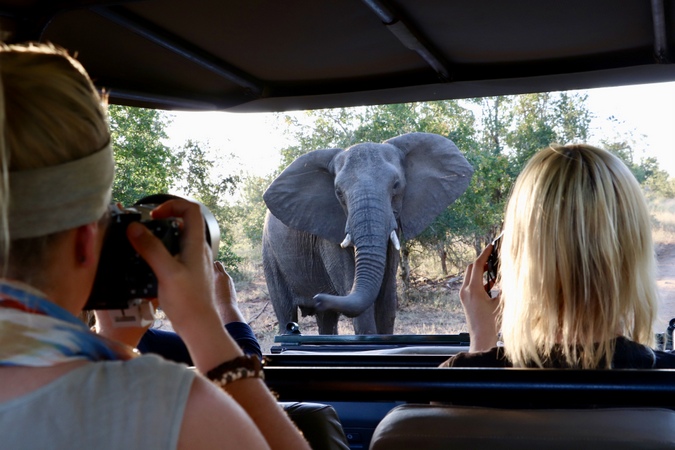
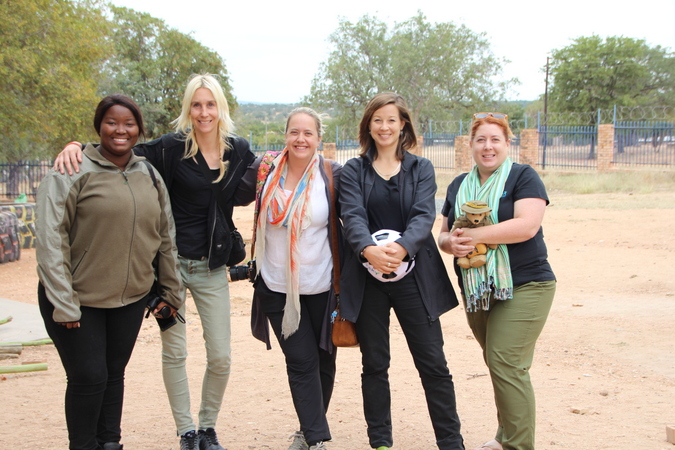
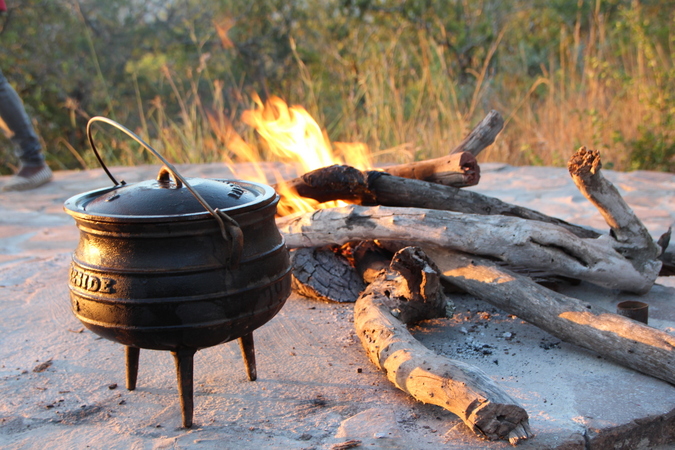
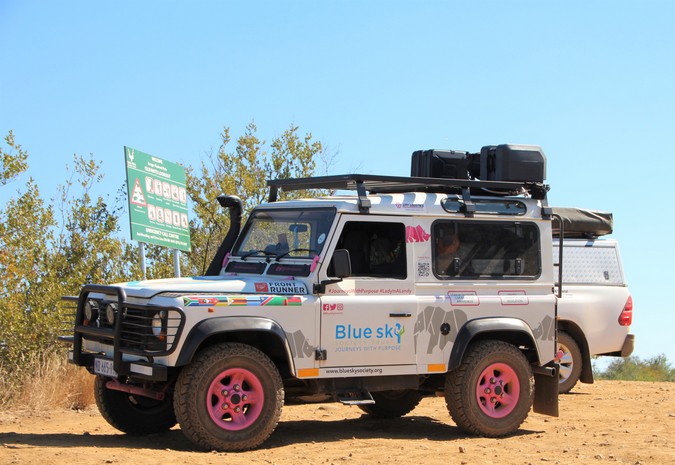
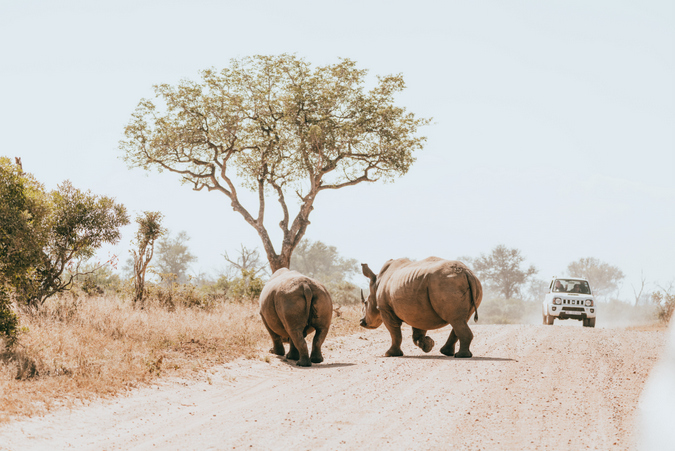
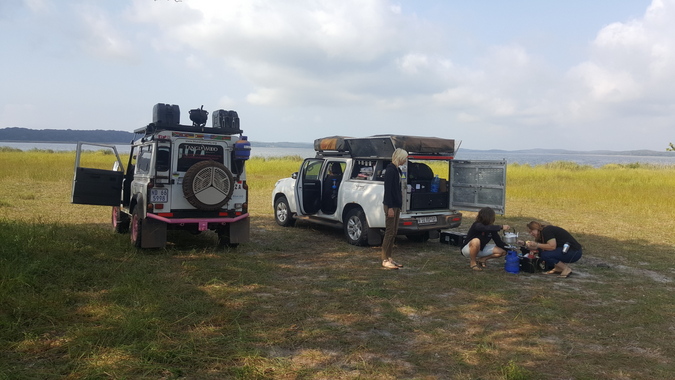
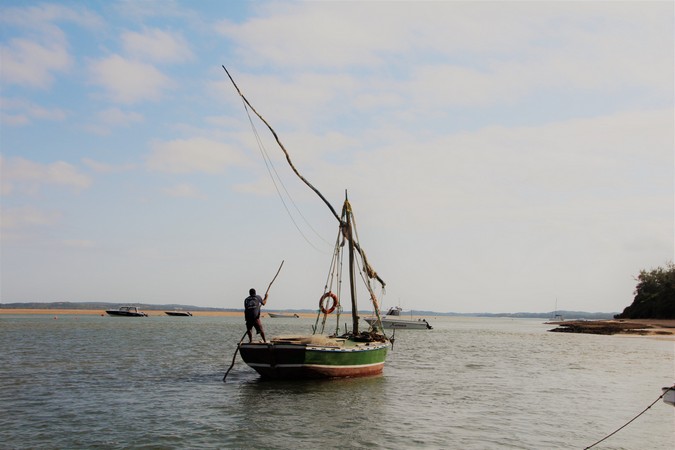
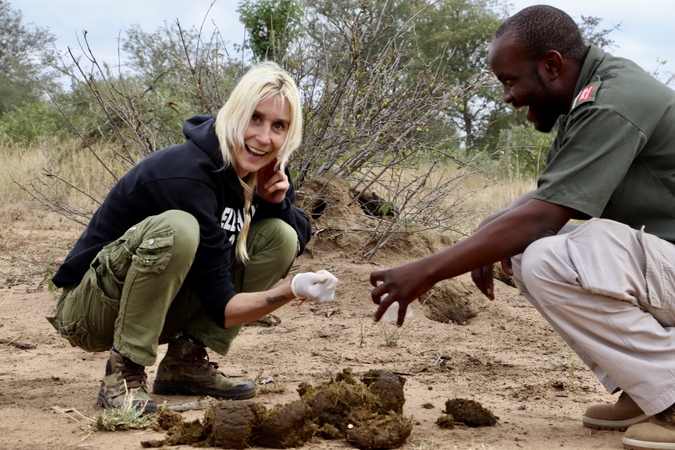
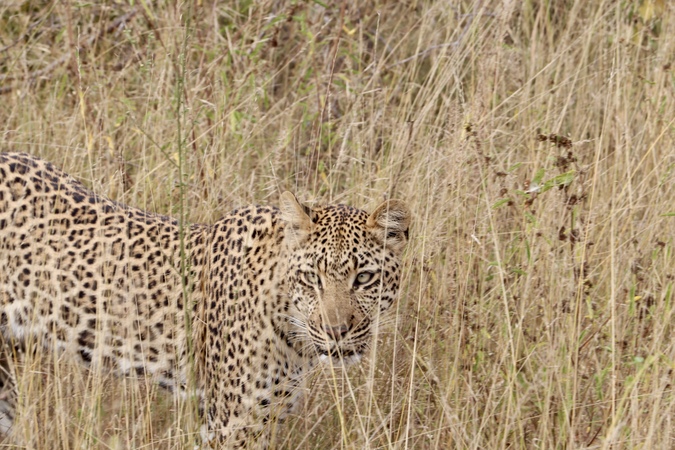
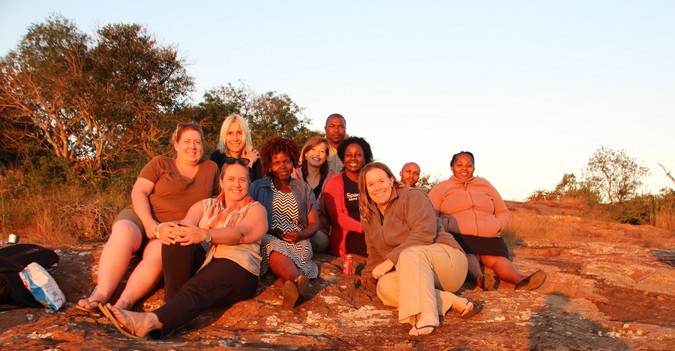
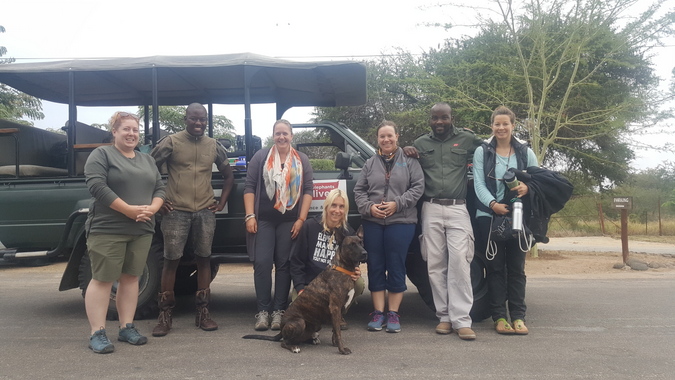
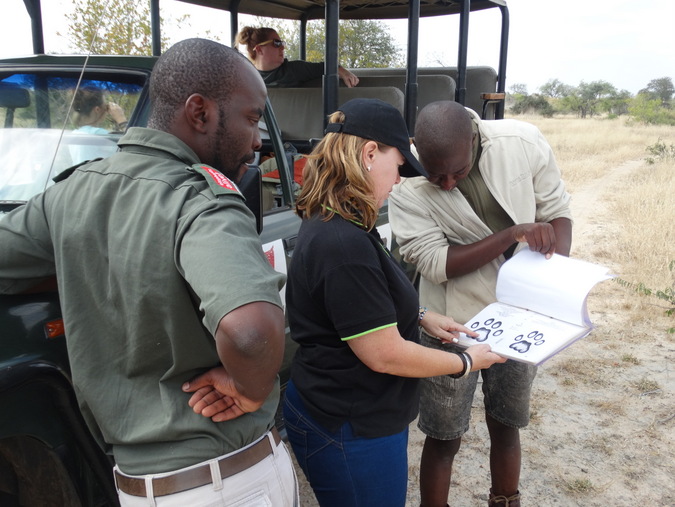
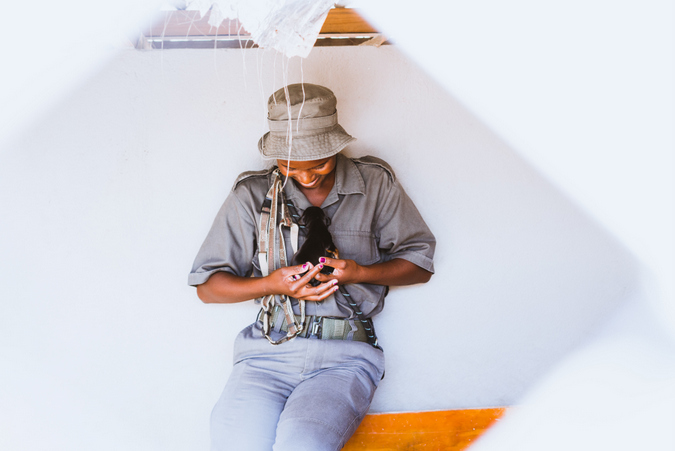
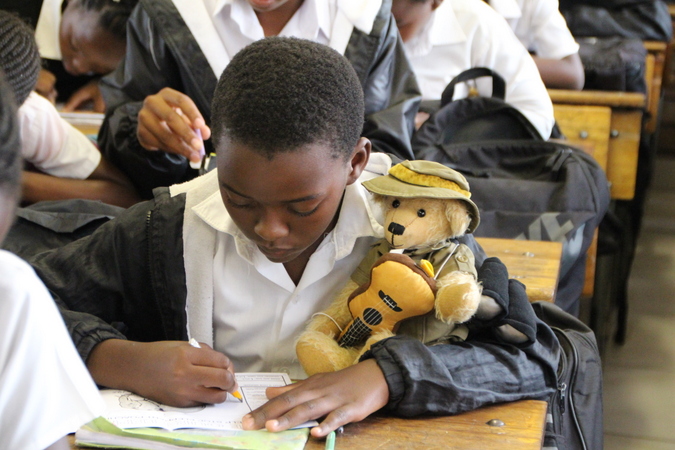
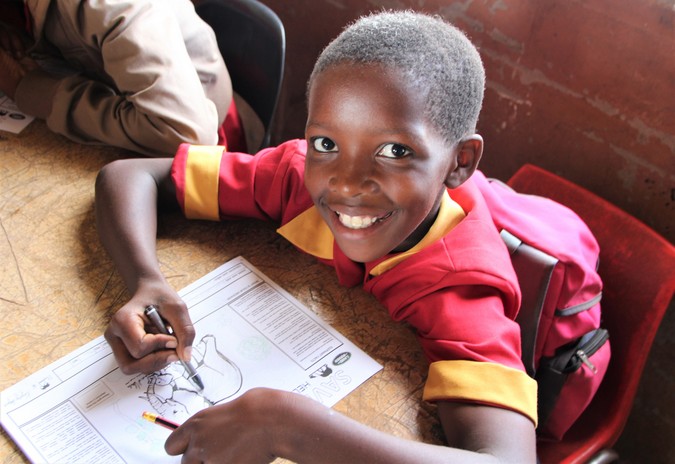
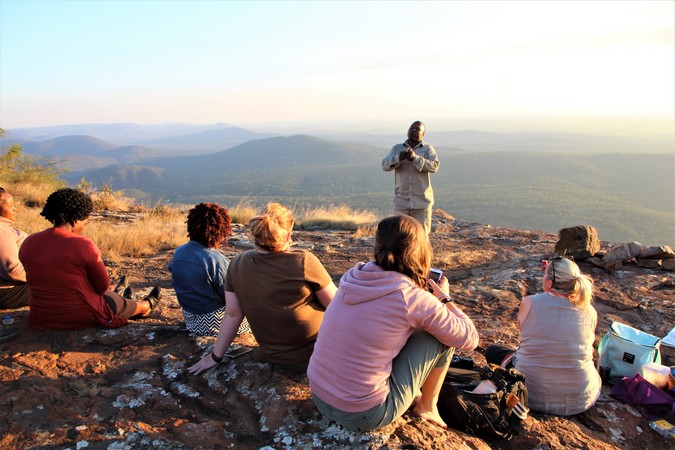
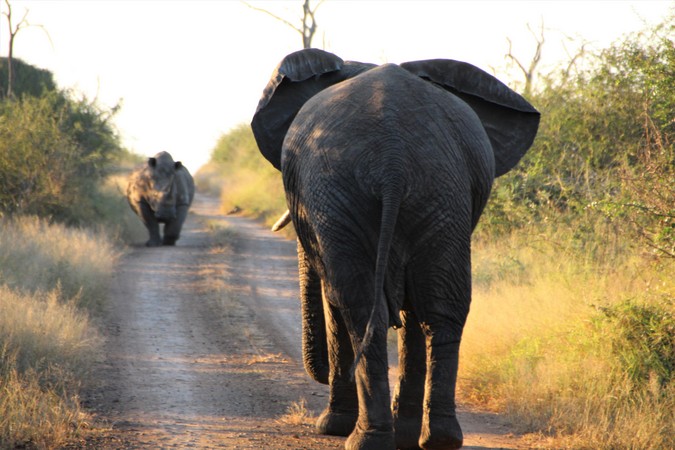
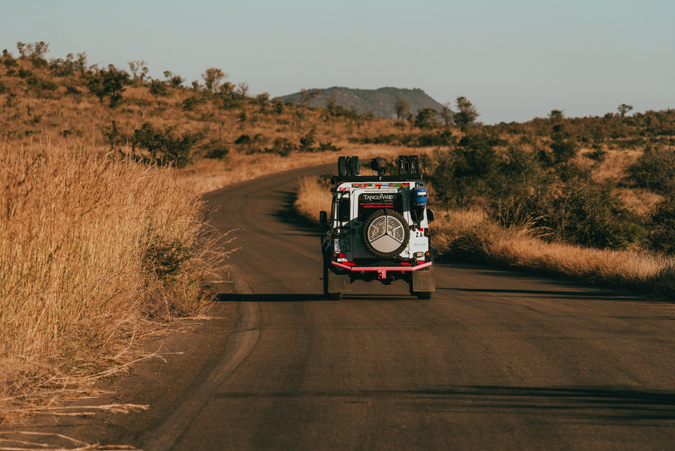
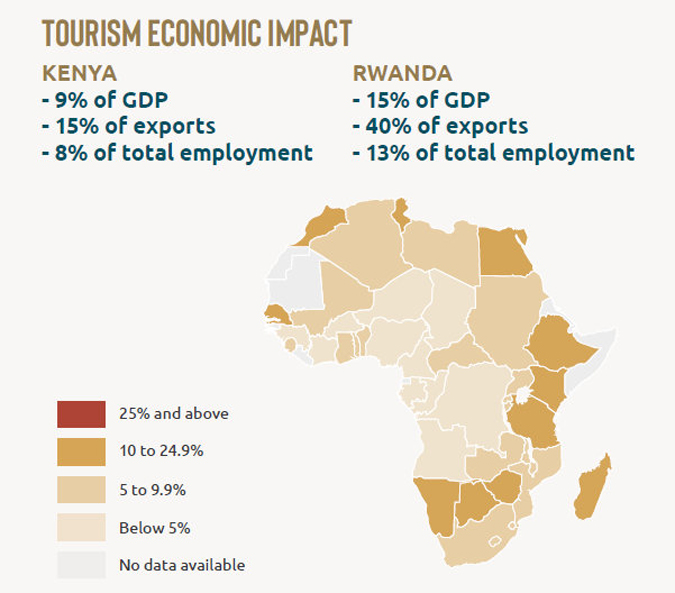
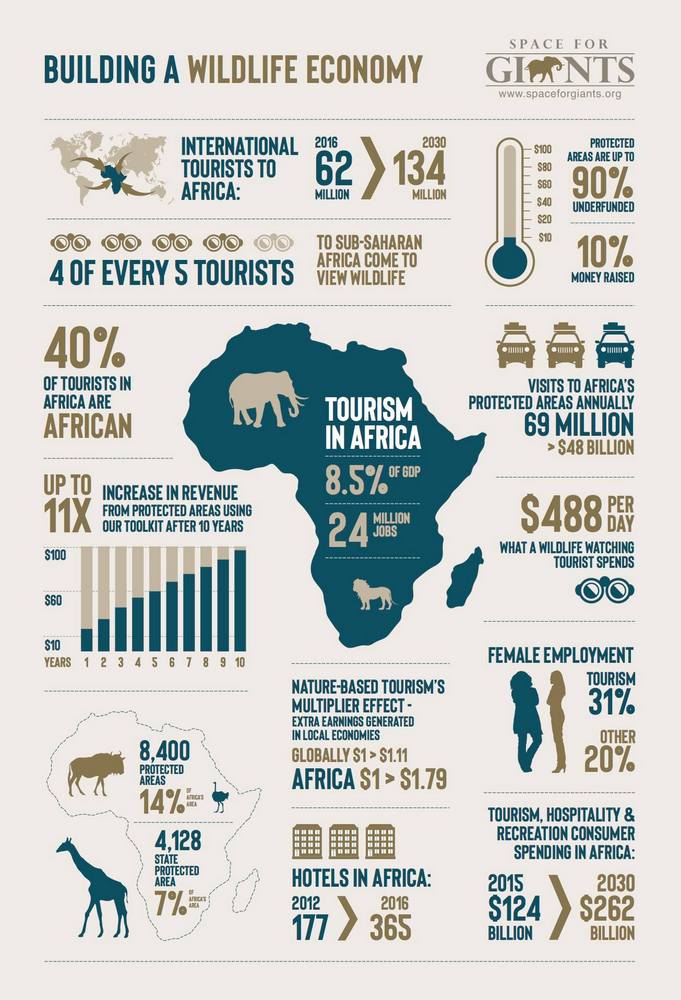
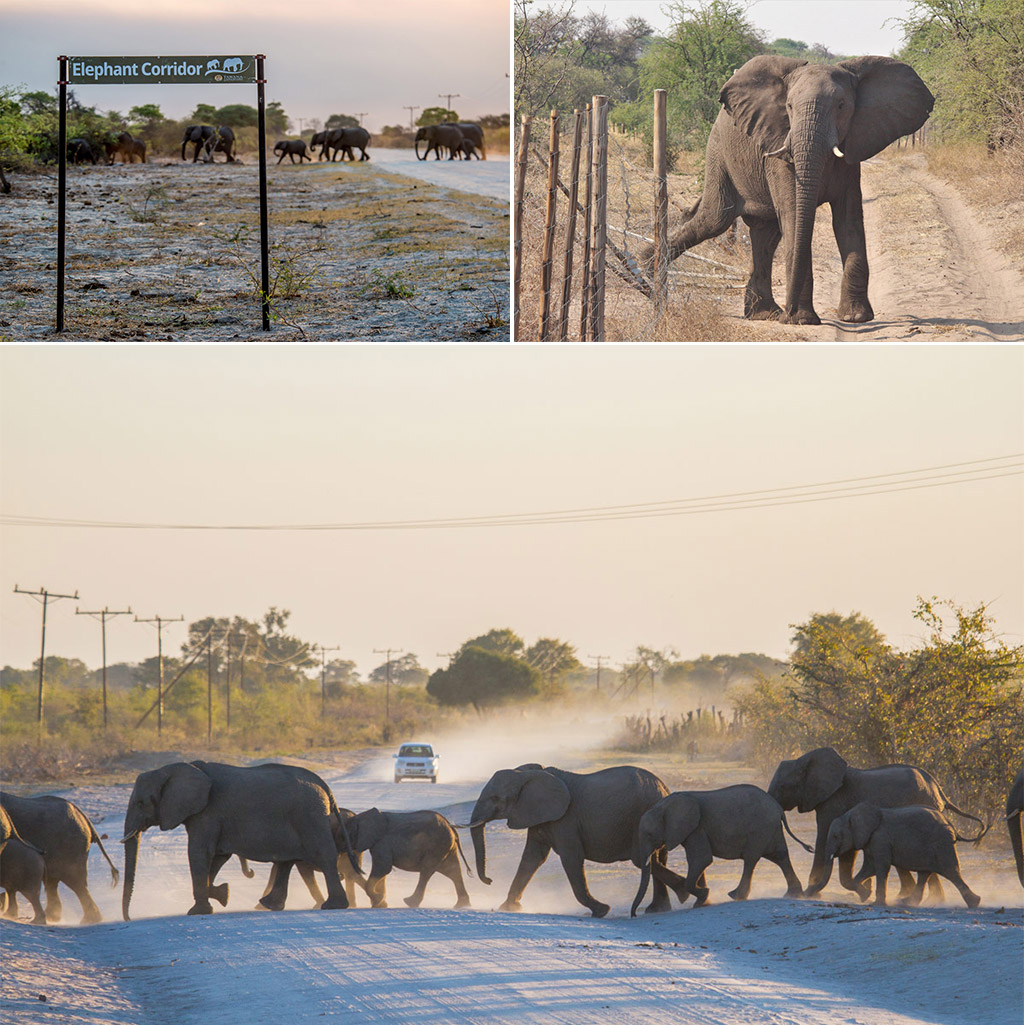
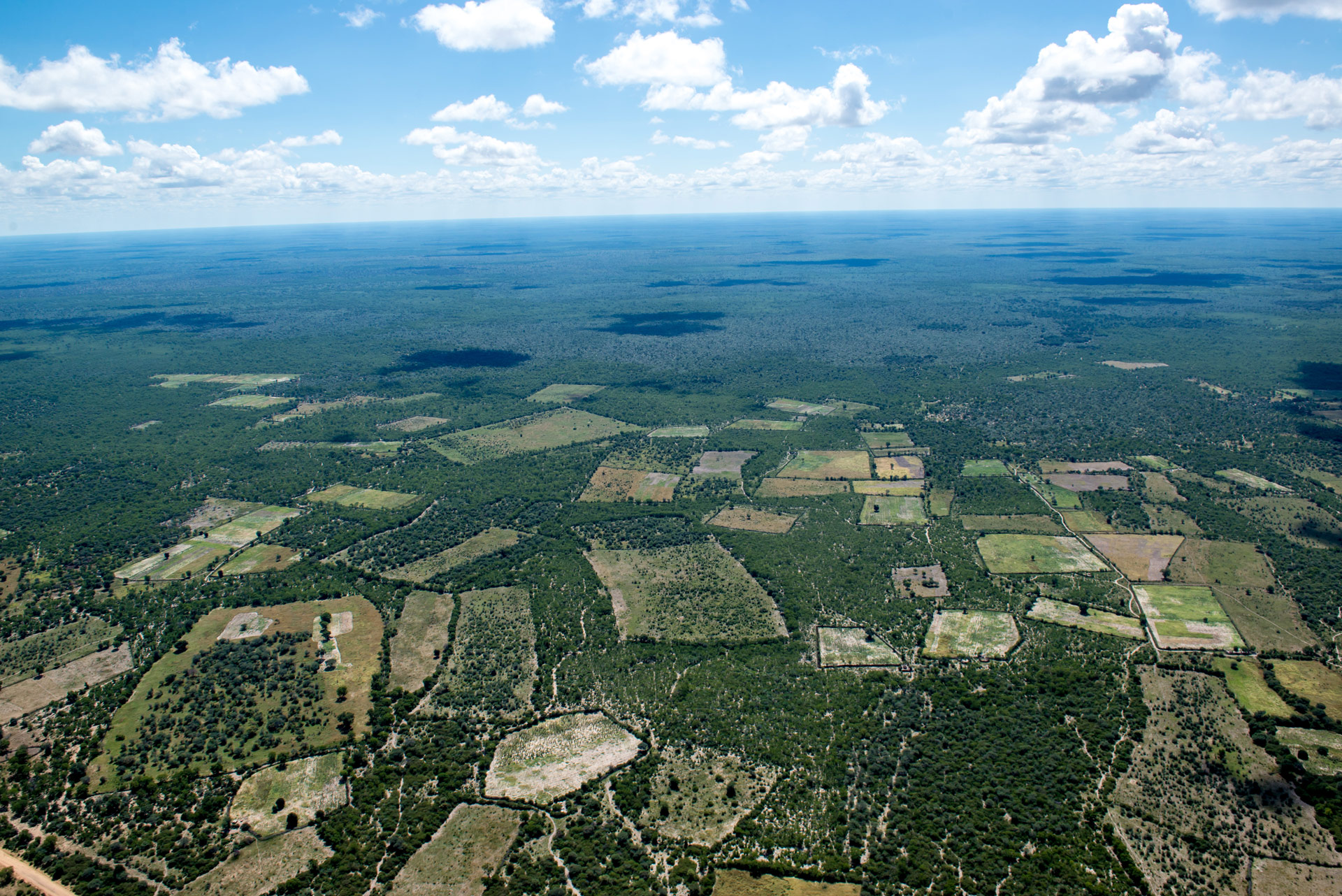
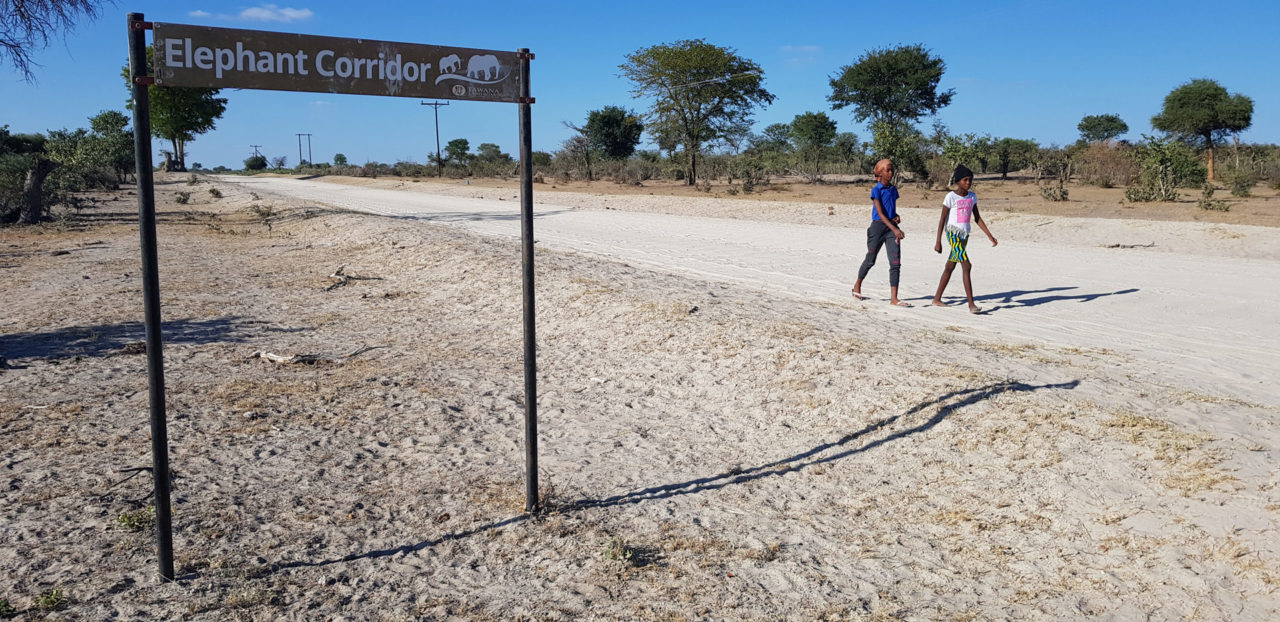
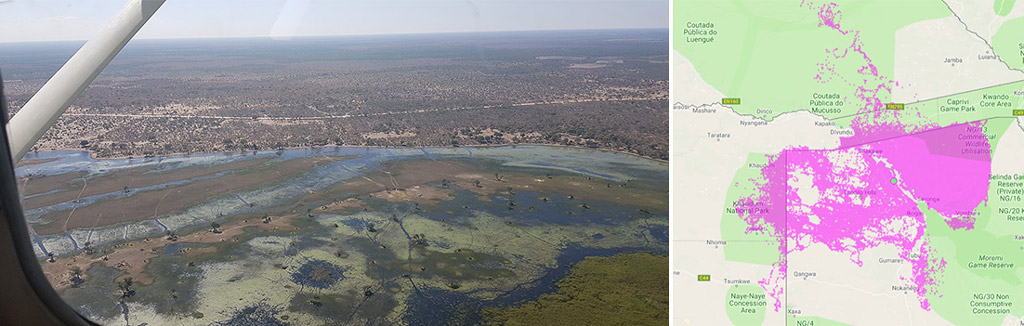
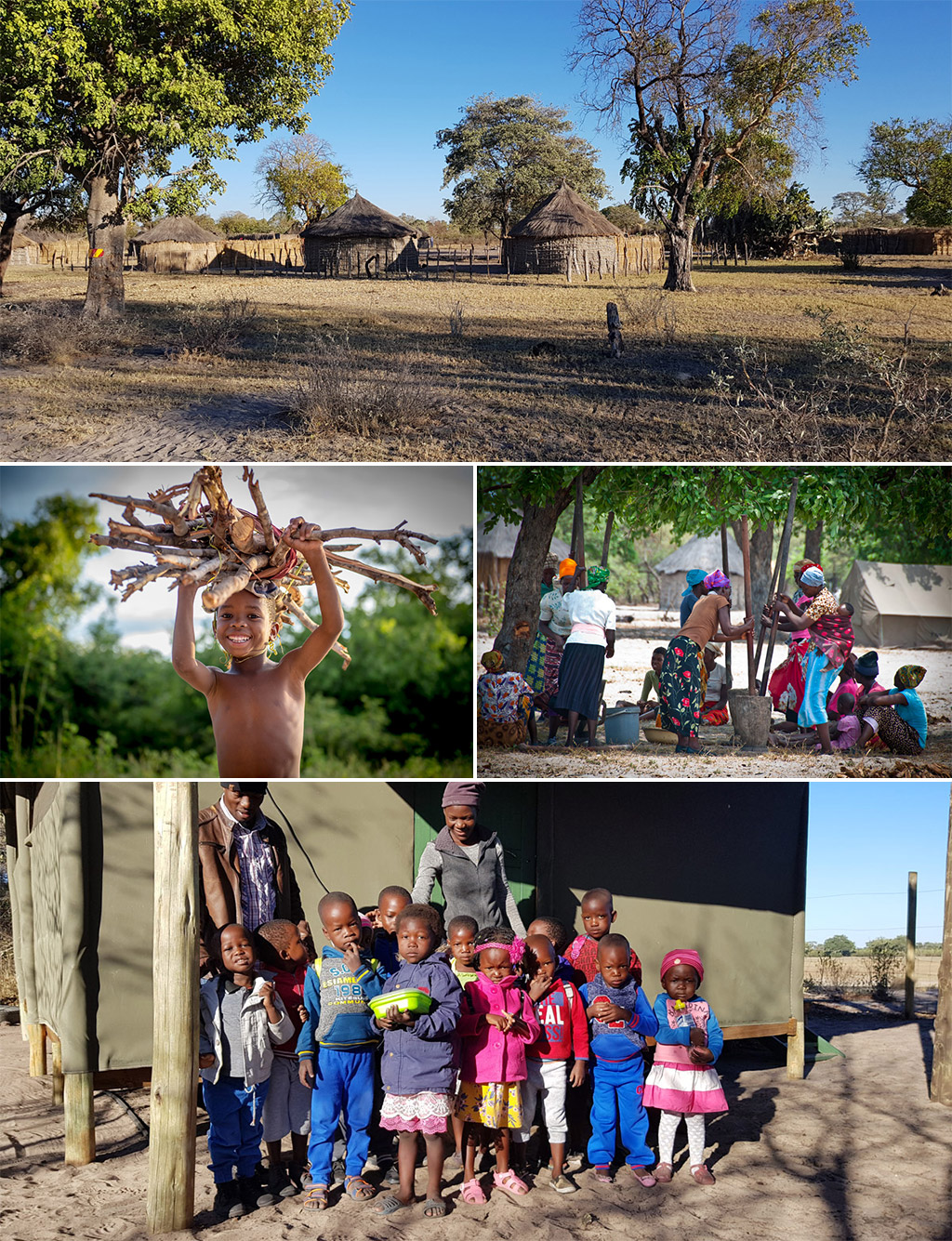
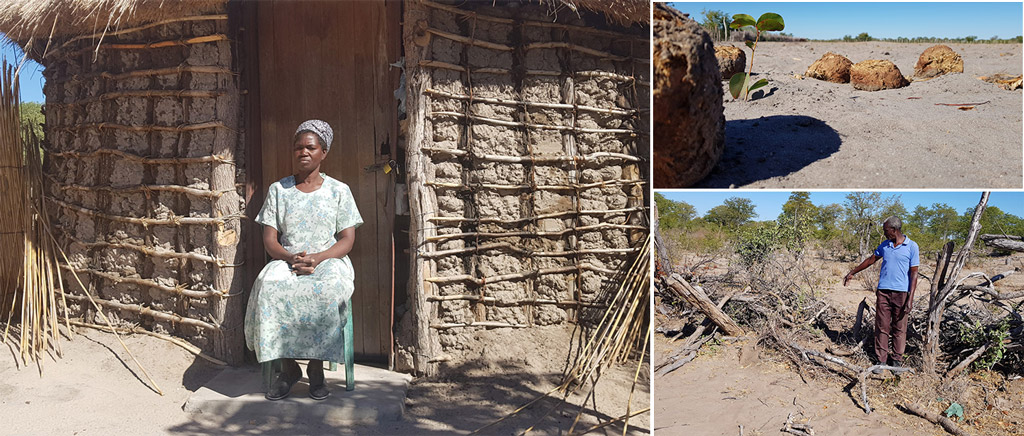
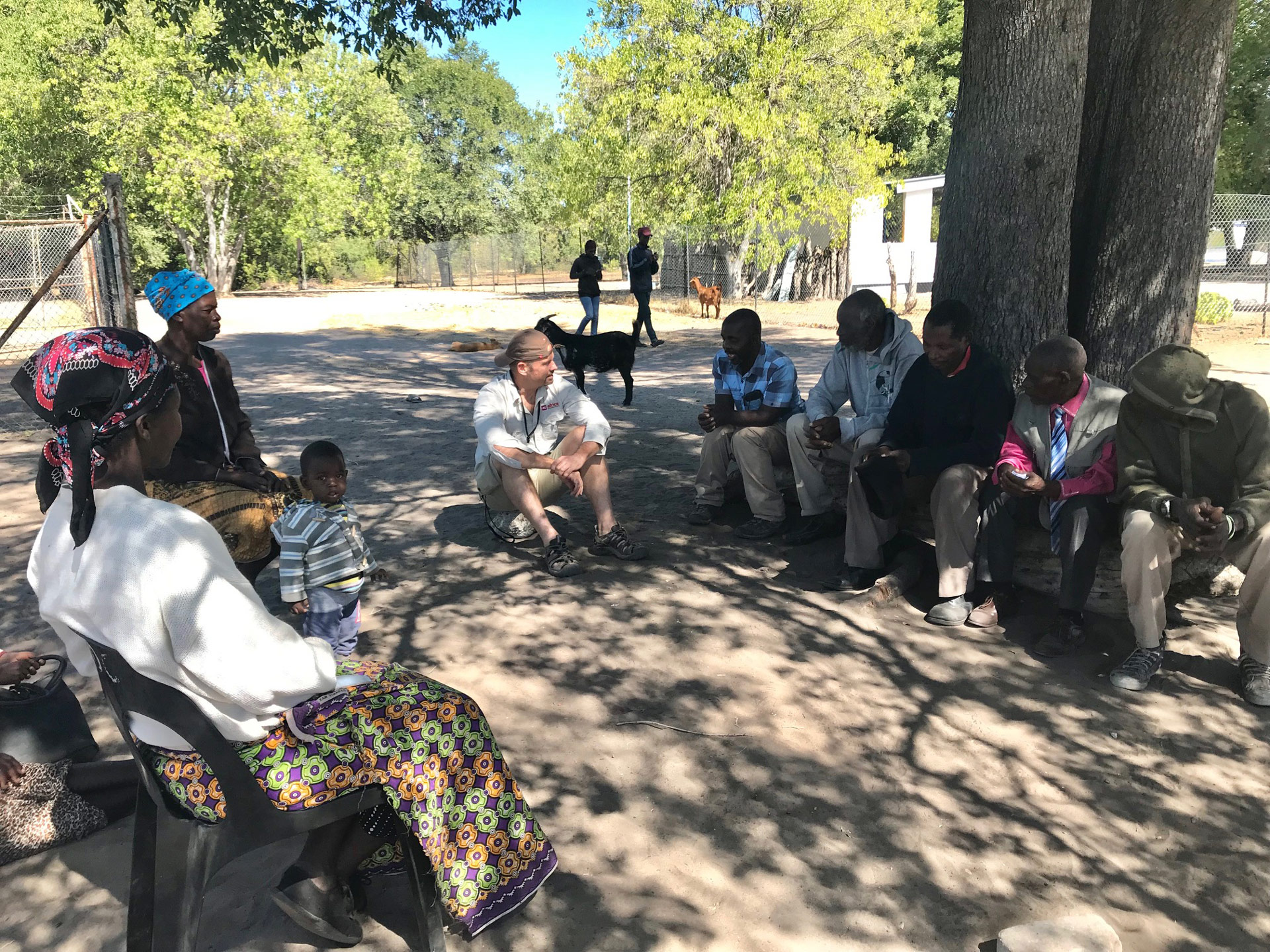
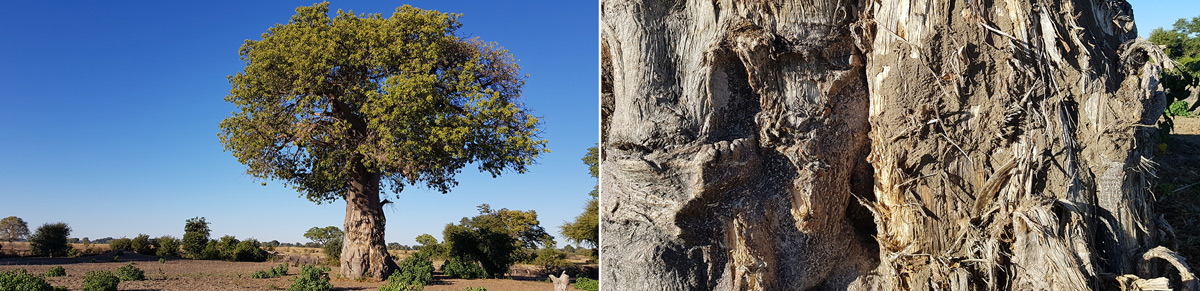
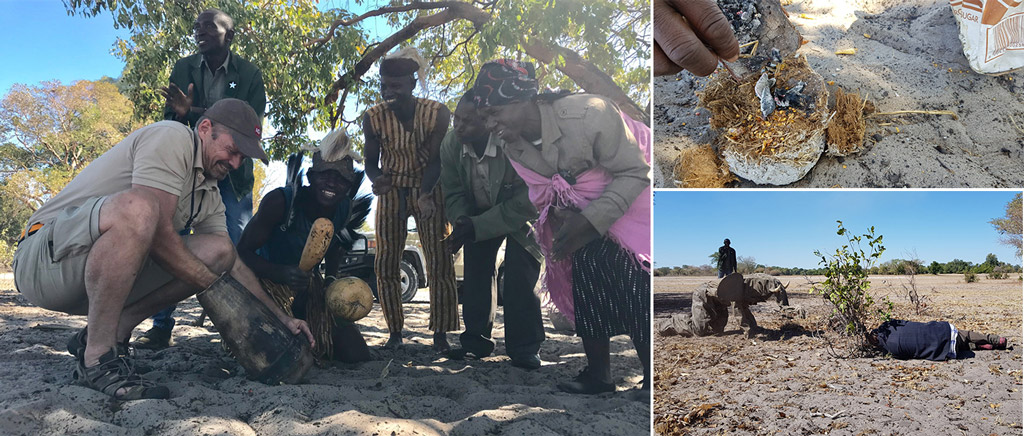
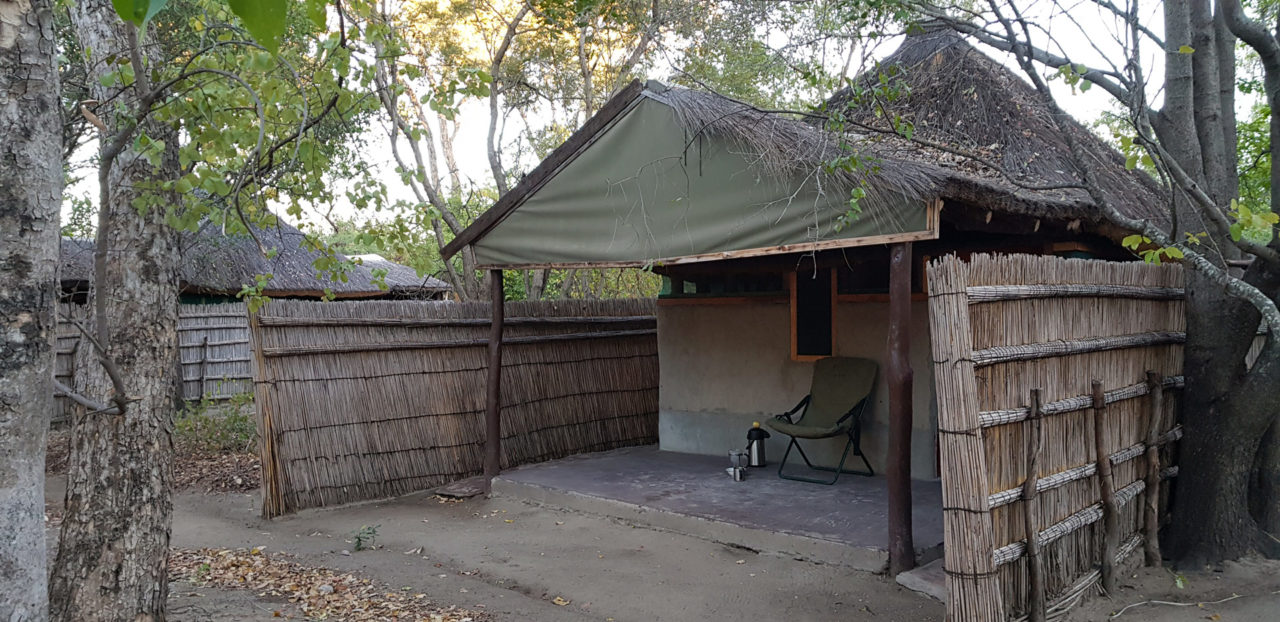
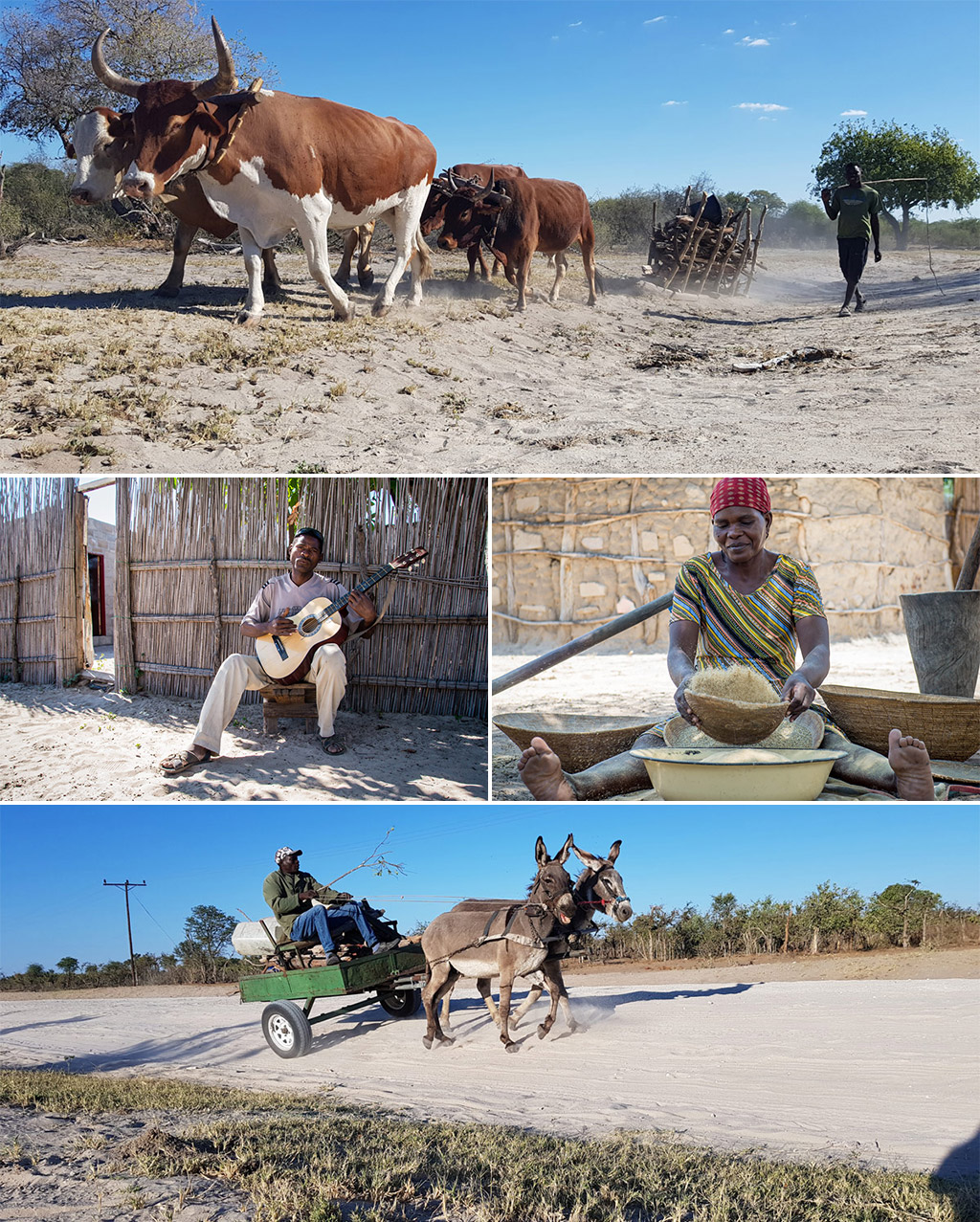
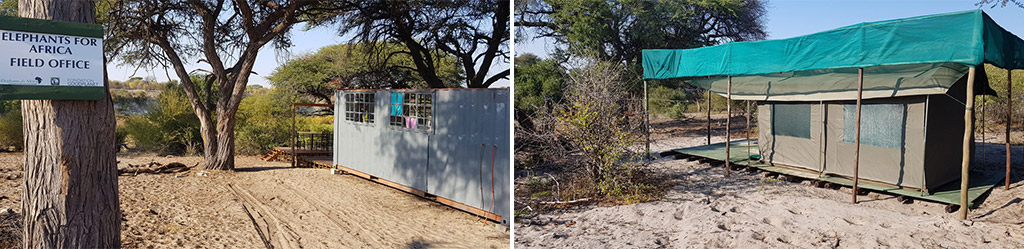
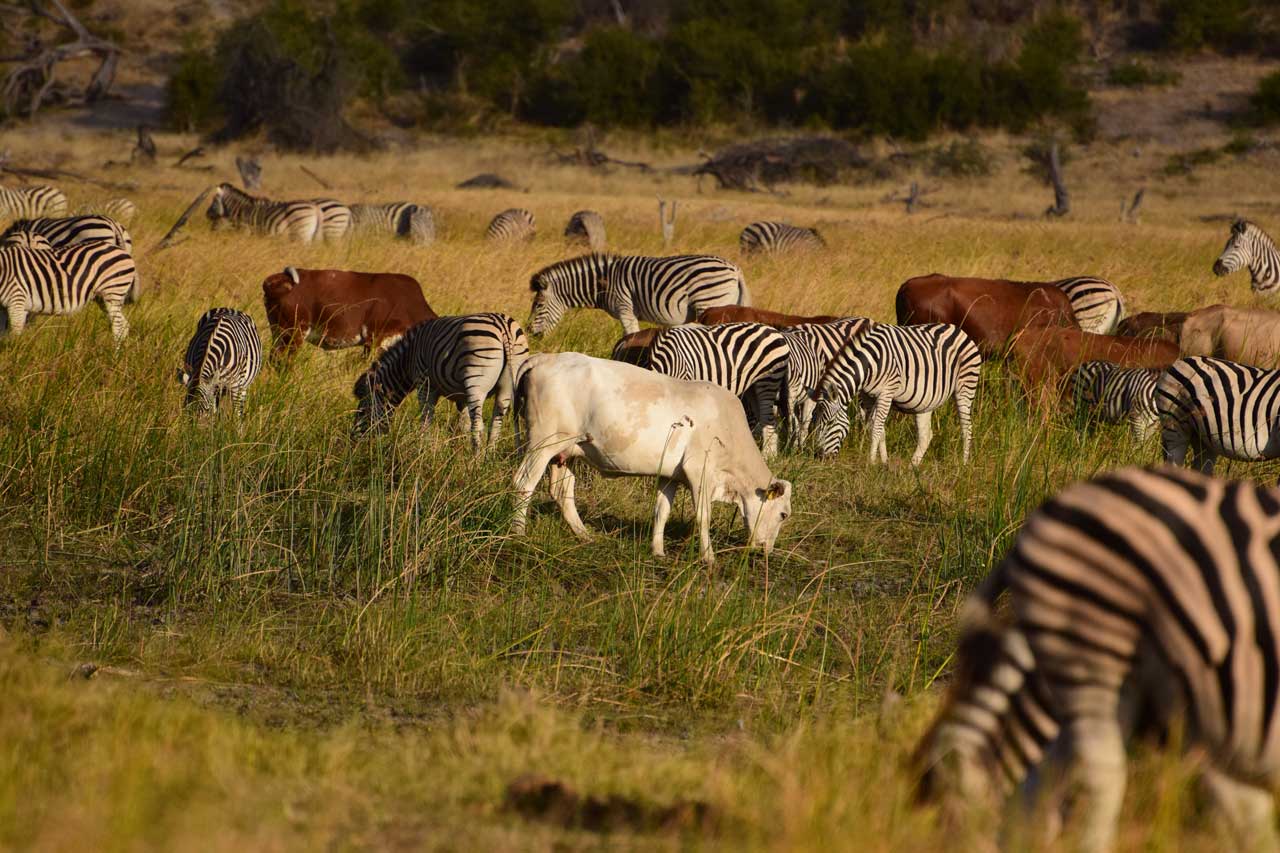
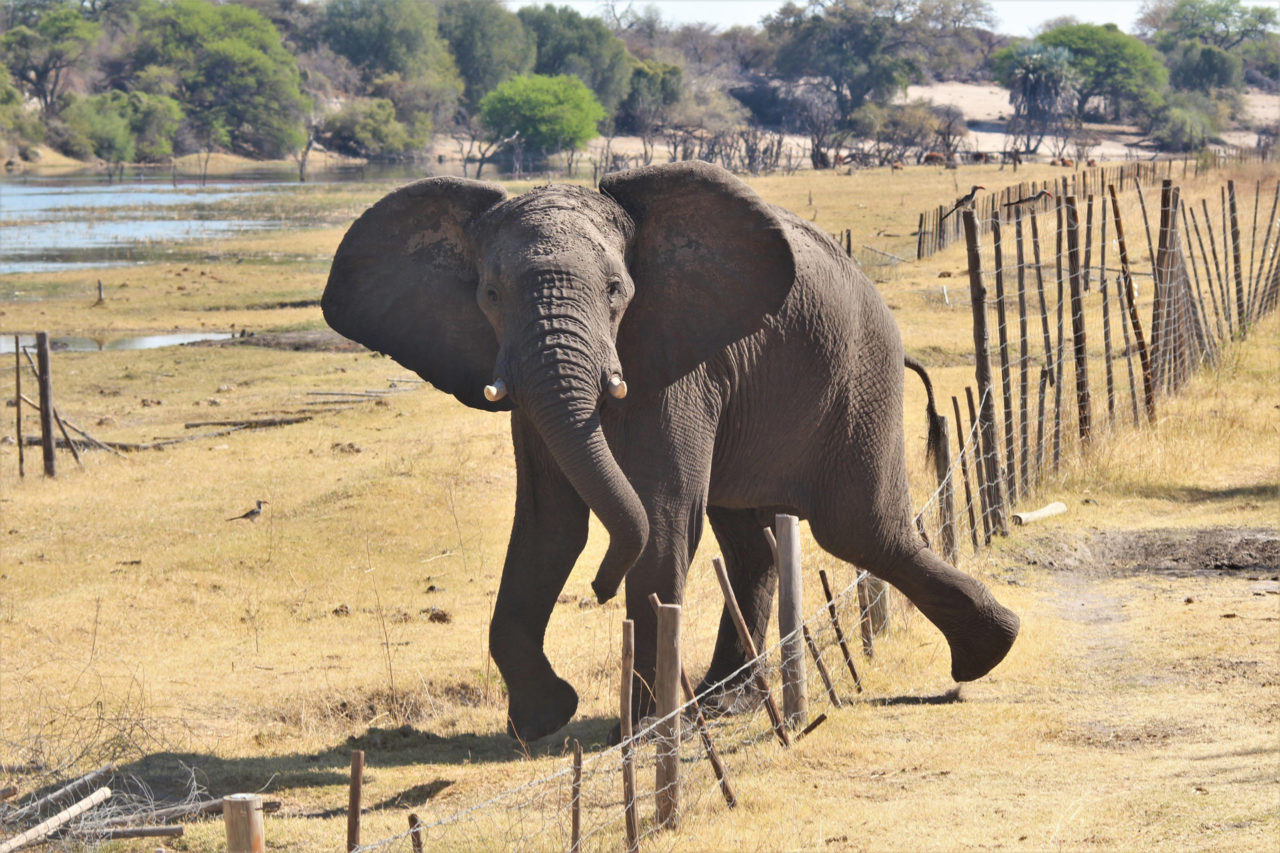
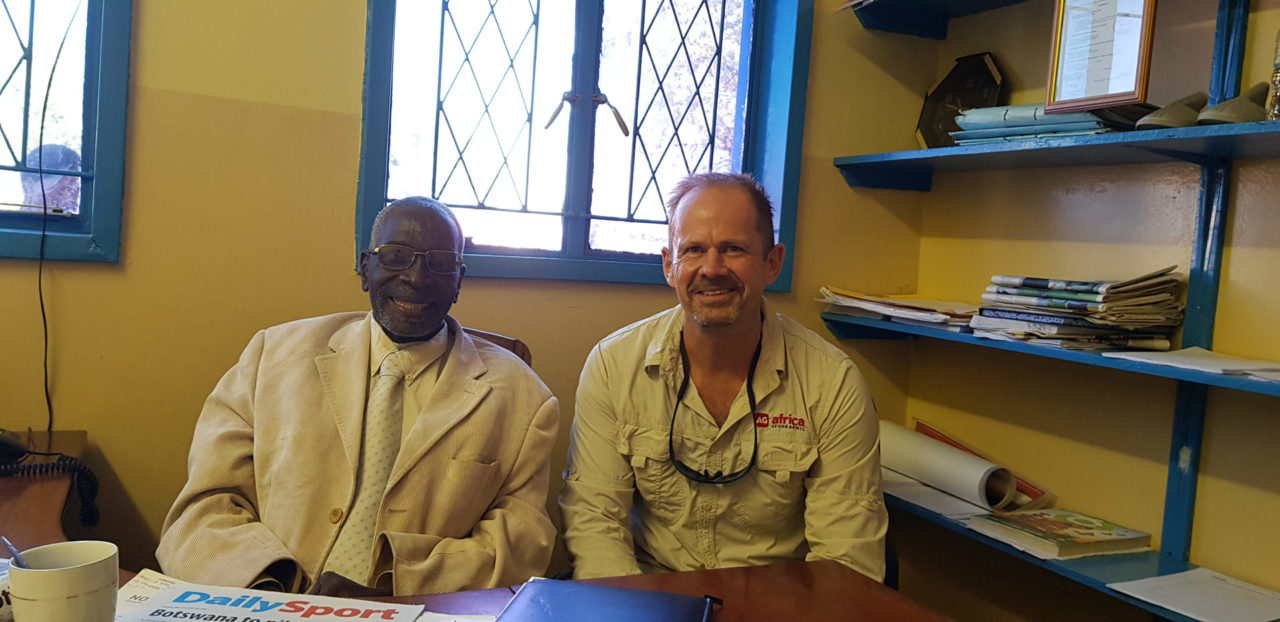
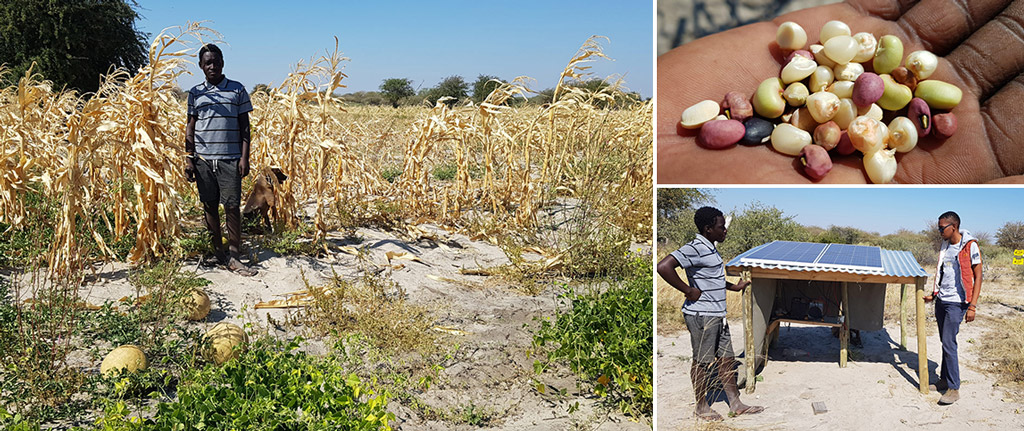
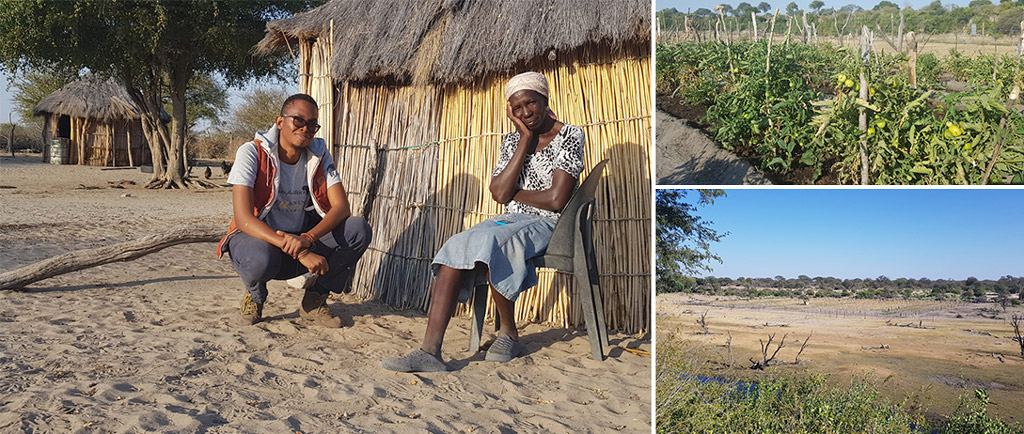

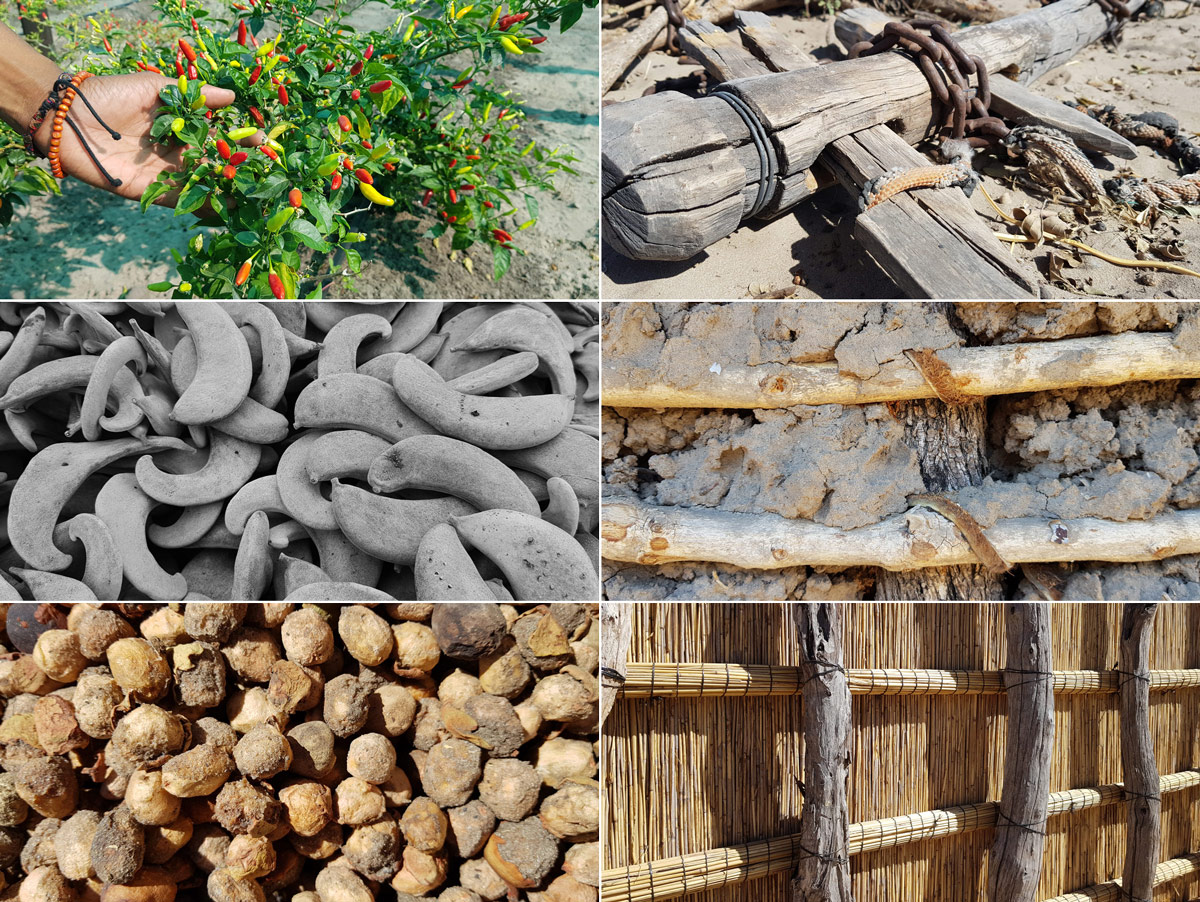
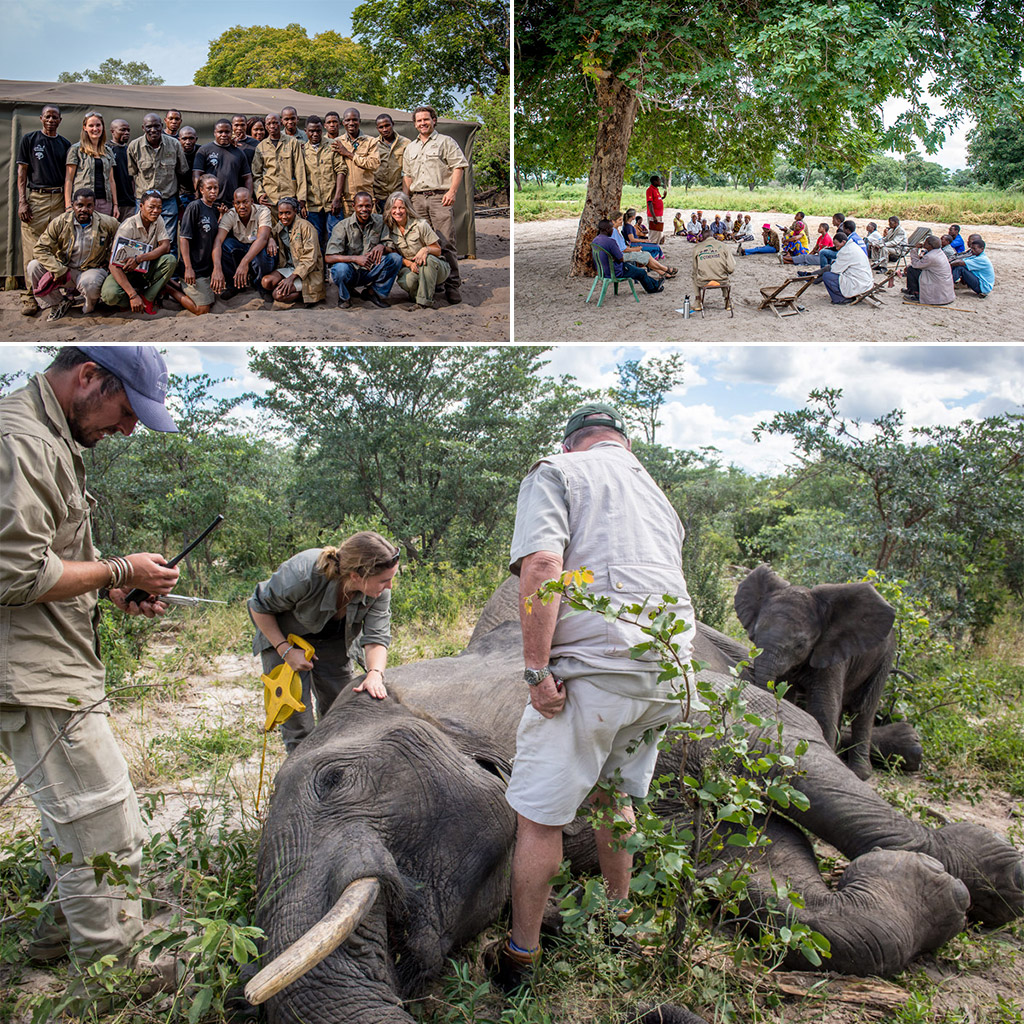
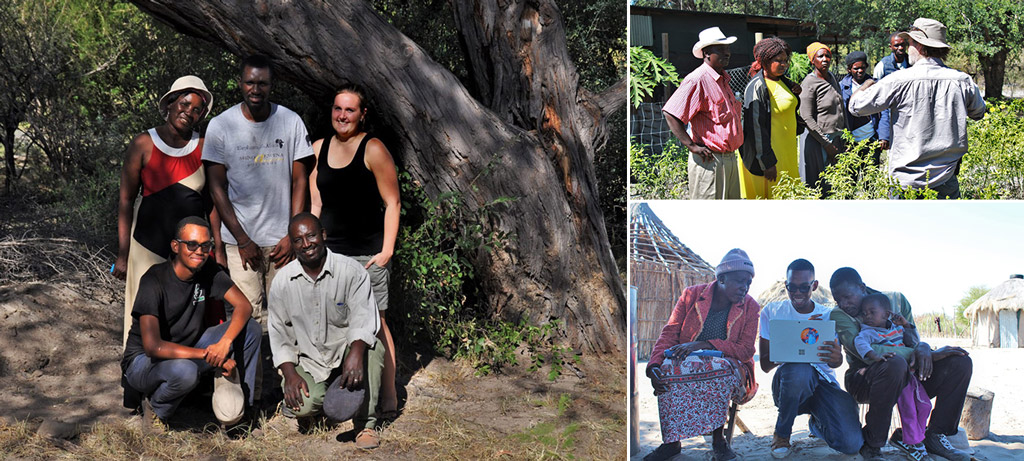
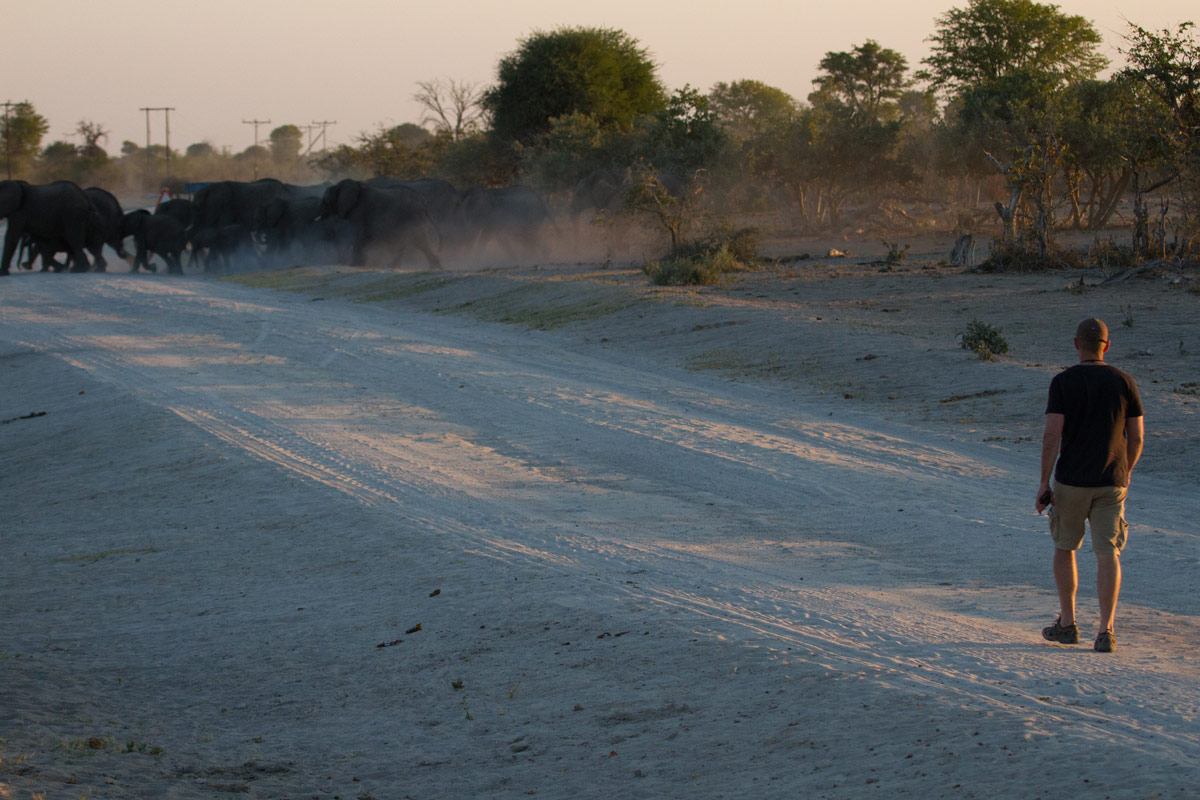
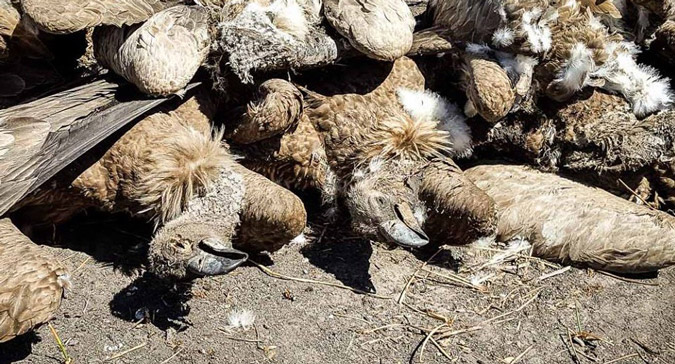
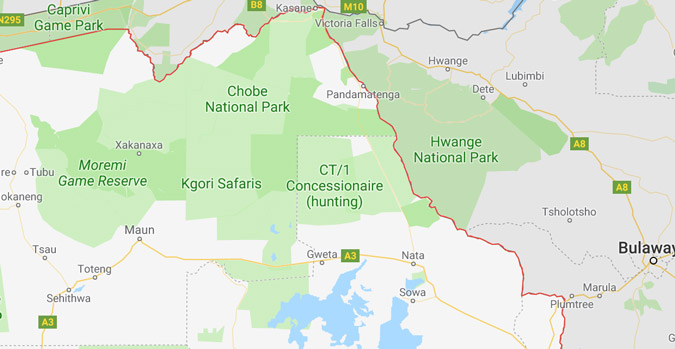
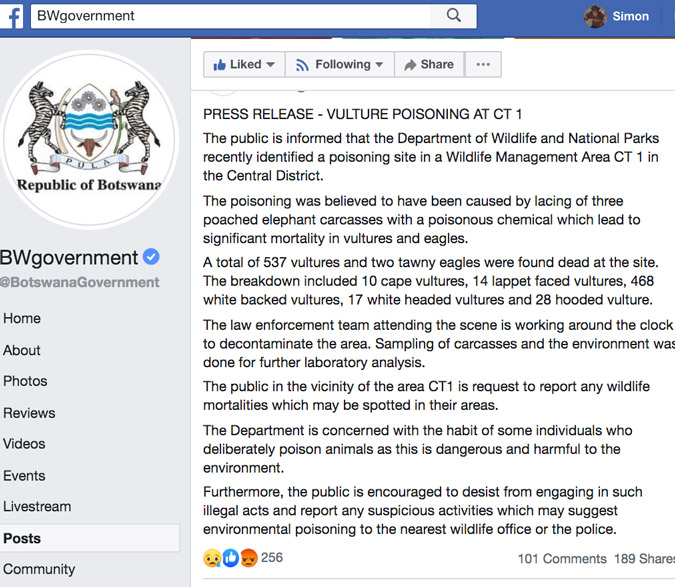
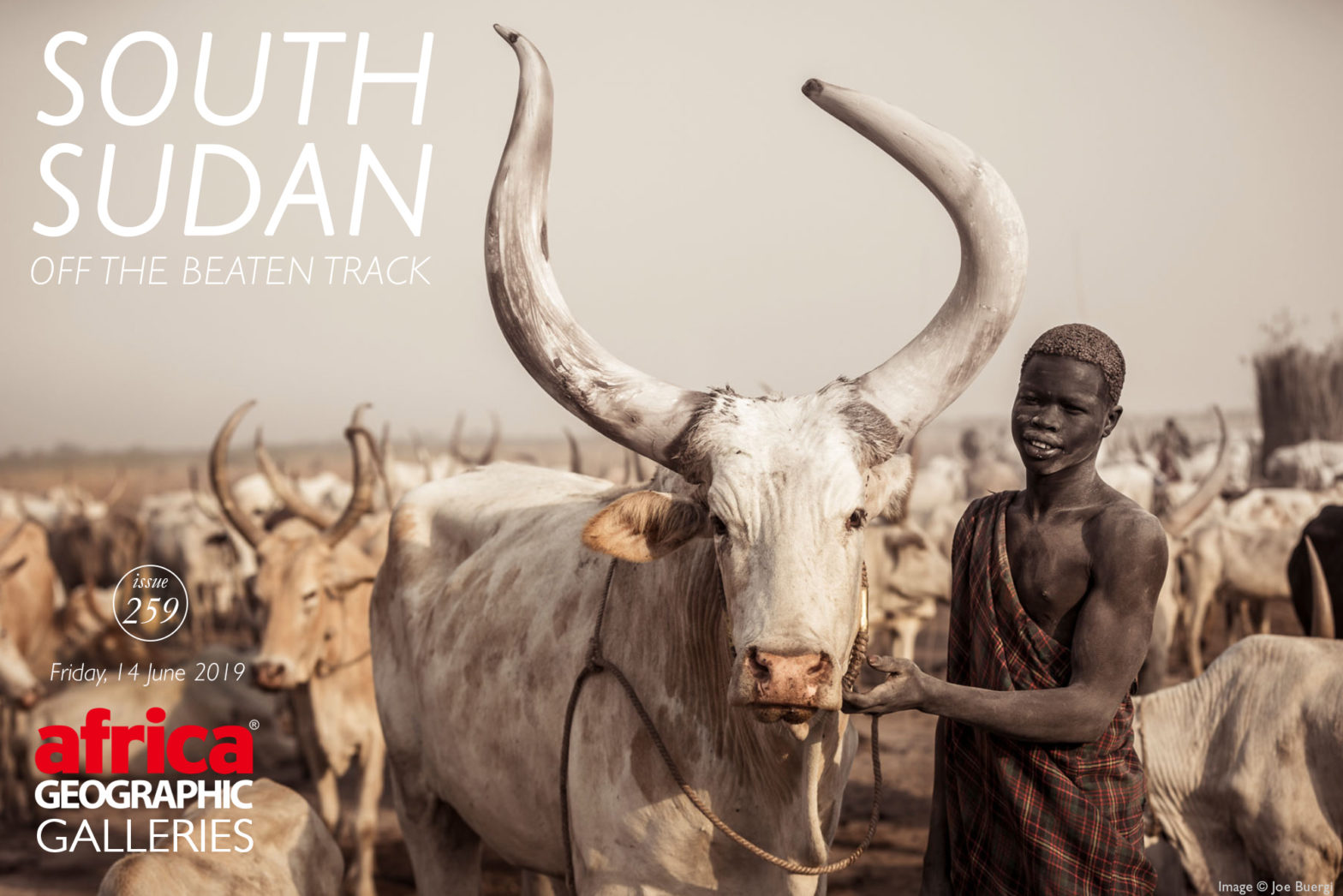
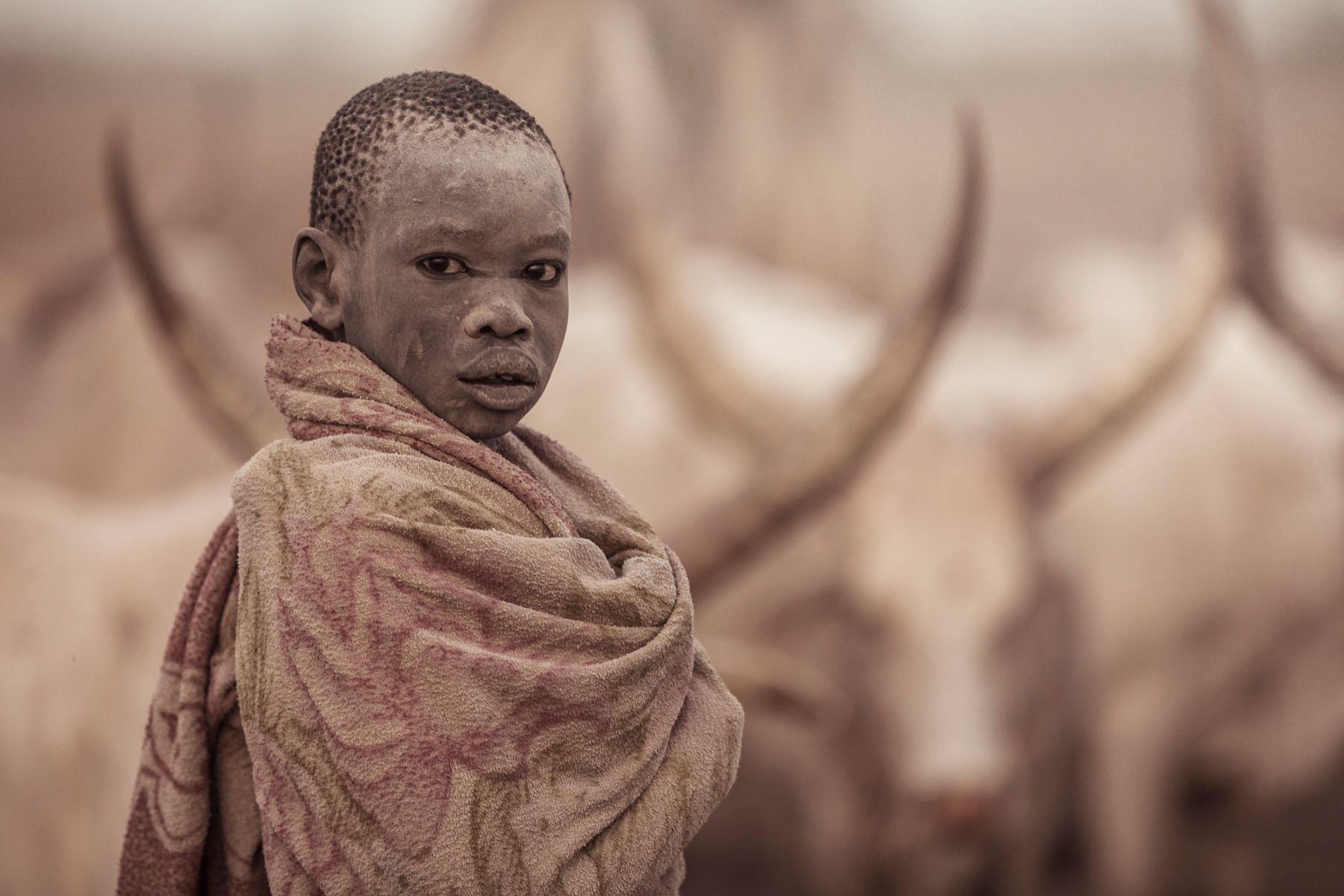
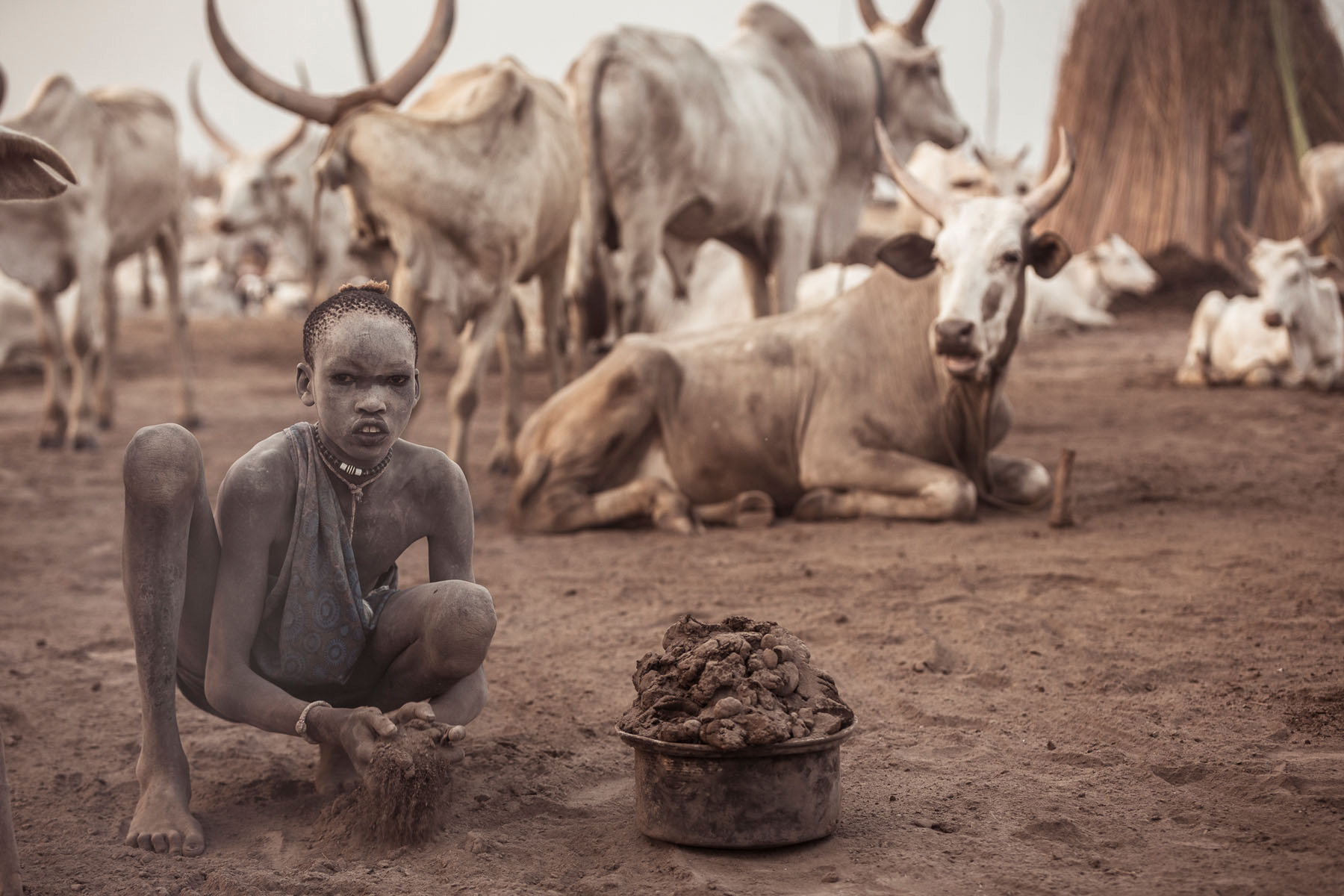
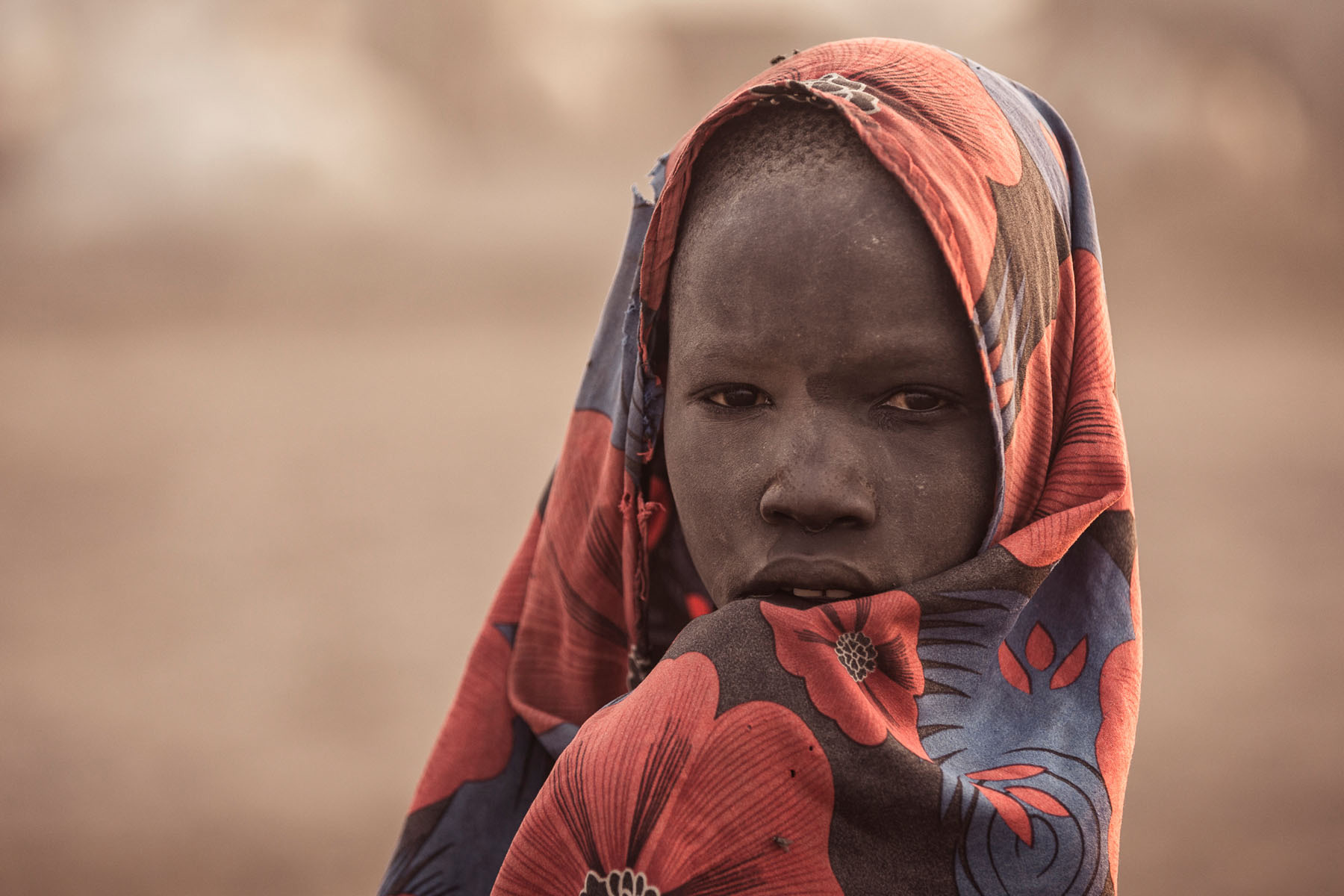
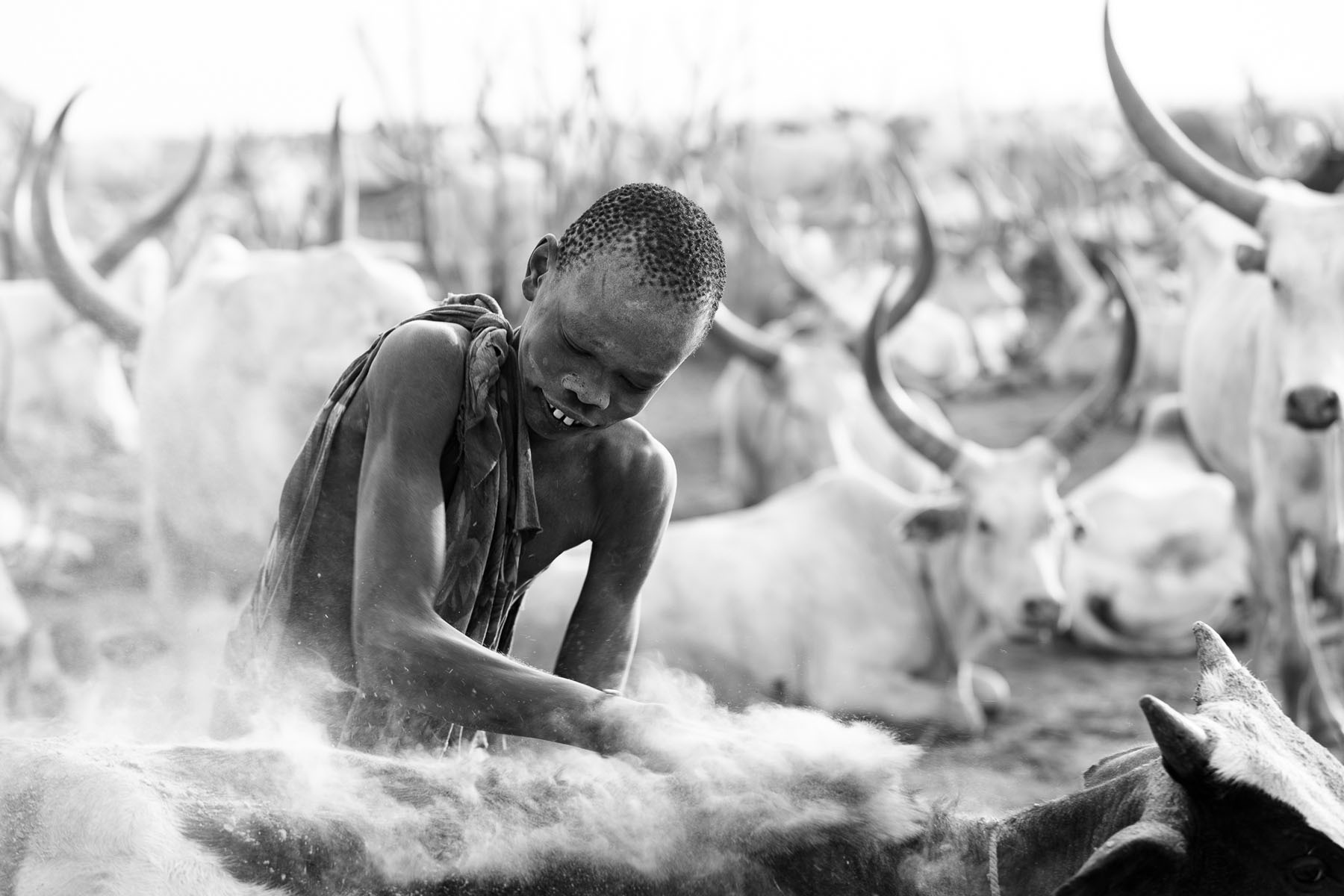
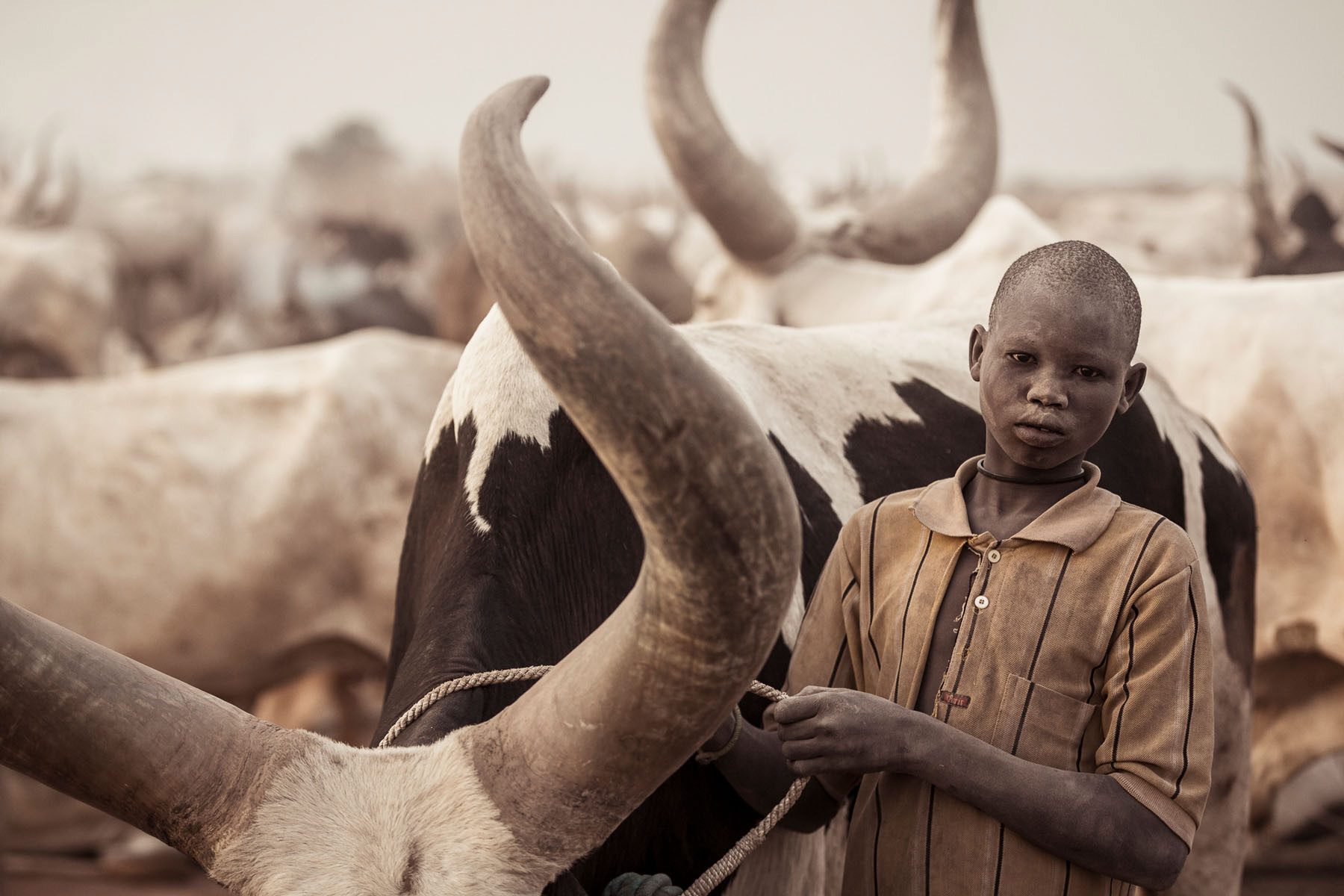
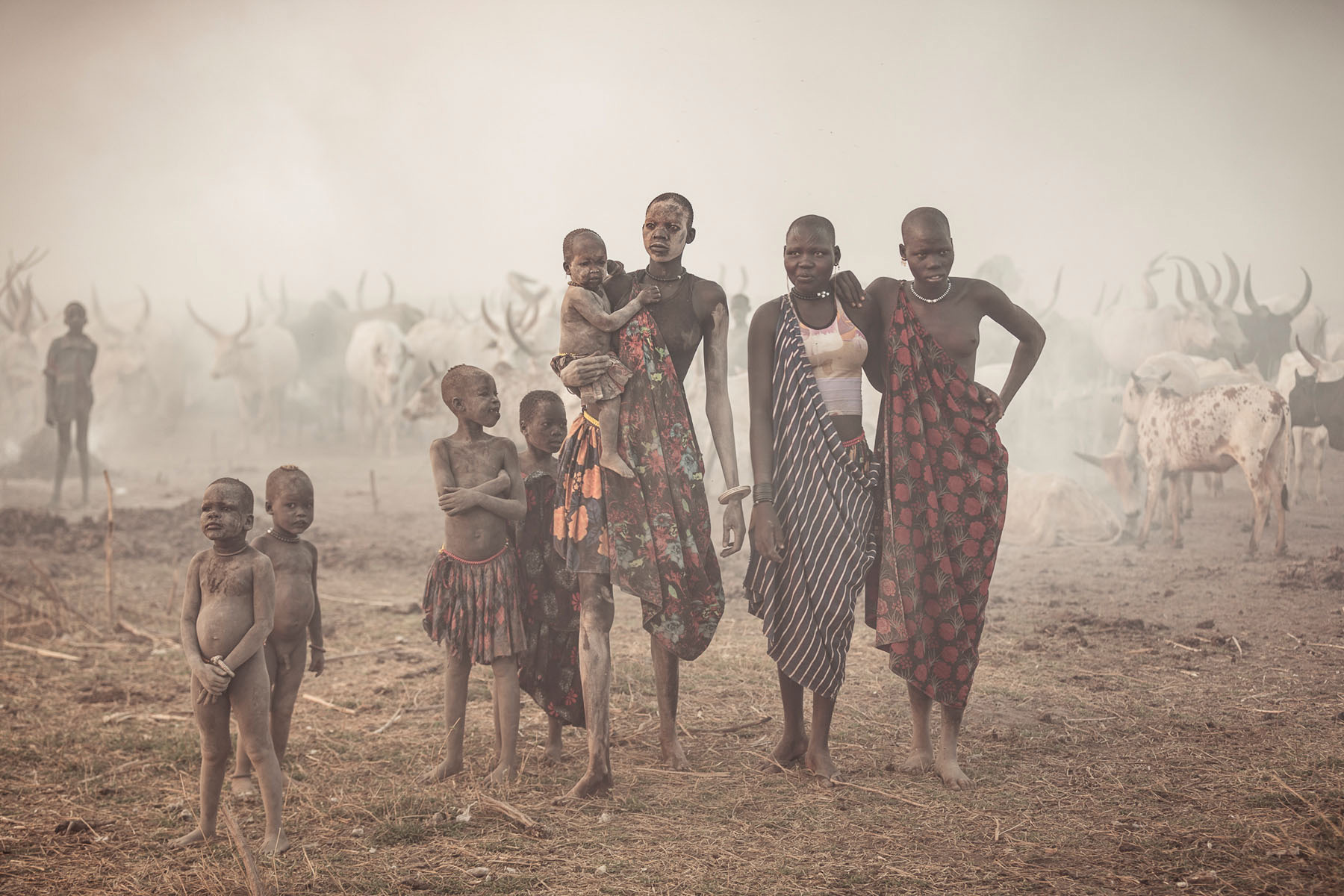
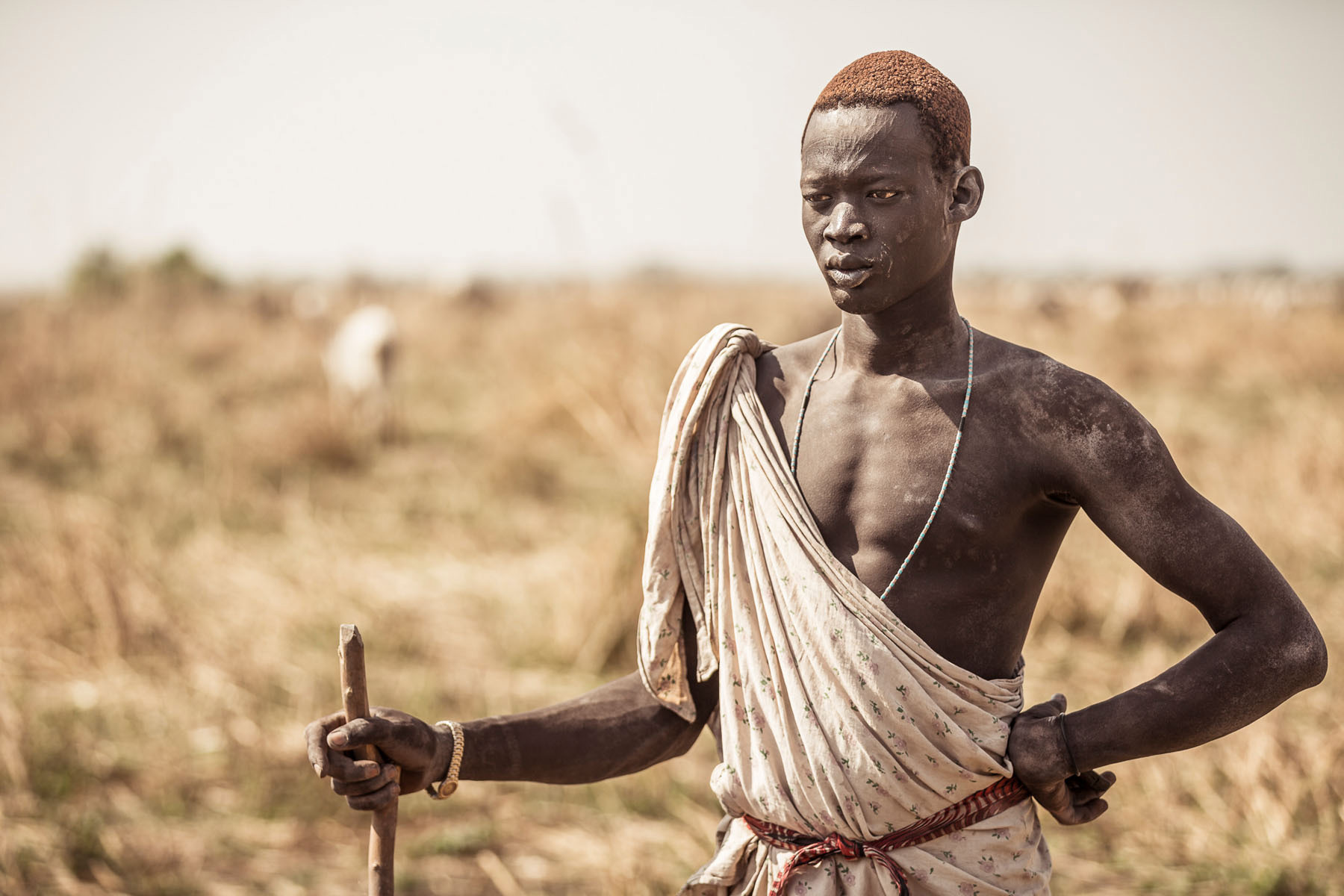

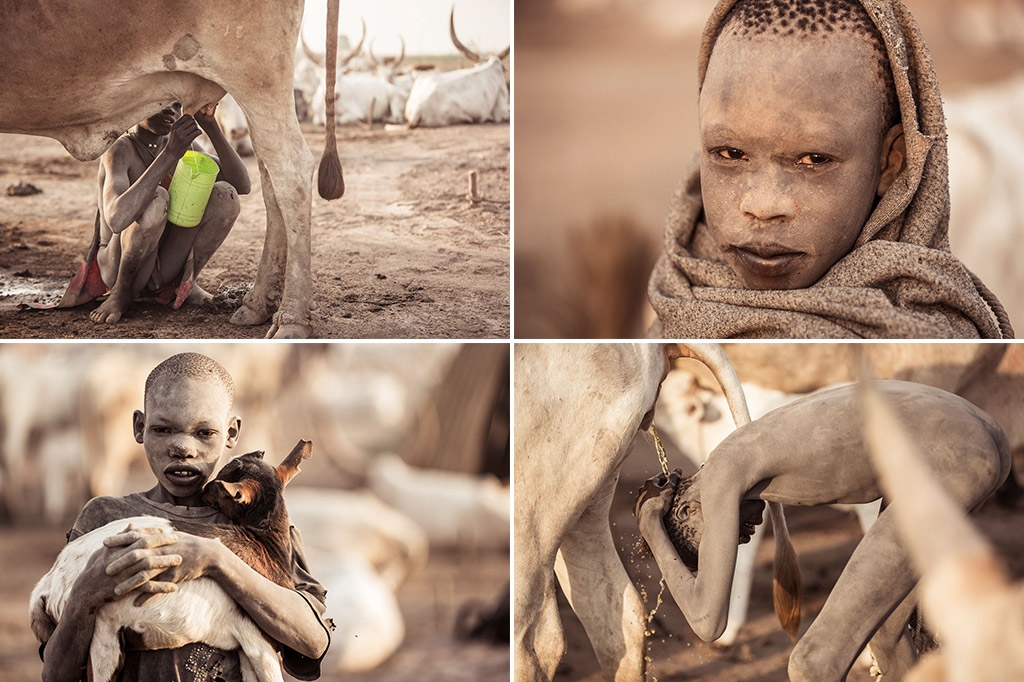
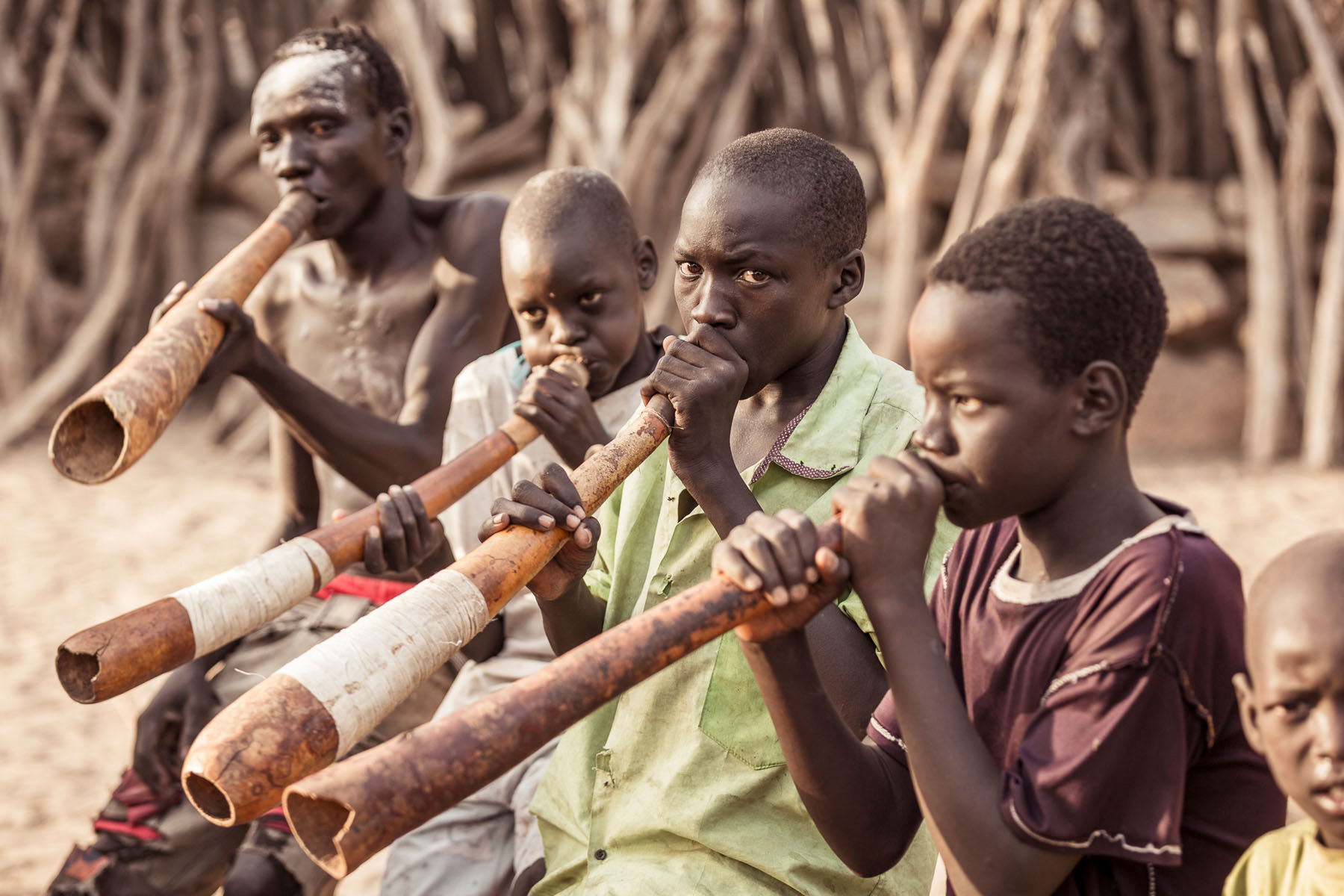
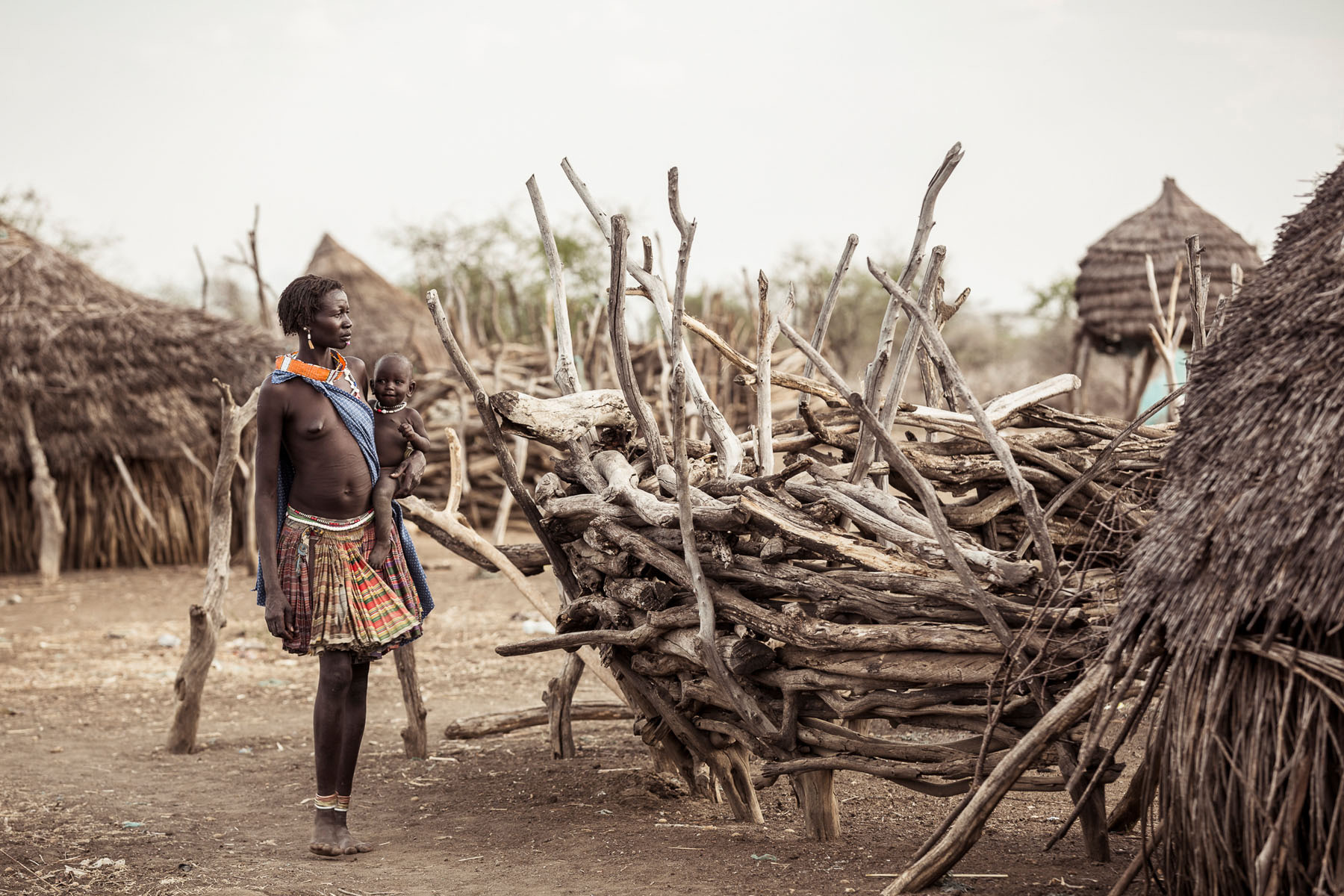
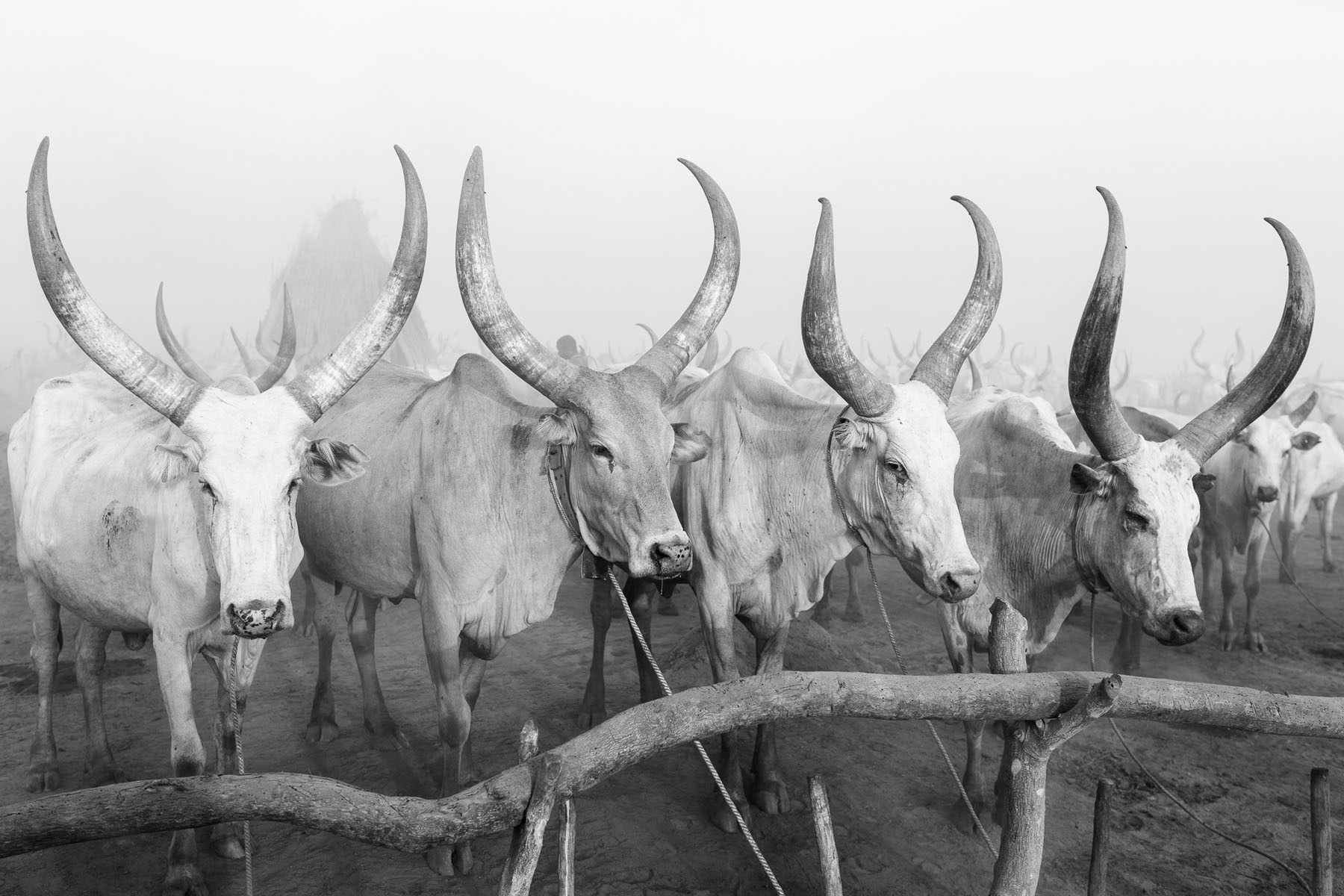
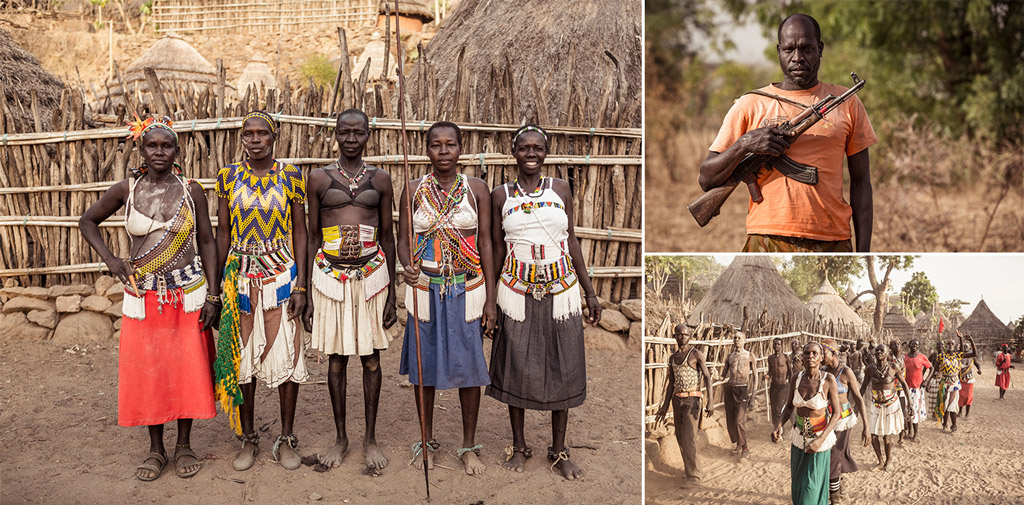

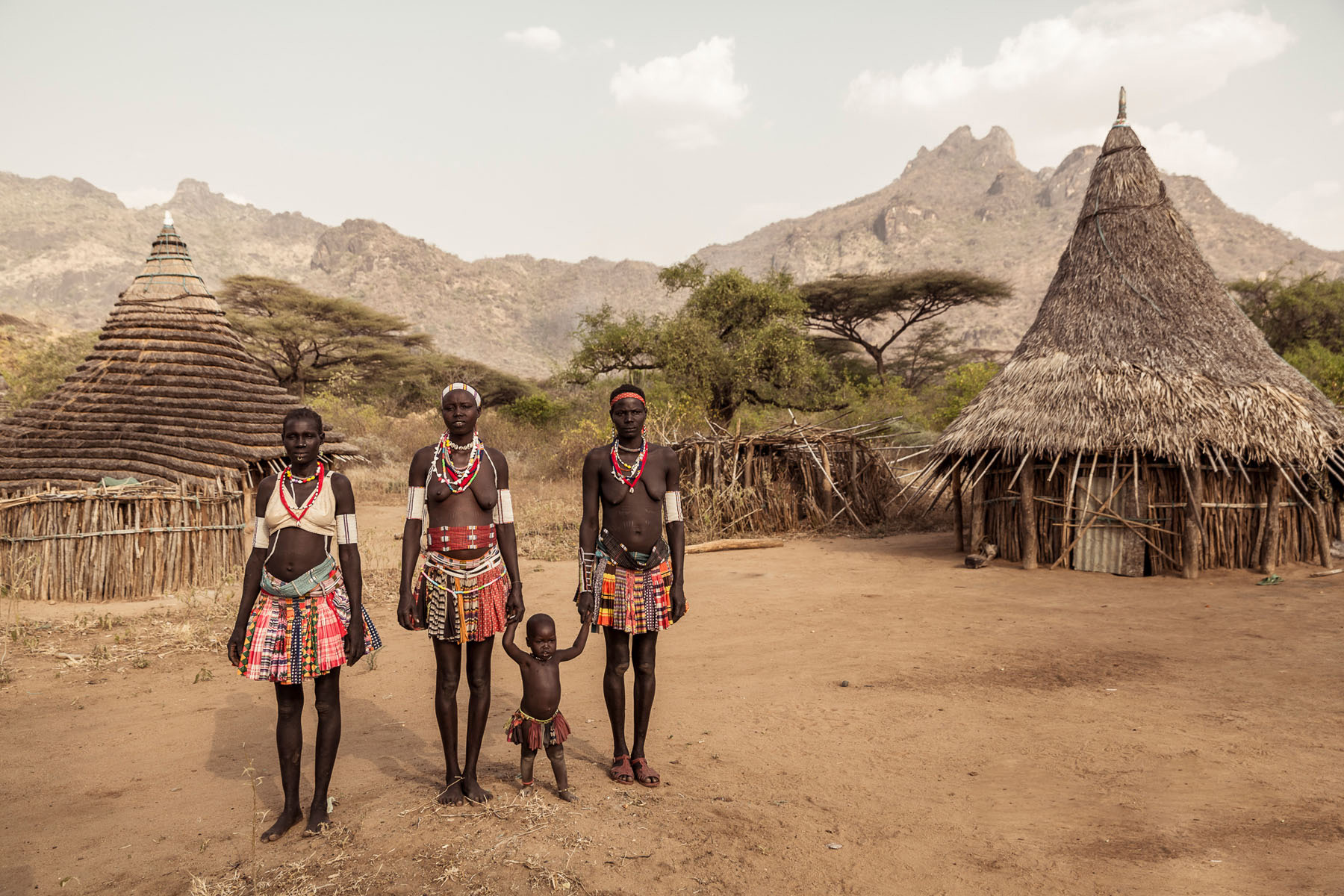
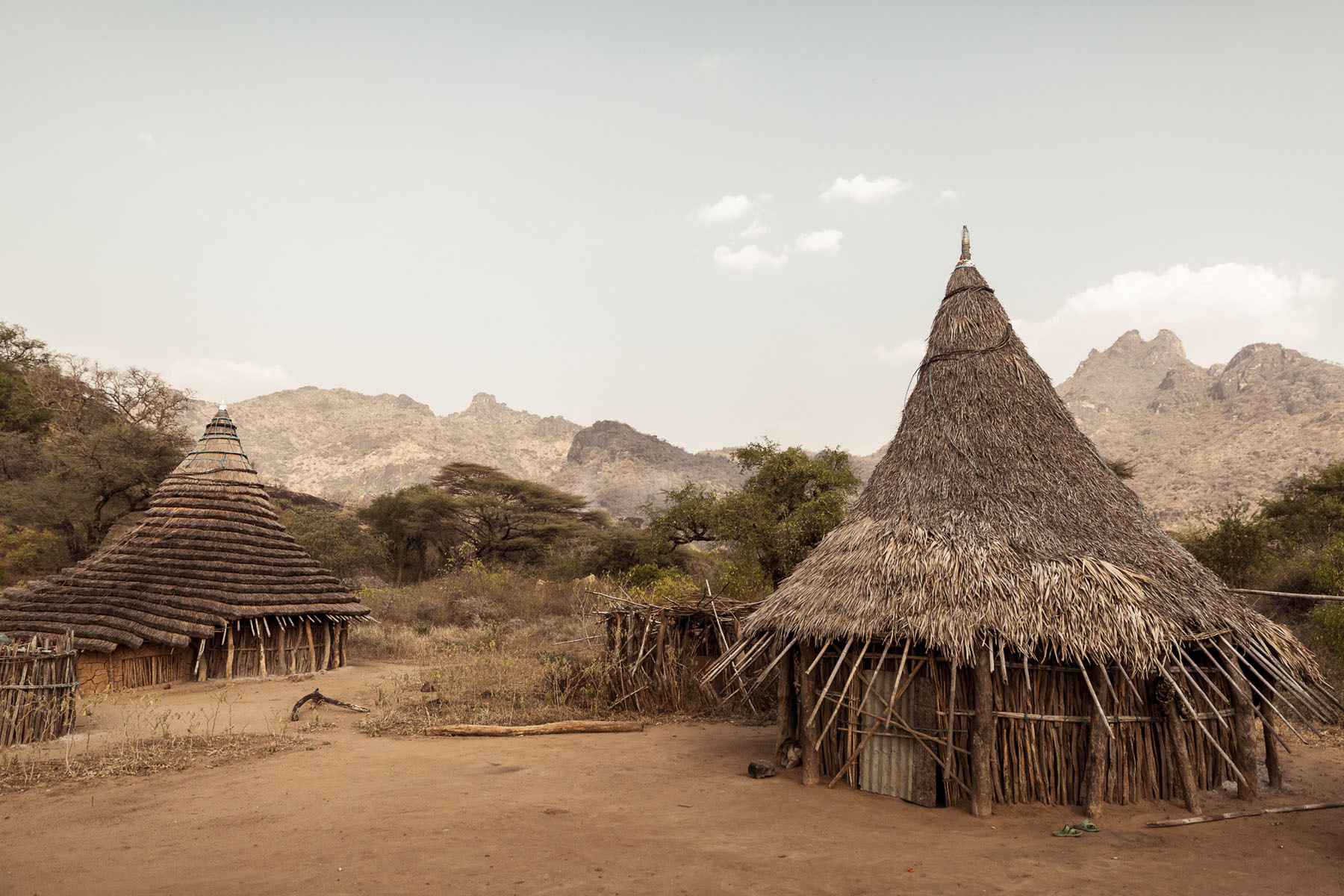

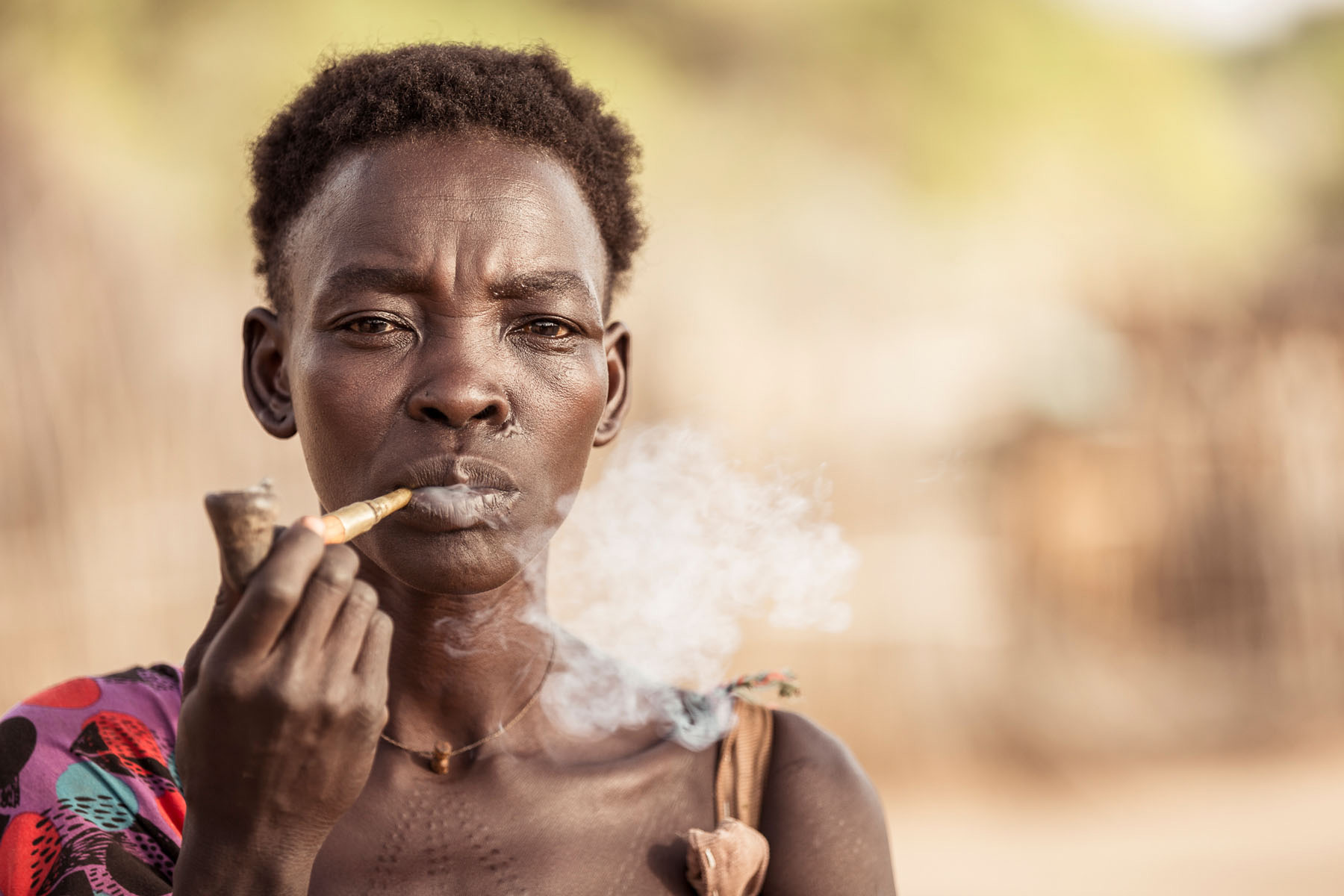
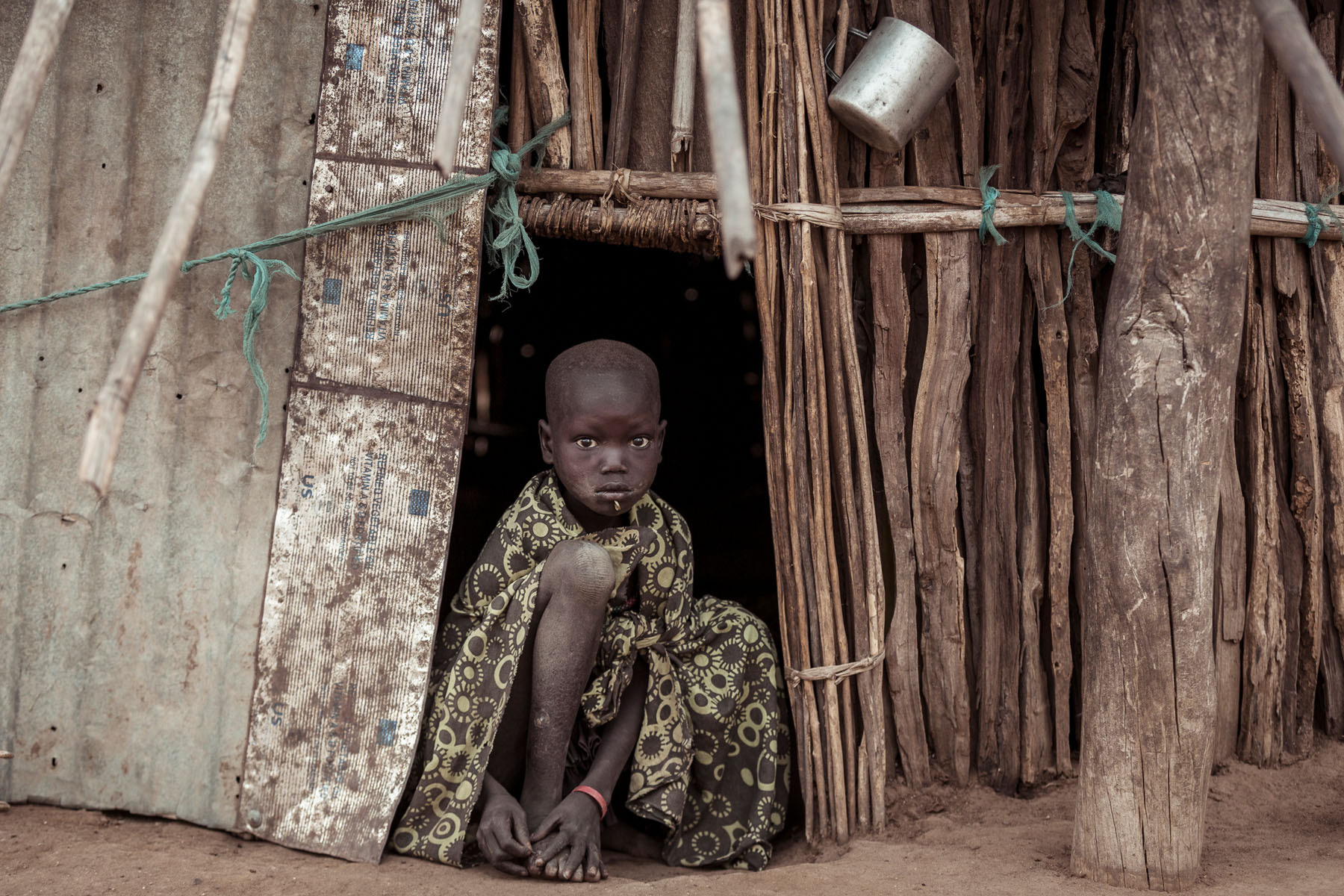
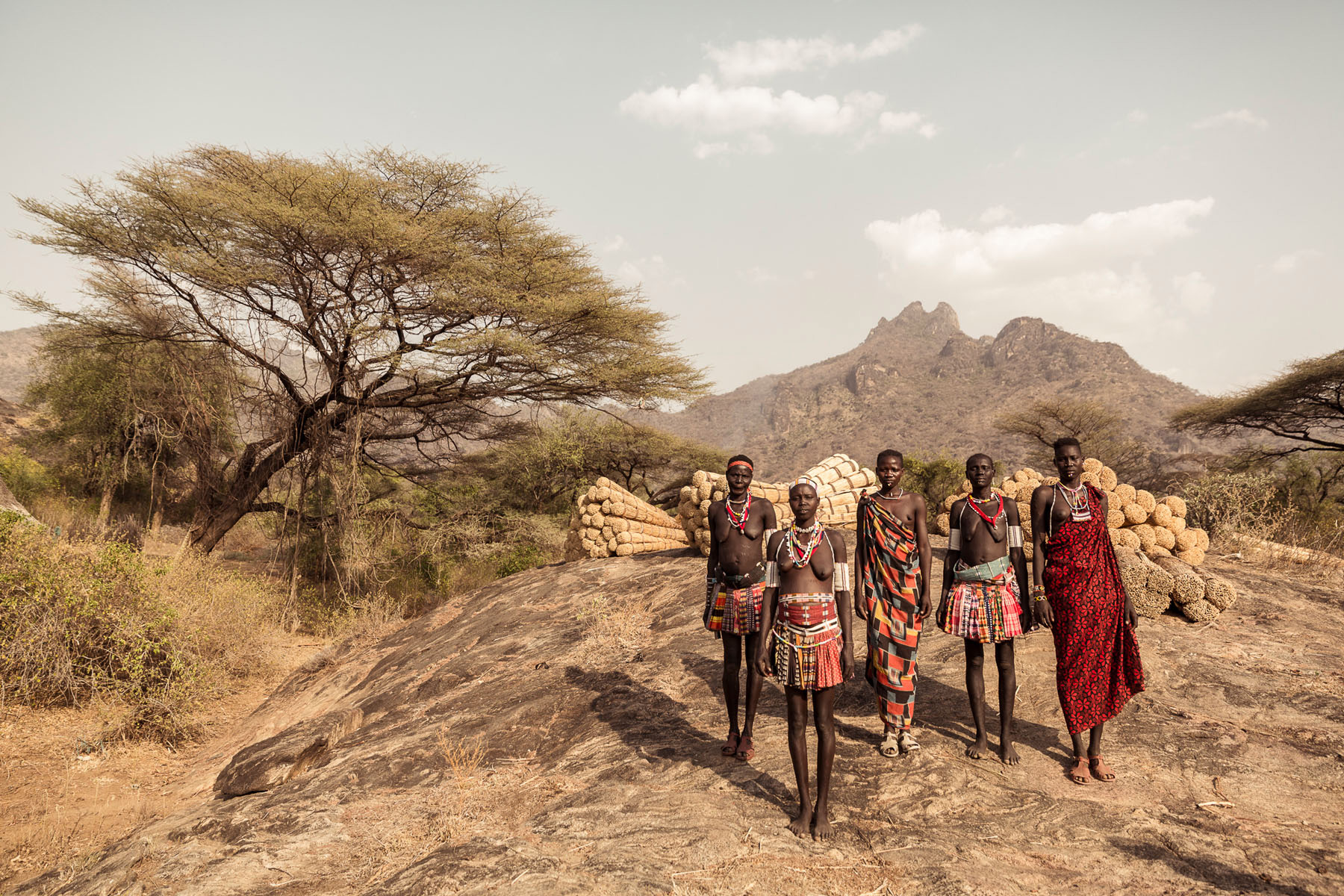
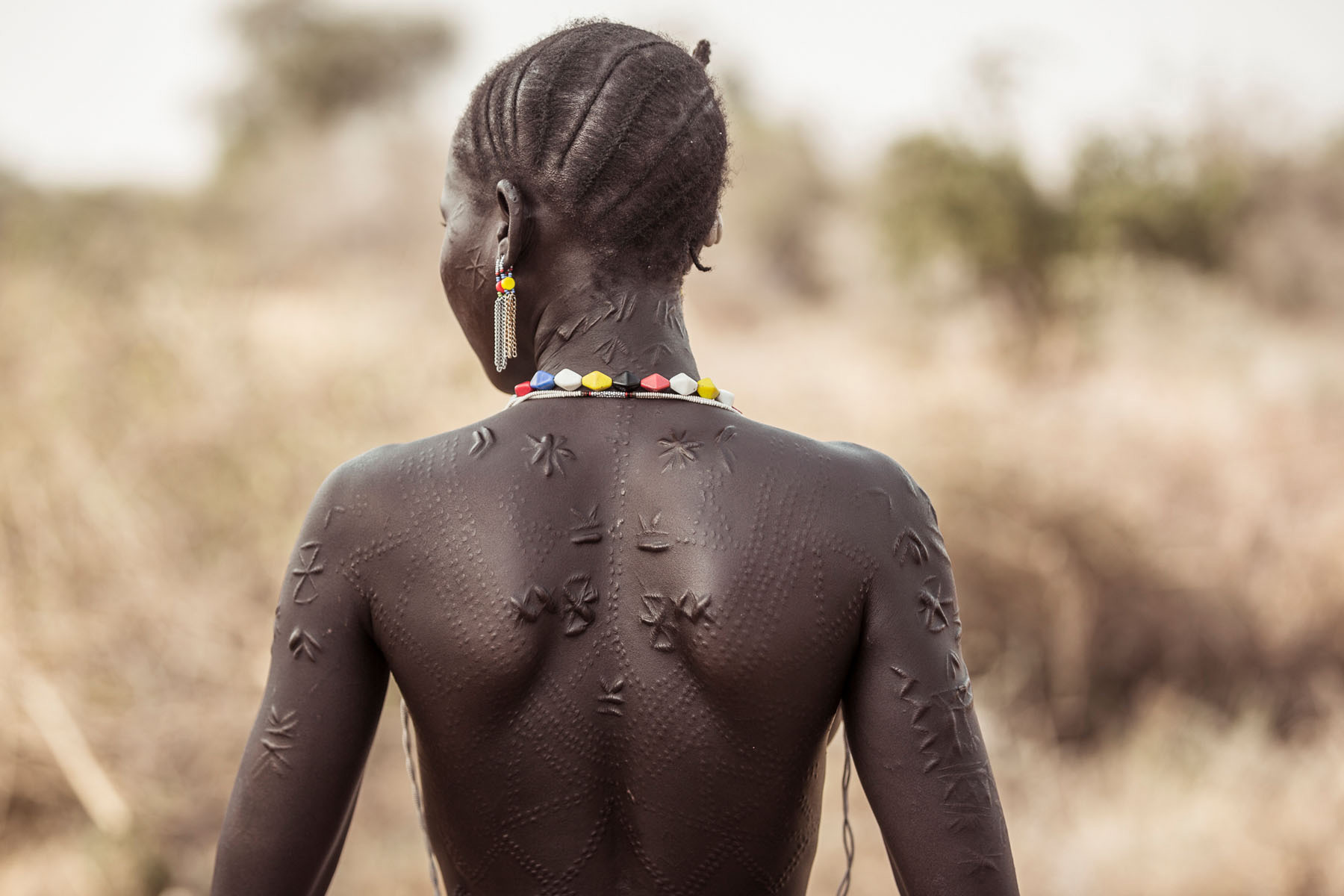
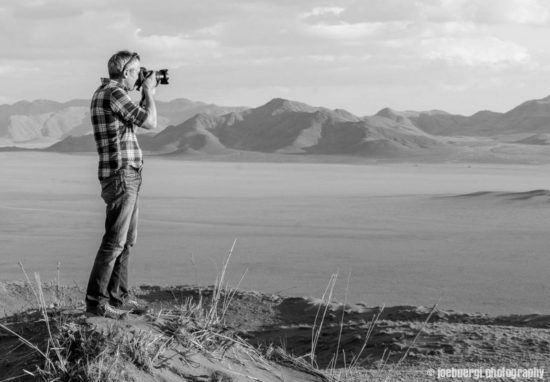 Joe Buergi is an amateur travel and music/concert photographer based in Berne, Switzerland. During the festival season, he captures many music festivals in Switzerland.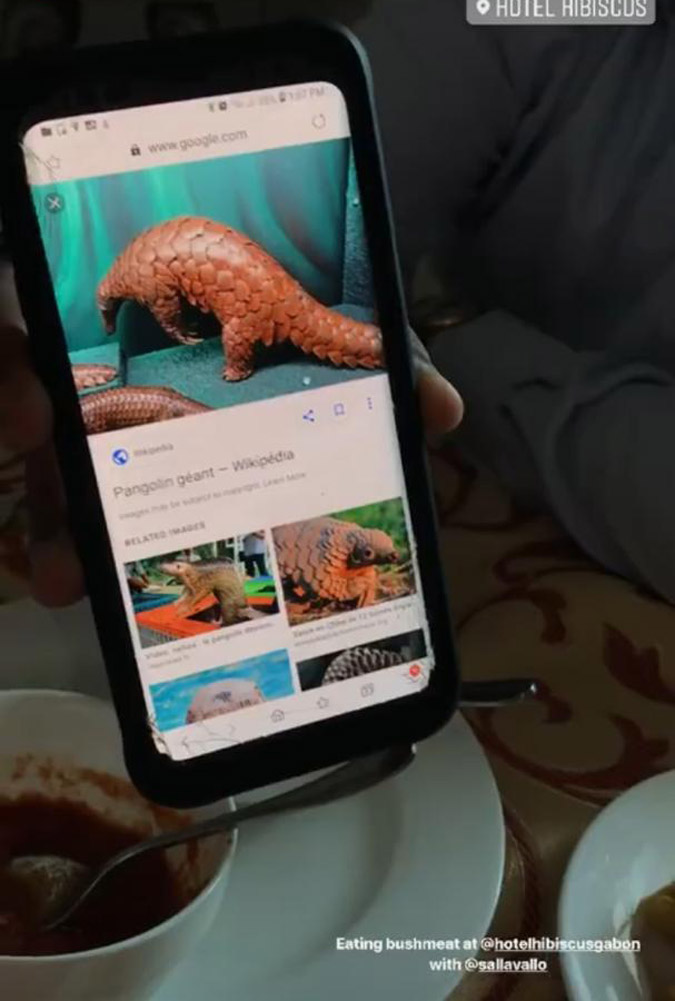
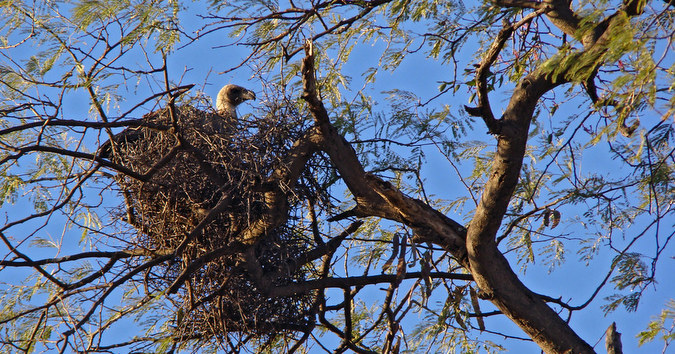
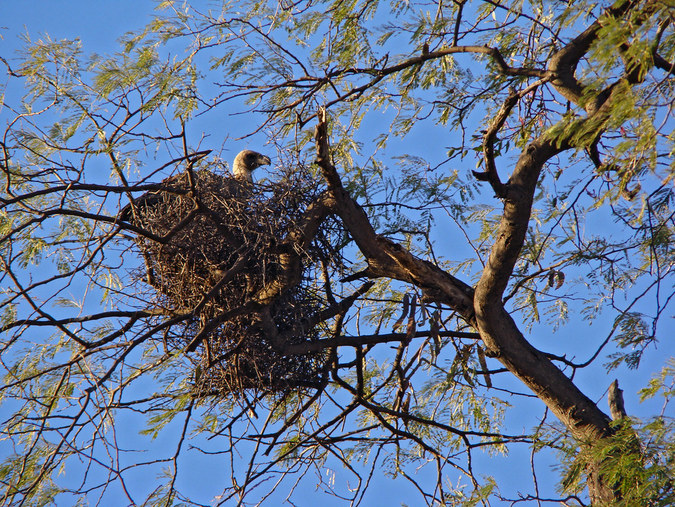
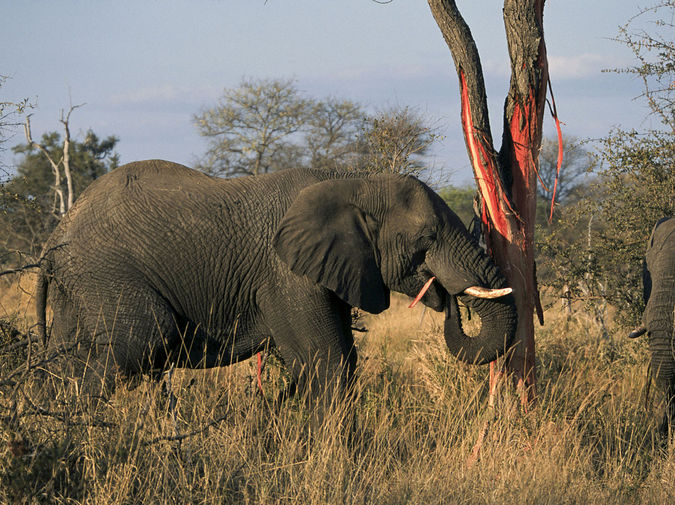
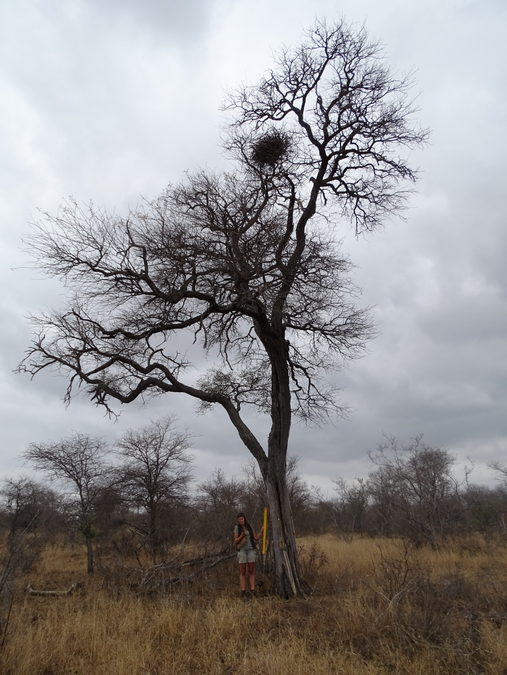
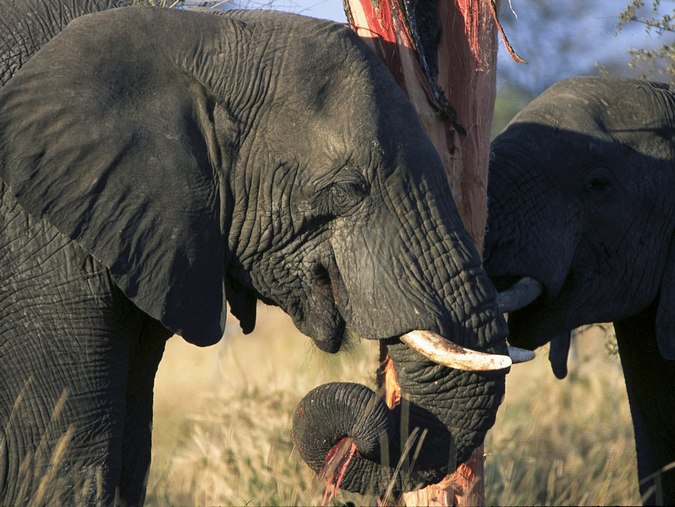
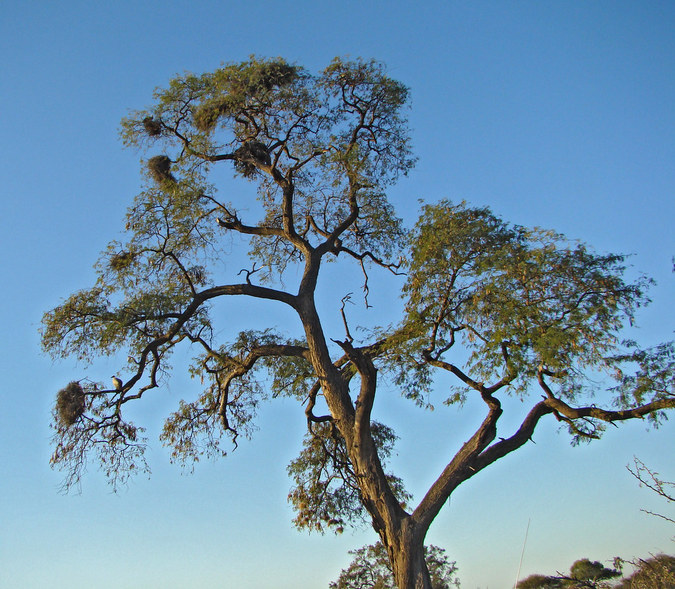
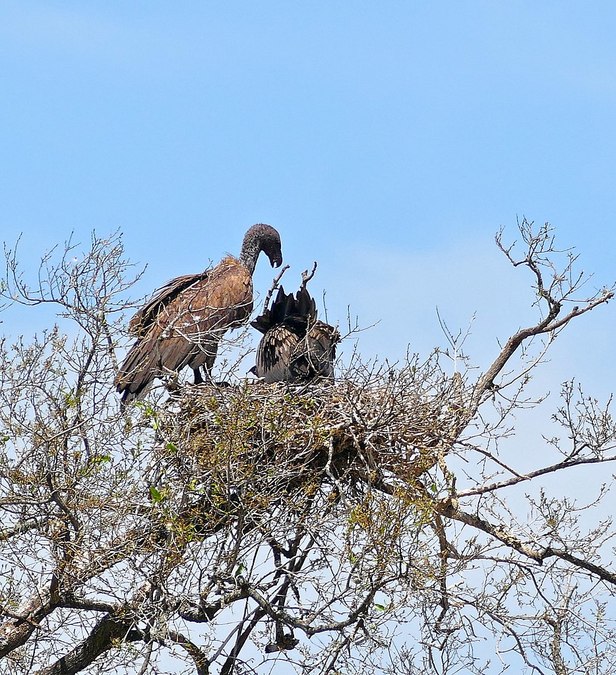
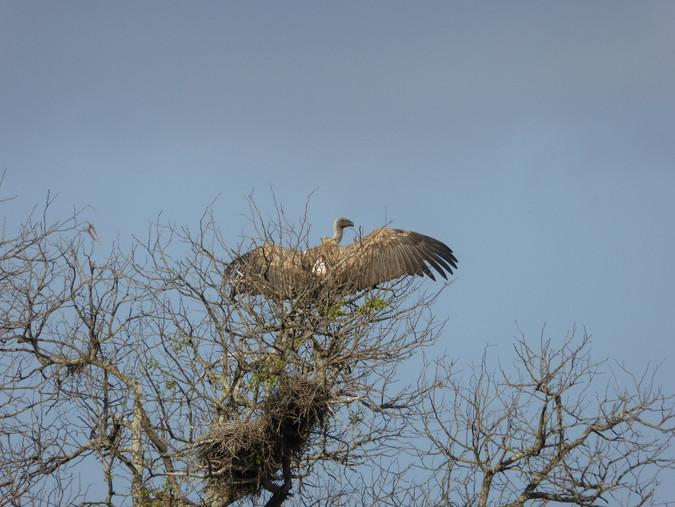
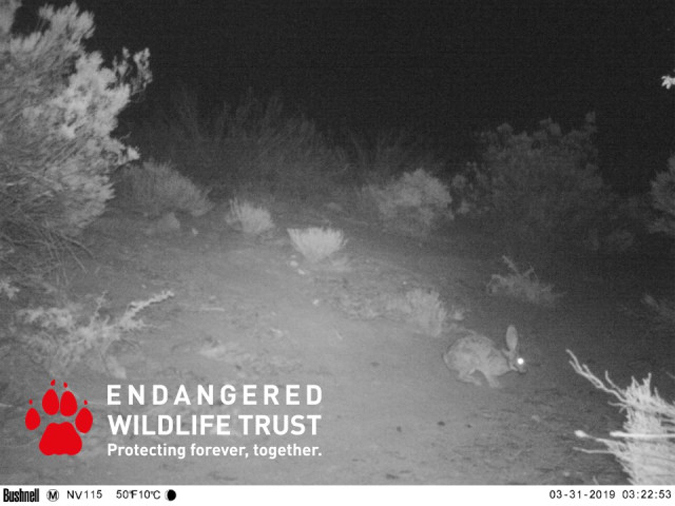
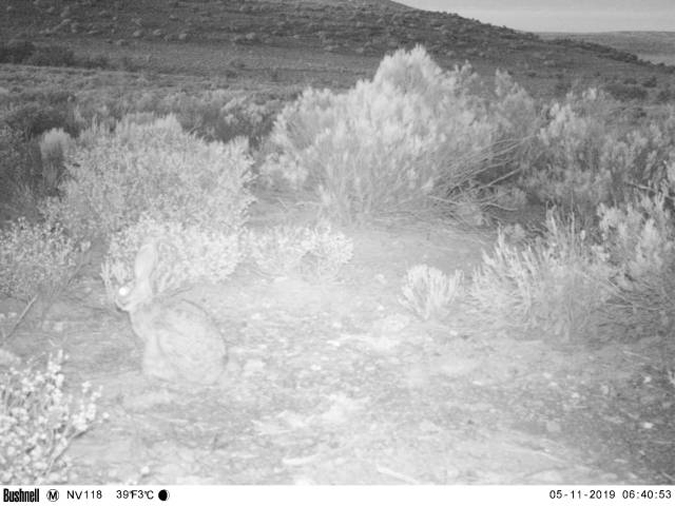
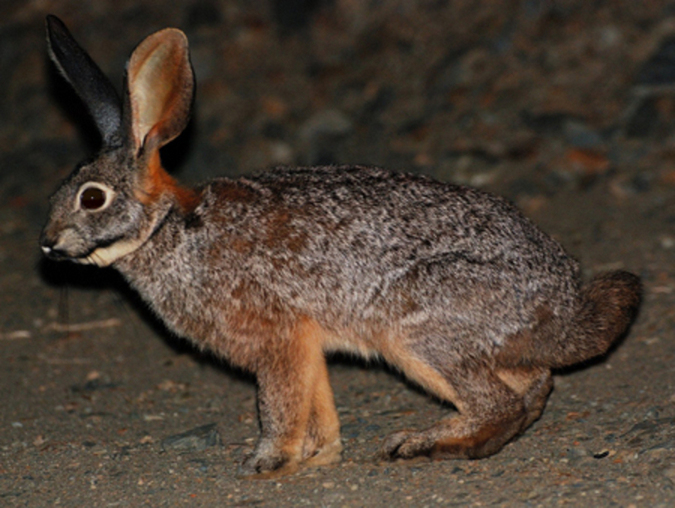
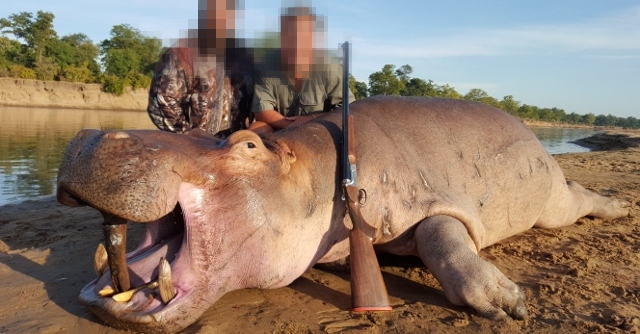
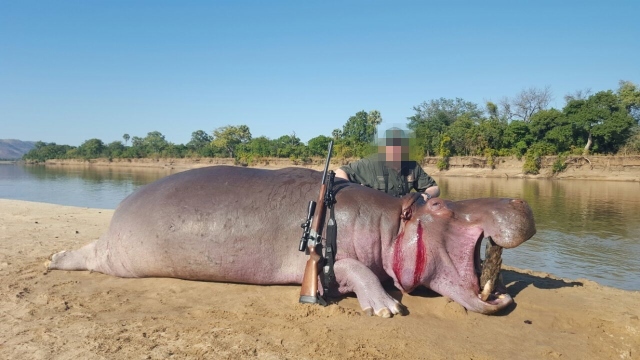
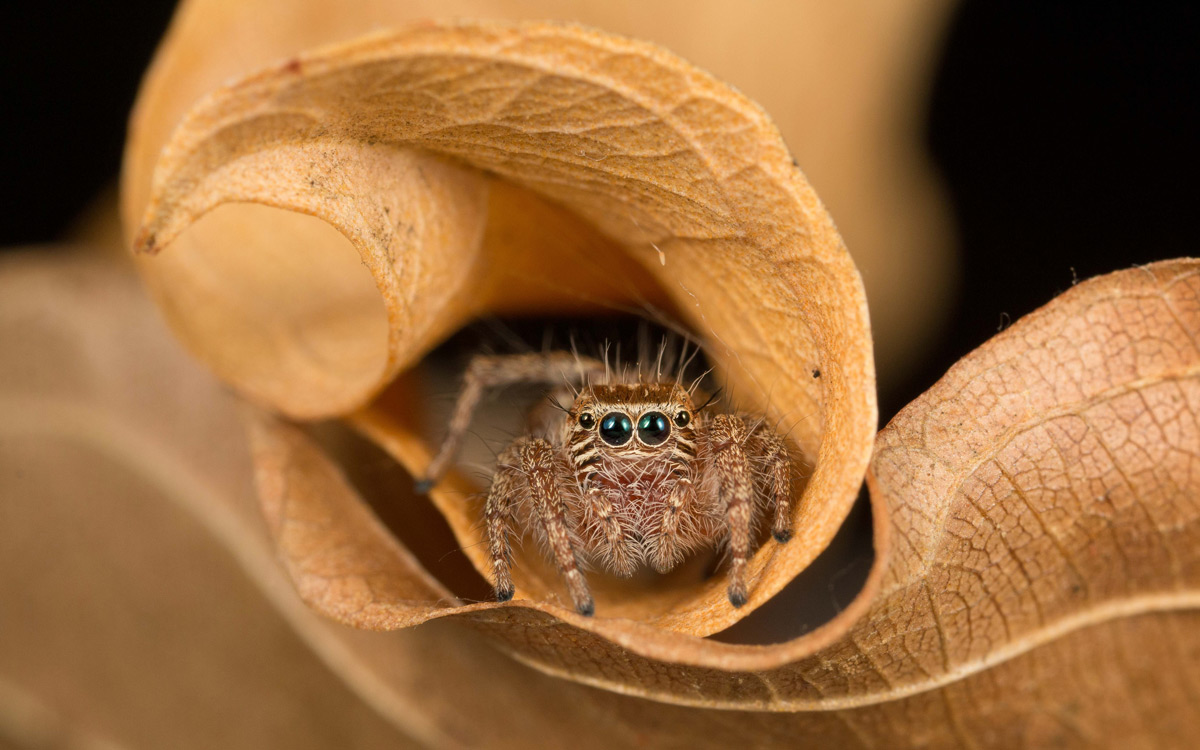
 Eraine has a great appreciation for all organisms and is an amateur photographer specialising in spiders and other invertebrates and would like to bring awareness of spiders and their worth in our world.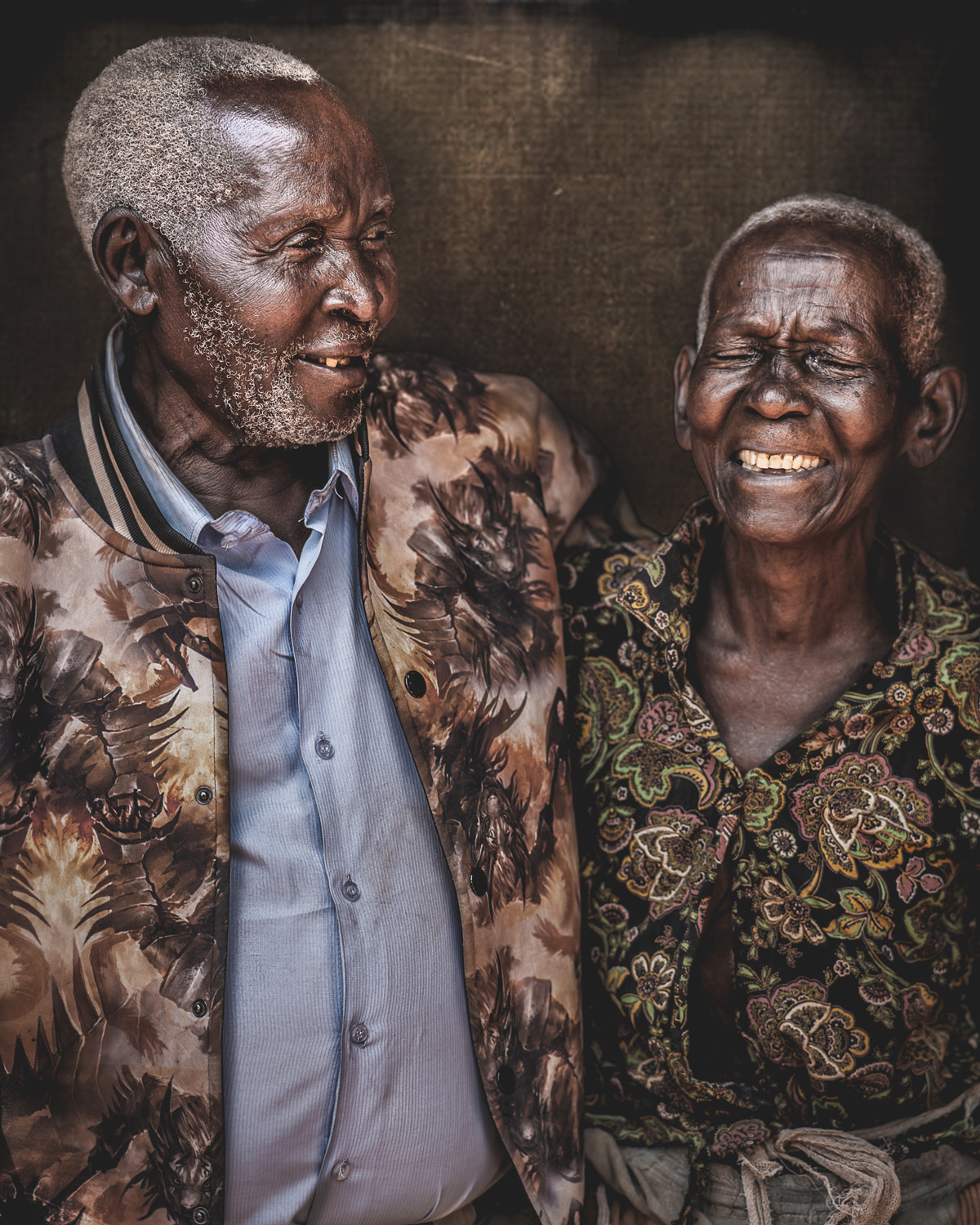
 My name is Bob Ditty and I’m a humanitarian photographer and filmmaker. I grew up in Ohio, USA and lived there most of my life. In 2014, I moved to Uganda and now currently follow my passion for photography and filmmaking. I work full time for an NGO called Healing Faith Uganda as their photographer/filmmaker as well as a freelance photographer/filmmaker in my spare time. I feel now that my calling in life is to get the story of East Africa to the world. It’s something I’m passionate about and love doing! I’m grateful that we live in a time where media can be shared very quickly and easily. With my photography, I strive not just to tell a story but to “feel” the story. I know that may sound strange to many but it’s truly how I approach my craft. I strive to wring perfection out of every photo that I take and edit. I know that’s not possible but it’s worth the effort to me.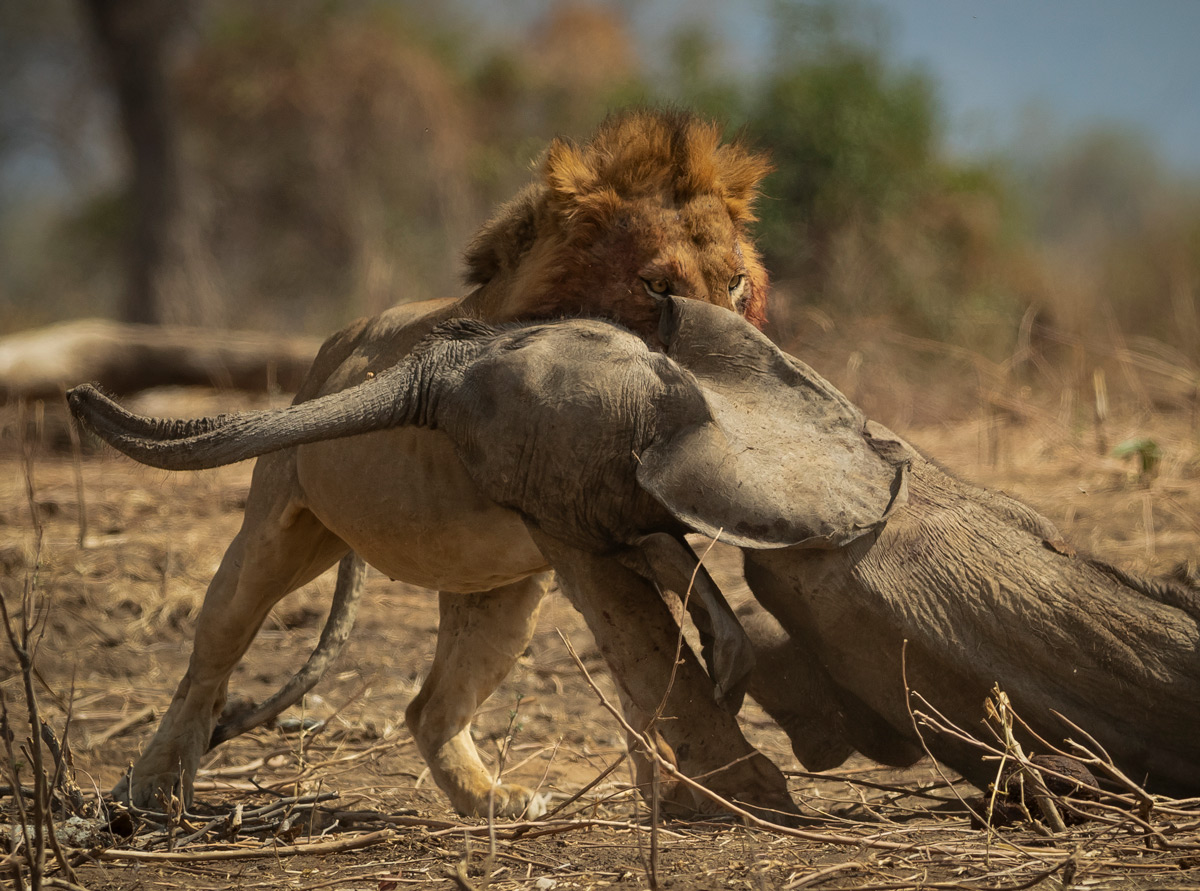
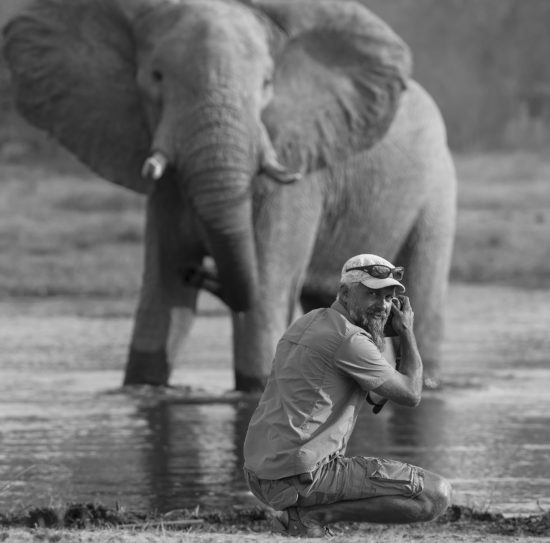 In 2008 Jens Cullmann discovered his passion for wildlife photography on a roadtrip from Germany all the way down to Africa. It became a lifestyle. The passion never left nor did he. Animals in action are his trademark and no one has more patience (as long as it’s animals) to get that one shot.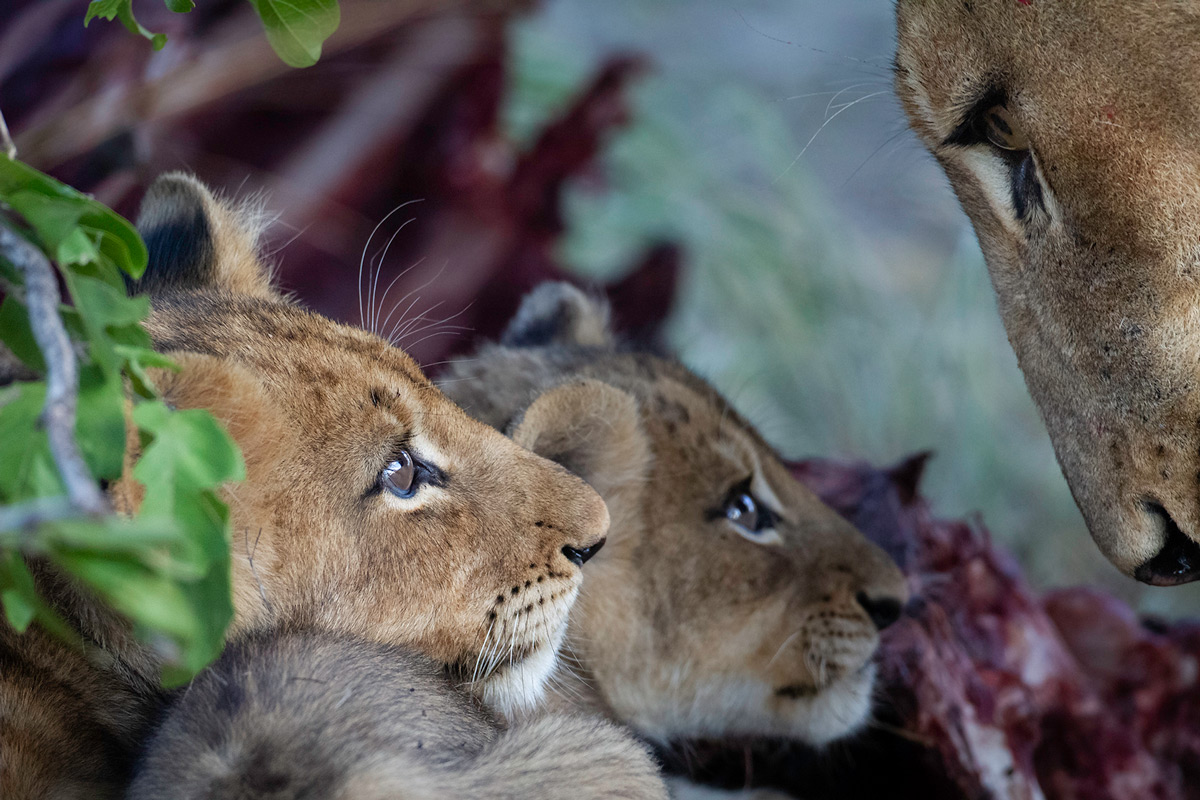
 I was born in Natal, Durban after which we moved to Alberton where I spent most of my life. I went on to study Nature Conservation at the then Technikon Pretoria and obtained a National Diploma in Nature Conservation. I currently work as a Nature Conservator in Gauteng. My interest in wildlife photography started at an early age during family trips to the Kruger National Park. I hope to dedicate more time in the future to honing my photography skills.
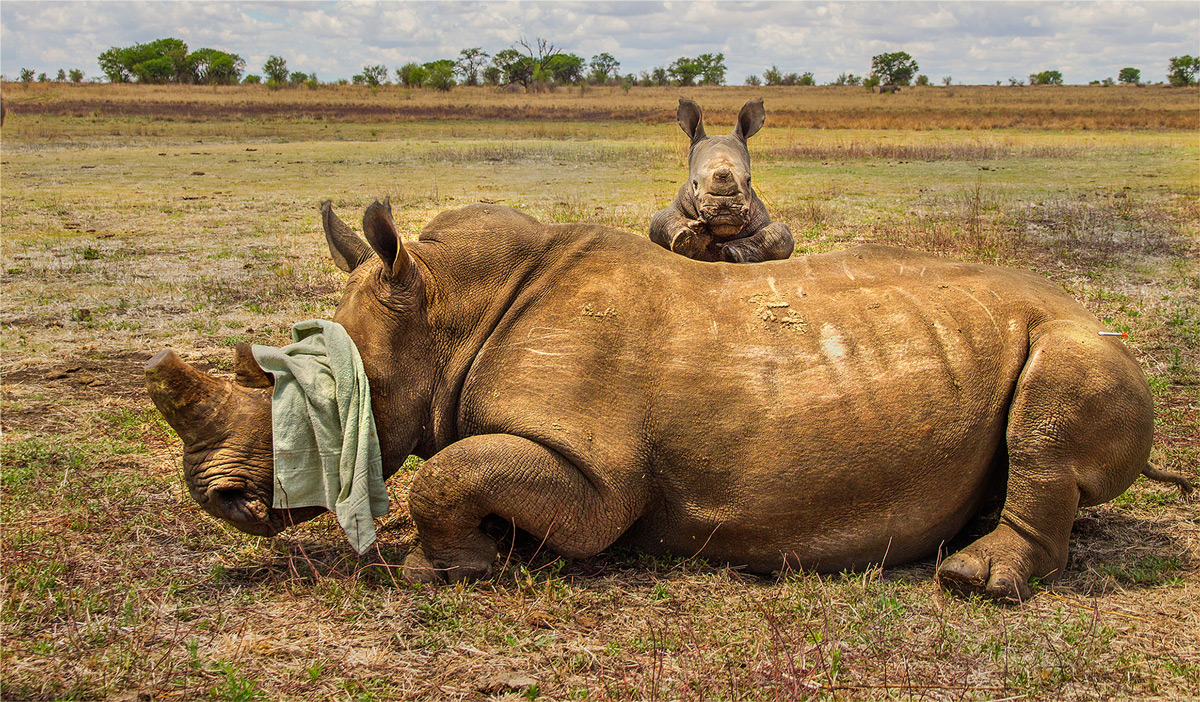
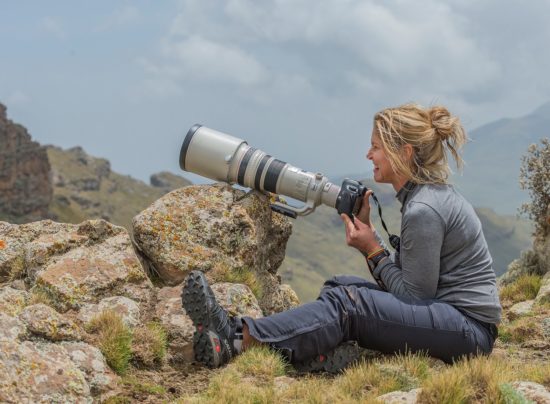 I grew up in Mtunzini, a small town in northern KwaZulu-Natal, South Africa. My father, mother and sister are skilled photographers, but it was not until about nine years ago that I became interested and asked my father to introduce me to the secret world of photography. He is still my mentor and strictest critic! I am lucky to have the opportunity to travel with my partner to distant locations over the world, trying to locate some of the most endangered species of the animal kingdom. That is where I started to realise that the ever-growing human population, modern technology and media destroy nature and that so many wonderful creatures, ancient tribes and cultures are extinct or highly endangered. I want the world to see what I see through my lens. I want to make people aware of what is happening to our world and I want to immortalise the images of creatures that our children and their children might not be privileged enough to see. I want everybody to know that their passion, skill or talent can make a difference in this world. It is all worthwhile.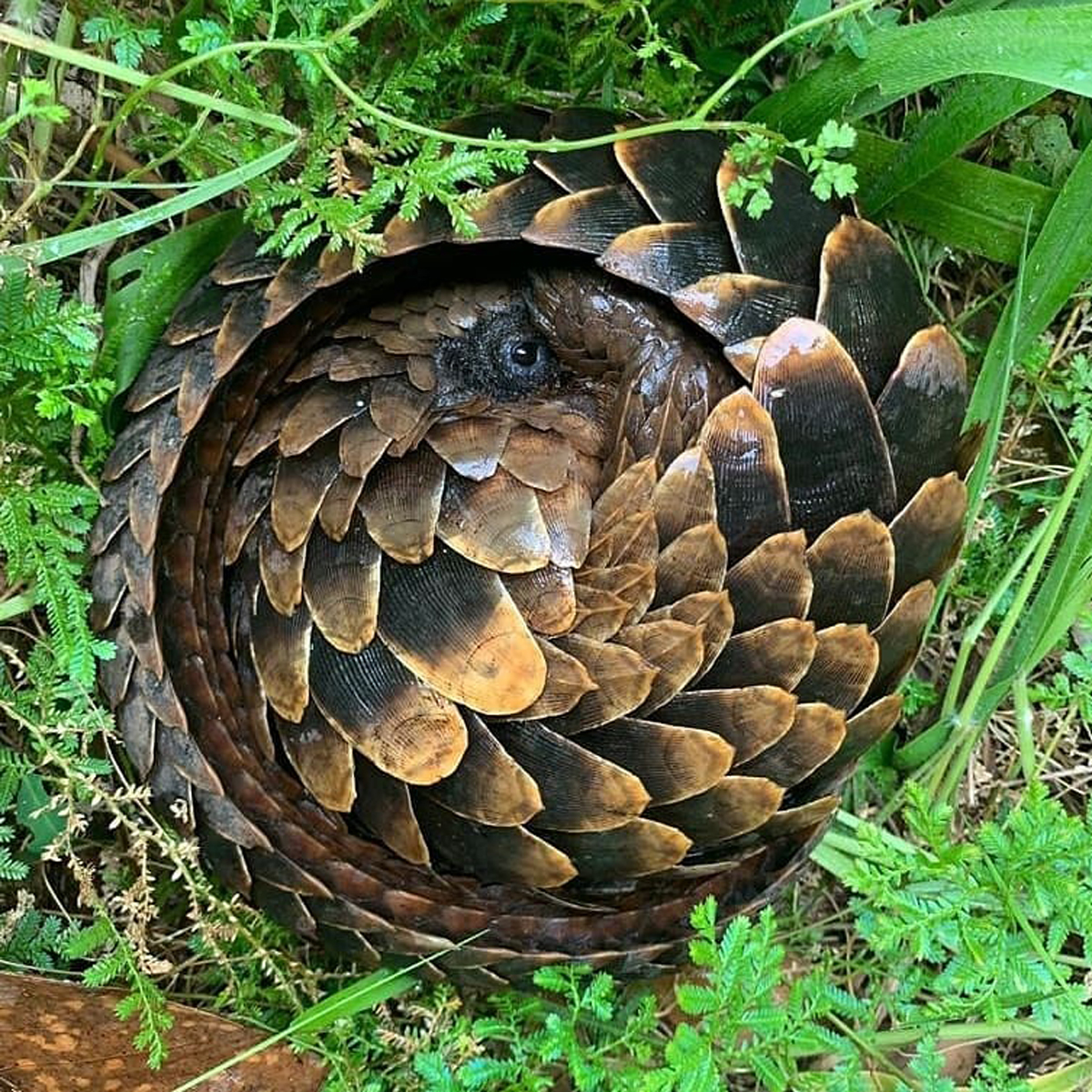
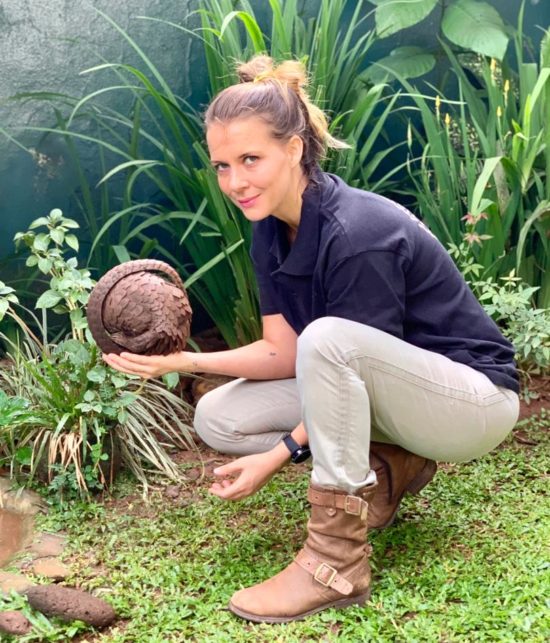 I am a 35-year-old South African living in Cameroon. I have been living in Cameroon for the last eight years. I am a keen conservationist by heart, deeply caring about all species of wildlife and the environment. The black-bellied pangolin photograph is one of the hundreds that we have rescued and released. I am grateful for the chance to share my photograph and in my opinion I already feel like I’ve won if I managed to reach just a few people, to bring awareness to an animal that is little known but terribly persecuted through poaching for their scales to Asian markets. I am proud to be part of the Tikki Hywood Foundation who are leading in coordinating the efforts in many regions of Africa to save these magical animals from extinction.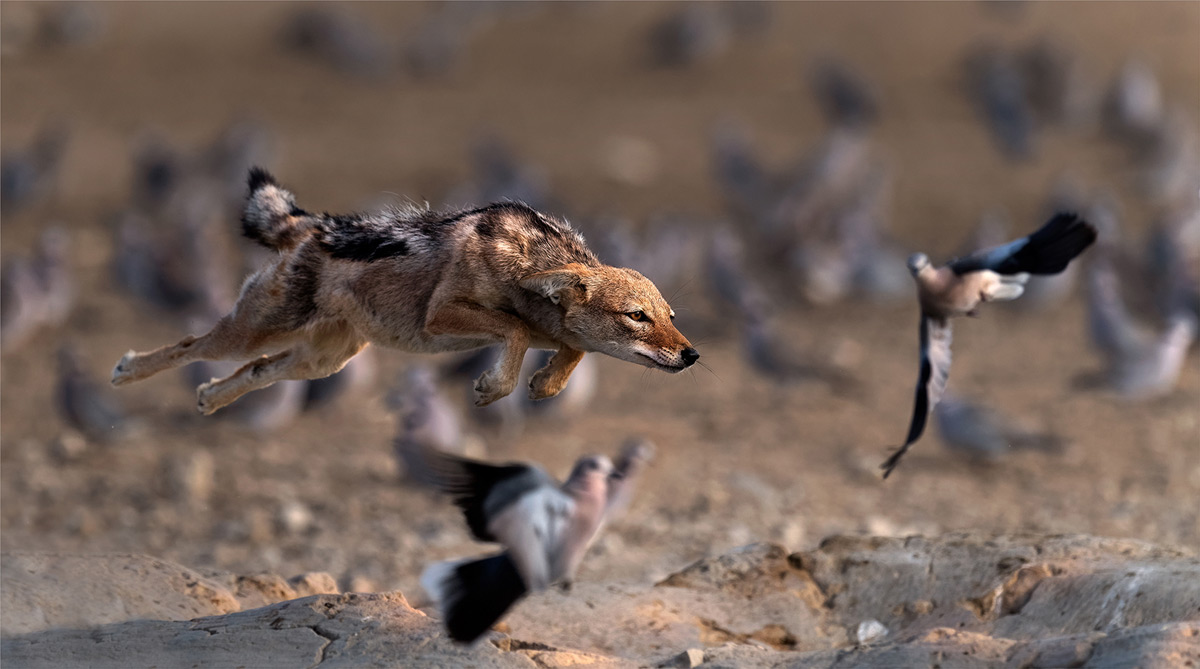
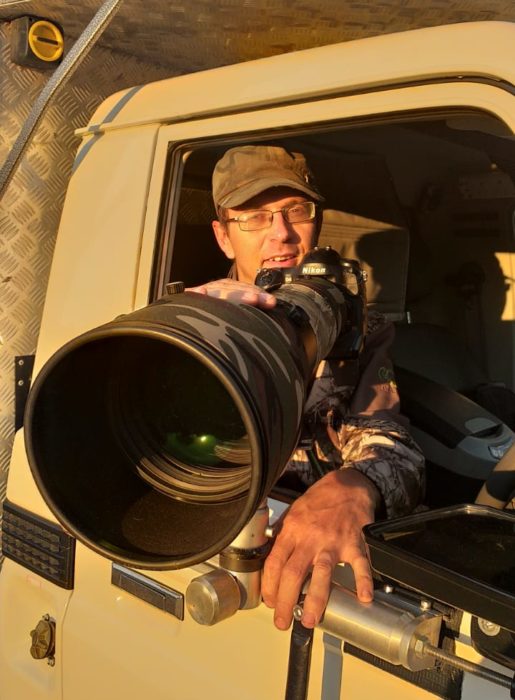 I was born in Kimberley in the Northern Cape, and currently I am the grounds manager at St Michael’s School for Girls in Bloemfontein. Ever since I was young I was always close to nature, and loved spending time camping with my wife and our trusted 4×4 camper – especially in the Kalahari. When I got married 10 years ago my wife and I started doing photography and I fell in love with it. Now I am only working to fund our next photo trip to try and capture those beautiful golden moments in the Kalahari. For the past five years I have been an active member of the Bloemfontein Camera Club. I have a passion for bird photography (or apparently anything that is flying), backlight photography and capturing the action.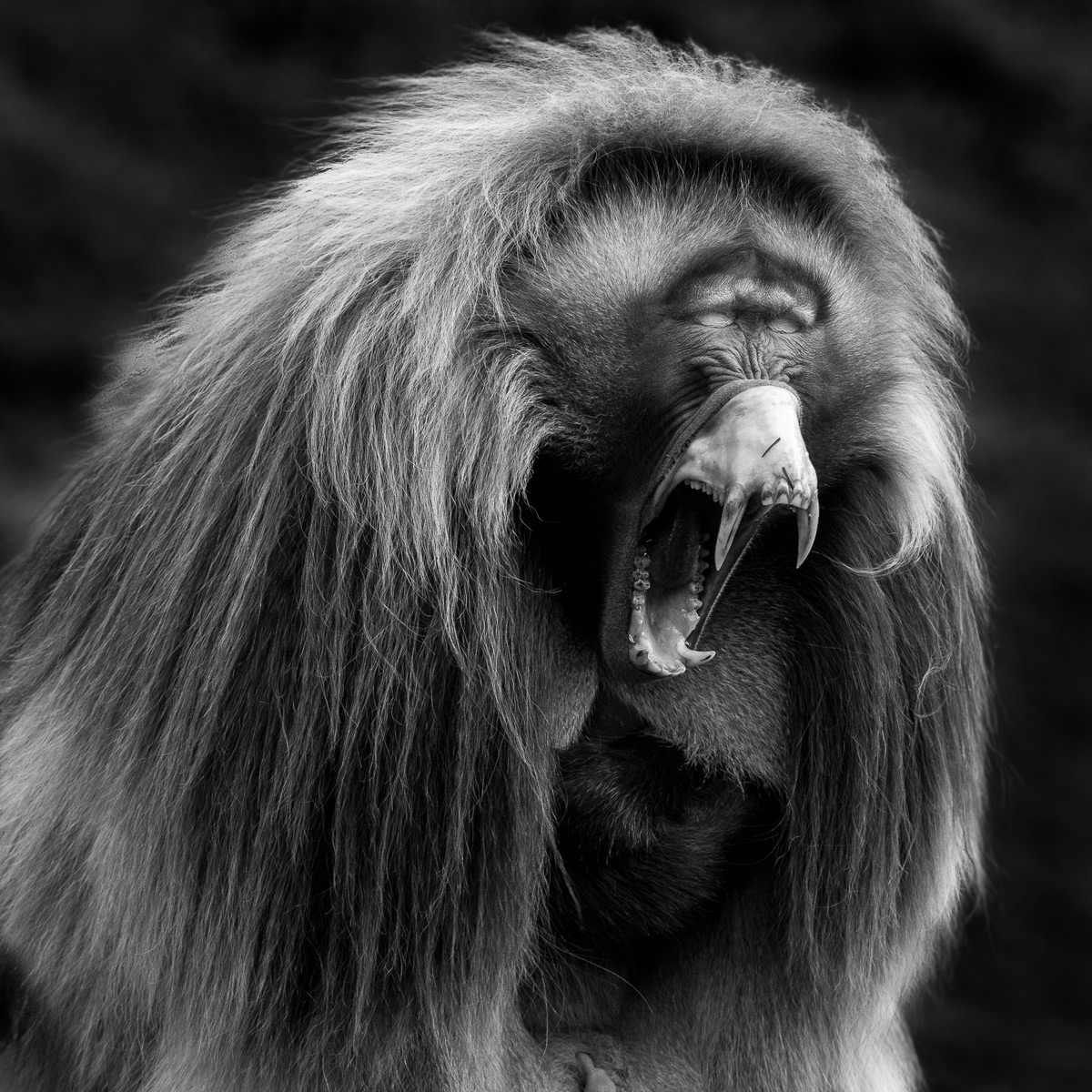
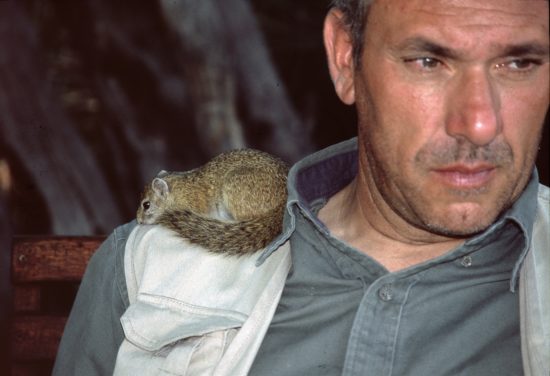 I have always been in love with Africa! As soon as my work allows it, I leave to find her, with the greatest happiness. The contact with nature and wild animals has taken an essential place in my life. In my images, I like to capture the looks, emotions and beauty of all these wonderful wild animals. I often prefer B&W, which allows me to express the character traits, the majesty of the postures, the intensity of the looks and the personality of the animal, as in the case of the human portrait, by reducing the border between humanity and animality. I exhibit my images in various photo festivals in Europe to raise public awareness of the fragility of ecosystems and the serious threats of extinction of many African species.
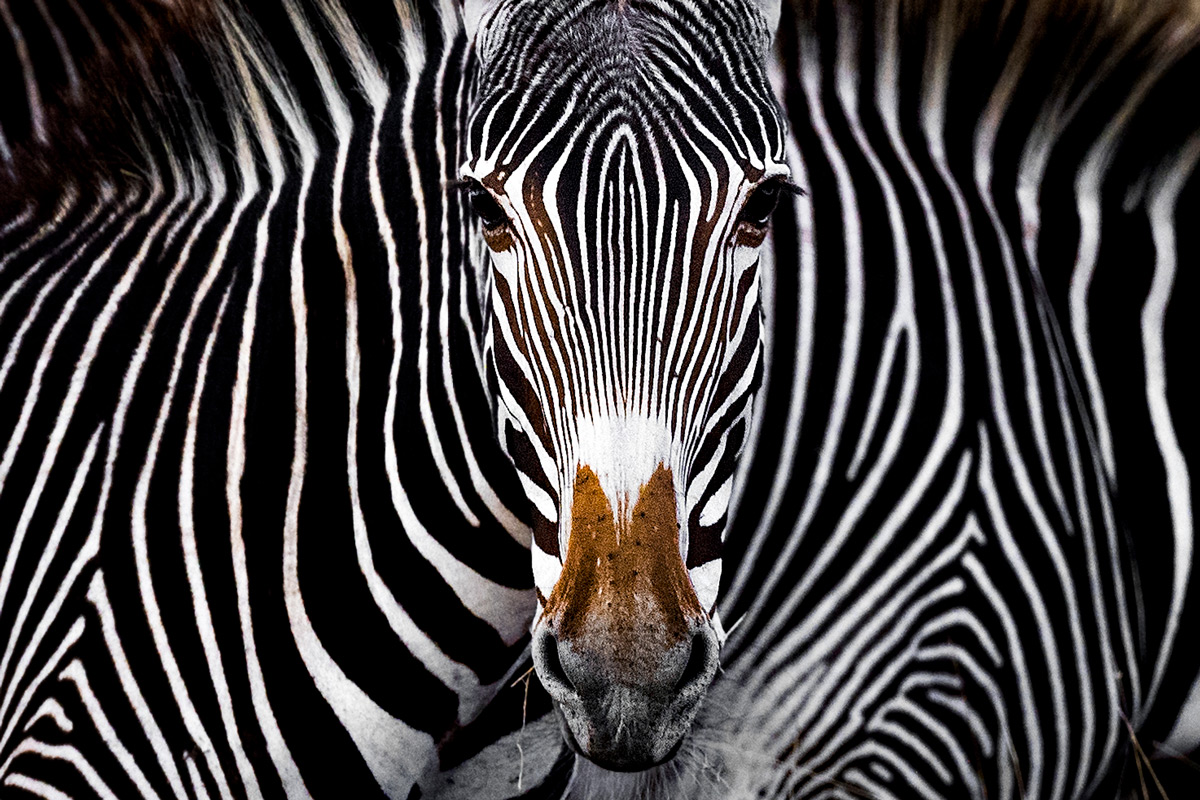
 Veterinarian, conservationist, animal lover, award winner, wildlife photographer and safari leader. Born and raised in Israel. Living and working in New York City.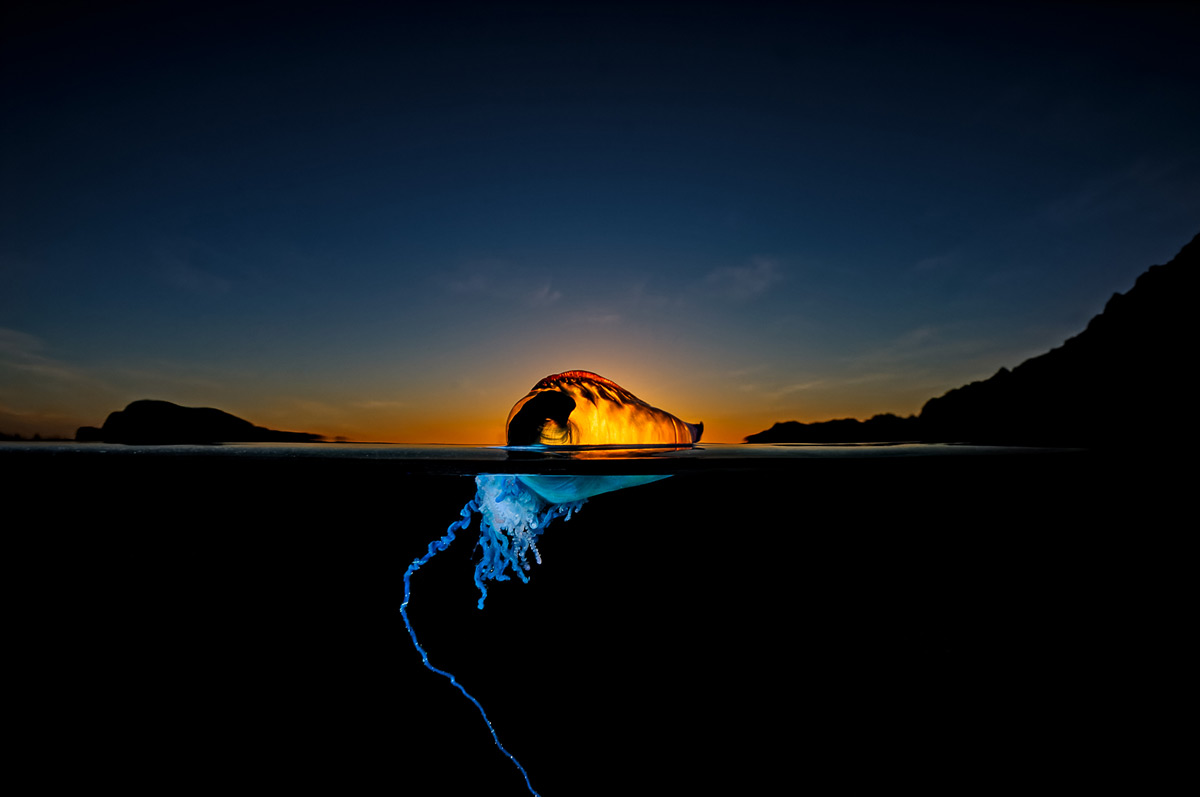
 The manner in which artists worked across multi-disciplines during the Renaissance period has been a main motivational factor in the career of the multi-talented Geo Cloete. It was whilst studying architecture at the Nelson Mandela Bay University, that he got to learn this guiding principle. Since successfully completing his studies, Geo has been pursuing his dream. As a lifelong waterman and ocean lover, sharing the awe and beauty of the underwater world is a primary focus of his photographic projects. Geo strongly believes in the notion that we only love that which we know and that we only protect that which we love. It is therefore of cardinal importance to him to share the majestic beauty of the ocean, not only with fellow ocean-lovers but with humans from all walks of life. The ocean plays a pivotal role in the survival of this planet and therefore the wellbeing of it and its creatures directly impacts all of our lives.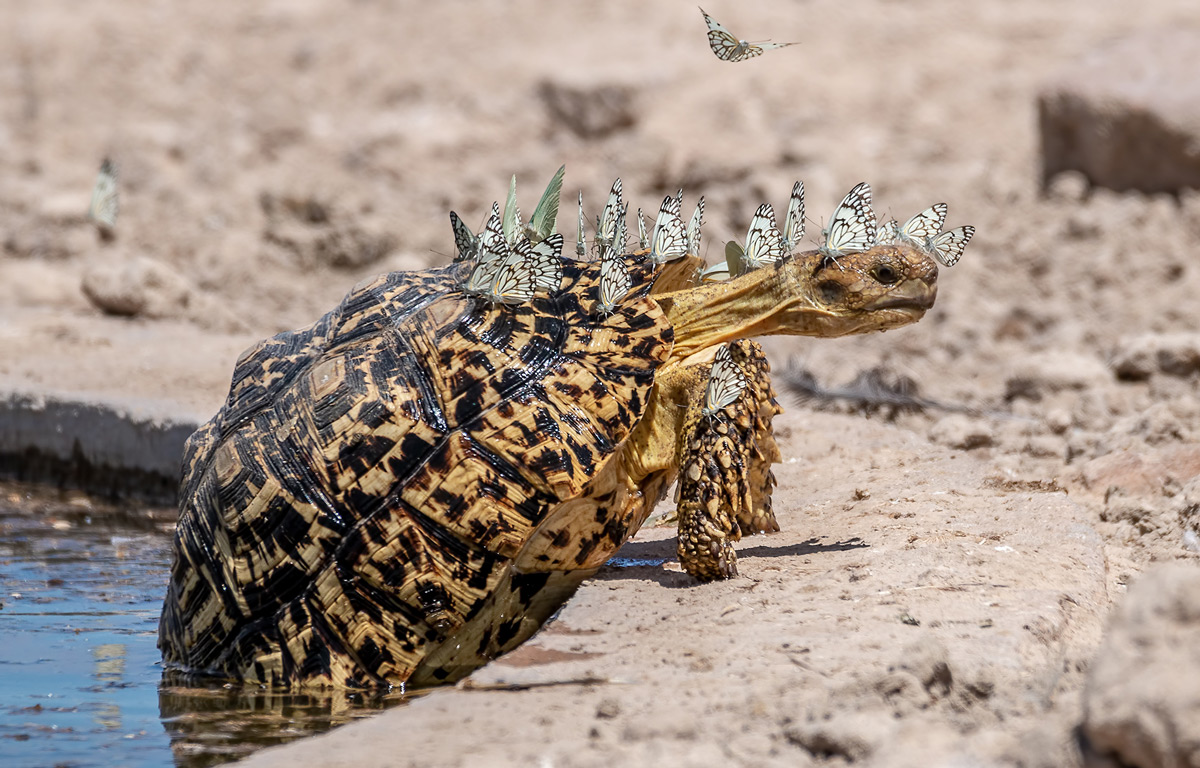
 I live in Warsaw, Poland, working as an analyst, spending most of my time in the office, but I’m also a keen nature enthusiast and wildlife photographer, so I always try to spend my free time as far from the big city as possible. Six years ago I visited southern Africa for the first time, and quickly fell in love in this part of the world. Africa became my passion – I enjoy self-driving, camping and being in the African wilderness as much as I enjoy photography. I have already travelled South Africa, Namibia, Botswana, Zimbabwe, Zambia, Madagascar and can’t wait to come back for more.