

Speak with a safari expert

phone icon

Guest reviews

5 star icon
Safari experts & storytellers. Since 1991
Book a call with a safari expert Book a call
Guest reviews Client reviews
×
SEARCH OUR STORIES
SEARCH OUR SAFARIS

Africa Through My Eyes

Dr Vikram Ghanekar’s journey into the world of wildlife photography began almost a decade ago. His first venture into Africa took place in 2008, and he immediately learned a fundamental reality: you may have the best equipment, but you need to know how to use it properly.

Needless to say, after a few workshops and learning from Big Cat Diary presenters, Jonathan Scott and Jackson Looseiya, he has proved to be a highly-talented photographer. Read about his mobile safari experiences below, and enjoy his own exquisite photographs that are a testament to his phenomenal ability behind the lens.

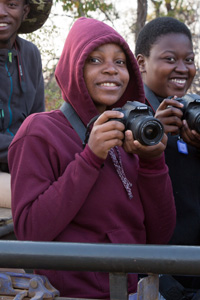
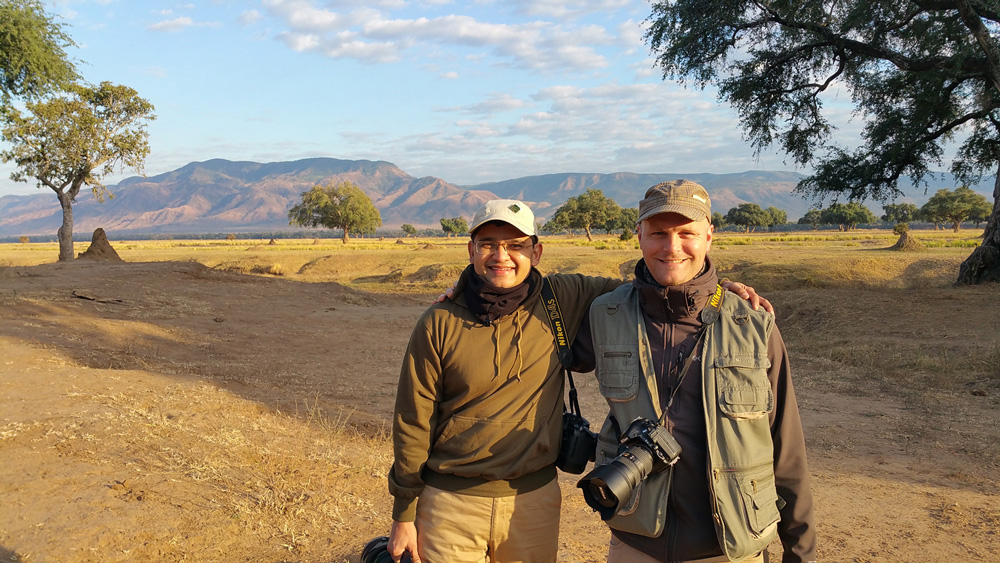
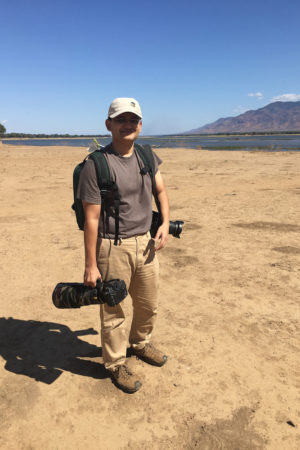
Vikram Ghanekar and Morkel Erasmus
© Vikram Ghanekar

“Safari is one adventure where you meet like-minded people from across the world and forge friendships that last a lifetime. This photo was taken in Mana Pools National Park, Zimbabwe with my friend and ace photographer Morkel Erasmus.

The magnificent Maasai Mara

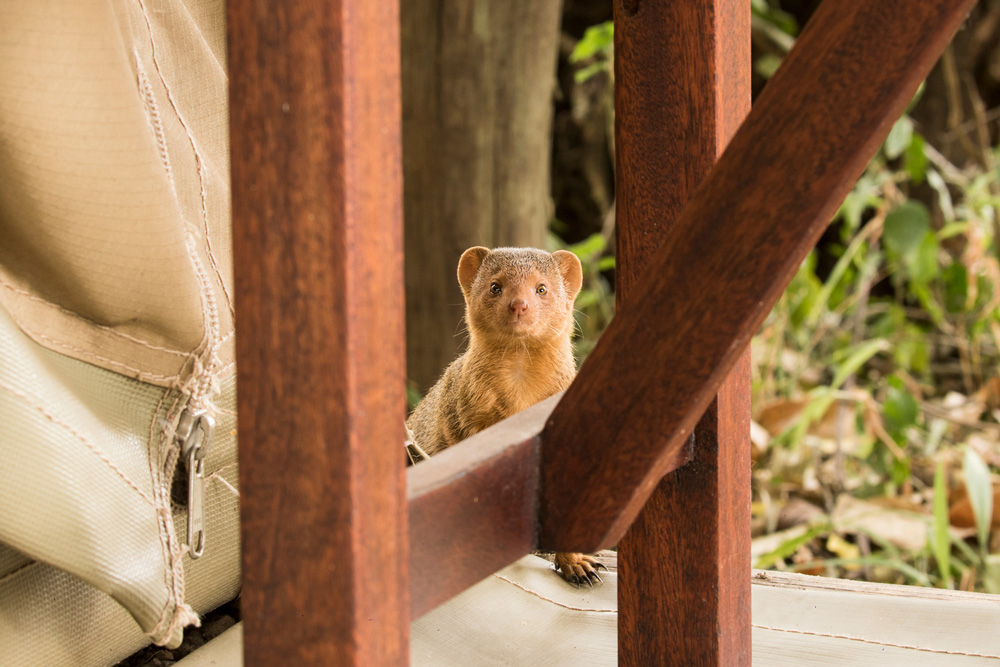
Close up photo of a dwarf mongoose
© Vikram Ghanekar

“While on safari in the Maasai Mara National Reserve, Kenya, I was sitting on the ground just outside my tent on the banks of the Talek River. It was mid-afternoon, and everything was tranquil. I was taking in the view when I heard a rustling noise behind me. As I turned, a tiny head popped up from behind my camp chair. A dwarf mongoose! The mongoose was probably equally surprised to find me sitting there. But it was also curious and kept staring at me with wide eyes. Fortunately, my camera was lying close by, and I could fire off a few frames before it decided to join its mates scurrying around in the surrounding bushes.

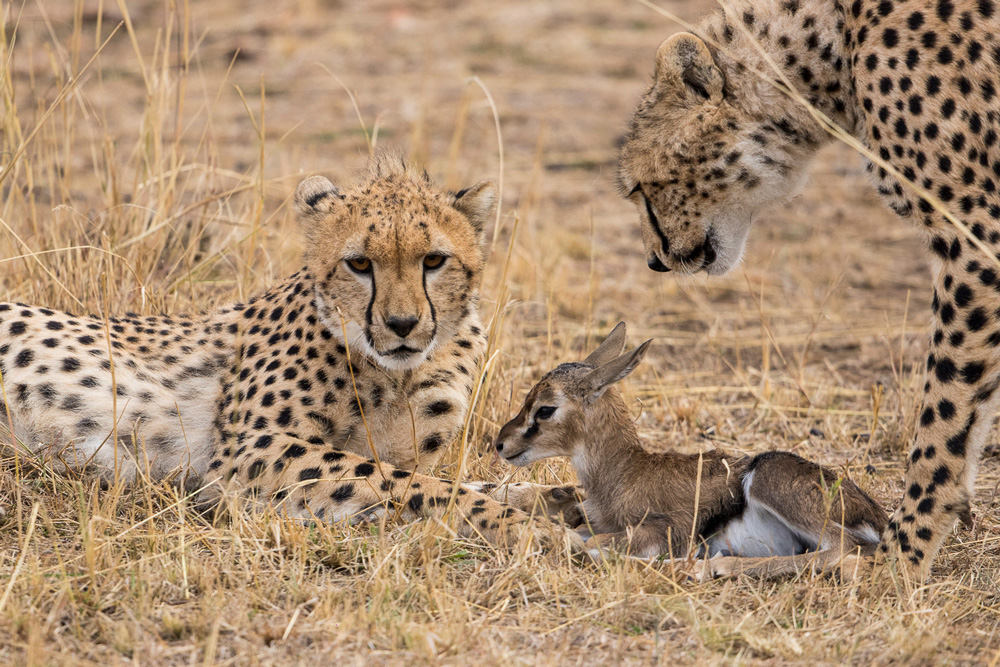
Two cheetahs and a Thomson’s gazelle fawn
© Vikram Ghanekar

“On one occasion, while out on a drive, we came across Malaika, a famous cheetah mother, along with her three cubs. The cubs were playing with each other and enjoying a game of rough and tumble. Suddenly, they froze, locking their gaze on some movement in the distance. Before we could realise what was happening, the cubs were off in a flash. In a few brief moments, they had caught a very young Thomson’s gazelle fawn. The fawn had been hiding in tall grass, but something had disturbed it, and its movement had drawn attention of the wrong kind.

“The cheetah cubs didn’t kill it immediately, and while the fawn kept trying to run away, the cheetahs took turns to bring it down. This went on for a while under the watchful eyes of their mother. It was hard to look at, but it was nature at work. Finally one of the cheetah cubs delivered the death blow to the now battered fawn. End of innocence, in the literal sense for the innocent young fawn, and end of innocence for the young cheetahs as they turned into adults, capable of killing on their own.

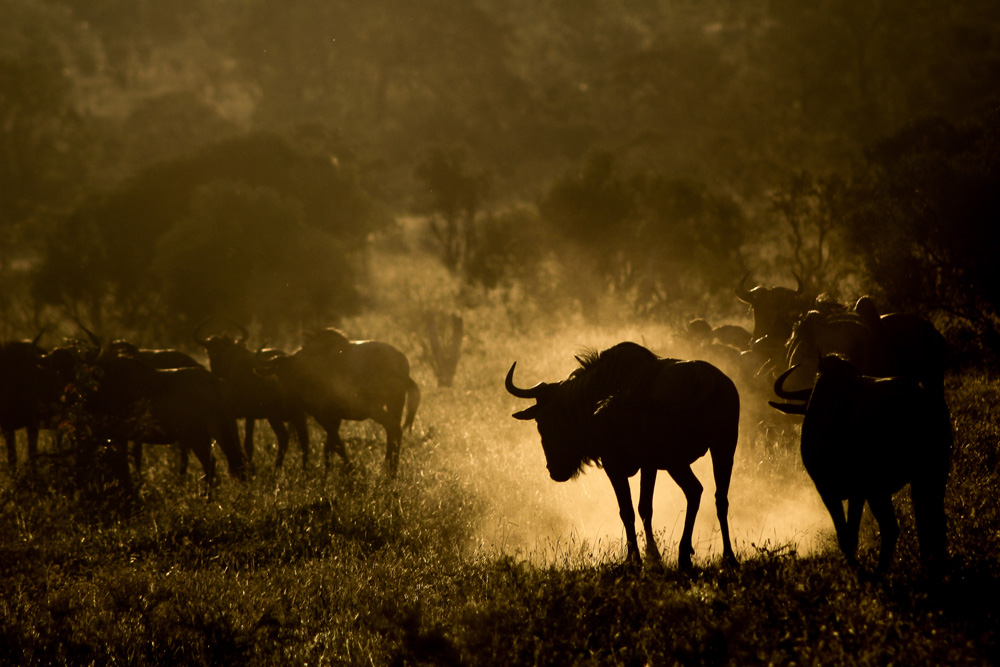
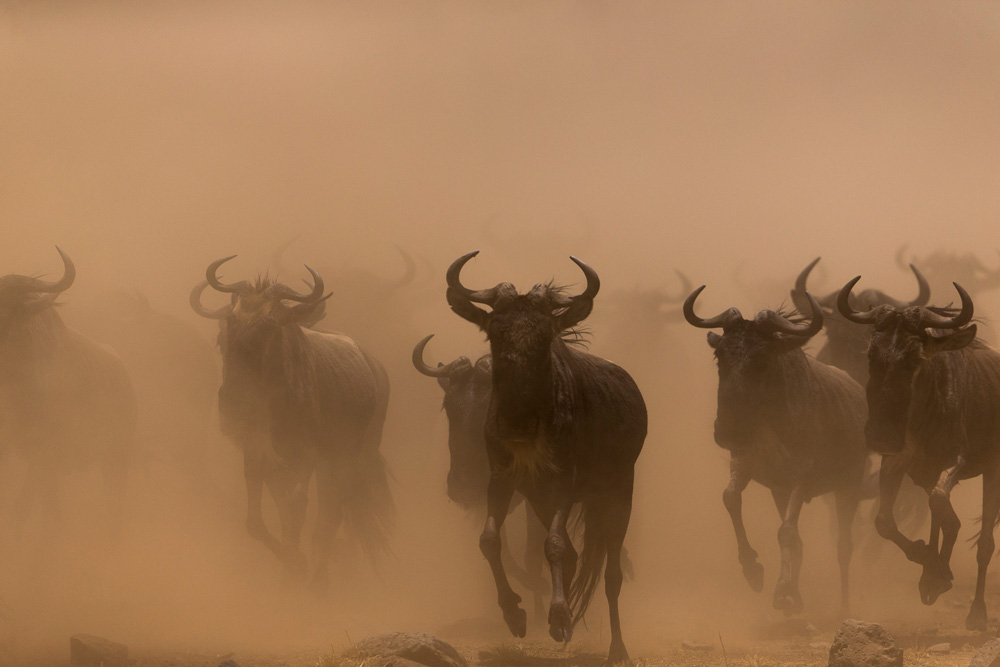
Wildebeest migration in the Maasai Mara
© Vikram Ghanekar

“The Maasai Mara-Serengeti ecosystem is famous for its wildebeest migration. One of the most anticipated events in this drama of life is the crossing of the Mara River. On one hot day in September, my family and I were waiting patiently along the banks of the river as a large herd of wildebeest had gathered close by. The atmosphere was tense in anticipation as to when the wildebeest would start crossing. As it so happened, something suddenly spooked the wildebeest, and instead of heading down into the river, the whole herd turned around and thundered away, raising a massive cloud of dust. As the wildebeest stampeded out of the haze, I tripped the shutter of my camera, creating a very different look to the photo.

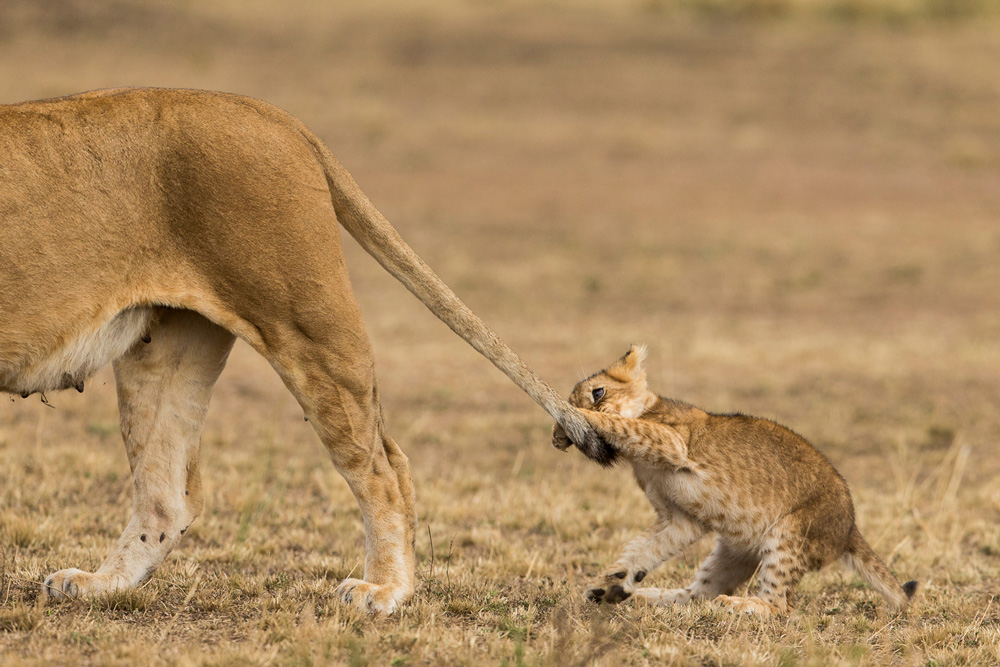
Lion cub pulling its mother's tail
© Vikram Ghanekar

“Young ones of any species are excellent subjects for photography. What’s even better is when they are lion cubs – especially as adult lions, more often than not, will be found doing precisely nothing. I was observing these young lion cubs playing with each other and their mother. The mother’s tail, of course, was a hot favourite among the cubs, as they all tried to catch hold of the “toy”.

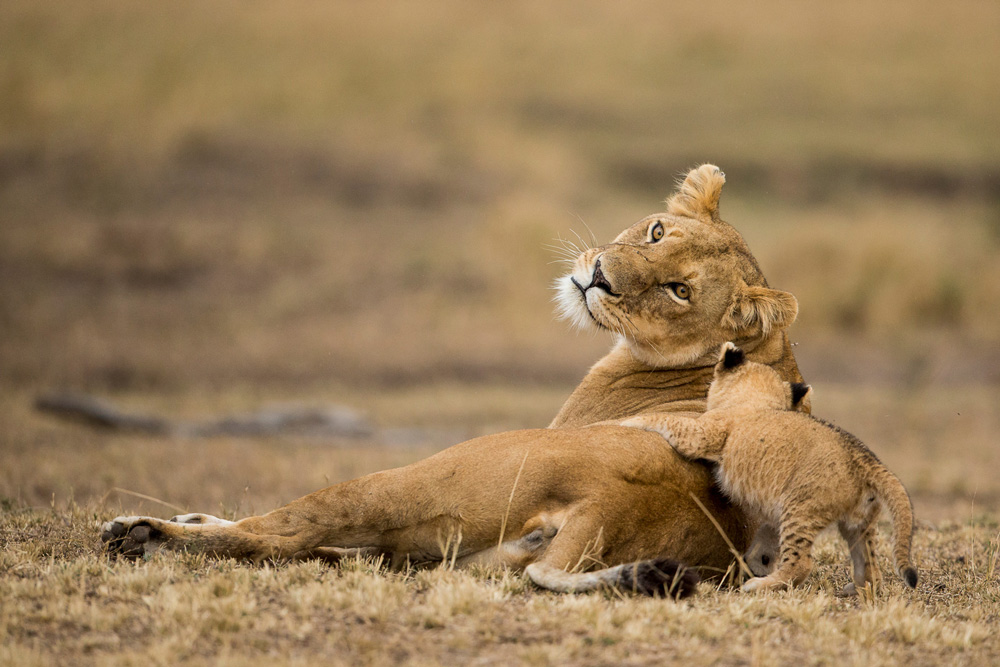
A lioness and her cub
© Vikram Ghanekar

“In another scene, the lion cubs were busy playing with each other, jumping over their mother. I wanted to capture interaction between the mother and her young ones, and the opportunity arose when she looked back as one of the cubs started to climb over her.

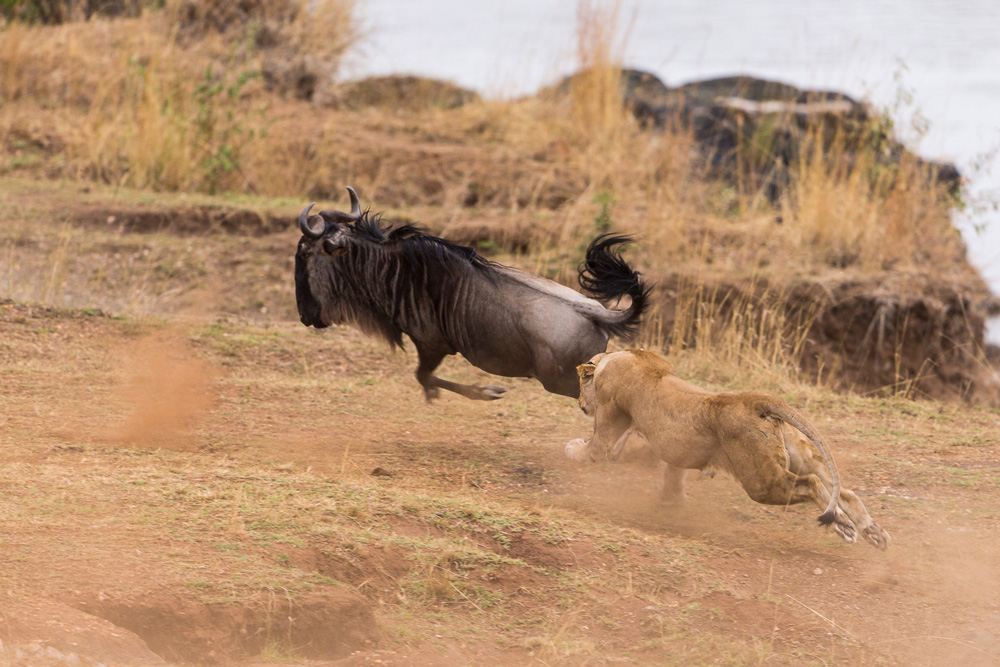
Lioness chasing a wildebeest
© Vikram Ghanekar

“On one of the drives, we came across a pride of lions lounging along the banks of the Mara River. The lionesses were quite relaxed and seemed intent on sleeping the afternoon off. Suddenly, a small herd of wildebeest wandered close to the bank. Anticipating a crossing, everybody in the vehicle perked up. The wildebeests’ movement did not go unnoticed. The lionesses that were lounging, half asleep, suddenly were alert and looking keenly towards the wildebeest. As the wildebeest started crossing, one of the lionesses took off. All the hell broke loose with wildebeest scattering in all directions.

“The lioness selected her victim and gave chase. The poor animal abandoned its plan of crossing and instead turned away from the river with the lioness in hot pursuit. Fortunately, I was able to fire off my camera, capturing the moment as she was almost on top of her prey. The drama did not end well for the wildebeest.

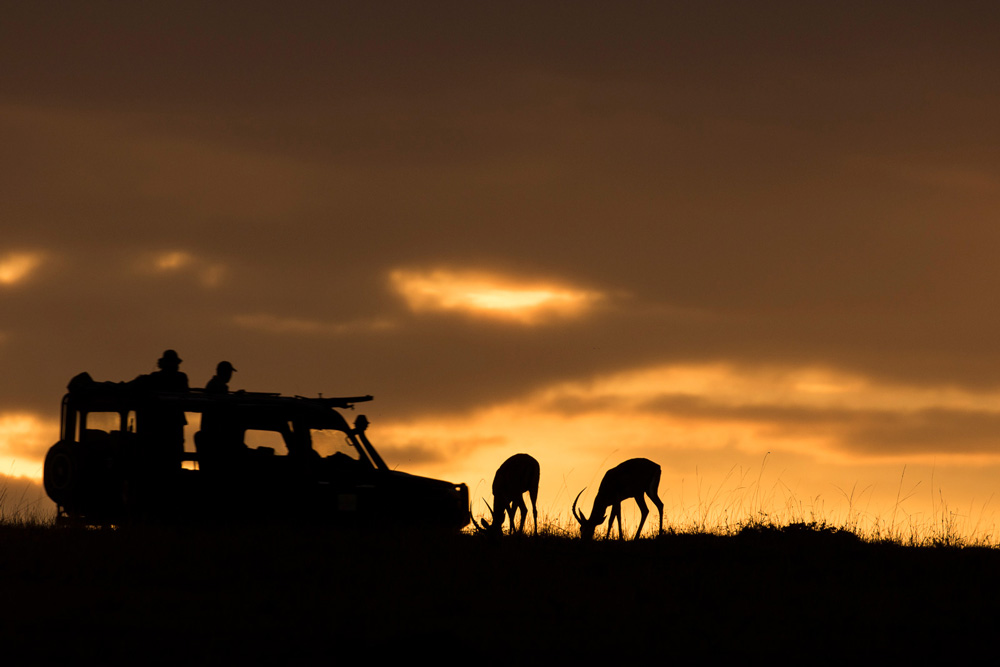
Watching impalas graze at sunrise
© Vikram Ghanekar

“It was early one morning as the sun was rising. I positioned our vehicle so that the impalas that were feeding on a ridge were silhouetted against the pre-dawn light. The next thing, a safari vehicle crossed the same ridge, allowing me to take a few quick shots. The people standing in the vehicle with their heads popping out from the roof added to that “ultimate safari in Africa” feel to the scene.

The wonders of Khwai

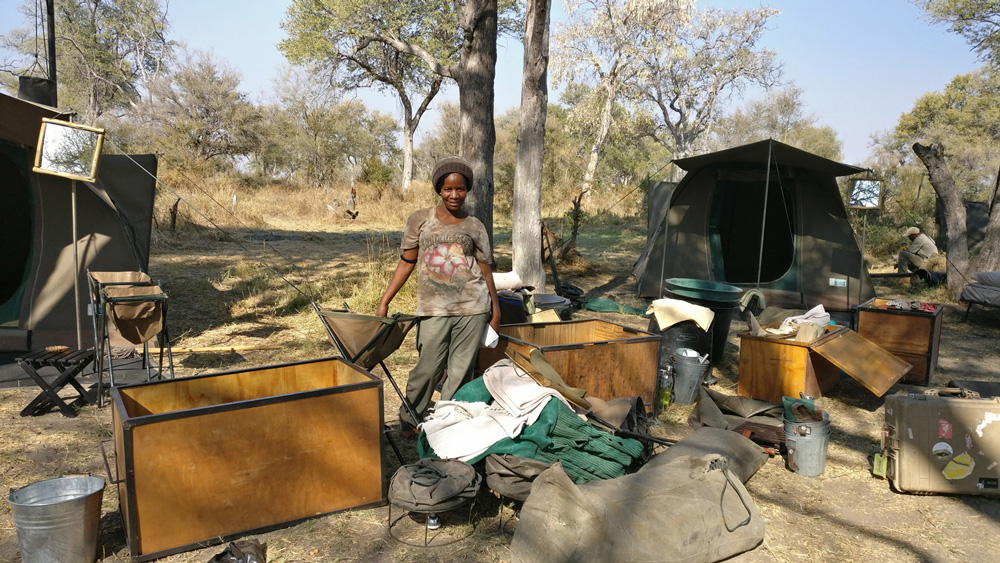
Staff member setting up camping equipment
© Vikram Ghanekar

“Mobile safari operations require substantial logistical support. As a guest, one doesn’t fully realise the immense hard work that goes on behind the scenes. While on a mobile safari in Botswana, we were shifting camps from Moremi Game Reserve to the Khwai Concession. The staff had taken down the camp after we had left, packed all the equipment in their truck and had made the journey through difficult terrain to reach our next campsite at Khwai. When we arrived at Khwai, they were in the process of setting up camp. As I walked through the campsite, I asked this staff member if I could take her photo as she worked. She obliged by posing for me amid all the camping equipment.

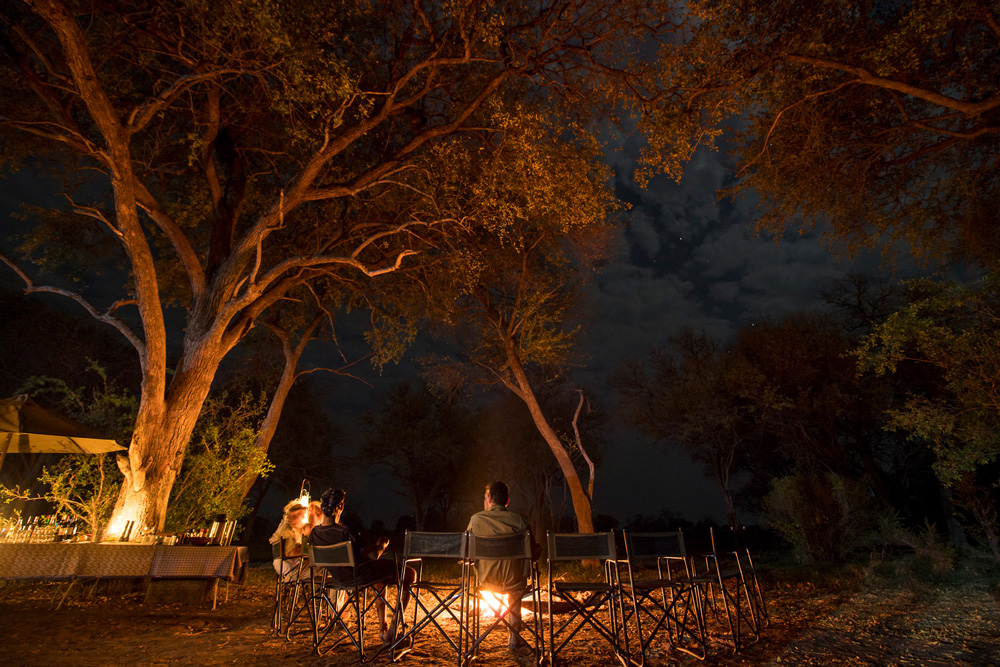
Two people sitting around a campfire
© Vikram Ghanekar

“Sitting around the campfire, or “BushTV” as safari-goers call it, is an essential part of the safari camping experience. This is the place where the day’s adventures are recounted, anecdotes of previous safaris are exchanged, and interesting conversations are initiated – which tend to continue over to the dinner table. This is also the place just to sit and stare into the fire and contemplate. There is no better way to spend an evening where acquaintances are transformed into long-lasting friendships.

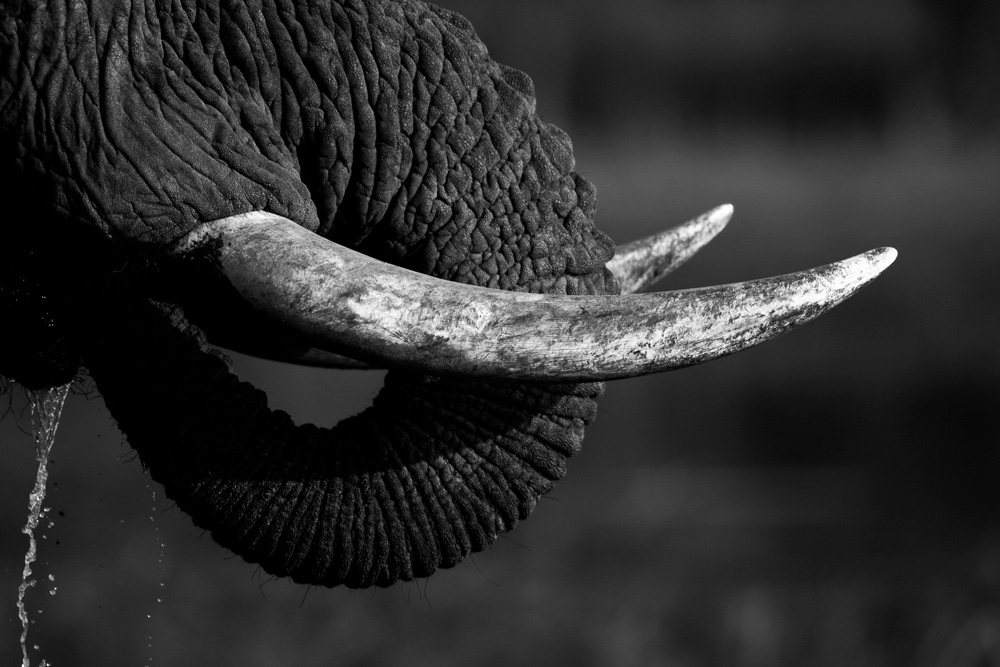
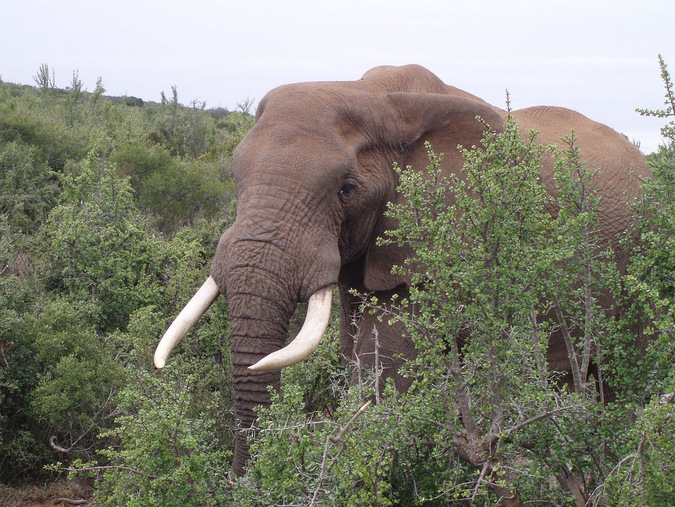
A close up of an elephant's tusks
© Vikram Ghanekar

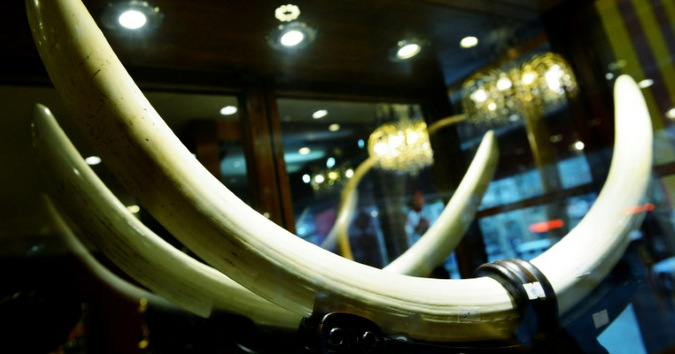
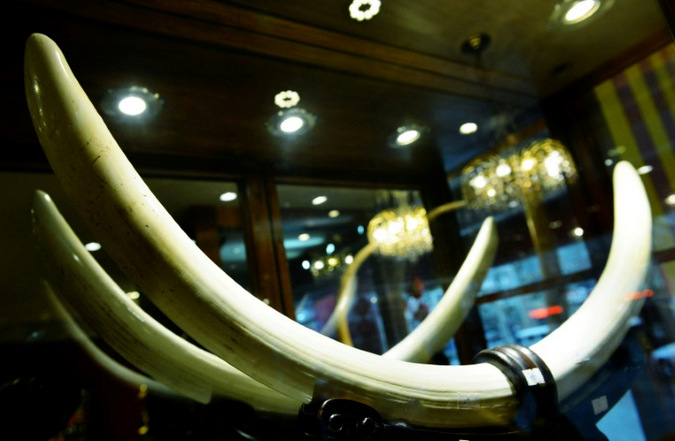
“Elephants are my favourite subjects. There is something majestic and mysterious about these intelligent animals. I find it hard to digest the thought of killing these gentle giants for their tusks, for something as insignificant as a trinket. Ivory belongs to elephants and no one else.

“In this photograph, I tried to capture the beautiful patterns of this elephant bull’s tusks, set on the background of his wonderfully textured trunk.

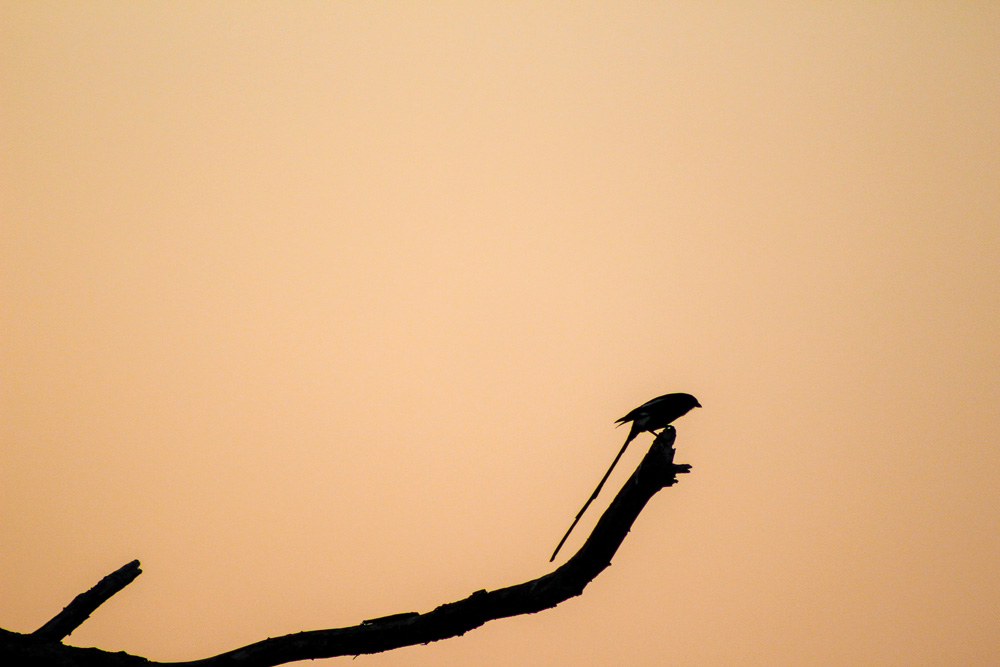
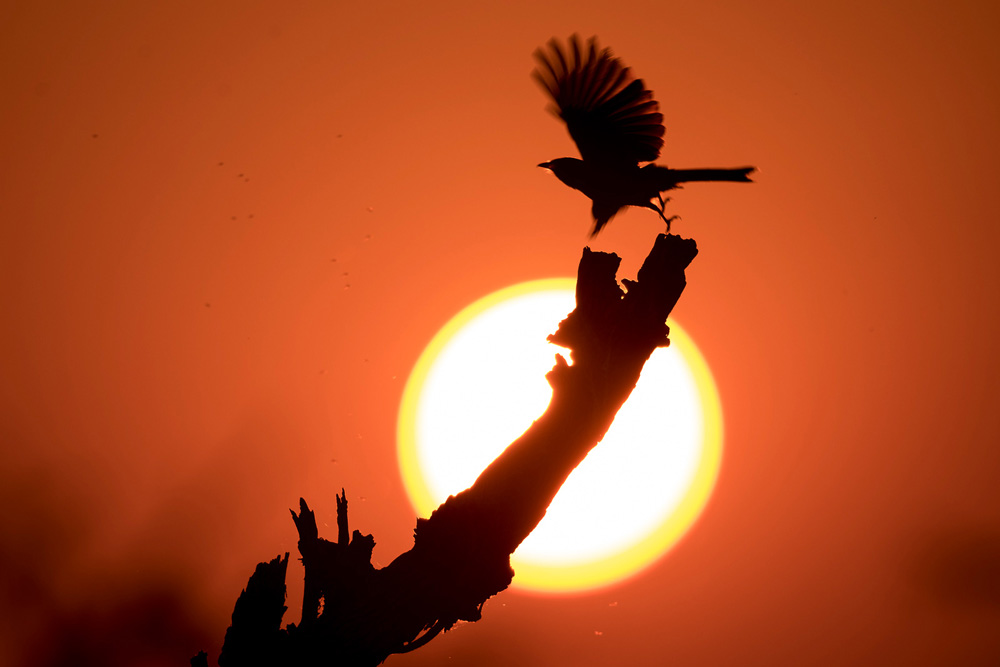
A bird at sunset
© Vikram Ghanekar

“Photographing iconic animals of Africa is addictive. Their photos are bound to impress the viewer and evoke emotions. However, the skill of a nature photographer lies in taking an ordinary subject and turning it into an extraordinary photo.

“We had stopped near the Khwai River for sundowners after an eventful afternoon spending time with a pack of wild dogs and a female leopard. As the sun was setting, I noticed a fork-tailed drongo sitting on a dead tree stump. I positioned myself to get that stump between my camera and the sun, trying for a beautiful silhouette of this widespread bird. As luck would have it, the drongo took off just as I tripped the shutter, making the photo even better than I had anticipated!

Africa Geographic Travel

The trunked giants of Mana Pools

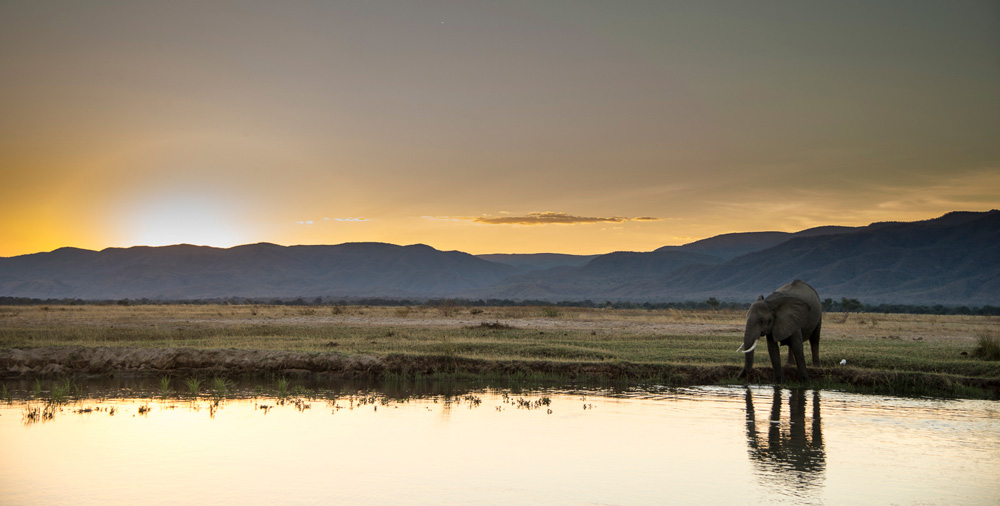
Elephant drinking water in the evening
© Vikram Ghanekar

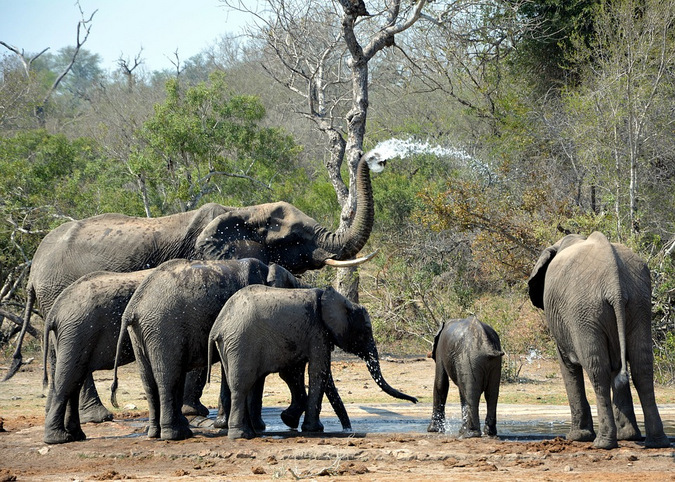
Mana Pools National Park in Zimbabwe is an extraordinary place. It’s one of the very few parks in Africa where you are allowed to walk on your own among the big game. In the park there is an area called Mana Mouth where the Mana River meets the mighty Zambezi, creating a vast floodplain. This photo was captured at Mana Mouth one evening when a breeding herd of elephants was feeding on one of the exposed islands within the Zambezi. As the sun dipped just below the escarpment on the Zambian side, the sky took on a beautiful glow, adding drama to an already exquisite scene.

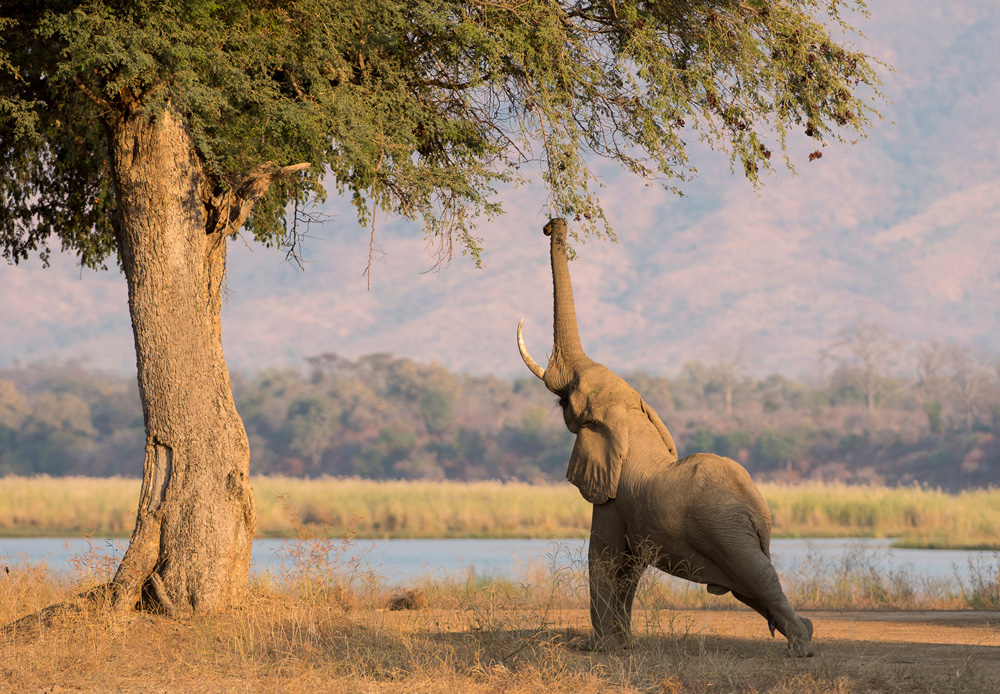
Elephant grabbing leaves from a tall tree with trunk
© Vikram Ghanekar

“The park is dominated by giant Faidherbia albida or ana trees. In the dry season, the undergrowth completely dies out, leaving very little food for herbivores on the ground. Elephants, on the other hand, still have access to feed in the form of branches and the delicious seed pods from the ana trees. However, the trees are so tall that reaching those branches is a big stretch, even for a bull elephant. Fortunately, the Mana elephants have learnt to adapt to this situation, and by extending every part of their body in such a way, the tip of their trunks can reach the ana tree’s leaves. A couple of bulls can even heave themselves up onto their hind legs to reach the upper branches while others have to stick with the “Mana stretch” as demonstrated in this photograph.

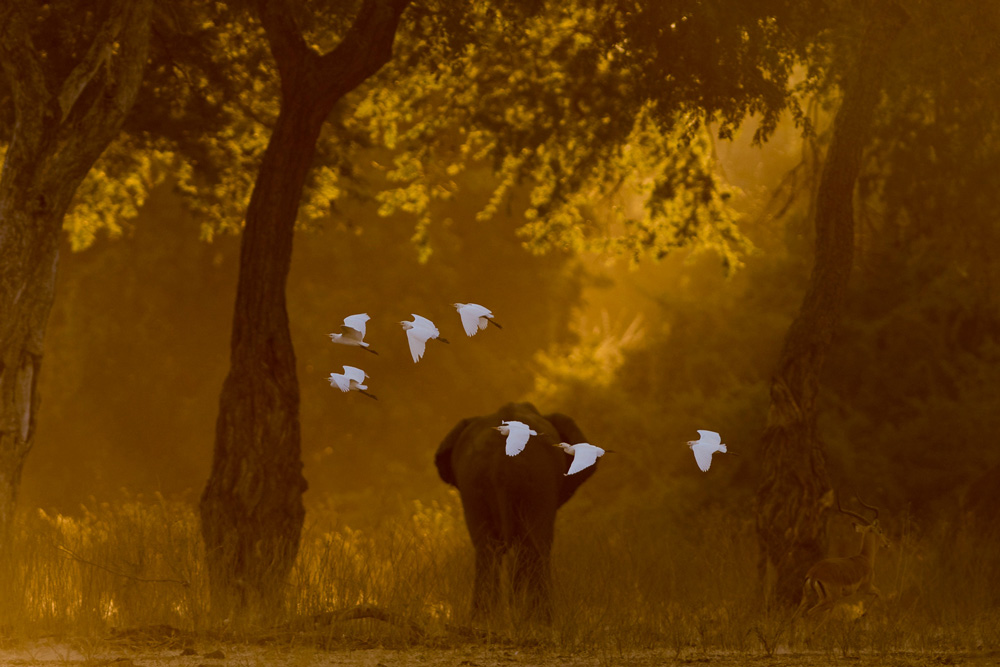
Bull elephant and a flock of egrets
© Vikram Ghanekar

“In a different elephant sighting in Mana Pools, my friends and I were following a bull elephant on foot. The idea was to capture the subject in the beautiful evening light as the sun’s rays filtered through the ana trees. There was a flock of cattle egrets nearby, feeding on insects disturbed by the elephant. Suddenly the egrets took off! Their flight took them right across the feeding elephant, and I was able to capture that exact moment in this photograph.

Africa Geographic Travel

Okavango Delta

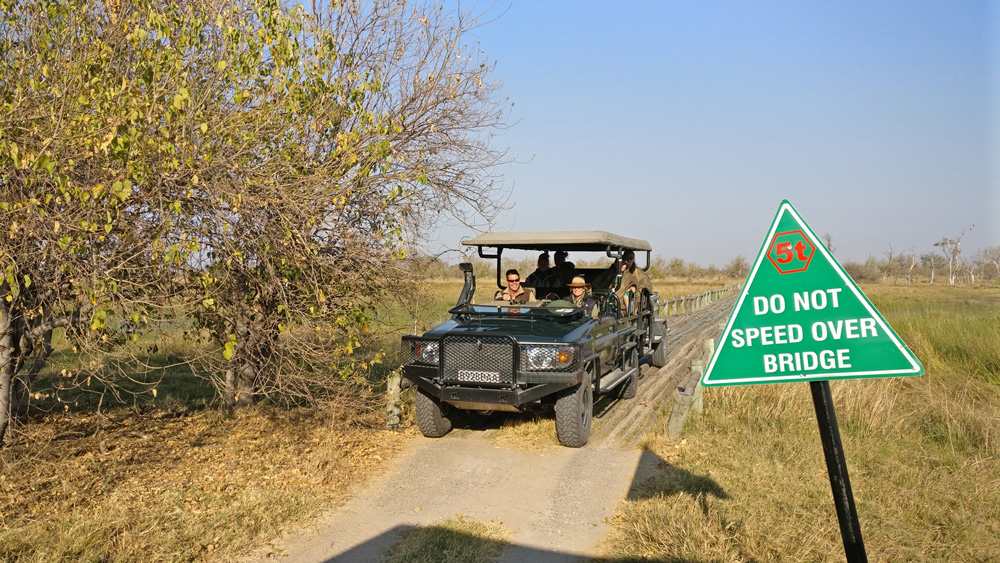
Safari vehicle driving over a bridge
© Vikram Ghanekar

“Driving through the Okavango Delta in Botswana is a challenging experience. With water levels fluctuating according to the ebb and flow of the river, one may find your path entirely blocked by floodwaters. Certain areas that remain submerged year-round are accessed by crossing some interesting bridges. Constructed entirely out of wooden logs, crossing them is an adventure in itself requiring a lot of careful driving. Yet I was surprised to see signs “Do not speed over the bridge”, indicating some not-so-smart humans and their vehicles have ended up in the floodwaters not too infrequently!

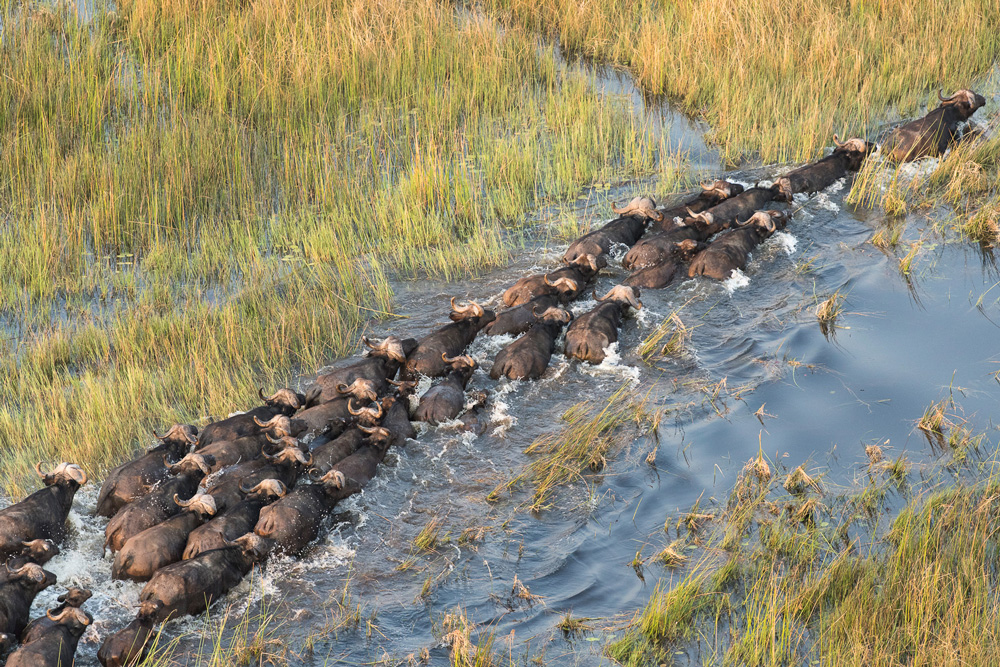
A big herd of buffalo crossing a river
© Vikram Ghanekar

“The delta is a magical place. To experience it from the air is even more magical. When an opportunity to fly over the delta in a helicopter presented itself, I grabbed it with both hands. We had the doors of the helicopter removed, allowing me to take photos from my seat without hindrance. We took off from Maun and were soon flying over Chief’s Island, a part of the delta teeming with wildlife. We came across a large herd of buffalo. As we flew lower, the buffaloes took off through the waters. I took a few photos, composing them in such way that the herd was crossing the frame diagonally, which I thought was much better composition-wise, rather than having them horizontally cross the frame.

South Luangwa

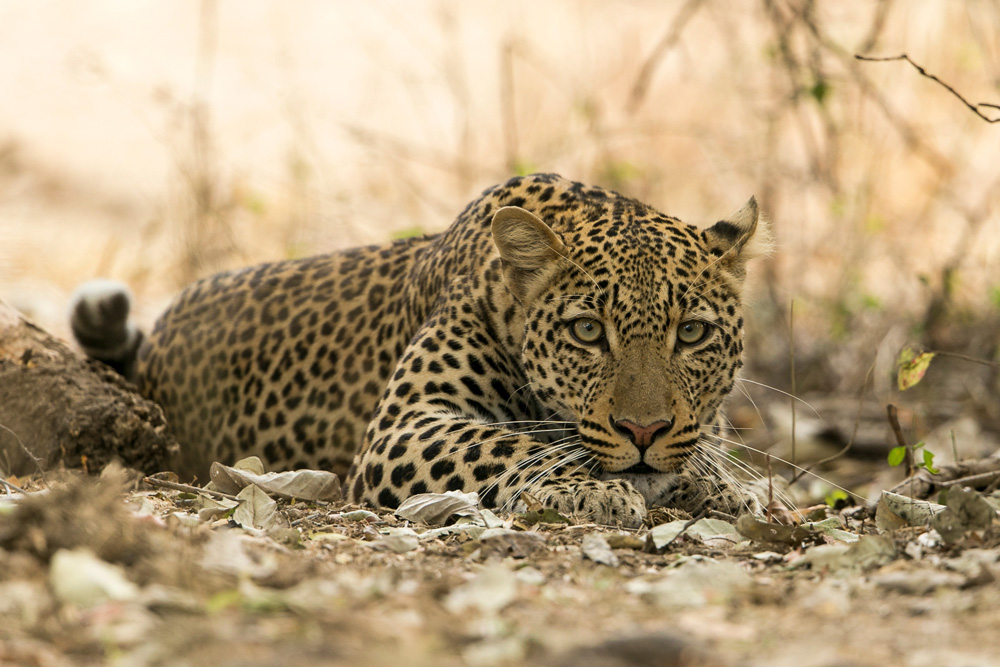
Close up photo of a leopard
© Vikram Ghanekar

South Luangwa National Park in Zambia is famous for its leopard sightings. Being one of the very few parks in Africa that allows night drives, it is one of the best places to spot leopards. While on safari in South Luangwa, I came across this young male leopard. He saw our vehicle, but instead of running away as leopards are known to do, he merely flattened himself against the ground, allowing me to capture his portrait.

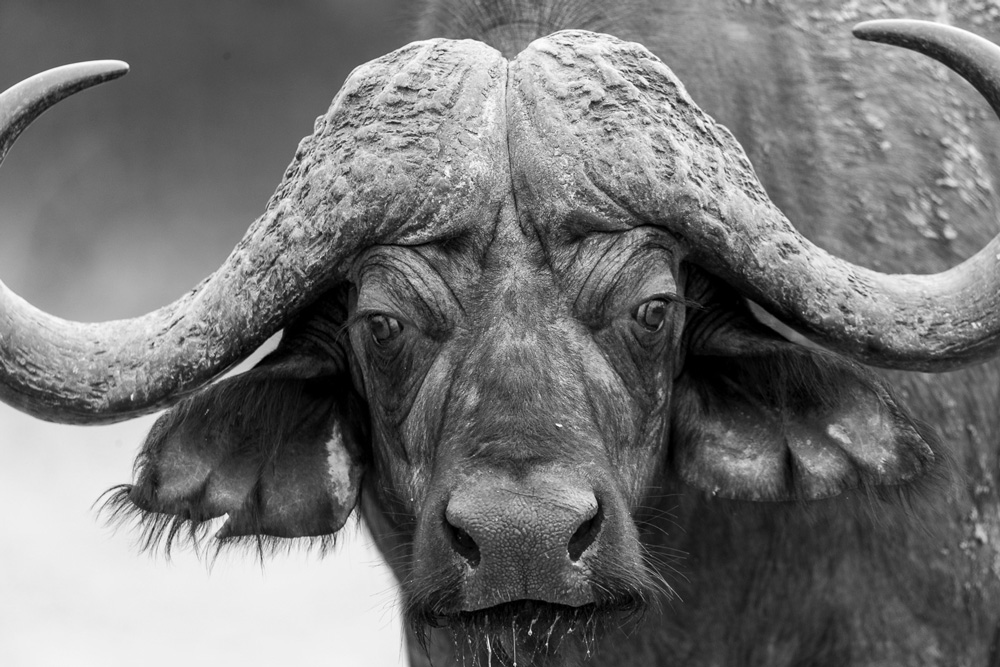
Close up photo of a buffalo
© Vikram Ghanekar

“South Luangwa is the home of walking safaris, allowing tourists to get close to dangerous game on foot. Guides are comfortable taking guests near to big herds of buffalo – considered one of the most dangerous animals in Africa. But lonely old males, or “dagga boys”, are a different matter altogether. These old bulls do not take too kindly to being approached. Separated from herds, old and past their prime, their only response to a perceived threat is to attack. The way they look at you with their beady, bloodshot eyes, sends a shiver down your spine. They certainly give you a look as if you owe them a big debt!

Sensational Savute

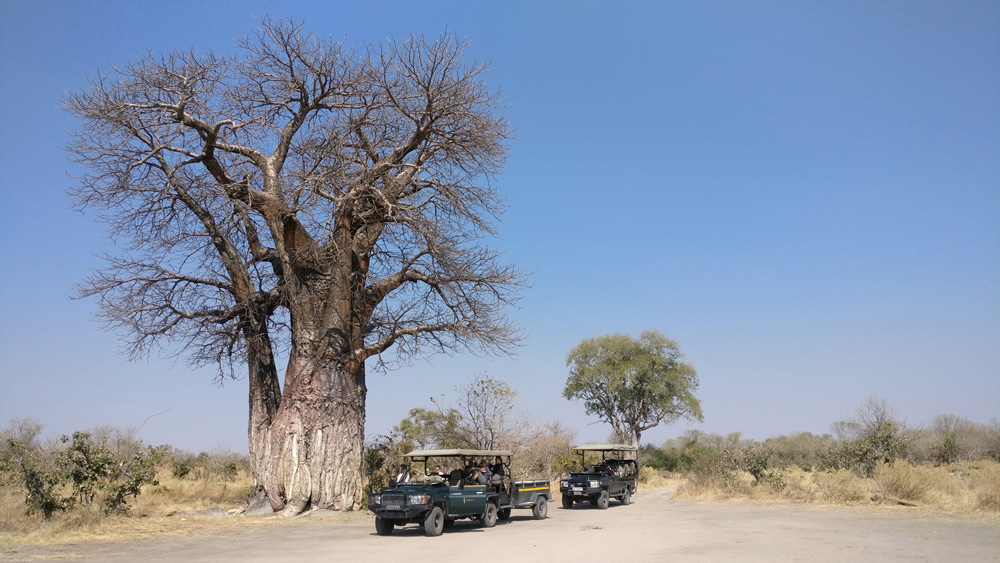
Safari vehicles stopped under a baobab tree
© Vikram Ghanekar

“The baobab tree is probably the most iconic tree in Africa. While on our way to Savute on a mobile camping trip in Botswana, our guide, Brian made a special stop under this ancient baobab. I couldn’t resist taking a photo of the tree with my mobile phone to emphasise the incredible size of this tree, completely dwarfing us and our cars.

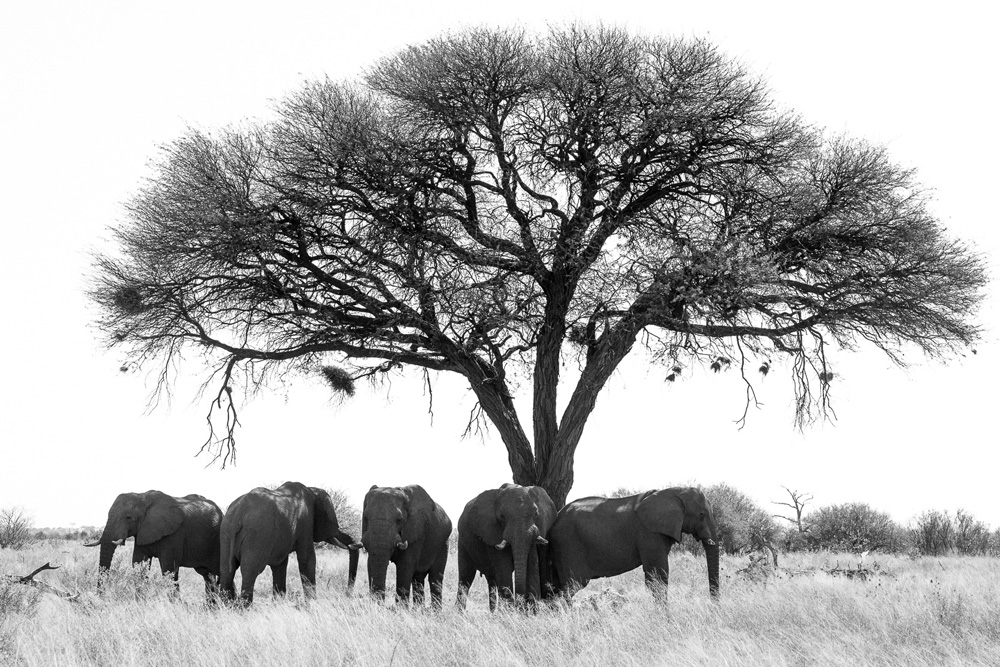
Herd of elephant bulls under an acacia tree
© Vikram Ghanekar

“Savute is a harsh, dry place situated in the heart of the Kalahari with very little surface water – and a playground for colossal bull elephants. On a particularly hot day, I found a group of elephants having a nap under an acacia tree. The elephants had formed a semicircle under the tree, allowing me to take a very different photo. A B&W conversion emphasised the composition, taking away the effects of the harsh sunlight.

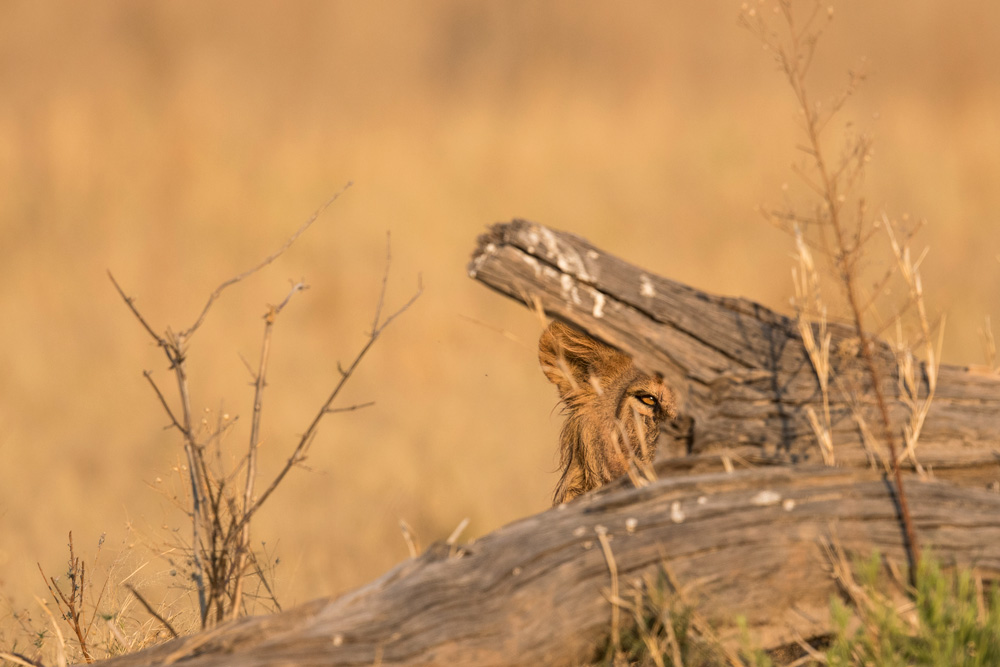
Lion peaking out from behind a log
© Vikram Ghanekar

“Another fantastic sighting was of this coalition of four male lions who had brought down a buffalo, feeding on it throughout the night. In the morning, we found two of them still feeding, while the other two were lying in the shade – the one was in the shadow of a large fallen tree. Then we noticed a pair of jackals arrive, looking for scraps. This drew the attention of the dozing lion by the tree. He woke up and stared at the jackals partially through a gap in the tree, and that’s when I captured this photo, revealing just the lion’s eye while the rest of his head and body remained hidden.

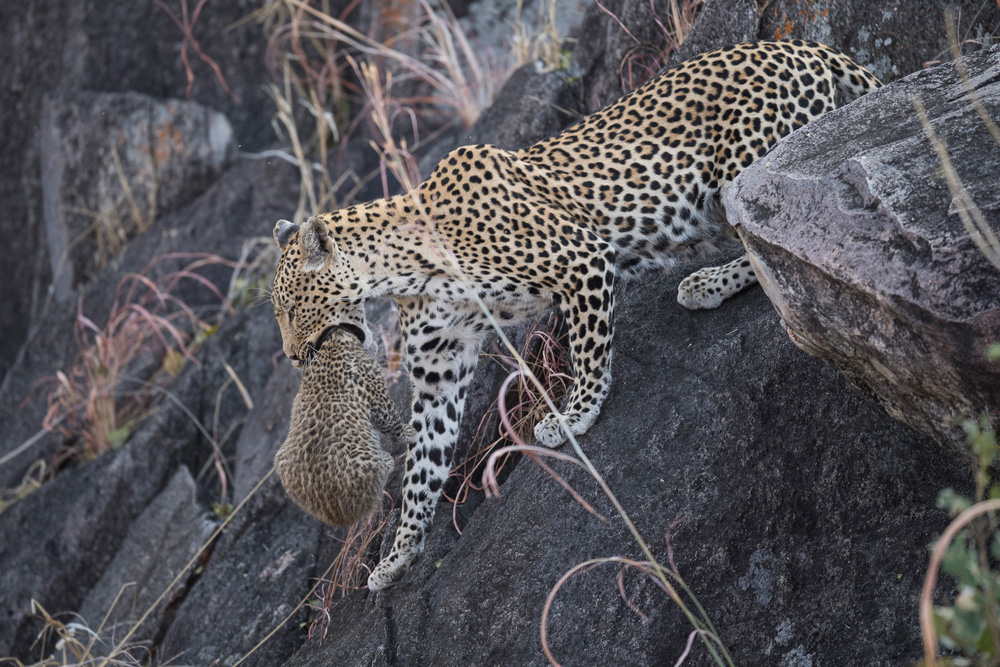
Leopard mother carrying her cub
© Vikram Ghanekar

“It was the last day of our mobile camping safari in Savute, and we had left our campsite early in the morning to make our way back to Maun slowly. There is a hill in Savute called “Leopard Rock” in an otherwise very flat landscape. Despite its name, our previous efforts to locate the animal it is named after had failed miserably. Our guide decided to take one last chance as the hill was near to where we were heading.

“When we reached “Leopard Rock”, another vehicle was already there. A lovely couple in the vehicle informed us that they had seen a female leopard climbing into a ravine just a few minutes ago. Maybe luck had decided to smile on us after all… But what we were about to experience was unimaginable.

“After a painfully long time, a beautiful female leopard came out from behind a rock and settled down. But that wasn’t all. She called out softly when suddenly a tiny head popped out from behind the rock. A cub! The cub came out and sat down by its mother. We are ecstatic. The mother licked her cub for a few minutes and then climbed down. Halfway down, she called out for her cub, encouraging it to follow. But the cub was hesitant. It wasn’t going to leave its cosy home behind.

“The mother realised her instructions were not being followed, so she went back and gently picked the cub up in her mouth and climbed down the rock. We could not believe our luck! She came close to our vehicle, crossing the road behind us, still carrying the cub in her mouth. Soon she disappeared into the thick bushes on the other side. Unbelievable! We could not have asked for a better end to our safari in Botswana.”

About the author

Vikram Ghanekar is a consultant surgical oncologist at SGM Hospital in Chuplin, India. Wildlife and nature photography has always fascinated him and has led him to experience and photograph Africa’s spectacular wildlife. He has an astounding ability to capture the emotion that should be reflected in a photograph.
“If somebody asks me what my favourite animal to photograph is, it has to be the elephant. Elephants fascinate me more than any cat. Their intelligence, their family bonds, their social interaction is just fantastic to watch and photograph,” he says.

Bees protect large trees from elephant impact

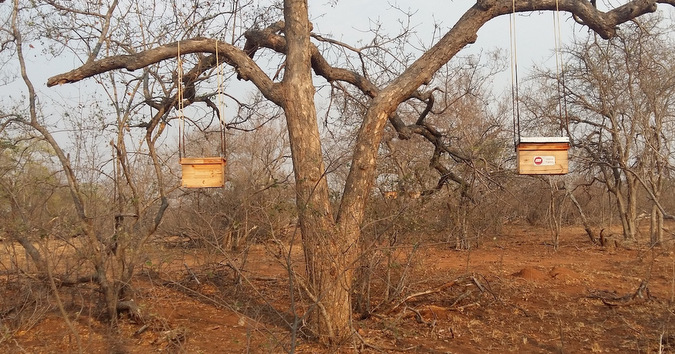
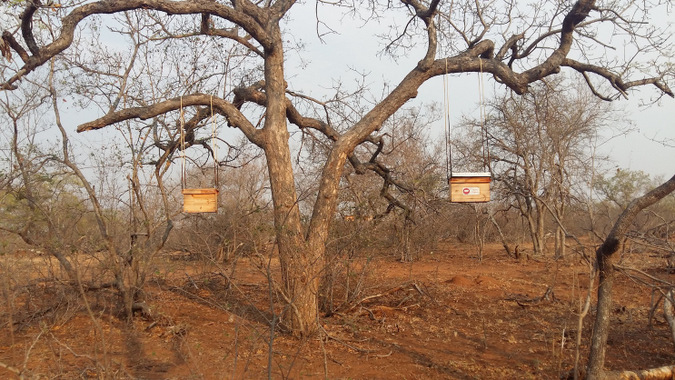
Beehives hang from trees in Jejane Private Nature Reserve
Beehives hang from trees in Jejane Private Nature Reserve © Robin Cook

A study has found that hanging beehives containing African honeybees from the branches of marula trees protects these trees against elephant impact because the elephants avoid those trees. Only 2% of trees with beehives incurred elephant impact, compared to 54% of trees in the research block that had no deterrents.

“This innovative study demonstrates that there are peaceful means with which we can foster the important ecological linkages between elephants, trees and bees. The bees not only protect the large trees from severe impact but as pollinators they also ensure valuable seed banks for the surrounding landscapes,” said Elephants Alive’s Director and Principle Researcher Dr Michelle Henley. “Elephants are important seed disperses to marula trees, so protecting selected iconic tree specimens while leaving others, as this study clearly illustrates, will ensure harmonious coexistence amongst three vital ecosystem components.”

The research was conducted by South African based Elephants Alive and the University of the Witwatersrand, Johannesburg, in partnership with the Elephants and Bees Project of Save the Elephants in Kenya.

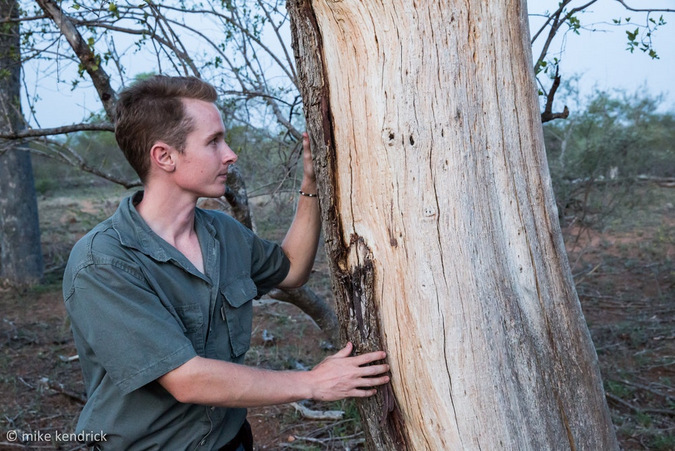
The damage caused by elephants stripping the trees’ bark
The damage caused by elephants stripping the trees’ bark © Mike Kendrick

Conservation managers in fenced-off protected areas are concerned about the impact that expanding African elephant numbers have on the survival rate of large tree species, necessitating the need for mitigation methods. One such mitigation method, wire-netting, has proven to be successful at increasing trees’ survival rates by preventing elephants from ring-barking these trees. However, wire-netted trees are still vulnerable to other types of elephant impact, such as breaking off branches and uprooting the tree. This requires researchers to investigate new methods which may be effective at completely deterring elephants from particular large trees.

Building off Save the Elephants’ research on using African honeybees to mitigate elephant impact on crop fields, the study showed that hanging a combination of both active and dummy (inactive) beehives from the branches of marula trees creates a formidable mitigation method for protecting this keystone species from elephant impact.

Demonstrating how to set up a bee hive in a tree
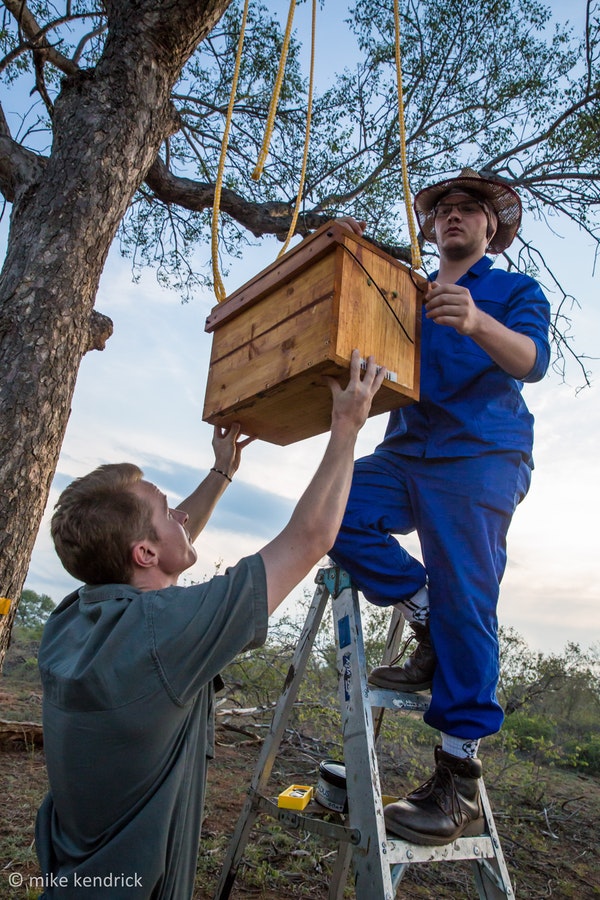
Demonstration by the Elephants Alive team about how to set up the hives during daylight while waiting for the vehicles carrying the bees to arrive © Mike Kendrick

The investigation, led by Elephants Alive researcher Robin Cook, who is studying for his Master of Science degree at the University of the Witwatersrand (Centre for African Ecology), monitored elephant impact on 150 marula trees in a 30 hectare (75 acre) experimental plot in Jejane Private Nature Reserve, which is part of a larger association of reserves sharing unfenced borders with Kruger National Park. The 150 marula trees were subdivided into 50 beehive trees, 50 wire-netted trees, and 50 control (no treatment) trees. For this study, 50 active beehives were brought into Jejane and hung overnight in their 50 respective trees.

Elephant impact on the 150 trees was monitored between December 2015 and September 2016, with the researchers focusing on various elephant impact-types such as bark-stripping, primary and secondary branch breakage, main stem snapping, and uprooting. Dung transects were also carried out in the experimental plot and a neighbouring control plot in an attempt to gain an understanding of the spatial effect that the beehives had on elephant movements.

Relocating beehives at night
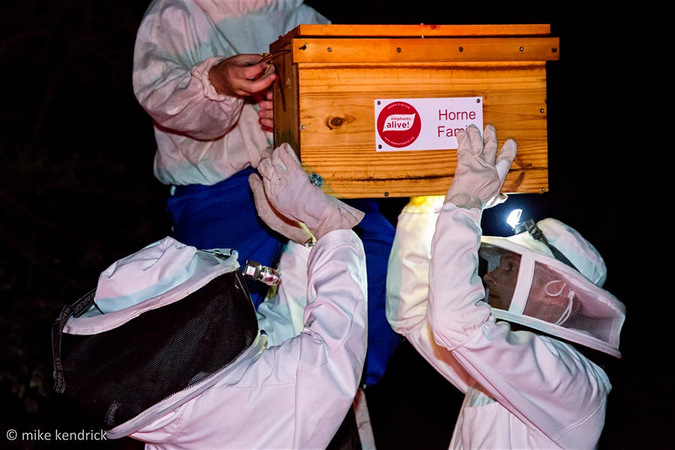
Bees are much calmer at night, so there is less risk of the bees attacking while being relocated after dark © Mike Kendrick

The study took place during a severe drought in South Africa and so a feeding regime was pioneered to supplement the honeybees with pollen, nectar, as well as sugar water inside the experimental plot. This feeding regime, along with maintenance costs, led the researchers to further compare the feasibility of the beehive method by focusing on the costs and benefits of the beehive versus wire-netting mitigation-methods.

“Whilst initial installation costs of the beehive method may be relatively high in comparison to wire-netting, there is a possibility of honey production and an additional financial revenue for protected areas which implement this method,” says Cook. “Feeding costs will also be reduced or even eliminated in areas with an abundance of water and flowers for the honeybees to sustain themselves.”

“This exciting research indicates that beehives could be a valuable ‘tool’ in the toolbox of methods for protecting large trees from elephant impact in fenced-off protected areas” said Dr Lucy King, founder of Save the Elephants’ Elephants and Bees Project, “Particularly as it is a non-lethal method for elephant management”.

Beehives delivered to Jejane Private Nature Reserve
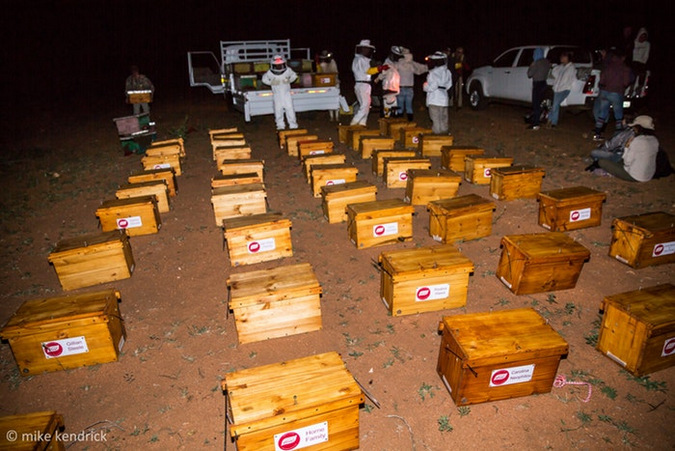
The fifty hives delivered to Jejane Private Nature Reserve © Mike Kendrick
Key findings from the study include:

• Only 2% of trees with beehives received elephant impact, in comparison to 28% wire-netted and 54% control trees.

• Beehives were more effective than wire-netting at protecting trees from impact.

• Beehives in trees are effective at protecting the individual tree from elephant impact but do not prevent elephants from impacting neighbouring trees.

• Beehives were more expensive than wire-netting, and require greater maintenance.

• For protected areas with logistic and financial resources, beehives can provide a valuable alternative method for protecting large trees from elephant impact.

Thanks to the generous funding of EMS Foundation, the wooden beehives in the experimental plot have been upgraded to a longer-lasting model to ensure that the research will carry on over a longer period of time, with the additional focus on honey production.

Contact Robin Cook for more information regarding this research project.

 The full report: Science Direct, R.M. Cook, F. Parrini, L.E. King, E.T.F. Witkowski, M.D. Henley: “African honeybees as a mitigation method for elephant impact on trees

Opinion: Hunting is sustainable (ab)use

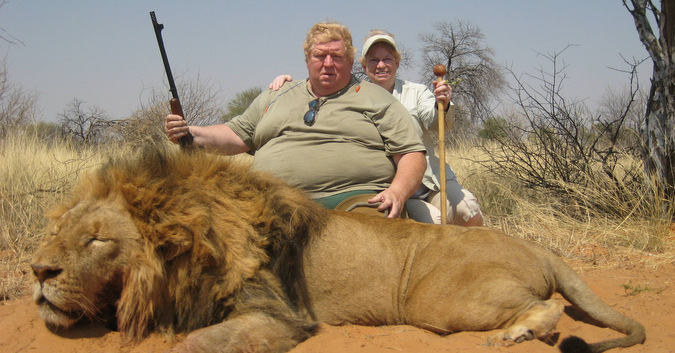
Hunters with a dead elephant, hunting
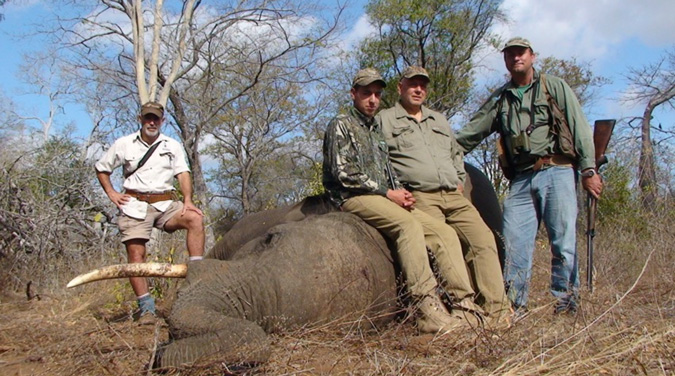
Illustrative example of hunters with an elephant carcass
Opinion post: Written by Chris Mercer – Founder of Campaign Against Canned Hunting

This blog criticises a letter sent to the Chinese government by well-known hunting apologist Eugene Lapointe.

After wrapping himself in a cloak of assumed credibility arising from previous association with international organisations such as CITES, he writes to the Chinese government asking it to resist calls for it to ban the trade in ivory. His self-important homily then proceeds to expound upon the alleged efficacy of the doctrine of ‘wise use’.

Unfortunately, he finds support from some African media for his view that elephants are merely a resource to be exploited.

All his tired old arguments are half-truths that can be reduced to the following syllogism:

1. All cats have four legs.

2. My dog has four legs.

3. Therefore my dog is a cat.

In his philosophy, hunters are wonderful conservationists and the plight of wildlife can be laid solely at the door of shrill animal rightists in the developed world.

Quoting himself: “As I stated in 2007, the beneficiaries of a complete ban on all legal ivory trade are the poachers, criminal gangs and corrupt officials who drive the illegal trade — and who the campaigners suppose they are opposing,” said Mr Lapointe. “Of course, the animal rights groups themselves raise billions of dollars through their campaigns in the United States and Europe, so a ban also satisfies their financial needs”.

Lapointe’s argument is: there was a ban; there was also a surge in poaching; ergo, the ban must have caused it. This is a perfect example of the ‘my dog is a cat’ syllogism. How simplistic. How childish. If only it were that simple. No doubt he would argue that the only way to save whales is by whaling and that any ban would merely ‘satisfy the financial needs’ of Sea Shepherd.

Actually, there were many causes for the upsurge in poaching, including the rise of affluence in China and the rest of Asia, as well as the CITES-approved ivory stockpile releases in 1997, 2000 and 2008.

The truth is that saving Africa’s wildlife is a hideously complex and deep issue involving environmental, political, socio-economic, cultural and geopolitical considerations. One political hot potato is the human population explosion in Africa (mirrored elsewhere). Rapidly expanding human populations overwhelms all social services such as health and education, the economy and ultimately the ecology. Poverty and unemployment are the inevitable consequence, and animal rights campaigners are not responsible for poverty and unemployment in Africa.
Another contributor to the demise of wildlife is that some African governments and administrations are notoriously corrupt. Some years ago, I was travelling through a ‘protected’ wilderness area near the Zambezi River. Such marvellous wilderness – and yet there was no wildlife to be seen. We could not understand why. Then we came across the game ranger’s camp and right there, strung up on wires all around the camp, were hundreds of pieces of meat drying in the sun to be turned into biltong and sold. Give a man like that a government vehicle, a government rifle and salary and all you are doing is equipping him to run his own private game butchery business.

The dwindling wildlife areas in Africa are precious resources that ought to be ferociously protected by governments. Alas, trees and animals do not vote and therefore get no money from patronage-dependent political structures. And into this vacuum where governance and protection should exist comes the hunting industry, trumpeting (excuse the pun!) its conservation credentials.

Game farmers point at the infrastructure they have built and the control that they exercise over their fenced-off ranches and claim righteously that they are the only defence standing between the wildlife and the rapacious poachers who would kill all the animals, whereas the hunters will only kill some of the animals. What on earth does this have to do with conservation? Domesticating wild animals and then rearing them like sheep to be slaughtered by hunters is not conservation, it is farming with alternative livestock. Farming for commercial purposes should never be confused with conservation, which is the preservation of natural functioning ecosystems for their own sakes.

Yet this totally irrelevant argument for hunting is seized upon by many role players in the conservation spectrum. Like large organisations such as WWF. And politicians and bureaucrats in the United States, who are terrified of offending the hunting/NRA block vote of 4 million votes that can easily swing an election.

Hunting is an ugly, dirty, bloody business, but the proponents make it sound almost acceptable with the use of euphemisms such as: ‘well-regulated hunting can serve as a tool of conservation’. Since when has hunting been well-regulated in Africa?

And now, following the flawed hunting narrative, comes the lamestream media, desperate to infuse cultural Marxism into the conservation space. Well-known publications like Newsweek publish articles by journalists like Nina Burleigh, who attacks and seeks to discredit hard-working anti-poaching organisations like Damien Mander’s IAPF. In her philosophy, Damien is white and therefore evil, whereas the poachers that he is tackling are black and therefore innocent victims. No doubt they would be much happier if Damien Mander’s game rangers were carrying flowers instead of weapons and handing them out to poachers, along with an audio-visual presentation of how important it is to preserve wildlife. Africa does not work that way and their naive liberal views merely show how little they understand Africa. Again, how simplistic. How childish. If only it were that simple.

Why are so many African governments ruled or controlled by dictators? The answer is that much of African falls under some form of chieftainship, where the Chief is king and he enjoys significant influence and control over many resources in the kingdom. Zimbabwe President Robert Mugabe repressed political dissent in Matabeleland by destroying entire villages and the inhabitants – that makes him a genocidal monster – but it also helps to explain how he stayed in power for 37 years. There is a lesson there, reinforced by the fact that the African Union elected him Chairman – knowing full well his murderous history. Liberal attitudes do not fare well in Africa, and the people of Africa know this.

Few of the existing role players in conservation understand or have the political influence or stomach to save Africa’s vanishing wilderness. The issues are just too broad and deep – and politically charged.

Perhaps the following stopgap measures would help with the conservation of African ecosystems and wildlife:

• All aid from the developed world to African countries should be rigidly tied to environmental compliance.

• The hunting fraternity should transition to turning their enormous resources to stopping poachers, and to protecting the animals. The hunting fraternity is a well-armed, wealthy militia, and can serve a useful purpose if properly directed.

• No expense should be spared to protect remaining wilderness areas. The money is there. If an old da Vinci painting can fetch half a billion dollars on auction, and trillions can be created out of thin air to be thrown at zombie banks to rescue them from their own greed, do not tell me that there is no money to save the environment and the wilderness.

Let us at least have an honest debate about conservation issues, without sustainable use propagandists like Eugene Lapointe hurling blame and pejorative epithets at the animal welfare community.

Snakebite season in Southern Africa

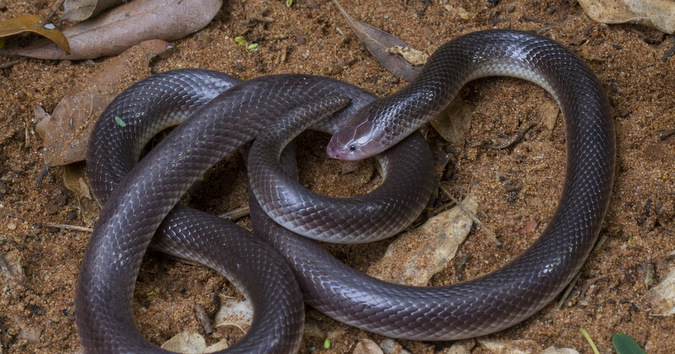
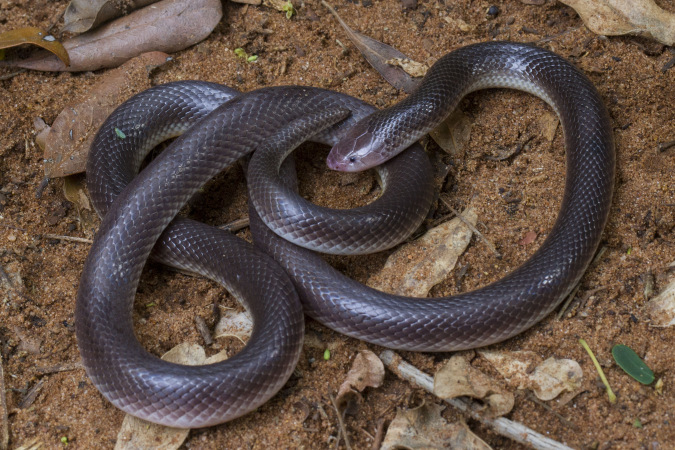
Stiletto snake (Atractaspis bibronii), venomous
Stiletto snake (Atractaspis bibronii) © Johan Marais (African Snakebite Institute)

Media release by African Snakebite Institute, written by Johan Marais

While the snakebite season is not yet in full swing, a number of serious snakebites have occurred in the past few weeks.

Many bites from deadly snakes are difficult to prevent as people accidentally stand on snakes, especially at night. But the snake that has been biting lots of people recently is the poorly-known stiletto snake, also known as the side-stabbing snake.

It is a small nondescript snake that averages around 30 – 40 cm in length, dark brown to blackish in colour and spends most of its life underground. They usually emerge in the early evening, especially after summer rains and often end up in swimming pools. For some reason, people mistake them for mole snakes, even though they are far too thin to look like one.

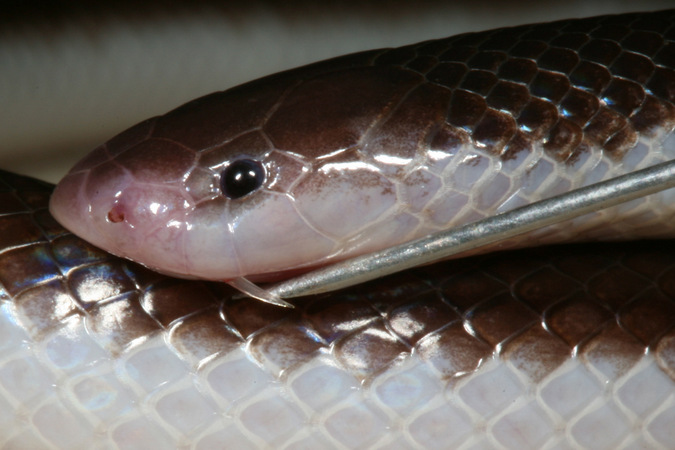
The big danger is their fangs and potent cytotoxic venom. If grabbed behind the neck the snake will twist it head sideways with one fang protruding and will stab it into a thumb or finger. Otherwise, if caught at mid-body, the snake will thrash around with its fangs sticking out and the person catching it will get bitten once or twice.

Enormous fangs of a Bibron's stiletto snake from the Kalahari, venomous snake
Enormous fangs of a Bibron’s stiletto snake from the Kalahari © Johan Marais

Stiletto venom is potently cytotoxic, causing immediate pain, swelling, blistering and in many cases severe tissue damage that may result in a digit or two being amputated. It is an extremely painful and destructive bite but is not considered potentially lethal. There is no antivenom for this snake’s venom and doctors can only treat for pain and wait a few days to see how extensive the tissue damage is.

The stiletto snake is absent from the Western Cape, most of the Eastern Cape and most of Namaqualand, but common in KwaZulu-Natal, Gauteng, Mpumalanga and Limpopo as well as much of Northwest, entering Zimbabwe, Botswana and northern Namibia.

Please be warned and refrain from touching any snake.

Safari tips: What weather to expect in Africa

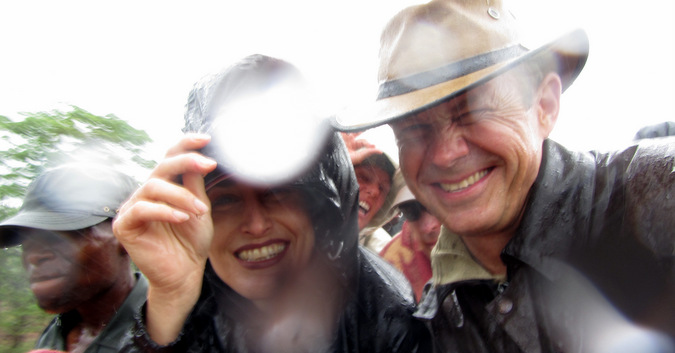
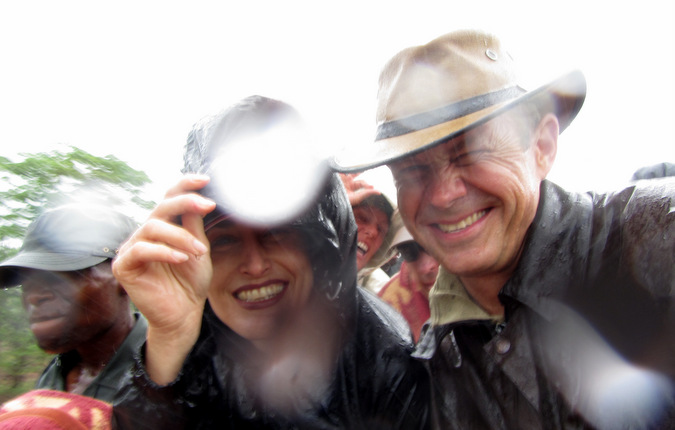
In the rain while on safari in Africa
© Simon Espley

Africa is a vast continent, with climates ranging from Mediterranean to equatorial. Expect low-lying areas to be hotter and more humid and the high-lying regions to be cooler. Local geographical features such as mountains, lakes and the sea can affect weather patterns by lowering temperatures and bringing more rain and wind.

Weather impacts on what you are likely to see, and on what to pack. So, here is a broad outline of sub-Saharan African climates:

East Africa

Kenya, Tanzania, Zanzibar, Uganda, Rwanda, DR Congo, Ethiopia and far northern Zambia

• This area is close to the equator and so seasonal fluctuations in temperature are largely insignificant.

• Expect generally warm weather, although temperatures can drop significantly during and after rainy weather, and at night.

• Temperatures will vary between 20º to 40º Celsius.

• The main rainy season is from April to May, with a lighter, second rainy season from mid-October to December.

• Neither rainy season should influence your travel plans, although you should pack rain gear during those times.

• Coastal areas are hot and humid throughout the year, with December to March being uncomfortably so.

Great Wildebeest Migration Kenya Tanzania with Africa Geographic
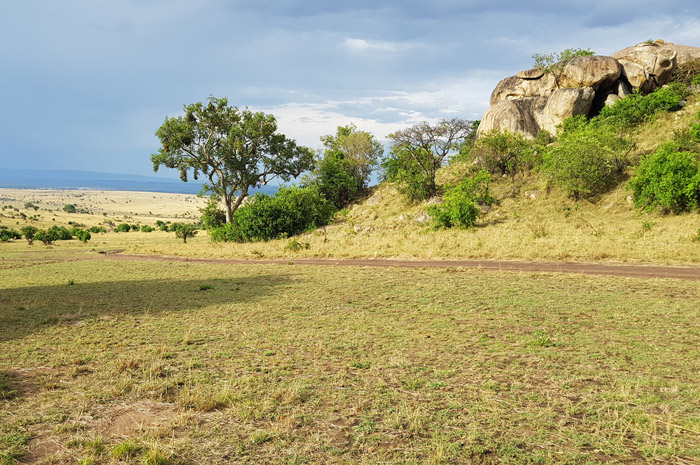
A rocky kopje rises above the endless plains of northern Serengeti ©Simon Espley

Southern Africa

Botswana, Namibia, Zambia, Mozambique, Malawi, Zimbabwe and South Africa, excluding the Western Cape

• Expect hot and wet summers (November to March), cool and dry winters (April to August) and hot and dry spring (September and October).
• Rainfall tends to be in short thunderstorms in the late afternoon.
• Temperatures will vary between 20º to 40º Celsius in summer and 10 to 25º in winter (with close to freezing at times, especially in higher-lying areas).

• October and November can be especially hot and humid, with relief when the rains arrive.

weather in Africa
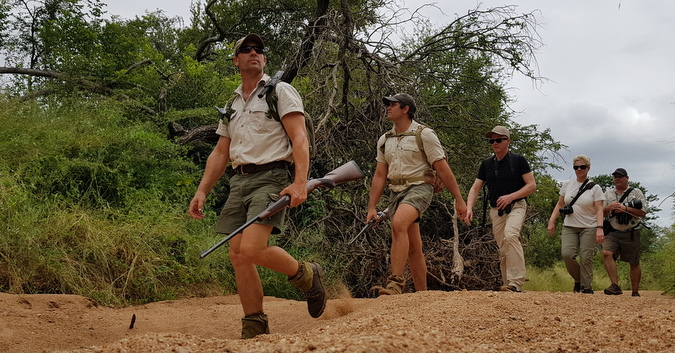
Greater Kruger walking safari @Simon Espley

South Africa

Western Cape

• Mediterranean climate.

• Expect hot and dry summers (November to March) and cold and wet winters (April to October).

• Temperatures will vary between 15º to 35º Celsius in summer and 0º to 20º Celcius in winter (snow in high-lying areas).

• This is the southern tip of Africa and therefore expect the odd freak weather system in summer, bringing rain and lower temperatures.

weather in Africa
Cape Town and the Garden Route enjoy hot and dry summers © Ayo Gospodinova

For accommodation options at the best prices visit our collection of camps and lodges: private travel & conservation club. If you are not yet a member, see how to JOIN below this story.

Photographer of the Year: Best Photos from 2017

December 1st marks the start of our Photographer of the Year 2018 competition! To celebrate the occasion, we have taken a stroll down memory lane to look back at our previous year’s winners and finalists.

In this edition, we share with you the selection of world-class photos that made the finals of the 2017 competition. We hope that this serves as inspiration for this year’s competition, and we look forward to receiving your awesome images.

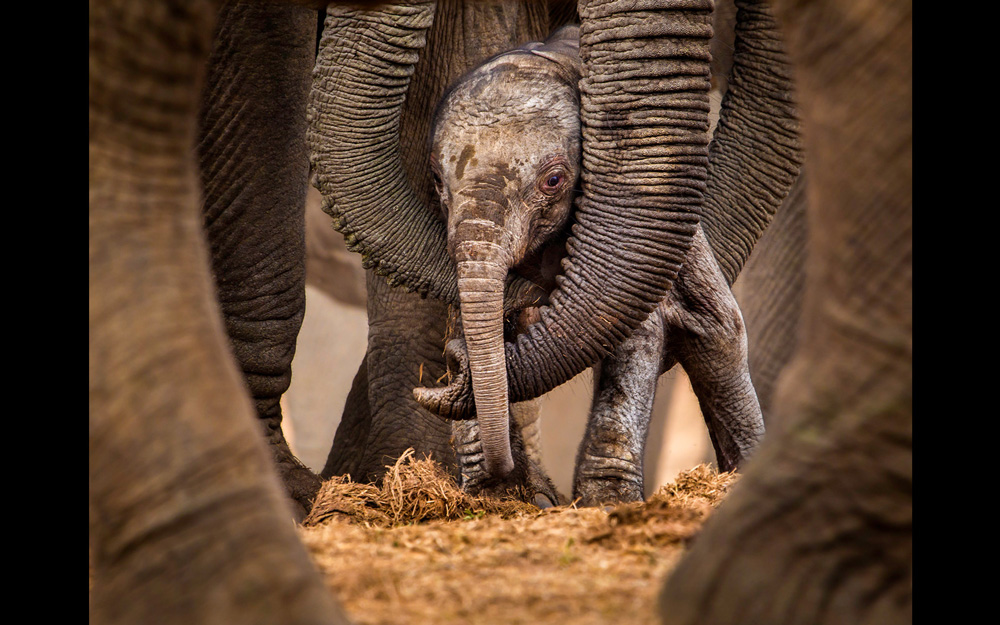
Overall Winner – Photographer of the Year 2017

An elephant calf being hugged by two trunks
“Circles of protection” in South Africa’s Eastern Cape © John Vosloo

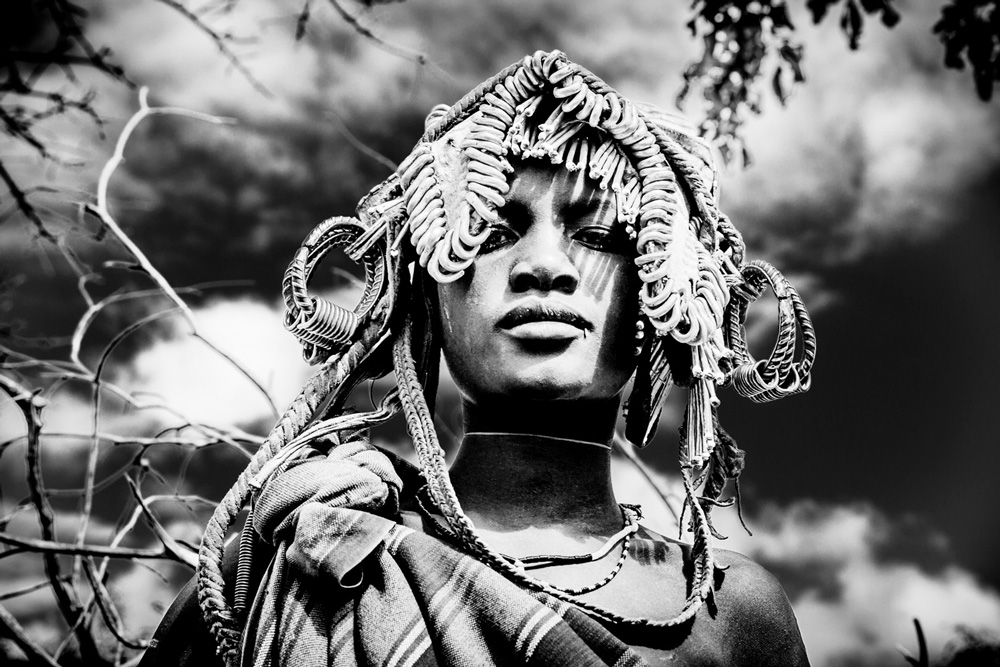
Culture category winner

Ethiopian woman in traditional dress
“Proud” in Omo Valley, Ethiopia © Christophe Lapeze

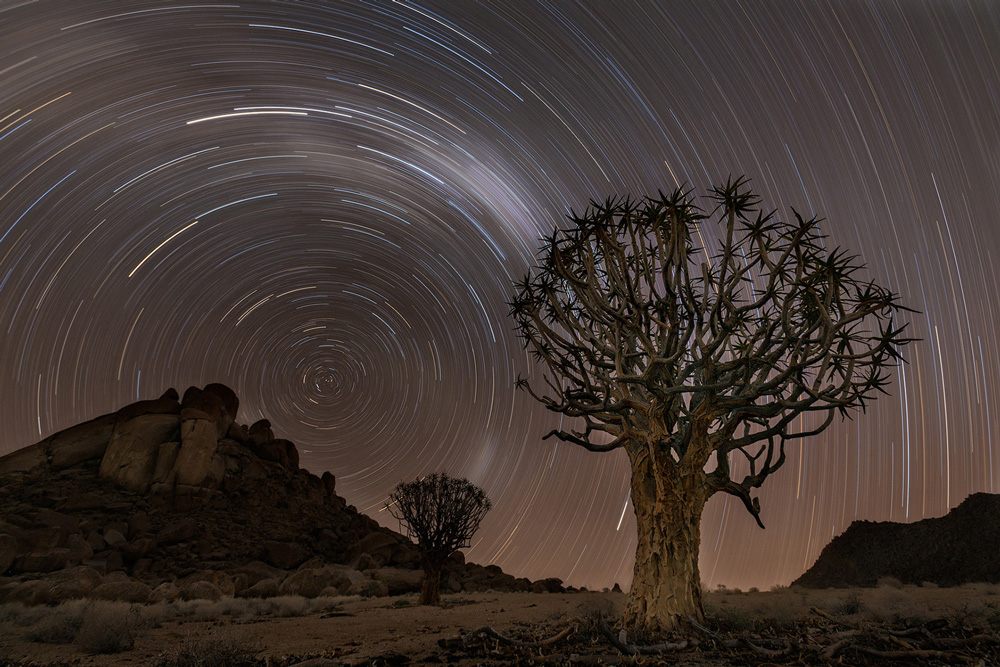
Travel category winner

Quiver trees in the Richtersveld, South Africa
Quiver trees in the Richtersveld, South Africa © Willem Kruger

Finalists

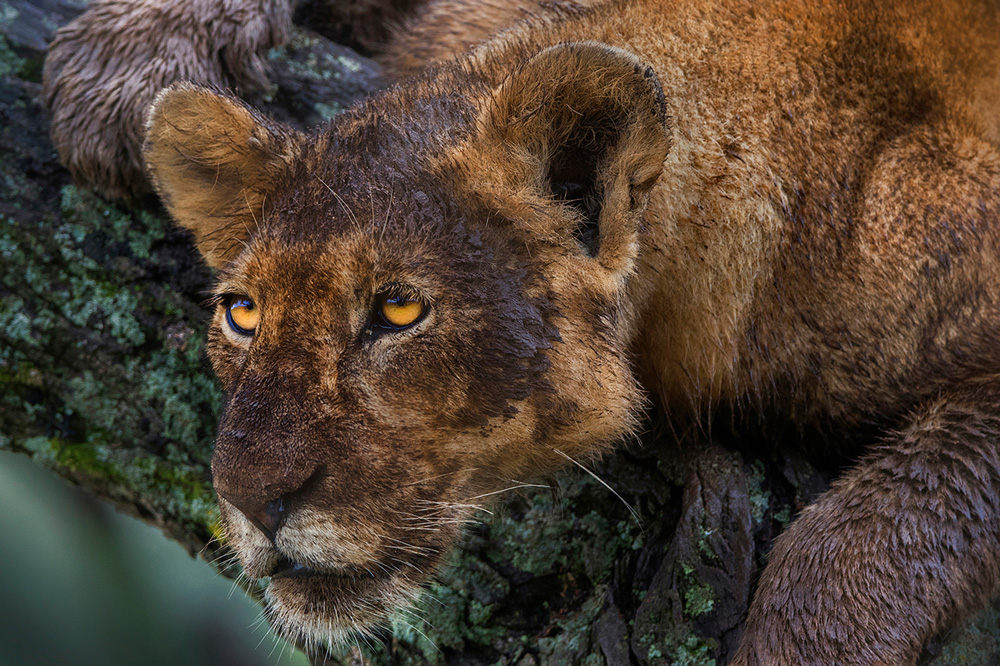
Lion covered in mud in a tree
“Thirsty look” in Serengeti National Park, Tanzania © Panos Laskarakis


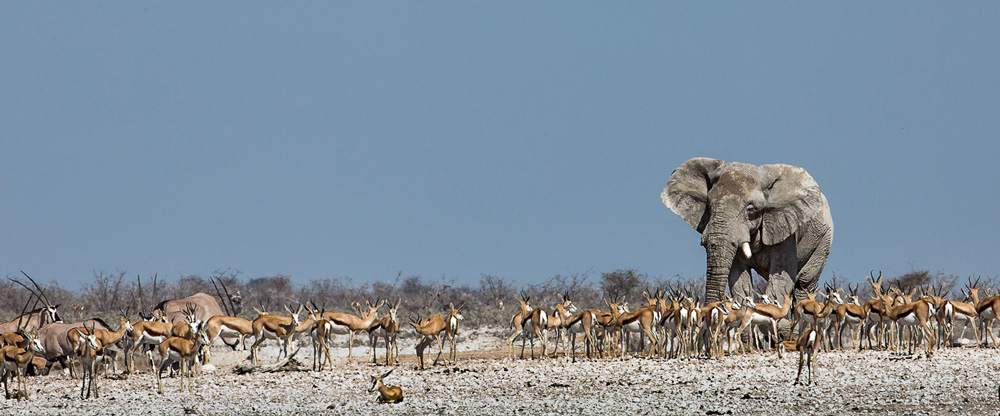
Elephant bull in Etosha National Park
“Majestic elephant bull” in Namibia © Annemarie du Plessis
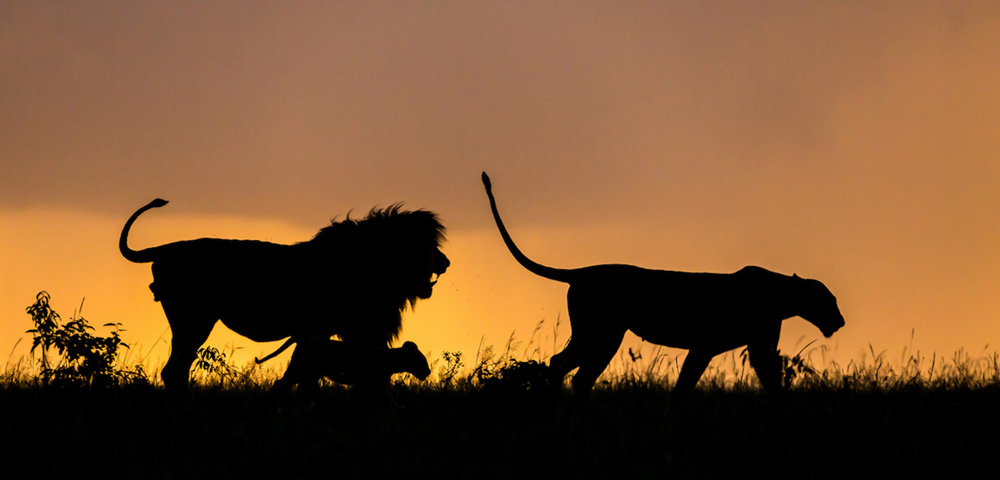
A lion family walking at sunset
A lion family at sunset in Maasai Mara National Reserve, Kenya © Anja Gröbel
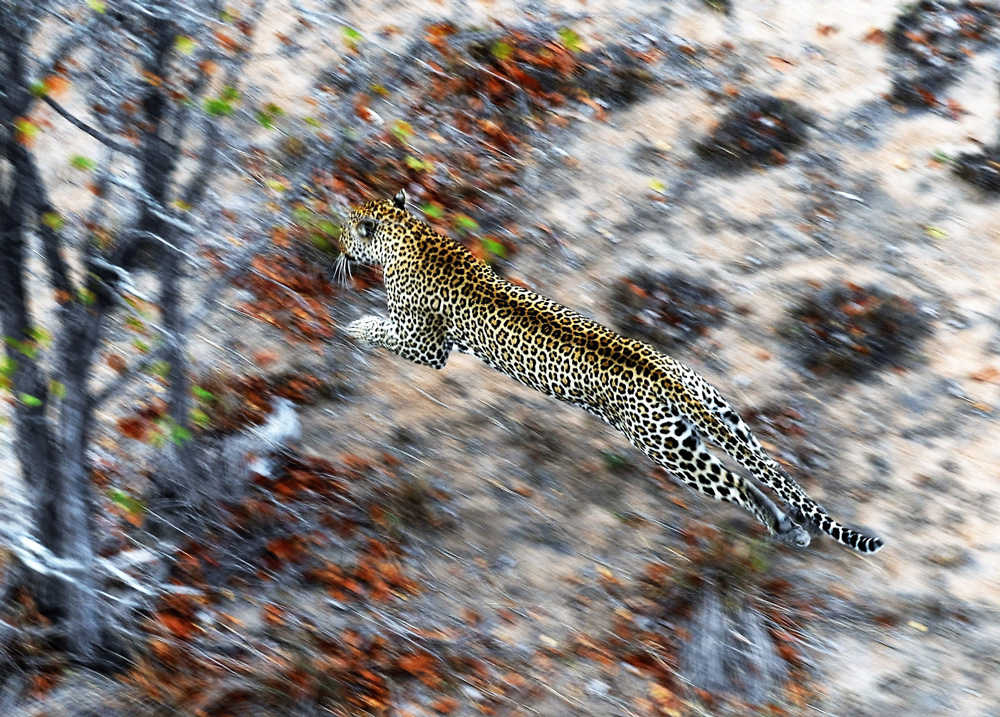
Leopard leaping through the air
Leopard spotted during a game count in Timbavati Private Nature Reserve, South Africa © Bryan Havemann
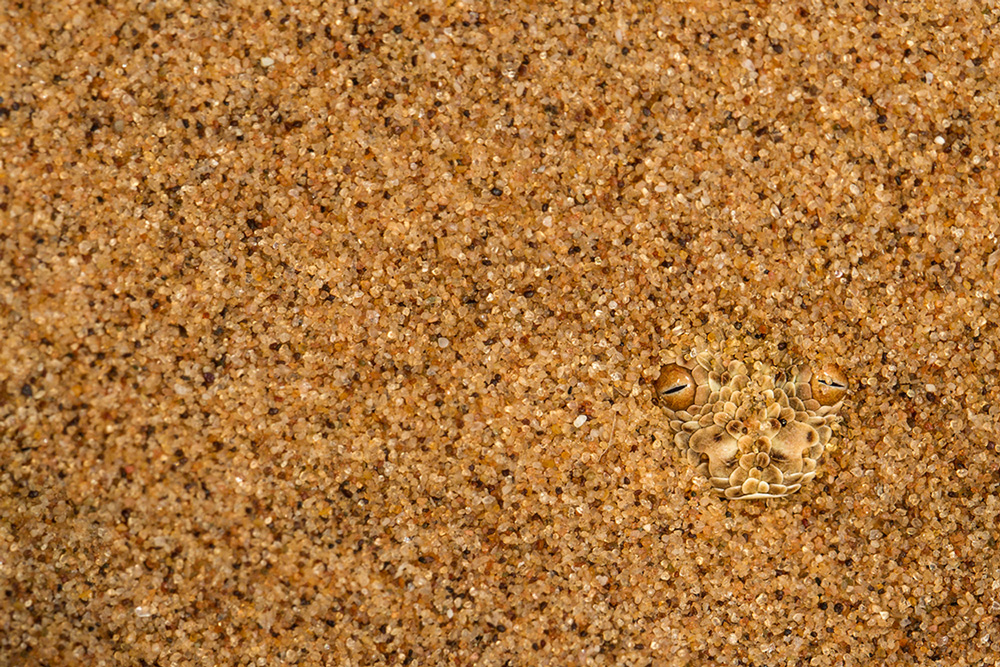
An adder camouflaged in the sand
“Now you see me, now you don’t” – a Peringuey’s adder in the Namib Desert, Namibia © Tyrone Ping
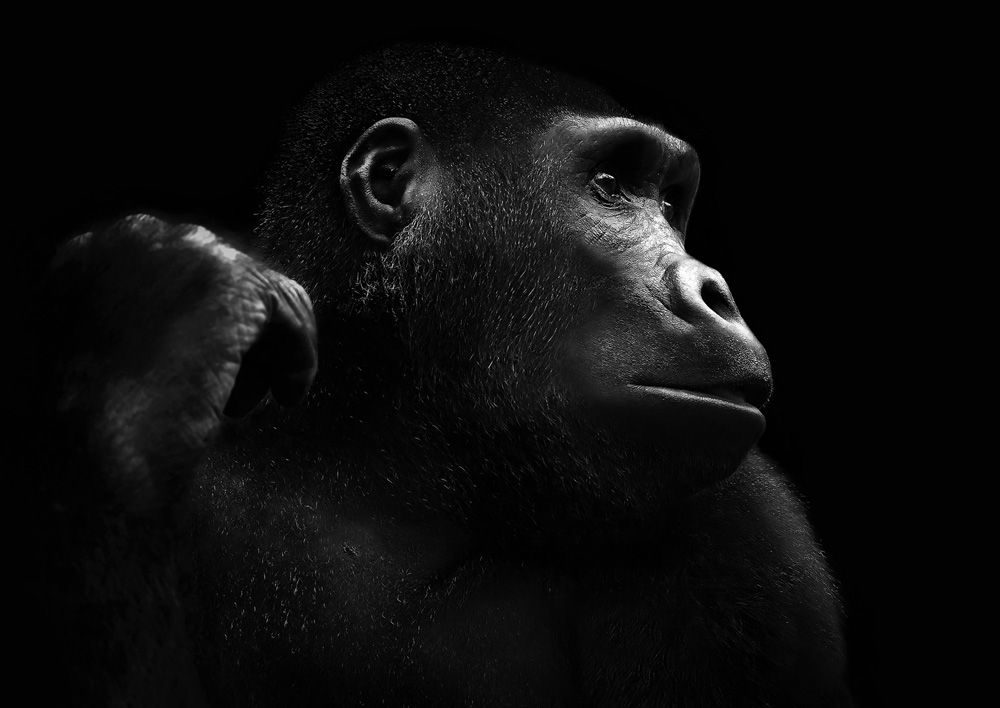
Close up photo of a gorilla
“Humankind” – western lowland gorilla in Dja Faunal Reserve, Cameroon © Björn Persson


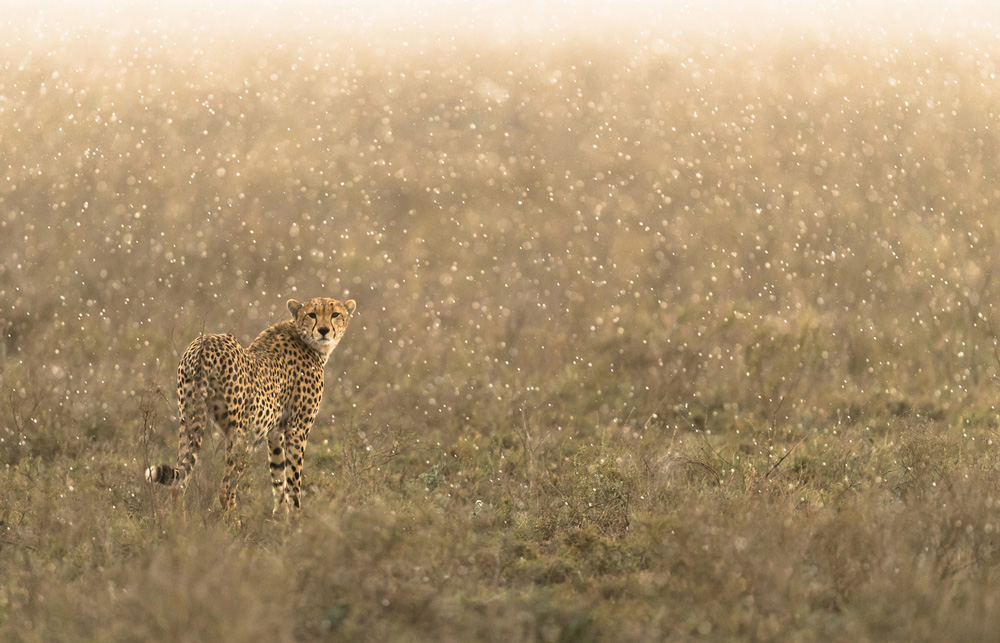
Cheetah standing in the rain
A magical shower in Ngorongoro Crater, Tanzania © George Turner
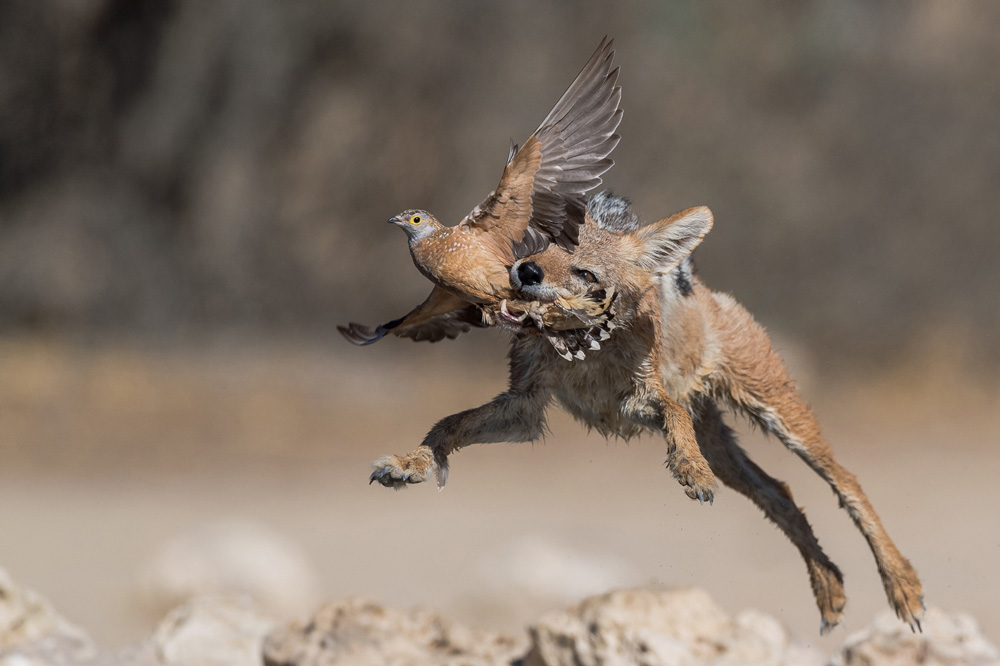
Jackal jumping in the air to catch a bird
“He who adapts best wins!” in Kgalagadi Transfrontier Park, South Africa/Botswana © Johan Mocke
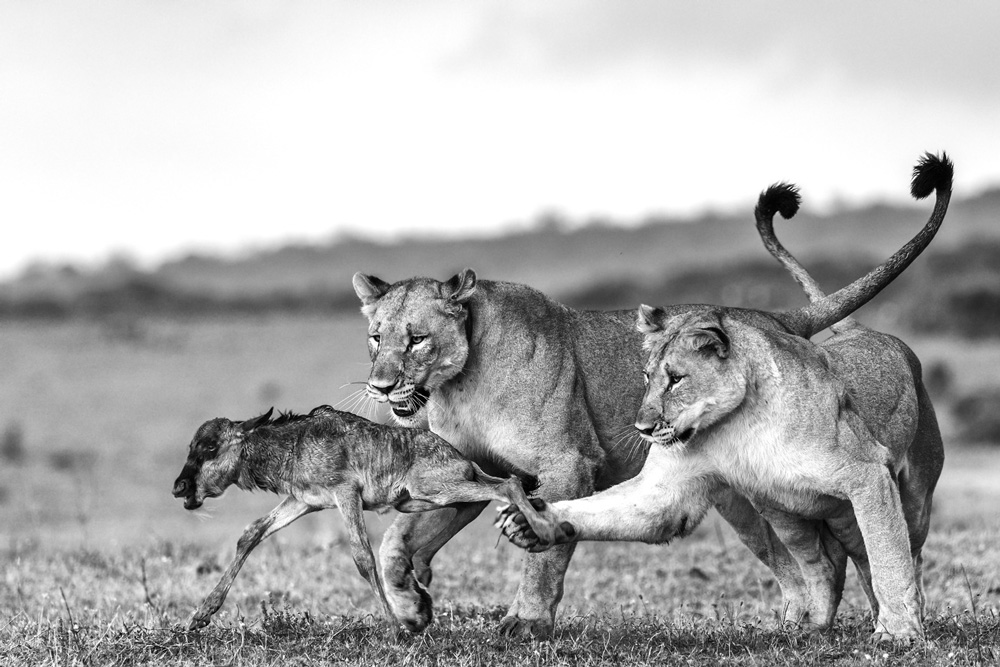
Lions catching a wildebeest calf
“Wildebeest hunt” in Kariega Game Reserve, South Africa © Jacques de Klerk
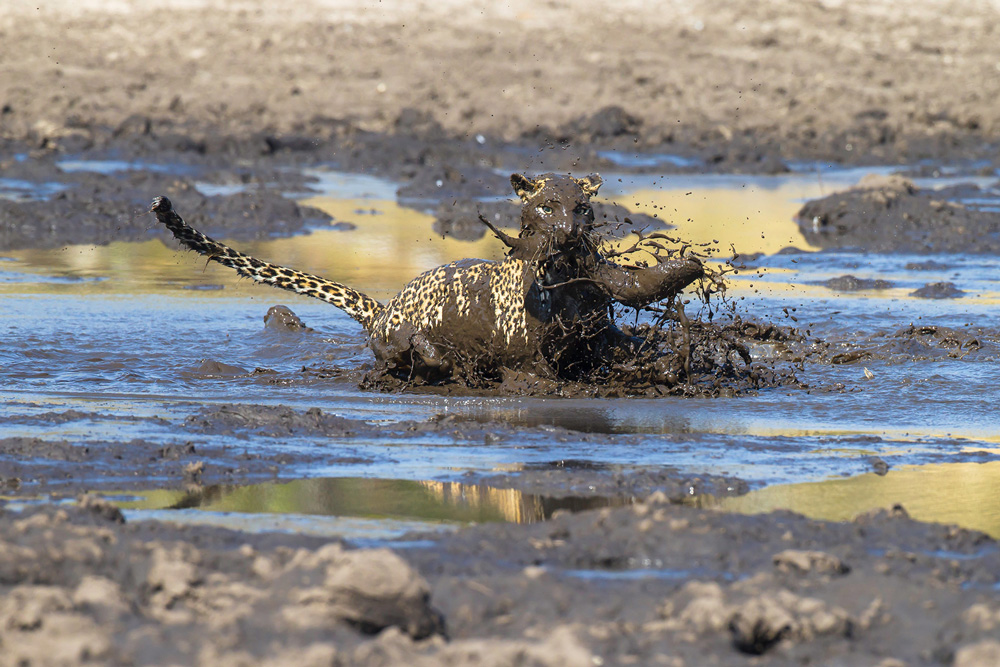
Muddy leopard catching its prey
“The perfect catch” in Savute, Chobe National Park, Botswana © James Gifford
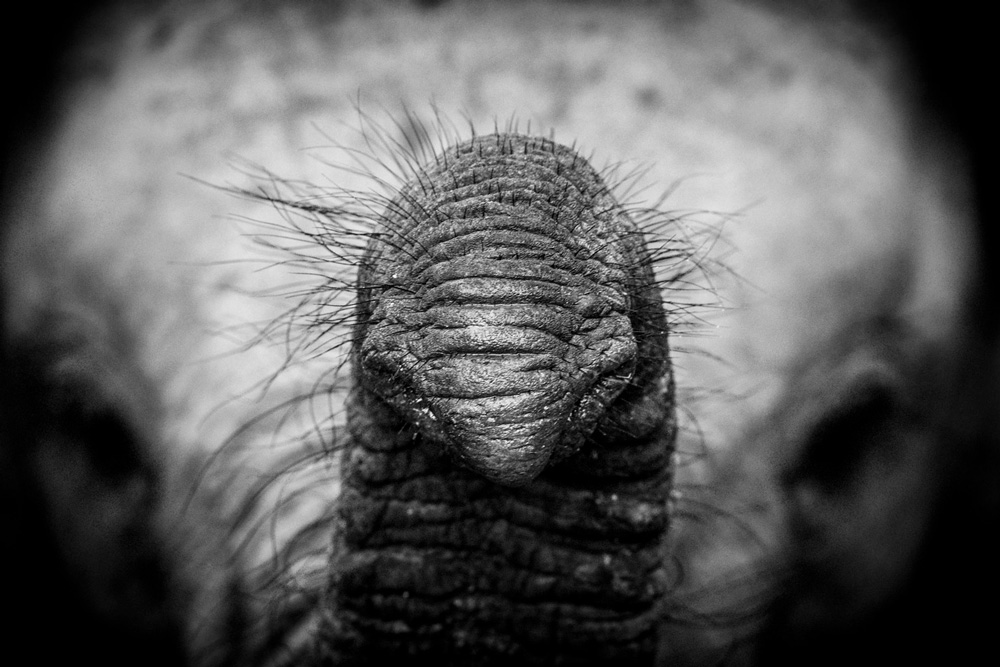
Close up photo of an elephant
“The inquisitive one” in South Africa’s Eastern Cape © Andrew Aveley
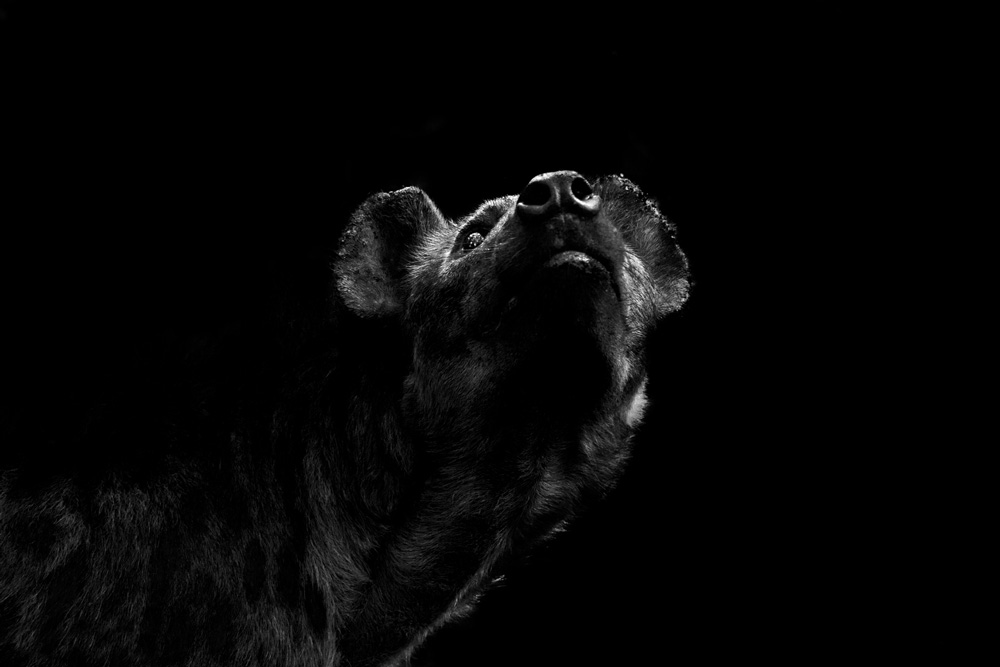
Close up of a hyena gazing
Hyena gazing up longingly in Timbavati Private Game Reserve, South Africa © Greg McCall-Peat


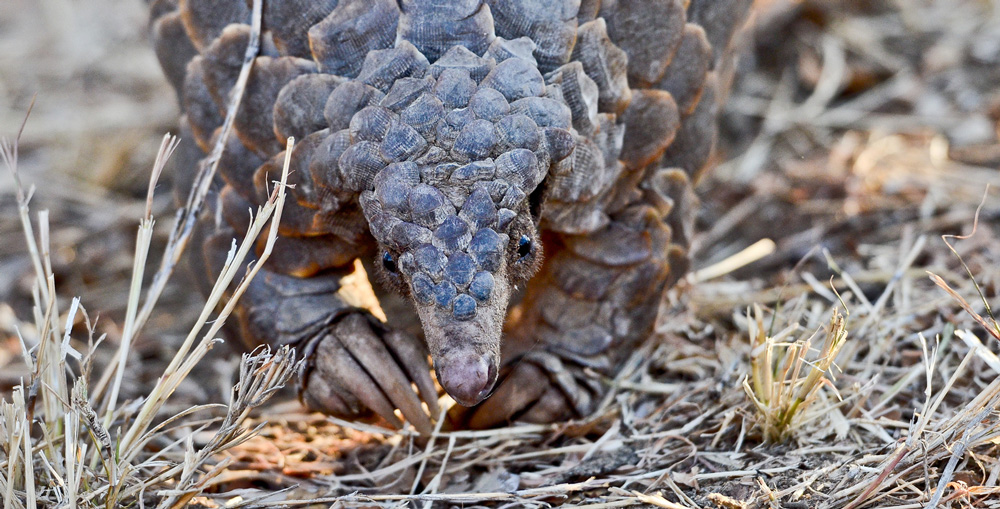
Close up of a pangolin
“Tools of the trade” in Greater Kruger National Park, South Africa © Mark Smith
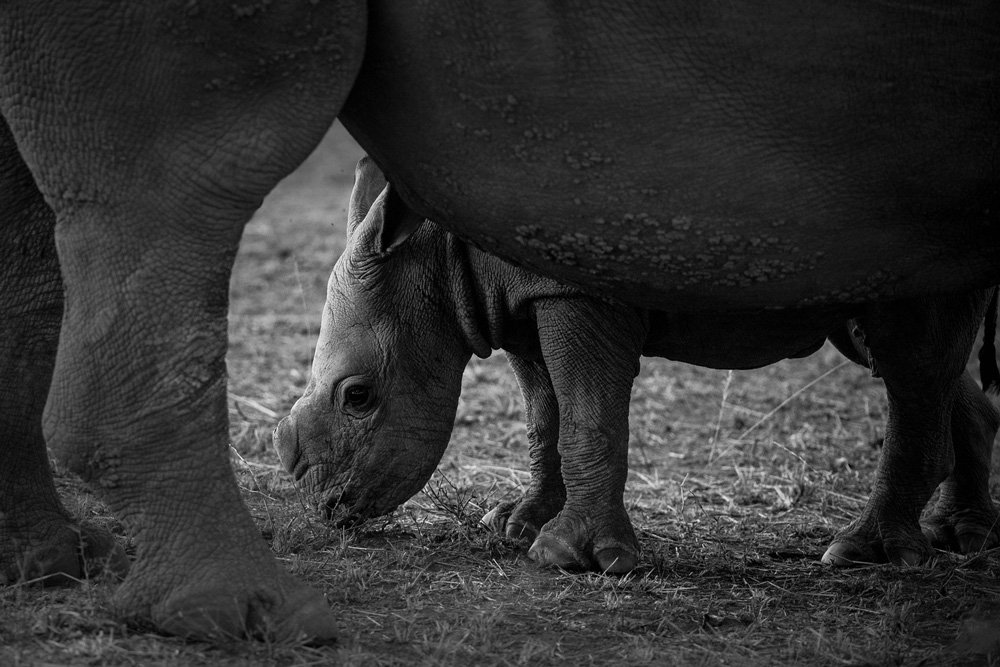
Close up of a rhino calf
“Innocence” in Greater Kruger National Park, South Africa © Andrea Galli
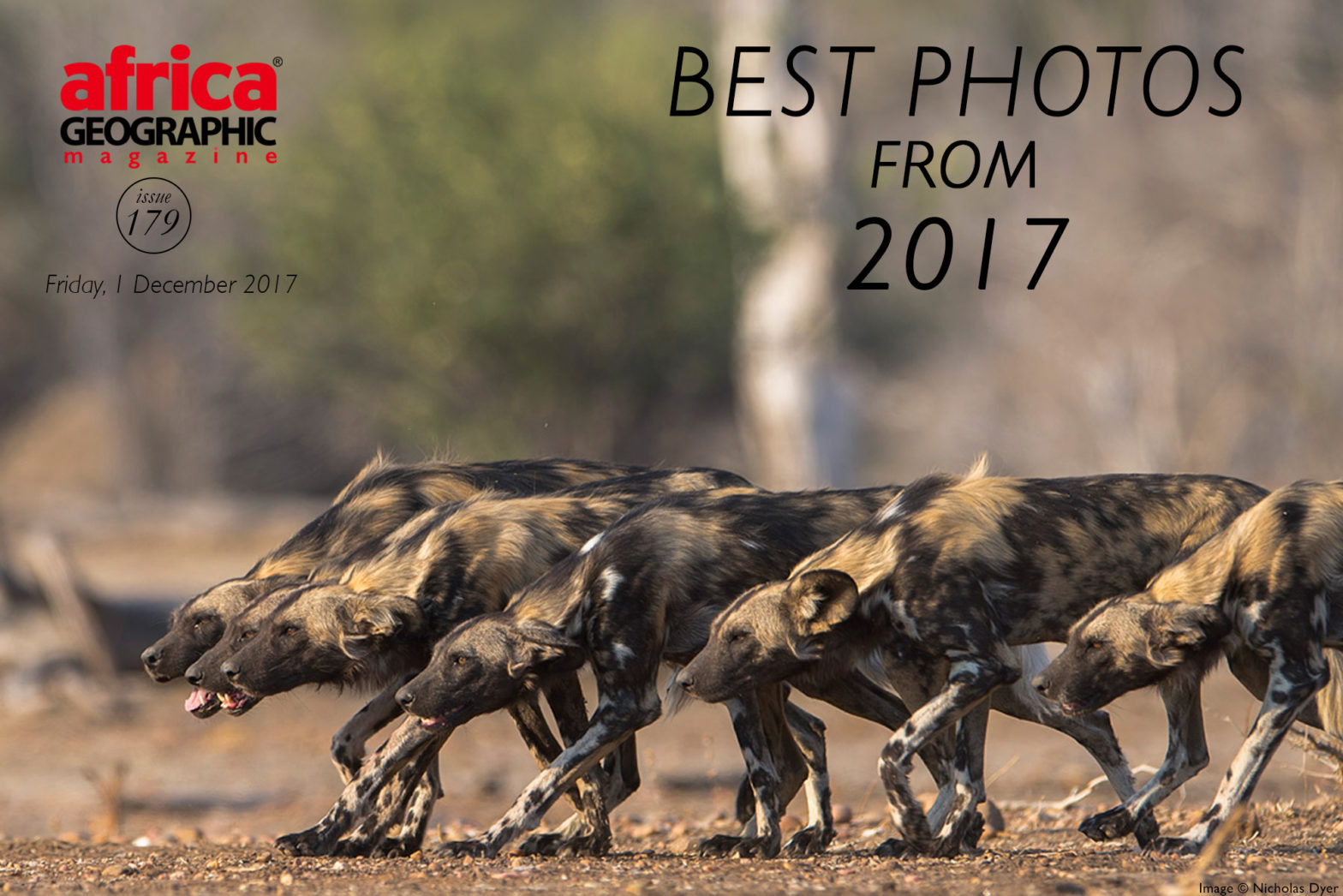
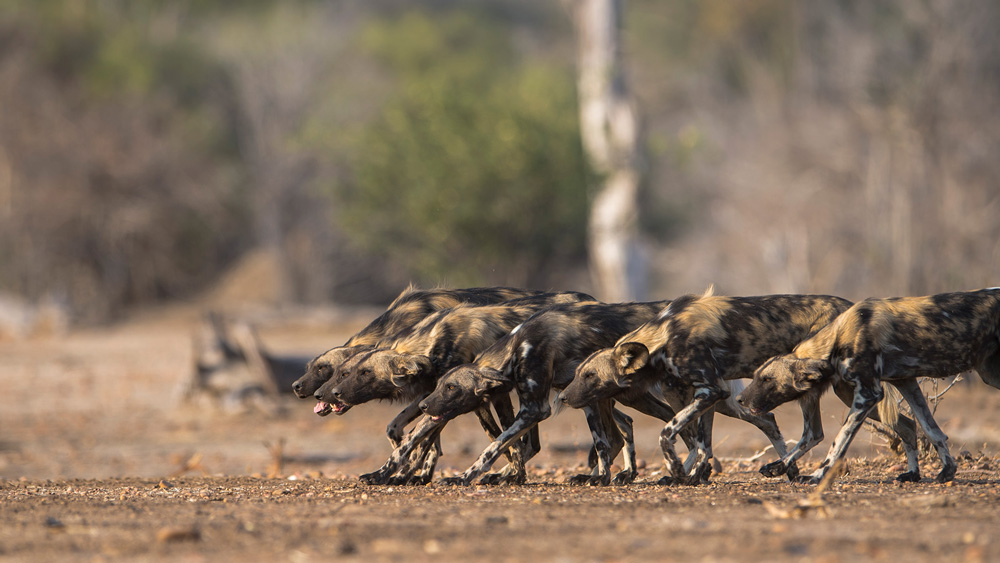
A pack of hyenas on the hunt
“On the prowl” in Mana Pools National Park, Zimbabwe © Nicholas Dyer
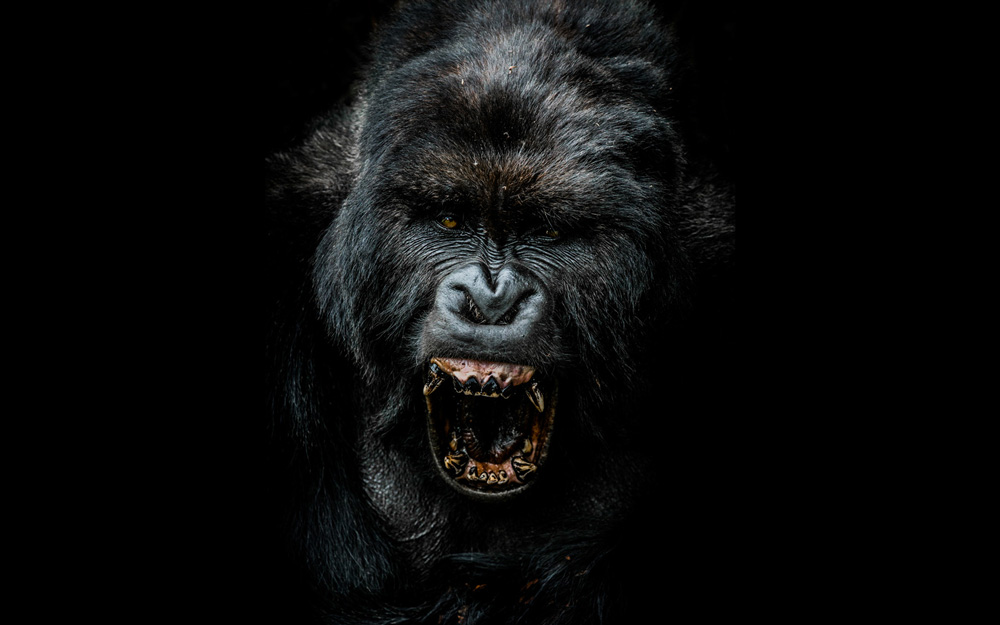
Close up of a gorilla
“Morning yawn” in Volcanoes National Park, Rwanda © Nelis Wolmarans
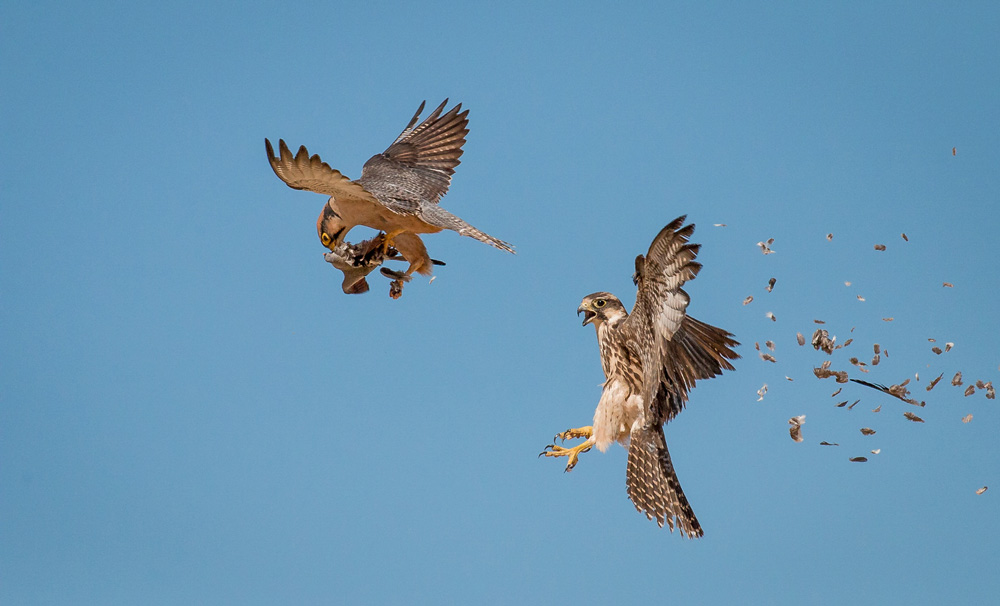
Bird steals prey from another bird
“Disappointment in the air” in Kgalagadi Transfrontier Park, South Africa © Olli Teirilä
Africa Geographic Travel
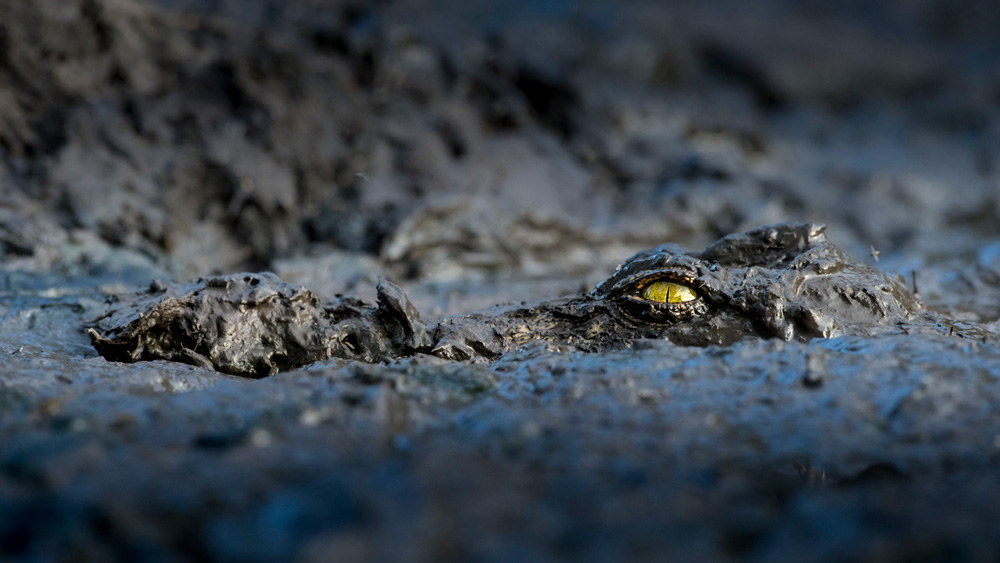
Crocodile camouflaged in the mud
“Eyes wide open” in Kruger National Park, South Africa © Ross Couper
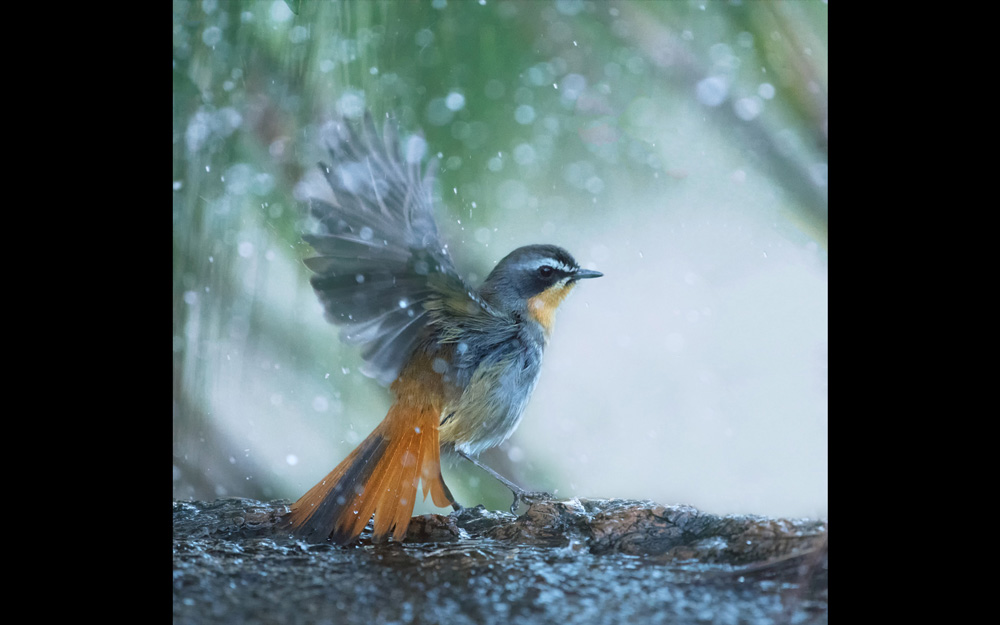
A Cape robin-chat in the rain
A Cape robin-chat enjoys a bath in Cape Town, South Africa © Dionne Miles
Baby hyena with feathers on its nose
“As light as a feather” in Kruger National Park, South Africa © Senka Gavrilovic
Close up of a Gelada monkey
Gelada monkey portrait in the Ethiopian Highlands © Patrice Quillard
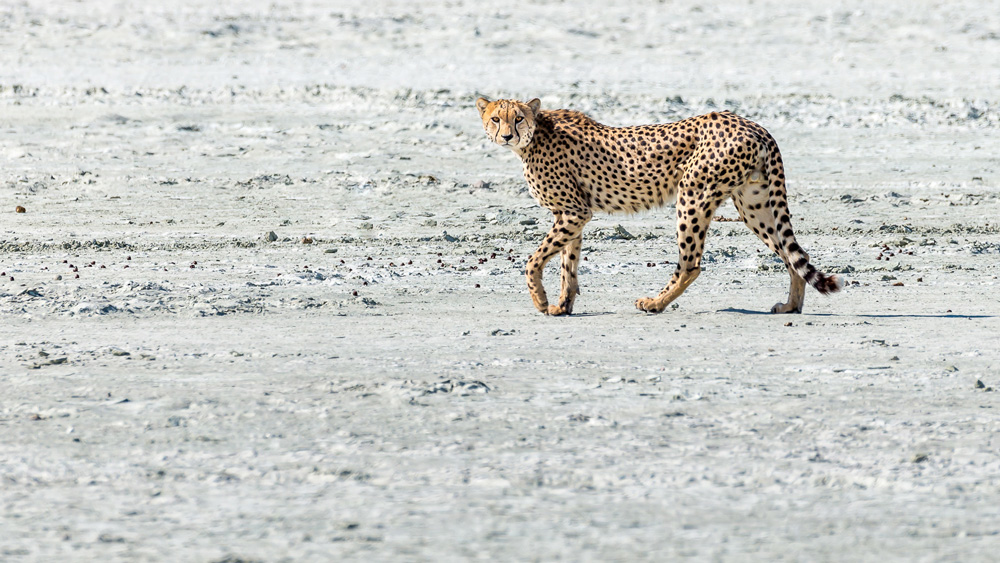
Cheetah walking in the plains
“I see you too!” in Etosha National Park, Namibia © Dave Gale
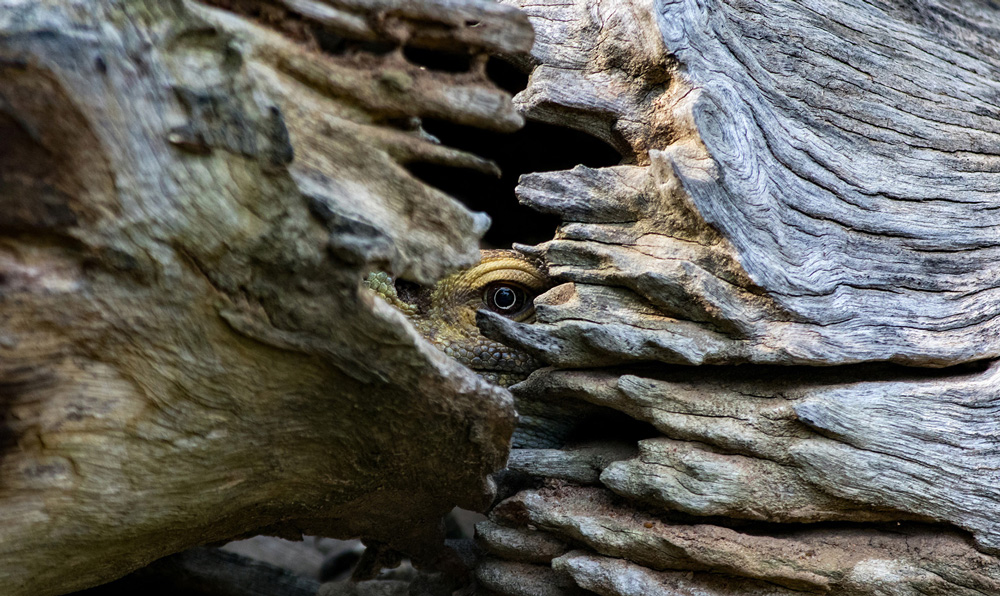
A rock monitor hides in a tree
A rock monitor hides in a tree in Ndumo Game Reserve, South Africa © Ernest Porter

The elephant orphans of Zambia

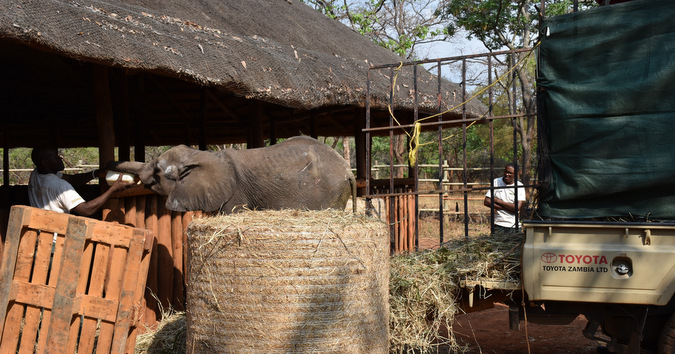
Rescued elephant orphan
The rescued elephant orphan, Mkaliva © The Elephant Orphanage (Game Rangers International)

Ten years ago in South Luangwa National Park, Zambia, a one-and-a-half-year-old elephant is left alone and helpless when her mother is shot dead by poachers. The orphan calf is flown to Lusaka and ultimately moves into the Elephant Orphanage Project’s Lilayi Elephant Facility, situated on a 650 hectare game farm on the outskirts of town.

Healthy, but understandably traumatised, Chamilandu struggles to come to terms with the loss of both her mother and extended family. Suffering nightmares that have her screaming aloud in her sleep, it will take a great deal of love and attention from dedicated keepers to give her the reassurance she needs to adjust to her new life.

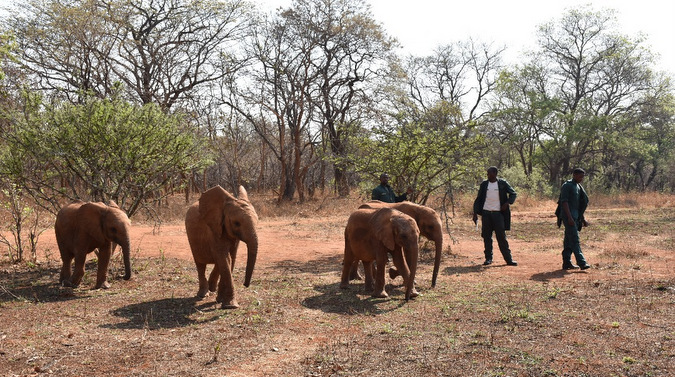
In the intervening years, Chamilandu grows into the matriarch of the orphan herd. Mothering and comforting the younger orphan calves as one tragedy or another brings them to the orphanage. Moving from the Lilayi Facility to Phoenix Camp in Kafue National Park (the release centre for older orphans) she eventually starts to demonstrate her desire to live independently in the bush; going on longer and longer forays alone and away from the release centre. Indeed, recently she has been seen interacting and mating with a wild bull in the park, a positive sign that she is ready to create new family/friendship bonds and is preparing herself for a life in the wild.

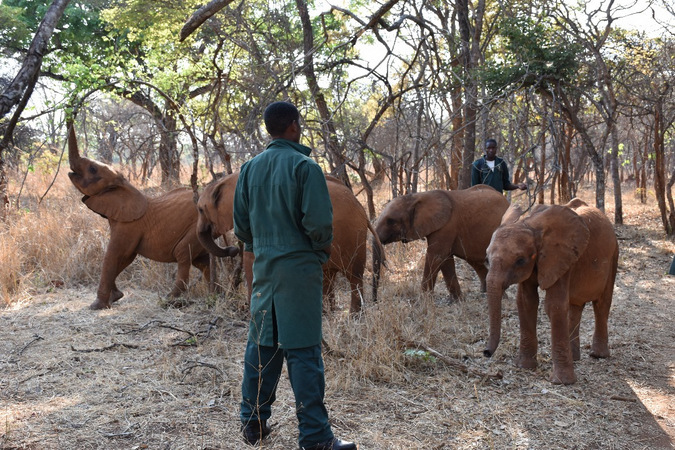
The orphans Mosi, Tafika, Chamilandu and Batoka walking in the bush in Kafue National Park © Elephant Orphanage Project/Facebook

Elephants in Africa are under serious threat, primarily due to large scale poaching for ivory and also as a result of conflicts arising from elephant-human interactions. It is estimated that 25,000 elephants are being killed in Africa every year… this works out at approximately one elephant killed every 15 minutes!

The Elephant Orphanage Project provides a sanctuary for defenceless elephant calves who are the victims of poaching, human conflict or occasionally natural abandonment. Under the age of two, young elephants are extremely vulnerable and very dependent. Most will not survive without both their mother’s care and her nutrient-rich milk.

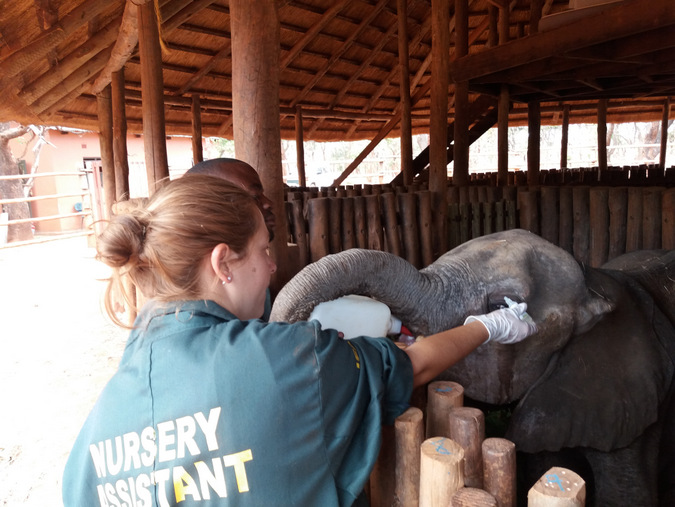
Treating Mkaliva’s wounds. Tumeric is also applied as it acts as a natural insect repellent © The Elephant Orphanage (Game Rangers International)
Lilayi Elephant Nursery

The first port of call for any orphan rescued within Zambia is the Lilayi Elephant Nursery, and it is here that these fragile babies are looked after twenty-four hours a day – a milk-dependent orphan requires its special formula every three hours!

Rescued baby elephant orphan being bottle fed
Unloading the 41st rescued orphan, who is now called ’41’ © The Elephant Orphanage (Game Rangers International)

Trained keepers care for and watch over their charges constantly; taking them on daily ‘bush walks’, feeding them and staying close at hand to provide reassurance when the babies are in the stables at night. These keepers play a vital role in the emotional and social recovery of the young elephants, and become the ‘mother figure’ the babies desperately need.

Elephant calf being treated for an eye infection
Treating 41’s infected eye after rescue © The Elephant Orphanage (Game Rangers International)

These youngsters have a difficult road ahead as they overcome the loss of their families, learn how to integrate and socialise with other elephants and ultimately grow into healthy adults who will one day walk free.

Elephant orphan calves out on a walk with their keepers
The orphans out on a daily walk with their keepers © The Elephant Orphanage (Game Rangers International)
Kafue National Park release facility

As soon as the calves can be weaned from milk (approx three years of age) they are moved, with at least one social playmate, from Lusaka to the Release Facility in Kafue National Park, where they join other, older, orphaned elephants. Here they will learn to live more independently of human support and will spend much of their time wandering freely through the bush (‘walks’ scheduled from 6am – 12pm and 2pm – 6pm daily, with mud baths and playtime taking up the middle of the day).

The Kafue Release Facility is adjacent to the ancient Ngoma Teak Forest where there is a 1,000-strong local elephant population, maximising the chances of the orphans integrating with fellow elephants and gradually moving back into the wild once they are emotionally, physically and socially ready.

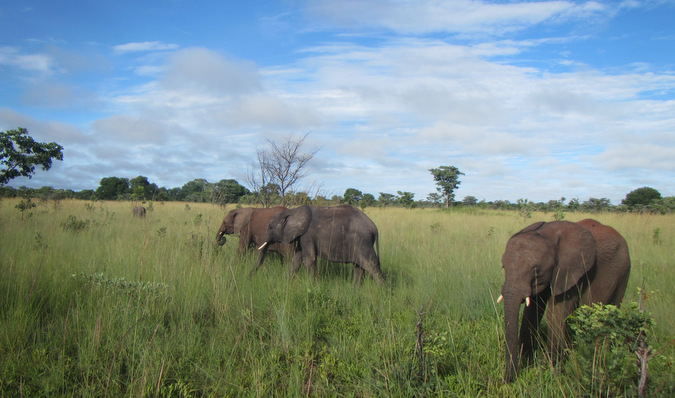
Three elephants in Kafue National Park
The older orphans, Bezi, Tafika and Muso, in Kafue National Park © The Elephant Orphanage (Game Rangers International)
History

The Elephant Orphanage Project was established in 2007, with critical and on-going funding from the David Shepherd Wildlife Foundation, with the mission of rescuing, rehabilitating and releasing orphaned elephants back into the wild. The Elephant Orphanage Project works together with the Zambian Department of National Parks and Wildlife (DNPW) and is part of a conservation initiative developed and operated by Game Rangers International, a Zambian, not for profit NGO.

Four elephant orphan calves out for a walk with their keepers
By going out on bush walks the orphans learn how to integrate and socialise with other elephants © The Elephant Orphanage (Game Rangers International)
Visiting the nursery

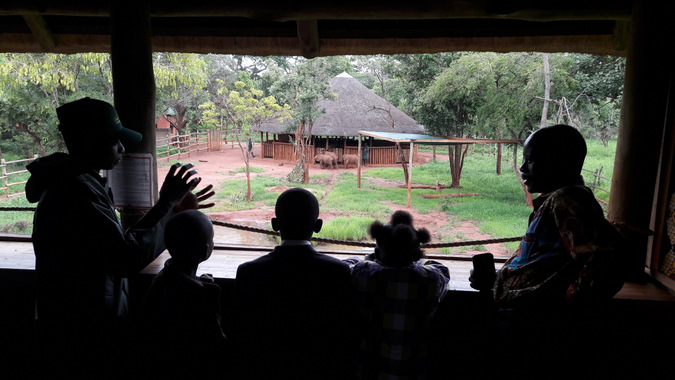
You can visit the Lilayi Elephant Nursery, which is just a 35-minute drive from the centre of Lusaka any day of the year between 11h30 and 13h00. At 11h30 a staff member gives a short talk about the orphanage and you can visit the viewing deck which is an ideal vantage point for watching the elephants feed and play.

Note that given the ultimate goal of releasing the elephants back to the wild, visitors are not permitted to touch the elephants.

Cost: Adults K50, children ages 12-18 K20, children under 12 free. Every Monday entry is free.

elephant orphanage, viewing deck, people
A keeper gives a short talk about the orphanage from the viewing deck

If you want to venture a little further off the beaten track, then you can visit the Elephant Orphanage’s Kafue Release Facility in the southern part of Kafue National Park, 12km along the South Nkala Loop from Ngoma (location of the National Parks and Wildlife Headquarters).

The closest places to stay when visiting the release centre is Konkamoya Lodge or HippoBay Campsite and Bushcamp.

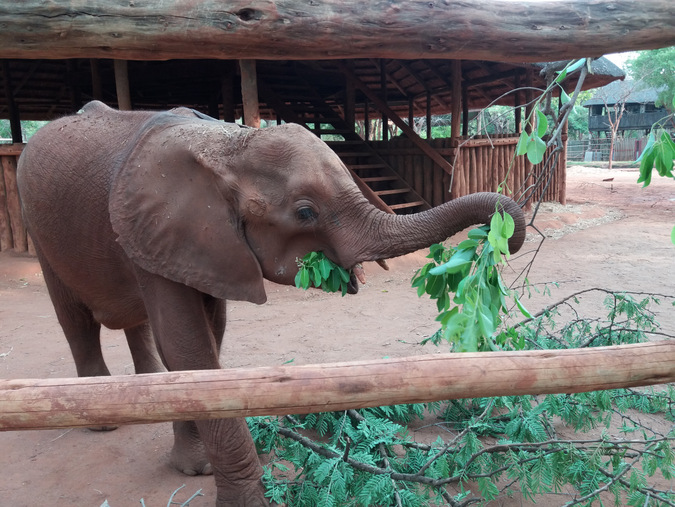
Elephant calf feeding on browse at an orphanage facility
The orphan, 41. feeding on browse after successful treatment © The Elephant Orphanage (Game Rangers International)
Costs and fundraising

It costs a lot to raise an orphan from rescue to release – a lot more that you might think! Rescues alone can vary widely in cost depending on the area the calf is found in just for starters.

In some instances special vehicles, boats or even planes need to be hired, add to that scout and tracker fees, then add vet fees which can include quarantine, sedatives, blood tests and various other medications – and don’t forget the cost of ‘manpower’.

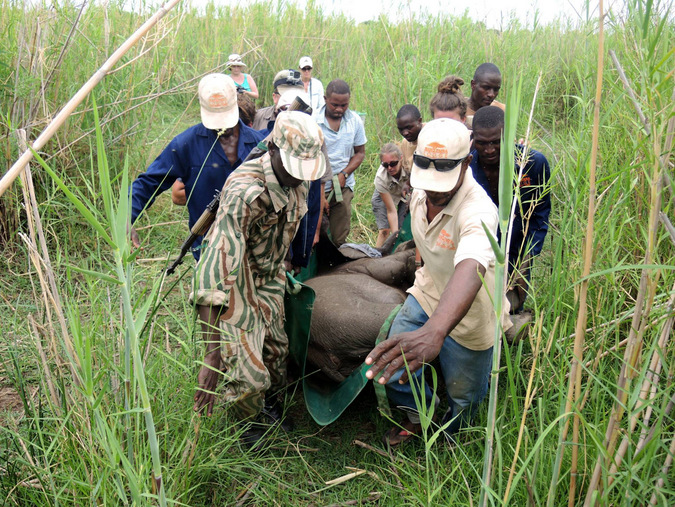
Rescuing an elephant orphan calf
The rescue operation of the elephant orphan calf Muchichili © The Elephant Orphanage (Game Rangers International)

An ‘average’ rescue will be in the region of US$1,500. And once an orphan is rescued the costs continue to mount, with a staff of 27 at the Kafue Release Centre and another 17 at the Lilayi nursery wages are not an insignificant cost to be factored in. Feeding, veterinary, maintenance, communications… the list goes on.

With 17 orphans currently being cared for between the two facilities, each costing approximately $35,000 a year, the Elephant Orphanage Project has an operating budget in the region of $600,000 a year.

As with all conservation projects, funds are always in short supply, any donations can be directed to the Elephant Orphanage Project fundraising page.

You can also follow the project on their Facebook page.

Two elephant orphan calves
Kasewe and Njanji out on a bush walk © The Elephant Orphanage (Game Rangers International)

Hluhluwe iMfolozi Park: Protecting the “birthplace of rhino”

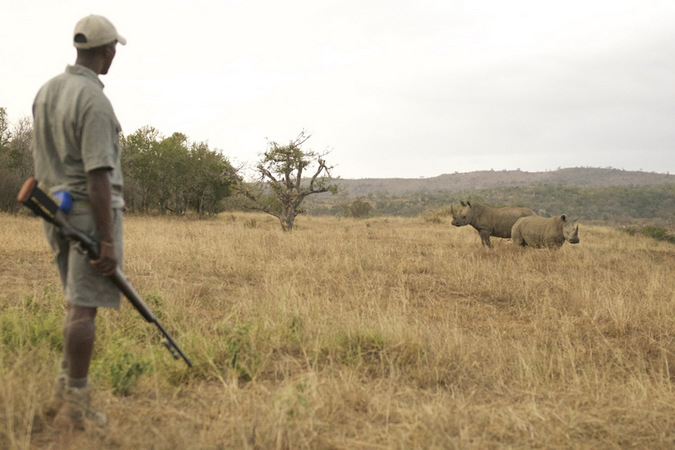
Ranger protecting rhinos in Hluhluwe iMfolozi Park in KwaZulu-Natal, South Africa

Media release provided by Peace Parks Foundation

“The birthplace of rhino” – this is the name often given to Hluhluwe iMfolozi Park (HiP) in KwaZulu-Natal, South Africa, where the southern white rhino was saved from the brink of extinction half a century ago. Over the past few months, though, this sacred rhino protection area, managed by conservation agency Ezemvelo KwaZulu-Natal Wildlife, has had a significant escalation in rhino poaching.

As custodian of key white and black rhino populations, Ezemvelo has been protecting these iconic species and many of our country’s other natural assets for decades. Yet, the recent shift in focus by organised crime and wildlife trafficking syndicates have resulted in tremendous pressure being exerted on this conservation agency. Whilst they could forecast a potential displacement of poaching from other areas and prepare accordingly, the intensity at which Ezemvelo, and specifically HiP, has been targeted over the past year, was not something that could be predicted.

Fighting for life

Contrary to the picture of disinterested Ezemvelo conservation officials often painted in the media of late, the men and women of HiP are literally fighting for the lives of their animals and their people without rest. Rangers are out on patrol day and night, responding to alerts and pro-actively creating a safety barrier between the rhino and potential intruders. Nights are spent in the bush, double shifts worked, with many of them not seeing their families for weeks on end as they dedicate themselves to their work’s purpose.

In control rooms nearby, rotating shifts of support teams to these rangers have eyes on screens and ears in radio communications 24/7 – collaborating with provincial law-enforcement units and closely supported by South African Police (SAPS). Emotions have run high these past months, and speaking to the staff on the ground you could easily see anger, immense sadness, and utter desperation expressed all in one conversation about the attack on their wildlife, their park, their livelihood.

Whilst the field staff kept up the front line, the dramatic increase in rhino poaching coupled with the impact thereof on their staff, have kept the Ezemvelo top brass sequestered behind closed doors for the sole purpose of developing more effective anti-poaching and resource management strategies.

Advanced strategies

Through lessons learnt on home ground, as well as taking from approaches successfully implemented by other conservation agencies, various tactics have been identified that will form the focus of resources and time over the next few years.

• Firstly, this involves implementing intensive protect zone strategies to more efficiently patrol critical hotspots and protect core rhino populations within the expansive public conservation space that Ezemvelo is responsible for.

• Secondly, significant effort will be put towards putting in place structures and systems to solidify joint operation initiatives with national and provincial law enforcement, private rhino owners, and other conservation agencies (such as South African National Parks). Illicit rhino trafficking syndicates have no regard for national, provincial or any other boundaries, and it is, therefore, critical that anti-poaching and counter-trafficking operations be aligned across agencies and geographical regions.

• Furthermore, the primary focus has been placed on increasing the use of technology as a force-multiplier to detection and response strategies – placing Ezemvelo one step ahead of poachers, improving effective and rapid mobilisation of available resources, and keeping field staff safer. In this regard, Ezemvelo has embarked on a journey with Peace Parks Foundation in the evolvement of HiP as a so-called ‘Smart Park’. In October 2017, this partnership was formalised with the signing of a Memorandum of Agreement through which Peace Parks Foundation committed more than R10,6 million towards the HiP Smart Park development as part of the Rhino Protection Programme.

Mr Bheki Khoza, Acting CEO of Ezemvelo, shared his hope for the road ahead: “It will be near impossible for Ezemvelo KZN Wildlife to succeed in its fight against rhino poaching without the involvement of local communities as well as the support of public and private organisations that go out of their way to fund new technologies aimed at fighting rhino poaching. The poaching syndicates are always devising new plans to counter the strategies we use against them. I am hopeful that the new integrated, joint operational plan that we are now embarking on will be a game-changer. I am not saying that it will totally eradicate rhino poaching, but I know that it will form a critical component of efforts to reduce illegal wildlife crime activities going forward.

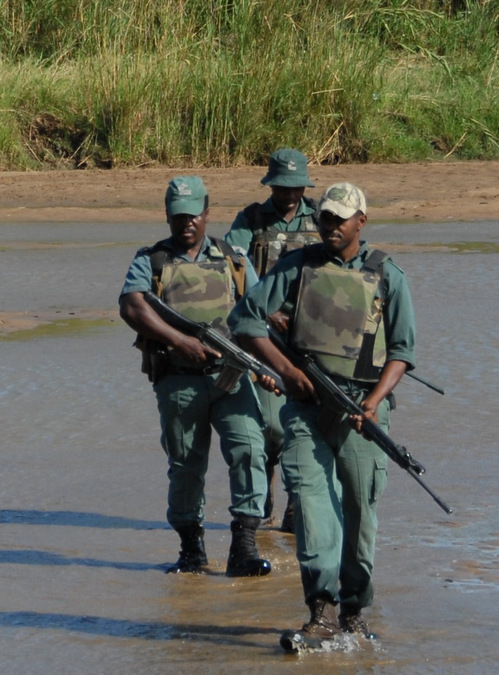
Three rangers on patrol in Hluhluwe iMfolozi Park in KwaZulu-Natal, South Africa

The purpose of the integrated system is to provide park managers and rangers with improved insight into everything that is happening across HiP’s vast conservation space, and to respond in a timely manner with the right resources. It will also allow for mapping rhino movement and hotspots, and the subsequent planning and execution of more successful protection tactics.

No longer will ranger forces have to follow the faint sound of a gunshot for hours before finally realising that the perpetrators had already jumped the fence. Now a gunshot can be followed by a rapid deployment of reaction forces to within metres of the alert location. And, if all plans come to fruition, the hand that would have pulled the trigger will in future be in handcuffs before the shot is even fired.

The HiP Smart Park

The development of the Smart Park entails the deployment of a collection of integrated technology solutions that together create a connected environment to enable seamless collection and consolidation of real-time data from various devices and sensors throughout the Park. Intelligent surveillance systems, image recognition cameras, digital radios, handheld data collection devices, animal tracking sensors, gate and access control systems, vehicle and aerial response tracking systems – these are but a few of the data sources that will be integrated into the unified technology ecosystem.

The establishment of the Smart Park will also include the provision of a Low Power Wide Area Network (LoRaWaN) with world-class internet connectivity for the integration of smart sensors and the speedy transmission of data.

The approach that has been developed through the agreement between Ezemvelo and Peace Parks, not only relates to developing a Smart Park with greater real-time wide-area situational awareness but also focuses on putting in place a central command and control system for the anti-poaching unit. All data collected will be packaged and presented to this central command through a single, simple web-based application, where artificial intelligence will also be applied to interpret and analyse the data, allowing for quick decision-making and effective tactical planning.

Central command will be headed by an operations manager who will make sure that the new technologies are integrated into daily anti-poaching operations and who will guide reaction force tactics – thus bridging the “people” and “technology” divide from within.

Werner Myburgh, Peace Parks Foundation CEO, added: “The battle against wildlife crime is far from over, and high market prices continue to drive the relentless demand for wildlife products. To stabilise this situation, a sustained multi-pronged approach is required. Whilst consumer countries need to be educated about the devastating consequences of their behaviour, we cannot sit idly by, hoping for change. Technology is one of the many strategies that can play a significant role in preventing the extinction of iconic species such as rhino in the wild. To this end, we would like to congratulate Ezemvelo for boldly moving forward, and wish to express our sincere thanks to the Dutch Postcode Lottery for their continued and courageous support.

Why the green season is the time to visit Botswana

Leopard during the green season in Botswana with Africa Geographic
©Simon Espley

November through to March is Botswana’s green season, a time where the country is blessed with much needed rainfall following a long dry season. To locals it is also known as the “secret season”, a unique time of year to visit which many visitors are simply unaware of.

Here are a few reasons why Botswana should be top of your list for a last minute holiday:

Birthing season

Many young are born during green season, due to the plentiful grazing around them. This allows for unique sightings of little ones finding their feet for the first time, fiercely protected by their mothers and the herd. Of course with babies around, there are predators not far behind, which can lead to spectacular (if stressful) encounters.

Botswana green season with Africa Geographic
Affordability

Many lodges offer special offers or SADC rates during green season, making the destination up to 50% cheaper than the busy peak season. Take advantage of ‘stay/pay’ promotions as well as value added deals.

Peace and quiet

Say goodbye to pushing and shoving amongst other game drive vehicles to get a glimpse of a leopard. Green season is also quiet season, a time when there are fewer people, allowing the tourist a much more exclusive and personal safari.

Botswana with Africa Geographic during the green seasonMigrations, birds and the small things

Many migratory birds arrive in Botswana during green season, making the country a birder’s haven. Green season is also the time for wildlife migrations, as animals move to take advantage of mineral-rich grazing. It is this time of year you may witness hundreds of zebra on the usually dry Makgadikgadi Salt Pans. The Kalahari also blooms with life, attracting antelope and zebras in their masses. This is also the time when you will notice chameleons, tortoises, frogs and other small creatures as they take advantage of the rains.

Chameleon on green season safari in Botswana with Africa Geographic
©Simon Espley

For accommodation options at the best prices visit our collection of camps and lodges: private travel & conservation club. If you are not yet a member, see how to JOIN below this story.

Trophy hunting may cause extinction in a changing environment

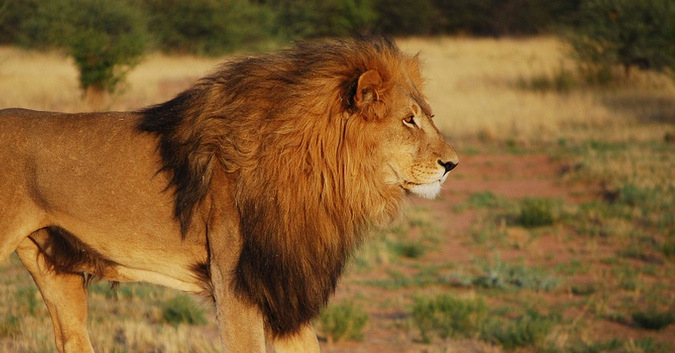
African male lion

Sourced from third-party site: Independent, written by Josh Gabbatiss

Male animals with the biggest antlers, horns and tusks have ‘high-quality genes’, so removing them from populations can be disastrous. When hunters kill animals for trophies, they often target the biggest and the best individuals.

Unfortunately, according to a new study these individuals are not only valuable to those who want their heads on walls. The importance of such animals to the wider population calls into question some of the hunting carried out under the banner of “conservation”.

“Large antlers or other ornaments are correlated with the genetic quality of the individual carrying them,” said Dr Robert Knell, an evolutionary ecologist at Queen Mary, University of London.

A big pair of tusks on an elephant or a large, dark mane on a lion don’t only imply status, they also indicate that those animals are “able to acquire resources, to grow well and to be healthy, and for that, they need to have a high-quality genome,” said Dr Knell.

It is often assumed that “selective harvesting” in the form of trophy hunting doesn’t seriously harm populations, as it only involves removing a few individuals and only targets males. Males tend to have desirable features for hunters, and it is generally thought that females will always be able to find willing mates.

In a paper published in the journal Proceedings of the Royal Society B, Dr Knell set out to investigate whether these assumptions held true, or whether a decline in genetic quality could be a serious problem.

“What we said was, why don’t we put that into our big fat mathematical simulation model and see what happens,” he said.

Dr Knell and his collaborator Carlos Martinez Ruiz found selective harvesting can be a particular problem when animals are experiencing environmental stress. When a population is forced to adapt in response to a changing environment, then the removal of the highest quality individuals had catastrophic results. Populations were unable to adapt and were far more likely to go extinct.

Habitats like the African savannah, where a lot of trophy hunting takes place, are also highly susceptible to climate change. This makes the findings of this study all the more worrying.

“If we get the 2°C change that now looks like the minimum we are going to get, that’s going to put a lot of stress on a lot of these populations,” said Dr Knell.

“Africa is already hot, and it’s going to get quite a bit hotter.”

Trophy hunting is increasingly being presented as a viable conservation strategy, with a greater area of land being conserved for hunting in Sub-Saharan Africa than is set aside for national parks.

Many conservation groups support the practice, with WWF stating that “in certain limited and rigorously controlled cases, including for threatened species, scientific evidence has shown that trophy hunting can be an effective conservation tool as part of a broad mix of strategies”.

“I think there is a very good case that when you have very well managed trophy hunting, it is largely beneficial in terms of conservation,” said Dr Knell.

However, he warns that an unfortunate focus by organisations such as Safari Club International on the size of horns and other appendages may prevent such practices being classified as “well managed”.

“The more you find out about this, the more you understand that these guys are very focused on the animals with the biggest horns or antlers, or the lions with the big black dark manes,” he said.

Fishing spiders: Small but deadly predators

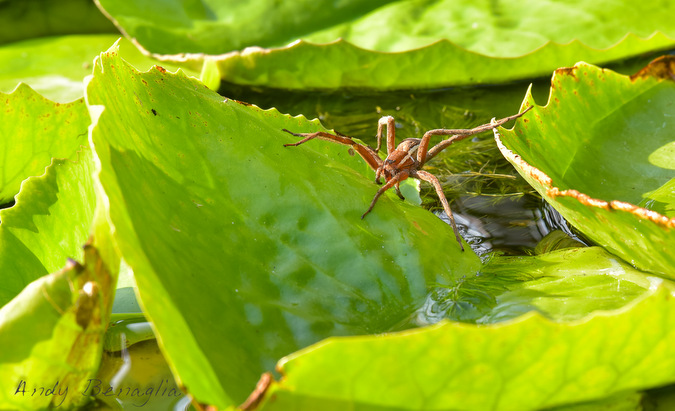
Spider walking across lily pads
© Andrea Benaglia

Written, and photographs, by Andrea Benaglia

A trip to Africa can sometimes provide unique sightings other than elephants, lions and antelopes.

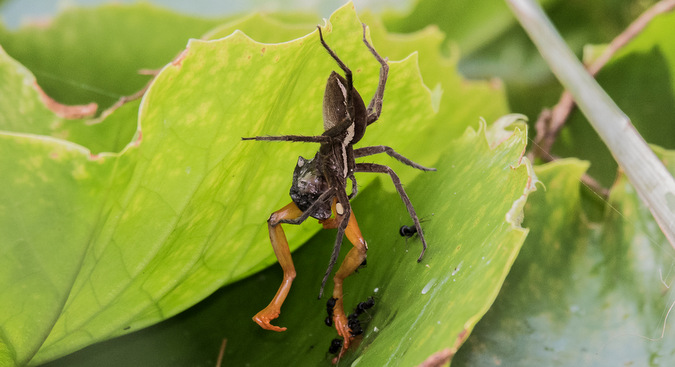
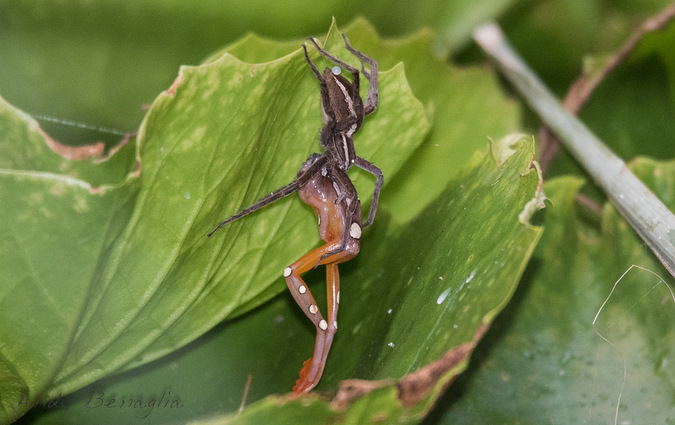
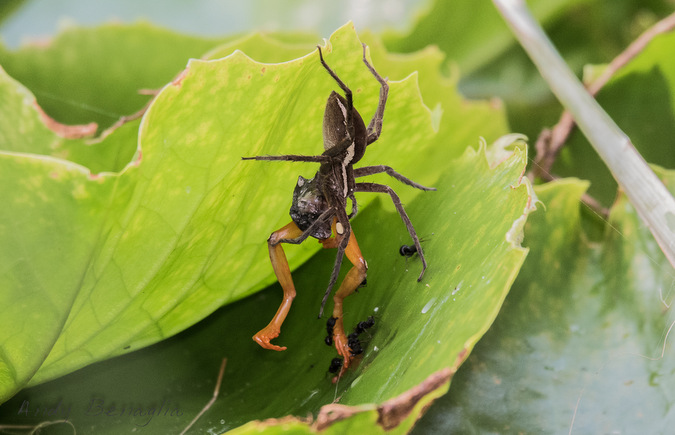
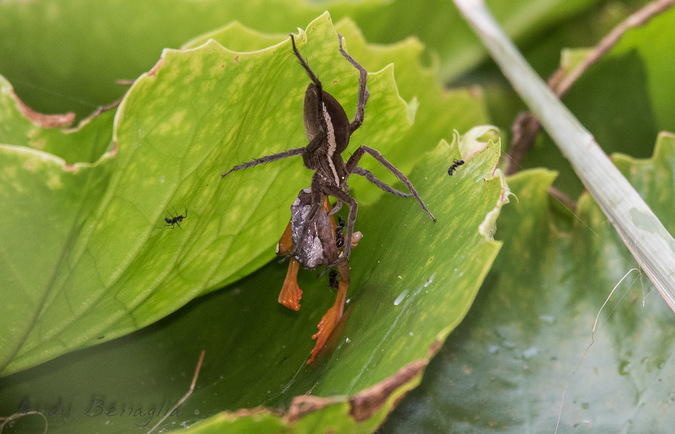
And extraordinary sightings such as a fishing spider (Dolomedes) feeding on a freshly captured Argus reed frog is one such example. Spotted on a private property on Diani Beach in Kwale County, Kenya, this spider had my attention for full two-and-a-half hours as it slowly digested the frog – it was certainly a rewarding sight that any photographer and wildlife enthusiast would appreciate.

Spider eating frog
© Andrea Benaglia

It was clearly not an easy meal to capture and eat, considering that the poor frog was far larger than the spider. While they mainly feed on insects, they do hunt for much larger prey such as small fish, dragonflies and, in this case, frogs.

spider eating frog
© Andrea Benaglia

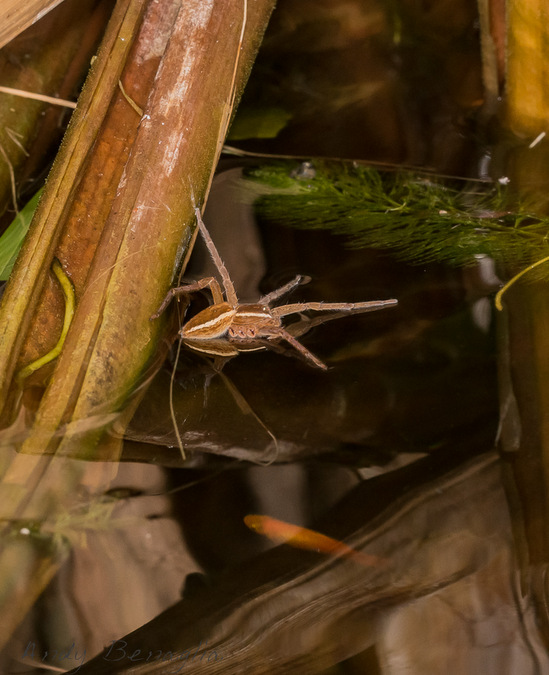
Fishing spiders hunt by patiently waiting at the edge of a pool or stream. On detecting ripples and vibrations they use their vibration-detecting organs and sensitive hairs (trichobothria) located on their legs to determine the source, be it falling leaves, wind on the water or potential prey. They kill their prey by injecting venom, which not only kills it but also aids in digestion.

Spider eating frog on lily pad
© Andrea Benaglia

Dolomedes is a genus of large spiders of the Pisauridae family with over a hundred species distributed all over the world. Fishing spiders are also known as fish-eating spiders or raft spiders, and being semi-aquatic and nocturnal, they are generally hard to spot – which is why this particular sighting was quite unique to witness in my eyes!

Fishing spider on the water
© Andrea Benaglia

Safari tips: What to pack for your African safari

what to pack
© Simon Espley

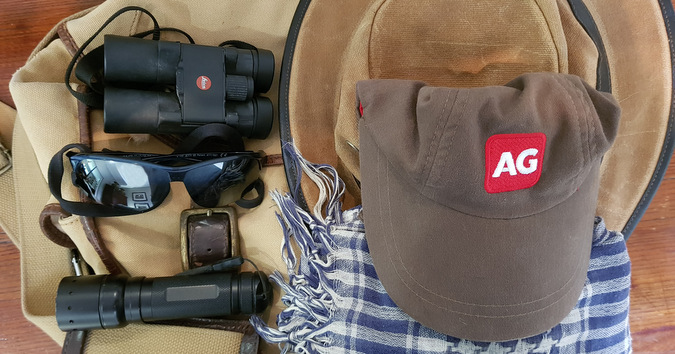
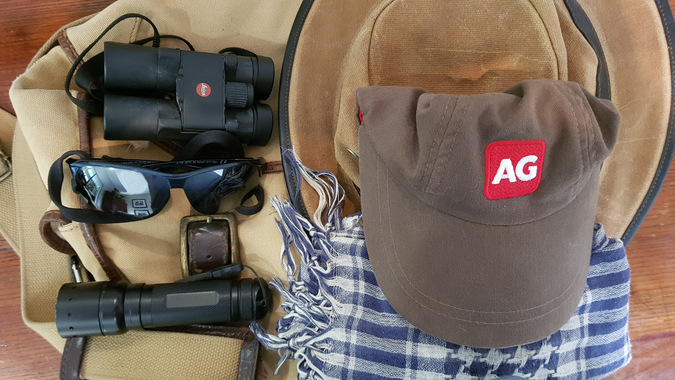
So, what to pack for your next safari? The rule of thumb is to pack light and to make use of the laundry facilities at your lodges and hotels. That said, there are some essentials that you should never be without.

After many years of exploring every nook and cranny of Africa, our travel team has drilled down their list of essentials to the following:

• Good quality sunglasses – preferably polarised

• Light scarf – for hot and cold weather

• Sun hat or cap

• Golf-shirts, T-shirts and long-sleeved cotton shirts – neutral colours such as brown, tan, khaki, green, etc.

• Shorts/skirts

• Long trousers/slacks

• More formal attire for your stay at prestigious city hotels or on one of the luxury trains

• Underwear and socks. Sports bra recommended on game drives as the roads can be bumpy and uneven.

• Good walking shoes (running/tennis shoes are fine)

• Sandals

• Swimming costume

• Warm anorak or parka, scarf & gloves (it can get cold at night and in the early morning)

• Light rain gear for the rainy months

• Camera and video equipment, memory cards and spare batteries

• If you wear contact lenses, we recommend that you bring along a pair of glasses in case your eyes get irritated by the dust

• Binoculars (night vision binoculars are not essential but highly recommended if your safari includes night activities)

• Relevant bird book or app if you are a keen birder

• Personal toiletries

• Malaria tablets (if applicable)

• Moisturising cream and suntan lotion

• Insect repellent, e.g. Tabard, Peaceful Sleep, Rid, Jungle Juice, etc.

• Basic medical kit (aspirins, plasters, Imodium, antiseptic cream and antihistamine cream, etc.)

• Tissues/”Wet Wipes”

• Visas, tickets, passports, money and important documents

• Waterproof/dust-proof bags/cover for your cameras

• Padlocks for your luggage during international and regional flights

• Mobile phone + charger

• Torch and reading head-lamp + batteries

• Country-specific plug prongs and adaptors

• Power bank for device charging while away from recharging points

• Covid-related test results and proof of vaccinations


For accommodation options at the best prices visit our collection of camps and lodges: private travel & conservation club. If you are not yet a member, see how to JOIN below this story. Also, go here to see some of our popular ready-made safari options.

PHASA approves canned lion hunting, faces backlash

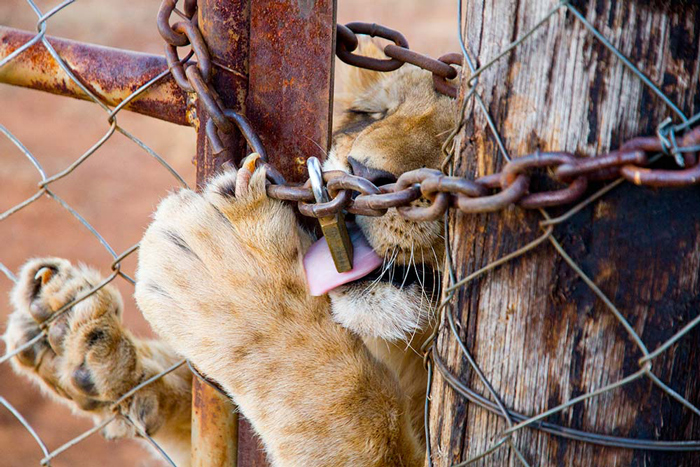
Canned lion hunting
© Pippa Hankinson

In a change of policy after earlier turning its back on the breeding and hunting of captive lions, the Professional Hunters’ Association of South Africa (PHASA) has now approved such practices. During their annual general meeting on 22 November, members voted to approve “the hunting of captive-bred lions as a legitimate form of hunting”.

This follows the decision by PHASA in November 2015 to distance itself from canned lion hunting, following a call by the then president Hermann Meyeridricks for a review of the practice after he had viewed the film Blood Lions.

The captive breeding of lions has led to several lucrative and morally questionable industries – including the petting of lion cubs by tourists, tourist walking with adolescent lion, voluntourists caring for such lion cubs and adolescent lions, canned lion hunting and the lion bone trade. The captive bred lions progress through these phases of exploitation, generating significant amounts of revenue, before being killed and the bones sold. This industry often trades under the guise of some form of conservation message, including the false claim that the lions are being bred for release back into the wild.

PHASA’s decision has resulted in widespread anger in the broader hunting industry, with other member associations and prominent members of Phasa publicly distancing themselves.

In reaction, the Operators and Professional Hunting Associations of Africa (OPHAA) has terminated PHASA’s membership with immediate effect, stating “PHASA’s actions completely disregard one of the fundamental concepts of hunting, namely fair-chase, and will, without doubt, jeopardise not only conservation efforts but also the livelihoods of those who rely on well-managed and ethical hunting practices, far beyond the borders of South Africa. As a result, the majority of OPHAA members have voted to indefinitely suspend PHASA’s membership in OPHAA until further notice”.

The Namibian Professional Hunting Association president Danene van Der Westhuyzen publicly criticised PHASA’s decision on their Facebook page, saying it was ‘shocked and deeply disappointed that PHASA has decided to take the low road by amending its constitution to include a bland and superficial definition of the word ‘ethical’ that now leaves the door wide open to abuse and exploitation by those who clearly have no concern for the future of hunting in Africa, or around the world.”

A number of high profile PHASA members have come out on social media to publicly criticise PHASA, including former president Stuart Dorrington, whose reaction is being widely circulated on Facebook:

“We, as a concerned group of professional hunters, distance ourselves completely from such acceptance and no longer view PHASA as the legitimate mouthpiece for professional hunting in South Africa. A new association will be formed in the very near future and will once again reflect the traditions of responsible, ethical and conservation-based hunting in South Africa.”

Traveller24.com quoted Ian Michler of Blood Lions as saying. “Their stance is a combination of ludicrously archaic thinking that seems to have no ethical or ecological grounding, as well as pure greed. We expect this group to continue with their attempts to justify intensive breeding and killing”.

Opinion: The voice missing from the elephant trophy debate? Africans

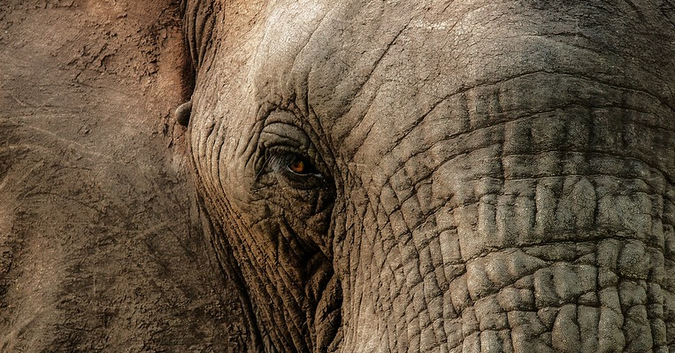
Elephant eye
Opinion post: The voice missing from the elephant trophy debate? Africans, written by Rosie Cooney –  chair of the IUCN’s Sustainable Use and Livelihoods Specialist Group – original story: Washington Post: Opinions

The answers for conserving the earth’s wild creatures seem easy from the office chairs of the affluent west. Ban trophy hunting! Hunt down the poachers! More tourism!

But the social media campaigns and President Trump’s flip-flopping on Twitter over the past few days on U.S. elephant trophy imports from Zimbabwe and Zambia highlight the deficiencies of this model of decision-making. We need a lot less shouting and lot more listening – and to different voices.

How can we help secure a future for wildlife? We know what animal lovers and celebrities will say. We know what the hunting organisations will say. We’ve heard these voices before, loud and clear, with the same simple answers. But what might the people and government of Zimbabwe say (if they could look away from their political crisis)? What might we hear from the bushveld, the mopane scrub or the acacia thickets – from the people who live, raise their children, and make a living alongside elephants and lions?

People are likely to live with wildlife only when they have some realistic incentives to bear the costs of doing so. If wildlife doesn’t in one way or another form part of the livelihoods of people, it will inevitably make way for activities that do. For elephants, these incentives mean tourism and, yes, even trophy hunting.

Zimbabwe has the second-largest population of elephants in Africa at around 83,000 – more than three times as many as Kenya. Many live in formal protected areas, but many live on communal or privately owned lands. These animals are awe-inspiring, socially complex and likely emotionally profound, but for humans up close, they are also huge and dangerous with massive food and water needs.

Human-wildlife conflict is rife, with elephants destroying crops, houses and even killing people. This is set only to worsen as the needs of people intensify – Zimbabwe’s population growth rate of 2.3 percent is among the highest in the world. Almost two-thirds live below the poverty line, with more than 4 million people facing food shortages this year.

While the benefits of hunting for rural communities and as conservation incentives are often airily dismissed as insignificant or uncertain, they can be significant for livelihoods and catalytic for conservation. Between 2005 and 2010, hunting trophy fees generated approximately $11 million for communities in Zimbabwe, and of this, about $7.5 million came from elephants. A little more than half came from Americans. The total of all other benefits, including tourism, was $4 million.

Tourism can be a powerful driver of conservation in the right place, but it is a pipe dream in many of the dusty corners of the communal lands – unless tourists want to spend days travelling over bumpy roads with intermittent electricity and sharing their wildlife views with cattle and goats.

Some of the money – both from hunting and tourism – will never make it to the right people, and instead will go to elites. It’s far from perfect, but at least this business – at least some of the time – keeps these animals in their habitats.

In fact, Zimbabwe has witnessed the power of incentives, with a remarkable and large-scale shift of land use from livestock and crops back to wildlife in the late 20th century, thanks to policy reforms that made it possible for the private sector and community landholders to benefit from conservation. The CAMPFIRE program, which relies heavily on revenue from hunting, enabled communities on communal lands to see wildlife conservation as viable land use and not just a dangerous problem. Despite the government’s chaotic land distribution reforms over the past few decades, some large areas remain managed for wildlife under this program.

But now the tide of public opinion is turning sharply against trophy hunting, as it has done against the ivory trade, once a source of revenue for these same communities. This revenue might dry up forever, along with the conservation incentives they create to coexist with wildlife.

So what do we do? How do we create a future where giants have space to roam? The first step is to recognise that outrage from afar never solved a local problem. We need to hear the voices of local people. Well-meaning people in the West need to stop shouting and start listening.

Quirimbas: A Diver’s Paradise

You won’t believe its beauty,” I heard our pilot Chris say, crackling and popping into the headset, over the whirring and grinding of the helicopter blades as we rose beating into the air. I was relieved to be making a welcome retreat from the dry heat and dusty red-sand streets of Pemba, northern Mozambique. “Ho-hum”, I thought to myself, having seen my fair share of pretty, palm-lined Indian Ocean islands.

As my eyelids grew heavy and the warmth of the cockpit lulled me into a stupor, I overheard an excited gasp from a fellow passenger: “There’s a baby!”

Simultaneously, Chris banked to the side, and I had no choice but to open my eyes. What I saw below woke me in an instant: three humpback whales, gliding through the ocean, blowing puffs of air like popcorn. Mother and calf, and a third whale – the ever-present midwife and escort.

Quirimbas
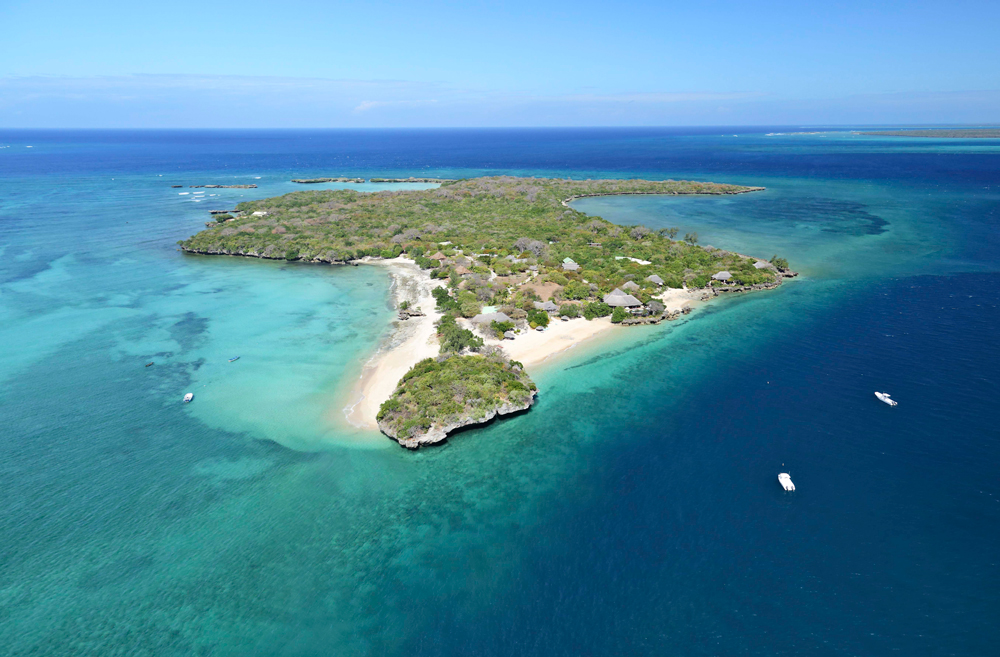
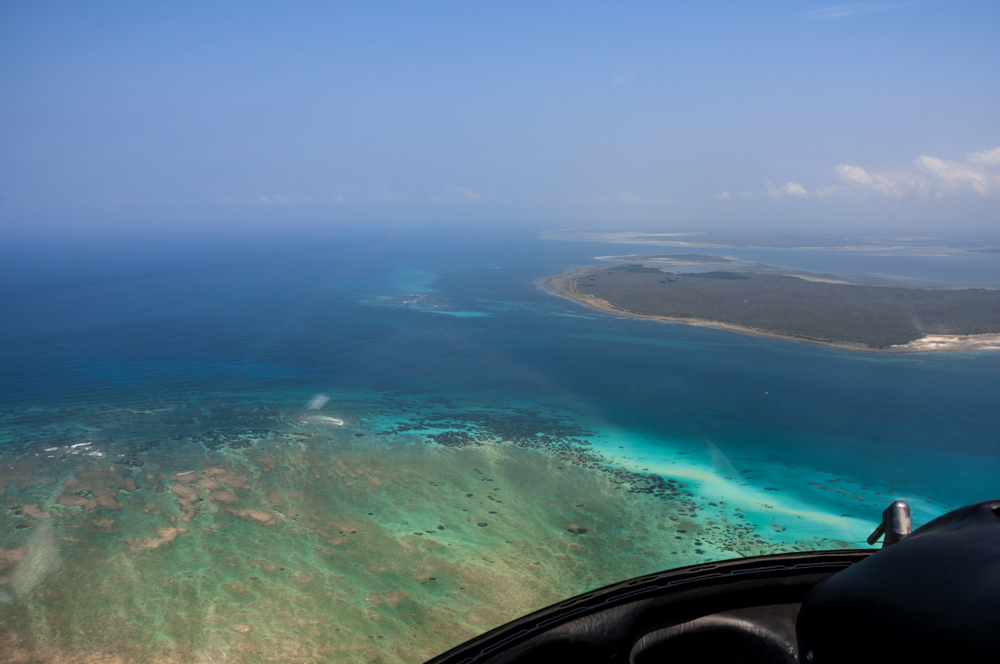
An aerial view of Quilalea Island in the Quirimbas Archipelago, Mozambique © Azura Retreats

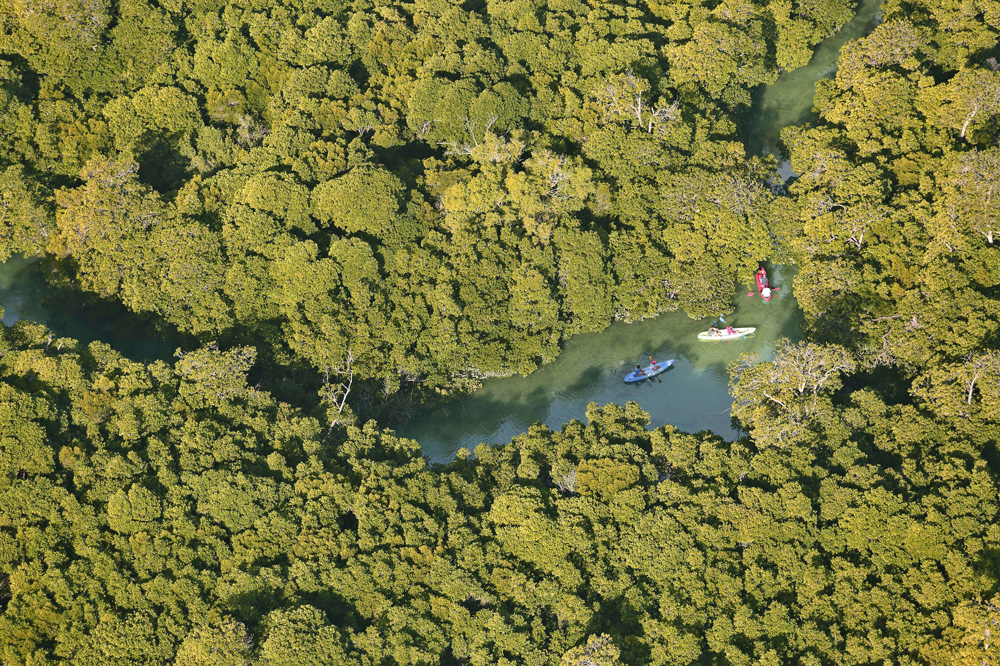
Further along, I saw another shoot of white water, a jet, blowing five to 10 metres into the air. As we approached, I saw that it was a line of blow-holes in the rock fringing an island. I was now completely wide awake. Instead of a snooze, as I thought it would be, it was a magical 30-minute flight northwards from Pemba, filled with whales, dolphins, baobab trees, mangrove swamps, reef-fringed islets, and dhows all intricately woven with the cleanest, bluest water I’ve ever seen.

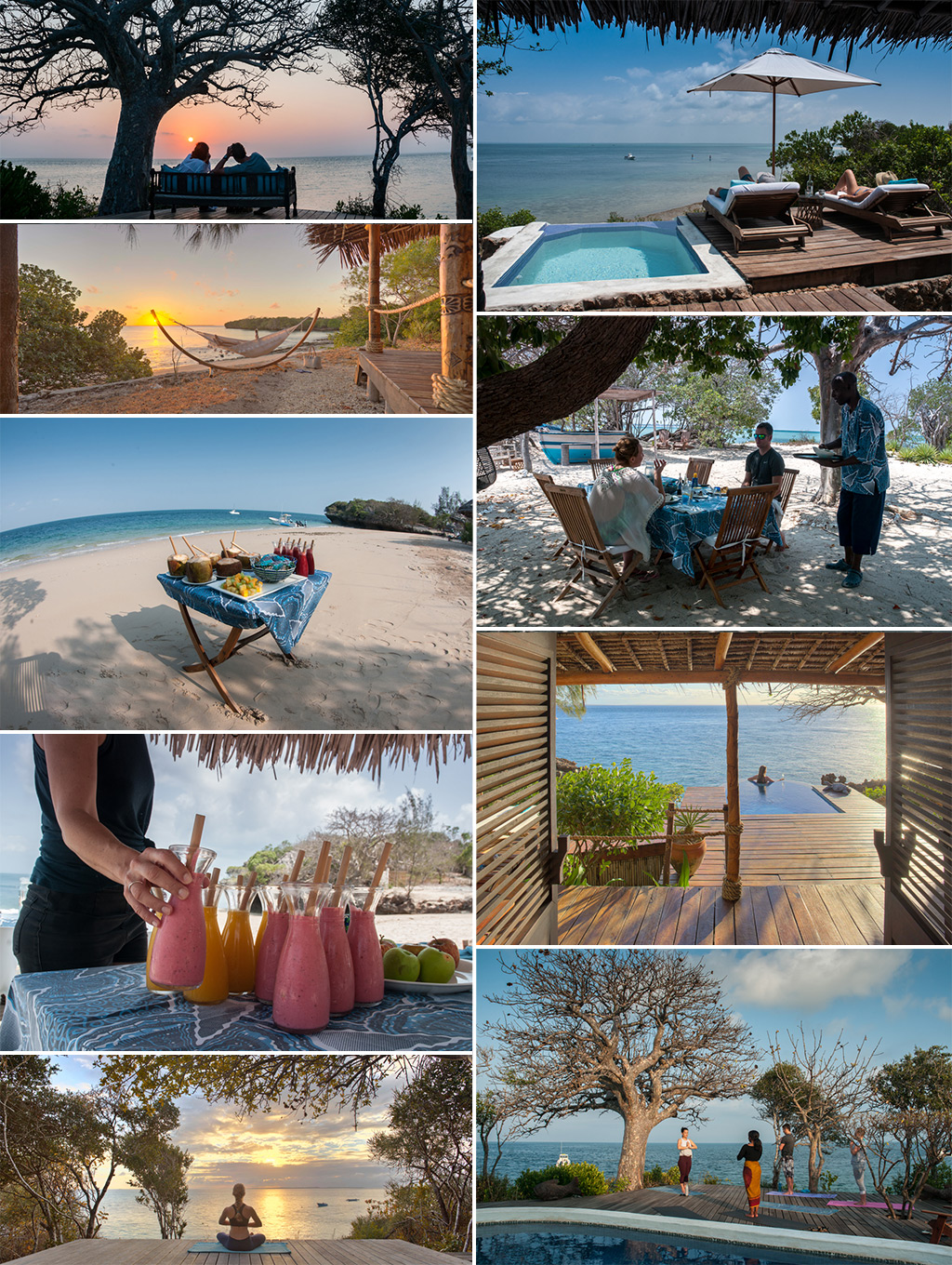
The scene was now firmly set for four days of adventure on Quilalea, a tiny, uninhabited island, in the bluest of blue Indian Ocean that stretches 250 km northwards from Pemba to Palma.

Ocean adventures on the Quirimbas

From the moment the helicopter nudged the baobab-fringed helipad, to the moment my toes slipped into the azure soft, fringing ocean, to the moment I looked up and saw the bright blast of the Milky Way explode across the sky – or the moment the moons of Saturn bewitched me – I was in love with the Quirimbas and this 35 ha slice of paradise, Quilalea.

It felt like I had been dropped onto my own personal heaven. It was surreal and thrilling to think I had a whole island virtually to myself. I was taken back to my favourite childhood read, Arthur Ransome’s Swallows and Amazons, and I felt excited by the prospects for exploration that lay ahead.

Quirimbas
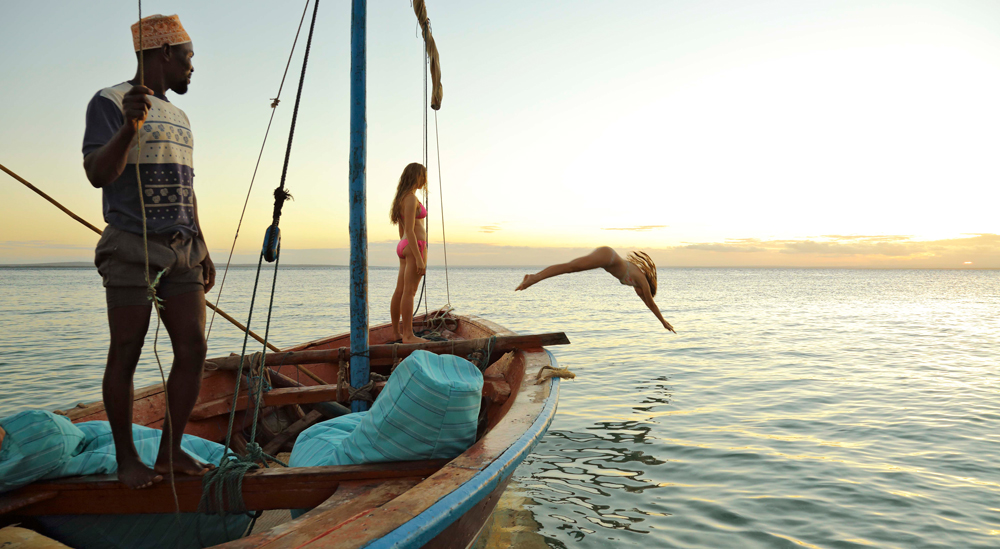
Exploring the marine reserve around Quilalea Island on a dhow © Azura Retreats

I found myself in a remote part of the Quirimbas National Park. Established in 2002, this managed and protected area spans 7,500 km² of north-eastern Mozambique. Of this, 20% covers marine habitats while the remainder is terrestrial, and 1,522 km² of the park is designated a Marine Protected Area (MPA), one of only six in Mozambique. In 2008, the entire archipelago was nominated to become a UNESCO World Heritage Site.

Mozambique, astoundingly, has a total marine estate of a whopping 571,493 km² and its marine protected area coverage is a measly 2.2% of that. For an area that the WWF has labelled “being of globally upstanding importance for marine biodiversity”, the protected portion, as beautiful as it is, seems wholly inadequate. With this in mind, when I realised that I was finally in a marine protected area, there was even more reason for me to be impassioned about being in the Quirimbas.

Quirimbas
Taking in the breathtaking views of the island while relaxing in a hammock © Fiona Ayerst

Exploring the waters of Quilalea

I was travelling with fellow adventurers, award-winning free-diver Hanli Prinsloo, extreme kitesurfer, Marcus Bull, and fellow underwater photographer, Peter Marshall. Not wanting to waste any time, we had decided on an afternoon ocean safari. As I unpacked, I heard squeals of delight coming from the ocean side of my plunge pool. On investigation, I discovered Hanli and Peter already in the water enjoying a snorkel amongst the volcanic structures.

Quirimbas National Park is host to a spectacular variety of marine life, and the snorkelling here is magnificent © Fiona Ayerst

As I heard them pointing out rays and hunting fish to each other, I felt excited about the afternoon trip. Although I was tempted to relax on the gently swaying hammock outside my villa, I gathered my camera and swimsuit for the afternoon outing.

Whizzing around the island on the speedboat, I could see a pearl-white beach, waves frilling over the shallow reef. Quilalea is one of the 11 islands within the Quirimbas National Park. The sandy beaches are used as breeding sites by hawksbill, green and olive ridley turtles. Loggerhead and leatherback turtles are also present in these waters – as are several other ocean species that the IUCN lists as endangered. Some are resident and others migratory, but here there are regular sightings of dugong, great white sharks and whale sharks.

I was anxious to find another two species I’d heard we might see in this marine life haven. After a short search, we saw the first: a small pod of humpback whales, travelling in three as they so often do. I felt some of my anxiety slip away when we spotted a school of bottlenose dolphins and quickly put on our snorkelling gear. As I looked down, I could see the coral ‘bommies’ and a wave of anticipation washed over me.

Quirimbas

Seeing dolphins underwater in their natural environment is a treat, and I knew the thrill that was coming. We dived off the boat, and within seconds the mystical, magical creatures approached, squinting sideways at our relative ungainliness. Moments with dolphins are hard to forget, and in this blue water, I added a memory to my bank and left the water happy and laughing.

We saw a massive flock of sooty terns darting into the cresting waves, chasing food. On closer inspection, a school of tiny silver baitfish was worth investigating as we saw them jumping out of the water to escape the hungry jaws of tuna. We dived in and looking down into the intense blue, I saw a squadron of at least five grey nurse sharks, reflected rays of sunlight straddling their grey backs. They came up to the 10-metre depth to look at us curiously and then slipped silently off, back to hunt tuna. I was impressed and encouraged that on this short trip, we had seen such a wide variety of marine life.

Back on the boat heading back to the hotel, hungry and happily-exhausted, our guide Predi delighted me further when she told me that I could look forward to the following morning’s scuba dive. There were hunting jacks, potato bass and tiny bubble shrimps on the ‘house reef’ here. I was intrigued.

Diving the house reef

I’d previously had the pleasure of walking a few steps from a hotel onto a reef so full of life, but far away, in Indonesia. I felt enormously privileged when Predi explained this was the only place in Mozambique with a ‘walk-in’ house reef. However, it was when she told me about the Napoleon wrasse, that Predi had me proverbially hooked. These inquisitive fish are a personal favourite, and I wasn’t sure I’d be able to sleep that night, for the waves of excitement I felt at the prospect of seeing them again.

That night, we ate dinner out on the warm beach. There was a sumptuous selection of food, and candles, stars and fine wine surrounded us. The next morning couldn’t come soon enough for me, and I joined Predi on the magnificent house reef. I walked right off the beach in front of the hotel and dropped bubbling down above huge, heads of coral spanning two to three metres and teeming with rainbow-coloured jewels.
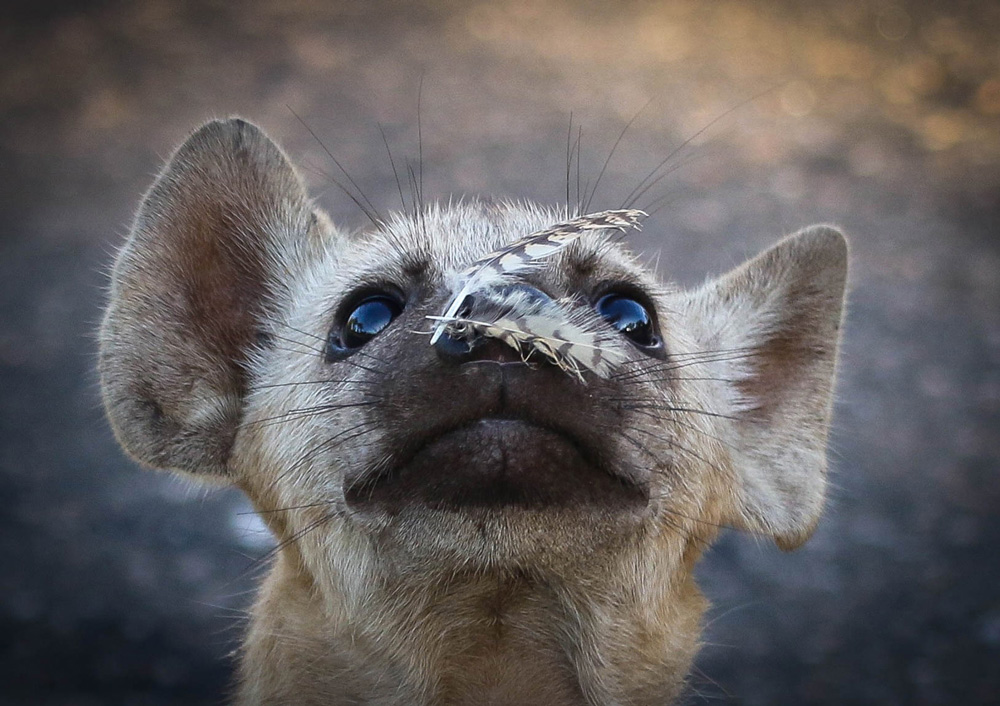
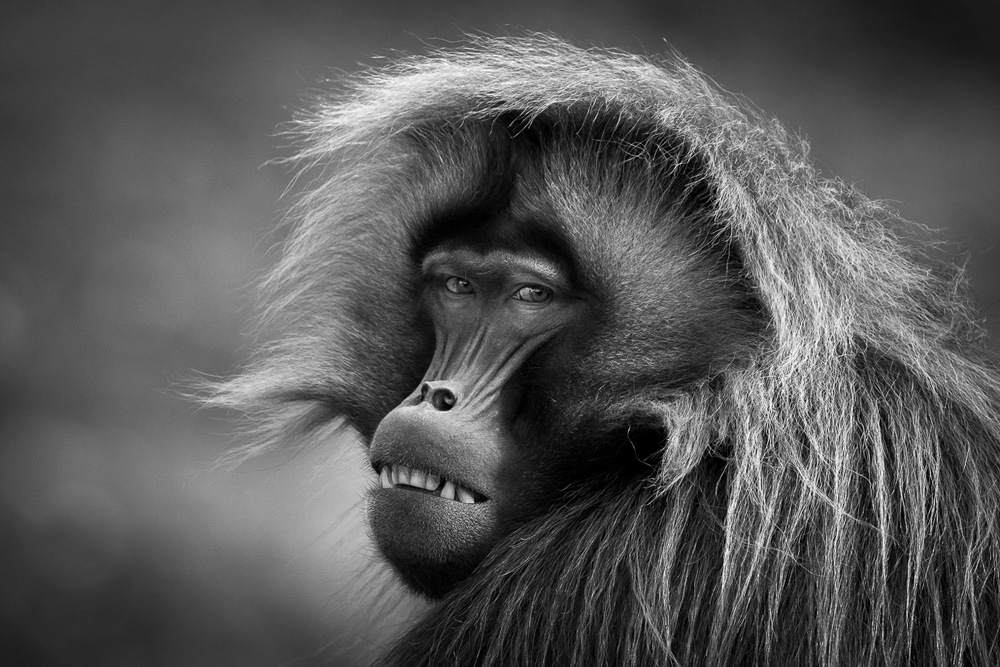
Have a candlelit dinner on a warm beach, underneath a starry Mozambican sky © Azura Retreats

The dive was a drifting one, as the current spun us towards the open ocean and the hard corals soon gave way to splendid soft corals in bright reds, pinks and oranges. I saw giant anemones sheltering clownfish, and hunting lionfish, red and pouting, hanging over clouds of silver glassies. I spotted at least four turtles crunching on the reef, but as they heard our bubbles, they winged their way over the reef and out of sight.

The offshore reefs of the national park support a huge array of marine wildlife, including 52 coral species and 375 fish species. There are several different scuba dives a short boat trip away from Quilalea, but unfortunately, time didn’t allow for me to do any other than two on the house reefs.

Quirimbas
Offshore reefs here support a spectacular variety of marine life © Fiona Ayerst

Mangroves and marine magic

That afternoon we went on a kayaking trip over to nearby Seneca Island, which is also uninhabited unless you count the numerous mangrove crabs and mudskippers, or the birds such as herons, mangrove kingfishers or eagles that fish there. The seawater winds its way through the centre, from one side of the island through a tangled web of healthy huge mangroves out to the open ocean on the far side. As I paddled lazily between the mangrove trees, I heard the thundering of the breakers hitting the coral reef beyond the ‘coral rag’ rock wall.

Kayaking the mangrove swamps of Seneca Island in the Quirimbas National Park © Azura Retreats

I collected some seagrass that was floating on the surface of the water as we paddled. Perched on top of this grass, on their way to new homes, were hundreds of juvenile frogfish the size of peas. I was awash with pure delight – this find was the highlight of my time in the archipelago. It was a sign of the incredible life force and power of the ocean.

Quirimbas
Mangroves are ideal for peaceful, gentle kayaking in an exotic marine environment © Fiona Ayerst

Dinner that night was a seafood banquet in the middle of a romantically lit baobab copse. I was looking forward to the following day, which was to be purely allocated to exploration and adventure.

As soon as we could, Hanli, Peter and I set off at low tide to walk over the sandy water-carved bars between the fringing coral reefs.

The substrate of the islands in this archipelago is composed of rag-coral and sand that has become bonded into a brittle, yet razor-sharp pockmarked rock. We watched mantis shrimp and golden eels jumping and hunting in the shallow 10cm of water and saw pink, green and purple parrotfish chomping at the shallow reefs. I was relieved to see scores of leopard cowries littering the weedy exposed reefs, striped golden mantles out, lying in wait, just like their cat namesakes.

I hadn’t seen so many live cowries since I was a child playing in the coral reefs of Mombasa, Kenya. We climbed intricate rock formations and scuttling crabs peered warily at us, with red and green pop-eyes. The rising water pushed us back onto the island. Before our post-exploration hunger pains got too intense, we opted for a spot of baobab clambering. I found that the solid, silver smoothness of a lofty baobab trunk also makes it impossible not to hug their bulging midriffs.

A late goodbye

The Quirimbas has adventure in store for everyone – from the person looking to relax and read in the sun, the spa lover, the outward-bound adventurer and the foodie traveller. A day trip from Quilalea to haunting Ibo Island will provide a chance to explore the stone walls of this ancient settlement, and even buy intricately hand-beaten silver jewellery from one of the silversmiths living there. Ancient palaces and villas lie littered and layered in moss – a photographer’s dream world.

An unforgettable helicopter flight between Quilalea Island and mainland Mozambique © Fiona Ayerst

On the final morning, we enjoyed a champagne breakfast picnic on the beach before our farewell, and as I had been baulking at leaving, I was late! As I hurriedly followed my bags back to the helicopter, I heard delighted giggles. I turned and jealously yelped a hasty farewell to Hanli and Peter as I glanced reluctantly sideways at them, snorkelling in the pristine shallows below the main pool deck. They were just where I wanted to be. I grinned, holding my tongue, my eyes wide shut, as Hanli shouted back: “There’s a huge reef down here buzzing with life. You won’t believe its beauty”.

This time, I did.

Africa Geographic Travel

Life on Quilalea island

Quirimbas
From the top, left: Enjoying a beautiful sunset on Quilalea island (© Fiona Ayerst); Relaxing the right way on a hot, Mozambican day (© Fiona Ayerst); What could beat lunch on the beach under a shady tree? (© Fiona Ayerst); Relax and enjoy out-of-this-world sunset views from your hammock (© Azura Retreats); Relax in the waters of your plunge pool, or the vast Indian Ocean (© Azura Retreats); A spectacular, fresh and healthy lunch spread on the beach (© Fiona Ayerst); Staying healthy with delicious fruit cocktails (© Fiona Ayerst); Surely not the worst location for a bit of morning yoga? (© Fiona Ayerst); Yoga is the best way to start the day and get ready for a day of island activities (© Azura Retreats)

Quirimbas National Park info

The Quirimbas National Park is the largest marine protected area in Africa, located in the Cabo Delgado Province in the far northeast corner of Mozambique.

Established in 2002, the park covers coastal forest habitats, miombo woodland, granite inselbergs, mangrove stands, and coral rock islands. It includes some 7,500 km² (750,600 hectares) and stretches along 110 km of coastline on the Indian Ocean. The eleven most southerly islands from the Quirimbas Archipelago make up part of this national park, including Quilalea Island.

In total, there are over 30 tropical islands in the Quirimbas Archipelago that stretch approximately 250 km along the coast from the city of Pemba to the northern border of Mozambique, where it meets Tanzania.

History
An Arab trading post since 600 AD, the Portuguese didn’t even set foot on the Quirimbas islands until Vasco de Gama rested here in 1500. In the coming years, hostilities broke out between the Portuguese and Arab people over trading rights. After successfully razing the Arab fortifications in 1522, the Portuguese had assimilated the islands entirely by 1590.

Ibo Island then became the second most crucial Portuguese trading post after Ilha de Mocambique and would become the capital of the region known as Cabo Delgado. In 1902, the provincial capital of Cabo Delgado was transferred to what is now known as Pemba, leading to the gradual decline of trade and population in the islands.

People
Quirimbas National Park is unique in that it was created in response to requests from local communities and other stakeholders who wanted to resolve the myriad of problems that beset the Province of Cabo Delgado in general and the Quirimbas area in particular.

Approximately 55,000 people live in or around the park, and nearly all of these inhabitants rely directly on the Quirimbas resource base for their livelihoods. To date, local communities have been involved in all aspects of the development of the park, from the conceptualisation of the original idea through to planning, mobilisation, and implementation of initial management strategies.

An incredible view of this private island paradise
The best way to enjoy the view from this island paradise © Fiona Ayerst

Marine life
The park contains a wide variety of protected marine life including green, hawksbill and olive ridley turtles. Other protected species include humpback whales, the endangered humpback dolphins, sea horses and pipefish.

Seasons
Like the rest of the northern Mozambique coastline, the Quirimbas islands are subject to a humid equatorial climate and experience only two distinct seasons: a wet season and a dry season. The majority of rainfall occurs between December and April, with the rest of the year being cooler, dry, and sunny. Daytime temperatures vary from around 25°C (77°F) to 35°C (95°F), depending on the time of year. Water temperatures range from 24°C (75°F) to 27°C (81°F).

Azura Quilalea

For accommodation options at the best prices visit our collection of camps and lodges: private travel & conservation club. If you are not yet a member, see how to JOIN below this story.

Azura Quilalea Private Island is the perfect place to escape the hustle and bustle of daily life, in a remote, pristine corner of Mozambique’s spectacular marine wilderness. Here, you can snorkel the island’s shores, dive the reef from the main beach, kayak amongst the mangrove swamps or relax in a hammock beneath the giant baobabs on the island. This is the ultimate private luxury hideaway, in a stunning and undiscovered destination – an untouched paradise for the adventurous traveller to discover.

Africa Geographic Travel

About the author

Fiona Ayerst is a freelance adventure-sport and underwater stills photographer and journalist with a particular interest in sharks. She turned professional in April 2006 after practising as an attorney for twelve years – and hasn’t looked back since. She travels the world extensively and writes about adventure travel and conservation for various local and international publications. She also teaches underwater photography and runs specialist workshops for digital photographers on multiple locations around the east coast of Africa.
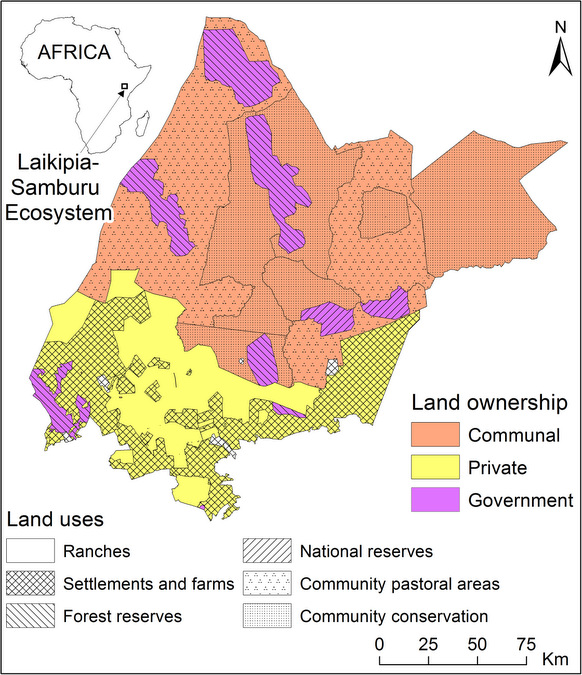


Land issues: The story of beauty and violence

Author: Peter Kanda

© Amunga Eshuchi
Opinion post: Land issues: The story of beauty and violence, written by Peter Kanda

Land, an emotive subject, a limited resource that builds nations or breaks them. Use it well and you thrive, use it unwisely and you will sink to the bottomless pit of chaos and poverty.

Kenya is a beautiful country, blessed with beautiful coastlines, rich plains full of life, from the shores of Lake Victoria to the snow peaks of Mount Kenya. This is the home to roughly 45 million people. This is the home to 44 tribes of diverse ethnic backgrounds, cultures, languages and of a people with strong resolve. They are resilient and have been together through colonialism, through independence, through building of a democracy and united in difficult moments.

However, land is also an issue that evokes very strong emotions and reopens wounds of deep historical injustices that have never been resolved. The lack of resolution is because of a lack of political will and because the powerful elite, who are beneficiaries and often the perpetrators of these historical land injustices, maintain the status quo – and thereby continue to thrive.

History

Before the colonial empire landed on Kenya’s shores, Africa was booming with trade and the migrations and settlement of various communities. The Arabs and Chinese were already trading along the coast of Africa and those tribes along the coast thrived. These tribes had their own thriving culture, languages, religion. They had their own traditional setups to govern themselves through elders or rulers. This thriving life on the highlands or plains of Kenya would be brought to an abrupt end in the late 1800s.

The coming of the colonial empire to Africa was a blessing and curse at the same time. They demolished these societies ruthlessly and set up to rule in the most violent of ways. They separated families and took land from them. Right about this time is when the current land issues began in Kenya.

During the scramble for Africa, the British used lethal force on the natives, forcing and subjecting them to surrender. They relegated them from being human beings to creatures of oppression and yet still wielded the Bible and preached salvation. They took the most fertile of their lands and sent them to live together in a reserve. The reserve was generally unproductive, and they would put the natives in valleys filled with all kinds of diseases and insects, put them in swamps to make residence out of the reeds. They used forced labour to add value to the lands. They collected hut tax to enrich their colonies. They committed human atrocities on all counts, but none remained more significant than the land injustices.

When independence came knocking in early 1960s, some settlers left and others remained. Some sold the same land that was taken from the natives to the Kenyan elite. Some of the land was grabbed, some of the land was split and given back to the communities. Some areas remained with the settlers or the settlers sold it. One such area is Laikipia.

Laikipia

Laikipia is a beautifully serene and magical plain, with the backdrop of Mount Kenya. Laikipia is blessed with a beautiful savannah, with gentle ridges and timid valleys creating ideal places for lodges and getaway homes. The beautiful people who lived here and co-existed with wild animals for centuries were removed, in favour of a conservation colony. This is textbook African conservation.

However, the last century has seen different tidings for this expanse of land. It is unevenly divided between the huge land owners and the original inhabitants of the land. Almost half of Laikipia is occupied by different conservation-based owners, almost all white-owned. Roughly 36 individuals and families hold more than 30% of the land – the rest is community land, either small scale farmers who own small properties or public land. Most of the community land is situated in less productive areas.

These conservationists are doing a brilliant job in efforts to preserve the wildlife, but this is done to a great extent at the expense of the natives. Could this be the reason for the recent attacks? What are the sources of this conflict and how can we resolve the problems?

Map showing land distribution in Laikipia-Samburu ecosystem
© Festus W. Ihwagi, et al
The land

In Kenya land is classified in three ways: private land, public land and community land.  Before colonisation or land-grabbing, Laikipia was originally community-owned, used for grazing and residence. Now, most of the land leases owned by conservationists are expiring or have since expired. To compound this problem, Laikipia County is surrounded by nomadic pastoralist communities who at times are well armed. They move from one area to another, depending on the season. With land as the central issue, several factors add fuel to the fire. The nomadic pastoralists are frustrated by drought, greedy opportunistic politicians and population growth.

Finding a resolution

How do we resolve this? How we ensure the community benefits more?

In my opinion, part of this land should be reverted to community land and adopt the same structure as the Maasai Mara. The Maasai Mara is owned by the Maa community. They use it to graze cattle and at the same time preserve the wild animals. This also poses some fundamental questions. Has wildlife been preserved without conservationists? Yes. Is conservation an important part of preserving wildlife? Yes.

The problem is that these conservationists benefit a few people financially and disturb the economic activity of the natives. Some conservationists have built schools or supported schools that are several kilometres away – rendering it impractical for the locals – and therefore being of little benefit for the larger population.

The interest of those few elite are overriding those of the natives. BUT is violence the way to solve this? Absolutely NO. No killing of another human being will solve this problem.

There has been a far wider coverage for the owners who are injured or killed compared to natives who are killed. Various media stations and blogs rushed to announce when Tristan Voorspuy was sadly killed on his Laikipia farm, and the British High Commission issued a statement. The Director of CID himself flew to Laikipia. But how many locals were killed during the unrest? How many media outlets covered it when hundreds of community-owned cattle were killed? Another example is the Kuki Gallman case (she was shot and wounded on her Laikipia farm). The bias is pretty obvious. All these biases gives way to neocolonialism undertones, it gives way to a silent imperialist rule that leaves a bad taste in the mouth of patriotic Kenyans.

© Amunga Eshuchi
A solution?

How do we solve this? Perhaps through dialogue? Some of the huge land owners in Laikipia are as Kenyan as the natives – they were born there, lived there and respect the locals. The government needs to create avenues through the Truth Justice and Reconciliation Commission. The government can also help the communities around these areas to develop alternative livelihoods and invest in developing facilities such as schools, medical dispensaries, and roads.

Lastly, the natives who have the sovereign power enshrined to them by the constitution need to elect leaders who are wise enough to not politicise the issue, leaders who will not use violence as a means to solve land issues. The beautiful land of Laikipia deserves to be preserved for generations.

Opinion: The trouble with trophy hunting

Elephant in the bush
Opinion post: The trouble with trophy hunting, written by Frank Pope – CEO Save the Elephants

The news around the import of elephant trophies from Zimbabwe has put elephants into the spotlight over the last few days. Many of you, our supporters and partners of Save the Elephants, got in touch about the issue and we felt it important to let you know how we see it.

The later news that Trump blocked the decision is a positive sign that the conservation of elephants remains a concern regardless of politics. But it’s important to recognise why the US Fish & Wildlife Service lifted the ban on importing these hunting trophies in the first place.

Last week’s announcement reversed a decision the agency had made back in 2014. Before that for many decades American hunters were allowed to legally bring tusks back home from Zimbabwe. When the country could not provide data enough to prove that it was looking after its elephants adequately, the ban was put into place.

So what changed between now and then? Crucially, last year’s publication of the African Elephant Status Report by IUCN and the Great Elephant Count funded by Paul Allen showed that Zimbabwe’s elephants were being relatively well looked after. There were an estimated 2,000 elephants for the whole country in 1900 compared with up to around 80,000 today, the second-largest elephant population in Africa. Over the last 18 months, the country has done serious planning work for the conservation of its elephants, as US Fish & Wildlife set out in a thorough 40-page report. And part of Zimbabwe’s strategy for elephants involves trophy hunting.

While we don’t think that the existence of elephants in Zimbabwe would be endangered by trophy hunting, shooting elephants for pleasure is in our view morally indefensible. One should no more shoot an elephant for pleasure than a dolphin, a great ape, or a dog – a view that is shared widely in the civilized world. But it is trade in ivory, not trophy hunting, that is driving the catastrophic declines which continue in most elephant populations in Africa.

The timing of US Fish & Wildlife’s initial announcement was unfortunate. China is in the process of banning its domestic ivory trade, and glimmers of hope in the fight against poaching are starting to be seen in some key elephant populations across Africa. Against this backdrop, encouraging American hunters to kill elephants is very difficult to justify to the world. While trophies do not constitute trade, a policy that encourages hunting risks misinterpretation.

Trump’s intervention on the issue is welcome, but we believe that the poaching, trafficking and trading in ivory that we are fighting through the Elephant Crisis Fund are far more significant issues. In the past, the US has done strong, science-based and non-partisan work to solve them, and we hope they will continue to do so in the future.

Thank you so much for your support both to the Elephant Crisis Fund and to Save the Elephants’ work to forge science-based solutions for the long-term fortunes of elephants.

South Africa’s top tourist attractions

Colourful beach houses on St James, Muizenberg, Cape Town
Colourful beach houses on St James beach in Muizenberg, Cape Town

If there were a checklist for the perfect travel destination, South Africa would tick most of the boxes. Famed for its amazing wildlife and landscapes, superb local cuisine, warm hospitality and great weather, it’s easy to understand why tourism is so big in South Africa. With an average of 15 million visitors flocking to the country every year, the allure is strong.

We’ve put together a list of South Africa’s most popular tourist attractions, based on bookings by our safari desk:

Cape Town and the Cape Winelands

Nestled between a rugged mountain range and the Atlantic Ocean, Cape Town is one of the most beautiful cities in the world. It’s also one of the most popular tourist destinations in all of Africa. This multicultural city enjoys a superb natural setting, pristine beaches, sophisticated infrastructure and a mild, Mediterranean climate.
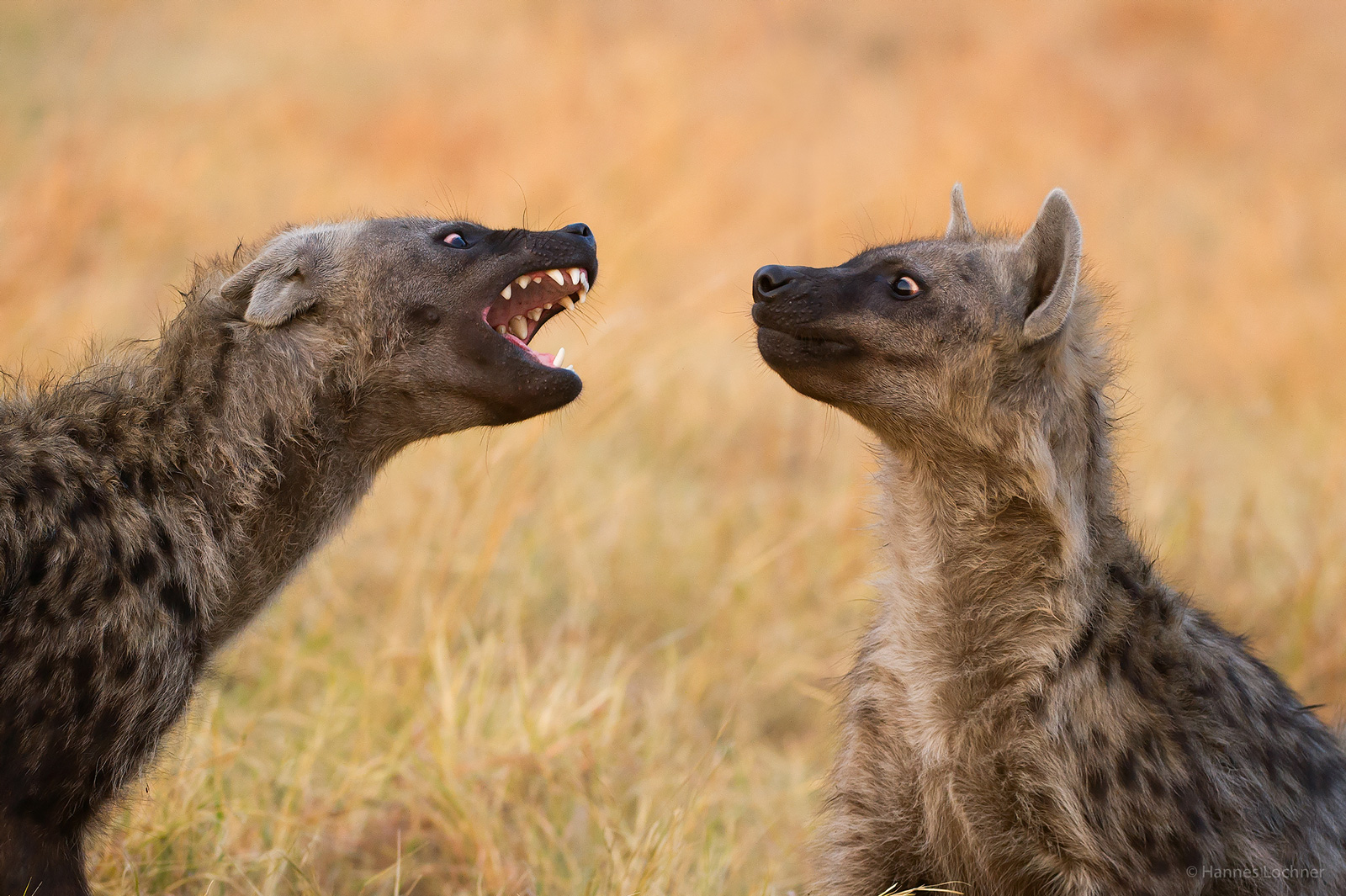
A few city and peninsula headline acts include Table Mountain and Lion’s Head (the most iconic landmark in South Africa), the magnificent Kirstenbosch Botanical Gardens, Boulders Beach for penguins that waddle along golden beaches in and amongst holidaymakers, the Victoria & Alfred Waterfront, the famous Robben Island (where Nelson Mandela and other political prisoners were imprisoned during the apartheid years) and Cape Point. And there is no shortage of world-class trendy restaurants and a vibrant nightlife for all tastes. It’s no wonder that Cape Town is the crown jewel of the country.

For the active traveller, the Cape Town peninsula is a treasure trove of hiking and mountain biking trails, kayaking and windsurfing spots – in fact, just about every physical outdoor pursuit is catered for within a relatively short radius of the city.

South Africa is famous for its award-winning wines, and some of the best wine in the country comes from the scenic rural outskirts within a short drive of the city, including Stellenbosch, Franschhoek, Constantia and Robertson. Set against a picturesque mountain backdrop, the Cape Winelands are among the most scenic in the world and feature many historic wine estates that date back centuries. The area is also home to charming boutiques, gourmet restaurants and five-star hotels. A drive through South Africa’s wine country is well worth the trip – especially if you’re not the ‘designated driver’!

Penguins on a beach
Penguins at Boulder’s beach in Simonstown, Cape Town
Kruger National Park and private reserves

South Africa’s iconic national park and one of Africa’s conservation success stories, the Kruger National Park is a must-do safari for any bush lover and for those keen on ticking off the Big 5 (lion, leopard, rhino, elephant and buffalo) in a relatively short space of time.

The park and adjoining private reserves (Sabi Sand, Timbavati, Klaserie, Thornybush and Balule) that share its unfenced western border make up about 2,2 million hectares (22000km²) of varied bushveld with six ecosystem types, and are collectively referred to as the Greater Kruger. Kruger’s vast size and variety of ecosystems support a wide diversity of wildlife (including over 500 bird species) and offer some of the finest game-viewing in Africa.
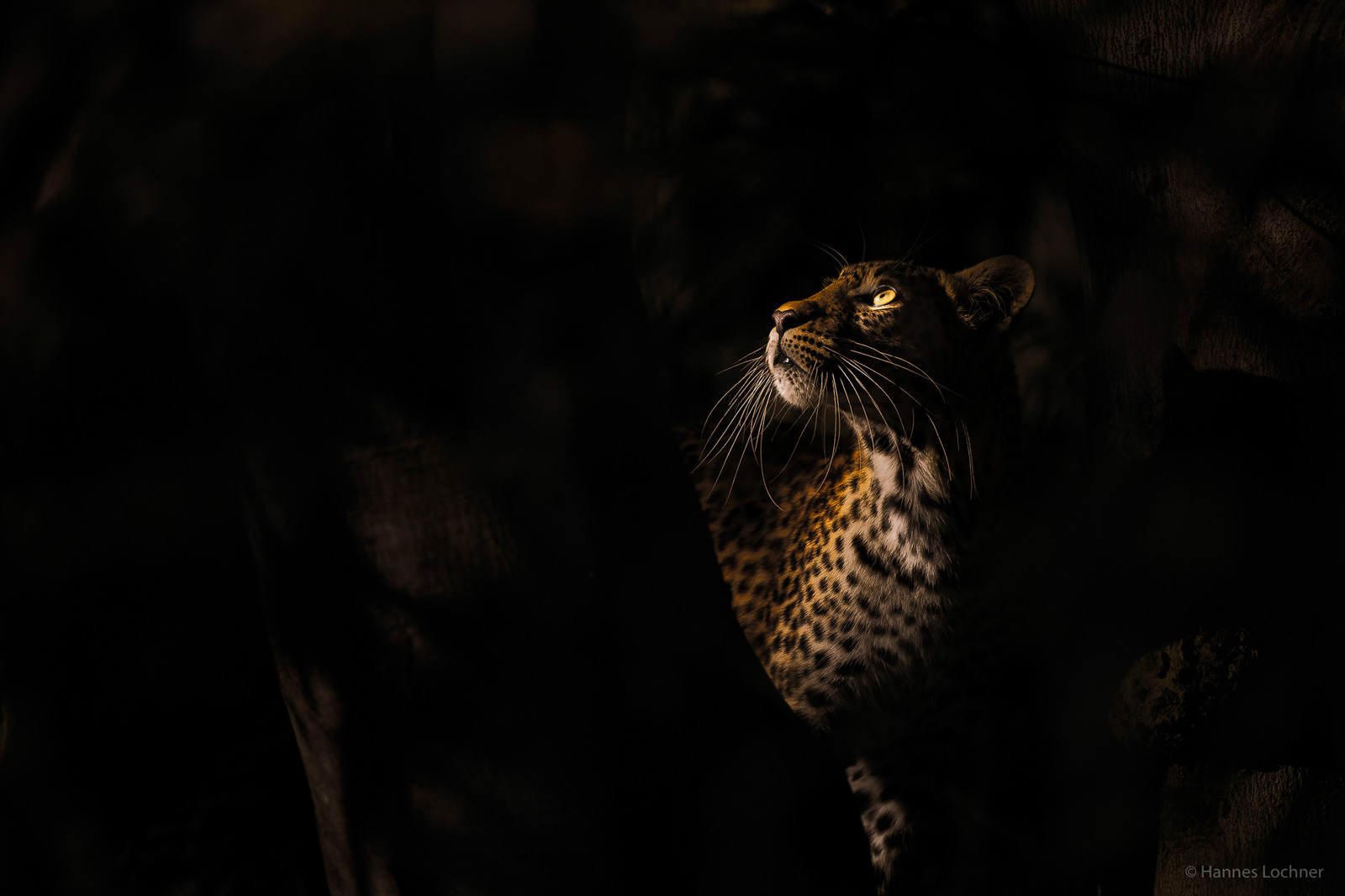
In terms of wildlife, the sheer number and diversity are almost unparalleled, making this the perfect place to spot the Big 5 and much more while out on a game drive or a guided walking safari. While Kruger National Park receives over 1.4 million visitors a year, you’d be surprised at how often you find yourself alone in the vast open spaces, giving you a truly authentic African wilderness experience. The national park offers self-drive options and affordable self-catering accommodation options, but there are also areas within the park boundaries set aside for the exclusive use of private lodges, and together with the adjoining private reserves to the west of the park, these private lodges guarantee exclusivity, low visitor numbers and sensational game viewing – where sightings of the Big 5 are almost a daily occurrence.

A safari in the Greater Kruger National Park is a must for first-timers and is also very popular with experienced bush-goers who go back year after year.

Viewing wildlife from a game drive vehicle
Watching buffalo pass by on safari in the Greater Kruger National Park © Simon Espley
Madikwe Game Reserve

The malaria-free 75,000-hectare (750 km²) Madikwe Game Reserve in northern South Africa, close to the Botswana border, is favoured by those seeking a Big 5 safari without the crowds sometimes associated with larger, more popular reserves. Madikwe does not permit day trippers or self-drive game drives, ensuring a private safari experience.

The dry Kalahari ecosystem offers an alternative to the Lowveld bush seen in the Kruger National Park, and Madikwe offers unique and exhilarating safari game-viewing and photographic opportunities. Aside from the Big 5 species, Madikwe offers the chance to see wild dogs, cheetahs, brown hyenas and large numbers of plains game – and about 360 species of birds.

The absence of malaria, plus easy access from Johannesburg via road and air, makes Madikwe an excellent choice for family safaris, and some lodges even cater for child-friendly activities. The range of accommodation, from luxury to basic, means that there is something for everyone.

Madikwe is something of a success story for wildlife conservation, local community economic empowerment and private/public enterprise. The land and animals are managed by the state, private investors profit from the lodges, and three nearby villages benefit via sustainable jobs and skills advancement.

Elephant and game drive vehicle in Africa
An elephant drinks at a waterhole in Madikwe © Anton Kruger
Garden Route and Little Karoo

Sandwiched between vibrant Cape Town and the malaria-free Eastern Cape game reserves are the idyllic Garden Route and Little (Klein) Karoo, together offering an unrivalled mix of experiences and adventures within a proverbial stone’s throw of each other.

The Garden Route offers a laid-back and intoxicating blend of beaches, lagoons, craggy mountains and ancient indigenous forests. Gorgeous historical coastal towns such as Knysna, Plettenberg Bay and Nature’s Valley offer a range of accommodations to suit every need, and the many smaller rural villages along the way each offer an authentic charm. While the spectacular landscape is enough to leave you awestruck, it’s worth exploring the many hidden nooks and crannies, where some of the true gems lie. Expect to unearth artist communities, woodcutter clans, fishing communities and many visitors who arrived on holiday and have never left this forested coastal paradise.

Whether you’re into rambling through art and craft markets, zip-lining through forest canopies, chilling on golden beaches or relaxing at a health spa, the Garden Route has it all in spades. You will be seduced by this charming haven and emerge relaxed and ready to resume your real life.

The Little Karoo lies inland of the lush Garden Route, just across craggy mountains that themselves harbor many wild and secret places. The dry semi-desert Karoo is home to historical ostrich farms, olive groves, wine, the famous Route 62, and adorable habituated meerkats.

Knysna lagoon in South Africa
The view of the lagoon in Knysna, South Africa
KwaZulu-Natal

The northern coastline and bushveld of KwaZulu-Natal host one of the most diverse habitat matrices, strongholds of endemic species, successful conservation projects, and enthralling Big 5 safaris in Africa. And to top it all off, there is a wealth of cultural and ecotourism activities, miles and miles of sandy beaches with warm water and, for some reason, relatively few tourists.
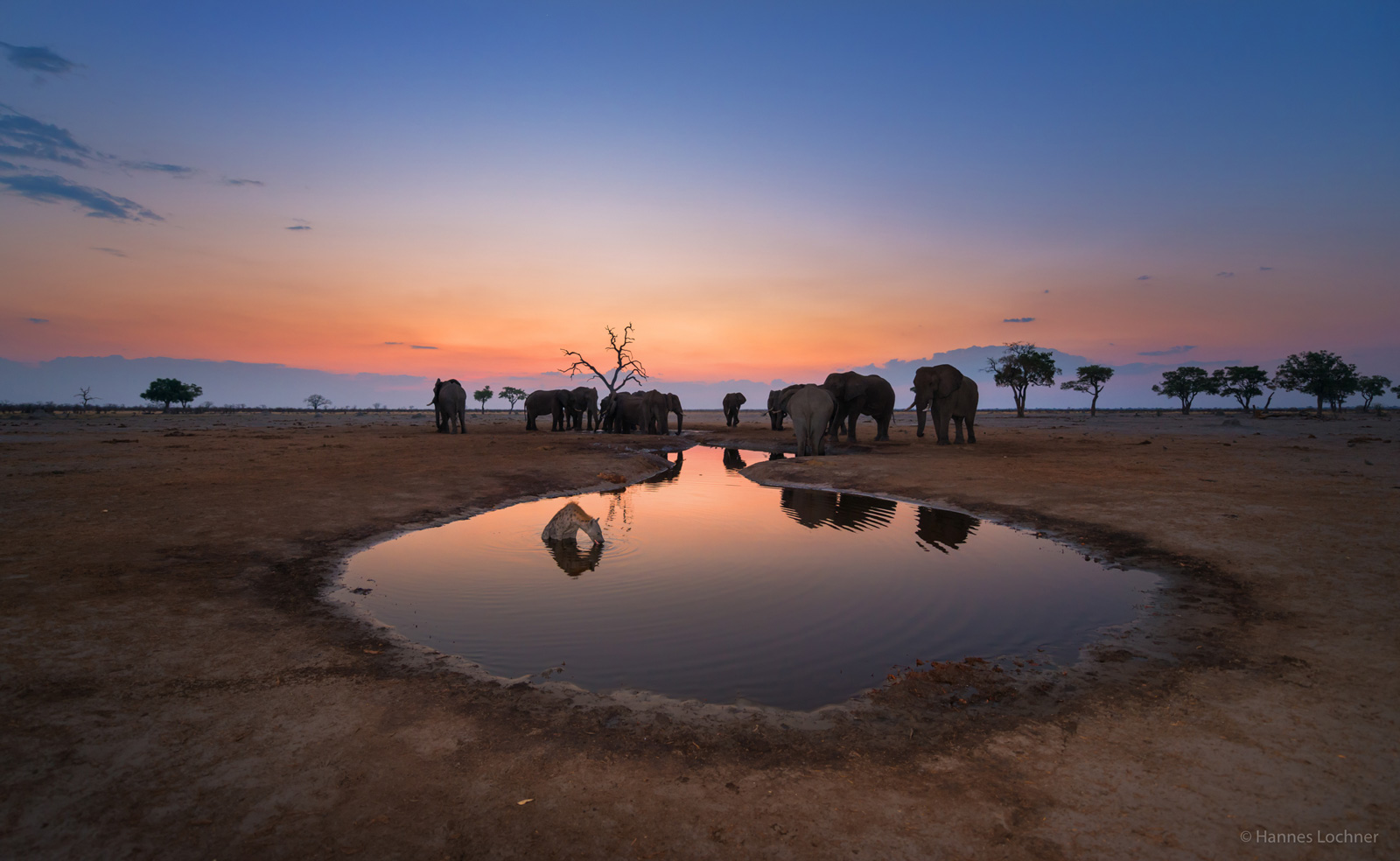
Zululand and the Elephant Coast, where black and white rhinos recovered from the brink of extinction, are home to the mighty Zulu warrior and to iSimangaliso Wetland Park – Africa’s oldest protected area and South Africa’s first World Heritage Site. This is also home to other renowned protected areas, such as Hluhluwe-iMfoloziuMkhuze, Ndumo and Thembe, offering a wide array of habitats, including woodlands, wetlands, palm savannas and coastal forests. And amongst this vast network of protected areas are private game reserves such as Manyoni, Phinda and Zimanga, which offer luxury safaris to our discerning guests, with exceptional sightings of big cats, rhinos and elephants in addition to a host of other species.

For the avid birder, KwaZulu-Natal is not only a haven for colourful endemics, but it also offers the best birding infrastructure in South Africa.
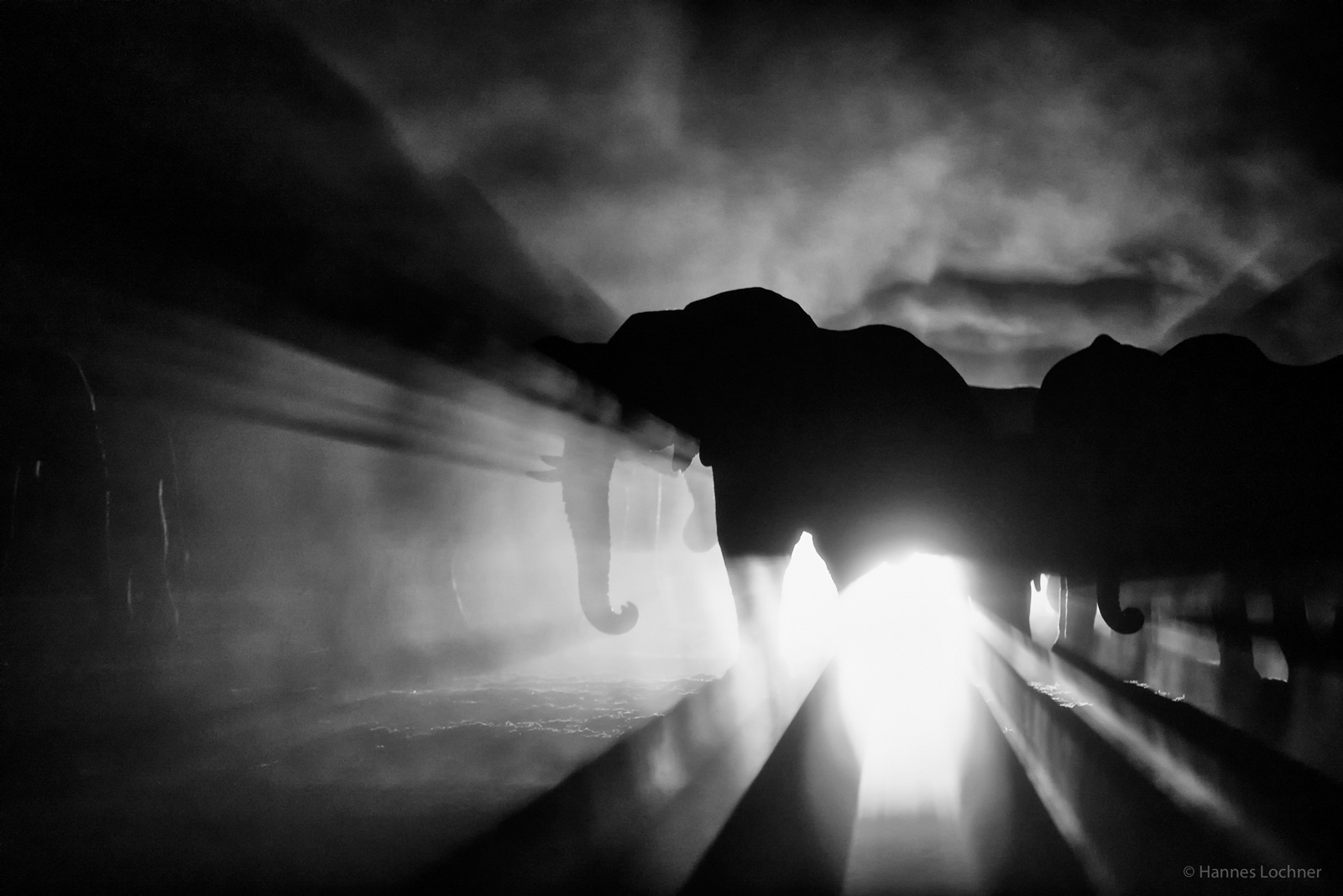
The adventurous can expect exciting walking safaris and a stunning coastline bathed in warm water, offering the best scuba diving in South Africa – with coral reefs, whale sharks, dolphins and breeding turtles.

For the history buffs, the battlefields of KwaZulu-Natal were the anvil that forged South Africa’s political past.  The famous battlefields of Isandlwana, Blood River and Spionkop witnessed fierce clashes between British forces, Zulu warriors and ‘Boer’ soldiers.

So, if a combination of bush, beach and history is your thing, visit KwaZulu-Natal.

Drakensberg mountains
The Drakensberg landscape
Cape Game Reserves

For those seeking a malaria-free bush break closer to Cape Town than the traditional bushveld destinations, the Cape Game Reserves have much to offer, even for Big 5 fans.

Expect a range of dry bushveld types, from the vast and arid plains and mountains of the Great Karoo (Samara) to the succulent Klein Karoo and the dense valley thickets of the Eastern Cape (Kwandwe). You will even see big game in mountainous Cape fynbos habitat, amongst the proteas and ericas. Some Eastern Cape reserves even offer boat trips down winding rivers for a day at the nearby idyllic beaches for that classic bush/beach combo.

Most Cape rural areas have been farmed historically, and many private and even government reserves are reclaimed farmland – a great success for conservation. Purists might prefer the classic upcountry game reserves of Kruger National Park, Madikwe Game Reserve, KwaZulu-Natal or the Kalahari – but others enjoy the proximity to Cape Town for their bush break.

Game drive vehicle in the bush in South Africa
A game drive vehicle exploring Sanbona Game Reserve in the Cape © Christian Boix
Kalahari

The vast malaria-free Kalahari offers a true desert safari experience – with endless vistas of red dunes and grassy savannahs dotted with massive, gnarled camelthorn trees and the desert-adapted species that thrive here.

This unique ecosystem hosts a remarkable population of arid-adapted species, including the rare desert-adapted black rhino, Kalahari lions, cheetahs, wild dogs, springbok, oryx (gemsbok), and sought-after smaller species such as aardvark, honey badger, brown hyena, pangolin, and aardwolf. There are also a few habituated meerkat colonies that offer excellent photographic opportunities.

The absence of malaria makes the Kalahari an excellent choice for family safaris.

Black-maned lion walking with game drive vehicle in the background
A black-maned lion struts his stuff in the Kalahari © Christian Boix

South Africa is certainly hard to beat in a region that offers top tourist attractions.

Video: Lots of gorillas, and luckily not much mist!

Mountain gorilla family in Volcanoes National Park
© Stuart Sinclair

Written by Sarah Addison

As part of our four-month trip around Africa, we decided to spend some of our time with the mountain gorillas in Volcanoes National Park in Rwanda.

We were already making our way around Africa when we decided to book our gorilla trek. It was something we really wanted to fit in and after weeks of researching we decided to head to Rwanda and trek into Volcanoes National Park. It wasn’t until we arrived that we discovered the massive price hike the government had put in place for entry into the park – from US$750 per person for a single entry to $1,400 per person per entry. We were lucky to have booked prior to the price hike, the start of our luck in Rwanda!

This trek came at the end of our trip and money was tight, so we opted for just a one-day trek, whereas most travellers we had met were doing the usual two days of trekking.

When we arrived in Rwanda our driver picked us up and drove us through the mountains, stopping at the Kigali Genocide Memorial (which was well worth the visit) before heading onto our accommodation. The landscape was beautiful, with rolling green mountains and exceptionally clean streets – we spent the 40-minute car ride just staring out the window, taking it all in.

Male mountain gorilla
© Stuart Sinclair

Our second stroke of luck was the weather. The night before the trek we went to bed praying for good weather, and it seemed like they were answered as the next morning the weather was cold but clear – in fact exceptionally clear for the mountains!

We departed from our accommodation quite early in the morning and soon arrived at the Volcanoes National Park headquarters where we were put into our designated hiking groups. The locals gathered to perform a beautiful dance and music routine while the trekkers warmed up with a cup of tea. We then met our guides and took off into the park which was a short drive past dozens of farming properties.

Some of the trekkers in our group had hiked the previous day, saying that they had trudged for seven hours through thick mud, mist and rain before they reached their designated gorilla family. Quite the opposite was our hike, which was short and easy and only took two hours through sunshine and visible tracks before reaching a clearing where most of the gorilla family members were sitting.

I had imagined that when we first saw the gorillas we would be peering through thick vegetation, trying to spot them in the distance, but we were surprised to find ourselves in a large clearing, so close and with so many in perfect view. We spent the hour in the same spot watching the incredibly relaxed but lively family.

Two mountain gorillas in Volcanoes National Park, Rwanda
© Stuart Sinclair

We witnessed the baby gorilla in the group playfully fighting with his older brother (see video below), both flaunting chest-beating in all its glory. We were surprised by how calm they were in our presence. We were startled when a sneaky gorilla appeared out of nowhere, hovering nearby above our heads in the trees, and again when another one decided to casually and quickly walk past us within mere centimetres.

Because the gorilla family stayed in the clearing for the whole hour we had the chance to take plenty of photos, but also took time out to put the camera down and just enjoy their company without looking through a lens.

The next day we woke to discover a very thick fog had covered the mountains and sympathised for the hiking groups heading out for the day. We caught up with one fellow trekker afterwards and he emphasised how lucky we were to have the weather we did on our hike, as he was unable to see the gorillas as well through all the thick fog.

It was a gamble to travel that far for only one day of gorilla trekking, but thankfully we were fortunate to have had an extremely memorable experience – a very special way to end our trip.

Watch incredible footage of the gorillas interacting in the video below (© Sarah Addison)

Now Trump calls elephant trophy hunting a “horror show”

Elephant up close in wild

Sourced from third-party site: The Washington Post, written by Anne Gearan

President Trump called elephant hunting a “horror show” on Sunday and strongly suggested he will permanently block imports of elephant trophies from two African nations despite his administration’s earlier approval of the practice.

Following strong bipartisan criticism of the administration’s decision to allow imports of trophy carcasses, a practise halted under the Obama administration, Trump had moved on Friday to put the imports on hold. On Sunday, Trump said on Twitter that he would announce a final decision this week. He suggested that he does not buy the argument advanced by pro-hunting advocates within his Interior Department that the imports help protect endangered African elephants.

Trump wrote that he would be “very hard-pressed to change my mind that this horror show in any way helps conservation of Elephants or any other animal”.

It was not immediately clear whether the reference to “any other animal” might mean he is also reconsidering his administration’s separate lifting of import bans on lion trophies last month. That decision received little attention at the time but has since come under fire as the elephant decision received wide attention.

The president’s abrupt reversal on Friday means that elephants shot for sport in Zimbabwe and Zambia cannot be imported by American hunters as trophies.

“Put big game trophy decision on hold until such time as I review all conservation facts,” Trump wrote Friday evening on Twitter. “Under study for years. Will update soon with [Interior] Secretary [Ryan] Zinke. Thank you!”

That halted a decision by his own U.S. Fish and Wildlife Service on Wednesday to end a 2014 government ban on big-game trophy hunting in Zimbabwe and Zambia. Under U.S. law, the remains of African elephants, which are listed as threatened under the Endangered Species Act, can be imported only if federal officials have determined that hunting them benefits the species more broadly.

Decoding Kruger’s ‘Elephant Management Plan’

Elephant eating in the Kruger National Park
DECODING SCIENCE POST by the AG Editorial team

The Kruger National Park is vast, at about 2 million hectares, and requires a thorough management strategy in order to ensure long term sustainability. Part of that strategy, The Elephant Management Plan (referred to as ‘the Plan” below) is currently in force and covers the period 2013 to 2022.

The Plan was compiled by Kruger management and Scientific Services, including some of the most experienced scientists and wildlife management personnel in the world.

The 82-page Plan is thorough and very detailed – for those who wish to find out more please click the above link, download the report, and read at your leisure (highly recommended).

For those that prefer a brief summary and broad strokes understanding of the strategy for Kruger elephant management, read on. This summary should not be seen as complete or comprehensive and any lack of detail or perceived bias (unintended) is a result of our wish to provide you with a broad understanding of the issues.

Here then, is our summary of Kruger’s Elephant Management Plan:

Brief overview

SANParks is managing the Kruger elephant population by restoring or mimicking the spatial and temporal aspects of the ecosystem that impact on elephant spatial use. In other words, let natural processes determine elephant populations and movement. This Plan contrasts with the previous elephant management strategy, which focused on attempting to limit elephant numbers.

There are major factors that impact on elephant populations and on where elephants currently choose to roam – primarily in search of water and food. Some of these factors have historically been introduced by man, examples being fences and artificial water points. Some of these man-induced contributing factors can be removed or altered significantly over time, and others are here to stay. Removing some of these factors generates its own set of consequences for elephants and beyond elephants. For example, removing certain artificial water points will in time suppress elephant population growth and encourage more natural (seasonal) use of that area by elephants – but it will probably also change tourist behaviour, and possibly make Kruger camps and privately-run lodges in the area less commercially viable. Tourists bring in the cash for elephant conservation. Circles within circles.

Elephants are long-lived creatures that will take time to adapt to the current strategy to mitigate the mistakes of the past, and this lag effect means that this is not a ‘one day game’, as they say in cricket. This is a long-term plan that has to deal as best it can with the short and medium-term consequences of historical strategies, while it builds its own momentum in the journey to restoring natural ecological processes. Remember that many of the major factors that influence elephant populations and movement are here to stay, so the likely end goal is not utopia. And this has to happen in a rapidly changing world, where human populations are growing rapidly, where conservation legislative changes are driven by political forces and where conservation funding is hard to find.

The Kruger Elephant Management Plan does not involve hunting or culling in the long run but it may involve culling as a short-term measure to address the influence of historical elephant management strategies on current elephant numbers and behaviour.

This is an extremely complex situation, involving 37 Kruger landscapes and multiple dynamic influencing factors – and so the Plan is accordingly dynamic, agile and reactive.

Elephant walking through the bush

11 Contextual points to bear in mind (as extracted from the Plan)

1. SANParks overall objectives:

• maintaining, or restoring, ecosystem integrity;
• providing benefits to people;
• taking cognisance of aesthetic and wilderness qualities.

2. Ecosystems under SANParks custodianship are constrained through fencing, restricted size, historical addition of water, and/or missing species.

3. Elephants are a key system driver, and affect the ability of SANParks to achieve ecological, tourism and social objectives;

4. South Africa has only 4% (AG editorial comment: 4,8% as per the Great Elephant Census) of the elephants in Africa, and her populations are better protected and more intensely managed than elsewhere. In addition, they breed quicker, live longer and use landscapes more intensely than elsewhere;

5. The ecological effects of elephants vary considerably depending on rainfall, vegetation type, and landscape features and interpretation of these ecological effects is confounded by length of studies, synergistic effects of fire, other herbivores, drought, wind toppling, soil chemistry and water table;

6. Resource manipulation will affect elephant impacts over time and across landscapes, primarily by affecting elephant birth and death rates;

7. Elephants are long-lived – resulting in slow spatial and demographic population responses to the management strategies, and therefore delays in ecological responses,

8. The Ministry of Environment and Water Affairs permits the following actions to control wild elephant populations: Contraception, range manipulation, translocation, introduction of elephants, hunting, culling. The SANParks Plan as described in this article envisages all of the above EXCEPT for hunting and culling. However, when elephant numbers reduce the effects of restoration strategies, SANParks will, as a short- or medium-term measure, at appropriate places, implement non-lethal (e.g. contraception); and lethal (e.g. culling) control over elephant populations;

9. Historical approaches to species populations were based on a species carrying capacity model that was based on subjective opinion and ignored ecological complexity and flux over space and time;

10. Elephant population management history:

• Onset to late 1960s – preservationist i.e. no population management
• Late 1960s to 1994 – culling to control populations
• 1994 – moratorium on culling

11. Elephant population trends:

• 1900 – no elephants, due to hunting for the ivory trade
• 1905 – first elephant seen close to confluence of Olifants and Letaba rivers
• 1958 – most of Kruger populated by elephants
• 2008 – population estimate 12,930

Large elephant in the bush

Five key objectives of the Plan

Each of these five objectives is discussed in depth in the Plan, as are the many ways to achieve these objectives:

1. Restoring spacial limitations on the landscape, including mimicking natural water distribution, reducing artificial water points, acquiring additional land and removal of fences;

2. Addressing the consequences of historic management actions on the current situation, with short/medium term reactive actions that do not compromise current long-term objectives and the primary mandate of biodiversity conservation. These actions include primarily localised fencing and elephant removal through translocation and culling;

3. Stakeholder concerns and issues about elephants – continually engage all stakeholders about issues relating to elephants and act on the issues raised. The main stakeholders (in South Africa, Zimbabwe and Mozambique) are local communities, private landowners and ecotourism operations.

4. The aligning of SANParks and Trans Frontier Conservation Area (TFCA) elephant management policies through appropriate bilateral approaches;

5. Ongoing adaption of this strategy through collaborative research agreements and internal and external review and measurement of management actions, on an annual, bi-annual, five-yearly and ten-yearly basis.

Africa Geographic Travel

Public values about conservation are shifting

SANParks is required to balance various societal values and viewpoints, including:

• Safety and security – e.g. human-elephant conflict, damage-causing elephants and disease outbreak consequences;
• Human benefits – e.g. tourism, community beneficiation;
• Aesthetic and ethical issues – e.g. “existence” value of large trees and elephants, cultural resources;
• SANParks biodiversity mandate, values and conservation goals.

Elephant damage and conflict

Human interactions with elephants fall into two broad categories, namely:

1. Human-elephant conflict – when elephants cause damage to individuals, property and livelihoods. The Plan includes detailed instructions on how ‘problem’ elephants inside and outside of Kruger are to be dealt with. These are beyond the scope of this brief summary, but very interesting nevertheless.

• Elephants typically do not cause as much damage as primates, rodents and large predators;
• Management responses are typically reactive and involve fencing, elephant translocation, elephant culling and the use of deterrents;
• Restoring or mimicking natural resource distribution should theoretically reduce human-elephant conflict and elephant damage.

2. Tourism experiences

• Elephants are important drivers of tourist experiences, as a component of the Big 5 (rhinos, lions, leopards, buffaloes and elephants);
• Historically strategies revolved around bringing elephants to tourists – by use of artificial water points;
• SANParks will need to maintain some artificial water points in the short/medium term, to ensure continued tourist satisfaction.

Elephants drinking water at a waterhole

How elephant populations reacted to management

Lessons learnt after a long history of elephant management:

1. In response to localised culling, elephant population growth decreased sharply in the year of culling, followed by excessively high population growth the year following culling – the net result was that at a local level no changes in elephant numbers took place as a result of culling;

2. In response to water provision, fences and fires, the situation is more complex. Fences restrict movement and prevent natural movement. When fences on the western side of Kruger were removed to allow wildlife to roam freely between Kruger and neighbouring private game reserves, those private game reserves experienced rapid growth of elephant populations, probably because the higher number of artificial water points attracted elephants from Kruger, which had started to remove some water points. Provision of water increases elephant birth rates and infant survival, as does management by culling;

3. Seasonal home ranges for individual elephants extracted from radio collared animals during periods of culling overlapped significantly more than anywhere else once the effect of rainfall and density has been accounted for. Culling, therefore, may thus have increased the intensity with which an individual elephant uses a specific landscape.

Impacts of elephants on vegetation

Little data exist to evaluate how elephant impact has responded to culling. The historical assumption that elephant impact is directly related to the number of elephants is challenged by the observation that limiting the elephant population did not prevent a decline in the structural diversity of the woody vegetation of Kruger. In addition, evaluations that focused on relating vegetation change to local dry season elephant density showed that vegetation diversity increased with high elephant density in certain regions of Kruger. The conclusion is however constrained by limited data.

Damage-causing elephants

Limited data suggest that incidences of damage caused by elephants may not be clearly related to how many elephants there are, but rather to management actions that alter where elephants can roam.

Diseases

Elephants’ impact on disease by breaking fences, thereby allowing buffalo to come into contact with livestock, therefore risking the spread of foot-and-mouth disease and bovine tuberculosis and impacting on agricultural and food security.

Tourism

The consequences of elephant management for tourism are unknown, although anecdotal evidence suggests increased aggressive interactions of elephants with KNP tourists as the elephant population has increased since the suspension of culling. In addition, major concerns have been raised by stakeholders from the private reserves west of Kruger that elephants are increasingly impacting on the aesthetics of these reserves by killing or pushing over large trees.

Implications of past management strategies

Past management strategies have included contraception, culling and live animal removal, fire control, fence erection and removal and water provisioning – each of these strategies has affected elephant behaviour, some of which behaviour still manifests today.

Kruger’s elephants are now part of a regional population, with fences having been removed in places (west into private South African game reserves and north/east into Zimbabwe and Mozambique) – and therefore are no longer spatially restricted to Kruger. Much of their current patterns of landscape use seems to be predicated on water availability. Despite the ongoing changes in management strategy, elephants continue to use certain landscapes intensely, due to lags in responding to change from historical strategies. Therefore, targeted short- to medium-term reactive management responses may be required. These could include excluding elephants from selected areas using fences, scaring elephants with noise disturbances and localised reduction in densities through removal by translocation or culling.

The most desirable outcome of elephant management strategies should be the achievement of a range of elephant densities and therefore intensity of landscape uses, from extremely low (<0.01 elephant/km²) to very high (>3 elephants/km²).

Elephant herd running down a dirt road in the bush

Delta Delight

Hannes Lochner is a multi-award-winning professional wildlife photographer. The ‘spirit of Africa’ has always fascinated him – especially the Kalahari. He lived there for five years so he could gain an extensive knowledge of the region.
His ability to tell a story through photos is genuinely extraordinary. He is a master when it comes to assessing the ideal light conditions to take the perfect photo – capturing the essence of wildlife and landscapes.
Hannes has many accolades, including the coveted BBC’s Veolia Wildlife Photographer of the Year award. Many of his photos and articles have been published in well-known international and local publications.
This gallery showcases a selection of awe-inspiring photos from his book, Planet Okavango – an evocative tribute to the wetland deltas of Botswana, its inhabitants, and its unique wonder.
okavango delta

?  Okavango Delta, Botswana © Hannes Lochner

Dry times
In the dry season, every animal needs to drink water. During this time of year, the predators take advantage of the weaker and smaller animals. Here a big male lion walks past a small elephant herd, making sure to safely keep his distance.
okavango delta

?  Okavango Delta, Botswana © Hannes Lochner

Eggs for breakfast
A southern ground-hornbill throws a blacksmith lapwing’s egg up before swallowing it. It finished off both eggs while the lapwings dive-bombed it to no avail.
okavango delta

?  Okavango Delta, Botswana © Hannes Lochner

The dentist
Two hyenas have a squabble over the remains of a leopard kill. Hyenas will scavenge and hunt when given the opportunity. They are accomplished hunters and get up to 75% of their food from their own kills. In the Okavango, the percentage may be even greater. They are renowned and highly effective scavengers and carrion can be detected by the smell from as far as 4 km downwind as well as the sounds made by other predators and scavengers.
okavango delta

?  Okavango Delta, Botswana © Hannes Lochner

Pink panther
The beautiful pastel shades of a summer cloud serve as an afternoon backdrop for a leopard on the lookout for possible prey. It is time to hunt.

?  Okavango Delta, Botswana © Hannes Lochner

Miss Castro
A giraffe nibbles and chews on a sausage tree fruit. It is eaten by several species of mammal, including baboons, bush pigs, elephants, giraffes, hippos, monkeys and porcupines. In short, everyone loves a vegetarian sausage.

?  Okavango Delta, Botswana © Hannes Lochner

Squirrel hunter
In the northern part of the Okavango Delta, a mother leopard with her two cubs are well known for hunting squirrels, even though the area where they normally hunt is covered with dense bush. When hunting, the cubs will drive the squirrels towards their mother – a great and successful collaborative hunting technique.
okavango delta

?  Okavango Delta, Botswana © Hannes Lochner

Cooling off
A hyena cools off after a 40ºC day in the middle of summer. Temperatures can reach 45ºC in the shade in certain areas of the Delta. Hyenas also swim or soak their bodies to get rid of ticks.

?  Okavango Delta, Botswana © Hannes Lochner

Backlit
While we were driving back to camp, a herd of around 30 elephants started crossing the road ahead of us, kicking up a cloud of dust. Another vehicle approached from the other direction, and I took the opportunity to photograph the elephants with the headlights of the vehicle behind them.
okavango delta

?  Okavango Delta, Botswana © Hannes Lochner

Splash
Carmine bee-eaters flock in their thousands in the Delta. On most afternoons, the birds will have a quick dip in the river. They will do this once only and then sit on a nearby tree, drying and preening their feathers.

?  Okavango Delta, Botswana © Hannes Lochner

Painted dogs
One of the most endangered species on Earth is the wild dog. The current population has been estimated at roughly 39 sub-populations, comprising of 6,600 adults, of which only 1,400 are fully grown. These populations continue to decline due to habitat fragmentation, human persecution and outbreaks of disease.

?  Okavango Delta, Botswana © Hannes Lochner

Morning roar
Winter mornings in the Okavango Delta can get as cold as -2ºC. On this particular morning, I placed the lion between myself and the rising sun and was able to capture the steam – backlit by the sun – coming from his muzzle. This was a longtime dream composition of mine since my Kalahari days more than seven years ago. After two years in the Delta, I eventually managed to achieve this evasive goal. Patience makes all the difference.
okavango delta

?  Okavango Delta, Botswana © Hannes Lochner

Dusty halo
An elephant bull is chased by another from a small dam. Elephants get possessive over waterholes during the dry season, which can result in large bulls fighting, contesting residency. In this photo, the dust had formed a beautiful halo around the waterhole, where hundreds of elephants waited for a turn to drink.

?  Okavango Delta, Botswana © Hannes Lochner

Digging for gold
A honey badger digs in the sand for mice. They locate their prey predominantly by their acute sense of smell and catch most of their prey through digging – as many as fifty holes may be dug in a single foraging period.

?  Okavango Delta, Botswana © Hannes Lochner

Morning dew
A small orb spider collects water droplets to drink, formed on its web by fog in the early morning of the colder months in Moremi Game Reserve.
okavango delta

?  Okavango Delta, Botswana © Hannes Lochner

Angel
A yellow-billed stork flies up to its nest. As with all stork species, male yellow-billed storks select and occupy potential nest sites in trees. They then display various behaviours to advertise themselves, after which females attempt to approach. One of these behaviours is display preening, in which the male pretends to strip down each of his extended wings with his bill several times on each side, but the bill does not effectively close around the feathers.

?  Okavango Delta, Botswana © Hannes Lochner

Water lion
With so much water in the Okavango Delta during the months of plenty of June to September, lions have to adapt and move from island to island for prey. These lions are quite used to swimming, but huge crocodiles lurk in the waters and sometimes feline predators themselves become the prey of the fearsome reptiles.

?  Okavango Delta, Botswana © Hannes Lochner

Curiosity
Nine lions had caught a giraffe and spent over five days consuming it. Every evening they moved from the bush where the kill was to an open area to lie under the stars. I set up a hidden camera on the path and remotely triggered it. The grass was long and wet from the rain, so I tried to incorporate both the grass and the lion by pointing the camera upwards at a 50-degree angle. When a lion cub walked past the camera, and I triggered it from a safe distance.

US to lift elephant trophy ban

African elephant

Sourced from third-party source: CNN, written by Gregory Wallace

US authorities will remove restrictions on importing African elephant trophies from Zimbabwe and Zambia.

That means Americans will soon be able to hunt the endangered big game, an activity that garnered worldwide attention when a Minnesota dentist took Cecil, perhaps the world’s most famous lion, near a wildlife park in Zimbabwe. A US Fish and Wildlife Service spokesman said the move will allow the two African countries to include US sport hunting as part of their management plans for the elephants and allow them to put “much-needed revenue back into conservation”.

Critics, however, note the restrictions were created by the Obama administration in 2014 because the African elephant population had dropped. The animals are listed in the US Endangered Species Act, which requires the US government to protect endangered species in other countries.

“We can’t control what happens in foreign countries, but what we can control is a restriction on imports on parts of the animals,” said Wayne Pacelle, president and CEO of the Humane Society. The number of elephants in the wild plummeted 30% overall between 2007 and 2014, despite large scale conservation efforts. In some places, it has dropped more than 75% due to ivory poaching. In 2016, there were just over 350,000 elephants still alive in the wild, down from millions in the early 20th Century.

Pacelle, who opposes the decision, told CNN it means “elephants minding their business are going to be gunned down by rich Americans”. Safari Club International, a worldwide network of hunters, cheered the announcement.
“We appreciate the efforts of the Service and the US Department of the Interior to remove barriers to sustainable use conservation for African wildlife,” SCI President Paul Babaz said in a statement.

President Donald Trump’s sons Donald Jr. and Eric are themselves big game hunters. Photos posted in 2012 by the website Gothamist show Donald Jr. holding an elephant tail. The website says the photos were from a 2011 hunt in Zimbabwe. When Donald Jr. addressed the photos at the time, he did not deny their authenticity or where they were taken. “I can assure you it was not wasteful,” he posted on Twitter, adding, “The villagers were so happy for the meat which they don’t often get to eat”.

Pacelle, of the Humane Society, noted that corruption in the Zimbabwean government was a concern when the US banned trophy imports from the nation in 2014. Zimbabwe is currently in a leadership crisis, after the military seized power this week and placed President Robert Mugabe under house arrest.

Opinion: Too many lions in Kunene

Author: Garth Owen-Smith

Five desert-adapted lions in Namibia
© Desert Lion Conservation Foundation
Opinion post: Too many lions in Kunene, written by Garth Owen-Smith

We live in a world where social media is overriding professional journalism and scientific research as our source of information about the world around us.

The mobile phone, a simple tool that increased access and made communication cheaper, has now become a smartphone, which has opened Pandora’s box of tweets, amateur blogs and Facebook pages that are undermining reliable reports getting to decision-makers and the general public.

The entertaining, but potentially catastrophic Donald Trump show in the United States of America is a good example. But the phenomenon is worldwide, including in Namibia.

Apart from providing misinformation, social media can also be intimidating. A decision-maker who receives hundreds or even thousands of emotional tweets or emails from persons who may be well-meaning but do not understand the situation can be influenced in how he/she responds to an issue.

In Namibia, this includes the major lion problems faced by livestock farmers in the Kunene region.

In my previous article in The Namibian, based on over 35 years of conservation work in the north-west and north-east of Namibia, I explained that the present human-lion conflict being experienced there was to be expected after rains fell at the end of a prolonged drought.

Put simply, during droughts, predator numbers increase because hunting is easier, while their prey populations decrease due to little or no reproduction, higher drought-related mortalities and increased predation. In communal areas, this predator/prey imbalance causes lions to turn on the easiest alternative available – the local farmer’s livestock.

Whether tourism operators and armchair lion-lovers like it or not, there are now too many lions in some parts of the Kunene region, especially in Torra and other conservancies bordering on the Palmwag, Etendeka and Hobatere tourism concessions.

Trying to save the lions that are killing livestock, or harassing the farmers who kill them, including impounding their firearms, will not serve the interests of conservation in the region.

Ecologically, this is because their present high numbers inhibit the recovery of gemsbok, zebra and kudu populations, which is essential to create a more balanced predator/prey relationship in the future. But it is important because it has caused many local farmers to rethink whether conserving wildlife is a benefit or liability to their livelihoods.

In the late 1970s and early 1980s, a similar drought situation prevailed. But then, professional hunter Volker Grellman, senior nature conservator, the late Chris Eyre, and staff of the Namibia Wildlife Trust (where I worked at the time) assisted in reducing the lion population.

The support to the farmers in their time of need undoubtedly played a crucial role in our getting the traditional leaders and local communities’ support in stopping the major poaching of rhino and elephant occurring then.

In 2015, local information led to the arrest of 10 rhino poachers. In this year, there have been at least six cases of community members alerting the environment ministry or police of poachers from outside the area before they had killed a rhino.

Recently, seven arrests were made after a rhino was poached in the Grootberg area, hopefully bringing to an end the poaching there, the only part of the Kunene region where rhino have been killed since 2015.

The Torra Conservancy has also increased the number of its rhino rangers to nine, with 36 more rhino rangers patrolling in other conservancies that have rhino.

The local communities are thus bringing their side to stop rhino poaching. The environment ministry now owes it to them to not be influenced by Facebook conservationists, and instead assist the livestock owners in dealing with the lion problems they are facing.

In a recent survey, Anabeb Conservancy farmers reported that over 80% of their cattle and 50% of their small stock died in the drought which ended this year. Since then, 71 cattle and 130 small stock have been killed by lions (with many more by other predators).

In spite of most of them having less than 10 cattle left, and some none at all, 34 out of 40 Anabeb farmers still said it was important to have lions in their conservancies for tourists and their children to see, but that in livestock areas, the people’s livelihoods must come first.

There is also the threat to human lives. At the end of the drought in 1982, an emaciated lion went into a hut at Sesfontein, and killed and ate a small child. Twice this year, rhino monitors have been attacked by lions. In Torra Conservancy, two male lions shot on the carcass of a cow they had killed were found to be extremely thin.

In Kunene recently, while we were sitting around our campfire at night with guests from India, eight lions approached us, the closest coming to less than 15 metres. This was in spite of the fact that people were moving around the camp preparing dinner.

With the recent rains in western Kunene, the game will become more dispersed and harder for lions to hunt, causing livestock losses to increase.

A starving lion is also a potential man-eater, and while cattle can be compensated for, human lives are irreplaceable.

Problem lions announcement: Conservationist challenges Namibian minister

Desert-adapted lions in Namibia
© Ingrid Mandt

Written by Dr Ingrid Mandt (Namibian born and bred)

AN OPEN LETTER TO THE MINISTER OF ENVIRONMENT AND TOURISM – HONOURABLE POHAMBA SHIFETA

I refer to the recent human-lion conflict incidents in the Kunene region in Namibia where over 250 livestock have been killed by marauding lions over the past week.

With reference to the press release by Mr Romeo Muyunda on behalf of the Minister or Permanent Secretary I have the following concerns.

1) I quote: “The MET has taken a decision to capture and translocate this pride of ten to fifteen lions to areas where they will not cause any conflict with people”.

• Considering the logistical challenges, cost and the low historic success rates proven and obtained through translocation of lions, is this option feasible? By comparison, would it not be more effective to identify key lions in conflict-prone prides and dart and collar them with VHF/GPS collars? Would this not be more likely to become a “blanket solution” in conjunction with preventative measures like kraal upgrades and good husbandry by farmers?

Removing the lure of easy pickings through the aforementioned and adding the early warning/monitoring system and chase-offs by response units will surely be effective. Primarily “problem” animals, e.g. like baboons being fed by humans, are “cultivated” as such and without the temptation/lure simply do not develop an interest in human settlements.

2) I quote: “If there are challenges in capturing specific individual lions of this pride, then such individuals will be destroyed, but our first priority is to translocate these animals”.

• As mentioned above, capturing and darting a pride of 10 to 15 lions will be practically very, very challenging and the likelihood of challenges arising from capturing them is high. This translates to the very real possibility of having to shoot some or many of them which in turn poses the possibility of the exercise turning into a bloodbath which will not resonate well in the tourism industry.

Also, killing them indiscriminately without consideration of social standing in the pride purely based on “challenges posed through capturing” will have a knock-on effect of its own. All in all, even if you bait them, it might turn into a logistical nightmare, whereas singling out two or three and darting/collaring them should be far easier and likely to succeed.

3) I quote: “We will continue to keep to other ways to prevent and mitigate such conflicts and therefore manage the situation. A variety of approaches can be implemented in order to manage the conflict efficiently and effectively. These include prevention strategies which endeavour to avoid the conflict occurring in the first place and take action towards addressing its root causes, and protection strategies that are implemented when the conflict is certain to happen or has already occurred, as well as mitigation strategies that attempt to reduce the level of impact and lessen the problem … Response to the conflict should be quick … Population numbers should be maintained to scientifically accepted carrying capacities”.

• With all due respect, and correct me if I’m wrong please, NONE of the above-mentioned actions has been executed by the MET, at least in the Kunene region, and it remains just empty promises and this had been the case for many years now, hyping up frustration and criticism aimed at your office in the process.

• Based on which scientific recommendations do you suggest the numbers to be maintained? Is it not so that the current researcher’s reports are outdated and not relevant anymore in terms of currency? Also, why should it be necessary to manage population numbers in an open system like the Kunene region? Surely, by removing livestock predation through effective HWC management, prey density should govern predator populations naturally and in harmony with nature?

• Is there any truth in the theory that surfaces more and more frequently that creating problem animals is part of a strategy to provide trophies of iconic species to the likes of the Dallas Safari Club and others? Even the researcher has referred to such exploitation in his 2010 report on gender skewing through the hunting of lions.

It is feared that this would be the ideal strategy to circumvent restrictions pertaining to proof of sustainability of species and avail high-priced, rare, desert-adapted animals to the hunting fraternity. This is fast becoming a serious concern to the non-consumptive tourism industry stakeholders and tourists. How can you reassure them? Just what does the agreement with overseas hunting institutions entail, what undertakings had been given by Namibia against what reciprocation and how is it structured?

4) I quote: “The Ministry of Environment and Tourism takes issues of Human-Wildlife Conflict Management seriously … if not addressed … and managed effectively, can harm if not destroy conservation efforts and tourism benefits for the country. We recognise this threat and in this regard, we are currently finalising the review of the National Policy on Human-Wildlife Conflict … Under this policy, a Human Lion Conflict Management Plan for North West Namibia has been developed and will be implemented fully“.

• Although we see and read of many, many meetings in this regard, with all due respect we are not aware of ANY tangible proof and has not seen any action undertaken in this regard. The policy-making and HWC Plan has received much media coverage but up to now I have not read about nor seen anything in the area undertaken or implemented by the MET with regard to its undertakings and mandate in this respect.

Surely the MET could in the interim, pending the promulgation of the new policy, act on the previous HWC Policy as it stands and execute it? Many farmers will agree that the reason they have killed/shot/poisoned lions was because of the lack of commitment and support from the MET which compelled them to take matters into their own hands. If needed I can come up with quite a number of statements corroborating this from them. The help they got from us, was up to now, all they got, even though it was not encouraged or recognised by the MET. Why is this?

• It sometimes occurs to me that there might be parties that do not want to see HWC Management/Prevention/Mitigation succeed as it would impact on their interests, being the opportunities arising to obtain trophy permits from “problem animals” generated by the failure of HWC prevention. This is in line with the policy to rather “derive value” from a problem animal by selling the trophy than “waste it”, which would ring logic if the lines did not seem somewhat blurred by the window of opportunity it affords and the potential for exploitation and abuse like we have seen recently in the Ugab valley pertaining to the shooting of Kambonde and Tusky.

Could the honourable minister please put our minds to rest regarding this? Our questions directed to the MET remains unanswered regarding this despite promises that it would be answered.

A response to this letter would be prudent and appreciated as it reflects the concerns of many citizens of Namibia as well as a large number of visitors to Namibia.

Lion pride kills over 250 livestock in Namibia in one week of carnage

Dead goats killed by lions in Namibia
The 86 livestock recently killed by lions © Republikein 

Sourced from various third-party sites: The Republikein, written by Francoise Steynberg, and The Namibian, written by Adam Hartman, and Facebook page of Izak Smit

Over 250 goats, sheep and donkeys have been killed by the same pride of 10-15 desert-adapted lions in Namibia’s Kunene region.

News just breaking, is that 171 goats and sheep were killed last night, with eight missing, just south of the first incident of last week (detailed below). The pride of desert-adapted lions (estimated 10-15 in number) roam the Etendeka Klipriver, Khoadi Hoas areas in arid north-western Namibia. Conservationist Izak Smit reported that these livestock were kept in old kraals that are not lion-proof. Smit lamented to Africa Geographic that attempts are being made to supply building material to make livestock safe from predators, but that lack of funds and feet on the ground is frustrating efforts. Smit noted that these losses are devastating for livestock farmers, who lose their entire livelihoods to lions, and that a solution has to be found to protect farmers and lions.

The first incident occurred on Wednesday last week, when a total of 86 goats and sheep, worth about N$150,000, were killed by the lions in a kraal belonging to one communal farmer.

The attack took place at Awantapos in the Torra Conservancy where farmer Samuel Gawiseb keeps his goats and sheep in a small kraal.

According to Gawiseb’s neighbour, Anthony Dawids, who saw the carnage, the farmer’s herder was alerted to the lions when a dog started barking. He stepped out and saw the lions at the kraal, but returned to the house as he could not risk his life with so many predators. His dog, however, was not fortunate and was also killed.

The lions managed to get into the kraal, killing the sheep and goats. Only 13 kids remained when the pride eventually left. “He suffered a serious loss. It was his entire livelihood, and how does one take care of the kids when the mothers are dead?” Dawids said.

He added that Gawiseb was in the process of modifying his kraal into a modern design, which would have had an 80% success rate in deterring lions from entering the kraal.

“Unfortunately, he was not done when the lions came. We are challenged here with these predators, and the impression is that the government and other organisations which deal with lions and human-wildlife conflict are not working hard enough to help,” Dawids lamented.

The chameleon the size of a house cat: 7 fascinating facts

Large Parson's chameleon sitting on an arm
The cat-sized Parson’s chameleon, taken at the reptilarium, Réserve Peyrieras, in Madagascar © Christian Boix

The Parson’s chameleon (Calumma parsonii) is the largest chameleon in the world. Found in the lush rainforests of eastern and northern Madagascar, the Parson’s is a magnificent reptile to behold.

Here are some fascinating facts about this giant creature of the forest:

• There are two subspecies of Parson’s chameleon, the Calumma parsonii cristifer grows up to 45cm, while the larger Calumma parsonii parsonii grows up to 68cm – about the size of a domestic cat!

Juvenile chameleon
© Christian Boix.

• They come in a variety of colours, from green, turquoise and yellow. The lips and eyelids of adults are sometimes yellow or orange and there may be pale yellow or white spots on the flanks.

• They are able to change colour in response to temperatures, their surroundings or the presence of other chameleons – such as when mating or fighting.

Large chameleon in a rainforest
© Paolo Torchio (featured in the Africa Geographic 2017 Yearbook)

• This chameleon is listed on CITES Appendix II, meaning that trade in this species is regulated.

• The Parson’s is listed as Near Threatened by the IUCN, mainly due to habitat loss through slash-and-burn agriculture.

Green and black chameleon
© Christian Boix

• A female Parson’s only mates once every two years, and can lay between 20 to 50 eggs in a nest dug in the ground. Those eggs can take up to two years to hatch!

• The Parson’s likes to eat a variety of foods, including insects, small lizards and birds. They have been known to also eat vegetation such as flowers and fruit.

Large chameleon in a forest
© Christian Boix

Bamboo lemurs on the brink, driven by climate change

Bamboo lemur
© Ken Behrens

What do China’s giant pandas and Madagascan bamboo lemurs have in common, aside from their precarious conservation status?

Both eat exclusively bamboos.

In fact, the greater bamboo lemur (Prolemur simus) is almost entirely reliant on one species of Madagascan bamboo. And this specialised diet is the cause of this cat-sized mammal’s problems. A report by Current Biology has revealed some interesting but alarming results from an 18-month research project in Madagascar’s Ranomafana National Park.

The lemur benefits most from the nutritious tender green bamboo shoots, but during a few dry months of the year (usually August to November) when shoots are not available, they have to make do with the hard, wooden trunk of the bamboo – known as the culm. They have specialised and complex teeth that enable them to gnaw on culm, however, they cannot go for too long on this specialised diet due to the lack of sufficient nutritional value that would weaken them and eventually kill them.

And yet, as climate change lengthens the dry spells when bamboos are not able to grow shoots, the bamboo lemurs are being forced to go for extended periods on a culm diet, and go without the nutritionally rich green shoots. They are, quite literally, starving to death.

Bamboo lemur eating culm
The preferred diet of the bamboo lemur is bamboo shoots that, together with bamboo culm, take considerable time to consume. © 2017 Elsevier Ltd.

Historical fossil records reveal that the bamboo lemur’s range has always been on parts of the island where the dry season is short. As climate change advances and dry seasons extend, the bamboo lemur’s suitable range is contracting.

“For extreme feeding specialists like the greater bamboo lemur, climate change can be a stealthy killer,” says Patricia Wright at Stony Brook University, one of the authors. “Making the lemurs rely on a suboptimal part of their food for just a bit longer may be enough to tip the balance from existence to extinction.”

The team of scientists are hopeful that their studies can add to an understanding of how climate change effects specialist feeders, and that conservation work will include the building of bamboo corridors for Madagascar’s greater bamboo lemurs, in order to connect isolated populations and increase access to suitable habitat.

The full report: Current Biology, Eronen and Zohdy et al.: “Feeding Ecology and Morphology Make a Bamboo Specialist Vulnerable to Climate Change

Bamboo lemur at night
© Keith Barnes

Safari tips: Tipping while on safari

Tipping
Tipping box © Simon Espley

The simple act of tipping can be an anxious moment for many people while on safari, and the subject of much discussion and seeking advice. 

We like to reward excellent service, but hate being worked over for a tip. Your tip can be empowering for all concerned and adds to the value that we all provide as safari-goers in Africa’s rural areas. Your tip does make a real difference, where it counts. On the other hand, there is nothing worse than lodge staff hovering expectantly nearby while you check out.

So, here then are a few ‘tips’ from some of our team and from safari clients about this prickly issue:


• “I tip only when I receive excellent service, and when I feel that the person has worked hard, going beyond the call of their job. And a happy smile also works for me. This firm line helps me avoid the stress of being undecided”;

• “I tip lodge/hotel staff at the end of my stay, to a communal tip box which many lodges have, or in an envelope handed to the manager. I do not tip porters and waiters for ongoing chores like carrying bags – unless there is no communal tip box, in which case I tip US$1 each time. I always ask lodge management  beforehand about tipping, so that I follow the correct procedure for that lodge”;

• “For group safaris, it’s often a good idea to pool tips. I have seen some groups arranging a fun presentation at the end of their stay – which is a great idea. Some people in groups prefer to tip directly, and that’s also fine”;

• “I usually tip about US$15 – $20 per day of my stay to lodge staff (to be shared by them, usually via a communal tip box system), and an additional US$15 – $20 per day to my guide and tracker (handed directly to them and shared by them). Sometimes I also give my bird book to my guide – if they are interested in birds, and if they do not have the latest version”;

• “One golden rule: Never tell your guide/tracker that the tip is dependent on them finding specific species. This is unfair and may encourage bad behaviour and damage to the environment and wildlife”;

• “I give my tips in new, unblemished notes – many banks do not accept damaged notes and many do not accept US$ notes that are older than 2013. Also be aware that some banks reject less commonly encountered currencies such as Yuan, Rubles and Rupees”

Lastly, remember that tipping is entirely at your discretion. There are no rules, only guidelines.

Unlocking the potential of Zinave National Park

Baobab tree

Media release provided by Peace Parks Foundation

Having been declared a protected area in 1972, only to then be ravaged by sixteen years of civil war from 1977-1992, the sun now rises over a different Zinave National Park in Mozambique. The implementation of strategies to unlock the potential of the Park through the augmentation of the park management capacity, reintroduction of wildlife, improvement of infrastructure, and development of ecotourism, are starting to take shape.

These initiatives form part of a co-management agreement between Mozambique’s National Agency for Conservation Areas and Peace Parks Foundation to develop Zinave as an integral component of Great Limpopo Transfrontier Conservation Area. The aim is to rehabilitate the area, reinstating the ecological status that had occurred before and conserving nature for the benefit of people and animals alike.

With everyone focused on a single goal, Zinave has come alive with activity since the commencement of the joint management in early 2016.

Improved infrastructure

Various infrastructure projects are providing the Park with improved headquarters, accommodation, services, and entrance gate facilities. As their work requires them to live in very remote locations, it is vital to provide Park staff with a comfortable and productive work and living environment. Accordingly, attention was given to enhancing the head office complex with upgraded office space; construction of suitable accommodation units for the approximately 30 administrative employees; new kitchen and ablution facilities; as well as the establishment of much needed recreational spaces.

In addition, the solar power and water provision systems were upgraded, and a workshop with stores erected so as to assist the park in being more self-sufficient in the absence of service providers nearby. Field ranger facilities are being improved through the renovation of existing amenities, the construction of one new dormitory for eight rangers at head office, and the construction of two new 6-bed dormitories at two of the main entrance gates. The main gates are furthermore in the process of being enhanced with tourism welcome centres, ablution facilities and solar power systems. In excess of 500,000 bricks were made on-site as part of these construction projects, with large numbers of local community members – more than 150 in peak phases – employed as part of these construction projects.

Construction workers making bricks
Reintroduction of wildlife

With the purpose of focusing conservation and protection efforts within the more than 400,000 ha Park, a 6,000 ha sanctuary was erected as initial habitat for translocated wildlife, with the plan to only release animals into the larger expanse of the park once sufficient security measures have been implemented. In 2017 alone, more than 780 animals, that included impala, reedbuck, waterbuck, buffalo and elephant, were translocated into this sanctuary from conservation areas in Mozambique, Zimbabwe and South Africa. Wildlife translocations will increase and continue as soon as the cooler months set in again in 2018. The medium-term rewilding strategy aims to relocate over 7,000 animals to the Park over a five-year period.
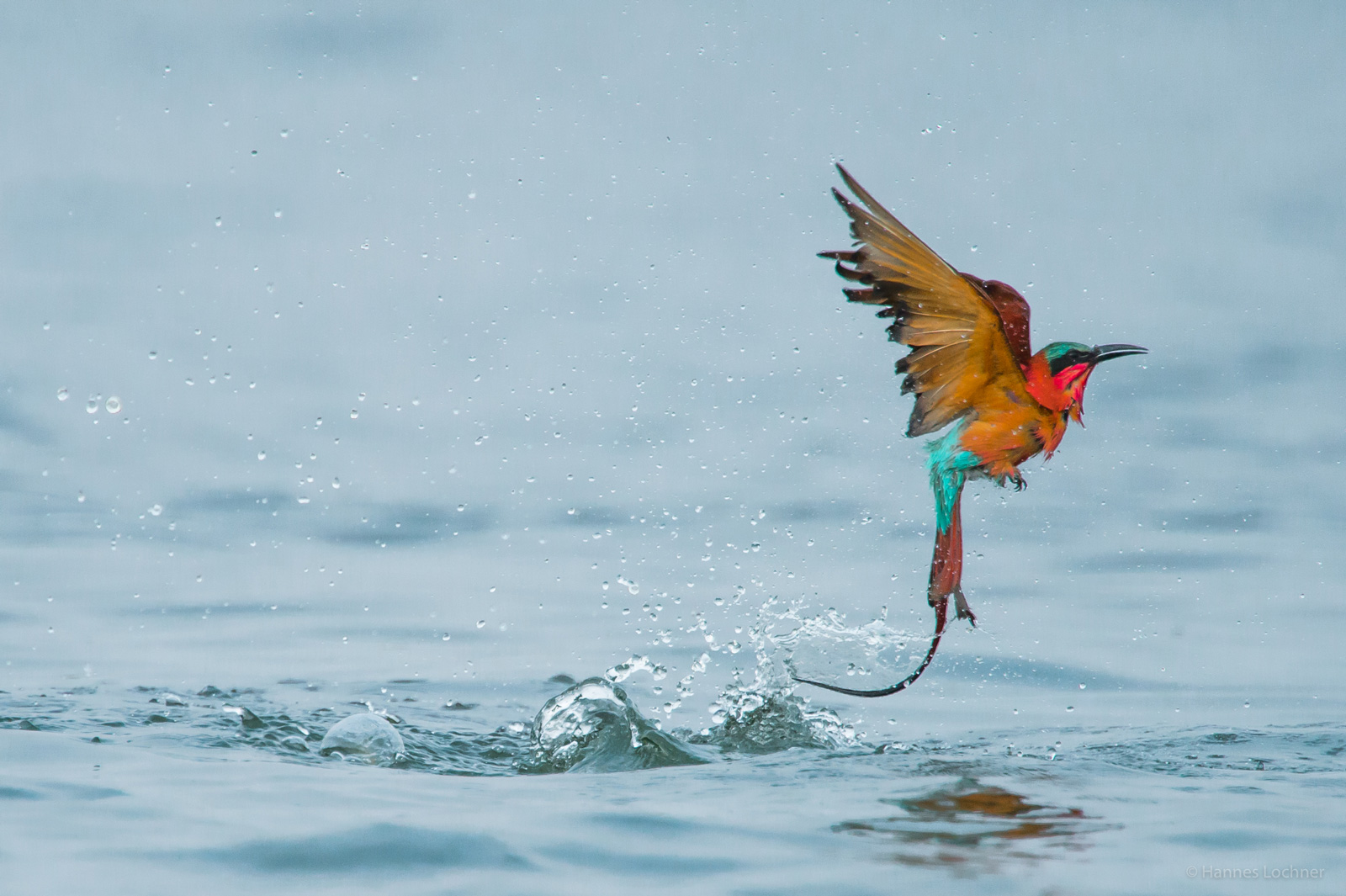
Augmented park capacity

To accommodate this ambitious wildlife relocation programme, the Park is scheduled to complete the expansion of the sanctuary to 18,000 ha by November this year. In preparing to manage this expanded sanctuary and increased wildlife population, the Park has identified the need to enlarge its ranger force. In September 2017, 34 candidates from the local communities were put on an intensive six-week ranger training course presented by the Southern African Wildlife College. All of the trainees successfully completed the course which equipped them with a qualification for future employment within the Park and surrounding conservation areas. Following their pass out parade in October, 24 of the newly qualified rangers were appointed as part of the Zinave ranger force – in so doing increasing the staff component to 79 and doubling the size of the Park’s patrol capacity.

The new rangers will also be deployed in the areas around the expanded sanctuary, to secure this space as game numbers grow to approach the carrying capacity, whereafter animals will be released into the wider Zinave National Park.

A new digital radio system has been installed in the park to enable communication across the expanse of the park and to link into the new Anti-Poaching Operations Control room. The rangers have also been trained in strategic patrol planning and equipped with Spatial Monitoring and Reporting Tool (SMART) tracking systems. To further assist the staff in their duties, access roads continue to be upgraded, and additional park equipment such as vehicles, trucks, motorbikes, and an aeroplane have been purchased.

Confiscated rifles
Anti-poaching strategies

The combined impact of these interventions has already resulted in great strides being made with improved anti-poaching capabilities in the park. There has been a rapid escalation in the confiscation of snares and more than 76 rifles, mostly shotguns, have been seized over the past year. An entire network of poacher trails and camps leading deep into the Park have been uncovered, allowing for focussed monitoring of critical hotspots.

In addition, through multiple suspect apprehensions and confiscation of logging vehicles, the Park has successfully clamped down on illegal logging inside the Park boundaries – a practice that had been devastating the natural resources in the Park.

Logging truck
Community development

The development of the Park is also giving focus to intensified engagement with the local communities living adjacent to and inside the Park area. In addition to increased employment opportunities already offered through the Park, baselines studies have been concluded to determine the needs and development potential of all relevant local communities and to support the resurrection of the community committees. This has led to the kick-off of first phase projects aimed at improving water provision systems and establishing conservation agriculture projects in selected settlements.

Continuation of each of these efforts will create the foundation for Zinave National Park to venture into a tourism development phase – enabling the Park to support conservation and community alike and to regain its former glory.

Anti-poaching rangers in a national park in Mozambique

Capturing the Nsefu area in South Luangwa

Late September is a stunning time in the Nsefu area of Zambia’s South Luangwa National Park, with very little standing water beyond the drying river. This concentration of game along the remaining waterways often causes interactions and social compression among animals that we do not see at other times of the year. It’s the perfect recipe for the ideal photographic safari!

The remote and wild Nsefu Sector of the park attracts a stream of returning visitors, back for another wild and excellent safari, as well as curious first-timers – lured in by the fantastic sighting reports and stunning photography emanating from the area. Africa Geographic offers personal, private guided safaris to this photographic Eden with professional photographer and guide Edward Selfe. A one-on-one photographic skills ‘boot camp’, if you will.

Elephants crossing the Luangwa River, Zambia.
You are likely to see elephants crossing the wide, lazy Luangwa River © Edward Selfe

In September this year, Edward guided a return client, Peter, and had this to say: “I had the pleasure of sharing some extended time with Peter – and what a grand time it turned out to be!

“We enjoyed one of the best carmine bee-eater colonies that I’ve seen in ten years – stretching along 250 metres of the riverbank and with multiple access points for viewing – comprising approximately 5,000 birds. It also just so happened when we were there that a scavenging kite flew over, and the sound and explosion of startling red wings taking to flight was so magnificent that words can hardly describe the scene.

Southern carmine bee-eaters on the river bank.
Southern carmine bee-eaters launch from the riverbank in a flurry of red © Edward Selfe

“Leaving camp early one morning, we spotted a honey badger in the distance. Cutting a corner to catch up with him, we could see why he was moving away from us: he had just caught a catfish and was trying to get to the safety of a large bush before someone else took his prize!

“After a couple of excellent mornings out in the bush – with good game sightings in a mix of diverse and interesting situations – we decided to explore the central area of the Nsefu Sector, where there’s a beautiful hot spring that draws game from all around the park. Any trip to this gem is bound to be beautiful, and occasionally it provides visitors with some surprises.

“The journey to the hot springs takes about 45 minutes across the beautiful Mtanda Plains. Here, we were lucky to see zebras, wildebeest, approximately 600 buffalo, and lots of crowned cranes on the way to the hot springs. We also spotted an elephant herd who were moving in the distance between dead trees, and we waited for just the right photo opportunity to come our way.”

From top left: 1) On safari, photographing a herd of zebras; 2) Coming across huge herds of buffalo is common in this section of South Luangwa; 3) A honey badger flees from our vehicle with his recently caught fish! 4) A small herd of elephants cross Mtanda Plain in the Nsefu Sector © Edward Selfe

A morning to remember

Edward Selfe continues: “Early the following morning, we enjoyed one of the best game viewing periods of the week. Soon after leaving camp, we found a pair of leopards finishing off an impala carcass that they’d killed the day before. True to their leopard nature, they were quite shy, so they moved off quickly, giving us a good sighting, but we had to be quick if we wanted to capture any photos of this magnificent pair.

“Shortly after, we heard some hyenas giggling nearby and decided to follow their call. Unexpectedly, as is so often the case in Africa, we came across a coalition of three male lions who were feeding on a hippo! Whether they had killed it is up for discussion, but it was stinking quite badly by the time we got to the scene, so we suspected it had died of natural causes some days previously.

Two hyenas spotted. South Luangwa, Zambia.
During our time in Luangwa, we enjoyed many moments with hyenas © Edward Selfe

“There were a lot of hyenas near the kill, but they dared not approach too close while the large male lions were still there. We sat and watched knowing that, at some stage, the well-fed lions would move off, and the scavengers would get their chance.

“Taking turns to guard the carcass, the lions were reluctant to relinquish the stinking hippo to the hyenas, despite its decomposed state! Initially, the lions were feeding, taking turns to protect the carcass. Two of the lions moved off, and eventually the third followed, giving the hyenas a chance to move in. But not for long!

“Wondering how the morning could get any better than that, we decided to follow some baboon calls that we’d been ignoring for some time. The baboons were shouting their leopard alarm call, but I held my expectations in check since the calls had been going on for some time and the leopard had likely moved on. Fortunately, we found him crossing the open grassland, and in the best morning light I had seen! It was a privilege to spend time in the presence of an enormous and magnificent male leopard such as this one.

A majestic leopard spotted in South Luangwa, Zambia © Edward Selfe
A stunning male leopard walks through golden grassland in South Luangwa © Edward Selfe

“After the drama of the morning, we decided to stay close to the lion sighting in the afternoon, in case the three large males came to drink at the river. On leaving camp, we found that they’d already moved to the water’s edge and were sitting on the wet sand, being silently observed by about 30 giraffes on the other side!

“The lions had spread their smell all over the elephants’ usual crossing point, so the elephants moved upstream to a spot where we could get down to their level and watch as they splashed through the water towards us.

“Returning to where the lions were waiting on the riverbank, we found a large herd of buffalo heading to drink at the same spot. Hoping that a hunt might take place, we hung back, waiting to get into a position where we could see clearly without spooking the herd.

A herd of buffalo in South Luangwa, Zambia © Edward Selfe
Buffaloes scent the air to assess us as a potential threat © Edward Selfe

“Primarily, our presence in the bush must be non-invasive, and we have to take care not to influence the outcome of any wild and natural situation.

“That said, scenting the air to decide if we were a threat, these buffalo decided to drink elsewhere, avoiding a possible meeting with the lions!

“We then decided that it would be a good idea to continue following the lions and the herd the next morning. At 04:15 am, I awoke to the sound of male lions calling loudly. Being sub-adults, these lions had not been calling much, so I suspected that their call was one of victory, having just made a kill. Indeed, on leaving camp in the morning, we came across the three of them breaking into the large bulk of a female buffalo they had killed just 500 metres from the camp!

Buffalo kills by lions are always dramatic, always memorable experiences © Edward Selfe

“The youngest of the three continued re-enacting the killing of the buffalo even though she was long dead, while the largest male got down to the serious business of eating!

“With hundreds of photos taken of the feeding frenzy that morning, we headed back to camp to prepare for our departure for the airport. It was a fantastic final morning – and a reminder that, no matter how well the week is going, you can never be sure what tomorrow will bring!

Suffice to say, Peter and I had a great week in the Nsefu Sector.”

Let’s go on safari again! 

Soon after the tour with Peter had concluded, Selfe accompanied another Africa Geographic client, a photographer and wildlife enthusiast, Phillip.

Selfe remembers: “On our first morning drive, we returned to the lion kill which we had been observing at the end of my previous safari with Peter. We found that the lions were still guarding the buffalo carcass, even though they had full stomachs and could barely force another morsel down their throats.

“Such is their instinct to protect the resources which they rely on for their survival. However, eventually, the lions moved away, and the hyenas wasted not a moment before rushing in to claim the leftovers.

A hyena carrying a dry piece of buffalo skin
A hyena gets away with the large dry skin of the buffalo and is not challenged by others to her claim © Edward Selfe

“At one stage, several hyenas ran off into the distance, making me wonder if they had gotten wind of another kill nearby, perhaps by wild dogs. We moved off to follow them, but found only a stunned-looking puku in the interlocking bends of the Kauluzi stream.

“A great advantage of the dry conditions at this time of year is that it brings together lots of game in the zone along the river, often requiring minimal travelling to get a wide variety of sightings.

“Sausage trees are a mecca for lots of game at this time of year – the fresh buds, soft flowers and tender fruits attract giraffes, buffaloes, pukus, bushbucks, impalas, elephants, baboons, monkeys, squirrels and birds.

From top left: 1) South Luangwa is one of the best places to see leopards; 2) Giraffes spar against a background of mahogany woodland and vernonia bushes; 3) Buffaloes are plentiful in the Nsefu Sector of South Luangwa; 4) Wild dogs are a special sighting, no matter where in Africa you get to see them © Edward Selfe

“We had heard that some very young lion cubs had been seen with one of the prides recently. Following their tracks, we located four youngsters in a remote back-country gully along the Kauluzi stream. It was amazing to see how innocent and vulnerable they were. They showed no concern about our (cautious) approach and barely flinched when we shone the spotlight’s edge on them to take some quick photos.

“There was a herd of buffalo nearby, and I could hear hyenas in the distance – with no sign of the cubs’ mother.

I was concerned about drawing attention to the area, so we moved on after a short time.

An adorable lion cub at night
I estimated that these cubs were six to eight weeks old – young enough to be hidden away by their mother, and not yet introduced to the pride © Edward Selfe

“We returned to the scene in the morning, but there wasn’t any sign of the cubs – only tracks to show that the buffalo herd had been through the area. I was worried they might have driven the cubs into the dry channel, but another guide found them elsewhere later in the week, so thankfully their mother must have come to the rescue!

“Arriving at my planned safari area for the day, we quickly found that something was up. The antelope looked very spooked, and we soon found a leopard feeding on an impala in a bush. She was deep in the bush, and we wondered if we’d get a good view when, suddenly, a lioness arrived and stole the carcass from her!

An angry leopard in a tree who has had his prey stolen
Just another despairing leopard we saw that had its prey stolen! © Edward Selfe

“After all this drama, we decided to visit the beautiful salt pans in the centre of the park. On arrival, we got fleeting views of a serval cat and a honey badger carrying a cub in her mouth, but after that, the area was uncharacteristically quiet. However, we waited and were rewarded with a group of 11 buffalo coming to drink from the clear water at the spring’s source.

“The following morning, we decided to go in search of a leopard once again. Leaving early and stopping regularly, we picked up a puku’s call and headed to the area to check. An amazing sight greeted us. A hyena was feeding on a puku carcass on the ground, and a leopard was watching from a nearby tree!

A hyena stealing a kill from a leopard
Another leopard kill taken by hyenas! © Edward Selfe

“After a few moments, the leopard came down from the tree, hoping to clear up some of the scraps that the hyena had left during its messy feeding session. Inexplicably, the hyena suddenly moved off, and the leopard wasted no time in grabbing the carcass and heading to the tree where she made short work of dragging it to the lowest branch, and safely away from the scavengers!

This leopard stashes its puku prey in a tree © Edward Selfe

“Here, we also got my favourite photo of the entire trip: a white-fronted bee-eater offset by the purple flowers of a vernonia shrub. I love the soft colours!

“Just when we thought it was all over, Luangwa offered us one more gem. A newborn, minutes-old puku calf, which was still covered in afterbirth. We took great care not to get too close, but we still managed to capture some precious photos—and enjoy the remarkable start of a new life in the bush.

“Philip’s approach to the bush was admirable to me. His genuine belief that no sighting, no matter how big, small or seemingly insignificant, should be taken for granted served him well in Luangwa. Very often, we found the best sightings when we stopped to watch the smaller events, and hear a tiny squeak of a sound that leads us elsewhere, to some of the best bush sightings I’ve ever had.”

Africa Geographic Travel

On a photo safari in Nsefu, South Luangwa

From top left: 1) Photographing elephants crossing a riverbed in South Luangwa; 2) Elephants crossing the vast Mtanda plains; 3) A special moment photographing lions mating; 4) Elephants bathe and cool off in the water of the Luangwa River © Edward Selfe.


Accommodation at Zikomo Lodge © Edward Selfe

South Luangwa National Park information

South Luangwa National Park is known as the birthplace of walking safaris and for its authentic, remote seasonal bush camps, which open only after the rainy-season floods have subsided.

SIZE
South Luangwa National Park is a 9,050 km² paradise located along the banks and oxbow lakes of the Luangwa River in eastern Zambia, offering great wildlife sightings. The park is one of three in the Luangwa Valley, the others being the North Luangwa and Luambe national parks.

HISTORY
The creation of the park was primarily influenced by renowned conservationist Norman Carr, who convinced Senior Chief Nsefu – Paramount Chief of the Kunda people in the Luangwa Valley – to set aside a portion of tribal land as a game reserve. This visionary move ensured that the local population would benefit through conservation of the wildlife and habitat of the Luangwa Valley. Then, in 1950, he built the first game-viewing camp open to the public in Northern Rhodesia (now Zambia), and the camp’s revenue was paid directly to the Kunda Native Authority.

ECOLOGY
The park is defined by the Luangwa River that flows through it, and the numerous oxbow lakes that have formed at the river bends. Vegetation ranges from lush riverine forests to open grassy plains, mopane woodland in low-lying areas, and miombo woodland on the higher plateau.

FAUNA AND FLORA
South Luangwa National Park has a very high concentration of leopards, hippos and crocodiles, as well as good populations of elephants and buffalo. Lions and wild dogs are often seen, as are Thornicroft giraffe and many species of antelope. The area hosts about 400 bird species.

A wonderful photo of a white-fronted bee-eater in South Luangwa
A beautiful sighting: a white-fronted bee-eater © Edward Selfe

 ABOUT THE GUIDE AND PHOTOGRAPHER

magazine-authorEdward Selfe is a professional guide and photographer living and working in the South Luangwa.

His safaris combine authentic wildlife viewing with excellent photographic guidance, tuition, and opportunities. Edward holds both of South Luangwa’s coveted guiding qualifications, reflecting his love for the bush, its inhabitants and the pleasure of being immersed in wild places.

He enjoys discovering the unusual and taking time to allow behavioural situations to unfold. His safaris are ideal for true safari-lovers who seek a personal experience with nature. He lives near the national park with his wife and daughter.

Africa Geographic Travel

49 Vultures poisoned near Kruger National Park

Close up of a vulture's face

Sourced from third-party site: Times Live, written by Tony Carnie

The poisoned bodies of nearly 50 vultures have been found by rangers in Mozambique‚ just a short distance from the boundary of the flagship Kruger National Park.

The discovery was made two weeks ago by a joint patrol of SA National Parks and Mozambique wildlife rangers in the Limpopo National Park‚ which directly abuts the Kruger Park.

The Peace Parks Foundation‚ which is helping to fund anti-poaching operations in the Limpopo sector of the transfrontier conservation area‚ said the carcasses of 49 vultures and two jackals had been found in two nearby poaching camps. Rangers suspect that the poachers had laced a number of antelope carcasses with chemical poisons with the intention of poaching lions‚ whose body parts are in increasing demand for local and Eastern traditional medicine.

In the first incident‚ 37 dead vultures and two jackals were found next to poisoned carcasses of a waterbuck‚ wildebeest and impala.

“At a second site the poisoned carcass of a zebra was surrounded by the remains of 12 more vultures‚” a Peace Parks spokesman said in a statement this week. “Considering that most vulture species are even more threatened as a species than rhino‚ this is a great tragedy.

“Fortunately‚ the poachers had not been successful in killing any lions at either of these sites. Lions are also threatened‚ with current worldwide estimates indicating that there are only 20,000 wild lion remaining‚ as opposed to an estimated population of 29,000 rhino.”

Vultures sitting on a dead tree
© Times Live

According to the Endangered Wildlife Trust‚ vultures are under immense pressure from a range of human activities. These threats have resulted in a rapid decline in Africa and Asia particularly‚ where most of these birds are now listed as critically endangered

Vultures are particularly vulnerable to mass die-offs from poison baits laid out to kill other high-value wildlife species. Last year‚ nearly 150 vultures were killed in two poison incidents in northern Botswana. In Zambia‚ another 105 vultures were poisoned in South Luangwa National Park and another 56 vultures on the boundaries of Tanzania’s Ruaha National Park.

The Peace Parks Foundation‚ concerned about the negative impact of continued poaching in Limpopo National Park‚ said it had mobilised more than R7 million recently to help bolster anti-poaching efforts in the park. The French Development Agency would provide another R13 million to the project.

The foundation said the money would be used to establish an expanded Intensive Protection Zone (IPZ) in Limpopo National Park. “With more than one million hectares to patrol‚ implementing effective anti-poaching strategies throughout the Park remains a significant challenge.”

A new central command centre has been equipped with the latest technology systems‚ which also enables cross-border communications between the Limpopo and Kruger national parks.

The bird-eating heron of the Kgalagadi

Heron in a waterhole surrounded by sparrows
© Ed Aylmer

Written, and photographs, by Ed Aylmer

We have just returned from a two week trip to the Kgalagadi Transfrontier Park. Generally the game sightings were fewer than we have experienced in the past at this time of year, but as usual the Kgalagadi always delivers unusual opportunities to photograph animal and bird behaviour.

We were at the Leeuwdrill waterhole on the Nossob River road when we spotted the arrival of a black-headed heron, just as the morning traffic of Cape sparrows started to build up.

Heron in a waterhole surrounded by sparrows drinking water
© Ed Aylmer

As the sparrows came down en masse to drink, the heron would pace up and down the waterhole looking for potential targets.

Heron catching a sparrow in a waterhole
© Ed Aylmer

Eventually the heron honed in on its target, suddenly shot forward, grabbed a Cape sparrow and proceeded to swallow it whole!

Heron capturing a sparrow
© Ed Aylmer

It was fascinating to firstly see this heron in the Kgalagadi, and secondly to see a bird catching and eating small birds.

Heron swallowing a sparrow
© Ed Aylmer

During our time at the waterhole we witnessed this heron take four successful kills!

Heron eats sparrow
© Ed Aylmer

Video: Maasai coming of age ceremony

Maasai warriors dancing
Warriors dancing during Emuratare © Stephanie Fuchs

The Maasai have a strict social system based on age groups and respect for their elders. Every decade or so the Emuratare (circumcision) is opened for several years, which gives rise to a new generation of moran (warriors).

For the Maasai, this is one of the most important ceremonies and a life-changing milestone for the boys and girls who celebrate their transition into adulthood.

Four young Maasai warriros
Newly circumcised warriors, two weeks after their circumcision © Stephanie Fuchs

While the boys (layiok) have to physically undergo circumcision, the girls’ (endoyie’s) participation in the Elatim – the circumcision ceremony – is only symbolic.

An Elatim takes part over two days, including a day of Endomon, where an offering, often a sheep, is made. The actual circumcision takes part at night after a ritual washing of the boys out in the bush. The moran sing and dance into the night.

Maasai woman in full traditional dress
A woman in full traditional dress (my sister-in-law) during the ceremony © Stephanie Fuchs

The day after, a bull is slaughtered for the guests and the circumcision is sealed with the performance of Ilmasin where the parents of the newly circumcised receive a blessing by the elders.

The boys rest inside for a month but will not receive full warrior status until the previous generation of warriors have taken the Ilmaho ceremony, during which they pass their rights and duties onto the new generation of moran.

Group of Maasai warriors dancing
Warriors dancing during the ceremony © Stephanie Fuchs

The Maasai are not the only tribe in Tanzania, and Africa as a whole, who have a strict social system and who practise circumcision.

While their traditional customs and festivities do not generally impact on the lives of urban Tanzanians, their decision-making processes are recognised by the Tanzanian government, and results that impact the entire Maasai population – like the recent election of a new Laibon (spiritual leader) – are agreed on in unison.

Maasai women dancing
Women dancing during Elatim © Stephanie Fuchs

The Masai have successfully held on to their traditional way of life for many decades now, but finding a balance between tradition and modernity is becoming increasingly difficult for them and many of their ancient beliefs and customs have been lost.

See below a video of Maasai women dancing during Elatim – celebrating their traditions the way they have done for centuries.

Mega-carnivore dinosaur footprints discovered

Footprint of a massive dinosaur discovered in Lesotho
Kayentapus ambrokholohali footprints belong to an animal of about 26 feet long, dwarfing all the life around it. Image © L. Sciscio , E. M. Bordy, M. Abrahams, F. Knoll, B. W. McPhee

An international team of researchers from South Africa, the UK, and Brazil have discovered massive footprints belonging to a carnivorous dinosaur that roamed Southern Africa 200 million years ago.

In a paper published last week on PLOS One, the dinosaur has been classified informally as a ‘megatheropod’, and is called Kayentapus ambrokholohali – thought to be a relative of the Tyrannosaurus rex.

Researcher lying next to dinosaur footprint
UCT PhD student Miengah Abrahams (1.6 metres tall) lies next to the megatheropod tracks found in western Lesotho © UCT

Led by scientists from the University of Cape Town (UCT), the team discovered the footprints in western Lesotho. The footprints measure 57cm long and 50cm wide.

With these measurements, the team believes the dinosaur was at least nine metres long and had a hip height of almost three metres, making this the largest therapod tracks during this time period ever found in Africa .

Estimated size of a megatheropod dinosaur
Estimated size of the megatheropod based on the footprints. Theropod image adapted, with permission, from Scott Hartman © UCT / Scott Hartman

According to the statement released by UCT, around the time that this dinosaur roamed the earth (early Jurassic period), the other carnivores (therapods) were “usually small” and were only around three to five metres in body length.

This means that this megatheropod “would have roamed a landscape otherwise dominated by much smaller carnivorous dinosaurs and a variety of herbivorous and omnivorous dinosaurs”. The statement adds that because large forms of theropods only started to appear about 120 million years later – during the Late Jurassic period – that this new discovery of this megatheropod is more “scientifically impactful”.

Megatheropod dinosaur tracks
False-colour depth analysis of tracks. Image © L. Sciscio , E. M. Bordy, M. Abrahams, F. Knoll, B. W. McPhee

The full report: PLOS ONEL. Sciscio, E. M. Bordy, M. Abrahams, F. Knoll, B. W. McPhee: “The first megatheropod tracks from the Lower Jurassic upper Elliot Formation, Karoo Basin, Lesotho

Forest elephant population collapse in Central Africa

Three forest elephants
© Christian Boix

Sourced from: WWF

Wildlife censuses carried out in four Central African countries have revealed that forest elephant populations have declined by approximately 66% over eight years in an area covering almost 6 million hectares. These declines are attributed to the illegal killing of elephants for their ivory. However, there are indications that lower levels of poaching have occurred within protected areas, underscoring the role of protected areas as a safe refuge for wildlife.

WWF, in collaboration with the respective country ministries in charge of wildlife and various partners, conducted the censuses between 2014 and 2016. The inventories were carried out in key protected areas (representing 20% of the survey area) and surrounding zones (logging concessions, hunting areas and other land-use types) in Cameroon, the Republic of Congo, the Central African Republic and Gabon. The censuses focused on forest elephants, great apes (chimpanzees and gorillas) and additional data were collected on levels of human activities.

Published in a WWF Central Africa Biomonitoring report, the results indicate an estimated 9,500 forest elephants and 59,000 great apes (weaned, independent individuals) across the survey area. The studies revealed a 66% decline in elephant population between 2008 and 2016 across the landscapes but indicate stable populations of great apes. The figures for elephants are particularly alarming in the Cameroon segment of Tri-national Dja-Odzala-Minkebe (TRIDOM) transboundary conservation landscape where their numbers have declined by more than 70% in less than a decade.

“Despite these shocking data, we believe that the trends can be reversed if decision-makers and wildlife managers make maximum use of these data to guide policies, surveillance plans and strategies to combat wildlife crime,” says Dr K. Paul N’GORAN, WWF Biomonitoring Coordinator for Central Africa. “There is a crucial need for the international community to support such actions taken by governments and conservation NGOs in collaboration with local communities,” he adds.
“This is the first time wildlife censuses have been carried out on such a large scale, over a short period of time in Central Africa,” states N’GORAN. “The censuses were conducted using standardised line transect technique and analysed using DISTANCE software, an approach widely applied and recognised for wildlife inventories,” N’GORAN adds.

Protected areas as a wildlife refuge 

The report showed that industrial-scale poaching for ivory is the biggest driver of the decline of elephant populations in the region. This has pushed elephants to seek refuge inside protected areas. “The inventory results revealed that poaching and other human pressures are higher outside national parks; this pressure is 50% less in national parks than outside,” N’GORAN says.

“While we commend the leaders of the four Congo Basin countries for the progress made in reducing the impact of human activities within protected areas, by working together with communities and organisations present on the ground, continued poaching and failure to secure the migration corridors of elephants in and around these protected areas could lead to the decimation of the remaining populations,” N’GORAN says. “This would extend the threat to other species of the rich biodiversity of these countries,” he adds.

WWF is urging leaders of these four countries to strengthen legislation aimed at curbing poaching. Authorities in these four countries are also encouraged to come together and step up joint cross border monitoring and law enforcement in and around protected areas. We stress the need to work in collaboration with local communities to tackle the complex operations of wildlife crime networks in the Congo Basin.

Safari tips: Cell phones & internet on safari

Cell phone being used while on safari
My guide in Samburu (Kenya) using his cell phone to stay in touch with researchers we were spending time with © Simon Espley

“Perinet, Madagascar – It was early morning, and the forests below were covered in a blanket of dense mist. The magnificent indris had woken up, and their whale-like sirens were drifting up towards us as we savoured our coffee and biscuits. Total safari tranquillity. Bliss…

WHAT? WHY DID YOU NOT MAKE THAT TRADE?… I SAID, WHY NOT?… HELLO?? NOT GOOD ENOUGH! JUST MAKE ANOTHER PLAN… WHAT?!?

The gentleman in the cabin next door had other ideas for the morning. Satellite phone in hand, he strutted to and fro on his deck and barked out his orders and frustration like he was back in his office in Europe.”

Communication with the outside world is possible in some form from most tourism areas in Africa, and we all need to set boundaries, resist the FOMO, and respect that others do not share your need to be always-on. Some people need to check in now and then while on safari, but for most a safari is time to detox, unplug, and switch off.

Here then, are a few tips for communication while on safari:

• Wi-Fi

Most lodges will have some form of internet access, which is mostly used for their own business purposes. Many lodges will provide Wi-Fi to guests, and others provide a computer with internet access. Expect treacle-slow speed in many remote regions, and plenty of downtime. Some lodges expressly refuse to provide guests access to the internet. If you do need to be online while on safari, check beforehand what is available. If there is Wi-Fi in the communal areas, please go to airplane mode during meals and other social times. Better still, leave your device in your room during those times.

• Cell phone coverage

Cell/mobile phone coverage can now be found in many previously off-the-grid areas in Africa. For example, many parts of the Greater Kruger in South Africa have good coverage, and even Bwindi Impenetrable Forest in Uganda has pockets of coverage – lookout for locals huddled in specific places. Please switch your mobile phones to airplane mode while you are on game drives, bush walks, and in communal areas of the lodge – to avoid disturbing other guests.
• Satellite phones

Satellite phones can be used almost anywhere (except indoors), but connections are often weak – depending on tree and cloud cover. You may need to speak loudly to be heard. If you do need to use a satellite phone during your safari, please find a place far from other people, where barking at that device does not affect anybody else.

This is all about common sense and respect, really.

For accommodation options at the best prices visit our collection of camps and lodges: private travel & conservation club. If you are not yet a member, see how to JOIN below this story.safari

Rock-cut churches in Ethiopia to be documented

Inside a rock-hewn church in Ethiopia
Rock-hewn church of Agwäza (Gärᶜalta, Təgray), attributed to the late märigeta Zeberhan (+2015) of Ḥawzen © Michael Gervers

Written, and photographs, by Professor Michael Gervers – Professor of History at the University of Toronto and project team leader 

The highly endangered, historically significant, and virtually undocumented craft of constructing rock-cut churches in Ethiopia is now being recorded, thanks to a project funded by Arcadia, a charitable fund of Lisbet Rausing and Peter Baldwin.

These churches are hewn from the rock-face into free-standing buildings and are some of the most iconic images of African Christianity. Carved by hand, using traditional tools, construction can last over several years, usually by teams of up to eight men.

Exterior of a chapel in the extensive rock-hewn complex in Ethiopia
Exterior of a chapel in the extensive rock-hewn complex made by märigeta Gäbrä Mäsqäl Täsämma at Ambager, near Gašäna in Lasta © Michael Gervers

This highly skilled craftsmanship dates from at least the Middle Ages, and yet it is not widely known that these churches are still being made today.

Inside a rock-hewn church in Ethiopia
Interior of the rock-hewn church of Maryam Mawka, Ḥawzen region, Tigray © Michael Gervers

However, the craft is fast disappearing – very few of the post-19th century churches are documented and the actual craft of church excavation has never been documented before.

Team of chisellers working on a large piece of rock in Ethiopia
Team of chisellers working on the north aisle of the rock-hewn church of May Wäyni Ǝnda Giyorgis, Ḥawzen region, Tigray © Michael Gervers

This project will document the more recent churches, as well as recording interviews with the craftsmen who create them. The materials created from this project will then be made available online for free in an open-access database.

Workmen chiselling out the church from rock
Video recording by Iacopo Patierno of workmen chiselling out the church to be of May Wäyni Ǝnda Giyorgis (Ḥawzen region) in the presence of the administrator, qäññ geta Ḥagos Gäbrä Ǝgziᵓabəḥer, and the translator/interviewer, Alula Akalu © Michael Gervers

The database that will be created will be of great scholarly value, and will significantly advance historical research on Ethiopia and on rock-hewn churches and spaces wherever they are found.

Two men preparing for rock chiselling
Priest Aba Atsibiha Teferi (right) preparing a chisel at May Wäyni Ǝnda Giyorgis (Ḥawzen region) while a smith works the sheepskin bellows © Michael Gervers

The database that will be created with the results will include:

• Plans, drawings, photographs and academic analysis outlining continuity of the medieval tradition

• Interviews with itinerant craftsman and workshops currently active in Ethiopia, recording a comprehensive account of their craft including religious traditions

• Liturgical tradition relevant to the process of hewing churches out of the rock

• Thesaurus of related vocabulary

• Documentation of tools used in the process of church-excavation

• Audio and video documentation of excavation of a rock-cut church

Large rock face with two entrances
Site of May Wäyni Ǝnda Giyorgis (Ḥawzen region) showing double entrances to the north aisle with workmen resting at the end of the day © Michael Gervers

The traditional techniques used to build the churches will soon be changing and developing into a more modernised system, for example with the use of power tools.

Workmen chiselling rock in Ethiopia
Workmen chiselling east and south towards the central aisle of May Wäyni Ǝnda Giyorgis (Ḥawzen). The roughly hewn square of stone at top centre will become a ‘hanging’ decorative relief © Michael Gervers

This means that time is fast running out for the opportunity to witness the traditional methods being used in action. It also makes our job of preserving this craft ever more important, as it forms a vital part of Ethiopian, and indeed religious, history.

Large mountain in Ethiopia where they carve out churches from rock
White sand debris excavated from the rock-hewn church of Shewito in the amba north-west of Ḥawzen © Michael Gervers

The construction of the churches is fascinating to observe. For example, they are carved from the top-down, meaning the ceilings are created first, and the main body of the hewn out spaces follow as the workers carve deeper into the rock – the opposite of brick built construction.

Ethiopian priest standing outside his church
Baḥtawi Gäbrä Maryam standing before the entrance to his rock-hewn church at Itissa in Ṥäwa  © Michael Gervers

Check out our safari to learn about Ethiopia’s cultural treasures – Ethiopia, the cradle of humankind

Kruger should cull 88% of its elephants, says hunter Ron Thomson

Herd of elephants with target sights

Celebrated hunter Ron Thomson believes that 88% of Kruger National Park’s elephants should be culled. Our summary below is a brief one – for more information please read his full article here.

Who is Ron Thomson?

Ron Thomson is a celebrated man in hunting circles, having killed “5,000 elephants, 800 buffalo, 50/60 lions (including six man-eaters), 30/40 leopards, 50 hippos and many more”. 

Thomson’s strategy for Kruger’s elephants mirrors his activities in Zimbabwe’s Hwange National Park, during his tenure as a provincial game warden in the 1970’s. On his website Thomson claims to have commanded a culling team that killed 2,500 elephants and 300 hippos with military-grade automatic weapons, decimating entire herds within 60 seconds.  

Brief summary of Thomson’s article:

Thomson starts off by covering in broad strokes respected elephant expert Professor Rudi van Aarde’s ‘Landscape Elephant Management Plan’, which Thomson claims has been the management strategy of choice in Kruger National Park since 2006. Thomson rejects the underlying assumption of the plan that, left unchecked, elephant populations will fluctuate in response to food availability, with natural die-offs during dry periods. In his article, Thomson does provide a fair amount of detail explaining the assumptions behind van Aarde’s plan, and we advise you to read his article in full.

Thomson then goes on to heavily criticise the plan, using a blend of cynicism and emotionally-charged leading statements. Staying clear of these argumentative aspects of his article, we have extracted the following reasoning by Thomson to back up his strategy to cull 88% of Kruger’s elephants:

• Young elephants will die during natural dry cycles, due to lack of sufficient food generated firstly by the ecosystem and secondly by lactating mothers. He suggests that this is no better and no less cruel than the culling of entire elephant herds;

• Many other species, including rhinos, will also suffer population crashes when elephants are left to naturally impact on landscapes. Thomson: “It would seem, for whatever reason, the scientists who have applied the Landscape plan have deliberately turned Kruger National Park into a pure elephant sanctuary.”;

• Once the elephant population has been trimmed to the right number, the population’s annual increment can be easily culled every year in order to create dynamically stable numbers that will always remain within the habitat’s carrying capacity;

• During a culling programme, selected breeding herds are eliminated in their entirety whilst other breeding herds are left totally alone. This enables the untouched herds to carry on with their lives, as before, after every annual culling operation comes to a close;

• Bulls are selectively shot separately. Thomson: “In my opinion, the number of bulls killed should at least equal the number of adult cows that are killed. Bulls live apart from cows so they have to be handled differently and separately. Cognisance must also be taken of the fact that bulls cause infinitely more damage to top canopy trees than do the cows! So they may have to be culled more heavily than cows!”

• An experienced culling team – with three expert marksmen using self-loading rifles and operating in unison – is capable of eliminating elephant breeding herds numbering 30 to 50 animals in less than sixty seconds;

• Thomson: “I have no doubt in my mind that the correct management option for the elephants of Kruger is to reduce their numbers to 2 500 … So PLEASE – everybody– let’s make this happen!”

Editorial comment: Based on Thomson’s estimate of 20,000 elephants currently in Kruger, a population of 2,500 elephants implies the removal by culling of 88% of Kruger’s elephants.

Rhino horn: Recipes for disaster

white rhino, black and white

Written by Francesco Nardelli – IUCN/SSC Asian Rhino Specialist Group / Save the Rhino International

*The views expressed are those of the author

In the middle of the sixth mass extinction, when 50% of the living species are at risk of extinction due to the ever-growing, destructive human hands, six rhinoceros species are at the tip of the pyramid, and are among the most endangered species on Earth. Africa, in particular, is troubled by rampaging poaching. Countries with rhinos, NGOs, rhino owners, conservationists, ‘celebrities’ and corporate business owners are trying several schemes to save the rhinos: Dehorning, horn poisoning, synthetic horns, horns embedded with micro-cameras or chips, educational campaigns and intergovernmental agreements. These have yet to bear significant results to eliminate the poaching-trading plague which is killing rhinos by the thousands.

The time has come to change some of the solutions, proven to be ineffective, with new strategies to save the last pachyderms.

The Sumatran rhinoceros (Dicerorhinus sumatrensis) is nearly extinct; just three Nile rhinos (Cerathoterium cottoni) Groves et al. 2010, exist; the last sixty Javan rhinos (Rhinoceros sondaicus) are critically endangered; the black (Diceros bicornis) and the Indian (Rhinoceros unicornis) rhinos are surviving in a few thousands. The white rhino (Cerathoterium simum), the second largest mammal on Earth, seems to hold on at reasonable numbers despite rampant poaching.

The killing fields, trading routes, smuggling tricks, countries involved in trafficking, location of the exit-entry points, and identity of the people involved are all recognised. Conservation action plans are completed and a number of options are on the table, but few are totally implemented. Lack of political will, of funds, of ‘education’, overwhelming corruption, are exposed as undeniable causes of the disaster. Nevertheless, the scenario emerges without one collective, cooperative and factual global action to save the rhinos.

African rhinos versus poaching
Table showing percentage of wildlife lost in past 40 years
© WWF/One Green Planet

The majority of African rhinos suffer from the plight of poaching, and at first sight it would appear that by simply removing the horn the problem is solved: rhinos should be worthless to poachers. However, there are numerous cases where dehorning has proved insufficient to prevent rhinos from falling victim to poachers. After any dehorning exercise, a stub of horn will remain, and although poaching is made less profitable, the sad reality is that poachers will still kill for a horn stub due to its high value – or merely to end their chase ‘successfully’.

What is there to say about poisoning, tagging or inserting micro cameras into the horns of live animals: good intentions, but ineffective? On a large scale, those procedures consume too much time and funds and pose too great a risk for the animal’s health.

Are those initiatives deterrents for daredevil poachers? South Africa’s Minister of Environmental Affairs, Edna Molewa revealed that “from January to June 2017, 529 rhino have been poached, compared to 542 over the same period last year”(Brandt 2017). Such a similar figure has become nearly constant since 2013 (Table 1), to confirm that poachers need other kind of deterrents.

What it is of further concern is that legal trade in rhino horn has resumed in South Africa, ostensibly to raise funds for protection and to bring poaching to end (DEA 2017a).

Two fundamental questions rise spontaneously: why and how is legal trade in rhino horn going to stop poachers and traders?

Rhino horn should not be trafficked, just like pangolin scales, shark fins, giant clams, ivory, whale meat, etc. Wildlife trading only favours present and potential dealers who exploit animals for their livelihoods and lifestyles – in fact they refuse to look at any alternative which may work for the rhinos.

To complicate the efforts, there is the ever-increasing presence of ubiquitous corruption.

Table of statistics regarding poached rhinos
Table 1. Rhinos poached from 2007 to 2016 in South Africa © WWF/Traffic

A primary predicament is the obsolete and unethical theory that “wildlife has to pay for itself”, hence to be considered as a commodity like corn, wheat, rubber, oil, etc. That approach has evolved in all sorts of destructive activities to become the principal reason behind habitat destruction and wildlife extinction. Too many people still have this primitive consideration for living beings, and that it is a fatal correlation for the rhinos and other species, unless their alive or dead status are clearly divided (e.g. a touristic safari is not a trophy hunting safari).

Several scientific studies prove and provide irrefutable evidence that non-human animals are sentient and conscious, thus they have rights to be respected, their life in primis (Allen & Bekoff 2007, Mountain 2012, Bekoff 2013, Grasso 2014, Jones 2015, de Waal 2016).

On April 30, 2017, The New Yorker reported: “More than six thousand tigers live on Chinese farms that often raise them in concrete pens solely for their parts”. While such harvesting may seem to take pressure off wild populations, tiger experts indicate the opposite: “Tiger farms actually legitimise the business”. The article’s author, John Goodrich went on, “users always think wild is better than farmed, so they will just pay more for wild”.

Zhou Fei, the head of China’s office for TRAFFIC, the foremost organisation monitoring the global wildlife trade, states: “China’s domestic ivory ban is a milestone for the conservation of wild elephants in Africa. Nevertheless, if even a fraction of Chinese consumers want to collect ivory tchotchkes, or grind up rhino horn for clueless medicinal properties, global animal populations will continue to suffer” (Beech 2017).
Expert Bryan Christy has comprehensively exposed the rhino horn trade situation and reported a convicted criminal’s (would-be-legal-trader) blunt confirmation of his dishonest intentions (Christy & Stenton 2016).

Unborn rhino and dehorned rhino
They need no enlightenment © The Maretime Executive – Kim Ludbrook/EPA
Legalising the domestic trade

A significant example of the aphorism, “they have a few ideas but… confused”, is the recent attempt to legalise the rhino horn trade by some countries.

To legalise the domestic trade and eventually the export of rhino horn is likely to bring down national and international efforts to protect rhinos, not only the African species. In reality, there is no domestic consumption of rhino horns in Africa – are trade is smuggled offshore.

Because of CITES Appendix II listing of the South African and Swaziland’s white rhino populations, some legal trade has been possible, though only for limited numbers of hunting trophies and live rhinos. In addition, the end of the 2009’s trade moratorium is surely not good news for the rhinos, especially when there is already a well-documented link between the sale of wildlife ‘born’ in breeding farms and illegal trading (Nuwer 2017).

On June 24, 2017, John Hume, the major private rhino owner in South Africa, announced that in the middle of August 2017 two online global auctions were going to sell 500kgs of rhino horns, taken out from his stockpile (Carnie 2017).

Less than a week later, on 30 June CY, the Department of Environmental Affairs (DEA) clarified that rhino horn may not be traded internationally (DEA 2017c). At the time of writing, a last minute auction was held, with poor results. Easy to predict: what trader would buy the same item at a higher price than the amount he/she is used to paying? The DEA explained that only domestic trade will be allowed, listing a series of conditions clearly dictated by haste rather than logic, only to forget that a domestic market for rhino horn does not exist.

Hume’s victory is a slap to those countries that voted against the traffic of rhino horn at the CITES CoP17 in Gauteng (2016), to conservationists, to rangers’ family members, people killed to protect rhinos – 100 a year (Gill 2017) – with serious repercussions on the active Rangers (Moreto et al. 2017), but a great victory for the small number of rhinos farmers, the latent traders.

Rangers patrol the Kruger
Rangers patrolling the Kruger National Park © Stringer

Meanwhile, the DEA has yet to answer a series of sensible questions by Save the Rhino International (SRI 2017):

Who will the buyers be?

Is it being considered for financial or conservation reasons?

Why – given that judges had so far agreed with the challenge to the moratorium on domestic trade but based on a technicality (that the government did not follow due process) – hadn’t the South African government used this time to draw up a new moratorium that would be announced through all the correct channels and with an adequate notice period?

Does South Africa have the funding, capacity or expertise to regulate a legal domestic trade and continue to police an illegal one?

How would a domestic trade affect court cases against those accused of rhino horn trafficking?

Author’s thought: maybe decision-takers wish to create a brand new market or a huge loophole for smugglers to sell horns to real consumers? The two biggest markets for illicit wildlife products are in Asia; in particular China and Vietnam are the main culprits, but the problem is ultimately global.

If the new regulations will become law, it is not just South Africa that will become a de facto market, open to internal and external rhino horn trade. In West and Central Africa, the vast area where insurgents and terror groups are most active, the western black rhino, the Nile rhino, and elephants are extinct or very close to disappearing – all killed by poachers.

In the last three years alone, over 3,500 rhinos (SRI 2017), circa 20% of the total population, were hunted down for their horns. The conservation of the two African rhinos species is now in a muddle – in a state of affairs resulting already in the loss of three rhinos a day (WWF 2017).

Map showing the rhino horn smuggling routes
Rhino horn smuggling routes © WWF/TRAFFIC
Results

The Department of Environmental Affairs (DEA b) on 27 February 2017 stated that “During September 2016, a rhino survey using the scientifically accepted block count method* recorded that a total of 6,649 – 7,830 white rhinos lived in Kruger National Park. A total of 1,054 rhinos were poached in 2016, compared with 1,175 in the same period of 2015, a decline of 10.3%. Specifically for the Kruger National Park (KNP), a total of 662 rhino carcasses were found in 2016 compared to 826 in 2015. This represents a reduction of 19.85% in 2016. This despite a continuous increase in the number of illegal incursions (2,883) in the Kruger National Park. A total of 6,649-7,830 (medium 7,239) White Rhinos (survive) in the Kruger National Park, a significant lower data given the 8,365-9,337 (medium 8851) of 2015.

*Initially the total area is divided into blocks or transects. A block is known as a sampling unit. Therefore it is unlikely all the animals of the sample area are to be seen and counted. The total population estimate is considering that animals are distributed evenly, by multiplying the average number of animals on the sample for the whole territory. For example, we know that animals congregate in areas of good habitat (and where there is water), so an accurate census has to consider this distribution as uneven to obtain accurate and precise results.

This means, as per media numbers, that the KNP rhino population decreased at a minimum 26,5% in one year. This high percentage could very well be ascribed to more rhinos lost than those recorded. Worse, the moment in time when losses exceed the births means the species’ steep descent to extinction.

Even assuming that in the population of the KNP, 30% are breeding females (about 2400), that every three years a calf is born from each female; that all newborns reach adulthood; that 2,400 females produce 800 rhinos over a twelve-month period. In this (over-optimistic) case, the birth rate oscillates at around 11%, compared to a mortality rate of 26,5%, this is unsustainable for the survival of a species.

From these calculations, based on media numbers, it results from a loss of around 1,600 rhinos just in KNP in 2016, against an official figure of 1,054 rhinos throughout South Africa.

According to Keith Somerville (2017), “There are at most 5,458 black rhino and 21,085 white rhino, of the latter between 19,000 and 20,000 in South Africa”. Too many, according to the author’s calculation.

In any case, figures are not supported by a much-needed scientific comprehensive survey.

Furthermore, all subspecies of the black rhino (Diceros bicornis) are in the CITES Appendix I, therefore they should be excluded from DEA’s new regulations. Nevertheless, the South African population of the eastern black rhino (Diceros bicornis michaeli) is included, because the animals were introduced and listed as invasive species. To reinforce that deviant concept, six black rhinos are going to be captured in South Africa, transported and released in Chad, a country that lost its last rhino in 1972 (AFP 2017).

Illegal wildlife trafficking

Since security agencies are strengthening counter-terrorism measures – for instance, better control of offshore bank accounts – terror-armed groups are increasingly turning to new sources of income such as wildlife trafficking. The rise of the price and trade in ivory and horn – fuelled by growing demand and enabled by weak law enforcement and porous borders – has led to an increased militarisation of poaching that also fuels conflicts, to become a cause of forced migrations from fragile African countries.While the international community battles terrorism and tackles mass migrations, the time has come to also consider courageous action for the conservation of endangered species. Those major tragedies are linked, and by tolerating poachers who traffic in rhino horn and ivory, we are neglecting a relevant aspect concerning our world’s security.

Together with drug trafficking, illegal wildlife trading is among the main sources of revenue for terror groups, such as the Lord’s Resistance Army in the Central African Republic, the Sudanese Janjaweed or Al-Shabaab.

A comprehensive, planned and coordinated global strategy is of the essence. The time is now to capitalise on this unique opportunity in history in which several countries are looking for consistent, dynamic and timely control in going after the omnipresent criminal organisations that traffic in narcotics, human migration and terrorism.

Secret services play major roles in the implementation of the anti-terrorism strategy and their activity should be further expanded into wildlife illegal trading, to stop a major source of money for all the factions involved.

Responses so far to the alarming pace of wildlife crime have been inadequate for the scale of the problem, and mostly are based on defensive rather than offensive strategies. As a matter of urgency, stringent controls and rigorous protection on the ground should be fulfilled, along with methodical conservation procedures.

Evolution of poaching

Meanwhile, poaching is evolving. Very recently, an investigation has determined that criminal networks smuggling rhino horns out of Africa are turning them into jewellery to evade detection in airports. A comprehensive report by TRAFFIC, released in September 2017, documents that seizures have typically comprised whole horns, or ones simply cut into pieces. Chinese e-commerce sites are selling rhino horn beads, bracelets and other similar jewellery – all status-symbol products rather than traditional paraphernalia (EIA 2017, Ong 2017).

Rhino horn made into jewellery and small items
Rhino horns and rhino horn jewellery, seized in September 2017 © Wildlife Justice Commission
Conclusion

Substantial army deployment is quite desirable, though the magnitude of the territory makes this action, unless substantial, more a palliative than a long-term solution, not to mention unpredictable consequences (Walton 2017). However, by promoting local communities’ involvement and participation, by exercising the ranger forces engaging special army units to train and assist them, the international community could disrupt traffic networks, the illegal trade in endangered wildlife and its consequences.

In the absence of reliable data, a comprehensive African rhinos census should be implemented, not only in South Africa, as it was recently completed for the savannah elephant (Loxodonta africana), (Chase et al. 2016).

The claimed 20,000 white rhinos are the progeny of a tiny and critically endangered population of just two dozen individuals, hence in a genetic condition susceptible to fall into an extinction vortex. Once samples are collected, a Population Viability Analysis (PVA) should also be performed by local and foreign specialists.

A resolution to extend full legal protection to all elephants and rhino species, subspecies and local populations, upgrading them to CITES Appendix I, may well close all the loopholes which are still accessible for trading in Appendix II species.

Nearly all the available information comes from South Africa, thus a good sign of concern by that country, so that they should lead the way out of the present, awful situation.

It is time for all the involved governments to concur on new regulations in order to obtain concrete results for the benefit of rhinos and local human communities. Fresh negotiations should begin right now, founded on realistic chances of success.

Rhino horn being made into powder
A rhino horn’s piece being pulverised in a special ceramic pot © Ong
References

Agence France Presse (AFP) 2017. Black rhino to return to Chad after South Africa deal. Online 09 October 2017.

Allen C. and Bekoff M. 2007. Animal consciousness. The Blackwell Companion to Consciousness. 58-71.

Beech H. 2017. Pandas, Pangolins, and China’s Fitful Attempts at Wildlife Conservation. The New Yorker. Online 30 April 2017.

Brandt K. 2017. Rhino Poaching Deaths Down – Minister Molewa. Eyewitness News (EWN). Online 24 July 2017.

Carnie T. 2017. 500 kg of rhino horn up for grabs as South African breeder hosts first ever online global auction. Sunday World. Online 24 June 2017.

Chase MJ, Schlossberg S, Griffin CR, Bouché PJC, Djene SW, Elkan PW, Ferreira S, Grossman F, Kohi EM, Landen K, Omondi P, Peltier A, Selier SAJ, Sutcliffe R. (2016) Continent-wide survey reveals massive decline in African savannah elephants. PeerJ 4: https://doi.org e2354/ 10.7717/peerj.2354

Christy B. & Stenton B. 2016. Special Investigation: Inside the Deadly Rhino Horn Trade. National Geographic Magazine. Online: October 2016.

Department of Environmental Affairs Republic of South Africa (DEA) 2017 a. Draft regulations for the domestic trade in Rhinoceros horn, or a part, product or derivative of Rhinoceros horn. Department of Environmental Affairs, Republic of South Africa. Gazette Vol. 620, 8 February 2017 No. 40601

Department of Environmental Affairs Republic of South Africa (DEA) 2017 b. Minister Molewa highlights progress on Integrated Strategic Management of Rhinoceros. DEA statement 27 February 2017.

Department of Environmental Affairs Republic of South Africa (DEA) 2017 c. Department of Environmental Affairs clarifies that rhino horn may not be traded internationally. Media release 30 June 2017.

de Waal F. 2016. Are We Smart Enough to Know How Smart Animals Are? W.W. Norton & Co. United States. 352 pages.

Environmental Investigation Agency EIA 2017. Illegal Trade Seizures Mapping the Crimes. eia-international.org; Online 18 September 2017.

Gill V. 2017. Rhino horn smuggled as jewellery. BBC News. Online 18 September 2017.

Grasso M. 2014. Cognitive Neuroscience and Animal Consciousness. In Bonicalzi S., Caffo L. & Sorgon M. (eds.); Naturalism and Constructivism in Metaethics. Cambridge Scholars Press. 182-203

Groves C. P., Fernando P., Robovsky´ J. 2010. The Sixth Rhino: A Taxonomic Re-Assessment of the Critically Endangered Northern White Rhinoceros. PLoS ONE 5(4)

Jones R. C. 2015. Animal rights is a social justice issue. Contemporary Justice Review 18(4): 467-482.

Moreto W., Gau J. M., Paoline E. A., Singh R., Belecky M., Long B. 2017. Occupational motivation and intergenerational linkages of rangers in Asia. Oryx. Cambridge University Press. U.K.

Mountain M. 2012. Scientists Declare: Nonhuman Animals Are Conscious. Earth in Transition. Online July 30, 2012.

Nuwer R. 2017. Asia’s Illegal Wildlife Trade Makes Tigers a Farm-to-Table Meal. The New York Times. Online 05 June 2017.

Ong S. 2017. The Rich Men Who Drink Rhino Horns. The Atlantic. Online 7 June 2017.

Rademeyer J. 2017. The Shifting Dynamics of Rhino Horn Trafficking. Inter Press Service News Agency Online 21 September 2017.

Save the Rhino International (SRI) 2017. Domestic trade in rhino horn. Save the Rhino International, London. Online 8 October 2017

Save the Rhino International (SRI) 2017. Poaching statistics. Save the Rhino International, London. Online 05 September 2017

Walton G. 2017. Africa poaching now a war, task force warns. Physorg. Online 23 September 2017.

WWF 2017. South Africa is still losing three rhinos a day. WWF South Africa. Online 27 February 2017

Kwaai Khwai

My toothbrush clattered to the wooden deck and evicted its foam cargo as I processed what had just happened.
It all started out as a typical safari day at a tented lodge – early morning coffee on the wooden deck of my Meru-style luxury tent, dreamily gazing across the Khwai River channel into Botswana’s Moremi Game Reserve and listening to the dawn chorus.

Then, as I was brushing my teeth in preparation for the first game drive of the day, all hell broke loose. A panicky impala splashes across the shallow channel in front of my tent and disappears in a clatter of hooves into the kitchen area some 100 metres away and behind our tent.

Guests watching two elephants while on safari in Khwai, Okavango Delta
Walking safaris are permitted because Khwai is not inside any national park or game reserve © Sango Safari Camp

Then a wild dog (painted wolf) hoves into view, short-cuts across my deck, within touching distance, and disappears into the kitchen area. I kid you not. The wild dog did not even notice me, so zoned was he.

I can still remember the castanet-like clicking of his claws battling for traction on the polished wooden deck. Three more dogs lope past, all tunnel-vision, and also disappear into the kitchen.

Amidst a cacophony of human screams and pots and pans clattering to the ground, the impala exits the kitchen and heads back to the river, the four dogs in hot pursuit.

The wild dogs killed the impala right there in the water, 30 metres in front of my tent, and commenced dining in their usual efficient but gory manner.

I had just woken my slumbering wife, Lizz, and invited her to the spectacle when another wide-eyed impala emerged from the treeline across the river, hotly pursued by another group of wild dogs, and was taken down about 100 metres to our left, also in the shallow river.

That was a few years ago. And so, during my visit to Khwai this year, I was doubtful whether the relevant gods would bless me with another wild dog encounter.

I was wrong. We saw wild dogs most days, including hanging out with them at their den. Weirdly, during this safari, we heard the news that a pack of wild dogs had killed an impala at a lodge a short distance away – by chasing it into the kitchen! Method perhaps?

Khwai sightings

On this Khwai safari, we again had excellent sightings of leopards and lions and a wonderful but brief encounter with a serval. And, of course, elephants are a dime a dozen in northern Botswana, and we spent many hours in their company. But then this is what I have come to expect of Khwai.

Watching a lion from a game drive vehicle in Khwai, Okavango Delta
© Simon Espley

I arrived in Khwai by way of a mobile safari from Maun and spent a wonderful week visiting a few lodges in the area – my time in this special place was jam-packed with excellent sightings, and superb guiding by local people.

There is another reason why Khwai is kwaai (Afrikaans slang for ‘cool’ or ‘excellent’). The local villagers own the Khwai Community Concession, and your safari here benefits them directly. When you next visit Khwai, take a stroll around the small village and chat with the locals – get a feel for their culture, their way of life.

The village consists of just a few huts, with no fences to protect the locals from wild animals. How special are the people of this area to decide to dedicate their land to wildlife and tourism?

When there is enough water in the Khwai River, you can also go on an incredible mokoro safari – ask your lodge to arrange an expedition, guided by one of the village inhabitants – a few hours gliding soundlessly and peacefully at water level, checking out frogs, birds and of course hippos, crocs and elephants. A mokoro outing is undoubtedly one of the iconic experiences in Africa, and is usually only available in the deeper waters of the Okavango Delta.

A mokoro safari on the waters of the Okavango Delta
One of the quintessential African safari experiences: Cruising down the river in a mokoro © Khwai Guest House
Feet in a mokoro while out on the waters of the Okavango Delta
© Simon Espley

About Khwai

The Khwai Community Concession is a wildlife-rich 180,000-hectare gem (part of the greater Khwai ecosystem) on the fringes of the Okavango Delta – sandwiched between Moremi Game Reserve and Chobe National Park.

This is one of the best places in Botswana to see wild dogs and other predators, and, with no fences separating Khwai from its larger and better-known neighbours, you are likely to see just about everything that northern Botswana has to offer.

A lion making its way through the waters of the Okavango Delta
© Machaba Safaris

The Khwai River flows through the concession and, in places, spreads out to form marshy areas. In contrast, in others, it is a mere narrow channel that wildlife step across as they migrate between Moremi and the Linyanti section of Chobe National Park via Khwai.

The water channels have good populations of hippos, crocodiles, waterbuck and lechwe, and the dry woodlands away from the river host good populations of sable and roan antelopes, zebras, impalas, giraffes, buffaloes and many other species.

As is the case with most of northern Botswana, elephants can be found everywhere, and lions, leopards and hyenas are commonly seen. Wild dogs often den in the area during the winter months and can then be seen with pups.

Most easily accessible concession areas are open to the public and mobile safari operators, so wildlife sightings can be crowded during the prime safari season from July to September.

There are private concessions, with restricted access (and higher prices). Because Khwai is outside of the national parks, off-road driving, bush walks and nighttime game drives are permitted.

Khwai offers accommodation options to suit every budget.

An elephant in the Khwai concession, Botswana
© Machaba Safaris

Places to stay in Khwai

Khwai Tented Camp, Khwai, Botswana
© Simon Espley

During this trip Simon stayed at these camps:

Machaba Camp is a luxurious camp on the banks of the Khwai River. The camp is built in the classic 1950’s style, with luxury safari tents, en-suite bathrooms and living areas, not forgetting the romantic outdoor showers.

Sango Safari Camp is situated on the outskirts of the village of Khwai and overlooks the stunning Khwai River. Accommodating 12 guests in six en-suite Meru tents, with open-air showers and handcrafted furnishings, the camp is designed in the style of the classic tented safari camp of days gone by.

Khwai Guest House is located in the picturesque village of Khwai, on the dirt road running through the village, within a short drive of all major game-viewing areas. It offers affordable and comfortable accommodation. Guests are accommodated in one of the six newly refurbished thatched bungalows, inspired by traditional housing prevalent in Botswana rural communities, each featuring attached bathrooms with open-air showers.


ABOUT THE AUTHOR

Simon Espley Africa Geographic CEOSimon Espley is an African of the digital tribe, a chartered accountant and CEO of Africa Geographic. His travels in Africa are in search of wilderness, real people with interesting stories and elusive birds. He lives in South Africa with his wife Lizz and two Jack Russells, and when not travelling or working, he will be on his mountain bike somewhere out there. His motto is ‘Live for now, have fun, be good, tread lightly and respect others. And embrace change.’


Can carbon measuring save Tanzania’s forests?

Author: Alessandra Soresina

The research team in the Mahale ecosystem of Tanzania
© Alessandra Soresina

It took me almost three days to get from Italy to Lugonesi village in western Tanzania – and you know you are heading to a really remote area of the country when you are the only mzungu (white person) waiting for the local flight from Dar es Salaam to Tabora!

My arrival in Mpanda made the day of some bewildered immigration officers who saw a white lady come out of the Tuungane Project Office. I was here to visit the Carbon Tanzania forest conservation project in Tanganyika District, and Carbon Tanzania’s local partner, Tuungane – a collaboration between The Nature Conservancy and Pathfinder International.

I had just used the toilet but it was enough for them to take me straight to immigration as they were convinced I was looking for a job. They pointed out that on a tourist visa I wasn’t allowed inside a business place, which meant not even restaurants, bars, nor the post office! They were totally puzzled: why should a white person prefer remote south-western Tanzania rather than visiting the Serengeti? So that’s how I ended up in a small room for interrogation. In typical Tanzanian style, I was the one who suggested the questions and helped with the English spelling of my replies. A little glaring, some Law & order-type confessions, my fingerprints all over the documents and after three hours I wasn’t just released, but we had become best friends too: “We forgive you Ms Soresina”.

I have to admit that their doubts made total sense: why should anyone even consider walking in a forest for days, in the heat, carrying all their food and equipment to reach a sample plot for a carbon baseline survey?

Map of south-western Tanzania
A map of the study area in south-western Tanzania © Carbon Tanzania
What is Carbon Tanzania?

Up until now, I have never been involved in projects that mitigate climate change, however, during my last expedition, I had the opportunity to spend some time exploring the greater Mahale ecosystem and Carbon Tanzania’s newest project site.

Carbon Tanzania is a social enterprise with an innovative approach to habitat conservation based on selling carbon offsets that result from keeping carbon locked up in forest ecosystems. These forests are owned by indigenous communities who earn an income from the sale of these offsets, funds that are then used for community development needs. Global climate change is real and has already had observable effects on the environment. Glaciers have shrunk, ice on rivers and lakes is breaking up earlier, plant and animal ranges have shifted and trees are flowering sooner.

Taking measurements in a forest
© Alessandra Soresina

Carbon dioxide (CO2) is an important heat-trapping (greenhouse) gas, which is released through human activities such as deforestation and burning fossil fuels, as well as natural processes such as respiration and volcanic eruptions. The forests retain large carbon stocks, and when they are cut down for charcoal production, agriculture or wood extraction, carbon dioxide is released, thereby contributing to global climate change.

The greater Mahale ecosystem
© Alessandra Soresina

By preventing deforestation, which globally contributes to almost a third of all greenhouse gas emissions, communities can earn carbon ‘credits’ which can be sold on the global voluntary carbon market, thereby providing revenue which is used to directly in forest conservation as well as pay for sustainable projects and basic services provided within the villages.

Trekking through the Tanzanian forest
© Alessandra Soresina
Carbon measuring

To determine how much carbon is stored in these forests you have to physically walk to randomly assigned sample plots and carry out measurements based on internationally recognised survey methodologies. This can only be done once the area to protect has been identified and the official village land-use plans are in place.

Taking measurements in the greater Mahale ecosystem
© Alessandra Soresina

I was part of the team which surveyed the Ntakata Forest, a mosaic of deep forested valleys between steep-sided ridges, the higher slopes of which are covered by short grass and miombo woodland, an important habitat for many animals like chimpanzees, elephants, roan antelope and others.

Researchers taking a break in the bush
© Alessandra Soresina

Although we had discussed strategy and possible routes before starting, on the ground everything changes. Being 5km away in a straight line from a plot meant a 10-12 km walk up and down the sides of a hill. Once on the spot we marked out a survey plot, a 10-metre radius circle, within which all trees, with diameters exceeding 16cm, are measured using a tailors tape measure.

Researcher and guides making plans
© Alessandra Soresina

Other information including tree heights, tree species, habitat, gradient of the slope is collected. In the same area other three 10m radius plots are surveyed at a 50m distance from the central plot and at different angles. Once completed, we attempted to reach other sample plots, several kilometres through the bush, but never succeeded more than a plot per day.

Taking measurements for research
© Alessandra Soresina
Roughing it in the forest

Walking in the forest for many hours and camping in the bush can be tough and surely is not for everyone. It is tiring and in some areas, the sweat bees do not give you a break. Furthermore, you have to consider the unpredictable risk of being in a place where nobody can come if anything happens. The only recommendation I received from my teammate and friend Marc Baker was “don’t hurt yourself”.

A tent and supplies in the bush
© Alessandra Soresina

Our GPS (Global Positioning System) and satellite images weren’t enough, and we had to trust Mzee Mlay’s knowledge of the forest to find water. He is an old, experienced man, who arrived in Lugonesi village in 1969, and was the only one who could guide us to rivers and streams on which we totally relied for drinking, cooking and washing. Two village game scouts came along as part of their training as they will be responsible for patrolling the area as the project progresses.

Drinking water from a river
© Alessandra Soresina

This kind of project demands that you work closely with local communities; listening to their needs is as crucial as providing them with modern tools and training because it will affect their approach to forest conservation and consequently the success of the project. The contrast between the simple efficiency of the Tanzanian guys in these remote habitats and myself was so obvious. As they walked in plastic wellington boots, wearing no socks, I was struggling to keep up with the group despite my modern walking shoes with proper skid-proof vibram soles.

Researchers and guides taking a break at camp
© Alessandra Soresina

No matter what, I always think everyone should live such enriching experiences. I slept in the wild, I learnt and implemented new survey methodologies, I tasted fruits from the forest, ate honey collected in the bush, explored remote areas but most of all I got proof of the value of forest conservation and the impact it has both globally and locally.

A researcher at a local village in south-western Tanzania

With increasing pressure on land and habitat depletion throughout Africa and across the world it is so important to support good land-use planning and helping communities understand that well-planned habitat conservation can improve their livelihoods. It ensures that food production is not threatened and enables economic development to proceed in a sustainable manner.

At camp with researchers and guides
© Alessandra Soresina

Kruger: Is this the technological future?

Leopard in Kruger with technology overlay
What does the future of technology hold for the wildlife of Kruger? © Sean de la Harpe-Parker

About the author: Sean de la Harpe-Parker is an avid safari fan who is passionate about Africa

We are instantly and globally able to share everything we see in Kruger and just about every other destination on earth. Animal sightings and locations are given in real-time, with immediate upload to a host of social media platforms. Sightings are tracked and animal movements predicted, based on a constant flow of real-time information on this cyber highway – allowing us to plan our own personal safari to maximise the chances of seeing popular species. Certain animals are even given names, to further streamline the process for us.

Kruger game drives are even live-streamed across the globe and viewers are able to go on a sofa safari from their homes.

This current scenario is radically different from not that long ago when photos took days to develop and print and magazines were our only means of seeing what was going in the bush, and publishing cycles meant waiting months for bush news.

Lion resting in Kruger
© Sean de la Harpe-Parker

So what does the future hold?

This is my forecast for the future – based on my experience with vehicle tracking here in Dubai, and of course on my time spent in Kruger. Technology allows us to track every move of our vehicles – including monitoring speed limits, geographical areas traversed, driving style of our drivers – all based on information submitted by a tiny (matchbox-sized) box to our mobile phones and computers. As these powerful devices get smaller, and battery lives increase, the potential for application to wild animals increases.

And think about this – what happens once we do away with batteries and power these devices off bio-electricity generated by bodies?

Is this not an extremely scary future for our beloved Kruger?

What if we decide to implant this technology in the animals we wish to see in Kruger? Just think about it – the animal will only need to be sedated once in its life, for a lifetime of real-time information and entertainment.

Perhaps we will initially justify doing this because we could use the technology to protect endangered species from poaching. Tracked animals would be under constant surveillance and alerts sent to a smartphone if there is any unusual behaviour, or indeed if the animal’s heart stops beating. Powerful anti-poaching tools indeed!

But then we would undoubtedly start making certain exceptions to the model – for example to raise much-needed funds or improve on wildlife population statistics. And why should private game reserves included with the Greater Kruger area not be permitted to monetise animals currently on their properties, by tagging and tracking them and obtaining sponsorship from well-meaning donors? We all know that this faceless commonage called the Internet is impossible to restrain, and so before long big numbers of animals in the Kruger will be tagged and accessible by everyone with a mobile phone. At the push of a button, every lion, leopard, elephant, pangolin and rhino would be instantly visible and the quickest route to their location generated.

We would be able to accurately predict the timing of a herd of elephants crossing a road, or how best to position a vehicle for a hunting leopard. Our smartphones, using clever algorithms, could even pilot our vehicles or a drone to the sightings and give the best possible views.

Smartphones will have 3D/holographic-projected imaging and one could live-stream your safari event to your family and friends back home as if they were in the car with you. The youth of tomorrow may even choose this kind of safari over a real one because they would be able to switch it off and do something else at the swipe of a finger.

We may even get to a point where people wouldn’t even bother going to Kruger, instead hiring a drone to live-stream the images into their living rooms. I can imagine the technology being so advanced that it would be hard to tell the difference between being in Kruger or having it projected into your living room. With the newer generations wanting more and wanting it yesterday, I imagine this would be their first choice. So perhaps 50 vehicles jockeying for position around an iconic elephant bull would be replaced by thousands of drones hovering overhead like a swarm of bees.

The generation of today will be up in arms telling the children of tomorrow that in their day, they had to go and look for the animals in order to share the sightings in real-time. They would recall having to look at their smartphones to see what had been seen and then go and check if it was still there. The children will of course make derogatory comments about them resisting change and being old-timers stuck in the good old days.

Yes, this technology exists right now – it would simply need a bit of improvement to make the above scenario a reality.

Is this really the future we want for our beloved Kruger? Food for thought indeed.

*This is my perception and may differ vastly from yours. I recognise that each of our realities will be different.

Leopard walking along a road
© Sean de la Harpe-Parker

Social media used to sell big cats in UAE despite law

Two cheetah cubs that will be sold over the black market in the UAE
There are about 50 social media accounts trading in animals such as cheetah cubs in the UAE, animal welfare groups say © Sammy Dallal / The National

Sourced from third-party site: The National, written by Nick Webster

Cheetah cubs continue to be sold on the UAE black market via social media accounts operated by five key dealers, helping fuel a thriving trade in illegal exotic pets.

Although the number of illegal cats seized at UAE borders is decreasing, experts working on the boundaries of the underground trade claim little has changed since a federal law regulating the possession, sale and breeding of dangerous animals came into force in January.

Cheetahs are regularly spotted for sale via popular online forums, with Instagram and Facebook key points of sale for illegal breeders.

Conservationists have been monitoring the activity of animals for sale in the UAE and wider Gulf region, and say trade continues to thrive.

“In the UAE, we have recorded about 50 social media accounts trading animals, but five seem to be major dealers in the UAE,” said Patricia Tricorache, of the International Cheetah Conservation Fund.

“Our data includes an average of 250 cheetahs per year offered for sale on the internet.

“Many Instagram accounts show people owning or selling exotic pets like chimps, gibbons, orangutans and even bears and leopards, an astounding amount of animals.”

A Convention on International Trade of Endangered Species (CITES) document reported 31 cheetahs of unknown origin confiscated in the UAE between 2010 and 2014, while Saudi Arabia reported eight confiscated cheetahs during the same period.

Although the biodiversity department of the Ministry of Climate Change and Environment did not have the numbers of confiscated animals for 2016 and 2017, it did say numbers had decreased.

In 2013, 78 illegal animals destined for the UAE were seized, with 64 confiscated in 2014 and just 27 taken at the border in 2015.

Ms Tricorache said the illegal nature of the prohibited wildlife trade makes it difficult to collect data. CCF figures are estimates based on data collected via every possible source, such as official or direct reports, as well as online advertising of animals for sale in the UAE and other Gulf states.

“The information I have is related to confiscations, as well as owners and dealers of exotic pets, including several in the UAE,” she said. “We have compiled this information to try to come up with an estimate of illegally traded cheetahs but since this is not something most people openly talk about, the actual numbers could be much higher.

“We estimate about 300 cheetahs are smuggled out of northern Somalia every year. We have spoken to villagers involved in the trade in our investigations and they have told us at the height of the market they were smuggling about 100 a month, most destined for the Middle East.

“It is a conservative estimate about what is happening, and alarming considering the wild cheetah population in that region is already facing very low numbers.”

Illustrated figure of the illegal trade in exotic animals
© Ramon Peñas / The National

In 2014, Sharjah issued a ban on owning dangerous predators in residential areas, allowing only public and private zoos, scientific research centres and universities to keep them, and only after obtaining the required licence. Penalties range from Dh10,000 to Dh700,000.

Mona Omran Majed Al Shamsi, acting director of the biodiversity department at the ministry, said her team was working to help stop trafficking into the UAE.

“The frequency of confiscations depends on the detection of the smuggled shipments,” she said. “It’s important to note the UAE has the highest detection records in the region, which is reflected in the number of confiscations made at borders.

“The geographical location of the UAE makes it a critical hub, as many shipments pass through via air, sea and land ports, thus the UAE has recognised the issue and has enacted a number of legislations.”

Ms Omran said the UAE is working hand-in-hand with the private sector to implement CITES regulation and conserve endangered species through different initiatives focusing on building awareness and developing different innovative tools to combat illegal wildlife trade.

Partnerships have been developed with Emirates airline, Etihad Airways, Dubai Ports World and Customs World, among others.

The ministry said it had drastically reduced the electronic illegal trade of endangered animal and plant species listed in the convention of illegal trade, in coordination with local authorities such as the Telecommunications Regulatory Authority.

Joint efforts include tracking advertisements for the sale of endangered animals online.

“Most of these ads were posted by fake communication channels outside the state, and as a result, 60% of such sites were removed, that’s about 800,” said Ms Omran.

“The external audit department in the ministry in coordination with the local environmental authorities conduct many inspection programmes on pet shops and the related businesses, and take appropriate action against the violator of CITES legalisations.”

For live CITES species confiscated, there are three options after confiscation as agreed on by the international community. Authorities can return the animal to the country of export, with communications with the exporting country to ensure the species will be saved upon return to its natural habitat.

Option two is to take the live animal to a rescue centre or public or private zoo within or outside the country. The last resort is to euthanise, as per international standards.

Video: Adorable sand cat kittens spotted for first time in wild

Sand cat kittens in the Morroco wilderness
© Gregory Breton / Panthera

Sourced from third-party site: Panthera, written by Grégory Breton, MSc (Managing Director, Panthera France)

It was 2 a.m. in the Moroccan Sahara, and I was heading back to camp after seven hours of driving through sand, dust, and prickly vegetation on my fifth and final expedition to document sand cats. I was chatting with our local driver, Elhaj, to keep him awake, while my colleague Alexander Sliwa spent a few more minutes squatting on the roof of our Toyota Land Cruiser shining spot lamps into the bushes, close to giving up.

Then, it happened. Three pairs of eyes gleamed back at Alexander through the darkness about four kilometres from our campsite. They belonged to young sand cats, yellowish, small wild cats with broader faces and larger ears than domestic cats.

A sand cat kitten in the wild
© Gregory Breton / Panthera
Africa Geographic Travel

Finding sand cats (Felis margarita) in their natural range (northern Africa, across the Middle East, and southwest and central Asia) is difficult. They barely leave any visible pugmarks, they don’t leave behind remains of their prey, and their vocalisations are quiet. They move stealthily at dusk, night, and dawn, they’re good at hiding, and their fur provides perfect camouflage when they want to vanish from observers and threats. But they don’t run away.

Finding these kittens was astonishing. We spent an hour taking pictures and videos and setting up camera traps in the hopes of recording some natural behaviour once we left. Based on our experience with sand cat litters in captivity, we estimate they were six to eight weeks old – too small for collaring. We believe this was the first time researchers ever documented wild sand cat kittens in their African range.

A sand cat in the wilderness of Morocco
© Gregory Breton / Panthera
Africa Geographic Travel

As we were carefully leaving the kittens, making sure we didn’t startle them, the team spotted and radio-collared an adult female that was nervously roaming around during our interaction. She could be the kittens’ mother. If we collect footage of her and follow her for a long period, we can gather data on the natural reproduction cycles and offspring dispersal of this species in the wild – all topics never before documented.

It was a unique and exciting expedition, and what we find next can be groundbreaking.

Sunset over the Moroccan Sahara
© Gregory Breton / Panthera

Tracking sand cats is fun, but demanding because of the harsh landscape and high temperatures. A typical day in the field involves waking up at 8 a.m., recording the daytime resting locations of the collared cats when we can find them, napping in the afternoon after a meal cooked and eaten in the shade of rare acacia trees or in one of our tents, and setting out again between sunset and sunrise.

This is when sand cats are active and the best period to collect their movement data and observe their behaviours.

Watch the video of these sand cat kittens documented in the wild here

66 Giraffes join thousands of other animals exported to China

Giraffe inside a crate heading to China
© China.org.cn / Henan Daily

Sourced from third-party site: China.org.cn

Sixty-six giraffes arrived in central China’s Henan Province in the early hours of Sunday, on a chartered flight from Johannesburg, South Africa, according to local sources.

The giraffes, 22 males and 44 females, are all around two years old. Adult giraffes of this species can grow to 5.2 metres tall.

The animals will go through a health check and be quarantined for 45 days in the city of Jiaozuo, before being sent to zoos across China to meet visitors.

Transport crates carrying giraffes heading to China
© China.org.cn / Henan Daily

In August last year, Xinzheng International Airport in Zhengzhou, Henan’s capital, received 63 giraffes from South Africa.

According to the Henan Entry-Exit Inspection and Quarantine Bureau, Zhengzhou has received close to 10,000 imported animals since 2015, including giraffes and zebras from South Africa, polar bears from Russia, alpacas from Chile and dolphins from Japan.

Water for Elephants

There is a crisis of elephantine proportions playing out in the dry sandy Kalahari woodlands of eastern Botswana, and a determined family of caring people is caught in the middle of the drama. A friend and I spent a few days with them in September this year and came away determined to help. I hope that my story inspires you to do the same.

Thousands of thirsty elephants utilise the tiny waterhole at Elephant Sands bush lodge and campsite because it is one of a few reliable sources of water in this vast arid landscape – especially during the height of the dry season. The result is often chaos as elephants arrive in their hundreds, exhausted, dehydrated and anxious – with ensuing destruction of infrastructure and property and even injury to younger elephants that get bullied by the massive bulls.

Thirsty elephants drinking water at Elephant Sands. Water for Elephants Trust, Botswana
Thirsty elephants drinking water at Elephant Sands © Shaun Malan

Something must be done. Something is being done. First, though, here is the back story:

The ‘elephant problem.’

We so often hear people espousing that there are “too many elephants” in places such as Chobe, Hwange and Kruger. And the terms ‘elephant damage’ (pushed over trees and damaged property) and the ‘elephant problem’ slip so easily off the tongue and define elephant discussion.
But what does that all mean – how can there be “too many” elephants when elephant populations are collapsing due to industrial-scale poaching and human-wildlife conflict? Do we even understand what we are saying? If we substitute the word ‘elephant’ with ‘human’, would we be closer to the truth? The ‘human problem’.
Examples of damage to property caused by elephants searching for water:

The ‘human problem’

During the rainy seasons elephants (and other migratory species such as zebras and wildebeests) spread out across vast areas, utilising the temporary surface water and seasonal nutritious grasses, buds and leaves. Vast areas of the Kalahari, including Hwange National Park in Zimbabwe, Chobe National Park in Botswana, and the vast salt pans of central Botswana, are utilised in this way.

As surface water dries up, the animals migrate towards permanent water sources such as the Chobe River, which banks used to be covered in thick teak forests. But humans cut down many of the large teak trees during commercial logging operations in the area and turned them into furniture and railway sleepers – compromising the ecosystem. And so, the ‘human problem’ began.

The sandy teak woodland typical of eastern Botswana.
The sandy teak woodland typical of eastern Botswana has few permanent water sources. Some of Africa’s protected areas, for example, Hwange in Zimbabwe, were declared without the consideration of the seasonality of water and food resources in those areas © Simon Espley

Then we cut through migration routes with tar roads that carry large volumes of massive trucks day and night, and we erected veterinary fences across core ecosystems so vital to migrating species. This is to satisfy European Union beef import rules – is that beefsteak worth the actual cost? And we fenced off the prime areas for farming and other development – which we guard jealously and with brute force – most often with fatal consequences for wildlife.
And international crime syndicates swooped in to set up efficient poaching networks that ruthlessly exterminate wildlife in shocking quantities – forcing elephants to escape the persecution and head for the relative safety of Botswana. Did you know that Botswana now hosts more than one-third of Africa’s surviving elephants?

To protect elephants and other species from these pressures, we created national parks, and we try to keep the animals inside these arbitrarily declared boundaries. Hwange National Park, for example, is primarily made up of deciduous woodland low in nutritional value on Kalahari sand and has very little year-round water. So the park is littered with man-made boreholes, in an attempt to keep the animals in and provide year-round viewing for tourism camps. The boreholes are so ubiquitous to Hwange that they are known as the ‘heartbeat of Hwange’ – due to the diesel put-putting noise. In Hwange’s case, the authorities are so bad at maintaining these boreholes that charities and tourism lodges do so instead.

Trophy hunters add to the pressure on migratory species by picking off prime male elephants, lions and other species as they migrate out of protected areas in search of seasonal water and food or on a mission to secure breeding opportunities so vital for genetic integrity. Africa is littered with protected areas that were formed without thought to seasonal cycles and periods of drought. And these protected cores are surrounded by danger for migrating wildlife.
More and more elephants are crowding onto the already compromised banks of the Chobe River and other areas, where they feel relatively safe, and staying there for longer than the ecosystem can currently sustain.

And so, because the remaining elephants are crammed into smaller and smaller spaces, these special creatures become the ‘elephant problem’.

Elephant and child. Water for Elephants Trust, Botswana
© Shaun Malan

Trophy hunting concessions

Hunting on Botswana state land was banned in 2014, a brave move by a visionary government that has a clear vision of the future. However, the enormous arid concessions in THIS part of Botswana are not entirely suitable for photographic tourism lodges, which require year-round wildlife sightings to be commercially viable – which in turn requires year-round water availability. When these concessions were closed to hunting they were offered to tourism operators, but the primary focus at the time was on the lucrative concessions in the Okavango Delta and Chobe River areas, and so these vast dry ecosystems remain largely unutilised by the tourism industry.

Elephants and tourist - Water for Elephants Trust, Botswana
© Shaun Malan

And, paradoxically perhaps, the boreholes drilled by these trophy hunting operators did provide much-needed water to wildlife in this arid area of Botswana. The boreholes were drilled to attract wildlife to hunter guns, so let’s not pretend that this was a compassionate gesture by the hunters. BUT by many accounts, the legal hunting offtake was not significant, when compared to poaching and human-wildlife conflict pressure elsewhere. When the hunters left the concessions, they took their equipment with them, and so elephants and other species in the area were safe from the guns of hunters, but at risk because of the lack of water…

Thirsty elephants drinking water at Elephant Sands. Water for Elephants Trust, Botswana
Thirsty elephants drinking water at Elephant Sands © Shaun Malan

Along came Ben and Marie Moller

At about the time of the hunting ban, Ben and Marie built Elephant Sands lodge and campsite just south of these former hunting concessions – as a retirement hobby. They roped in family members including daughter Saskia and son-in-law Mike Toth, who manages the entire operation. And they dug a borehole to feed a waterhole to attract wildlife to the area. That water source has now become a vital lifeline for elephants from the area, particularly during the dry months, when they gather and jostle in their hundreds.

Dehydrated baby elephant. Water for Elephants Trust, Botswana
Many elephants arrive at the Elephant Sands waterhole dehydrated and barely able to stand. This baby arrived bewildered and without parents, and died soon after © Water for Elephants

The problem with having only this one water source for miles around is that during the very dry months when there is no surface water for hundreds of miles, elephants at the waterhole are quite literally fighting for their lives. Many arrive battling to stay upright, after travelling for days in the blistering heat. Tempers become frayed and young elephants and cows are sometimes bullied out of the way and even injured by the massive bulls. And so, the cows go to desperate lengths to access water – including breaking down lodge ablution facilities and borehole equipment. This is not a sustainable situation.

Does Ben take the high road and not meddle with nature by providing water for elephants and other species? We often hear some purists say “don’t play God with nature”. But what does that mean, really, when humans have created the problem in the first place? For Ben and his family, there is no such moral dilemma. Elephants are dying of thirst, and they need help.

Water for Elephants Trust

And so, Water for Elephants Trust was born. In a nutshell, Water for Elephants Trust is working with the authorities to install and maintain as many boreholes over as large an area as possible in this part of eastern Botswana. This will hopefully remove the pressure from current bottleneck areas, and allow the elephants and other wildlife to range over greater areas, putting less strain on food resources. Each borehole will provide water for 800 elephants and countless other species during the dry season. A string of well-maintained boreholes in this area could conceivably help to stitch together the vast Chobe, Okavango Delta, Pans and Hwange ecosystems and help wildlife migrate seasonally, as they should be doing. Visit their Facebook page for regular updates on their progress to ensure elephants remain safe.

And, if you are as moved as I am by the plight of these elephants and wish to make a difference, email Water for Elephants Trust at waterforelephantstrust@gmail.com and offer your support, financial or otherwise.

Thirsty elephants drinking from pipe. Water for Elephants Trust, Botswana
© Water for Elephants

So much drama, so many stories

Life at Elephant Sands is pretty hectic. The team have become used to baby elephants being injured by the jostling adults or arriving dehydrated and unable even to stand. These babies often die – heartbreaking for all concerned. The recent tragic accidental death by electrocution of nine elephants that pushed a power pylon into a pool of water they were drinking from, happened not far south of Elephant Sands – yet another symptom of water-stressed elephants. And then there is Benny, a bull elephant who arrived in camp in August 2015 with a festering foot injury that required treatment.

Benny was successfully treated and now visits camp sporadically to seek out Mike Toth, who sometimes obliges with a trunk rub and squirt of clean water from a hosepipe. Bennie even popped in for a visit on 12 August 2017 – World Elephant Day! Read Benny’s full story here.

View this video about Benny and Mike below: 

 This is about more than just elephants

One consequence of large numbers of elephants congregating at scarce water resources is that other wildlife species are forced out during the melee. Many species are secretive and wary when drinking water, and the pressure of jostling elephants day and night is just too much for them. And so, general wildlife populations have plummeted in many areas since the boreholes were removed – leading to knock-on effects for other species.

During our brief stay in the area, we embarked on a few forays into the former hunting concessions north of Elephant Sands – to inspect boreholes, get a feel for the condition of the veld and to look for wildlife. We saw plenty of elephants and some buffaloes, kudus, impalas and other species. But overall my observation, based on an admittedly short stay, was that there does seem to be a lack of significant numbers of general wildlife species in the area.
On one occasion we disturbed four lions, including two large and magnificent males, one of whom was spitting with anger and malevolence and left us in no doubt that we were not welcome. His loud Harley Davidson-like grumbling continued long after we backed off from his charge and got in the vehicle to withdraw and leave them to their privacy. On another occasion, a flock of tiny black-faced waxbills working the pollen puff balls of an acacia tree reminded me of the detail and interconnectedness of ecosystems such as this.

We also found a lioness that had been flattened by a speeding truck on the main tar road between Kasane and Nata. Africa is a rough and tough place for all that eke out an existence in her wild areas. But we humans have negatively impacted on these vast primal ecosystems, making life even more difficult for many species. We can make things easier for elephants and other species if we support Water for Elephants in their mission to provide much-needed water.

The following photos represent the diversity of this area, sometimes written off as barren and uninteresting, and the many stories to be told.

From top left: Wild dogs compete with elephants for scarce water resources (© Water for Elephants); Grumpy lion (© Shawn Meaker); Roadkill (© Shawn Meaker); Dry pan (© Simon Espley); Black-faced waxbill (© Shawn Meaker) Young leopard at a borehole waterhole (© Water for Elephants); Buffaloes battle to survive without daily access to water (© Shawn Meaker); Kudus and impalas rely on the boreholes for water in this dry ecosystem (© Shawn Meaker)

About the author

Simon Espley, Africa Geographic CEOSimon Espley is an African of the digital tribe, a chartered accountant and CEO of Africa Geographic. His travels in Africa are in search of wilderness, real people with interesting stories and elusive birds. He lives in Hoedspruit with his wife Lizz and two Jack Russells, and when not travelling or working, he will be on his mountain bike somewhere out there. His motto is ‘Live for now, have fun, be good, tread lightly and respect others. And embrace change.’

Water for Elephants Trust, Botswana
© Shaun Malan

Safari tips: Understanding accommodation types

There are safari accommodation options to suit all expectations and budgets ©Simon Espley

When it comes to going on a safari in Africa, you will soon discover that the selection of accommodation options is vast. From straw huts and mobile tented camps to ultra-luxury hotels and lodges, your choice of where you’ll unload your bags will be influenced mainly by your needs and budget.

Safari accommodation types:

For accommodation options at the best prices visit our collection of camps and lodges: private travel & conservation club. If you are not yet a member, see how to JOIN below this story.

• CITY HOTELS & GUESTHOUSES

These are situated in or near main cities or airports and are often used for overnight stays before heading on to your lodge/camp, or as a base for day excursions. Usually, we select these establishments based on ease of access to airports because of grid-lock rush-hour traffic. Here are two examples of city establishments that we use: The Victoria & Alfred Hotel (Cape Town, South Africa) and Wild Dogs Safari Lodge (Lusaka, Zambia).

safari
Victoria & Alfred Hotel, V&A Waterfront, Cape Town, South Africa
• GAME LODGES

Lodges are usually permanently situated in or near game reserves or remote wild areas. You will find all levels of comfort on offer depending on your needs and budget, from no-frills to 5-star deluxe. The building style and materials range from bricks & mortar to canvass and from thatch to tin roofs. For example, in Botswana canvass tents are the norm, whereas, in South Africa’s Greater Kruger, bricks, mortar and thatch are favoured. Examples include Tintswalo Safari Lodge (Greater Kruger, South Africa) and Machaba Camp (Khwai, Botswana).

Tintswalo Safari Lodge, Manyeleti, Greater Kruger with Africa Geographic
Tintswalo Safari Lodge, Manyeleti, Greater Kruger, South Africa ©Simon Espley
Machaba Camp, Khwai Botswana with Africa Geographic
Machaba Camp, Khwai, Botswana
• BUSH CAMPS 

These small all-season camps are often located in remote areas, and the emphasis tends towards the rustic, wholesome experience rather than on the ‘luxury’ of expensive finishings. That said, bush camps that we select focus as much on excellent service as do any other lodges. Pungwe Safari Camp (Greater Kruger, South Africa) is one such example.

Pungwe Safari Camp with Africa Geographic
Pungwe Safari Camp, Manyeleti, Greater Kruger ©Simon Espley
• SEASONAL AND TEMPORARY CAMPS

These camps are only in operation for a portion of each year. Seasonal camps are inaccessible during the rainy season, resulting in the camp being partially or even totally broken down and rebuilt each year. Example: Nkonzi Camp (South Luangwa, Zambia). Temporary camps are set up to take advantage of a specific natural event such as an animal migration. Example: Ewanjan Tented Camp (Serengeti, Tanzania).

Nkonzi Camp, South Luangwa, Zambia with Africa Geographic
Nkonzi Camp, South Luangwa, Zambia – a seasonal camp
safari
Ewanjan Tented Camp, Serengeti, Tanzania. This camp is open when the Great Migration herds are in the vicinity
• MOBILE TENTED CAMPS

Mobile camps are used for vehicle-based mobile safaris (video) which usually visit several locations during an extended overland tour. Most mobile camps operate only during the prime safari seasons of May to November each year and are broken down after the safari season. Others are erected and taken down for every tour group. They are generally established in game reserves and national parks.

A typical mobile tented camp accommodation
Inside a typical mobile tented camp

For accommodation options at the best prices visit our collection of camps and lodges: private travel & conservation club. If you are not yet a member, see how to JOIN below this story.

Benny the elephant and Mike – a touching African story

Benny the elephant © Water for Elephants Trust
Benny the elephant and Mike, a special relationship based on trust. © Water for Elephants Trust

Editorial comment: Please do not try to approach elephants during your travels in Africa, or to forge bonds with elephants. The situation described below is unique, and based on a specific set of circumstances and characters.

When the dry season sets in and water is scarce, barriers blur and relationships are forged out of necessity. One such relationship is that of Benny the elephant and Mike the human.

Summer 2015 was an especially harsh dry season in Botswana, and elephants would arrive each day in their hundreds at the small waterhole at Elephant Sands lodge and campsite in northeast Botswana. Such were the queues of thirsty elephants that some would wait for up to 18 hours for their turn for life-saving water. Some elephants would even be so frantic for water that they would break down lodge walls, pull up pipes and push over water tanks meant for tourists.

And then came Benny.

Benny arrived with fanfare, trumpeting loudly and venturing a bit too close to campers. Elephant Sands manager Mike Toth repeatedly chased Benny away, but he kept returning. Realising it was water he was after, Mike filled up the water trough near one of the campsite bathrooms. The newly named Benny came to drink, and let Mike spray him with water, from a safe distance.

This became the routine over the next few days, with Mike filling up the trough and Benny coming to drink. But then Benny did something strange and extraordinary –  he pointed to Mike with his trunk then rubbed his injured foot three times.

A few days later the festering wound had split open and Benny was visibly feverish, and so Mike decided to phone the vet. Benny was tranquillised and an emergency operation was performed to remove a piece of wood lodged in his foot.

Emergency surgery for Benny the elephant © Water for Elephants Trust
Removal of infected tissue from Benny’s foot © Water for Elephants Trust
Emergency surgery for Benny the elephant © Water for Elephants Trust
Keeping Benny cool during the operation © Water for Elephants Trust
Foot injury for Benny the elephant © Water for Elephants Trust
Foot injury on the mend, after emergency surgery © Water for Elephants Trust

For days later, Benny was back. Recognising his old friend, Mike walked right up to him and gave him some water. Over the coming months, Benny would arrive at camp, seek Mike out (often waiting patiently while Mike attended to his daily duties) and the two would go through the routine of greetings and provision of water, with Mike doing an assessment of the injury and of Benny’s recovery. The greetings and personal contact increased as the two came to trust each other. Mike always made sure that Benny initiated the first contact.

Over time Benny became more protective of Mike. On one occasion, while Mike was giving Benny water, a large bull elephant came in-between the two. Benny seemed to recognise the danger of another wild elephant so close to his human companion – he grabbed Mike’s hand with his trunk, pulled him away, and backed up into the large intruder.

Benny the elephant and Mike Toth © Water for Elephants Trust
Benny the elephant and Mike share a special moment © Water for Elephants Trust

This friendship has endured since then, with Benny returning every dry season to wait by the lodge for fresh water and his old friend.

Mike Toth and his family have established Water for Elephants Trust, to provide much-needed borehole water for elephants and other species in the arid Kalahari of northeast Botswana. For more information and exceptional photos, read this feature Water for Elephants.

Giant Kenyan elephant killed by authorities on suspicion of killing farmer

Giant elephant Little Male Amboseli Kenya © Amboseli Trust for Elephants
Little Male, the giant elephant killed by Kenyan authorities because he is suspected of killing a farmer © Amboseli Trust for Elephants

This just in from the Facebook page of The Amboseli Trust for Elephants:

“A tragedy occurred in Amboseli yesterday morning. One of the last big elephant bulls in Africa was shot and killed by the authorities because it was suspected he had killed a farmer. That bull was 49-year-old Little Male, the brother of Eudora and the son of Emily, who was the sister of Echo of the EB family. We have known him since he was five years old, so we have followed his life for 44 years. We watched him grow, become independent from his family, learn the ways of the world of the males, eventually coming into musth and competing for females. He was in his prime, fathering calves, passing on his good genes for robustness, good health and longevity.

“That important role he was playing in the Amboseli elephant population ended yesterday. It is times like these that we are tempted to give up but we don’t. It hurts so much, but we have to fight for the other elephants here including Little Male’s sons and daughters. But we must not forget the death of the farmer. It is a massive tragedy for his family. It is not a question of guilt and innocence here. We must strive for peaceful co-existence between humans and wildlife.”

African safari

Why choose us to craft your safari?

Handcrafted experiential safaris since 1991.

Travel in Africa is about knowing when and where to go, and with whom. A few weeks too early/late or a few kilometres off course, and you could miss the greatest show on Earth. And wouldn’t that be a pity?

African travel

Trust & Safety

Guest payments are processed through Flywire, a leading international payment gateway known for its high safety and security standards. Also, we are members of SATSA, who attest to our integrity, legal compliance, and financial stability.

See what travellers say about us

Responsible safari

Make a difference

We donate a portion of the revenue from every safari sold to carefully selected conservation projects that make a significant difference at ground level.

YOUR safari choice does make a difference - thank you!