

Speak with a safari expert

phone icon

Guest reviews

5 star icon
Safari experts & storytellers. Since 1991
Book a call with a safari expert Book a call
Guest reviews Client reviews
×
SEARCH OUR STORIES
SEARCH OUR SAFARIS

The boy with sapphire eyes

The boy with sapphire eyes
Photo copyright Vanessa Bristow

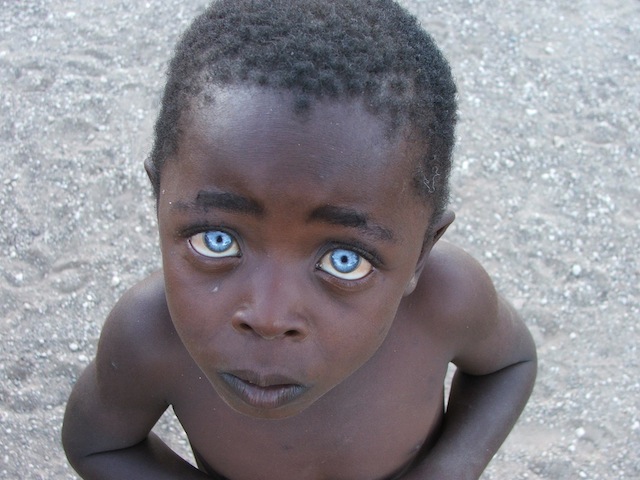
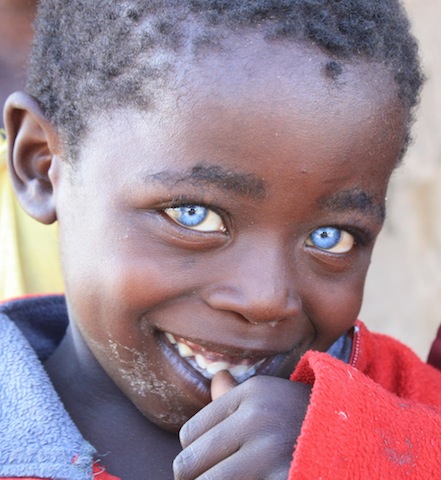
The above image was recently submitted by Vanessa Bristow, who called it ‘The Boy with Sapphire Eyes’.

Within minutes of posting this magical picture, there was an enormous flood of comments and feedback. Amongst much of the rumpus was a fair degree of suspicion, doubting and downright slander about the picture’s authenticity. Swoops of ‘blatant photoshopping’ were amongst the commotion. Most people came to their immediate conclusion that this photo was fake!
Africa Geographic Travel

Let us set the record straight. The photo of the boy with sapphire eyes is not altered at all. Here is a comment from the photographer herself:

“To all of you DOUBTING THOMAS’ out there who distrust the originality of this photograph: It is NOT Photoshopped. I was in the local communal lands in Zimbabwe looking for my lost Dalmatian dog, and I stopped to ask his mother if she had seen it. While I was talking to her, her son, who was playing with his siblings and friends nearby, caught my eye. I asked her if I could photograph him, and this is the first picture that I took of him – it was possibly his first interaction up close with a white person, and his fascination in me, or the camera, is evident. I took a few photos of him at the time and a few more later during a follow-up.  An ophthalmologist friend had this to say about his unusual eyes:

[quote]”The picture of the little boy with the blue eyes and dark skin probably represents Ocular Albinism or Nettleship-Falls albinism, or Juvenile uveitis. Both conditions cause the pigment of the iris to be less dense.”[/quote]

Thanks for all the support from those of you who like my picture.

The below picture of Theuns was taken a week or two after the first. This time, he was much more relaxed with me, and I let him “click” the camera a few times to get him to engage with me.”
The boy with sapphire eyes
Photo copyright Vanessa Bristow

Continues Ms Bristow: “I must say, when I first saw the photo, I initially thought that blue eyes sometimes occurred in black people because of a recessive gene. If you are interested in reading a fascinating book – I recommend ‘The Sunburnt Queen’, by Hazel Crampton. Based in the 1730s, the book is about a seven-year-old English girl who was washed up on the Wild Coast of South Africa and adopted by her rescuers. She grew to be a woman of astounding beauty and wisdom and became the wife of a prince; thus starting a dynasty that extends to many of today’s Xhosa royal families.

Because of her recessive gene in the bloodline, now and then, a black child in the area is born with bright blue eyes.”
Rare spotless cheetah sighted in Kenya

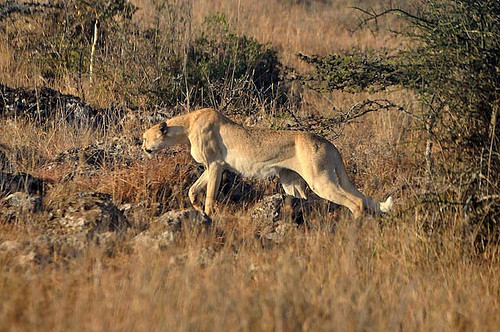
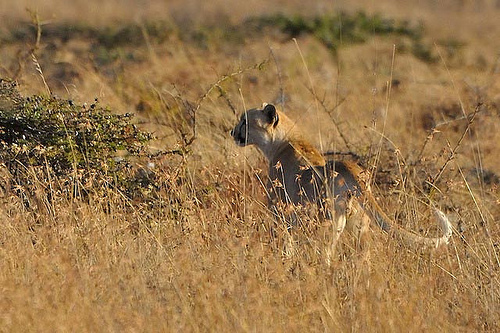
Armed with a spotter plane and a LandRover in hot pursuit, wildlife artist Guy Coombes searched for the elusive spotless cheetah.

“I was told about this incredible ‘morph’ phenomenon that has not been seen for over 90 years. The last one recorded was shot in Tanzania in 1921. ‘Morph’ means a genetic colour variation; the most well-known being the ‘king’ cheetah, specimens of which have only occurred in South Africa and Zimbabwe. The Mughal Emperor of India recorded having a white cheetah presented to him in 1608, saying that the spots were blue in colour and the whiteness of the body also inclined to blue-ishness. There are also reported cases of melanism or albinism, but the latter does not apply to this spotless cheetah. The only reported cases of this morph, which scientists believe is a recessive gene like the king cheetah, have been in East Africa from the subspecies, acynonix jubatus raineyii.” – excerpt from Guy Coombes’ account with a ‘morph’ cheetah

spotless cheetah
spotless cheetah

Photos © Guy Coombes

Guy Coombes photographed this rare ‘morph’ cheetah in the Athi-Kapiti area of south­ern Kenya over a year ago.

Cheetahs are the fastest land mammals, with documented speeds up to 115 km/hour in captivity and 93 km/hour in the wild, but they cannot maintain such speeds for more than a few hundred metres. By comparison, sprinter Usain Bolt hits a top speed of 45 km/hour over a maximum of 100 metres.
They are found in a wide range of habitats, from dry forest and thick scrub to savannah grassland and arid deserts. Read more about cheetahs here.

African safari

Why choose us to craft your safari?

Handcrafted experiential safaris since 1991.

Travel in Africa is about knowing when and where to go, and with whom. A few weeks too early/late or a few kilometres off course, and you could miss the greatest show on Earth. And wouldn’t that be a pity?

African travel

Trust & Safety

Guest payments are processed through Flywire, a leading international payment gateway known for its high safety and security standards. Also, we are members of SATSA, who attest to our integrity, legal compliance, and financial stability.

See what travellers say about us

Responsible safari

Make a difference

We donate a portion of the revenue from every safari sold to carefully selected conservation projects that make a significant difference at ground level.

YOUR safari choice does make a difference - thank you!