


The Roof of Africa

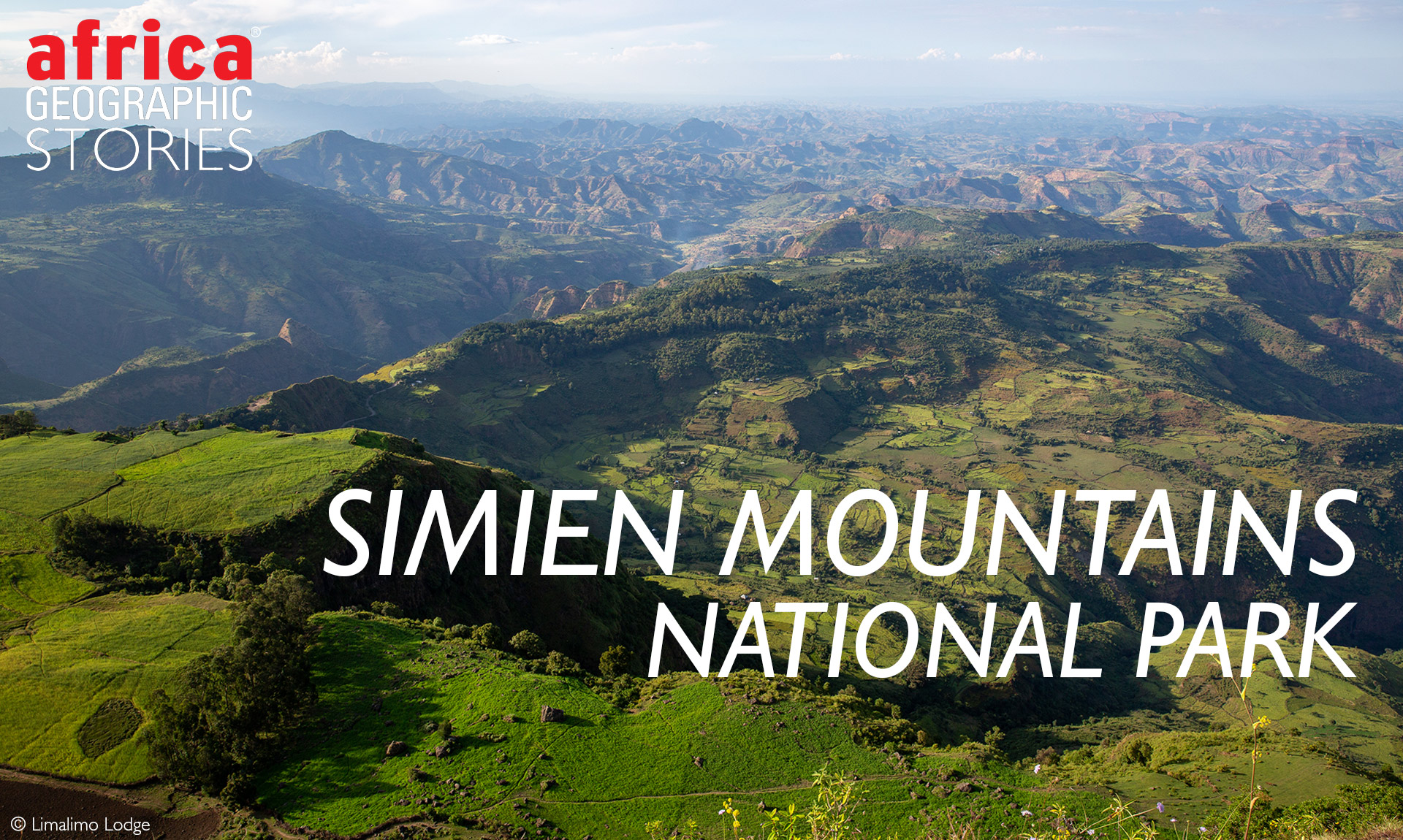
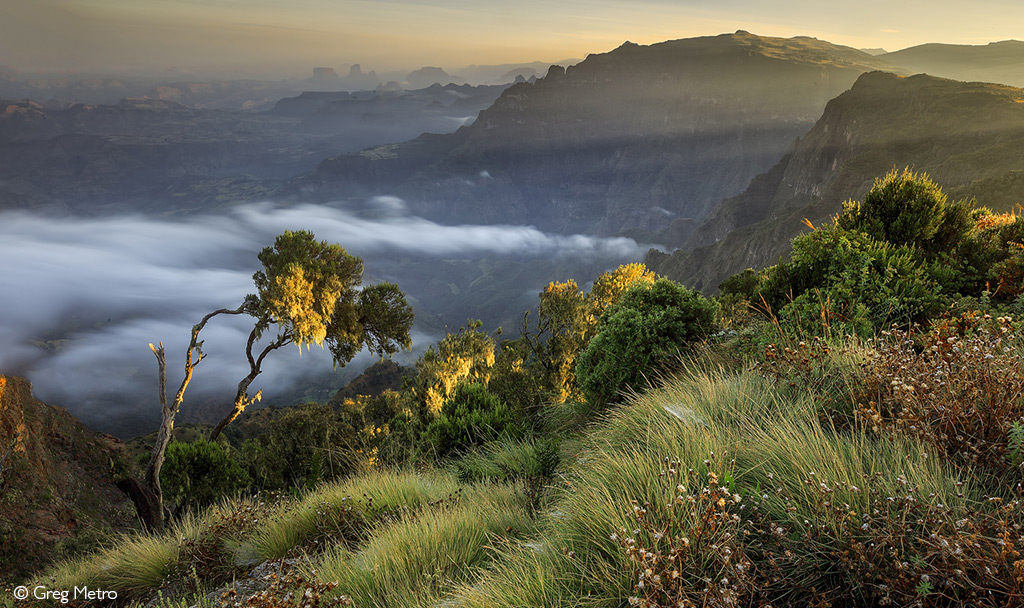
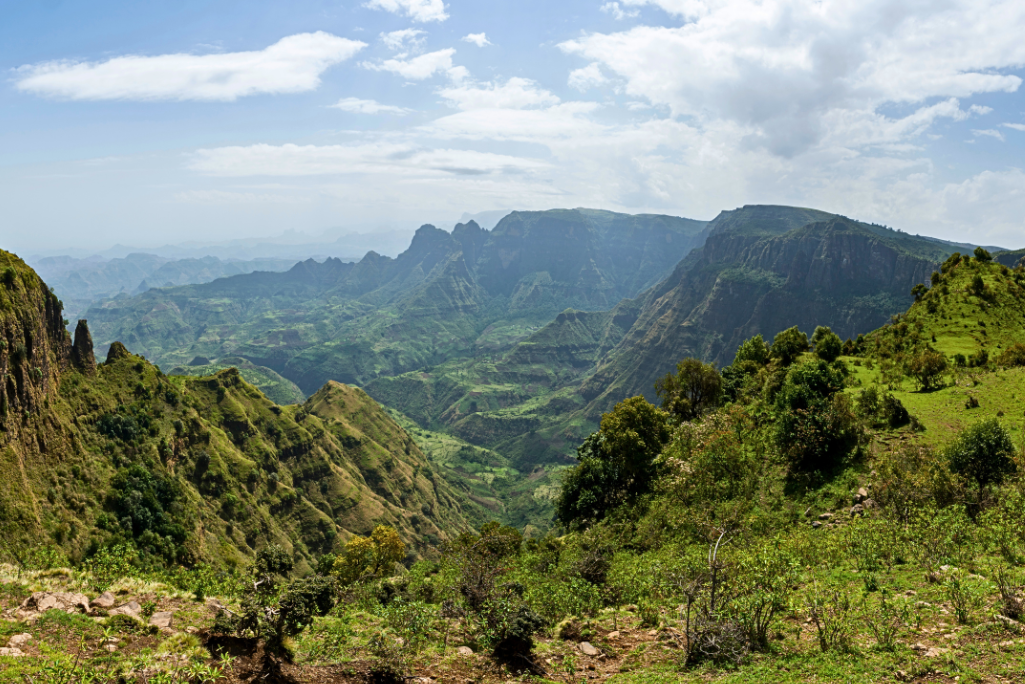
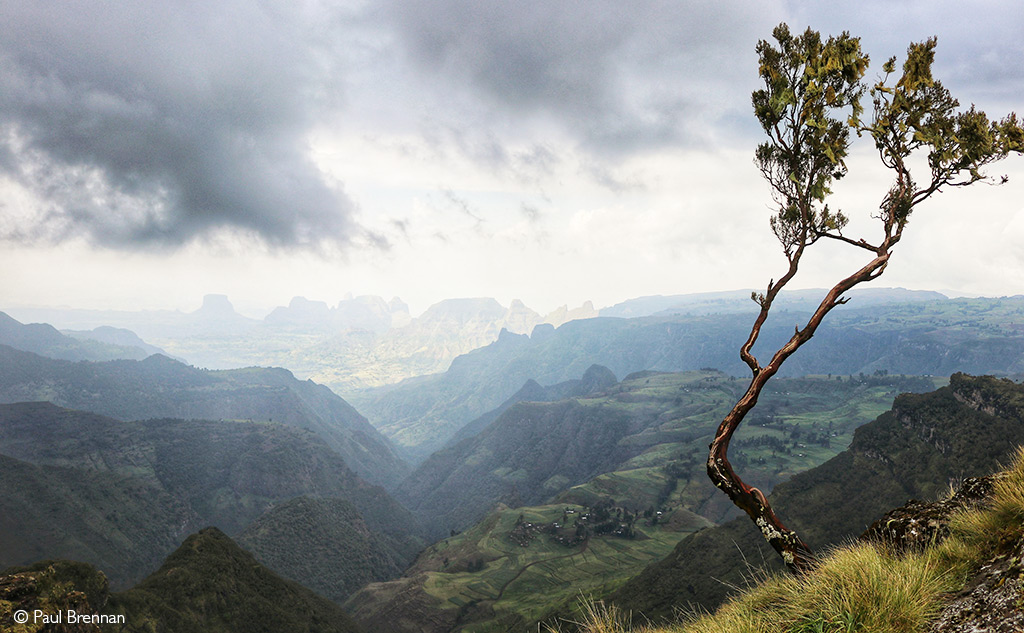
In Africa, there exists a landscape that would not be out of place in a Sir Arthur Conan Doyle or Michael Crichton novel about lost worlds. A spectacular massif where sharp crags and cliffs plunge into sweeping valleys – the jarring angles and jagged ridges softened by a gentle palette of brown, green and amber. Though the terrible lizards of science fiction are absent, the atmosphere is primal, and the fauna and flora of Simien Mountains National Park in Ethiopia are no less otherworldly.
Trekking through the Simien Mountains offers the chance to come face to face with some of the continent’s most unique creatures, including Africa’s most endangered carnivore – the Ethiopian wolf, the sure-footed endemic ibex, primates that wear their hearts on their sleeves (well, chests) and thieving thick-billed ravens.
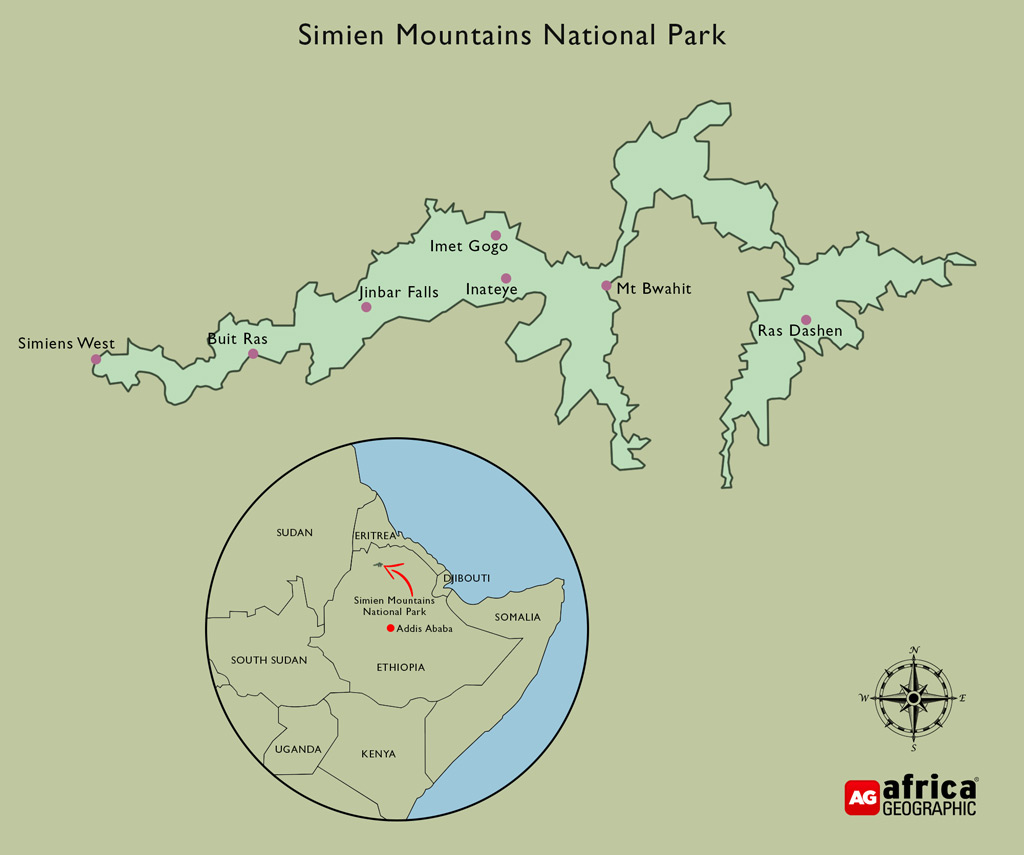
Simien Mountains NP and the Ethiopian Highlands
Increasing numbers of people are discovering the joys of Ethiopian travel, and exploring the Simien Mountains National Park is at the top of most lists. The 220km2 (220,000-hectare) park – a World Heritage Site – was established in 1966 and zigzags across the Simien Mountain Range in northern Ethiopia.
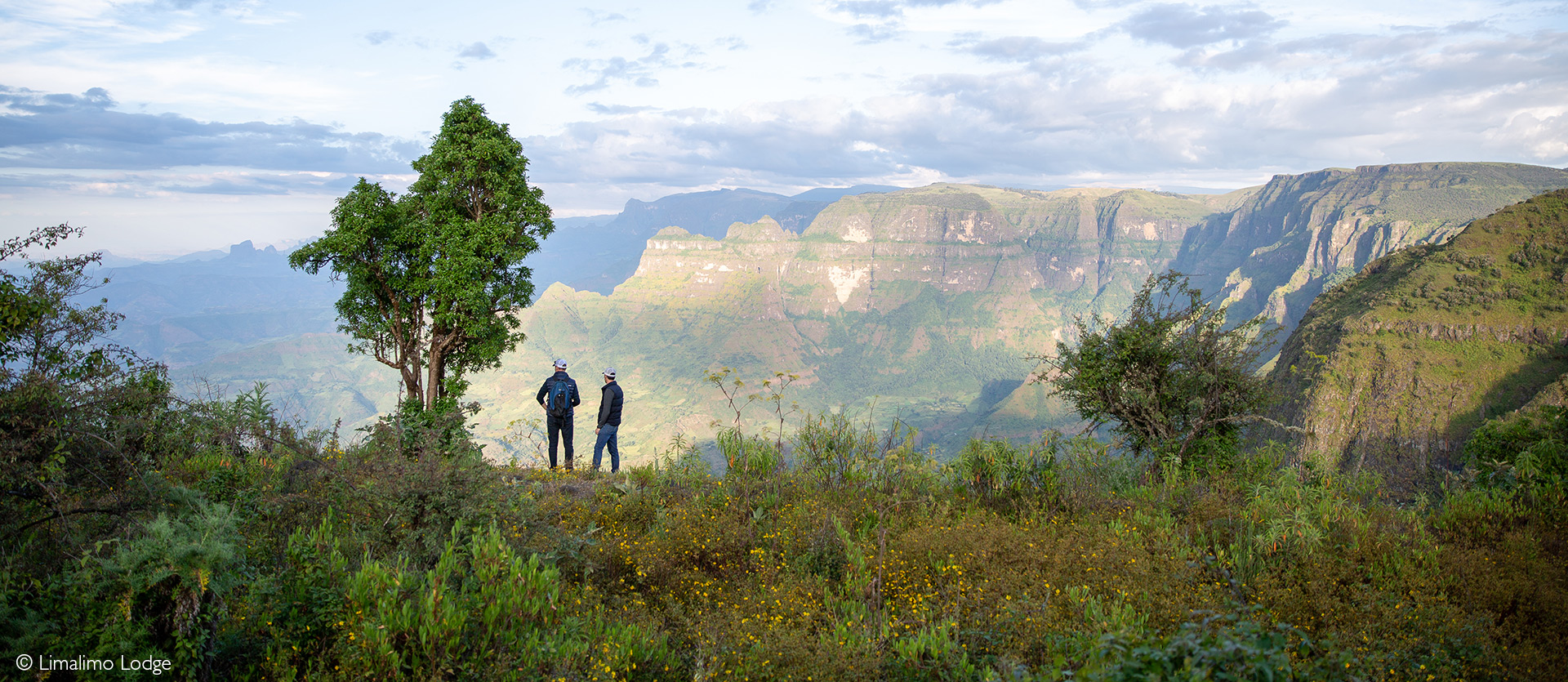
These mountains are as ancient as they look and predate the formation of Africa’s Great Rift Valley by some 30 million years. They had their beginnings 75 million years ago during the Cretaceous period when dinosaurs really did rule the land. As continents very slowly shifted, magma built up beneath a dome of rocks, forcing it upwards into what is now the Ethiopian Highlands (most of which sits above 1,500m) – home to 80% of Africa’s tallest mountains. A series of volcanic eruptions during the Oligocene period deposited a basaltic lava layer between 3,000 and 3,500m thick, leaving behind the remnants of a shield volcano across much of what is now the Simien Mountains.
This primordial havoc created a landscape of breathtaking beauty. For most people, the astonishing scenery is the park’s biggest drawcard (and is probably responsible for several twisted ankles on rocky paths). The popular (and surprisingly accessible) trekking routes are designed to make the most of the views. They include trails to the peaks of Ras Dashen (4,550m – the highest mountain in Ethiopia) and Mount Bwahit (4,437m), with various lookout spots along the way, including a view of the Jinbar Falls. The peaks Imet Gogo (3,926m) and Inateye (4,070m) can also be reached on foot.

Unlike most African national parks, Simien Mountains National Park has not excluded local inhabitants, so expect to see cultivated land and rural communities dotted throughout. Increasing human populations have put parts of the park under severe pressure, and projects are underway to mitigate these effects.
Wild inhabitants
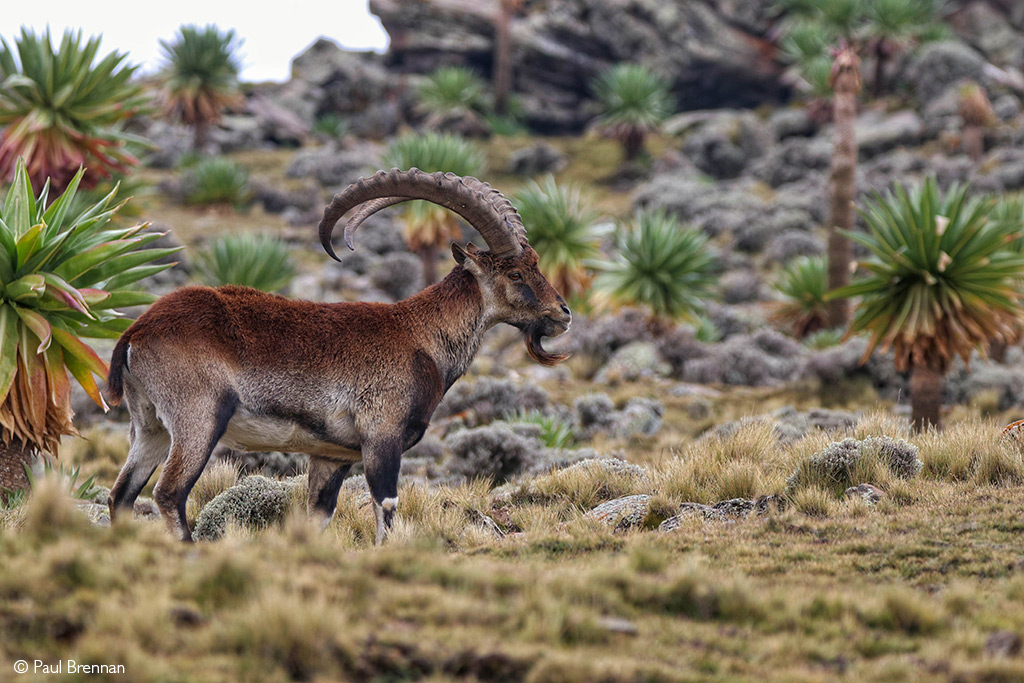
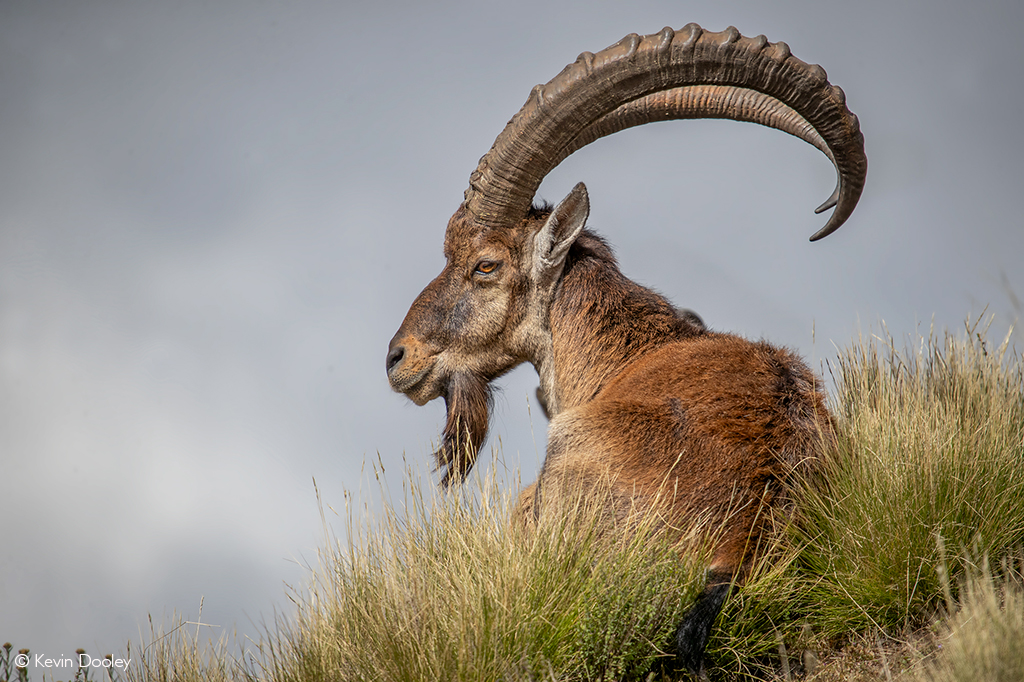
Naturally, the high altitudes (something to consider when planning hikes in the area) and isolation of the mountain range have led to a high degree of endemism. The park’s resident Walia ibex (Capra walie) is perhaps the most well-known example. This stocky and powerful member of the goat family is found only in the mountains of Ethiopia. Once critically endangered and one of the most threatened mammals in the world, their numbers have recovered to just under 1,000 at last estimate. Far from the average farmyard billy goat, these imposing animals can weigh over 100kg and sport large, backwards-curving horns that grow up to a meter in length.
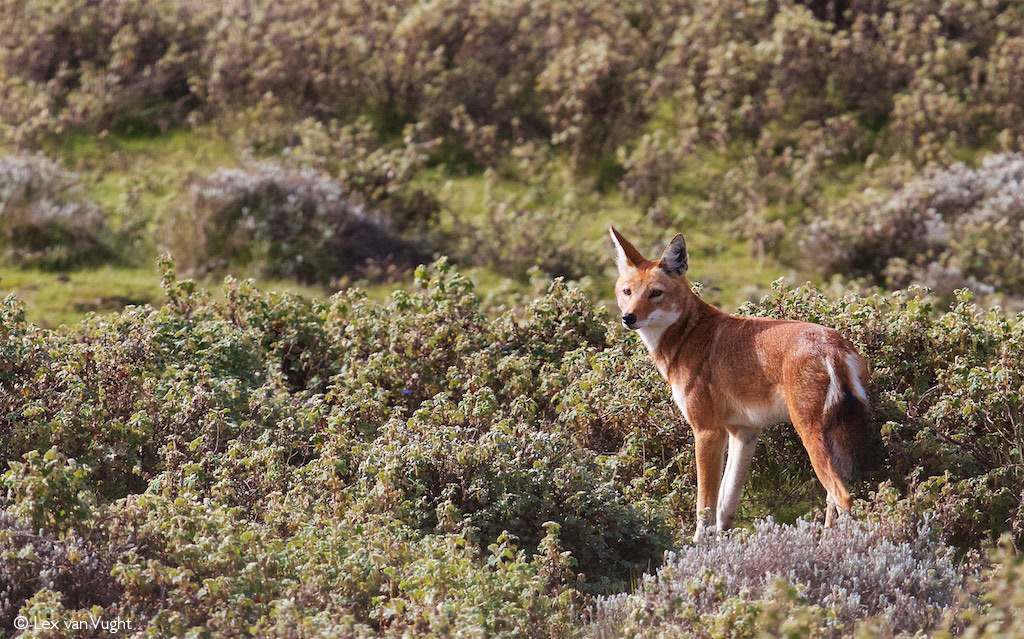
The Simien Mountains are also home to the endangered Simien (Ethiopian) wolf, though sightings of these sleek red canids are still relatively rare, and they are often seen at a distance. The Simien wolf is found only in a handful of isolated mountain ranges in Ethiopia, with the largest subpopulation located in the Bale Mountains, further south.
The “lowlands” of the Simien Mountains (which are still around 2,000m above sea level) are also populated by jackals, bushbucks, bushpigs and even elusive servals and leopards.
Gambolling geladas
Of all the varied and unusual wildlife offerings on the Simien Mountains, the coiffed geladas are the stars of the show. These endemic primates are sometimes referred to as bleeding-heart monkeys or, incorrectly, as gelada baboons, and are found only in the Ethiopian Highlands. Though morphologically quite similar to baboons, the gelada is the last surviving member of the Teropithecus genus and the only primate that is primarily a graminivore (grazer). The large populations found in the park have become entirely accustomed to the presence of gawking hikers, allowing fascinated visitors a genuinely intimate glimpse into their day-to-day lives.
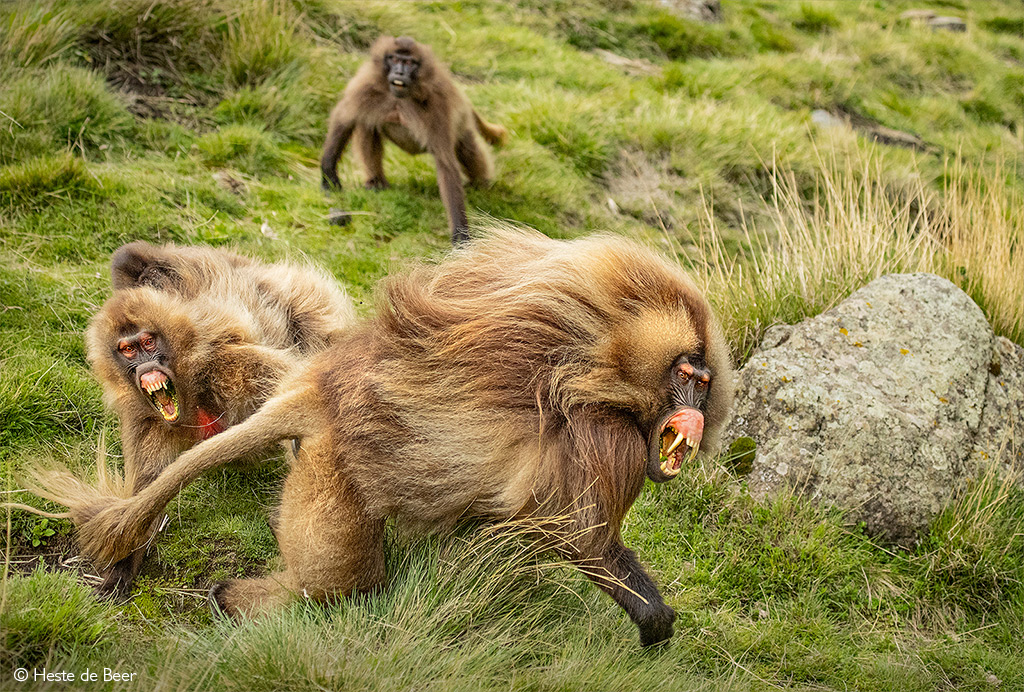
The gelada’s almost uncanny ability to strike a pose (against the backdrop of the jaw-dropping scenery) has also made them a firm favourite with photographers. Sporting hairstyles that would make Tina Turner long for the 80s, the geladas are well protected against the biting cold of the high altitudes. To complete the oddball look, a bright band of bare crimson skin cuts across their necks and chests and serves a similar function to the multicoloured perineum of other primate species.
Like baboons, geladas are intelligent and socialable, so their group dynamics are endlessly entertaining. As the adults graze, groom or slumber (or perhaps, make eyes at each other), youngsters of various ages gambol energetically through the heather, occasionally prompting one of the large males to display enormous canine teeth in a brief warning. (For an entertaining account of Africa Geographic senior safari consultant Christian Boix’s encounter with a very forward gelada, have a look here.)

Astonishing biodiversity of the Simien Mountains
If the landscape sets the prehistoric tone, then the vegetation completes the picture. The Montane forest zone at the base of the mountains gives way to the Ericaceous belt (or sub-Afroalpine zone), which is replaced by the Afro-alpine zone. Bizarre-looking giant lobelias dot the landscape, while red-hot poker plants, the Abyssinian white roses and white everlastings add splashes of colour.
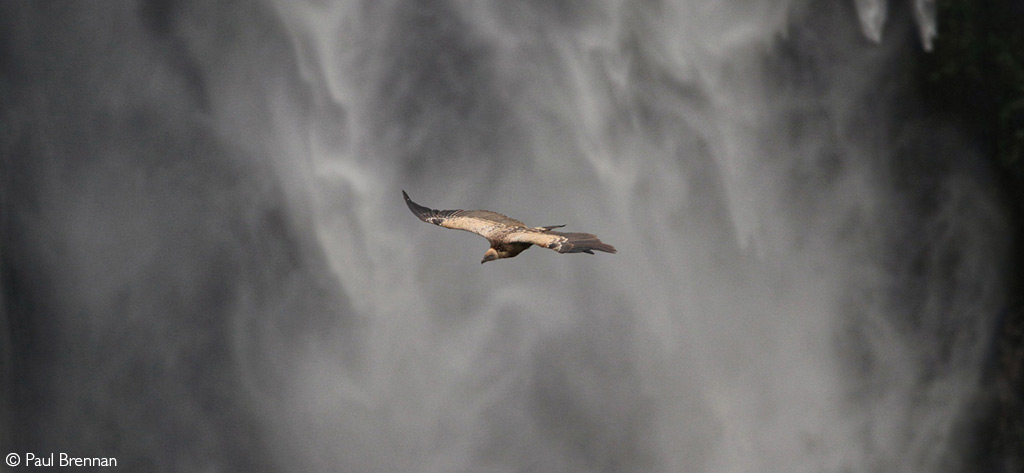
So ancient is the landscape that one might be forgiven for expecting a pterodactyl to come soaring out of the abyss at some of the viewpoints. This is unlikely, but eager birders will still be rewarded with exciting and intriguing birding opportunities. The chasms and gorges offer some of the best bearded-vulture viewing in the world. The massive and striking birds are regularly spotted scouring the cliff faces for food. The vultures are known to drop bones or unfortunate tortoises from a great height, shattering them on the rocks below. (Incidentally, the Greek playwright Aeschylus was supposedly killed by a misdirected tortoise dropped by a bearded vulture – so watch your head!)
Over 180 bird species have been recorded in the park, of which five are endemic to Ethiopia and another 12 to Ethiopia and Eritrea. These include a small population of red-billed chough living on the Gich plateau, the Abyssinian catbird, Abyssinian longclaw, Ankober serin, and black-headed siskin. It is, however, possible that the thrill of seeing the near-endemic thick-billed raven may wear thin after one has stolen the second or third snack of the trip…
A walk in the park
Travel to the Simien Mountains is normally by road from Addis Ababa and should include a stop in Gondar. The city is home to the Fasil Ghebbi, a walled fortress and palace compound which was once the seat of Ethiopian emperors. The fortress is dominated by a massive castle that belonged to Emperor Fasilides in the 17th century. The architecture is a combination of Portuguese, Indian and local designs.

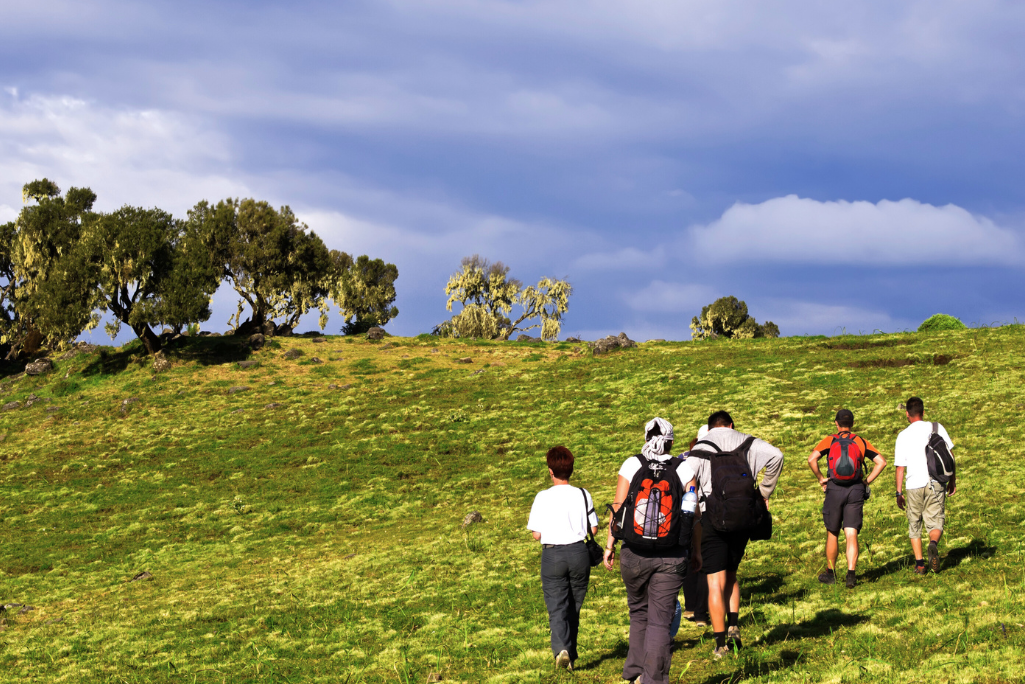
While some of the more spectacular parts of the mountains can be accessed by vehicle, most visitors prefer to explore the trails on foot. Trekking is usually done over a few days, with nights spent camping at one of the nine campsites spread throughout the park (three main campsites within the national park, and six further afield). These consist of basic facilities. Visitors organising their hikes must first visit the park headquarters in Debark to pay their fees, secure the necessary permits, and meet with their park scout. All hikers must be accompanied by a trained and armed park scout while in the park. A trained guide is also recommended for first-time visitors looking to learn more about the fascinating natural history of the region.
Getting to the Simien Mountains
There are lodges in the mountains that serve as good bases for acclimatising to the altitude or perhaps for a day or two of rest after trekking the park’s many trails. Chat to our safari experts about planning a trip there, and they’ll help plot the best course of action.
It is worth mentioning that the altitude is extreme for some visitors. It is essential to factor in an additional day or more for those particularly sensitive to its effects. The lodges will also be able to provide guides, pack animals, and provisions for more intrepid adventurers. Other organisations will also aid in organising a trek, but caution is needed as opportunistic scam artists are looking to capitalise on travellers cutting costs.
 Want to visit Simien Mountains National Park? We’ll plan your tailor-made safari to this magical mountain kingdom. Or, browse our ready-made safaris to Ethiopia – whether to Ethiopia’s cultural north, or Omo Valley.
The trekking campsites in the park close down during the rainy season from June to August, when the park is largely inaccessible. However, the months following the rains are arguably the best time to visit, when the park is verdant, and the streams and rivers flow. The drier months of December until April are warmer, but the views are less spectacular and somewhat hazy, while the Jinbar Waterfall dries up to a trickle. At over 3,500m, the nights are cold and the mornings frosty – be prepared with the appropriate clothing and equipment. Malaria incidents are rare at these altitudes, but precautions must be taken when travelling through the lower and more densely populated cities and towns.
A natural highlight
In Ethiopia, a country bursting with ancient marvels, the Simien Mountains are a natural highlight – a place to immerse yourself in resplendent scenery and revel in the extraordinary and outlandish plants and animals that live there.
Further reading:
- Ethiopia is a fascinating country. Only discovered by cultural and wildlife tourists in recent decades, it is one of three countries in the world that has never been colonised. Discover Ethiopia through a visual journey
- The Ethiopian wolf is the most endangered carnivore in Africa. Found only in the Ethiopian Highlands, they are threatened by habitat loss. Read about the Ethiopian wolf here
- Read more about the Living Churches of the ancient Ethiopian kingdom here
- Ethiopia offers the chance to hike alongside rare wildlife in a country steeped in history
To comment on this story: Login (or sign up) to our app here - it's a troll-free safe place 🙂.