


Gorillas and shutters in the mist


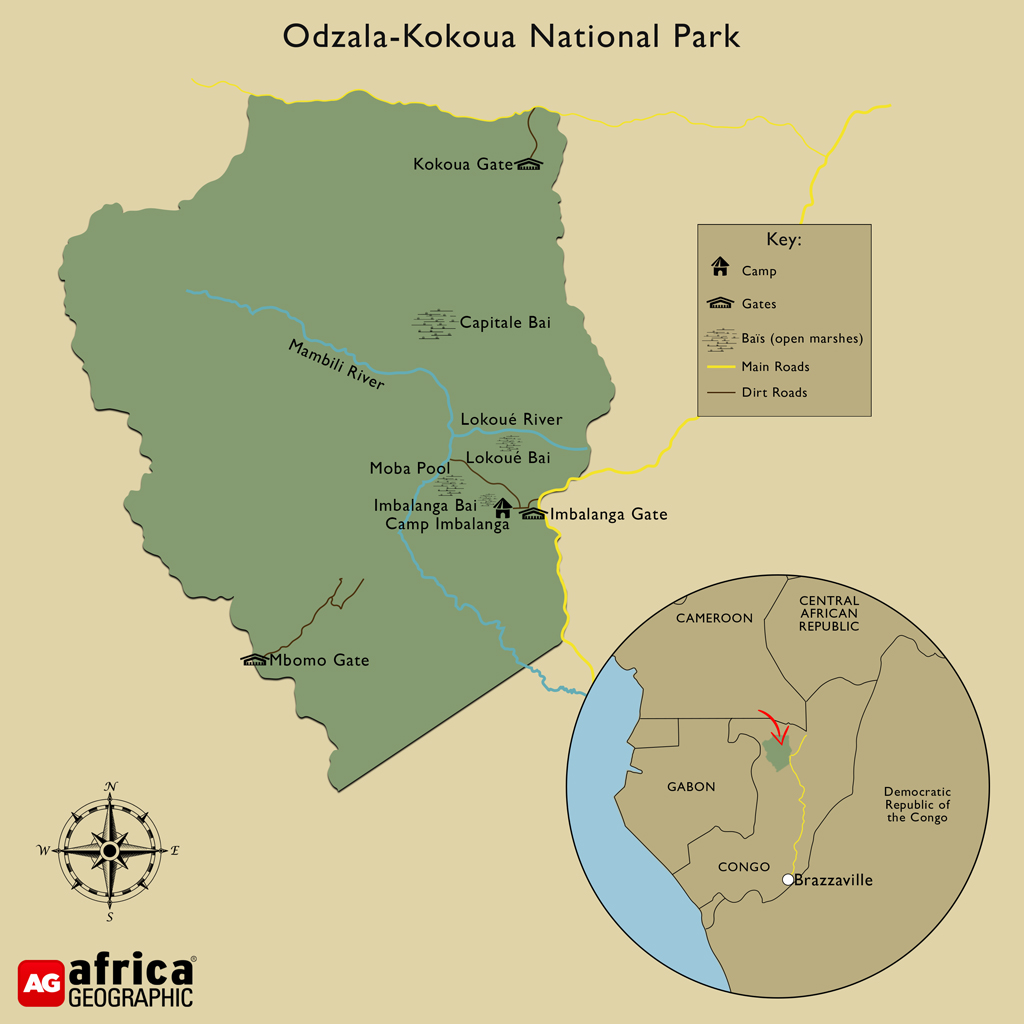
- The Africa Geographic Photographer of the Year 2025 prize safari leads photographers deep into Odzala-Kokoua’s remote equatorial rainforest.
- Patience, humidity and unpredictability define travel in Congo-Brazzaville’s rainforest heart, where wilderness sets the pace.
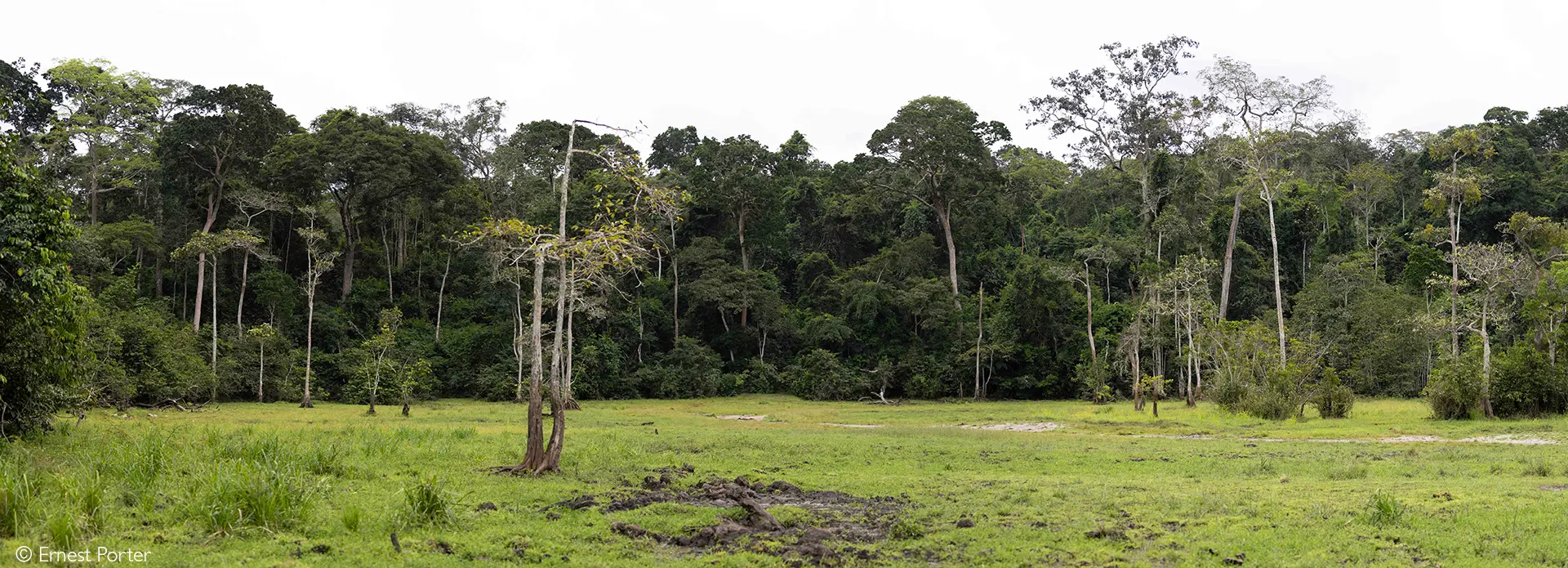
- Forest baïs reveal gorillas, duikers, monkeys, forest elephants and incredible bird life to those willing to wait and watch.
- Rivers, storms and fly-camps turn the journey into an old-school jungle expedition.
- A family of western lowland gorillas provides the unforgettable climax to the forest’s quiet generosity.
 Want to experience Odzala-Kokoua National Park in Congo-Brazzaville yourself? We have ready-made safaris to Odzala-Kokoua to choose from, or we’ll help you plan your dream safari.
If you’ve ever read a childhood jungle story and wondered what it would feel like to step into those green pages, Odzala-Kokoua National Park has an answer. Not a neat one. Not a comfortable one. But a real one.
Our mission was simple on paper: escort the Africa Geographic Photographer of the Year 2025 winners (and partners) into the equatorial forests of Congo-Brazzaville, and go looking for western lowland gorillas, forest elephants, buffalo and all the secretive in-betweens. In reality, it was a prize safari that quickly became something bigger: a shared expedition into one of Africa’s last truly wild green worlds.
Thank you to our generous partners for this year’s competition, Ukuri and African Parks, for supporting this celebration of Africa. The overall winners, runners up and their partners enjoyed an Africa Geographic safari exploring the primal forests of Odzala-Kokoua National Park in the remote north of Congo-Brazzaville – in search of lowland gorillas, forest elephants, forest buffaloes and much more. Read more about the Photographer of the Year 2025 prizes here. Congratulations to our winners: Christina Schwenck (winner), Mary Schrader (runner-up) and Ernest Porter (runner-up), who joined us for this incredible adventure.
Brazzaville: Congo River, cold beers, and a crash course in cash
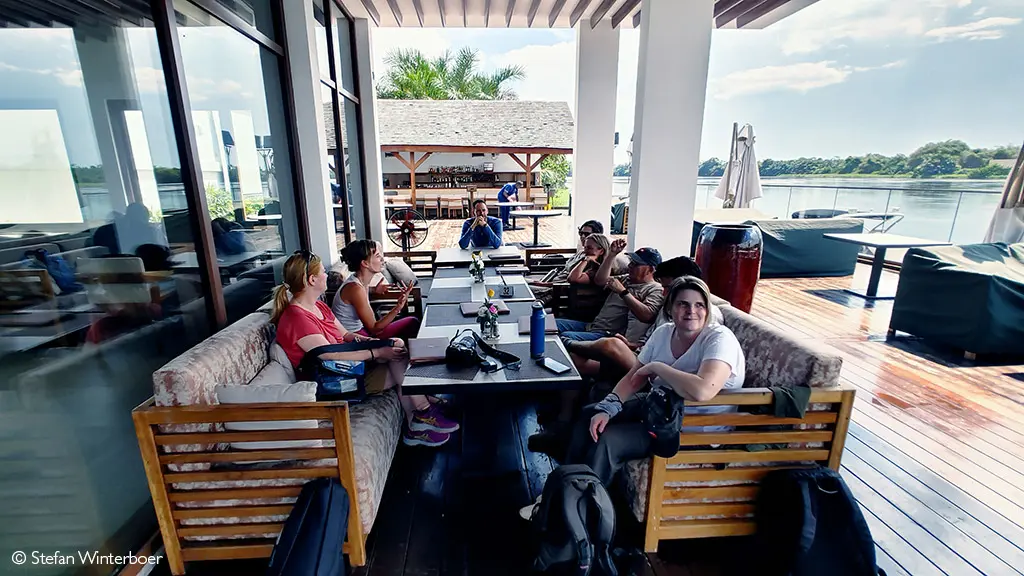
Brazzaville greets you with the mighty Congo River – wide, braided, and so vast it looks like the sea until the city edges into view. The Radisson sits on the waterfront with a fine view and working air conditioning, which feels like a small miracle after long-haul flights and airport checks that come in layers.
And then: money. Congo doesn’t do casual currency – you’ll be living in Congolese francs, and if your cash is creased, torn, or even slightly offended, it may be rejected with the confidence of a customs officer. There’s a certain “communication by tone, gesture and ancestors” rhythm to the city, and by late afternoon, I’d had enough of hand signals to last a year. Still, that first shared dinner next to the hotel – local Ngok beer in heroic-sized bottles, a menu negotiated through translation and optimism – did what good food always does. It turned strangers into friends.
The road north: 15 hours, one breakdown, and a rainforest waterfall… inside the car
We left Brazzaville before dawn and quickly learned the first rule of Congo travel: schedules are more suggestion than promise. Vehicles arrived in their own time, plans flexed, and the usual ten-hour drive quietly stretched into something far more ambitious.
A Land Cruiser differential gave up in a puff of drama, and we reshuffled people, camera gear and bags into fewer vehicles with the cheerful chaos of human Tetris. Then the rain arrived and delivered our signature moment: the roof seal had perished, so every burst of speed sent water spilling into the back seats like a neat indoor waterfall. Fellow traveller Michelle, our Ukuri representative, and I rode it out from the “boot,” drenched and laughing, holding luggage over our heads like offerings to the weather gods.
Along the way, the landscape shifted from open country into thicker and thicker forest – and with it, the roadside economy changed too: produce became bananas, then charcoal became constant, then logging trucks started hauling tree trunks so large it was hard to look at them without feeling something tighten in the chest.
We paused at the equator, met an Irishman cycling from Spain to Cape Town, and by nightfall, the forest closed around the road as the African Parks signboard finally ushered us into the trees.
Camp Imbalanga: a forest home in Odzala-Kokoua
Camp Imbalanga is exactly what you want in a place like this: simple, smart, and positioned where the forest does the talking. Tents sit on raised decks under palm-frond roofs, with open-air bathrooms designed for airflow because humidity here is not a concept – it’s a lifestyle.
That first night, we ate warm and comforting chicken curry with coconut, rice and salad, and listened to the forest’s plops, hoots and clicks.
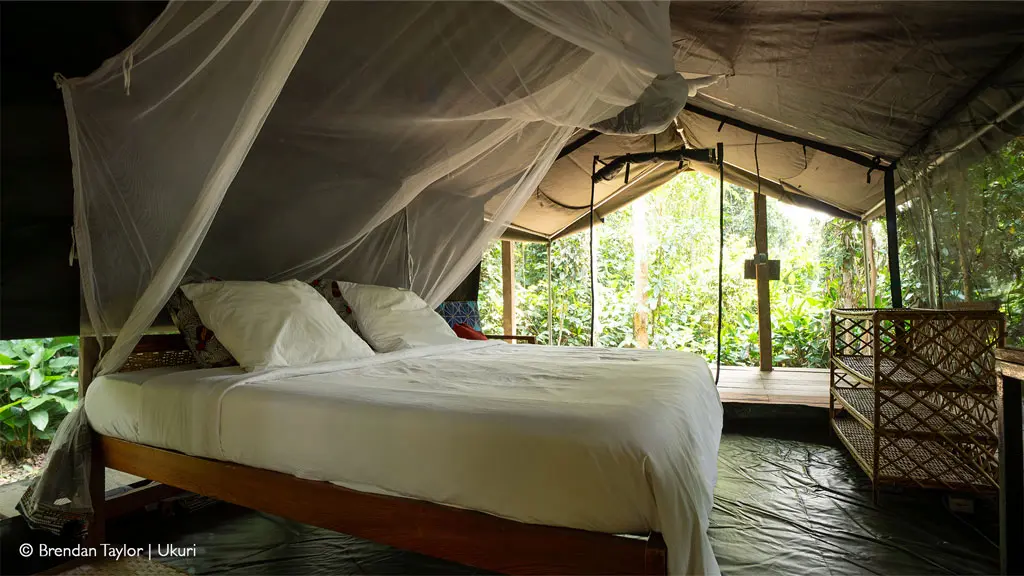
I enjoyed a visit from a wolf spider the size of my hand in my shower, startling me. She did a lap around the wall and then disappeared. Bark orb spiders were everywhere too: beautiful yellow bodies with black blotches, sometimes with orange. Sleep arrived, carried in by exhaustion and a chorus that sounded like the forest tuning up for a performance.
After dark, the forest shifts gears. From our tents, we listened to an orchestra of unseen life – frogs clicking like loose change, insects whining and pulsing, distant hoots and low calls that were impossible to place. Head torches carved small, nervous tunnels of light along the walkways, and every trip back to bed felt like a quiet negotiation with the darkness. It was the kind of night that reminds you the forest doesn’t sleep.
DID YOU KNOW that 100% of tourism revenue from Odzala Kokoua, an African Parks protected area, goes to conservation and local communities? Find out more and book your safari to Odzala-Kokoua through Ukuri.
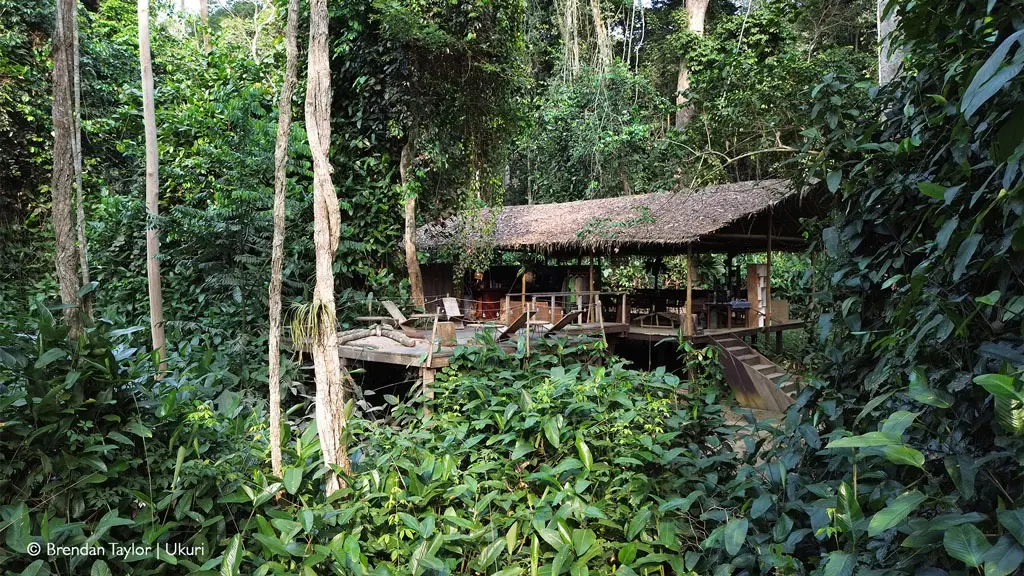
Imbalanga Baï: waiting, learning, and the art of being quiet
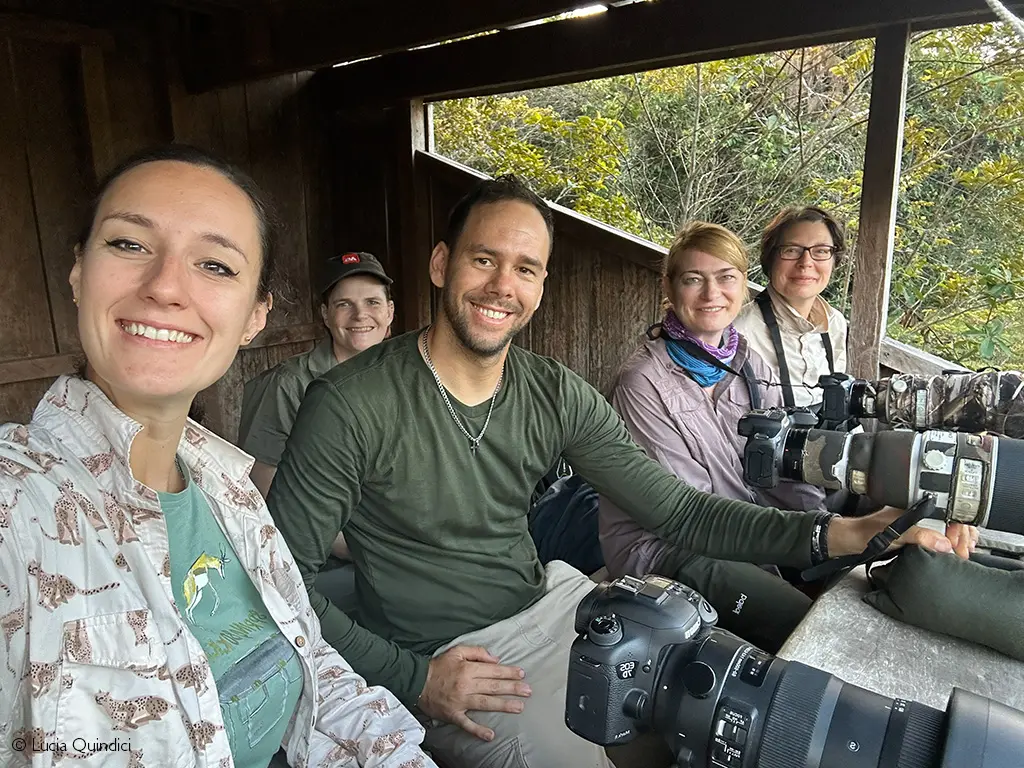
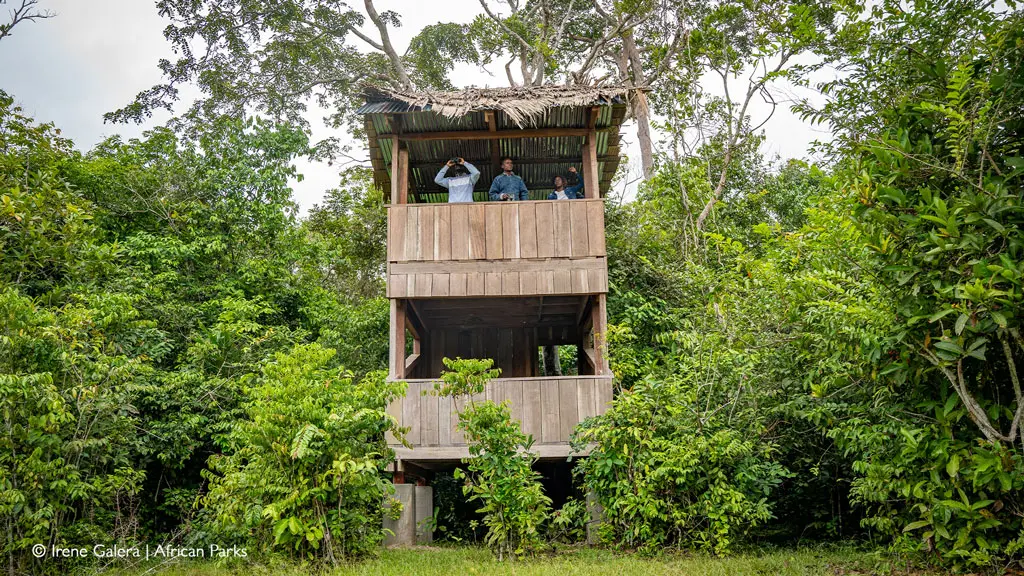
Our first morning at Imbalanga Baï’s covered treehouse hide (mirador) began with colobus monkeys on the treeline and ended with them down on the mud – long coats flowing, babies clinging, the whole troop moving like dancers across a stage. No gorillas yet. But Odzala is like that – it doesn’t hand you your wish list; it offers you its own personal recommendation of delights.
We walked forest trails with the team, learned to read the small signs – snapped stems, fresh dung, the scuffed mud where something heavy had crossed hours earlier. The forest is not loud about its secrets. It whispers them, and you have to earn the translation.
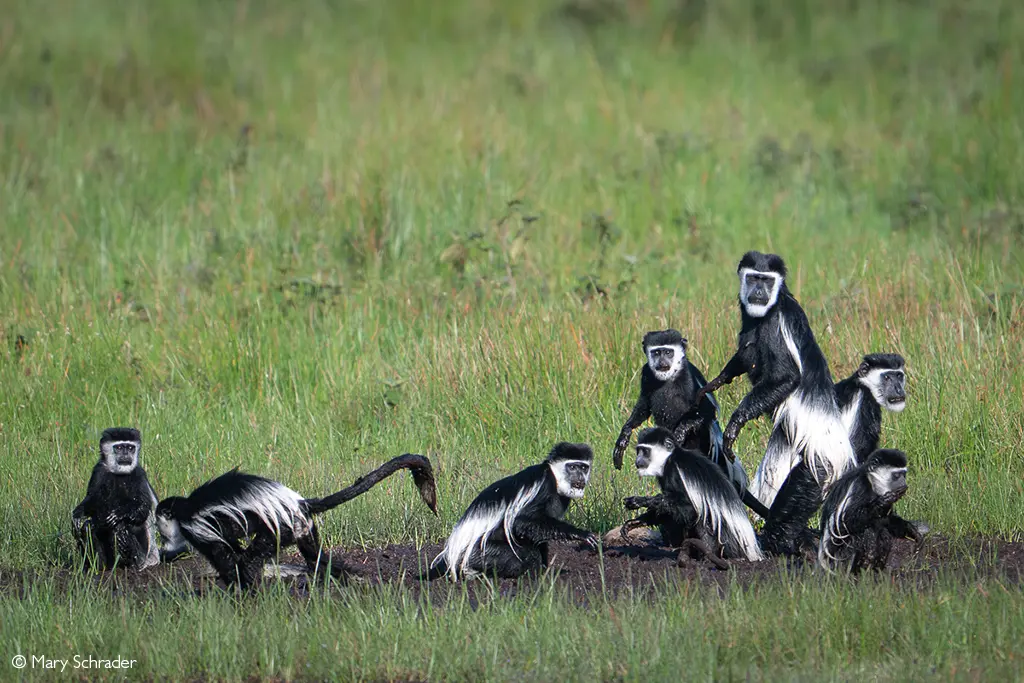
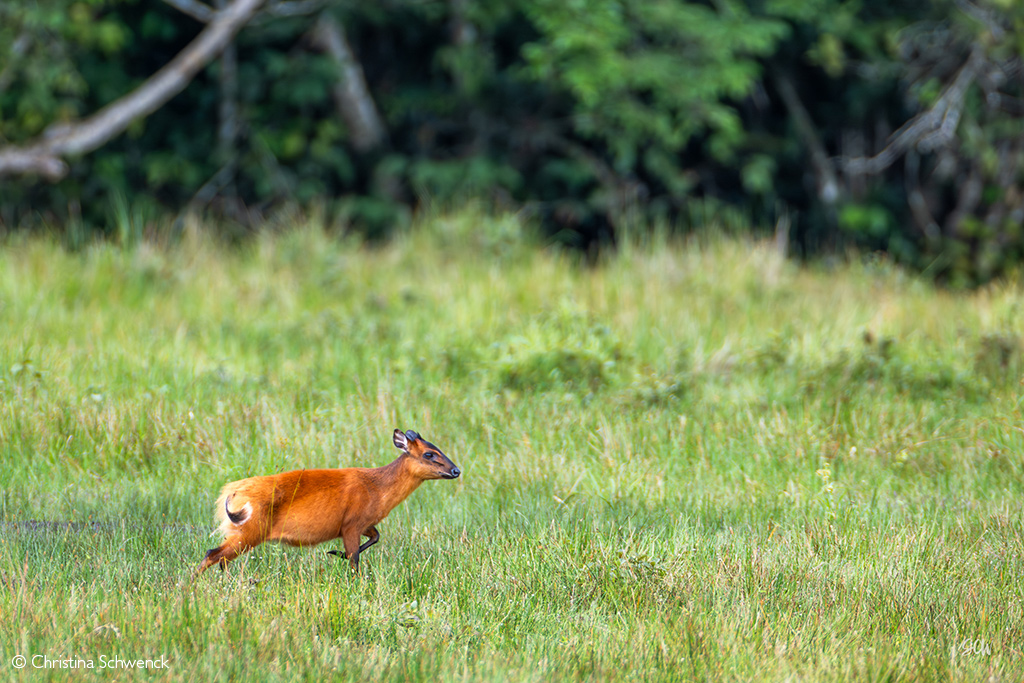
Then came the sitting. Hours in the mirador, gazing into a clearing that looks empty until it isn’t. A black-fronted duiker. A striking crested malimbe. A cuckoo-hawk sighting that left the photographers buzzing. And sweat bees – an airborne nuisance with a personal vendetta against ears, eyes and patience. The truth is, a baï rewards stillness, and we were a big group full of camera gear, energy, and the occasional dropped water bottle. Odzala teaches humility quickly.
For the photographers on our trip – Christina Schwenck, Mary Schrader and Ernest Porter – Odzala was both a dream and discipline. Light was scarce, backgrounds unruly, and subjects appeared without warning – often half-hidden, often fleeting. Cameras fogged, lenses sweated, and patience became as important as shutter speed. But when it worked, it really worked: a colobus stepping into a shaft of light, parrots streaking overhead, a duiker frozen mid-step.
Moba and Lokoué: storms, riverways, and a jungle expedition
The next chapter began before 4am and included a rainforest storm so dramatic it felt staged: lightning, thunder, sheets of rain. We pivoted plans, then walked through the Moba complex of baïs – elephant trails through thick jungle Marantaceae tunnels, clearings with pools and streams framed by towering trees, each opening like a secret room in a cathedral.
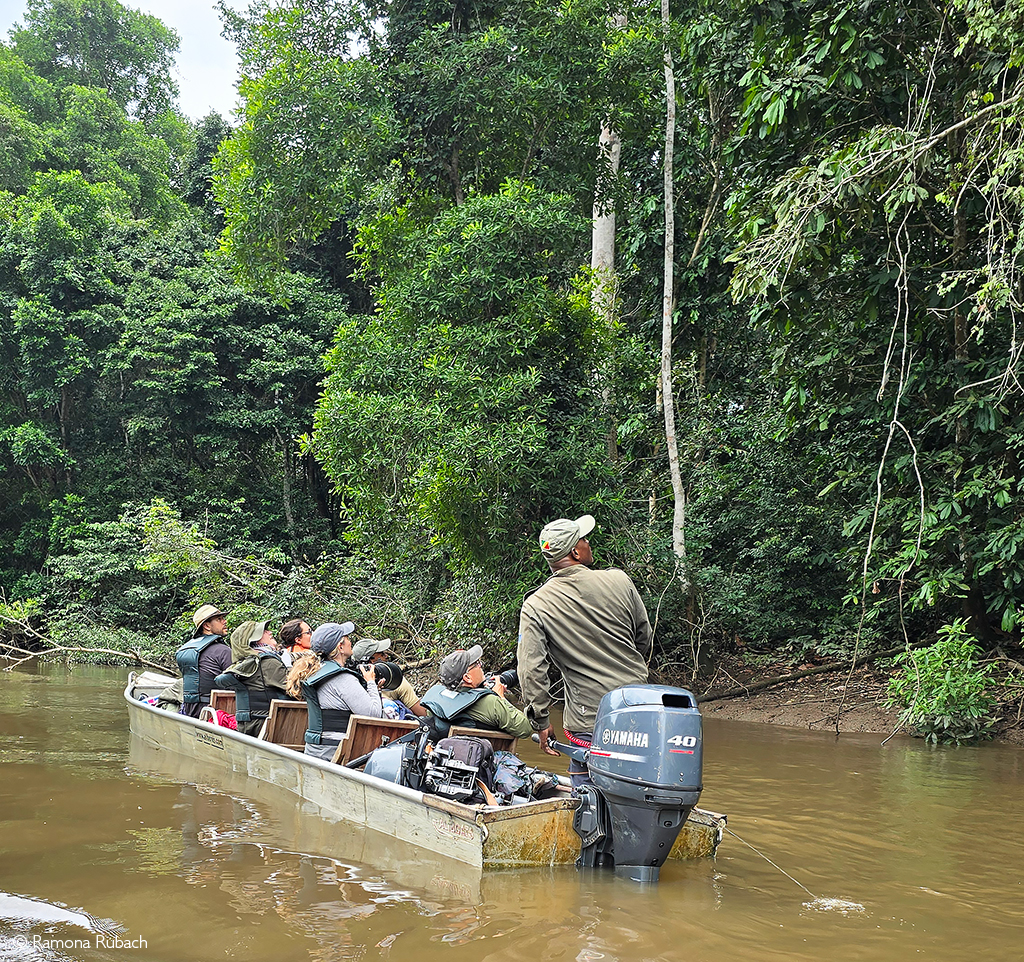
Eventually we reached the Lokoué River and climbed into an aluminium boat that felt far too small for the scale of what we were entering. The river journey was pure explorer-novel energy – rainforest arching overhead, monkeys moving through canopies, palm-nut vultures perched like sentries, hornbills whizzing overhead lifting lazily ahead of us, and guides reading submerged stumps and hidden channels as casually as a city driver reads traffic. In shallower water, we dragged the boat, laughed, got bitten by tsetse flies, and arrived at a fly-camp that reminded us how little a human actually needs when the world is doing the entertaining.
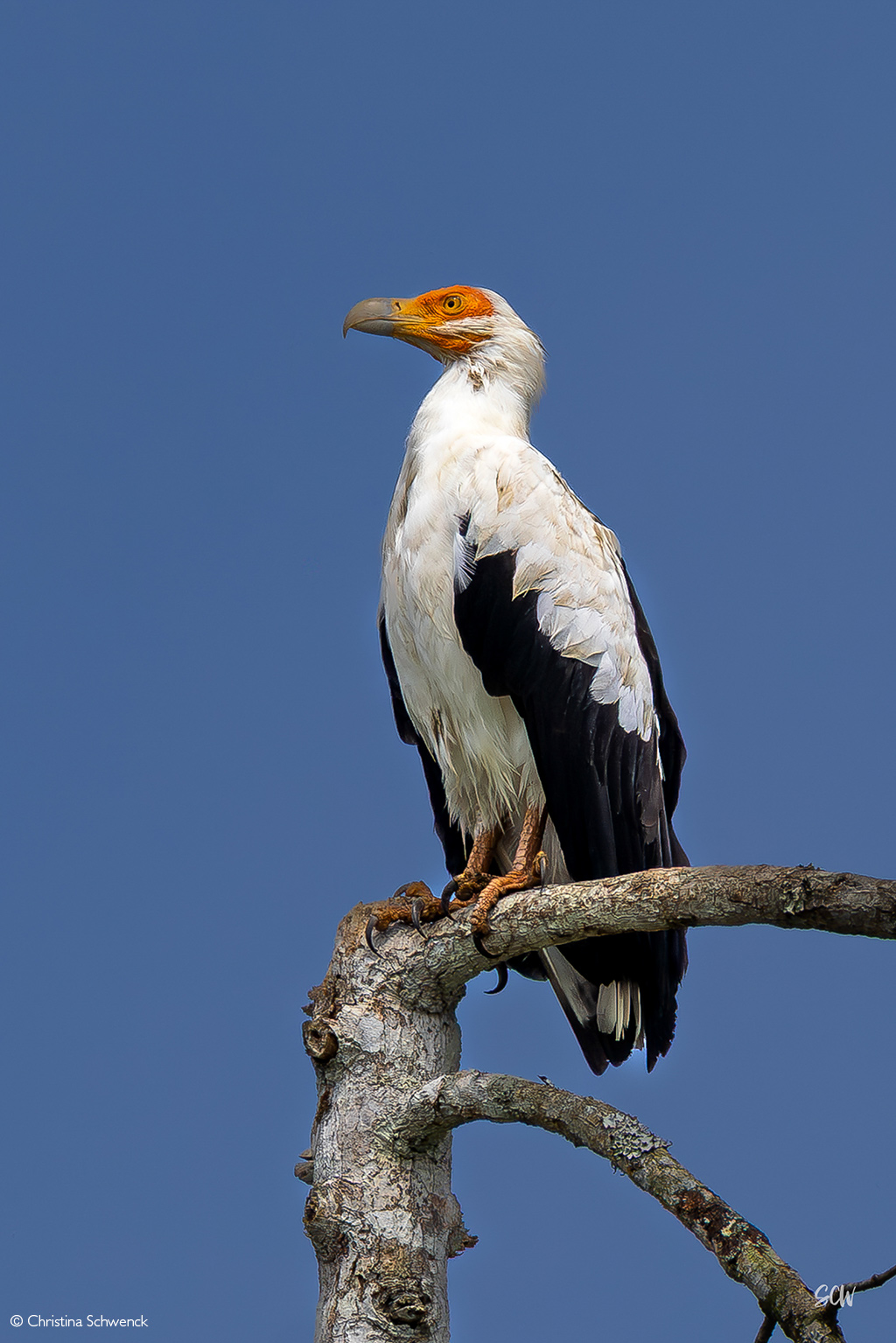
There was something deeply calming about moving at water speed after the days on foot – the boat slipping forward, the forest sliding by, and the sense that for a short while, we were being carried rather than pushing our way through.
The next morning, we hiked to Lokoué Baï in the dark to try for African grey parrots. We saw them – briefly, wild and real overhead – then another storm pinned us in a leaking hide for hours while branches crashed down nearby with Jurassic heft. Later, swollen from tsetse bites and slick with sweat, a river swim felt like medicine.
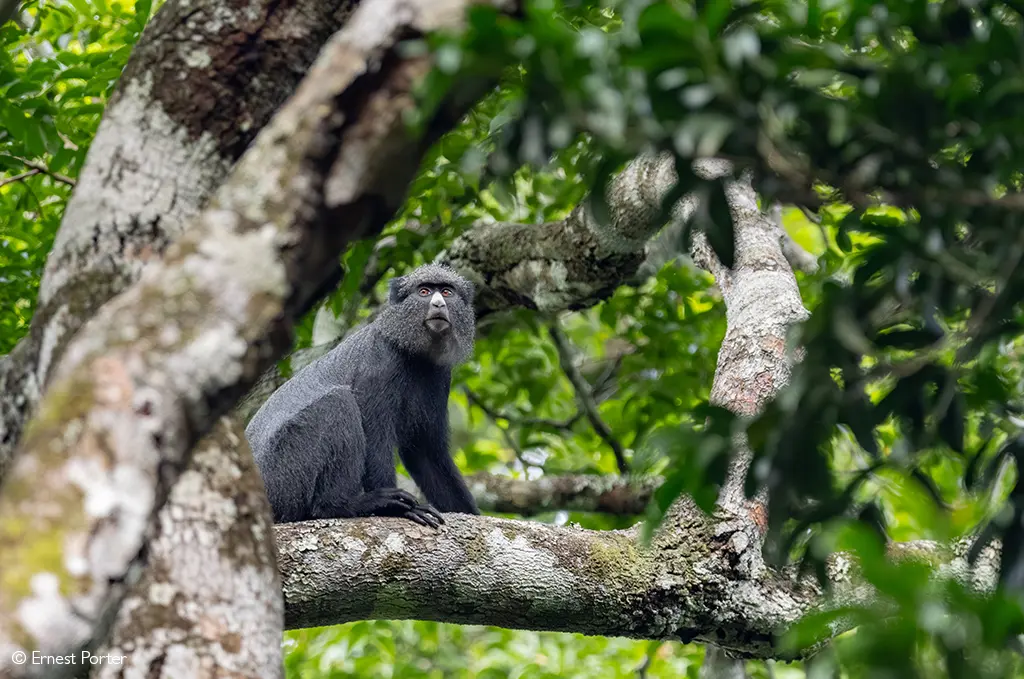
And in between the adventure beats were the small, human ones: soaking our bodies neck-deep in warm water at the jetty, joking with our hosts Présence and Vlad, the hilarity of navigating fly-camp loo realities, watching a tiny sunbird build a nest right beside the deck, and hearing chimpanzees whooping from across the river – invisible, unmistakable, and spine-tingling.
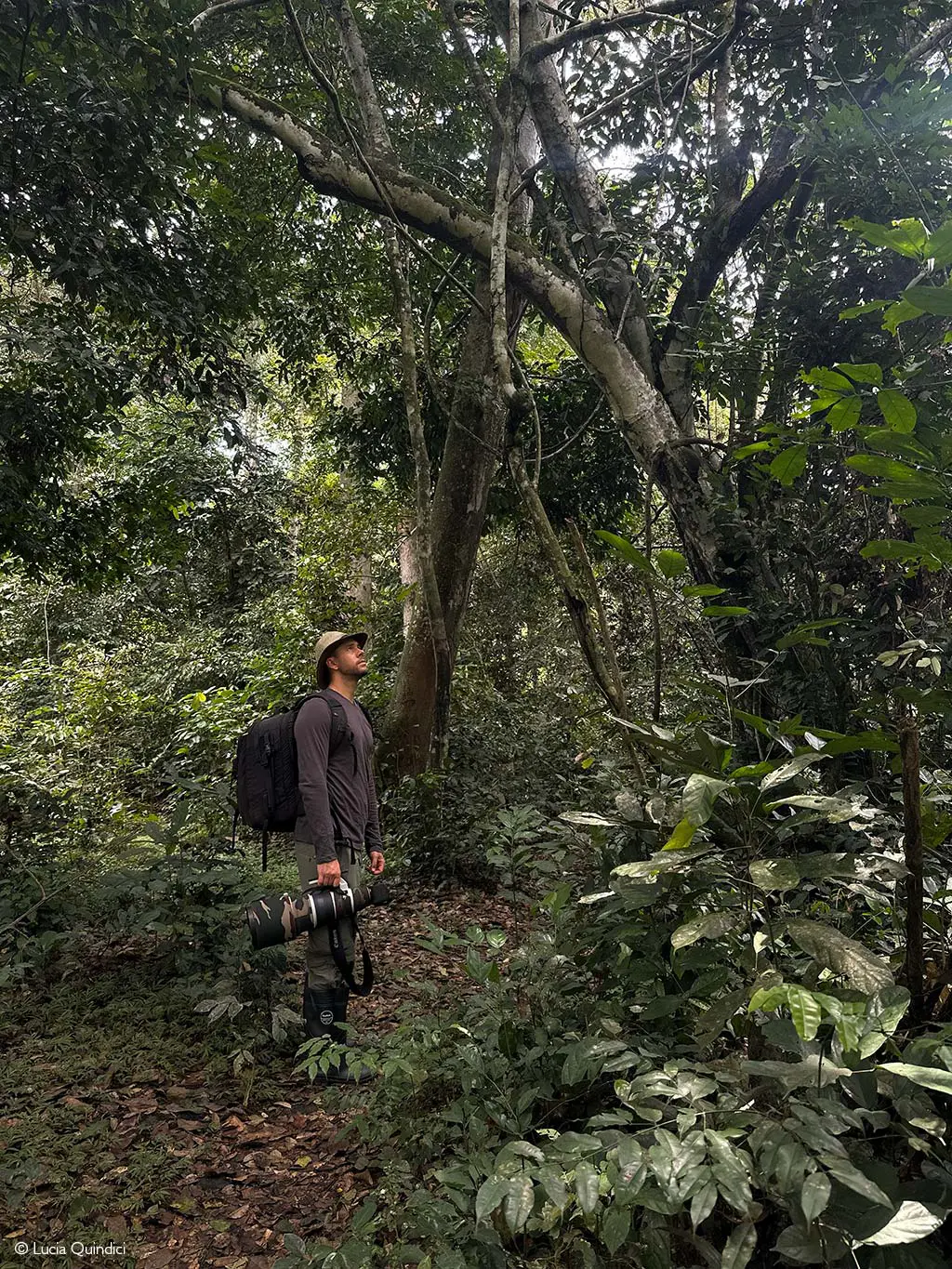
The Odzala-Kokoua moment: eleven gorillas
Back at Imbalanga, after a bumpy drive and the “we smell like we’ve lived in a swamp” fatigue that makes everyone slightly feral, we got word that the photographers who had stayed behind at camp saw gorillas while we were away. The mood shifted as we sighed in relief – the pressure to find them has eased. But some of us – Ramona (AG senior safari expert), Michelle and I – had yet to see them.
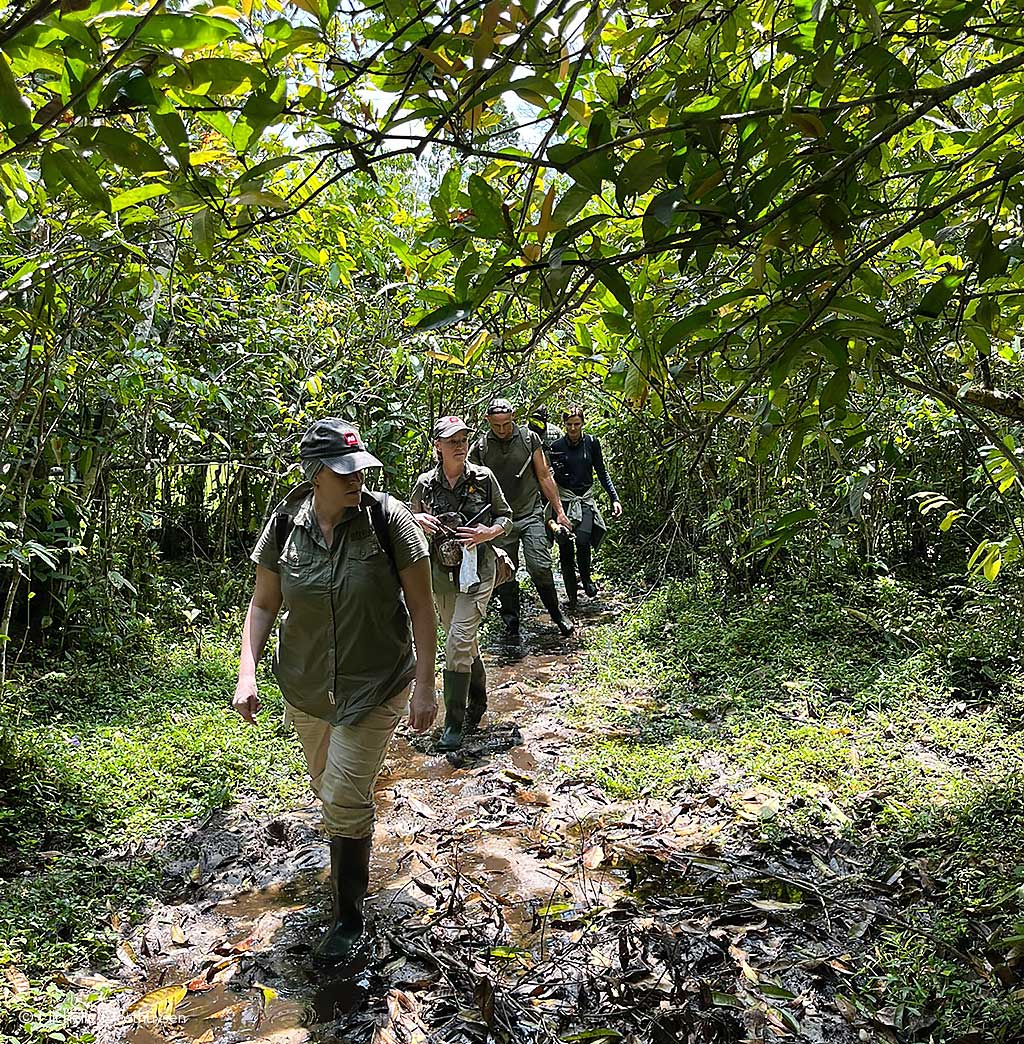
And then, as if the forest decided we’d earned a softer kind of magic, the trip gave us a moment that had nothing to do with wildlife. A guest got down on one knee and asked the question that changes everything. There were stunned faces, then happy tears, then the kind of laughter that spills out of you when you’ve been living in humidity and wonder for days. In a place as primal as Odzala, it felt strangely perfect – a reminder that while we’d come for gorillas and elephants, we were also collecting a small, bright human story to carry home.
In another magical moment, Vlad came running with one word that changed everything: “Gorillas!”
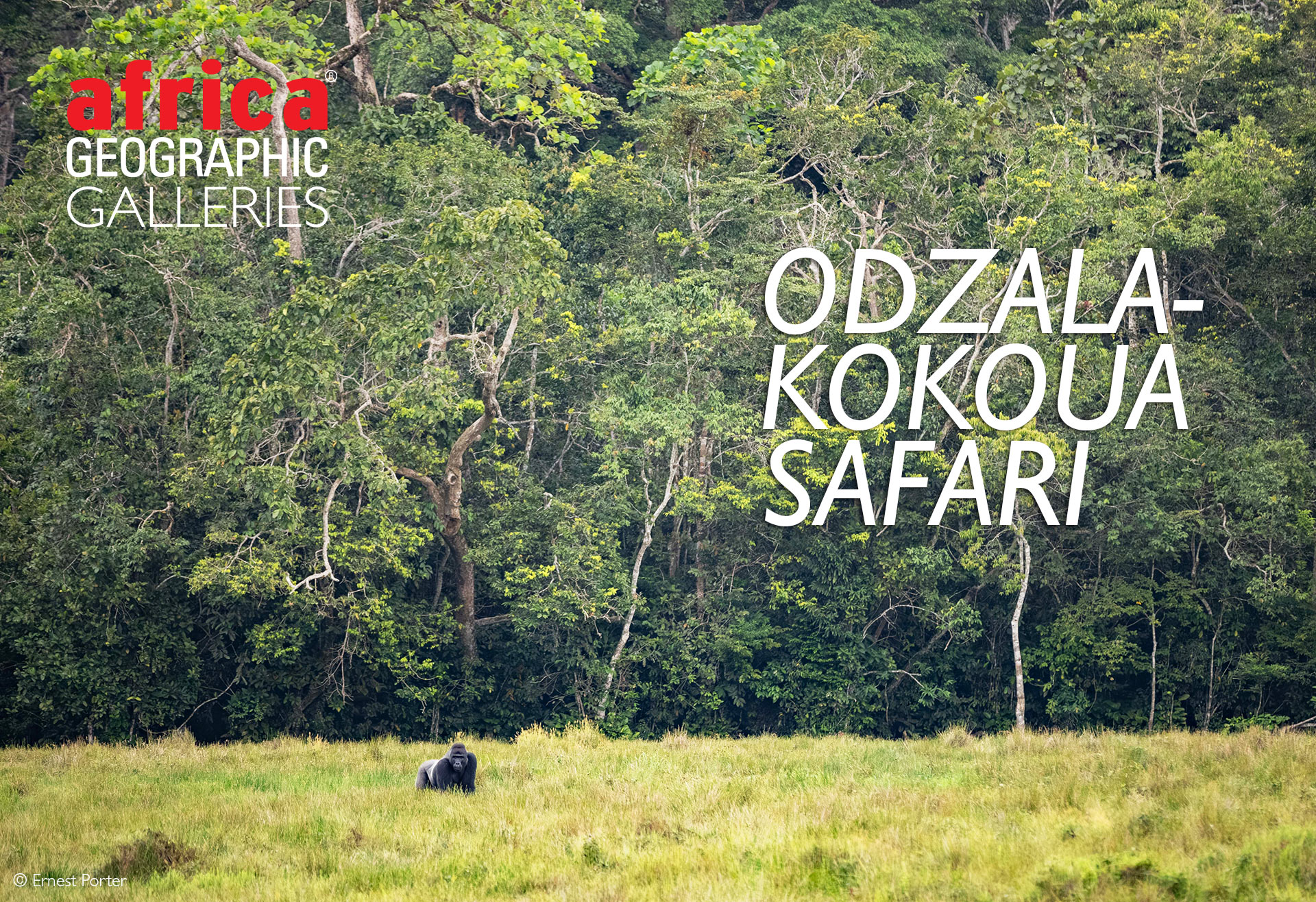
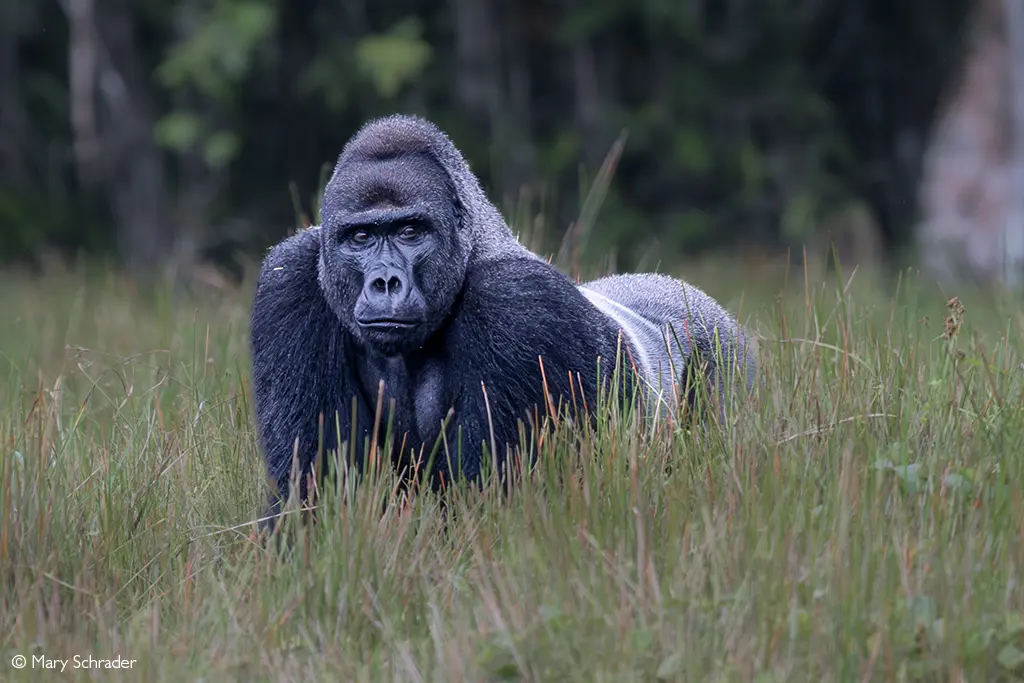
We sprinted to the baï and there they were – a family of eleven, including a silverback, females and babies, feeding calmly across the clearing. They stayed for two and a half hours. Two and a half hours of quiet awe, shutters clicking, breath held, hearts thumping. The silverback barely cared we existed. That is the magic of Odzala when it opens the door.
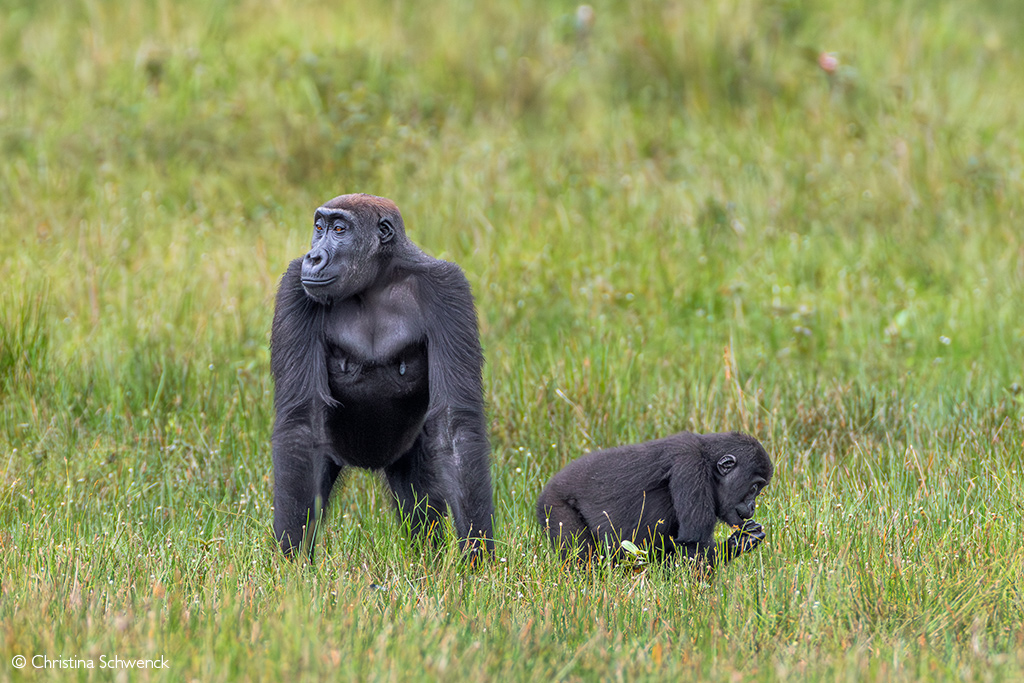
Life at camp settled into its own gentle rhythm. Morning coffee under towering trees, mud-caked boots lined up to dry, stories traded over long dinners while the forest pressed close. We compared bites and bruises like badges, laughed at the day’s near-misses, and replayed sightings until they felt half-mythical. By the end, we weren’t just fellow travellers – we were a small, forest-shaped community, bound by sweat, wonder, and shared disbelief at where we were.
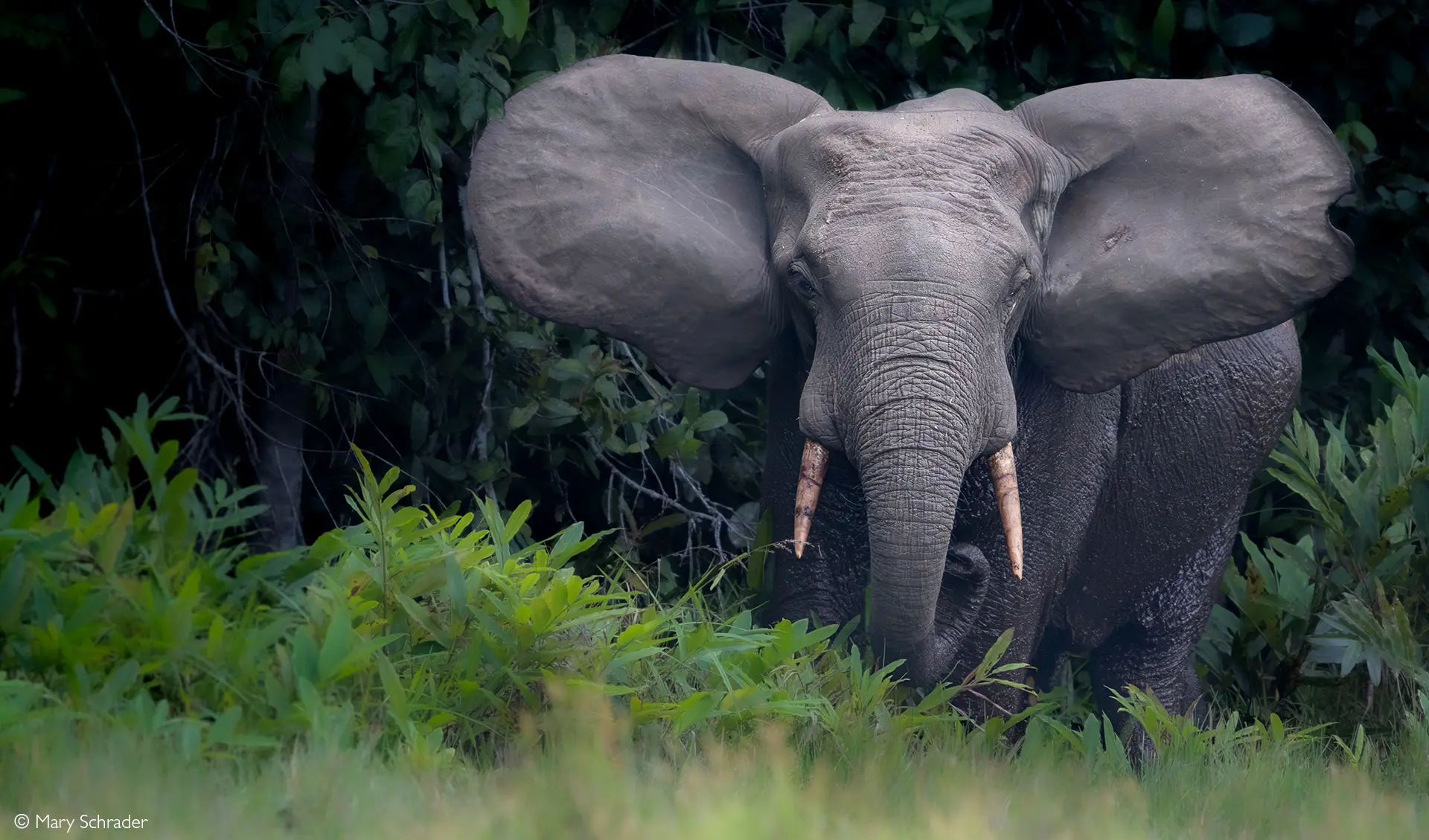
Other specials spotted by our group included incredible forest elephants in the baïs, dwarf crocodiles on the river, greater spot-nosed monkeys and forest buffaloes.
Why Odzala-Kokoua stays with you
Odzala is not a glossy safari. It is humid, raw, thrilling, sometimes uncomfortable, and occasionally absurd. It’s also one of the most important wildernesses left in Africa’s equatorial belt – a living green world where every baï feels like a private audience with evolution.
Would I do the journey again? Absolutely. Odzala asks something of you, as real Africa often does – patience, flexibility, a sense of humour, and a willingness to meet the wild on its own terms. But the reward is the forest itself: the baïs, the river, the primates, the feeling of being a beginner again in a world that doesn’t cater to you.
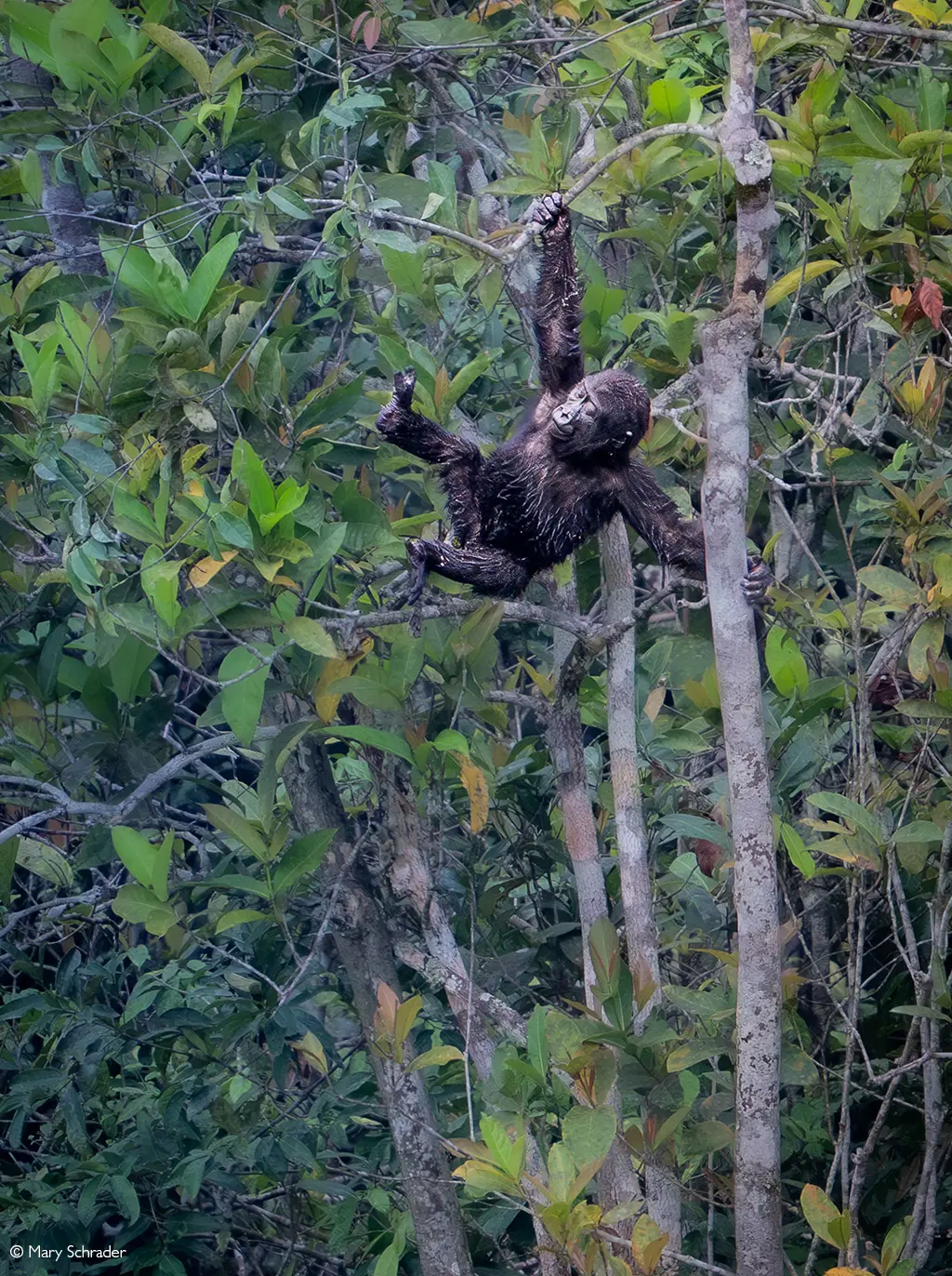
Because long after the tsetse bites fade and the damp gear dries, you remember the moment that gorilla family stepped into the clearing – and how the whole forest seemed to go quiet, just to let you look.
This journey was made possible by the partners who believe in adventurous storytelling and meaningful conservation. With the support of Ukuri, African Parks and the Africa Geographic community, the Photographer of the Year prize became something far more than a safari – it became access to a place few ever reach, and an experience rooted in protection, patience and respect for wild spaces. Their commitment ensures that Odzala-Kokoua remains not just a destination, but a living, breathing forest with a future.
RESOURCES
More about Odzala-Kokoua National Park:
- Read all there is to know about Odzala-Kokoua here
- You, too, can enjoy this epic safari to find lowland gorillas, forest elephants, bongos and much more. Find out more and book your Odzala-Kokoua safari.
- A sojourn in Odzala-Kokoua NP brings Simon Espley face to face with a paradise of forest elephants, western lowland gorillas & forest baïs. Read about Simon’s Odzala journey here
Camp Imbalanga:
Camp Imbalanga is a fully catered tented lodge featuring six ensuite canvas chalets for 12 guests. Nestled under the shady canopy of enormous trees, the ensuite guest chalets – discreetly positioned for privacy – are a short walk along forest paths from the central area. Each is on a raised wooden deck and shelters under a palm frond roof. The central area, also on a raised wooden deck, features an airy dining room, lounge, kitchen area, small shop and firepit. The unfenced forest camp is three minutes along a walkway from Imbalanga Baï, one of many baïs in Odzala-Kokoua National Park, where guests can view secretive wildlife species such as western lowland gorillas and forest elephants. There are no rim-flow pools, air conditioning, or Wi-Fi. Camp Imbalanga is for those seeking a truly immersive experience powered by local people.
WATCH – about Camp Imbalanga:
About Stefan Winterboer
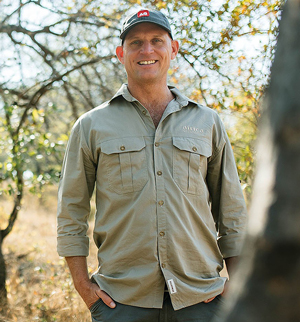 Stefan Winterboer has spent 25 years in the safari industry, most of it guiding and managing bush logistics at the wild end of the map. Now he’s swapped (most of) his khakis for a new role: helping travellers plan unforgettable African adventures as a safari expert at Africa Geographic.
A natural storyteller with a knack for uncovering hidden gems, Stefan believes every safari should be as unique as the person taking it – whether that means tracking big cats across the Kalahari sands or glamping beneath a giant baobab. He’s happiest in the charged silence before sunrise, when the bush stirs and anything feels possible, and if he could live anywhere it would be a treehouse on a tropical island just off Africa – because life’s too short to stay grounded.
To comment on this story: Login (or sign up) to our app here - it's a troll-free safe place 🙂.