



One safari, five nations

- KAZA links five nations into Africa’s largest transboundary conservation landscape.
- Wildlife corridors enable elephants and other species to move freely.
- Tourism creates livelihoods that strengthen conservation and community development.
- Local initiatives address human-wildlife conflict through practical, community-led solutions.
- Travellers experience interconnected ecosystems, cultures, and iconic safari destinations.
 Want to visit the protected areas of Kavango-Zambezi Transfrontier Conservation Area on safari? Let us tailor-make your safari to KAZA.
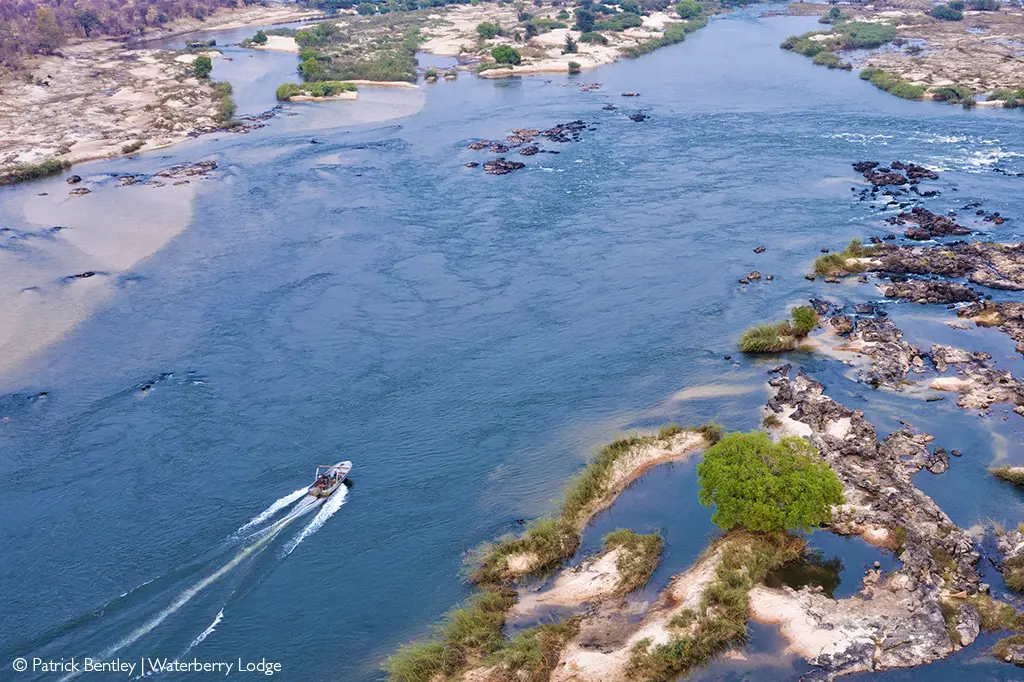
Motoring across a flooded Zambezi floodplain towards an island of low trees, wind in our hair and the late-afternoon sun sinking ever so slightly towards the horizon, it felt like we had slipped into another world.
We were travelling through one of Africa’s last great connected wildernesses – a journey that would take us across rivers and borders, through quiet floodplains and iconic national parks, into places where wildlife still moves as it always has. Along the way, we would encounter elephants, birds and vast landscapes, alongside the people and ideas shaping the future of conservation in this remarkable region.
Just us – four photojournalists in Namibia’s Zambezi Region (formerly the Caprivi Strip), in the far northeast of the country – exploring a legendary southern African safari attraction: the Kavango-Zambezi (KAZA) Transfrontier Conservation Area (TFCA).
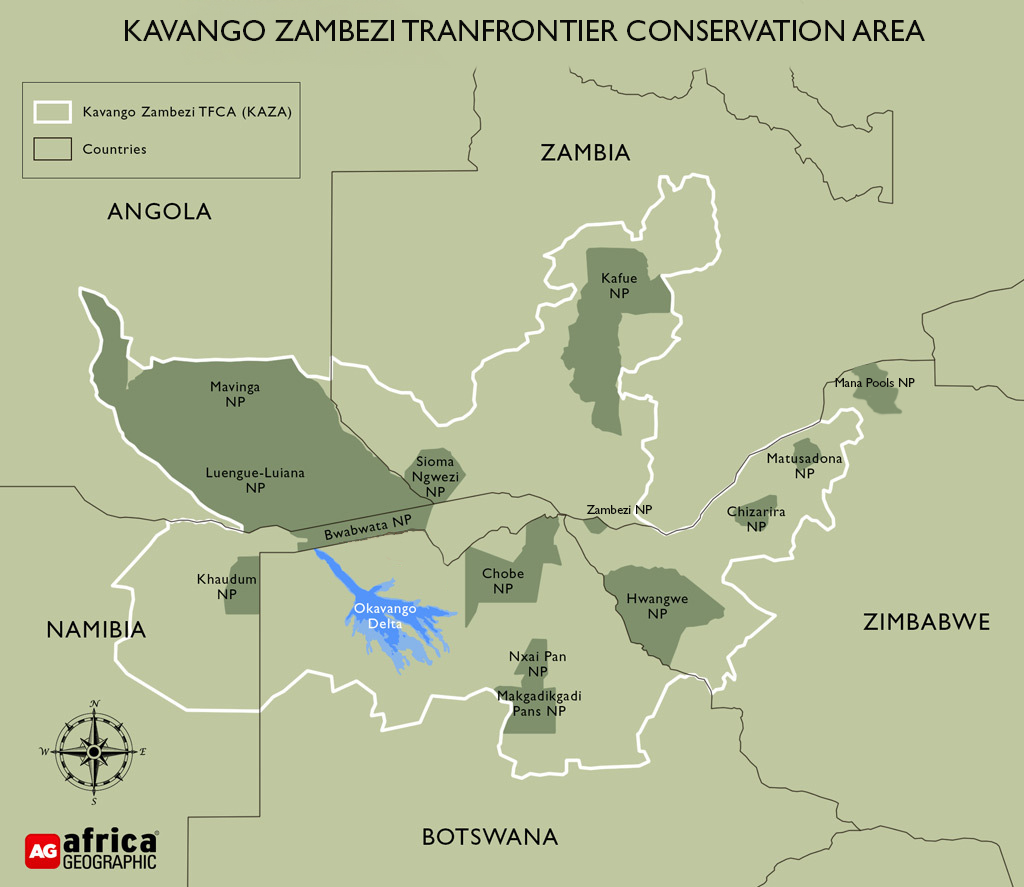
The acronyms can be off-putting, but to understand what KAZA is about, it helps to first set the scene – to understand who is who, and what is where, on this immense southern African canvas.
Spanning parts of five countries – Angola, Botswana, Namibia, Zambia and Zimbabwe – and involving government ministries, local communities and conservation organisations such as WWF and African Parks, KAZA is the world’s largest terrestrial transboundary conservation area.
It is every bit as vast as it sounds: a multi-country conservation landscape roughly the size of France. At its heart lie the Kavango, Kwando and Zambezi river systems, supporting critical habitats upon which both people and wildlife depend.
Kaza: cross-border conservation
At the heart of KAZA’s conservation vision is a simple but powerful principle: wildlife does not recognise political boundaries. For centuries, elephants, buffalo, predators and countless other species moved freely across the vast river systems, floodplains and woodlands that today span five nations. By linking protected areas, conservancies and community-managed landscapes into a single connected ecosystem, KAZA helps restore and maintain these ancient migration routes, allowing wildlife to respond naturally to seasonal changes in water, food availability and breeding opportunities.
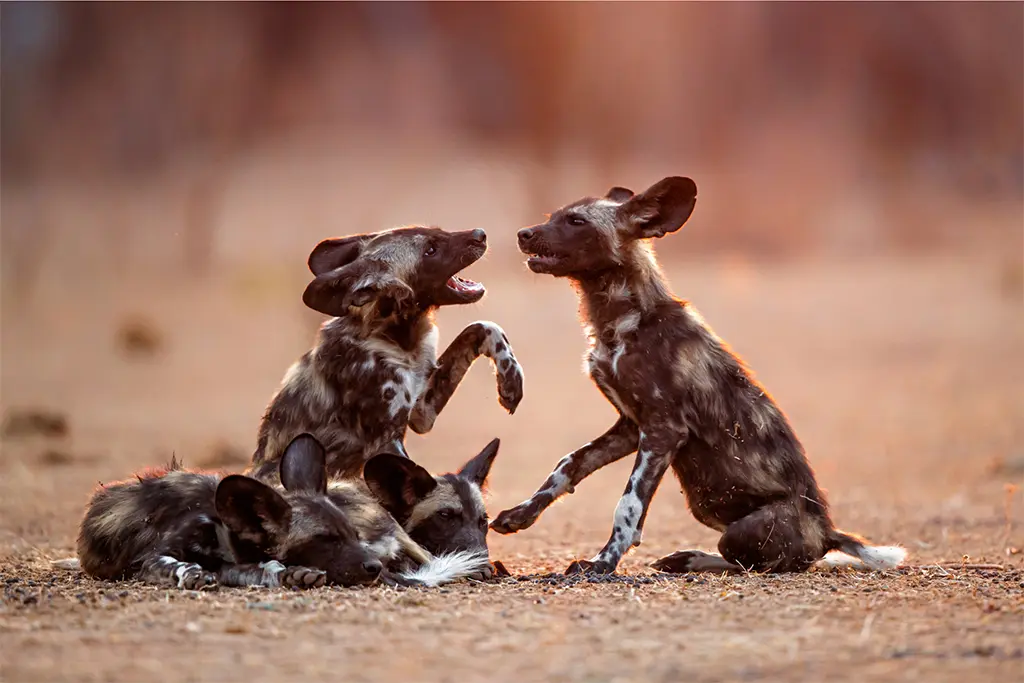
This connectivity is particularly important for wide-ranging species such as elephants and African wild dogs, whose long-term survival depends on access to large, interconnected landscapes. By protecting ecological corridors across international borders, KAZA not only supports healthier wildlife populations and greater genetic diversity but also strengthens the resilience of one of Africa’s most important conservation strongholds for generations to come.
One of KAZA’s greatest strengths is the ease with which travellers can move between its diverse destinations. Well-established tourism infrastructure, international airports in hubs such as Kasane, Livingstone, Victoria Falls and Katima Mulilo, and a network of road, air and river connections make multi-country safaris remarkably accessible. Within a matter of days, travellers can experience Namibia’s floodplains, Botswana’s elephant-rich waterways, Zambia’s conservation initiatives and Zimbabwe’s iconic wilderness areas. This seamless connectivity transforms what might once have been separate safari destinations into a single, interconnected journey through one of Africa’s last great wilderness systems.
As we move through it, what becomes clear is that KAZA is not simply a conservation area – it is a living system. Wildlife depends on freedom of movement; communities depend on the land and rivers; and tourism, when done well, becomes the thread that binds both together.
Stretching from Luengue-Luiana National Park in southeastern Angola, through a mosaic of national parks, forest reserves and community-managed conservancies, to Zambia’s Lower Zambezi National Park, KAZA is increasingly viewed as central to the future of sustainable tourism and conservation in southern Africa.
Vital to its success are the employment and livelihood opportunities it creates, helping secure both the future of wildlife populations and the integrity of the rivers and watersheds upon which all life here depends.
Back to the unsung floodplain
It is April, and the dry season is still a few months away. To the east, two fishermen are bathed in the glow of sunset as they cast a net from their mokoro. All around us, as we drift silently around the island in pursuit of an African black crake delicately stepping between flooded branches, comes the sound of birds settling in to roost.
We drift, we listen, and we begin to understand the rhythm of this place in Namibia’s Zambezi Region, wedged between Angola, Zambia and Botswana.
A landscape of rivers, floodplains and wetlands, Namibia’s Zambezi Region offers a safari experience unlike the country’s more arid destinations. Visitors are drawn by exceptional birding, seasonal concentrations of elephants and buffalo, river-based activities and a sense of exclusivity in one of southern Africa’s least crowded wildlife destinations.
In the dry season, the same scene could feature elephants, buffalo and the multitude of creatures that follow them to water.
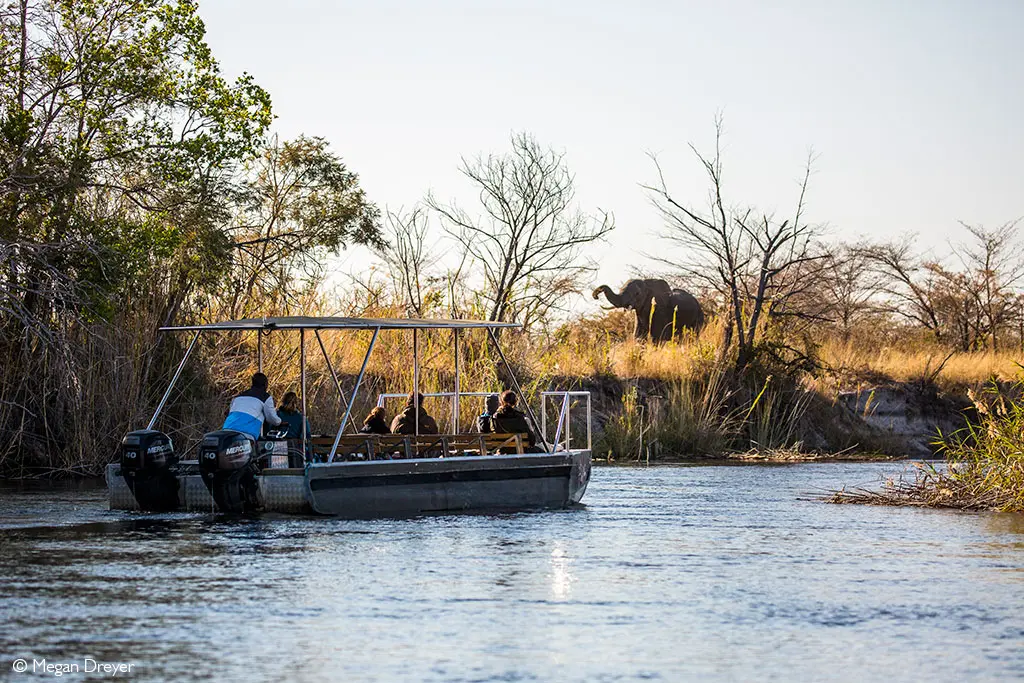
This is a landscape where floodplains pulse with life and more than 400 bird species fill the air – a quieter safari experience perhaps, but no less extraordinary. It feels utterly private and exclusive. We find ourselves immersed in a version of Africa that is becoming increasingly rare: uncrowded, unscripted and deeply authentic.
We arrive via Katima Mulilo, the regional hub of the Zambezi Region, just two hours by road from Botswana’s transport gateway of Kasane. When I was in the air force, fresh out of university, Katima was considered the back of beyond. Today, it is thriving – thanks largely to tourism and the industries that support it.
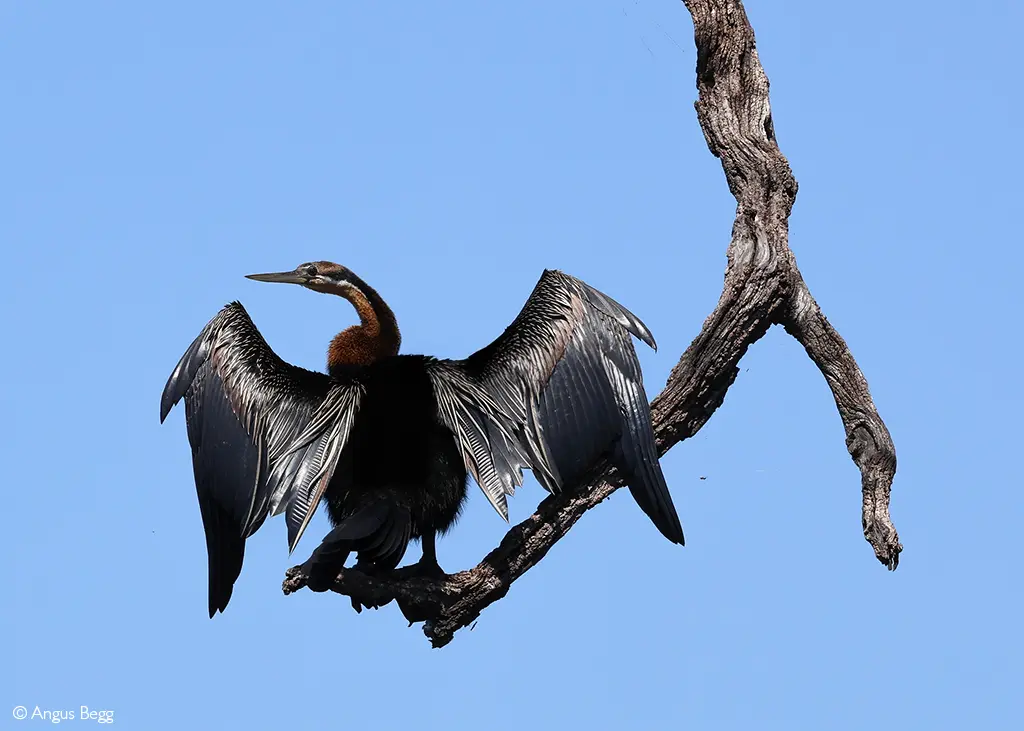
Birding and river guide Vincent Walubita, trained through initiatives linked to KAZA, joins us as our skipper threads the boat through papyrus-fringed channels in search of Allen’s gallinule, hidden among a distracting abundance of egrets, herons and jacanas. With more than 400 species recorded in the region, Vincent explains that seeing fifty or more species on a single cruise is not unusual.
We follow his lead through the waterways, realising that here, knowledge of birds and rivers is not simply a skill – it is a livelihood.
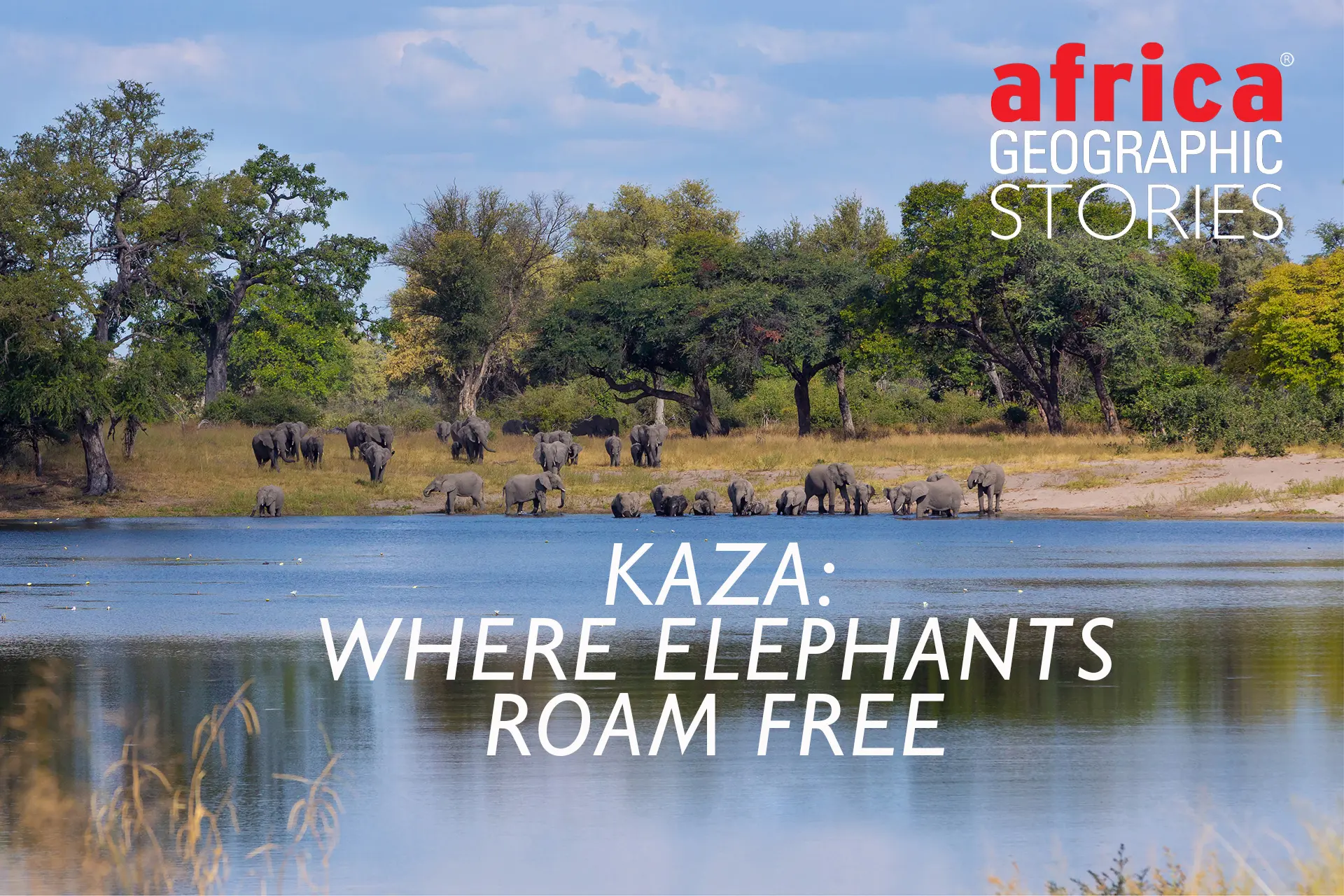
Further west, we visit Horseshoe Bend, a seasonal wetland within the Kwando system where wildlife congregates during the dry months. Elephants arrive in slow procession, antelope edge cautiously in to drink, and predators wait patiently on the margins.
Kwando and the living Bwabwata corridor
Moving further along the B8 highway, deeper into Namibia’s eastern Zambezi Region and the Kwando River landscape, the character of the land begins to shift.
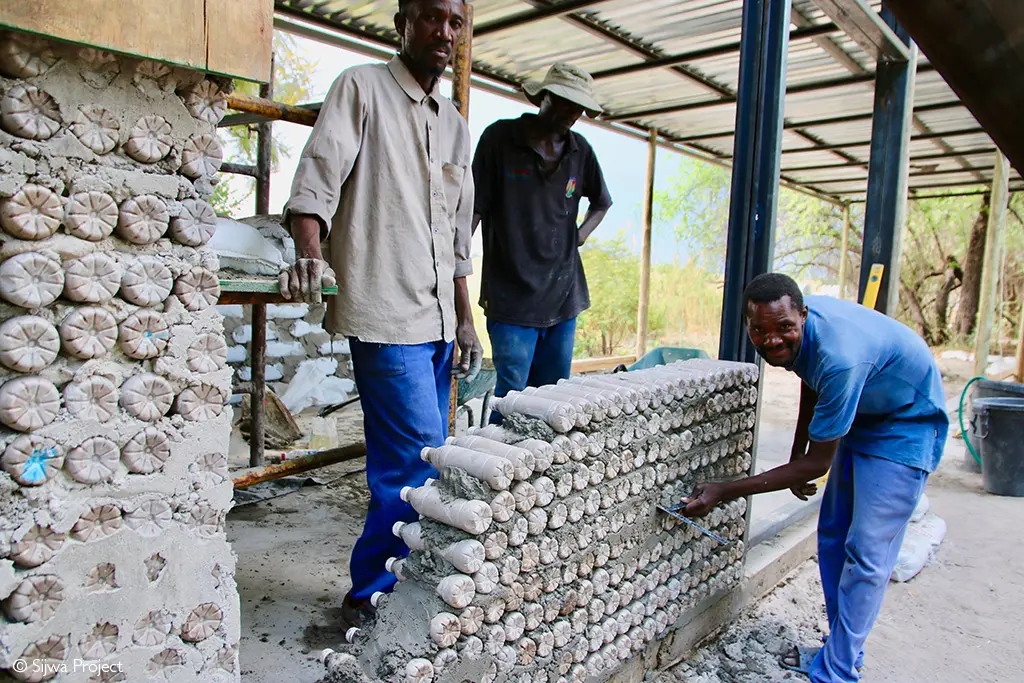
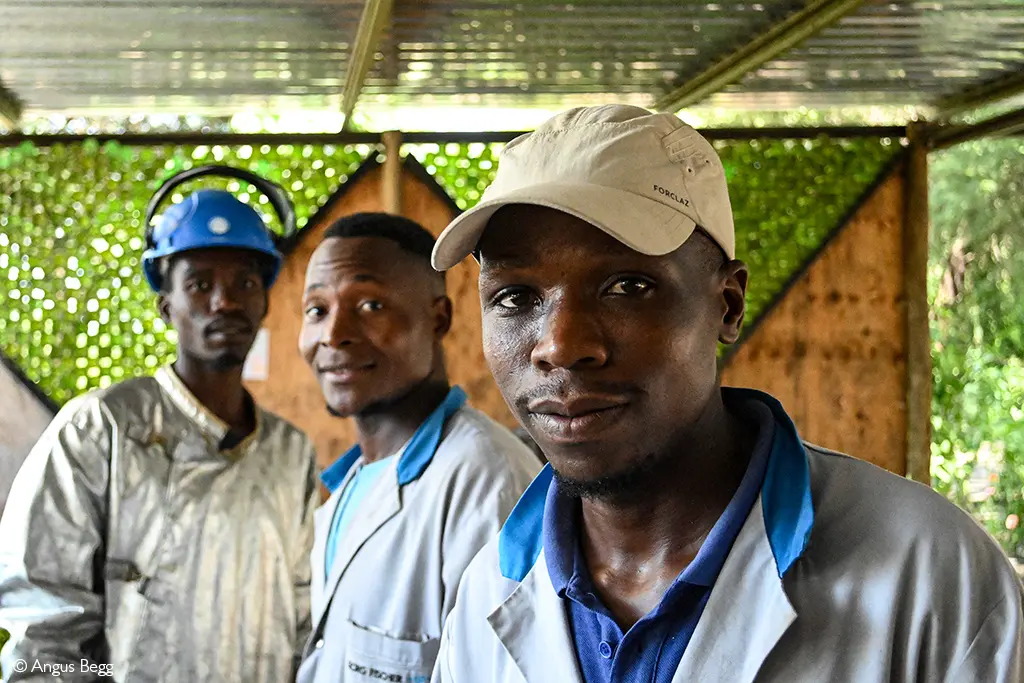
Nearby, at the Sijwa Project, we meet a recycling team transforming waste into opportunity. Forty discarded aluminium cans become a single butter dish destined for use in nearby safari camps. Discarded plastic water bottles are also turned into sustainable ecobricks. It is a small-scale enterprise, but symbolic of a larger KAZA philosophy: conservation creating opportunity, and opportunity reinforcing conservation.
We continue west into Bwabwata National Park, one of Namibia’s most fascinating protected areas. Unlike most national parks, people live within its boundaries, sharing space with elephants, buffalo and predators.
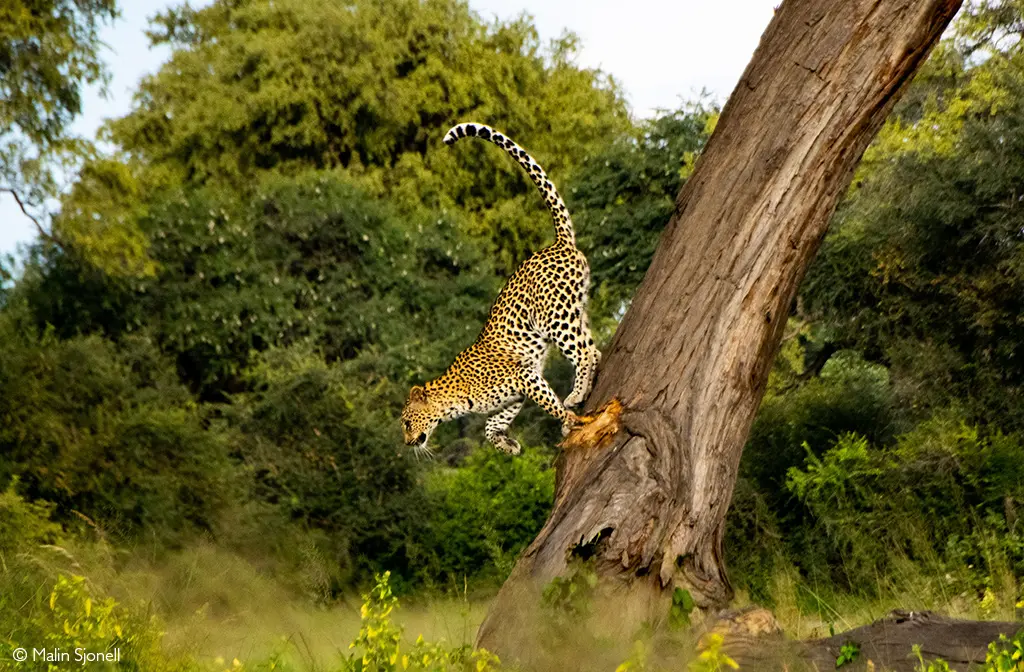
Here, conservation is not separated from daily life. The park forms one of KAZA’s most important wildlife corridors, allowing animals to move between ecosystems much as they have done for centuries. It is a reminder that connectivity – both ecological and social – lies at the heart of the KAZA vision.
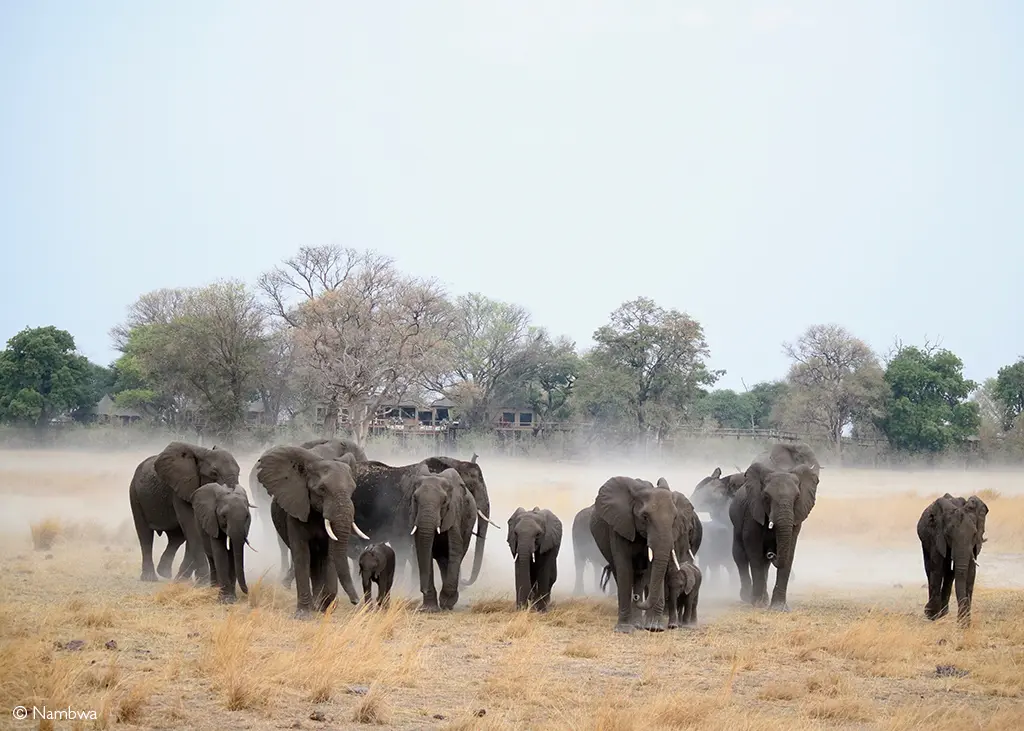
Chobe: the gathering of giants
After several days exploring Namibia’s Zambezi Region, we cross into northern Botswana, arriving in Kasane on the edge of Chobe National Park.
The Chobe River frontage, bordering Namibia, is undeniably busy – and for good reason. A collection of lodges and hotels offers front-row access to a floodplain system renowned for its wildlife. We arrive at the river’s edge as elephants gather in their hundreds, creating one of Africa’s most celebrated wildlife spectacles. Buffalo spread across the floodplains, hippos churn the shallows, and birdlife fills every branch, reedbed and sandbank.
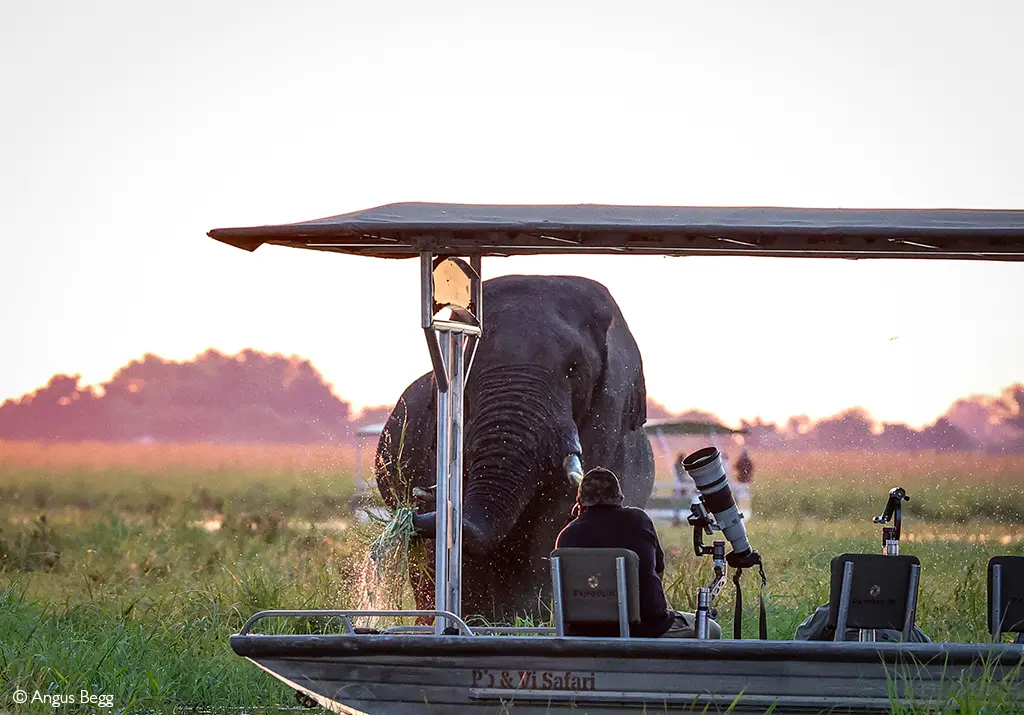
Yet as famous as Chobe is for its wildlife, it is the people who reveal tourism’s deeper value.
Guide Richard Kamwi Rungwe demonstrates this almost immediately. Within 20 metres of leaving the riverbank by boat, we have already added giant kingfisher, African pied wagtail and wood sandpiper to our list before the sun has fully risen above the horizon.
His knowledge is not merely impressive; it is a reminder of how conservation and tourism create careers rooted in the natural world.
Crossing the Zambezi
From Chobe, we head east, to Victoria Falls.
Few destinations encapsulate the spirit of KAZA quite like Victoria Falls. Known locally as Mosi-oa-Tunya, “The Smoke That Thunders”, the world’s largest sheet of falling water straddles the border between Zambia and Zimbabwe and serves as a focal point for tourism across the region. Beyond the spectacle of the falls themselves, visitors can enjoy river cruises, wildlife experiences, adventure activities and cultural encounters that support thousands of livelihoods on both sides of the border. As one of Africa’s most recognisable travel destinations, Victoria Falls plays a vital role in attracting visitors whose spending helps sustain conservation efforts and community development throughout the wider KAZA landscape.
We cross the Victoria Falls Bridge, which spans the border between Zimbabwe and Zambia at one of Africa’s most iconic natural landmarks.
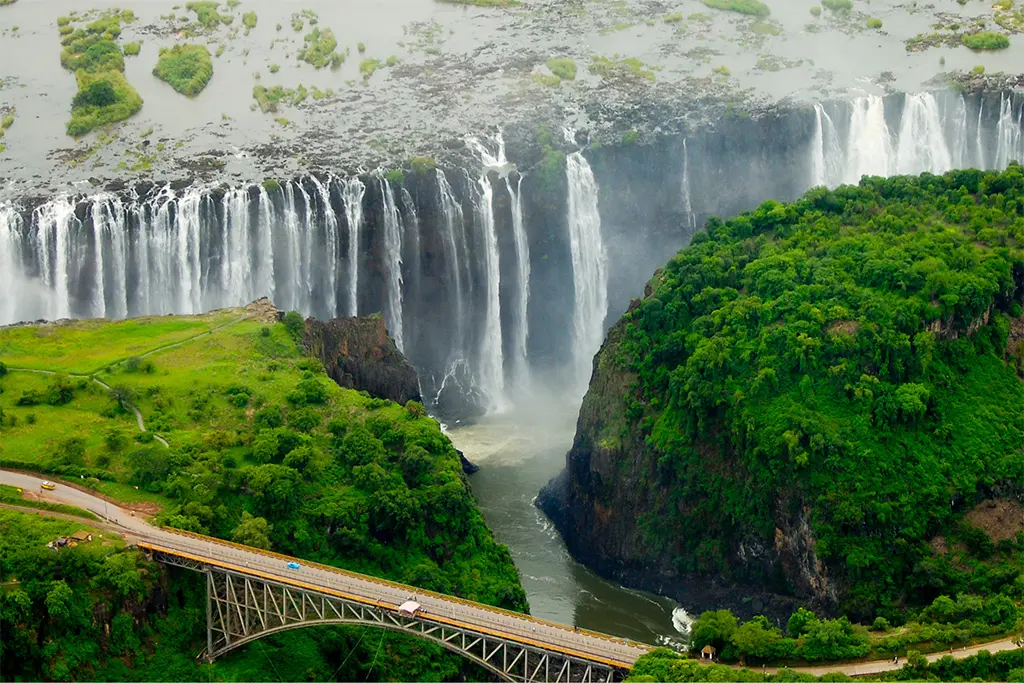
A few hours beyond the border, lies Livingstone. While many visitors know Livingstone as the gateway to Victoria Falls, the town has evolved into one of southern Africa’s most versatile safari hubs. Situated on the banks of the Zambezi River and surrounded by wildlife-rich landscapes, Livingstone offers easy access to game drives in Mosi-oa-Tunya National Park, river safaris, birding excursions and conservation-focused experiences. Its strategic location within the wider KAZA region also makes it an ideal base from which to explore neighbouring Botswana, Namibia and Zimbabwe, allowing travellers to combine iconic attractions with meaningful encounters that highlight the region’s conservation and community initiatives.
On the outskirts of Livingstone in southern Zambia, lies the suburb of Dambwa. Built along a traditional elephant corridor leading up from the nearby Zambezi River, Dambwa provides a vivid example of the challenges that accompany growing human populations in wildlife landscapes.
Here we meet birding guides Gift Ng’andu and Mukumbuta Akayamborwa. They explain how elephants routinely pass through the streets of this expanding settlement, helping themselves to the mango trees that fill household gardens. The result is predictable: conflict between people and wildlife. Gift and Muku are helping to bridge that divide.
Through a WhatsApp-based early warning network, residents can alert them whenever elephants enter the area. The guides then assist in safely encouraging the animals to continue on their way. During peak periods, Gift says, they may receive as many as 40 calls in a single night.
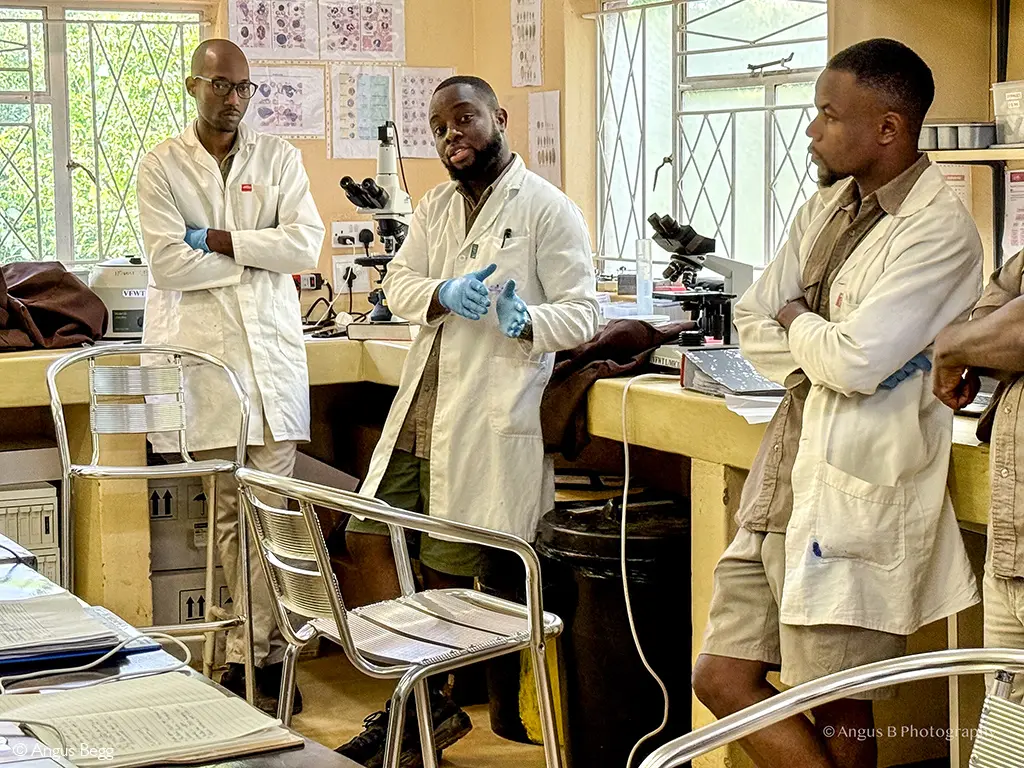
It is a practical, locally driven response to one of conservation’s most pressing challenges. We also visit the Victoria Falls Wildlife Trust, where conservation science supports wildlife management across the broader KAZA landscape, providing veterinary expertise, research and monitoring that benefit both wildlife and people.
Communities at the centre
Mosi-oa-Tunya National Park lies only a few kilometres back towards Livingstone, but our focus shifts instead to the remarkable Tukongote Community Project established along this stretch of the Zambezi.
A school, extensive organic gardens and a daily feeding scheme – all supported through tourism revenue – are quietly transforming lives. These are not abstract development interventions. They are practical systems supporting education, nutrition and long-term opportunity.
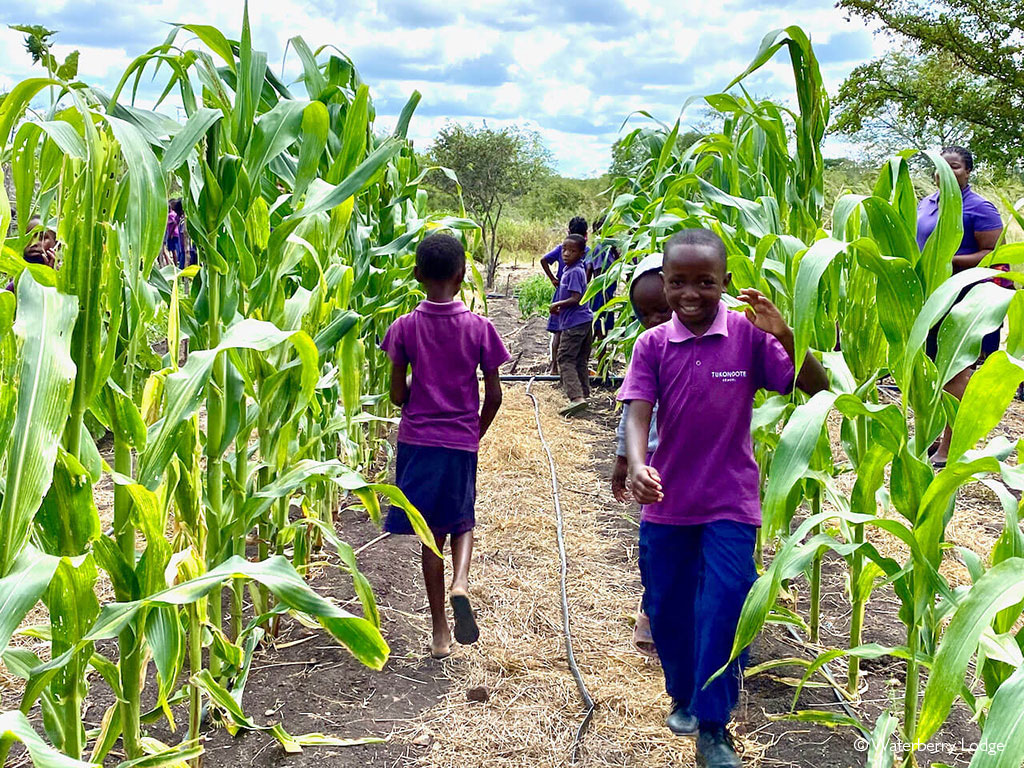
I ask two women preparing lunch for the children whether neighbouring communities feel envious of what has been achieved here. They shake their heads. “No,” they reply. “They try to make their schools better.”
Conversations like these reveal the deeper layer of this journey – how tourism, when it works, extends beyond wildlife viewing to support communities, and in doing so, strengthens the very foundations of conservation across the KAZA landscape.
Many would argue that among the greatest privileges of safari – alongside the landscapes and wildlife – are the human connections and life lessons gathered along the way. Such conversations, and the stories they reveal about tourism’s role in conservation, are found throughout this vast transboundary region.
If safari is a train station, then the Kavango-Zambezi initiative is the platform from which countless journeys depart. And as we step off, we realise this journey has traced not merely destinations, but connections – across countries, ecosystems and communities. For the traveller, KAZA offers something increasingly rare: a safari that is not confined to a single park or even a single country, but unfolds across an entire living landscape.
From the flooded plains of Namibia’s Zambezi Region to the wildlife-rich banks of Chobe, from elephant corridors in Livingstone to the spray and thunder of Victoria Falls, each stop reveals a different facet of one of Africa’s last great connected wilderness systems.
It is a safari defined not only by what you see, but by how those experiences connect – wildlife, people and place – leaving you with the sense that you have travelled through something far larger, and far more meaningful, than a destination.
As the journey draws to a close, what lingers is not a single wildlife sighting or destination, but an appreciation for the connections that bind this remarkable landscape together. Across rivers, borders and ecosystems, KAZA demonstrates that conservation is most effective when wildlife can move freely, communities benefit from tourism, and travellers become part of a larger story. In an increasingly fragmented world, the region offers a compelling vision of what is possible when nations, people and nature work together to protect a shared wilderness for generations to come.
 About Angus Begg
Angus’ journey as a traveller began as a journalist, covering pivotal moments in South African history, from Nelson Mandela’s release to the country’s first democratic elections.
Over the years, he has transitioned his passion for storytelling into the realms of photography, videography, and safari guiding, weaving tales of landscapes, wildlife, and people along the way.
Whether crafting a documentary, curating a safari itinerary, freezing a moment through the lens or writing copy for a client, his mission remains the same: to share a destination’s soul with those of curious disposition, and to facilitate engagement with real people and their stories.
Resources
- Victoria Falls is one of Africa’s most popular tourist destinations – for good reason. Here’s our ultimate Victoria Falls to-do list: Things to do in Victoria Falls
- Victoria Falls, the smoke that thunders, is the world’s largest waterfall: a breathtaking African safari destination of myth, magic & romance. Here’s our ultimate Vic Falls guide.
- KAZA elephants – new analysis adds vital details: An analysis of elephant population trends in KAZA shows a worrying increase in poaching, slowed population growth, negative population trends outside of protected areas, and the need for more accurate information to combat threats
To comment on this story: Login (or sign up) to our app here - it's a troll-free safe place 🙂.