


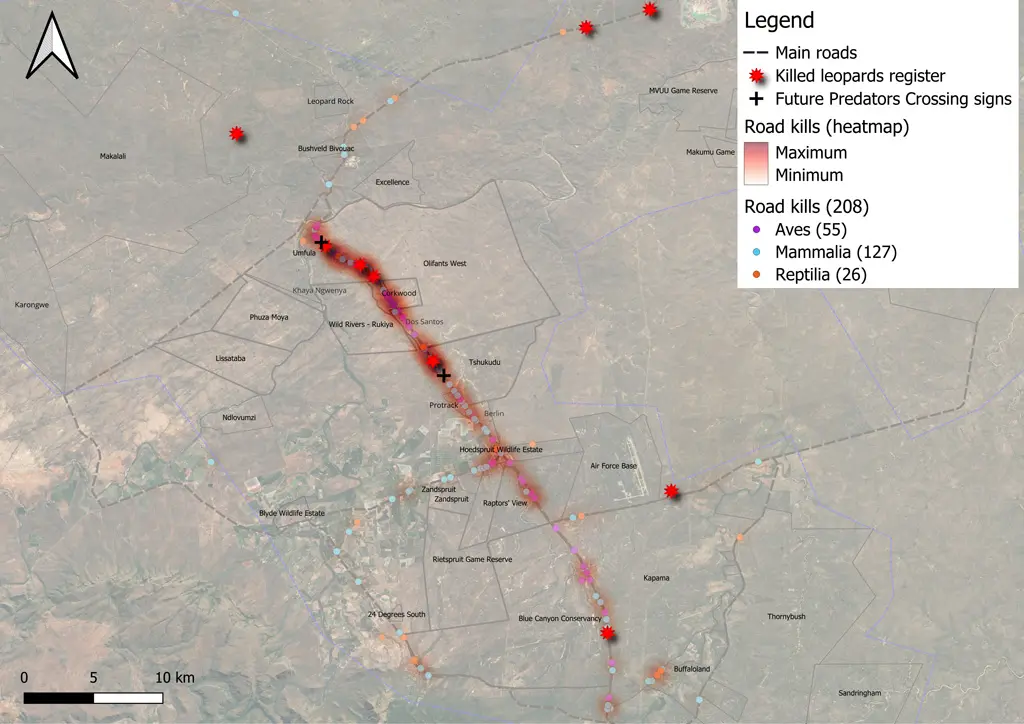
“In 2024, seven leopards were killed on Hoedspruit’s roads. Five of them on the R40 alone.”

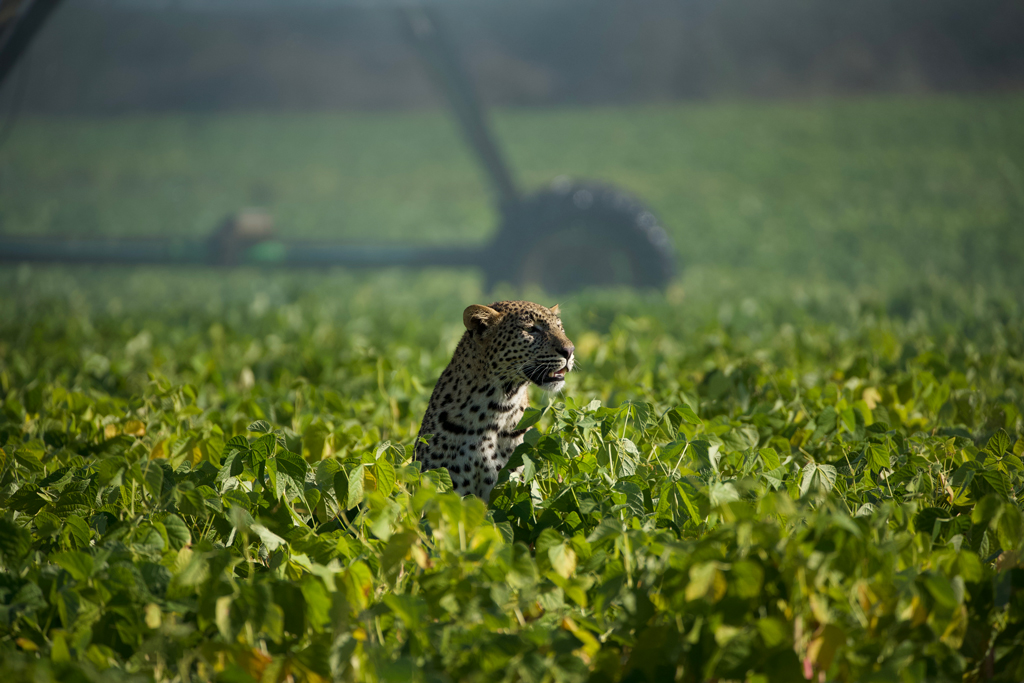
Leopards are survivors, but for several reasons, their future in the Lowveld of South Africa is fragile. They are highly adaptable to change, opportunistic regarding food resources (empowered by a relaxed approach to sustenance), and have vast home ranges. Their natural tendency towards secrecy allows them to remain undetected and unseen even when ever-present. However, with urbanisation encroaching even on some of the most rural areas in South Africa, safe spaces for leopards are shrinking. In bushveld towns like Hoedspruit, a formerly rural region bordering Greater Kruger that has seen rapid expansion over the past few years, leopards are struggling to slip past the modern world unscathed.
Ingwe Research Program has been actively working in the Greater Kruger area since late 2022. They began as a pioneering citizen-science initiative with a clear goal: to bridge the gap between the safari industry and conservation efforts by involving lodges and reserves directly in leopard monitoring.
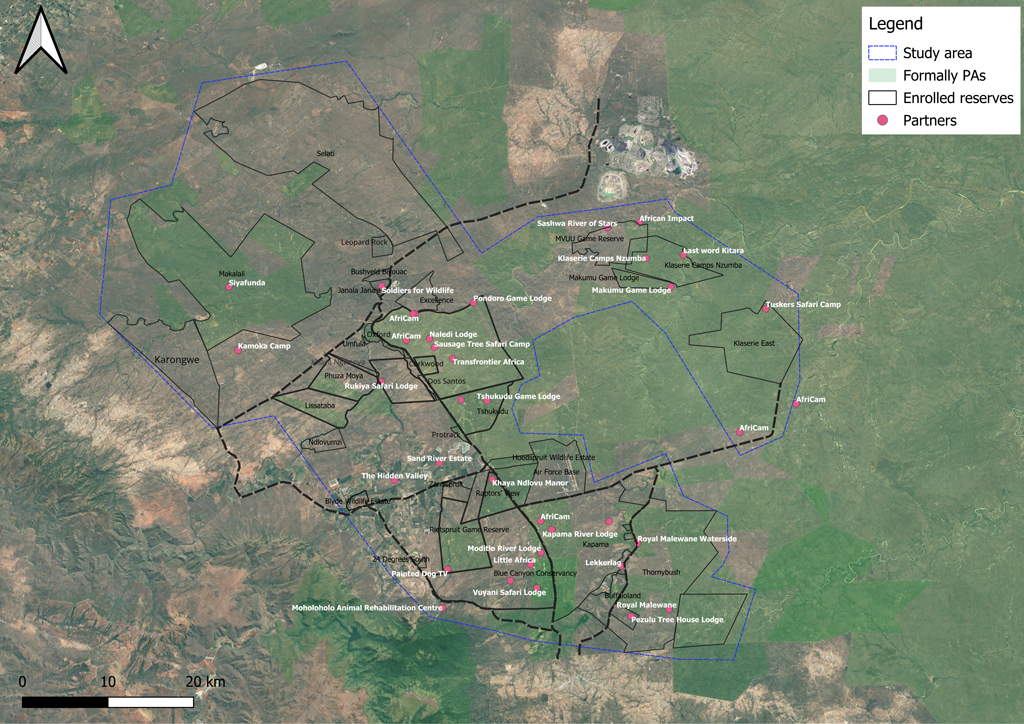
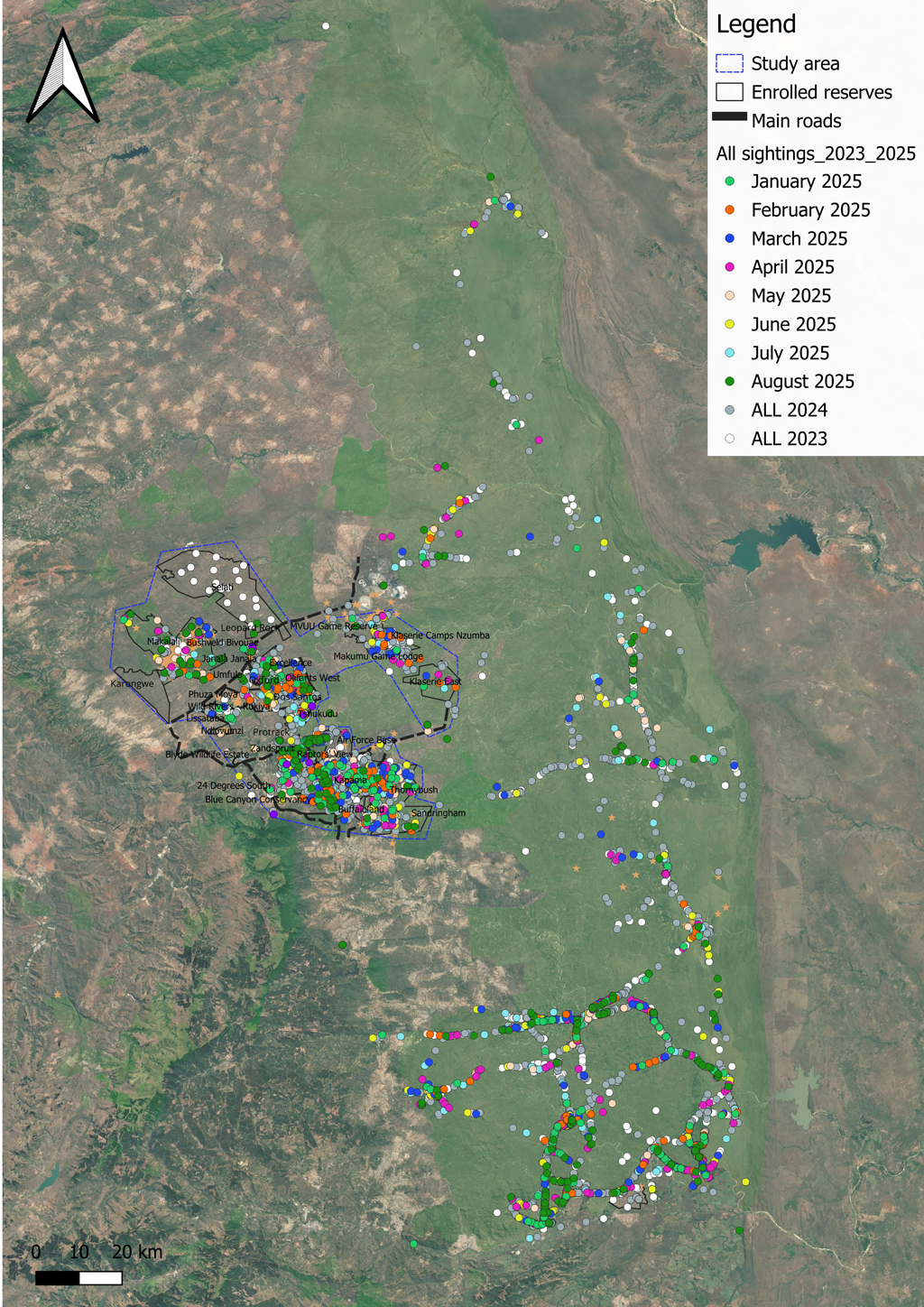
Through these extraordinary partnerships with guides, lodges, and volunteers, Ingwe has collected over 14,300 leopard sightings between 2022 and 2025. Using AI technology, they have identified 200 individual leopards in Hoedspruit alone, building the most comprehensive leopard database in the region. This work reveals dispersal routes, home range overlaps, and the threats leopards face across diverse habitats, from wildlife estates to farmland. This research and data collection enable them to tackle urgent conservation issues head-on by:
- Monitoring leopard distribution across landscapes impacted by human expansion.
- Reducing road fatalities through their road ecology project, which identifies wildlife crossing hotspots and develops mitigation measures.
- Addressing human-leopard conflict in wildlife estates, fostering coexistence through informed management.

Their Road Ecology Project maps roadkill hotspots along the R40, evaluates underpasses and culverts, and mobilises local volunteers to document leopard crossings, laying the groundwork for life-saving infrastructure and signage.
What the results reveal
In Ingwe’s recent surveys of 55 culverts, 960 wildlife crossings by 17 species were recorded, with use concentrated at a handful of sites. Nine culverts accounted for over half of all crossings, while seven were never used. Leopards were detected 141 times, using culverts in 55% of encounters, resulting in 78 confirmed crossings across 12 culverts (an average of 9.7 crossings per week). The findings show that strategically placed culverts play a critical role in reducing road risk for wildlife, including apex predators such as leopards.
♥ How you can HELP LEOPARDS
Annual running costs for the necessary activities are high, and your donation will go a long way towards research and protecting leopards.
Click here to make your donation
1. Sustain & expand Ingwe’s core work
- Road Ecology Project – Fund the deployment and maintenance of camera traps, fuel logistics for field teams, and enhanced crossing infrastructure to dramatically reduce leopard fatalities.
- Leopard monitoring – Support continued tracking, photo-ID work, and database expansion to accurately monitor population health in and around Hoedspruit.
- Conflict mitigation – Empower cost-effective strategies in wildlife estates to prevent human-leopard conflict, raising both awareness and safety.
2. Unlock two future projects
- Ecological Corridor Survey: Roll out a leopard density camera-trap survey in non-protected zones between the Greater Kruger and Blyde River Canyon. This will illuminate corridor zones and test emerging monitoring technologies, strengthening connections across the landscape.
- Community-Led Camera-Trap Initiative: Launch a participatory programme that hands camera-trap ownership to community members, fostering local stewardship, reducing poaching risk, and instilling community pride in leopard conservation.
Your donation does make a difference:
- US$100 pays for a whole day spent identifying areas where leopards need more help, and various operational costs
- US$500 pays for a day spent setting up camera traps and work by detection dogs to survey leopard movements, and various operational costs
- US$1,000 pays for 2 full days of Ingwe Research Program’s entire organisational costs
- US$5,000 pays for 125 days spent reducing threats to boost leopard population increases
- US$10,000 pays for 250 full days of work on Ingwe’s distribution surveys
No matter how modest, your donation to the Ingwe Research Program drives leopard conservation forward. Together, we can keep South Africa’s leopards roaming free, thriving in both protected reserves and shared landscapes.
WATCH:
Learn more about their Road Ecology Project here
Learn more about the leopards of the Hoedspruit Wildlife Estate here
READ:
Read more about saving Hoedspruit’s leopards here
Trophy hunters targeting leopards in South Africa. Read more here
There’s a leopard in my garden: Read about the leopards of the Hoedspruit Wildlife Estate