


An Africa Geographic investigation into the elephant culling debate unfolding in South Africa’s Associated Private Nature Reserves (APNR). By CEO Simon Espley
- Scientists argue elephant impacts depend more on movement than overall population size.
- Artificial waterholes concentrate elephants, intensifying local damage to vulnerable tree species.
- Research suggests managing elephant distribution is more effective than broad-scale culling.
- APNR’s plan to include elephant culling in their management plan has prompted calls by Africa Geographic for greater scientific transparency and public accountability.
- South African law allows culling only after other management options have been properly considered.
The elephant culling debate has returned to the private reserves that share an unfenced border with South Africa’s Kruger National Park – and it has returned carrying all the old ghosts.
Member game reserves, Timbavati, Klaserie, Umbabat, Balule, and Thornybush, that make up the Associated Private Nature Reserves (APNR), are Big Five tourism meccas that can surely not afford the likely political storm should they choose to cull elephants. At the same time, the APNR is economically dependent on tourism models built around aesthetic landscapes and iconic, easily accessible wildlife species. This dilemma is reflected in the current ideological chasm between the opposite sides of this debate.
The rationale behind the rumblings about culling is familiar: that localised elephant concentrations are placing severe pressure on large trees in sections of the APNR used for tourism and trophy hunting.
But the scientific debate surrounding elephant culling in southern Africa has changed profoundly over the past three decades, since culling was last practised.
Today, the scientific argument is not about “too many elephants.” It is about spatial ecology, landscape homogenisation, artificial water provision, ecosystem resilience, ethical conservation, and the role humans play in creating the very conditions now being used to justify culling.
Important context: these reserves share an unfenced boundary with Kruger National Park. So the elephants move freely across a landscape jointly managed by SANParks and adjoining private reserves, within a national regulatory framework. These elephants are held in trust by SANParks, a public entity, on behalf of the people of South Africa.
What this situation demands, above all, is transparency, open debate and a clear-eyed assessment of the science. Not so, according to APNR chairperson Richard Napier, who is also chairperson of Thornybush Collection, Thornybush Nature Reserve. More about that later.
In a world packed with noise, facts matter. And in the absence of detailed public information from APNR management, we provide the information you need here so you can make up your own mind about this issue. We offer the best available evidence from published peer-reviewed literature, South Africa’s national management frameworks, and leading elephant scientists on what culling can and cannot achieve, what alternatives exist, and why the APNR finds itself at this crossroads.
The APNR context: a system without fences, yet not without constraints
To understand the elephant (Loxodonta africana) question in the APNR, one must first understand the landscape. Since 1993, when the boundary fences between the private reserves and Kruger National Park were removed, wildlife has been free to roam across roughly 2,2 million hectares. The APNR contributes about 200,000 hectares to this matrix.
Kruger’s elephant management framework, which strongly influences regional management approaches, emphasises that elephant management should increasingly focus on influencing movement patterns rather than on reducing elephant numbers. The strategic shift is toward adaptive, site-specific management aimed at restoring ecological heterogeneity rather than maintaining fixed carrying capacities.
The total Kruger landscape, including the national park, APNR and other private and community-owned reserves, while vast, is a managed system bounded by fences, roads, settlements, and human infrastructure on all sides except where it opens to Mozambique and Zimbabwe in the east and north.
This distinction is important to the elephant debate. Writing in 2024, plant ecologist Professor Eugene Moll, in a widely read Daily Maverick op-ed, put it plainly: “Kruger is not an open system. It is fenced. Movement is constrained. Predators do not regulate elephant numbers. Humans do. That makes Kruger a managed system, whether we are comfortable with that idea or not.” The same logic applies to the APNR reserves, which are used more intensively for tourism and trophy hunting and contain a denser network of artificial waterpoints.
The Kruger National Park’s elephant population stands at approximately 39,390 (35,468-43,312) individuals, according to SANParks – derived from their 2025 sample surveys. SANParks does not estimate elephant numbers for the APNR.
Proponents of elephant culling have long insisted that the Kruger National Park can sustain only about 7,500 elephants, which is based on outdated management practise from the mid-1900s. The thinking is also based on a subjective preference for mature trees, open savanna mosaics and habitat stability. And yet, ecosystems and wildlife populations are not stable; they are constantly changing.
Dr Sam Ferreira of SANParks explained in a podcast with Origins Foundation that the 7,500 figure was never scientifically derived – it originated from a ship’s hold capacity to livestock carrying-capacity models applied to wildlife, yielding an arbitrary 0.3 elephants per km² across 2 million hectares.
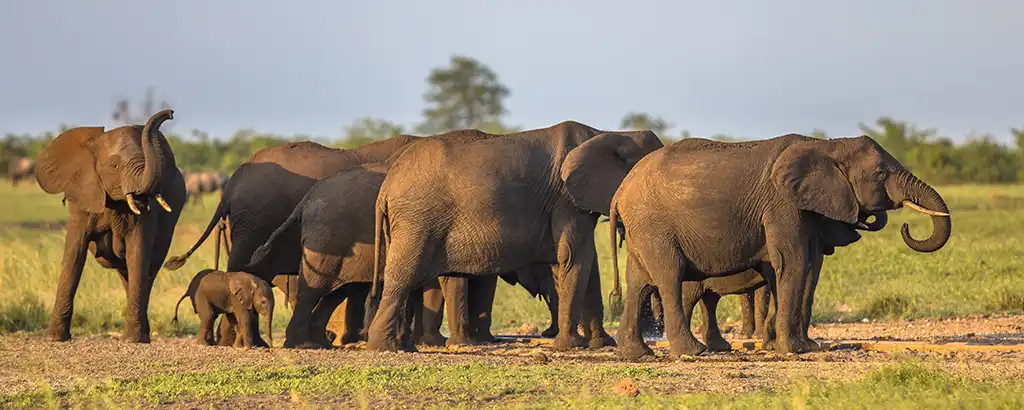
Ferreira goes on to explain that historic carrying-capacity estimates are highly uncertain and depend heavily on habitat assumptions. In the podcast interview, he notes that some estimates place Kruger’s carrying capacity between 2.1 and 5 elephants per km², depending on habitat type. He also explained that elephant impact is not a function of how many elephants there are. Instead, it is a function of elephant activity. He elaborated that 10 elephants will have the same impact as 100 elephants concentrated in one area because of the ‘Ice Cream Aisle’ effect.
As Ferreira points out, “Saying that 30,000 elephants are destroying Kruger is like blaming a bee for ruining a garden. It’s not that simple. Elephants go where the resources are. When there’s plenty of water and food, they stick around, snack on trees, and, yes, sometimes knock a few over. But when resources shift, so do the elephants.”
Just as humans love ice cream and head to that supermarket aisle, elephants prefer certain tree species, such as marula (Sclerocarya birrea), knobthorn (Senegalia nigrescens), and red bushwillow (Combretum apiculatum), and will always gravitate to areas with those trees. If water is provided nearby, elephants will seldom move far from those trees. Culling their numbers will not alter that dynamic, because even a handful of elephants will have the same effect.
Dr Mike Chase is an elephant biologist, founder of Elephants Without Borders, and is widely regarded as one of the world’s foremost authorities on elephant population dynamics at the landscape and continental scale. He was the principal investigator of the Great Elephant Census (2014–2016), the most comprehensive continent-wide survey of savanna elephants ever conducted. A major finding of the census is that the African elephant population declined by 144,000 animals in just seven years (2007–2014), at an annual rate of 8%.
This is the essential context for any discussion about elephant culling. Proponents of lethal management advocate for culling a species that is globally listed as Endangered and has a rapidly declining population. Politically convenient population narratives that drive local management decisions while ignoring the species’ plight are precisely what the APNR needs to guard against as it frames its culling case.
What should the Kruger look like?
Proponents of elephant culling often argue from a particular vision of what Kruger should look like, while others prioritise ecological processes and landscape change.
Ferreira explained that research shows that trees were falling over before elephants were culled between 1967 and 1994, and that they continued to do so after culling. “This tells me that other dynamics are happening, and we need to shift our reference window far longer back”.
He explained that it is important to understand the Kruger history when assessing what the landscape ‘should’ look like. The Kruger landscape had a large elephant population in the 1700s. These elephants were decimated by ivory hunting, when Portuguese and Arab hunters and traders stripped the area (of humans and elephants), as evidenced by export records.
Then there was the outbreak of Rinderpest in the late 19th century that devastated the continent’s wildlife. Particularly affected were antelope such as impala and nyala, which eat trees at the sapling stage, and are exponentially larger consumers of trees than elephants.
This combined decimation of wildlife resulted in the Kruger landscape developing over a period of 200-250 years, with little herbivore use and the consequent growth of many trees.
Ferreira referred to the work of Dr Uys de Villiers (“Tol”) Pienaar, who argued based on historical records, early ranger accounts, photographs, hunter diaries, and ecological observations, that much of the Kruger landscape in earlier historical times was considerably more open and less densely wooded than many people now assume.
This means that the Kruger National Park, as it was inherited by park managers when it was established in 1926, was very different from what it had been 250 years earlier. Ferreira observed that their reference point at the time was therefore artificial and that the removal of dense tree cover by elephants and other natural processes is arguably nature restoring Kruger to what it was.
He mentioned that some areas in Kruger currently have more trees than before, while others have fewer, and that the park now has more woody cover than ever. This spread of woody cover is a function of climate change (more carbon in the air), and elephants are among the most important natural agents limiting woody thickening, alongside factors such as fire and grass covering.
Importantly, more trees do not automatically equate to better conservation outcomes: South Africa’s grasslands and open savannas are globally important ecosystems, and excessive woody encroachment can threaten species that depend on open habitats.
Modern ecology increasingly recognises that ecosystems are dynamic, disturbance-driven systems. Elephants are now widely recognised as ecosystem engineers and keystone species capable of creating biodiversity-enhancing heterogeneity when their impacts are spatially variable.
The water question: how a management decision became an ecological problem
The most illuminating thread in the current elephant debate is all about water; specifically, the unintended consequences of providing artificial water to a landscape whose ecological dynamics are fundamentally governed by water scarcity.
Dr Jeanetta Selier, speaking in an extended interview for the Origins Foundation Podcast, notes that Kruger National Park management established many artificial waterholes in the 1960s, 70s and 80s. The initial motivation was not ecological management but visitor experience: keeping wildlife visible and accessible near roads and rest camps. The ecological consequences, particularly the effect on elephant distribution and population dynamics, were not fully understood at the time. It was only in the late 1990s that KNP began closing a significant portion of those waterholes, roughly two-thirds of them by the early 2000s, as part of a deliberate shift toward restoring naturalised water gradients across the landscape.
Artificial water provisioning increased dry-season herbivore residency, reduced natural movement patterns and contributed to landscape homogenisation.
She describes the mechanism with exceptional clarity. In a natural savanna system, she explains, elephants are forced to concentrate around permanent water sources during the dry season and to disperse widely in the wet season when water is abundant, to find food. This seasonal rhythm serves as a natural population regulator. Many calves die from prolonged periods without water and from walking long distances.
But what happens when water is available everywhere, year-round? Selier explains that in that case, elephants do not need to move great distances to find water. Consequently, they utilise the nearby food sources (primarily trees) intensively for a much longer period. Fewer calves die, and the population grows more rapidly.
The data supporting this argument is striking. Selier’s research found that, before Kruger began closing artificial waterholes in the late 1990s, elephants in Kruger spent 75% of their time in exactly the same locations during both wet and dry seasons. In most parts of Africa, seasonal home-range overlap ranges from 0 to 35%.
After Kruger National Park revised its water policy and began closing artificial waterholes and boreholes, Selier notes, “We started seeing increases in juvenile mortalities and a drop in the growth rate of the elephant population across the Kruger landscape, and we’re seeing elephants using the landscape more variably.”
“SANParks’ current scientific understanding is that elephant impacts are driven less by elephant numbers alone and more by the intensity and duration of elephant activities in specific ecologically sensitive areas,” Ferreira told Africa Geographic, when asked to comment on SANParks’ current scientific position on the role of artificial water provisioning in influencing elephant behaviours. “Water, together with food, comfort, and safety, strongly influences elephant movement patterns and localised space use.”
“Artificial water provisioning can increase prolonged elephant use of sensitive areas, contributing to localised vegetation impacts and habitat degradation,” Ferreira continues. “SANParks therefore follows a mechanism-based, spatially explicit approach focused on altering elephant activities and space use at local scales. Interventions may include changing water provisioning and, where necessary, reducing local elephant densities in ecologically sensitive areas.”
This history of Kruger’s waterholes is directly relevant to the APNR, which still has many earth dams, concrete pans, reservoirs, and troughs.
The consequence of a dense, perennial water network is the piosphere effect – zones of extreme herbivore pressure radiating outward from waterpoints where vegetation degradation is intense and self-reinforcing. The APNR’s water infrastructure, in short, is actively concentrating elephants, thereby magnifying their impact on the vegetation the reserves are being asked to protect.
These findings are reinforced by a recent study from the Greater Kruger landscape, which found that reconnecting protected areas after decades of elephant exclusion has led to rapid changes in woody vegetation, with the most pronounced impacts occurring where elephant densities exceed approximately three elephants per square kilometre. Crucially, the authors conclude that artificial water provisioning and long-term landscape fragmentation have amplified these localised impacts, reinforcing the view that effective management should focus on elephant movement and distribution rather than elephant numbers alone.
When questioned by AG about APNR plans to follow the KNP example of closing artificial waterholes, Napier and Balule and APNR Head Warden Ian Nowak did not provide detailed responses regarding possible waterhole closures.
A subsequent conversation with another reserve official confirmed that waterhole negotiations among landowners are deeply political, making rationalisation difficult in practice.
The disappearing ice cream trees, the marula
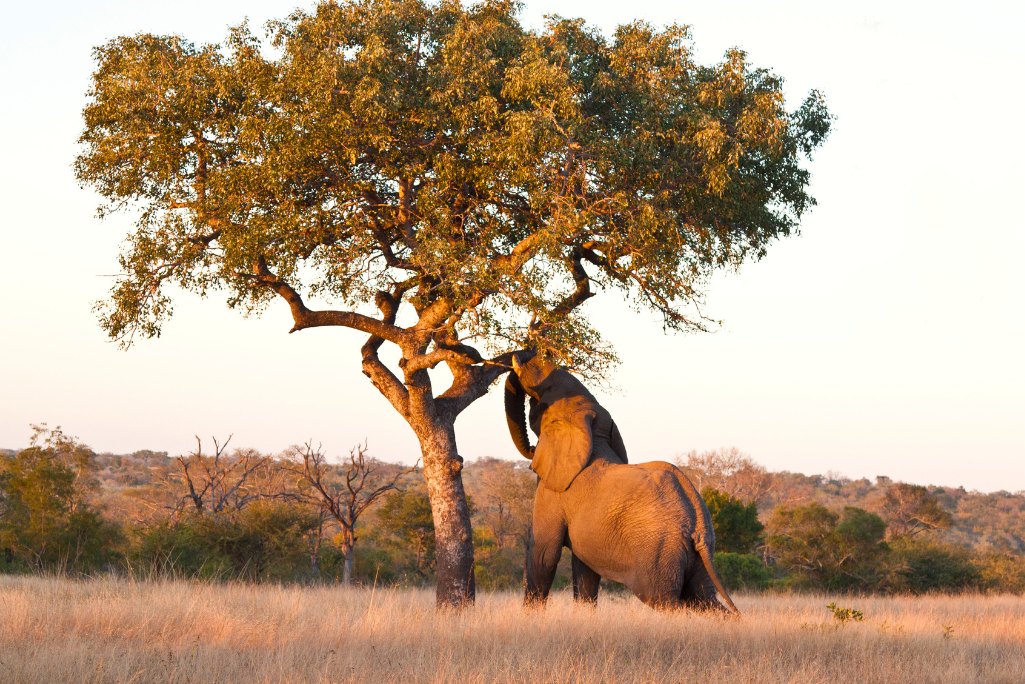
No species better illustrates the tension at the heart of this debate than the marula tree (Sclerocarya birrea). An iconic component of the lowveld savanna, this tree is relished by elephants at every stage of growth, from bark and leaves to fruit. Sapling marulas are equally palatable to impala, nyala, and other browsers, suppressing regeneration even where mature trees survive.
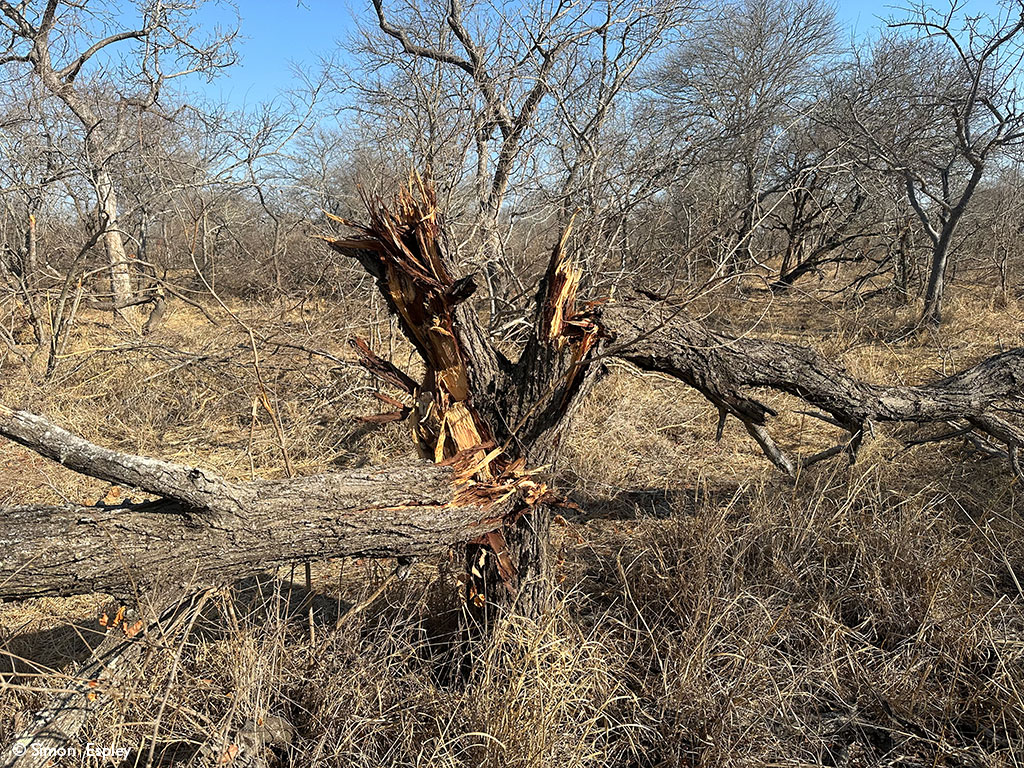
Professor Eugene Moll’s 2026 Daily Maverick op-ed documents the trajectory with the authority of a lifetime’s botanical fieldwork: “Historical photographs of central Kruger show magnificent stands of mature marulas with expansive canopies. Today, in many areas, what remains are broken trunks, stripped bark and bare ground. In places like the Crocodile Bridge area, the pattern is unmistakable: elephants have smashed or ring-barked the trees, and exceptionally high numbers of impala and other herbivores have removed every seedling and sapling that tries to establish. The result is a closed ecological trap. Old trees are dying, and young trees are not replacing them.”
Ferreira provides a more nuanced scientific counterpoint: “Animals, especially big animals, influence what’s there. There are places where trees increase; there are places where trees decrease.” Ferreira has identified 56 Kruger areas of concern, but revealed an unexpected finding: tree loss did not correlate neatly with elephant density. “What really concerned me is why do I have as high elephant impact when the elephant densities were very low?”
Ferreira’s argument is not that the impacts of elephants are benign. It is that managing by number alone, the underlying logic of culling, misdiagnoses the problem. The critical variable is not how many elephants are present, but where they spend their time, for how long, and what attracts them there. “What is the mechanism of elephants having influence at a locality?” he asks. “And given that I now know what that mechanism is, what is my best way to interfere with the mechanism?”
Historical culling: what the science shows
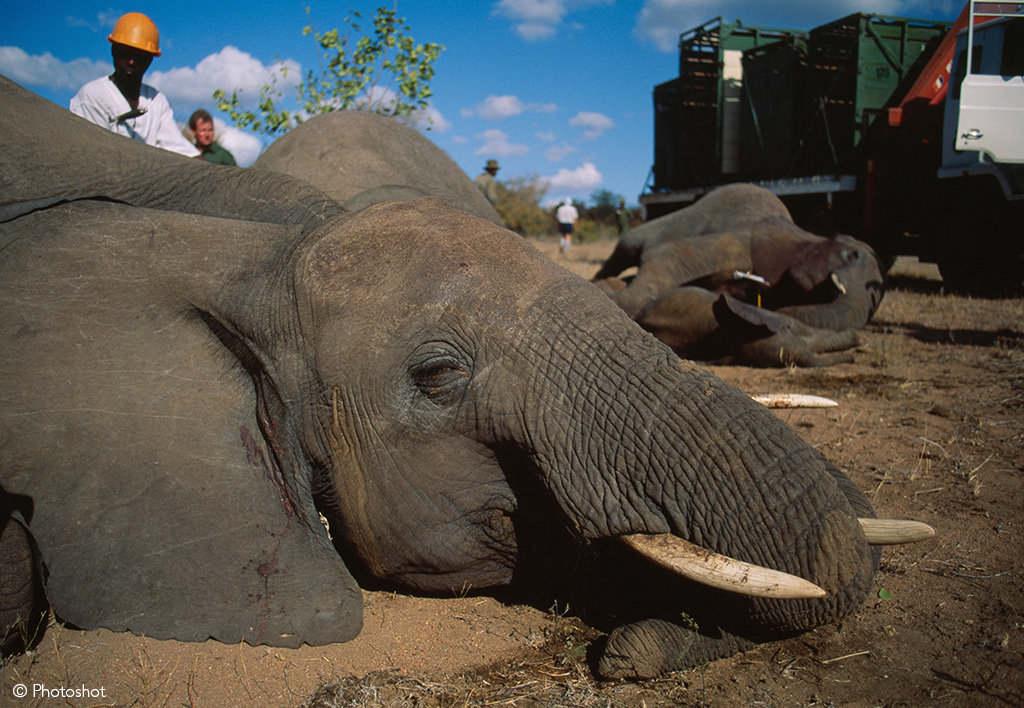
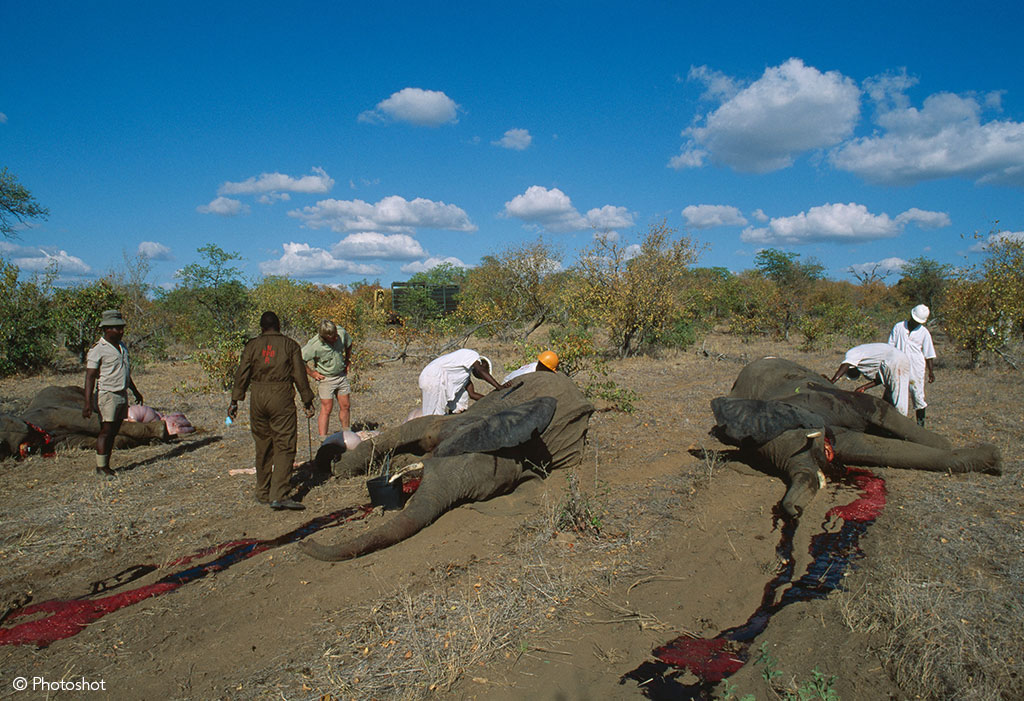
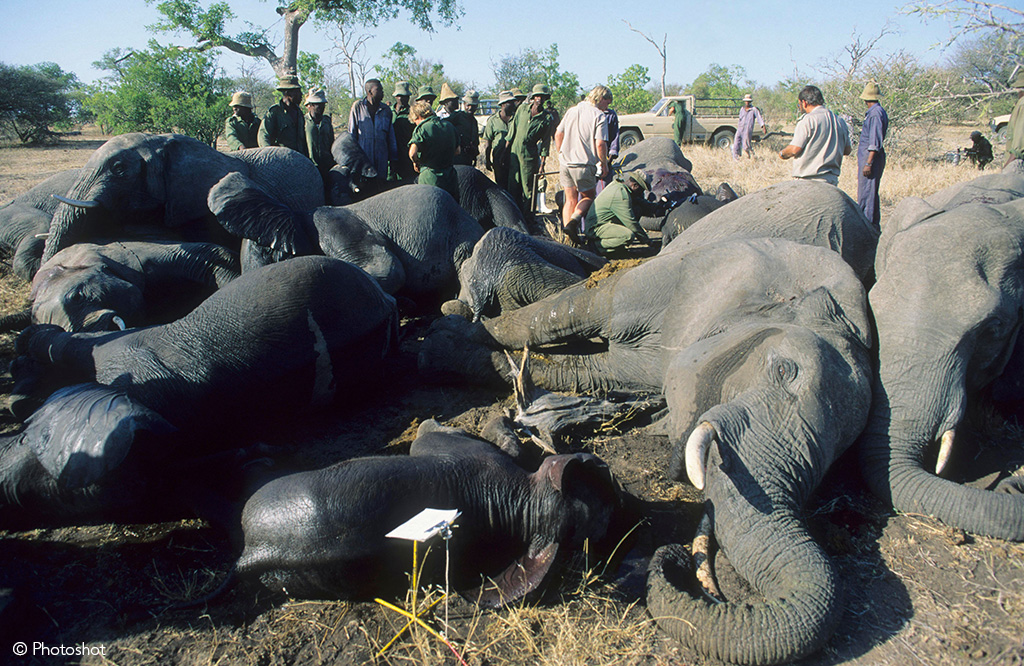
Elephant culling is not a new idea in South Africa. Between 1967 and 1994, Kruger National Park culled 14,629 elephants in a systematic effort to keep the population below 7,500 animals. The programme was suspended in 1994, due to growing international opposition and contested ecological justifications.
The scientific consensus on the Kruger culling period is illuminating. Dr Selier describes the outcome candidly: “If we look at the culling programme for elephants, the purpose of culling was the assumption that if we bring down the numbers, or manage the numbers, trees won’t die. That didn’t work out that way. Trees were still dying at the same rate as they were dying before, bringing elephant numbers down.” The reason, as Ferreira’s work later clarified, is that culling addresses density but not behaviour, and elephant impacts in many localities are driven primarily by the latter.
This is consistent with Owen-Smith et al.’s landmark 2006 paper in the South African Journal of Science, which found that the spatial distribution of elephants, governed by access to water, matters more than absolute population size.
Scholes and Mennell’s comprehensive 2008 scientific assessment, Elephant Management: A Scientific Assessment for South Africa, commissioned by the South African government to inform the new norms and standards, noted that culling entire family groups causes severe psychological trauma to elephants and disrupts social structure in ways that can persist across generations.: an impact documented extensively by Cynthia Moss, Joyce Poole, and their colleagues at the Amboseli Elephant Research Project.
Research by Rob Slotow and colleagues on the consequences of orphaned juvenile elephants, the young bulls that survived Kruger’s culling programme and were translocated elsewhere, documented the severe behavioural pathologies that resulted. These included extraordinarily high rates of aggression and the killing of white rhinos at Pilanesberg. The subsequent introduction of older bull elephants resolved the behavioural crisis.
Landscapes of fear
Both Ferreira and Selier refer to the strategy of creating “landscapes of fear”. This amounts to creating so much associated elephant stress about an area that they avoid it.
For example, it is well known that elephants, if they can, often avoid areas where trophy hunting is regularly practised. Chase notes that elephants often move out of known hunting areas, such as those in the APNR, and gather in other areas, thereby worsening tree destruction by concentrating them in smaller areas.
And yet both Ferreira and Selier acknowledge that, under South Africa’s National Environmental Management: Biodiversity Act (Nemba) framework, harassing elephants is illegal.
By contrast, culling is not illegal. Ferreira notes that an effective way to achieve a ‘landscape of fear’ without breaking the law is to engage in selective culling, although this remains a controversial and highly debated management approach. And yet, he points out, shooting a small number of elephants will not achieve the desired effect of saving the ice cream trees, because other elephants will step in to exploit them.
Additionally, creating fear zones around iconic tree locations would be a bizarre, ill-conceived strategy, as these are also prime tourist zones where tourists want to see elephants. This juxtaposition of cause and effect and law versus ethics bedevils the culling debate.
APNR elephant culling – the battle for transparency
A few months ago, during a chance encounter, APNR chairperson Richard Napier told me that elephant culling could form part of the amended elephant management plan once approved. He strongly defended this position during our discussion. This wasn’t the first warning sign: weeks earlier, an angry APNR landowner had messaged me with equal certainty that culling would begin, and another landowner told me that reserve management was under significant pressure from certain landowners to cull.
At a subsequent meeting, called by Napier to discuss elephant management, the discussion centred on elephant culling as one of the management options under consideration, as well as pressure from some landowners. Despite inviting us to discuss the matter, he did not provide the scientific evidence or analysis underpinning his position. He was openly critical of our request for transparency and of Africa Geographic’s commitment to science-based conservation reporting.
At the same meeting, Nowak dismissed ongoing elephant collar research, saying, “Why would we need elephant collars? If we want to know where an elephant is, we will ask our rangers.” This view contrasts with the emphasis placed on telemetry and long-term monitoring as management tools, and with the views of prominent elephant scientists, discussed in this article. Nowak is a noted critic of tourism as a conservation tool and a proponent of trophy hunting, despite repeated controversial trophy-hunting incidents occurring at Balule.
I got the impression during the meeting that both men were uncomfortable with the word ‘culling’ and were looking for alternative terminology. An average of over 200 elephants are killed each year in the Kruger National Park, a reality that goes by without much public attention. SANParks has historically provided limited public detail about the reasons for management-related elephant deaths, although a breakdown published by Howard Hendricks and Sam Ferreira has now clarified that 207 of 951 elephant deaths over six years resulted from conservation management interventions*. These may include elephants that were deemed to be so-called ‘problem animals’ due to breaking infrastructure or threatening human lives inside or outside the park. Perhaps the APNR management plan is to define elephants that are known to push over large trees near lodges as ‘problem animals’ and to shoot them in order to create fear zones in those areas. Of course, I am speculating here based on my discussions with APNR officials, but this strategy would enable them to cull elephants under another name, and perhaps avoid provoking the same public reaction as if they did so by historical methods.
A subsequent informal conversation with another reserve official offered a softer picture: he downplayed the likelihood of culling. He noted that any such decision would require a public consultation process. That was somewhat reassuring, but given concerns that larger landowners could have disproportionate influence in such a process, it did little to ease my concern that personal ideology was overriding science. Smaller landowners and lodge owners we contacted independently were unaware of any plans for culling.
Given the contradictory messaging, secrecy, and pressures at play, I felt it necessary to bring this issue into the public spotlight.
Supporters of intervention argue that the issue is not simply elephant numbers but the loss of mature tree cohorts, reduced regeneration of species such as marula, and potential impacts on species that depend on woodland habitats. They contend that reserve managers have a responsibility to intervene when biodiversity objectives are threatened. Whether culling is the appropriate intervention remains the central point of disagreement.
The alternatives: what does the science support?
Several elephant management options exist, each with advantages and limitations. The strongest scientific support is for reducing artificial water provisioning, which research in Kruger suggests can alter elephant movement patterns, reduce localised impacts on vegetation and slow population growth. For the APNR, where extensive artificial water infrastructure remains in place, a phased reduction of perennial waterholes represents the most scientifically defensible first intervention.
Other tools, including removing fences to re-establish elephant migratory routes, immunocontraception, translocation and targeted culling, may have a role in specific circumstances.
However, both Selier and Ferreira argue that management should first focus on addressing the underlying drivers of elephant concentration and habitat impacts. Neither supports a return to the systematic culling practised in Kruger before 1994, although both acknowledge that targeted culling could be considered as a measure of last resort within an approved management framework and after non-lethal alternatives have been exhausted.
The national framework: what South Africa’s law and policy require
South Africa’s Norms and Standards for the Management of Elephants in South Africa (amended by GN 18 of 2009) is the primary instrument governing elephant management, read with the Nemba.
South African law permits culling only under an approved management plan, supported by evidence that other population management options have been appropriately considered, evaluated and rejected.
Additionally, harassing elephants is unambiguously illegal under both Nemba and ancillary legislation. Specifically, it is illegal to disturb, stress, or interfere with elephants. They must be treated humanely and must not be subjected to unnecessary stress at any time, including during management activities.
Additionally, under the Animal Protection Act 71 of 1962 (which runs alongside Nemba), any person who ill-treats, overloads, frightens, tortures, or causes unnecessary suffering to any animal commits an offence.
The normalisation of killing elephants
The APNR is not alone in considering elephant culling.
Don Pinnock reports in Daily Maverick that bureaucratic delays, the suspicious influence of the hunting lobby, and poor management of the Madikwe Game Reserve and KwaZulu-Natal provincial reserves have led to a likely scenario of elephant culling to paper over the cracks in these small fenced reserves.
Conclusion: the hardest conservation is the most honest
The APNR’s elephant dilemma is not, in the final analysis, a simple question of too many elephants.
It is a question of what happens when you attract a large, intelligent, socially complex, ecologically powerful megaherbivore into a human-controlled system and then discover, decades later, that the landscape is changing in ways you did not intend.
Put another way, actively attracting elephants to man-made waterholes for gin-and-tonic moments and then shooting them is, in my view, a bridge too far, as a short-term response to a problem shaped by decades of prior management decisions and which nature is already addressing.
Whether that relationship that nature is trying to re-establish can be restored, and in what form, is a question that the APNR’s elephant management plan must now answer. Technocratic management approaches can underplay the ethical gravity of deliberately killing highly intelligent social animals.
Science offers the tools. The choice of how to use them remains, as it always has, a human responsibility.
* Editor’s note: This paragraph was updated after publication following the release of an article by Howard Hendricks and Sam Ferreira providing a breakdown of Kruger National Park’s elephant mortalities over the preceding six years.
Further reading
- The Kruger debate: A new study explores how stakeholder opinions differ on managing elephants, from culling to contraception, in APNR, Kruger. Read more on the Kruger debate here
- New research says Kruger’s elephant numbers have been underestimated, with improved aerial surveys revealing a growing population of elephants. Read about the science of counting Kruger’s elephants
- Take a deep dive into the reserve that makes up one of Africa’s most iconic safari destinations. Read our Greater Kruger guide here
- Learn all you need to know about Greater Kruger and Kruger National Park in South Africa – and book your safari with Africa Geographic
References
Chase, M.J., et al. (2016). Continent-wide survey reveals massive decline in African savannah elephants. PeerJ, 4:e2354. https://doi.org/10.7717/peerj.2354
Cruise, A. (2026). A crisis in search of a policy: How KZN’s elephant ‘overpopulation’ is used to justify culling. Daily Maverick / Conservation Action Trust, 14 May 2026.
Cruise, A. (2026). The 951 dead elephants in the Kruger Park and a question everyone should be asking. Daily Maverick, 8 July 2026.
Delsink, A.K., van Altena, J.J., Schulman, M.L. & Bertschinger, H.J. (2023). Immunocontraception of the female African savanna elephant (Loxodonta africana) in South Africa: From pipe dream to policy. Wildlife Research, 51(1), 1–6.
Government Gazette No. 30833 (2008). Norms and Standards for the Management of Elephants in South Africa. Republic of South Africa.
KAZA Transfrontier Conservation Area (2023). KAZA Elephant Survey 2022: Fact Sheet and Joint Communiqué. Livingstone, Zambia.
Louw, A.S., MacFadyen, S., Ferreira, S. & Hui, C., 2021, ‘Elephant population responses to increased density in Kruger National Park’, Koedoe 63(1), a1660. https://doi.org/10.4102/koedoe.v63i1.1660
Mauguière, J. (2022). Artificial water provisioning and herbivore impacts in the Greater Kruger landscape. Unpublished research thesis.
Moll, E. (2026, January 14). Elephants or marula trees? A plant ecologist’s uneasy view from the Kruger Park. Daily Maverick.
Owen-Smith, N., Kerley, G.I.H., Page, B., Slotow, R. & van Aarde, R.J. (2006). A scientific perspective on the management of elephants in the Kruger National Park and elsewhere. South African Journal of Science, 102, 389–394.
Parliamentary Monitoring Group (2025). National Elephant Heritage Strategy: DFFE briefing with Deputy Minister. Meeting Report, 4 November 2025.
Poole, Joyce & Moss, Cynthia. (2008). Elephant sociality and complexity: The scientific evidence.
Scholes, R.J. & Mennell, K.G. (Eds.) (2008). Elephant Management: A Scientific Assessment for South Africa. Wits University Press.
Selier, S.A.J. (2024, Blood Origins Podcast, Episode 552). Are There Too Many Elephants in Kruger? Transcript on file.
Selier, J., Ferreira, S., Mafumu, H., Slotow, R., Muingi, A., et al. (2025). A national elephant heritage strategy for South Africa. African Journal of Wildlife Research, 55(sp2). https://doi.org/10.3957/056.055.0316
Selier, S.A.J., Henley, M., Pretorius, Y. & Garaï, M. (2016). A conservation assessment of Loxodonta africana. In The Red List of Mammals of South Africa, Swaziland and Lesotho. SANBI and EWT.
Slotow, R. & van Dyk, G. (2001). Role of delinquent young ‘orphan’ male elephants in high mortality of white rhinoceros in Pilanesberg National Park, South Africa. Koedoe, 44, 85–94.
Smith, E., Brown, L.R. & Barrett, A.S. (2024). Insights into artificial waterhole utilisation patterns by elephants and rhinos: Lessons from a South African Nature Reserve. PLOS ONE, 19(10): e0312158. https://doi.org/10.1371/journal.pone.0312158
South African National Parks (2018–2028). Kruger National Park Management Plan. SANParks, Skukuza.
Van Aarde, R.J. & Ferreira, S.M. (2024, Blood Origins Podcast, Episode 640). All About Elephants. Transcript on file.
Van Aarde, R.J., et al. (2024). Africa’s savannah elephants: small ‘fortress’ parks aren’t the answer — they need room to roam. The Conversation, January 25, 2024.
Wessels KJ, Peel MJS, Smit IPJ, Armston JD, Li X, Lal P & Urbazaev M. 2026. Assessing the impacts of changing elephant densities on woody vegetation structure in private reserves within the Greater Kruger National Park, South Africa. Biological Conservation 317:111815. https://doi.org/10.1016/j.biocon.2026.111815
To comment on this story: Login (or sign up) to our app here - it's a troll-free safe place 🙂.