



Loss and survival in the Kgalagadi

- Citizen scientists are uncovering rare insights into individual cheetah lives in the Kalahari.
- Two young cheetahs reveal how survival depends on opportunity, persistence and luck.
- An unusual coalition acceptance highlights the social flexibility of male cheetahs.
- A vulnerable orphan’s fate underscores the risks facing dispersing juveniles.
- Long-term monitoring helps reveal behaviours and survival challenges rarely witnessed in the wild.
 Want to see cheetahs on safari? Check out this cheetah conservation safari. We also have plenty other ready-made safaris to choose from, or let us build one just for you.
In the Kalahari Desert, patience is rewarded.
After years of following cheetahs across this vast, arid landscape, I have witnessed a wide range of behaviours, yet the Kalahari always seems to reveal new stories to those willing to watch carefully and keep an open mind.
When I am in the southern Kalahari, my attention is inevitably drawn to one of the ecosystem’s most iconic predators: the cheetah (Acinonyx jubatus). I know this population intimately through my involvement in Cheetahs of the Kalahari, an independent citizen-science project focused on the cheetahs of the Kgalagadi Transfrontier Park.
The project is run by Wilmari Barnfield, Melanie Gorsler, Mark Kaptein and myself. While the project is not associated with any conservation authority, we rely on visitors to the park to share photographs and sightings, allowing us to identify individual cheetahs and maintain long-term records of the population.
I personally visit the park several times a year, collecting observations while travelling as a regular visitor. Within the project, each cheetah is identified by its unique spot pattern and recorded using identification codes, sighting histories and population data. We maintain detailed records and produce identification guides that enable visitors to recognise individual animals and contribute valuable sightings.
Most often, I focus on females, particularly those with cubs. Their movements tend to be more predictable, making them easier to follow over extended periods. But in December 2025, an unexpected story began to unfold – one centred on a young male.
A brief note on cheetah naming
Throughout this article, individual cheetahs are referred to by names. These names are used solely as a practical way to distinguish known individuals and communicate observations. Within the project, all animals are identified scientifically through unique spot patterns and recorded using formal identification codes.
Citizen science depends on collaboration, and every sighting is important. I often receive messages from visitors excited to share which cheetah they have encountered, and those reports frequently become valuable additions to the dataset. In return, I am always eager to integrate this information into the broader understanding of the population. In remote ecosystems such as the Kalahari, every pair of eyes in the field contributes to the bigger picture.
An unlikely alliance
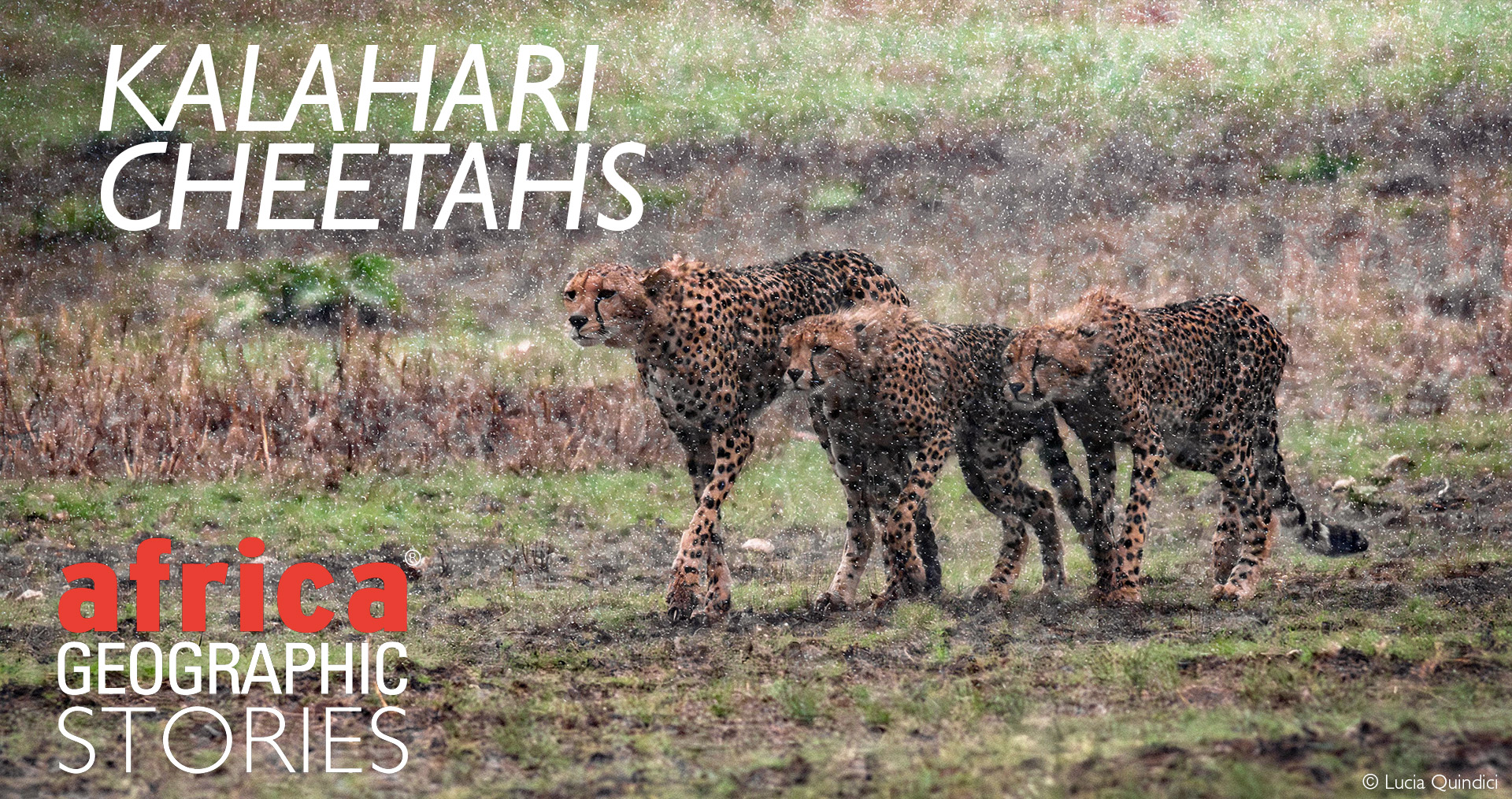
In December 2025, I began receiving reports of a young lone male cheetah following an established coalition known as the Thompson Twins. Male cheetahs often form coalitions, usually with brothers, to defend territory and improve their chances of survival. Outsiders, however, are rarely welcomed.
At first, the young male – later named Thys – kept his distance. He moved like a shadow behind them: cautious, and persistent. He was noticeably smaller than the coalition males and clearly aware of the risk he was taking.
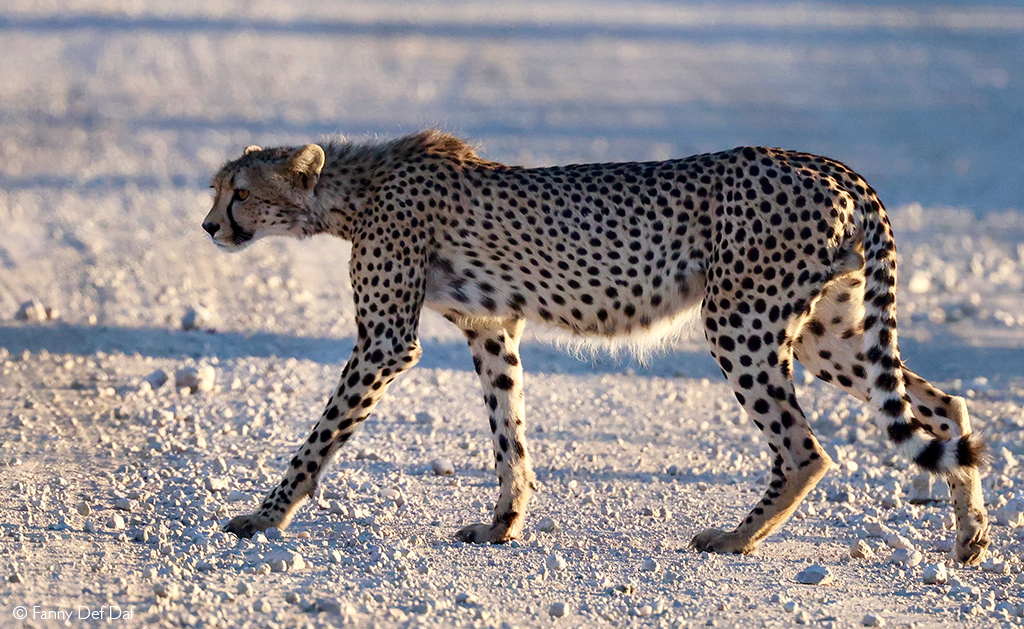
Male cheetahs can be aggressively territorial towards rivals. Encounters may escalate rapidly and can result in severe injury or death. For Thys, approaching two dominant males significantly larger than himself was a considerable gamble.
On 15 January 2026, he reduced the distance and moved in close. The reaction was immediate. The Thompson Twins confronted him with force, posturing, biting and asserting dominance. For hours, Thys remained under pressure and unable to break free from their control. But the encounter did not end there.
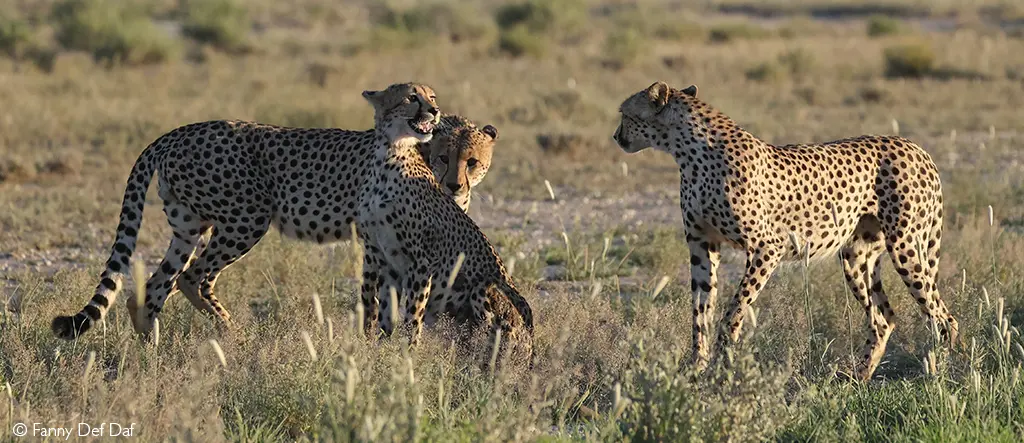
Thys displayed classic submissive behaviour often seen when a cheetah attempts to join an established coalition. Individuals in this situation frequently use soft vocalisations and make themselves appear as non-threatening as possible by lowering their bodies, flattening their ears and adopting a crouched posture. Such behaviour helps reduce the likelihood of further aggression from dominant males.
Though slightly injured, Thys survived the encounter. In the days that followed, something remarkable happened: the coalition began tolerating his presence.
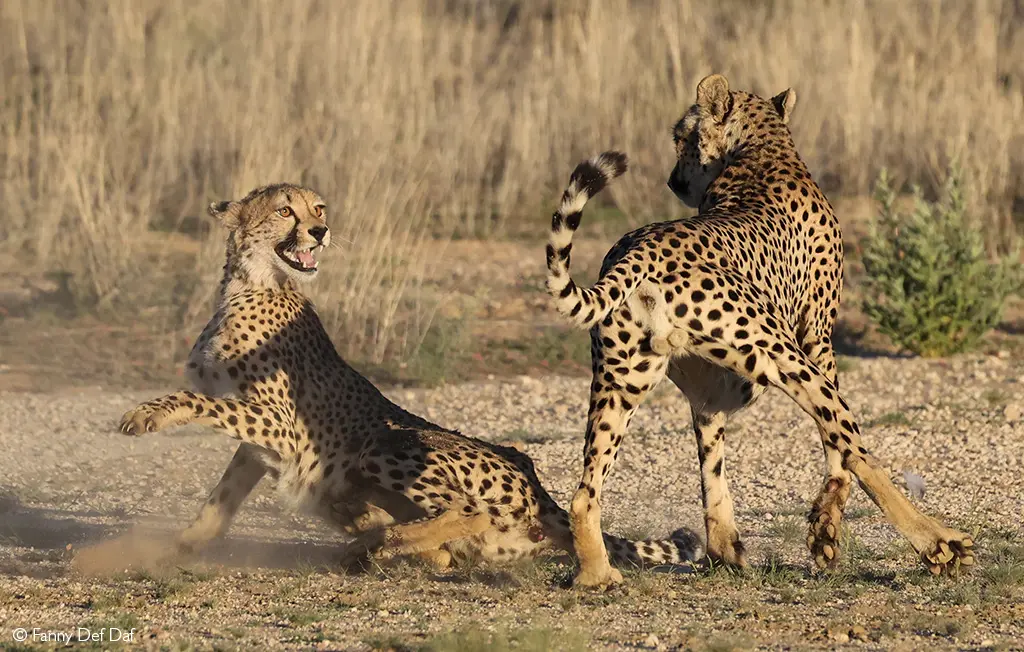
Gradually, the tension diminished. The three males were observed resting together and later feeding on the same kills. What began as hostility evolved into tolerance and, eventually, apparent acceptance.
Three months later, the trio remained together. For a young male dispersing alone, this outcome is unusual.
The period after leaving the mother is one of the most dangerous stages in a cheetah’s life, particularly for a lone male dispersing before the average dispersal age recorded in the Kalahari, which is typically between 18 and 22 months. Mortality rates are high, especially in an environment where prey availability fluctuates, and encounters with lions, leopards, and spotted hyenas pose constant risks.
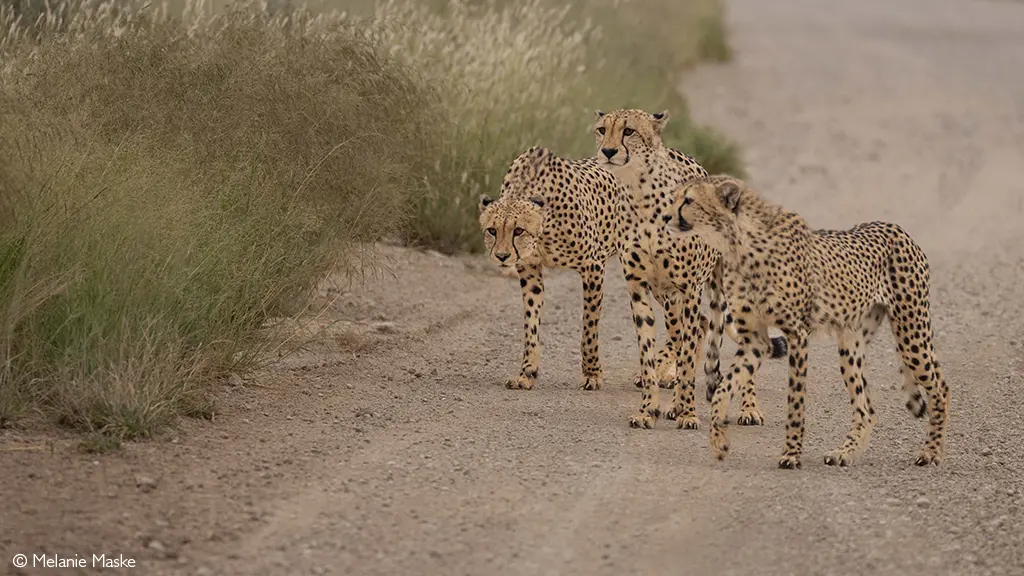
Young cheetahs are still developing their hunting skills and often struggle to secure prey consistently. Some succumb to starvation, while others are injured or killed by predators during this vulnerable phase.
According to long-term research conducted by Gus and Margie Mills and published in Kalahari Cheetahs: Adaptations to an Arid Region, approximately 31% of cubs survive to independence. Survival after dispersal and before successful territory establishment is estimated at between 40% and 60%, depending on environmental conditions. The principal causes of mortality during this period include starvation, predation and the physical demands of long-distance movement.
Thys’ persistence appears to have played an important role in his eventual acceptance by the coalition – a development that may significantly improve his chances of long-term survival.
A different fate and a struggling cheetah mother
At the same time, another story was unfolding.
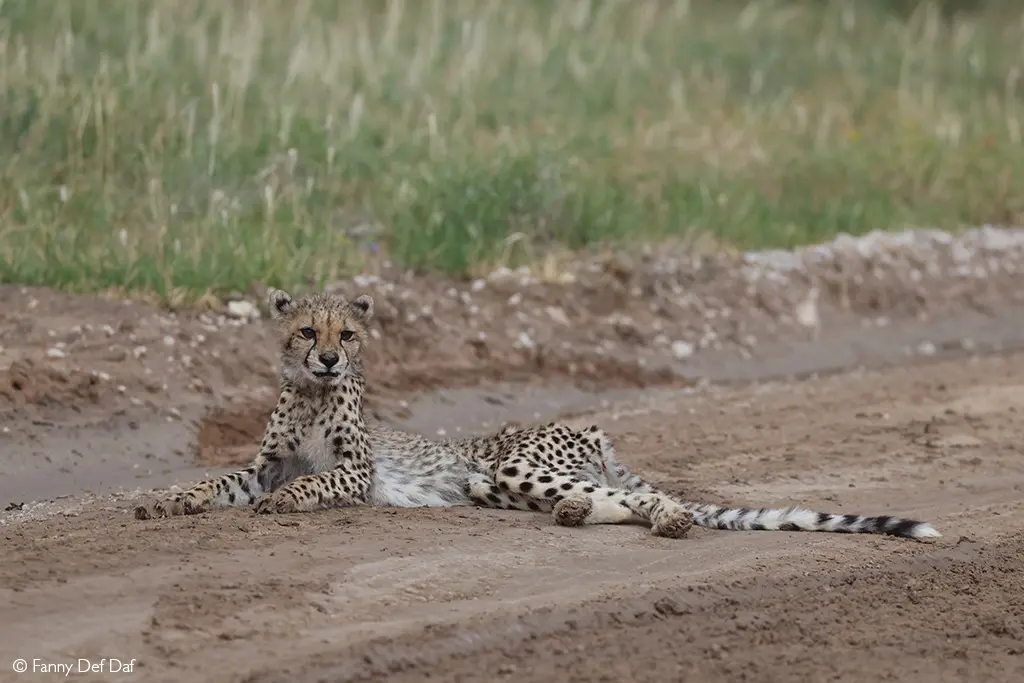
On 10 January 2026, I spotted a lone cheetah resting in the shade. At first glance, I thought it was a well-known female named Lizzie. As I approached, however, the differences became clear.
This was a young female, no more than a year old. At her estimated age, she would normally still have been accompanying her mother. Yet she was alone.
She did not call out, as separated cubs often do. Instead, she remained silent and watchful. She appeared thin, though not yet emaciated. When she finally moved, something felt unusual.
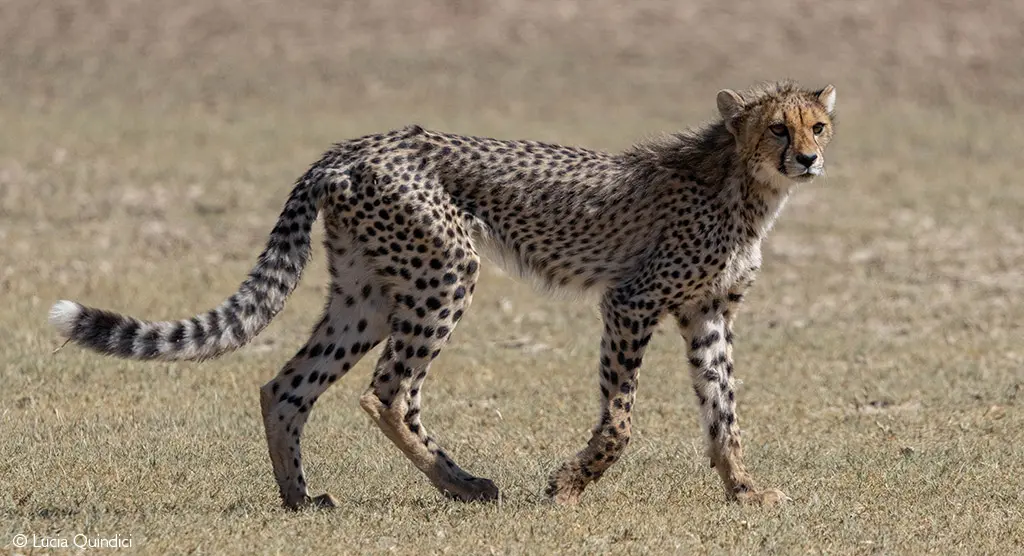
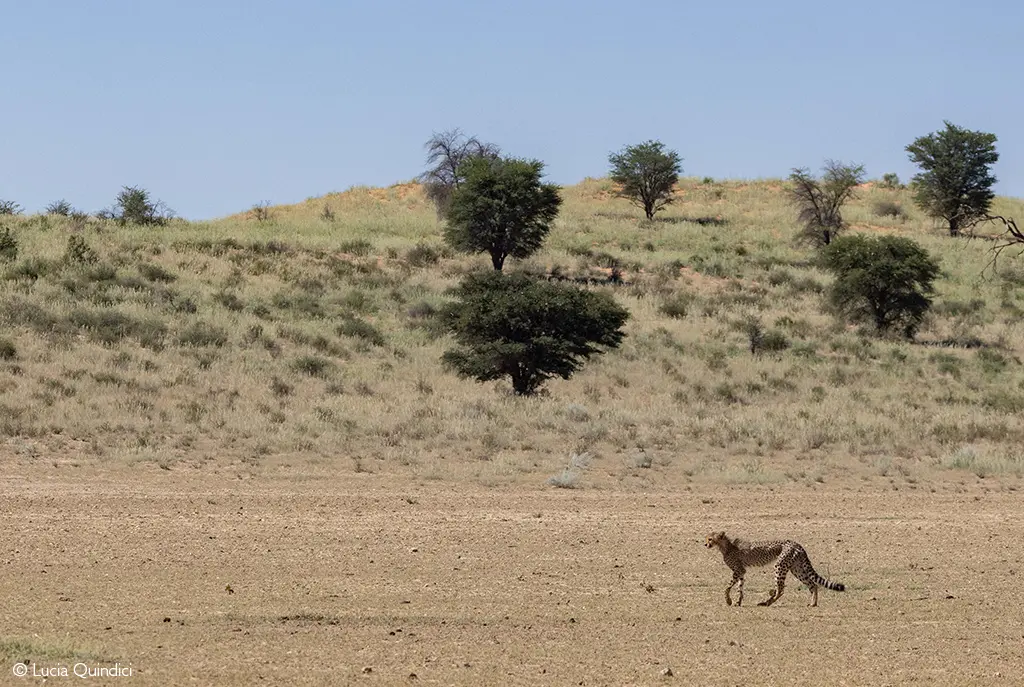
Cheetahs are typically purposeful in their movements. Once they choose a direction, they tend to commit to it unless something intervenes. This young female did the opposite. She hesitated repeatedly, changed direction and appeared uncertain of where to go. Then she disappeared into the dunes.
I searched for her over the following days without success. In a landscape as unforgiving as the Kalahari, uncertainty often carries serious consequences. Yet nine days later, she reappeared alive and in better condition than expected. Once again, she moved north and vanished. Meanwhile, another adult female was becoming a growing concern.
Eli, Lizzie’s sister, was raising her first litter of four cubs. Unfortunately, she had already lost one cub during the early months. In early January 2026, she had been successfully hunting blue wildebeest calves with increasing confidence. For a young mother, it was a promising start. However, targeting blue wildebeest calves carries considerable risk. Adult wildebeest often defend their young aggressively, and I have received numerous reports and photographs showing cheetahs being charged and attacked during these encounters. Their horns can inflict severe injuries, sometimes fatally.
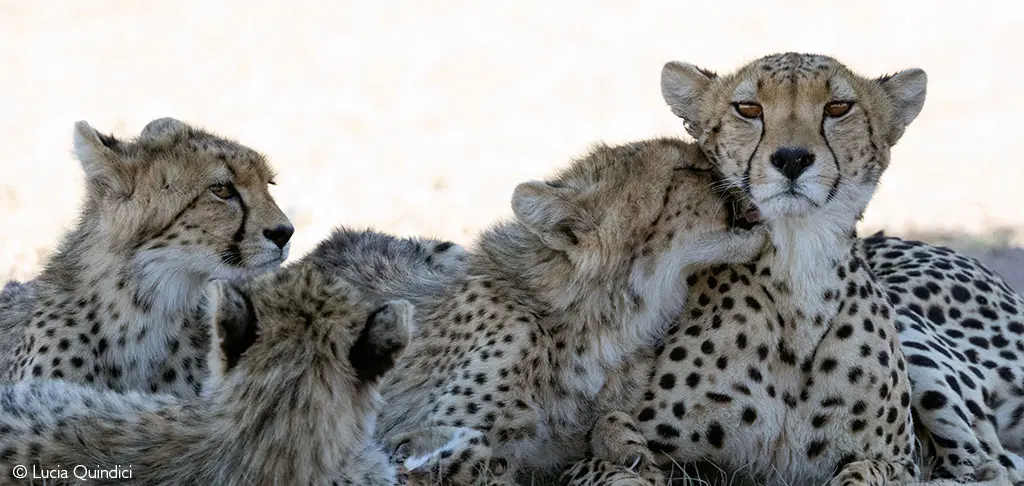
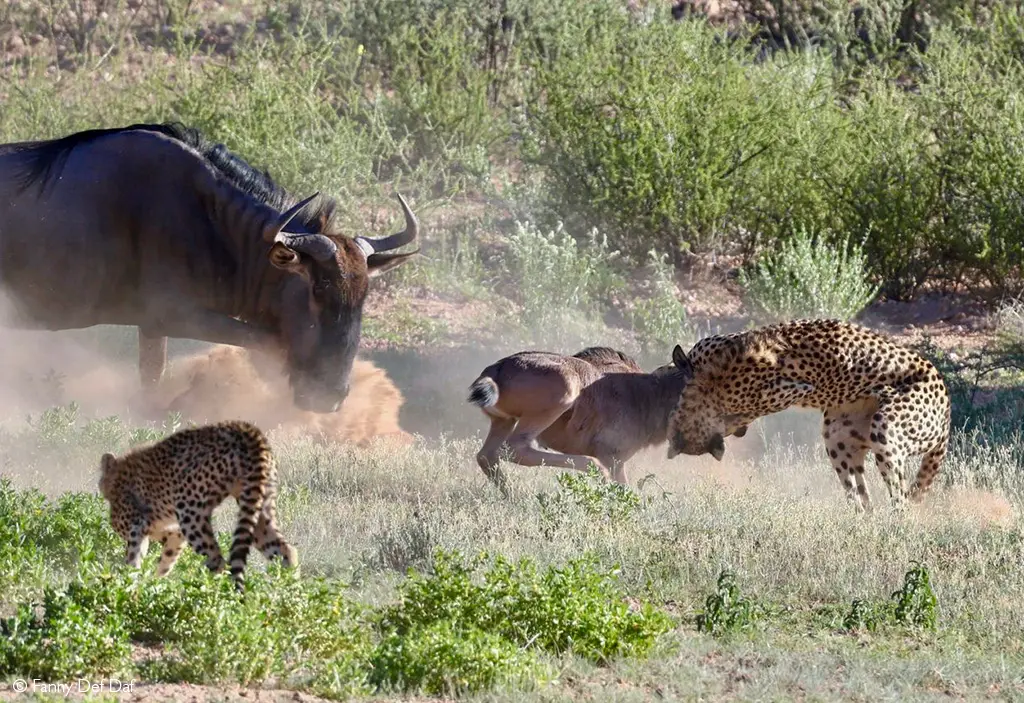
For a female raising cubs, every hunt requires balancing the need to feed herself and her offspring against the danger posed by defensive prey.
By early February 2026, Eli’s condition had deteriorated significantly. She was visibly emaciated. Her hunting behaviour had also changed. Rather than targeting her typical prey, she had begun killing black-backed jackals and Cape foxes – unusual behaviour for such a highly specialised predator. This shift may indicate increased stress, declining condition or difficulty securing preferred prey.
Her cubs also appeared weakened and bore multiple injuries. Despite repeated kills, the condition of the family did not seem to improve.
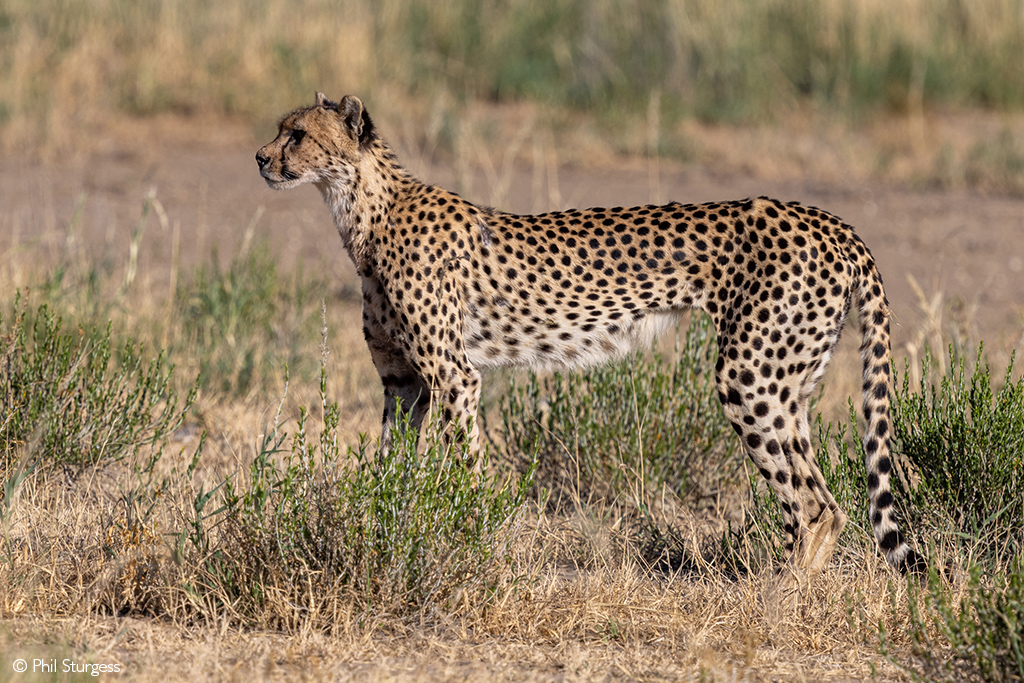
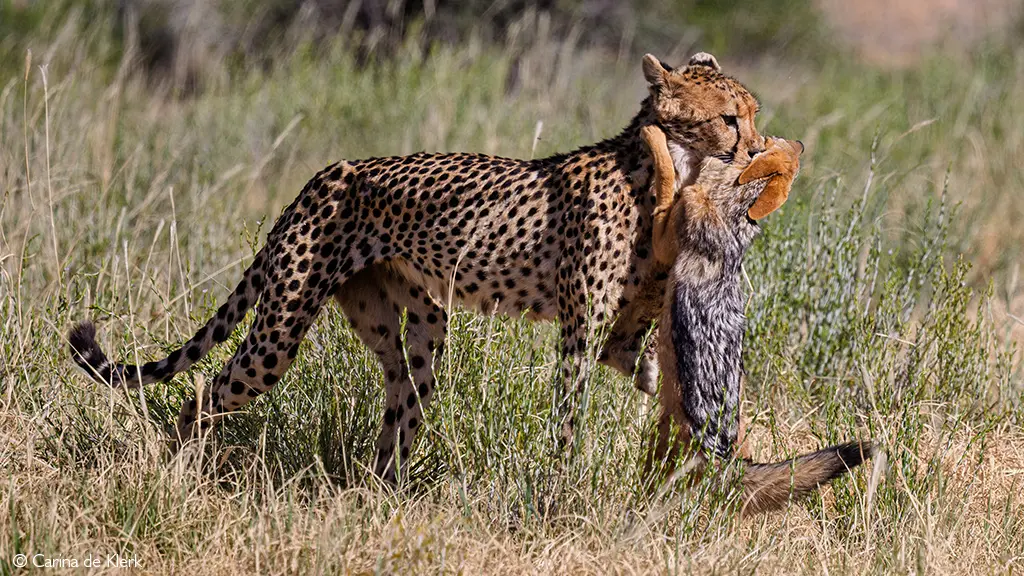
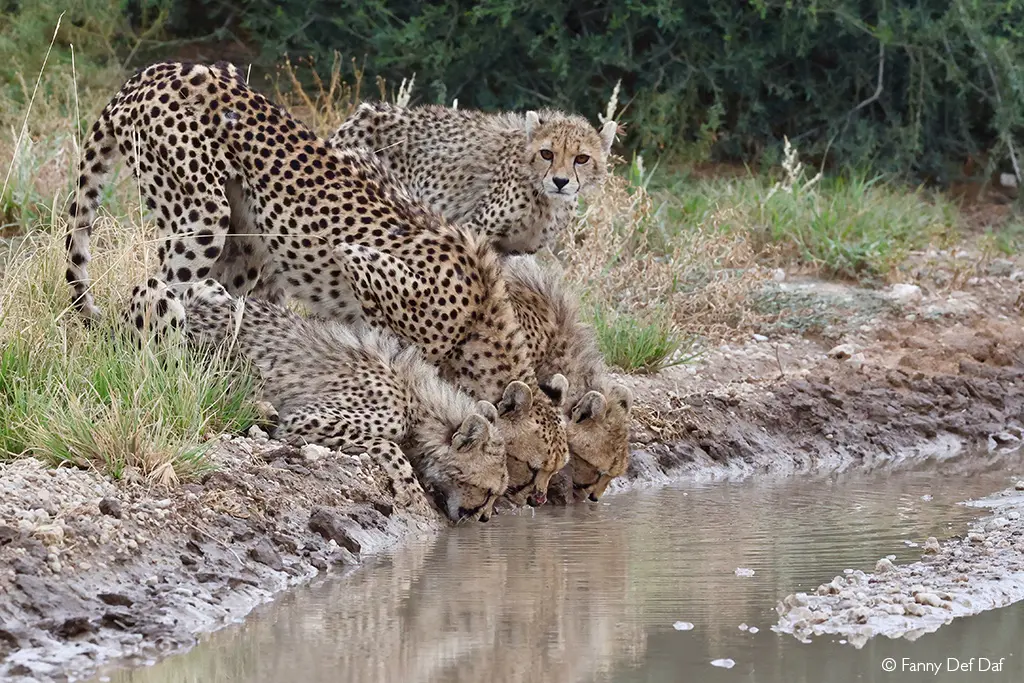
On 16 February 2026, I received a report of Eli and her cubs. While examining the photographs, I noticed that one of the young cheetahs appeared slightly larger than the others. After comparing spot patterns, I confirmed that it was not one of Eli’s cubs. It turns out the young female I had encountered earlier had joined Eli’s family group.
By this stage, Eli appeared to be accompanied by only two of her original four cubs, indicating that another cub had likely been lost. Eli seemed willing to tolerate the orphaned female in close proximity – behaviour that is unusual for a female cheetah, particularly a relatively inexperienced young mother.
Unfortunately, neither Eli, her cubs nor the orphaned female appeared to be in good condition.
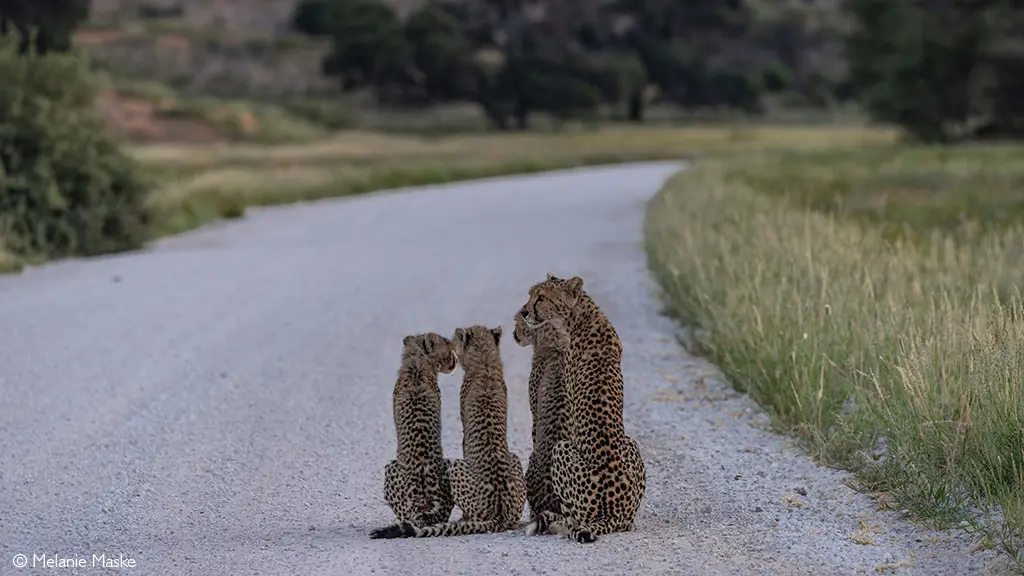
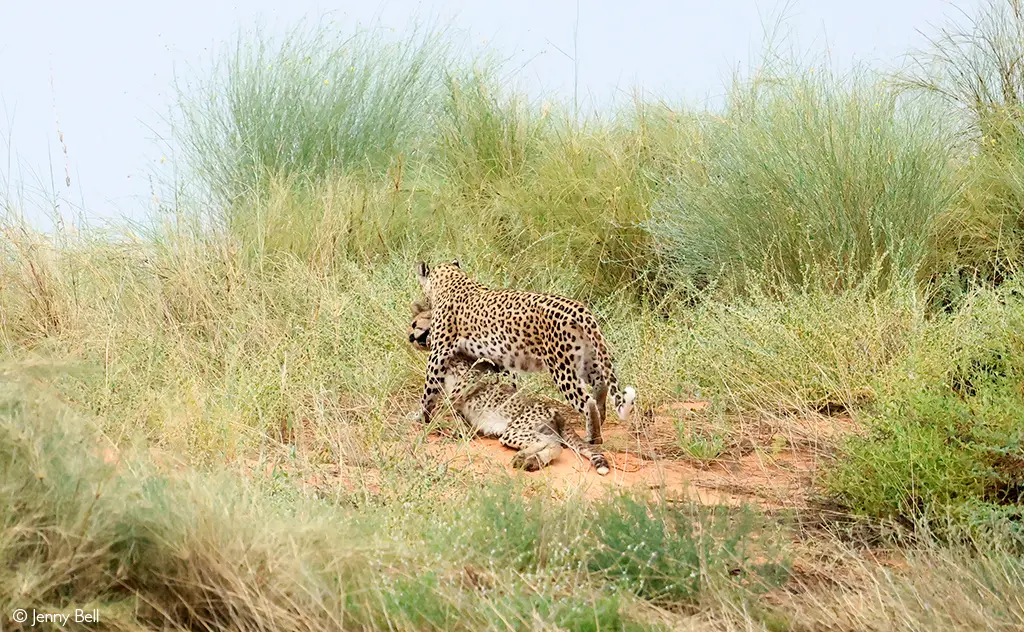
On 22 February 2026, the situation reached a critical point. That morning, Eli was seen with her cubs and the young female. When she eventually moved off, only her cubs followed. The orphaned female remained behind, calling persistently and appearing too weak to keep up. Not long after, reports emerged of a female leopard killing a cheetah in the area. The timing raised immediate questions, but the identity of the victim remained uncertain.
Careful examination of photographs and spot-pattern analysis eventually provided the answer. The cheetah killed by the leopard was the orphaned young female.
It is a tragic outcome. Already separated from her mother and forced to navigate independence prematurely, the young female had briefly found companionship alongside another female with cubs of a similar age. Eli’s apparent tolerance of her presence represented an unusual and fascinating behavioural observation. Whether that relationship might have influenced the young female’s future can never be known. Circumstances ultimately took a different course, and her brief, uncertain journey came to an end.
Two cheetah stories, one landscape
These two stories unfolded simultaneously within the same harsh environment.
One tells of a young male who improved his chances of survival through persistence and acceptance into an established coalition. The other highlights the vulnerability of a solitary juvenile attempting to navigate life without maternal guidance. Such outcomes are not unusual in the Kalahari. Life here is shaped by drought, competition, predation and opportunity. For cheetahs, survival is never guaranteed. Yet every sighting contributes to a broader understanding of this remarkable population. Through the observations of visitors, photographers and citizen scientists, individual lives can be followed across years, revealing stories that might otherwise remain hidden among the dunes.
Further reading
To learn more about cheetah behaviour, read here.
A cheetah mother has been observed simultaneously raising two cheetah cubs of different age classes – behaviour never witnessed in the wild. Read our last update from the Cheetahs of the Kalahari Project here.
 About Lucia Quindici
Lucia Quindici is a field guide, naturalist and co-founder of the independent citizen-science project Cheetahs of the Kalahari. Working alongside Wilmari Barnfield, Melanie Gorsler and Mark Kaptein, she helps document and monitor the cheetahs of the Kgalagadi Transfrontier Park using photographic identification and visitor-contributed sightings.
Citizen scientists contribute important data to the Cheetahs of the Kalahari Project. If you have been to the Kgalagadi Transfrontier Park in the last ten years and have photographed cheetah there, share your pics and info with the Cheetahs of the Kalahari Project (cheetahsofkgalagadi@gmail.com). Include the location, date and any important additional info. Read more about the project here.
To comment on this story: Login (or sign up) to our app here - it's a troll-free safe place 🙂.