


Desert camps & dry riverbeds, from Skeleton Coast to Sossusvlei

- A Namibia safari offers experiences with desert-adapted elephants and giraffes.
- Hoanib offers close wildlife encounters in remote valleys shaped by sand, rock and time.
- Damaraland rewards slower travel, where geology, plants and subtle wildlife signs tell stories.
- The Skeleton Coast delivers stark ocean scenery, cold Atlantic waters and surprisingly active marine life.
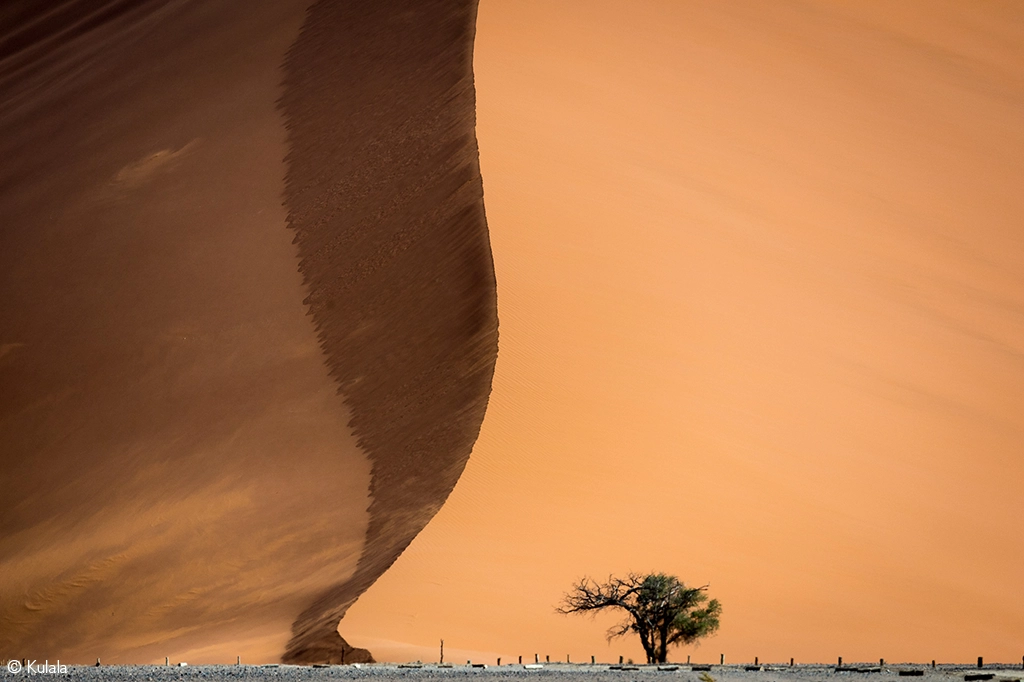
- Sossusvlei’s towering dunes and Deadvlei’s ancient trees make for one of Africa’s most striking landscapes.
- Expert guides elevate the experience, revealing details often missed in Namibia’s stark terrain.
 Want to visit Namibia on safari? We have ready-made Namibian safaris to choose from. Or, we’ll help you plan your dream safari.
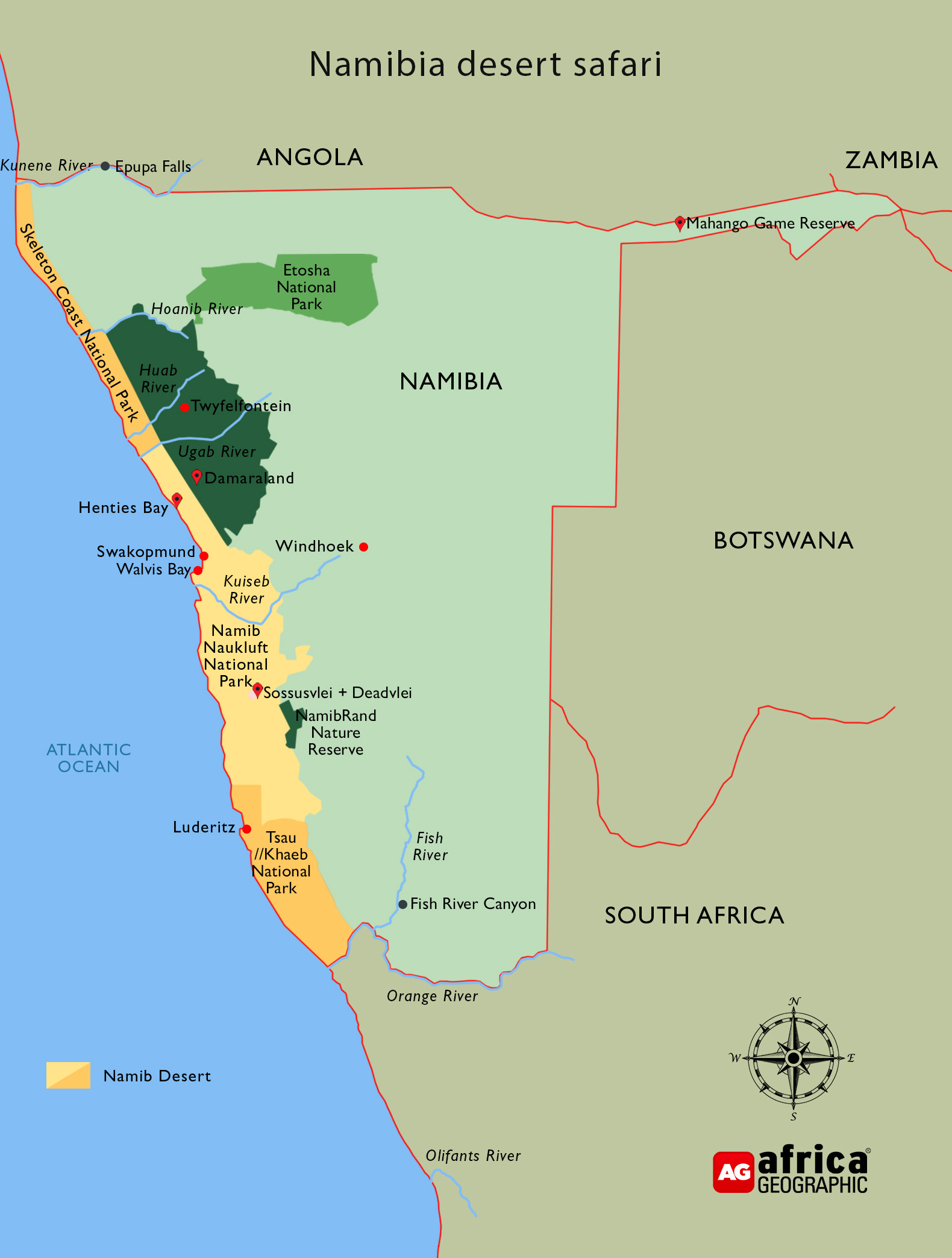
Anthony Young set out across Namibia on an Africa Geographic safari that combined long road transfers, light aircraft hops and remote desert camps. From the Skeleton Coast to Hoanib, Damaraland and Sossusvlei, Anthony’s account offers a glimpse into the magic of Namibia, from desert-adapted wildlife, to stark landscapes and desert adventures. Experience the magic as Anthony recounts his travels below:
Into the desert
Getting to Namibia is not a trivial exercise. By the time I landed in Windhoek, after a (very) long-haul flight from Australia and the usual airport logistics, I had already decided that whatever lay ahead had better be worth it.
The journey into Namibia slows you down. Long before the desert camps, the country begins to shift your sense of scale. Distances stretch, colours flatten, and the air dries. By the time I reached Windhoek, I already had the sense that this would not be a conventional safari. Windhoek turned out to be a good start. Clean, orderly, and with a noticeable German influence, it is not what many expect of an African capital. It sits in a basin of low hills, with tidy suburbs climbing the ridges. From a lookout above the city, I watched a late afternoon storm roll in, dramatic enough to remind me I was not in Australia anymore.
From there, the journey pushed north and west, through towns and into Etosha’s wide openness, before eventually reaching the coast and then the desert beyond. The transition is gradual but unmistakable. Vegetation thins. The landscape changes steadily: less vegetation, more open space, and eventually, proper desert.
Coast, wind and cold water
The drive to Henties Bay marked a shift into Namibia’s coastal desert. The terrain flattened, then lifted again into low dunes, before giving way to a stark shoreline where the Atlantic presses into a cold, grey horizon.
This stretch of coast feels remote. Fishing villages, long beaches, and a steady wind define the place. I spent a day on the beach south of town. Grey sea, grey sky, and just enough breeze to keep things comfortable.
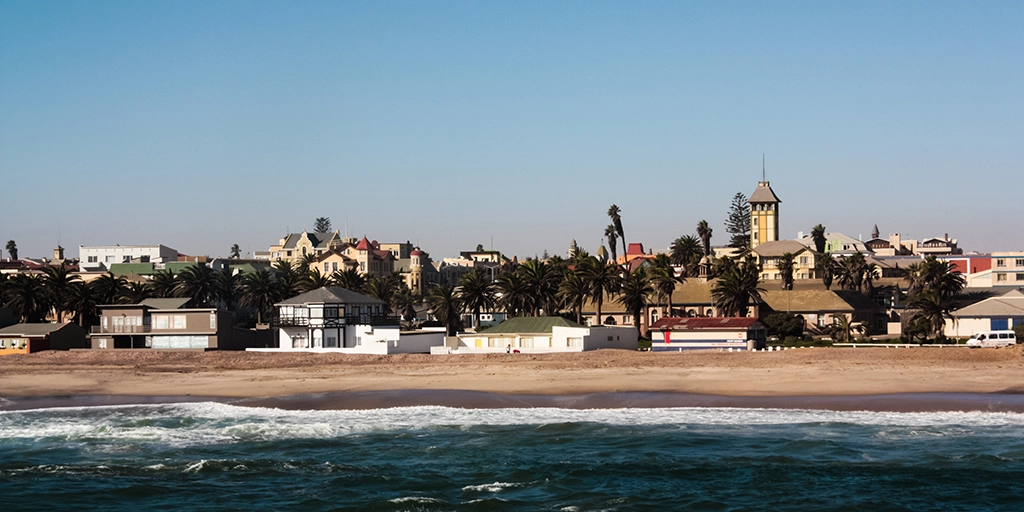
Swakopmund, further south, is a different proposition. German architecture, decent restaurants, and a slightly surreal feel given its location between ocean and desert. From here, a harbour cruise at Walvis Bay delivered the expected marine life – pelicans landing on the boat within minutes, and seals hauling themselves on deck as if they owned the place.
No whales or dolphins on this particular outing, but the seal colonies and birdlife were more than sufficient.
Into the desert by air
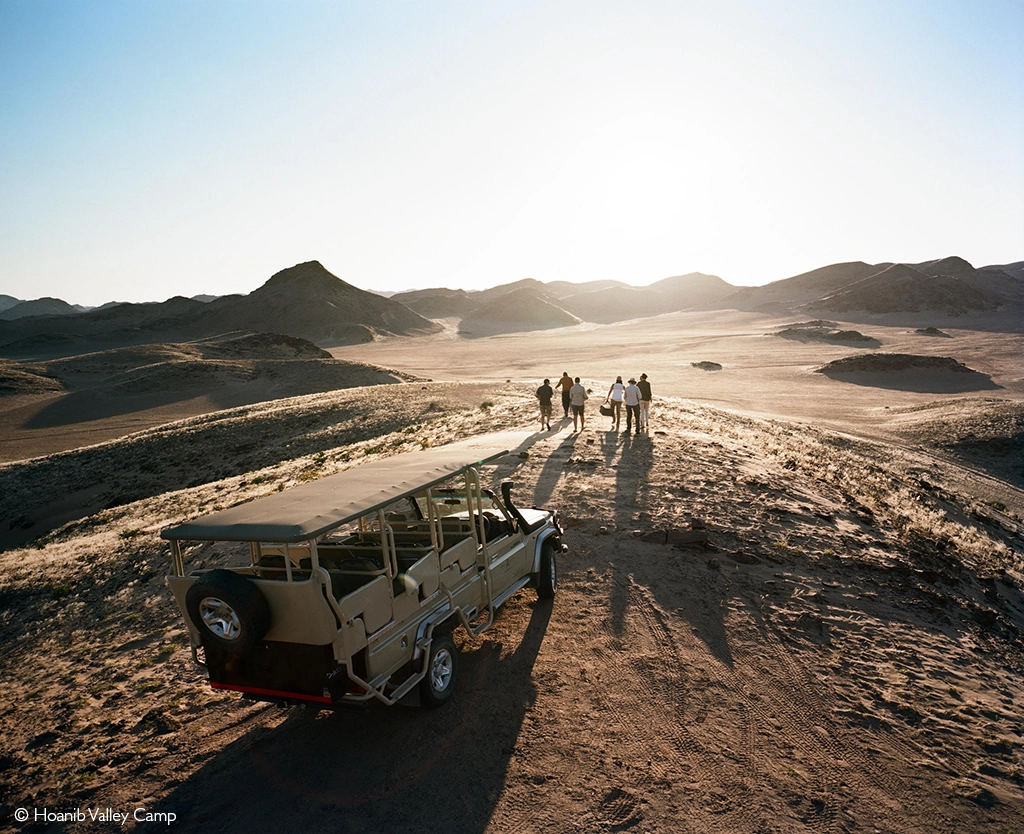
Flying inland to Hoanib in a small aircraft is quite an adventure. The planes are small, the air can be lively, and you are very aware of both. That said, the views make it worthwhile. Hoanib Valley is a remote desert destination tucked into a hidden valley on the banks of the ephemeral Hoanib River in Kaokoland, northwest Namibia.
From the air, the landscape looks like it has been broken apart and rearranged. Ridges, dry river systems, and isolated mountains, with almost no vegetation holding things together. When rain does arrive, it moves with purpose.
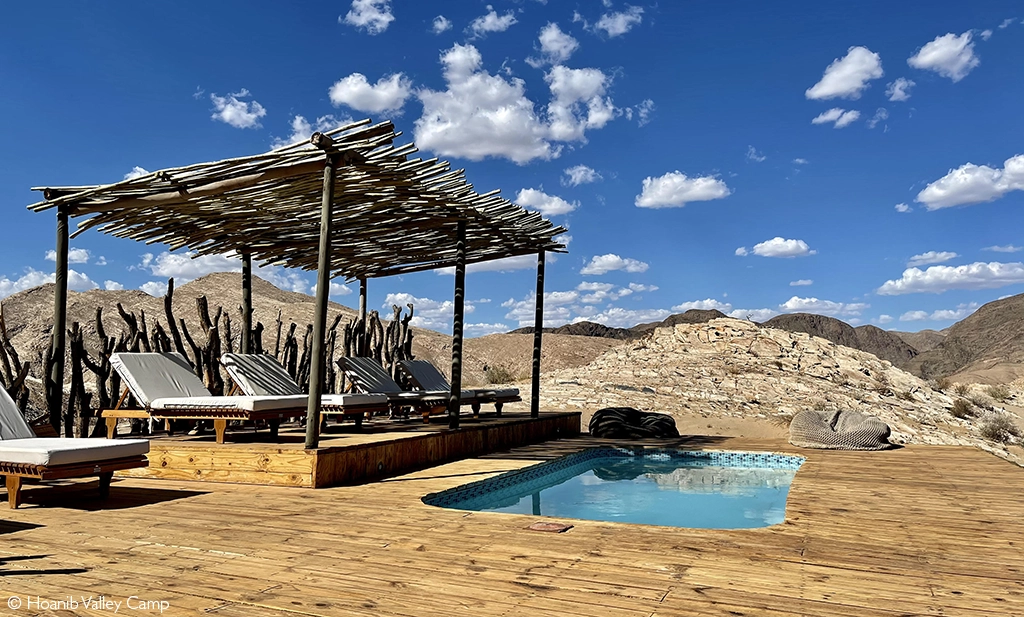
Hoanib Valley Camp sits in one of these dry river systems, in a narrowing valley between rocky ridges. The camp itself is well set up, with raised structures to handle occasional water flow and a layout that makes the most of the surroundings.
From the moment I arrived, the focus shifted to desert-adapted wildlife.
Following the riverbeds
Game viewing here follows a different rhythm from traditional savannah safaris. Wildlife concentrates along the dry riverbeds, where underground moisture allows trees and shrubs to survive.
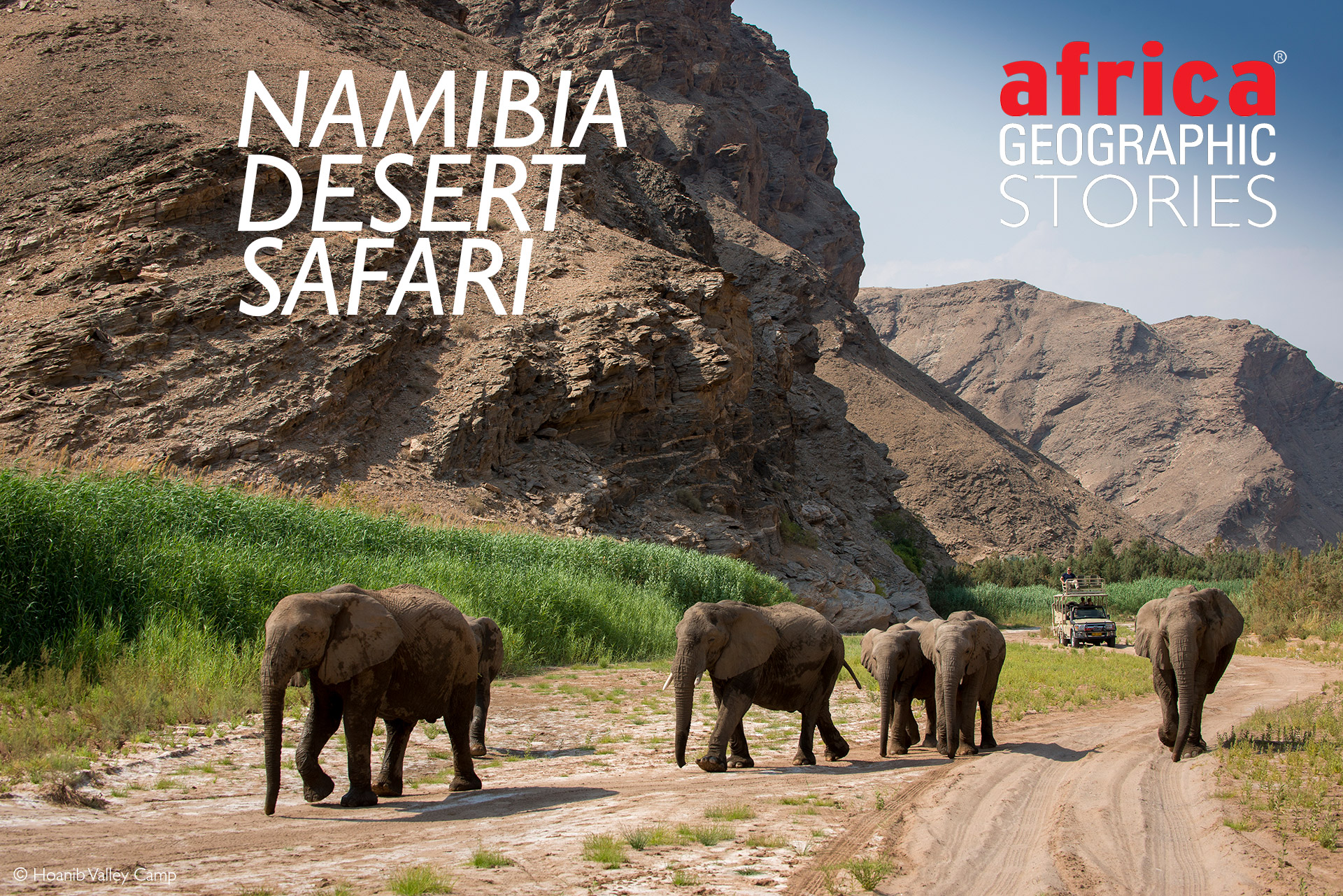
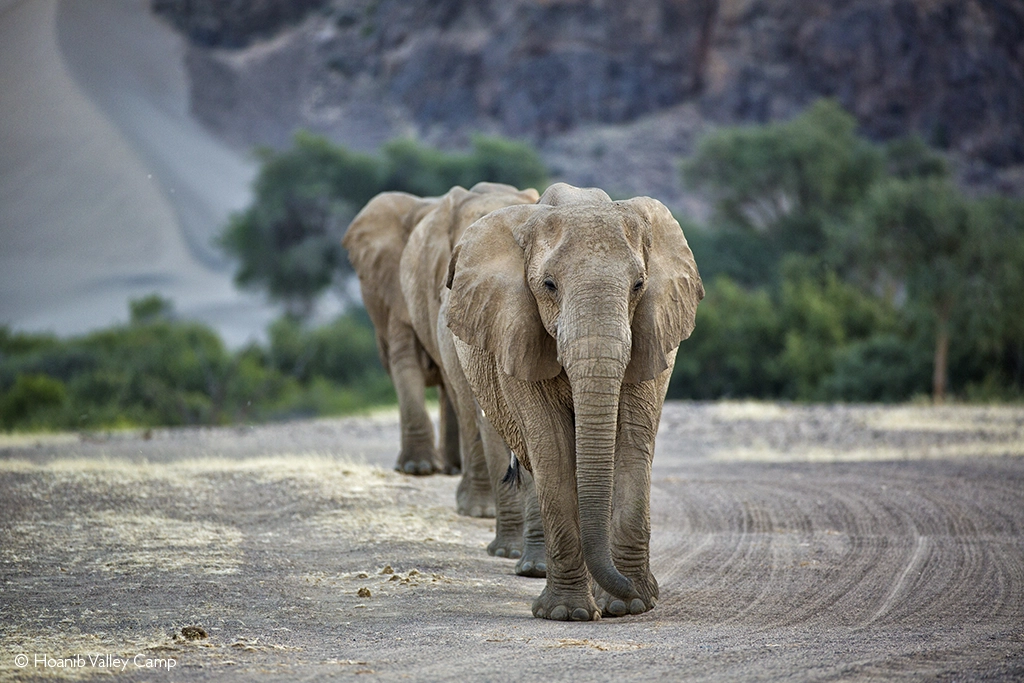
With my guide, William, we drove these sandy channels and came across springbok, giraffe, and desert-adapted elephants. The elephants are smaller than those in more fertile areas, but clearly well-suited to the environment.
We watched a herd dig into the sand to reach the damp soil beneath. Calves rolled in it, adults fed, and the whole group moved slowly along the riverbed. We were close – within twenty metres – and largely ignored.
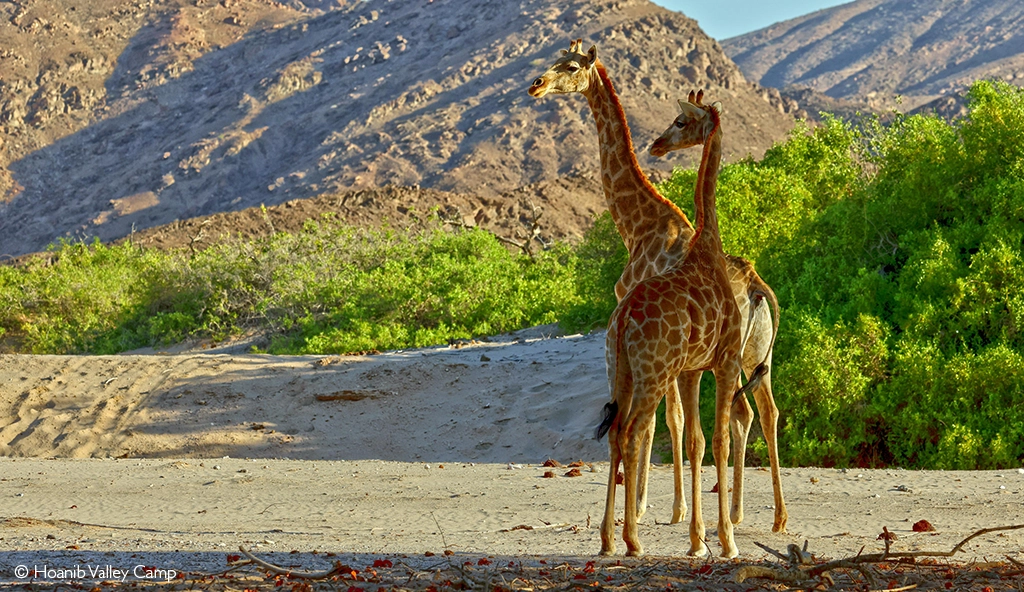
Giraffes showed similar adaptations. Slightly different posture and movement, but the same reliance on the river systems.
Around camp, the pattern continued. Gemsbok, springbok, and the occasional baboon moved through, all tied to the limited water and vegetation available.
Camp life, done properly
The camp experience at Hoanib is defined by space and quiet. Guest tents are well spaced, and the atmosphere is unhurried. Meals are taken overlooking the riverbed, and staff maintain a relaxed but attentive presence.
Guides are central to the experience. William, as a guide, knew his ground. In a landscape that initially looks empty, he was able to point out tracks, behaviour, and patterns that would otherwise go unnoticed.
Evenings are simple. Sundowners in the dunes, followed by dinner back at camp. The setting does most of the work. Wind moving over sand, fading light on the ridges, and the occasional movement of animals in the distance.
Damaraland – more rock than anything else
From Hoanib, I flew to Damaraland, a rugged, scenic region in the northwest of the country, situated between the Skeleton Coast and Etosha National Park. The shift is noticeable. Less enclosed than Hoanib, more open, with rocky hills and broad plains.
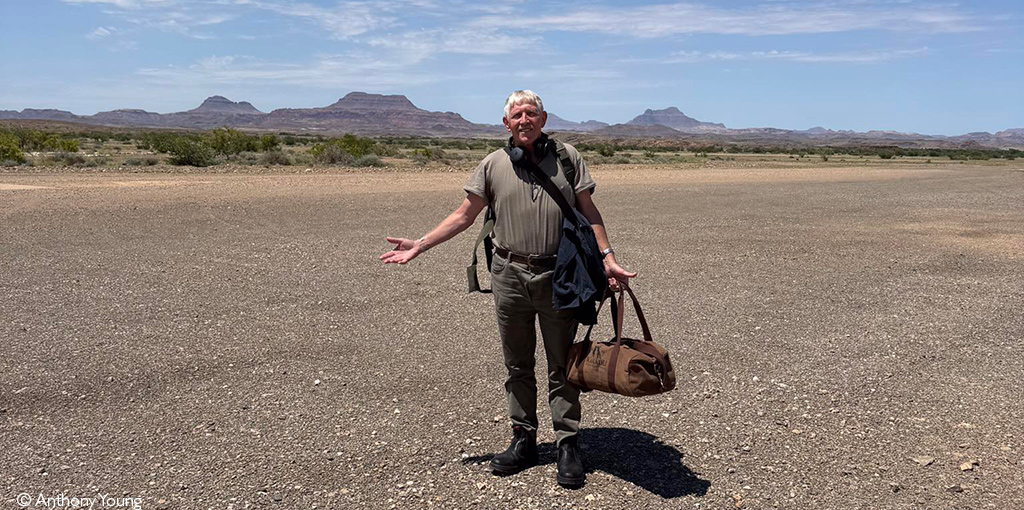
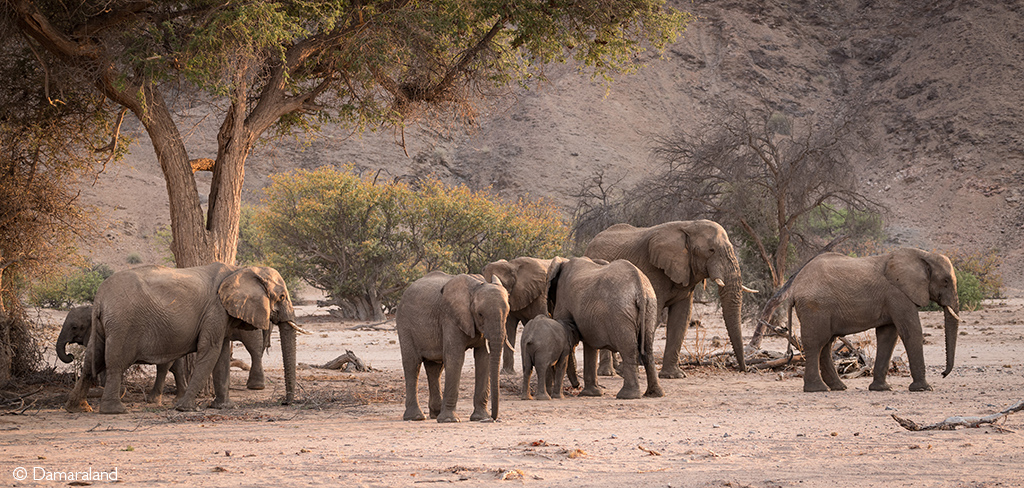
On the drive from the airstrip, we encountered a solitary bull elephant almost immediately, scratching itself against a tree and throwing sand over its back. Close enough to feel the grit when the wind picked up.
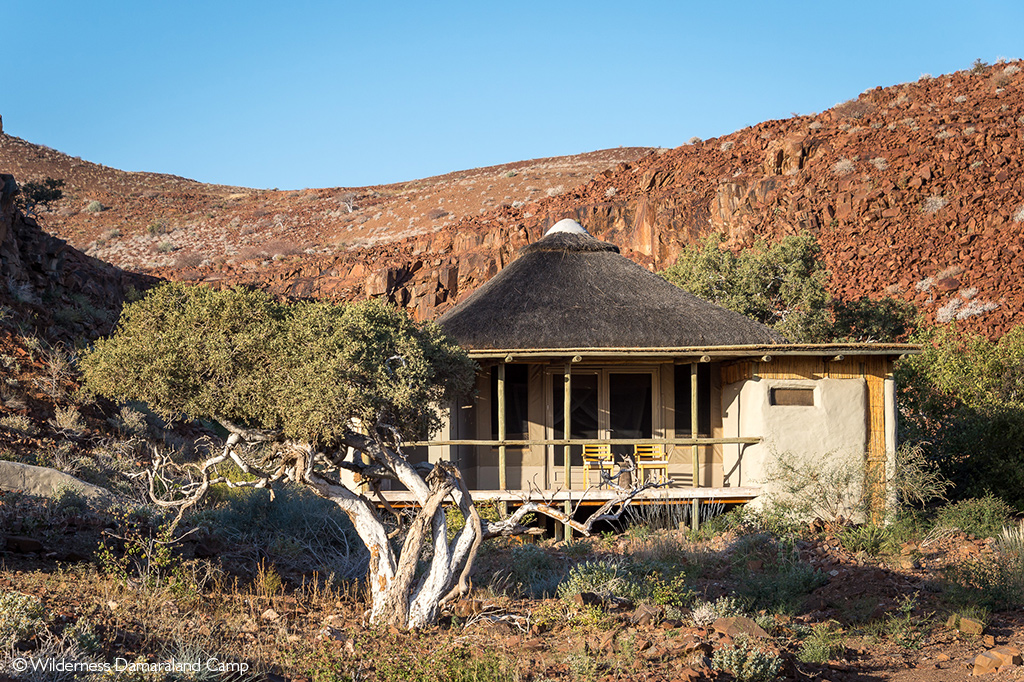
Damaraland Camp is well designed, blending into the surroundings with thatched structures and open communal areas. Here, the experience shifts slightly from pure wildlife viewing to a broader appreciation of the landscape.
Looking closer
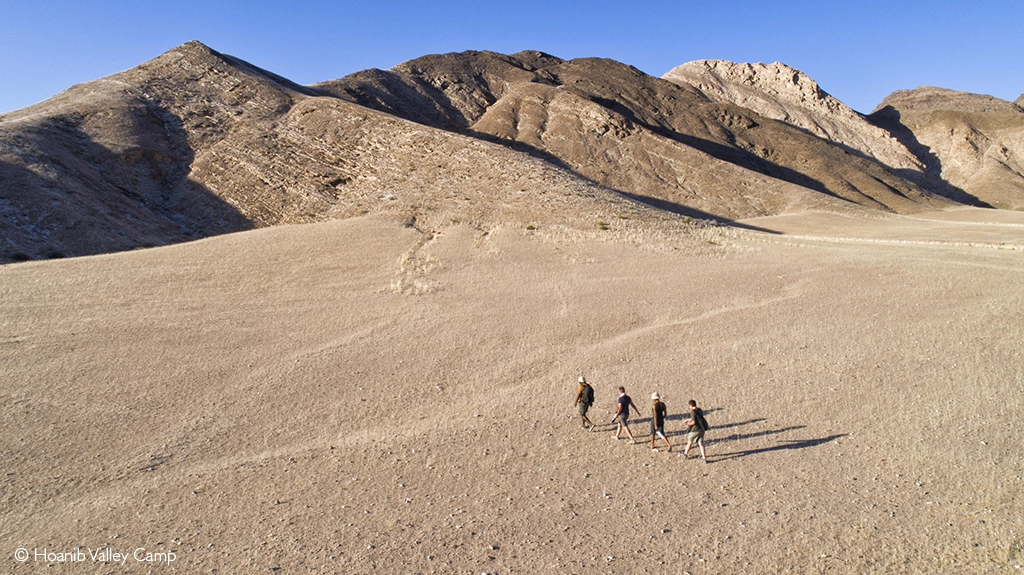
In Damaraland, I spent more time on foot. Walking with my guide, Job, revealed details that are easy to miss from a vehicle.
At first glance, the terrain appears lifeless. But closer inspection shows otherwise. Plants that seem dead carry faint signs of life. Small birds move between bushes. Tracks in the sand tell recent stories.
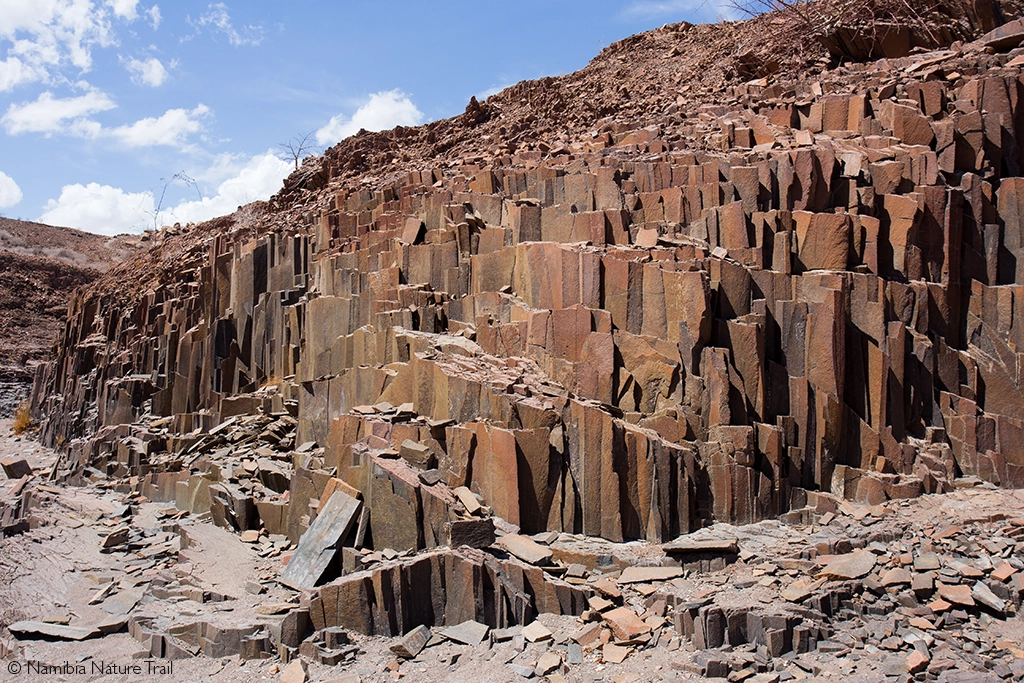
The geology is also worth noting. Iron-rich rock gives the landscape its colour, and occasional sandstone formations break up the landscape. It is not a place that reveals itself quickly, but it does eventually.
Game drives here are less about numbers and more about context. Animals are present, but you have to work for it – and when you find it, it is well worth experiencing this unique desert-adapted wildlife.
Effort where it counts
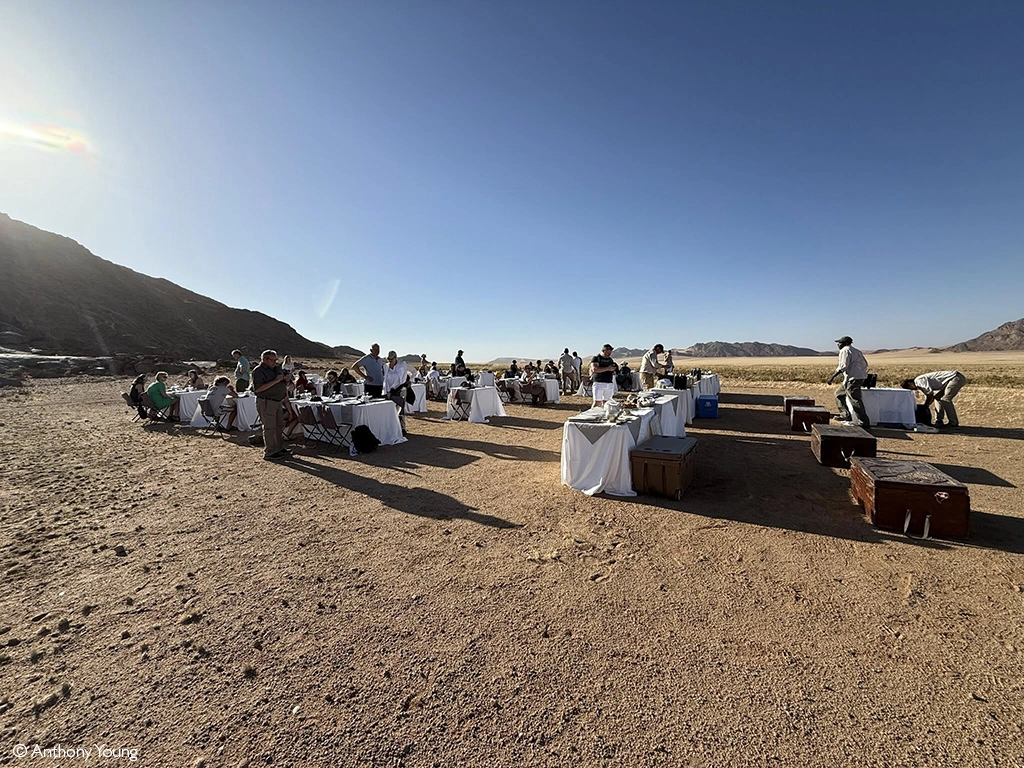
One of the standout moments in Damaraland was a bush breakfast set on a rocky hill. Arriving before sunrise, I found a full setup prepared by camp staff – tables, hot food, and coffee, all overlooking a wide valley.
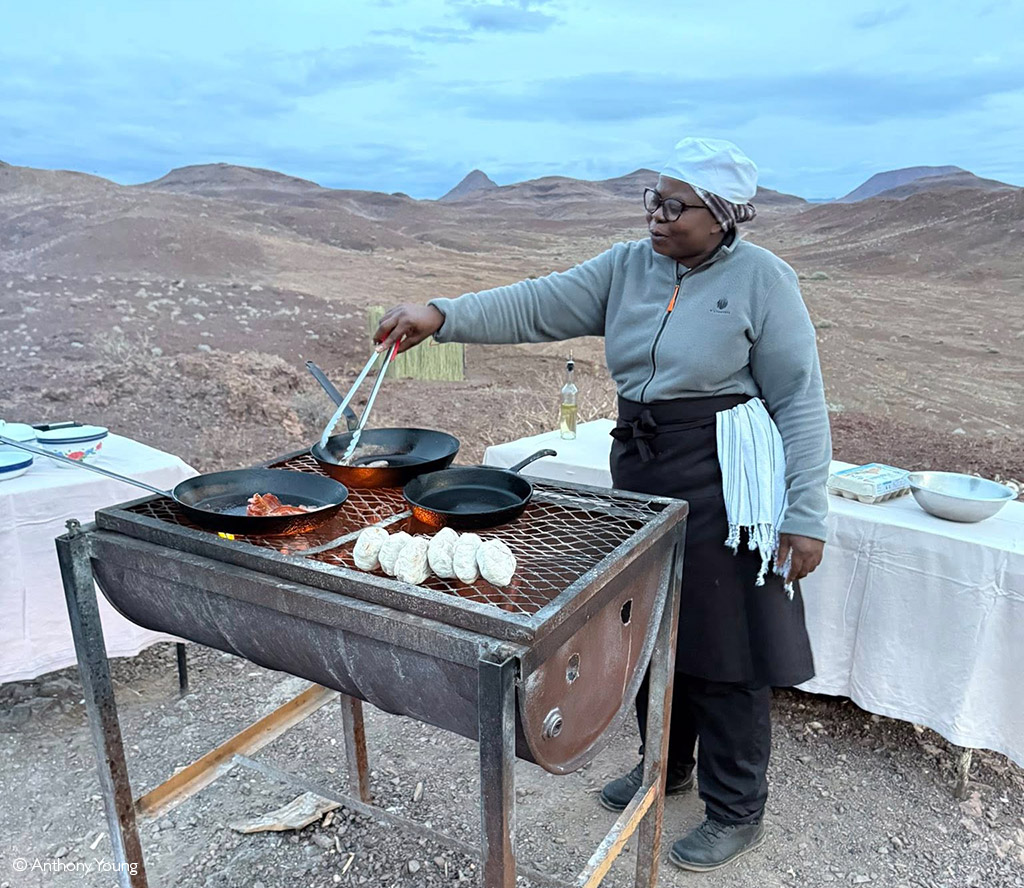
As the sun rose, the light revealed the scale of the landscape.
Evenings in the boma offered a different atmosphere. The original campsite, now used for outdoor dining, creates a communal setting around a fire. Staff shared stories and sang traditional songs, adding a cultural layer to the experience.
Sossusvlei – scale and sand
The final stage of the journey took me south to the Namib Desert and Little Kulala, in the Sossusvlei region, within Namib-Naukluft National Park.
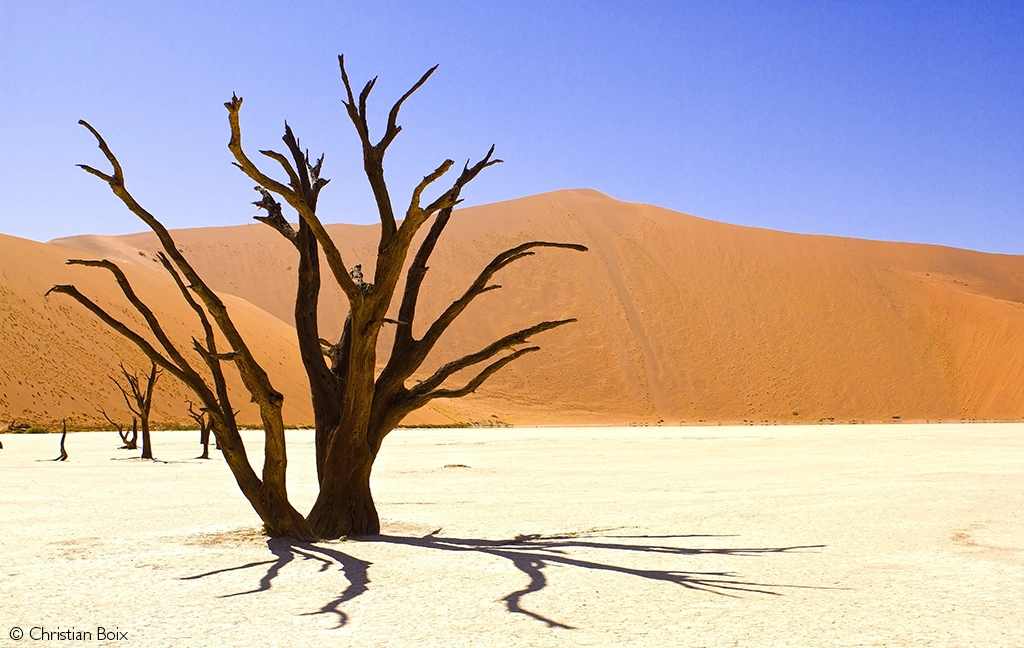
The dunes are large. Very large. Big Daddy, in particular, rises over 300 metres and dominates the area. The red sand, white clay pans, and clear blue sky make for a strong visual contrast.
Deadvlei sits below, with dead camelthorn trees standing where water once reached. It is a well-known site, and for good reason.
A comfortable base in the desert
Little Kulala offers a higher level of comfort without losing connection to the landscape. Spacious units, private plunge pools, and open-air sleeping areas allow for both privacy and immersion.
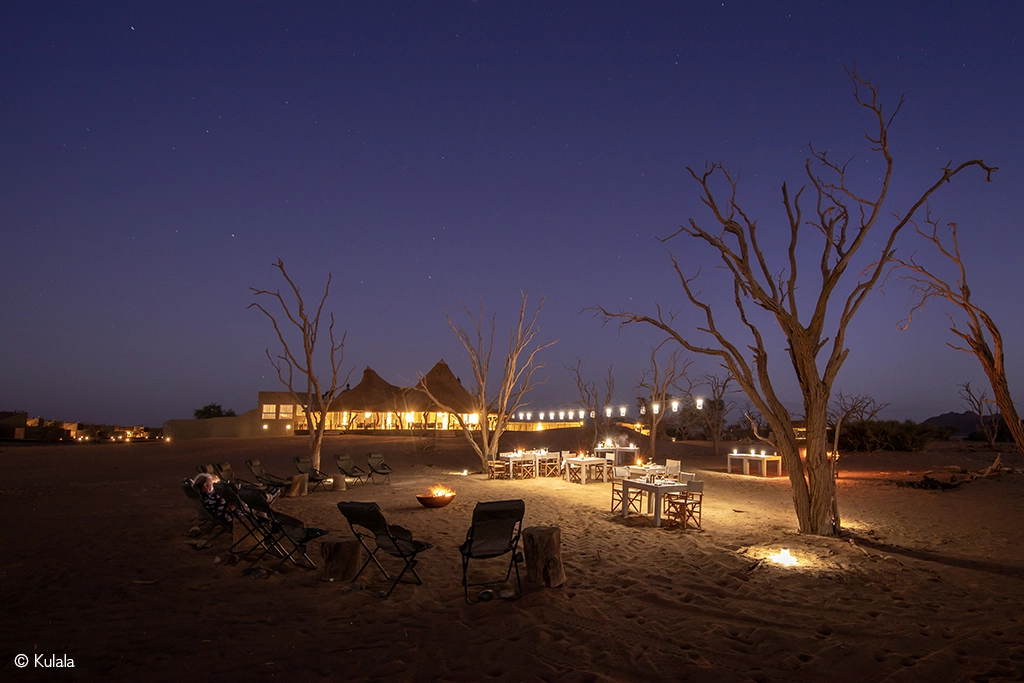
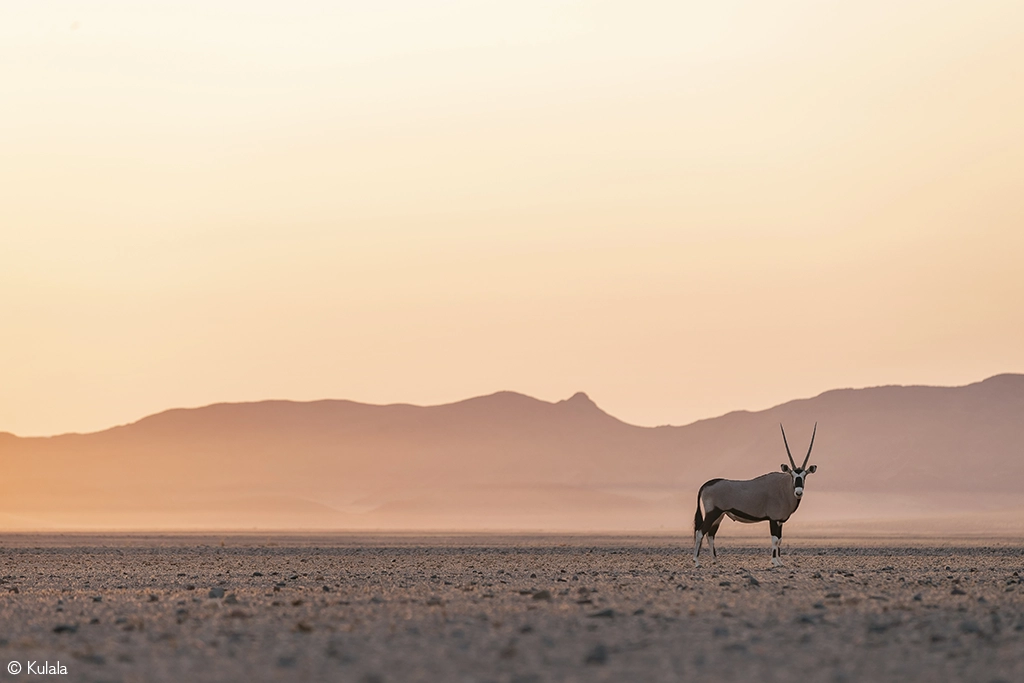
Wildlife moves freely through camp without much concern. Gemsbok passed within fifty metres of my verandah, followed later by jackals doing their usual rounds.
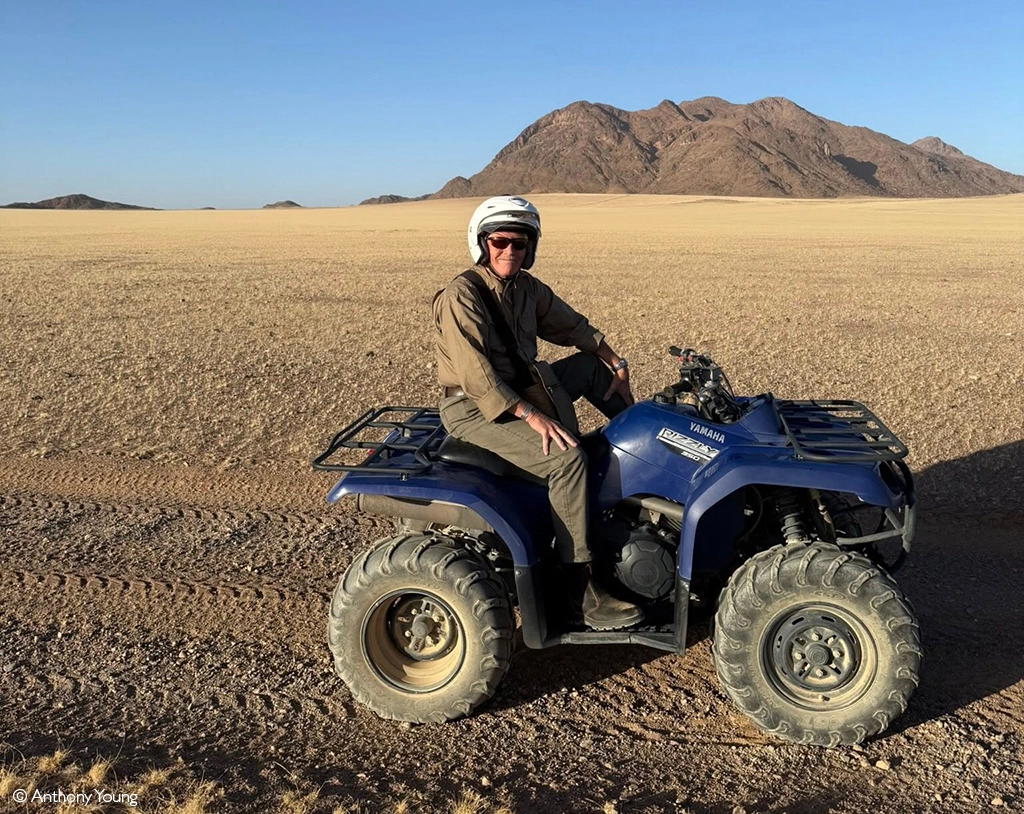
Activities here extend beyond drives. ATV rides across the desert offer a different perspective, covering ground quickly and revealing subtle terrain variations.
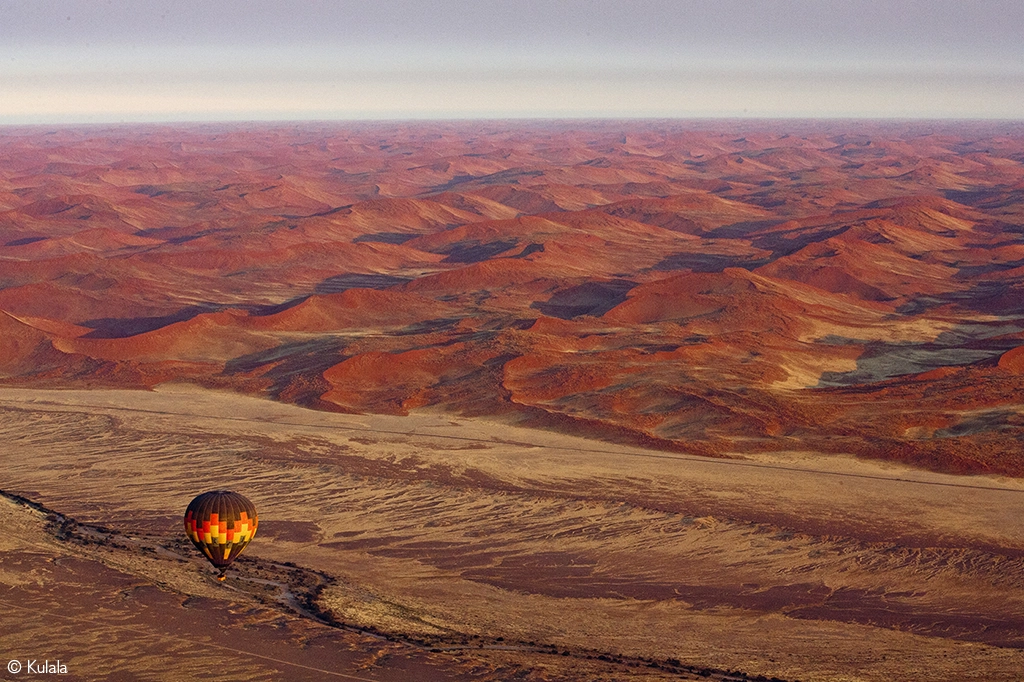
A hot air balloon flight offered the most comprehensive view. From above, the desert becomes a series of patterns – dunes, valleys, and isolated rock formations. The scale is difficult to grasp from the ground, but clear from the air.
Final thoughts about Namibia
Namibia is not about high-density wildlife viewing. If that is the objective, there are other places that deliver more consistently.
What Namibia offers instead is space, scale, and a different kind of safari. Desert-adapted wildlife, varied landscapes, and camps that fit into their surroundings. The desert strips things back. What’s left is land, light and life.
The guides are key. Without them, much of what makes this environment interesting would be missed. For me, the desert camps were the highlight. Hoanib for its wildlife, Damaraland for its texture and culture, and Sossusvlei for its scale. It is a country that rewards patience. Not everything is immediately obvious, but once you start to see how it works, it becomes very engaging. Namibia rewards those who are willing to travel slowly and look closely. It is not about ticking off sightings. It is about understanding place. And once you adjust to that, it becomes difficult to leave.
Further reading
- Capture the most photogenic landscapes of Namibia – from Sossusvlei to Fish River Canyon – with this essential guide for nature photographers.
- Namibia is a spectacular wilderness destination. Here’s everything you need to know about planning a safari to Namibia.
- Read more about Namibia’s desert lions.
- Western Namibia is a land of heat, sand, sea and remarkable biodiversity surviving against the backdrop of harsh but stunning scenery. Learn more about the land of ochre here.
To comment on this story: Login (or sign up) to our app here - it's a troll-free safe place 🙂.