


- The tourism-funded Okamutenge project supports anti-poaching patrols across five communal conservancies in the Kunene.
- After good rains ended a prolonged drought, wildlife populations are rebounding, increasing both hope and poaching risk.
- A loaned Land Cruiser and basic equipment enabled game guards to resume regular patrols across 13,000km² of remote terrain.
- Patrols unite multiple conservancies and Namibia’s Ministry of Environment, reinforcing coordinated community conservation.
- Tourism revenue directly funds patrol fuel, salaries and equipment, linking safari experiences to tangible conservation outcomes.
 Want to visit Namibia on safari? Browse our top Namibia safaris. Or, check out our safaris to other destinations.
The semi-nomadic OvaHimba people of north-western Namibia travel lightly. For long journeys across the rugged wilderness of the Kunene Region, they pack only the essentials into a small bag slung from a stick carried over the shoulder. These modest bundles, known as okamutenge, are vital companions on demanding journeys through one of Africa’s most remote landscapes.
It is a fitting name, then, for a new anti-poaching initiative launched by the OvaHimba-owned collaboration, Conservancy Safaris Namibia (CSN). Like its namesake, the Okamutenge project carries what is essential – practical support and determination – to help community conservancies protect their wildlife and, in time, strengthen their tourism revenue.
A timely intervention
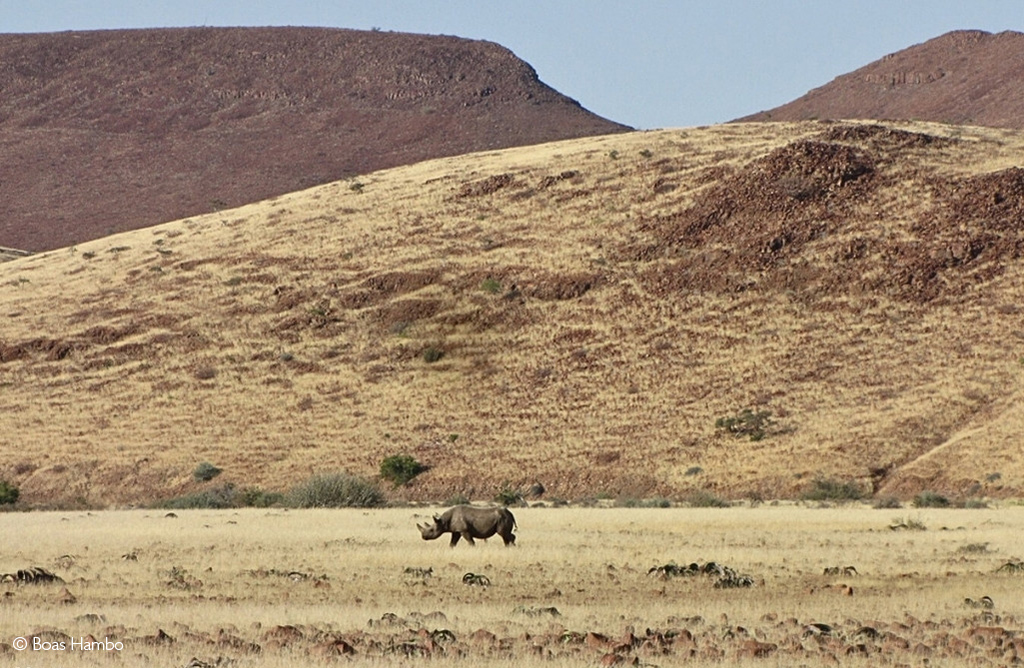
The community game guards in Orupembe Conservancy were the first to request support for their patrols. Their conservancy vehicle, which had been donated by CSN 15 years ago, had worn out on the rough roads that characterise Namibia’s Kunene Region. Without a reliable 4×4 vehicle, game guards can only patrol near their homes, leaving the areas far from villages vulnerable to poachers.
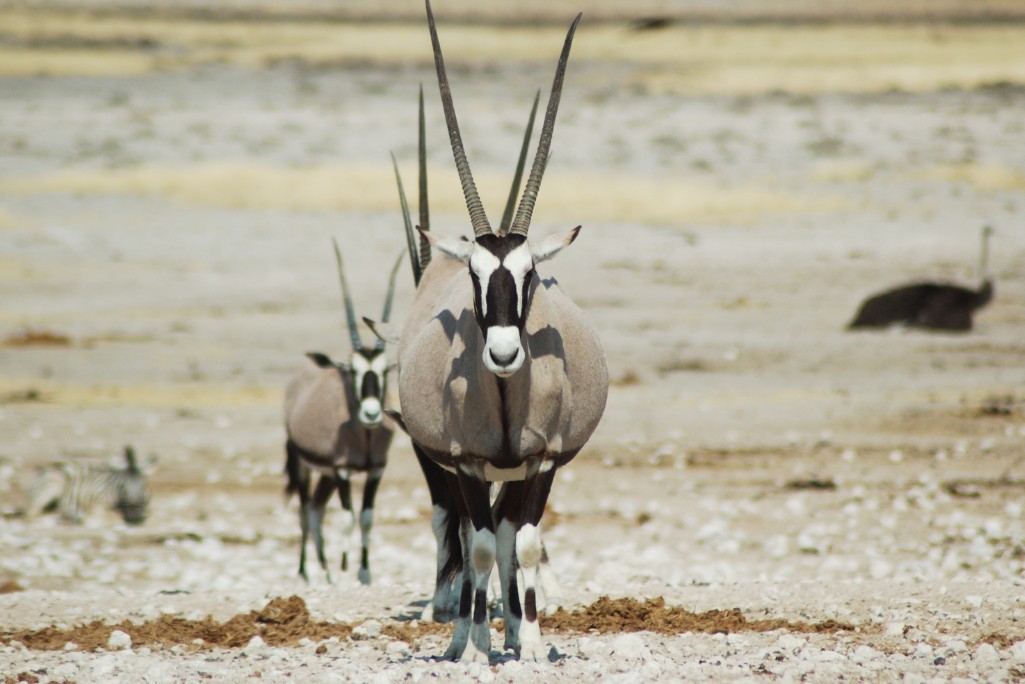
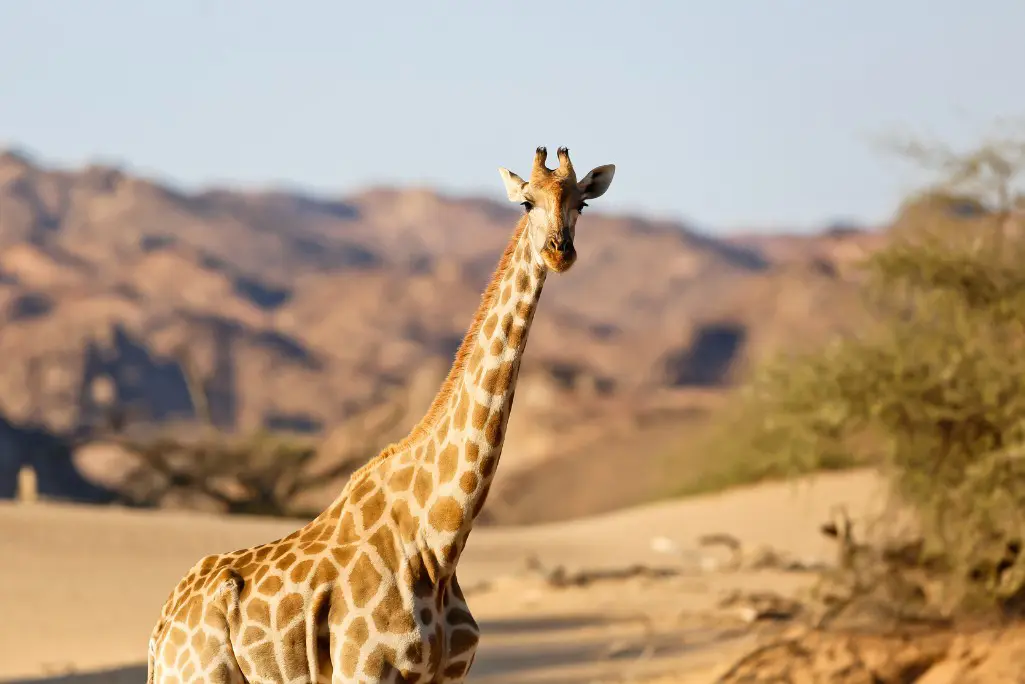
The urgency of the situation intensified after good rains broke a prolonged, multi-year drought. Across the Kunene, wildlife populations are starting to rebound from years of environmental hardship. Springbok once again dot the plains. Hartmann’s mountain zebra move cautiously across the hills. Giraffe and oryx are being seen more frequently.
But recovery brings risk. Rebounding wildlife can attract opportunistic poachers, especially where anti-poaching presence is limited.
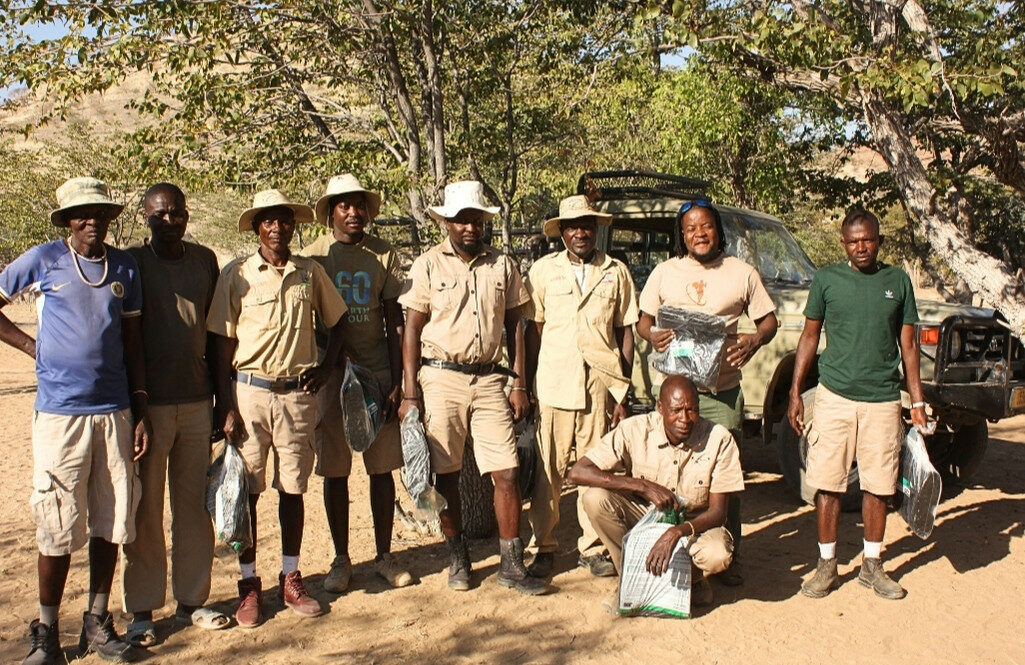
In response, Okamutenge was launched in mid-2025. CSN loaned an ageing Land Cruiser from Etaambura Lodge and allocated a modest budget for essential equipment: sturdy boots for game guards, patrol supplies and food. It was not a grand intervention, but it was enough to get boots back on the ground.

Collaboration across 13,000 square kilometres
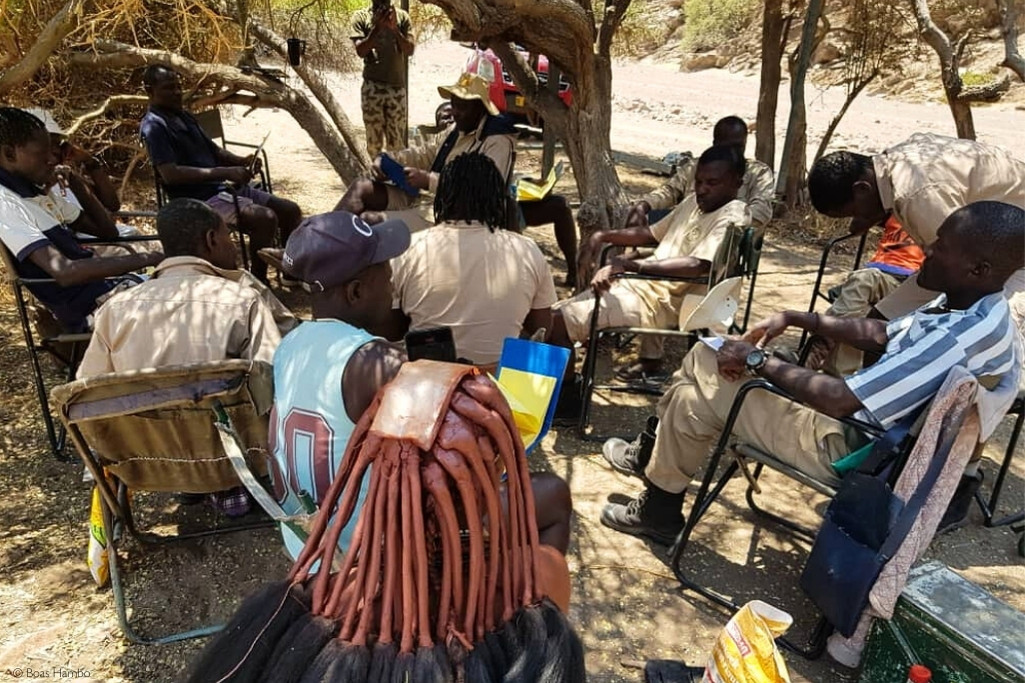
The project has been a catalyst for restarting regular patrolling across all five north-western conservancies, an area covering over 13,000 km2. Boas Hambo, CSN’s head guide and experienced conservationist, has brought together all parties, including the Ministry of Environment, Forestry and Tourism (MEFT) and community leadership.
A model for tourism supporting community conservation, Okamutenge has already made a difference. In October 2025, the patrol team caught four poachers with Oryx meat and turned them over to the Orupembe police (game guards cannot arrest people on their own). The patrol teams include game guards from multiple conservancies (CSN is owned by five conservancies), strengthening cooperation across boundaries and improving information sharing. The presence of MEFT officials further reinforces legitimacy and coordination. Community conservation in Namibia has long been held up as a global model; Okamutenge demonstrates how tourism revenue can directly reinforce that model when it is needed most.
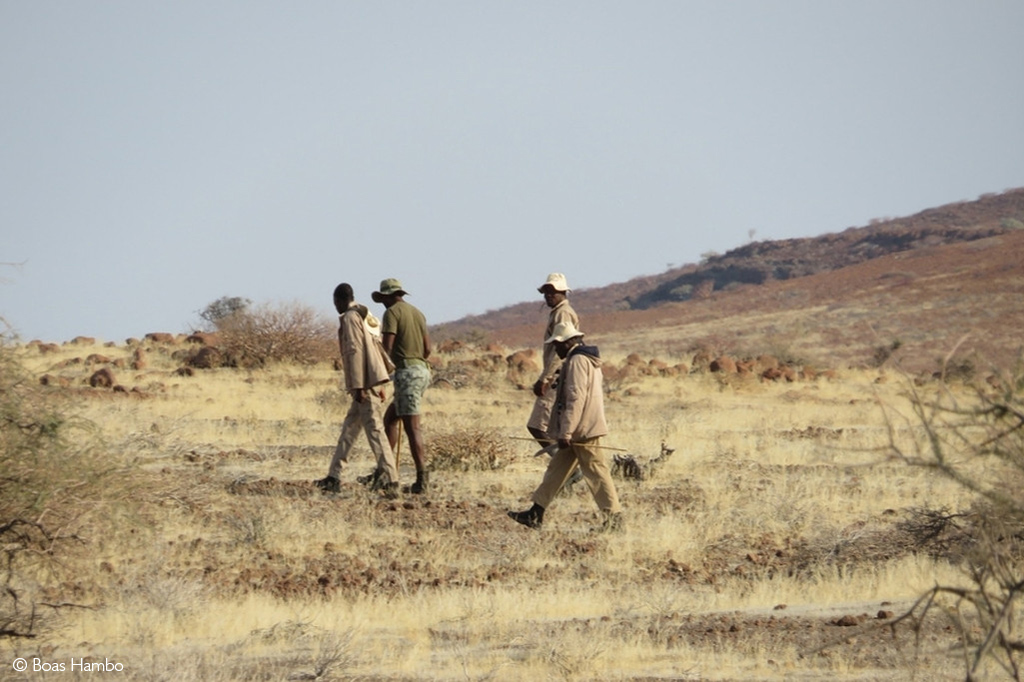
Yet the true success of anti-poaching work often lies in what does not happen. While on patrol, teams visit local farmers and settlements to raise awareness of the renewed anti-poaching presence. This visible vigilance acts as a deterrent, discouraging illegal hunting before it occurs. Though difficult to quantify, prevention is arguably the project’s greatest achievement.
Wildlife returning
While patrol teams primarily look for people’s tracks and signs of poaching, they also record the animals they see while walking. During patrols in three conservancies in the latter half of 2025, they documented:
- 279 Hartmann’s mountain zebra
- 479 springbok
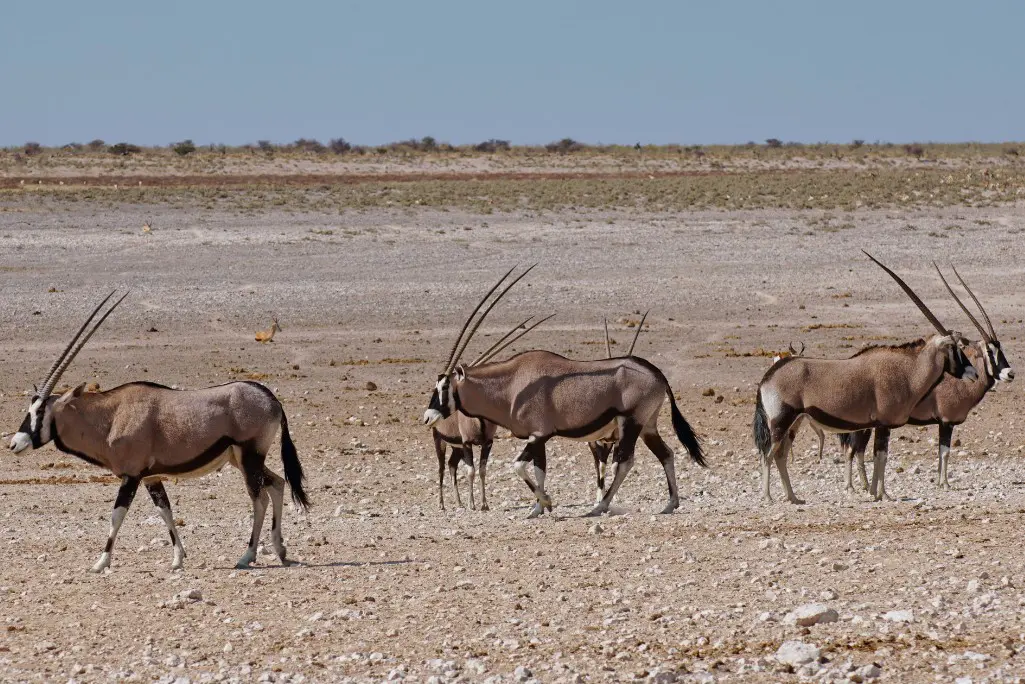
- 109 oryx (gemsbok)
- 68 giraffe
- 91 ostrich
These figures do not constitute formal wildlife censuses, but they offer valuable insight into distribution patterns and help refine patrol planning. More importantly, they offer encouragement. For game guards who endured years of drought-induced decline, seeing wildlife numbers begin to rise again is both motivating and deeply personal.
Though patrols are conducted on foot, the support vehicle travelled nearly 1,500 km during these operations, ferrying teams to remote drop-off points and allowing them to access areas that would otherwise remain largely unmonitored.
Tourism as a conservation engine
At a critical moment, as wildlife rebounds and pressures mount, Okamutenge is meeting an urgent need. But its future depends on sustainable funding.
Because CSN is owned by five communal conservancies, tourism income flows directly back into conservation and community development. Every safari contributes to patrol fuel, equipment, salaries and the broader protection of wildlife.
Travelling to Namibia’s Kunene offers visitors more than a wilderness experience. Here, guests can explore the remote Kunene and learn firsthand about decades of conservation work in the region. It is tourism with purpose: immersive, educational and directly linked to tangible conservation outcomes.
Tourism and conservation are natural partners. As wildlife populations recover, the value of the tourism product increases. It follows that lodges, operators and guests all share a vested interest in safeguarding that recovery. By supporting Okamutenge, CSN is demonstrating how locally owned tourism enterprises can lead from the front.
They hope others will follow.
Further reading
- Namibia is a spectacular wilderness destination. Read more here
- Rains in Kunene spark hope: wildlife returns, communities rebuild, and conservancies lead recovery in this Namibian desert frontier
- Read more about Namibia’s desert lions
- Western Namibia is a land of heat, sand, sea and remarkable biodiversity surviving against the backdrop of harsh but stunning scenery. Learn more about the land of ochre here
- Capture the most photogenic landscapes of Namibia – from Sossusvlei to Fish River Canyon – with this essential guide for nature photographers
 About Gail Thomson
Gail is a conservation scientist who focuses on carnivore conservation and human-wildlife conflict.
She has a passion for creating public awareness of conservation through her popular writings. She has many years of field experience in Namibia , Botswana and South Africa working on human-carnivore conflict and wildlife monitoring projects.
* With thanks to Conservancy Safaris Namibia
To comment on this story: Login (or sign up) to our app here - it's a troll-free safe place 🙂.