


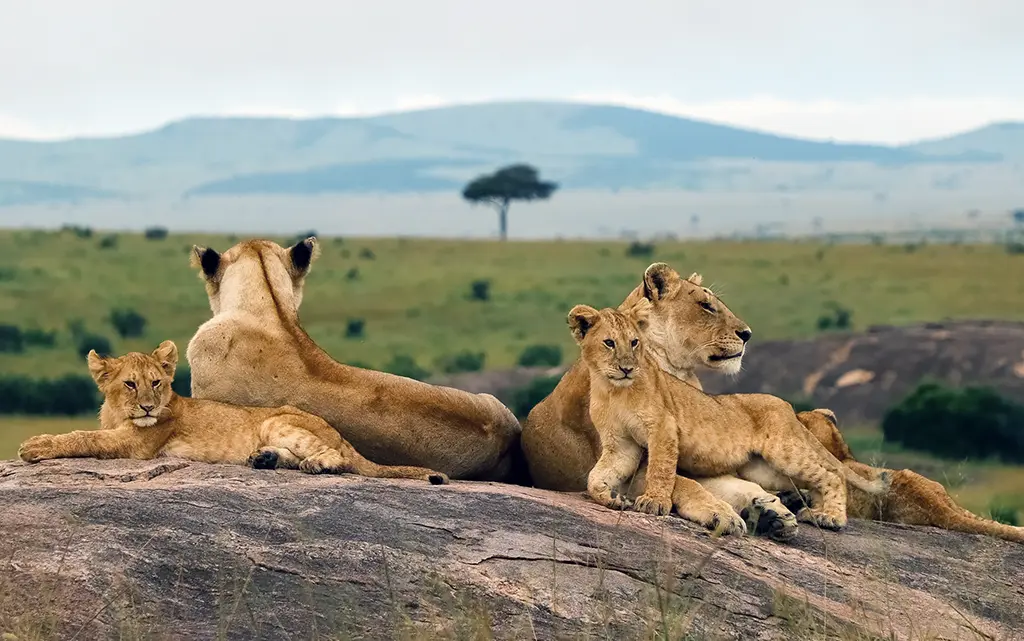
- New research analyses how permanent tourist camps influence lion density across the Maasai Mara.
- Highest lion densities occur in areas without camps, regardless of prey availability or habitat.
- Increasing camp density sharply reduces the maximum number of lions an area can support.
- Newly built camps are linked to rapid, local declines in lion density.
- Strategic tourism planning is critical to balance conservation outcomes with tourism benefits.
Wildlife tourism is one of Kenya’s most important sources of conservation funding. In the Maasai Mara, tourism revenue underpins protected areas, supports community conservancies, and helps maintain one of Africa’s most intact large-mammal ecosystems. Lions are central to this system. They are a flagship species for tourism and an ecological keystone that shapes prey behaviour, predator interactions, and ecosystem stability.
A new study published in Conservation Science and Practice examines a less discussed side of this relationship. It asks whether the physical presence of tourist camps and lodges affects where lions live, and how many the landscape can support. The findings suggest that while tourism finances conservation, the infrastructure that enables it can also reduce local lion density if poorly planned.
Tourist camps of Maasai Mara
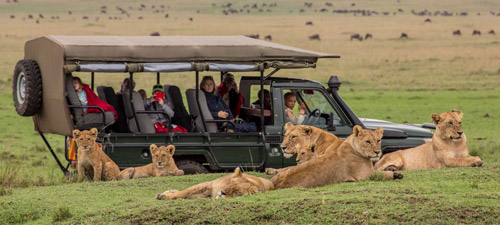
Tourist camps are permanent structures. Unlike vehicles or visitors, which come and go, camps remain fixed in the landscape and bring continuous human activity, including staff movement, vehicle traffic, lighting, and noise. Over time, this can change how wildlife uses space.
The study focuses on the Maasai Mara National Reserve and eight surrounding conservancies, covering 2,363 square kilometres. The area has seen steady growth in tourism infrastructure over several decades, with camps often clustered along rivers, where shade, water, and scenery are most attractive for visitors.
Rivers are also crucial for lions. They attract prey, provide cover, and form part of established pride territories. This overlap between prime lion habitat and preferred camp locations underscores the importance of spatial planning.
How the research was done
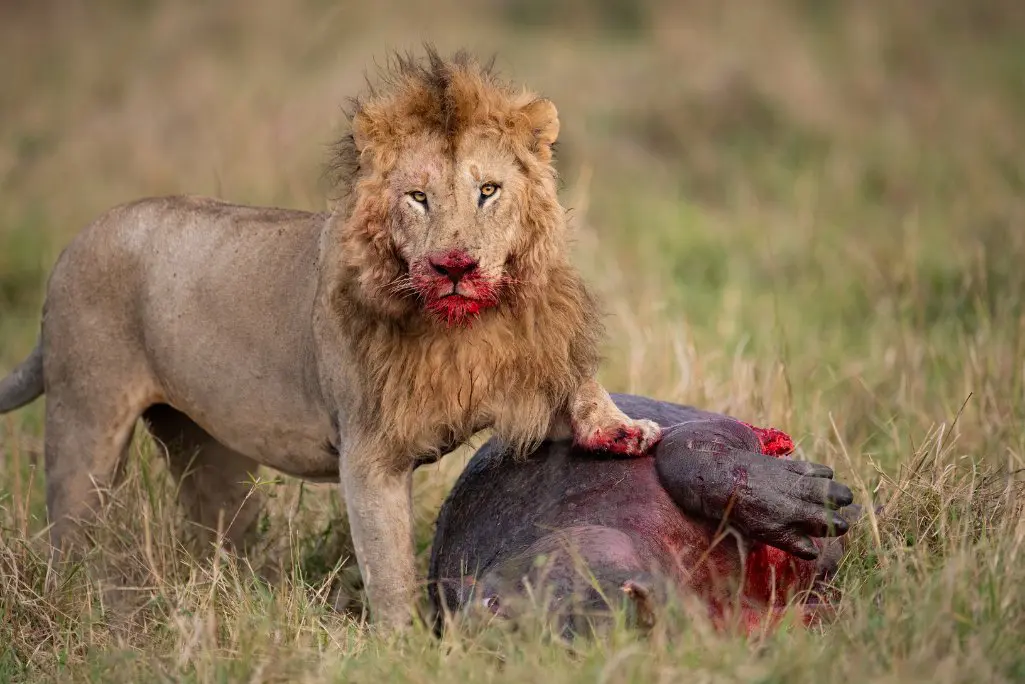
Researchers analysed lion distribution using eight annual dry-season surveys conducted between 2014 and 2022. Individual lions were identified by whisker spot patterns, a standard method that enables reliable tracking over time. These sightings were used to estimate lion density.
Tourist camps were mapped across the study area, including their size and year of establishment. Camp size was used as a proxy for overall impact, as larger camps typically involve more staff, vehicles, and activity. The researchers then calculated a “camp kernel density”, which reflects both the number and size of camps within a given area and estimates how far their influence extends across the landscape.
To separate the effect of camps from natural habitat factors, the analysis accounted for vegetation type and distance to rivers. Prey availability was also examined and found not to be linked to camp density.
What the study found
The highest lion densities occurred in areas with no tourist camps. As camp density increased, the maximum number of lions an area could support declined sharply. This pattern held even after accounting for vegetation and proximity to rivers.
The authors found that “maximum lion density declined significantly with increasing camp density, and that this relationship was not explained by prey availability or habitat type. In other words, lions were not avoiding camps because prey was scarce. They were avoiding the camps themselves.
The study also examined what happened when new camps were built. Between 2016 and 2022, 24 new camps were established within the study area. In the grid cells affected by these latest developments, lion density declined significantly in the years following construction. This suggests that displacement can occur quickly after camps are established.
There were short periods when lion densities increased near camps, most notably during 2020, when tourism activity dropped sharply due to COVID-19. This temporary rebound supports the conclusion that human activity, rather than the physical landscape alone, plays a key role in shaping lion space use.

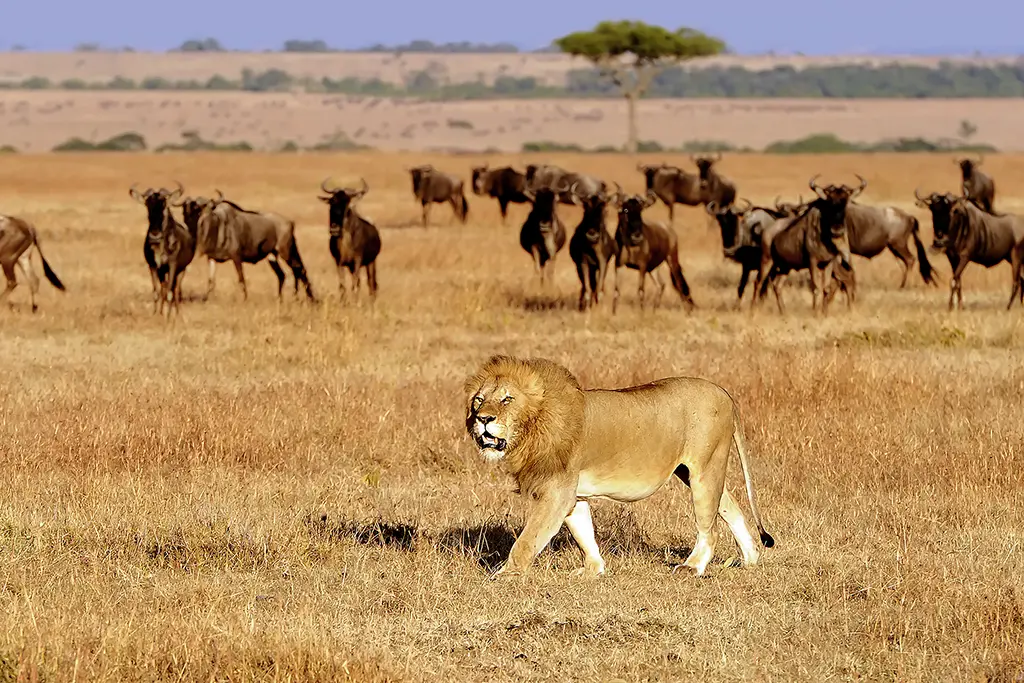
Lion density in Maasai Mara
Lion density is more than a count of animals. It reflects how much space lions can safely use and how stable pride territories can remain. When high-quality habitat becomes unavailable, lions are pushed into smaller areas, increasing competition between prides and raising the likelihood of conflict.
Within protected areas, this can lead to disrupted social structures, reduced breeding success, and lower cub survival. Outside protected areas, the risks are higher still. Lions that move beyond reserve boundaries face conflict with people, livestock losses, and retaliatory killing. Habitat displacement inside reserves can therefore have consequences well beyond their borders.
Lions also play a wider ecological role. As apex predators, they influence herbivore behaviour, suppress mesopredators, and contribute to nutrient cycling. Local reductions in lion density can alter these processes, even if total population numbers appear stable at larger scales.
Tourism benefits and trade-offs
The authors are explicit that wildlife tourism remains essential to conservation in the Maasai Mara. Community conservancies, in particular, rely on tourism revenue to prevent land conversion, support livelihoods, and reduce pressure from agriculture and livestock.
The study does not argue against tourism or tourist camps. Instead, it highlights a planning problem. Camps tend to cluster in the same high-value areas, creating zones of concentrated impact. The research suggests that it is this aggregation, rather than tourism itself, that poses the most significant risk to lions.
The authors recommend maintaining low camp densities in areas favoured by lions and avoiding high-density clusters altogether. They also propose using spatial planning tools, such as camp kernel density mapping, to assess the likely impact of new developments before construction begins.
“Humans influence large predators primarily through fear and avoidance rather than only through direct killing or reductions in prey,” says study author Niels Mogensen. “For lions, tourism camps create a persistent signal that certain areas are unsafe, even when habitat conditions and prey availability remain suitable. In effect, lions are indicating that human infrastructure alters how safe a place feels rather than how much food it provides, and that change in perceived risk alone is sufficient to reduce local densities.”
 By selecting safari operators that limit environmental impact and prioritise conservation, travellers help protect wildlife and their habitats. Explore Africa Geographic’s carefully vetted collection of responsible safari ideas here, or let our travel experts plan the perfect sustainable African safari for you by clicking here.
What this study means for the future of Maasai Mara
The Maasai Mara remains one of Africa’s most crucial lion landscapes, but it is also under growing pressure from development, tourism growth, and surrounding land-use change. Decisions about where and how tourist infrastructure is built will shape conservation outcomes for decades.
This study provides evidence that poorly distributed tourism infrastructure can limit the ecological carrying capacity of protected areas. It also shows that wildlife can respond quickly when human pressure is reduced, underscoring both the risks and the opportunities of management choices.
“Tourism remains sustainable as long as it does not make wildlife behaviour, rather than prey availability or habitat quality, the primary limiting factor,” says Mogensen. “It supports conservation until it alters how animals perceive safety across the landscape. Beyond that threshold, even well-intentioned and low-impact tourism becomes an ecological pressure, not because it directly kills lions, but because it subtly displaces them from the areas they need most.”
Balancing tourism revenue with ecological function is not simple. But understanding where the limits lie is a necessary step to ensuring that conservation landscapes remain viable, not only for visitors but also for the species that define them.
Reference
Mogensen, Niels & Packer, Craig & Svenning, Jens-Christian & Amoke, Irene & Buitenwerf, Robert. (2025). Balancing benefits and burdens: Tourist camps and lion conservation in the Maasai Mara. Conservation Science and Practice. 10.1111/csp2.70210.
Resources
- Lions are under threat. A new study examines the fragility of lion populations in Africa, probing socio-political & ecological factors
- For the best chance of seeing lions in the wild, head to one of Africa’s top lion hotspots – as recommended by AG safari experts
- Does lion pride behaviour change between fenced & open systems? Researchers monitoring lions in Kruger, Pilanesberg & more aim to find out
- Africa’s lions are disappearing. New research shows that lion populations across the continent have declined by 75% in just five decades
- Improved management in Zakouma, Chad, has led to healthier prey populations. Lions now favour larger species & prides are getting bigger
To comment on this story: Login (or sign up) to our app here - it's a troll-free safe place 🙂.