



From the Tradouw Redfin in Barrydale’s Huis River to the Clanwilliam Sandfish in the Olifants catchment, South Africa’s endemic freshwater fish are sounding an alarm. Their precarious survival is a measure of the health of our rivers – systems under pressure from invasive species, altered flows, and degraded habitats. Protecting these fish means protecting the lifeblood of the landscapes and communities that depend on them. Christy Bragg delves into the plight of South Africa’s freshwater fish
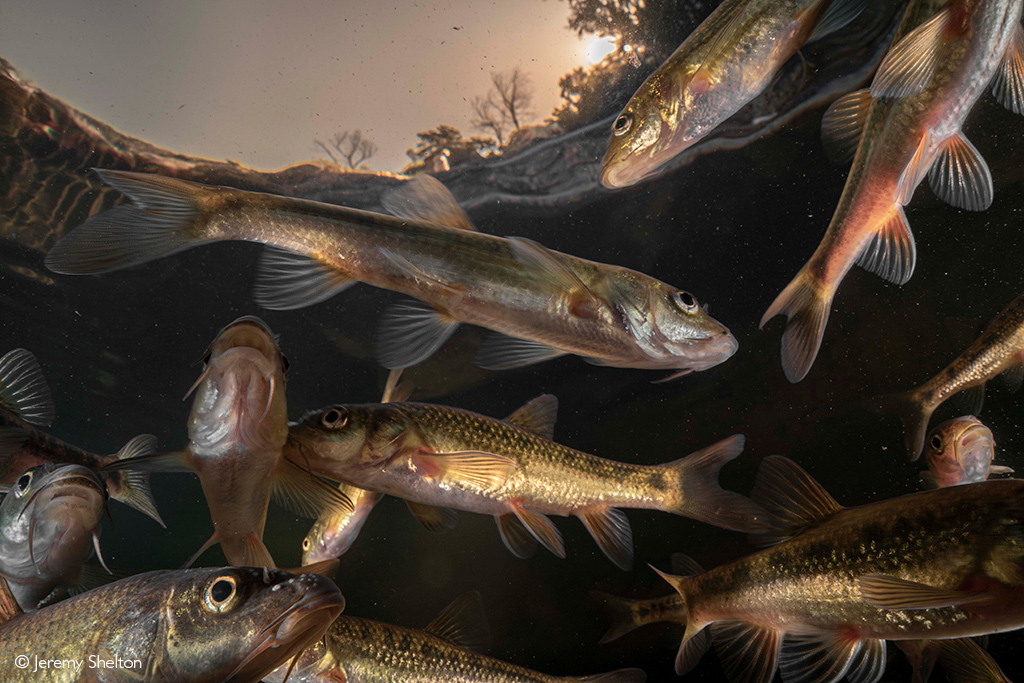
A flash of silver. A glimpse of a sliver of silver tail, and then it’s gone, back into the depths of the tannin-rich waters. The sight disarmed me – this was a very rare freshwater fish species – the Barrydale redfin (Pseudobarbus sp. ‘burchelli Tradouw’), also known as Breede redfin or Tradouw redfin. I was watching them slip between the foamy bubbles caused by the outpouring of a pipe set into the weir in the river. What is so special about a pipe in the weir? This little pipe is a clever solution to an age-old dilemma in water resource management: how do we share the water?
This tiny little fish, with red tips on its fins, is an endemic species. It only occurs in South Africa, and then only in the Breede River system. What’s more, this particular lineage is limited to little tributaries, most notably in isolated pools of the Huis River above Barrydale within the Tradouw catchment.
And in this space, the tiny fish occupies less than 40km² of habitat, making it highly vulnerable to environmental change. Its remaining waters are increasingly threatened by reduced flow from municipal abstraction, habitat degradation through bank alteration and vegetation loss, pollution, and the spread of invasive alien plants and fish. These pressures not only disrupt the natural seasonal flow patterns essential for the species’ breeding and feeding, but also degrade water quality and reduce refuges during dry periods. It is no wonder then that the Barrydale redfin is classified as Critically Endangered on the IUCN Red List.

Once, miners relied on the faintest signs of distress from canaries deep underground to warn of danger. Today, the Barrydale redfin plays a similar role in our freshwater systems – its struggle is a subtle but urgent signal of the troubles gathering in our rivers.
South Africas rivers are slowly filling up with pollution, from sewage to partially metabolised medications and hormones. Some of our rivers are drying up – becoming trickles of mud and alien weeds. Where rivers once carried the rhythms of native fish and invertebrates, invasive species have since unsettled and diminished their diversity. Our climates are getting hotter, and many rivers are drying more rapidly than the norm. But, the last scrappy shoals of indigenous fish are the signposts to our future. When our river ecosystems are damaged, the fish tell the tale.
What happens when the water stops flowing in our rivers? Water in rivers is like blood in veins – without blood, we shrivel up like a dried raisin, and we lose access to oxygen and nutrients. We need to keep a small amount of water flowing in the rivers to keep the ecosystem processes going – essential processes like flood retention, infiltration, dilution of hazardous substances, and resilience to droughts. Scientists refer to this minimum amount of water needed for habitat and human health as the ‘ecological reserve’. We also need this small amount of water in the rivers for the survival of rare and unique freshwater fish species.
The fish are flagships for the health of our rivers. The bad news is that indigenous freshwater fish are hanging onto existence by the tips of their fins.
Turning the tide for the Barrydale redfin
The journey to help the Barrydale redfin began with people who love fish – including from CapeNature, Endangered Wildlife Trust and the Freshwater Research Centre. This group of fish enthusiasts had been counting the redfin for years and had been worrying about how rapidly the population was declining.
Along with local communities and other conservation agencies interested in conserving these fish, the enthusiasts secured funding from donors, and took action to save the redfins living in the rivers of Barrydale in the Western Cape, South Africa. Thanks to the willingness of local authorities, communities, and the efforts of civil society organisations, farmers, engineers, and town residents, the project is tackling the redfin’s conservation on several fronts, combining ecological restoration with community-led water stewardship.
One issue was that 100% of the low flows in the Huis River running through Barrydale were being abstracted. After everyone had sucked up their portions of the water, there was very little water left. At least 10% flow would need to be re-allocated to the downstream ecosystem in order to restore redfin habitat. And so, one of the most innovative solutions to saving the fish came in the form of a little pipe: with project support, the municipality retrofitted a release valve on the weir, diverting water back to the river. This adjustable pipe allows a small flow into the river, just enough to keep pools in the river for redfin habitat.
If we are willing to share water with biodiversity, we all win. Protecting the fish means we need to manage our resources with wisdom and awareness, which leads to all-around sustainability.
Freshwater fish conservation: A model for healthy rivers
The Barrydale redfin project then spawned other projects that encourage treating our rivers with respect and gratitude. If you visit the Huis River today, you will notice the banks have been freshly planted with riverine plants, and you will hear the chainsaws cutting down alien invasive plants to keep the river healthy and flowing. There are monitoring gauges in the river to keep track of flow, and there are brave ideas about creating synergy between fish, water and people.
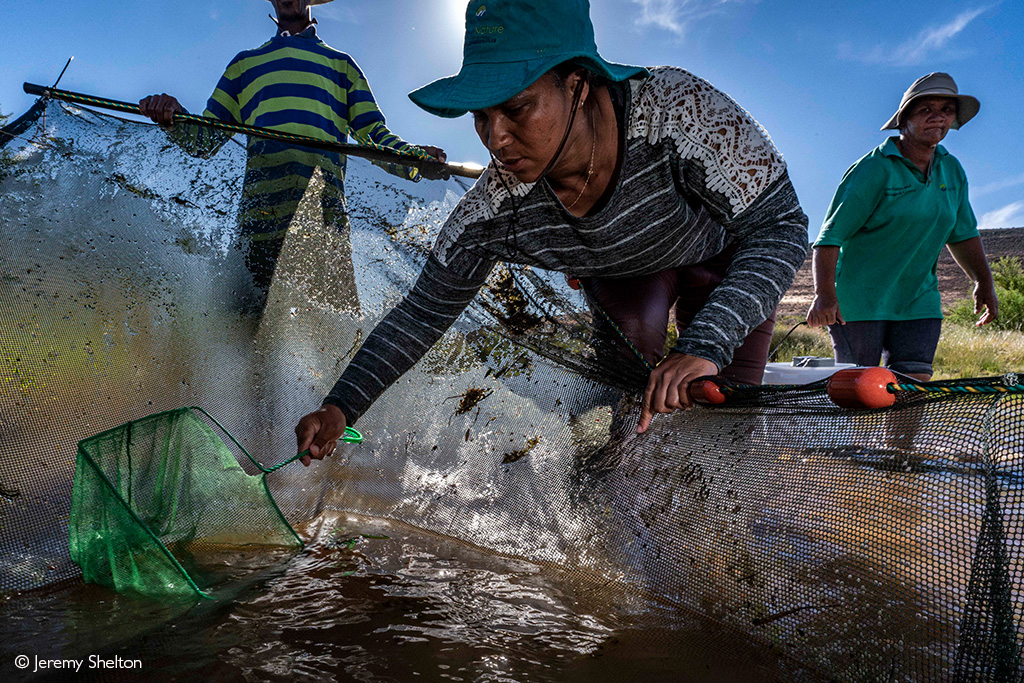
Similarly, if you visit the beautiful Biedouw River Valley in the Olifants-Doring River catchment, you might come across a group of people holding big nets in the river. They are carefully catching baby Clanwilliam sandfish (Labeo seeberi). The sandfish is a beautiful fish with little whiskers and translucent golden scales. It used to be so abundant that locals reported whole rivers churned up and teeming with these fish during their spawning migrations. Not anymore.
The Clanwilliam sandfish faces unimaginable threats. Dams block their migratory paths and alien invasive fish prey on the sandfish fry (the baby sandfish). Dirty water released into the river pollutes its habitat, whilst at the same time, thirsty crops gulp down its water.
To aid in the conservation of the sandfish, fish conservationists, through the Saving Sandfish project, are catching small fish to relocate them to a safer area, where they can grow larger without being preyed upon by the largemouth bass that inhabit the rivers. When the fish have grown big enough, the conservationists release them back into their rivers to run the gauntlet of the alien invasive fish. It’s a small solution, but small ripples can spread far and wide. So far, the conservationists have released over 2,800 sandfish back into the rivers. These fish are being tracked and monitored, and the research shows that they are surviving and returning to the Biedouw to keep the circle of life going.
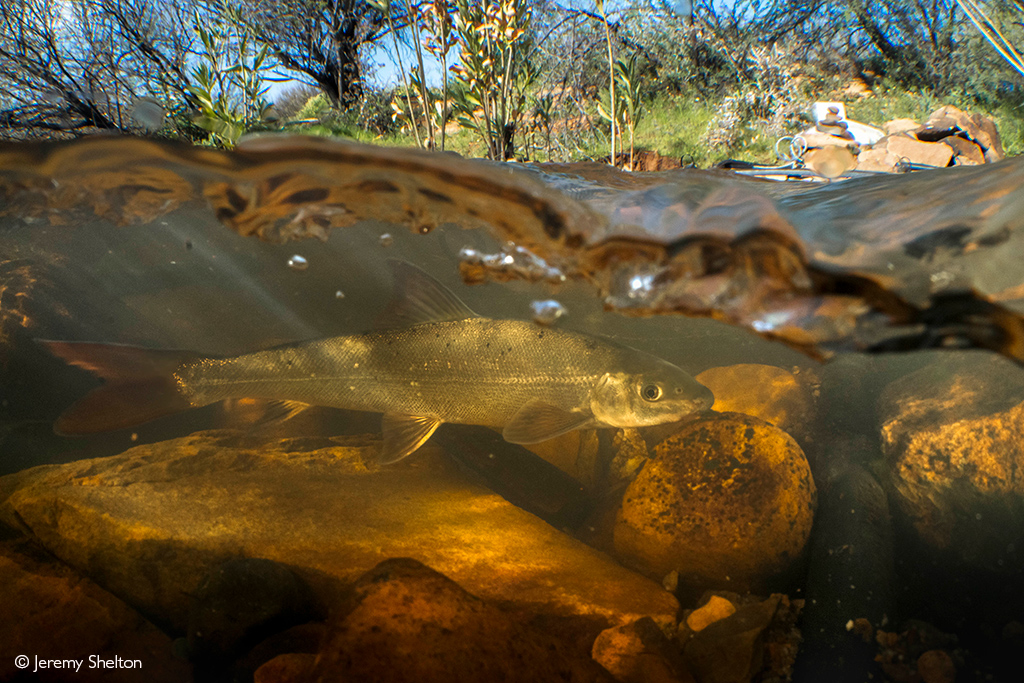
Expanding conservation beyond the redfin
In several countries, rivers have been recognised in law as having rights to their waters. Environmental advocates have successfully argued for legal personhood, enabling these rivers to be treated as living entities with the right to thrive and to have a voice in decisions that affect them. Yet, the health of these ecosystems is in serious decline. The IUCN estimates that a quarter of all freshwater species are now threatened with extinction, while a 2024 WWF report found that migratory fish populations have declined by an average of 81% since 1970.
Freshwater is an essential resource – vital to human societies and the species that depend on it. The warning signs from our rivers and wetlands are clear; safeguarding aquatic biodiversity is not optional but imperative.
Like canaries in a coal mine, the struggles of aquatic species signal deeper trouble in our freshwater systems – trouble that will touch us all if left unchecked.
For more information, have a look at some of the organisations involved with fish conservation, and in particular the Barrydale redfin and Clanwilliam sandfish: CapeNature, Freshwater Research Centre, Grootvadersbosch Conservancy, the Endangered Wildlife Trust, and the Fynbos Fish Trust.
References
Sayer, C.A., Fernando, E., Jimenez, R.R. et al. One-quarter of freshwater fauna threatened with extinction. Nature 638, 138–145 (2025).
Further reading
Swimming blind – why critically endangered blind cave catfish needs research: The blind cave catfish, only found in a cave in Namibia, lives in total darkness. It is one of the rarest freshwater fish species in the world
Fight for the fynbos fish: Learn about the redfin minnow, the most widespread group of freshwater fishes in the Cape Floristic Region, and find out why these fish face a serious risk of extinction.
To comment on this story: Login (or sign up) to our app here - it's a troll-free safe place 🙂.