


Help save pangolins
Poached pangolins
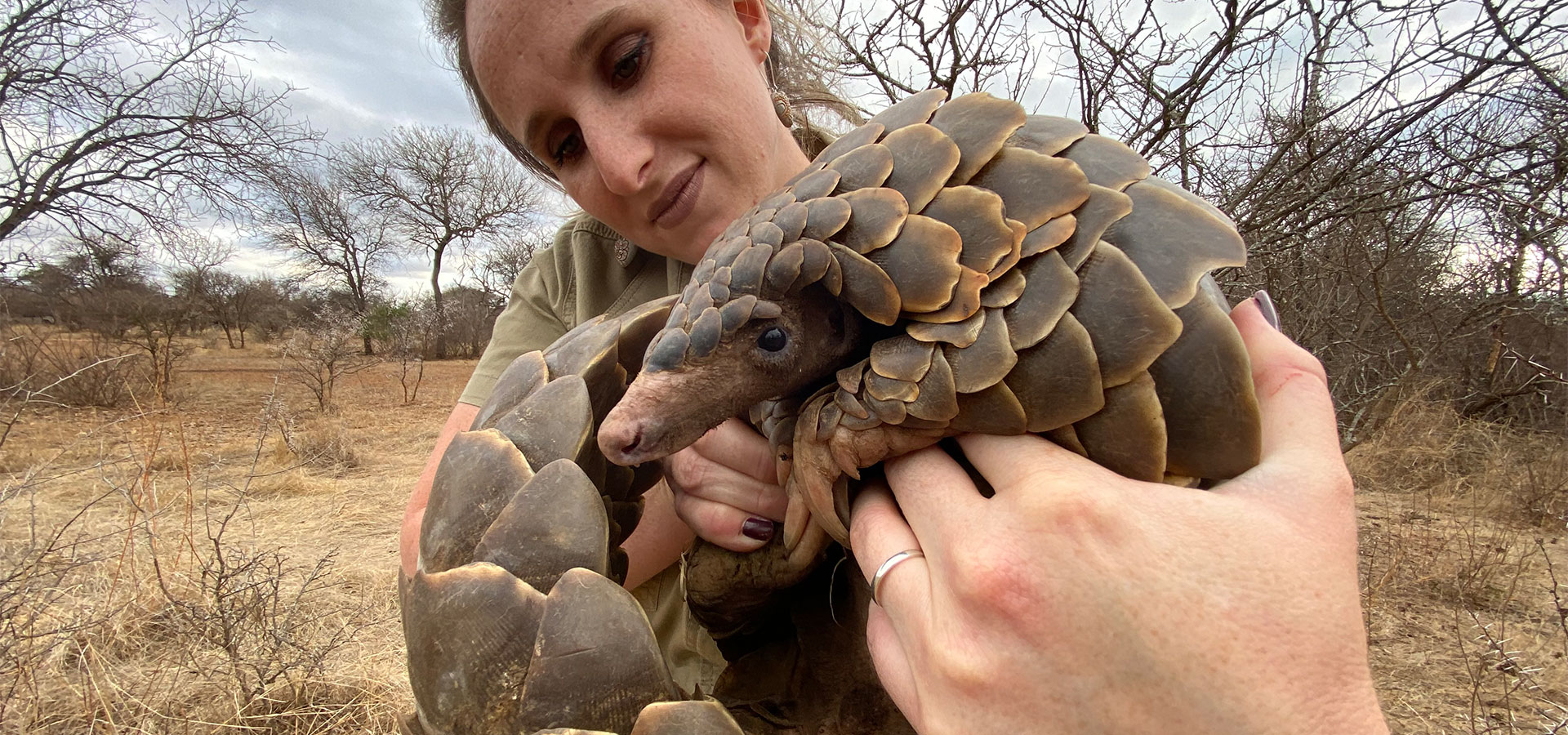
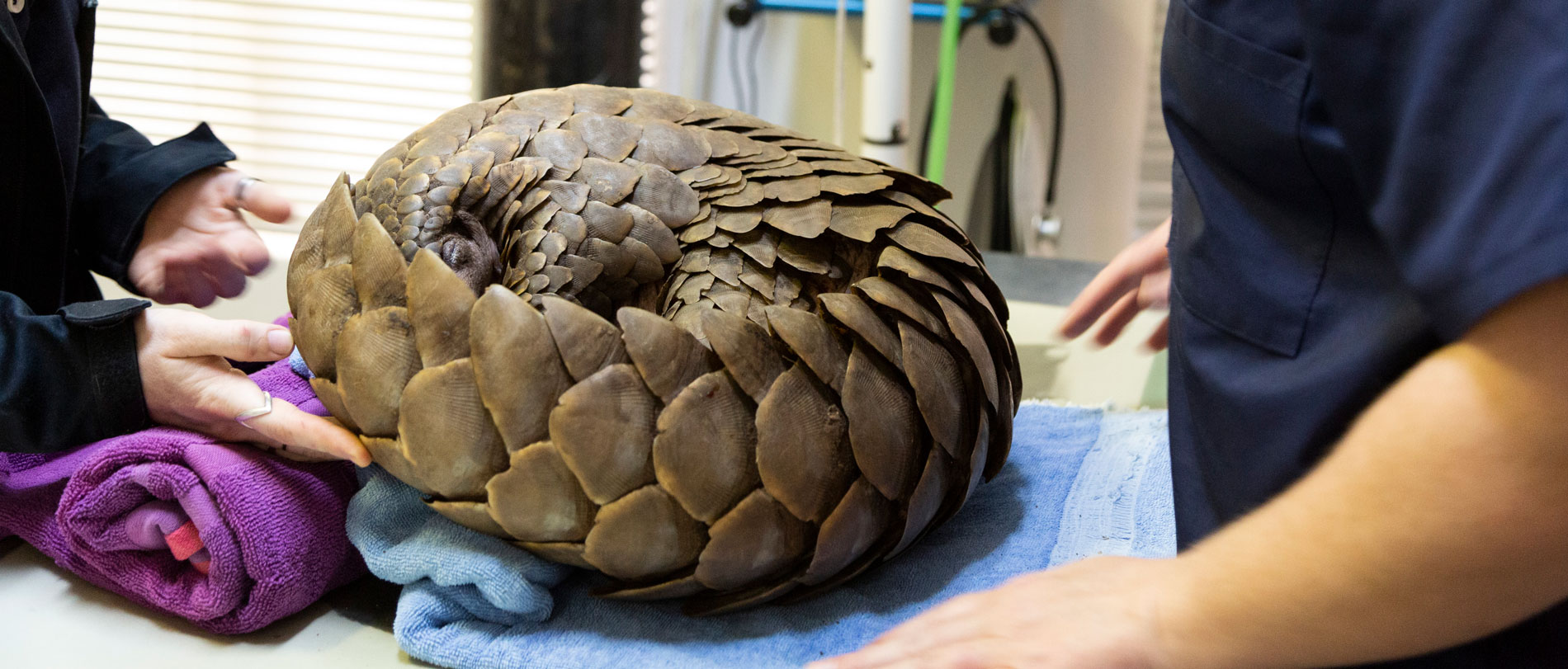
The bushveld winter is pangolin POACHING SEASON and trafficked pangolins requiring treatment and rehabilitation are placed in the hands of the team at Hoedspruit Animal Hospital in the bushveld town of Hoedspruit, near the Greater Kruger.
Numerous pangolins are taken to Hoedspruit Animal Hospital, requiring intensive care for months before they can be placed back into the wild. Some are too far gone when they arrive and cannot be saved. Some females who are found to be pregnant lose their newborn pups. If these pups survive, they need to be removed to be hand-reared. Shock, dehydration, starvation, and broken bones are common symptoms. The strong pangs survive, and these are rehabbed at Umoya Khulula Wildlife Centre and placed back into the wild in areas deemed safe from poaching.
To save a pangolin is a stressful process for all concerned – and expensive. Aside from the medical equipment and consumables required, the pang patients that have made it through the intensive care stage of rehab require daily walks in the bushveld to find food: ants. Of course, this long, intense process also places huge time demands on veterinary staff – which means less time to attend to paying clients that keep the lights on.
Your donation will help shift the scales in favour of these pangolins – it will provide the funds to deal with the seasonal influx of these precious creatures – the world’s most trafficked animal.
Injured pangolins
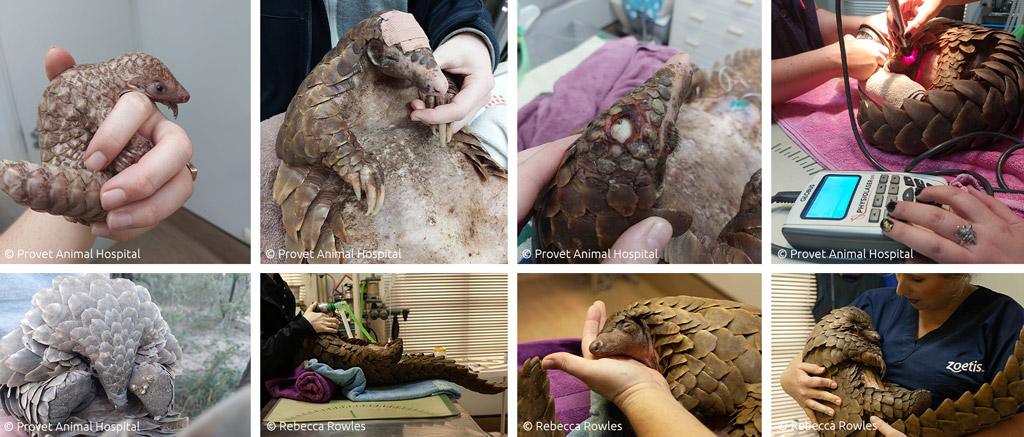
Between 1,000 and 2,000 pangolins are electrocuted in South Africa each year. Pangolins often get caught on the trip-wire fences surrounding protected areas. These electrocutions can cause severe, if not fatal, injuries such as extreme facial swelling and bleeding from the nose and eyes. Thankfully, Hoedspruit Animal Hospital and Umoya Khulula Wildife Centre is also helping to treat those pangolins that fall victim to fences.
These injured pangolins require immediate and aggressive treatment, including fluid therapy, and anti-inflammatory, pain killer and antibiotic treatment. If treatment and recovery is successful, rehabilitated pangolins can be released back into the wild. These pangolins are fitted with satellite and radio tags to help monitor and track their progress after release. Your donation, big or small, will support the team at Hoedspruit Animal Hospital and Umoya Khulula Wildlife Centre with the funds to deal with the seasonal influx of these precious creatures.
Note that all pangolins are housed at offsite locations for security purposes
READ MORE
♥ How YOU can save a pangolin
Your donation, no matter how modest, will go directly towards the costs of rehabilitating poached pangolins and returning them to the wild.
How to donate
Your generosity provides essential financial support to organisations like Hoedspruit Animal Hospital, Umoya Khulula Wildlife Centre and the Limpopo Pangolin Collective. All donations raised cover direct costs relating to rescuing, treating and rehabbing poached pangolins and returning them to the wild.
Click here to make your donation