


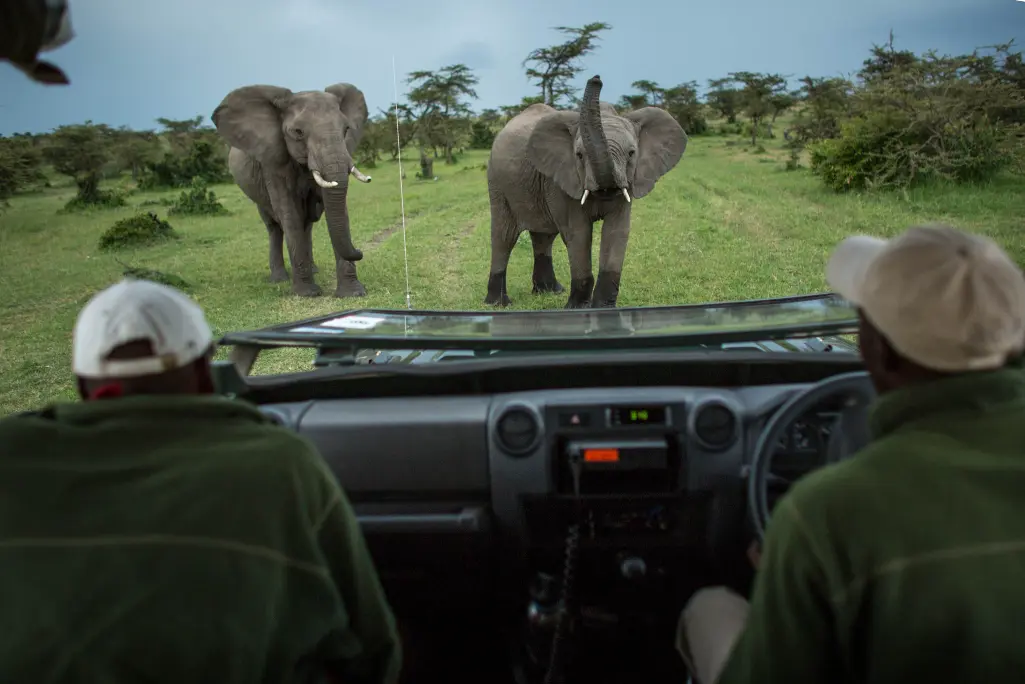
• A three-year study from KwaZulu-Natal, South Africa, investigated how elephants respond to safari vehicles and individual wildlife guide behaviours.
• Elephant behaviour changed most when safari vehicles approached within 20 metres of the animals.
• Individual wildlife guides consistently elicited different behavioural responses from the same elephant population.
• Warning and uncertainty behaviours declined as viewing distances increased during safari encounters.
• Elephants remained alert even at greater distances, despite fewer behavioural responses overall.
• Researchers recommend interpreting elephant behaviour rather than relying only on fixed viewing distances.
 Ready to experience Africa’s elephants responsibly? Explore our Big 5 safari ideas and let our Safari Experts create a tailor-made safari that respects wildlife and supports conservation.
Every day, safari guides make hundreds of decisions that shape wildlife encounters. How close should they approach? When should they stop? At what point is an elephant no longer simply aware of a vehicle, but reacting to it?
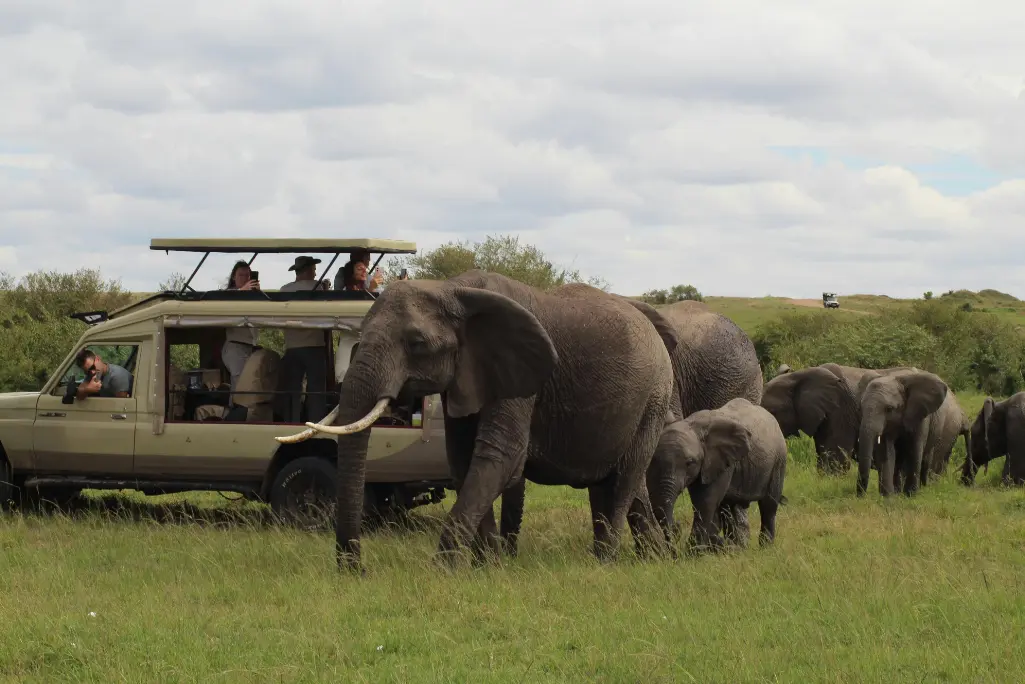
A new South African study suggests those decisions matter. Researchers found that elephants changed their behaviour more frequently when safari vehicles approached within 20 metres, and that different wildlife guides consistently elicited different responses from the same elephant population. Rather than relying on a fixed viewing distance, the authors argue that guides should pay closer attention to what the elephants themselves are communicating through their behaviour.
The study was conducted between 2022 and 2024 on a 5,600-hectare private game reserve in KwaZulu-Natal, South Africa. The reserve is home to 28 African elephants living in three family groups and one unrelated adult bull. The research was led by scientists from the Centre for Functional Biodiversity at the University of KwaZulu-Natal, with co-authors from Wildlife ACT, Wildlife and Ecological Investments, and the University of KwaZulu-Natal.
Reading elephants and their behaviour
Elephants rarely move directly from calm to aggression. Instead, they communicate through a sequence of behaviours that reflect how they are assessing a situation.
Some behaviours indicate simple awareness of a vehicle. Others suggest uncertainty, vigilance or conflict, while more obvious displays – such as ear spreading, head raising or throwing debris – can signal that an elephant is becoming increasingly uncomfortable. These responses provide a window into how elephants cope with repeated encounters with tourist vehicles.
Previous research has also shown that tourism can increase stress hormone levels in elephants. When stress becomes prolonged, behavioural flexibility may decrease, and aggressive responses can become more likely. Behaviour therefore provides an important way of assessing how elephants experience tourism.

Following elephants over three years
Over three years, the team accompanied commercial game drives, recording 458 videos from 101 elephant sightings – more than 3,400 minutes of elephant behaviour – to investigate how vehicle approach distance and the behaviour of individual wildlife guides influenced elephant responses.
Each time a vehicle stopped or repositioned, the researchers measured its distance from the elephants and recorded how the animals responded. They also noted which wildlife guide was driving, recognising that different guides may have different driving styles and approach strategies.
The recorded behaviours were grouped into six categories, ranging from vigilance and avoidance to interaction with the vehicle, conflict and confrontation, and aggression towards vehicles.
Distance changed elephant behaviour
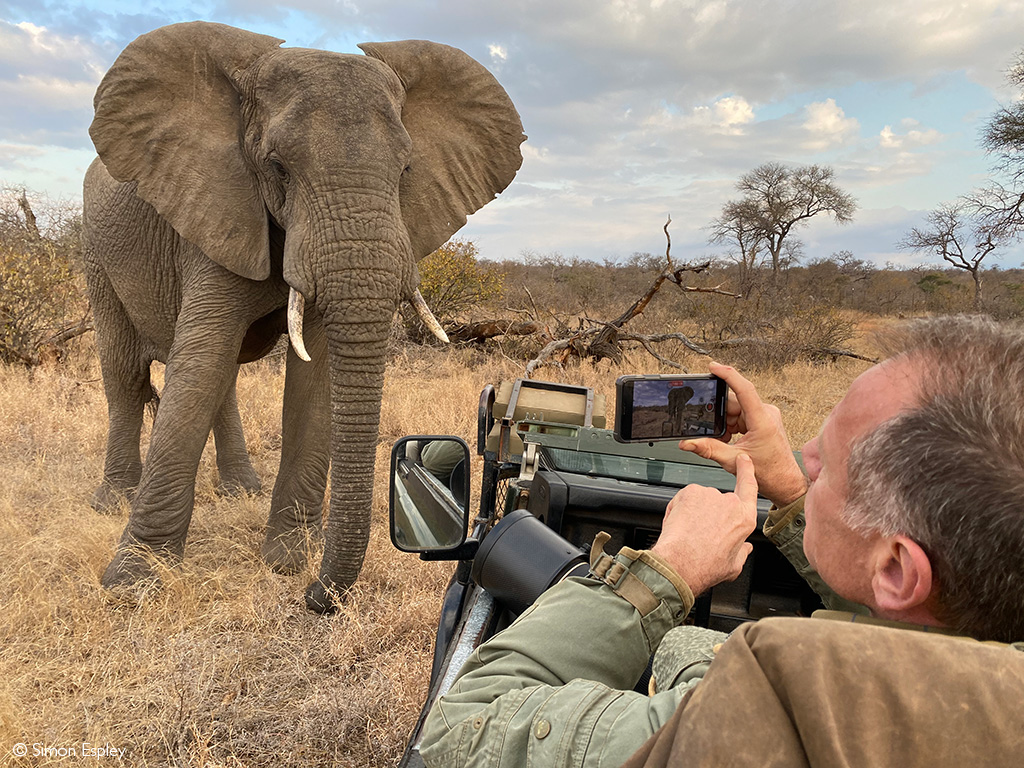
Across all behaviours combined, elephants reacted more frequently when vehicles approached within 20 metres. Behavioural responses declined significantly as viewing distance increased.
The clearest differences were seen in three behavioural categories.
Ambivalent behaviours – including several distinctive trunk movements – became more common at the closest distances. The authors interpret these as signs that elephants may be weighing different responses, such as remaining where they are or moving away.
Conflict and confrontation behaviours, including head raising, ear spreading and throwing debris, were also more frequent when vehicles were close. These warning displays became less common beyond about 40 metres.
The researchers also recorded interactive behaviours, such as elephants approaching, smelling or touching vehicles. Although these encounters are often viewed positively by tourists, the authors note that they still represent a behavioural response to the vehicle rather than an absence of disturbance.
Interestingly, vigilance behaviours did not differ significantly across viewing distances, suggesting that elephants can remain aware of approaching vehicles even when they are 80 to 100 metres away.
Not all guides produced the same responses
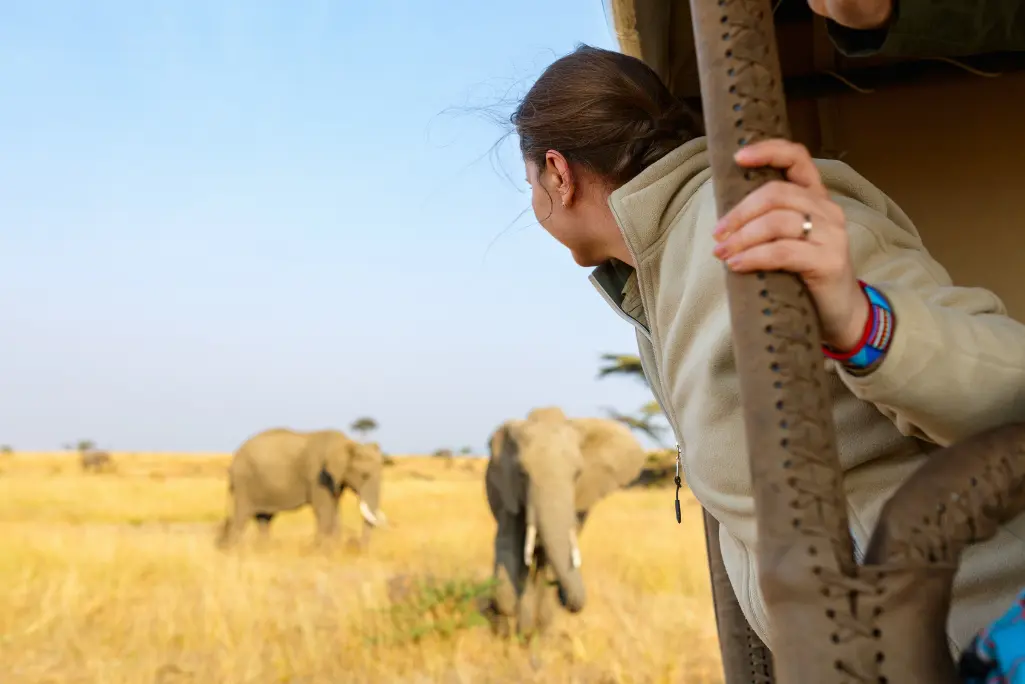
The study also found that individual wildlife guides consistently approached elephants at different distances. Some guides were associated with significantly higher frequencies of ambivalent behaviour, while one guide triggered significantly more conflict and confrontation behaviours than the baseline guide.
The authors suggest these differences likely reflect individual approach strategies and driving styles. The study did not identify the guide or examine which aspects of their approach strategy contributed to these responses. They also point to previous research showing that elephants can recognise individual humans and have strong long-term memories, raising the possibility that elephants learn to associate particular vehicles or guides with previous experiences.
Looking beyond fixed viewing distances
Many reserves use minimum viewing distances for elephants, but these recommendations vary considerably.
To interpret elephant behaviour, the researchers used the Awareness Zones model developed by Save the Elephants. The idea is that the elephant’s behaviour determines whether a vehicle should remain where it is or retreat. Rather than relying on a fixed viewing distance, the model classifies an elephant’s response into four behavioural zones. In the Comfort Zone, elephants continue their normal activities with little sign of disturbance. In the Alert Zone, they become aware of a vehicle but generally remain calm while monitoring it. The Warning Zone is marked by behaviours indicating increasing discomfort, such as head raising, ear spreading or other displays that signal a vehicle has come too close. The Critical Zone represents the point at which an elephant may flee or respond aggressively if the pressure continues. The model is designed to help guides read the elephant’s behaviour in real time, recognising that different individuals and populations may tolerate different viewing distances.
In this study, elephants were more likely to remain in their Comfort Zone at greater viewing distances, while Alert Zone responses became more common during closer encounters. Critical Zone responses occurred across most viewing distances, but not in the 81–100 metre category.
A behavioural approach
The authors conclude that both vehicle proximity and the behaviour of individual wildlife guides influence how elephants respond to safari vehicles. Because elephant populations, habitats and previous experiences differ between reserves, they suggest that interpreting elephant behaviour through the Awareness Zones model may be more useful than relying on a single predetermined viewing distance. They also recommend reserve-specific codes of conduct and guide training that places greater emphasis on recognising elephant behaviour during encounters.
Reference
Roos, Tenisha & Garai, Marion & Eggeling, Tamara & Bolaños, Antonio & Mitchell, Brett & Delsink, Audrey. (2026). Too Close for Comfort: The Effect of Wildlife Guides on Elephant Behaviour. African Journal of Wildlife Research. 56. DOI: 10.3957/056.056.0215.
- Are viral safari guides putting content before conservation? Adam Bannister’s opinion editorial is a call to restore ethics, respect, and integrity in wildlife guiding
- How close is too close? Jamie Paterson & Maxine Gaines take an in-depth look at leopard habituation & tourism ethics
- Elephants are transforming Greater Kruger as landscapes reconnect, revealing new insights into savanna ecology, carbon and conservation. Read more about how elephants are reshaping Kruger
- Will Kruger’s private reserves cull elephants? Explore the science and policy behind the APNR elephant management debate in Simon Espley’s opinion editorial
To comment on this story: Login (or sign up) to our app here - it's a troll-free safe place 🙂.