



off the beaten safari track

Any reference to South Africa’s Cape region is almost guaranteed to bring to mind the famous mountains, glorious coastlines, and spectacular seaside scenery (also wine for the oenophiles). Yet inland from the sandy beaches and coastal forests lies a mosaic of fascinating habitats and protected spaces offering unique wildlife viewing. While South Africa’s safari circuit is dominated mainly by reserves in the northern and eastern parts of the country, the Cape safari experience is fundamentally different but equally enthralling. Here is our round up of some of the best safari spots in South Africa’s Cape region.
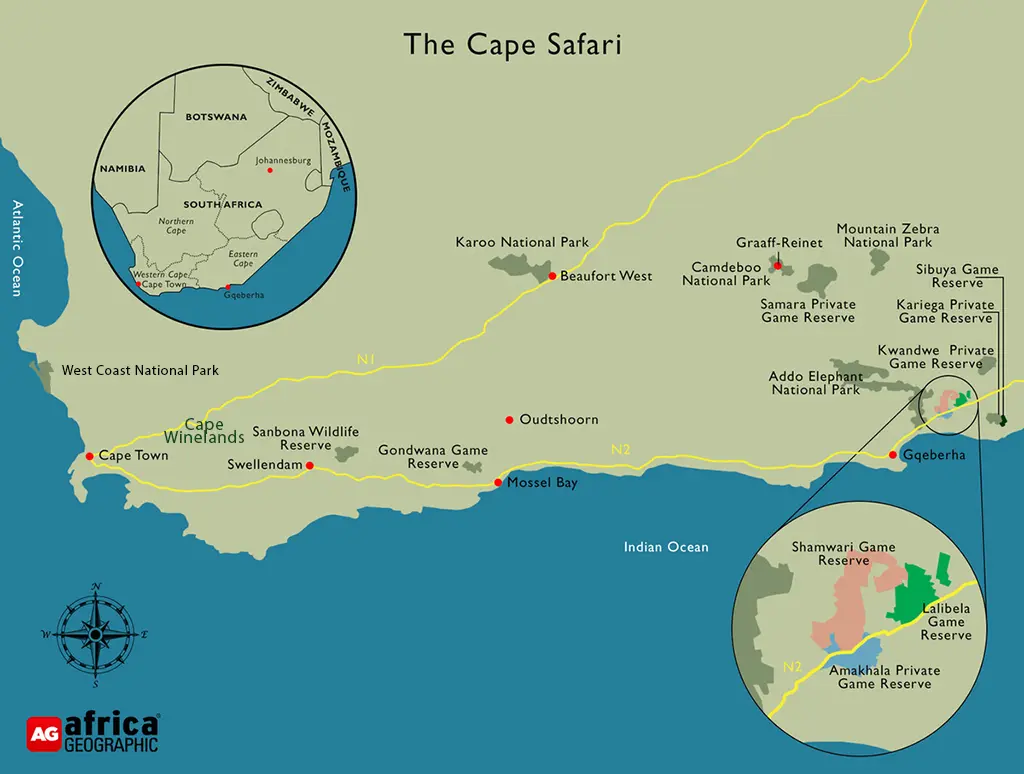
The Cape nature experience – the Western and Eastern Cape
There are a variety of diverse wilderness areas in the greater Cape region – specifically within the Western and Eastern Cape. These two adjacent provinces make up the south-western corner of South Africa. Together, they encompass the entire Cape Floristic biome and most of the Karoo ecosystems, right up to the transition with the grasslands of the Lesotho Highlands. Away from the lush greenery fed by temperate ocean climates and sheltered by a network of mountains, the landscape becomes progressively more arid and sparse, giving way to the almost Martian scenery of the Great Karoo.
While this round up of Cape safari destinations focuses on the more “traditional” safari experience – complete with iconic, large wildlife – the entire inland Cape region is a paradise for the enthusiastic naturalist. From ancient fossils, rock art and dramatic landscapes, to intriguing critters in unusual settings, the variety of habitats and animals on offer is guaranteed to captivate and delight.
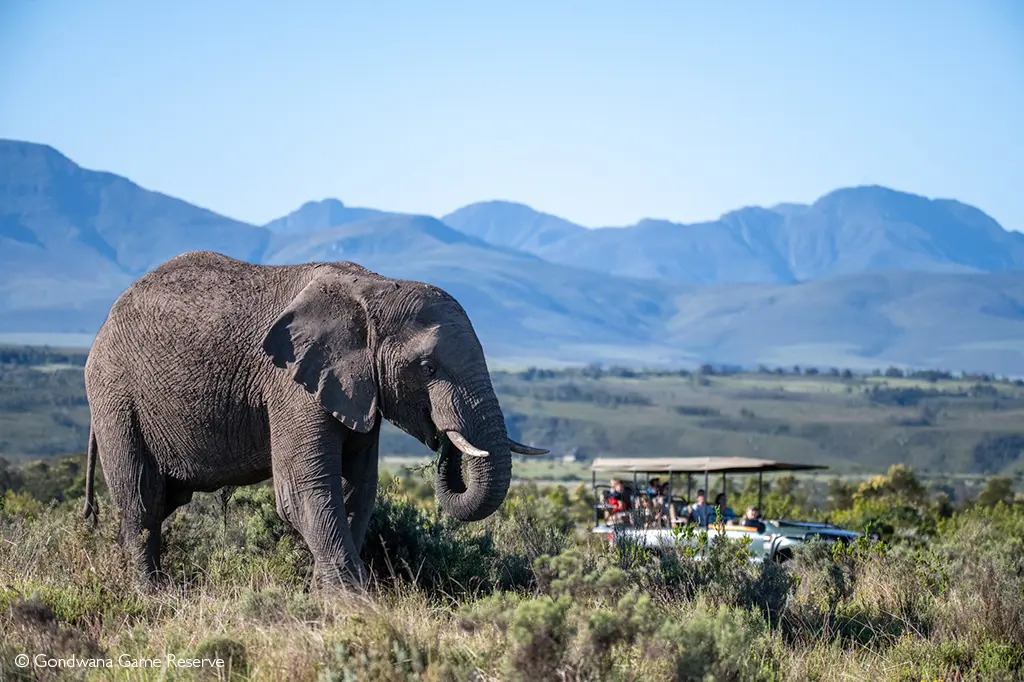
For the most part, the Cape safari experience is an exclusive one, based around vast swathes of privately owned wilderness areas peppered with a combination of basic and high-end lodges. For those more accustomed to the conventional savannah setting, there is something vaguely incongruous about the sight of an elephant against the austere backdrop of mountains and sparse Karoo vegetation, or the Indian Ocean in the background. Yet, there was a time when the Big 5 (and many other species) roamed throughout the entire Cape region. Over centuries, they have been driven to the verge of extinction by human encroachment, unsustainable hunting practices and human-wildlife conflict. Fortunately, many of the private reserves of the Cape now boast an impressive conservation record and have served a pivotal role in restoring the magnificent creatures of the Cape to their rightful home. As a malaria-free destination, the Cape region is also one of the best safari options for families travelling with children.
 Want to visit the Western Cape and Cape Town on safari? Browse our Cape Town safaris here and our Cape Winleands aventures here
Eastern Cape – the greater Addo ecosystem
Addo Elephant National Park
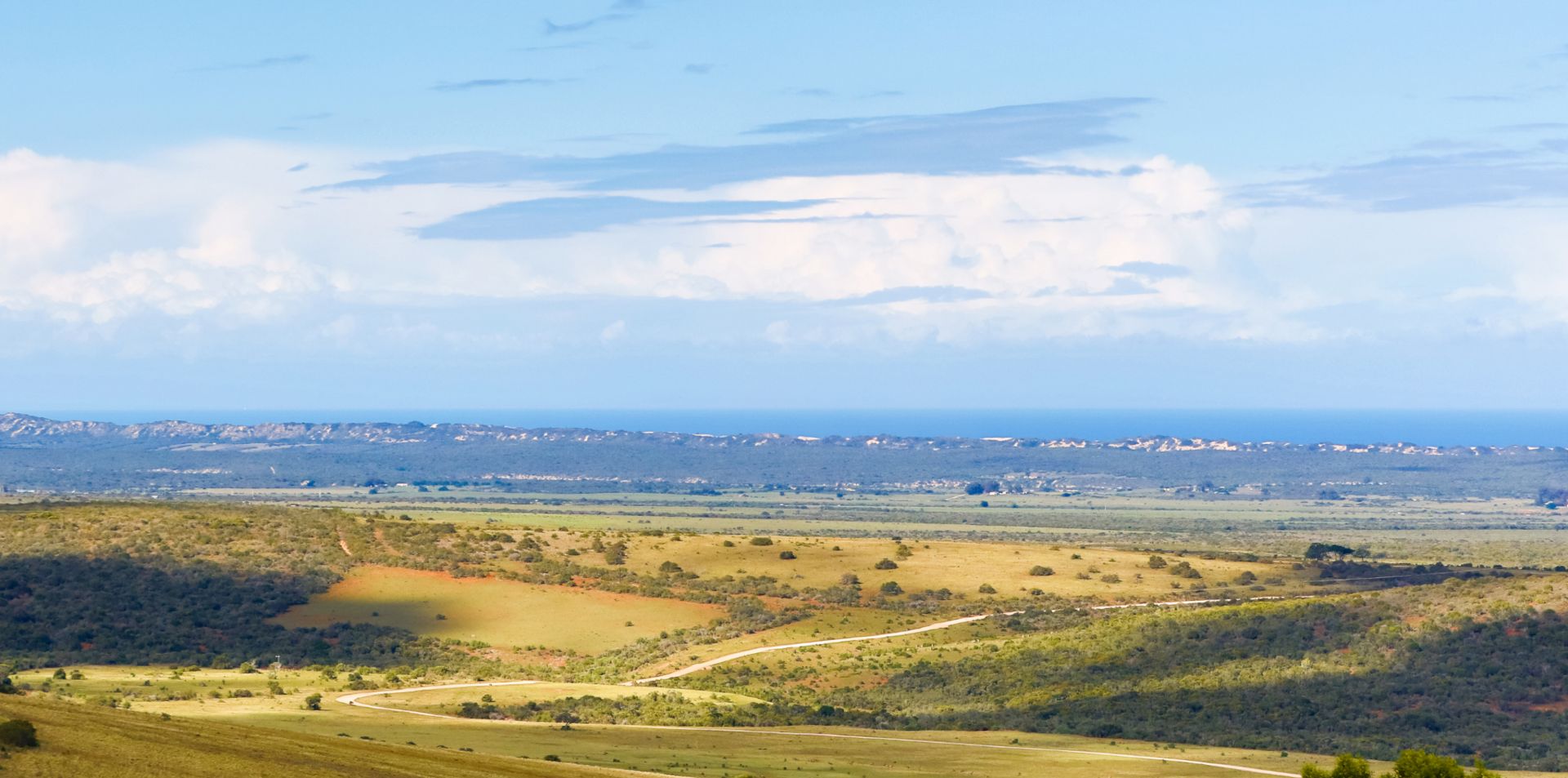
Tucked away in the Eastern Cape, Addo Elephant National Park is a conservation triumph and a rewarding wildlife destination. It’s a place where elephants roam confidently through rolling thicket, where penguins and whales share the same protected system, and where even the smallest creatures, like the famous flightless dung beetle, command respect. Just 30 minutes from Gqeberha (formerly Port Elizabeth) and completely malaria-free, Addo offers a seamless mix of classic game viewing and coastal wilderness that few parks can match. First proclaimed in 1931 to save the region’s last 11 elephants, Addo has since expanded to nearly 1790km² (179,000 hectares) of land and more than 70km² (7,000 hectares) of marine reserve, protecting everything from arid Karoo scrub to lush forest and the offshore islands of St Croix and Bird Island. Today it’s South Africa’s only park to host the Big 7: the traditional Big 5 (lion, elephant, buffalo, leopard, black rhino), combined with the southern right whale and great white shark.
Addo’s varied habitats support an extraordinary range of wildlife: kudu, eland, red hartebeest, Cape mountain zebra and springbok roam the plains, while more than 400 bird species fill the air with sound and colour. Visitors can explore by vehicle or on foot, follow historic 4×4 routes, or hike through the vast Alexandria dunefield that links forest to sea. Whether you come for the elephants, the dunes, or the sense of space and renewal, Addo delivers the full sweep of the Eastern Cape’s wild spirit in one unforgettable park.
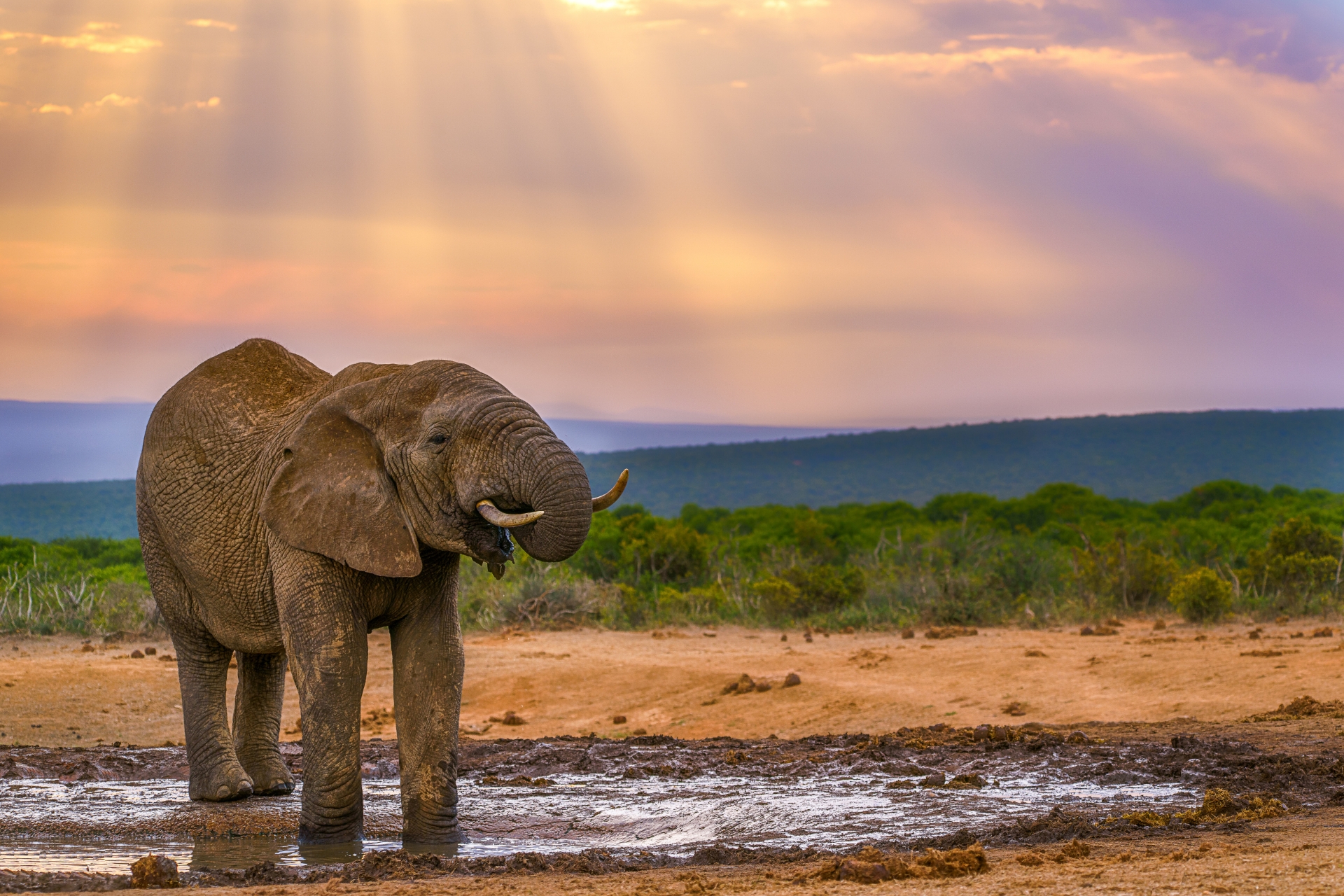
Amakhala Game Reserve
The 90km² (9,000 hectares) Amakhala Game Reserve features all of the scenic beauty and wildlife magnificence of Addo, with the added advantage that access is exclusively granted to guests of the various lodges. With awe-inspiring views, relaxed wildlife and a variety of accommodation options to suit most budgets, Amakhala epitomises the appeal of the Eastern Cape safari adventure.
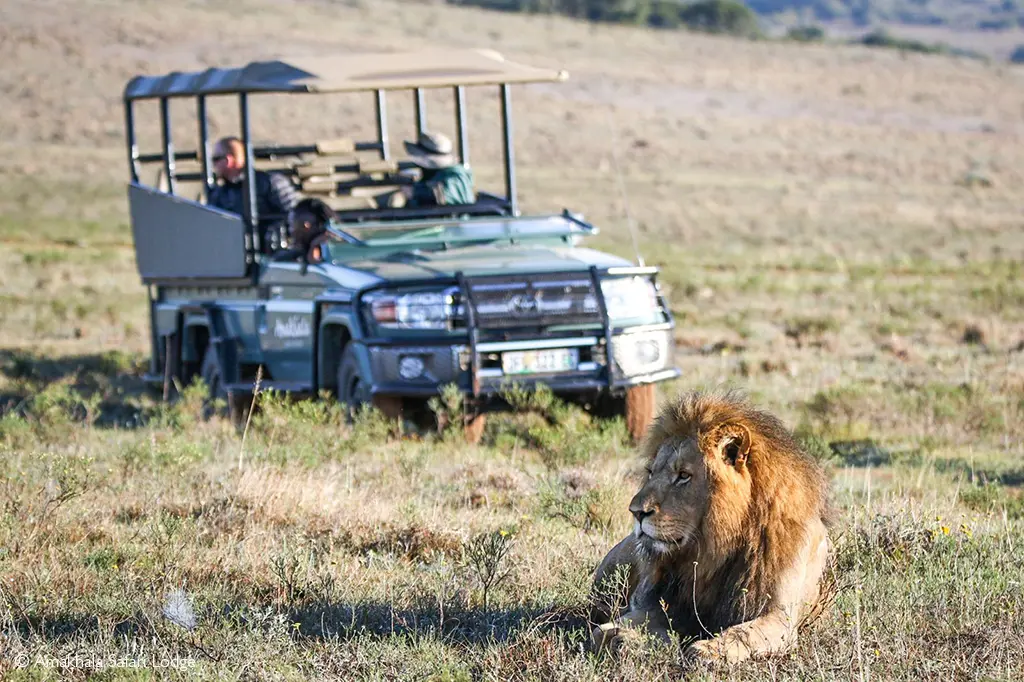
Kariega Game Reserve
Another major destination on the Eastern Cape safari circuit, Kariega Game Reserve is a family-owned and operated 115km² (11,500 hectares) reserve. It is ideally positioned between the Bushman’s and Kariega Rivers, not far from the Sunshine Coast, and boasts a diverse range of habitats and glorious vistas.
The lush, rolling hills are home to the Big 5, as well as antelopes and a myriad of bird species. Visitors can opt to complement the traditional game drives with boat cruises and walking trails. Of particular interest to many of Kariega’s guests is Thandi, a white rhino cow that survived a brutal poaching attempt in 2012. Despite horrific injuries, Thandi went on to make a full recovery and, to date, has given birth to four calves (and is also now a grandma).
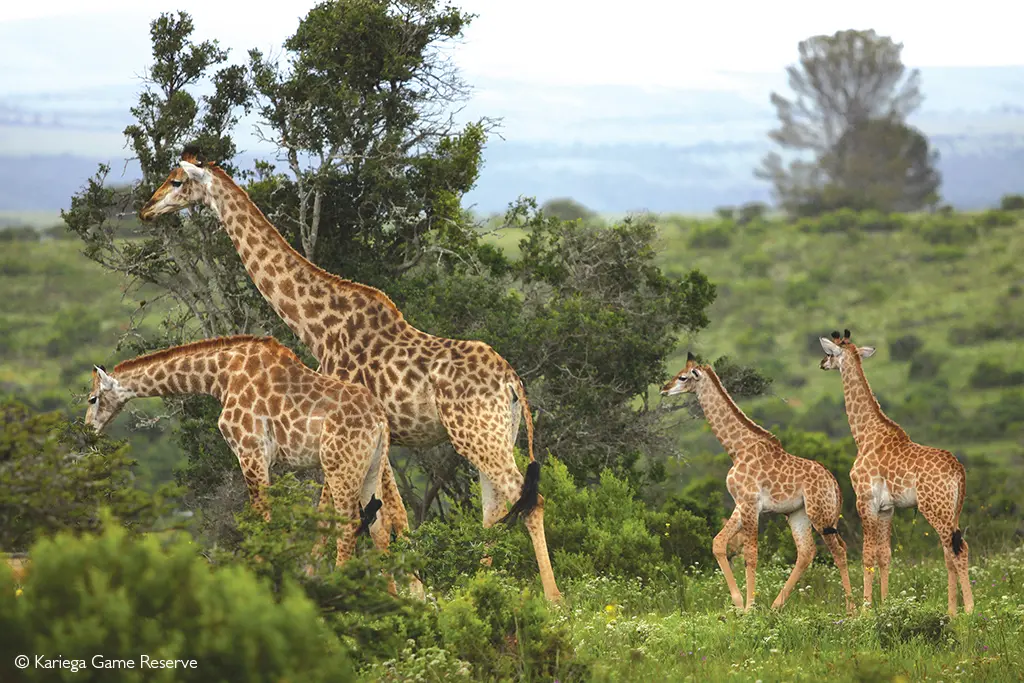
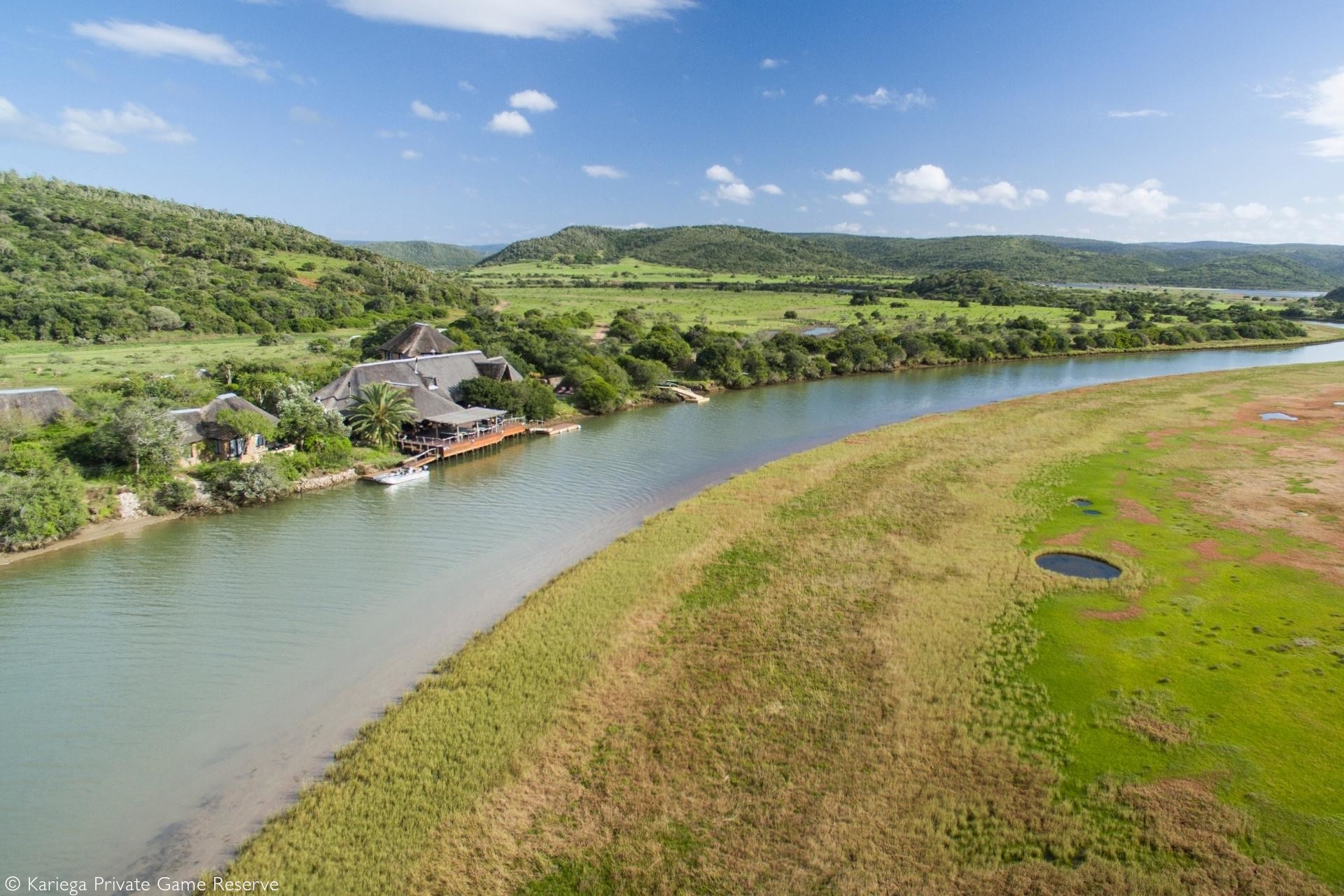
Lalibela Game Reserve
Recently rejuvenated, Lalibela Game Reserve offers an exclusive bush experience not far from Addo Elephant NP. The reserve is 100km² (10,500 hectares), and access is exclusive to guests of the lodges. Lalibela shares a similar setting with Addo, with the added advantage that there are substantial areas of open savannah grassland where herds of zebra, red hartebeest, wildebeest and blesbok congregate. Lalibela is also a significant site for cheetah conservation in South Africa.
As is the case for many of the reserves in the area, Lalibela is a vital habitat for South Africa’s national bird, the striking and endangered blue crane.


Kwandwe Private Game Reserve
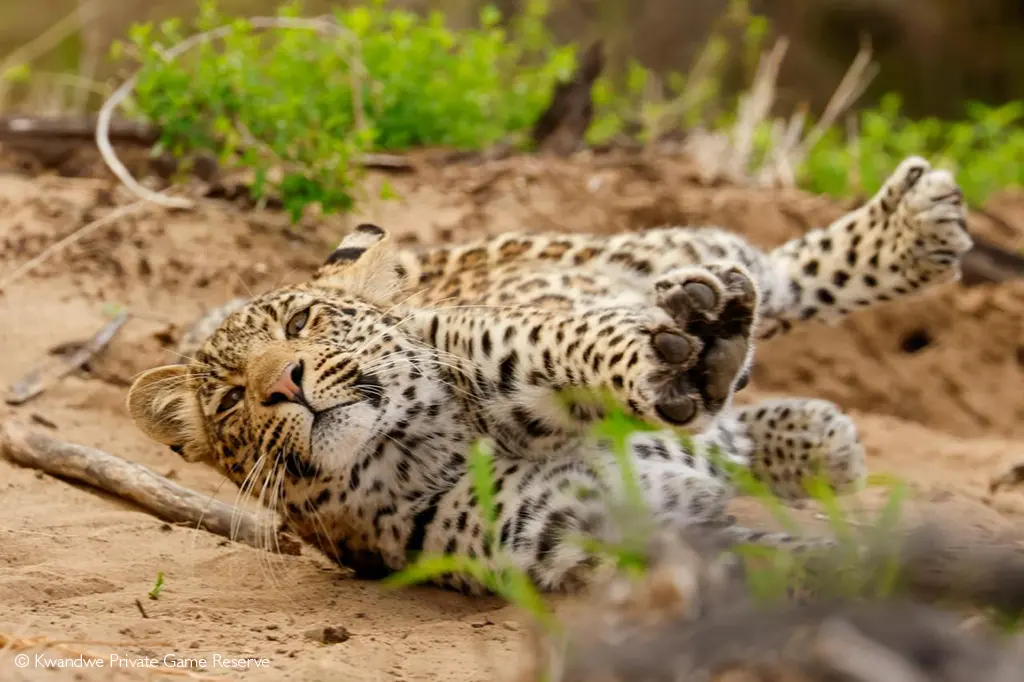
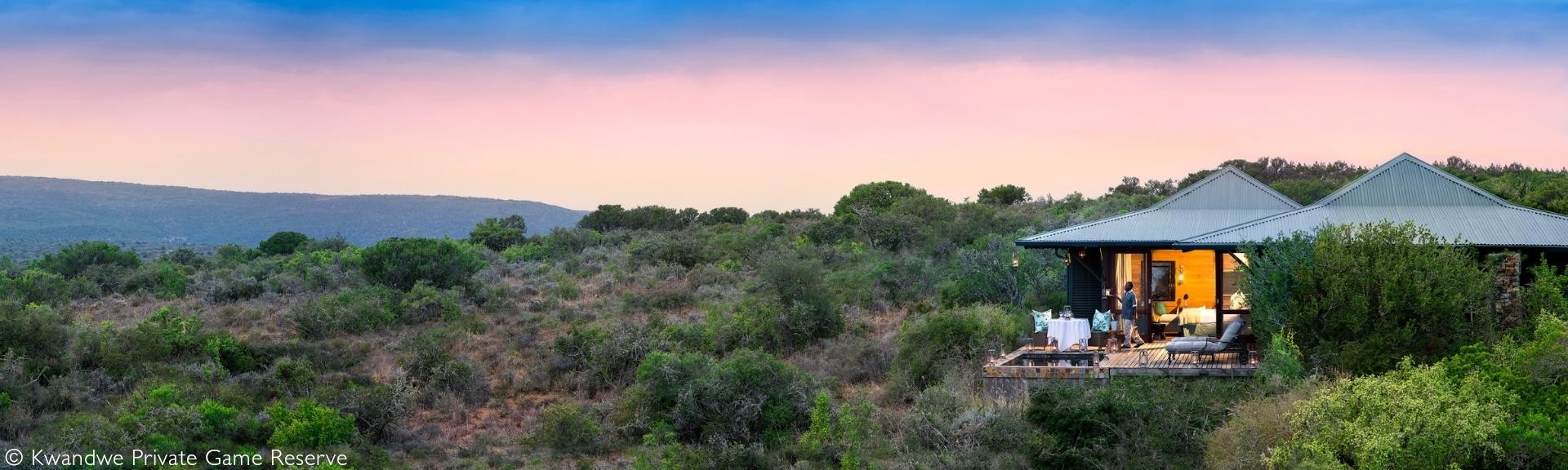
A private reserve with a proud record of rehabilitation from farmland to restored wilderness, Kwandwe Private Game Reserve straddles the Great Fish River and covers a total area of 300km² (30,000 hectares). This region of the Eastern Cape is topographically dramatic and picturesque and boasts high levels of biodiversity. The reserve has various conservation activities on offer for guests to experience, as well as walking safaris, and plenty of activities for families with young children to enjoy.
Shamwari Private Game Reserve
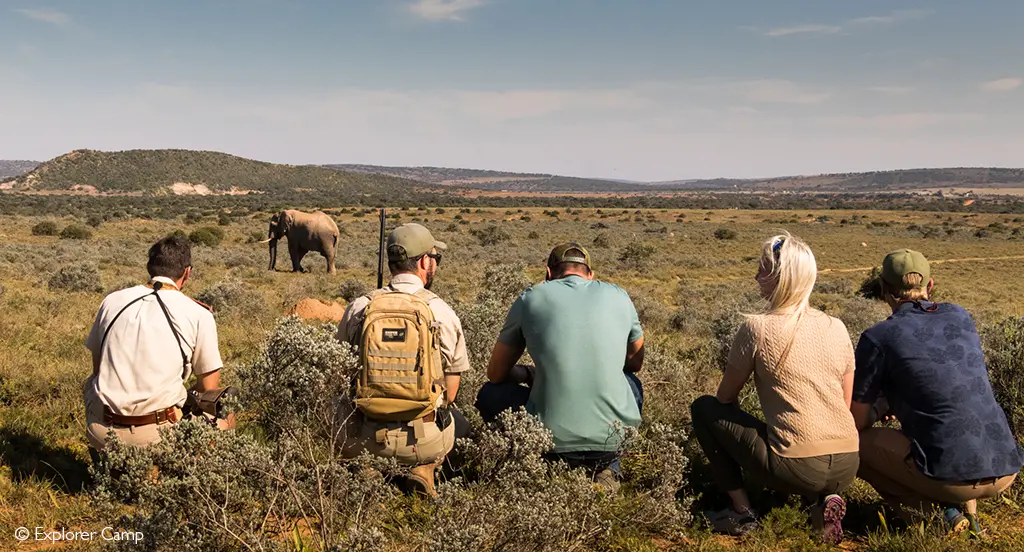
Shamwari Private Game Reserve is probably one of the best-known private reserves in the Cape region and one of the most upmarket on this list. Offering the quintessential safari experience (and checklist), this 250km² (25,000 hectares) award-winning reserve has an impressive conservation record. Situated just 75km from Gqeberha, it shares many habitat similarities with Addo Elephant National Park. It is also home to the Big 5 and cheetah, with the added bonus of regular and reliable leopard sightings.
The reserve is also home to a wildlife rehabilitation centre, which is open for tourists to visit for an educational experience. No interaction with the animals is permitted, and the end goal is to release the animals back into the wild whenever possible.
Eastern Cape – Karoo safaris
Camdeboo National Park
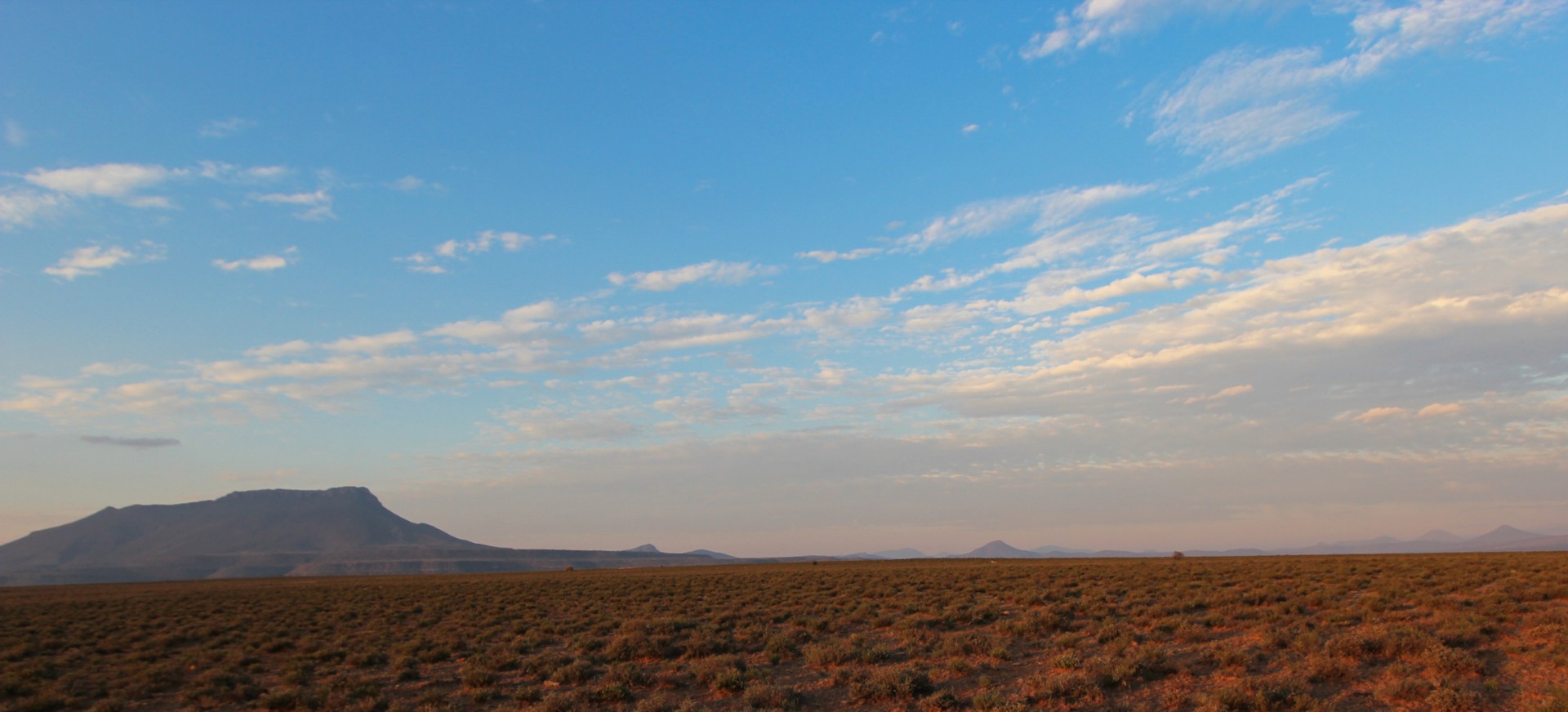
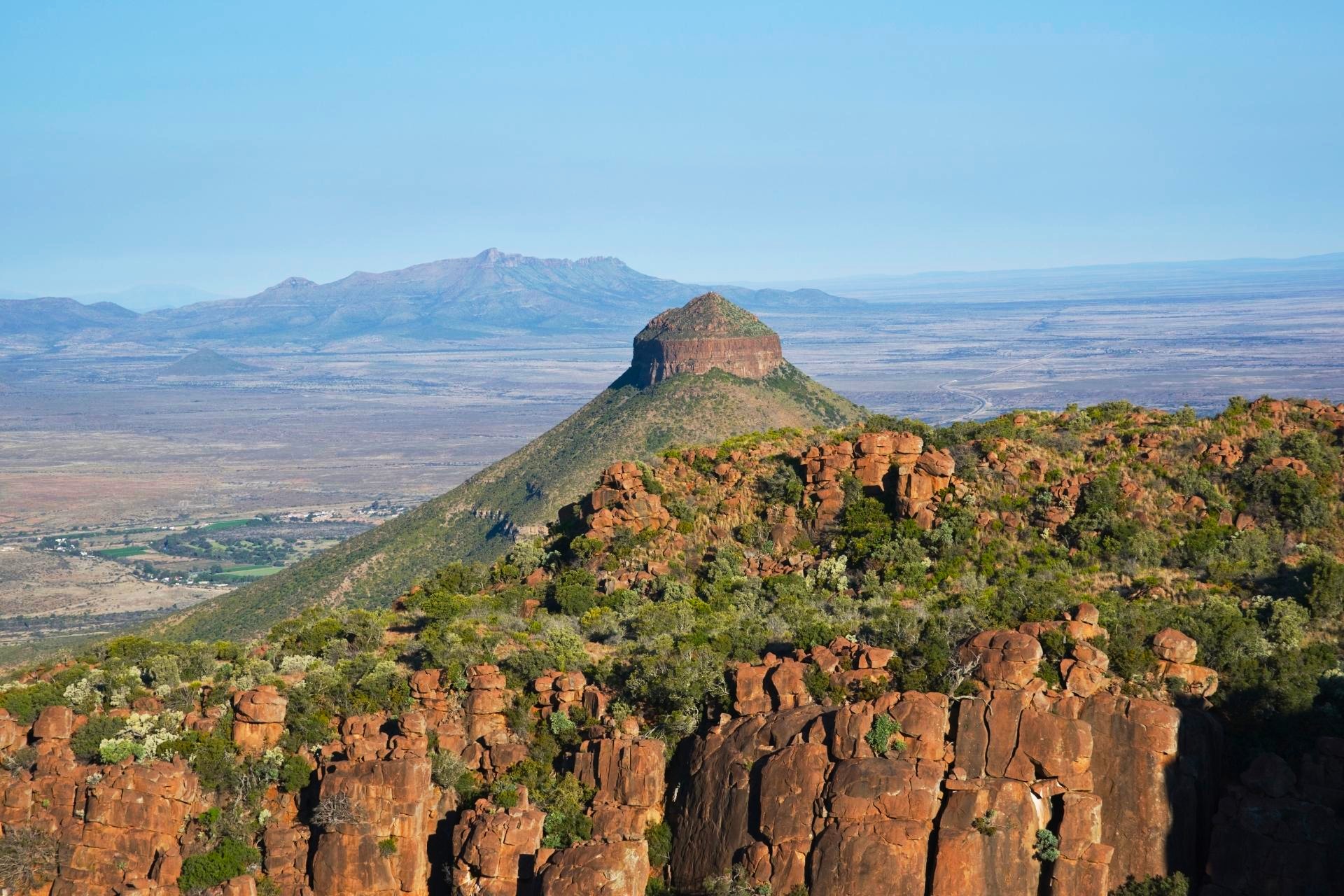
Wrapped around the quaint town of Graaff-Reinet is the 194km² (19,400 hectares) Camdeboo National Park in the heart of the Karoo. The gorgeous scenery, with ancient dolerite columns looking out over the Valley of Desolation, is the main attraction here. Don’t be fooled by the name because arid though the area may be, it still teems with life. Shy Cape buffalo are the only representatives of the Big 5, and antelope and zebra abound, as do endlessly entertaining meerkats that call the park home.
However, the Camdeboo experience is mainly about escaping into nature and revelling in the scenery on display, as the shifting clouds and setting sun transforms the rocks through myriad shades of red.
Samara Karoo Reserve
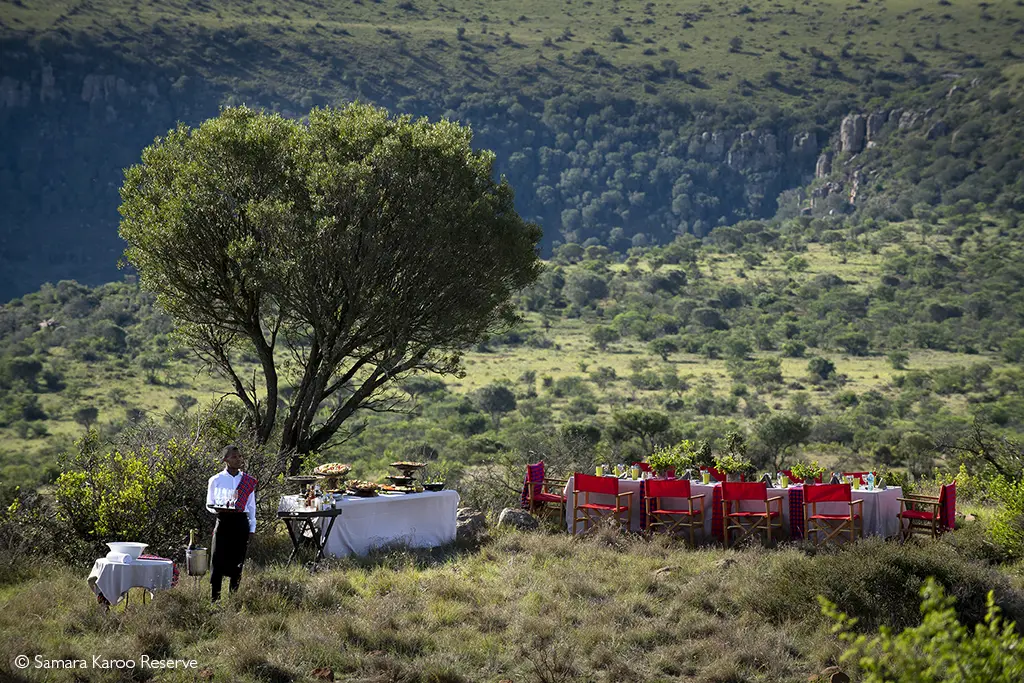
After a couple of days spent enjoying the surroundings of Camdeboo, visitors with a hankering for a safari experience can travel to nearby Samara Karoo Reserve. Gradually assembled from a total of 11 farms, Samara is restoring a patch of wilderness and bringing wildlife back. The reserve now covers 283km² (28,300 hectares) in the Great Karoo, treating visitors to fantastic wildlife sightings and glorious views.
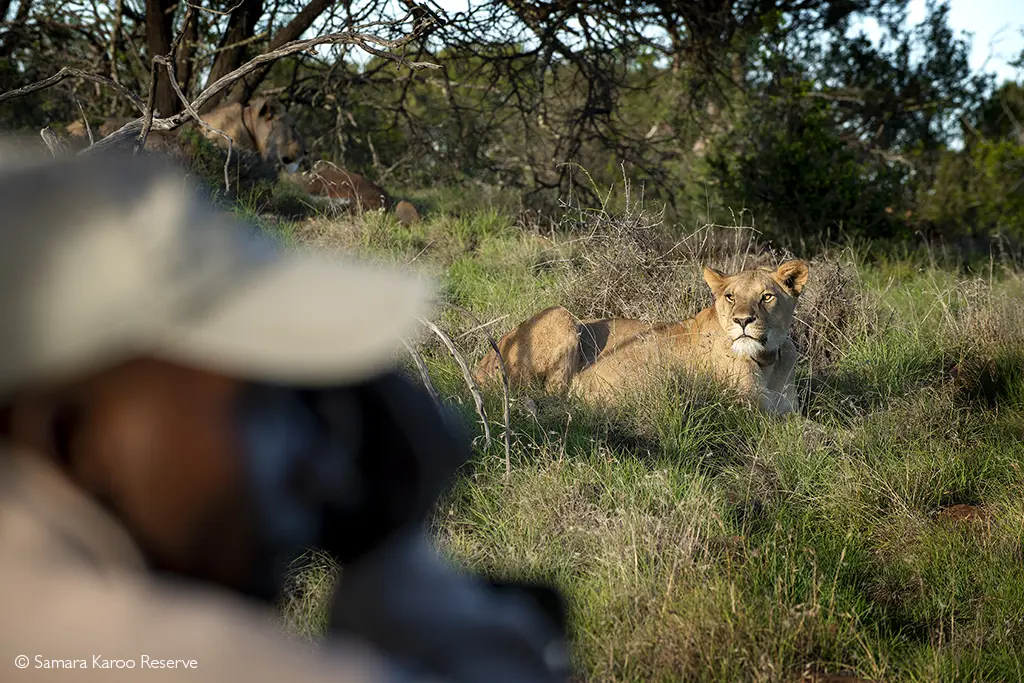
Even at its busiest, Samara only allows for a limited number of guests, making the experience extremely exclusive. Guests can expect sightings of white and black rhinos, elephants, lions, and herds of springbok, but tracking cheetah on foot is one of the reserve’s particular highlights.
For more on Samara’s restoration, see Samara-Rewilding the Great Karoo.
Mountain Zebra National Park
Situated further inland near the town of Cradock, Mountain Zebra National Park was initially established to save the Cape mountain zebra – a subspecies of mountain zebra that was threatened with extinction during the early 20th century. It straddles the transition between Nama Karoo, Albany thicket and the grassland habitats of the central plateau, incorporating the Bankberg Mountians. The park, at a size of 284km² (28,400 hectares) is a population stronghold for the still vulnerable Cape mountain zebras. Small herds are regularly relocated to other reserves to restore this zebra to its former range.
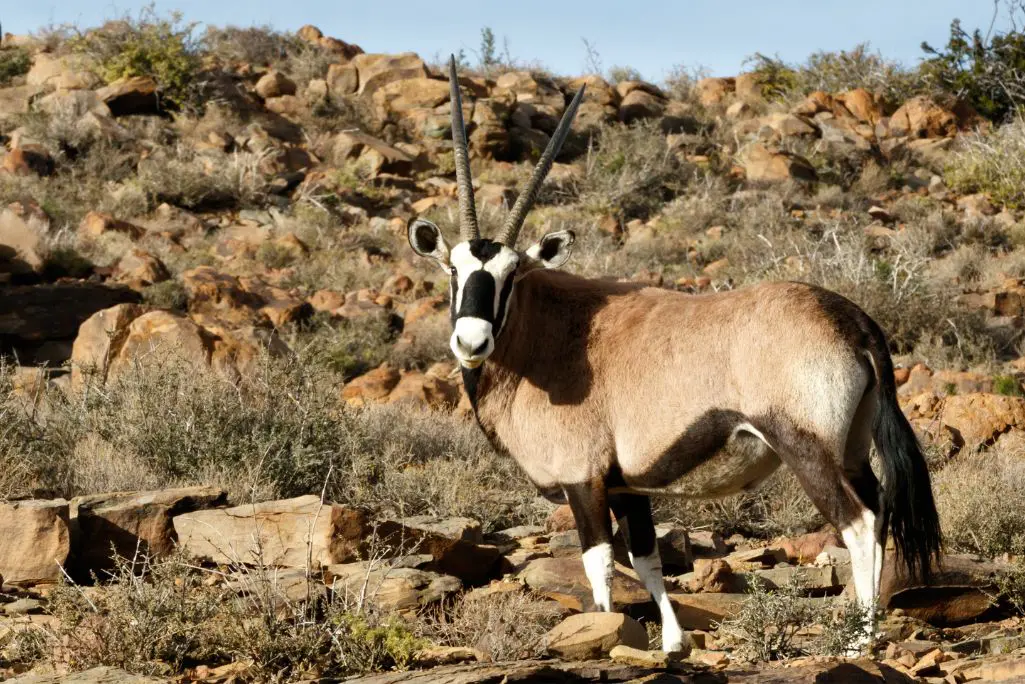
In addition to the park’s namesake animal, further introductions have seen the arrival of black rhinos, cheetahs, brown hyenas and lions that now roam the craggy hills of the park. Away from the scrublands of the Karoo, Mountain Zebra is primarily grassland and open savannah, offering unimpeded views of the wildlife, including herds of springbok, black wildebeest, and gemsbok. In the long term, there are plans to link Mountain Zebra with Camdeboo, creating a massive conservation area.

Western Cape Safaris
Gondwana Game Reserve
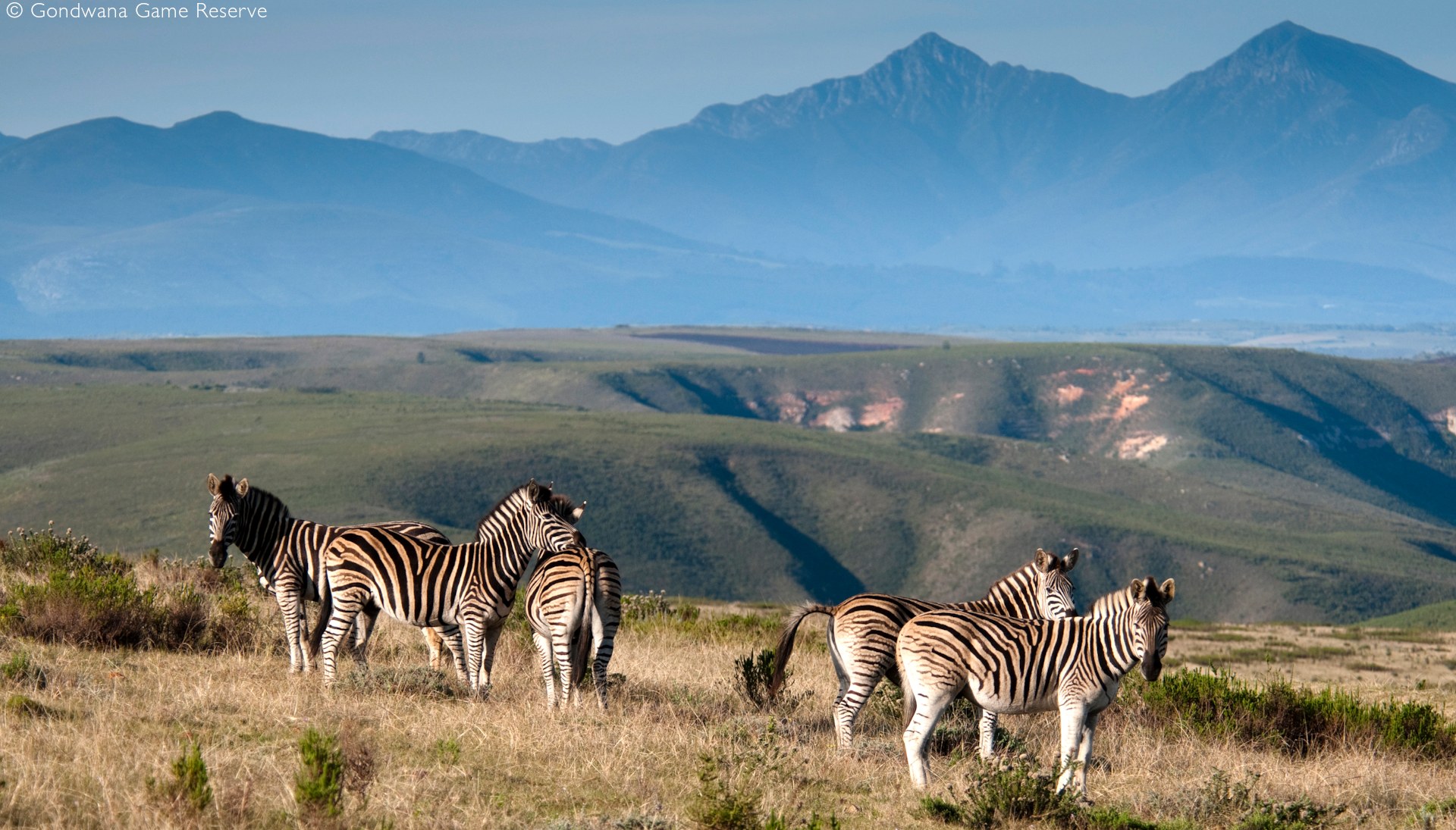
Situated along the Garden Route not far from Mossel Bay, the 110km² (11,000 hectares) Gondwana Game Reserve was the first of its kind in the southern Cape region and is a fully free-roaming Big 5 reserve in the Western Cape. Once used for livestock farming, the land is being restored, and today, wildlife abounds. Crucially, Gondwana boasts large areas of fynbos, many species of which are either endangered or critically endangered. In addition to the Big 5, cheetahs stalk through the fynbos and the reserve is also populated by herds of eland, bontebok, giraffe, and zebra.
Against the backdrop of the Langeberg and Outeniqua Mountains, visitors can explore on a game drive, mountain bike or hike on foot with a guide. The particularly adventurous can set off on a three-night trek through the reserve with overnight stays at fly camps along the route.
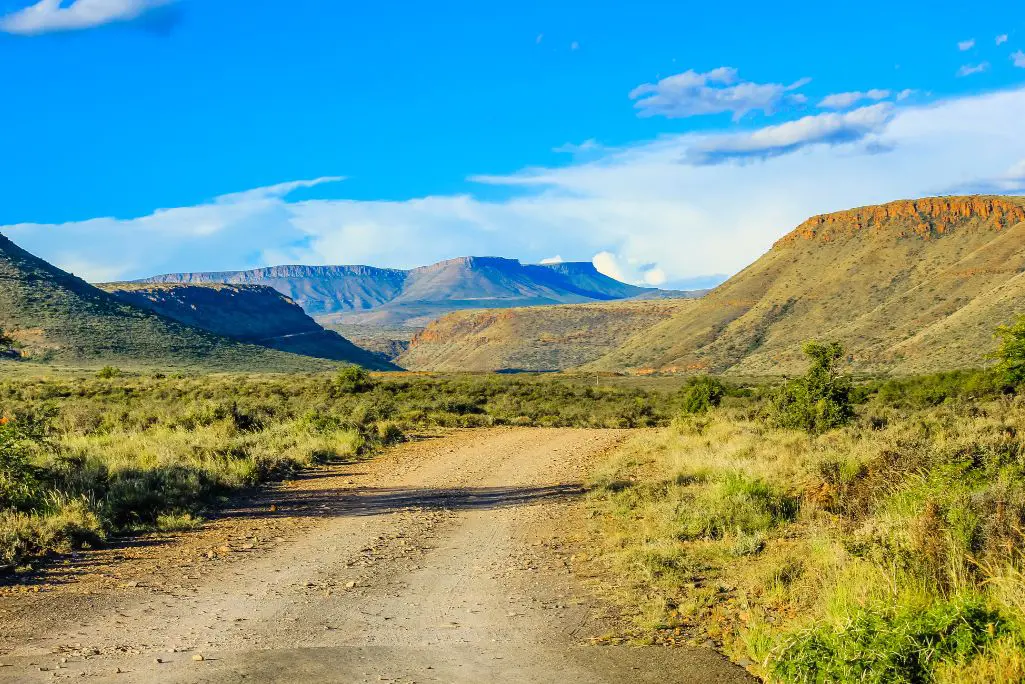
Karoo National Park
The state-run Karoo National Park covers a little over 750km² (75,000 hectares) of arid and inhospitable-looking Great Karoo terrain. A portion of South Africa’s Great Escarpment (a prominent topographical massif that runs almost the entire width of the country) divides the park into lower and upper sections.
Originally known simply as a convenient stopover for people travelling to or from Cape Town, Karoo National Park has evolved to become the perfect escape for those looking to detox from city life without having to pay ultra-luxury prices. Harsh though the environment may seem, the park has gone from conservation strength to strength. It is now home to black rhinos and lions and an assortment of other rare and critically endangered creatures like the Cape mountain zebra and the riverine rabbit (one of the most endangered mammals in the world), and Verreaux’s eagles nest on the park’s dramatic cliff faces.
Sanbona Wildlife Reserve
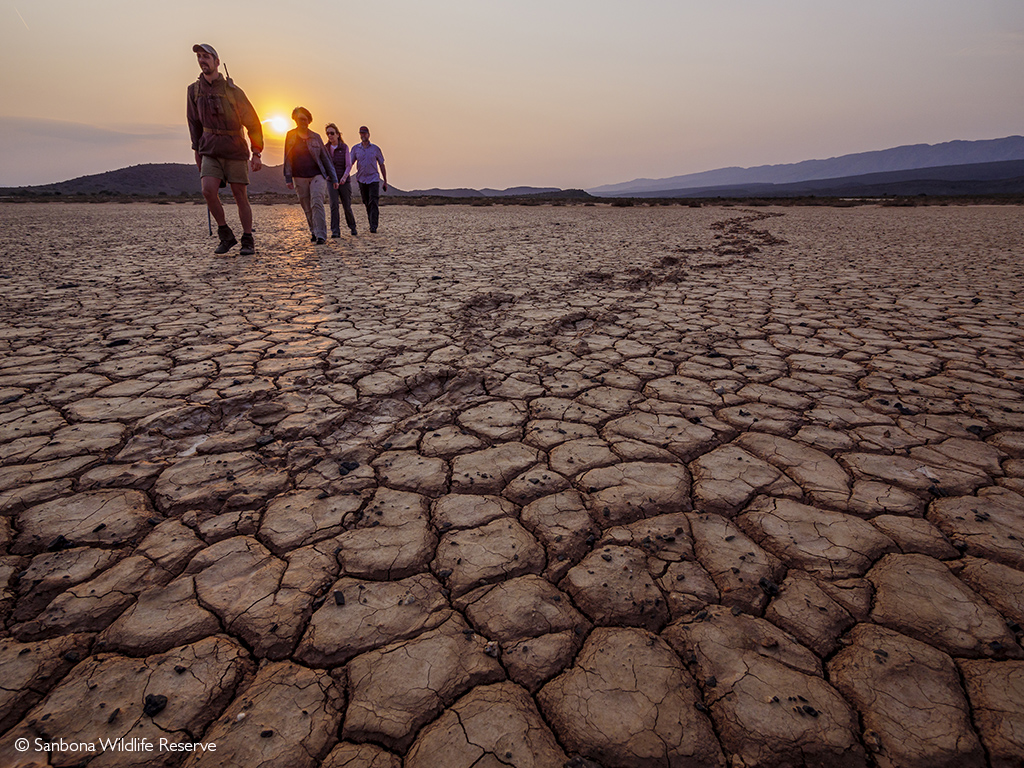
In the heart of the Klein Karoo, at the base of the Warmwaterberg Mountains, lies the 620km² (62,000 hectares) Sanbona Wildlife Reserve – one of South Africa’s largest privately-owned reserves. Like the rest of the Karoo, ancient and more recent history is everywhere, including San rock art over 3,500 years old beneath rocky overhangs overlooking breathtaking views. Like many of the other reserves in the Cape area, Sanbona was once farmland, but intensive rehabilitation has restored the land to its former glory, as evidenced by the flourishing wildlife.
The Big 5 are all present, as are cheetahs and brown hyenas, and sightings are made more impressive by the backdrop of magnificent scenery. From guided walks to boat safaris and stargazing to curated children’s programmes, Sanbona has something to offer everyone.

West Coast National Park
Just 90 minutes from Cape Town lies the 380km² (38,000 hectares) West Coast National Park, a coastal sanctuary where turquoise waters meet carpets of wildflowers, flamingos, and ancient history. Centred around the dazzling Langebaan Lagoon, West Coast NP protects one of South Africa’s most important wetlands and a fifth of the country’s salt marsh habitat. Each season transforms the park’s mood: from summer’s shimmering heat to spring’s spectacular bloom in the Postberg section, when the dunes erupt in colour and antelope wander among the flowers. Offshore, islands like Malgas and Schaapen host nesting seabirds such as Cape gannets and African penguins, while the surrounding Marine Protected Areas safeguard vital marine life and the delicate coastal ecosystem.

The park is also rich in history: Fossil beds nearby trace life back millions of years, and the park’s most famous relic – the 117,000-year-old Eve’s Footprint discovered at Kraalbaai – offers a rare glimpse into humanity’s deep past. Today, bontebok, eland, Cape mountain zebra, and caracal roam the fynbos and dunes, while over 250 bird species fill the skies and shoreline, making it one of South Africa’s premier birding destinations. Whether hiking through flower fields, cycling to the Seeberg viewpoint, or swimming at Preekstoel’s sheltered cove, the park invites slow exploration and quiet awe. Its Postberg wildflower zone is crucial for fynbos conservation. And why not pop into Langebaan for some fine dining while you’re at it?

The Cape Winelands – to end off your safari
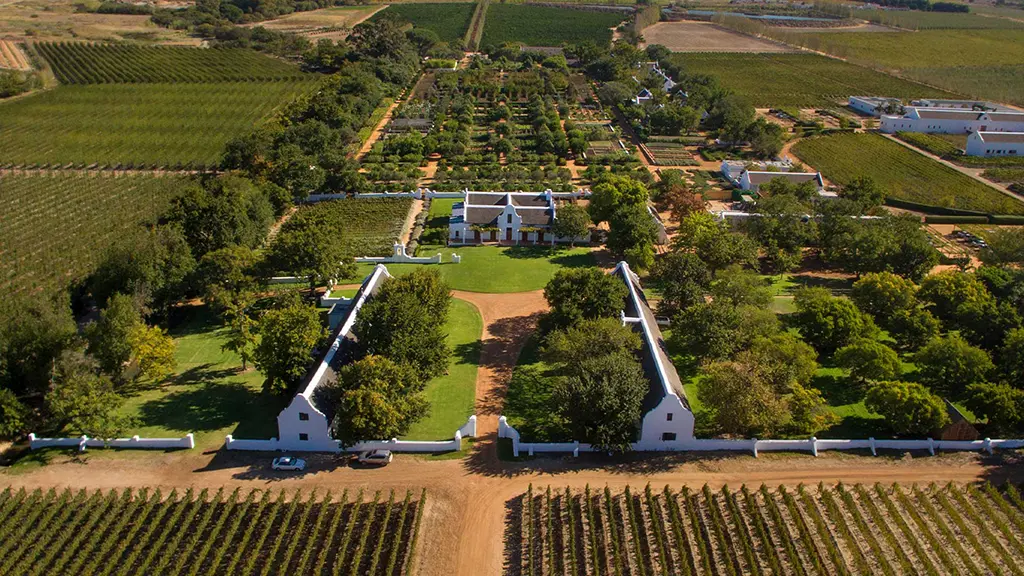
And lastly, no Cape safari is complete without a final stopover in the Cape Winelands – a landscape of rolling vineyards, oak-lined lanes and mountain backdrops that feels like the natural continuation of any Cape journey. Just a short drive from Cape Town, this region blends old-world charm with modern indulgence. Historic estates in Constantia, Stellenbosch, Paarl, Robertson and Franschhoek (South Africa’s gourmet capital) tell stories of centuries-old vineyards and Cape Dutch homesteads, while offering tastings of award-winning wines paired with artisanal chocolate, cheeses and olives. Beneath the shade of ancient oaks or on terraces overlooking vine-covered valleys, every meal becomes a celebration of place.
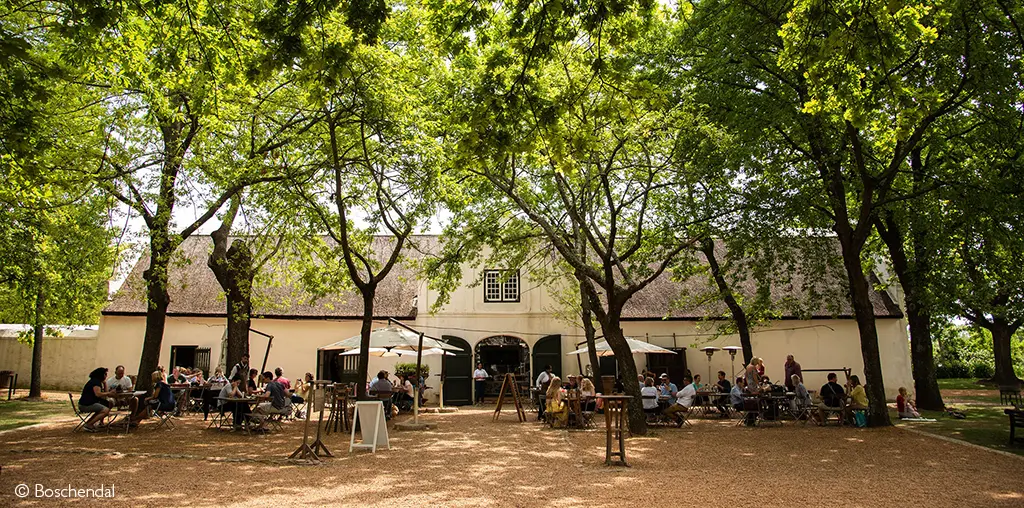
Whether you join a guided tour or explore at your own pace, the Winelands promise both sophistication and serenity. Spend a night or two to soak in the romance of country life, where fine food, art galleries and boutique cellars are framed by mountains glowing gold at sunset. With its Mediterranean climate and easy proximity to Cape Town, this is the perfect add-on to a Cape safari – a chance to trade the call of the wild for the clink of a wine glass, without ever leaving the rhythm of the land.
The ultimate Cape safari experience
The Cape safari experience offers adventures that are refreshingly different to the more renowned safari destinations elsewhere in Africa. The weather is generally good throughout the year (though the reserves can get very cold during winter), and the scenery is alluring and presents the perfect backdrop for diverse wildlife sightings. The wilderness areas are easily accessible and malaria-free, and the entire safari can be easily combined with a tour of the Garden Route, Winelands or Cape Town.
Further reading
- The city of Cape Town is one of South Africa’s most popular tourist destinations – for good reason. Here’s our ultimate Cape Town to-do list
- Cape Town – South Africa’s Mother City – offers a blend of a nature-lover’s playground, modern city lifestyle, cultural diversity and foodie heaven. Read more about Cape Town here
To comment on this story: Login (or sign up) to our app here - it's a troll-free safe place 🙂.