
Beyond the beach


- Zanzibar combines Stone Town’s rich Swahili heritage with the tranquillity of its Indian Ocean beaches.
- Stone Town’s winding streets reveal centuries of African, Arab, Indian and European influences.
- From bustling food markets to rooftop dining, Zanzibar’s culinary traditions reflect its multicultural history.
- On the east coast, dramatic tides reveal an extraordinary coastal landscape filled with fascinating marine life.
- Beyond its famous beaches, Zanzibar’s greatest appeal lies in its people, culture and everyday rhythms.
 Want to visit Zanzibar for your next African safari? Check out our ready-made safaris to Zanzibar here, or let us tailor-make your dream safari for you.
The tangled streets of Stone Town are designed for getting lost. Alleys narrow between coral-stone buildings, carved doors appear around corners, scooters squeeze through unlikely gaps and, every so often, a passage opens onto the Indian Ocean. Then there are the sounds and smells: the call to prayer over the rooftops, fish arriving at the market, cloves and cardamom piled on stalls, meat and corn cooking over charcoal and conversations carrying from the barazas – stone benches outside homes and shops where people gather.
This is Zanzibar, beyond the familiar images of sea and sand.
For many travellers, the island is the final stop on a Tanzania safari – somewhere to swim and unwind before flying home. But Zanzibar is more than a beach extension. Its history spans centuries of Indian Ocean trade, and its African, Arab, Indian and European influences are evident in its food, architecture, music and traditions.
The beaches are paradise under your toes, but they are only part of the story.
An island shaped by the Indian Ocean
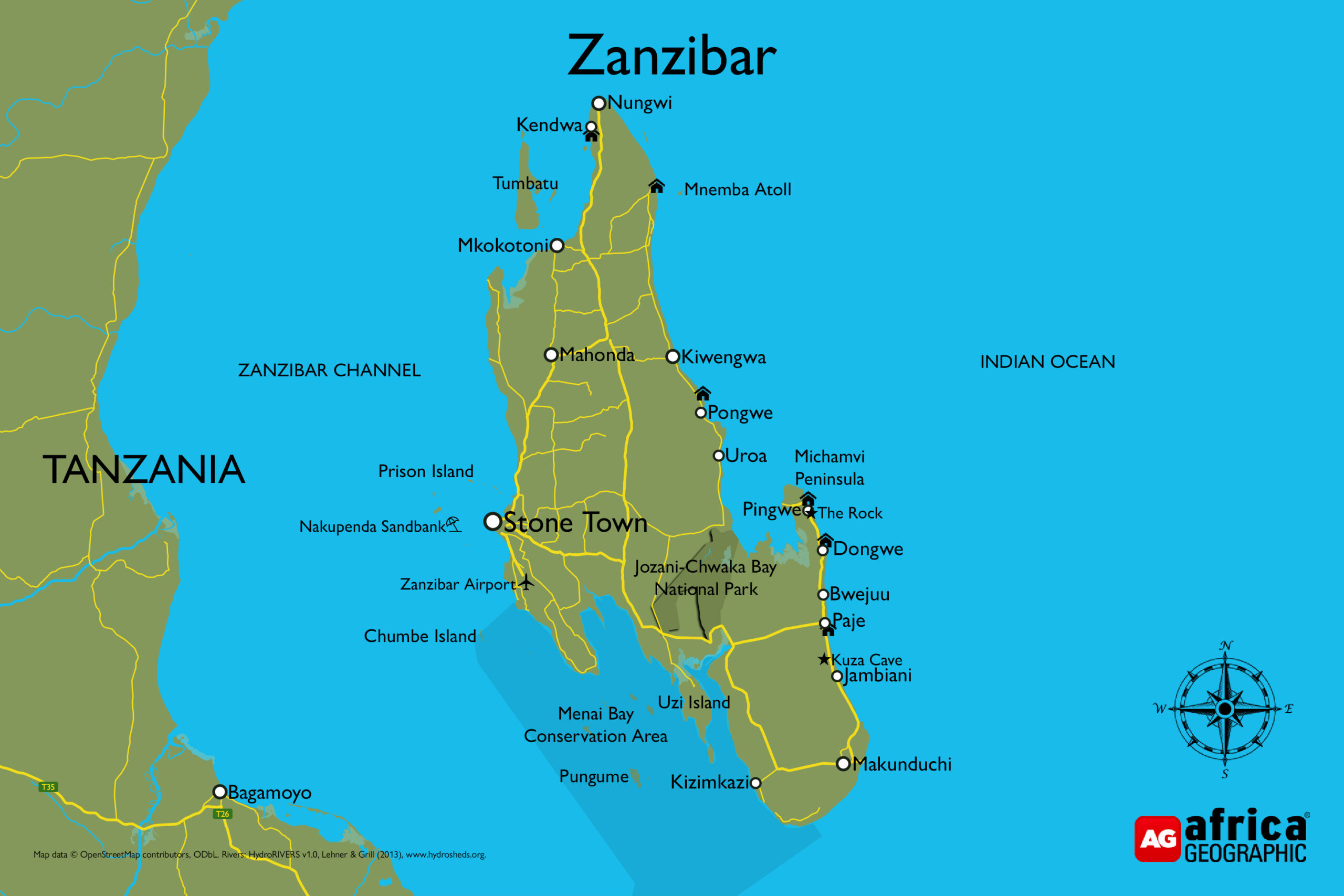
Zanzibar is often used as shorthand for Unguja, the largest island in the Zanzibar Archipelago and home to Zanzibar City and Stone Town. Together with Pemba and smaller islands, it forms the semi-autonomous region of Zanzibar within Tanzania.
For centuries, Zanzibar was part of maritime trading networks connecting East Africa with Arabia, Persia and India. Traders crossed the ocean using monsoon winds, carrying goods, people, languages, religions and ideas. The result is Zanzibar’s Swahili culture, with African foundations and influences accumulated through centuries of exchange. These connections are visible in architecture, food, music and language, and nowhere are they more concentrated than Stone Town.

Into Stone Town
Stone Town covers about 2.5km², and walking is the best way to explore it. The old quarter became a UNESCO World Heritage Site in 2000, recognised as an outstanding example of a Swahili coastal trading town. Much of Stone Town was built using coral ragstone, while more than 500 carved wooden doors survive, decorated with motifs reflecting wealth, occupation and cultural influences.
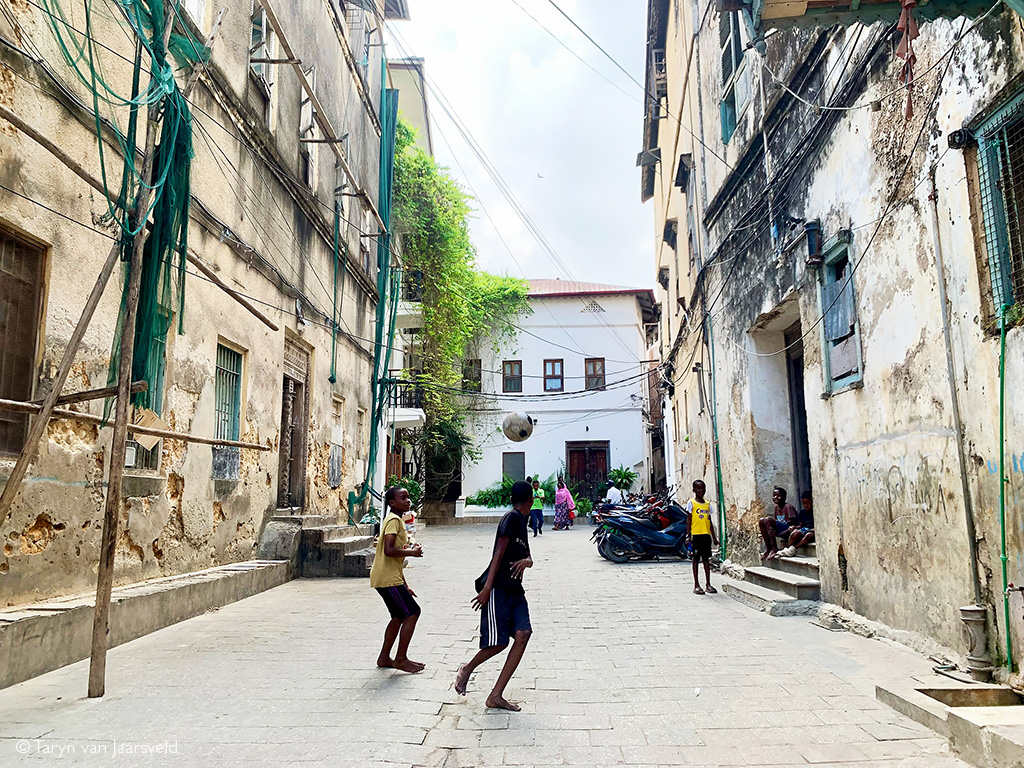
But Stone Town is no museum. Washing hangs from balconies, children move through alleys, shopkeepers sit outside their stores and cats occupy doorways.
As I wander through the streets, history seems compressed into a small area. Rooftops rise above narrow lanes, courtyards hide behind plain facades and hotels occupy former merchant houses.
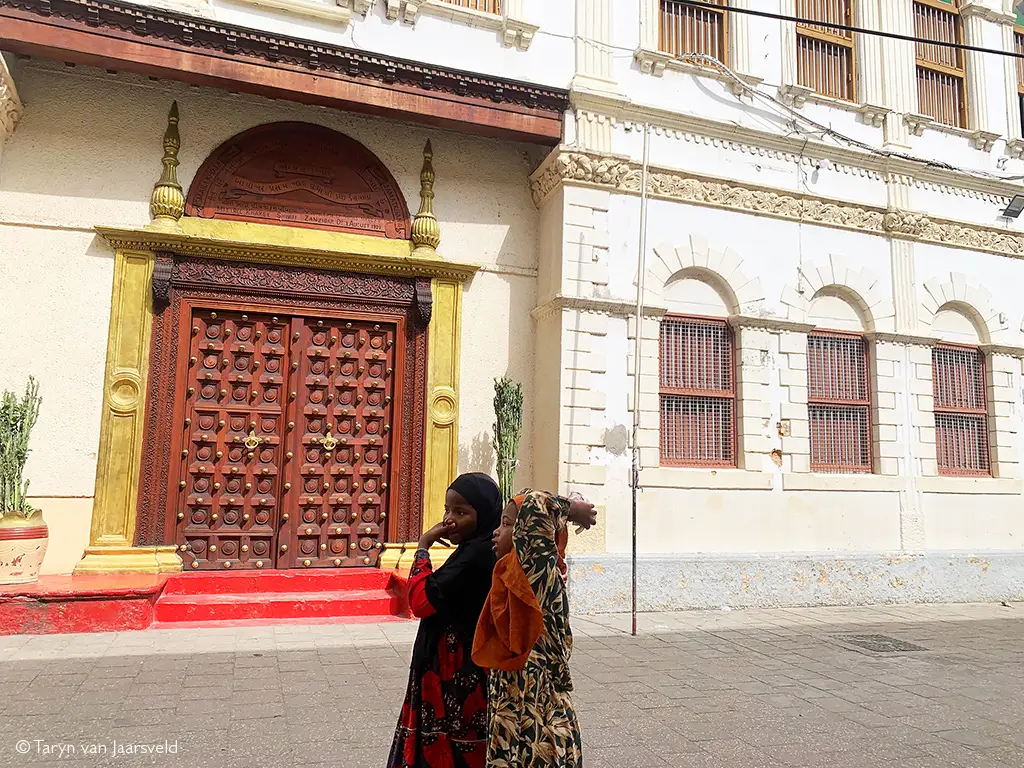
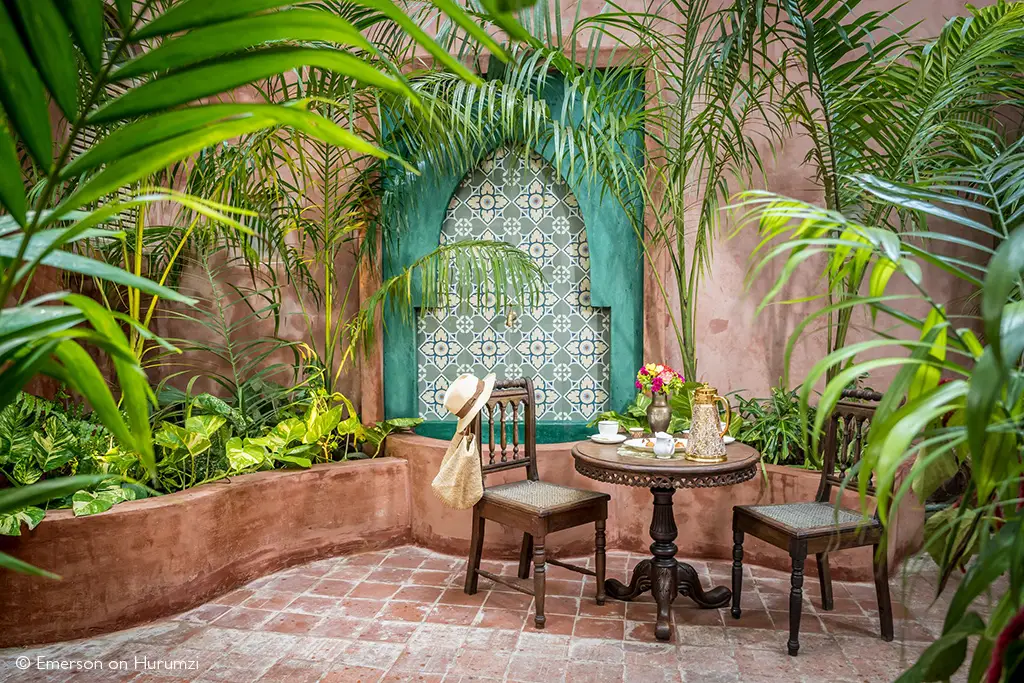
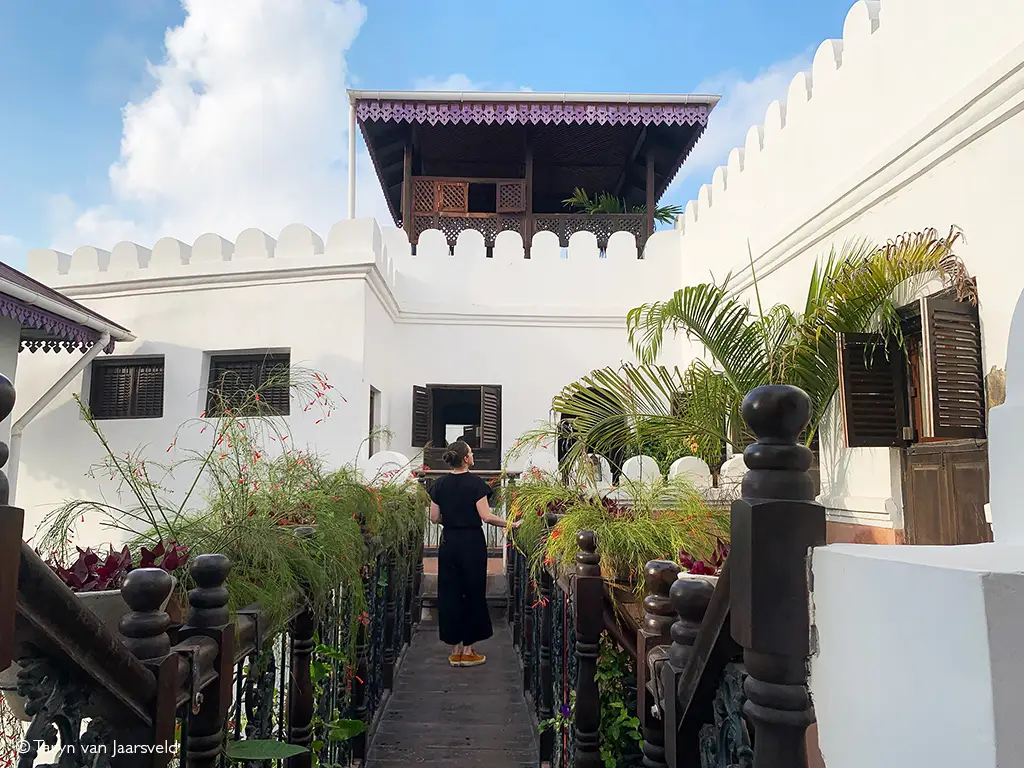
At Emerson on Hurumzi, where I spend my first night in Zanzibar, balconies overlook the old city, while the interiors reflect Zanzibar’s connections with Arabia, India and the Swahili coast.
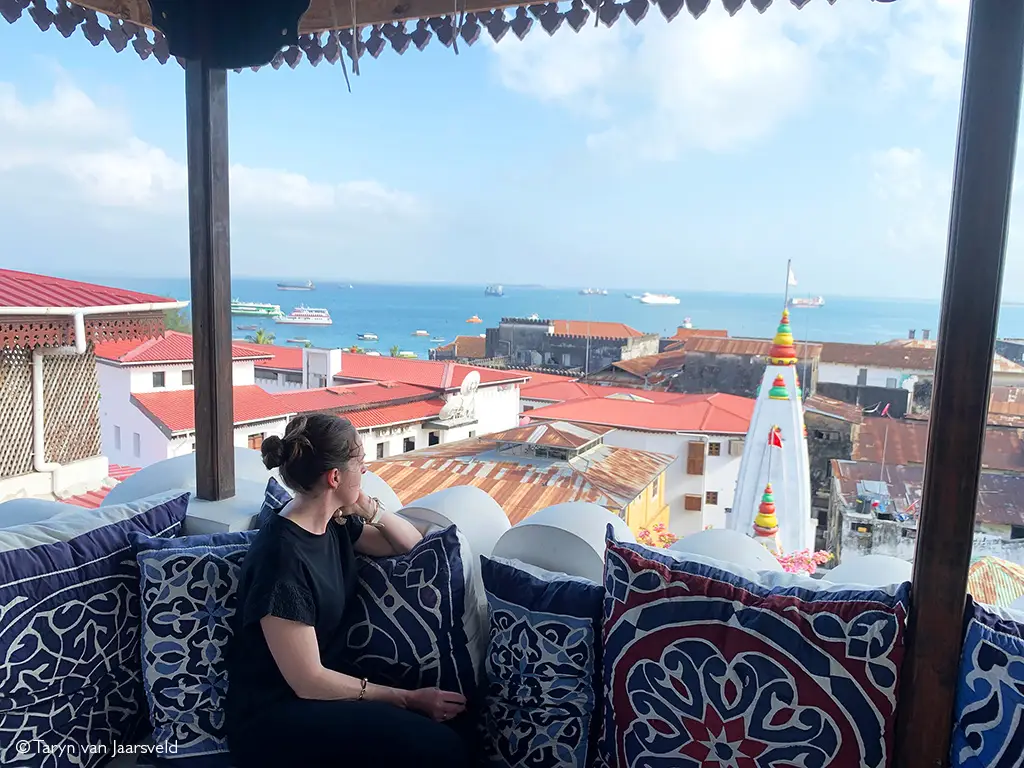
Dinner at the rooftop Tea House at Emerson on Hurumzi comes with an introduction to Zanzibar’s musical heritage. From the rooftop, I look out over a jumble of roofs, while boats sail in and out of the harbour on dark blue seas. The view explains Stone Town better than a map. As the sun sets over Stone Town, musicians perform taarab, music that developed along the Swahili coast, blending Arabic, Indian and East African influences. The melodies of traditional instruments and Swahili vocals accompany a multi-course Zanzibari dinner, while the rooftops, minarets and harbour spread out below. It’s an experience that brings together so much of what makes Stone Town special – its food, music, history and connections across the Indian Ocean.
Zanzibar’s more difficult history
By the 19th century, Zanzibar had become an important trading centre under the Omani sultanate. Cloves and ivory generated wealth, but so did the trade in enslaved people brought from the African mainland.
The Anglican Cathedral, an essential stop for understanding Zanzibar’s history, stands on the site of the former slave market. Memorials and surviving chambers confront visitors with the human cost of the trade that helped build the island’s commercial power.
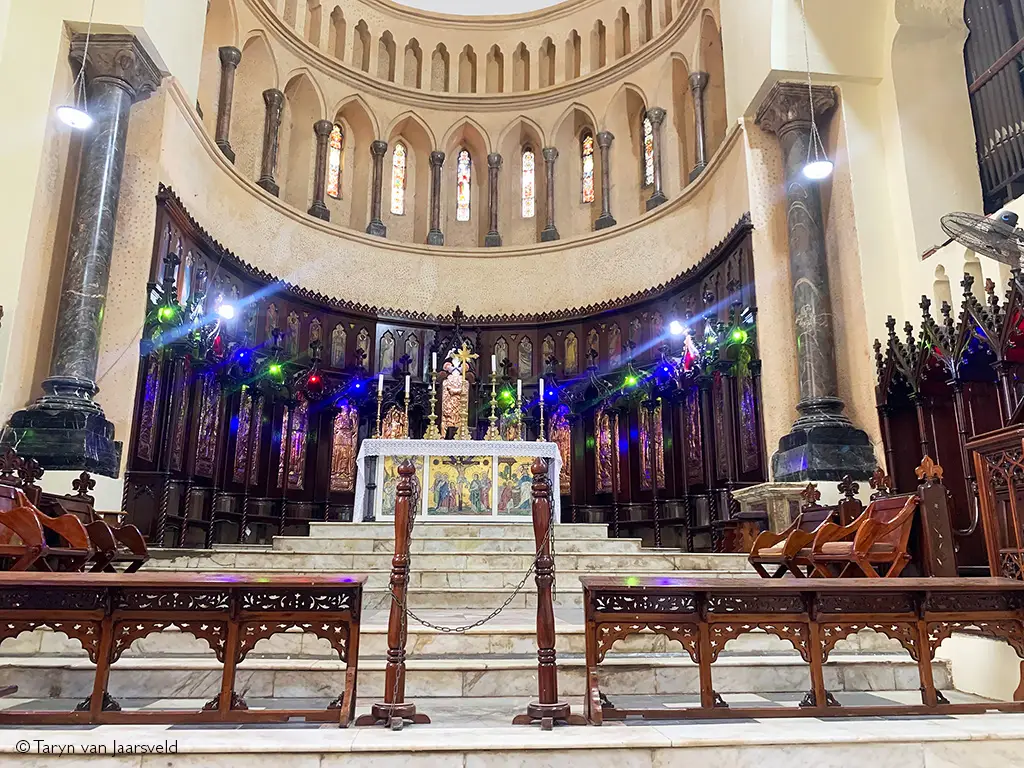
Our local guide connects this history to the streets around us, explaining what remains and placing individual buildings within Zanzibar’s past.
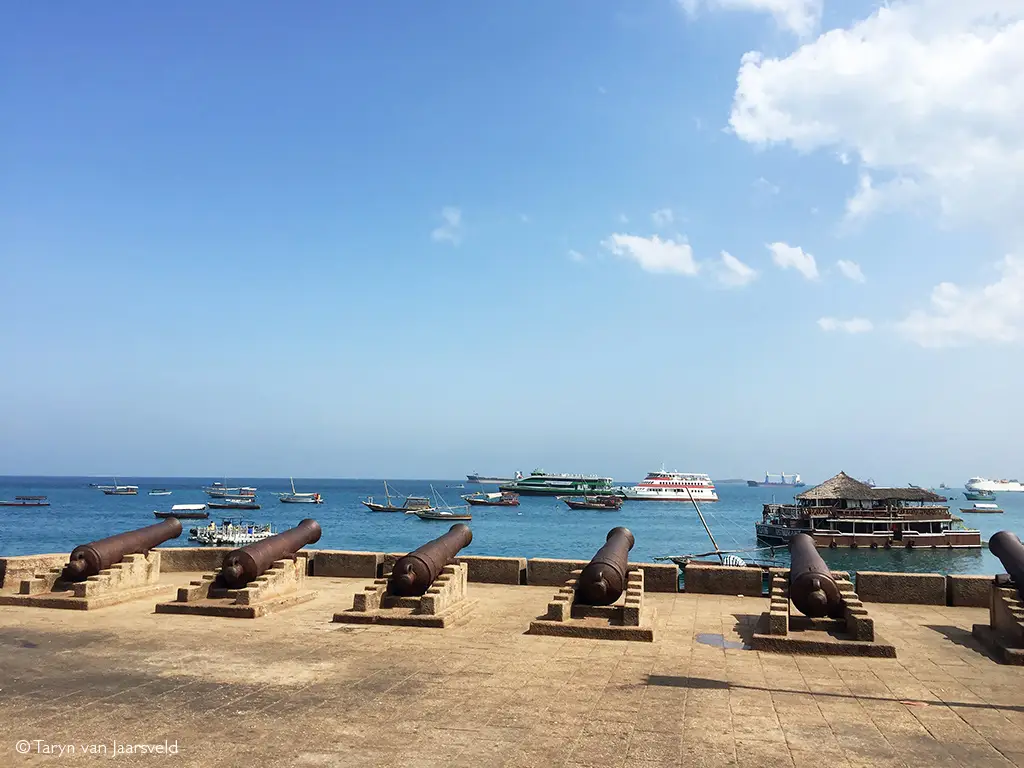
The Portuguese arrived on the East African coast around the beginning of the 16th century. Omani forces later displaced them, and Zanzibar became the centre of an Omani sultanate. British influence added another layer.
These histories accumulated rather than replacing one another. Their traces remain throughout Stone Town.
Following the spices
Zanzibar’s other famous history is easier on the senses. Cloves became central to the island’s economy under Omani rule, and Zanzibar was once the world’s leading producer. Cinnamon, nutmeg, cardamom, vanilla and turmeric also grow here, earning the islands their enduring nickname, the Spice Islands. A spice tour reveals familiar ingredients in unfamiliar forms. Cinnamon is bark, vanilla grows from an orchid, cloves are unopened flower buds and nutmeg develops inside a fruit, wrapped in the red webbing of mace.
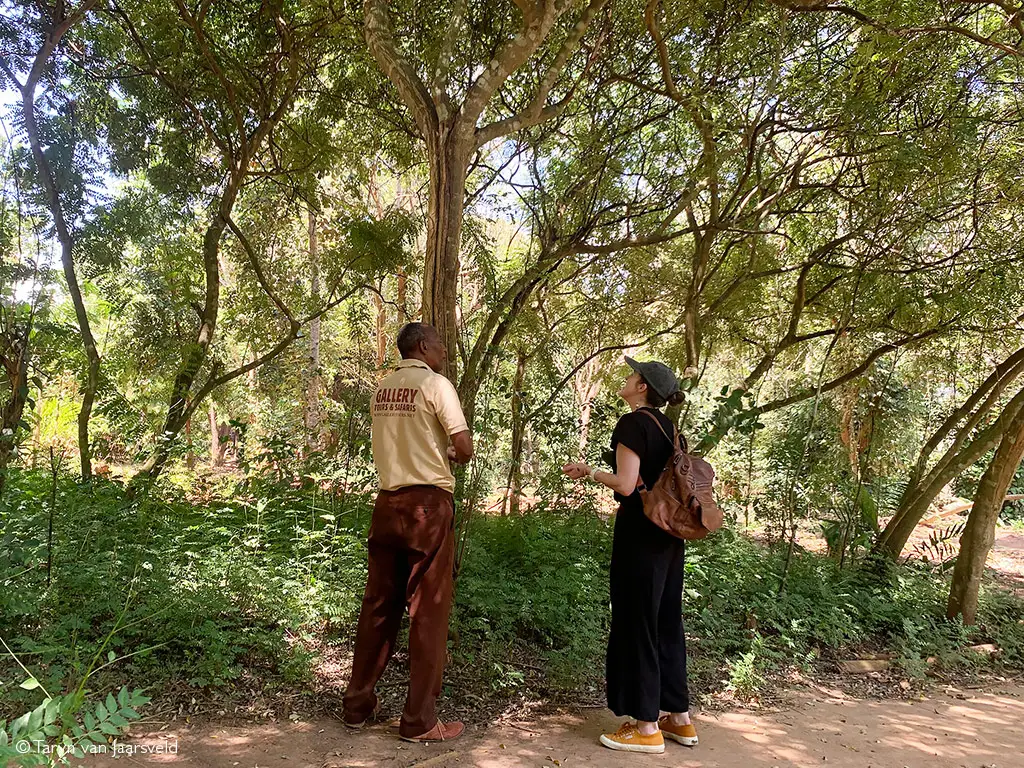
These ingredients appear throughout Zanzibar’s cooking, alongside rice, coconut, seafood and flavours introduced through centuries of trade.
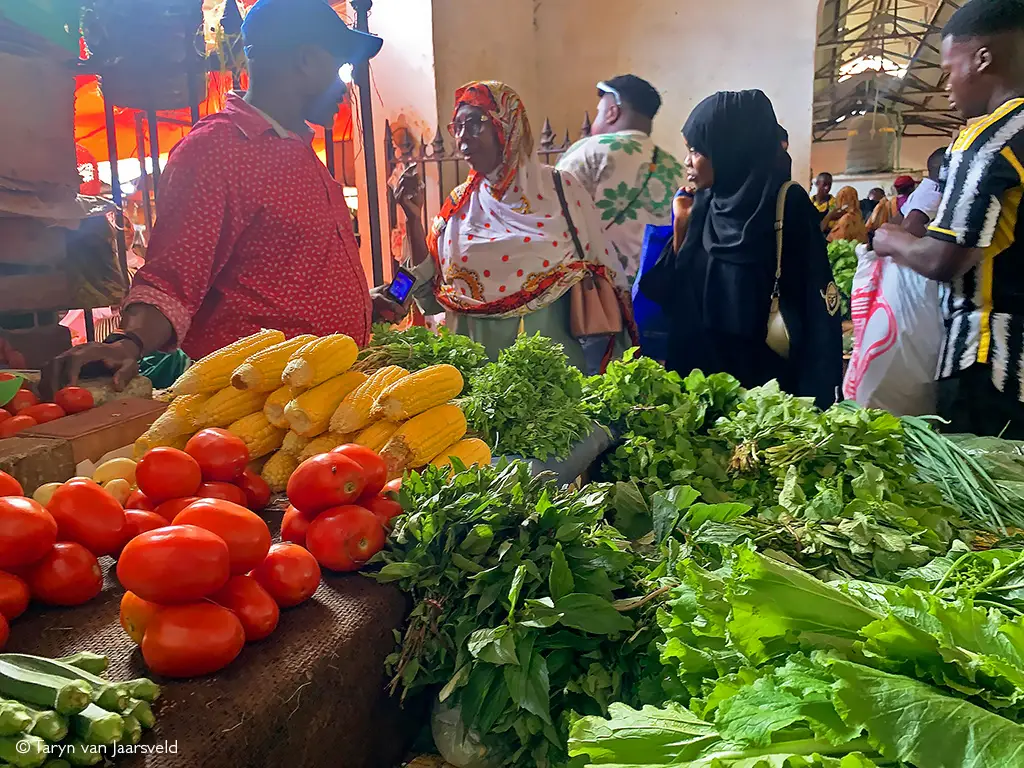
Stone Town’s fresh market brings much of this together. Fish, meat, vegetables and spices are traded at close quarters, as they have been for generations. As I walk through the stalls, there is little concession to visitors – this is a working market, and those with sensitive stomachs might prefer to avoid the meat and fish sections.
There is something wonderful about the way people gather along Stone Town’s waterfront as the day draws to a close. The beaches and harbour walls fill with families, friends and children, all simply enjoying being together. Boys play football on the sand, groups gather to chat and laugh, and swimmers splash in the warm Indian Ocean.
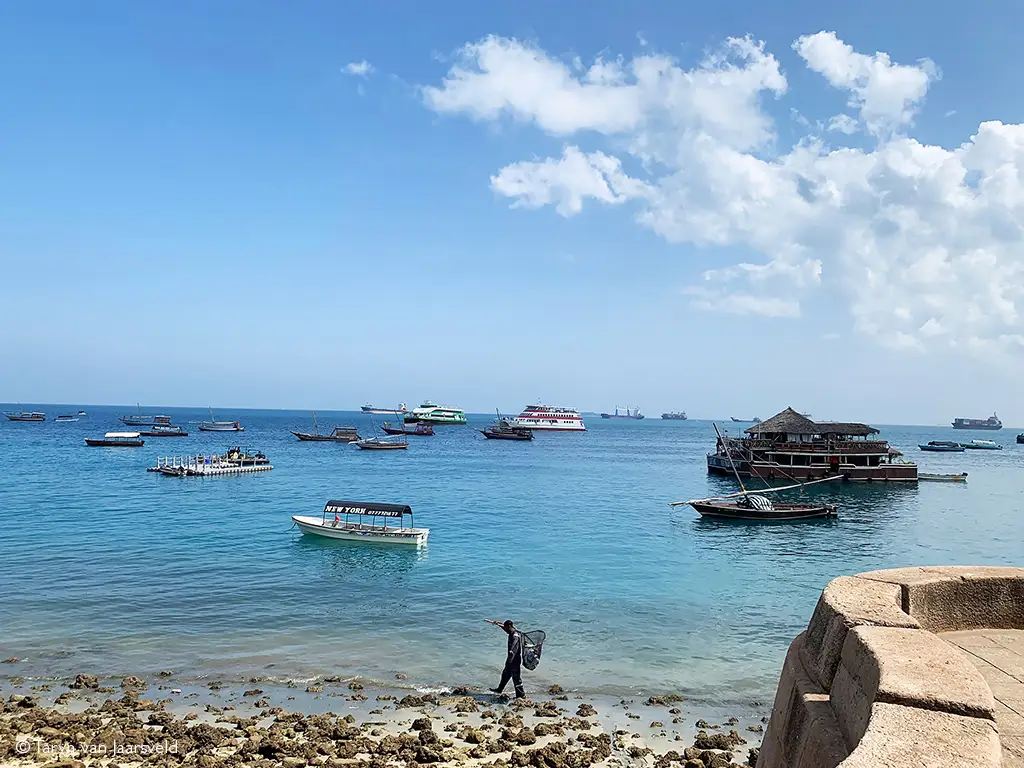
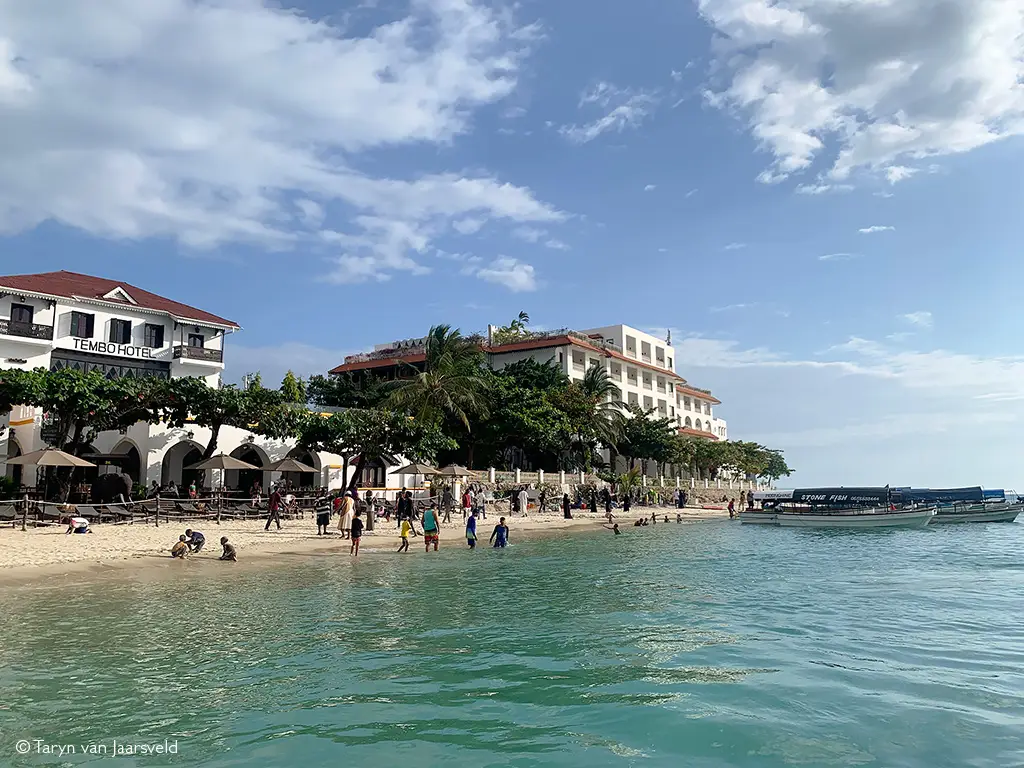
Near Forodhani Gardens, the famous Zanzibar jumping boys put on a show of their own, running towards the harbour wall before launching themselves into the water with spectacular flips and dives, shouting “Welcome to Zanzibar!” as they go. Some perform for cameras, but all around them, life carries on. I love the energy of it all. There is no need for an organised activity or a special occasion. The waterfront is simply where people come together, and watching it unfold is one of my favourite memories of Stone Town.
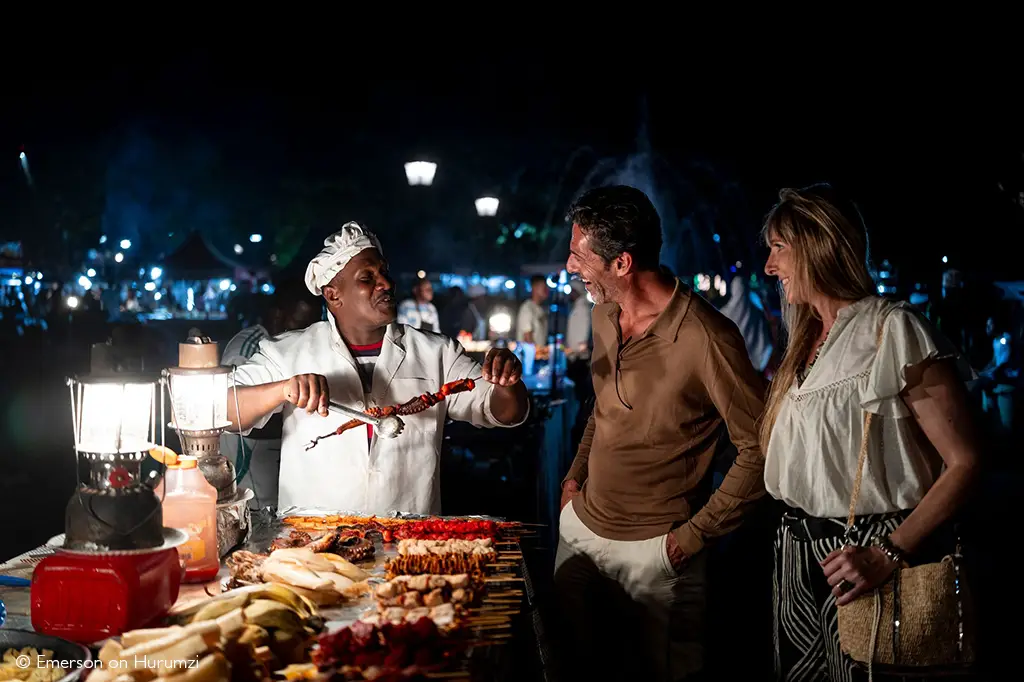
After dark, Forodhani Gardens becomes a night market selling grilled seafood, meat skewers and Zanzibar pizzas. Our guide explains that it is also a favourite meeting place for young people, who gather with friends and romantic interests away from the watchful eyes of their elders.

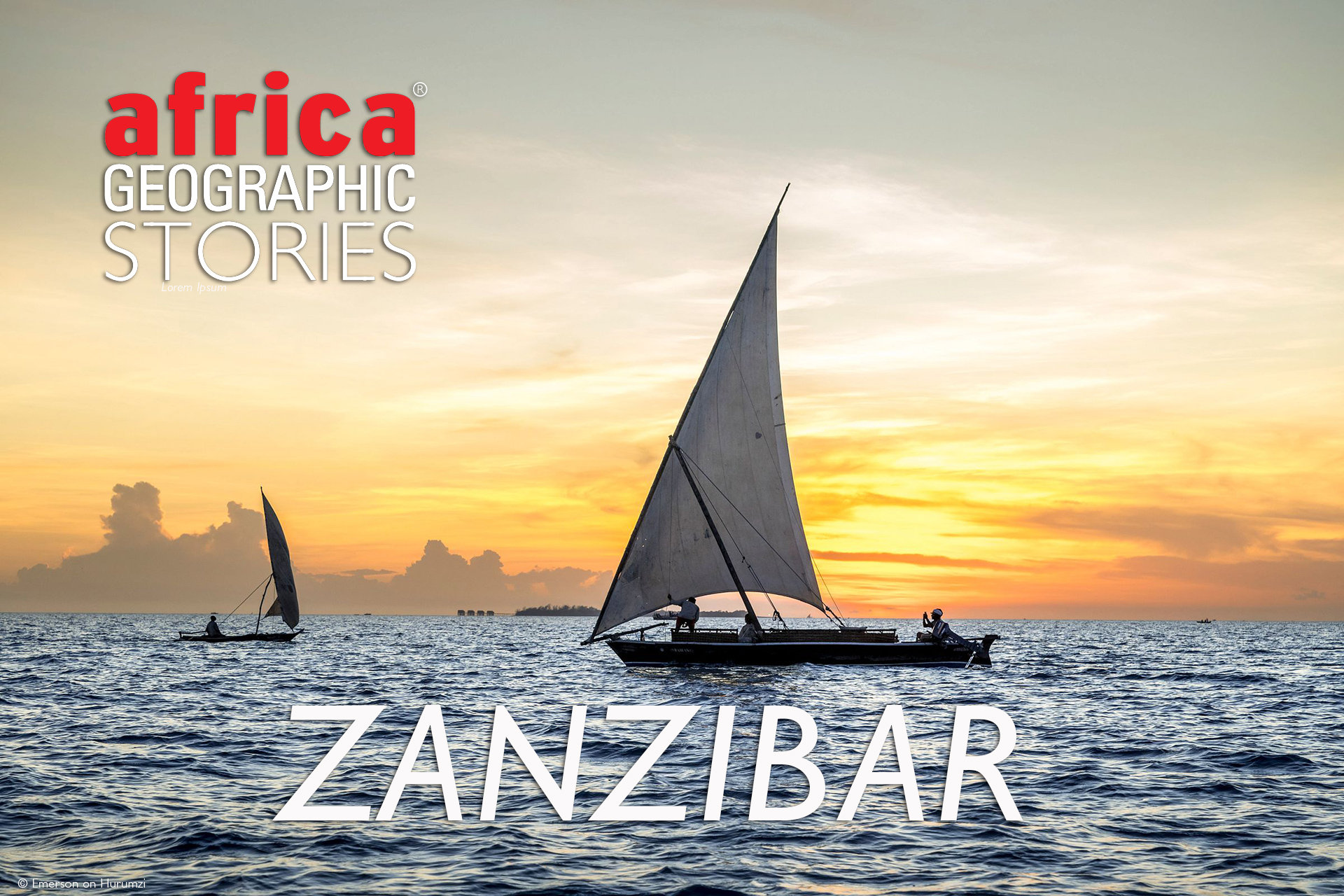
Zanzibar by dhow
For an island shaped by Indian Ocean trade, experiencing Zanzibar from the water seems only fitting.
For centuries, sailing vessels crossed these waters using seasonal monsoon winds to travel between East Africa, Arabia and Asia. Dhows remain part of Zanzibar’s maritime culture, and a late-afternoon cruise offers another perspective on the island.
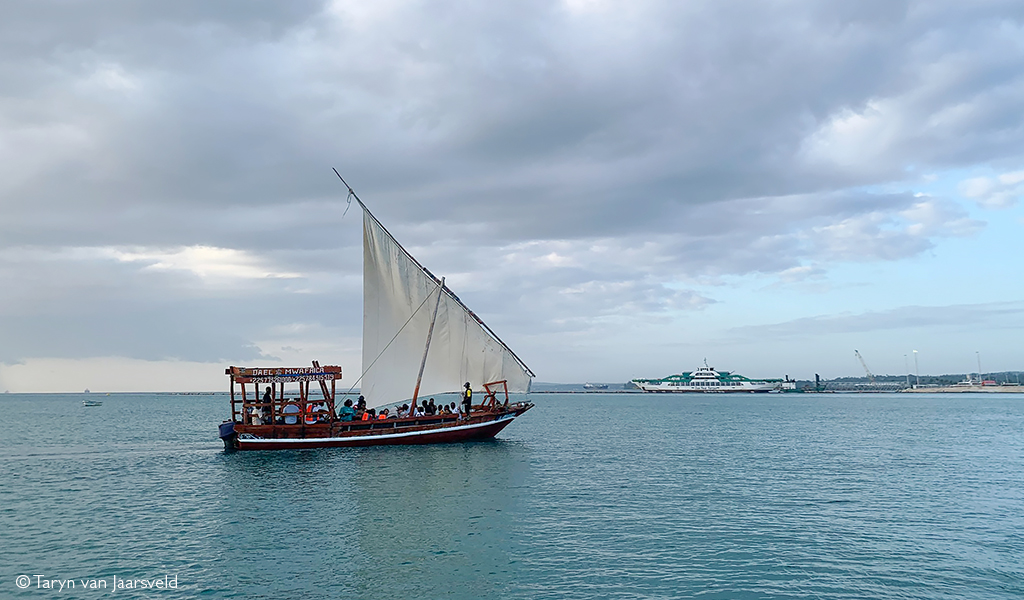
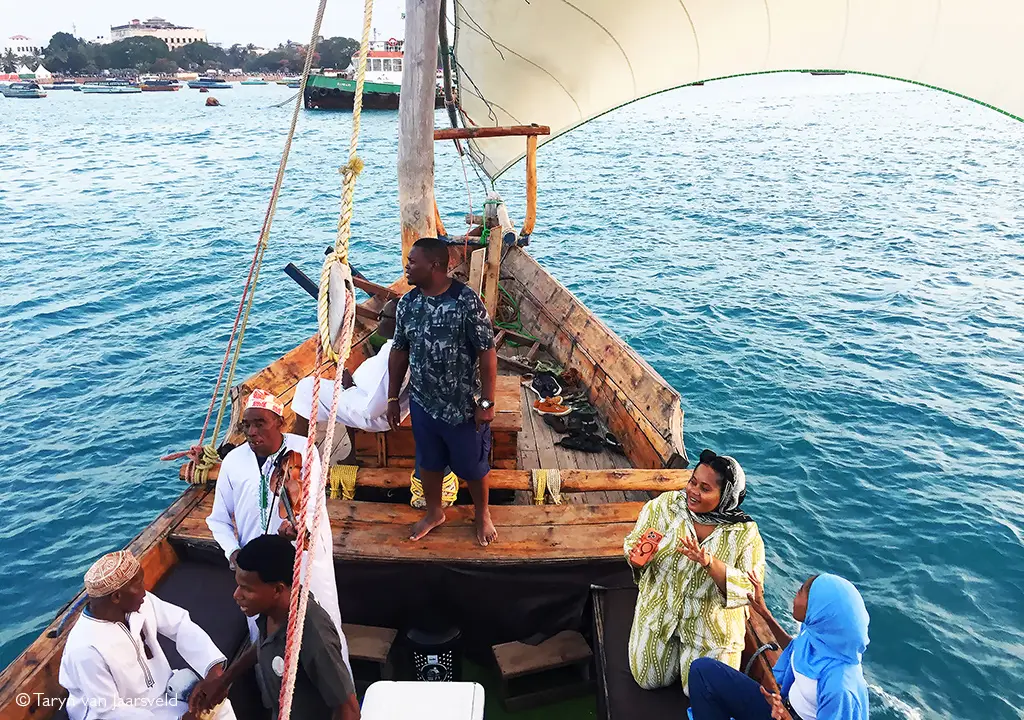
As we sail past mangroves and across open water, musicians play on board. The bowed notes of a violin carry across the deck, accompanied by drumming, singing and dancing.
As the sun drops, Stone Town recedes into the distance. We travel at the pace of the dhow, with time to enjoy the music, the ocean and the wind.
Zanzibar’s wild side
Beyond its towns and beaches, Zanzibar protects forests, mangroves, coral reefs and wildlife found nowhere else.
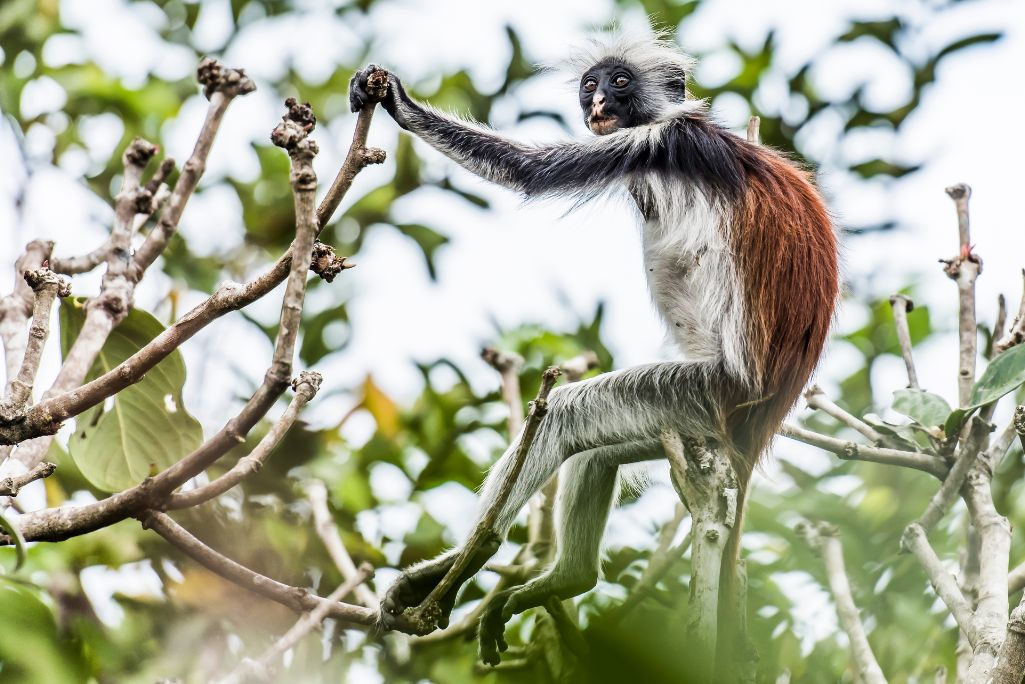
Jozani Chwaka Bay National Park is the best place to encounter the Zanzibar red colobus, a monkey endemic to Unguja. Its forests also shelter Sykes’ monkeys, bushbabies, duikers, chameleons and numerous birds. Mangrove boardwalks reveal crabs foraging among exposed roots.
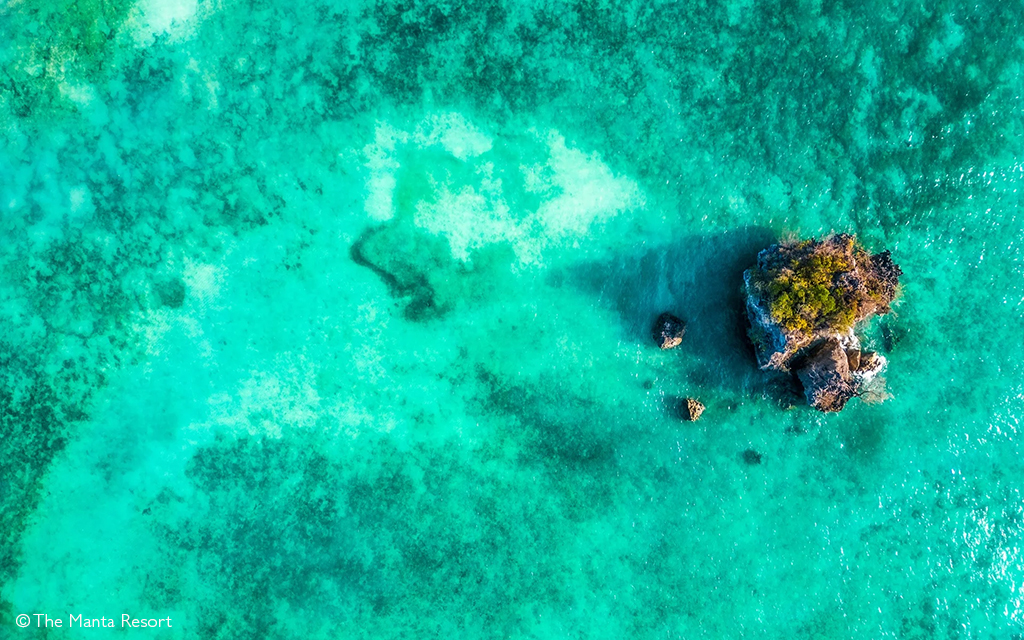
Offshore, reefs support sea turtles, moray eels, octopuses and reef fish. Mnemba Atoll is popular for snorkelling and diving, while kayaking, sailing and kitesurfing offer other ways to explore the coast.
Neighbouring islands have their own wildlife attractions. Pemba’s forests support endemic species, including the Pemba flying fox, while its offshore drop-offs attract divers. Farther south, Mafia Island is known for its marine park, coral reefs and seasonal whale-shark encounters.

A coastline with different personalities
Zanzibar’s beaches vary considerably, and choosing the right area can make or break a bush-and-beach safari.
Nungwi and Kendwa in the north experience less dramatic tidal changes and have more resorts and activities. Along parts of the east coast, the tide retreats across broad reef flats. Paje is a centre for kitesurfing, while other stretches offer smaller hotels and fewer people.
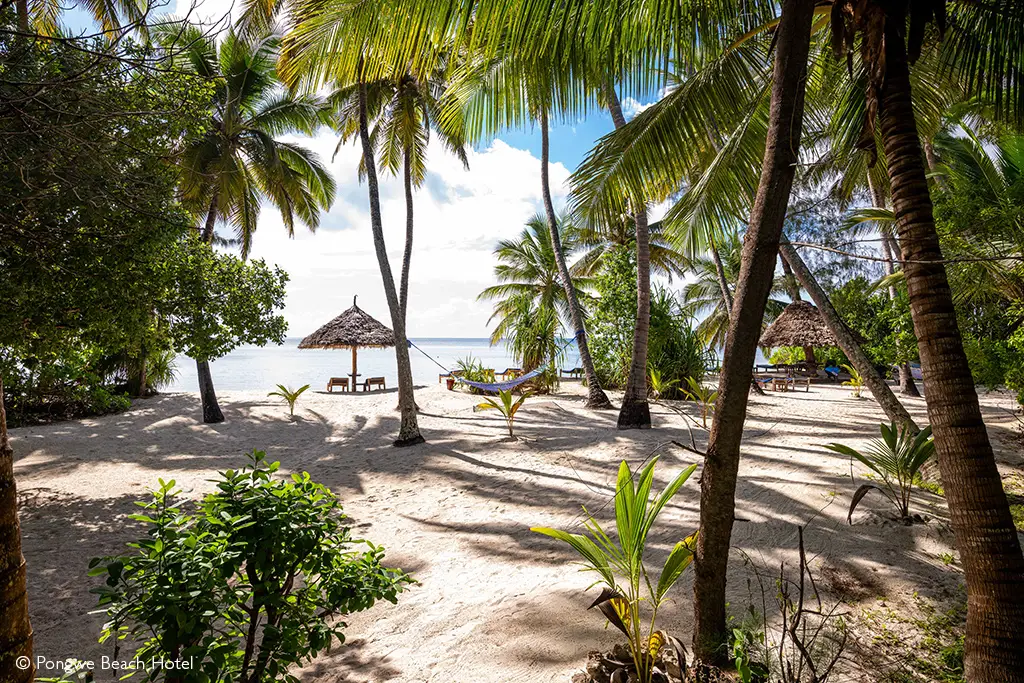
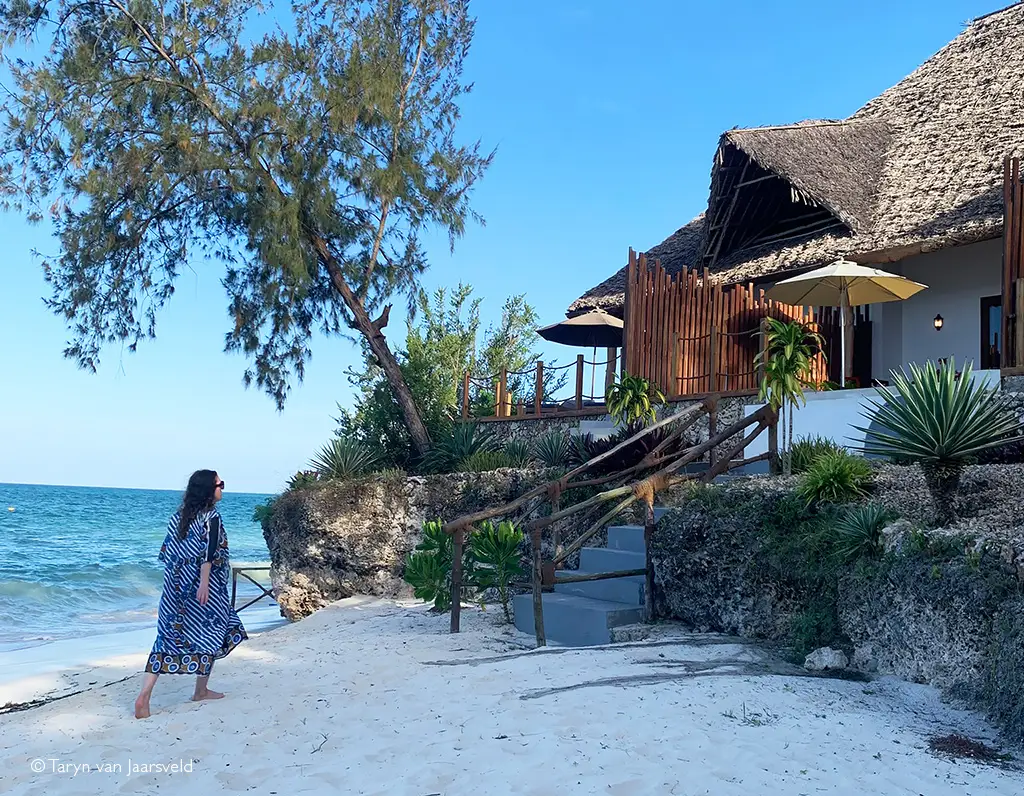
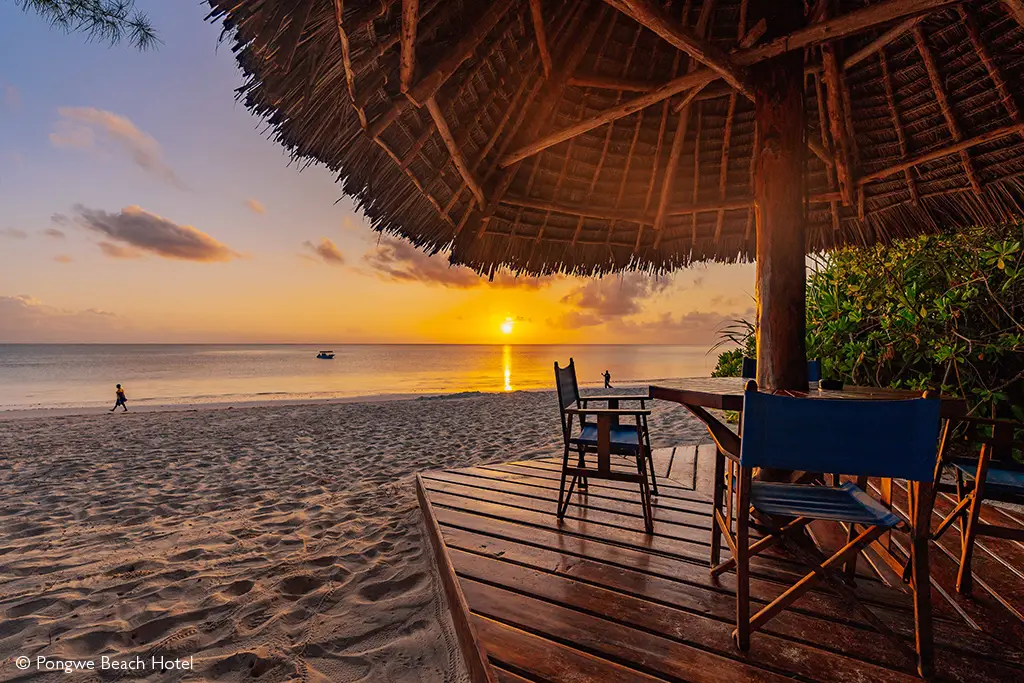
On the east coast, I visit Pongwe Beach Hotel to find paradise. The road winds through coastal vegetation before reaching a sheltered bay. Hammocks hang beneath the trees, rooms open onto tropical gardens and the beach is only a few steps away. There is an unhurried, personal feel to the place, far removed from Zanzibar’s larger resorts.
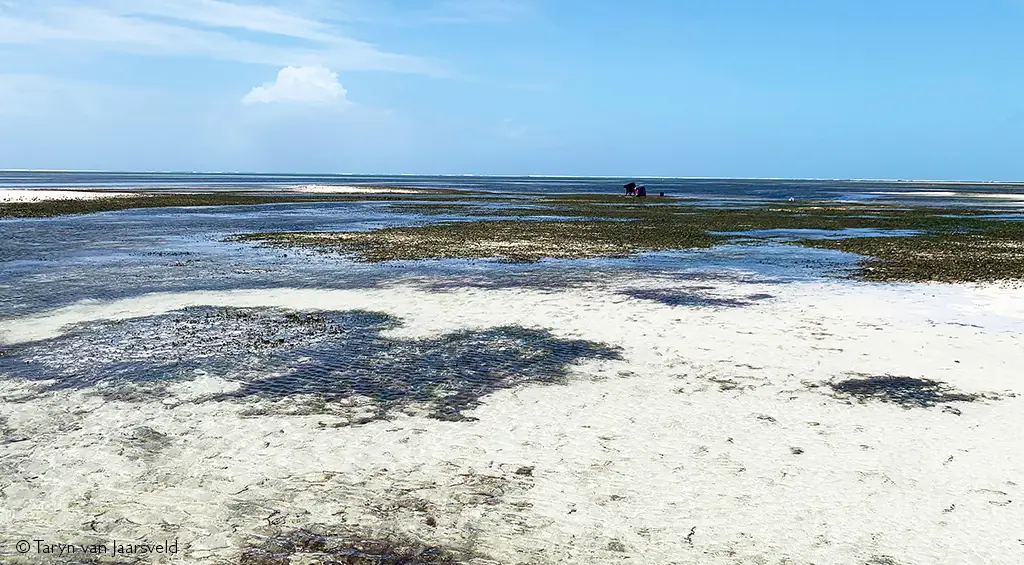
The tides are part of the experience. At low tide, the ocean retreats almost as far as the eye can see, exposing vast stretches of sand, shallow pools and seagrass. I wander across the exposed seabed, spotting crabs scuttling over the sand, sea urchins and starfish in the shallows. Hours later, the water returns, transforming the bay.
Pongwe captures much of the appeal of Zanzibar’s quieter coastline: changing tides, marine life and the pleasure of spending time beside the ocean.

More than a beach extension
Zanzibar works exceptionally well alongside safari, connecting with Tanzania’s northern circuit and southern destinations such as Nyerere and Ruaha.
But the island deserves more than a transfer from airport to beach resort. Spend time in Stone Town. Walk its streets with a knowledgeable guide. Visit the former slave market, explore the markets, admire the carved doors and eat where locals gather. Visit a spice farm and discover what cloves look like before reaching a jar. Sail on a dhow, explore the marine life and make time for the beach.
Zanzibar brings together Swahili culture, Omani history, Indian Ocean trade, spice agriculture, Islamic traditions, markets, forests, reefs and beaches shaped by tides.
It offers the Indian Ocean holiday you came for, but becomes far more interesting once you venture beyond the beach.
Further reading
- Located just off the coast of mainland Tanzania in the Indian Ocean, the Spice Islands form an archipelago that includes Zanzibar (Unguja), Pemba, and Mafia. Read more about these beautiful islands here.
- Zanzibar vs Pemba vs Mafia: Which Island is Best? Read our comparison guide.
- Too many activities to choose from in Zanzibar? Here is the ultimate to-do list for your Zanzibar trip.
- Read more about the wonders of exploring Zanzibar’s Stone Town here.
- Mei Capes-Winch headed to Zanzibar to soak up its magic. Read her trip report from her travels here.
- Learn more about the rich history of Zanzibar’s dhows here.
To comment on this story: Login (or sign up) to our app here - it's a troll-free safe place 🙂.