


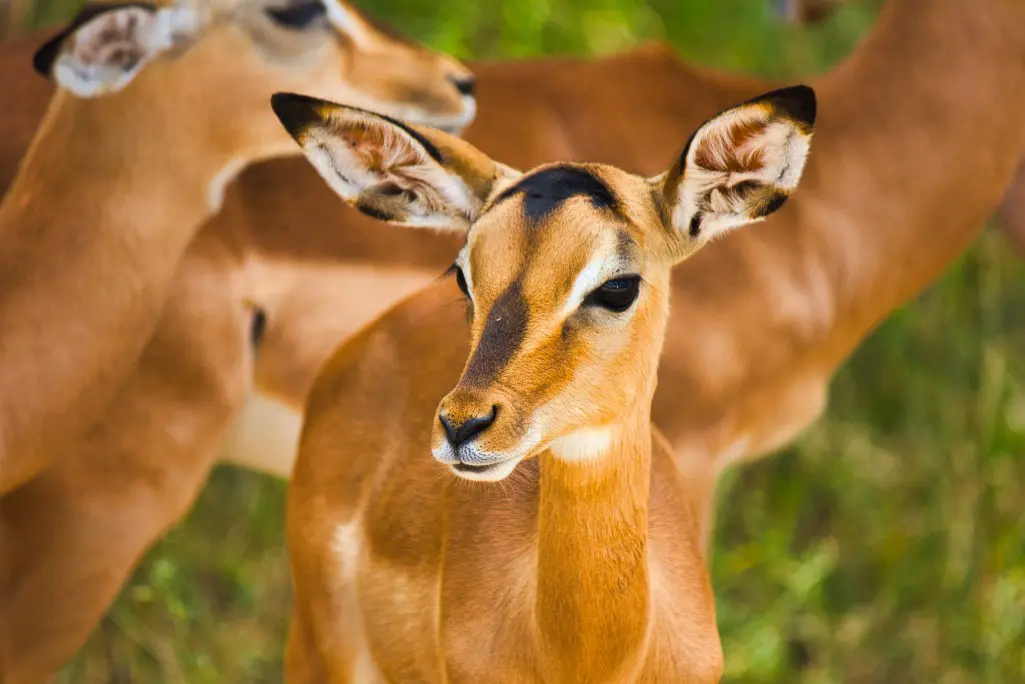
- Impalas near high-infrastructure Serengeti lodges showed higher stress hormone levels than those near lighter camps.
- Lodge infrastructure was linked to elevated stress even when no tourists were present.
- Tourist numbers increased stress at tented camps, especially when occupancy limits were exceeded.
- Better forage quality reduced stress, showing habitat condition can buffer tourism pressure.
- Larger impala groups had lower stress, suggesting social living helps reduce perceived risk.

Planning a Serengeti safari? Our experts guide you to low-footprint lodges that respect wildlife and the landscape. Let us tailor-make a responsible safari for you that supports conservation through sustainable choices. Or browse our other ready-made safaris here.
Tourism keeps protected areas running, but a recent study reveals a trade off. In Serengeti National Park, impalas living near high-infrastructure lodges had higher stress levels than those near lighter-footprint camps – even when no tourists were present. The message is direct: in some cases, the infrastructure itself is part of the problem.
Tourism sustains many of Africa’s protected areas. Entrance fees, accommodation, and related services generate funds that support conservation management, research and anti-poaching efforts. Globally, protected areas receive an estimated eight billion visits each year and generate around USD 600 billion in tourism revenue. In many developing countries, this income is essential for maintaining biodiversity.
At the same time, tourism brings infrastructure. Lodges, camps, roads and other facilities are built to accommodate visitors. When development expands faster than ecosystems can absorb, wildlife can be affected. A recent study published in Global Ecology and Conservation from Serengeti National Park in Tanzania examined whether tourism infrastructure itself influences the physiological stress levels of wild animals.
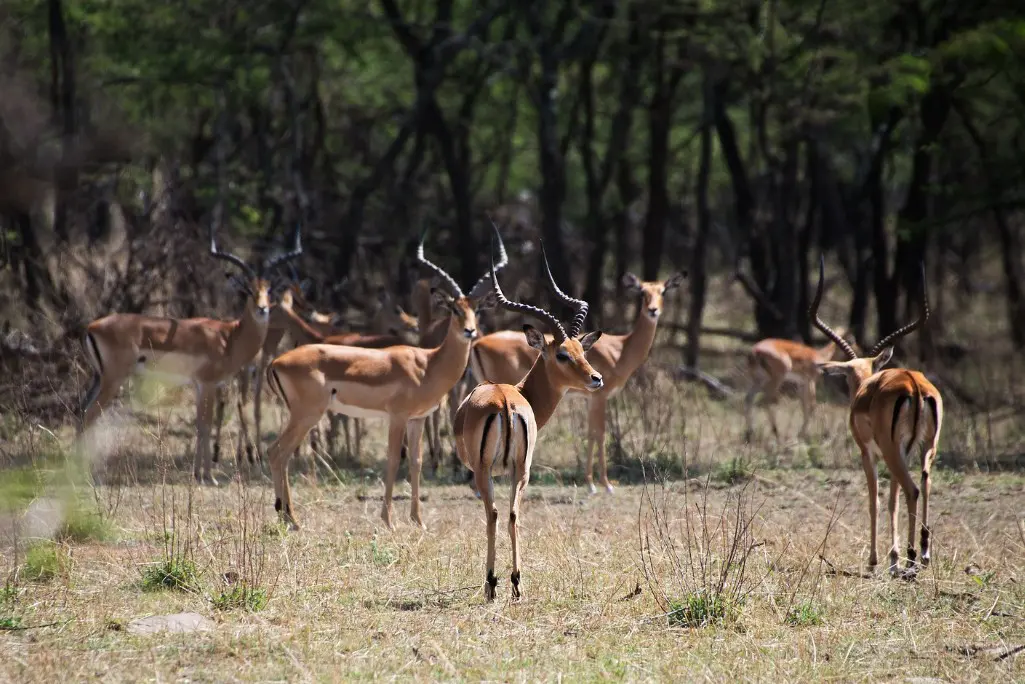
The research focused on impalas (Aepyceros melampus), a common antelope species widely distributed across eastern and southern Africa. Impalas are considered a useful indicator species for studying human disturbance because they respond physiologically to environmental change. By measuring stress hormones in impalas living near different types of tourist accommodation, researchers assessed how tourism infrastructure may affect wildlife even inside a protected area.
Tourism growth in the Serengeti
Serengeti National Park covers about 14,700 km² and supports one of the world’s most diverse wildlife ecosystems. It is home to millions of ungulates, including wildebeest and plains zebra, and large predators such as lions, cheetahs and hyenas.
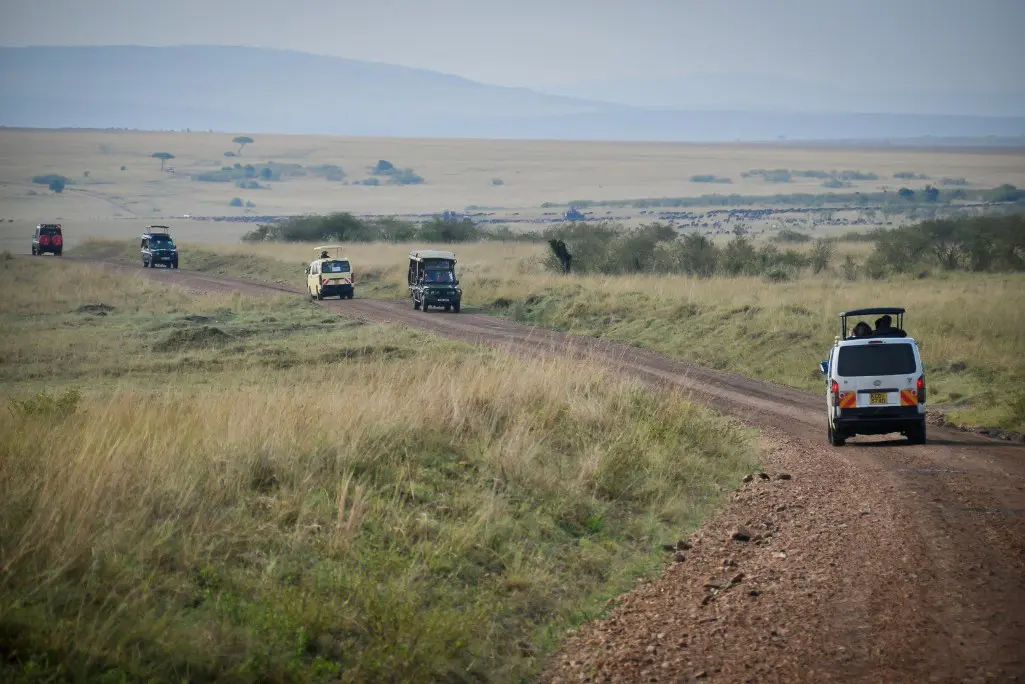
Tourism in the Serengeti has expanded rapidly in recent years. According to park records, permanent accommodation facilities increased from about 15 in 2014 to around 50 in 2024, with a further 25 facilities under development. Non-permanent campsites also increased, rising from 98 sites in 2014 to 218 sites by 2024.
Previous research has shown that tourism infrastructure can alter wildlife behaviour. In the Serengeti, lodge construction done without sufficient planning has already been linked to changes in the movement patterns of the wildebeest migration. Other studies elsewhere have shown animals avoiding areas with tourism infrastructure or changing behaviour near tourist roads.
This is not the first warning sign. UNESCO and IUCN recently raised concern over proposed expansion of tourism infrastructure in Serengeti National Park, including sharp increases in lodges and permanent tented camps, while their 2024 reactive monitoring work also reviewed developments such as the Fort Ikoma golf course, the proposed Mugumu airport and additional lodge projects. The wider concern is cumulative impact – especially where infrastructure growth begins to squeeze habitat, water resources and movement routes in one of Africa’s most important migratory ecosystems.
The new study aimed to understand whether tourism facilities influence wildlife in another way – through physiological stress.
Measuring stress in wildlife
Stress in animals is often measured through glucocorticoids. These hormones are part of the body’s endocrine response to challenging conditions such as disturbances, resource scarcity, or environmental pressures. Elevated glucocorticoid levels can indicate physiological stress and may affect reproduction, survival and behaviour.
Researchers increasingly measure these hormones using faecal glucocorticoid metabolites (FGMs). FGMs are hormone breakdown products that can be detected in animal dung. This method allows scientists to assess stress levels without capturing or handling animals, avoiding additional disturbance.
FGM analysis reflects activity of the hypothalamic–pituitary–adrenocortical axis, which regulates hormonal stress responses. Because these metabolites accumulate over time, they provide an integrated measure of stress rather than short-term fluctuations.
Why impalas are useful indicators
Impalas are medium-sized antelopes common in the Serengeti ecosystem, where their population exceeds 85,000 individuals. They live in social groups that can include female herds, bachelor groups or solitary territorial males. As mixed feeders, impalas graze grasses in the wet season and browse shrubs during the dry season. They typically remain within relatively small home ranges and are prey for large carnivores such as lions and hyenas.
Their abundance, social structure and sensitivity to human disturbance make them useful for studying how environmental factors affect wildlife physiology in protected areas.
Collecting stress data in the Serengeti
Researchers collected 213 faecal samples from impalas between January and February 2025, during the Serengeti’s wet season, when forage quality is high. The sampling period also coincides with high tourist visitation.
Samples were collected from animals located within one kilometre of different types of tourist accommodation: lodges, permanent tented camps and seasonal campsites. Researchers recorded information about each impala group, including behaviour, group size, time of day and environmental conditions.
To isolate the effect of tourism infrastructure, the analysis also considered other factors that may influence stress levels. These included forage quality, measured using the Normalised Difference Vegetation Index (NDVI), and land surface temperature.
NDVI is a satellite-based measure of vegetation productivity. Higher NDVI values indicate greener and more productive vegetation, which generally reflects better forage quality for herbivores.
Infrastructure linked to higher stress in Serengeti
The analysis revealed clear differences between accommodation types.
Impalas living near larger lodges showed significantly higher levels of stress hormones than those near permanent tented camps or seasonal campsites. According to the study, “impalas near permanent tented camps and seasonal campsites had significantly lower FGM levels compared to those near lodges.”
The effect remained even when lodges had no tourists present. The researchers concluded that “larger facilities, such as lodges, were associated with increased stress levels even when there were no visitors.”
The likely explanation is infrastructure scale. Larger tourism facilities typically require more extensive buildings, roads and service areas than tented camps or seasonal campsites.
The role of tourist numbers in the Serengeti
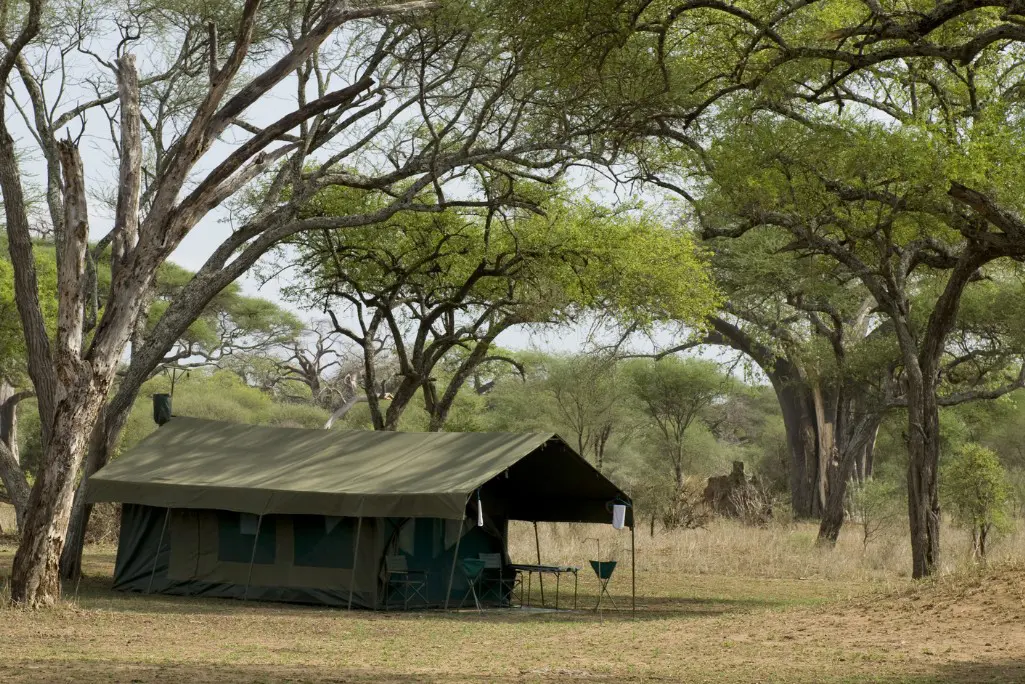
The study also examined tourist occupancy. Higher tourist numbers increased stress levels around tented camps and campsites, especially when visitor limits recommended by the Tanzania National Parks Authority (Tanapa) were exceeded.
Permanent tented camps in the Serengeti have an official occupancy limit of 50 tourists, while seasonal campsites are limited to 20. The researchers found that when these limits were exceeded, the effect of tourist numbers on impala stress became stronger.
This suggests that both infrastructure and visitor numbers contribute to physiological pressure on wildlife. Importantly, it suggests that obeying occupancy limits set by Tanapa is essential to the preservation of ecosystems.
Environmental factors also matter
Other ecological factors influenced stress levels.
Impalas living in areas with higher vegetation productivity showed lower stress levels. The study found that FGM levels declined as NDVI increased, indicating that better forage conditions can buffer physiological stress. Access to nutrient-rich vegetation likely allows animals to maintain better physical condition and allocate more energy to feeding and reproduction rather than coping with disturbance. In productive landscapes such as the Serengeti during the rainy season, high-quality forage may therefore help mitigate some of the stress associated with tourism infrastructure.
Group size also played a role. Impalas in larger herds had lower stress levels than those in smaller groups. Living in larger groups may reduce perceived predation risk and allow individuals to spend more time feeding.
Behaviour during sampling was also associated with hormone levels. Individuals who were walking showed higher FGM levels than those who were feeding.
Implications for protected area management and tourism
The study highlights the complex relationship between tourism development and wildlife conservation.
Tourism provides essential revenue for protected areas, yet the infrastructure required to support large tourist operations can affect wildlife physiology. In this case, large tourism facilities were linked to elevated stress levels in impalas.
This is why lodge choice matters. The study shows that large, fixed infrastructure can increase wildlife stress even in the absence of guests, which means tourism should not be judged solely by visitor numbers but by footprint, placement, and design. In a landscape defined by movement, developments that obstruct migration paths, intensify habitat pressure or sit outside careful environmental planning can undermine the ecological systems that tourism depends on. Well-planned lodges and camps, strong environmental impact assessments, low landscape disturbance and tourism partners aligned with conservation objectives are therefore not optional extras – they are central to keeping protected areas functional and wildlife populations secure.
The authors conclude that managing tourism development is essential to balance conservation and economic benefits. Maintaining visitor limits at campsites and tented camps could help reduce pressure on wildlife.
The study also calls for further research to identify which specific aspects of lodge infrastructure contribute most strongly to wildlife stress. Understanding these mechanisms could help guide future tourism planning in protected areas such as the Serengeti.
Reference
Kessy, B.M., Arukwe, A., Mbise, F.P., Hariohay, K.M., Palme, R., Røskaft, E. & Ranke, P.S., 2026. Tourism infrastructure and physiological stress in free-ranging impalas (Aepyceros melampus) of Serengeti National Park. Global Ecology and Conservation, 67, e04130. https://doi.org/10.1016/j.gecco.2026.e04130
Further reading
- Research finds density of tourist camps impacts lion densities in the Maasai Mara, showing how tourism planning directly affects conservation. Read about how tourist camps are reshaping Mara strongholds here
- Sustainable safaris: Can tourism truly protect nature? Tourism funds conservation, yet unmanaged growth risks overtourism. Can mindful safaris sustain Africa’s wildlife and people?
To comment on this story: Login (or sign up) to our app here - it's a troll-free safe place 🙂.