



Rhino Rewild – 3 Years of Trials & Successes

- Rhino Rewild has moved 745 rhinos to 19 protected areas across four countries.
- Translocated populations have produced 89 calves, while 61 rhinos have died.
- Major relocations have established or strengthened rhino populations in Rwanda, DRC, Uganda and South Africa.
- Veterinary, habitat, and transport challenges continue to inform and improve future translocations.
- Long-term success will depend on survival, breeding, genetic diversity and effective protected-area management.

Want to go on a rhino-seeking safari? Browse our top safaris showcasing the Big 5 here. Alternatively, we’ll help you plan your tailor-made safari.
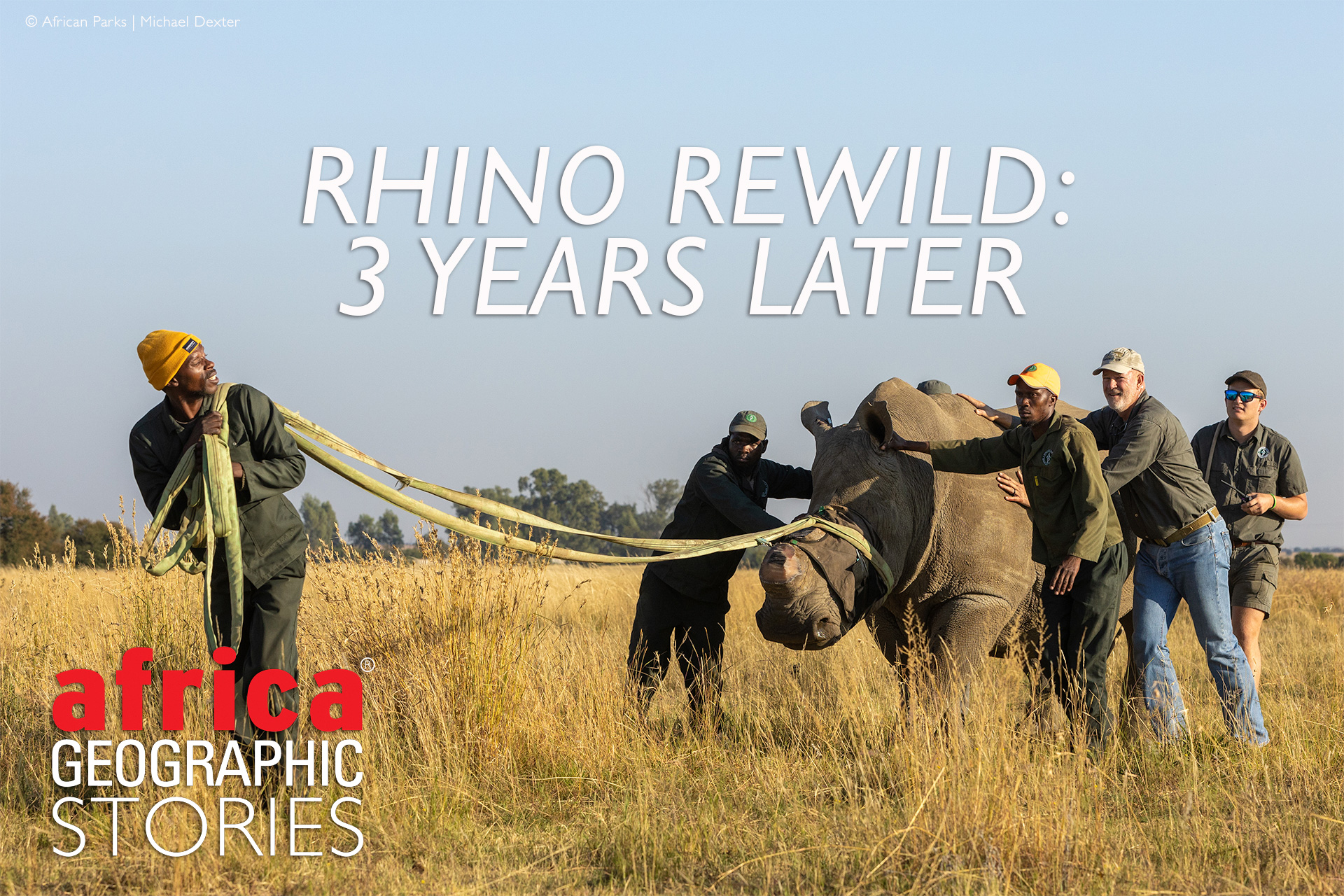
In September 2023, African Parks assumed responsibility for the world’s largest captive southern white rhino breeding operation and launched Rhino Rewild, a ten-year initiative to move 2,000 rhinos into secure, well-managed protected areas across Africa. Our CEO, Simon Espley, attended one of the first relocations; read his personal account here.
Three years into the programme, 745 rhinos have been moved to 19 recipient areas in four countries, collectively covering more than 551,000 hectares. Among the translocated populations, 89 calves have been born, and 61 rhinos have died. Causes of death include natural mortality, translocation-related complications, difficulties adapting to new environments and, in some cases, poaching.
During the first year, African Parks focused on stabilising the breeding operation, improving animal welfare and beginning relocations within South Africa. The initiative has since expanded to Rwanda, the Democratic Republic of Congo and Uganda, while continuing to reinforce existing rhino populations in South Africa.
Akagera National Park, Rwanda
In June 2025, 70 southern white rhino were transported approximately 3,400 kilometres by road and air to Akagera National Park in Rwanda. This was Rhino Rewild’s first international translocation and the largest operation of its kind.
The animals joined a white rhino population established through the introduction of 30 rhinos in 2021. That population had grown to 43 by June 2025.
Akagera’s veterinary and conservation teams continue to monitor the newcomers’ health, movements and adaptation. Animals from the 2021 and 2025 groups have been observed associating, and three calves have been born to the 2025 group.
The relocation has also resulted in veterinary challenges and some deaths. Teams have investigated the mortalities, treated animals showing signs of illness and introduced preventive treatment while awaiting further test results. By September 2026, Akagera’s white rhino population stood at just over 100.
Garamba National Park, DRC
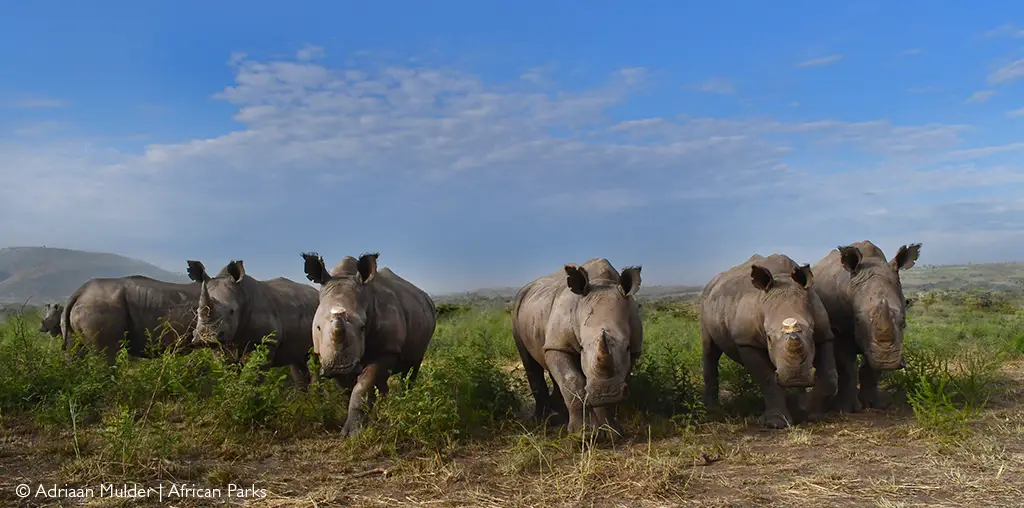
Garamba National Park in the Democratic Republic of Congo once supported northern white rhino, which are now functionally extinct. In 2023, after nearly two decades without them in the landscape, 16 southern white rhinos were introduced to establish a new population.
Garamba presented significant habitat challenges. High rainfall and decades of limited grazing had produced extensive tall grass, whereas white rhino depend largely on shorter grass. Management teams cut and burned selected areas to create more suitable habitat.
Four of the original 16 rhinos died: two from suspected trypanosomiasis, one from an internal injury and one cow during calving. These deaths informed subsequent veterinary monitoring, habitat management and preparations for further translocations.
Another 24 arrived in December 2025, followed by 30 in January 2026. Among these 54 animals, staff have recorded three mortalities and two births. African Parks reports that social groups are forming, mating has been observed, and body condition remains strong.
Rhino grazing is beginning to create areas of shorter grass used by buffalo, giraffe, kob, warthog and oribi. Garamba’s white rhino population now exceeds 60 animals.

Uganda and South Africa
Eight rhinos were transported to Uganda during the December 2025 operation. After arriving in Entebbe, the Uganda Wildlife Authority moved them to Ziwa Rhino Sanctuary. All eight arrived safely and have been released.
Their arrival increased Ziwa’s white rhino population to more than 50. Reaching this level prompted the Uganda Wildlife Authority to begin relocating rhino to Ajai and Kidepo under its national rhino-management plan.
In South Africa, a second relocation to the Greater Kruger area took place in 2025, following encouraging results from the first group moved there in 2024. The pachyderms were dehorned to reduce poaching risk and continue to be monitored. Others have been moved to protected areas whose locations remain confidential for security reasons.
Selecting and supporting recipient areas
Potential recipient areas are assessed for habitat, resources, security, governance, management capacity and financial sustainability. Each organisation must be able to assume long-term responsibility for the rhinos and disclose information needed to assess and manage risks.
Formal agreements define responsibilities for security, management and monitoring. Recipient organisations must report regularly and promptly disclose deaths or other concerns so that causes can be investigated and lessons shared.
African Parks’ involvement can continue for up to 20 years. Partners may receive veterinary and technical expertise, protected-area management support and, where appropriate, assistance in accessing donor or financial support.
DID YOU KNOW that African Parks offers safari lodges and campsites where 100% of tourism revenue goes to conservation and local communities? You can plan and book your African Parks safari by clicking here.
Applying lessons
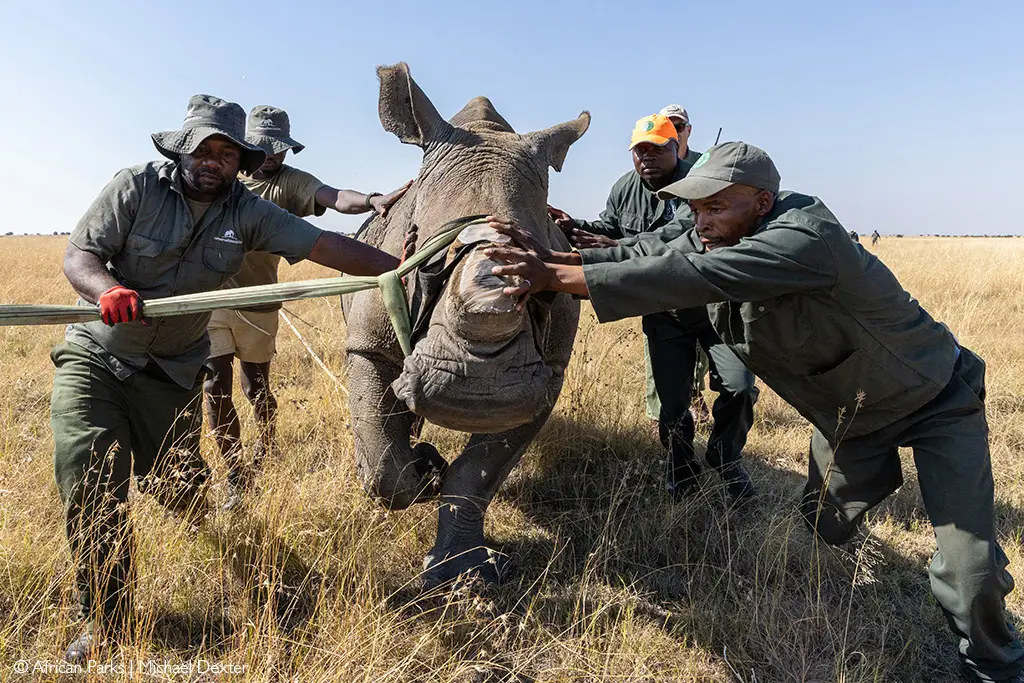
Rhino Rewild has adjusted its methods as practical problems have emerged. During the first Greater Kruger relocation, electronic identification tags fitted to both ears caused inflammation in some animals, while others were damaged or lost. The second operation used a simpler tag fitted to one ear through a revised procedure.
Veterinary teams have modified sedation protocols to reduce pressing behaviour and injury risks during transport. Measurements collected at the project site are also improving body-weight estimates and medication dosages.
Animals may be placed in conditions resembling those at their future destinations before being moved, allowing teams to assess their health and response. Recipient agreements have also been revised to clarify responsibilities when governance, security or financial conditions change.
Continuing care and long-term success
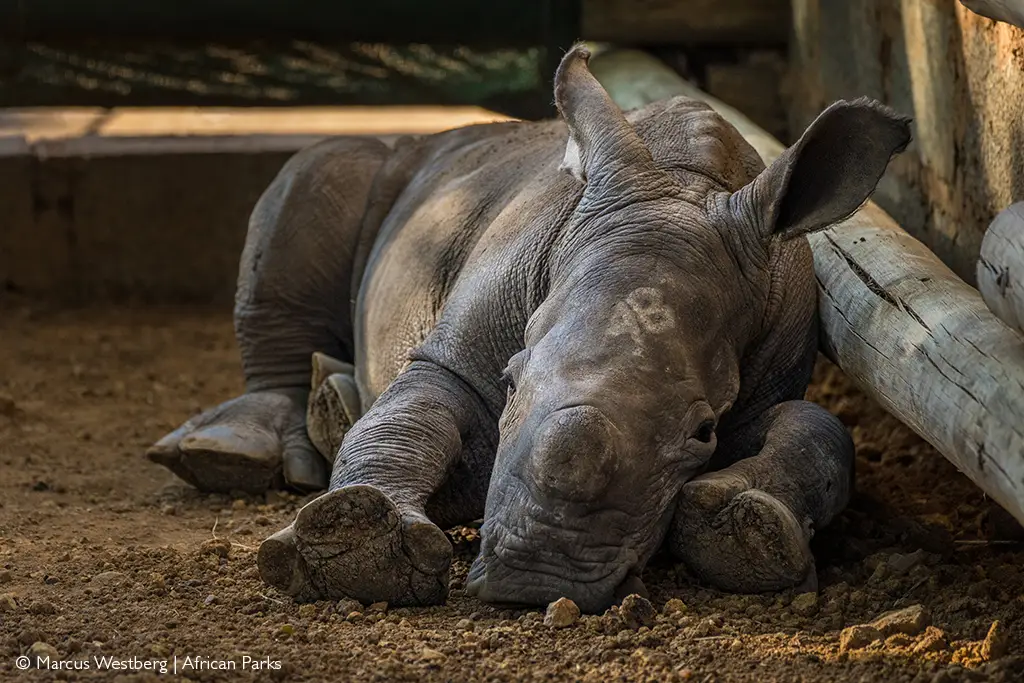
Animals remaining at the original project site continue to receive veterinary care, improved nutrition and supplementary feeding during dry periods. Fourteen calves entered the orphanage during the year, 26% fewer than in 2024 and the lowest annual intake since African Parks assumed responsibility. The population recorded net growth of 6.59%, with no poaching deaths at the site during the year.
African Parks says the programme’s success must be measured over many years. Important indicators include survival, breeding, genetic diversity, habitat use, integration with existing rhino populations and each recipient area’s ability to manage the animals over time.
The southern white rhino reproduces slowly, with females generally producing one calf every two to three years. Consequently, a small number of deaths can significantly affect the growth of a new population.
By establishing new populations and strengthening existing ones, Rhino Rewild aims to reduce the concentration of southern white rhino in relatively few places and spread the risks posed by disease, environmental change and poaching. Each translocation is intended to provide knowledge that can improve the preparation, welfare and long-term management of rhino moved in future.
Further reading
- We check in on the 120 rhinos rewilded to Greater Kruger as part of the African Parks Rhino Rewild initiativeRhino Rewild – is this the most critical wildlife conservation undertaking of our time? Simon Espley attended the pioneer stage of a visionary project to translocate 2,000 farmed rhino into the wild. Here’s how it went down
- The Cryovault – frozen in time: If all the money, time, blood and sweat fail to save the wild rhino, Hemmersbach has a solution. The rhino Cryovault stores repositories of rhino DNA, gametes, and tissues, preserving them indefinitely. Read more here
- Hornless hope – is rhino dehorning the most effective tool in saving the species? Rhino dehorning slashes poaching by 78% – a bold, effective strategy that challenges how we think about wildlife crime prevention
- Can the rhino survive climate change? Unable to cope well with prolonged periods of extreme temperatures, the rhino is particularly vulnerable to the increasing heat associated with climate change. Read more here
To comment on this story: Login (or sign up) to our app here - it's a troll-free safe place 🙂.