



How lions keep hyenas on the move

- Researchers tracked lions and spotted hyenas in Namibia and Botswana to study coexistence.
- GPS tracking revealed how hyenas change their movements when lions are nearby.
- Hyenas consistently moved away from lions at distances reaching several kilometres.
- Lions showed no equivalent population-wide tendency to retreat from spotted hyenas.
- Male lions sometimes moved towards hyenas, although the sample size was small.
- Fine-scale avoidance may help competing carnivores continue sharing the same landscapes.
 Ready to experience Etosha or Chobe National Parks for yourself? Check out our ready-made safaris to these national parks, or let our Safari Experts plan your tailor-made African safari.
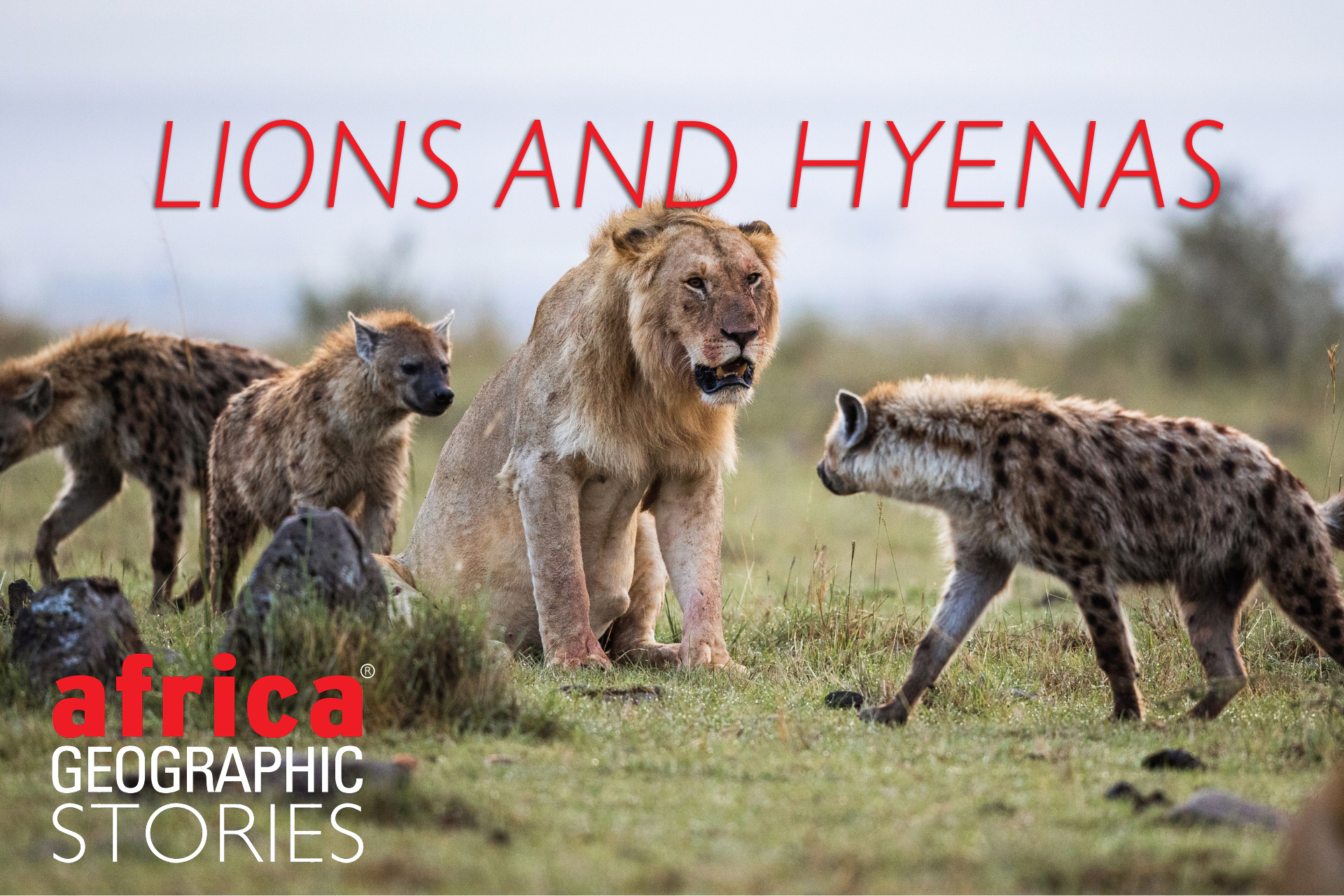
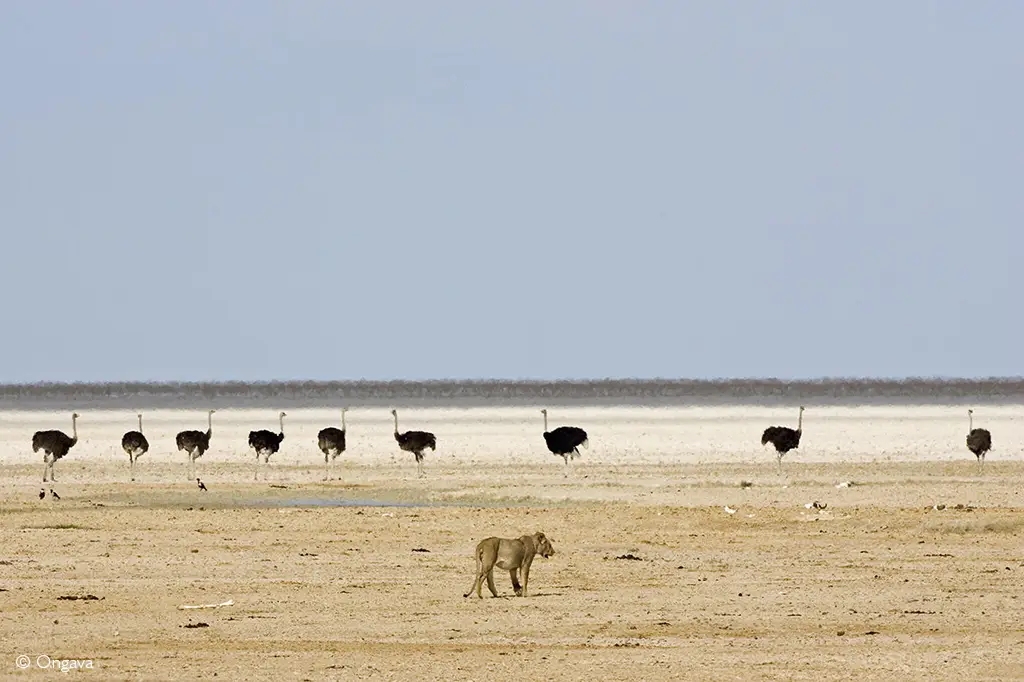
Lions and spotted hyenas share much of the same ecological space. They hunt many of the same prey species, use overlapping habitats and are active during similar periods. But sharing a landscape does not mean using it in the same way.
A new study tracking lions and spotted hyenas in Namibia and Botswana has revealed how this competition plays out from one five-minute movement to the next. The clearest pattern was not lions actively chasing hyenas across the landscape, but hyenas adjusting their movements in response to lions – sometimes from several kilometres away.
The findings provide unusually fine-scale evidence of one mechanism that may help these two competing predators coexist.
Living alongside a dominant competitor
When species compete directly for the same resources, ecologists refer to this as interference competition. Among large carnivores, this can involve stealing kills, aggressive encounters and killing competitors.
The relationship between lions and spotted hyenas is strongly asymmetric. Both are large predators occupying similar ecological roles, but lions are generally dominant. They can displace hyenas from carcasses, kill them and affect hyena reproductive success through cub mortality. Hyenas therefore have to exploit the same landscape and food resources while managing the risk posed by lions.
Researchers have previously examined this relationship through direct observations and broader patterns of habitat use. But these approaches cannot easily show the individual decisions made during an encounter – specifically, which animal moves towards the other and which moves away.
Researchers fitted GPS collars to 17 adult lions and 14 adult spotted hyenas across two southern African ecosystems between 2013 and 2018.

In Namibia, the study covered about 9,000km² of central Etosha National Park, particularly the Okaukuejo and Halali regions. Etosha is a fenced, semi-arid savanna system where permanent water is largely restricted to natural springs and pumped boreholes. The study area included grasslands, short-grass plains, shrublands and mixed savannas.
In Botswana, researchers worked across a roughly 7,500km² area of the Chobe–Linyanti system in the northeast of the country. This included Chobe National Park and the neighbouring community-managed Linyanti Conservancy, both within the Kavango-Zambezi Transfrontier Conservation Area. Unlike semi-arid Etosha, this landscape includes floodplains bounded by the Chobe and Linyanti Rivers, with lagoons, marshes, riparian woodland, mopane woodland, grasslands and savanna.
The collars recorded locations at five-minute intervals during key monitoring periods. Researchers compared simultaneous positions of pairs of animals, known as dyads, and classified each movement as towards, away from or roughly perpendicular to the other animal. Only actual simultaneous GPS fixes were used, rather than estimated positions.
Hyenas move away from lions
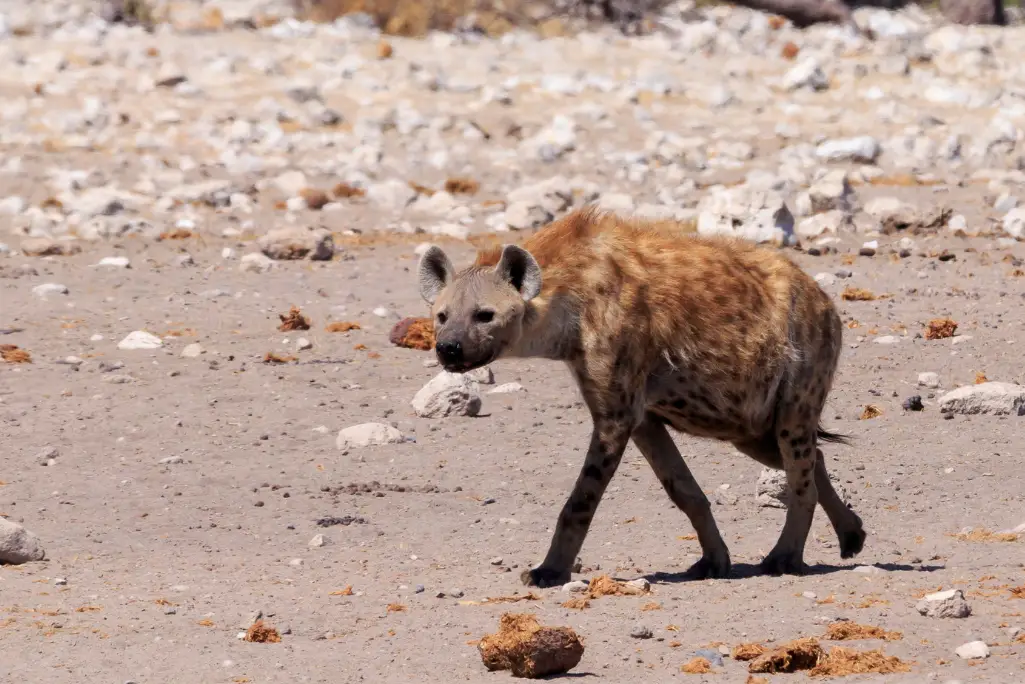
Across lion–hyena pairs, the most consistent signal came from the hyenas.
When lions were nearby, spotted hyenas were more likely to move away from them than towards them. This retreat pattern was statistically supported at distances within 2km, 5km and 10km. The strongest pattern occurred within 5km, where all nine lion–hyena pairs with usable data showed a tendency for the hyena to retreat.
This is important because avoidance does not necessarily require hyenas to abandon entire areas occupied by lions.
Previous approaches examining broad-scale habitat use may find that lions and hyenas occupy much of the same landscape. The new analysis shows that coexistence can still involve continual fine-scale adjustments. A hyena may remain within lion habitat while changing its direction when a lion becomes a more immediate risk.
In other words, the relevant behaviour can occur over minutes and kilometres without producing complete separation between the species.
Lions responded differently
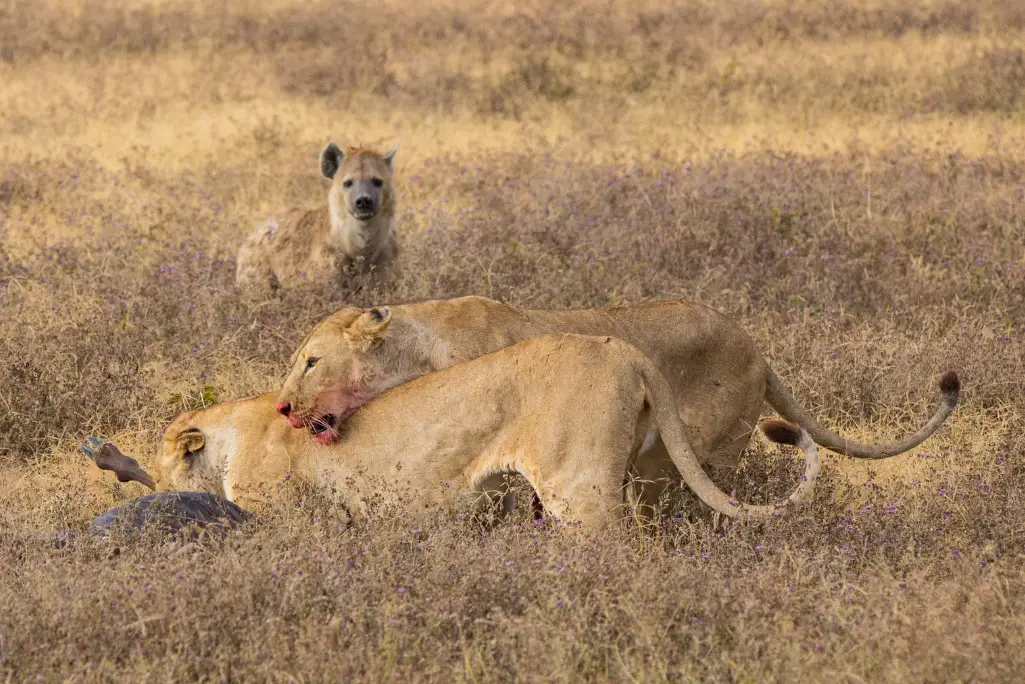
Lions did not show an equivalent tendency to move away from hyenas.
Across the population, there was no consistent statistical evidence that lions either approached or retreated from hyenas. Individual pairs varied considerably.
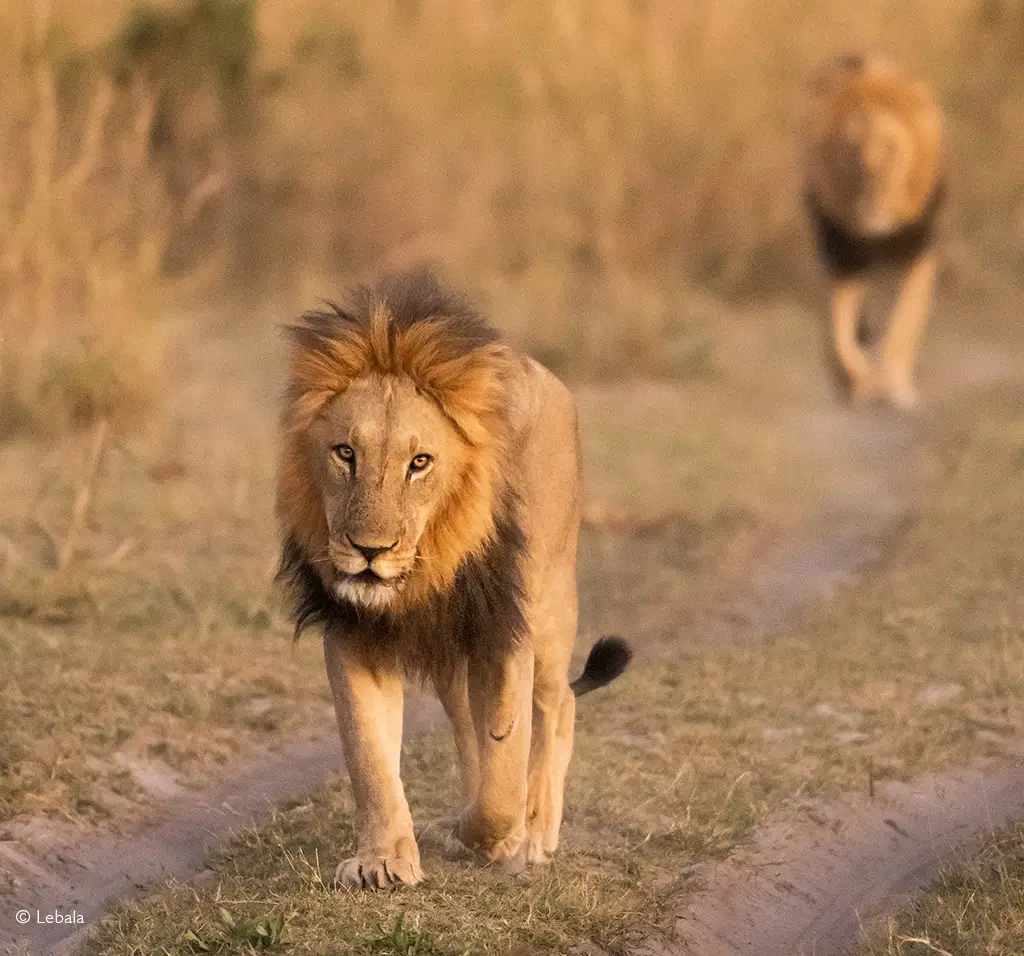
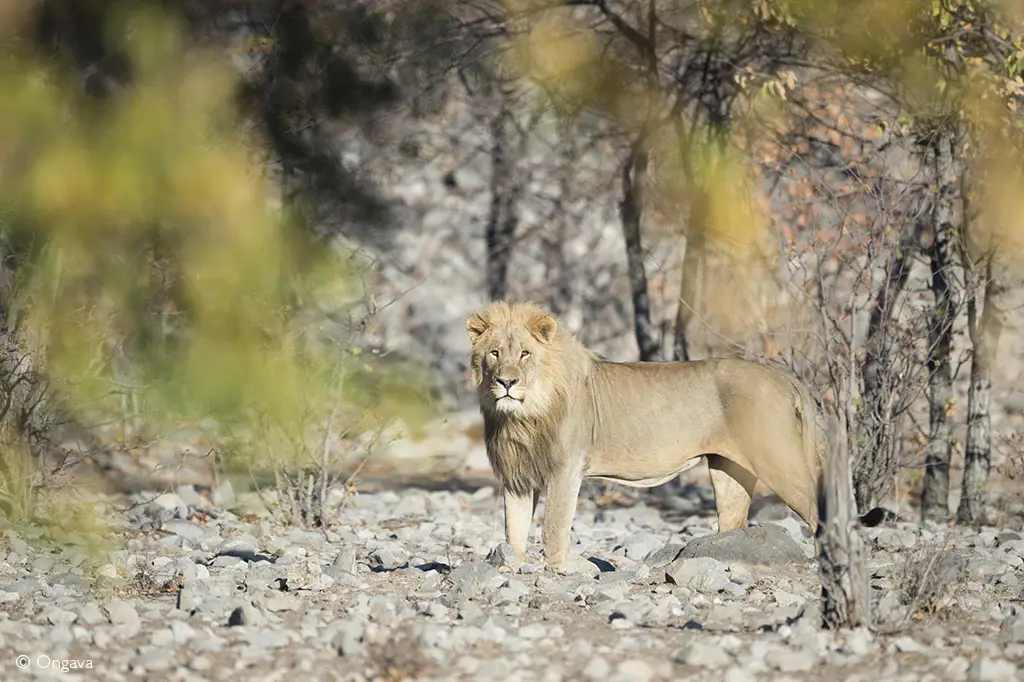
Male lions, however, showed an interesting pattern. In all three lion–hyena pairs involving the two male lions represented in this part of the dataset, males moved towards hyenas more often than away. Female lions showed no consistent directional response.
The sample of males was too small for the researchers to establish a definitive population-wide sex difference. However, the GPS results agreed with night-time field observations in which male lions were repeatedly seen following hyenas, while female responses were more variable.
The authors suggest that lions may sometimes use hyena activity as information – potentially investigating opportunities to scavenge or assessing hyena clan territories. The data does not support a simple picture in which every lion actively pursues hyenas. Instead, the consistent feature of the relationship is the hyena’s response to lion proximity.
Movement also revealed social structure
The tracking data also captured striking differences in how lions and hyenas interact with members of their own species.
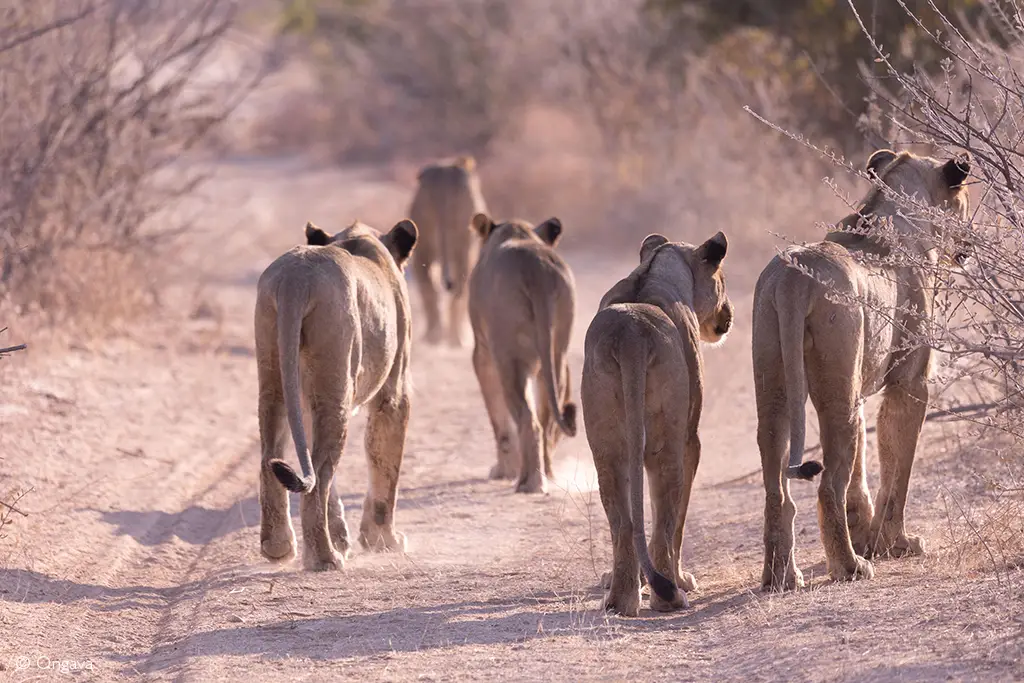
Lion pairs with known social relationships moved together at very close distances. Mating pairs and two females associated within the same pride showed coordinated movement below 100m. In mating pairs, researchers could even identify different movement patterns at distances below 15m and between 50m and 200m.
Hyenas showed almost the opposite pattern. No two collared hyenas from different clans recorded simultaneous five-minute locations within 1km of one another. This reflected the largely exclusive territorial organisation of the clans represented in the study.
These findings demonstrate that high-frequency GPS tracking can reveal behavioural relationships that would otherwise require extensive direct observation.
What these movements mean
The study provides evidence that lions and spotted hyenas can occupy overlapping landscapes partly because the subordinate competitor adjusts its movements at relatively fine scales.
This does not mean that short-term avoidance alone determines whether the species coexist. The authors caution that the study cannot establish whether these immediate movement decisions ultimately affect survival, reproduction or population dynamics.
But the scale at which avoidance occurs has management implications. The researchers note that concentrating animals around water during drought, constructing fences that restrict movement or creating concentrations of carcasses could reduce the space available for hyenas to respond to lions.
Understanding predator coexistence therefore requires more than knowing whether two species occur in the same protected area. Their ability to adjust where they move, and when, may be an important part of allowing competing carnivores to continue sharing the same landscape.
Reference
Barker, N.A., Vissat, L.L., Joubert, F.G., Stowbunenko, V., Alexander, K.A., Slotow, R. & Getz, W.M. (2026). Predators in motion: fine-scale dyadic movements reveal interference competition and asymmetric coordination in African lions and spotted hyenas. Frontiers in Ethology, 5. https://doi.org/10.3389/fetho.2026.1901233
Further reading
- Etosha offers that iconic image of Africa: a waterhole surrounded by animals, the very epitome of an oasis teeming with life. Read more about Etosha here
- Chobe is a vast landscape in the northeastern corner of Botswana that incorporates the safari meccas of the Chobe River, Savute and Linyanti. Read everything there is to know about Chobe here
- For the best chance of seeing lions in the wild, head to one of Africa’s top lion hotspots – as recommended by AG safari experts. Here are the best places to see wild lions in Africa
- A survey of Kruger lions reveals declining populations, poaching pressure, & habitat-driven density shifts in a key conservation stronghold
- A review of scientific literature on Hyaenidae reveals trends and gaps in the research on hyenas and other Hyaenidae species
- New research using camera traps has measured spotted hyena population density in southern Tanzania – the first study of its kind for Tanzania
- High-ranking spotted hyena cubs inherit a social network of allies which increases access to resources & breeding opportunities: New research
To comment on this story: Login (or sign up) to our app here - it's a troll-free safe place 🙂.