



Close encounters with the giants of Tembe Elephant Park

- Tembe Elephant Park is a community-owned Big Five game reserve famous for big-tusked elephants in Maputaland, South Africa, next to Ndumo Game Reserve.
- Tembe offers unusually calm, intimate elephant encounters in dense sand forest habitat.
- Experienced local guides carefully read elephant behaviour to keep close encounters respectful and safe.
- The park protects some of South Africa’s largest elephants and rare sand forest ecosystems.
- Tembe’s slow safari rhythm rewards patience with extraordinary wildlife moments beyond traditional game viewing.
- Community-run Tembe Elephant Park Lodge supports conservation and local livelihoods through low-impact safari tourism.
 Want to visit Tembe Elephant Park on safari? Book your Tembe safari here. Ukuri brings you lodges and bush camps that offer tangible, measurable benefits for conservation & communities.
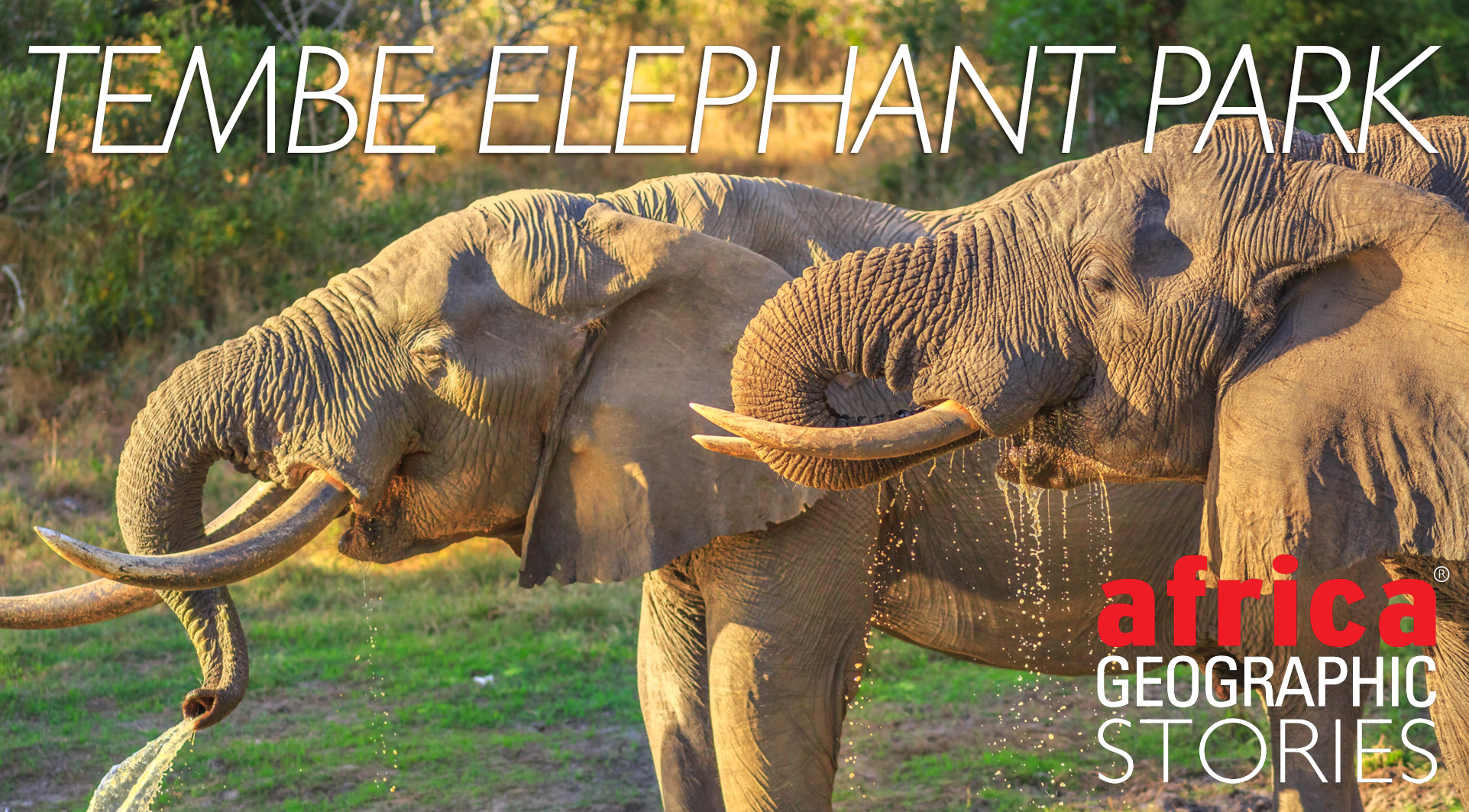
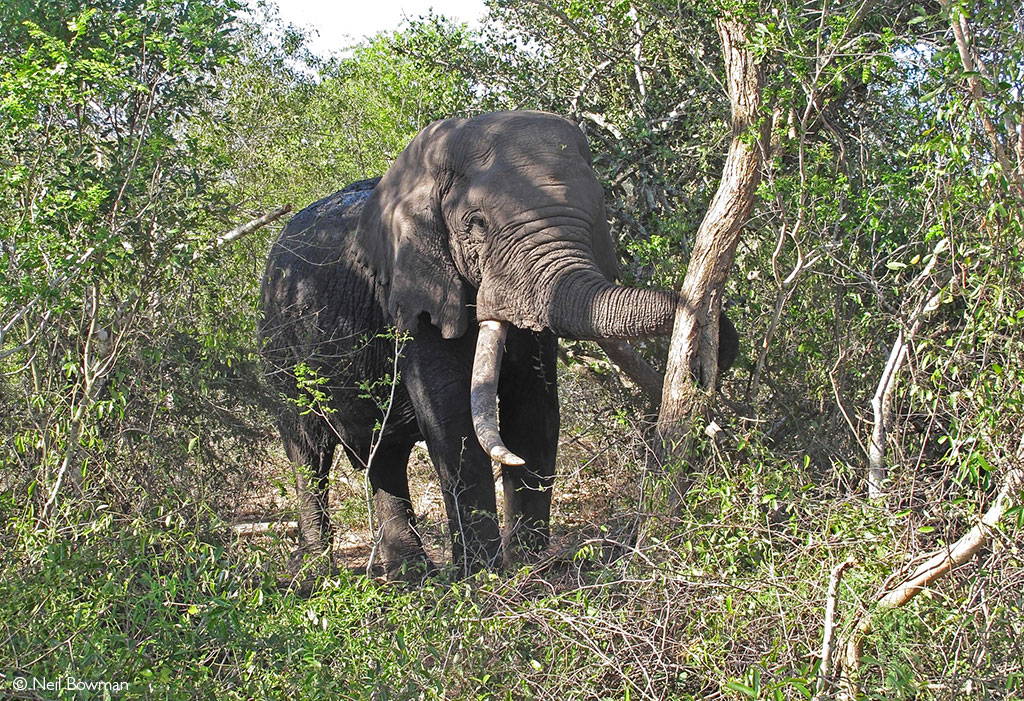
There’s a magnificent elephant standing in the middle of the narrow sand track ahead of us in Tembe Elephant Park. Tembe is a community-owned Big Five game reserve famous for big-tusked elephants in Maputaland, South Africa. The afternoon heat presses down like a heavy hand. He has claimed the only patch of deep shade beneath a beautiful pod mahogany tree. There he stands, perfectly still, as if leaning into the cooler air, thinking deep elephant philosophical thoughts.
Our guide gently reverses the game-drive vehicle and pauses at a respectful distance. He nudges us slightly off the track and switches off the engine. The thundering diesel noise is replaced by the afternoon bush orchestra: insects hum, and a rainbird (Burchell’s coucal) trills its melodic call, pleading with the few clouds in the sky to release their rain and cool us all down.
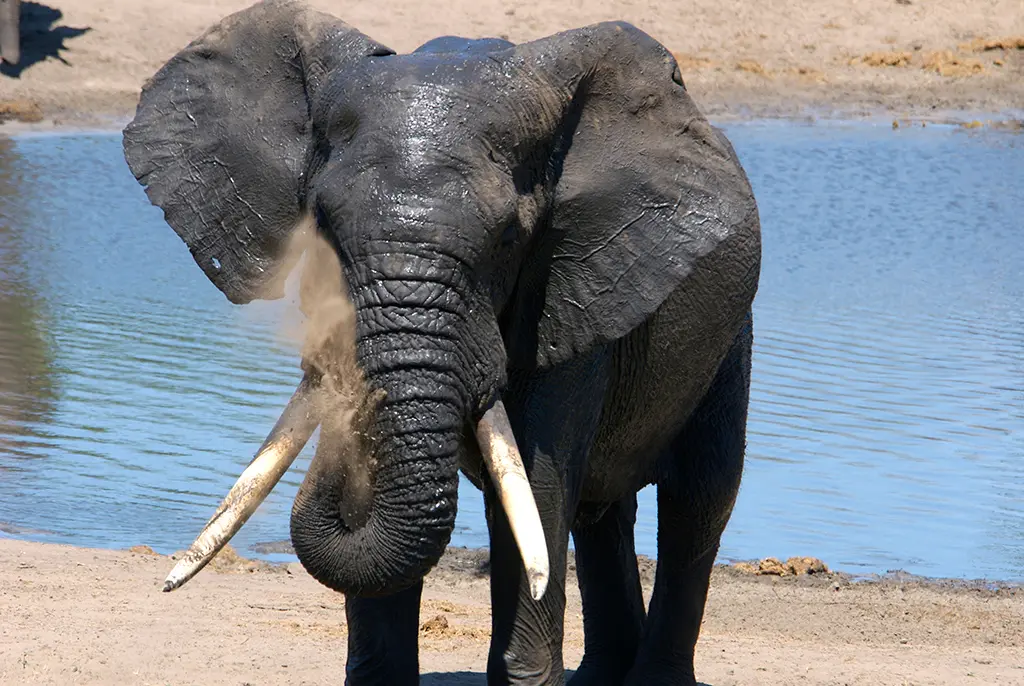
It’s an elephant-in-his-kingdom kind of moment, the sort of photograph you dream of taking. But we’ve clearly disturbed this giant’s catnap. He nonchalantly scoops up a trunkful of sand and tosses it over his shoulder, dust shimmering in the heat, before stepping towards us. My heart begins to race. I’m using a wide-angle lens, and his mighty bulk quickly fills my viewfinder.
I lift my eye from the camera. Now my heart threatens to leap into my throat. He is right there on my side of the vehicle. The leathery folds of his skin, the fringe of his eyelashes, the slow sway of his trunk – I could reach out and touch him without even stretching.
And then, as quietly as he arrived, he is gone, melting back into the bush, an occasional cracking twig the only sign that he is still there. My heart resumes its usual position, but the rest of me is left in a state of absolute wonder that borders on reverence.
But before I tell you more…
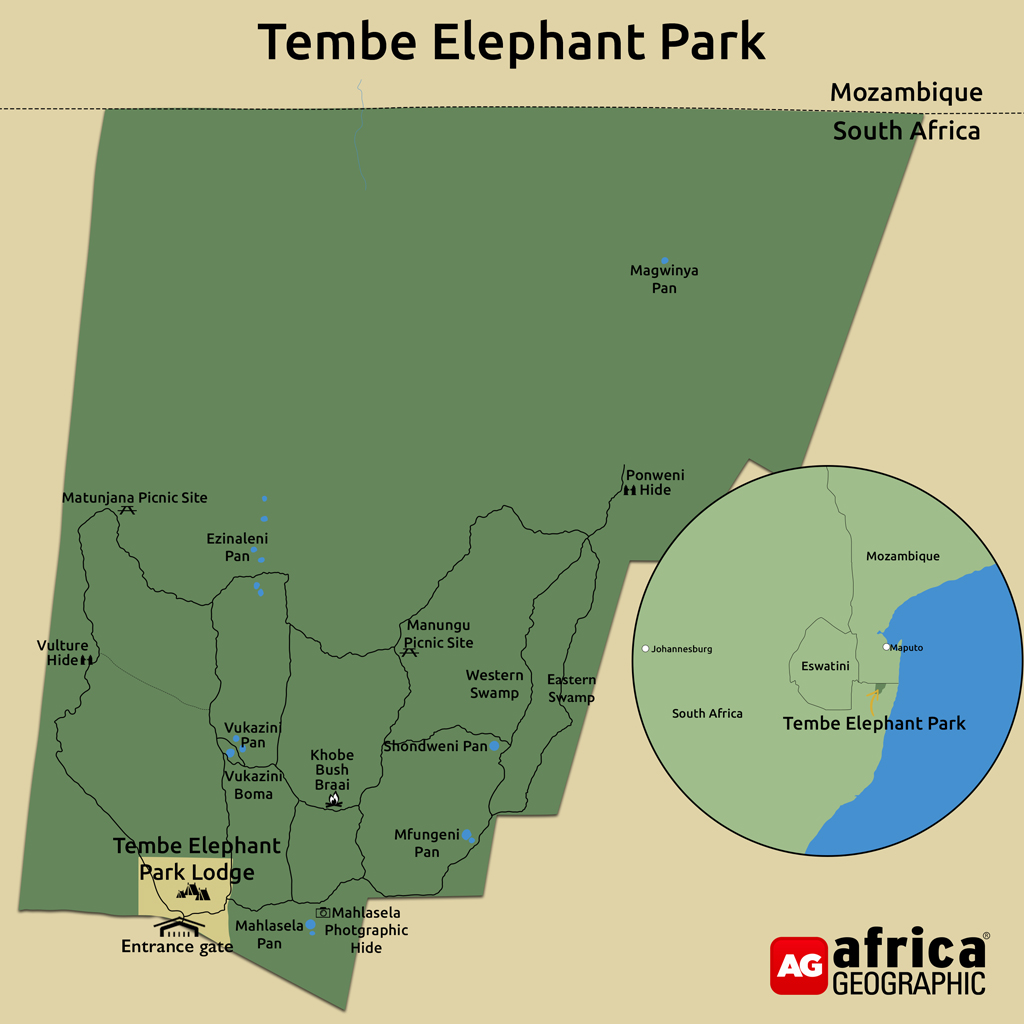
Where is Tembe Elephant Park?
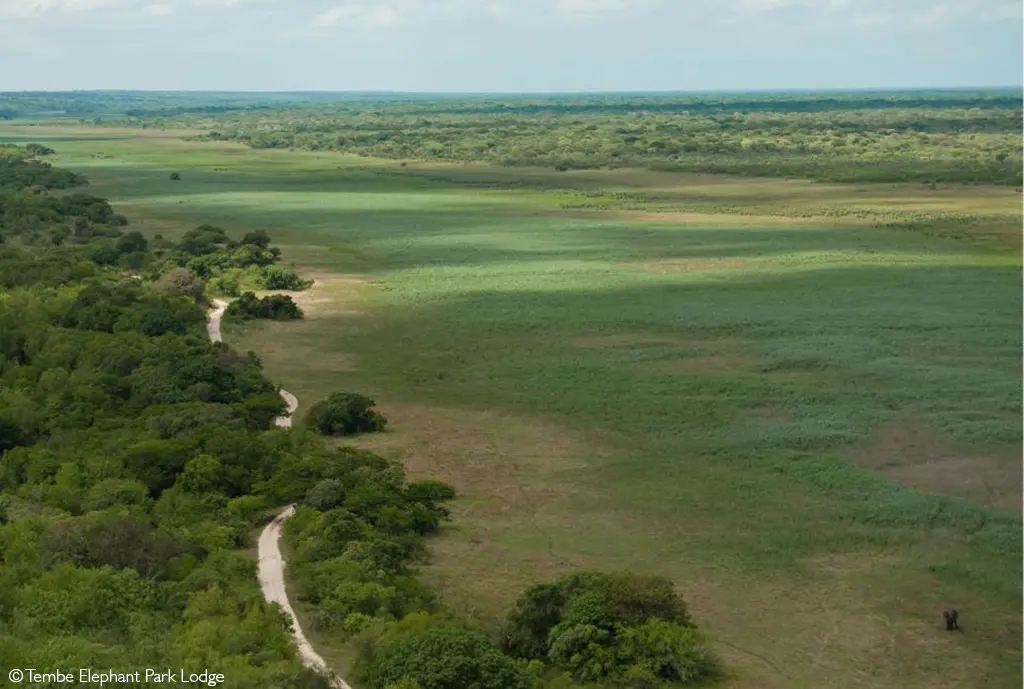
Tembe is home to some of South Africa’s largest elephants and a rare sand forest ecosystem. You’ll find this community-owned park on the border between southern Mozambique and South Africa in northern KwaZulu-Natal.
It is far off the usual safari-goers’ beaten track and, to be honest, a bit of a schlepp to get to. But as I discovered, there is no other place that will give you such incredible, calm, face-to-face moments with elephants on their terms, in their territory.
However, before you jump in your car and head off to Tembe Elephant Park, there are two important things you need to know. First, this is rough 4×4 sandy territory with deep, shock-absorber-eating and axle-breaking holes.
Secondly, and most importantly for everyone’s safety – human and elephant alike – the chances of having encounters like ours are slim unless you are on a guided game drive with Tembe Elephant Park Lodge. You see, the guides are familiar with most of the park’s elephants.
Our guide, Kulu, has been taking people out twice a day for the last 13 years. He has learnt to judge an elephant’s demeanour. He can decide whether they might allow you into their space without feeling threatened or crowded. It’s a fine line that’s easy to misread when all you see is a wonderful photo opportunity. That’s when close encounters can quickly turn from magical to dangerous.
Ready for your own unforgettable elephant safari? Let Africa Geographic help you plan an extraordinary wildlife journey across Africa’s wildest places.
On more than one occasion, Kulu decided not to stop, picking up on minute elephant cues that you or I would never even notice. On other occasions, I noticed an elephant pause, raise its trunk to scent this noisy vehicle, and then relax as if to say: “Oh, it’s you again, Kulu.”
These moments of trust and understanding don’t happen by accident. They’re the result of Kulu’s years of quiet attention and deep respect for the elephants, and that respect is exactly what keeps close encounters calm rather than dangerous.
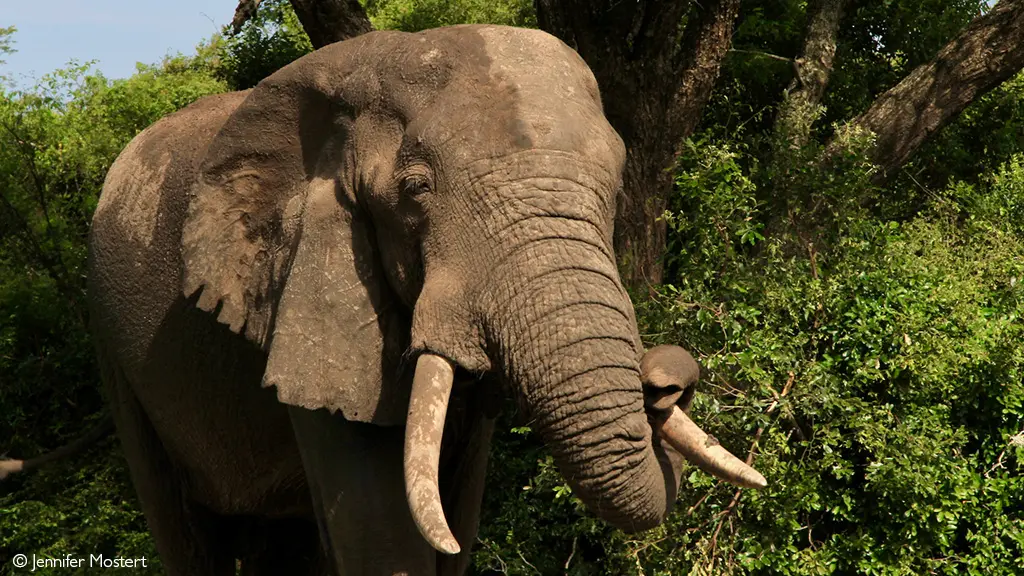
An elephant tests my resolve not to flinch
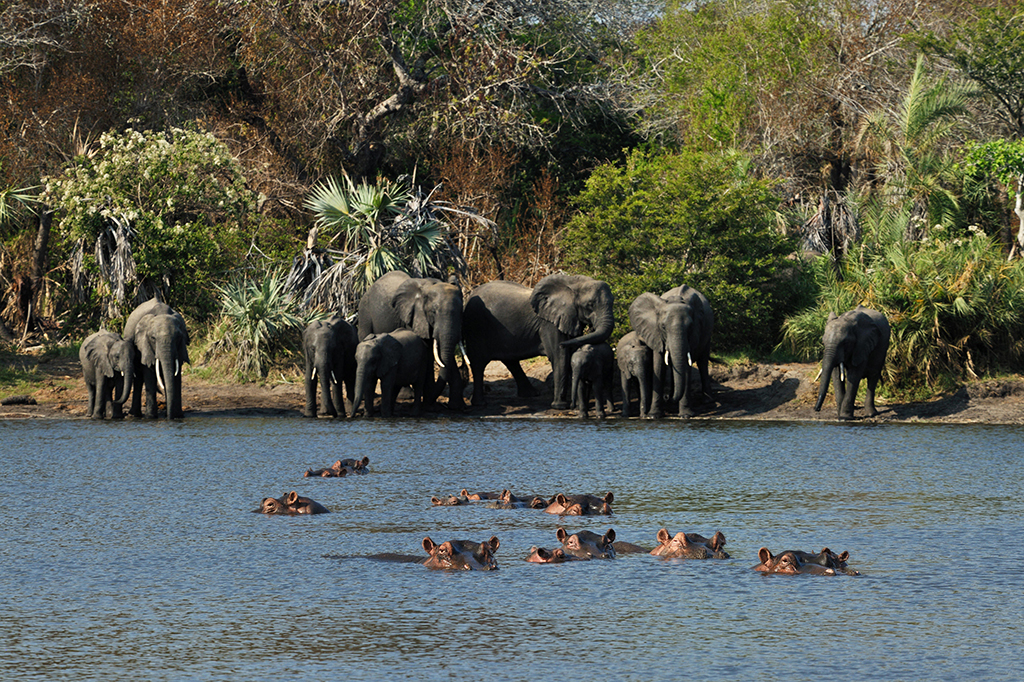
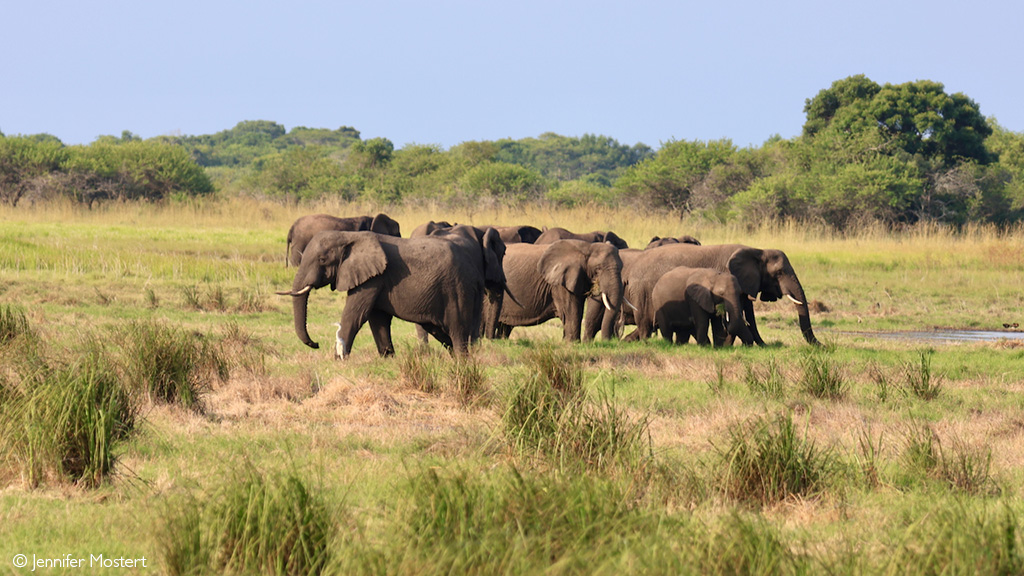
We stopped for the traditional afternoon game-drive sundowners on the edge of a massive swamp, where a matriarchal herd of elephants went about their elephant business. A young elephant mock-charged a heron that ignored it. Boisterous teenagers tested their strength against each other in a game of elephant wrestling, while their mothers and aunties worked steadily on their liquid intake, just like any normal extended family gathering.
We finished our sundowners at the same time as the elephant mothers and aunties. At some unknown elephant signal, the entire family moved out of the swamp towards us. Kulu suggested we sit in the vehicle and wait to see if they would come closer.
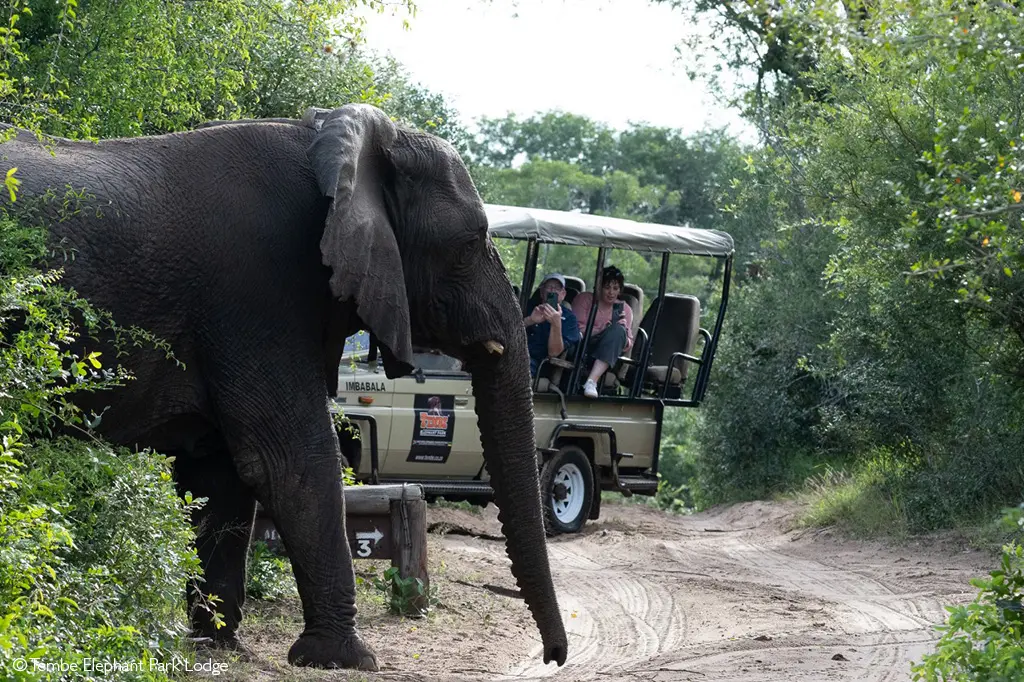
One very large and very daunting aunty casually moved closer to the game-drive vehicle until she was about four metres away. She paused and raised her trunk to catch our scent, I presumed. Satisfied, she stepped closer and deftly wrapped her trunk around a small dry shrub, breaking it with a massive crack and leaving a small stump in the ground.
She stepped over the stump and rocked it back and forth with her hind foot. Now she was so close I could feel the cool air wash over me as she flapped her ears. Each time they slapped against her body, it sounded like a huge bass drum resonating through her.
During her stump-rocking performance, she watched us as if she were testing our nerve: would we flinch or wouldn’t we?
After what felt like a lifetime, she stopped and moved to the back of the vehicle, where she paused. Her tummy rumbled lightly, as if she were giggling to herself, before she disappeared into the bush.
And the rest of the herd? They, too, melted away into the bush.
When an elephant holds your gaze
It’s our last day at Tembe Elephant Park, and the bush feels steeped in that bittersweet quiet that comes when you know you’re about to leave a place you’re not quite finished with.
Two elephants appear on the narrow sand track ahead. We stop and simply wait to see if they’ll approach us.
One of them angles towards us, unhurried, pausing every few steps to snack on the lush green grasses lining the track. It is so still that I can hear the grass squeak as she plucks it from the earth with her trunk. Before each mouthful, she gives the bundle a gentle shake, dust and tiny insects drifting away in the light. She comes closer and closer until she is on my side of the vehicle, and then she stops. I lower the camera. Some moments are better felt than photographed.
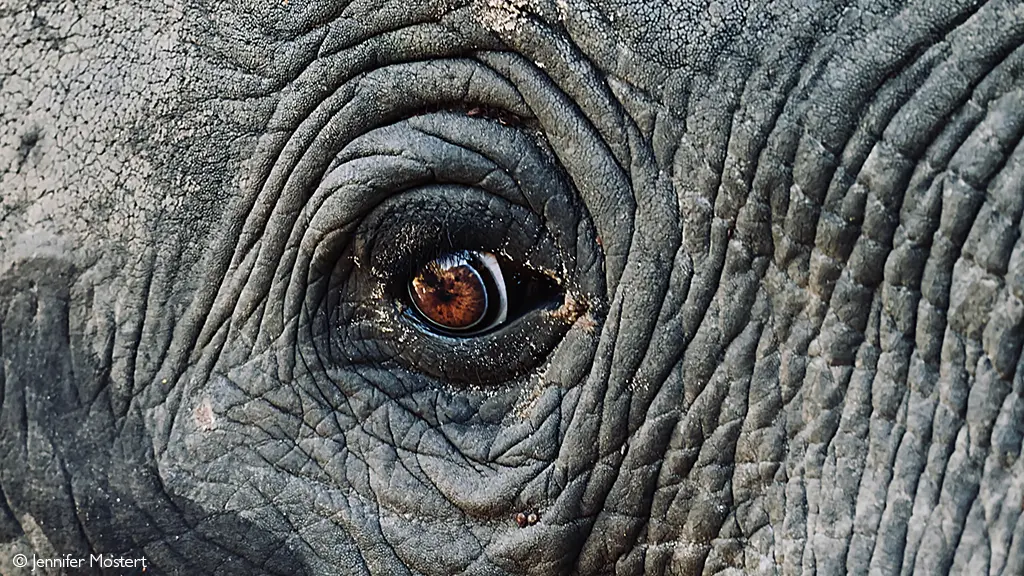
I can see the wiry hairs on her trunk, the map of creases around her eye, the fine dusting of sand across the folds of her skin. I lift my gaze and meet hers.
Her eyes seem to travel straight through me, peeling back the layers I didn’t know I wore, laying my soul bare to her slow, ancient appraisal. Time stretches thin and quiet between us. At last, I have to drop my eyes; I can no longer bear the weight of that careful inspection. I feel as though I’ve failed some invisible elephant examination.
The air stirs as her ears move. Each leisurely flap sends a soft, cool breath over me, a low, steady drumbeat that seems to nudge my racing heart into her slower rhythm. The rest of the world falls away until there is nothing but her, the hush of the bush, and this small, ridiculous human trying not to move. And then my tummy rumbles. I freeze, holding my breath, praying she hasn’t heard it. Of course she has. She answers with a deep belly rumble of her own and then a gloriously inelegant fart that would put any teenage boy to shame – thankfully without the smell. I don’t respond. It’s only then that I realise I’ve been holding my breath for most of this strange, shared silence. I glance up and catch what can only be described as a twinkle in her eye. I let my breath slip out as quietly as I can. Her tummy rumbles lightly in reply and, apparently satisfied that I pose no threat and very little entertainment, she drifts towards the back of the vehicle.
There, she decides that the rear pillar is exactly the right height for a back scratch. Her immense body leans into it, and the whole vehicle rocks, bolts creaking, as she works an itch only she can feel. Kulu shouts at her in Zulu to stop, but she ignores him with the calm assurance of a creature who knows this land has always been hers. Only when he turns the key and the engine coughs to life does she finally step away, vanishing into the green tangle.
The second elephant follows, and within moments the track is empty again, as if they were never there – except for the echo of drumbeat ears and the wild, impossible calm they’ve left behind.
When giants let you in
Long after we leave Tembe Elephant Park, I can still feel the soft drumbeat of her ears in the air, as if the rhythm had settled somewhere in my ribs and refused to leave. For a few brief days, the giants of this sand forest had opened a quiet doorway and allowed us to step, very carefully, into their world.
Tembe Elephant Park is not a place for ticking species off a list or chasing photographs to show where you’ve been. It is a place of initiation. A place where time slows to the pace of an elephant’s heartbeat, and you realise you are not the main character in this story at all, but a guest on borrowed ground. Someone to be weighed and then, if you’re lucky, quietly accepted.
You leave with nothing more tangible than dust in your clothes and the sense that something inside you has quietly shifted. That is the true souvenir of Tembe: the knowledge that, for a heartbeat or two, the giants let you in – and the quiet understanding that they did not need to.
The pace of Tembe Elephant Park
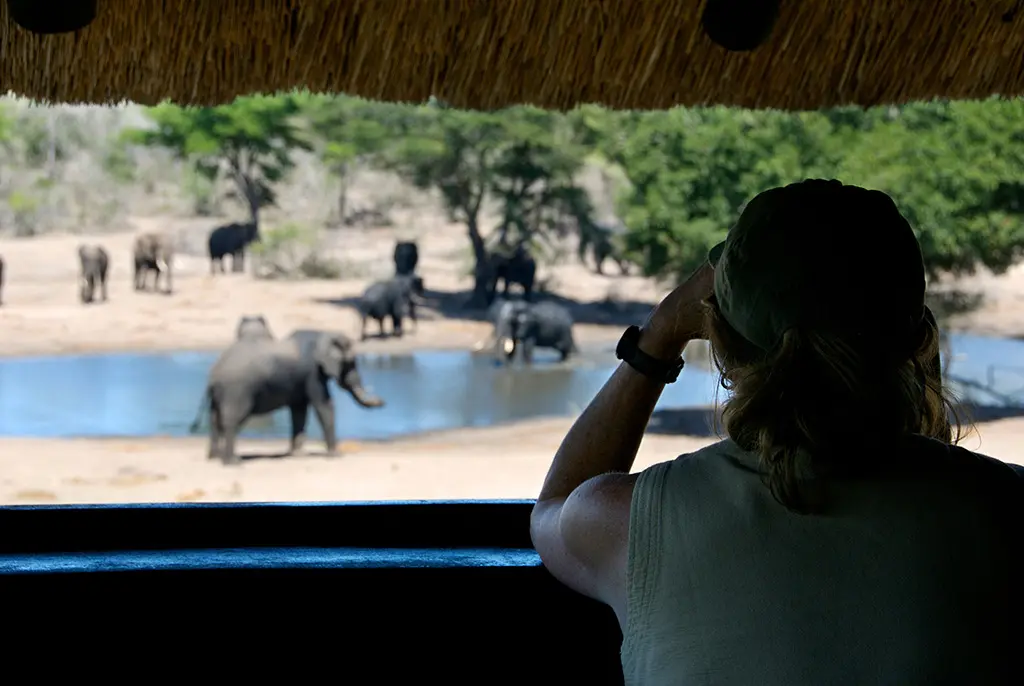
Tembe Elephant Park is a remote sand forest reserve in northern KwaZulu-Natal, South Africa. Days here are slow and quiet: unhurried drives, time at waterholes, and long stretches where very little seems to happen until it suddenly does.
If you prefer fast-paced, checklist safaris, Tembe may feel too still. If you’re happy to let the bush and the elephants set the rhythm, this is your kind of place.
Safety and guided drives
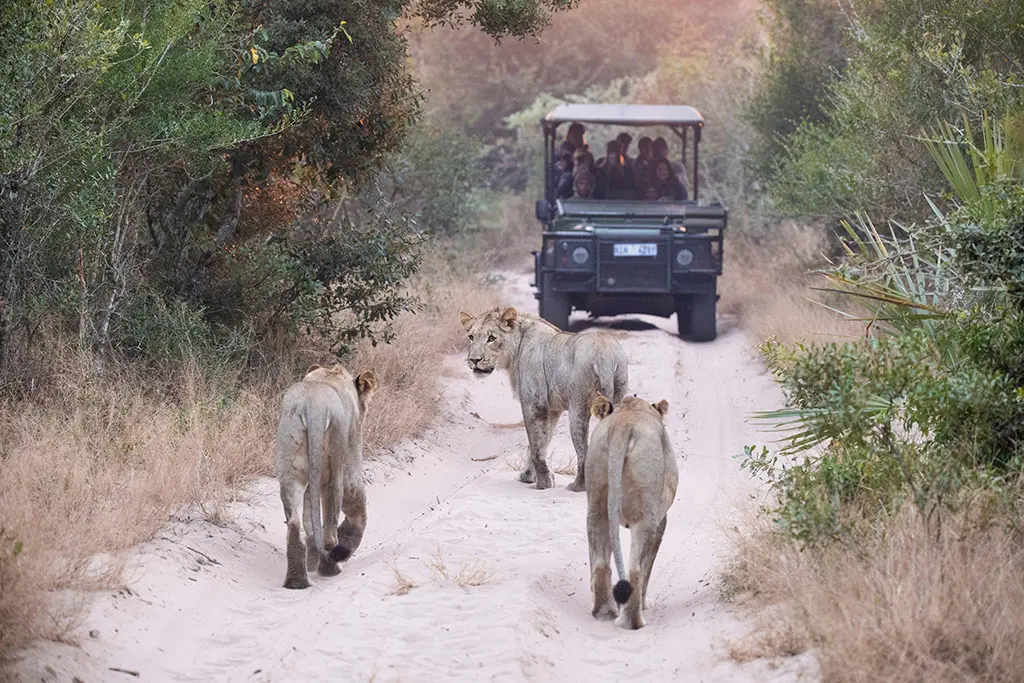
The calm, close encounters with elephants in Tembe Elephant Park don’t happen by accident. This is big-elephant country, with narrow sandy tracks and dense bush. For everyone’s safety – yours and the elephants’ – guided game drives with experienced rangers are essential.
Tembe Elephant Park Lodge guides know the individual elephants and can read subtle changes in their behaviour. They decide when it’s safe to sit quietly and when it’s time to give the elephants space. That judgment is what keeps encounters magical rather than dangerous.
4×4 and self-driving experiences in Tembe Elephant Park
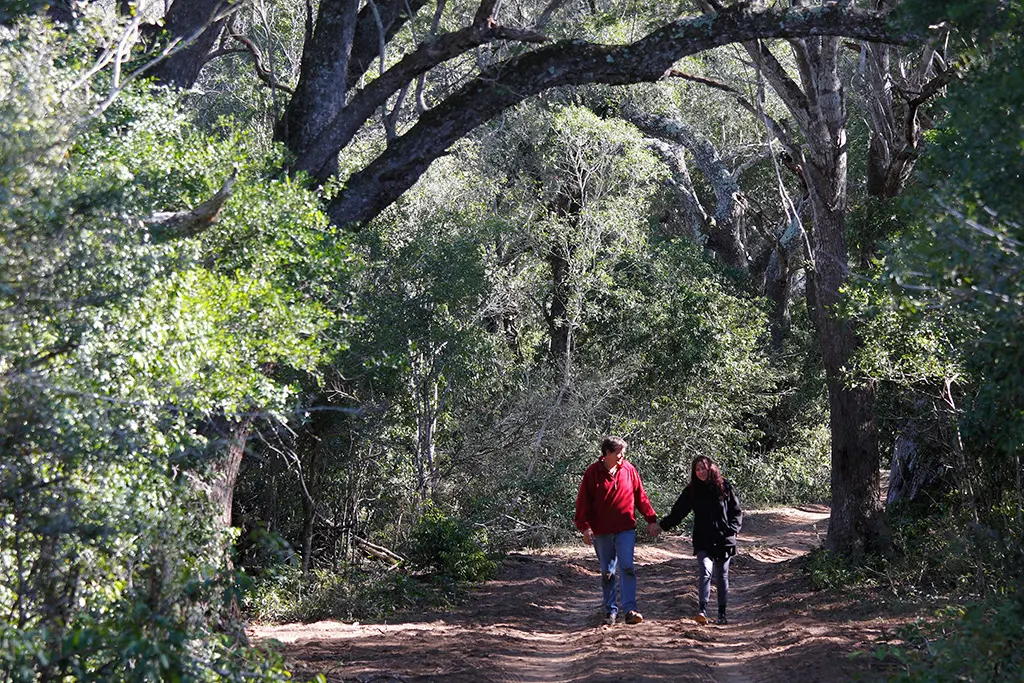
The roads in Tembe are deep, soft sand with axle-eating holes. This is proper 4×4 territory, not a quick detour in a high-clearance SUV. You do need a 4×4 to self-drive in Tembe, and even then, you’ll spend much of your time in low range.
You can self-drive the routes if you have a 4×4. But the best viewing – and any close elephant moments – are usually from the lodge vehicles. They’re built for the terrain and positioned with both safety and the elephants’ comfort in mind.
Accommodation at Tembe Elephant Park
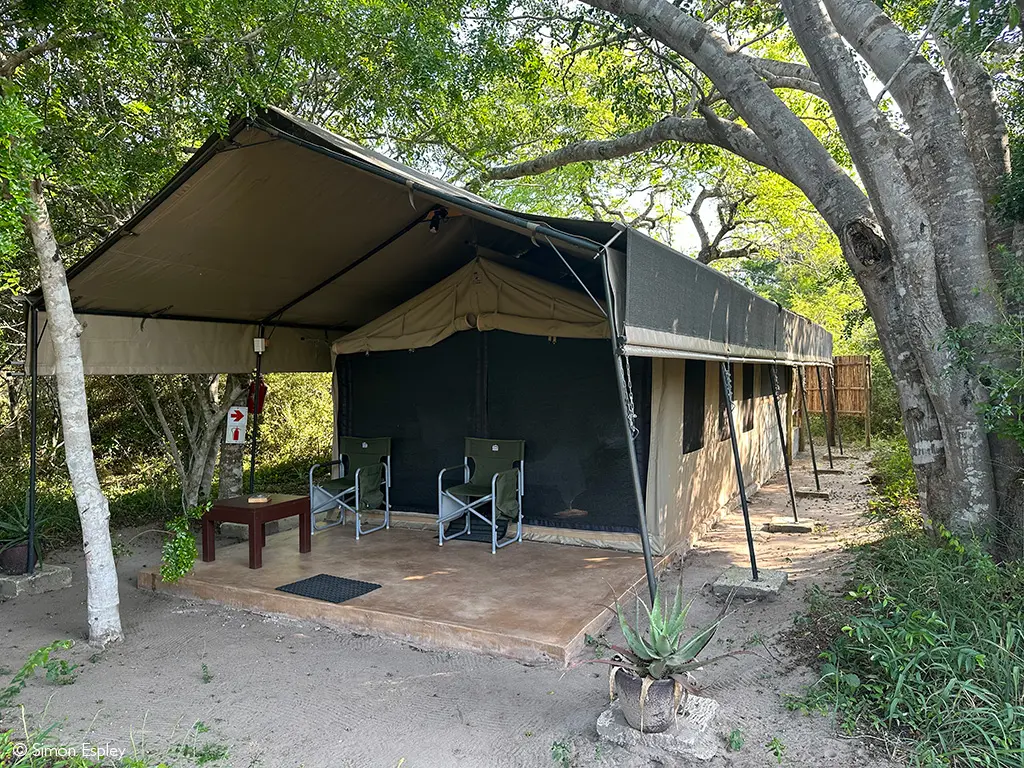
Tembe Elephant Park Lodge is the only accommodation available inside Tembe Elephant Park. It offers a full tented safari package, including meals and two activities per day, at a very affordable rate.
The lodge’s location inside the park means you’re immersed in the sounds of the sand forest day and night, with elephants, antelope and birdlife often passing close by.
Tembe Elephant Park Lodge: A community-run safari lodge
Tembe Elephant Park Lodge is a community-run initiative that currently employs 55 people. Your stay helps support the Tembe people, whose ancestral land this is and who are closely involved in protecting the sand forest and its elephants.
The lodge feels less like a polished resort and more like being welcomed into a place that still belongs, first and foremost, to its original custodians.
One of the loveliest surprises at the Lodge is the massage in your own private bush spa behind your safari tent. After hours of bumping along sandy tracks, it feels wonderfully indulgent to have your muscles unknot to the sound of birds and rustling leaves. It’s oddly grounding too – a small human comfort in the middle of elephant country.
Staying here gives you the best chance of those calm, close encounters that Tembe is known for – on the elephants’ terms, in their own sand forest home.
Further reading
- Tembe Elephant Park is a community-owned Big Five game reserve famous for big-tusked elephants in Maputaland, South Africa, next to Ndumo Game Reserve. Read more about Tembe and book your stay at Tembe Elephant Park here.
- Tucked away in South Africa’s Eastern Cape you’ll find another elephant park: Addo Elephant National Park is a conservation triumph and a wildlife lover’s paradise. Read more about Addo here.
- For more destinations, lodges and bush camps that offer tangible, measurable benefits for conservation & communities, check out Ukuri.travel.
To comment on this story: Login (or sign up) to our app here - it's a troll-free safe place 🙂.