



- For decades, only alpha female wild dogs were believed to breed.
- Long-term Zimbabwe data challenges the dominant-only breeding model.
- Subordinate females produced nearly a quarter of litters.
- Second litters did not reduce pup survival rates.
- Social structure, not climate, shaped reproductive patterns.
 Want to see wild dogs on an African safari? Check out this unique safari focused on finding wild dogs. We also have other ready-made safaris to choose from, or let us build one just for you.
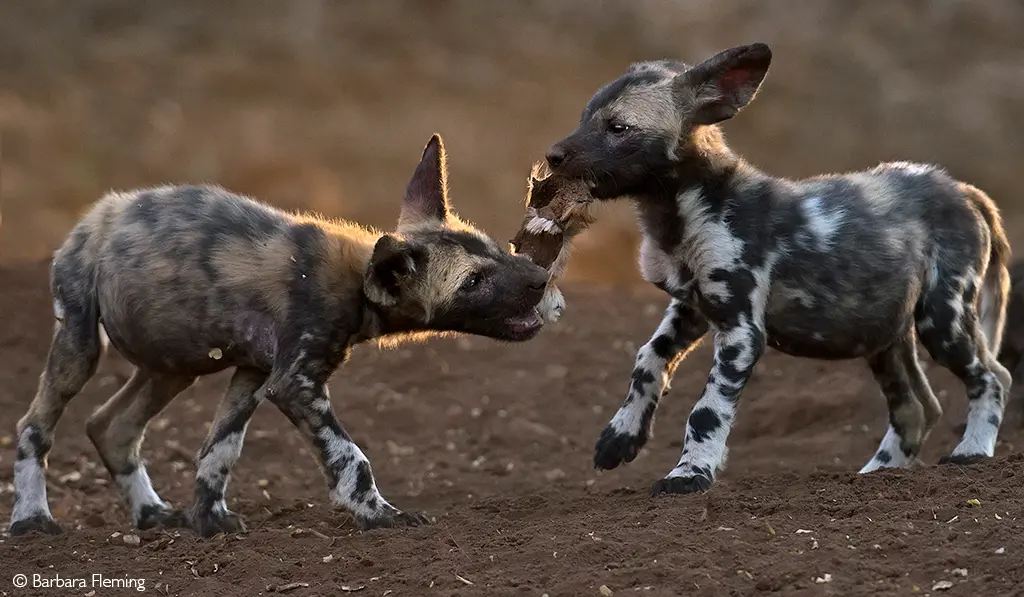
For decades, many field guides and safari narratives have repeated a simple rule: in an African wild dog pack, only the alpha female breeds. This view was shaped in part by Hugo van Lawick’s 1974 account Solo, which documented aggression by an alpha female toward a subordinate that had given birth. That account suggested strict reproductive control, including infanticide and starvation of subordinate females.
But new long-term research from Zimbabwe challenges that assumption. A 14-year study in the Savé Valley Conservancy, Zimbabwe, analysed reproduction in 49 packs of African wild dogs Lycaon pictus, across 131 den sites. The findings show that, at least within this landscape, subordinate females breed far more often than previously assumed – and that their pups survive at comparable, and sometimes higher, rates. The research was conducted by the African Wildlife Conservation Fund in collaboration with the London Zoological Society, Rhodes University, University of Mpumalanga and the Zimbabwe Parks and Wildlife Management Authority.
What cooperative breeding means
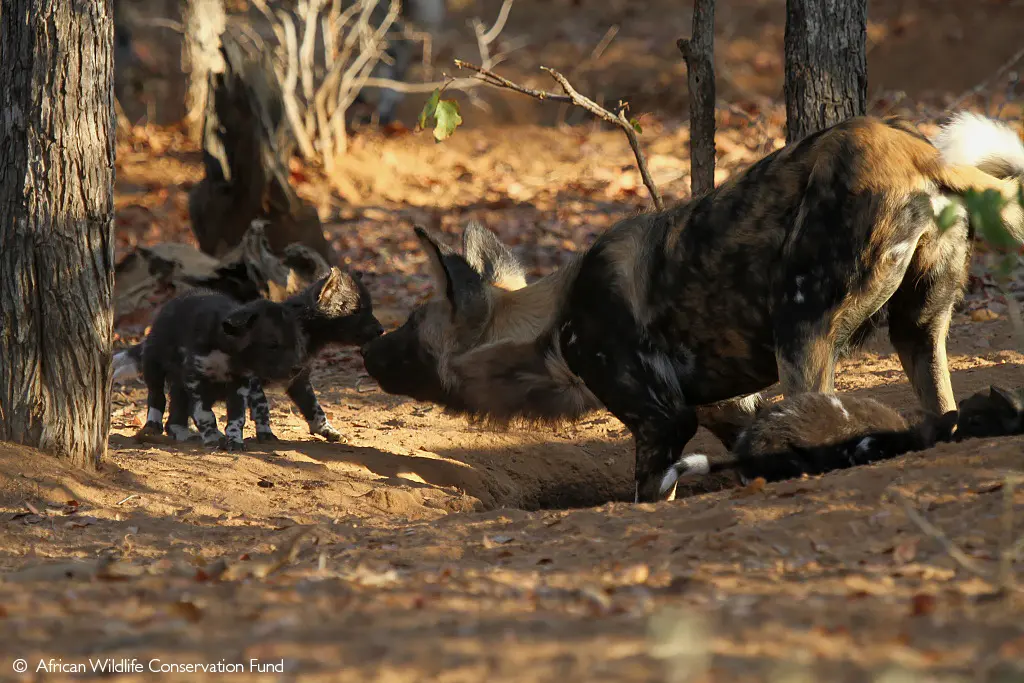
Cooperative breeding occurs when individuals other than the parents help raise young. It is rare in mammals, found in less than 1% of species.
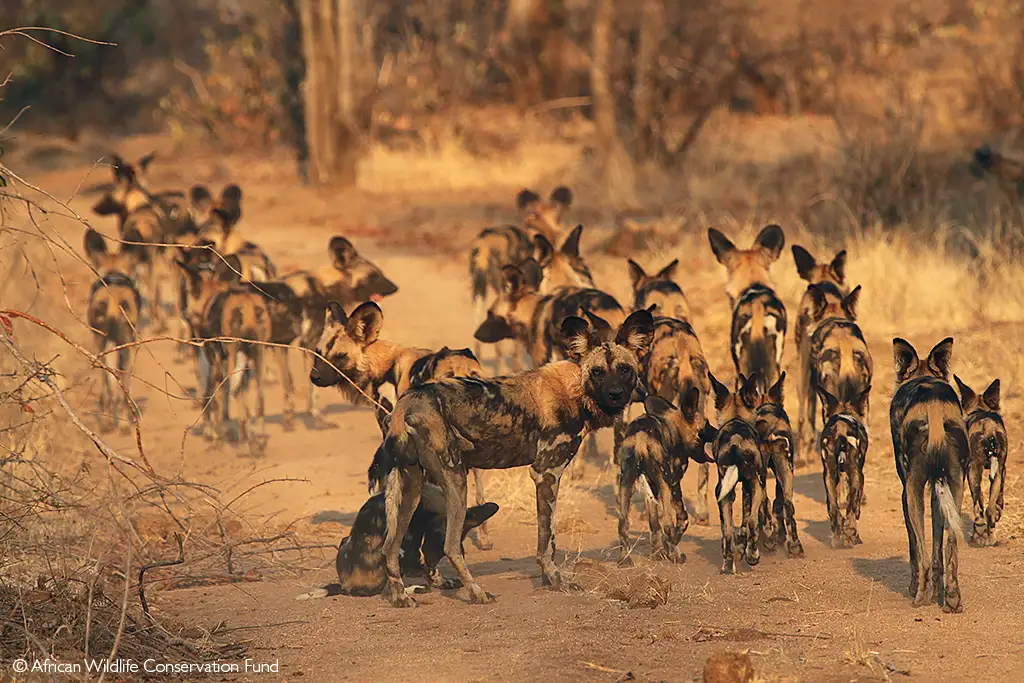
In wild dogs, cooperative breeding is considered near-obligate. Packs typically consist of an alpha pair, subordinate adults and offspring. During the approximately three-month denning period, all adults regurgitate food for the lactating female and pups.
Two evolutionary concepts help explain this system. Kin selection refers to individuals increasing their inclusive fitness by helping relatives reproduce. Group augmentation refers to the benefits of living in larger groups, such as improved hunting success and pup survival. In wild dogs, larger packs are known to raise more pups to independence. The new study examines how these social and ecological factors interact.
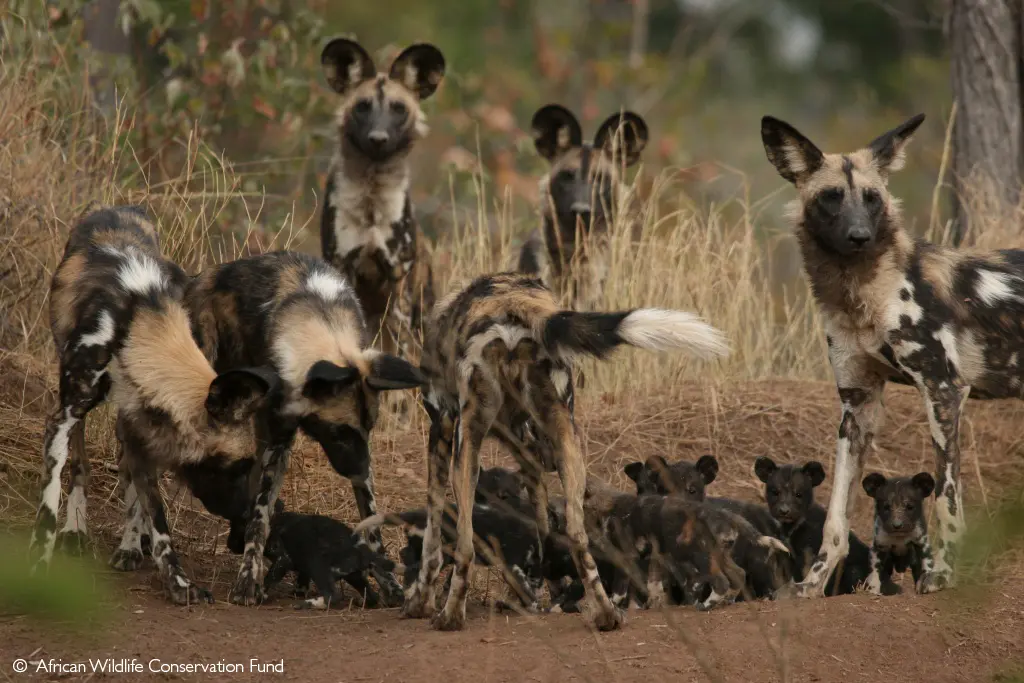
Subordinate females breed more often than assumed
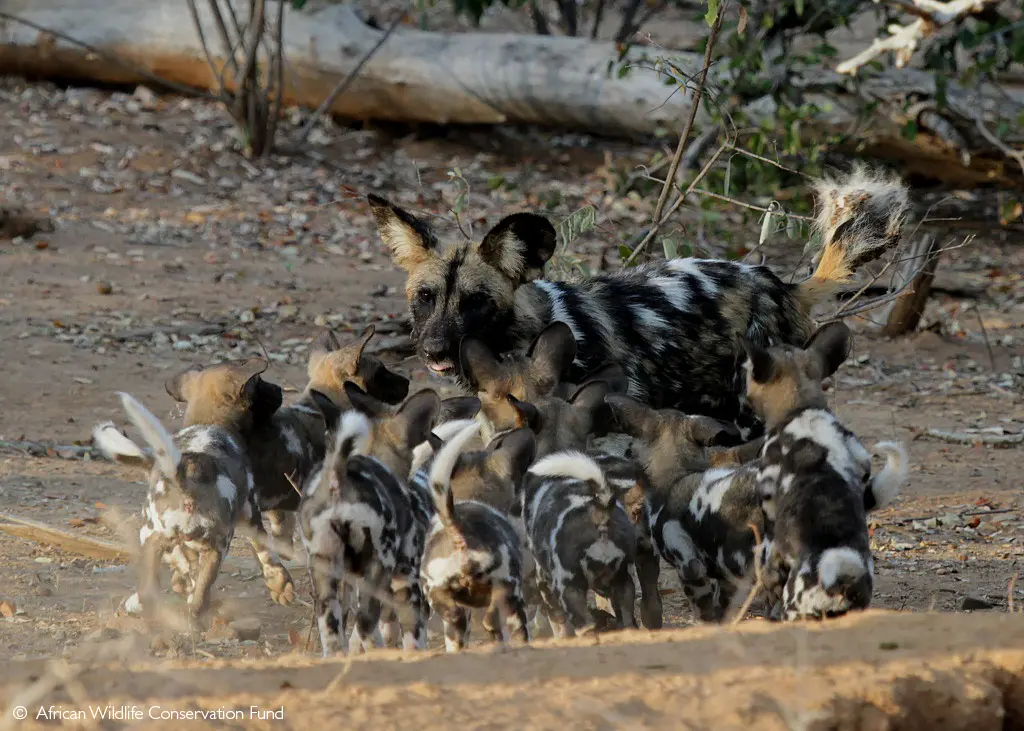
Between 2008 and 2021, the 49 packs studied in the Savé Valley study area produced 130 breeding events and 173 litters. Of these packs, 20 produced multiple litters, with two females from the same pack breeding during the same denning season. Among packs capable of doing so – those with more than one breeding-age female – 41.15% of breeding events resulted in multiple litters.
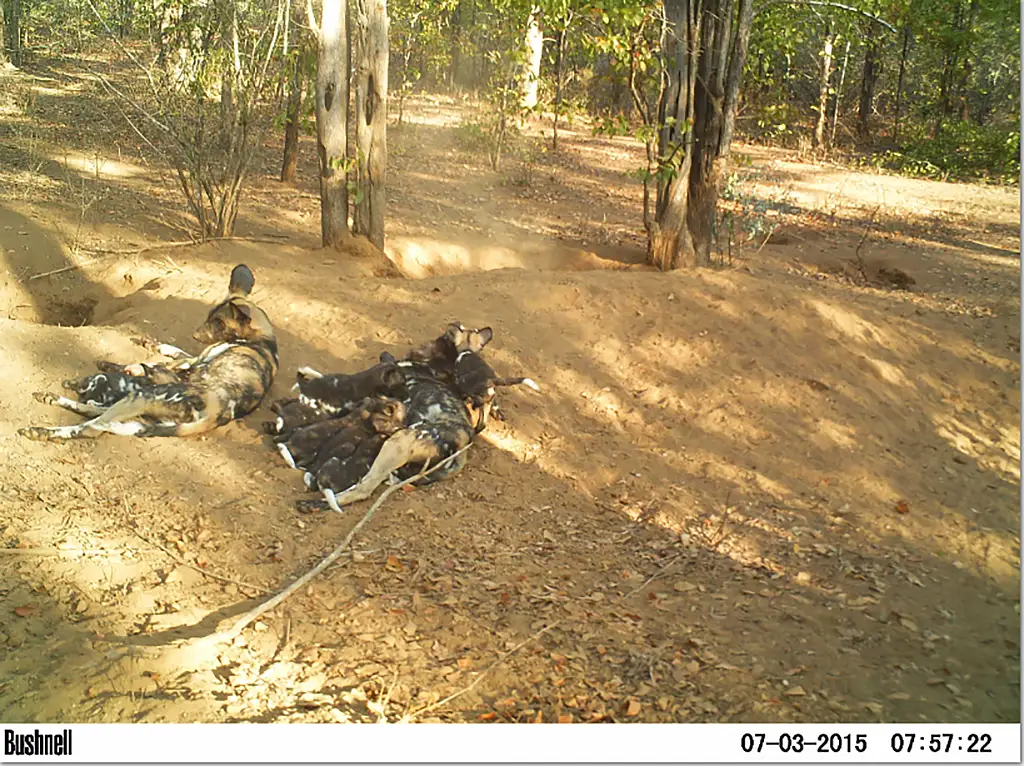
Subordinate females contributed 24.86% of all litters. Importantly, their pups accounted for 32.19% of one-year survivors and 33.68% of two-year survivors. Infanticide was rare. It occurred in 2% of multiple-litter packs, while pup stealing or adoption occurred in 14%
These figures contrast with earlier assumptions that dominant females frequently suppress subordinate reproduction through killing pups. The study therefore shows that subordinate breeding is not exceptional in this population and does not generally result in severe reproductive conflict.
What drives multiple litters
The researchers tested whether environmental conditions, such as rainfall and temperature, influenced the occurrence of multiple litters. Pre-emergence rainfall and temperature can affect prey availability and hunting success, which, in turn, influence the energy available for reproduction. However, statistical models showed that environmental variables did not predict whether a pack produced multiple litters.
Instead, social structure was decisive. Younger packs were significantly more likely to produce multiple litters. Packs with more subordinate females were also significantly more likely to do so. Pack age had a significant negative effect on the probability of multiple litters, while the number of subordinate females had a significant positive effect. The authors conclude that weaker dominance hierarchies in younger packs may allow more subordinate breeding. This supports the idea that reproductive sharing is shaped by social dynamics rather than short-term environmental variation.
Do second litters survive?
When two litters are born in the same pack, pups may be first-born or second-born. A common assumption is that second-born pups would suffer from competition for food, or from leaving the den too early, with the second-born pups being too small to survive moving with the pack.
The data do not support these assumptions. Within multiple-litter packs, pup survival to one year was significantly higher for second-born litters than for first-born litters. By the second year, survival did not differ by birth order.
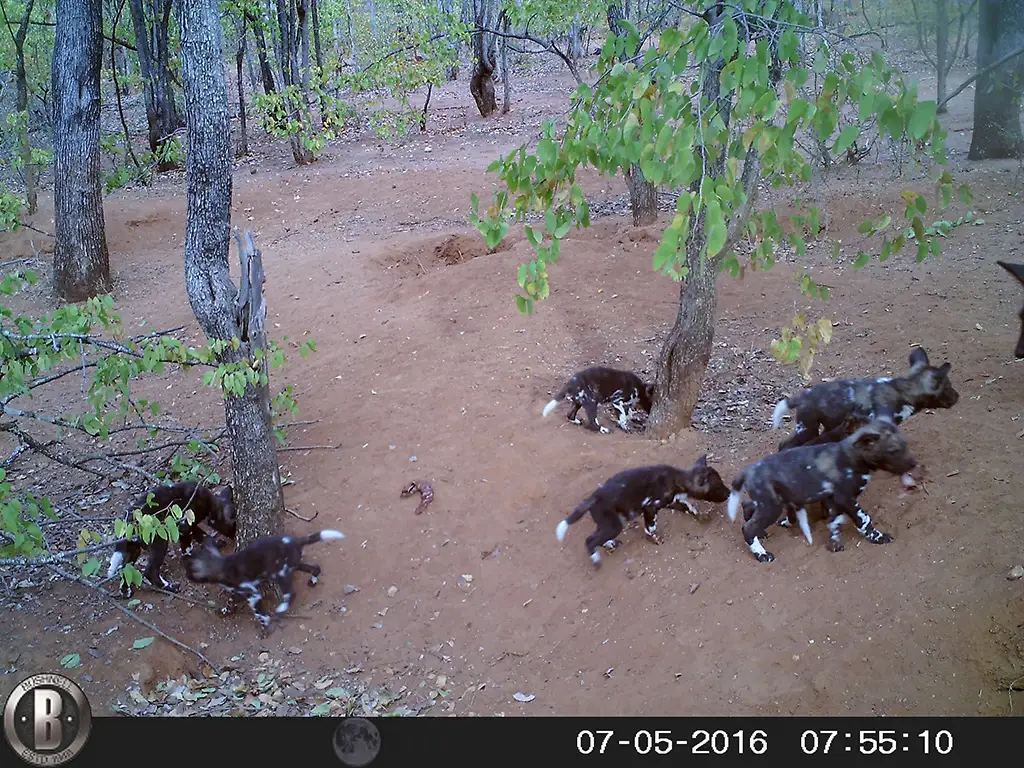
Across all packs, a larger pack size significantly improved both one-year and two-year survival. Two-year survival also increased with higher pre-emergence rainfall and higher maximum daily temperatures. These findings indicate that communal care can buffer potential disadvantages associated with birth order. In addition, pups from single-litter packs had significantly lower survival to two years compared to pups from multiple-litter packs. The data show that cooperative systems can enhance long-term survival.
Related females and reproductive tolerance
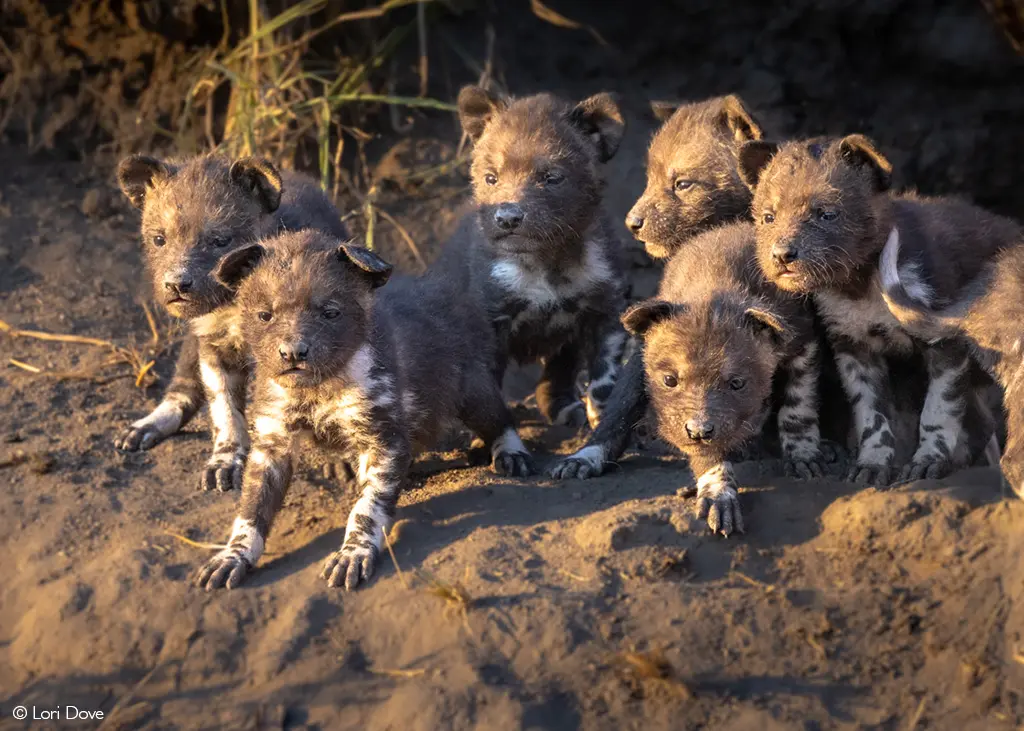
In multiple-litter packs, breeding females were often closely related. The most common relationship was litter sisters, accounting for 37.21% of cases. Mother–daughter pairs and other related combinations were also recorded.
High relatedness may reduce conflict. Kin selection theory predicts that females may tolerate reproduction by relatives because they share genes.
The authors note that the tolerance of multiple litters may also affect genetic diversity in the Savé Valley population, which is known to exhibit low genetic diversity. Allowing more females to breed could increase genetic contribution within packs.

The bigger conservation picture
African wild dogs persist in only 7% of their historic range. They face habitat fragmentation, prey decline, human–wildlife conflict and climate change. This study shows that subordinate breeding does not reduce pup survival and that multiple-litter packs have higher two-year survival rates.
It also shows that social structure, particularly pack age and the presence of subordinate females, shapes reproductive outcomes.
For conservation practitioners, the implication is clear. Maintaining intact social structures and sufficient pack size is important. Suppressing subordinate breeding is unlikely to benefit population growth in this system.
The long-held belief that only alpha females breed does not hold in this population. Cooperative breeding in African wild dogs can be more flexible in certain populations, more tolerant and more productive than once assumed.
Reference
- Groom, R.J., Comley, J., Wolton, A., Ngwenya, N., Mandisodza-Chikerema, R. and Watermeyer, J.P. (2026), Exploring the complexities of cooperative breeding: insights from African wild dog packs. J Zool, 328: 16-29.
Further reading
- Longing to see African wild dogs? Here are the six best spots to see painted wolves in Africa – for your next safari with us.
- Tsavo’s African wild dogs face major threats. Tsavo Trust & Painted Wolf Foundation are working to save these painted dogs. Here’s how
- Could we double African wild dog (painted wolf) numbers by 2050? With funding, collaboration and recovered territory, it’s possible. Learn more here
- To learn more about this research or to support the work around the wild dogs mentioned in this article, visit African Wildlife Conservation Fund’s website here.
Questions such as these will be the focus of a presentation delivered at the African Wild Dogs United 2026 Virtual Conference, March 10–12. Across three days, 78 presentations will examine a wide range of African wild dog research topics. Everyone interested in, passionate about, or fortunate enough to have spent time with African wild dogs is invited to peruse the programme, explore the list of keynote speakers, register, support a student and make a donation via AWDU. The African Wild Dog Survival Fund is sponsoring the three days, enabling registration revenue to be channelled into bursaries for young aspiring Africans wanting to work with wild dogs.
To comment on this story: Login (or sign up) to our app here - it's a troll-free safe place 🙂.