




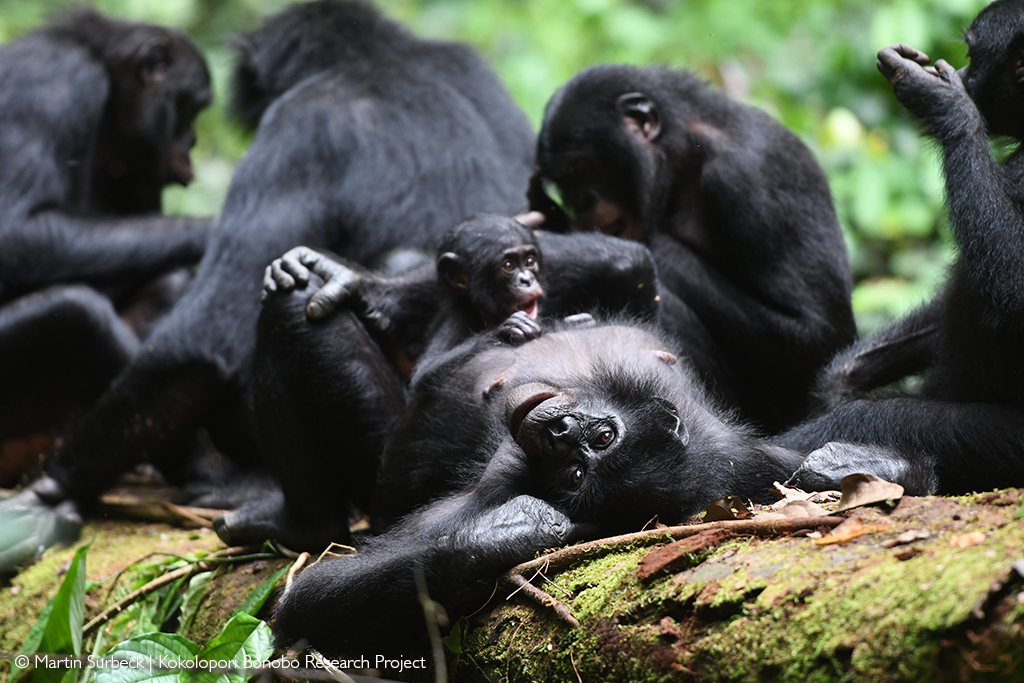
In the lush, dense rainforests of the Democratic Republic of the Congo, one of our closest relatives is rewriting the rules of power. While most primate societies, and most mammals for that matter, are male-dominated, bonobos are different. Here, the females call the shots. They decide whom they want to mate with, and when males make advances, females ward them off instead of submitting. Females even control the shared food sources, with males patiently waiting their turn. This has puzzled naturalists for a long time, as it is unusual behaviour in the animal kingdom. What makes the bonobo society so different from other primates? How did the females get to the top?
For years, unusual behaviour has long puzzled scientists, and it took analysing 30 years’ worth of data to find some answers about bonobo dynamics. A study published in Communications Biology offers insights into what led females to the top. It is not brute strength, but something else entirely: the power of sisterhood.
Researchers analysed data from six wild bonobo communities in DRC’s Kokolopori Bonobo Reserve. What they uncovered challenges the long-held belief that strength and aggression dictate dominance. Instead, bonobos show us a different path, where social bonds and cooperation determine who holds power. It is a revelation that challenges long-held assumptions about how status works in nature.
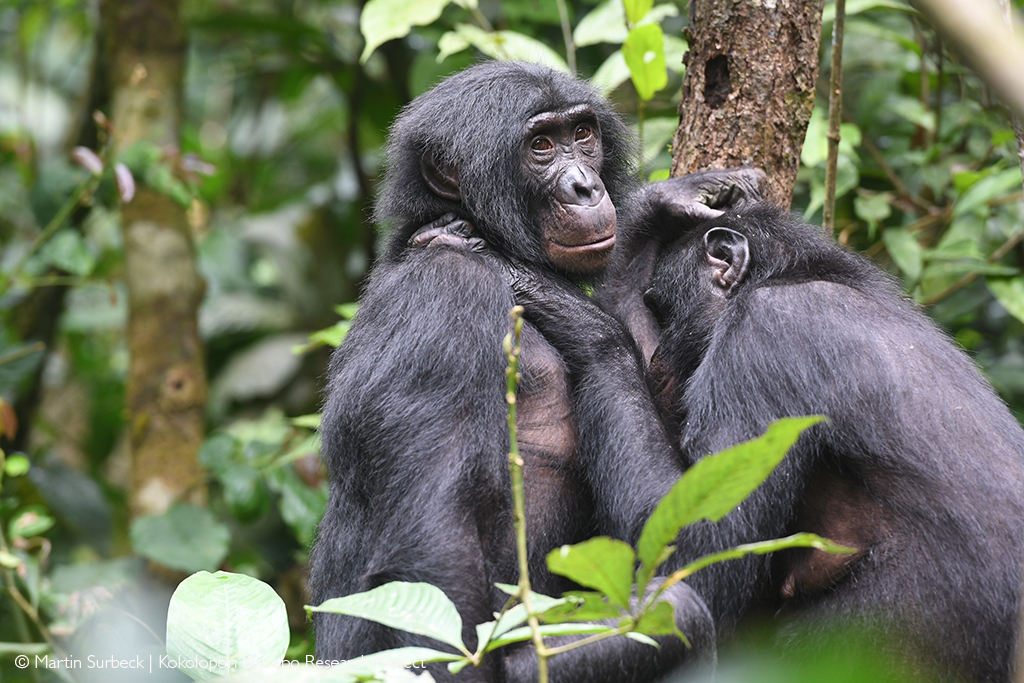
“We present for the first time evidence that female coalitions [are] a way by which females gain power against males,” Martin Surbeck of Harvard University, who runs the Kokolopori Bonobo Research Project station. “Female coalitions exist in other species and can take the form of matrilines (line of descent from a female ancestor), like in female-philopatric baboons, but bonobos are special in that coalitions are mainly formed against males, and between unrelated females,” says Surbeck.

That’s remarkable, considering bonobo society is fluid. Females are the ones who migrate, often joining unfamiliar groups. Yet even as outsiders, they form the stable core of their communities. “Adult males, often their sons, accompany them,” noted Surbeck. “Bonobo groups split into smaller subgroups called parties that vary in size and composition, but they sometimes also travel together. Female coalitions can occur anytime during the day when needed, though they do not seem to gang together in anticipation.”
Barbara Fruth of the Max Planck Institute, who has led the LuiKotale Bonobo Project research station for 30 years, adds: “There were competing ideas for how, none of which had ever been tested in wild bonobos living in the jungles in which they evolved.”
The study tested three main ideas. One, the self-organisation hypothesis, suggests that social dynamics shift through repeated victories and losses, and momentum builds, allowing some females to climb the ranks despite their smaller size. In male-heavy groups, constant competition can weaken some males. Another, the reproductive control hypothesis, argues that if males cannot easily determine when females are fertile, especially when several females are fertile simultaneously, they lose control over mating. This levels the playing field and shifts influence to the females.
But it was the female coalition hypothesis that stood out. The findings were clear: females unite during conflicts, particularly against males. This significantly boosts their rank and reduces harassment. “I did not expect such a clear indication of the relevance of female coalitions,” explains Surbeck. “I thought that female sexuality would matter more, since we’ve seen that, on a dyadic level, females gain leverage against males when signalling ovulation.”
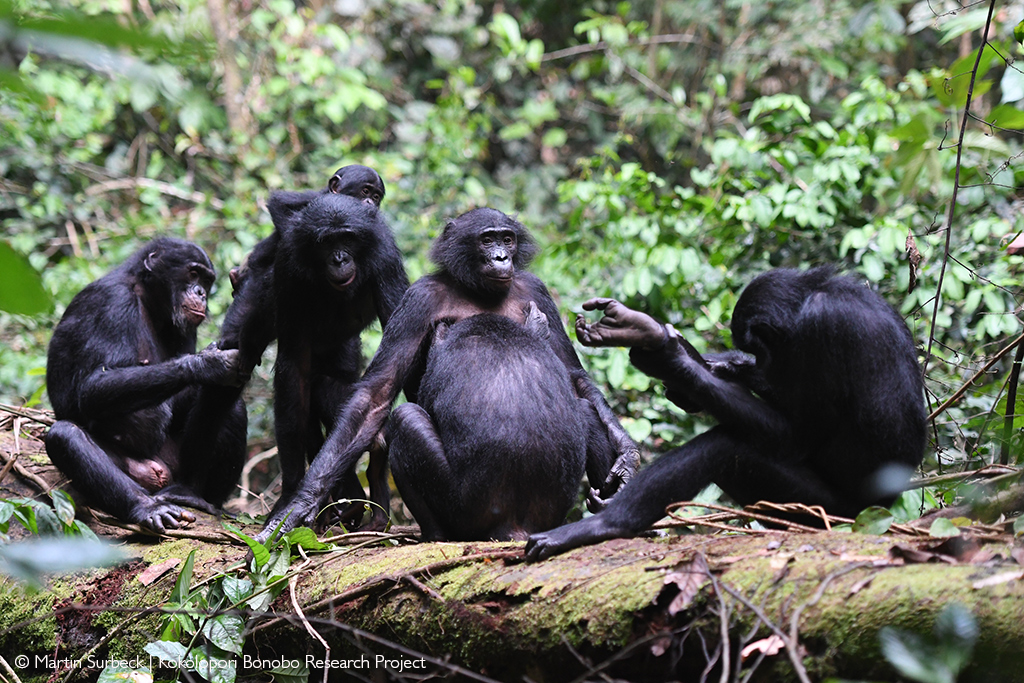
Across the six bonobo communities studied (drawn from three field sites with observation periods of two to six years), 85% of coalitions were female-led and directed at males. These were not random emotional outbursts, but they were strategic and coordinated, often sparked by disputes over food or male aggression. In those moments, the effect was apparent: dominance came not from strength, but from unity.
One of the particular findings that stood out was the clear link between coalition strength and female dominance rank. Females who formed effective coalitions more frequently consistently held higher status. These alliances helped them access better food sources, assert themselves in group decisions, and reduce male harassment.

Why is this significant? In many mammalian societies, males tend to dominate. Bonobos break this narrative. Their society demonstrates that cooperation, rather than conflict, can lead to power and influence.
Of course, gathering these insights was not an easy task. “One of the biggest challenges of the study,” Surbeck notes, “was that bonobos only occur in remote parts of the DRC. The logistics of running long-term study sites and collecting the necessary data were incredibly demanding.”
Yet those efforts have paid off. This study deepens our understanding of primate behaviour and challenges assumptions about dominance and gender in the animal kingdom. It shows that, under the right conditions, solidarity can be stronger than force.

Want to go on a bonobo-seeking safari? We’ll help you plan your tailor-made bonobo safari. Alternatively, browse our other safaris here.
Resources
- Martin Surbeck, Leveda Cheng, Melodie Kreyer, Gerrit Gort, Roger Mundry, Gottfried Hohmann, Barbara Fruth. Drivers of female power in bonobos. Communications Biology, 2025; 8(1)
Further reading
- Research reveals bonobos & chimps use sex to resolve tension. Great ape sex offers insight into the evolutionary roots of human intimacy. Read more here
- Controversy erupts over wild chimpanzees trafficked from DRC to India’s Vantara Zoo using suspect CITES permits. NGOs demand global action
To comment on this story: Login (or sign up) to our app here - it's a troll-free safe place 🙂.