



Land of legends & giant red tuskers


- Tsavo protects immense wilderness, famous for red elephants and Africa’s remaining giant tuskers.
- Tsavo East offers open plains, dry-country wildlife and exceptional elephant viewing.
- Tsavo West combines volcanic landscapes, wooded hills, springs and dramatic rocky scenery.
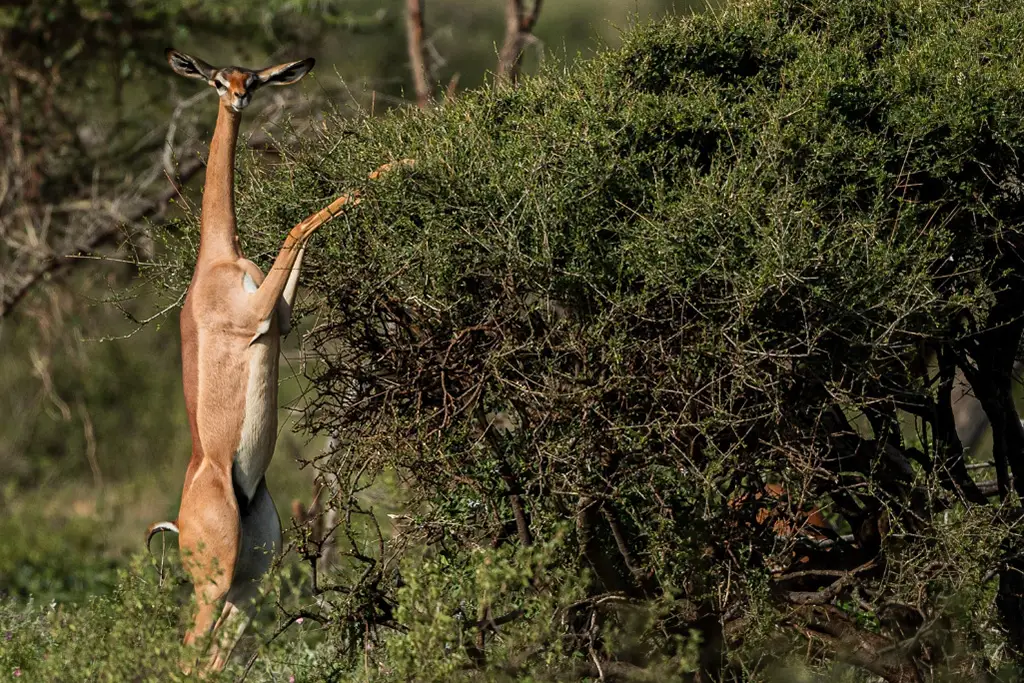
- Rare species include hirola, gerenuk and fringe-eared oryx.
- A well-planned safari can combine both parks with Amboseli and Kenya’s coast.
 Want to visit Tsavo to witness its magic up close? Check out our ready-made safaris to Tsavo East here, and to Tsavo West here. Or let our travel experts plan the perfect sustainable African safari for you.
Each of Africa’s national parks and protected areas has its own rich, vibrant history, and some, like Tsavo, have travelled a more challenging road than others. Shaped by Kenya’s history, a fair share of luck and, often, the blood, sweat and hard work of passionate conservationists, Africa’s protected wild spaces are treasure chests of our natural heritage.
Perhaps because of their complex histories, some of these wild spaces engender a particular mystique. This is especially true of Tsavo East and Tsavo West National Parks. Together, they form the heart of the broader Tsavo Conservation Area and an essential part of the greater Amboseli–Tsavo ecosystem. Tsavo is captivating: a place of vast horizons and the ancient magic of the truly wild. Rich red soil stains the leathery hides of its elephants, and the sight of a herd of these red giants crossing the Galana River beneath doum palms is not easily forgotten.
The sometimes-harsh beauty of the landscape captured the heart of Denys Finch Hatton, the aristocratic adventurer and lover of Out of Africa author Karen Blixen, in a way few other wild spaces did. It was in Tsavo West that he died in 1931, when the aircraft he was piloting crashed near Voi.
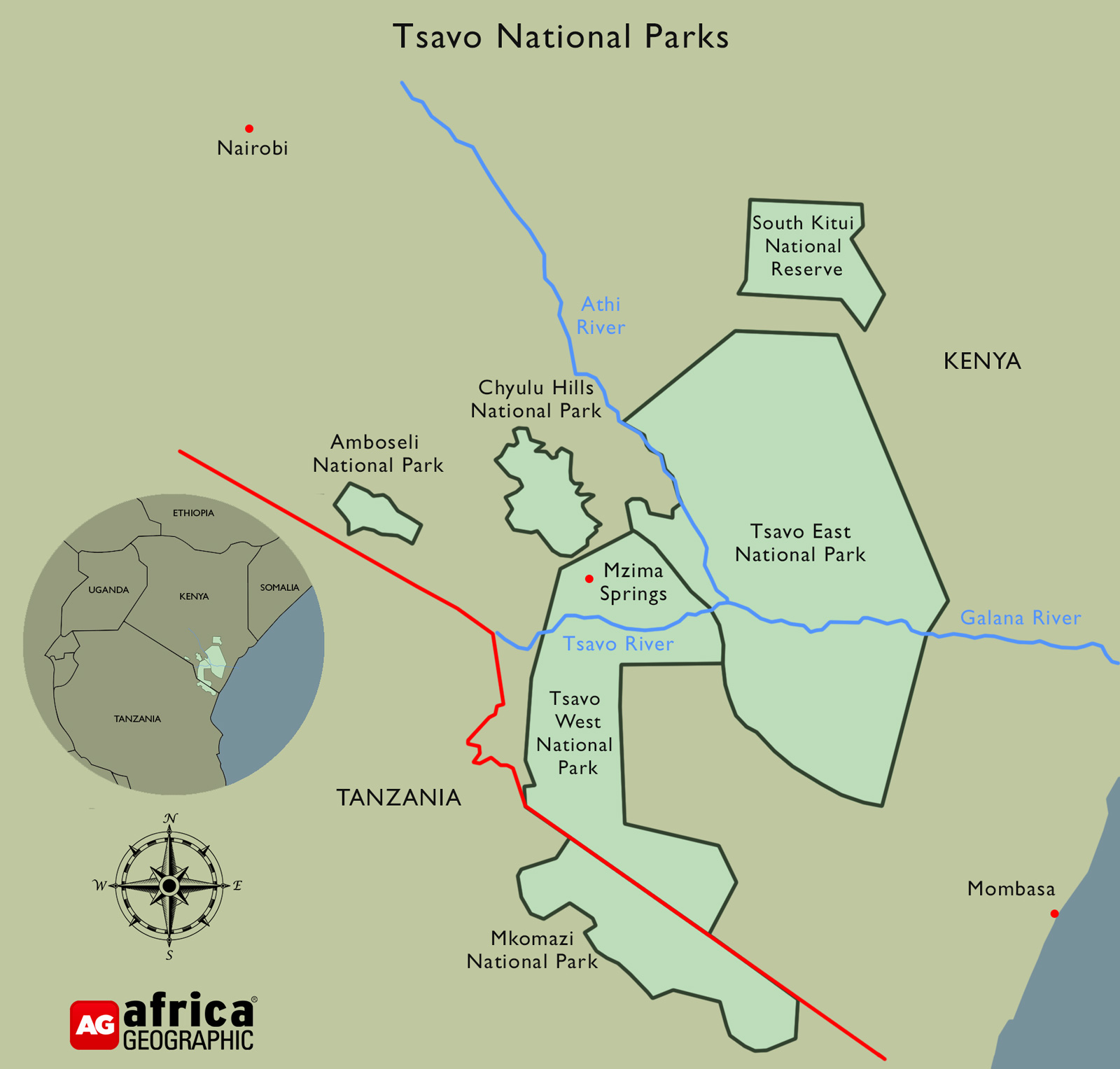
From untimely deaths and man-eating lions to devastating poaching wars, Tsavo has not travelled an easy road. Today, however, Tsavo East and Tsavo West together protect more than 22,000km², making them Kenya’s largest combined national-park wilderness. When the adjoining Chyulu Hills National Park is included, the protected landscape exceeds 23,000km².
Named after the Tsavo River, which flows through Tsavo West before joining the Athi River to form the Galana, this enormous Big 5 ecosystem lies between Nairobi, Kenya’s capital, and Mombasa on the Indian Ocean coast.
The parks are divided by the Nairobi–Mombasa transport corridor, including the A109 highway and the old and standard-gauge railway lines. This position has shaped Tsavo’s history and continues to make it one of Kenya’s most practical destinations for travellers combining safari and coast.
The enormous scale of Tsavo supports a striking diversity of habitats, from the open, red-earth plains and semi-arid savannas of the east to the wooded hills, lava flows, springs and rocky escarpments of the west.
Tsavo East
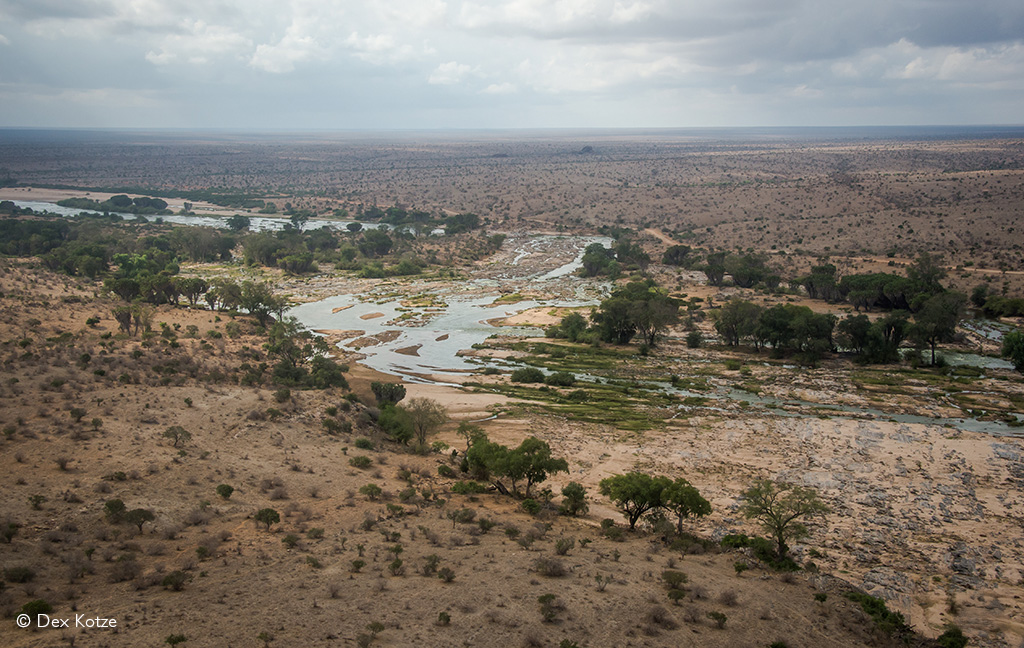
At approximately 13,700km², Tsavo East National Park is the larger of the twin parks and generally the more arid. Apart from rocky outcrops near Voi and the gorges and riverine vegetation of the Galana River, much of the park consists of open grassland, thornveld and red-earth savanna stretching towards the horizon.
What defines Tsavo East above all else is space. Visitor density is low, particularly away from the more accessible southern areas, and it remains possible to spend long hours exploring without seeing another safari vehicle.
The reopening of northern areas, that had been closed during the worst of the poaching years, has expanded the part of the park accessible to visitors. This remote landscape is particularly appealing to travellers hoping to find African wild dogs, though these wide-ranging predators are never easy to predict.
Geologically, Tsavo East is fascinating. The Yatta Plateau, which traces much of the park’s western boundary, is regarded as the world’s longest lava flow, extending for more than 300km. Mudanda Rock, a vast inselberg and natural water catchment, offers panoramic views over a seasonal pool where elephants and other wildlife gather to drink.
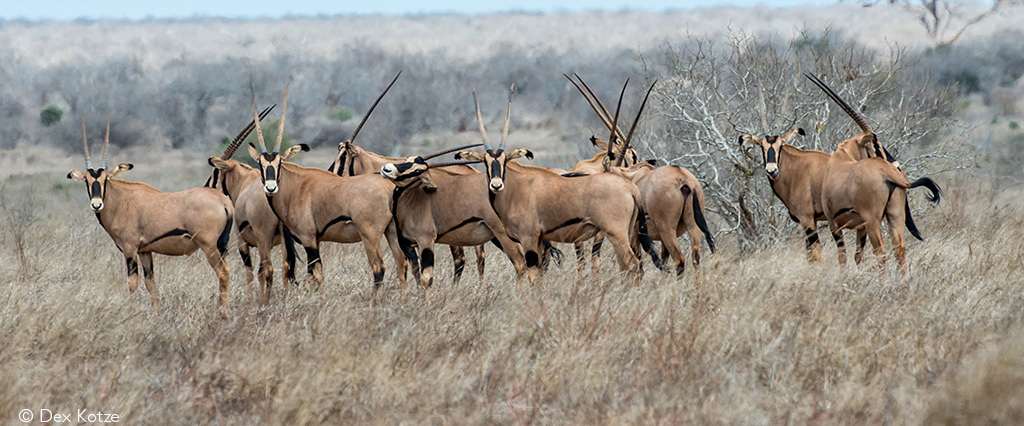
Wildlife enthusiasts should watch for the long-necked gerenuk, lesser kudu and fringe-eared oryx, all dry-country specialists that help give Tsavo its distinctive character.
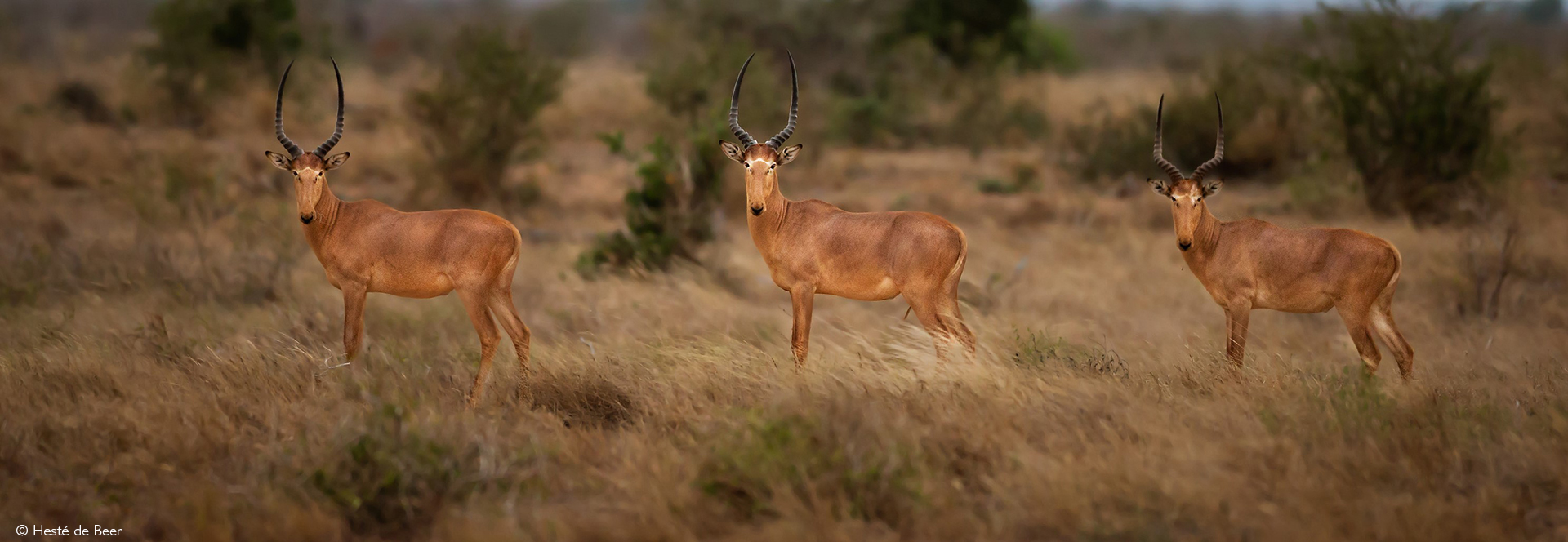
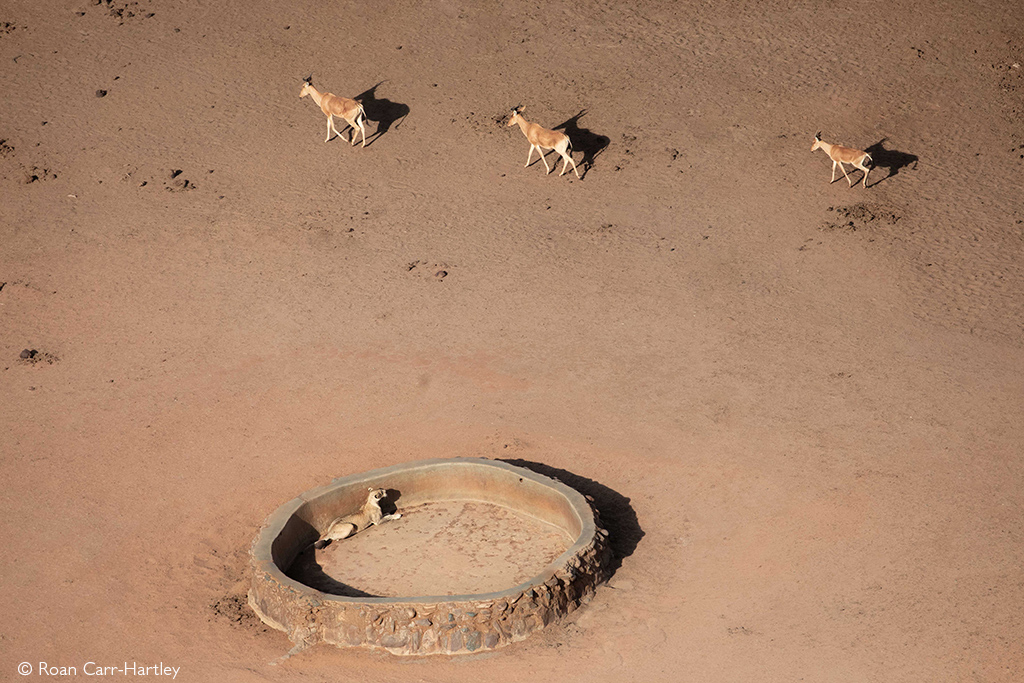
Tsavo East is also home to a small introduced population of hirola (Beatragus hunteri), one of the world’s rarest antelopes. The species’ remaining natural range lies in northeastern Kenya, close to the Somali border, and the Tsavo population was established as an insurance population beyond that restricted range.
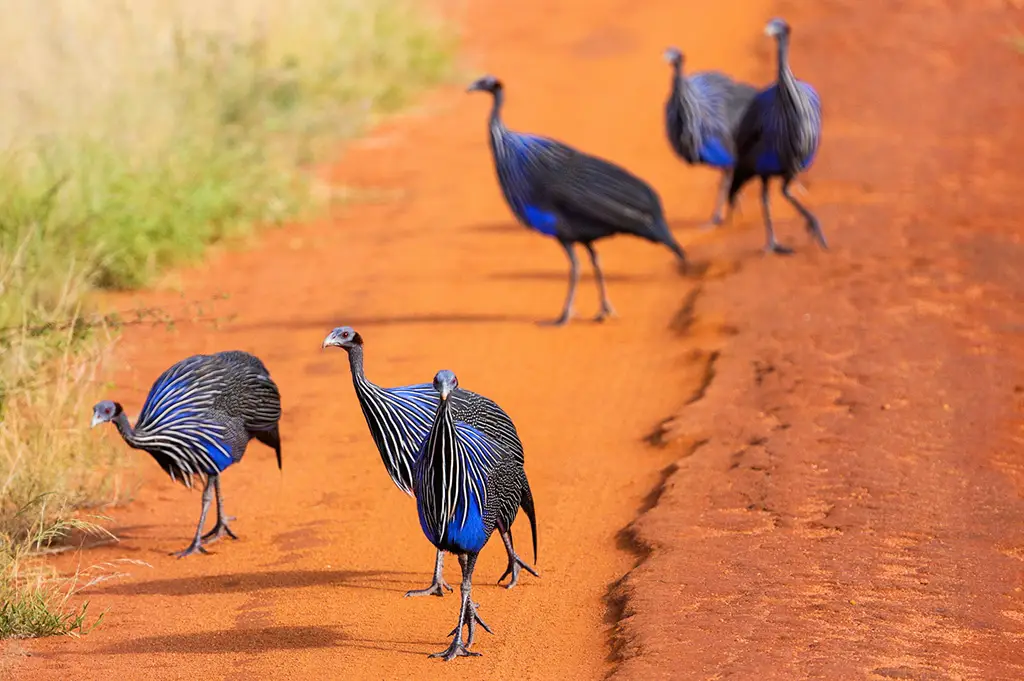
Sightings of black rhino and striped hyena are uncommon but rewarding. Birding is excellent, with about 500 species recorded, including golden-breasted starling, African orange-bellied parrot, vulturine guineafowl and Somali ostrich.
Tsavo West
Tsavo West National Park covers approximately 9,000km² and is generally more developed and readily accessible than Tsavo East, particularly in its northern reaches near the Tsavo River and Nairobi–Mombasa highway.
Close to the Tanzanian border and Mount Kilimanjaro, Tsavo West is topographically dramatic. Mountains, inselbergs, rocky ridges and sheer cliffs bear witness to ancient tectonic shifts and more recent volcanic activity.
Fertile volcanic soils and comparatively higher rainfall support denser vegetation than that found across much of Tsavo East. This can make wildlife more difficult to locate, but the scenery is magnificent. On clear mornings, travellers in the western reaches of the park may see Kilimanjaro rising beyond the Tanzanian border.
Mzima Springs is one of Tsavo West’s best-known attractions. Rain falling on the Chyulu Hills filters through porous volcanic rock before emerging from the ground as a series of clear pools and streams.
A submerged viewing chamber allows visitors to peer beneath the surface, where fish pass the windows and hippos and crocodiles may appear through the green water. Visibility varies with conditions, and the hippos are not guaranteed to perform on cue, but the springs remain a beautiful place to explore on foot.
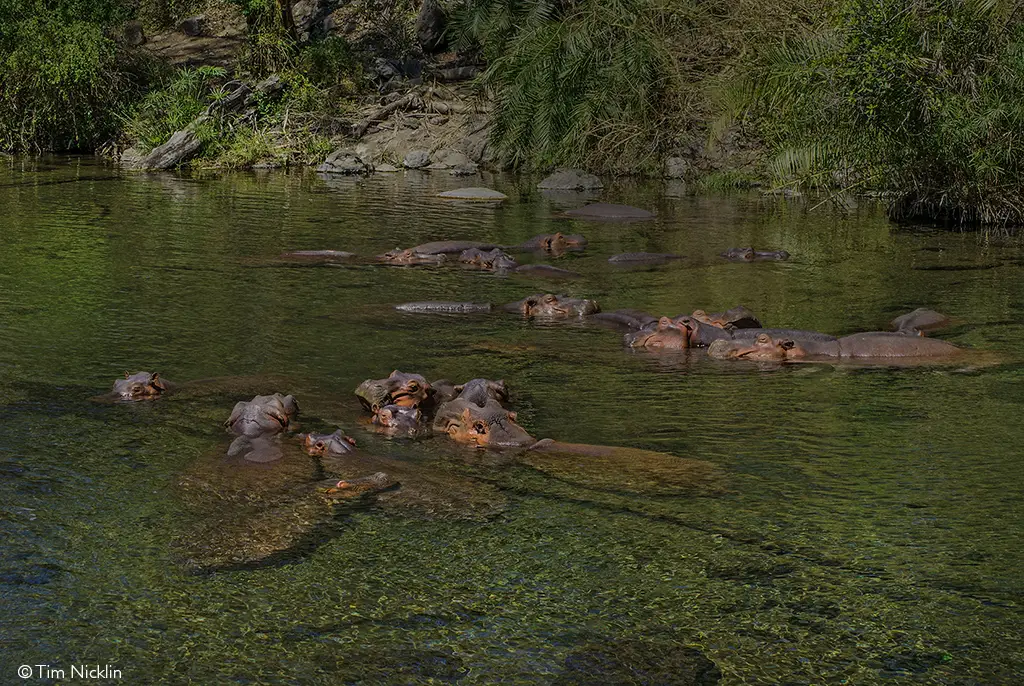
Dense stands of date and raffia palms, along with fruiting trees and thick riverine vegetation, attract monkeys and abundant birdlife, making Mzima a welcome oasis during the dry months.
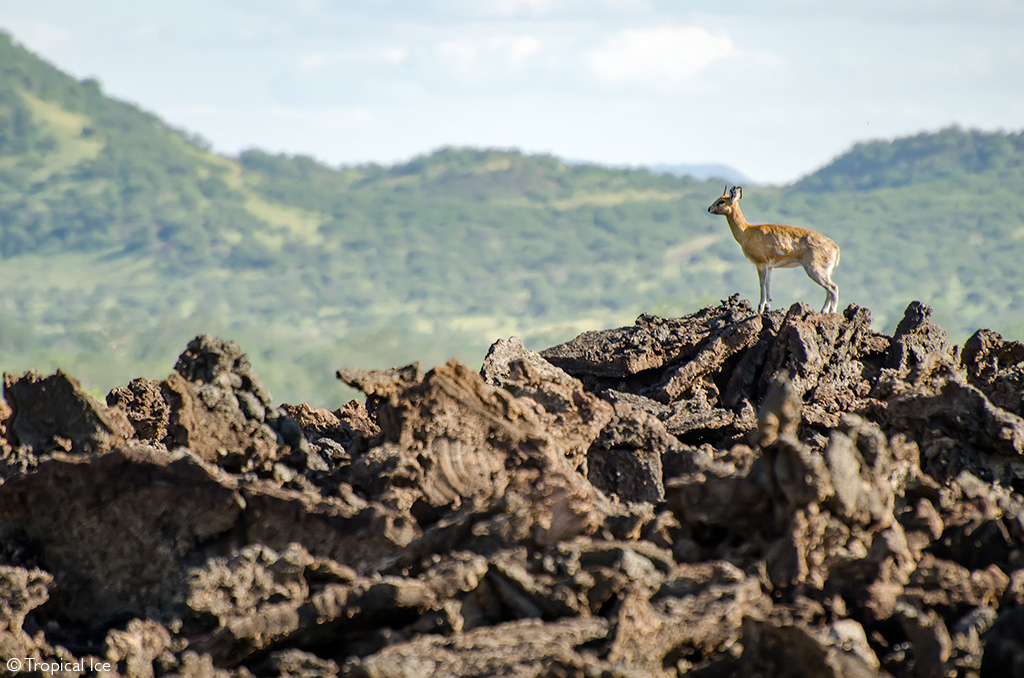
Not far from Chyulu Gate, the Shetani lava flow forms a broad expanse of folded black rock, created by eruptions thought to have occurred only a few centuries ago. Klipspringers and rock hyraxes pick their way across the jagged surface, while leopards occasionally use the lava fields and surrounding woodland.
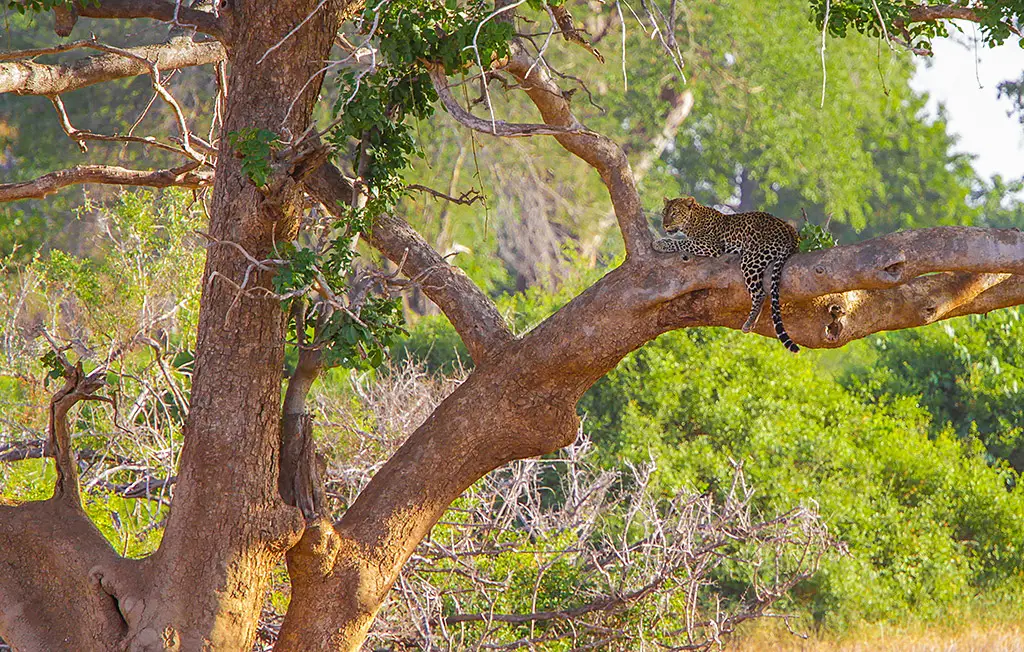
“Shetani” means “devil” in Swahili, a name said to reflect the reactions of local people who witnessed the landscape being swallowed by molten rock.
The nearby lava caves should be visited only where access is officially permitted and with current local guidance. Conditions and park regulations can change, and caves may shelter bats or other wildlife.
Tsavo West is also important black-rhino country. Sightings remain difficult in the park’s thick vegetation, but the expanded Ngulia Rhino Sanctuary and wider protected landscape form an important stronghold for the critically endangered eastern black rhino.
The Ghost and The Darkness
No account of Tsavo would be complete without the story of its most infamous lions.
In 1898, during the construction of a railway bridge over the Tsavo River, two male lions repeatedly attacked workers living in camps beside the building site. Fires, thorn barriers and other attempts to keep the lions away proved ineffective, and many workers fled. Construction was interrupted while Lieutenant-Colonel John Henry Patterson attempted to hunt the animals, eventually killing both in December 1898.
Patterson later claimed that the lions had killed 135 people. Contemporary railway records attributed 28 deaths to them, while later isotope analysis of the lions’ hair and bone estimated that they had eaten approximately 35 people. That research could not establish the total number killed but not consumed, so the precise death toll remains unknown.
The lions’ preserved skins and skulls are now held by Chicago’s Field Museum. Their story inspired several books and films, most famously The Ghost and the Darkness.
There is no single accepted explanation for the attacks. The most likely answer is a combination of opportunity, prey shortages, human activity and the physical condition of the lions. One of the animals had severe dental damage, including an infection at the root of a canine tooth, which may have made humans easier to catch and consume than large wild prey.
The late-19th-century rinderpest pandemic, which devastated wild and domestic ungulates across eastern Africa, may also have reduced the lions’ usual prey base. Poor camp security, human remains along the railway route and the large number of workers sleeping in temporary shelters probably created further opportunities.
The Tsavo experience
Visitors should be prepared for heat. Temperatures can be fierce during the hotter dry periods, particularly from January to March and again during parts of the June-to-October dry season. Early-morning and late-afternoon game drives are usually the most productive and comfortable, while the middle of the day is best spent in shade.
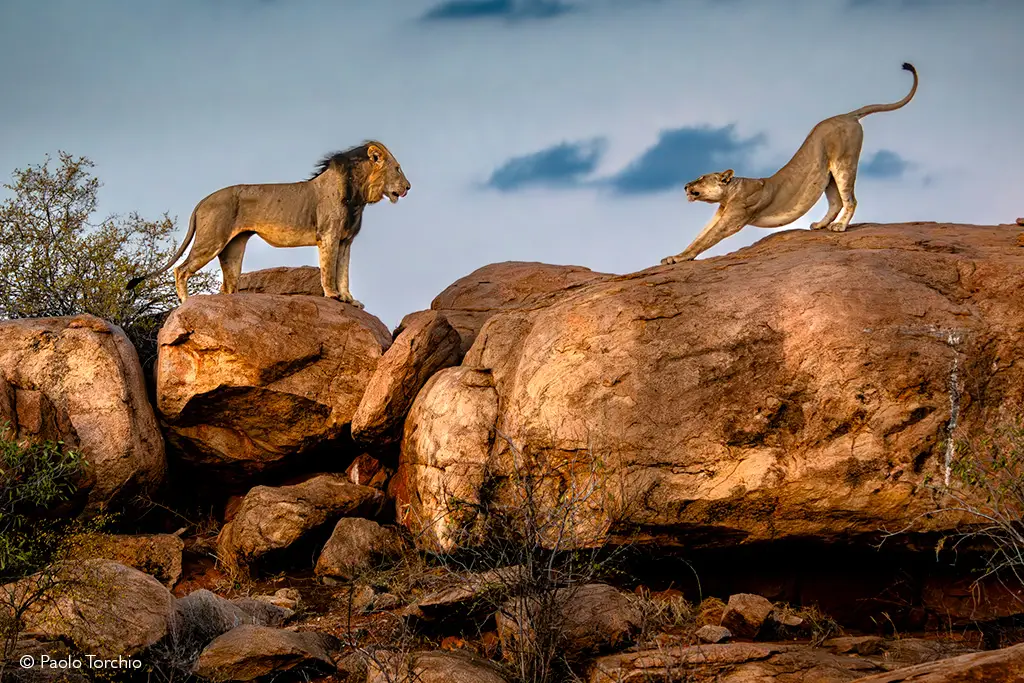
Tsavo’s adult male lions are often described as maneless, though this is an oversimplification. Many have manes, but these tend to be shorter, sparser and less developed than those of lions in cooler ecosystems. Research has linked this reduced or delayed mane development to Tsavo’s consistently hot climate, although age, genetics and social conditions may also play a role.
The dry season from June to October generally offers the easiest game viewing as wildlife gathers around rivers, dams, springs and permanent waterholes. January to March provides a second dry-season window. The wetter months bring green landscapes, migrant birds, dramatic skies and fewer visitors, but wildlife can disperse and unsealed roads may become difficult after heavy rain.
Tsavo is enormous. Distances between gates, camps and attractions are easily underestimated, and a route that appears short on a map may take several hours. It is better to explore one section properly than to rush between distant points.
Self-driving is possible, particularly for travellers experienced in African national parks, but careful preparation is essential. Fuel, drinking water, a good map or offline navigation, a sound spare tyre and sufficient daylight should never be afterthoughts. Mobile coverage is unreliable in remote areas, while roads may become sandy, rocky or muddy depending on the season.
Most first-time visitors will gain more from travelling with an experienced guide or using a lodge vehicle. Good guides understand the park’s distances, road conditions and seasonal wildlife movements and can interpret a landscape in which sightings are often less obvious than in smaller, busier reserves.
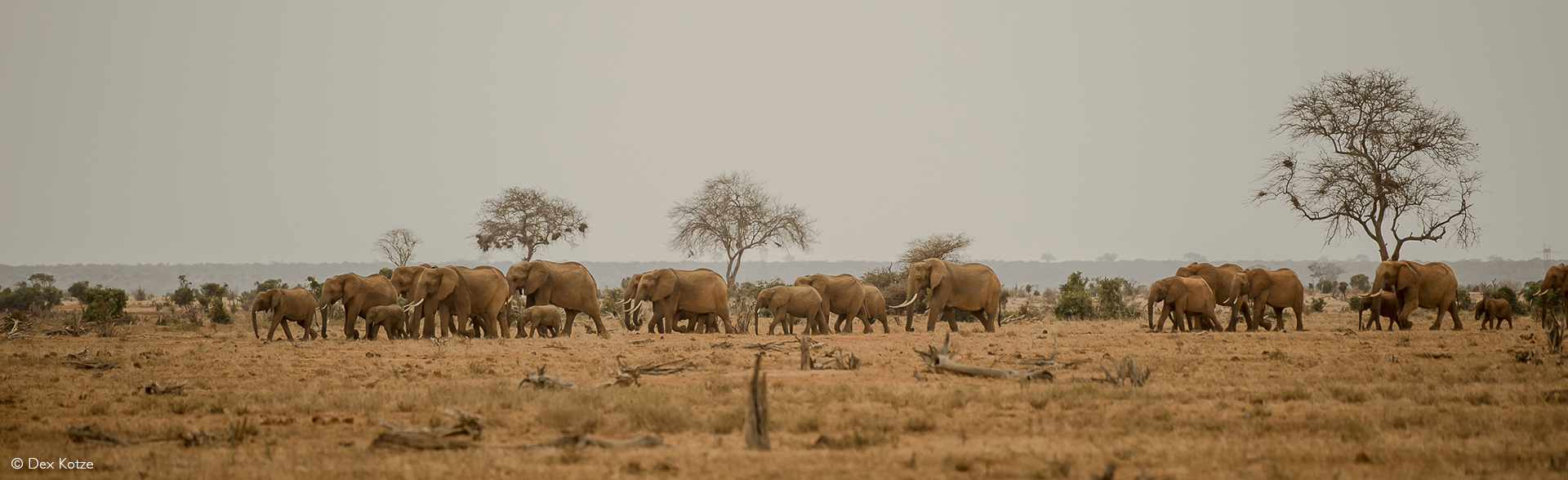
Red elephants and giant tuskers
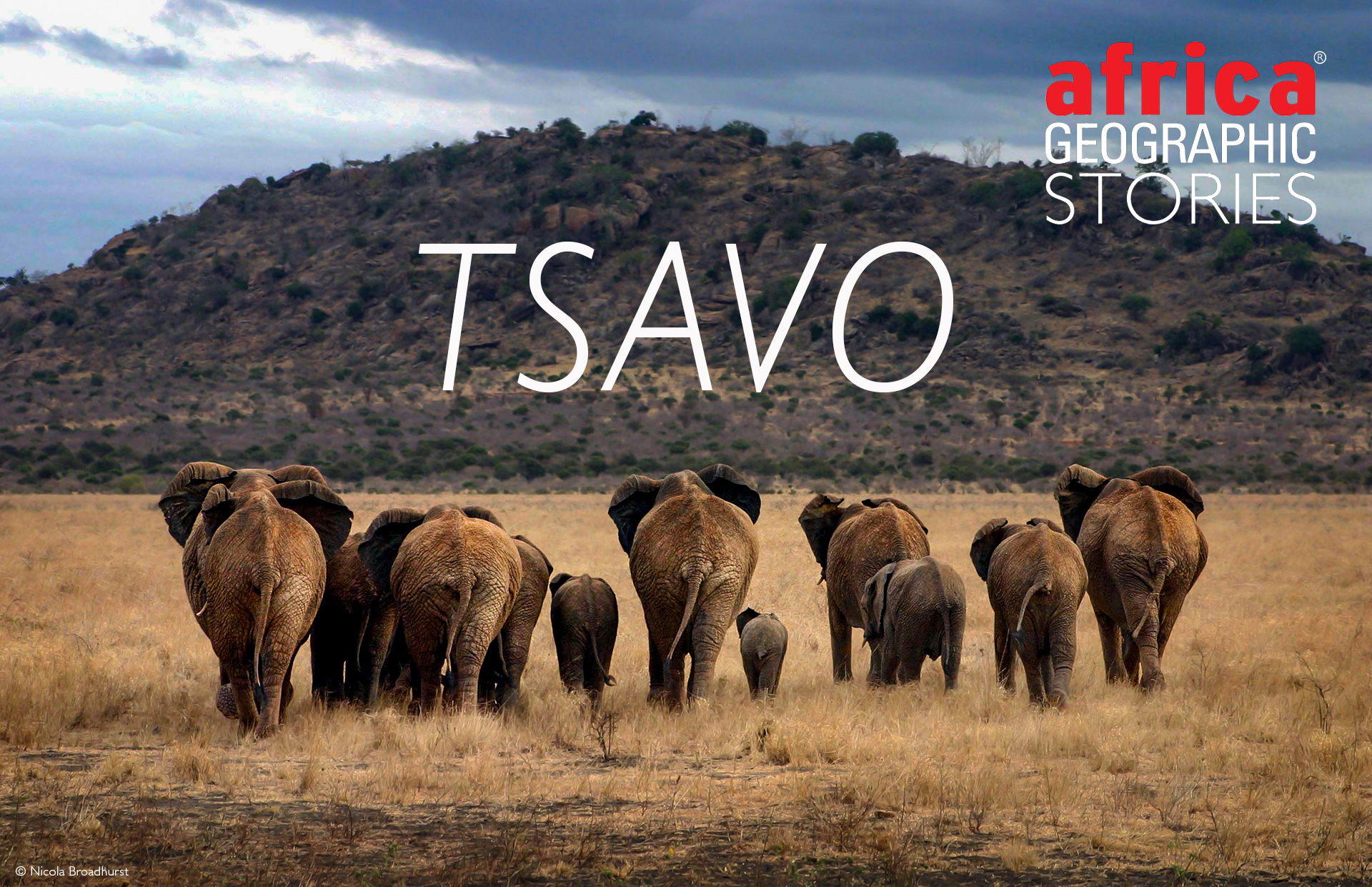
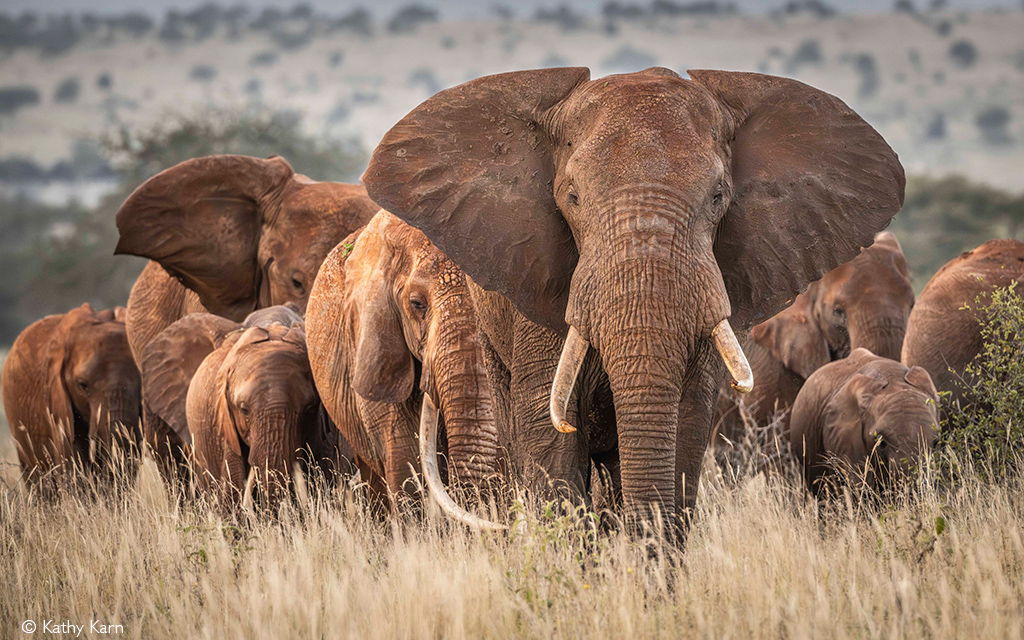
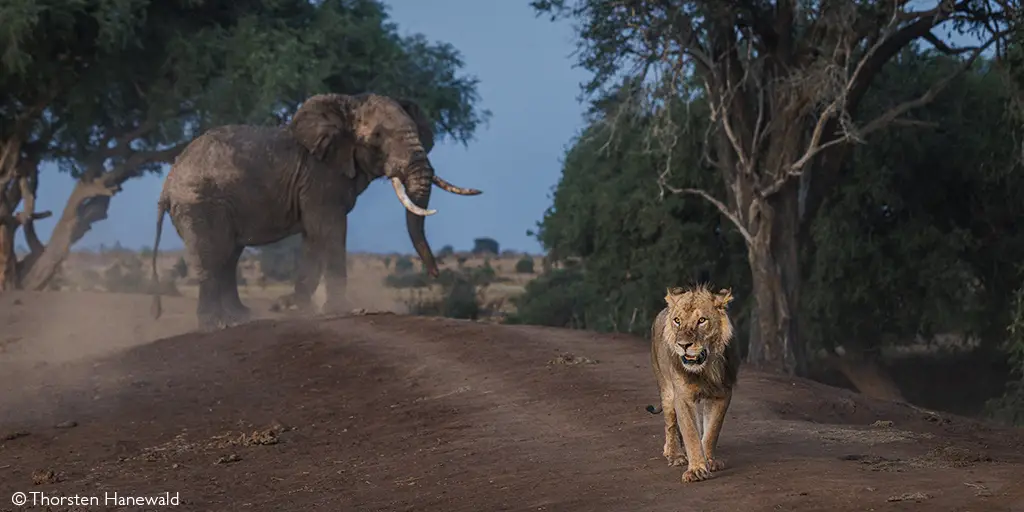
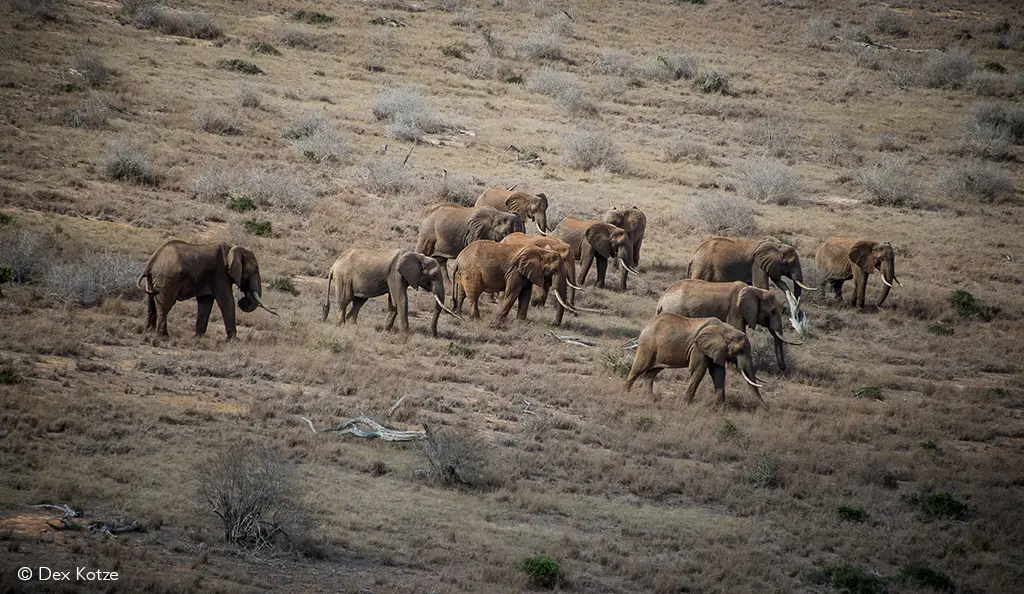
Tsavo is famous for its red elephants and for the great tuskers that still roam its plains. The colour comes not from a genetic difference but from the iron-rich red soil in which the elephants dust and wallow.
The ecosystem’s position beside major transport routes proved disastrous during the poaching crisis of the 1970s and 1980s, when elephant and rhino populations collapsed. Decades of conservation work, aerial surveillance, anti-poaching patrols and collaboration between state and private organisations have supported an extraordinary recovery.
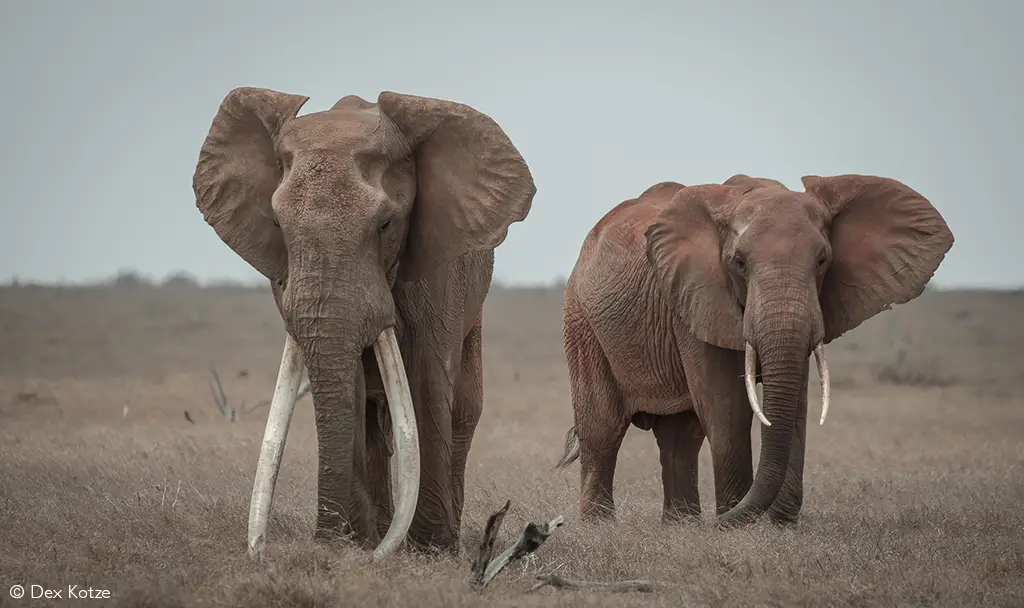
Recent conservation reports put the wider Tsavo elephant population above 15,000, with some landscape estimates exceeding 17,000. Exact totals vary according to the area and survey period being discussed, but Tsavo remains home to Kenya’s largest elephant population.
A handful of surviving bulls qualify as “super tuskers”, generally understood to be elephants with tusks weighing around 45kg or more on each side, or so long that they nearly brush the ground. Seeing one is never guaranteed. These elephants travel widely, often beyond national-park boundaries, and their movements are closely monitored for security reasons.
Tsavo Trust plays a central role in protecting these elephants, working closely with the Kenya Wildlife Service and other conservation partners to monitor known and emerging tuskers across the wider Tsavo Conservation Area. Its aerial unit provides regular surveillance over this vast, often roadless landscape, while mobile ground teams track individual elephants, record their movements and respond to threats. This focus on tuskers strengthens security for the broader ecosystem too, benefiting other wildlife, including hirola, while helping to safeguard the connected landscapes on which these wide-ranging bulls depend.
Your safari can help protect Tsavo’s tuskers. Africa Geographic donates a portion of the revenue from every safari sold to carefully selected conservation projects, including campaigns supporting Tsavo Trust’s aerial and ground teams. Learn more and support our Guarding Tuskers campaign.
Even without a super-tusker sighting, the experience of watching a family of elephants emerge through red dust or gather at a waterhole is reason enough to visit.
Those who know Tsavo bear testimony to its unique atmosphere and profound impact. It is difficult to capture the experience fully in words. Boundless skies and immense spaces combine with a tangible sense of history to create one of East Africa’s most compelling wilderness journeys.
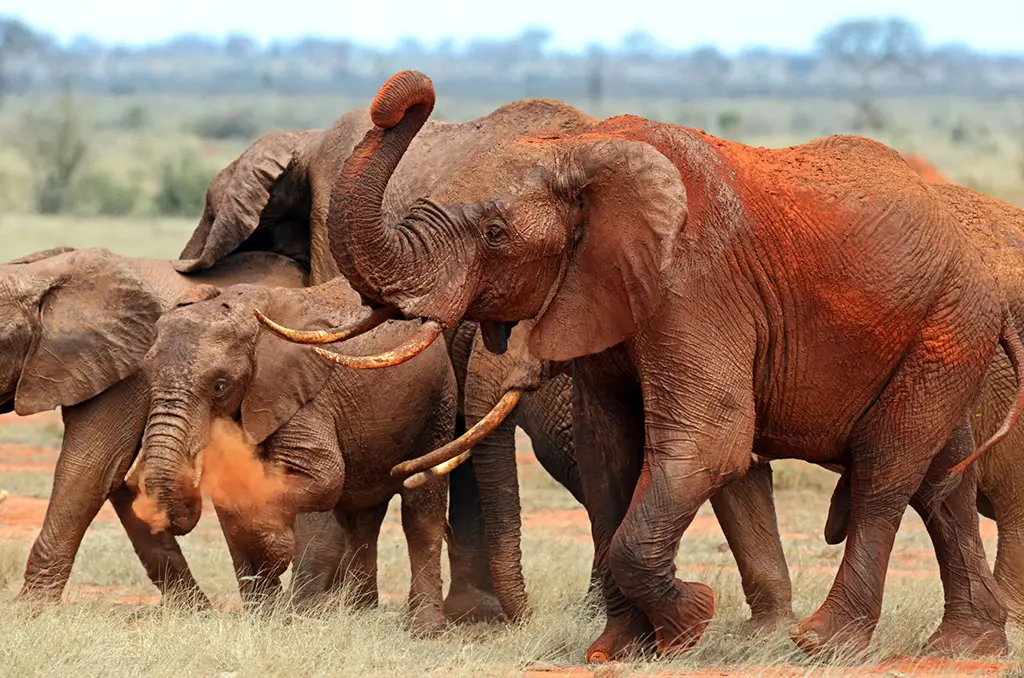
Planning a Tsavo safari
A rewarding visit should ideally include both parks, with at least two or three nights in each. Travellers with limited time can choose according to their interests.
Tsavo East is best suited to those seeking immense open landscapes, red elephants, dry-country species, big-tusker country and a strong sense of solitude. Its open terrain generally makes wildlife easier to spot than in the denser west.
Tsavo West is the more scenic and varied of the two, with volcanic hills, Mzima Springs, lava flows, rocky valleys, Kilimanjaro views and a wider selection of accommodation. Wildlife viewing may require more patience, but the landscape rewards slower exploration.
Combining the parks works particularly well for travellers moving between Nairobi and the Kenyan coast. Road journeys from Nairobi to the principal Tsavo gates generally take about four hours before delays, while access from Mombasa and the nearby coast can take around two hours, depending on the gate, traffic and final destination. Light aircraft also serve several airstrips in and around the parks.
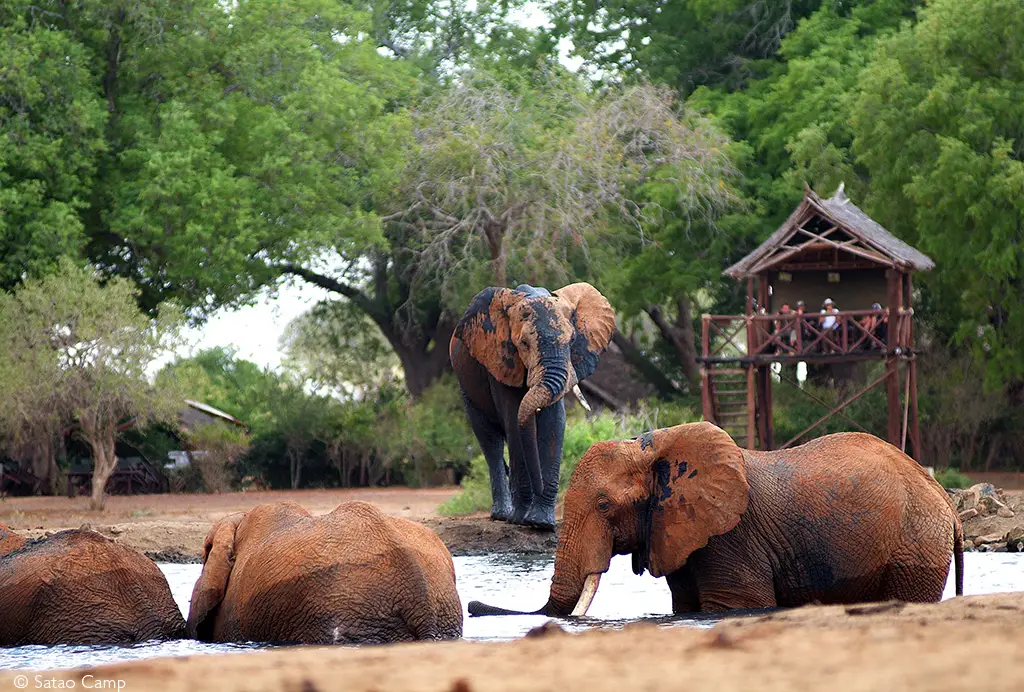
Accommodation ranges from established lodges to intimate tented camps, and location should be considered as carefully as comfort. Staying near the area you intend to explore reduces long transfers and allows more time in the field.
For a road safari beginning in Nairobi, Tsavo West is often the logical first stop, followed by Tsavo East and then the coast. Travellers starting in Mombasa, Diani Beach or elsewhere along the coast can reverse the route or concentrate on Tsavo East for a shorter safari.
The parks also combine naturally with Amboseli, the Chyulu Hills and private or community-managed conservancies in the wider ecosystem. A longer itinerary can link Amboseli’s Kilimanjaro views with Tsavo West’s volcanic landscapes, Tsavo East’s red plains and several nights beside the Indian Ocean.
A minimum of four nights across the two parks gives travellers a useful introduction, but six or seven nights allow time for longer drives, quieter areas and unhurried wildlife watching. Serious photographers, elephant enthusiasts and travellers seeking remote wilderness may want longer still.
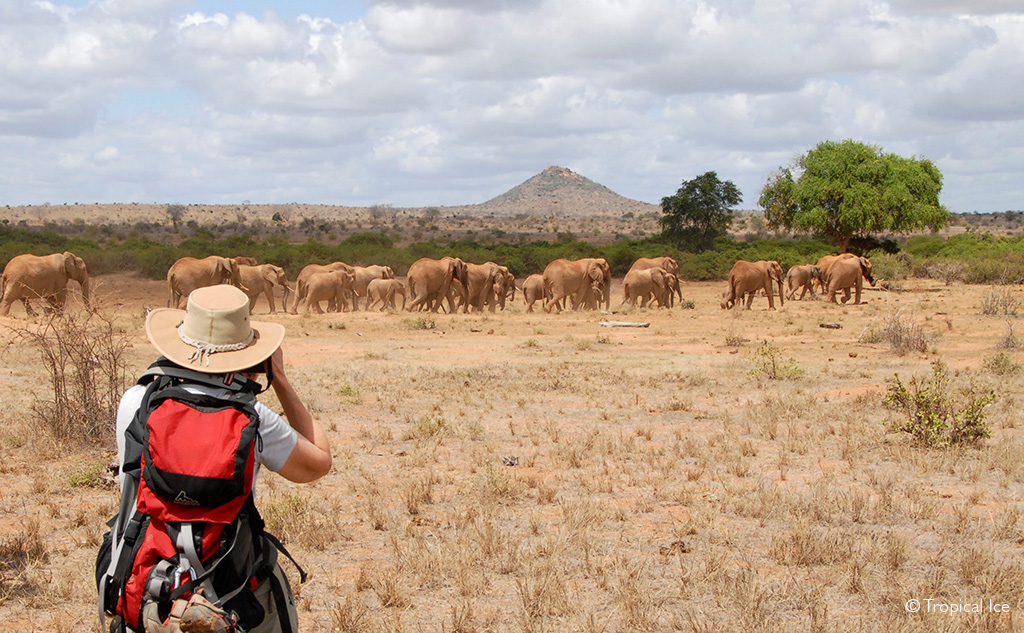
For a deeper encounter with Tsavo’s elephants, guided walking safaris offer the chance to experience their landscape on foot. Moving quietly through the bush reveals details often missed from a vehicle, from tracks and feeding signs to the scale of the terrain itself. In the company of experienced guides, walkers may encounter elephants, dry-country antelopes, abundant birdlife and other wildlife while gaining a richer understanding of this vast ecosystem.
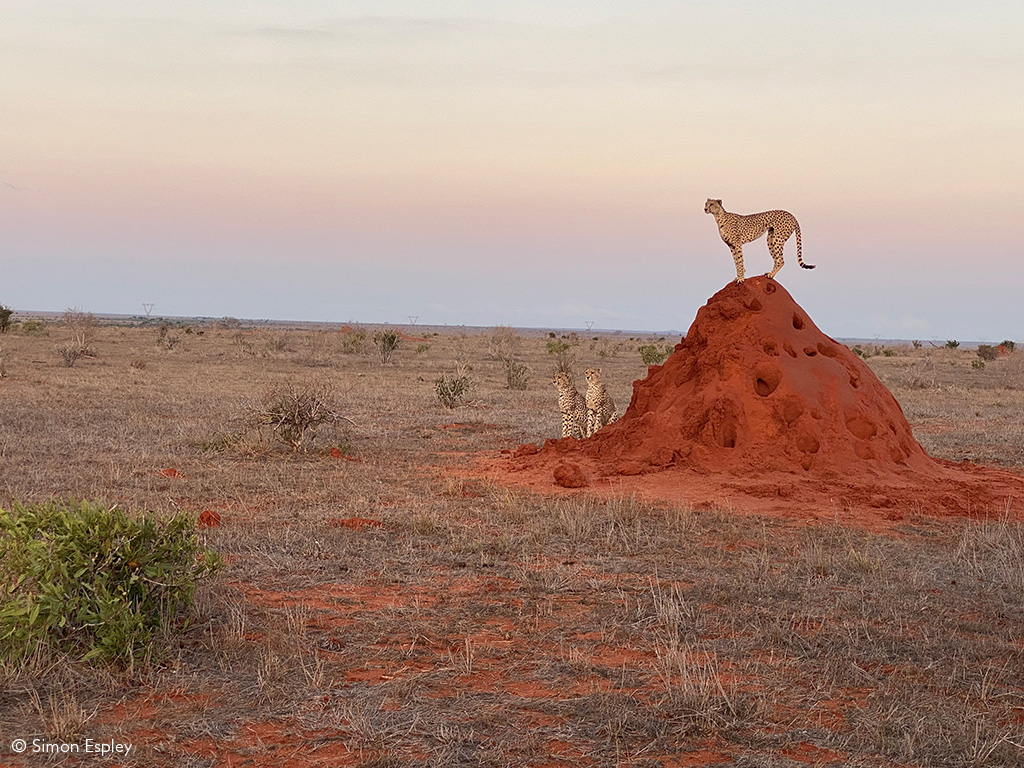
This is not a safari destination built around racing from one crowded sighting to the next. Tsavo rewards patience: time beside a waterhole, a long search along the Galana, a leopard melting into dense woodland, or a distant elephant bull materialising through a veil of red dust.
For travellers who seek wilderness, elephants, unusual dry-country wildlife and a natural bush-and-beach journey, Tsavo remains one of Kenya’s great safari landscapes.
Further reading
-
- Compare Kenya’s famous Maasai Mara with Tsavo and explore one of Africa’s greatest wildlife destinations, renowned for the Great Migration and exceptional predator sightings. Check out our Maasai Mara safari guide
- Discover where to stay, when to visit, the wildlife to expect and why Samburu is one of Kenya’s most rewarding safari destinations. Check out our Samburu National Reserve guide
- Tsavo’s African wild dogs face major threats. Tsavo Trust & Painted Wolf Foundation are working to save these painted dogs. Here’s how they are creating new hope for wild dogs
- Ever dreamt of walking in the footsteps of tuskers on Tsavo National Park’s Great Walk? Norman Owen-Smith traversed 160km of this Kenyan park
To comment on this story: Login (or sign up) to our app here - it's a troll-free safe place 🙂.