



Leopard quotas under scrutiny as population uncertainty persists

- South Africa has approved leopard hunting quotas for 2026 and 2027.
- The country still lacks a reliable estimate of its total leopard population.
- Hunting allocations rely on population trends within monitored Leopard Hunting Zones.
- Significant gaps remain in monitoring, transparency and data from outside protected areas.
- Conservation organisations question whether current evidence adequately supports sustainable leopard hunting.

Can photo tourism offer an alternative? Support safari tourism that creates economic value from living wildlife and the landscapes they depend on. Explore our safaris →
Over the past month, South Africa’s leopard management decisions have sparked public debate. New trophy hunting quotas have been approved, a draft national conservation strategy released, and conservation organisations and researchers have questioned the evidence underpinning these decisions. At the centre of the discussion is a striking uncertainty: South Africa still does not know with confidence how many leopards it has.
The debate is more complicated than that apparent contradiction suggests. South Africa does not set its leopard hunting quota as a percentage of a national population estimate. Instead, the system uses population trends from monitored areas to determine where hunting can take place. The South African government says these data show that certain leopard populations are stable or increasing. But significant gaps remain in national knowledge, while some evidence underpinning individual quota decisions is not readily available for independent scrutiny.
Here, we examine what has been approved, what scientists know about South Africa’s leopards, how the hunting quota is determined, and where uncertainties remain.
The current quota
On 31 August 2026, the Department of Forestry, Fisheries and the Environment (DFFE) authorised the export of hunting trophies from 11 adult male leopards in 2026 and 10 in 2027. The 2026 allocation comprises five in Limpopo, three in North West, two in Mpumalanga and one in KwaZulu-Natal. KwaZulu-Natal receives no allocation for 2027.
All hunted leopards must be males aged seven years or older, with only one taken from each eligible Leopard Hunting Zone (LHZ). Eligible zones must be confirmed through the national leopard monitoring framework and applicable provincial processes.
The quotas are small relative to South Africa’s longstanding CITES export ceiling of 150 leopards, which has never been reached. But they have been set against an uncertain national picture.
South Africa’s draft National Leopard Conservation Strategy and Action Plan, published days after the quotas were finalised, acknowledges substantial uncertainty over leopard abundance, distribution and trends. Leopards have also been extirpated from an estimated 67% of their historical range in South Africa.
As Daily Maverick highlighted, no reliable national count exists against which to measure the new hunting quotas. A 2026 modelling study estimated South Africa’s adult male leopard population at about 1,084, but with a wide 95% confidence interval of 639–1,773.
That does not necessarily mean a scientifically defensible hunting quota cannot be established. South Africa’s system was designed to rely on local population trends rather than a single national estimate. The key question is whether evidence showing that individual hunting zones contain stable or increasing populations is sufficiently robust, recent and transparent.
What do we know about South Africa’s leopards?
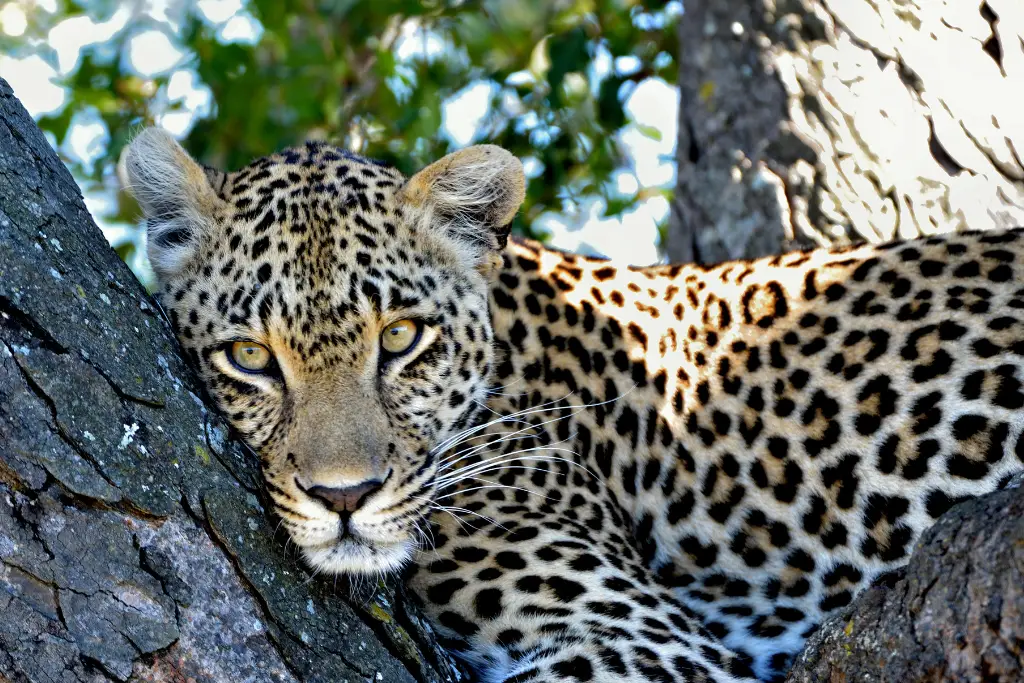
Leopards are difficult to count. They occur at low and highly variable densities, are largely solitary and occupy protected areas, private land, farmland and communal landscapes.
A long-term study of leopards in the Phinda–Mkhuze Complex in KwaZulu-Natal found lower densities and substantially higher mortality towards and beyond reserve boundaries, demonstrating how conditions outside protected areas can influence populations inside them.
Such variation makes extrapolating local density estimates across the country unreliable. Repeated monitoring of the same populations over time is more useful for determining whether local populations are increasing, stable or declining.
The latest regional Red List assessment, summarised by the Endangered Wildlife Trust (EWT), illustrates how trends have varied between monitored populations. Across long-term monitored populations, leopard densities declined by an estimated 3% per year overall, representing about 27% over ten years. KwaZulu-Natal recorded an estimated 7% annual decline between 2013 and 2022, while monitored populations increased by around 1% annually in Limpopo and 4% in North West. The population in Timbavati, Mpumalanga declined by approximately 3% annually.
More recent data from the South African Leopard Monitoring Project, cited in the draft national strategy, estimate an annual increase of 2.6% across monitored populations, contrasting with the earlier decline.
But EWT notes an important geographic gap: 68% of suitable leopard habitat in South Africa lies outside protected areas, where long-term systematic monitoring is considerably more limited. Long-term datasets are concentrated in particular landscapes, making it difficult to translate trends at monitored sites into a national assessment.
Neither national declines nor increases at selected sites therefore tell the whole story.
How the hunting quota is supposed to work
South Africa’s approach changed after evidence emerged that previous hunting allocations did not match local population conditions.
Research from KwaZulu-Natal helped establish an adaptive approach in which hunting pressure is distributed geographically and focused on older males.
South Africa imposed a zero quota in 2016 and 2017. Hunting resumed in 2018 with seven males aged seven years or older. The Scientific Authority stated that hunting should not occur where populations were declining or scientifically robust trend data were absent.
The February 2026 quota consultation document specifies four principles:
- Quota allocation should use adaptive management supported by monitoring;
- Hunting should occur only where populations are stable or increasing;
- Trend data should be no more than three years old, with at least three data points;
- Only males aged seven years or older may be hunted.
DFFE says the South African Leopard Monitoring Project, initiated by SANBI with Panthera in 2016, now provides almost a decade of monitoring information. The February notice states that the 2024 SANBI/Panthera report and multi-state population models identified 11 LHZs as eligible for hunting across KwaZulu-Natal, Limpopo, Mpumalanga and North West.
The quota is therefore not calculated as a proportion of a national population estimate. Instead, monitored LHZs meeting prescribed population-trend criteria inform which areas may receive allocations.
A broader academic analysis of CITES leopard quotas found serious historical weaknesses in international quota-setting, but identified South Africa’s shift towards annual trend-based monitoring, spatial hunting zones and older-male restrictions as a significant improvement. The authors nevertheless stressed that adaptive management depends on reliable monitoring and management decisions responding to those data.

The gap between monitoring and the final decision
DFFE’s February notice identifies the 2024 SANBI/Panthera monitoring report, states that multi-state models were used to assess population trends, and maps LHZs according to population trends and hunting eligibility.
What is less readily available for independent scrutiny is the complete evidentiary chain behind those decisions. Despite searching publicly available material from DFFE and SANBI, we have not located the full 2024 SANBI/Panthera national monitoring report, detailed model outputs for individual hunting zones, or the Scientific Authority’s recommendation underpinning the final 2026–2027 allocations.
The final August notice confirms the quotas but does not reproduce that supporting analysis. The February proposal envisaged 11 leopard trophies in both years. The final decision retained 11 for 2026 but reduced 2027 to ten, with KwaZulu-Natal receiving no allocation. The final notice does not explain what evidence or recommendation led to that change.
Conservation organisations have raised related concerns. In a formal objection submitted on 4 October, the Landmark Foundation argued that the public record lacks a current independently reviewable Non-Detriment Finding and sufficiently detailed population information outside protected areas. It questioned whether monitoring adequately captures population structure, connectivity and cumulative mortality on private and communal land, and whether short-term trends at selected sites demonstrate broader recovery.
Landmark also challenges the biological assumptions behind the hunting system. It argues that removing males aged seven years or older may affect population dynamics through territorial turnover and subsequent effects on cub survival, and questions whether hunters can reliably determine leopard age under field conditions.
The Foundation further argues that sustainable use depends on effective regulation and enforcement, which it considers inconsistent across provinces. It calls for a new, publicly available and independently reviewable Non-Detriment Finding, publication of monitoring data, models, uncertainty estimates and peer review, and incorporation of cumulative mortality and demographic effects into assessments of sustainable offtake.
The timing has also attracted scrutiny. The final quotas were gazetted on 31 August, while the draft national conservation strategy was published for public comment on 4 September. The processes are separate, but Landmark argues that finalising a two-year hunting allocation immediately before consultation on the broader strategy undermines the consultation process.
The broader conservation question
The quotas sit within a broader shift in South Africa’s approach to leopard conservation. Government policy seeks to use consumptive and non-consumptive economic benefits to create incentives for leopard conservation, particularly outside protected areas. The draft strategy therefore considers trophy hunting alongside ecotourism, cultural use, human–leopard conflict, habitat protection and benefits to communities and landowners.
Landmark disputes the premise that consumptive use necessarily creates effective conservation incentives, arguing that the strategy does not provide sufficient empirical evidence that commercial offtake improves tolerance of leopards, reduces conflict or illegal killing, or produces better conservation outcomes.
South Africa consequently faces two related scientific challenges. It needs better information about the national distribution, abundance and trajectory of leopards for long-term conservation. If trophy hunting continues under an adaptive system, managers also need robust and recent information about the specific populations from which animals are removed.
The draft strategy recognises that leopard conservation extends far beyond trophy hunting. Habitat loss, illegal killing, human–leopard conflict, cultural use, prey availability, connectivity and landowner and community tolerance all influence the species’ future.
The hunting component nevertheless provides a particularly clear test of evidence-based management. DFFE has established measurable criteria: monitored populations must be stable or increasing, trend data must be recent, and only qualifying hunting zones should receive an allocation.
A precise national leopard census may remain elusive. That does not prevent evidence-based management at smaller scales. But it places greater weight on the quality and transparency of local evidence.
Making the complete annual monitoring report, zone-level model outputs and Scientific Authority recommendation underpinning the final allocations readily available would allow independent scrutiny of how those criteria were applied. It would also help clarify where South Africa’s leopards are declining, where they are recovering and where significant uncertainty remains.
Further reading
-
- Leopards in the crosshairs: how trophy hunters are gunning for Africa’s elusive cats: Trophy hunters are targeting Africa’s leopards. A new report reveals the true cost of killing the cats we can’t afford to lose.
- Leopard conservation in South Africa: Leopard conservation in South Africa requires a metapopulation strategy and a sustained, transparent commitment from government – expert opinion.
References
Balme, G.A., Slotow, R. & Hunter, L.T.B. 2010. Edge effects and the impact of non-protected areas in carnivore conservation: leopards in the Phinda–Mkhuze Complex, South Africa. Animal Conservation 13: 315–323.
Balme, G.A. et al. 2010. An adaptive management approach to trophy hunting of leopards (Panthera pardus): a case study from KwaZulu-Natal, South Africa.
Department of Forestry, Fisheries and the Environment. 2026. Draft National Leopard Conservation Strategy and Action Plan, 2026. Forestry and Fisheries Dept
Department of Environmental Affairs. 2018. Minister Edna Molewa allocates leopard hunting quota for South Africa for 2018. Government of South Africa
Department of Forestry, Fisheries and the Environment. 2026. Setting and Allocation of 2026 and 2027 CITES Export Quotas for African Elephant, Black Rhinoceros and Leopard Hunting Trophies. Government Gazette No. 55285, Notice 7867, 31 August 2026.
Department of Forestry, Fisheries and the Environment. 2026. Consultation on the Intention to Set and Allocate the 2026 and 2027 CITES Export Quotas for Elephant, Black Rhinoceros and Leopard Hunting Trophies. Government Gazette No. 54098, Notice 7106, 6 February 2026.
Mann, G.K.H., Williams, K.S. & da Silva, J.M. 2025. A conservation assessment of Panthera pardus. Red List of Mammals of South Africa, Eswatini and Lesotho. SANBI and Endangered Wildlife Trust. Endangered Wildlife Trust
Patowary, K., Uzal, A. & Fattebert, J. 2026. Quantitative targets for leopard conservation in sub-Saharan Africa. Journal of Applied Ecology 63(7): e70447.
Smuts, B., Landmark Foundation. 2026. Formal objection: Draft National Leopard Conservation Strategy and Action Plan, 2026. 4 October 2026.
Trouwborst, A., Loveridge, A.J. & Macdonald, D.W. 2019. Spotty Data: Managing International Leopard (Panthera pardus) Trophy Hunting Quotas Amidst Uncertainty. Journal of Environmental Law 32: 253–278. OUP Academic
Walters, T. 2026. SA doesn’t know how many leopards it has. Trophy hunting quotas are set. Daily Maverick, 2 October 2026.
To comment on this story: Login (or sign up) to our app here - it's a troll-free safe place 🙂.