
Mother of bees

- Ecologist Dr Sarah Venter travelled deep into Botswana’s Okavango Delta to measure an extraordinary baobab.
- The tree has been named ‘Mmadinotshi’, or ‘Mother of Bees’.
- Measurements confirmed Mmadinotshi as the world’s largest known baobab, surpassing South Africa’s Sagole Tree.
- Wood samples collected from inside the ancient trunk will undergo radiocarbon dating to establish its age.
- Mmadinotshi’s discovery highlights the importance of protecting ancient baobabs and their surrounding landscapes.
 Want to visit the Okavango Delta on safari? Browse our top Okavango Delta safaris here. Or, let us plan your handcrafted, unique safari.
Deep in Botswana’s Okavango Delta, beyond hippo-filled channels and dense swampland, stands an ancient baobab of extraordinary proportions. Ecologist Dr Sarah Venter recounts her challenging expedition to reach Mmadinotshi, the Mother of Bees, and the remarkable discovery that confirmed her as the largest known baobab in the world.
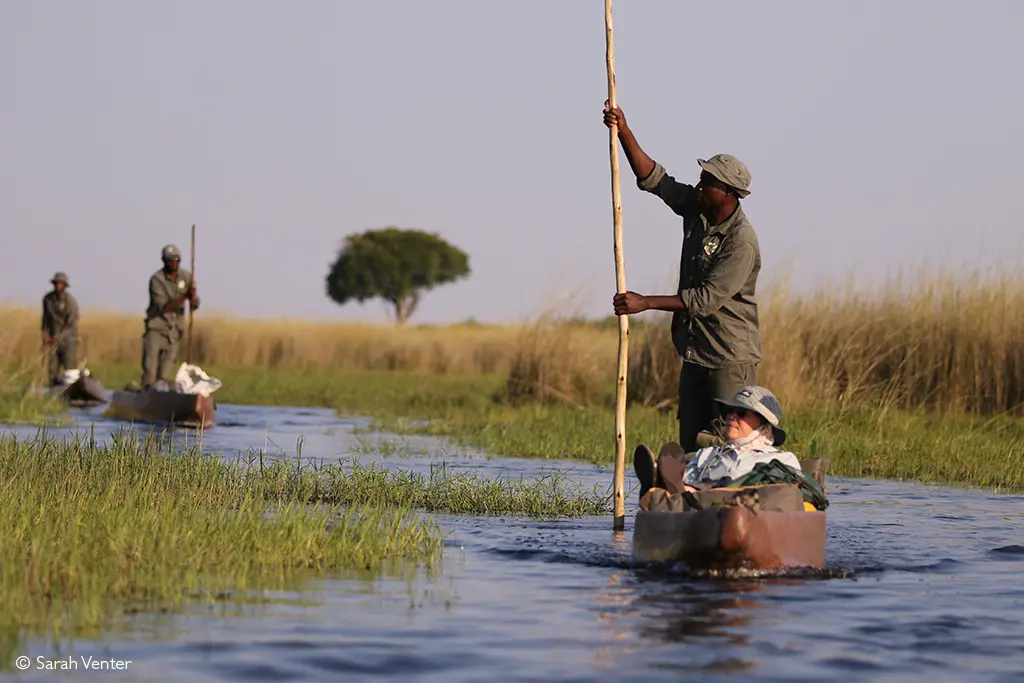
Our mokoro glides around the edge of another hippo pool deep in the Okavango Delta. Kenneth is at the stern, propelling us forward with a wooden pole. Ahead of us are Jaco and Fraye; behind, Orateng and Mokove bring up the rear. Everyone is silent, holding their breath.
An enormous hippopotamus heaves to the surface, its jaws opening impossibly wide to expose a great pink gulf and thick, stumpy teeth. Then it sinks silently beneath the water.
We are close enough to hear it breathe, close enough to smell its rank animal warmth. Close enough for the mokoros to lift and rock in its wake. A thrilling moment, but not the most awe-inspiring encounter of our trip.
That accolade, I am hoping, will belong to Mmadinotshi, an ancient giant whose age and size could topple the current champion. But to find out, we first have to reach her, a journey involving several days of slogging through almost unnavigable swampland with all its discomforts and dangers.
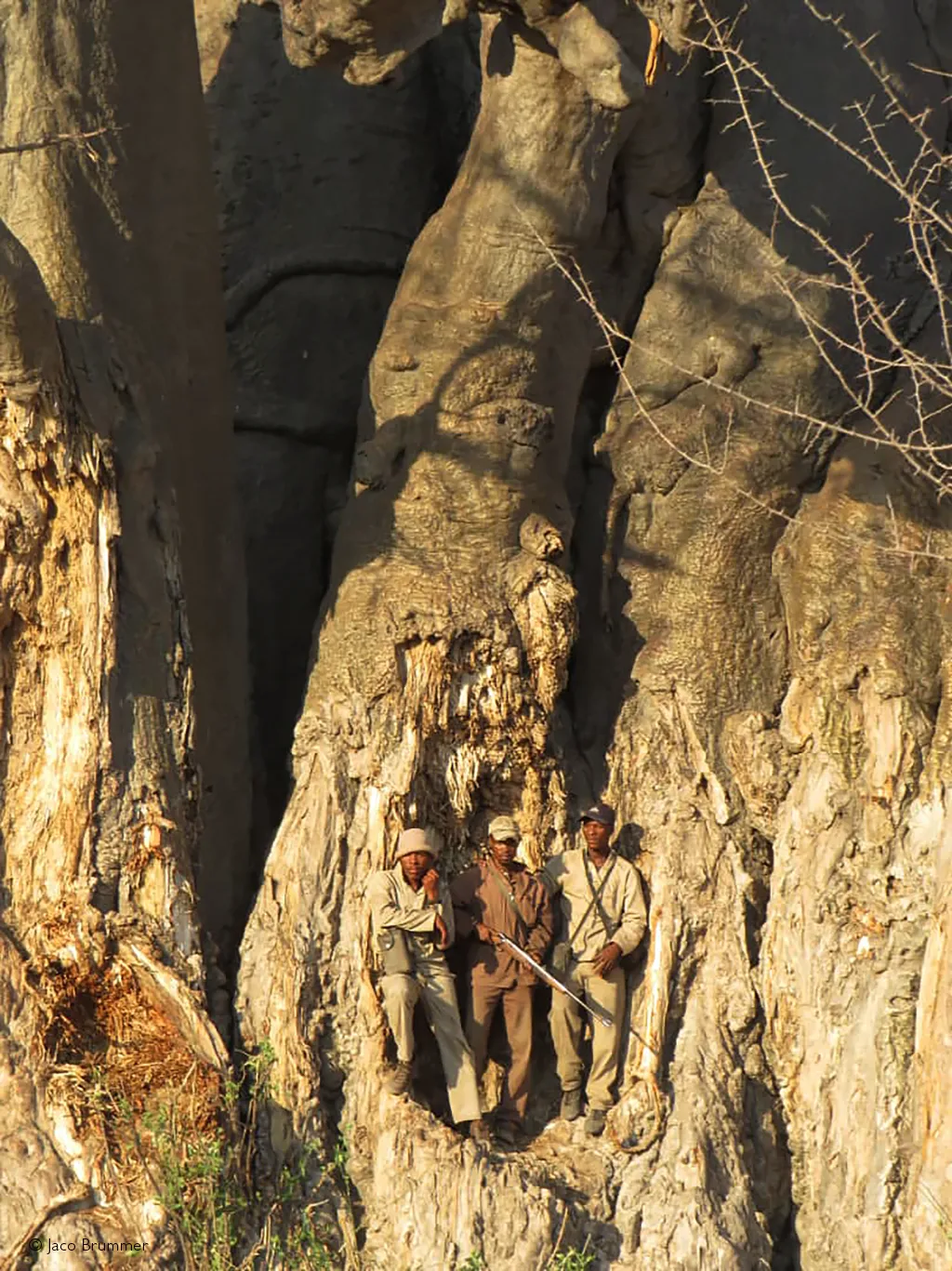
In 2019, an anti-poaching unit had come across an African baobab (Adansonia digitata) bigger than anything they had ever seen before, enthused ranger Jaco Brummer. On patrol with him was a Basarwa (Bushman) tracker, Kewame Nxhamoshee, who, pointing to a hive in its branches, named it Mmadinotshi, the Mother of Bees.
It’s a name that not only conjures a tree in which bees happen to live, but a great maternal presence; something ancient and vast that shelters and sustains, a tree from which generations of bees might have come, and which might house generations more.
However, as a scientist, it wasn’t the name that intrigued me when Jaco first contacted me in early 2026, nor his speculation about its status. It was the rudimentary measurement of the tree’s girth he’d taken on a second visit. I have spent much of my professional life studying baobabs, and people often tell me they have found the biggest one. Usually, they haven’t. But if Jaco’s measurement was anywhere near correct, Mmadinotshi was bigger, at least around her middle, than the record holder, South Africa’s Sagole Tree. That got my attention. And when I looked at his photographs, my curiosity turned to excitement. We might indeed be dealing with an exceptional tree.
Girth alone, however, does not determine size. Trees are compared using a Size Index that takes three measurements into account: girth, height and crown spread. Jaco had not measured the latter two, but, he said, there was a way to remedy that: if I was up for a tough four-day journey, he would take me to Mmadinotshi and I could measure her myself.
Within weeks, I was on a flight to Maun with a backpack full of measuring and sampling equipment. Jaco had organised everything else. We set off on 21 July 2026, accompanied by four Setswana trackers: Orateng Matamo, Kenneth Mate, Fraye Karunga and Mokove Nkuveshi, in a Land Cruiser packed to the hilt. We crossed one flooded pan after another before finally reaching the anti-poaching camp on the edge of the Delta, where we exchanged four wheels for mokoros, the traditional Botswanan dugout canoes.
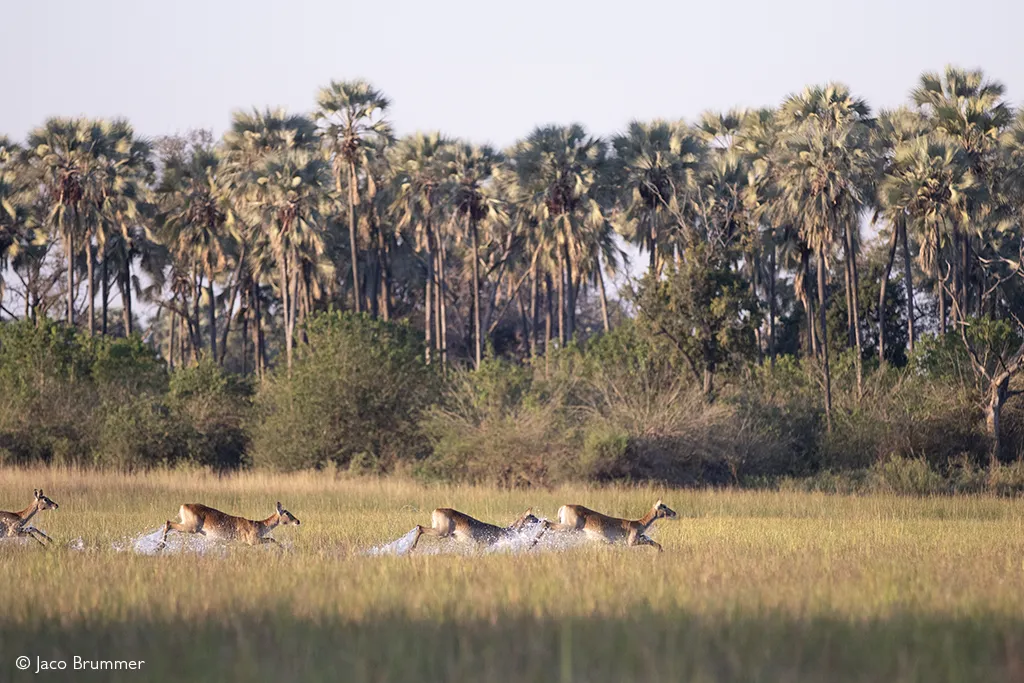
The first days on the water were magical. There were lechwe, buffalo, giraffe and zebra. White egrets flew over green and blue waterways while African jacanas tiptoed between the water lilies and fish eagles called overhead.
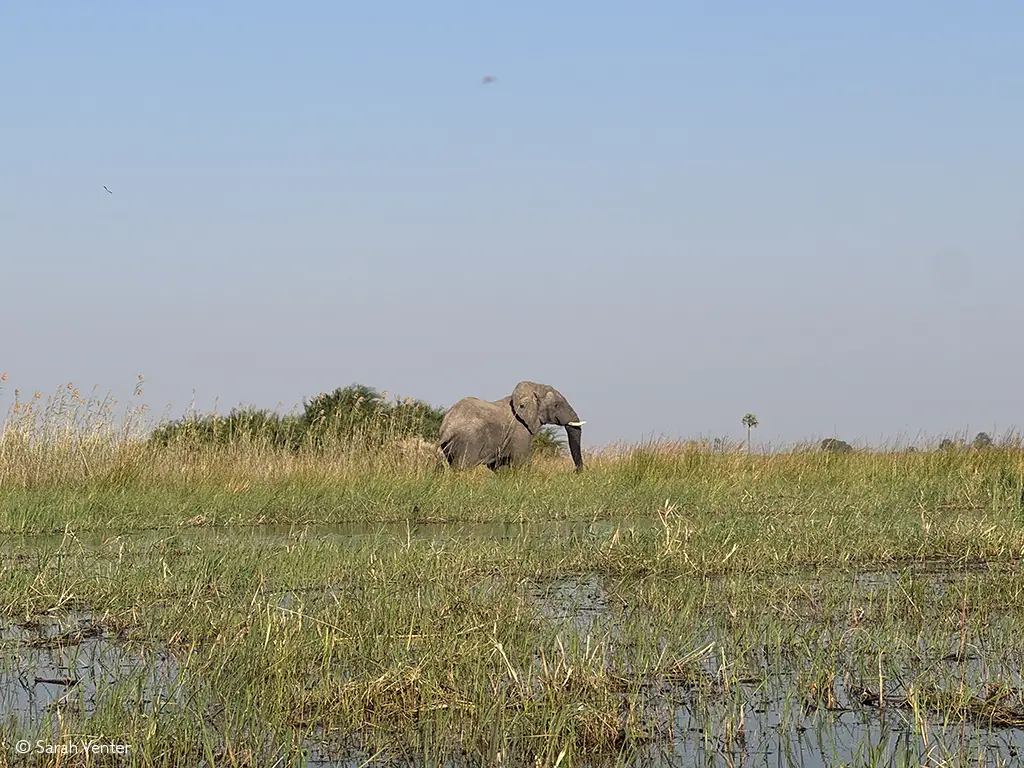
Along the route, I assessed large baobabs for elephant damage, mapping those in need of protection. Although elephants and baobabs have coexisted for centuries, elephants can gouge into their trunks, stripping away bark and tearing out the soft wood. For some ancient trees, the damage is severe enough to threaten their survival, and wire mesh is used to protect them.
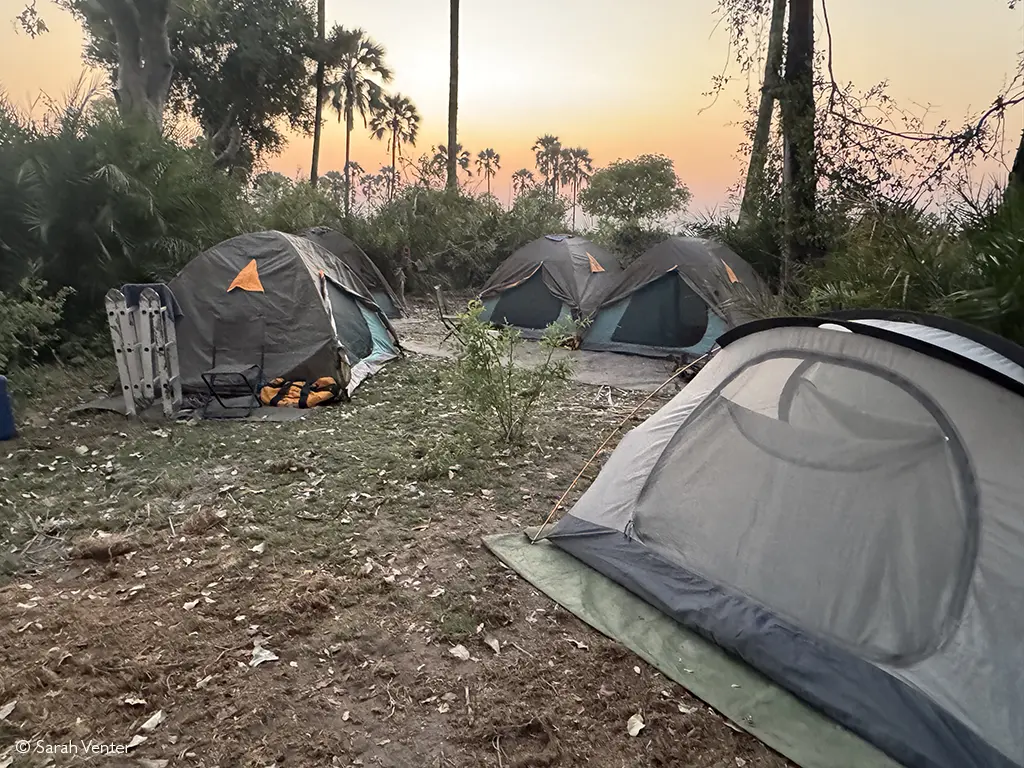
At the end of each day, we pulled our mokoros up onto the closest island just as the sun began to set. The evening meal was simple: meat and maize cooked over a small fire. In the firelight, the trackers swapped stories of protecting the Okavango’s wildlife from poachers, their voices carrying softly into the darkness. Then we settled down to sleep under the stars. But the elephants had other ideas. All night, they rattled the ilala palms, sending nuts crashing to the ground before slurping them up. Up before dawn, breakfast was black coffee and fried balls of dough known as magwinyas. Then we were off again.
While elephants pose a threat to baobabs, we were on high alert for hippos. Whenever we approached a pool that might house a pod, Jaco took out his rifle and the polers kept close to the edges. By the third day, the open channels began to disappear. We negotiated flooded grasslands, dense stands of papyrus and crocodile-inhabited waterways.
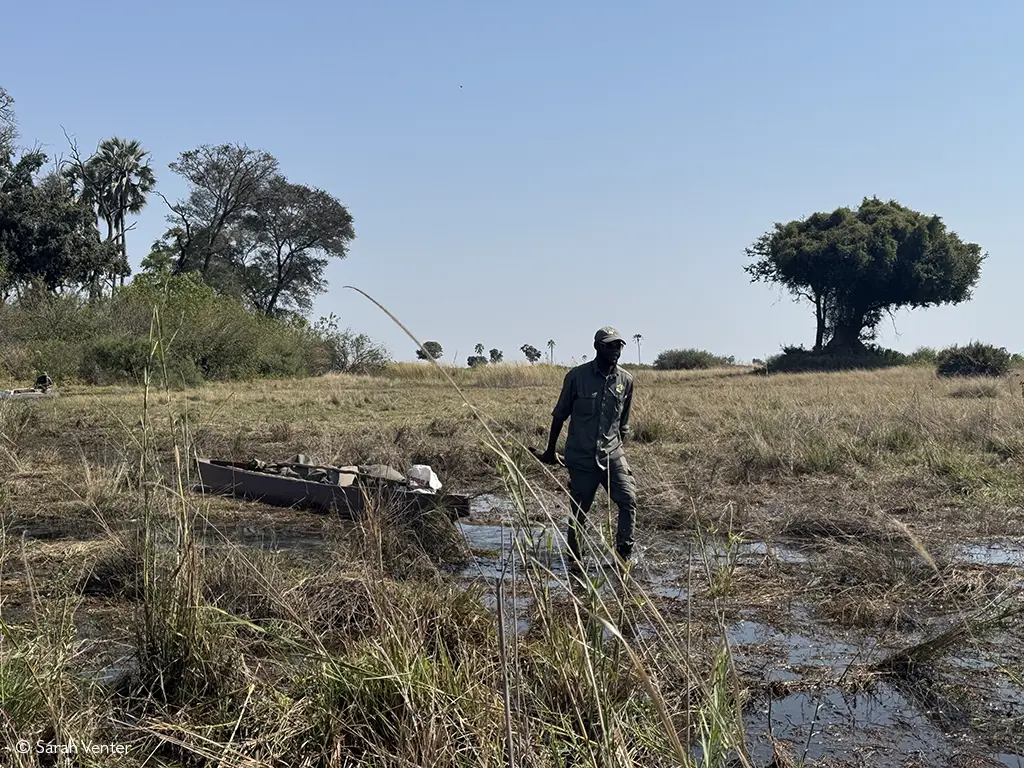
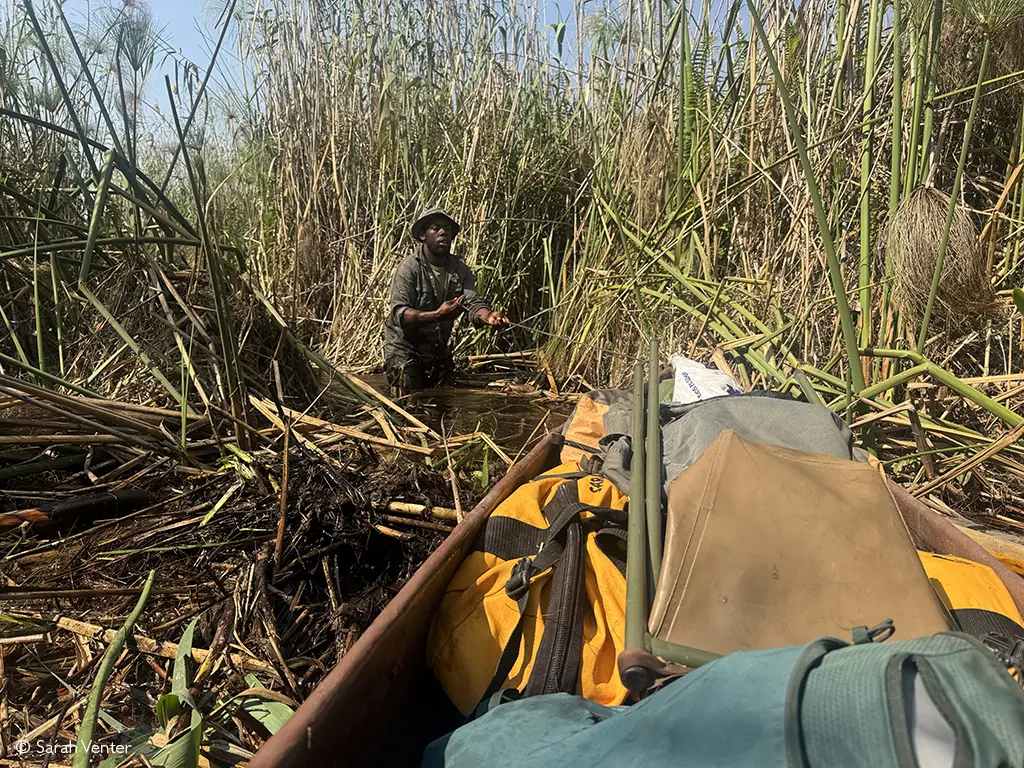
For hours, the trackers pushed and pulled the mokoros through thick vegetation, hacking a passage when it became impenetrable. Wading behind them, thigh-deep in water while watching for critters that bite, large and small, was not much fun. Then, towards the end of the day, we finally reached Mmadinotshi.
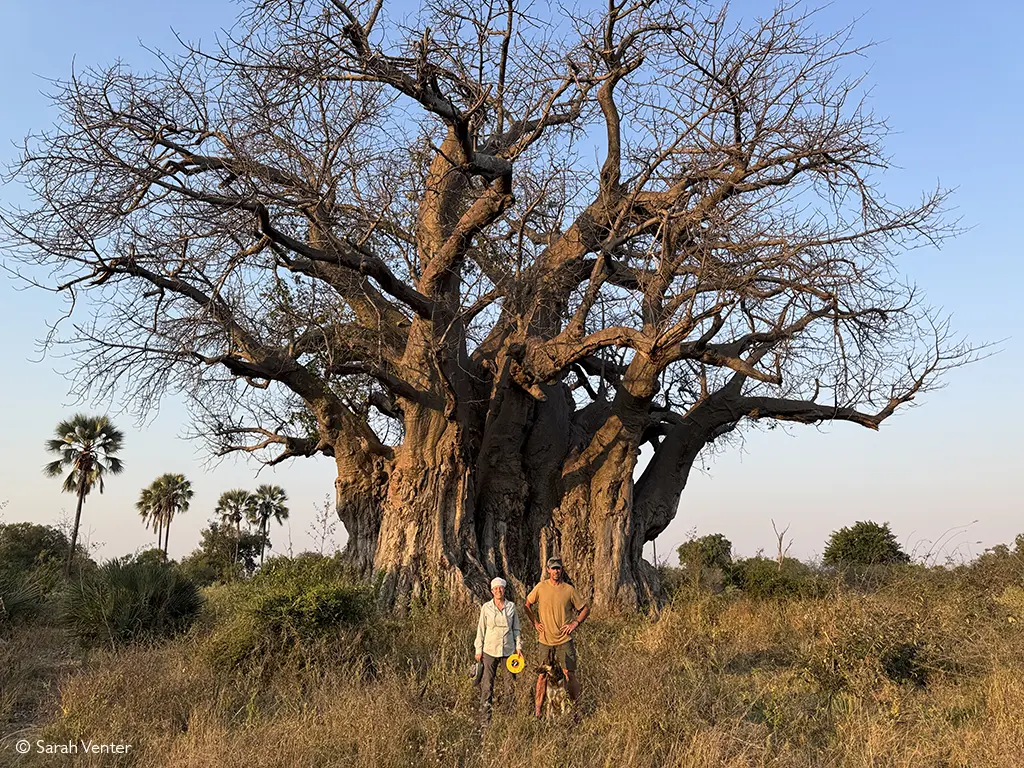
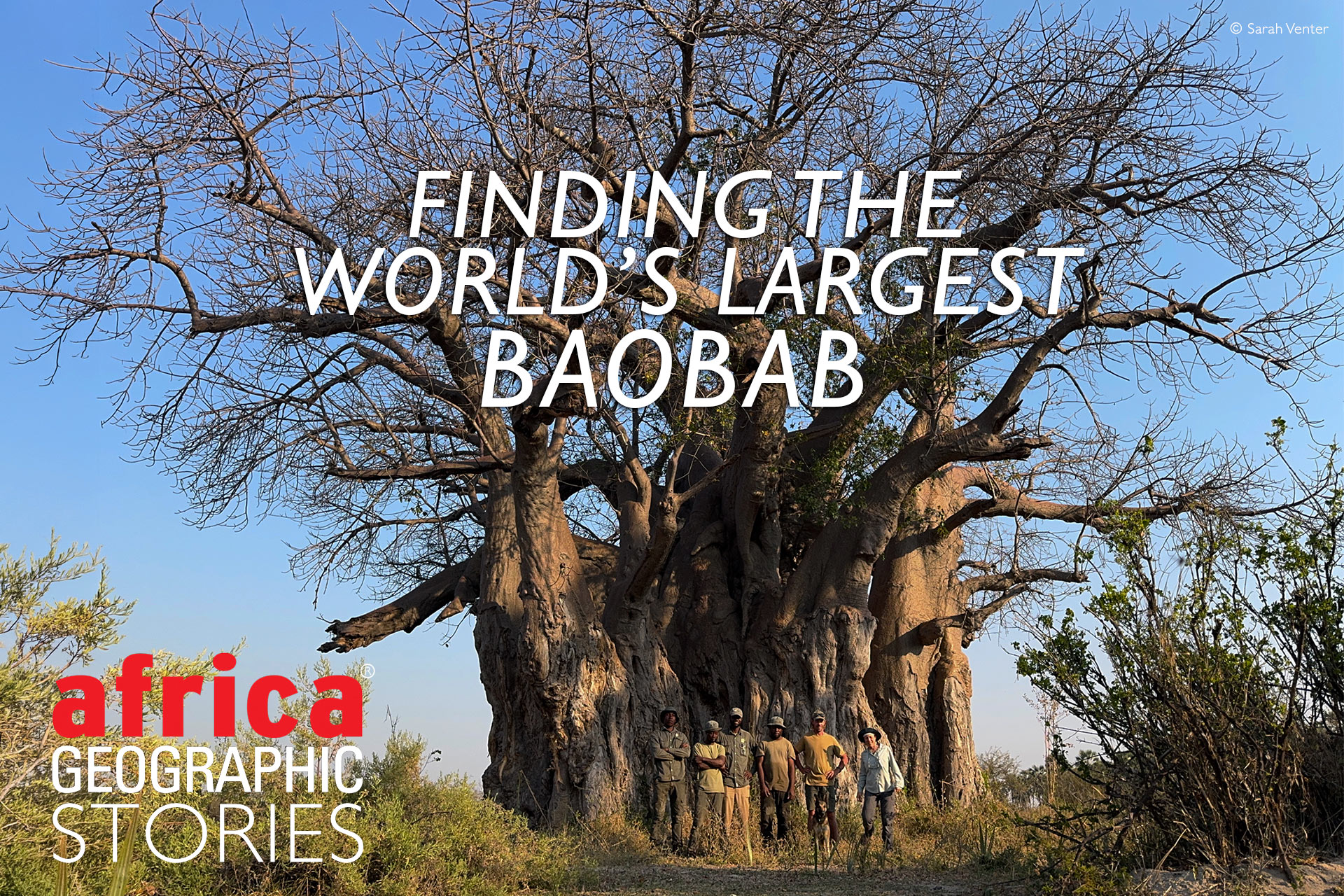
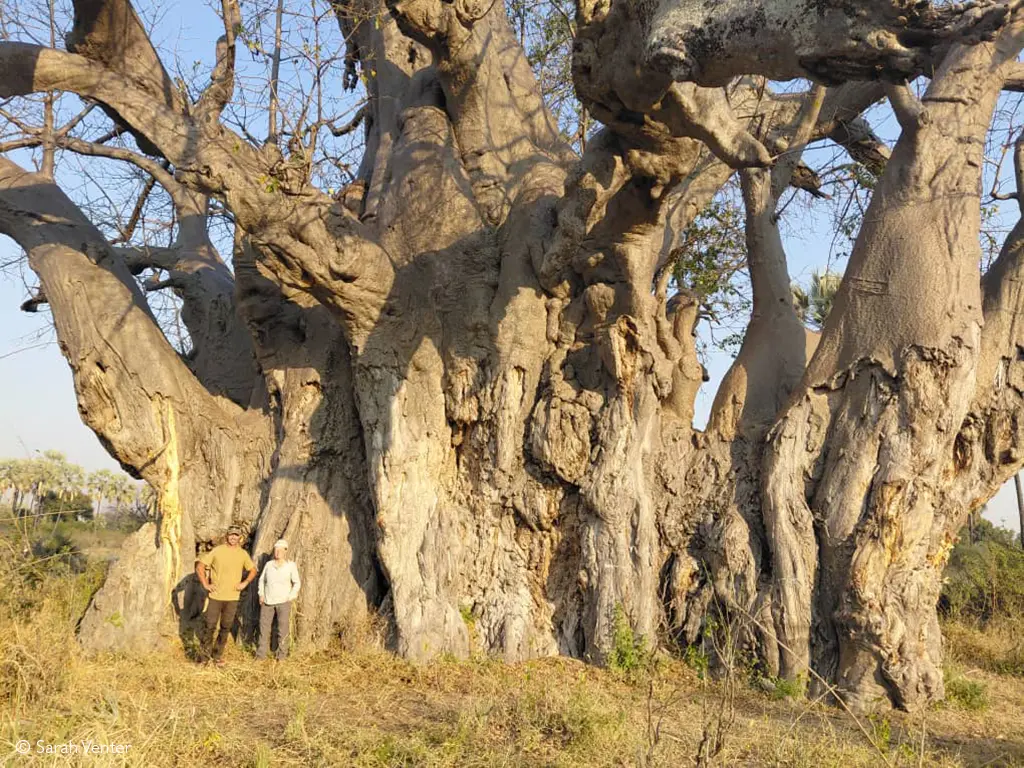
The Mother of Bees stood immense and solid before us, her single stem shaped by centuries of buttressing into a menagerie of curves, ripples and deep indentations. Elephants had left wounds in her trunk that had healed over like candle wax. I walked around the tree, looking up, trying to take in her sheer majesty. Surely she must be among the oldest, but was she the biggest too? (Note: We refer to her as “she” due to her naming as mother. In truth, baobabs have hermaphrodite flowers so there are no male or female trees.)
There was no point in guessing. It was time to take her measurements.
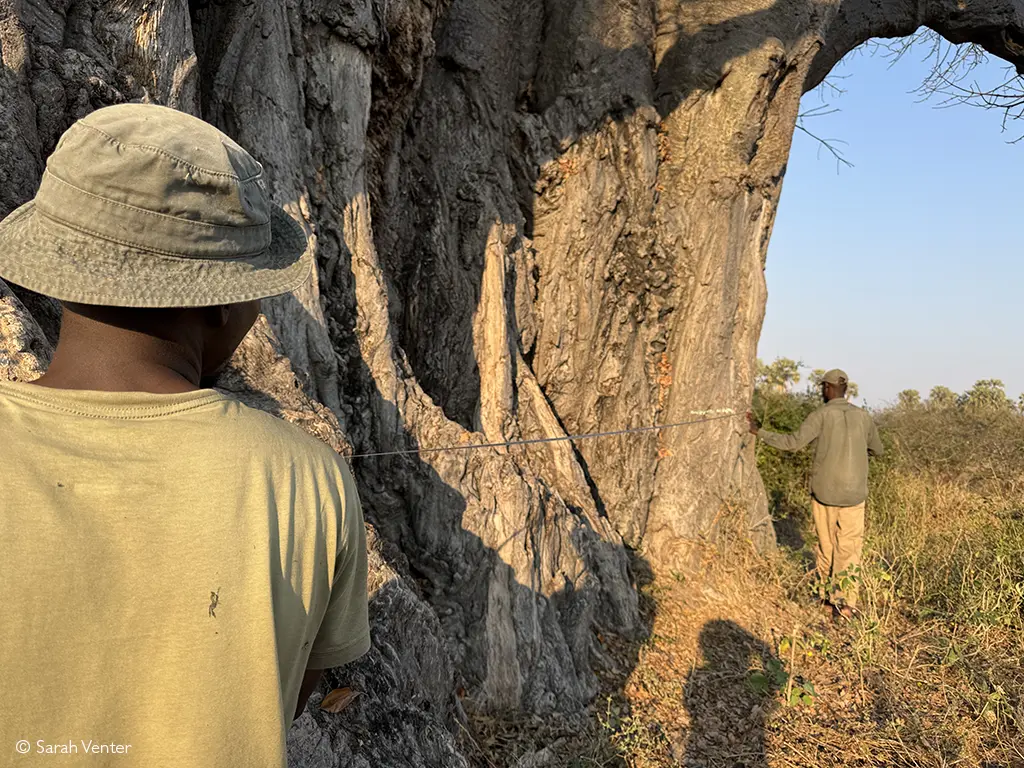
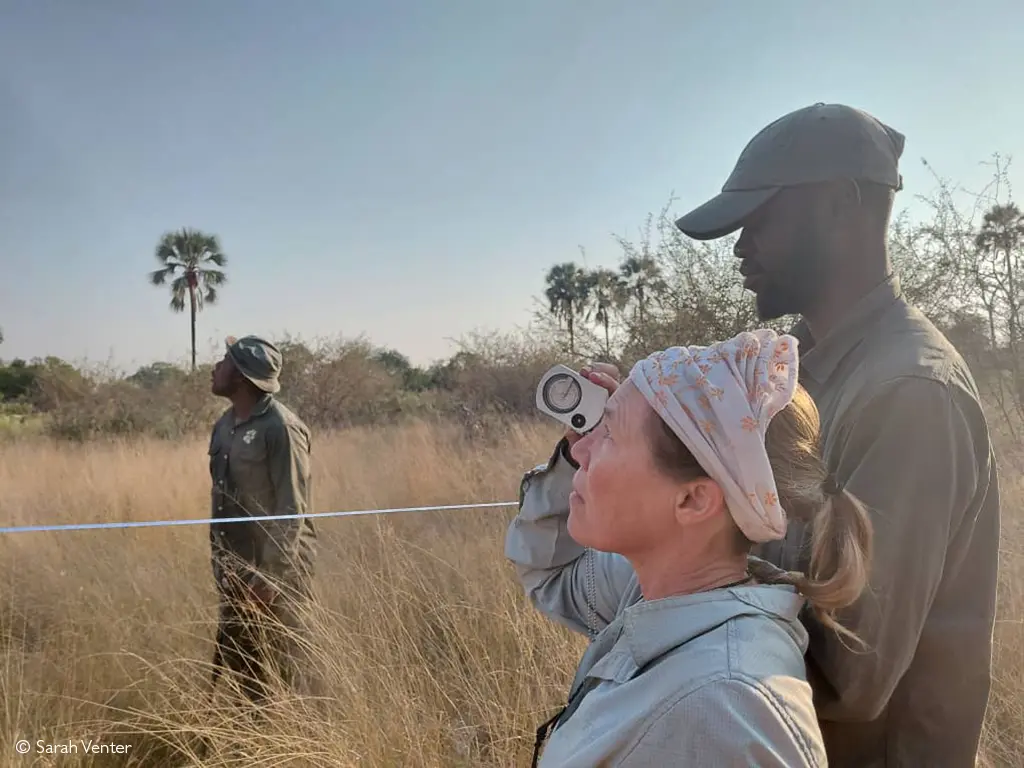
We marked a line around the trunk at 1.3 metres above the ground, the standard height for measuring circumference. Then, using the méthode de la corde tendue technique, we pulled a 50-metre tape tightly around the tree rather than allowing it to follow every curve, crack and indentation in the trunk. A clinometer gave us the height, and we measured the crown spread along its north–south and east–west axes. Taking all these measurements together, I calculated the Size Index and gave a great whoop of excitement!
With a girth of 34.4 metres, a height of 25 metres and an average crown spread of 32.6 metres, Mmadinotshi’s Size Index was 472.5, compared to Sagole’s 426. I could finally confirm what Jaco and the trackers had suspected when they first saw her: Mmadinotshi is the largest known baobab, not only in Africa but anywhere in the world.
Now that we knew just how big Mmadinotshi was, our next question was how old she might be. Baobabs are among the oldest flowering trees on Earth, with some having lived for more than 2,000 years. To discover where Mmadinotshi fits into that extraordinary history, we needed samples of her oldest wood. However, baobabs hollow with age, and the wood that grew from the original seed had likely vanished centuries ago. As our best chance of finding something ancient lay deep inside the tree, I climbed the slippery trunk to a narrow crack just big enough to squeeze through. Beyond it was a large cavity, measuring roughly 1.8 metres in length and width, with buttresses pushing even further back.
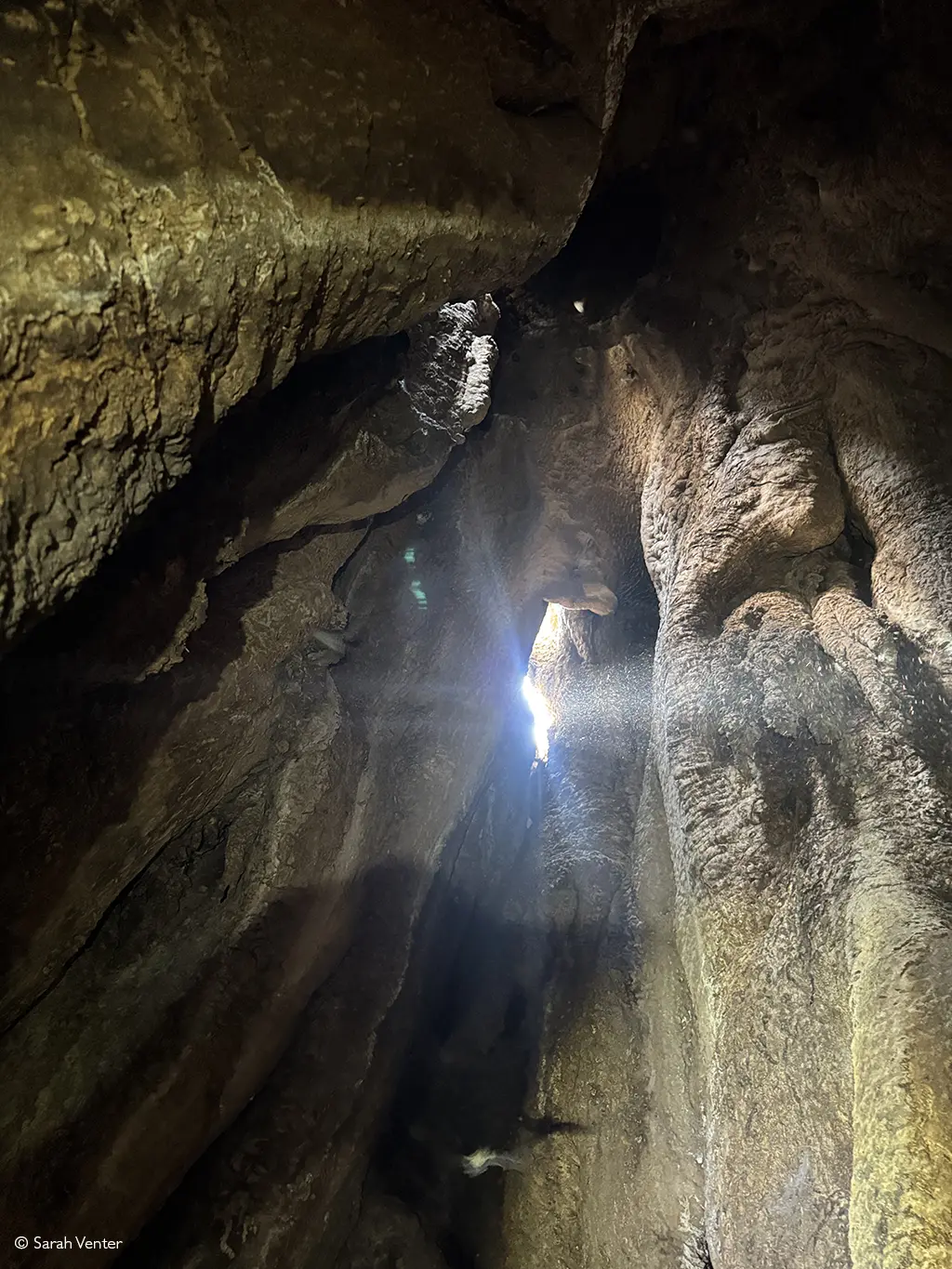
It was an extraordinary place to be, quite literally inside the history of the tree. With Fraye’s help, I took three wood samples from inside the hollow. Outside, we took another three using a 1.5-metre wood borer. Each precious sample was carefully slipped into plastic conduits so that they would survive the long journey to the lab for carbon dating intact.
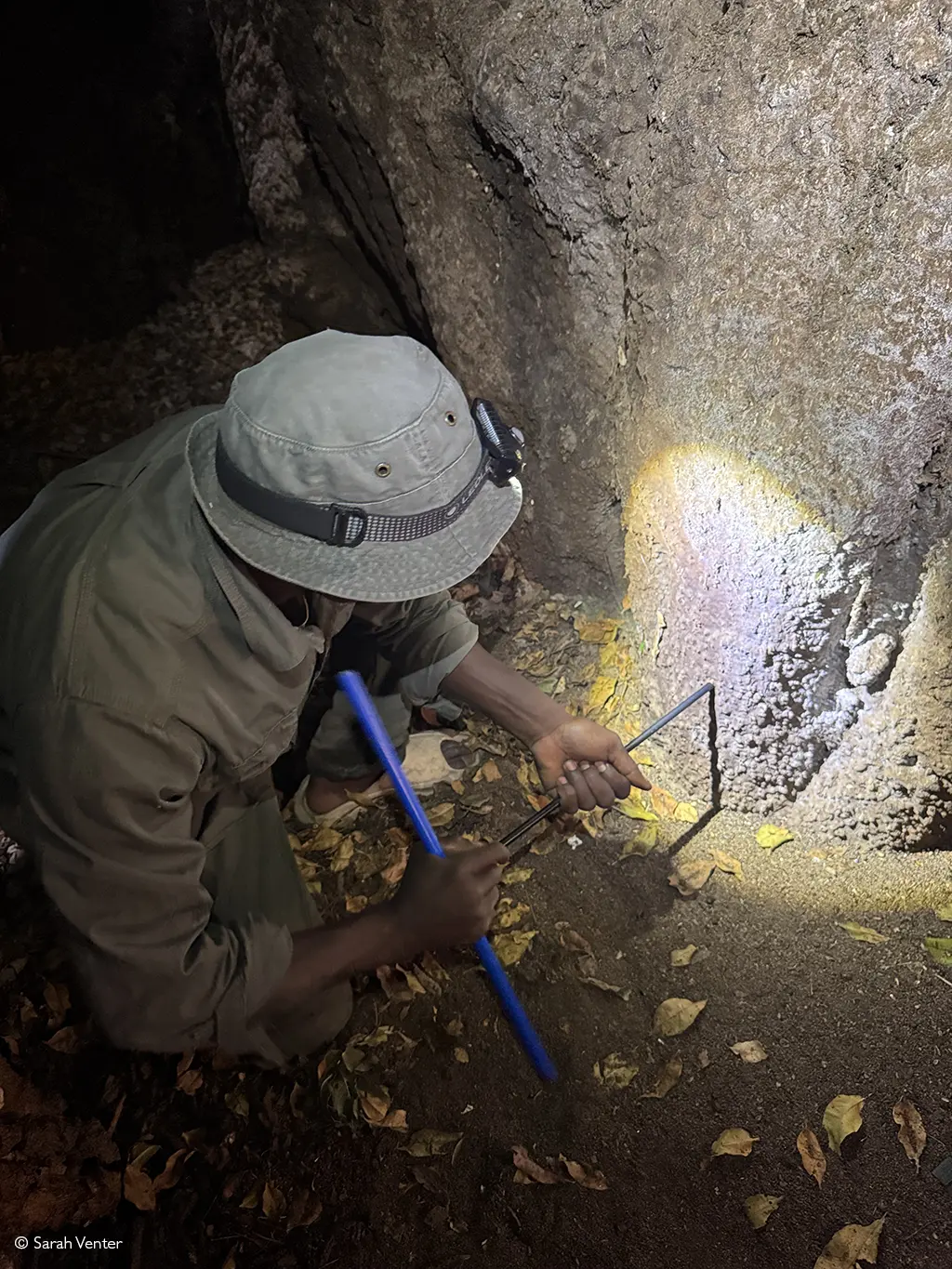
While enormously proud to have helped establish this baobab as the new world champion, I was also conscious that we hadn’t discovered Mmadinotshi. Countless generations of local people had surely known this tree long before Kewame gave her a name, or I arrived with my clinometer and measuring tape. What we had been able to do was measure her in a way that allowed her to be compared with the other great baobabs of Southern Africa and the world.
That night, we slept beneath the tree. The moon rose and the stars came out. Leopards grunted in the darkness and elephants passed nearby. At dawn, the first rays of sunlight caught the enormous grey trunk and turned it pink and orange. It was time to leave, time to retrace our route back along the waterways to Jaco’s base camp.
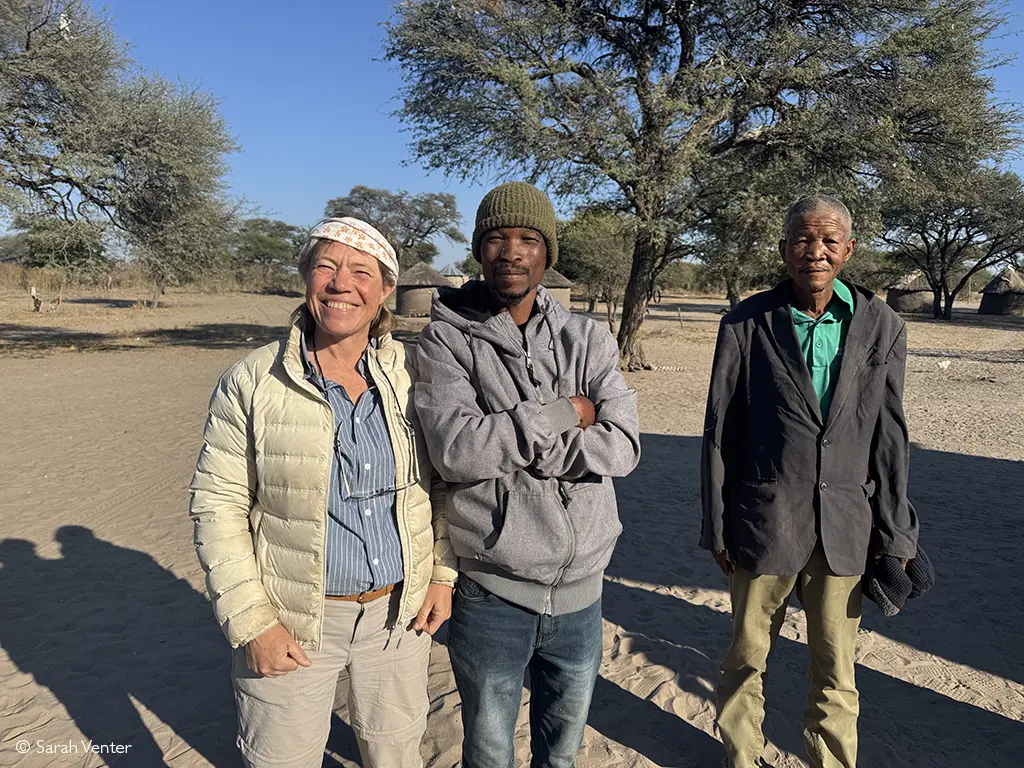
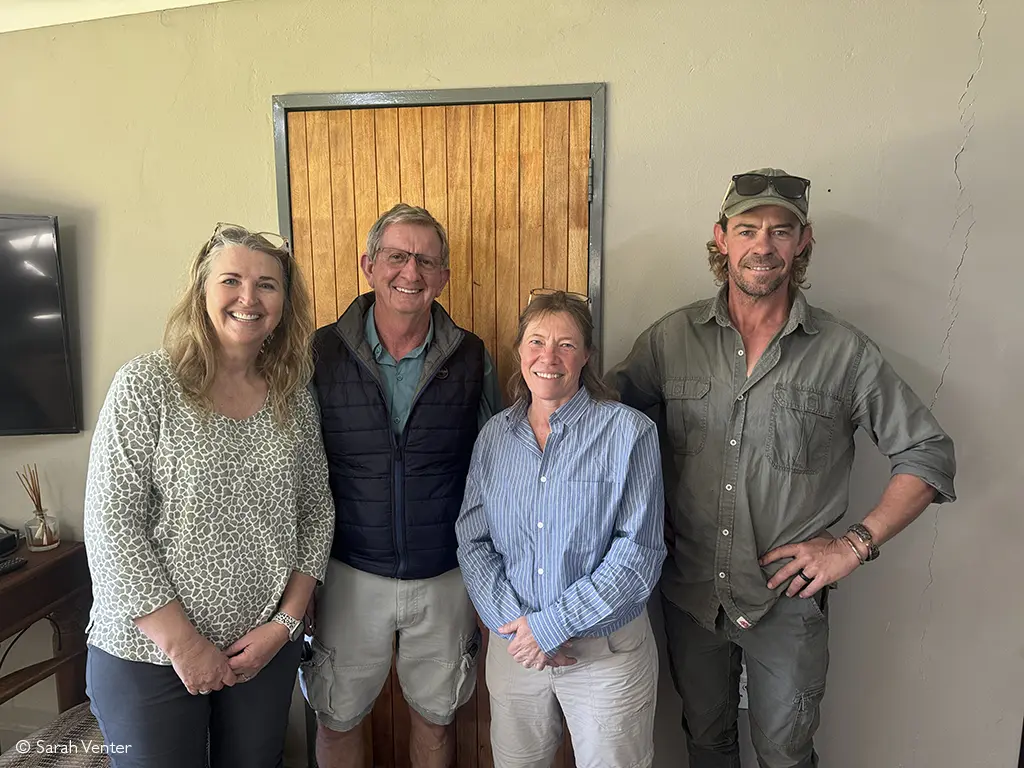
Before leaving the Delta, I met Kewame Nxhamoshee, who was delighted to hear the results of our expedition. In Maun, I visited the area’s concession holders, David and Cathy Kays, to let them know they were custodians of this extraordinary tree. Once back in Johannesburg, I drove directly to iThemba LABS and handed my precious cargo of wood samples to Dr Steven Woodborne, who will determine their age using accelerator mass spectrometry.
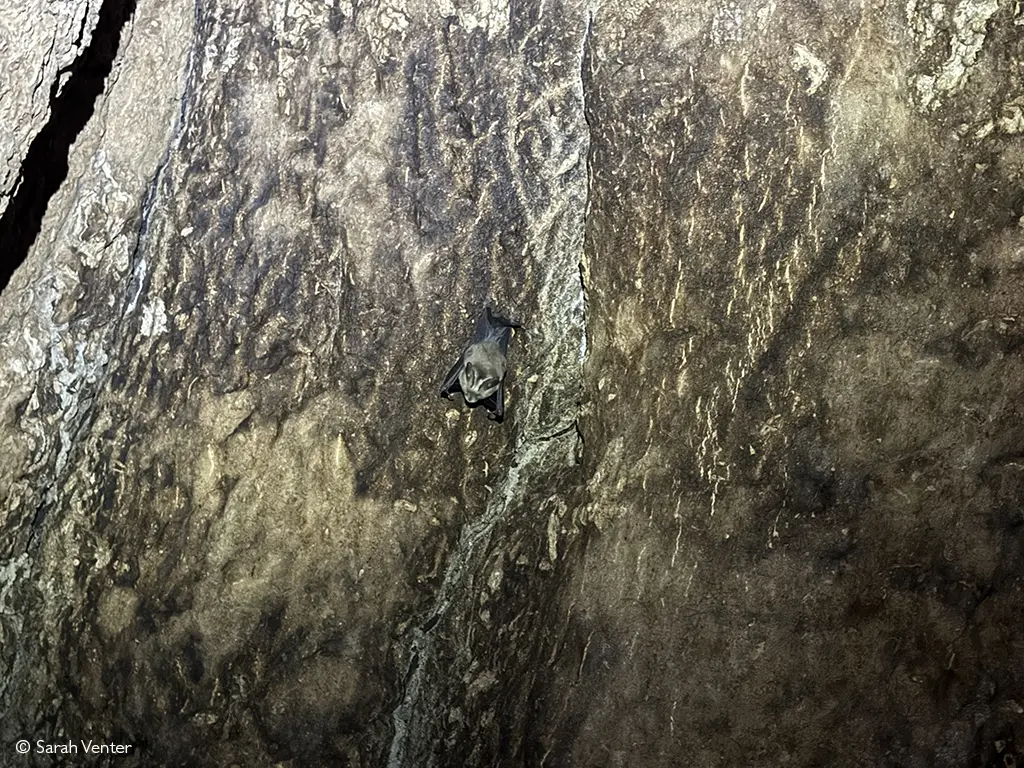
Her age aside, there was plenty for me to do once back home, in the foothills of the Soutpansberg. While we wait for the results of the carbon dating, I focus on what we do know: her record-breaking size. But the story of Mmadinotshi is about more than just a record. A baobab of this scale is the product of an intact landscape and an almost unimaginable span of time. Her great trunk provides habitat; bats occupy her hollow, bees have given her a name, and generations of elephants have left their marks in her bark. Her survival is bound to the survival of the landscape around her. That makes Mmadinotshi more than a botanical curiosity. A tree like this can become a flagship for baobab conservation, a tangible reminder of the ecological and cultural value of these ancient trees, and of how much can be lost when the landscapes that have sustained them for centuries are degraded or destroyed.
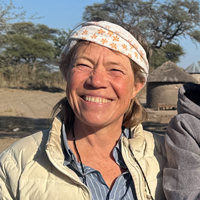 About Dr Sarah Venter
Dr Sarah Venter is a South African ecologist who has studied African baobabs for more than 20 years. She holds a PhD in baobab ecology from the University of the Witwatersrand and has published extensively on their ecology, reproduction and sustainable use.
Sarah is the founder of the Baobab Foundation, which combines research, conservation and community-based initiatives to protect these ancient trees.
Further reading
- Are Africa’s baobabs really under threat? Read about the unbreakable baobabs: are Africa’s iconic trees here to stay?
- Why have some of Africa’s oldest baobabs died? Read about how the mysterious deaths of ancient baobabs leave scientists baffled
- What makes Africa’s baobabs so extraordinary? 9 fascinating baobab tree facts
- The Okavango Delta is an enormous watery oasis, home to an astonishing variety of wildlife and host to some of the best Botswana safaris. Read more about the Okavango Delta here
To comment on this story: Login (or sign up) to our app here - it's a troll-free safe place 🙂.