
Can Kenya’s Critically Endangered mountain bongo make a comeback in Kenya?

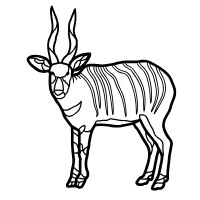
- Fewer than 65 mountain bongos remain in Kenya’s forests, according to KWS.
- Captive-bred bongos are reproducing after release, offering encouraging signs for species recovery.
- Kenya’s new recovery plan targets a self-sustaining wild population of 750 by 2075.
- Genetic diversity, suitable habitat and forest restoration are essential to long-term survival.
- Conservationists must ensure released bongos survive and reproduce independently across successive generations.
 Discover Africa’s remarkable wildlife on a safari designed by our experts, with unforgettable encounters and conservation at its heart. We have ready-made safaris to choose from, or ask us to build one just for you.
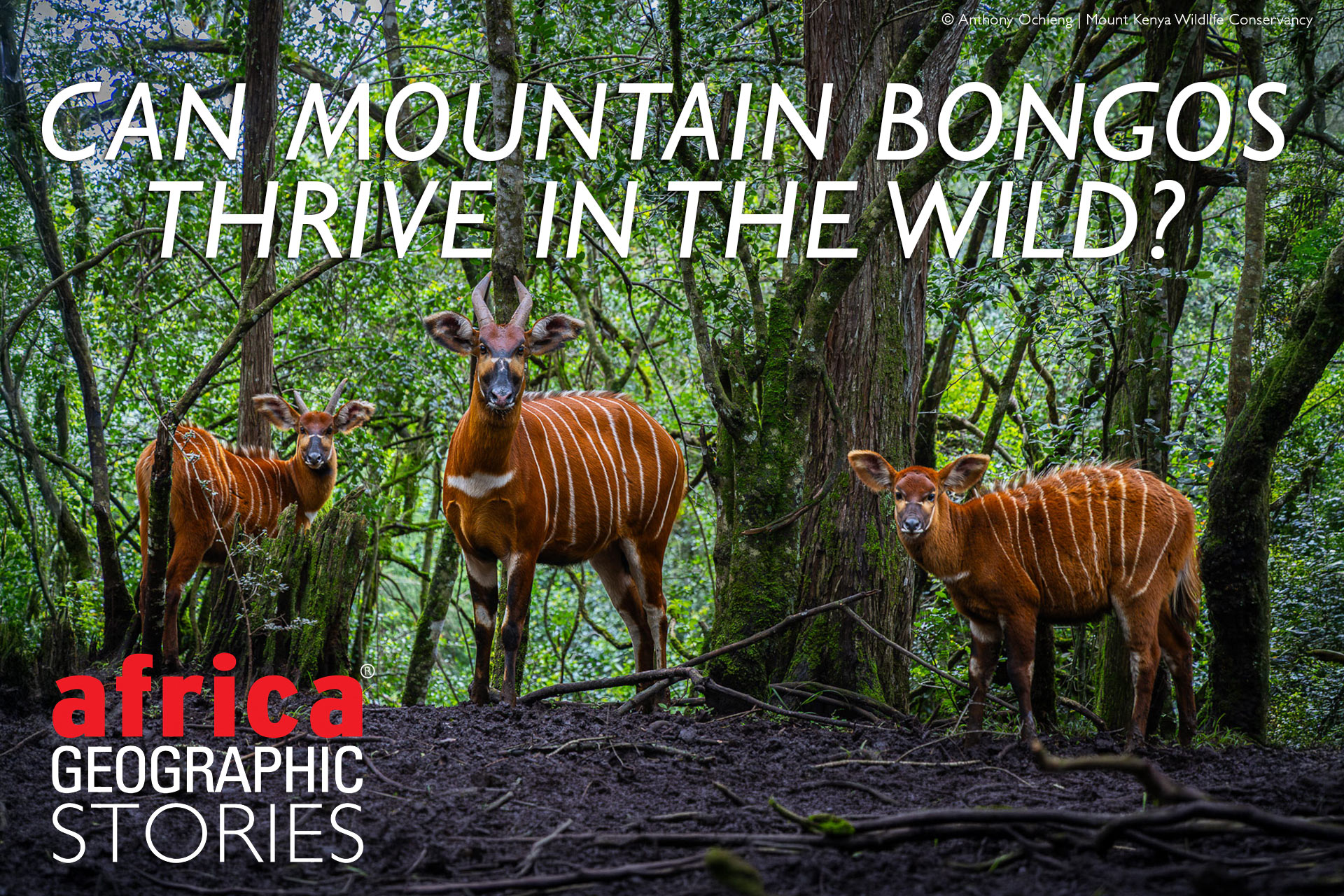
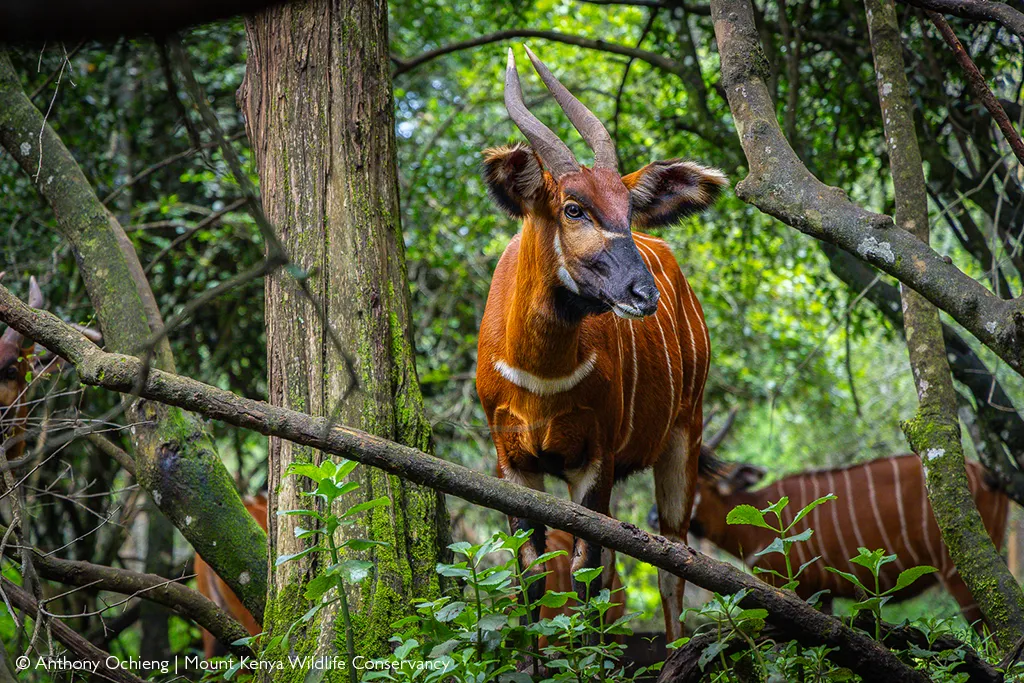
Hidden in Kenya’s misty mountain forests is an antelope so elusive that some conservationists have worked in its habitat for decades without ever seeing one. Its chestnut coat and white stripes help it disappear into dense vegetation, but camouflage alone cannot protect this Critically Endangered species from extinction.
A calf born in the wild is progress. Mountain bongos raised in captivity may be learning to survive in the wild, an important step towards rebuilding a population that has dwindled to fewer than 65 animals in the wild, according to the Kenya Wildlife Service (KWS).
Dr Robert Aruho of Mount Kenya Wildlife Conservancy says the team has recorded about five births among released bongos, with the oldest offspring now three years old. The animals are browsing and finding water.
Initially, the team worried captive-raised animals might not respond to danger, but observations are encouraging. “I think these instincts are already within the animal,” Aruho says. “All you need is to give the right environment, then they start expressing those instincts.”
A new national recovery plan aims to build on this progress and return the antelope to more of its former range. Launched in September 2026, Kenya’s National Recovery and Action Plan for the Mountain Bongo 2026–2030 targets a 50% increase in the national population by 2030, with a longer-term goal of reaching a self-sustaining wild population of 750 animals by 2075.
Learning what bongos need
Found only in Kenya, the mountain bongo faces threats including habitat loss and fragmentation, agricultural expansion and development. Disease has also contributed to its decline. Aruho recalls how a rinderpest outbreak in Kenya affected antelope populations, including mountain bongos.
At Mount Kenya Wildlife Conservancy, years of breeding work have shown that increasing numbers is only part of the challenge. Bongos are sensitive to their surroundings, and stress can affect reproductive success. Providing suitable conditions and managing the animals around their natural breeding cycles has helped the programme record more than 100 births in six years, according to Aruho.
Genetic diversity is another concern. Four unrelated males brought from European zoos in April 2026 will strengthen the genetic base of the managed breeding population. The next challenge is to translate breeding success into a population that can survive and reproduce independently in the wild.
Life beyond captivity
Aruho says the conservancy aims to release 10 animals a year. Artificial intelligence-assisted cameras help the team monitor individual bongos by identifying their distinctive stripe patterns and facial markings, allowing conservationists to track their progress without relying on collars or tags.
Births among released animals are an important milestone, but they do not yet prove the species can recover in the wild. That will depend on bongos surviving, reproducing and raising young over successive generations in secure, connected forest habitat.
Recovery beyond the numbers
The national recovery effort extends beyond one conservancy. KWS leads the conservation response, while the IUCN Species Survival Commission and other specialists contribute scientific and technical expertise. Government agencies, conservation organisations and local communities also have roles to play.
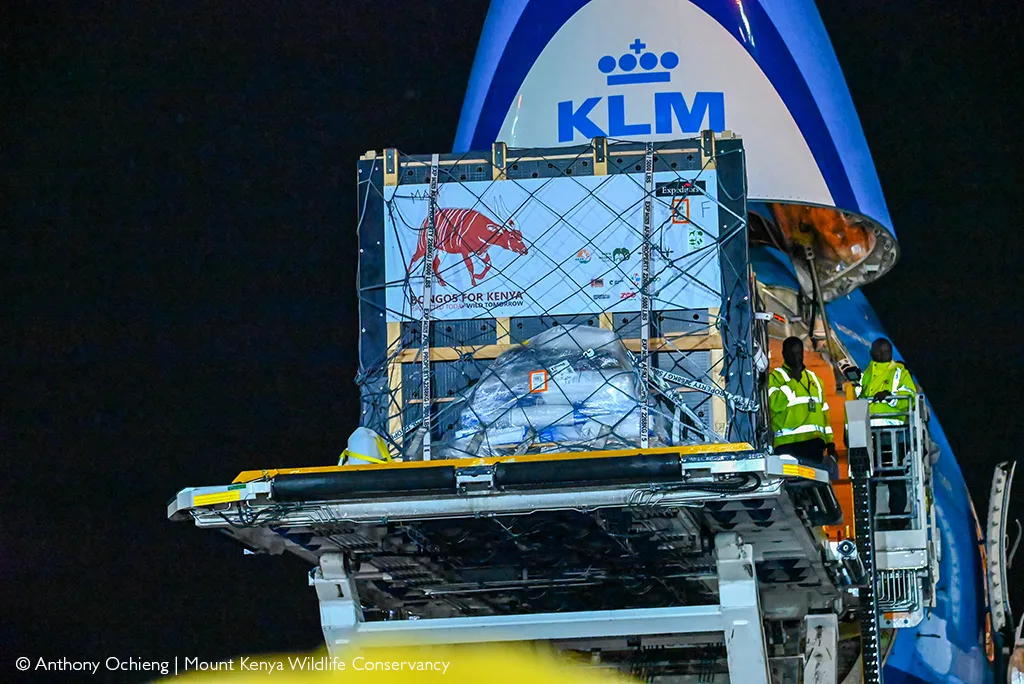
In February 2025, 17 mountain bongos were brought back to Kenya from the United States through a partnership involving the Rare Species Conservatory Foundation, Lewa Wildlife Conservancy, KWS and other organisations. The animals went to the Marania and Mucheene sanctuaries in Meru County to contribute to breeding and rewilding efforts.
However, increasing the managed population will not be enough without suitable habitat. At Mount Kenya, the conservancy plants around 10,000 trees each year. Local people supply seedlings, plant them and maintain them as they grow, earning income through restoration work and employment at the conservancy.
For Aruho, protecting the bongo also means protecting the forests on which other wildlife and people depend.
“The presence of the bongo in the mountain provides the incentive to protect the animal on the mountain and the mountain forest,” he says.
The mountain forests of Mount Kenya, the Aberdares and the Mau are among Kenya’s vital water catchments. They support wildlife, help sustain freshwater supplies and underpin local livelihoods, making forest restoration an essential part of the bongo’s recovery.
.
Kenya’s first mountain bongo action plan did not achieve all its targets. A review found that only 28 of 129 planned activities had been completed. The new plan seeks to improve coordination and accountability, but its success will depend on sustained funding and cooperation.
Aruho’s long-term goal is to restore bongos across their former habitats, including degraded forests that need rehabilitation before animals can be reintroduced. The plan’s target of 750 animals reflects the ambition to establish a population better able to withstand future threats and sustain itself.
The births among released bongos show that rewilding is possible. Whether they mark the start of a lasting recovery will depend on whether the animals can thrive in the forests where they belong.
Further reading
- The bongo is one of Africa’s most attractive antelope yet its shy nature keeps it off the safari radar. We shed light on this alluring mammal
- Bongos are not confined to Kenya’s mountains. The lowland bongo, a different subspecies, inhabits the dense rainforests of Central Africa, including Odzala-Kokoua National Park in Congo-Brazzaville. Discover this remarkable rainforest ecosystem
To comment on this story: Login (or sign up) to our app here - it's a troll-free safe place 🙂.