


Searching for Volcanoes' gorillas and Nyungwe's chimps

- Seven great ape treks take photographer Kate Ochsman through Rwanda’s Volcanoes and Nyungwe National Parks.
- Four gorilla treks reveal how dramatically sightings vary between families, terrain and vegetation.
- Two chimp habituation treks offer insight into the patient process behind wildlife encounters.
- A final Cyamudongo trek provides Kate’s closest, calmest encounter with wild chimpanzees.
- Throughout the journey, guides, trackers and conservation programmes underpin each great ape experience.
 Want to experience Nyungwe National Park and Volcanoes National Park in Rwanda all for yourself? We have ready-made safaris to Nyungwe and Volcanoes to choose from, or we’ll help you plan your dream safari.
Kate Ochsman travels the world photographing iconic mammals. This year, she travelled to Rwanda with dreams of gorillas and left with deep impressions of successful conservation models, community inclusion, the importance of enigmatic species in conserving entire ecosystems, and a feeling of hope for the future.
“I have a list of animals I want to photograph, but I don’t rush that list or seek to scratch off species as items on a to-do list. I’m not a photographic twitcher. I will fixate on certain species for years at a time, focusing on photographing them, learning everything I can and spending as much time with the animals as possible. The more time I spend with a species, the more I see nuances in behaviour and the more I understand my subject.
This year, I felt the tug to photograph mountain gorillas, and to do it alone – no guests, no friends, just my own presence and connection. Travelling as a solo woman, safety is always my priority. I also wanted more time with the gorillas than on typical group tours to give myself the best photographic opportunities, so I knew I needed a bespoke itinerary.
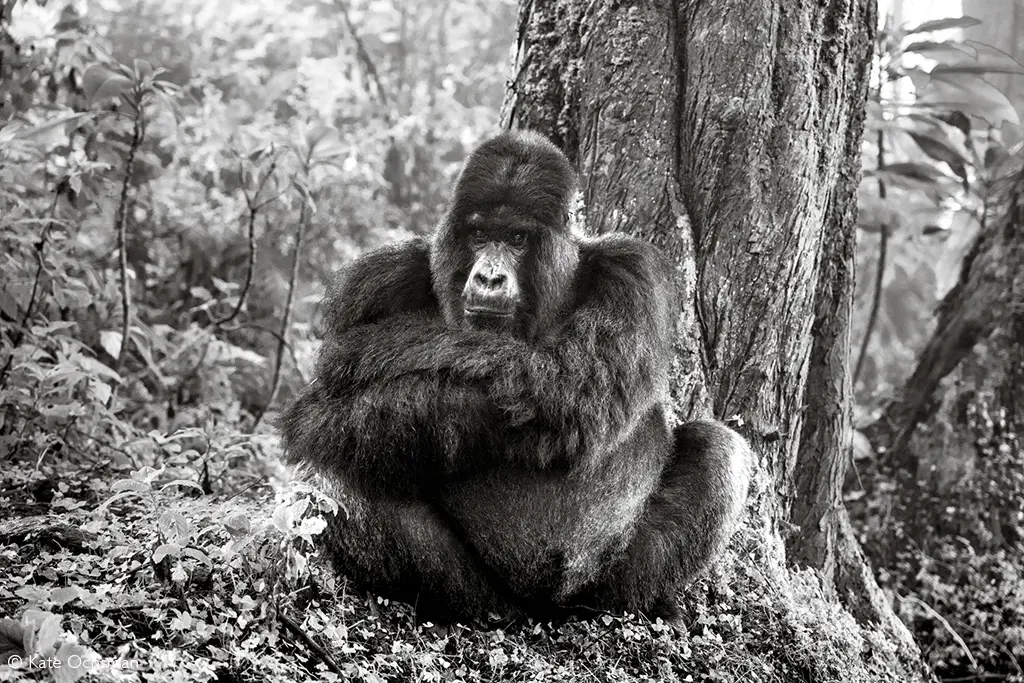
While planning the trip, I discovered that there are chimpanzees in Rwanda. I had no clue and was ecstatic! As a little girl, I’d always dreamt about chimpanzees and the heroic Jane Goodall. Now, I would actually have the opportunity to peek into their elusive world in Nyungwe National Park, managed by African Parks.
My trip would essentially have two parts: my highly focused mountain gorilla photographic work, and then the fun part of playing in the forest, learning from the biologists and hoping to simply see chimpanzees. I wasn’t passionate about photographing chimps; I just really wanted to be around them, watch their behaviour and hear their vocalisations. I would eventually do a two-day chimp habituation trek to see the process of habituating these great apes, and then a trek with an already habituated chimp community.
Lens-wise, I packed a 24–70mm and 70–200mm specifically for the gorilla trekking. Had I wanted to focus photographically on chimps as well, I would recommend bringing a 100–400mm.
Kigali – Rwanda capital + conservation and gorillas
All was planned very quickly, and six weeks after my decision to go, I woke up in Kigali, the capital of Rwanda. After being picked up by my driving guide, our first stop was the Kigali Genocide Memorial. I was initially hesitant to go to the memorial as my first experience in the country because I knew it would be sad and hard, but I am so glad that I did. It left a deep impression on me and provided important context for appreciating the country, its progress and its future.
After the three-hour drive through winding, hilly roads, I settled into my lodge in Musanze, near Volcanoes National Park, my home for four nights. The staff were genuinely kind and attentive, the food was delicious, and it was a wonderfully comfortable base for the trekking ahead.
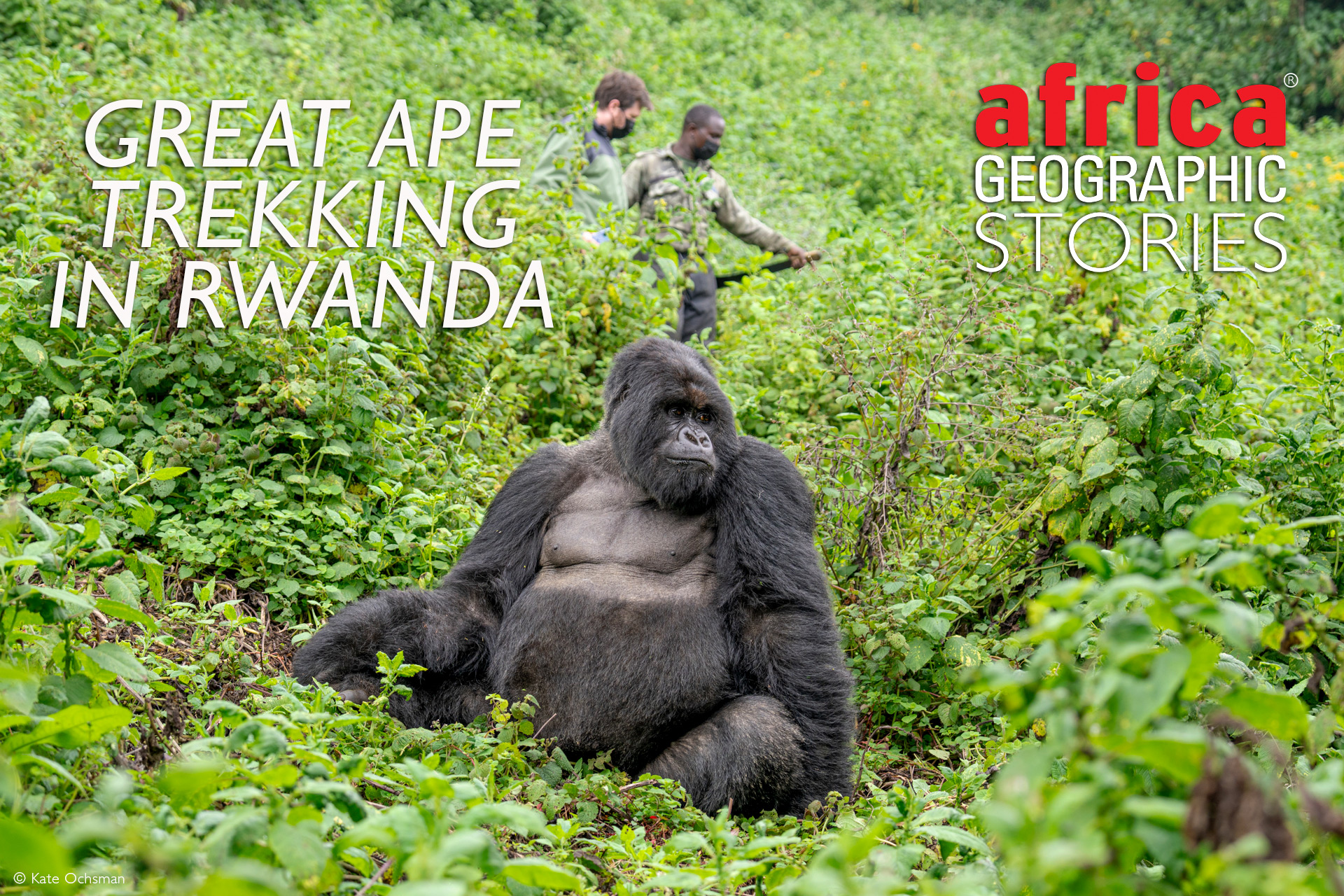
I did four gorilla treks, and they were each vastly different. The gorillas can move up to 5km a day within their home ranges, so each day the length of the trek was different, as was the habitat in which we found them.
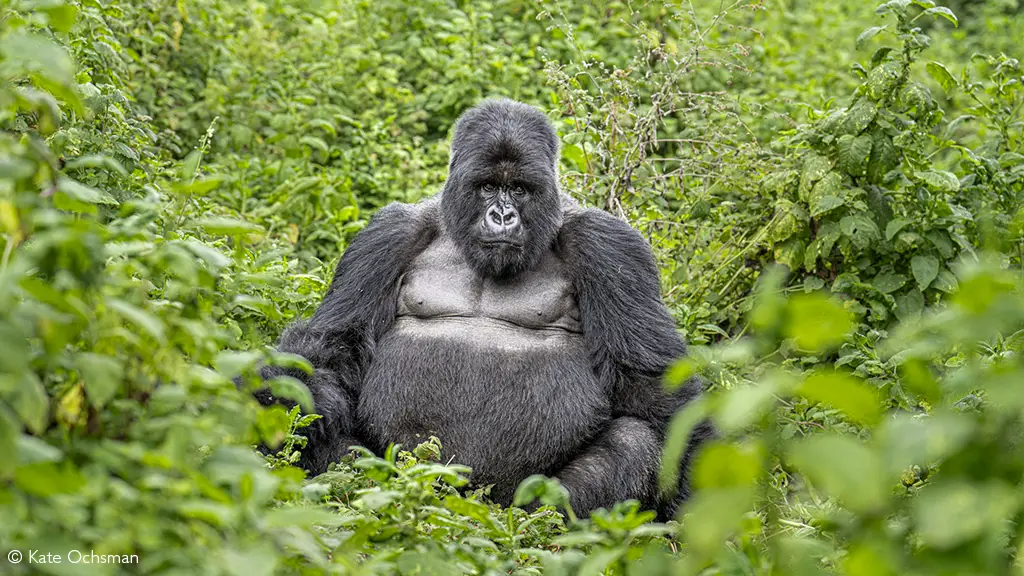
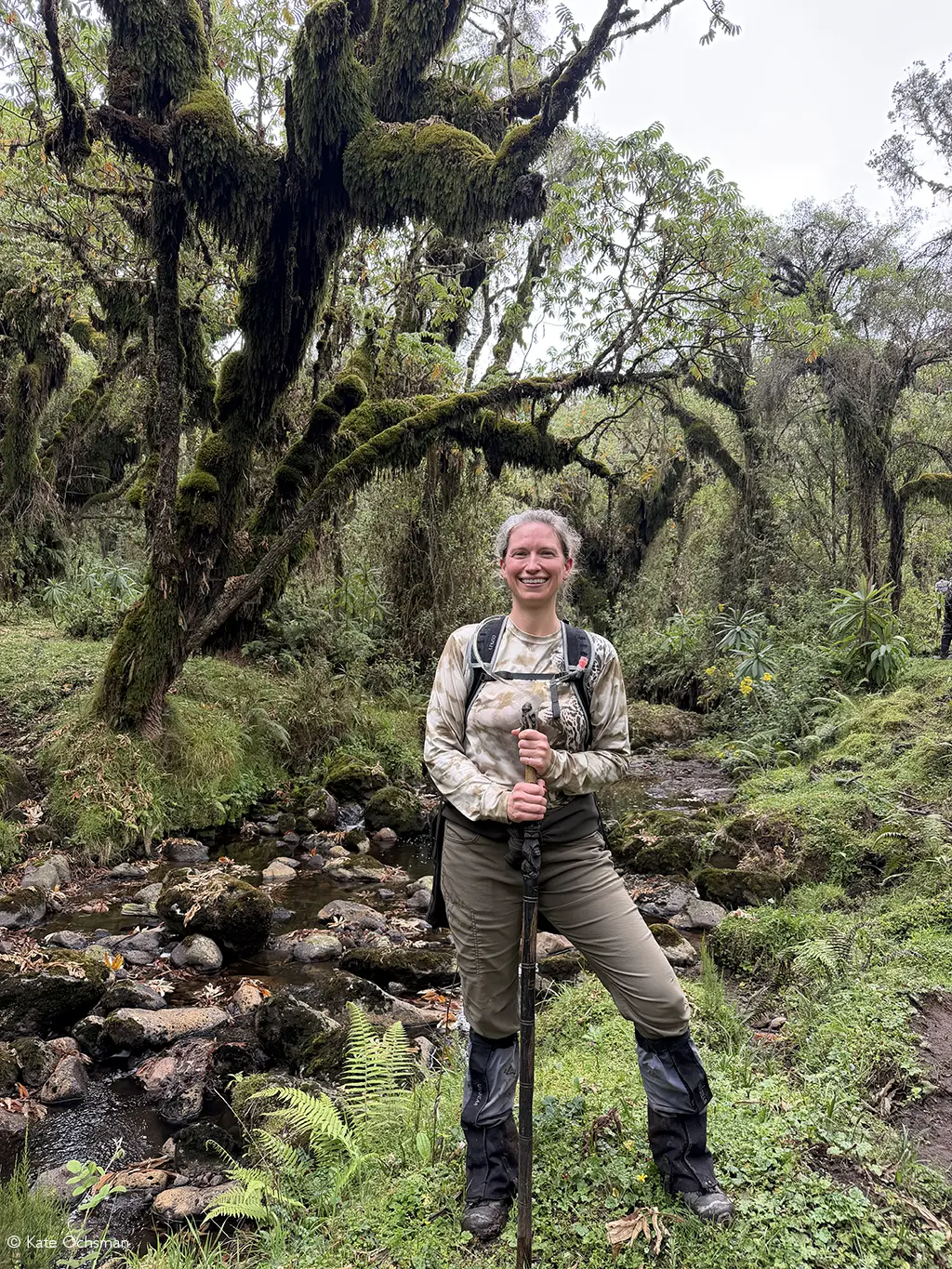
I requested medium-to-hard treks, as I love hiking, and I wanted longer treks at higher elevations so that I could be among the giant hagenia trees. These trees are massive, hundreds of years old, and tower through the misty forests with moss draped over them. They are absolutely magical and stunning. But getting to them involved challenging treks.
A key aspect of conservation in Rwanda is the relationship between protected areas and the communities living around them. Rwanda is densely populated, and both agriculture and ecotourism are important to the country. Revenue generated by gorilla and other wildlife tourism provides an economic incentive to conserve the forests and supports livelihoods around the parks.
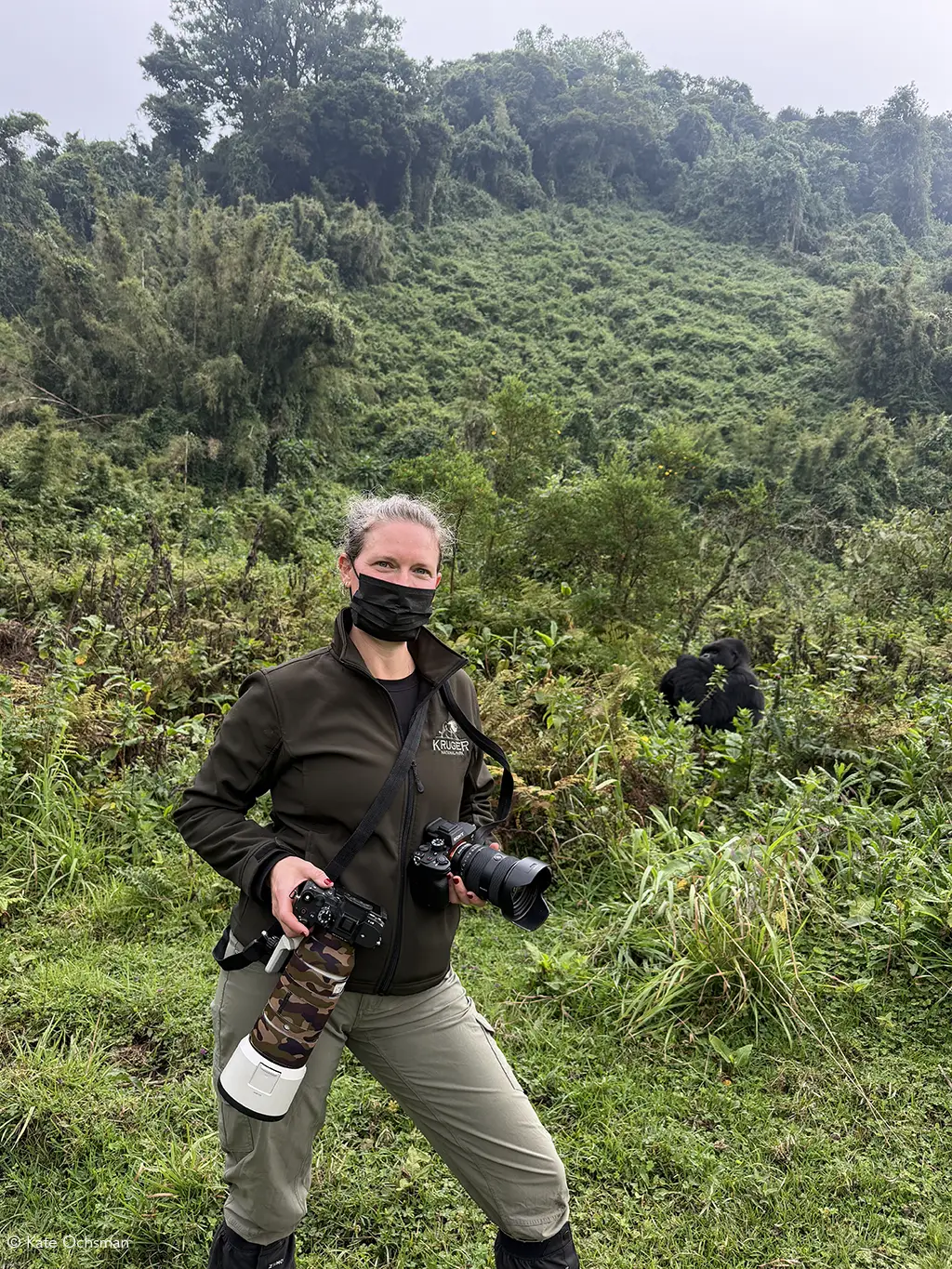
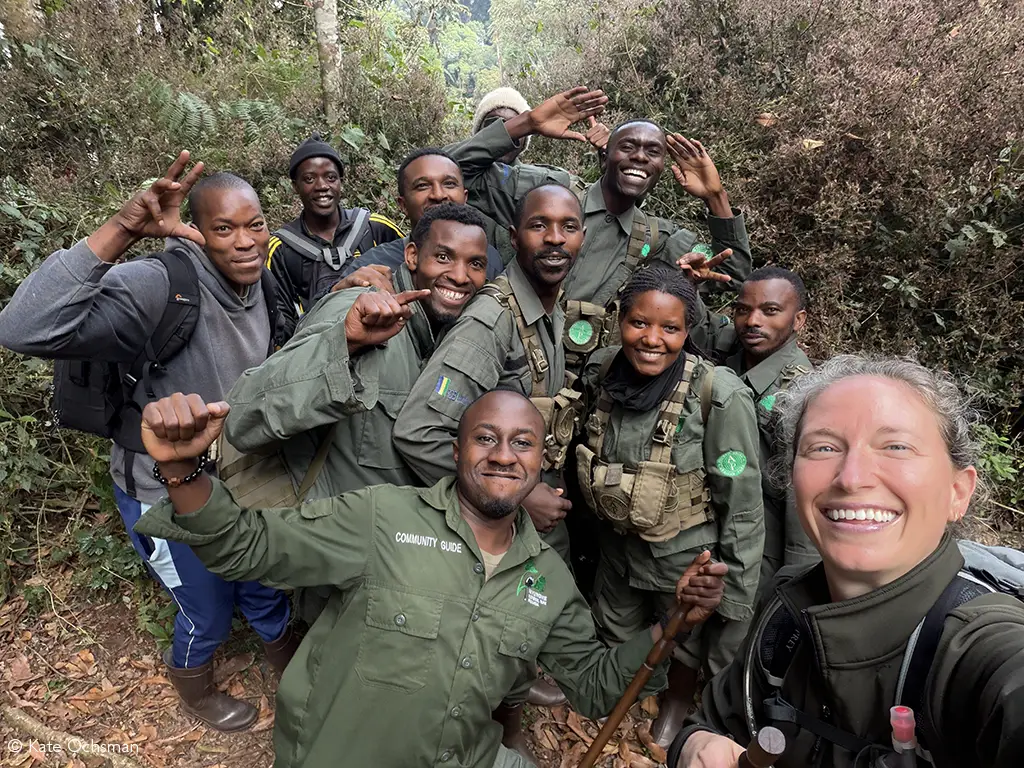
Optional porters are available for each trek, and they help visitors over challenging terrain and carry bags. As a photographer with heavy gear, having a porter was a no-brainer for me. A key part of conservation is employing local community members, and I would strongly encourage every visitor to hire a porter. The guides and trackers are equally central to the experience, with trackers following the gorillas each day so visitors can find them.
Over four gorilla treks, I visited the Igisha, Umubano, Mutobo, and Hirwa families. Each trek was completely different, as was the experience with each particular gorilla family.
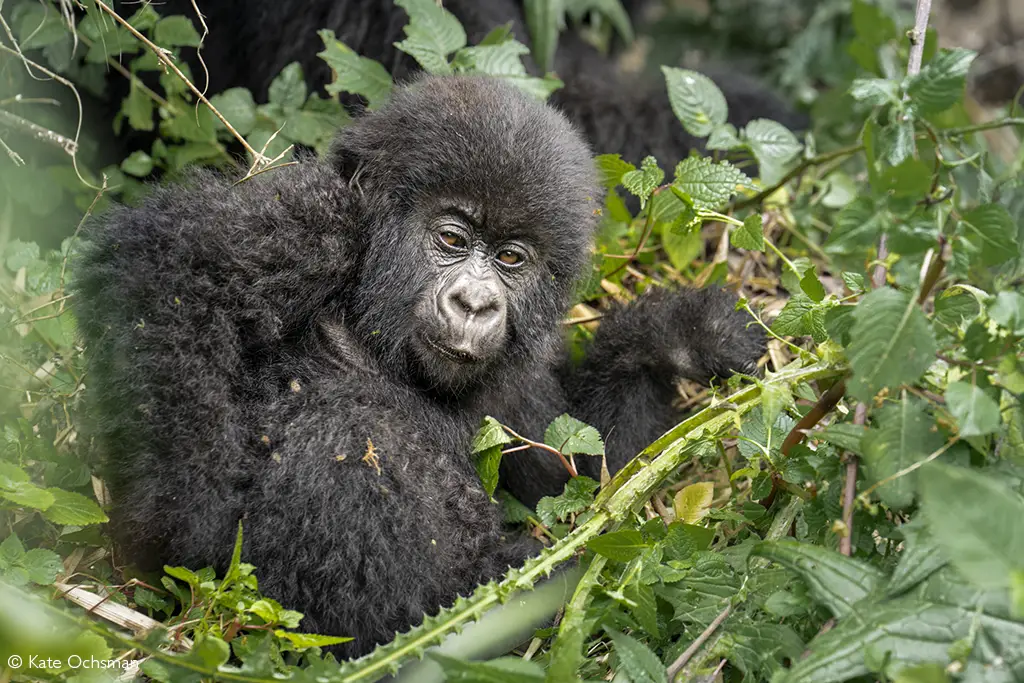
Visitors are permitted to spend just one hour with the gorillas to minimise human impact, and that hour goes by quickly. My focus was on creating portraits of the silverbacks, so I spent most of my time with them when I could. For photography, key elements are access and time. I am glad I did four treks to increase my chances of seeing gorillas out in the open and taking clear pictures.
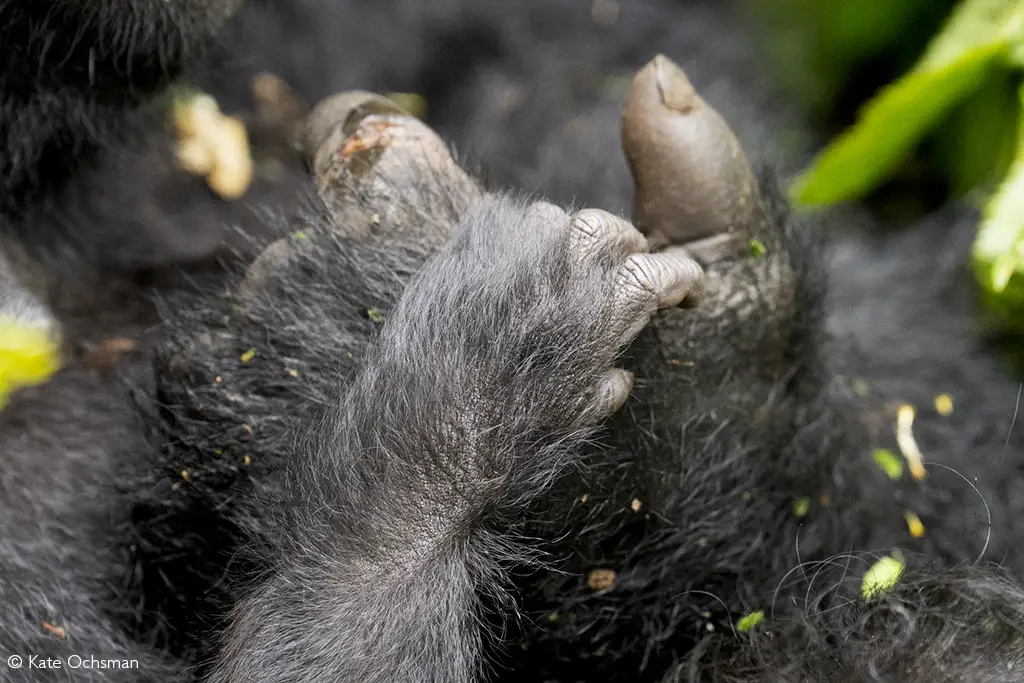
Being around gorillas and on foot with them was bliss. It was a full sensory experience. From their constant grunting and chatter, to the musky smell of the silverbacks, to the itch of the stinging nettles, and of course standing next to a being that looks like me, it was monumental.
There was constant movement and dynamic behaviour, so I had to stay focused on my photographic goals. But I also took time to put the camera down, be in the experience, and observe. I am so in love with gorilla trekking, and I will be back.
Nyungwe and Rwanda chimps
Leaving Volcanoes National Park and the gorillas was sad, yet I was also giddy with excitement to see Nyungwe National Park, with its abundant birdlife and 13 primate species.
Standing on top of a hill and looking over Nyungwe felt like being on a boat and looking over a rolling sea in the middle of a green ocean. Nyungwe was a place that swallowed me up, and I felt that humbling sense of my teensy size as just another being in the forest.
Since my first trek was a habituation trek, we were at the northern tip of the park at a base called Gisovu. It was the former park headquarters before African Parks took over park management, and the infrastructure there was comfortable but basic. It was essentially a research base, and I stayed in a room in a research hut. I was the only guest there, which felt very special.
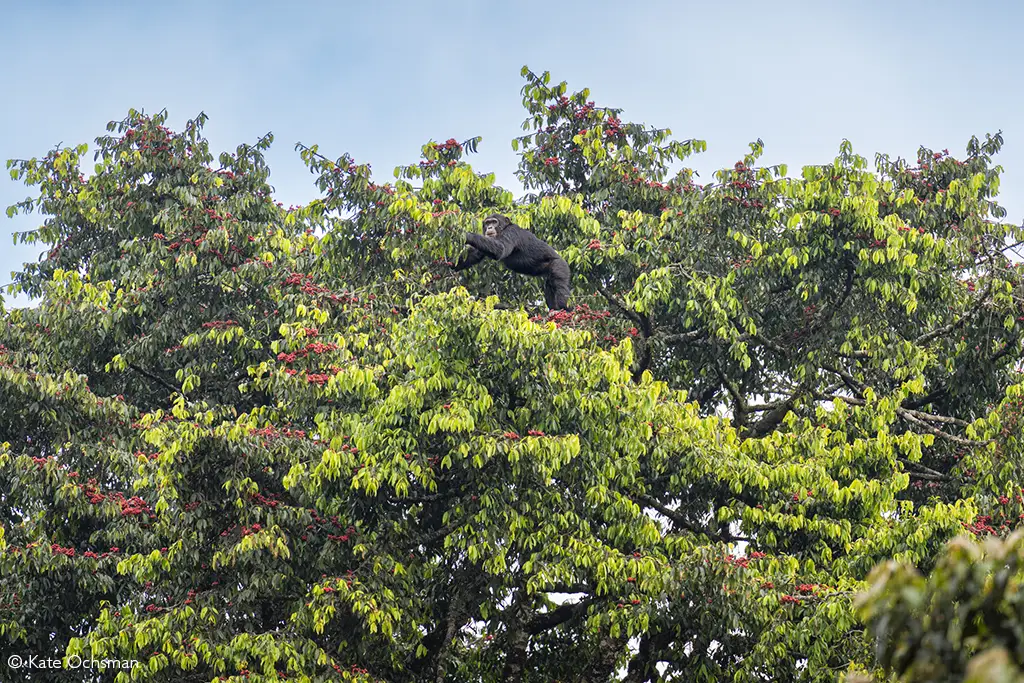
The habituation treks are known for being physically challenging and the visibility of the chimps difficult, so not many people opt for this experience. I loved it for many reasons and highly recommend it for anyone wanting to understand more about conservation and the science behind chimp trekking. But trekkers will do well to not expect close chimp encounters on a habituation trek.
Previously, I had always been a bit afraid of chimps, using words like, “they’re psychotic, crazy, nuts, violent.” Nearing the chimp house at the local zoo, or chimp enclosures at a wildlife sanctuary where I previously volunteered, a chill would run up and down my spine. The air would be filled with chaotic screaming; it was tense and scary. The chimps always seemed uneasy, agitated and ready to brawl.
I went into the wild chimp experience with the same trepidation.
That could not have been further from the truth.
Our first trek was in the afternoon before the chimps made their nests for the evening. I was the only guest with the guides, trackers and porters. The idea was to meet up with the trackers who monitor the chimps throughout the daylight hours and try to watch the chimps, or even get close.
Habituated animals, simply put, are used to people. They view humans neither with interest nor as a threat; habituation is neutrality. The process takes years to complete, as the trackers gradually spend time closer and closer to the chimps.
The terrain for trekking in Nyungwe was also quite different to Volcanoes National Park. Trekking Volcanoes for gorillas was essentially straight up and then straight down, while Nyungwe’s hills rise and fall.
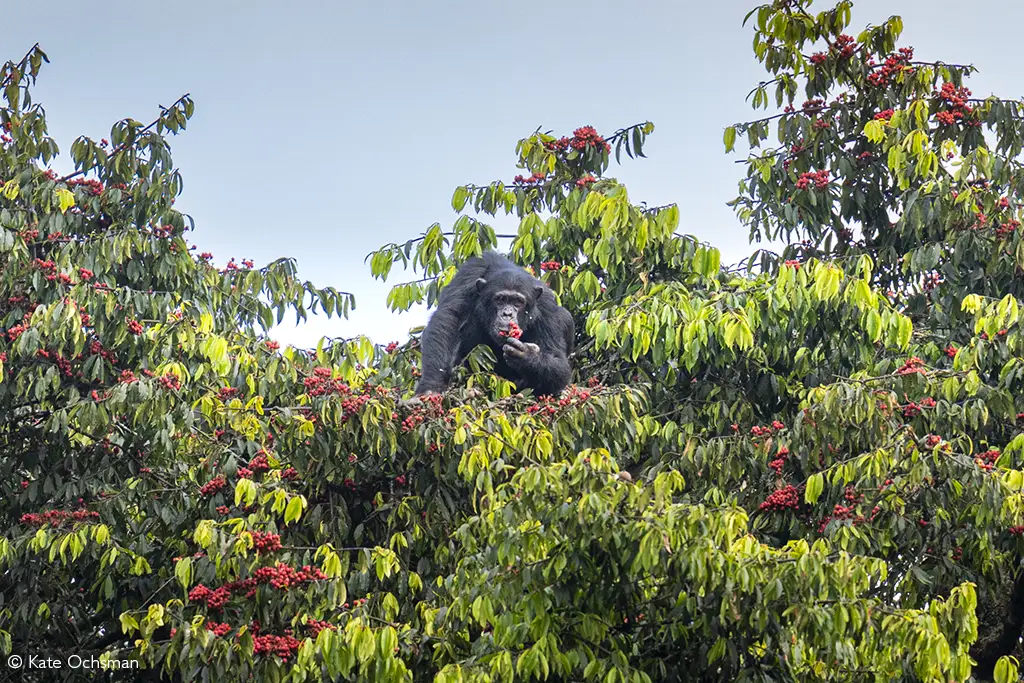
Huffing and puffing, we hauled ourselves up and down the landscape. The forest was incredibly dense, filled with massive trees and a fluffy green canopy. Red fruits hung like Christmas ornaments from some of the trees and were favoured by the chimps at this time of year. Wide dirt trails let us hike, but bushwhacking trails demanded we contort our bodies to reach the chimps.
The first chimp I saw was maybe 500 metres away. We would scour the trees for jolting branch movement in the distance. It was also very windy, and I had trouble differentiating whether faraway movement was caused by wind or chimps.
I consider myself pretty good at spotting wildlife, yet many times the tracker would point to a far-off tree and say, “See the chimp?”
My mouth would hang open.
“Huh?”
I struggled and laughed. My binoculars were a must, and I was finally able to see the darting, lightning-quick movement of a juvenile chimp running up the side of a tree. Literally. Running. UP the SIDE OF A TREE! WHAT?!
“Oh, they’re really fast!”
“Yes.”
As soon as we saw them, they also saw us from about 500 metres away, and they were gone. I shook my head in disbelief and confusion. “Wait, what just happened? Where’d they go?”
“This is habituation.”
I was shocked. This was not the violent animal I had imagined. This was an animal that wanted nothing to do with people. Saw my face and ran.
The trackers were pleased. For them, that was a successful sighting. Habituation is a drip-by-drip process in which the animals slowly become used to human presence. The stamina, determination and daily dedication of the trackers are impressive. These long-term conservation efforts eventually allow visitors to see chimpanzees and gorillas without the animals immediately fleeing.
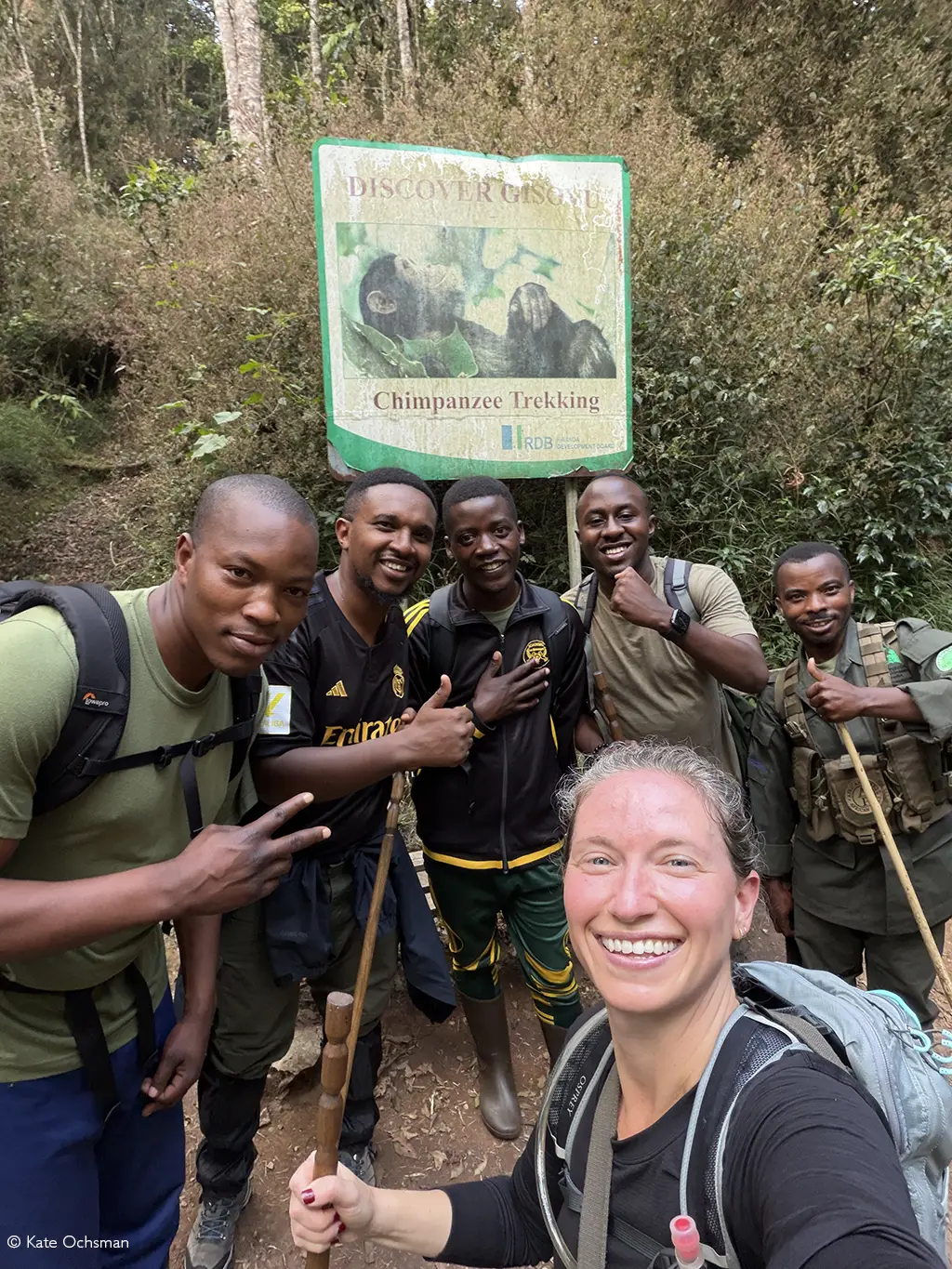
The following morning, we woke early for the second habituation trek. By the time we made it to roughly the same spot as the day before, the daily trackers had already found and been following some members of the chimp community.
This time, we got much closer and actually spent time watching. It was such a delight. We were maybe 50 metres away from an old male feeding on red fruits at the top of a tree. As we were at the top of the hill, he was slightly above eye level from us, so we had good visibility and didn’t have to crane our necks to see.
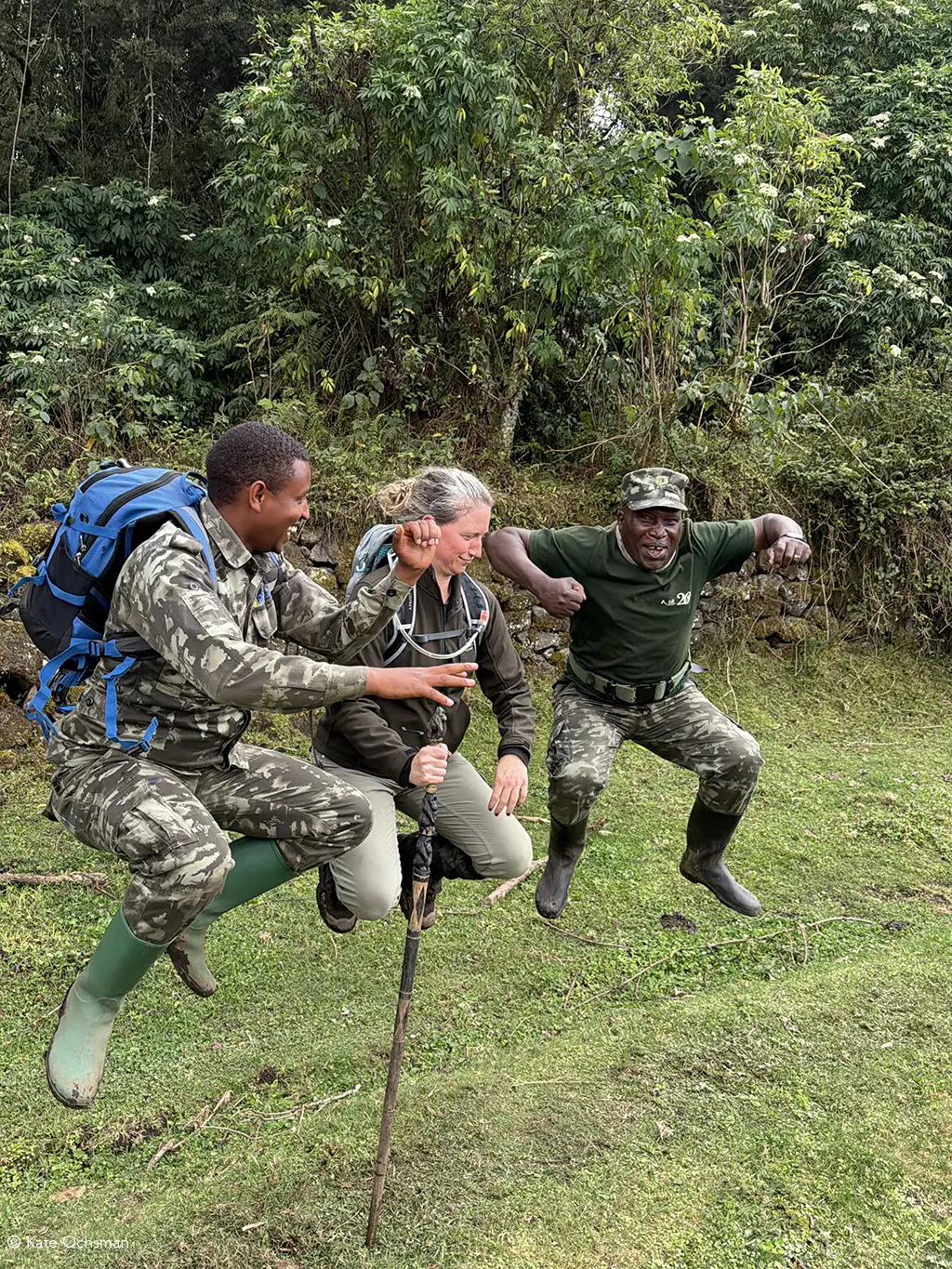
We watched for 30 minutes. One of my favourite memories is the camaraderie among the trackers. They joked and teased one another in Kinyarwanda and showed me their app-based data collection on the chimps. I brought out my snacks, and we all nibbled while watching the chimp.
I’m glad I did the habituation treks. They let me peek behind the curtain and better understand how the chimp encounters that visitors experience become possible.
To get to our next location in the centre of the park, we had to drive around Nyungwe’s western boundary. There was no drivable road through the centre, and much of the park is backcountry.
After a long drive, we pulled up at Munazi Lodge, a new lodge with spacious A-frame chalets for guests. It was so forest dreamy! I ate and slept well that night, cosy in my home in the middle of the forest.
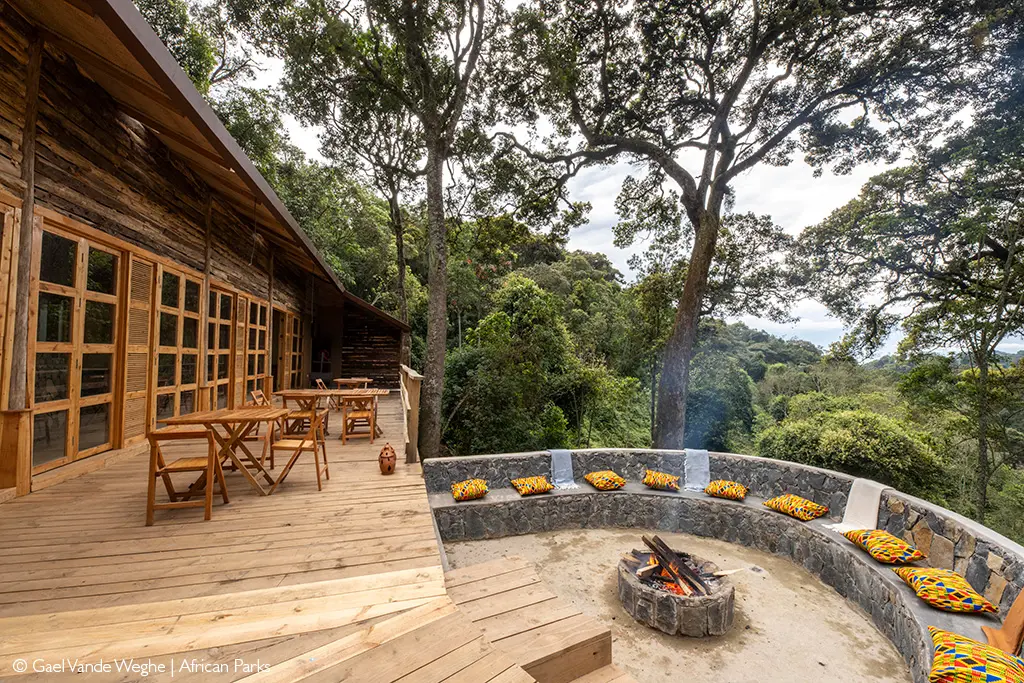
For my final trek, which was to be my seventh ape trek in eight days, we drove two hours to visit an island forest called Cyamudongo, home to a habituated chimp community. The park warden chose this community rather than the one near Munazi because he believed it would offer the best opportunity for close photographs.
It was a long drive, but it was worth it.
The trek was so easy in comparison to everything else I’d done in Rwanda in the week before. Basically, 30 minutes down a steep hill, and we found the chimps, thanks to the trackers.
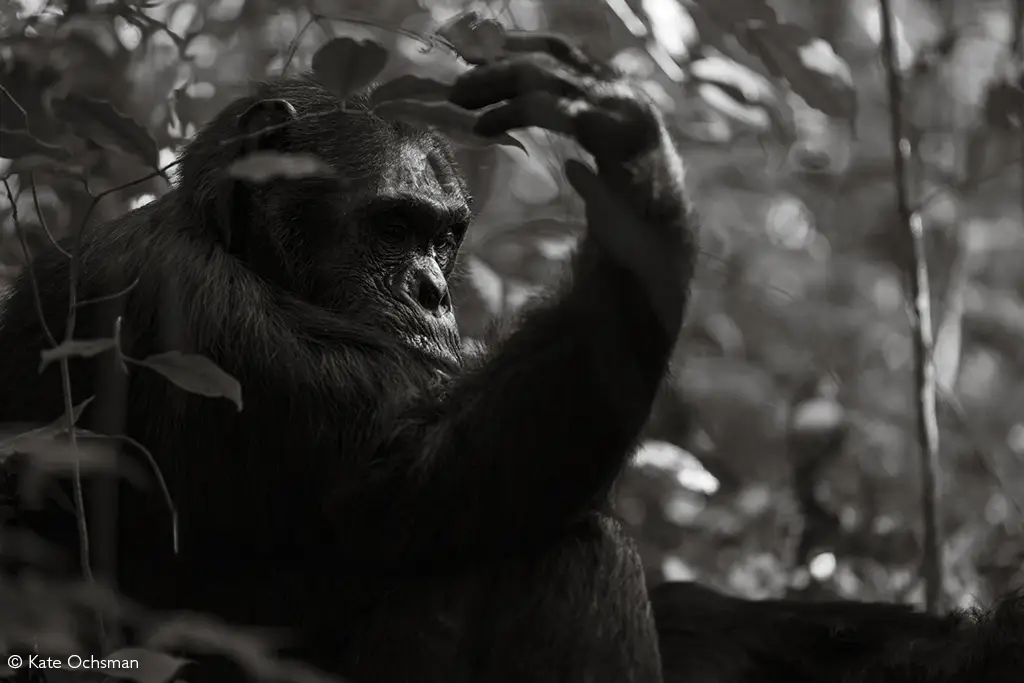
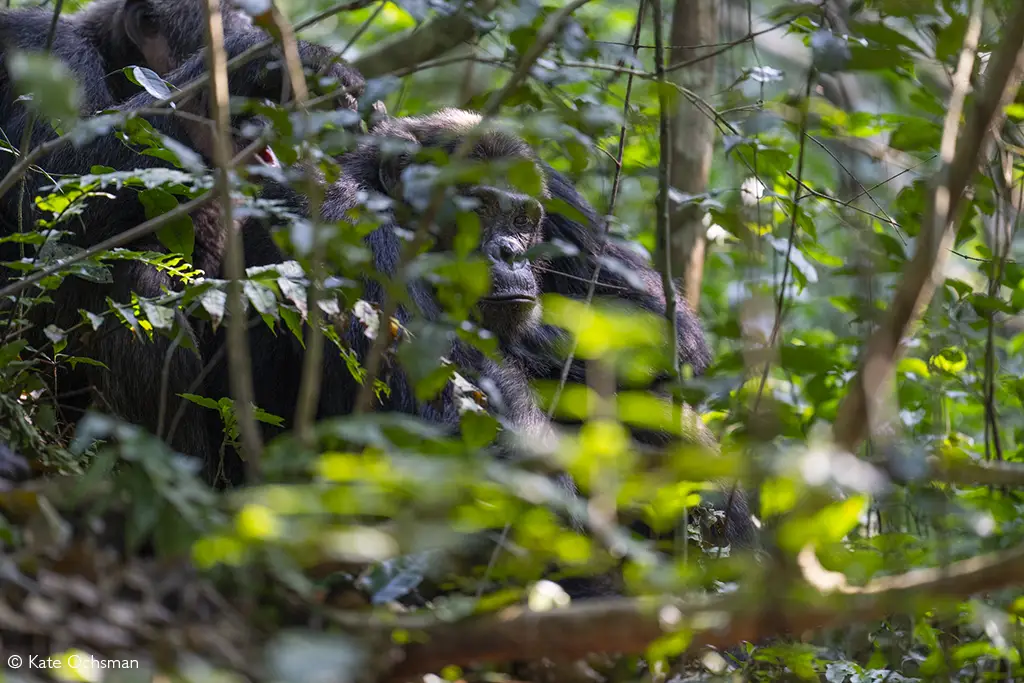
For about an hour, I sat roughly nine metres from four male chimps grooming one another on the ground. It was relaxing, sweet and calm. Again, it was a very different perspective from my experiences of chimps in captivity.
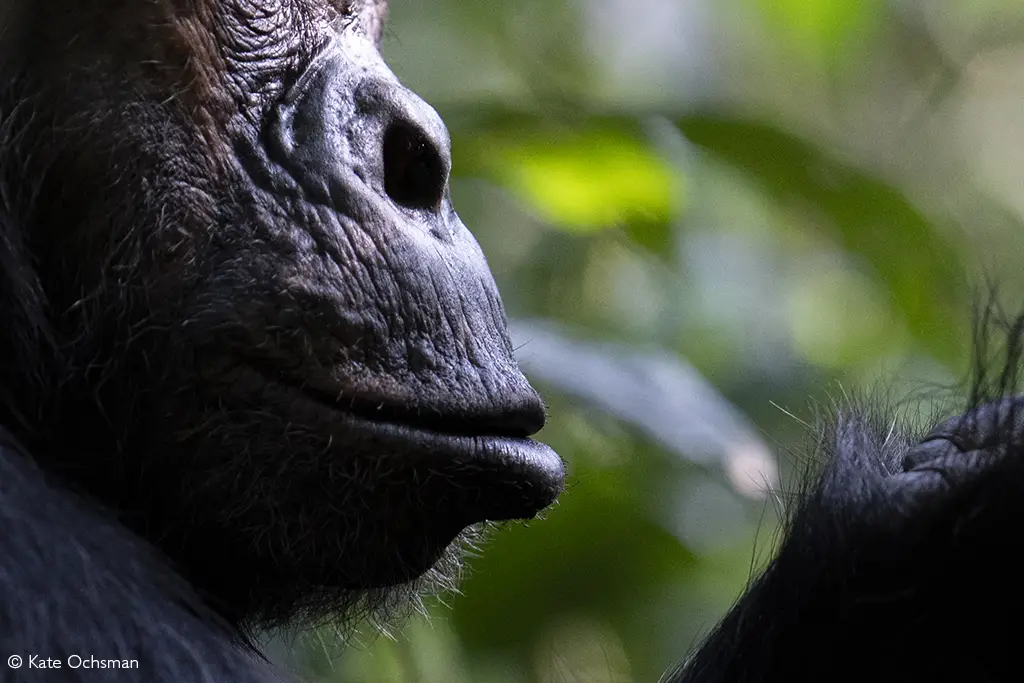
Since the chimps were close and mostly still, I was able to make some photographs. The foliage was dense, and I was constantly negotiating leaves and twigs, but it was fun.
After that short trek, we drove seven hours back to Kigali to catch my flight the next day. In hindsight, I would absolutely have spent an extra night at Munazi. I loved it that much, and it would have been nice to decompress and process the seven great ape treks I had done and my experiences in this wonderful country.
But I will most certainly be back.
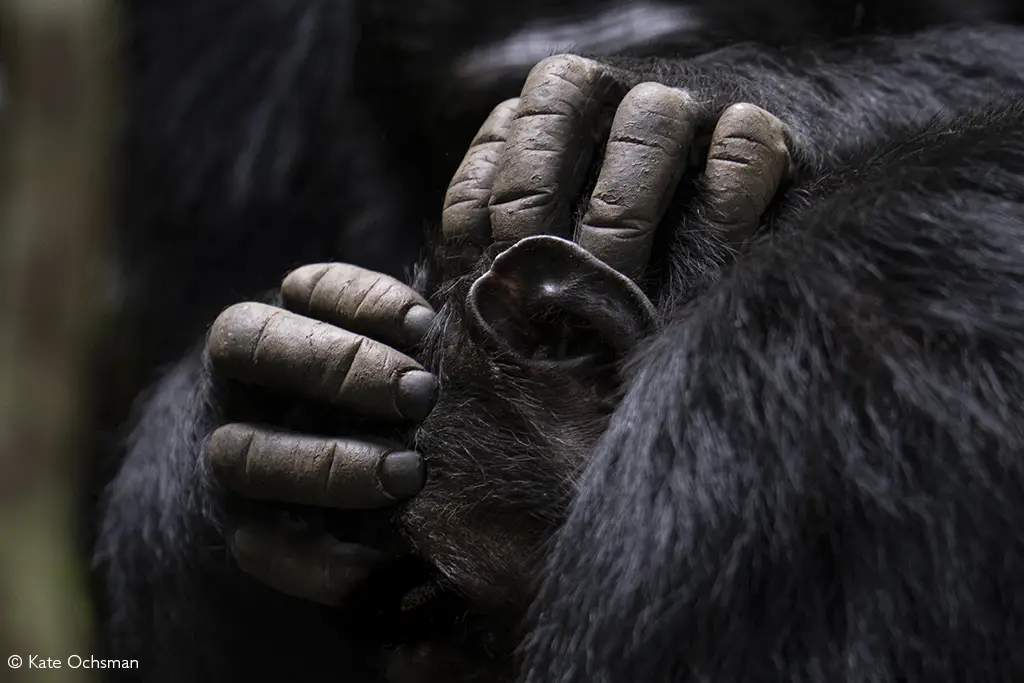
I absolutely loved my time in Rwanda. I met brilliant, kind, funny and passionate people, felt incredibly well taken care of and safe, and had experiences with the great apes that surpassed my girlhood dreams.
Rwanda’s great ape experiences also showed me two sides of conservation: the long-established gorilla tourism model in Volcanoes National Park and the ongoing chimp habituation work in Nyungwe. Seeing both gave me a much better understanding of the work behind the wildlife encounters visitors so often experience only at the end of that process.
I cannot wait to be back.
About Kate Ochsman
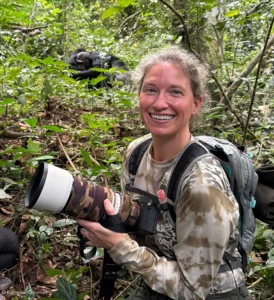 Kate Ochsman is an award-winning wildlife photographer whose work has been exhibited and collected worldwide. Kate travels the world photographing iconic mammals for her fine-art photography collection, Animus Lux.
Kate has taught for Yellowstone Forever, photographed for the Northern Rockies Conservation Cooperative, and helped raise over $2 million through Prints for Wildlife, speaking along the way on ethics, storytelling, art, nature, and conservation.
You can acquire and view Kate’s fine art photography at her website www.kateochsman.com and follow her wildlife adventures on Instagram via @Kateochsman here
Further reading
- Here is the ultimate guide to safaris in Rwanda.
- Gorilla trekking is a guided hike of one to six hours to spend a single, regulated hour with a habituated mountain or lowland gorilla family. Here’s everything you need to know about gorilla trekking.
- Chimpanzee trekking is an immersive, guided wildlife experience that involves tracking and observing chimpanzees in the wild. Here’s all there is to know about chimpanzee trekking.
- Want to know more about mountain gorillas? Read more about the species here.
- Chimpanzees share roughly 98–99% of human DNA and live in complex forest troops across western and central Africa. Read more about chimpanzees here.
- Want to photograph mountain gorillas like a pro? Read our gorilla photography guide.
- Munazi Lodge is a fully catered lodge in Rwanda’s Nyungwe National Park that caters for chimpanzee trekking, bird watching and mountain forest hiking. Book your stay at Munazi Lodge here.
- Watch this inspiring video to find out more about chimpanzee trekking in Nyungwe National Park.
- Planning a chimp-trekking safari? Here’s our guide to how many days you will need for chimp trekking.
To comment on this story: Login (or sign up) to our app here - it's a troll-free safe place 🙂.