


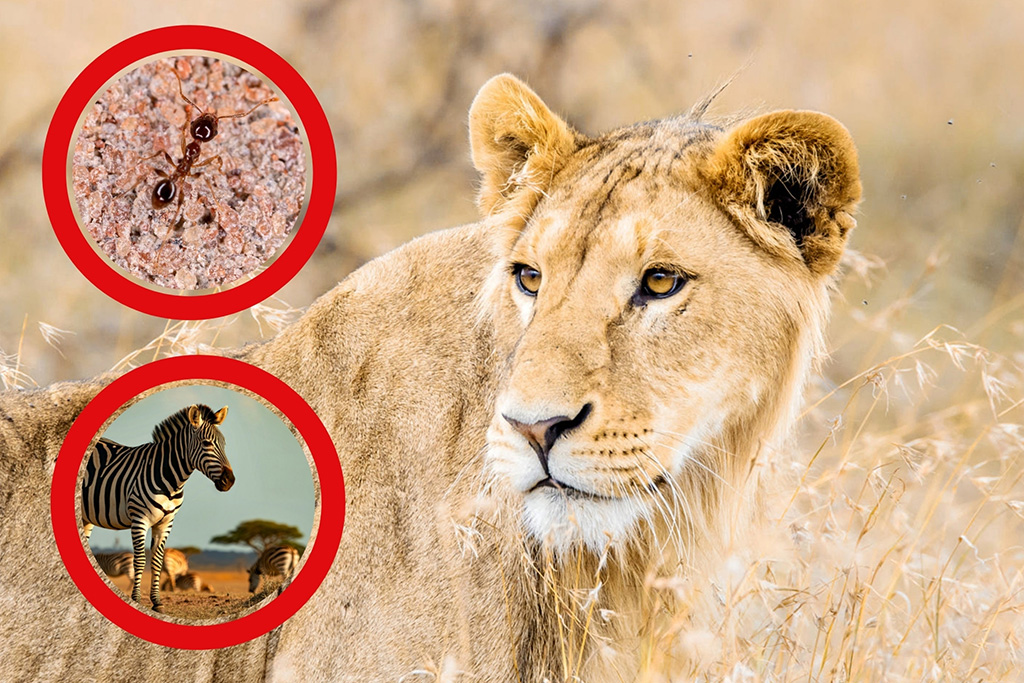
- Big-headed ants overwhelm native defenders, reshaping lion habitat by exposing whistling-thorn trees to elephants.
- Elephants damage unprotected trees five to seven times more in invaded areas.
- Tree loss increases visibility, transforming dense savannah into open plains.
- Lions struggle to ambush zebra, with kills far less likely in areas with higher visibility
- Lion numbers stay stable by switching prey, increasingly selecting more dangerous prey such as African buffalo.
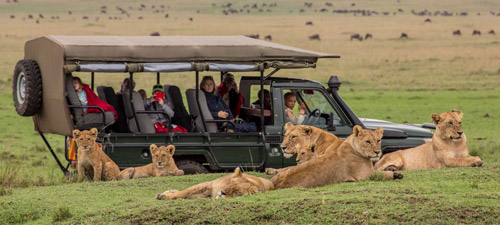
 Want to see lions on an African safari in Laikipia? Check out our safari ideas to Laikipia here, or let our travel experts plan the perfect African safari for you
A study from Kenya has documented how an invasive insect, the big-headed ant, is reshaping Laikipia’s savannah landscape, with measurable consequences for some of the region’s most iconic species. Beyond altering the appearance of the landscape, this has long-lasting implications across the ecosystem – from ants, to trees, to elephants, and finally to apex predators. The research shows that the spread of the big-headed ant is indirectly reducing lions’ ability to hunt their primary prey, the plains zebra, by altering the savannah.
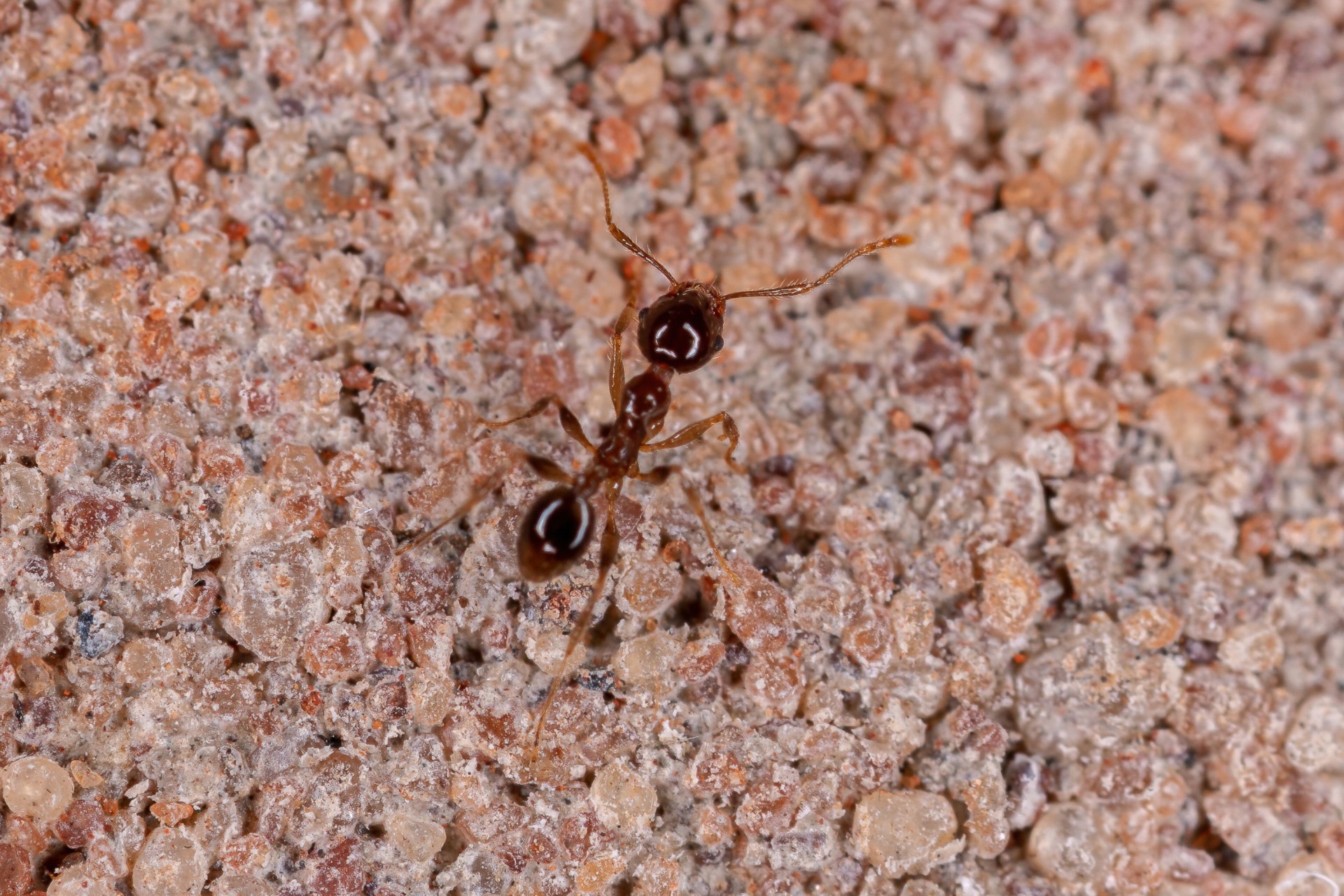
The big-headed ant
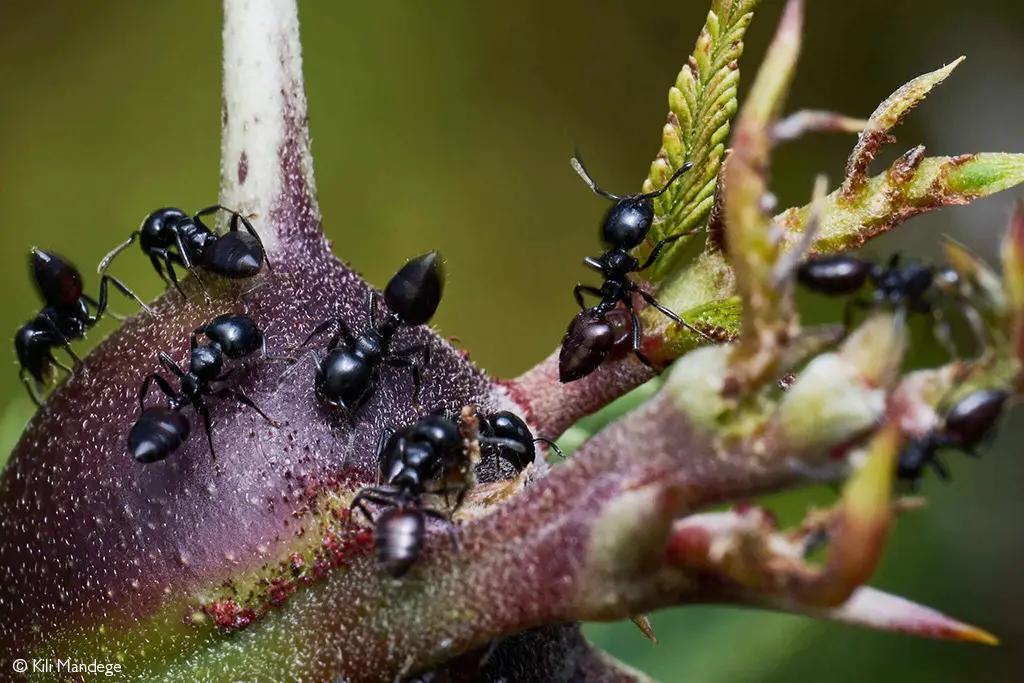
The big-headed ant, Pheidole megacephala, is native to islands in the Indian Ocean but has spread widely through global trade and human movement. In Laikipia, Kenya, it has invaded large areas of savannah dominated by the whistling-thorn tree (Vachellia drepanolobium).
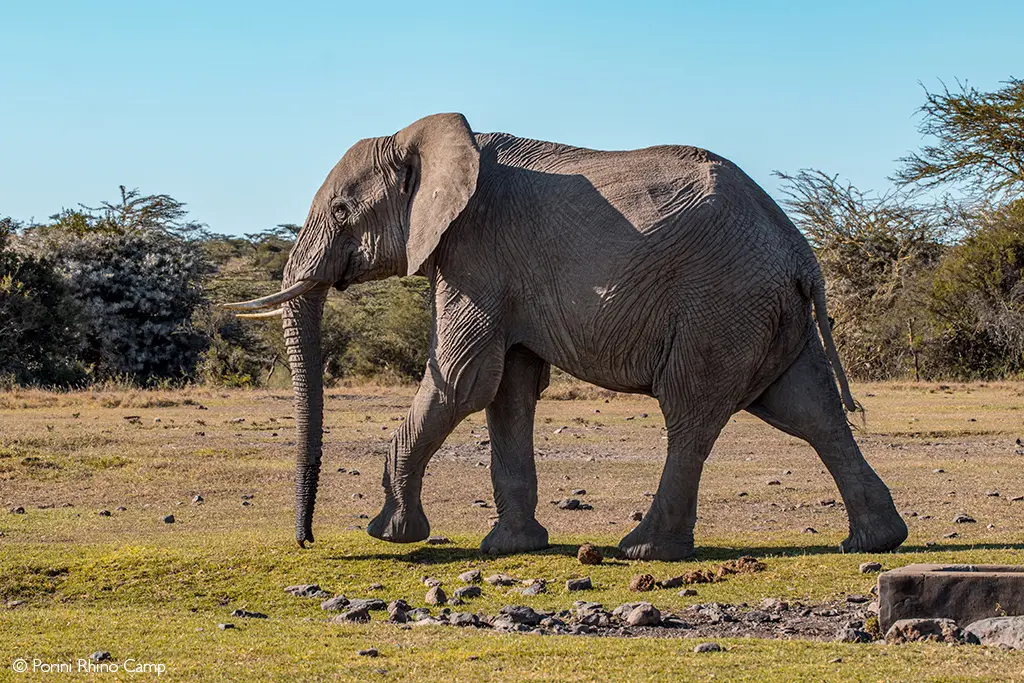
These trees rely on a mutualism with native acacia ants of the genus Crematogaster. The trees provide nectar and shelter, and in return, the ants aggressively defend them. The ants physically defend the tree by swarming, biting, and harassing herbivores that attempt to browse it. This defence is particularly effective against elephants. When elephants browse whistling-thorn trees that do not play host to these ants, they can break branches or knock over entire trees.
The study shows that where big-headed ants arrive, they “numerically overwhelm and completely exterminate Crematogaster ants”. Unlike the native ants, the invaders do not protect the trees. As a result, elephants browse and damage trees at “five to seven times the rate” seen in uninvaded areas.
From tree loss to open landscapes
Whistling-thorn trees are a foundation species in much of East Africa’s savannah. In some areas, they account for more than 70% of woody plants, and often far more. Their density shapes how open or closed the landscape is.
As elephants damage unprotected trees, tree cover declines and visibility increases. Experimental plots in the study showed that after three years, visibility in invaded areas was 2.67 times higher than in comparable uninvaded plots where elephants were present.
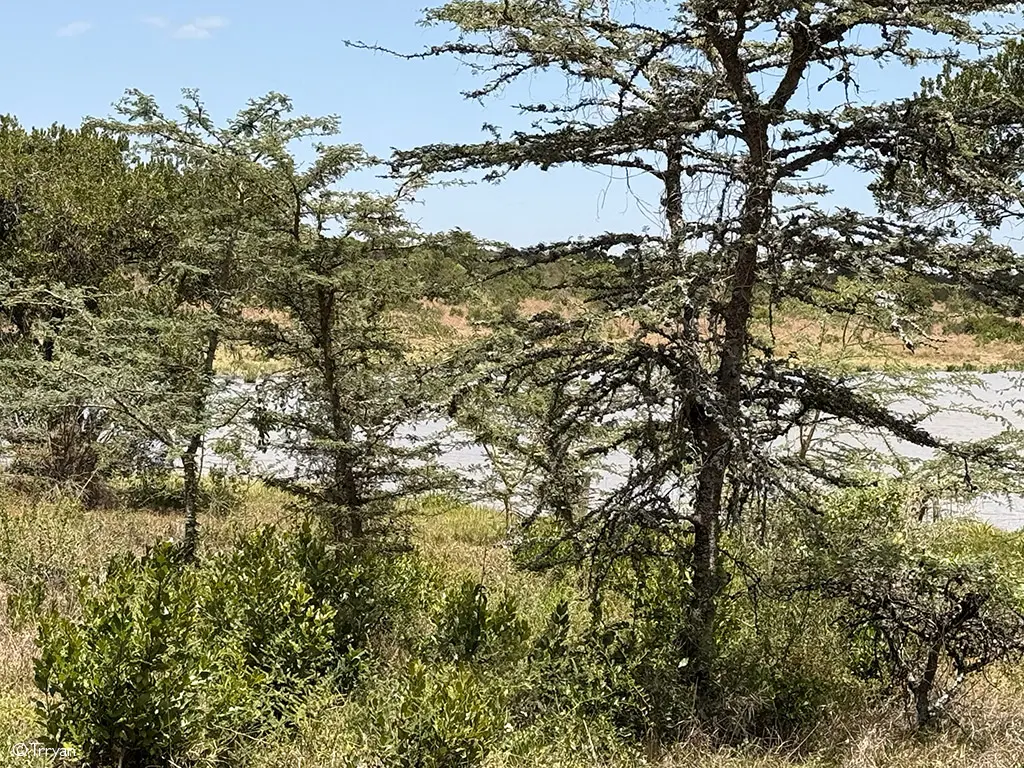
The study describes a roughly two-decade cascade that began when the big-headed ants arrived in Laikipia in the early 2000s and started spreading at about 50 metres per year, killing native Crematogaster ants. Over the longer term (2003–2020), the extent of dense whistling-thorn habitat steadily declined, transforming parts of the savannah from thick, low-visibility woodland into more open, high-visibility landscapes.
Why lions rely on visibility
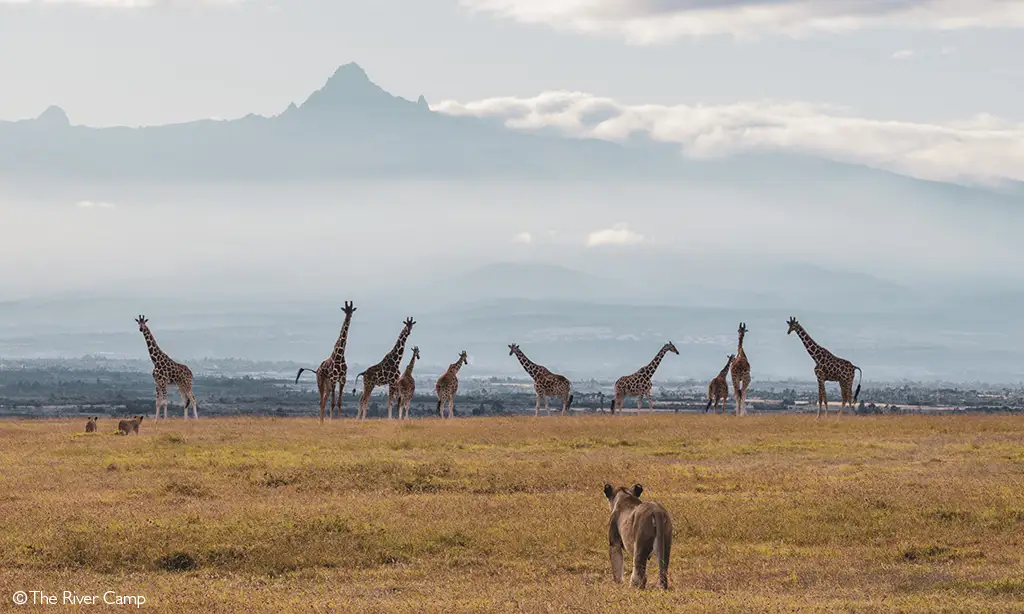
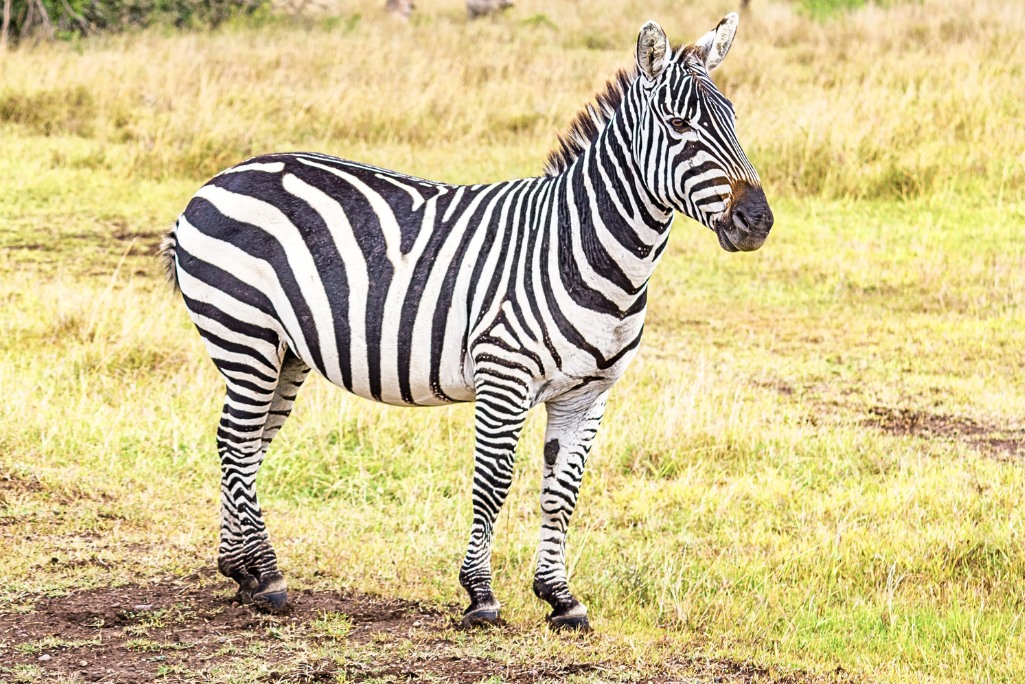
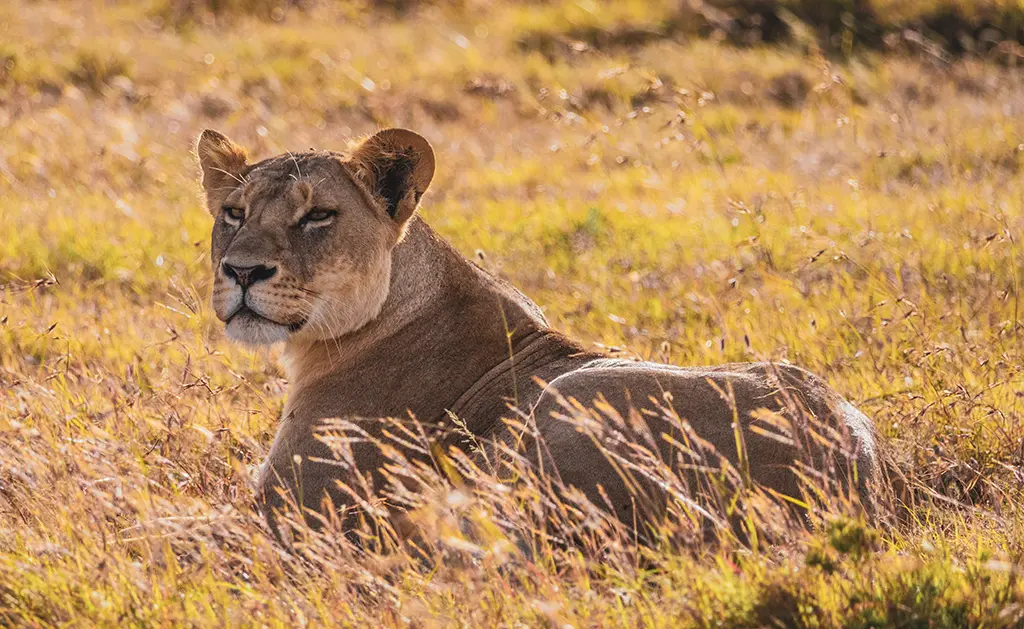
Lions in this system in Laikipia are ambush predators. They rely on vegetation cover to approach prey closely before attacking. Plains zebra, which make up around half of the wild ungulates killed by lions at Ol Pejeta Conservancy, are particularly sensitive to visibility because early detection of predators increases their chance of escape.
The researchers tracked lions using GPS collars, mapped zebra densities, and investigated confirmed kill sites between 2003 and 2020. They found that zebra kills were far less likely in areas with higher visibility.
At typical visibility levels, “the probability of zebra kill occurrence was 2.87 times higher in uninvaded than in invaded savannah”. In practical terms, more open landscapes created by ant-driven tree loss reduced lions’ effectiveness at catching zebra. Importantly, the study found no evidence that zebras simply avoided invaded areas or that lions shifted their activity to denser vegetation. Instead, hunting success itself declined where cover was reduced.
Lion numbers remain stable
Despite killing fewer zebras, lion numbers at Ol Pejeta have remained stable over more than a decade of monitoring. The study explains this stability through prey switching.
As zebras became harder to catch, lions increasingly hunted African buffalo, a larger and more dangerous prey species. From 2003 to 2020, the proportion of lion kills of zebra declined from 67% to 42%, while buffalo increased from 0% to 42% of recorded kills.
This shift occurred even though zebra and buffalo population densities did not show clear directional changes over the period measured. The change reflects altered catchability rather than prey abundance.
Prey switching is a known ecological mechanism that can stabilise predator populations, but it carries costs. Buffalo hunts typically involve larger groups of lions and a higher risk of injury, and the long-term consequences of increased reliance on such prey remain uncertain.
Beyond the ants
The study’s central message is not only about lions or ants, but about how invasive species can trigger “hidden but very serious” disruptions. By breaking a single mutualistic relationship, the big-headed ant altered tree cover across the landscape – that physical change reshaped predator-prey interactions at the top of the food chain.
The authors caution that the invasion is ongoing, spreading at roughly 50 metres per year, and that the system has not yet reached equilibrium. While lions have so far compensated through prey switching, “the degree to which such stability can be maintained as big-headed ants advance across the landscape” remains unknown.
No management solution is proposed in the study. Instead, it serves as an alarm. The full consequences for lions, their prey, and the broader savannah ecosystem are still unfolding.
In this case, a small ant has demonstrated the interconnectedness of ecological systems and how readily those connections can be disrupted.
Reference
Douglas N. Kamaru et al., Disruption of an ant-plant mutualism shapes interactions between lions and their primary prey. Science 383,433-438 (2024). DOI:10.1126/science.adg1464
Further reading
- Why Zakouma’s lions are eating better: Improved management in Zakouma, Chad, has led to healthier prey populations. Lions now favour larger species & prides are getting bigger.
- Are fenced lions happy? Does lion pride behaviour change between fenced & open systems? Researchers monitoring lions in Kruger, Pilanesberg & more aim to find out
To comment on this story: Login (or sign up) to our app here - it's a troll-free safe place 🙂.