


For centuries, giraffes were thought to be a single species. Now, after years of debate and groundbreaking research, science has officially recognised four distinct giraffe species. This historic IUCN decision reshapes how the world will conserve Africa’s tallest giants.
The classification of giraffes has proved surprisingly contentious over the past few decades. For centuries, all giraffes were considered a single species, with nine subspecies officially recognised. However, groundbreaking research, significantly advanced by the Giraffe Conservation Foundation (GCF) and the Senckenberg Biodiversity and Climate Research Centre (SBiK-F), has now confirmed what scientists have suspected for over a decade: there are not one, but four distinct species of giraffe, and seven subspecies. This has been formally recognised in a historic International Union for Conservation of Nature (IUCN) decision. This landmark reclassification is set to reshape giraffe conservation efforts across Africa.
This isn’t taxonomy for taxonomy’s sake. Treating giraffe as four species sharpens conservation priorities, unlocking species-specific action where it’s most needed. As the Giraffe Conservation Foundation puts it, “each giraffe species faces different threats,” so management can now be tailored accordingly, and with more urgency.
A decade of giraffe discovery and debate
The journey to this pivotal decision began over a decade ago. In 2016, collaborative research involving the GCF and SBiK-F first suggested a four-species division based on genetic data. The data showed deep divergences between giraffe populations.
Dr. Axel Janke, a geneticist at SBiK-F and Goethe University, expressed surprise at the “large genetic differences in giraffe” given their seemingly limited morphological and coat pattern variations.
Research showed that these lineages diverged roughly 230–370 thousand years ago: Middle Pleistocene timing comparable to well-known mammal splits. One recent genome study even shows that reticulated giraffe carry ancestry from historical admixture between northern and southern giraffe ~200,000 years ago: ancient mingling that didn’t erase species boundaries.
This initial study, however, sparked considerable debate over the correct classification. Scientists have historically proposed anything from two to nine different giraffe species. The re-evaluation of giraffe taxonomy was critical, particularly as the IUCN had previously recognised only one giraffe species, albeit with nine subspecies, each with a separate conservation status.
And so, the IUCN Species Survival Commission’s Giraffe and Okapi Specialist Group (GOSG) Taxonomic Task Force, launched in 2024, embarked on an extensive review.
Prof. Janke and the SBiK-F, together with GCF under Dr Julian Fennessy, spearheaded a continent-wide genomic study that saw researchers collect tissue samples from giraffe populations across Africa, even in politically unstable and remote regions such as Chad, Niger, and South Sudan.

The scientific evidence was compelling, relying on multiple lines of investigation:
- Extensive genetic data: Analyses of nuclear and mitochondrial DNA revealed large differences between several giraffe lineages – strong evidence of multiple species. These genetic divergences were profound, so much so that “the differences between giraffe species are as distinct as those between brown and polar bears,” according to Prof. Janke.
- Morphological differentiation: Studies of skull structure and bone shape also showed notable differences across regions, complementing the genetic findings.
- Biogeographic assessments: Researchers also considered the role of natural barriers, such as major rivers, rift valleys, and arid zones, which could have contributed to the evolutionary isolation of these distinct populations.
Natural barriers such as the Nile River, Lake Victoria, the Kunene and Zambezi Rivers, and climatic/phenological divides help explain why these lineages remained distinct over evolutionary time.
Together, these robust findings provided the scientific support needed to raise certain giraffe populations to full-species status, acknowledging their unique evolutionary histories. “To describe four new large mammal species after more than 250 years of taxonomy is extraordinary,” remarked Prof. Janke, “Especially for animals as iconic as giraffe, which roam Africa in plain sight”.
“This landmark taxonomic revision by the IUCN Giraffe and Okapi Specialist Group reflects the best available science and provides a globally standardised framework to inform conservation,” stated Michael Brown, Co-Chair of the IUCN GOSG.
 Want to see giraffes on an African safari? Check out our safari ideas here, or let our travel experts plan the perfect African safari for you by clicking here.
Africa’s four giraffe species
The report officially recognises four distinct giraffe species, each with its own subspecies:
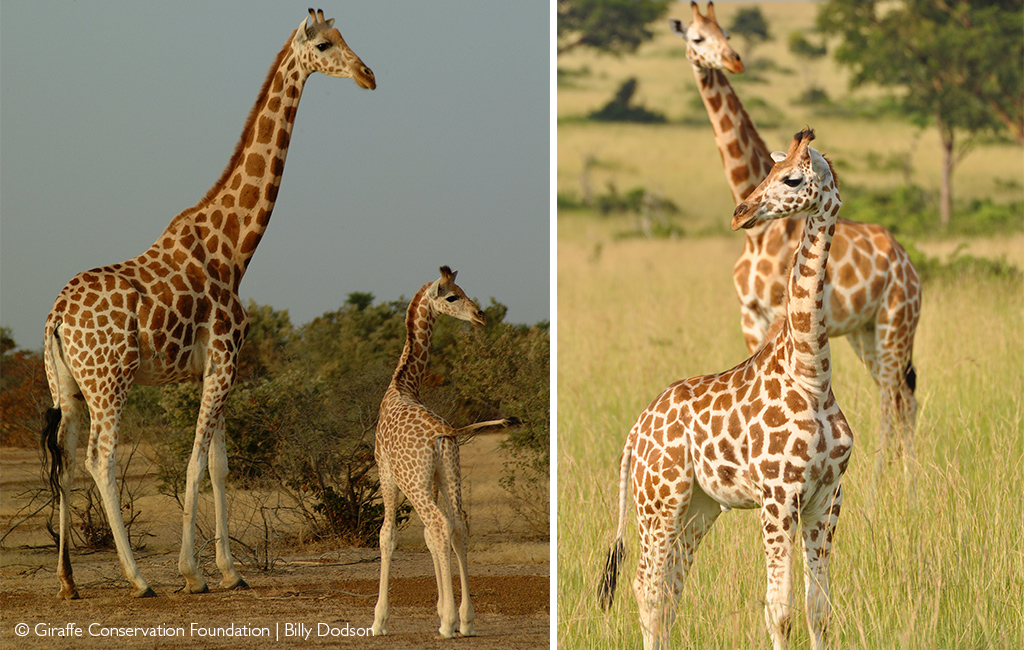
- Northern giraffe (Giraffa camelopardalis) – With approximately 7,037remaining, this species is divided into three species: West African (G. c. peralta), Kordofan (G. c. antiquorum), Nubian (G. c. camelopardalis).
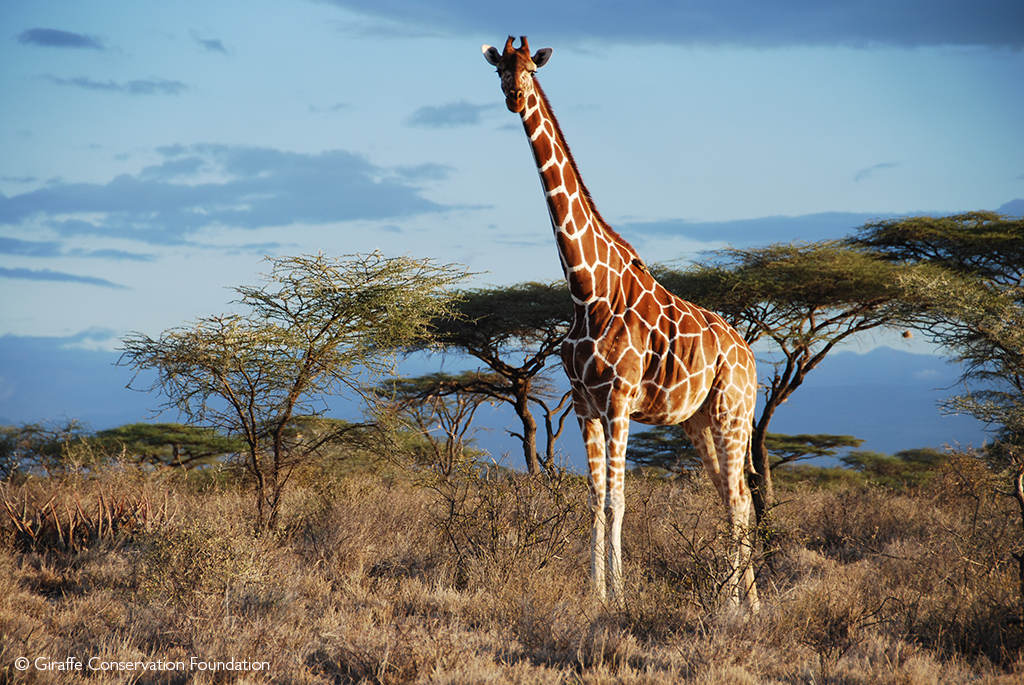
- Reticulated giraffe (Giraffa reticulata) – With around 20,091 remaining, this species currently has no proposed subspecies.
- Masai giraffe (Giraffa tippelskirchi) – Approximately 43,926 individuals remain, and the study suggests the recognition of the following as subspecies: Masai s.s. (G. t. tippelskirchi), Thornicroft’s (G. t. thornicrofti).
-
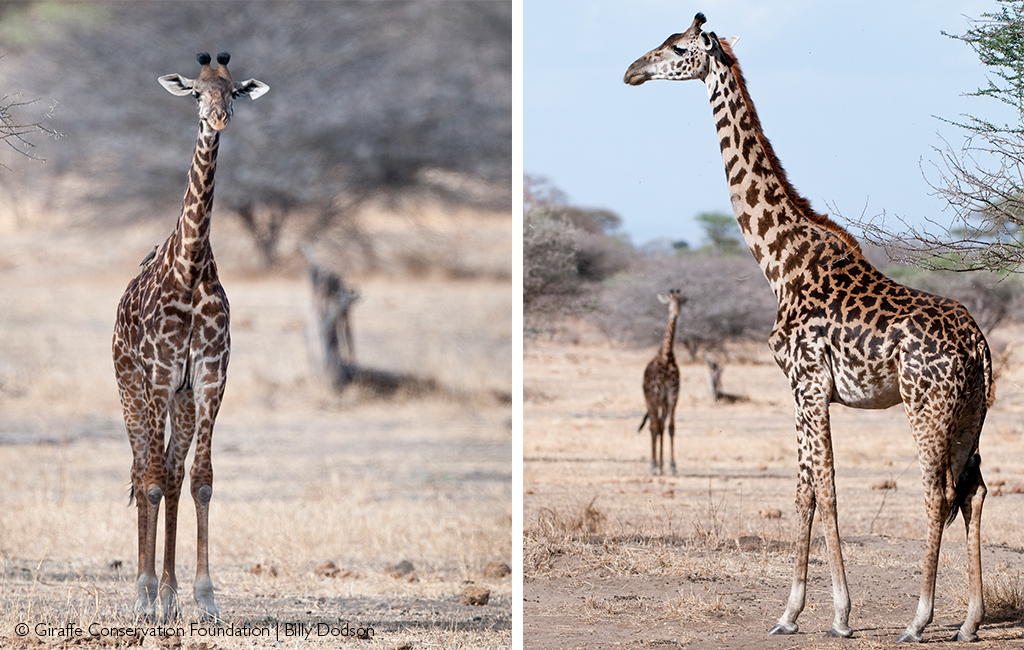
Masai giraffes Southern giraffe (Giraffa giraffa) – The most common, with around 68,836 remaining, it has two subscpecies: South African (G. g. giraffa), and Angolan (G. g. angolensis).

Why this matters for the conservation of giraffes
This isn’t just an academic exercise; it’s a critical turning point for conservation. Recognising four species offers a more nuanced understanding of the unique conservation threats and opportunities each of these distinct taxa faces across the diverse African landscapes they inhabit. As Dr Fennessy emphasised: “This recognition is more than symbolic… Each giraffe species faces different threats, and now we can tailor conservation strategies to meet their specific needs. It gives African countries and the global community the tools to act, before it’s too late”.
The IUCN will now assess each species separately for the Red List. This will also influence national and international conservation policies aimed at preventing giraffe decline. By understanding giraffe taxonomy more precisely, conservationists are better equipped to assess their status and implement effective strategies.

While the latest population assessments for these giraffe species showed current increases for northern, reticulated and southern giraffe, and a stable Masai giraffe population, IUCN assessments look at long timeframes (over a period of three generations or 10 years) and consider factors such as fragmented ranges, and ongoing threats such as poaching and habitat loss when assigning status.
Early signals suggest three of the four may qualify as threatened, reflecting declines and fragmentation that were easy to underestimate when numbers were pooled. This highlights the urgency of the situation. As Stephanie Fennessy, GCF’s Executive Director, profoundly stated: “What a tragedy it would be to lose a species we’ve only just discovered”.

The future of Africa’s giraffes
This historic decision underscores the importance of combining intensive fieldwork with cutting-edge genetics to drive real-world conservation outcomes. Taxonomy, as the GOSG reminds us, is an evolving science, and as new evidence emerges, classifications will continue to be reassessed.
For now, this landmark reclassification lays a crucial foundation for protecting Africa’s magnificent, long-necked giants.
Further reading on giraffes
- The giraffe is a wonder of evolution, and a vital part of Africa’s ecosystems. Read all there is to know about the planet’s tallest creature here.
- Why do giraffes have such long necks? Various studies question whether feeding or mating played the bigger role in giraffe neck evolution. Read about Doug Cavener’s exploration into the driving force behind giraffe-neck evolution here, and Rob Simmons exploration into giraffe evolution’s tallest debate
- Under pressure – genetic research on giraffes reveals evolutionary secrets of how they cope with high blood pressure and maintain bone density. Read about the pieces of the giraffe evolution puzzle here.
- Do giraffes choose their social groups based on appearance? A recent study investigates whether giraffes form bonds based on spot shape
To comment on this story: Login (or sign up) to our app here - it's a troll-free safe place 🙂.