



Nearly a million flamingos counted in Lake Logipi

- Aerial surveys reveal a population of an estimated 737,000 lesser flamingos in Kenya’s remote Suguta Valley.
- Lake Logipi hosts up to half East Africa’s lesser flamingo population.
- Novel aerial imaging methods enabled unprecedented, accurate wildlife population counts.
- Climate change makes Logipi a critical refuge as other alkaline lakes decline.
- Community-led conservation links biodiversity protection with rural development and peace-building.
 Want to see flamingos on an African safari? Check out our safari ideas here, or let our travel experts plan the perfect African safari for you
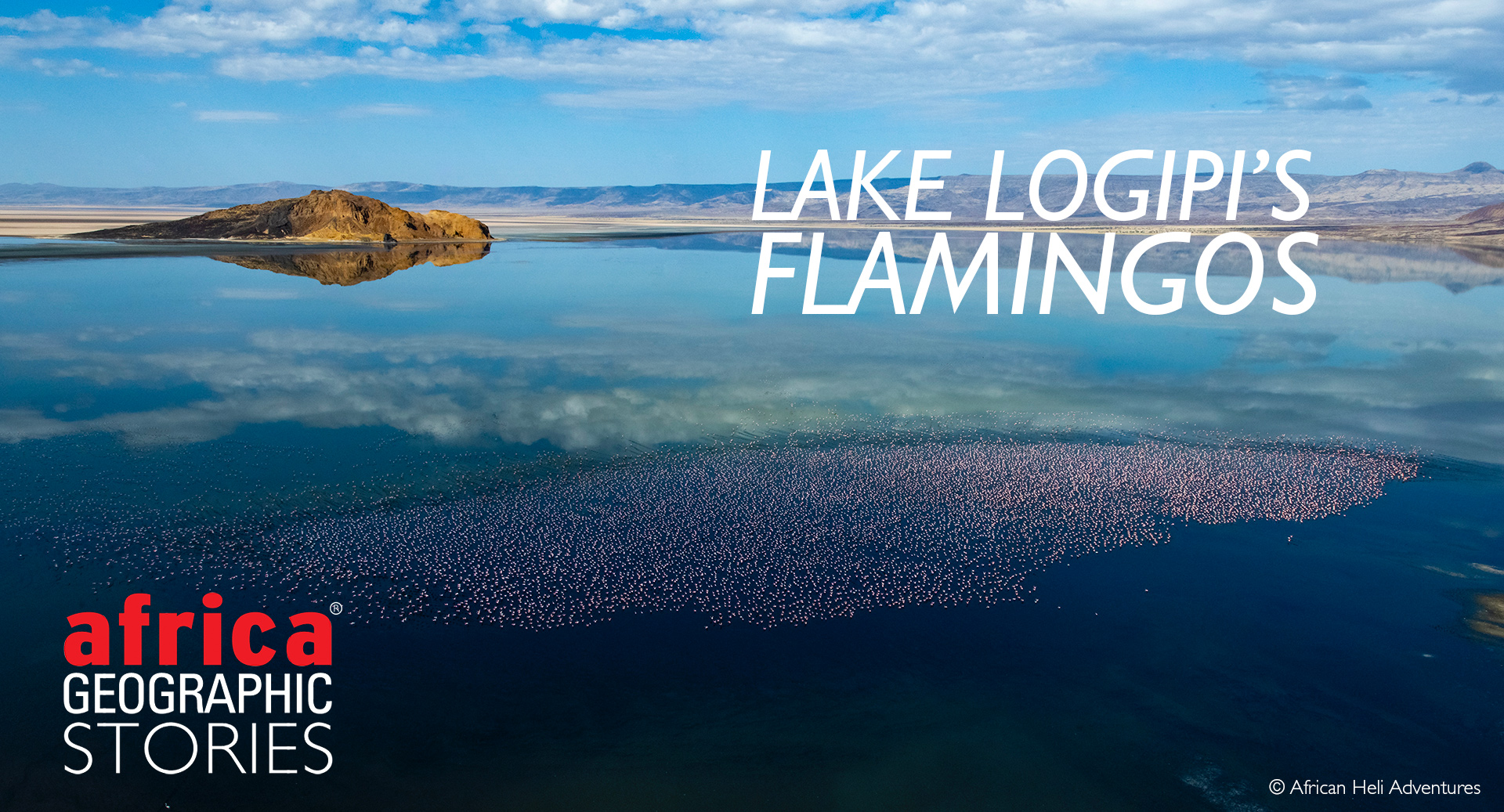
For more than half a century, Kenya’s Suguta Valley was dismissed as empty – too remote, too harsh, too insecure to matter. Then, in late 2024, a routine aerial survey over an alkaline desert lake rewrote that story in a single, astonishing sight: nearly a million flamingos, gathered in a vast pink city on Lake Logipi, successfully breeding in one of the least-studied landscapes in East Africa. What was once considered a biological blank spot is now emerging as a place of global conservation importance – and a critical refuge at a time when many of the region’s iconic flamingo lakes are faltering.
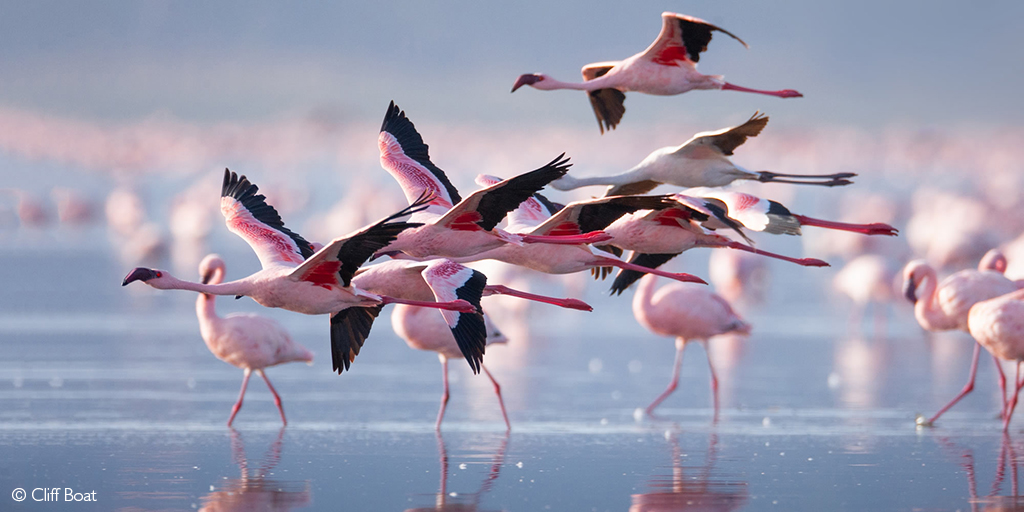
In the remote, arid stretches of Kenya’s northern Rift Valley lies Lake Logipi, an alkaline desert lake within the rugged expanse of the Suguta Valley. For decades, its biodiversity significance remained largely unknown; the valley’s harsh climate, extreme remoteness and a history of insecurity meant that no systematic surveys had been conducted here for over 50 years. However, that changed in late 2024, when an aerial survey revealed that the lake hosted an estimated 737,000 lesser flamingos, and, remarkably, the massive congregation has persisted through most of 2025, with evidence of successful breeding.
“This survey is a landmark,” says Fleur Ng’weno, a prominent Kenyan ornithologist. “Almost a million lost flamingos have been found.” Indeed, the fact that such vast numbers of birds went unnoticed highlights how much remains potentially hidden in one of Kenya’s most remote deserts.

A survey of lesser flamingos, 50 years in the making
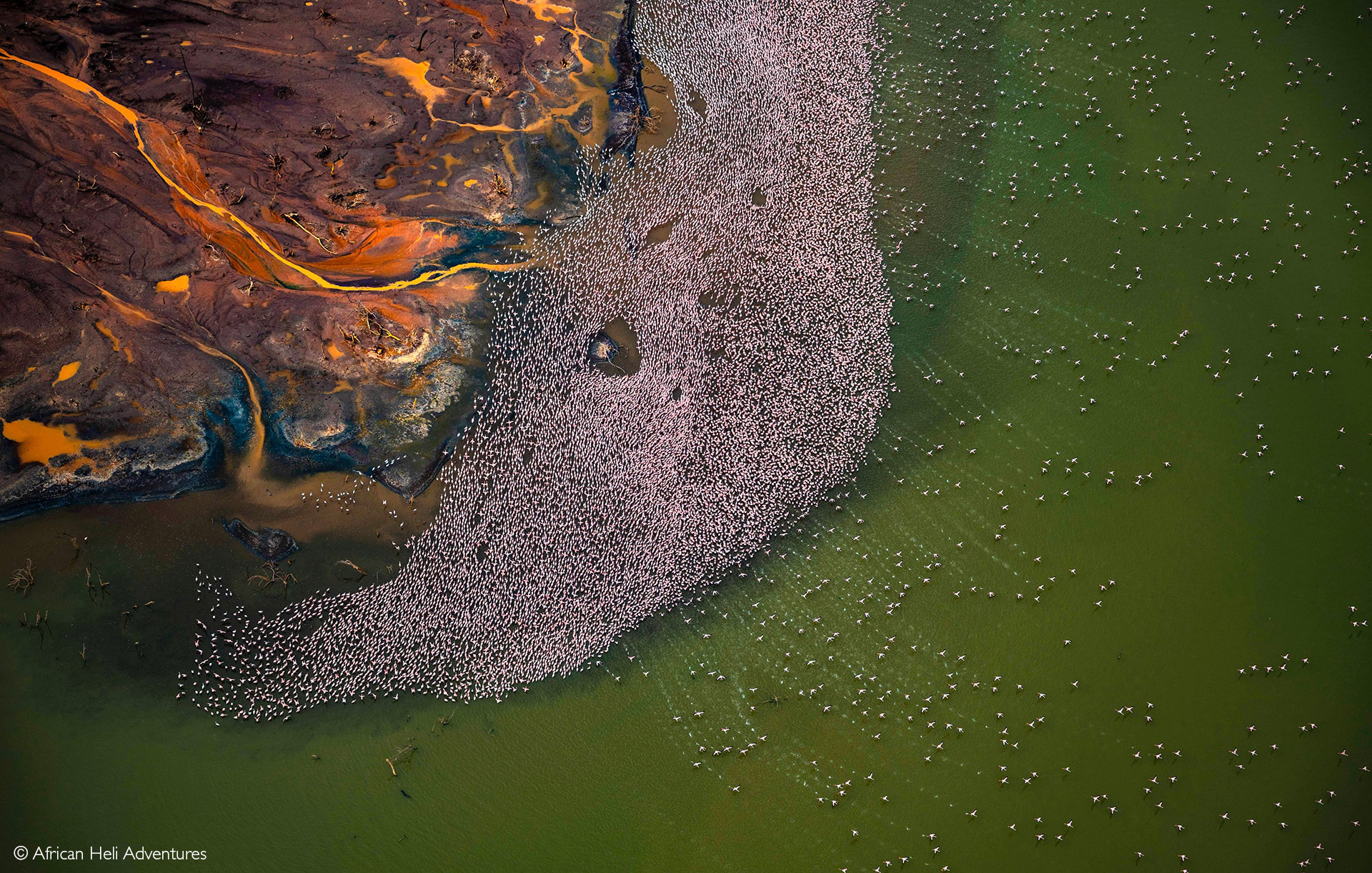
Following unusually heavy rains during the 2024 long rains, ephemeral pools and algal blooms created ideal feeding conditions for lesser flamingos in Lake Logipi. By December, the lake had transformed into a sprawling pink city, visible even from high above. To document this natural spectacle, a coalition of conservationists led by Dr Richard Lamprey, with support from Conserve Global, the Wildlife Research & Training Institute (WRTI) and the National Museums of Kenya (NMK), undertook the first-ever systematic aerial photographic survey of Lake Logipi in December 2024.
Flying at 1,400 feet, the survey captured 3,000 high-resolution images. The analysis estimated approximately 737,000 lesser flamingos (with the true number between 577,000 and 897,000). The main flock extends 9km in length and 500m in width, representing 30–50% of the entire East African lesser flamingo population. This makes it one of the largest flocks ever systematically counted using aerial photography in East Africa, and the largest recorded in Kenya in the past two decades. The survey also recorded 1,196 greater flamingos and 27,790 pelicans (mostly great white).
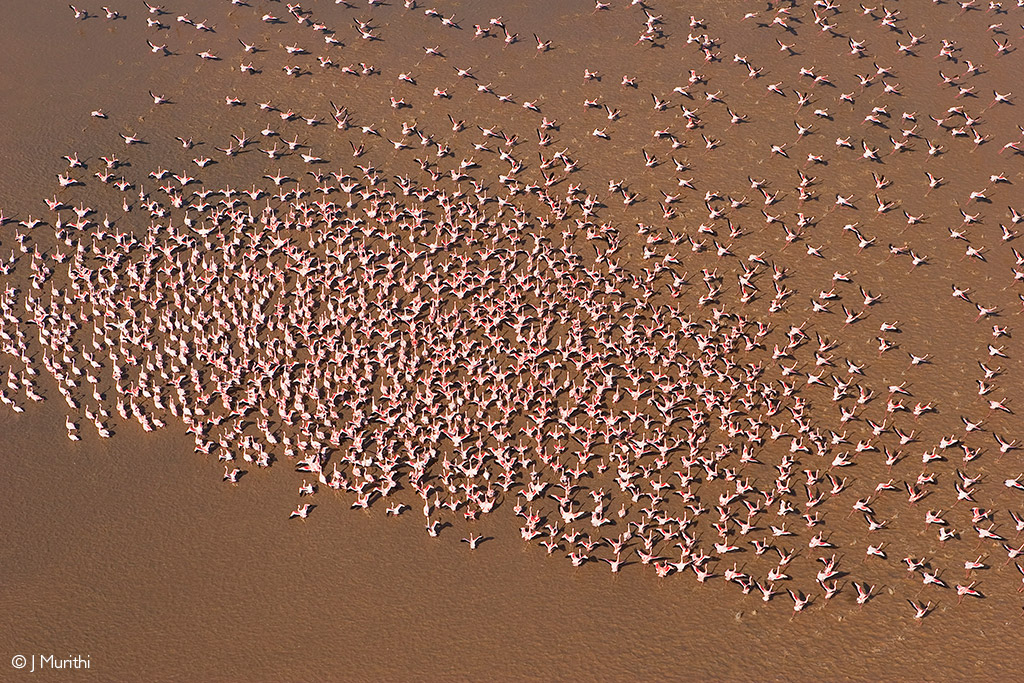
Dr Lamprey and his team employed semi-automated digital image analysis, using a method that has been successfully applied to count medium and large-sized mammals in Kenya and Uganda. This included stitching and processing images using Microsoft Image Composite Editor; automated counting using ImageJ software (as flamingos could be distinguished against the lake’s distinct brown-green waters), with counts validated by human observers; and species differentiation of lesser and greater flamingos based on pixel size, demonstrating a novel and pioneering method for distinguishing species from aerial imagery.
Alongside the flamingo work, Conserve, NMK, WRTI, and other scientists working with local communities carried out the first comprehensive biodiversity surveys in the Suguta Valley since the 1960s and 70s. These documented plants, reptiles, amphibians, small mammals, fish, invertebrates and birds, including a previously unrecorded breeding colony of Critically Endangered Rüppell’s vultures. Many species were recorded in the valley for the first time, confirming that Suguta Valley is a biodiversity landscape of exceptional importance.
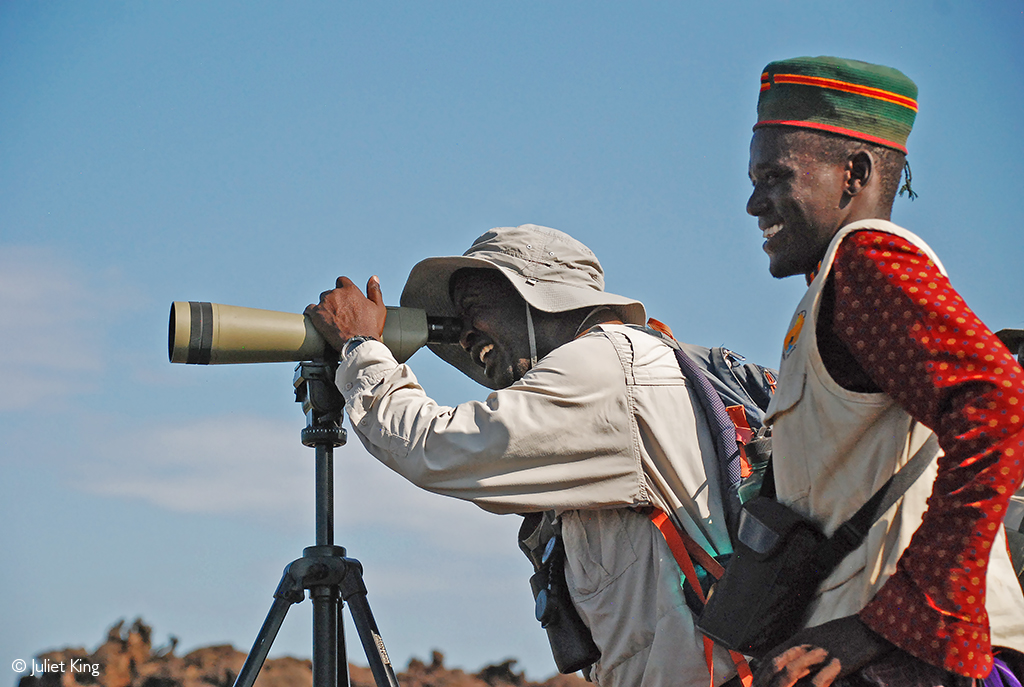
Throughout 2025, observers confirmed that large flamingo congregations persisted at Lake Logipi, with evidence of successful breeding in both 2024 and 2025. This is of exceptional significance at a time when many of East Africa’s alkaline lakes, including Bogoria, Nakuru and Elmentaita, are becoming less suitable habitats for flamingos due to climate-driven changes in rainfall and salinity. Against this backdrop, Lake Logipi may represent a critical refuge for a species under increasing regional pressure.
Rural development and conservation in Suguta Valley
The significance of these surveys extends far beyond their ecological value. They were initiated as part of a broader rural development and conservation project led by Conserve Global in partnership with a local community-based organisation, the Initiative for Suguta Valley Development (ISVD). The project was launched only in late 2023, but it is already making great strides in rural development and conservation in this remote area.
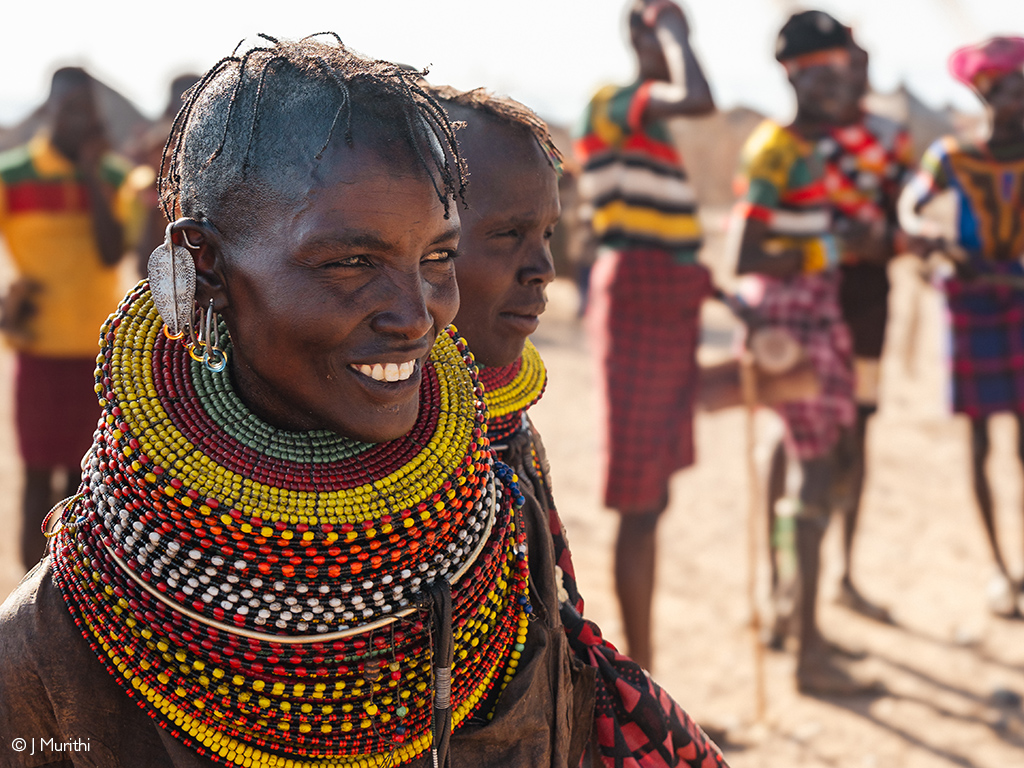
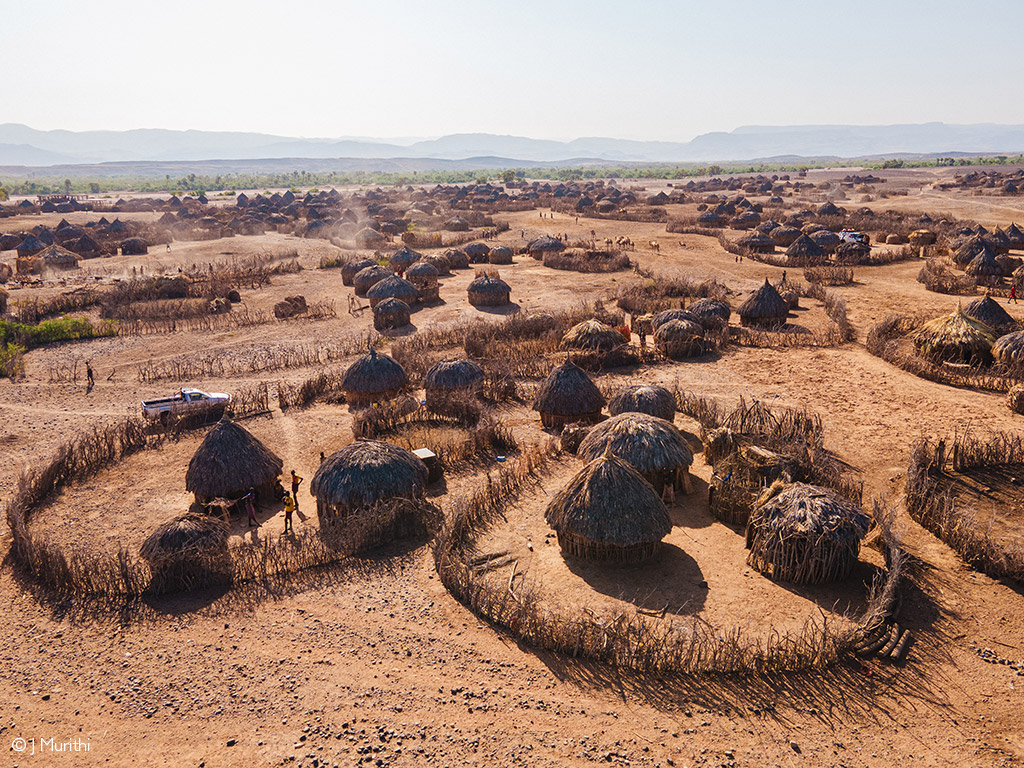
ISVD, representing local Turkana communities, has been central to this work and is embedded in the community with unit management committees covering different parts of the valley, who coordinate project implementation. So far, the project has improved access to clean water in three villages including drilling or rehabilitating boreholes, installing solar pumps and building large storage tanks; supported over 190 students over two years with education bursaries; recruited 24 local community members, including field monitors who are gathering information on wildlife sightings, environmental threats and human-wildlife conflict; and invested in peace-building between neighbouring ethnic groups, providing a platform for dialogue and conflict resolution. The organisation is also engaging with tourism operators to ensure benefits flow to local communities.
Conservation recognition and community stewardship
Lake Logipi, and the Suguta Valley more broadly, were long written off as too remote, inhospitable, or insecure for meaningful conservation or community investment. The 2024–2025 surveys have highlighted its global importance for biodiversity, with significant implications for flamingo conservation. The evidence from these surveys now strongly supports formal recognition of Lake Logipi and the more expansive Suguta Valley as a site of international conservation importance – potentially as a Key Biodiversity Area, UNESCO World Heritage Site, or another globally recognised designation. Such recognition would not only safeguard critical habitat for flamingos and other species but also strengthen community-led conservation and support sustainable livelihoods.
The work now carried out by Conserve, ISVD, and their partners since 2024 is beginning to tell a very different story: of a globally significant ecosystem rediscovered through science and that can be safeguarded in the long term through community stewardship.
Further reading
- Flamingos in peril: Read more about how East Africa’s flamingos are threatened by rising lakes
- Over 500,000 flamingos counted in Botswana’s Sua Pan using AI reveal vital conservation needs and the impact of climate change
About Dr Juliet King and Conserve Global
 Dr Juliet King is Project Manager for Conserve Global’s Suguta Valley project. Juliet is a zoologist with over 20 years of experience working with indigenous communities in Kenya to advance conservation and sustainable natural resource management. She has supported the establishment of community conservancies and authored national guidelines for conservancy development. Juliet has developed community-managed ecological monitoring tools for terrestrial and marine ecosystems and works to strengthen community-based natural resource management by empowering local institutions to govern land and resources. Her approach integrates traditional knowledge systems with contemporary policy and legislation. She has supported community-led sanctuaries for critically endangered species, including black rhino, hirola antelope, and Rothschild’s giraffe, and is committed to ensuring conservation benefits indigenous communities equitably and sustainably.
Conserve Global – www.conserveglobal.earth – was founded in 2020 as a not-for-profit NGO to breathe new life into Africa’s overlooked wildscapes—the vital lands that knit together the continent’s great ecosystems. Our landscapes encompass vacant concessions, former trophy-hunting areas, and under-resourced community conservation zones. For these wild places to thrive, they must matter – socially, economically, and politically. Conservation must contribute meaningfully to Africa’s development. And when communities rise as guardians of their heritage, nature finds its future. Using a decentralised model of in-country subsidiaries for each landscape engagement, Conserve Global currently has a portfolio of projects in Cameroon, Kenya, Mozambique, Namibia and Angola
To comment on this story: Login (or sign up) to our app here - it's a troll-free safe place 🙂.